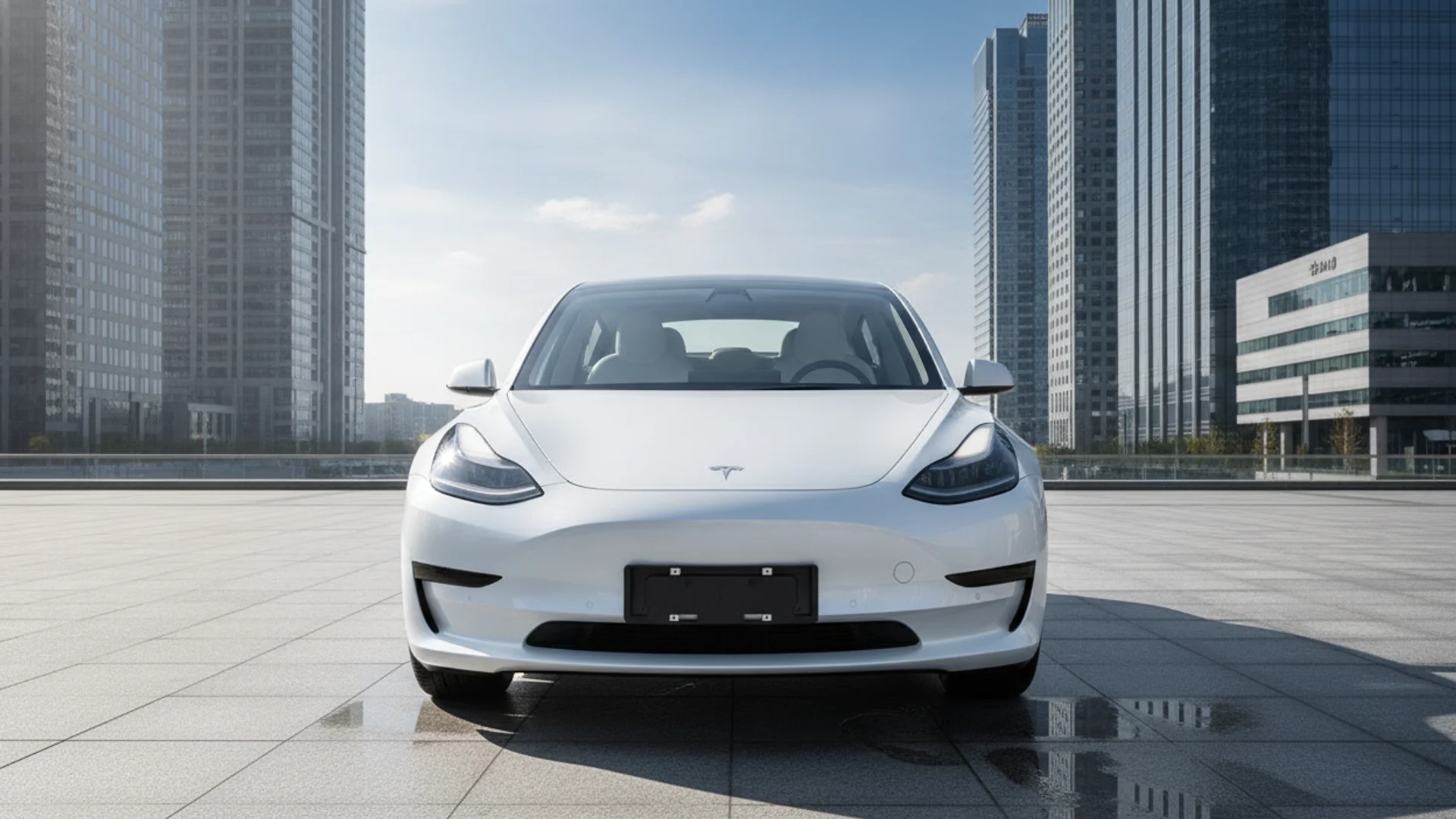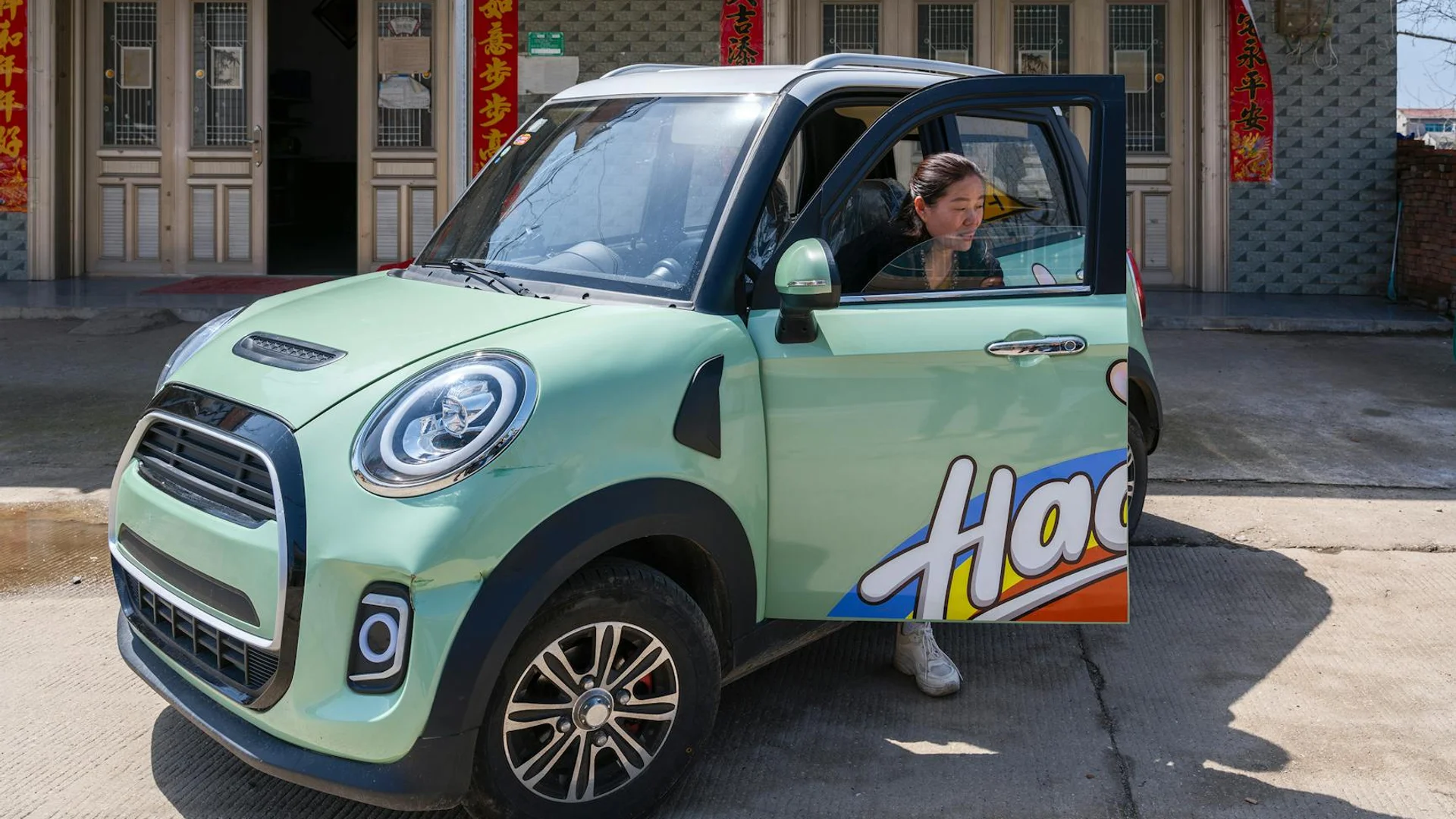
A BYD Seagull costs about $10,000 in Shanghai. Canada's tariff wall sat at 100% from October 2024 through the end of 2025. On January 16, 2026, that wall starts coming down, 6.1% inside a quota of 49,000 vehicles per year, set against an industry that produced over a million BEVs in the first quarter of 2026 alone. The arithmetic is the story.
What follows is the complete map for Canadian buyers in 2026: which Chinese manufacturers are actually shipping, what each model costs, how the new quota system works, where the US and European markets sit relative to ours, and the calendar of arrivals worth waiting for versus the ones that are already on dealer lots elsewhere. The lens is positive: more competition is good for buyers, period. The analysis is sober: not every Chinese EV is a serious purchase for a Canadian household yet, and the timing on a few of them is genuinely tricky.
Key takeaways
- Canada's tariff on Chinese-built EVs drops from 100% to 6.1% on January 16, 2026, inside a 49,000-vehicle annual quota, the binding constraint on supply, not on price.
- BYD, NIO, XPeng, Zeekr, MG, and Chery are the six brands worth tracking. BYD is the only one with a concrete Canadian dealer roadmap announced for 2026.
- Chinese-built EVs are excluded from federal iZEV / EVAP rebates, a $5,000-$10,000 gap that closes only if the manufacturer assembles in North America or qualifies under future program changes.
- Pricing benchmark: a BYD Atto 3 lands in Canada at roughly $30,000 CAD. A comparable Tesla Model Y starts near $55,000. The structural cost advantage is vertical integration and LFP chemistry, not currency tricks.
- The US market remains closed to Chinese-built EVs through at least 2027 due to the Inflation Reduction Act and 100% tariff. Europe sits at 17-35.3% counter-vailing duties. Canada is currently the most open major Western market.
What Changes for Canada on January 16, 2026
The short answer: the cost-to-import for Chinese-built EVs drops from a 100% tariff to a 6.1% tariff, but only for the first 49,000 vehicles each year. After that, the 100% rate snaps back. Manufacturers that want a Canadian channel are scheduling their 2026 shipping volume around that ceiling.
The 49,000 figure is not arbitrary. It was chosen as roughly the volume that Canada's domestic vehicle assembly base, Honda Alliston, Toyota Cambridge, Stellantis Windsor, Ford Oakville (returning to production), produces in an average two-week period. Ottawa's framing in the tariff order is that the quota gives Canadian buyers price competition without flooding a sensitive manufacturing supply chain. Whether that holds politically is a 2027 question.
The federal iZEV / EVAP rebate program does not apply to Chinese-built EVs. The rebate runs $5,000 for vehicles under $55,000 MSRP. That gap matters: a BYD Atto 3 at $30,000 versus a Hyundai Kona EV at $44,000 with $5,000 rebate brings the Korean alternative within $9,000 of the Chinese one rather than $14,000. Provincial rebates (Quebec's Roulez Vert, BC's Go Electric) generally follow the federal eligibility list.
For US readers tracking this: nothing in Canada's 2026 framework opens a path for Chinese EVs into the US market. The 100% tariff plus IRA restrictions remain in force south of the border, and the bonded-warehouse re-export route discussed in our piece on whether Americans can buy Chinese EVs through Canada is operationally tight rather than a practical option for retail buyers.
The Six Brands Worth Tracking
Six Chinese manufacturers have either a Canadian dealer roadmap, a confirmed model entry, or a pricing-data position that makes them relevant to 2026 Canadian buyers. The rest of the Chinese EV industry, and it is much larger than these six, does not yet have a concrete Canadian channel.
BYD, The benchmark, with the only confirmed dealer plan
BYD overtook Tesla in global BEV sales in late 2025. The company sells across roughly 80 countries already. For Canada, BYD has confirmed a 2026 dealer rollout starting with metro markets in Ontario, Quebec, and BC, with model availability arriving in the following sequence as the year progresses: Atto 3, Seagull, Seal, Dolphin, and Shark 6 plug-in hybrid pickup.
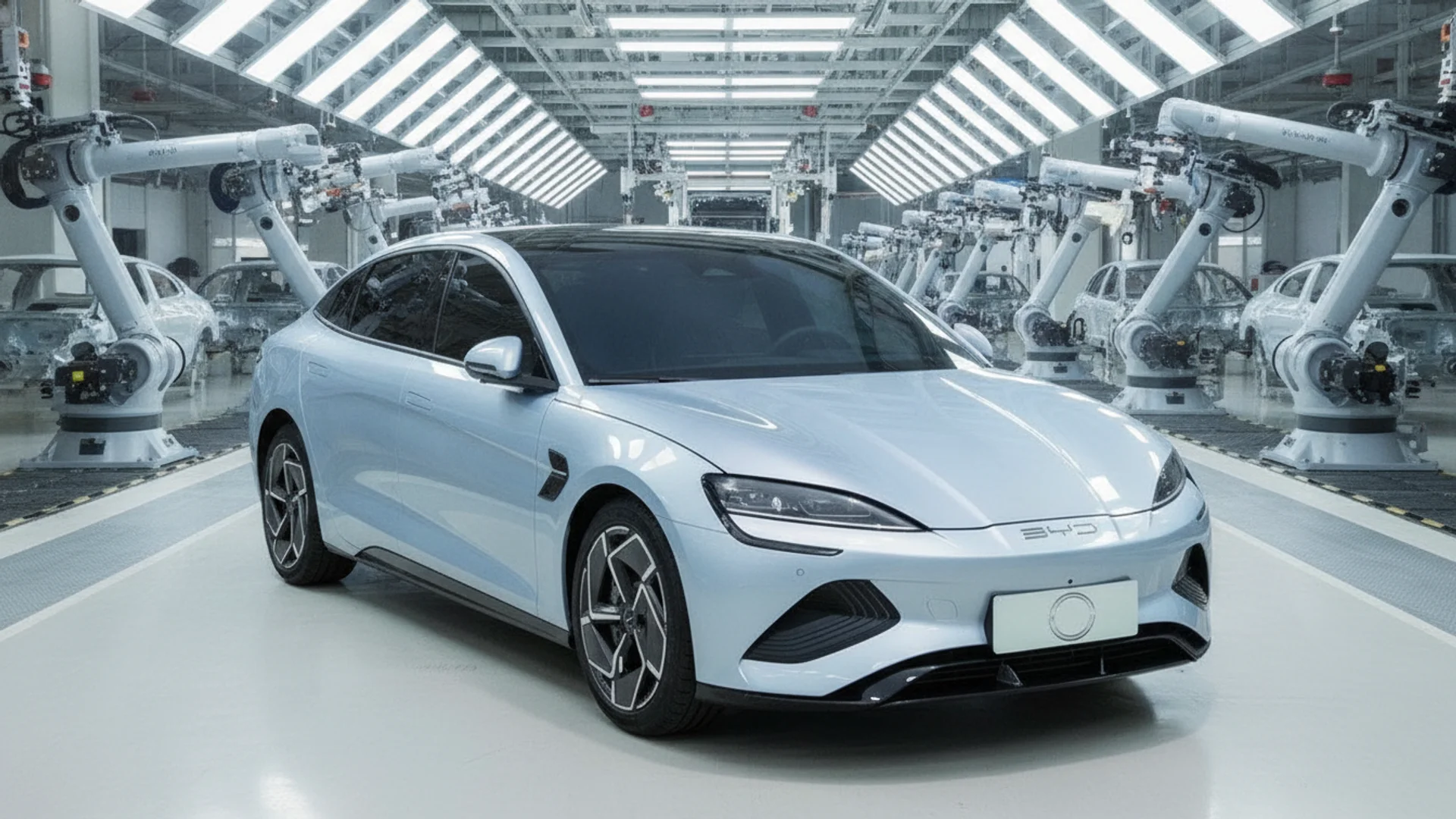
BYD's cost structure is the most important fact in this market segment. The company is vertically integrated through the cell, module, pack, motor, and power-electronics stack. BYD's Blade Battery pack cost sits well below US$60/kWh per BloombergNEF, $20 to $40 per kWh below comparable Western pack costs at the same scale. On a 60 kWh vehicle, that is a built-in $1,200 to $2,400 cost gap before anyone has bent metal. Combined with lower SG&A and Chinese industrial-scale economics, this is the structural reason a BYD Atto 3 lands at roughly $30,000 CAD in markets where it ships freely.
NIO, Premium positioning, battery-swap differentiator
NIO occupies the premium tier. The ET5, ET7, EL6, and EL7 compete with BMW i4, Mercedes EQE, and Tesla Model S. NIO has not announced a Canadian dealer plan for 2026, but the brand's positioning suggests a 2027 entry timed to the second wave of the quota system. The NIO vs Tesla comparison covers the technology specifically.
The differentiator is battery swap. NIO operates 3,200+ Power Swap stations globally (almost all in China; some in Europe). A swap takes about three minutes and returns the vehicle with a full pack. Whether Canada's geography and density would support this network is the strategic question NIO has not yet answered publicly.
XPeng, Smart-driver focus, ADAS competitiveness
XPeng's pitch is software. The G6 SUV and P7 sedan ship with XNGP, an end-to-end driving system that operates on Chinese expressways and increasingly on European highways. XPeng has piloted right-hand-drive deliveries in Norway and is in early conversations with Australian distributors. A Canadian 2026 channel has not been announced.
XPeng's hardware specs are competitive: 800V architecture on the G9 and G6, 280 kW DC fast charging, real-world range in the 480-560 km band on WLTP. Where XPeng differs from BYD is on pricing, XPeng generally sits 15-25% above equivalent BYD models in shared markets.
Zeekr, Geely's premium-tech brand
Zeekr is Geely's premium EV unit. The Zeekr 001 (shooting brake), 007 (sedan), and X (compact SUV) are sold in Europe with strong reviews. Zeekr has been quoted by industry press as targeting a Canadian entry inside the 2026 quota, but no dealer agreements have been announced as of May 2026.
Zeekr's relevance: the company is owned by Geely, which also owns Volvo, Polestar, Lotus, and Smart. The technology transfer between Zeekr and Polestar specifically means Canadian buyers may already be driving Zeekr-derived platforms badged as Polestar 4. That technical familiarity should accelerate Zeekr's regulatory and service rollout when it does enter.
MG, Familiar nameplate, Chinese ownership
MG is owned by SAIC, China's largest state-owned automaker. The MG4 EV and MG ZS EV are top-five EVs in the UK and Australia by volume. MG's brand recognition in Commonwealth markets is the asset. A Canadian entry has been rumoured but not confirmed for 2026. The brand's positioning would put it in direct competition with Chevy Bolt successors and the Hyundai Kona Electric at a likely $5,000-$8,000 discount.
Chery, Volume play, multiple sub-brands
Chery operates under three Canada-relevant nameplates: Chery (mainstream), Omoda, and Jetour. The brands target slightly different segments, Omoda is the SUV-coupé play, Jetour is the rugged-SUV positioning, Chery proper is the affordable mainstream. Chery has been more aggressive about ASEAN, Latin America, and Russia than Western markets, but Canadian distributor conversations are ongoing.
How Chinese EV Pricing Actually Works
The single most-asked question in this category is whether Chinese EVs are cheap because of yuan undervaluation, state subsidies, or production efficiency. Mostly production, partly scale, mostly NOT currency or subsidy.
Gear worth having
As an Amazon Associate, ThinkEV earns a small commission from qualifying purchases — at no extra cost to you.

Grizzl-E Classic Level 2 EV Charger (40A)
Canadian-made and rated for minus 40C winters. 40A / 9.6 kW, NEMA 14-50, indoor/outdoor, 24-ft cable. The charger built for Canadian weather.
As an Amazon Associate, ThinkEV earns from qualifying purchases — at no extra cost to you.
Rhodium Group's 2024 analysis found state subsidies explain about 5% of BYD's cost advantage over Tesla in China. Vertical integration of the cell, motor, and power-electronics stack, combined with LFP chemistry and Chinese industrial-electricity rates that run roughly half of US rates, explain the rest. The currency-undervaluation argument moves the decimal point a little; it does not move the argument.
For a worked example: a BYD Seagull lands around $10,000 CAD domestically. Adjust upward by 15% to neutralise the alleged currency undervaluation, and you are at $11,500. Adjust by 25% to be generous to currency hawks, and you are at $12,500. The Seagull is still tens of thousands of dollars below every comparable Western EV. The currency adjustment is not the explanation.
What this means for Canadian buyers: the structural cost advantage is durable. The tariff drop to 6.1% does not magically eliminate the production gap. A BYD Atto 3 will not suddenly cost $50,000 in Canada because the tariff went down; it will cost something close to its global price plus shipping, dealer margin, and 6.1%. The exact landed price depends on which dealer agreements close, but the order-of-magnitude is the global price plus 10-15%.
A more thorough breakdown of the production-vs-currency math is in our Chinese EV pricing analysis.
US, European, UK, and Australian Markets, Where Canada Sits
The Canadian position in mid-2026 is unusually open compared to peer markets. A snapshot:
- United States: 100% tariff on Chinese-built EVs since 2024, reinforced by IRA tax-credit restrictions on Chinese battery components. Effectively closed through at least 2027. American buyers interested in Chinese EVs through Canadian channels should read our bonded warehouse + re-export analysis; the short version is operational paths exist but are not retail-friendly.
- European Union: 17.0% to 35.3% counter-vailing duties imposed October 2024, varying by manufacturer (SAIC and BYD draw different rates). On top of that sits the standard 10% EU import tariff. Net duty on most Chinese-built EVs entering the EU runs 27-45%.
- United Kingdom: No country-specific Chinese EV tariff. UK's 10% standard import duty applies. MG, BYD, and Ora are top-20 EV brands in the UK by volume in 2025.
- Australia: No tariff barrier. BYD's Atto 3 was Australia's third-best-selling EV in 2024. MG's MG4 was the top-selling small EV.
- Canada: 6.1% effective January 16, 2026, inside a 49,000-vehicle annual quota. Most-open major Western market alongside the UK and Australia.
For a Canadian buyer comparing notes with a relative in California or Texas: there is no Chinese EV alternative in the US market in 2026. Period. A buyer in Sydney or Manchester has more model choice today than a buyer in Toronto. By late 2026 that gap should close meaningfully as the 49K quota fills.
The Stacked Comparison: Chinese vs Western EVs at Similar Specs
Comparable models, comparable spec, mid-2026 Canadian list pricing (approximate, pre-rebate where rebates apply):
-
Compact SUV, ~400 km WLTP range:
- BYD Atto 3 (Chinese), ~$30,000 CAD, no federal rebate
- Hyundai Kona Electric, ~$44,000 CAD, -$5,000 federal rebate = $39,000 net
- Chevy Equinox EV, ~$43,000 CAD, -$5,000 rebate = $38,000 net
- Net delta: BYD is $8,000-$9,000 cheaper after rebate stacking.
-
Mid-size sedan, ~500 km WLTP:
- BYD Seal, ~$45,000 CAD
- Tesla Model 3, ~$55,000 CAD, no federal rebate above $55K threshold
- Hyundai Ioniq 6, ~$58,000 CAD, no rebate
- Net delta: BYD is $10,000+ cheaper, exactly the gap an iZEV rebate normally bridges.
-
Compact city EV, ~300 km range:
- BYD Seagull, projected ~$22,000 CAD when it lands
- Chevy Bolt (replacement / used), ~$28,000 CAD new or $22,000 used
- Nissan Leaf, ~$36,000 CAD, -$5,000 rebate = $31,000 net
- Net delta: BYD's Seagull is competitive with used Bolts on price-new-vs-used.
This is the structural argument: Chinese EVs land roughly at the price point a Western EV reaches after federal incentives, with comparable specs and (on the BYD side specifically) longer-warrantied battery chemistry.
What Canadian Buyers Should Do in 2026
Three buyer profiles, three different answers.
If you are buying an EV in the next six months: the Chinese-EV channel is not yet retail-ready. Dealer networks are forming; service-and-warranty pathways are not finalized for BYD outside metro Ontario, Quebec, and BC. Buying a Hyundai, Kia, Chevy, or VW EV with the EVAP rebate is the lower-friction path. Save Chinese EV consideration for a 2027 purchase when dealer infrastructure has matured.
If you can wait twelve to eighteen months: the BYD Atto 3 in Canada at $30,000 CAD with three-year warranty support in your metro is the most compelling-on-paper EV in the market. Wait, watch the Atto 3 review for spec and Canadian-context detail, and book a test drive when the dealer opens.
If you live outside metro Ontario, Quebec, or BC: dealer access is the binding constraint, not pricing. Until BYD and others open service centres in your province, an out-of-warranty Chinese EV in (for example) New Brunswick or Saskatchewan is an operational risk most households cannot underwrite. The provincial-incentive guide for your province (Manitoba, Saskatchewan, Nova Scotia) still applies to non-Chinese EVs and is the right starting point.
Gear worth having
As an Amazon Associate, ThinkEV earns a small commission from qualifying purchases — at no extra cost to you.

PULIDIKI Car Cleaning Gel (Detailing Putty)
Press it into vents, buttons, and seams and it lifts out dust you did not know was there. Weirdly satisfying, genuinely useful.
As an Amazon Associate, ThinkEV earns from qualifying purchases — at no extra cost to you.
What I Would Watch in the Second Half of 2026
The quota fills or it does not. If 49,000 is hit before October, the political case for raising it in 2027 is strong; if it fills only by December, the equilibrium holds and the tariff order looks like calibrated policy rather than a hard wall. Either outcome is informative.
BYD's first six months of Canadian deliveries will be the practical test. Dealer service quality, first-year warranty experience, and parts availability through Canadian supply chains will determine whether the 2027 cohort of Chinese brands enters with confidence or with caution. Reputational compounding works both ways.
The US-side political conversation is the other axis. A change in administration after November 2026 could move the IRA framework. A change after that could open or harden the US market. Canada's quota is small enough that even modest US opening would pull Chinese supply south and tighten Canadian availability quickly.
The Canadian buyer who waits until late 2026 to make a decision on a Chinese EV will have meaningfully better information than the buyer who decides in May. The pricing math is clear; the operational picture is the one that takes another two quarters to resolve.
Gear worth having
As an Amazon Associate, ThinkEV earns a small commission from qualifying purchases — at no extra cost to you.

WixGear Magnetic Air Vent Phone Mount (2-Pack)
A magnet strong enough that your phone never flinches over potholes or rail crossings. Two in the box, one for each car.
As an Amazon Associate, ThinkEV earns from qualifying purchases — at no extra cost to you.

Founder & Chief Editor
Vlad Pereira is the founder and chief editor of ThinkEV.ca, the Canadian electric-vehicle publication he writes and edits from Courtenay, British Columbia. He covers EV pricing, federal and provincial rebates, charging costs, and the Chinese manufacturers now entering Canada, from the buyer's side rather than the press-fleet side. ThinkEV is a venture of Vlad Pereira Online; his writing on health, income and the long game lives at vladpereira.com.
Frequently asked questions
Can I buy a BYD in Canada right now in 2026?
Do Chinese EVs qualify for the federal iZEV rebate?
What is the 49,000-vehicle quota and what happens when it fills?
How does Chinese EV warranty support work in Canada?
Are Chinese EVs reliable? What about battery longevity?
Can Americans buy Chinese EVs through Canada?
More EV & road-trip finds
Affordable upgrades worth a look — tap any to check the price on Amazon.
 ★ 2,941
Microfiber Cleaning Cloths (Multi-Pack)
View on Amazon ★ 55
★ 55LED Car Door Logo Projector Light
View on Amazon ★ 568
★ 568Personalized Photo and Text Keychain
View on Amazon ★ 27,769
Car Cup Holder Coasters (4-Pack)
View on Amazon ★ 1,866
70mai A810 4K Dual Dash Cam
View on Amazon ★ 121
★ 121Foldable Windshield Sun Umbrella
View on Amazon ★ 268
★ 268Anti-Slip Leather Steering Wheel Cover
View on Amazon ★ 47,507
HOMEXCEL Microfiber Cloths (12-Pack)
View on AmazonRead, Plan, Then Stay Current
Explore our expert articles to understand incentives and ownership costs, use the map to pressure-test charging reality, then subscribe so new EV coverage comes straight to you.
Continue Reading
Why Chinese EVs Are Cheap: Production or the Yuan?
How BYD Builds EVs So Cheaply: The Vertical Integration Playbook
Why Chinese EV Interiors Feel a Generation Ahead
XPENG G9L Presale Opens at 259,800 Yuan With BEV and EREV
BYD Seal 06 DM-i: 128 km EV Range, $14K USD Starting Price