Key takeaways
- At $44,995 for the base model, it's not a luxury car, but it's not a budget car either.
- That's why it's got a 513 km range on the base model, which is more than the more expensive Tesla Model Y.
- At $44,995 before the $5,000 federal EVAP rebate, it has more range than the Tesla Model Y, a 17.7-inch screen, and a Chevy dealer within 30 minutes of most Canadians.
GM finally built the EV that most Canadians actually want. The Chevy Equinox EV is the kind of car you'd find in a Tim Hortons parking lot at 7 a.m. Not because it blends in, but because it fits. It gets you from Toronto to Ottawa without breaking a sweat, and then back again.
At $44,995 for the base model, it's the middle ground where GM plants its flag: after a decade of EVs that either cost too much or felt like compliance cars, the Equinox is the one that actually makes sense. You don't need a Tesla to feel like you're part of the transition. You just need a car that doesn't cost a small business to buy.
The 1LT delivers 513 km of range, more than the pricier Tesla Model Y. A 17.7-inch screen that runs Google Built-In natively. Ultium platform with NMC chemistry, solid thermal management, and eight-year battery warranty. GM didn't try to reinvent anything. They built a car people already understood and made it electric.
The gas Equinox has been one of Canada's best-selling vehicles for years because it nails the fundamentals: comfortable, affordable, practical, and available at a dealer within 30 minutes of basically anywhere you live. The EV version takes all of that and adds the range, the tech, and the driving refinement that makes the gas version feel like the wrong choice.
Design and Exterior
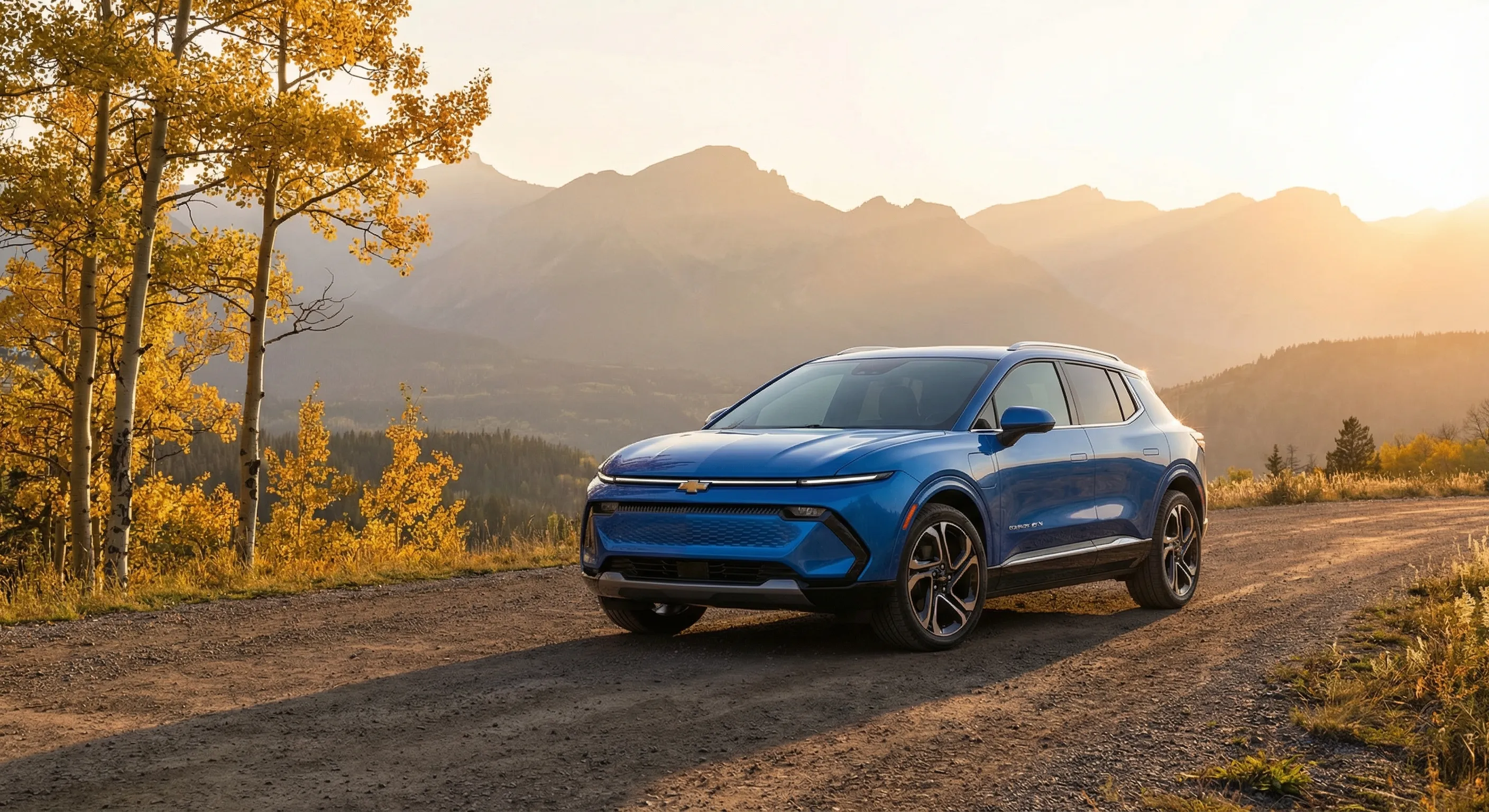
The Equinox EV doesn't look like a science experiment, and that's entirely the point. GM's design team clearly understood the assignment: make it look like a crossover SUV, not a spaceship. From the front, the closed-off grille is the only real giveaway that this isn't a gas vehicle. The LED signature lighting runs across the full width of the front fascia, giving it a modern, connected look that's become the industry standard, but the overall shape is unmistakably Equinox. It's familiar. It's approachable. Your neighbours won't even know it's electric until they notice you never go to a gas station.
Dimensionally, the Equinox EV sits on GM's dedicated Ultium platform, which means it's slightly wider and lower than the gas Equinox. The wheelbase is stretched, giving it a planted, confident stance that looks better in person than in photos. At about 4,670 mm long, it slots right into the compact crossover segment, roughly the same footprint as a RAV4 or CR-V. It fits in a standard Canadian garage with room to spare, and parking at Costco or the hockey rink isn't an ordeal.
The profile is clean and aerodynamic without being aggressive about it. Flush door handles on higher trims help with wind resistance, but the base 1LT keeps conventional handles that work just fine in a Winnipeg winter when your hands are gloved. The rear end features a full-width light bar that's become GM's design signature across the EV lineup, and it genuinely looks premium. The RS trim adds sportier body cladding and unique wheels, but even the base model doesn't look stripped. GM resisted the temptation to make the entry-level version obviously cheap, which is something companies like Volkswagen have historically struggled with on the ID.4.
Colour options are sensible for the Canadian market, there's nothing outrageous, but the Riptide Blue and Radiant Red are genuinely striking. The Iridescent Pearl Tricoat, if you're willing to pay the upcharge, looks exceptional in afternoon sunlight. Most buyers will probably end up in Summit White or Sterling Grey Metallic, and that's fine, the Equinox EV wears neutral colours well because the design is strong enough to carry them.
One design detail worth calling out: the ground clearance. At roughly 195 mm, the Equinox EV sits higher than the Hyundai Ioniq 5 (160 mm) and the Tesla Model Y (167 mm). That matters in Canada. Whether it's working through a snowbank at the end of your driveway in February, clearing a rutted gravel road to the cottage in Muskoka, or just rolling over a parking lot speed bump without that gut-clenching scrape, the extra clearance is quietly one of the most practical things about this vehicle.
Build quality is solid throughout. Panel gaps are tight and consistent, I checked, because that's the kind of thing you notice when you've spent time around Teslas where the frunk sometimes looks like it was installed by a different team on a different day. Paint quality is good, the doors close with a satisfying thunk rather than a tinny clang, and the weatherstripping around the doors and hatch feels substantial enough to handle years of Canadian temperature extremes without deteriorating. GM has been building vehicles in this segment for decades, and the manufacturing maturity shows. This isn't a startup learning how to build cars, it's a company that makes millions of them, applying that experience to a new powertrain.
Inside the Cabin
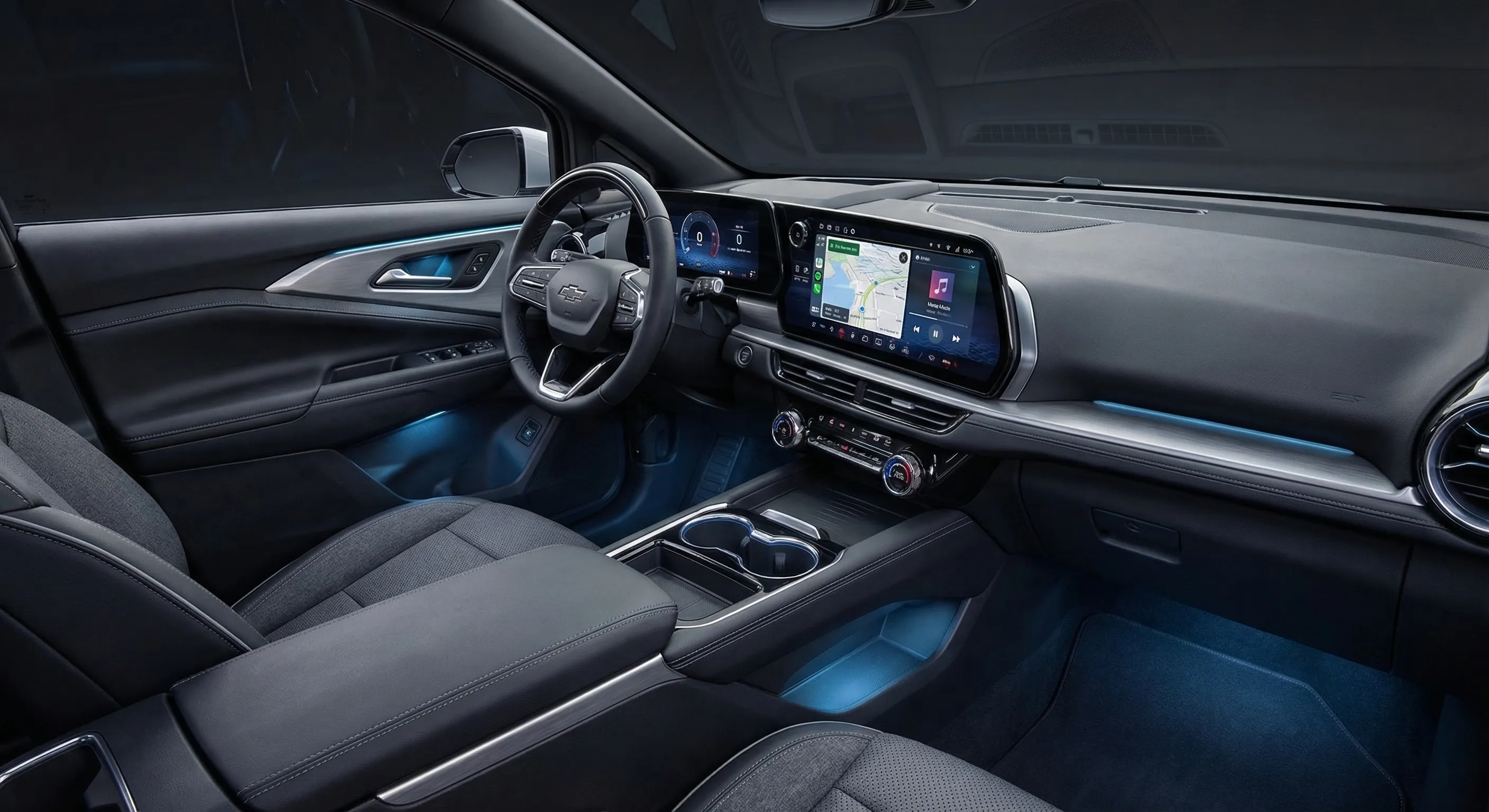
The 17.7-inch screen is a full-size tablet that controls everything from the climate to the navigation. Google Built-In means you're not stuck with a clunky infotainment system that crashes when you try to play a podcast. The tech feels well above its price point. GM didn't try to make the Equinox EV a luxury car, they made it a premium car at a mainstream price, and the infotainment is where that shows most clearly.

Google Built-In deserves its own paragraph because it's genuinely one of the best infotainment experiences in any car at any price. You get Google Maps with real-time traffic, EV-specific routing that accounts for your state of charge and charger locations, Google Assistant for voice commands, and the Google Play Store for apps. Want to download Spotify? Done. Podcast Addict? Done. Waze for the border crossing from Windsor to Detroit? Done. It's not a watered-down car version of Google, it's basically an Android tablet that happens to be bolted into a dashboard. Compared to the VW ID.4's sometimes-laggy system, or the Ioniq 5's dual-screen setup that still doesn't have a native Google Maps experience, the Equinox EV's infotainment is best-in-class for this segment. Period.
Now, let's talk about the physical controls debate. In a market where Tesla removed the turn signal stalk and VW buried climate controls in touchscreen menus, GM took a refreshingly practical approach. The Equinox EV has a physical volume knob. It has physical climate buttons. It has a physical drive mode selector. These are the controls you reach for without looking, the ones you need while merging onto the 401 in rush hour traffic or working through a snowstorm on the Coquihalla. GM understood that not everything needs to be a touchscreen interaction, and I genuinely appreciate that decision.
The seats are comfortable for long hauls, owners report completing the drive from Courtenay to Vancouver without back fatigue by Hope. The materials aren't luxury-grade, but they don't feel cheap either. There's a surprising amount of rear legroom, which matters if you've got kids or tall friends. Storage is thoughtful: deep door pockets, a big centre console, and a frunk that's actually usable for grocery bags. The cabin is quiet at highway speeds, quieter than you'd expect from something in this price bracket. Wind noise creeps in a bit above 120 km/h, but that's true of most SUVs at this price point.
Rear seat passengers get a legitimately good experience. The flat floor, a benefit of the skateboard EV platform, means the middle seat isn't ruined by a driveshaft tunnel. Three car seats across the back? It's tight, but doable, which puts it ahead of the Model Y in family practicality. Rear passengers also get their own climate vents and USB-C charging ports, which is table stakes for a family SUV in 2026 but still worth noting because some competitors at this price skip those details.
Cargo space is competitive with the RAV4 and CR-V, roughly 840 litres behind the rear seats, expanding to about 1,620 litres with them folded. The cargo floor is flat when the seats are down, which means you can actually slide in a sheet of plywood from Home Depot or lay flat a pair of hockey bags without playing Tetris. The frunk adds another 50+ litres of sealed, lockable storage, perfect for keeping charging cables organized, stashing valuables at a trailhead, or separating wet gear from the rest of your cargo.
Gear worth having
As an Amazon Associate, ThinkEV earns a small commission from qualifying purchases — at no extra cost to you.

Grizzl-E Classic Level 2 EV Charger (40A)
Canadian-made and rated for minus 40C winters. 40A / 9.6 kW, NEMA 14-50, indoor/outdoor, 24-ft cable. The charger built for Canadian weather.
As an Amazon Associate, ThinkEV earns from qualifying purchases — at no extra cost to you.
Range and Battery
The Equinox EV's 513 km rated range on the base 1LT FWD is a headline number, and a legitimate one. This is more range than the Tesla Model Y (455 km), the Kia EV6 (499 km long range), and the Hyundai Ioniq 5 (488 km), all at a lower price. The cheapest vehicle in this comparison has the most range. That almost never happens in the EV market.
The 85 kWh battery pack uses GM's Ultium platform with NMC (nickel manganese cobalt) chemistry. Without getting into battery nerd territory, NMC is the established choice for balancing energy density, longevity, and performance. It's the same family of chemistry that powers the Cadillac Lyriq and the GMC Hummer EV, scaled down to a more sensible size. GM rates the pack for 8 years or 160,000 km of warranty coverage, which tells you something about their confidence in its durability.
Real-world range in summer sits around 450-480 km, which is close enough to the 513 km rating that you don't feel cheated. That's assuming a mix of city and highway driving, air conditioning running, and normal Canadian summer conditions. If you're driving entirely on the highway at 110 km/h with cruise control set, expect closer to 430 km, highway speeds are the enemy of EV range because aerodynamic drag increases exponentially. If you're doing mostly city driving with regenerative braking doing the heavy lifting, you might actually exceed the rated 513 km. Owners have reported trip computer readings above 530 km of projected range after a full charge following a week of city-only driving in mild weather.
Winter is a different story, expect around 350-380 km in a typical Ontario or BC winter, less if you're dealing with prairie cold. That's still enough to handle a week of commuting without plugging in at work, which is the real benchmark most people care about. The average Canadian commute is about 25 km each way, so even in the worst winter conditions, you're looking at more than a week of commuting on a single charge. That math matters because it means you don't need to stress about charging every night. Plug in Sunday evening, and you might not need to plug in again until Thursday.
For Canadian road trips, the numbers are practical: Toronto to Ottawa is about 450 km. In summer, the Equinox EV can do it on a single charge if you drive sensibly. Toronto to Montreal is about 540 km, so you'd need one quick stop. Calgary to Edmonton is 300 km, easy, even in January. Vancouver to Kelowna is about 390 km via the Coquihalla, comfortable in summer, requiring one short stop in winter. These are the trips Canadians actually take, and the Equinox EV handles all of them without the kind of range anxiety that plagued earlier EVs with 200-300 km batteries.
The battery also features smart thermal management that preconditions the pack before you arrive at a DC fast charger. Using the Google Maps route planner, the car knows when you're approaching a charger and starts warming (or cooling) the battery to the optimal temperature for fast charging. This means when you pull up to that Petro-Canada charger on the 401, you're getting maximum charging speed from the moment you plug in, not waiting 10 minutes for the battery to warm up, which is a real problem with some competing EVs in cold weather.
Charging
The Equinox EV has a 150 kW DC fast charger that can take it from 10% to 80% in about 30 minutes. That's the kind of speed that makes a Tim Hortons stop feel productive instead of painful. You pull in, plug in, grab a double-double and a farmer's wrap, check your phone, and you're back on the road with 350+ km of range added. It's not the 250 kW peak speeds you'd get in a Hyundai Ioniq 5 or Kia EV6, but the peak number matters less than the sustained average. The Equinox EV's charging curve is remarkably flat, maintaining strong speeds through most of the session rather than spiking high at 10% and dropping off a cliff by 40%.
It's compatible with CCS1 and can adapt to NACS with a simple adapter, which is a godsend for anyone who's ever been stuck at a charger that doesn't work with their car. GM has committed to providing NACS adapters for Equinox EV owners, which means you get access to Tesla's Supercharger network in addition to every CCS station in the country. That's a massive deal for Canadian road trips because Tesla's Supercharger network is, frankly, the most reliable and well-maintained charging network in the country. Adding it to your options means you'll almost never find yourself without a charging option.
The Canadian DC fast charging scene has matured dramatically, and the Equinox EV benefits from perfect timing. The Petro-Canada Electric Highway covers the Trans-Canada from coast to coast with 350 kW stations. Electrify Canada has high-speed stations in major corridors across Ontario, Quebec, BC, and Alberta. FLO operates thousands of Level 2 and DC fast chargers, especially in Quebec. And now, with NACS adapter access, Tesla's Supercharger network adds hundreds more stations. On the route from Toronto to Montreal, drivers now have their choice of four different charging networks at a planned stop in Kingston. That's a very different situation from even two years ago.
For road trips, the Equinox EV's route planner (built into Google Maps) handles charging stops automatically. Tell it you want to drive from Winnipeg to Thunder Bay (700 km), and it'll plot the optimal stops, estimate charging times, show you real-time charger availability, and even factor in your current state of charge and driving conditions. Early owners report completing Toronto to Montreal and back without any range stress, stopping once each way for about 25 minutes. The system even pre-conditions the battery as you approach a charger, so you get maximum charging speed from the moment you plug in.
Home charging is where the Equinox EV truly shines, and this is the part that most test drives and reviews undervalue. Overnight charging on a Level 2 home setup gets you from 20% to full in about 10 hours. Plug in when you get home at 6 p.m., wake up to a full battery at 4 a.m., and you didn't even think about it. The cost? At average Canadian electricity rates (roughly $0.10-0.15/kWh depending on province), a full charge costs about $8.50-$12.75. That's roughly $30-50 per month for a typical Canadian's driving habits. Compare that to the $200-250 per month you'd spend fuelling a gas Equinox or RAV4, and the savings are immediate and meaningful.
A 240V Level 2 charger is what you want for home, and the Grizzl-E is the one I recommend for Canadian conditions. It's Canadian-designed (out of Toronto), rated for -30C operation, has a NEMA 4 weatherproof enclosure, and costs about $500-600 installed. You can mount it outside on the side of your garage or inside, and it just works. No app subscription, no cloud dependency, no fuss. If you're buying an Equinox EV, budget for a Level 2 charger as part of the purchase, it transforms the ownership experience from "I need to find a charger" to "I wake up full every morning."

Gear worth having
As an Amazon Associate, ThinkEV earns a small commission from qualifying purchases — at no extra cost to you.
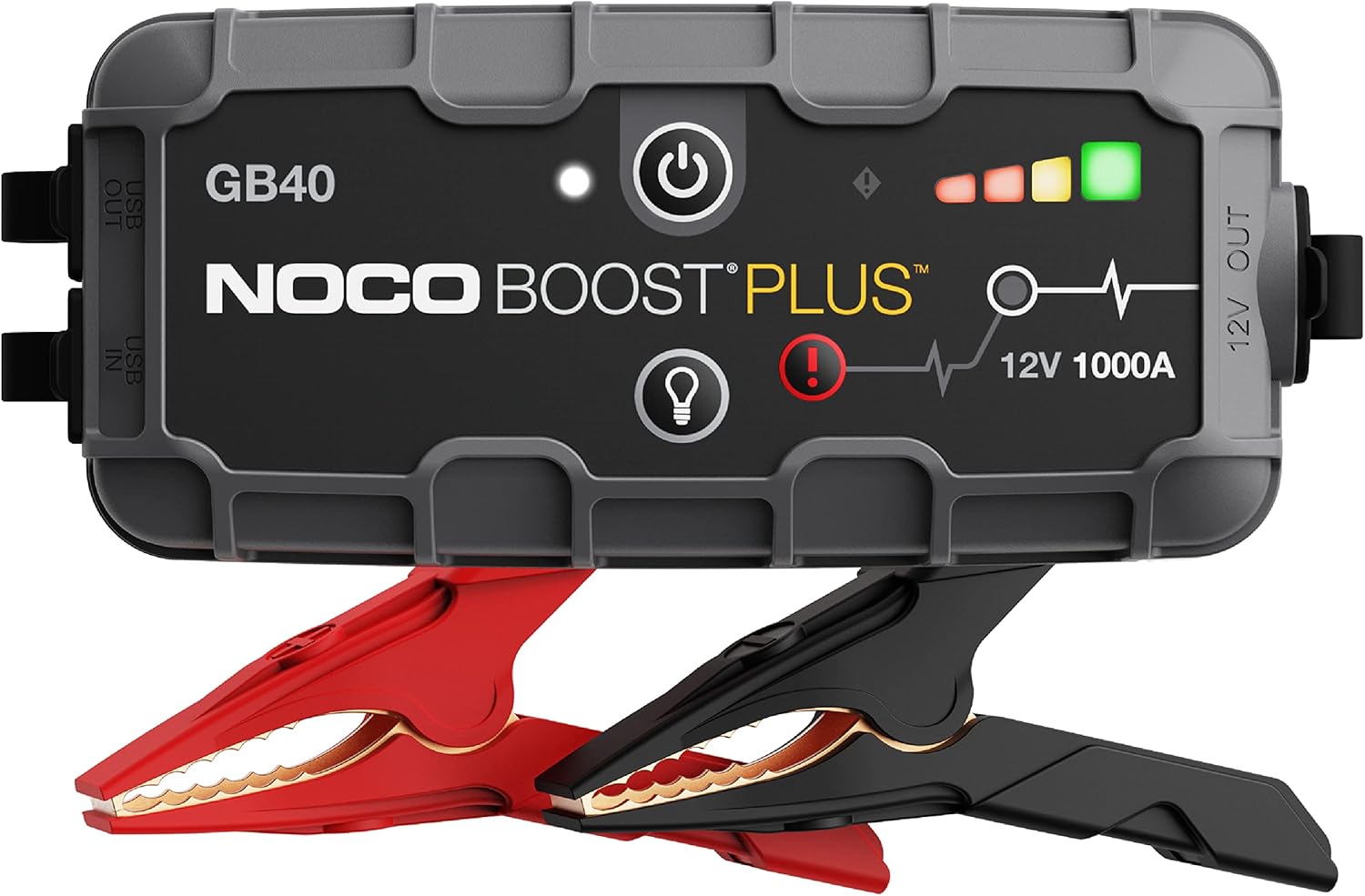
NOCO Boost Plus GB40 Jump Starter
A 1000A lithium jump starter that fits in your glovebox and works on any 12V battery. Your insurance against a dead 12V in a parking lot.
As an Amazon Associate, ThinkEV earns from qualifying purchases — at no extra cost to you.
On the Road
The first thing you notice when you drive the Equinox EV is how normal it feels. That sounds like faint praise, but it's the opposite, it's the entire thesis of this car made physical. You get in, press the brake, hit the start button, select Drive, and go. There's no learning curve. There's no "EV weirdness" to adapt to. Your parents could drive this car without a tutorial. Your teenager could learn to drive in it. And that accessibility is worth more than a 0-60 time for 95% of car buyers.
That said, the performance numbers are genuinely strong. The single-motor FWD 1LT makes around 213 horsepower and 254 lb-ft of torque. Those numbers don't sound mind-blowing on paper, but remember, that torque is available instantly, from zero RPM. Merging onto the QEW at Burlington, passing a transport truck on Highway 1 near Kamloops, or pulling away from a red light in downtown Calgary, the Equinox EV responds with authority. It's not Tesla-fast, but it's quicker than any gas Equinox, RAV4, or CR-V you've ever driven. The 0-100 km/h time sits around 8 seconds, which is perfectly adequate for a family crossover.
The ride quality is one of the Equinox EV's genuine surprises. The battery pack sits low in the floor, giving the vehicle a centre of gravity that's dramatically lower than any gas SUV. The result is a car that feels planted and composed in corners, doesn't lean awkwardly when you take a highway on-ramp with enthusiasm, and absorbs bumps with a maturity that belies its price tag. Ontario's crumbling highways and Quebec's legendary potholes are handled with composure. The suspension is tuned for comfort rather than sport, which is exactly the right call for this vehicle. If you wanted a canyon carver, you'd buy something else. The Equinox EV is for the person who wants a smooth, quiet, composed ride on the highway between Barrie and Sudbury.
Regenerative braking deserves special attention because GM got this right. You get multiple levels of regen, selectable via a paddle on the steering wheel, plus a true one-pedal driving mode that brings the car to a complete stop without touching the brake pedal. One-pedal driving is one of those EV features that sounds gimmicky until you try it, and then you never want to go back. In city traffic, think downtown Toronto, the Deerfoot in Calgary, or rush hour on the Lions Gate Bridge, you can drive for an entire commute using only the accelerator pedal. Lift off to slow down, press to go. Your brake pads last effectively forever because you barely use them. After a week of one-pedal driving, going back to a gas car feels like driving with oven mitts on.
Highway cruising is where the Equinox EV earns its keep as a long-distance vehicle. At 110 km/h on cruise control, the cabin is remarkably quiet. Road noise from the tires is present but muted. Wind noise, as I mentioned, creeps in slightly above 120, but it's not intrusive enough to make you raise your voice with a passenger. The steering is light and predictable, which some enthusiasts will call boring and every commuter will call perfect.
GM's Super Cruise (available on higher trims) adds hands-free highway driving on mapped Canadian highways, which genuinely transforms a long trip on the 401 or the Trans-Canada. You engage it, the car handles steering, acceleration, and braking, and you keep your eyes on the road while your hands rest in your lap. For a four-hour drive from Toronto to Kingston, it's significant.
The turning radius is tight for a crossover, which matters more than people think. Working through a crowded Costco parking lot in Mississauga, making a U-turn on a narrow street in Old Montreal, or executing a three-point turn on a rural road in the Maritimes, the Equinox EV doesn't feel like you're piloting a barge. The electric power steering is well-calibrated: light at low speeds for easy manoeuvring, and it firms up on the highway for stability. It's not going to give you detailed road feel like a BMW, but it's not trying to. It's trying to make every driving task effortless, and it succeeds.
Visibility is good from the driver's seat. The beltline is lower than the current trend of slit-window fortress styling, and the rear camera is crisp and responsive. The available surround-view camera system on higher trims gives you a bird's-eye view for parking that's genuinely useful in tight urban spaces. The side mirrors are well-sized and don't create significant blind spots. These aren't exciting features to talk about, but they're the ones that matter every single day, on every single drive.
Gear worth having
As an Amazon Associate, ThinkEV earns a small commission from qualifying purchases — at no extra cost to you.

PULIDIKI Car Cleaning Gel (Detailing Putty)
Press it into vents, buttons, and seams and it lifts out dust you did not know was there. Weirdly satisfying, genuinely useful.
As an Amazon Associate, ThinkEV earns from qualifying purchases — at no extra cost to you.
Winter Performance
Winter is the defining test for any Canadian EV. The Equinox EV handles it like a vehicle designed for this market, because it was. GM's Canadian engineering team had significant input on the Equinox EV's development, and it shows in the details that matter when the temperature drops below -20C.
Winter range, as I covered above, sits around 350-380 km in typical southern Ontario or BC winter conditions (hovering around -5 to -10C). In colder prairie conditions, we're talking Saskatoon in January, where -25 to -35C is just Tuesday, expect that to drop to around 300-330 km. That's a 30-35% reduction from the summer rating, which is consistent with what we see across all EVs in extreme cold. The physics of lithium-ion batteries in cold weather are unavoidable: the chemical reactions slow down, the cabin heater draws significant power, and the battery thermal management system works harder to keep the pack in its optimal temperature range.
The Equinox EV's large 85 kWh battery pays dividends here: even with that 30-35% winter penalty, you're still looking at 300+ km of range. The Nissan Leaf, which terrorized early EV adopters with its winter range anxiety, had maybe 120 km in winter. The original Chevy Bolt got about 200 km. The Equinox EV at 300-330 km in extreme cold is still more range than most Canadians need in a week of commuting. The math works.
The AWD option, available on 2LT and higher trims, adds a second motor on the front axle (making it a dual-motor setup) for genuine all-wheel traction. In a country where winter driving is a survival skill and not a lifestyle choice, AWD matters. The system is reactive and smart, it sends power to the front wheels when it detects slip, which means you get the efficiency of FWD in normal conditions and the traction of AWD when you need it. On packed snow, loose gravel roads, and rain-soaked highways, the AWD Equinox EV feels planted and secure. For buyers in BC's interior, northern Ontario, Quebec's Laurentians, or anywhere the Prairies, the AWD option is worth the step up.
The heat pump, standard on the Equinox EV, is a important piece of winter equipment that doesn't get enough attention. A heat pump moves existing heat from the outside air into the cabin, rather than generating heat from scratch using a resistive heater. The efficiency difference is dramatic, a heat pump uses roughly 50-60% less energy to heat the cabin compared to a resistive heater. In practical terms, this means the Equinox EV loses less range to cabin heating than competing EVs without heat pumps. It's one of the reasons the winter range penalty is 30-35% instead of the 40-50% we saw on earlier EVs.
Preconditioning is your best friend in a Canadian winter. While the Equinox EV is plugged in at home, you can schedule it to warm the cabin and condition the battery before your departure. At 6:45 a.m. on a -20C morning in Ottawa, you walk out to a cabin that's already 21C, a steering wheel that's warm, and a battery that's at optimal temperature for both range and charging. The energy for preconditioning comes from the wall, not the battery, so you don't lose any range. It's a small feature that makes an enormous quality-of-life difference. Your gas-driving neighbours are out there scraping ice off their windshields while you're sipping coffee in a pre-warmed cabin.
Cold-weather DC fast charging can be slower if the battery is cold, which is why the Equinox EV's battery preconditioning during navigation is so valuable. When you use the Google Maps route planner to navigate to a DC fast charger, the car automatically starts warming the battery as you approach. By the time you plug in, the pack is at optimal temperature, and you get the full 150 kW charging speed immediately. Without this feature, you might sit at 50-60 kW for the first 10-15 minutes while the battery warms up, a frustrating wait in the cold. GM's implementation of this feature is smooth and automatic, which is exactly what it should be.
Winter tires are strongly recommended, as they are for any vehicle in Canada. The Equinox EV's weight (around 2,100 kg for the FWD model) actually works in its favour on snow and ice, the heavier the vehicle, the more traction the tires can generate. Paired with a set of dedicated winter tires mounted on steel wheels, the Equinox EV is a confident winter vehicle. Budget about $800-1,200 for a set of winters on steels, and swap them yourself or pay $60-80 at your local tire shop each spring and fall. It's the same routine you'd follow with any vehicle, and the Equinox EV uses common tire sizes that are widely available and reasonably priced.
Ownership and Value
The Equinox EV's value case is a financial argument, and the numbers are compelling.
The 1LT FWD starts at $44,995 CAD. The federal EVAP (Electric Vehicle Availability Payments) rebate knocks $5,000 off immediately at the point of sale, bringing your effective price to $39,995. That's not a special deal, not a limited-time offer, not a negotiation tactic, it's the actual price you pay at the dealer for a brand-new EV with 513 km of range. Under forty thousand dollars. For context, the average new car transaction price in Canada is now over $55,000. The Equinox EV is cheaper than average.
But it gets better depending on where you live. Provincial incentives stack on top of EVAP:
- Quebec: Add the $2,000 Roulez vert rebate, and you're at $37,995
- Manitoba: Add $4,000 (note: this program ends March 31, 2026), and you're at $35,995
- PEI: Add $4,000, and you're at $35,995
- Northwest Territories: Add $5,000, and you're at $34,995
- British Columbia: The CleanBC Go Electric program offers point-of-sale incentives that can further reduce costs, check current availability
- Nova Scotia: $3,000 rebate available for eligible purchasers
The trim lineup gives you options without creating analysis paralysis. The 2LT at $48,995 adds features like a panoramic roof, heated rear seats, and upgraded audio, it's still EVAP-eligible and represents the sweet spot for most buyers. The 3LT at $52,995 adds Super Cruise, ventilated seats, and premium materials. The RS at $55,995 is the sport-appearance package with unique styling. The 3LT and RS exceed the $50,000 EVAP cap for most vehicles, so check eligibility carefully before assuming you'll get the full rebate on those trims.
The five-year total cost of ownership is where the Equinox EV's case becomes strongest.
Fuel savings: The average Canadian drives about 20,000 km per year. In a gas RAV4 or CR-V averaging 8.5L/100 km, that's 1,700 litres of gas annually. At $1.55/L (and gas prices only go up), that's $2,635 per year in fuel. The Equinox EV, charged mostly at home at average Canadian electricity rates, costs roughly $400-600 per year in electricity. Your annual fuel savings: approximately $2,000-2,200. Over five years, that's $10,000-$11,000 back in your pocket.
Maintenance savings: No oil changes ($80-120 each, 2-3 times per year). No transmission fluid. No spark plugs. No timing belts. No exhaust system repairs. Regenerative braking means your brake pads last 50-75% longer than a gas vehicle. Annual maintenance on the Equinox EV runs about $500-800 per year, primarily tire rotations, cabin air filter, and brake fluid every few years. A comparable gas SUV runs $1,200-1,800 per year. Over five years, you save another $2,500-5,000.
Insurance: EV insurance rates have been coming down as insurers get more data. The Equinox EV's insurance costs are competitive with the gas Equinox and generally lower than a Tesla Model Y (because Tesla replacement parts are expensive). Expect to pay roughly the same as you would for a comparable gas SUV, about $1,800-2,400 per year depending on your province and driving history.
Five-year total cost of ownership summary (approximate, based on 1LT FWD at $39,995 after EVAP):
- Equinox EV: $39,995 purchase + $2,500 fuel + $3,500 maintenance + $10,000 insurance = ~$56,000
- Toyota RAV4 (gas): $38,000 purchase + $13,000 fuel + $7,500 maintenance + $10,000 insurance = ~$68,500
- Honda CR-V (gas): $40,000 purchase + $13,000 fuel + $7,000 maintenance + $10,000 insurance = ~$70,000
The Equinox EV saves you $12,000-14,000 over five years compared to its closest gas competitors. And that's before provincial incentives, which could add another $2,000-5,000 to the savings.
The GM dealer network is the final piece of the ownership value puzzle. GM has the largest dealer network in Canada, virtually every town of 10,000 people or more has a Chevy dealer. That's important for service, warranty work, and the peace of mind that comes from knowing you're not driving a vehicle that requires a trip to the nearest major city for a repair. Tesla owners in Lethbridge, Prince George, or Thunder Bay know the pain of driving hours for service. Equinox EV owners walk into the local dealer they've been going to for years.
The warranty backs it up: 5 years/100,000 km comprehensive, and 8 years/160,000 km on the battery and electric drivetrain. The battery warranty is particularly meaningful because it means GM is guaranteeing that the most expensive component will last through the ownership period of most buyers. Compare that to the stress of wondering whether your gas SUV's transmission will make it past 180,000 km, a $4,000-6,000 repair if it doesn't. The Equinox EV's drivetrain has fewer moving parts, fewer points of failure, and a longer warranty. The peace of mind is tangible.
One more ownership note: resale value. EVs historically took a hit on resale because of battery degradation fears and rapidly falling new prices. But the Equinox EV is positioned differently. Its starting price is already aggressive, so there's less room for the value to crater. The 85 kWh battery with GM's thermal management is designed for longevity. And as gas prices continue their long-term climb and more Canadians want EVs, demand for affordable, practical models like the Equinox EV on the used market should remain strong. Early data from the US market, where the Equinox EV launched first, shows resale values holding up better than the average EV.
Who Should Buy This Car
The Equinox EV fits a surprisingly wide range of buyers, and that's by design. GM built a mainstream vehicle, not a niche one. Here is who gets the most value.
First-time EV buyers. If you've been watching the EV transition from the sidelines, waiting for the right moment, this is it. The Equinox EV removes every objection that's kept you in a gas car. Range anxiety? 513 km. Charging infrastructure? CCS1, NACS adapter, and the largest DC fast charging network Canada has ever had. Cost? Under $40K after EVAP. Dealer support? The same Chevy dealer you've been going to for oil changes. Learning curve? There isn't one. This car drives like a car. It's the EV that makes the transition feel like a non-event, and that's exactly what most people need.
Families. The Equinox EV has the space, the safety ratings, the quiet cabin for sleeping toddlers, and the cargo room for strollers, hockey bags, and Costco runs. The flat rear floor means a proper three-across car seat configuration is possible. The frunk gives you bonus lockable storage. The rear seat USB-C ports keep devices charged. Google Maps integration means the navigation just works, even for the partner who refuses to learn a new system. And the fuel savings, $2,000+ per year, pay for a family vacation. Every year. For the life of the car.
Daily commuters. If your life is a 25-40 km commute to work and back, the Equinox EV is almost absurdly overpowered for your needs. You'll charge once a week in summer, maybe twice in winter. Your fuel cost drops to basically nothing. You plug in at home, never visit a gas station, never stand in the cold pumping gas at a Petro-Canada at 7 a.m. in February. One-pedal driving makes stop-and-go traffic genuinely pleasant. The quiet cabin makes podcast listening better. It transforms the worst part of your day into something you don't mind.
Ex-gas-SUV owners. If you're coming from a RAV4, CR-V, Tucson, Escape, or, fittingly, a gas Equinox, the EV version is the easiest possible transition. Same form factor. Same cargo capacity. Same driving position. Same dealer. Better technology. Better performance. Lower running costs. You lose absolutely nothing in the transition except trips to the gas station. That's the conversion GM is banking on, and the Equinox EV makes the case convincingly.
Budget-conscious buyers. At $39,995 after EVAP, the Equinox EV is cheaper than most new cars sold in Canada. When you factor in the fuel and maintenance savings, it's dramatically cheaper to own over five years than almost any comparable gas vehicle. If you're the kind of person who runs the numbers on everything, and if you're reading ThinkEV, you probably are, the Equinox EV is the rational choice. It's not just an EV that makes environmental sense. It's an EV that makes financial sense. And that combination is what drives mass adoption.
Who shouldn't buy this car? If you need a pickup truck, this isn't your vehicle. If you want a sports sedan, look elsewhere. If you genuinely cannot install a Level 2 charger at home, apartment dwellers without parking, renters with uncooperative landlords, the EV ownership experience is harder (not impossible, but harder), and you should seriously evaluate your charging options before buying any EV. And if you regularly drive routes longer than 500 km with no charger access, rural northern territories for instance, the infrastructure may not be there yet.
The Verdict
The Equinox EV is GM's best move in a decade. Not the fastest, not the flashiest, not the most luxurious. The most sensible EV available in Canada right now. At $44,995 before the $5,000 federal EVAP rebate, that's $39,995 before provincial incentives. It undercuts the Tesla Model Y by a wide margin while offering more range and a more practical interior.
The competitive picture tells the story. The Tesla Model Y base RWD starts at $49,990, the 2026 RWD-B is on the official EVAP eligible list, but only if you can keep the final transaction value under $50,000 after fees; the Long Range AWD ($59,990) and Performance ($69,990) do not qualify at all. Base range is 455 km. The VW ID.4 matches the Equinox EV's $44,995 starting price but offers less range and a less polished infotainment experience.
The Kia EV6 LIGHT RWD starts at $48,995, EVAP eligible, and is a more dynamic driving experience, though even the base trim costs more than the Equinox after rebates. The Hyundai Ioniq 5 at $47,549 is beautifully designed but can't match the Equinox EV's range-per-dollar value. The Equinox EV leads on spec sheet, price, dealer network, and service accessibility. The competition is strong, but GM's value proposition is stronger.
And there's a safety story worth telling here. EVs are statistically far safer in terms of fire risk: approximately 25 fires per 100,000 vehicles for EVs, compared to 1,530 per 100,000 for gas vehicles. The battery pack in the floor lowers the centre of gravity, reducing rollover risk. The crumple zones are unencumbered by an engine block. The Equinox EV is built on a platform designed from the ground up as an EV, not adapted from a gas car architecture, and the structural rigidity benefits are real.
If you're a Canadian family looking for your first EV, this is the one. Coming from a RAV4 or a CR-V? This is the easiest possible transition. You want a daily driver that handles winter, road trips, and the school pickup without drama? GM finally made an EV for normal people. That shouldn't be remarkable, but in a market full of $70K luxury EVs and $30K compromises, it is.
The only buyers who shouldn't consider this are those who need a pickup truck, want a sports sedan, or genuinely cannot charge at home.
Gear worth having
As an Amazon Associate, ThinkEV earns a small commission from qualifying purchases — at no extra cost to you.

WixGear Magnetic Air Vent Phone Mount (2-Pack)
A magnet strong enough that your phone never flinches over potholes or rail crossings. Two in the box, one for each car.
As an Amazon Associate, ThinkEV earns from qualifying purchases — at no extra cost to you.
Related Reading
- Equinox EV vs Tesla Model Y Canada 2026, How GM's challenger stacks up against the king
- VW ID.4 vs Chevy Equinox EV Canada 2026, Two affordable SUVs compared head-to-head
- GM Overtakes Tesla in Canada: What It Means, The Equinox EV changed everything
- Best Level 2 EV Chargers in Canada 2026, What to install at home
- Canada's EVAP Rebate Guide 2026, How to get your $5,000 back
- EV vs Gas: Total Cost of Ownership in Canada, The five-year math that settles the debate
Gear worth having
As an Amazon Associate, ThinkEV earns a small commission from qualifying purchases — at no extra cost to you.

Car Cup Holder Coasters (4-Pack)
Drop-in coasters that catch spills and crumbs so your cup holders stay clean. Rinse and reuse forever.
As an Amazon Associate, ThinkEV earns from qualifying purchases — at no extra cost to you.

Founder & Chief Editor
Vlad Pereira is the founder and chief editor of ThinkEV.ca, the Canadian electric-vehicle publication he writes and edits from Courtenay, British Columbia. He covers EV pricing, federal and provincial rebates, charging costs, and the Chinese manufacturers now entering Canada, from the buyer's side rather than the press-fleet side. ThinkEV is a venture of Vlad Pereira Online; his writing on health, income and the long game lives at vladpereira.com.
Frequently asked questions
Does the Chevy Equinox EV qualify for Canada's $5,000 EVAP rebate?
What is the real-world winter range of the Equinox EV in Canada?
How does the Equinox EV compare to the Tesla Model Y?
Can the Equinox EV use Tesla Superchargers?
How much does it cost to charge the Equinox EV at home?
What maintenance does the Equinox EV need?
Is the Equinox EV good for Canadian winter driving?
What is the Equinox EV's warranty?
How long does it take to charge the Equinox EV?
More EV & road-trip finds
Affordable upgrades worth a look — tap any to check the price on Amazon.
 ★ 537
★ 537USB Star Projector Roof Light
View on Amazon ★ 900
★ 900Personalized Photo Car Air Freshener
View on Amazon ★ 4,424
Sun Visor Card and Document Organizer
View on Amazon ★ 12,834
P3 Kill A Watt Electricity Usage Monitor
View on Amazon ★ 87
★ 87Car Window Sun Shades for Kids (4-Pack)
View on Amazon ★ 68
★ 68WeatherTech FloorLiner for Tesla Model 3
View on Amazon ★ 4,050
Touchscreen Mist Screen Cleaner Kit
View on Amazon ★ 314
★ 314Mini USB LED Ambient Lamps (4-Pack)
View on AmazonRead, Plan, Then Stay Current
Explore our expert articles to understand incentives and ownership costs, use the map to pressure-test charging reality, then subscribe so new EV coverage comes straight to you.
Continue Reading
Chevy Blazer EV Canada Review: Style Over Substance?
Chevy Silverado EV Canada Review: 640 km Range

Volvo EX30 Canada Review: The Small One to Want

Rivian R1T Canada Review 2026: 515 km Quad-Motor
Rivian R2 Canada Price 2026: The $57K Electric SUV