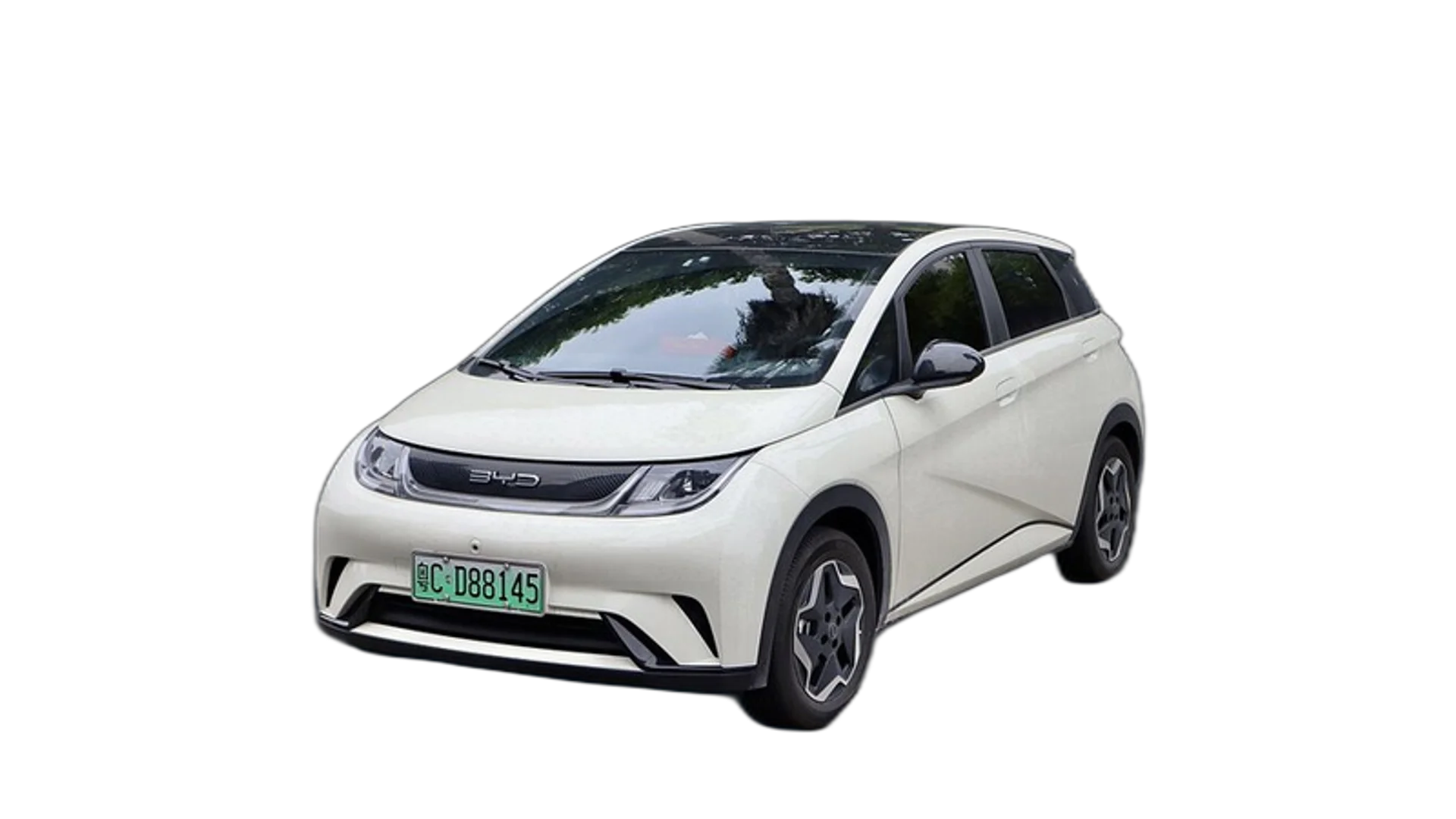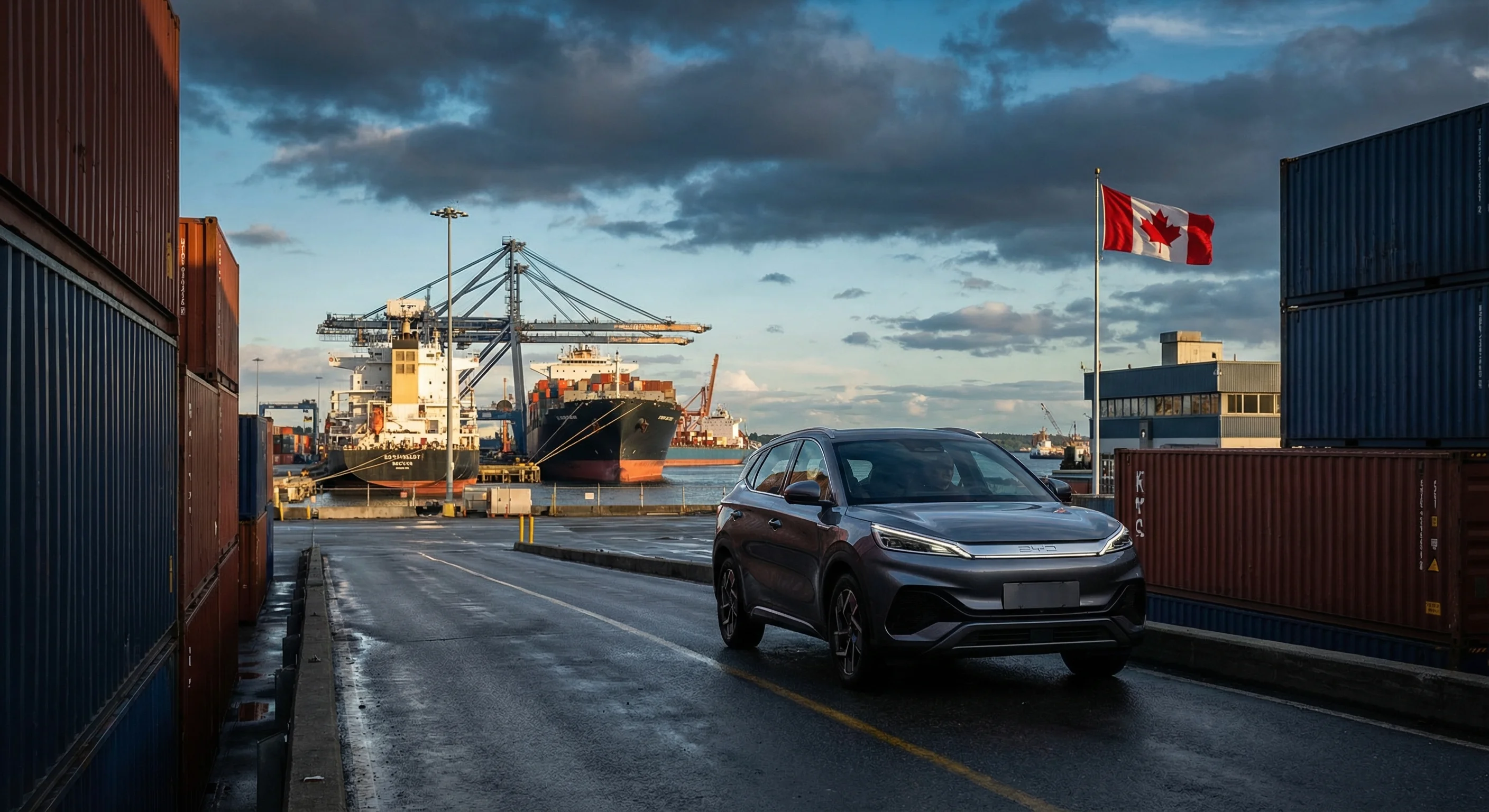
Canada dropped its tariff on Chinese-made electric vehicles from 100% to 6.1% in January 2026, opened import permit applications March 1, and capped the annual quota at 49,000 vehicles.
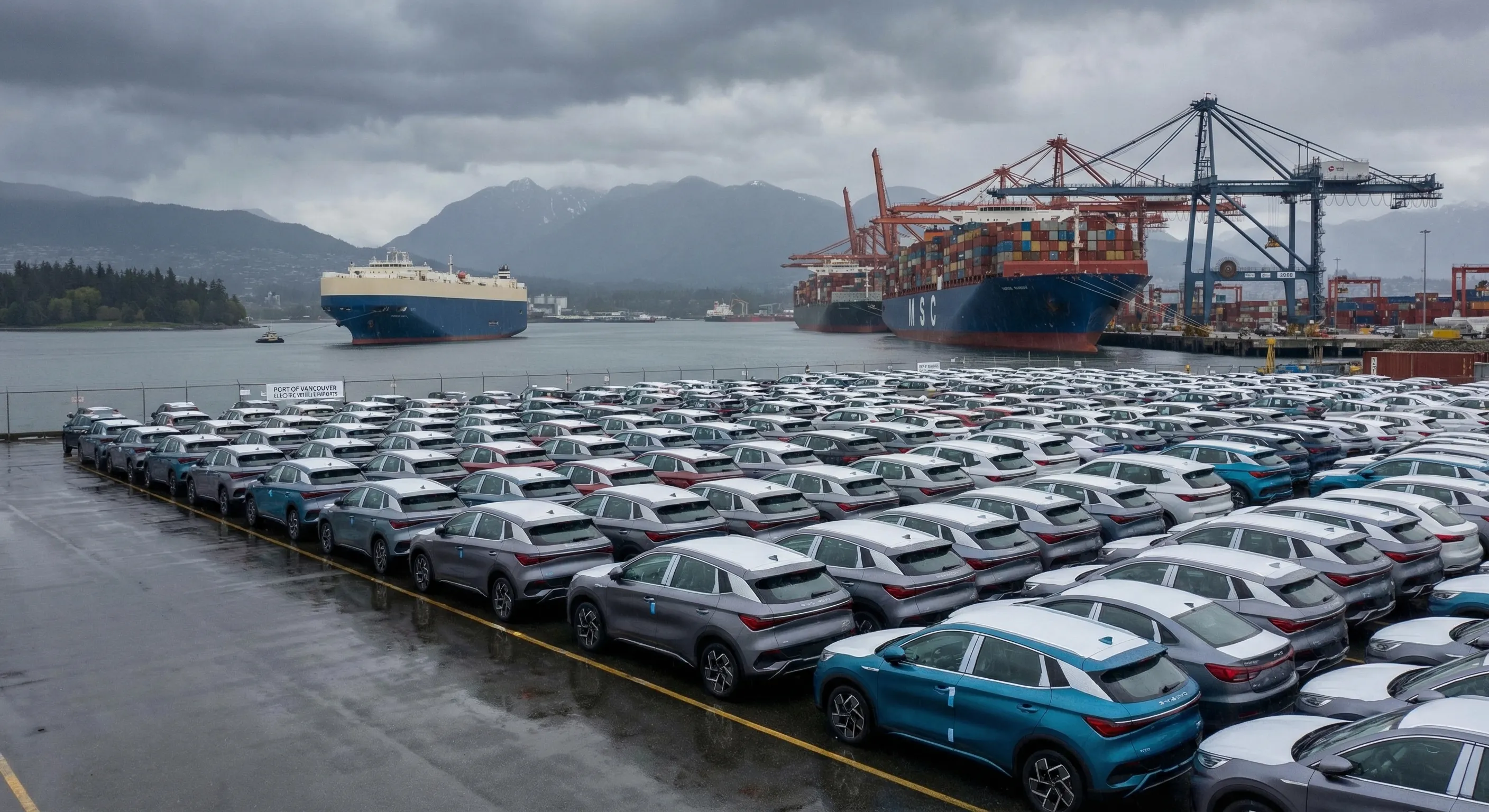
In January 2026, Prime Minister Mark Carney signed a trade deal with China that reportedly reduced the 100% tariff on Chinese-made electric vehicles to 6.1%. Up to 49,000 Chinese EVs per year are widely described as being eligible under that framework. Import permit applications were reported to open March 1. And BYD, the world's largest EV manufacturer, appears better positioned than most rivals if retail sales do move ahead.
This is no longer a fringe "maybe someday" story. But it is still a story where policy, permit allocation, compliance, and retail execution all have to line up before buyers should treat it as a done deal.
Key takeaways
- Canada replaced its 100% tariff on Chinese-made EVs with a 6.1% quota framework in January 2026, capping annual imports at 49,000 vehicles and growing to 70,000 by 2031.
- Global Affairs Canada published Notice 1162 on February 25, 2026, officially activating the quota system.
- BYD has a regulatory head start over most other Chinese brands, but late-2026 retail activity remains a forecast rather than settled dealer fact.
- BYD vehicles are excluded from Canada's $5,000 federal EVAP rebate, because the program requires assembly in Canada or a free-trade-agreement country and China is not an FTA partner.
- A Leger poll of 1,570 Canadians in early February 2026 found 61% now support letting more Chinese EVs into Canada, a reversal from 2024, when 61% said they'd be less inclined to buy one.
The Deal Explained
What Canada agreed to, in plain terms:
The Quota
Up to 49,000 Chinese-manufactured EVs can enter Canada per year at the reduced 6.1% tariff rate. That quota grows to 70,000 vehicles by 2031. To put that in context, Canada sold approximately 180,000 EVs total in 2025, so 49,000 Chinese imports would represent a massive chunk of the market.
The Affordability Requirement
This is the part that matters most for regular buyers. Current coverage describes an affordability requirement tied to the quota. If that interpretation holds, it would matter a lot because it would push lower-cost EVs into a market where sub-$35K new EV choices are almost nonexistent.
Think about that. Right now, the cheapest new EV you can buy in Canada is around $38,000-$40,000. This deal forces Chinese manufacturers to bring their most affordable models if they want access to the Canadian market. That's the BYD Seagull. That's the Dolphin. That's the kind of car that turns "I can't afford an EV" into "wait, I actually can."
The Tariff Math
Before this deal, a Chinese EV hitting the Canadian border faced a 100% tariff. A $20,000 BYD Seagull would have cost $40,000 before it even reached a dealer lot. That's dead on arrival.
At 6.1%, that same $20,000 car looks much more viable on paper. Add shipping, dealer markup, and certification costs, and you're still in modelled pricing territory, not a final Canadian sticker, but a far more plausible one.
What Canada Gets in Return
This isn't a one-way deal. Coverage of the framework ties it to wider trade concessions and longer-term investment language. But buyers should treat the manufacturing and joint-venture side as one of the least-settled parts of the whole story.
The Timeline
- January 2026: Deal announced during PM Carney's visit to China
- February 25, 2026: Global Affairs Canada publishes Notice 1162, officially activating the quota system
- March 1, 2026: Import permit applications open
- Late 2026: Earliest plausible retail activity for the best-positioned BYD models
- 2027: More realistic window for broader availability if dealer and service rollout matures
- 2027-2031: Quota grows gradually to 70,000 vehicles per year
What BYD Models Are Coming

BYD isn't just any Chinese automaker. They're the world's largest EV manufacturer by unit volume, bigger than Tesla. They make their own batteries, motors, and semiconductors. They have the kind of vertical integration that lets them build a quality car for a price that makes established brands uncomfortable.
And they appear to have a regulatory head start. While other Chinese manufacturers look further behind in the current record, BYD is the brand most often cited as being furthest along. That matters, but it still should not be confused with a fully settled Canada retail rollout.
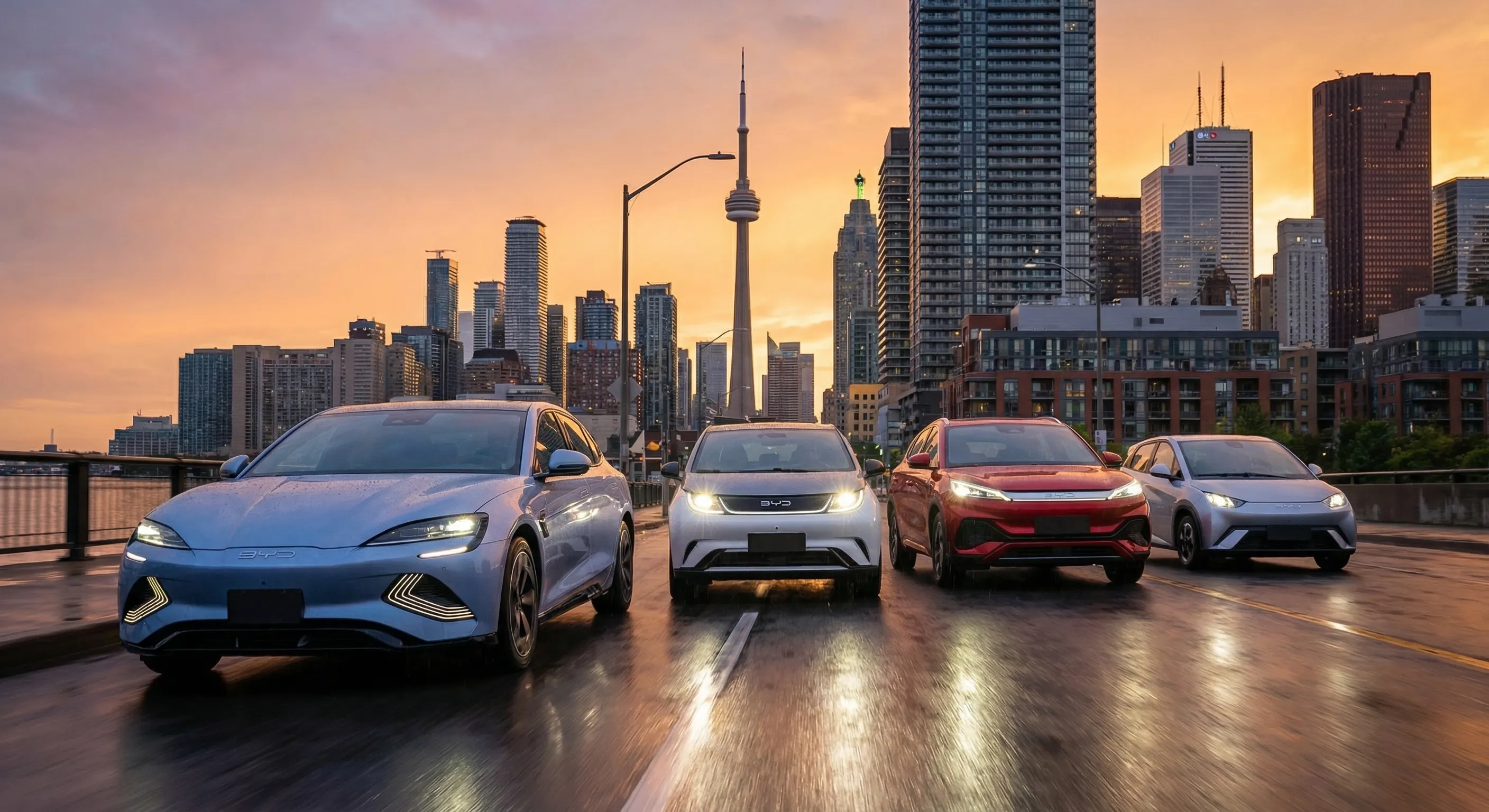
Here are the four models most often discussed as the first plausible BYD candidates:
BYD Seagull, The Game Changer
Estimated Price: $20,000-$25,000 CAD
This is the one everyone's talking about. A compact electric hatchback that is cheap enough in its home market to make a low-$20,000 Canadian scenario plausible. But that is still scenario math, not a published Canadian MSRP.
For context, the cheapest new car of any kind in Canada right now is around $20,000. The cheapest EV is almost double that. The Seagull could be the first truly affordable electric vehicle available in this country.
Range is commonly discussed in the roughly 300-400 km class depending on battery version. For commuting and city driving, that could be enough. But buyers should still treat exact Canadian specs as unconfirmed.
BYD Dolphin, The Smart Middle
Estimated Price: $28,000-$35,000 CAD
A step up from the Seagull. The Dolphin is a proper compact hatchback, roughly Civic-sized, and in other markets it is positioned as the more rounded mainstream option with stronger comfort and practicality than the cheapest city-car scenarios.
Modeled in the upper-$20,000s to mid-$30,000s, it would target a part of the market with very little true BEV competition today. That is exactly why the Dolphin matters in this story, even though final Canadian pricing is still unconfirmed.
BYD Atto 3, The Practical Choice
Estimated Price: $36,000-$42,000 CAD
This is BYD's global best-seller, a compact electric SUV positioned at a significantly lower price point than many established EV rivals. It is widely discussed as one of the more plausible first Canadian BYD models, but that remains forecast language.
The Atto 3 is the sensible pick. Crossover body style (which Canadians love), decent cargo space, respectable range, and a compelling price point. Note that BYD vehicles don't qualify for the $5,000 federal EVAP rebate; EVAP excludes Chinese-manufactured vehicles. So the Atto 3 stays at $36,000-$42,000. In Quebec, the $2,000 Roulez vert rebate could bring it as low as $34,000. That's still competitive with gas crossovers.
BYD Seal, The Premium Play
Estimated Price: $45,000-$55,000 CAD
We've already reviewed the Seal in detail on ThinkEV. The short version is that it looks interesting on paper, but any Canadian value judgment still depends on final launch pricing, the actual spec sheet, and service support.
The Seal goes head-to-head with the Tesla Model 3, BMW i4, and Polestar 2. On paper, it wins on value in every comparison. The question is whether Canadian buyers will take the leap on a brand they don't know yet. Based on early sentiment data, the answer is increasingly yes.
What This Means for Prices
The pricing implications matter for anyone buying a car in the next two years.
Gear worth having
As an Amazon Associate, ThinkEV earns a small commission from qualifying purchases — at no extra cost to you.
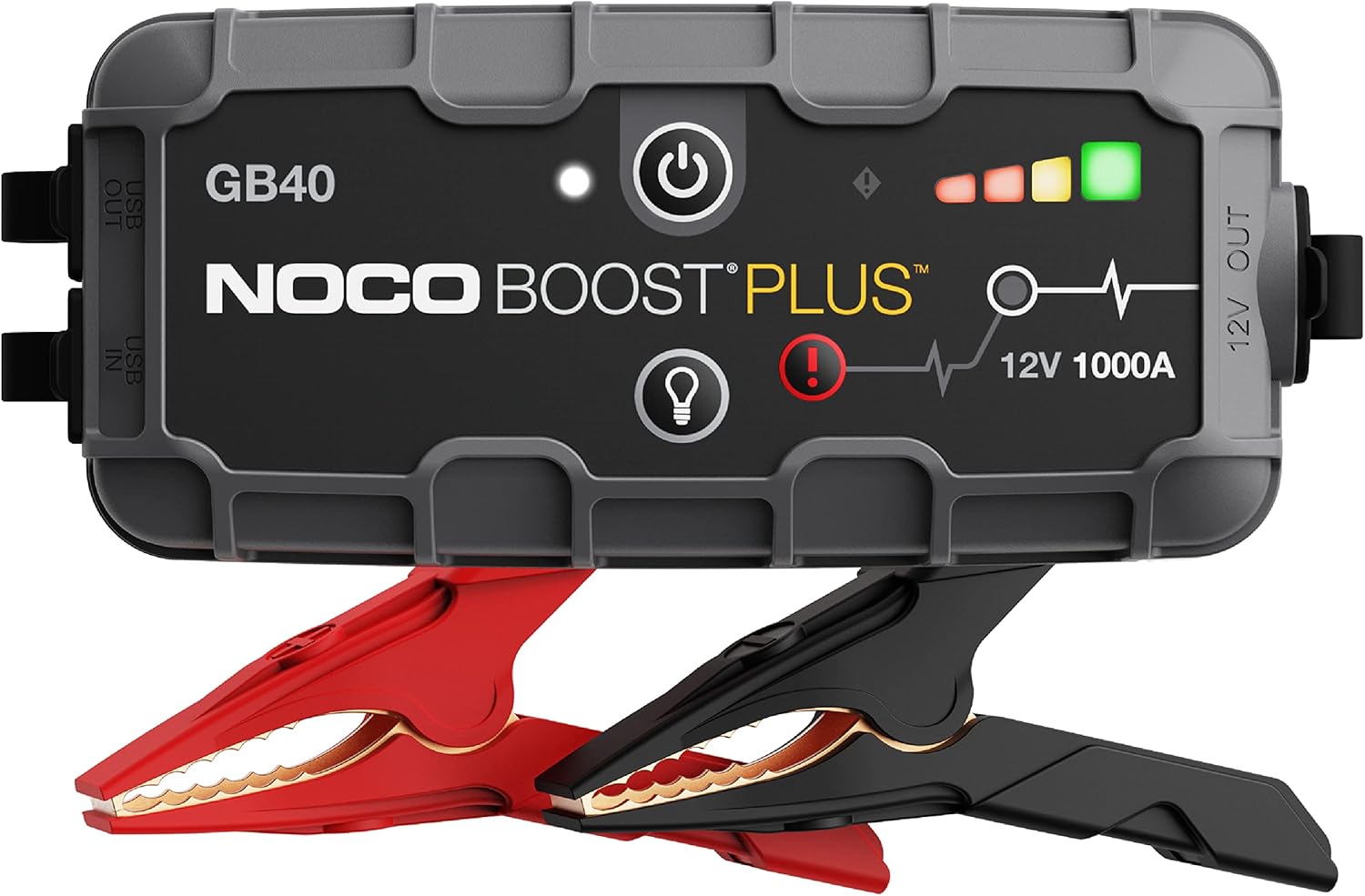
NOCO Boost Plus GB40 Jump Starter
A 1000A lithium jump starter that fits in your glovebox and works on any 12V battery. Your insurance against a dead 12V in a parking lot.
As an Amazon Associate, ThinkEV earns from qualifying purchases — at no extra cost to you.
The Sub-$35K Revolution
There is currently no new battery-electric vehicle in Canada priced below $35,000. Zero. If you want an affordable EV, your only option has been used: limited warranty, unknown battery health, and whatever condition the previous owner left it in.
If the affordability requirement is being described accurately in current reporting, it could force a meaningful share of the quota toward lower-priced EVs. That would matter because Canada still has very few genuinely affordable new EV choices. But I would not treat the exact 24,500 split as a final retail guarantee until the official mechanics are clearer.
Pressure on Every Other Brand
If BYD starts selling an Atto 3 around $40,000, Hyundai has a pricing conversation to answer. If the Dolphin lands near $30,000, Kia faces similar pressure. That is the competitive logic people are reacting to.
We may already be seeing some of that pressure in pricing posture and incentives, but this is still the kind of claim that should be framed cautiously rather than treated as proven causality.
The Rebate Reality
The rebate math that belongs in every Canadian car buyer's calculation:
BYD vehicles are manufactured in China, which means they don't qualify for the $5,000 federal EVAP rebate. EVAP requires vehicles made in Canada or FTA countries; China isn't included. In practical terms, that means a modeled BYD crossover price has to be compared against rebate-adjusted rivals, not just sticker-to-sticker.
A BYD Seagull at $23,000 stays at $23,000. Still remarkably cheap, and in Quebec with the $2,000 Roulez vert, you're at $21,000. That number still seemed impossible twelve months ago.
Gear worth having
As an Amazon Associate, ThinkEV earns a small commission from qualifying purchases — at no extra cost to you.

Grizzl-E Classic Level 2 EV Charger (40A)
Canadian-made and rated for minus 40C winters. 40A / 9.6 kW, NEMA 14-50, indoor/outdoor, 24-ft cable. The charger built for Canadian weather.
As an Amazon Associate, ThinkEV earns from qualifying purchases — at no extra cost to you.
The Consumer Question
The polling is worth reading carefully.
The Numbers
A Leger poll from early February 2026 (1,570 Canadians surveyed) found that 61% now support allowing more Chinese EVs into the Canadian market. That includes 24% who strongly support it. This is a dramatic reversal from 2024, when 61% of Canadians said they'd be less inclined to buy a Chinese-made EV.
A separate Nanos Research/Bloomberg poll found that 53% of Canadians say country of origin wouldn't affect their purchase decision at all. And 15% said they'd be more likely to buy an EV specifically because it was made in China, up from 9% in 2024.
What changed? Price. When the theoretical question of "would you buy a Chinese car?" becomes "would you buy a $23,000 electric car?", people's calculus shifts fast.
The Concerns
The polls aren't all sunshine. Canadians have real concerns:
- Quality and durability (38%): Fair question. BYD's track record in Europe and Australia is strong, but they're unproven in Canadian winters. How do Blade Batteries perform at -30? How does fit and finish hold up after five Canadian salt seasons? We don't have that data yet.
- Impact on Canadian auto industry (38%): Also legitimate. Ontario's auto sector employs hundreds of thousands of people.
Unifor has been vocal about wanting protections. The joint venture requirement in the deal is designed to address this, but it'll take years to materialize.
- Data security and privacy (33%): The connected car concern. Chinese vehicles have sophisticated software systems. Some buyers worry about data being accessible to the Chinese government. BYD has stated they comply with local data laws in every market, but the concern persists.
Chinese brand safety records, crash testing, and battery safety data are questions worth answering properly, not dismissing.
How It Affects Your Buying Decision

Practical advice for anyone looking at buying an EV this year:
If you're buying right now (March-June 2026): Buy what's available and take the EVAP rebate. The Chevrolet Equinox EV, Kia EV4, or VW ID.4 are all solid choices that qualify for the $5,000 federal rebate today. Don't wait for BYD if you need a car now. The first models are still not a live retail certainty, and early inventory would likely be limited even in the best-case rollout.
If you can wait until late 2026: You'll likely have more options. The Atto 3 and Seal are often discussed as the first plausible BYD models for Canada, likely through early partner markets such as Quebec and BC. Keep in mind: first-year launches from a new-to-Canada brand come with the usual risks. Limited service network, unknown parts availability, and no meaningful Canadian owner base yet.
If you're waiting for the Seagull specifically: The Seagull still looks like a later and less-settled case. Late 2026 to early 2027 is a commonly discussed scenario, not a confirmed dealer promise. If the low-$20,000 pricing story is what matters most to you, the Seagull is worth watching, but not worth treating as available until it is actually launched.
The smart play: Don't let the perfect be the enemy of the good. The EVAP rebate is at its maximum right now. Chinese competition will push prices down across the entire market over the next 2-3 years, but the $5,000 rebate shrinks every year too. Running the numbers on what's available today versus what might be available tomorrow is the right exercise. For most people, the answer is: buy a good EV now, take the full rebate, and enjoy the car.
The Verdict
This deal is the biggest thing to happen to the Canadian car market in decades. Not because Chinese EVs are inherently better than what's already here. Many established brands make excellent electric vehicles. But because the introduction of real, meaningful competition at price points that didn't exist before changes the equation for everyone.
A $25,000 electric car forces every other manufacturer to answer one simple question: why should I pay more? Sometimes the answer is convincing: better dealer network, proven winter performance, established resale value. Sometimes it isn't.
For Canadian buyers, this is directionally good news if it turns into real competition. More options. More price pressure. More scrutiny on what established brands are charging. Whether that becomes immediate buyer benefit depends on what actually launches.
The odds of Chinese-EV entry into Canada look much stronger than they did a year ago. But the permit picture, dealer picture, and first-shipment reality still need verification as events unfold.
Gear worth having
As an Amazon Associate, ThinkEV earns a small commission from qualifying purchases — at no extra cost to you.
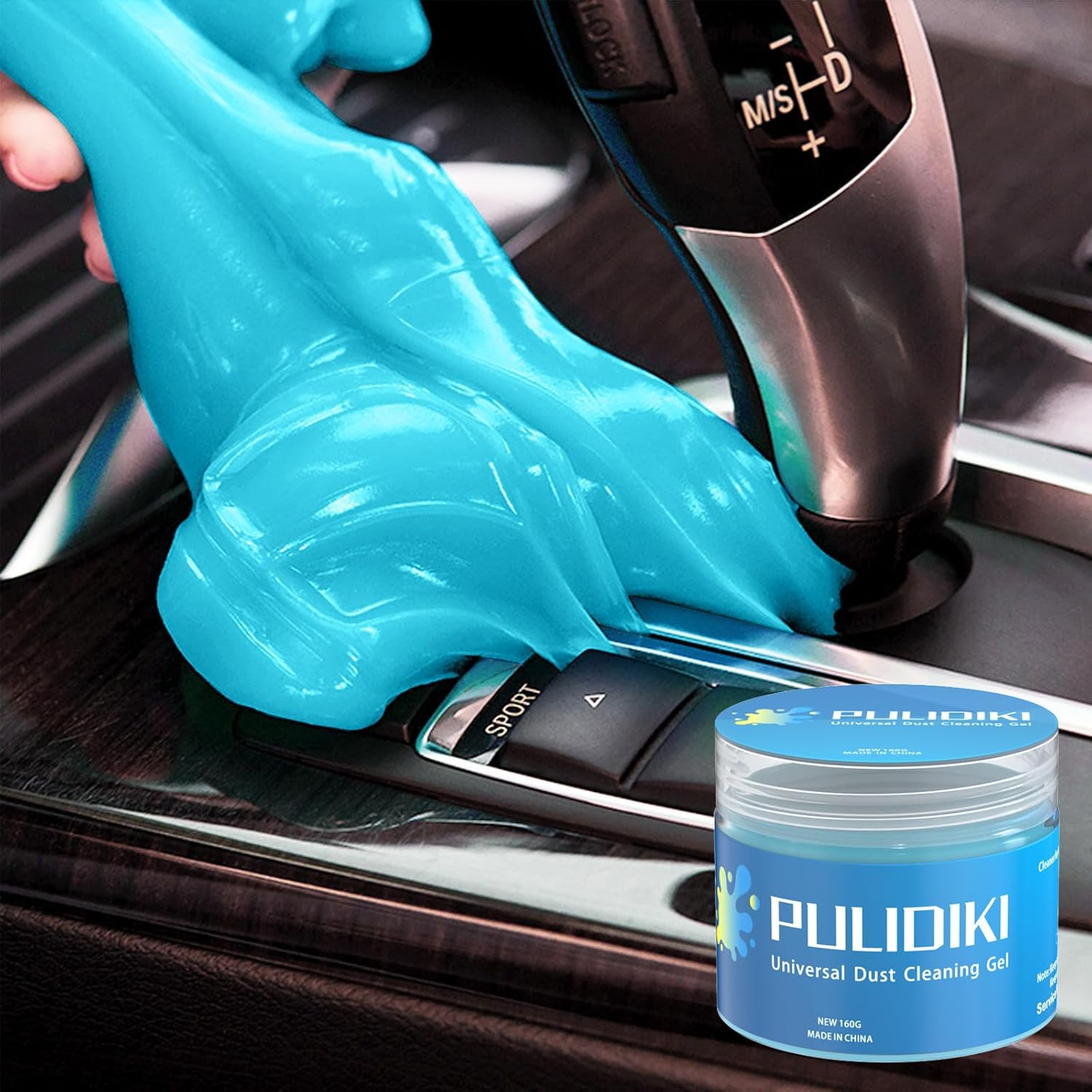
PULIDIKI Car Cleaning Gel (Detailing Putty)
Press it into vents, buttons, and seams and it lifts out dust you did not know was there. Weirdly satisfying, genuinely useful.
As an Amazon Associate, ThinkEV earns from qualifying purchases — at no extra cost to you.
Gear worth having
As an Amazon Associate, ThinkEV earns a small commission from qualifying purchases — at no extra cost to you.

WixGear Magnetic Air Vent Phone Mount (2-Pack)
A magnet strong enough that your phone never flinches over potholes or rail crossings. Two in the box, one for each car.
As an Amazon Associate, ThinkEV earns from qualifying purchases — at no extra cost to you.
Related Reading
- Canada's New $5,000 EV Rebate (EVAP), The Complete 2026 Guide, Everything you need to know about claiming the federal rebate
- BYD Seal Review: Premium Sedan Analysis, Our in-depth look at BYD's premium sedan positioning
- BYD Seal vs Tesla Model 3 Comparison, Head-to-head comparison of two popular sedans
- Are New EVs Safe? Complete Safety Analysis, Crash testing, battery safety, and what the data actually shows
- New EV Brands Coming to Canada, Every new brand entering the Canadian market
Gear worth having
As an Amazon Associate, ThinkEV earns a small commission from qualifying purchases — at no extra cost to you.

Car Cup Holder Coasters (4-Pack)
Drop-in coasters that catch spills and crumbs so your cup holders stay clean. Rinse and reuse forever.
As an Amazon Associate, ThinkEV earns from qualifying purchases — at no extra cost to you.

Founder & Chief Editor
Vlad Pereira is the founder and chief editor of ThinkEV.ca, the Canadian electric-vehicle publication he writes and edits from Courtenay, British Columbia. He covers EV pricing, federal and provincial rebates, charging costs, and the Chinese manufacturers now entering Canada, from the buyer's side rather than the press-fleet side. ThinkEV is a venture of Vlad Pereira Online; his writing on health, income and the long game lives at vladpereira.com.
Frequently asked questions
When can I actually buy a BYD in Canada?
Will BYD vehicles qualify for the $5,000 EVAP rebate?
Where will I get a BYD serviced in Canada?
Are Chinese EVs safe?
What about the 100% tariff? I thought Chinese EVs were banned.
Should I wait for BYD or buy a different EV now?
More EV & road-trip finds
Affordable upgrades worth a look — tap any to check the price on Amazon.
 ★ 68
★ 68WeatherTech FloorLiner for Tesla Model 3
View on Amazon ★ 47,507
HOMEXCEL Microfiber Cloths (12-Pack)
View on Amazon ★ 314
★ 314Mini USB LED Ambient Lamps (4-Pack)
View on Amazon ★ 900
★ 900Personalized Photo Car Air Freshener
View on Amazon ★ 12,396
K KNODEL Car Trash Can with Lid
View on Amazon ★ 848
★ 848Coiled USB-C to USB-C Car Cable (2-Pack)
View on Amazon ★ 87
★ 87Car Window Sun Shades for Kids (4-Pack)
View on Amazon ★ 268
★ 268Anti-Slip Leather Steering Wheel Cover
View on AmazonRead, Plan, Then Stay Current
Explore our expert articles to understand incentives and ownership costs, use the map to pressure-test charging reality, then subscribe so new EV coverage comes straight to you.
Continue Reading
BYD Canada Lineup: The Four Models Coming First
Chinese EVs Entering Canada 2026: BYD, Chery, Geely

Gen Z and Millennials Are Fuelling Canada's EV Boom
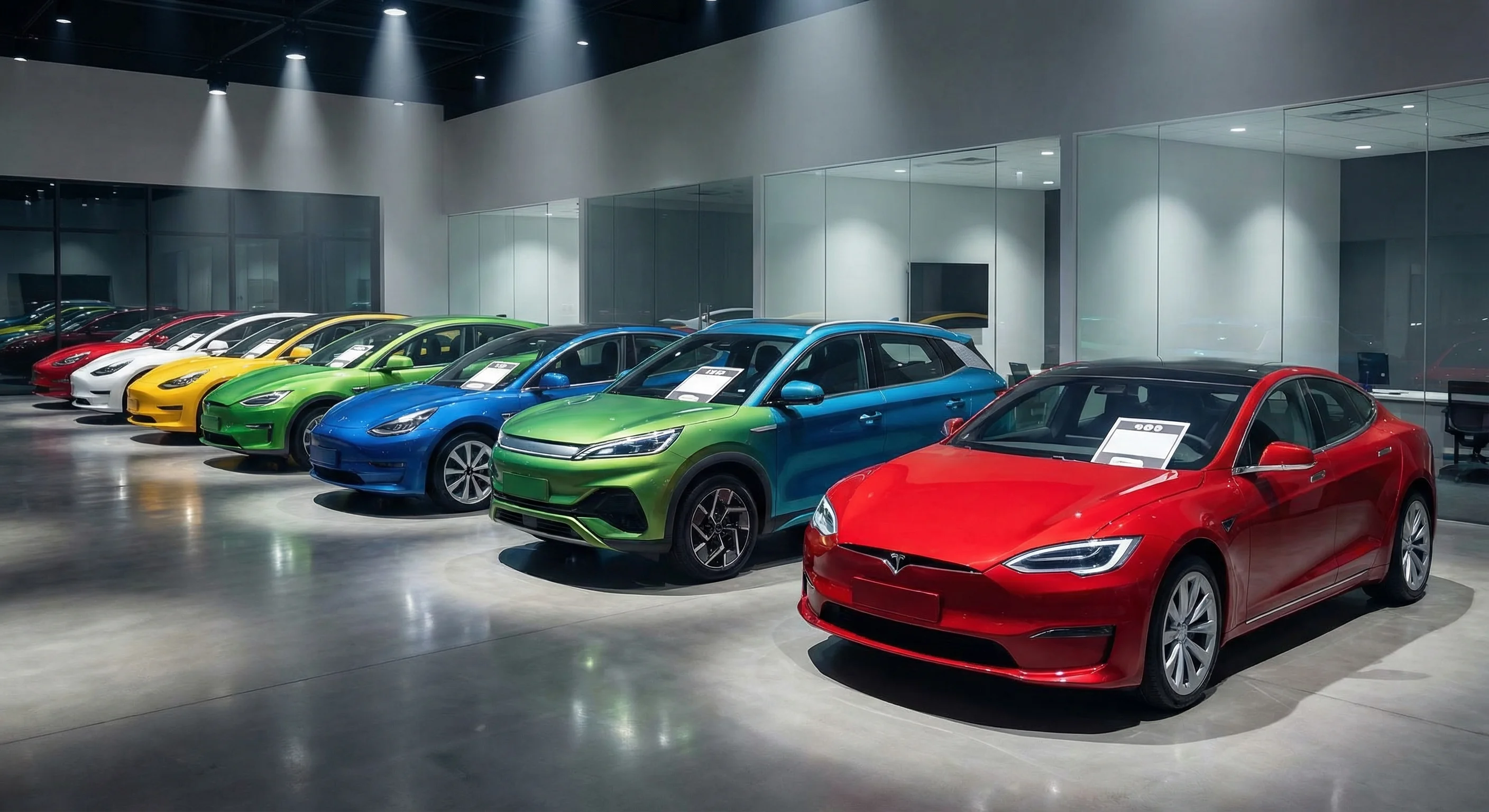
7 Chinese EVs Under $35,000 Coming to Canada
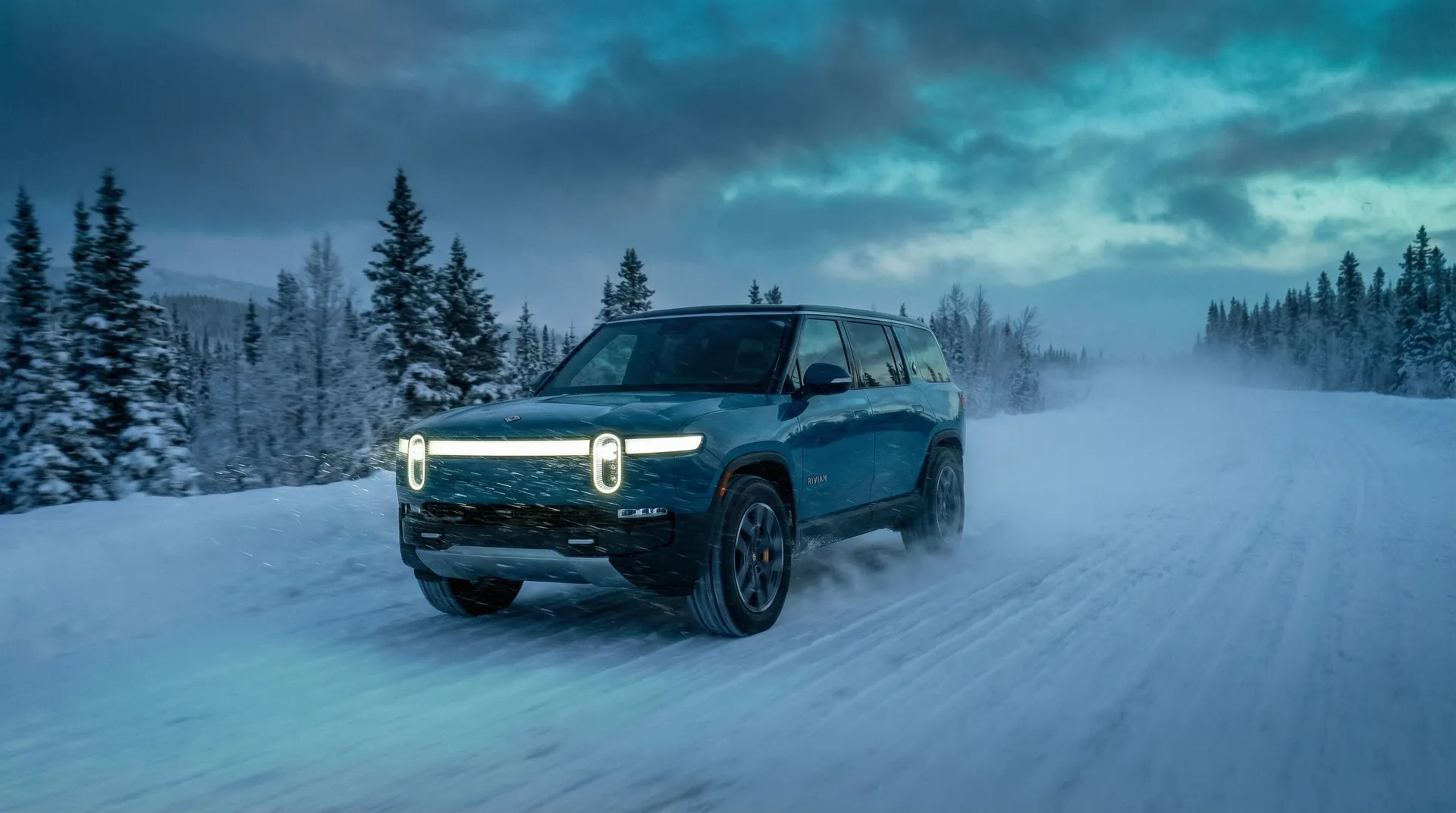
New EVs Coming to Canada: Which Are Worth Buying