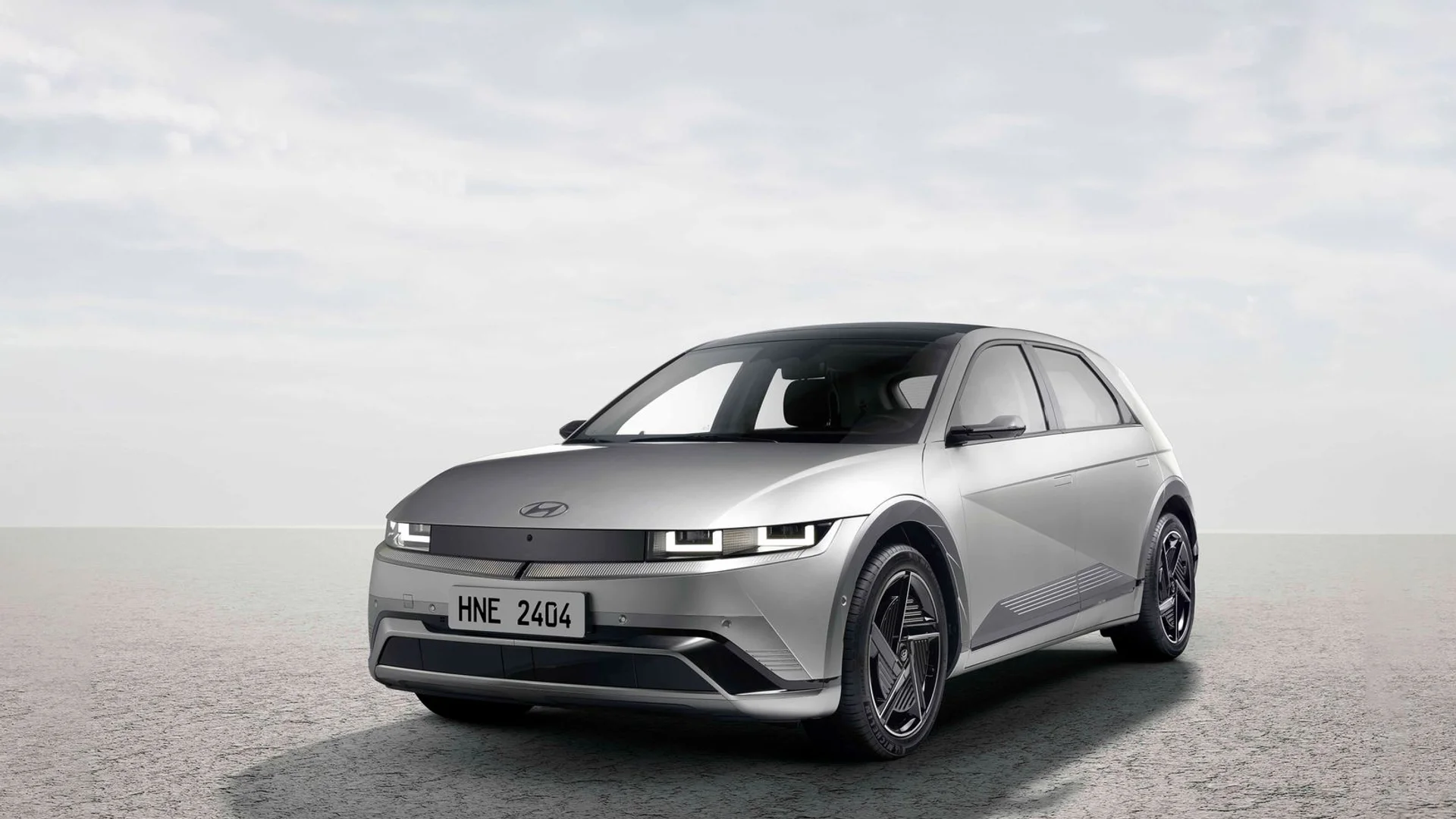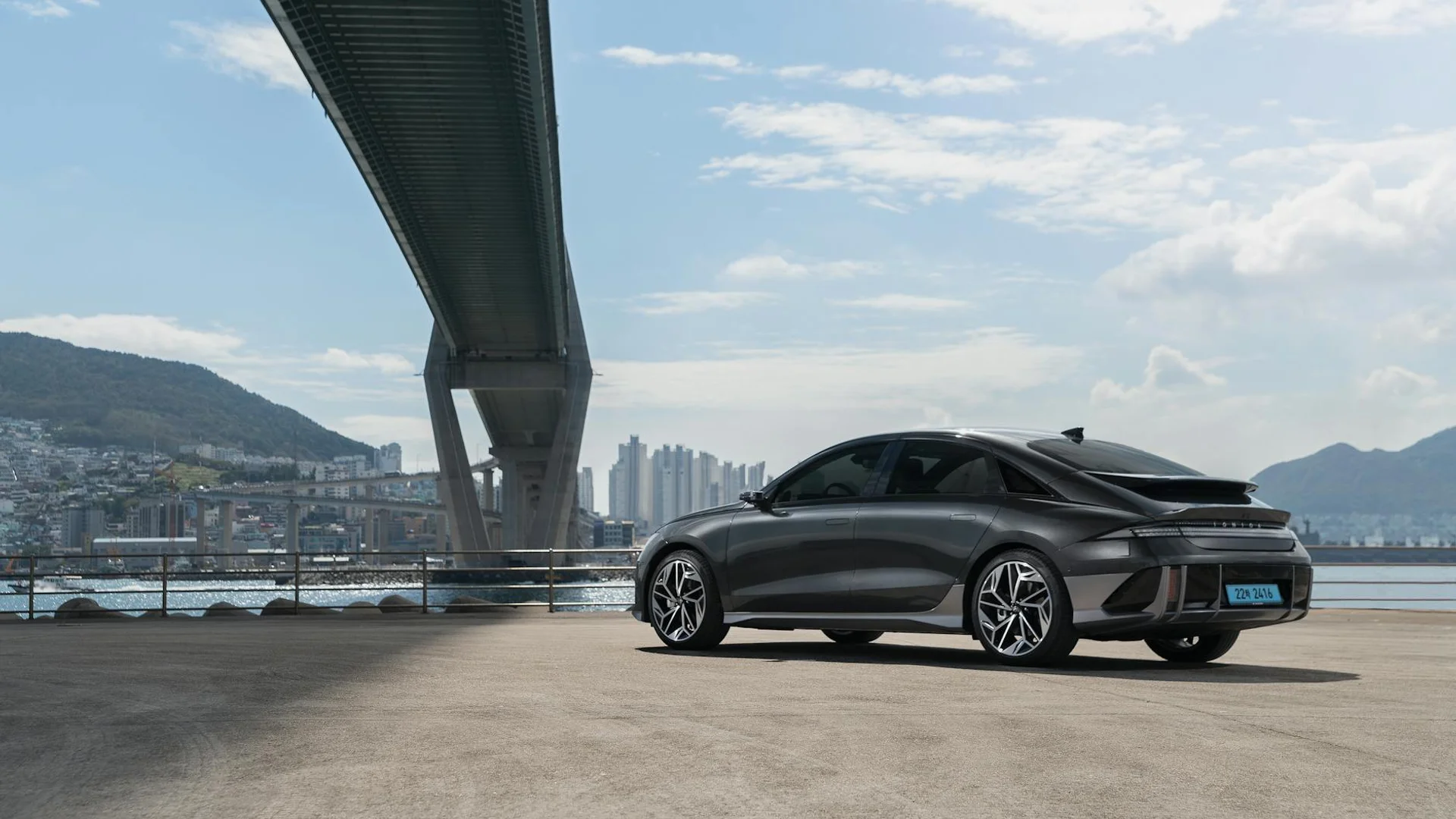
Hyundai gave the Ioniq 6 N a full wing before it gave it a price. That sequencing tells you something. The wing showed up in renders, then in track footage, then in the production car, and only after all of that did the company officially launch the new IONIQ 6 N in its home market, attaching a number to a thesis it had already made visually obvious.
Most automakers price first and let the engineering catch up, see BMW's habit of announcing M-car MSRPs before the chassis tuning leaks out. Hyundai inverted the order. The car landed in Korea at roughly $57,000, then in the UK with 641 hp, and now arrives in North America looking more expensive than a brand that spent a decade fighting for parity with Toyota has any right to look, in the best way. The Ioniq 6 N isn't a halo car in the old sense, a one-off built to draw foot traffic into showrooms. It's a manifesto. Read carefully, and it tells you what Hyundai now believes performance EVs should be, and what it thinks most of the industry has gotten wrong.
That's the bias I'm bringing to this whole piece, so let me put it on the table early: I think the Ioniq 6 N is the most intellectually coherent performance EV anyone has shipped since the Taycan, and the coherence is the part worth writing about. The horsepower is almost incidental.
Key takeaways
- Hyundai priced the Ioniq 6 N at roughly $57,000 in Korea, after the wing, the track footage, and the thesis were already established.
- The active rear wing generates real downforce above 120 km/h, not styling, a deliberate counter to Tesla's flush-aero philosophy.
- 800V architecture solves a thermal problem, not a launch problem: the Ioniq 6 N sustains output across multiple hot laps without derating.
- 641 hp is the European and UK figure; North American buyers should use that number when cross-shopping M3s and C63s.
- Hyundai N has used the Nürburgring as a calibration environment for a decade, tuning cars like the i30 N to be consistent across heat and stress rather than fastest on a single lap.
The Wing Is the Argument, Not the Accessory
The active rear wing on the Ioniq 6 N is a genuine wing, not a spoiler, not a lip, an aero element that generates measurable downforce. Motortrend's first look review called it the "winged wonder sedan" precisely because that appendage signals a category jump for a brand whose previous N cars wore lips and ducktails rather than full aerodynamic furniture. Wings are not styling. Wings are downforce. Downforce changes the car's character above 120 km/h in ways that nothing inside the cabin can fake.
Tesla's Model S Plaid, the obvious competitive reference, uses flush aero as its philosophy, treating drag reduction and downforce as a single optimisation problem solved through software-controlled ride height and a near-invisible decklid. Tesla's argument is that the driver should never feel the aero working. Hyundai's argument, made literally in carbon fibre, is the opposite: you should feel it. You should know the car is pressing into the road. The wing is honest about what it does, and honesty is rarer than carbon in this segment.
There's a deeper move underneath the carbon. Hyundai's N division has spent a decade building a brand around what its engineers call "corner rascal" character, cars that feel willing rather than clinical. Translating that to an EV is hard, because EVs are dense, heavy, and fundamentally different in how their mass moves through corners. The wing is the mechanical answer to that translation problem. You can't engineer your way to a 1,900-kg sedan that handles like a hot hatch through suspension geometry alone. You need the air to help.
That's why the wing matters more than the horsepower number. The IONIQ 6 N, Hyundai's first electric sports sedan, packs a monstrous 650 horsepower, yet Hyundai insists it's not all about the performance. The Korean-market figure rounds to 650 hp; the UK and European specification lands at 641 hp, and that 641 hp is the number to use when comparing the car against M3s and C63s in Western markets. When a manufacturer with that much output on the table says the headline isn't horsepower, listen. They're telling you the engineering centre of gravity sits somewhere else, in feel, in calibration, in the conversation between driver and road that downforce makes possible. I find that more interesting than any 0–100 figure Hyundai could have put on the slide deck.
The interesting part is that Hyundai had to add visible aero to a body that was already aerodynamically extreme. The base Ioniq 6 was designed as a slipperiness exercise. Reshaping it for downforce meant fighting the original design intent. Engineering teams don't pick that fight unless the strategic answer demands it.
800 Volts as Philosophy, Not Just Engineering
Hyundai's E-GMP platform runs an 800V electrical architecture. The number you should care about isn't the volts. It's the implication. 800V exists to solve one specific problem, and that problem is not 0–100 km/h.
Most performance EVs optimise for the launch. Ludicrous Mode, Plaid Mode, Track Mode, these are vocabularies built around the standing start. The 800V architecture, by contrast, is a thermal architecture. Higher voltage means lower current for the same power. Lower current means less resistive heat in the cables and busbars. Less heat means the battery, motor, and inverter can sustain output for longer before the system protects itself by derating. The practical translation is blunt: you can do a hot lap, come back to the pits, fast-charge, and head out again, without the car telling you to wait twenty minutes.
Porsche established 800V as the serious tier with the Taycan. Hyundai's decision to build the entire E-GMP family on the same architecture wasn't an accident; it was a declaration of intent about what segment Hyundai wanted to belong to. The 2026 Hyundai Ioniq 6 N spec sheet from Car and Driver reads as an answer to a question most EV buyers don't yet know to ask: how does this car behave on lap five?
800V is overkill for a commuter sedan. It only earns its keep when the car is being used hard, repeatedly, with charging events between sessions. So the architectural decision implies a use case. Hyundai is building cars for people who will, eventually, take them to a track day, even if 95% of buyers never will. That's the same logic Porsche has used for fifty years. It is not the logic Tesla used to scale, and it is not the logic the legacy German brands used to bridge into EVs.
There's a quieter benefit to 800V that gets less press: regenerative braking under load. When a 1,900-kg sedan is shedding 100 km/h of speed into a corner, the energy going back into the battery is substantial, and the higher-voltage architecture handles that recovery without the brake-pedal feel deteriorating across a session. Brake feel is one of those engineering details that doesn't show up in spec sheets but that any driver notices within ten minutes. It's the kind of thing N's engineers care about disproportionately.
What this actually means is that Hyundai has chosen the harder engineering problem, sustained performance, over the easier marketing problem, peak performance. That choice is rarer than it sounds. Most brands pick the easier problem, ship a launch-control headline, and call it a track car. Hyundai didn't, and that's the single decision that tells you the most about how the company now thinks.
Gear worth having
As an Amazon Associate, ThinkEV earns a small commission from qualifying purchases — at no extra cost to you.

WeatherTech FloorLiner for Tesla Model 3
Deep-channel liners that trap every drop of slush and salt. The difference between a ruined interior and a showroom-fresh cabin after a Canadian winter.
As an Amazon Associate, ThinkEV earns from qualifying purchases — at no extra cost to you.
Drift Mode and the Question of Manufactured Playfulness
The Ioniq 6 N has a drift mode. So does the Kia EV6 GT, its corporate sibling, sharing the same E-GMP bones. The feature is now category table stakes. The question worth asking is whether it's a feature or a stance.
Drift mode on an AWD EV is software. Specifically, it's torque distribution logic that biases output rearward, loosens stability control intervention, and allows the rear axle to slip in a controlled way. The physics of an inherently AWD car would prevent meaningful oversteer; the algorithm permits it. So drift mode is, by definition, manufactured playfulness, a digital simulation of an analogue sensation that the hardware would otherwise refuse to produce.
That sounds like a criticism. It isn't. It's the central engineering question of the entire performance EV category: can software construct the feel of a great driver's car, or is the feel an emergent property of mechanical compromises that EVs can't make?
The EV6 GT is the right comparison point because the hardware underneath is so close. Same platform, same 800V architecture, same broad torque-vectoring toolkit. What separates the two cars is calibration philosophy. The EV6 GT treats drift mode as a discrete state, engage it, the car shifts character, disengage it, the car returns to default. That's my read of it after driving both, and it's the read I'd bet on. The Ioniq 6 N, with its longer wheelbase and the added downforce of the rear wing, has the chassis license to make the drift behaviour continuous rather than binary: rear-bias torque can be modulated against the aero load, so the slip angle the driver gets is the slip angle they ask for, not a preset the software thinks they wanted.
Porsche has been quietly answering this question for years. The PDK gearbox feels analogue because Porsche engineered the shift logic, throttle blip, and rev-matching curves to mimic what a great driver does manually. PDK is not a transmission; it's a belief about how a car should feel, expressed in code. Hyundai's drift mode and N e-Shift (a simulated gearbox feel) sit in the same intellectual lineage. Both companies have decided that analogue joy can be algorithmically constructed, and that the construction is itself a form of craft.
The risk is the failure mode of cynical implementation: drift mode as a marketing checkbox, executable once at low speed in a parking lot, irrelevant to the actual driving experience. The Ioniq 6 N's wider track, flared fenders, and rear-biased weight distribution are the physical answer to that suspicion. The hardware is set up to drift. The software permits it. The two-layer design is what separates a feature from a stance.
This is what doesn't get said about the EV performance category: most of the cars are software pretending to be hardware. The Ioniq 6 N seems to be hardware that software helps express. The distinction is subtle, and it's also the entire argument.
The Ioniq 6 Body as Aerodynamic Instrument
The base Ioniq 6 was designed as an efficiency exercise. The E-GMP platform let Hyundai build the body around airflow rather than retrofit airflow around an inherited platform, a freedom most legacy sedans don't get. When Driving.ca first reviewed the car they noted that with manufacturers piling on electric SUVs, it was refreshing to see Hyundai come up with a sedan that rides on a dedicated EV platform, the Ioniq 6, brand new for the 2023 model year, sharing showroom floor with the Ioniq 5. The result is one of the slipperiest production sedans on the market, with a body shape engineered around a single optimisation: how far can this sedan go on a kilowatt-hour?
Now read the design brief for the N variant. The car needs to handle. It needs to plant. It needs to corner at sustained lateral G without floating. None of that comes from a low-Cd silhouette designed for range. The slippery shape that defines the standard Ioniq 6 is, for performance purposes, the wrong shape.
This is the engineering contradiction the N team had to resolve, and the resolution is more interesting than the headlines made it look. They didn't simply add a wing to a slippery body. They retooled the airflow logic. The flared fenders aren't styling, they're consequences of a wider track, which itself is a consequence of a stiffer suspension that demanded more roll stability, which demanded different geometry. The underbody diffuser changes how air exits the car. The active wing modulates downforce against drag depending on speed. Each change cascades.
Gear worth having
As an Amazon Associate, ThinkEV earns a small commission from qualifying purchases — at no extra cost to you.
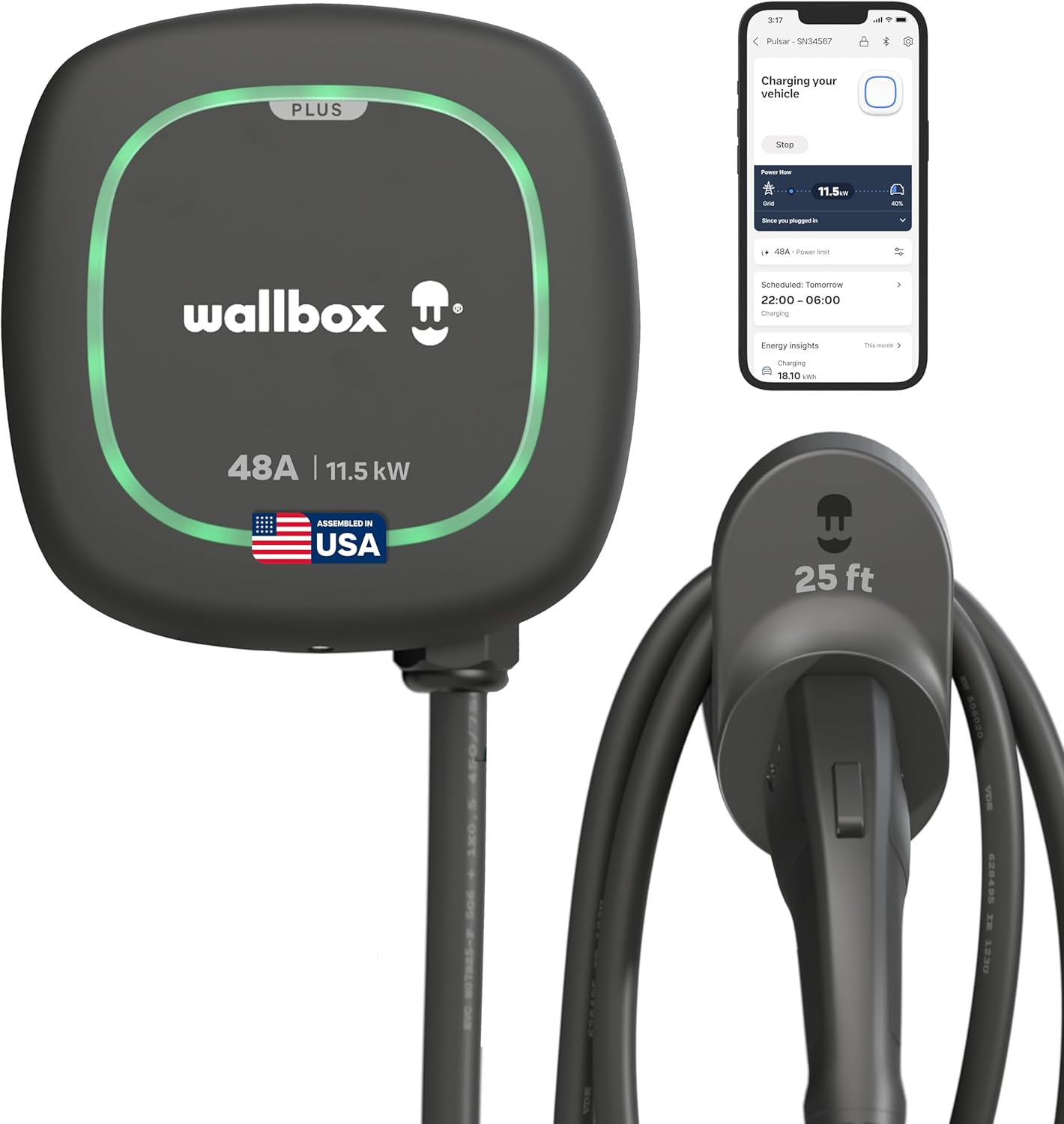
Wallbox Pulsar Plus 48A Level 2 Charger
Compact, sleek charger with app control and power sharing for two EVs. 48A / 11.5 kW, NEMA 14-50. Looks as good as your EV.
As an Amazon Associate, ThinkEV earns from qualifying purchases — at no extra cost to you.
The competitive set is instructive here. Driving.ca's catalogue of all-electric rivals to the Ioniq 6 includes models like the Ford Mustang Mach E, Nissan Ariya, Polestar 2, and Tesla Model 3, as well as crossovers like the Hyundai Ioniq 5, EV6, and Tesla Model Y. That list is the performance-EV-adjacent universe the N variant is dropping into. The Mach-E GT keeps the crossover silhouette. The Polestar 2 BST 270 modifies suspension but not aero meaningfully. The Tesla Model 3 Performance is, aerodynamically, the same car as a base Model 3. The Ioniq 6 N is the one variant in this competitive cluster whose body has been rethought around handling rather than skinned for it, and to my eye that's the single most undersold thing about the car.
The base car's pricing also frames the magnitude of the upgrade. Edmunds notes "there's good value here even though the Ioniq 6's price does feel high" for the standard model, and the N variant forces a different value calculation entirely, one that has nothing to do with kWh-per-dollar. Most performance variants are cosmetic transformations of an unchanged airflow logic. This one restructures the airflow logic itself, which is why MotorTrend reached for the phrase "winged wonder sedan." Whatever you think of the prose, the description identifies the right thing: the car's surface is doing different work than the standard Ioniq 6's surface.
The way Tesla solves the performance-sedan problem, and Hyundai doesn't, is by leaning entirely on motor output and ride-height software, leaving the body alone. Hyundai's solution involves rethinking the body. Both are valid; they're just different beliefs about what a fast EV is. I think Hyundai's belief is the more durable one, because software can be replicated by anyone, and a body that's been re-tuned around downforce can't.

Gear worth having
As an Amazon Associate, ThinkEV earns a small commission from qualifying purchases — at no extra cost to you.

PULIDIKI Car Cleaning Gel (Detailing Putty)
Press it into vents, buttons, and seams and it lifts out dust you did not know was there. Weirdly satisfying, genuinely useful.
As an Amazon Associate, ThinkEV earns from qualifying purchases — at no extra cost to you.
What Hyundai's N Division Actually Learned From Nürburgring
Hyundai N has used the Nürburgring as a calibration environment for a decade. Not a marketing backdrop, a calibration environment. There's a difference, and it shows up in the cars. The i20 N and i30 N hot hatches were not the fastest in their classes, and that was deliberate. They were the most communicative. The steering told you what the front axle was doing. The pedal feel was consistent across temperature ranges. The body roll was tuned to a specific curve, neither stiff-as-a-board nor soft-as-a-couch.
Translating that DNA to an EV sedan is genuinely hard. Hot hatches are light, short-wheelbase, mechanically simple cars. The Ioniq 6 N is heavy, long-wheelbase, and mechanically dense, a battery pack that contributes most of the mass, two motors, complex thermal plumbing. The chassis problem is fundamentally different. And yet the engineers found a way to preserve the feedback loops that define an N car, at least according to the MotorTrend first drive, which spent its evaluation on European roads.
641 hp means nothing without those feedback loops. Plenty of EVs make 641 hp and feel inert at the wheel, the steering goes light at speed, the brakes deliver inconsistent feel session-over-session, the body responds to inputs with a half-second of latency that a calibrated chassis would never permit. The Ioniq 6 N is the first N EV sedan, which means it's also the first time the N team has had to prove the philosophy scales to the sedan format with the weight that comes with sedan EVs.
MotorTrend's first drive framed it as "Watch Out, BMW M3, C63 AMG!", a comparison that, on paper, is absurd. A Hyundai sedan against the M3? Five years ago, that comparison would have been condescending. The fact that it now reads as a serious benchmark, written by an editor with a long memory of M3 development, tells you how much the N division's engineering credibility has compounded. I don't think the M3 should be sweating yet, but I also don't think the comparison reads as a stretch anymore, and "doesn't read as a stretch" is genuinely how brand credibility ratchets upward over a decade.
The Nürburgring detail is what gives the credibility its texture. You don't tune a car at the Nürburgring to make it fast there; you tune it to make it consistent across temperature, surface, and stress. The Ring is a stress test. What the N team learned there over the i20/i30 era was how to make a car that doesn't fall apart on lap eight. That knowledge is now load-bearing in the Ioniq 6 N's calibration.
The Pricing Wager: Who Is This Car Actually For?
North American MSRP has not been officially confirmed by Hyundai at the time of writing. Based on Korean and European pricing signals, the $57,000-equivalent Korean launch and the 641 hp UK specification, the car arrives in North America at a meaningful step above the standard Ioniq 6's positioning. That spread itself is revealing. It's not Tesla Model 3 Performance money. It's Porsche Taycan entry money, BMW i4 M50 money, the lower edge of EV performance sedan money. Hyundai is positioning the car to compete in a segment where, until very recently, no Hyundai dared appear.
That positioning is a wager. The bet is that a buyer exists who wants Taycan-tier engineering, the 800V architecture, the active aero, the calibrated chassis, without the Porsche badge premium and without the option-list architecture that takes a base Taycan well into six-figure territory in three checkboxes. Hyundai is, in effect, asking the market: do you care more about the engineering or the badge?
That financial logic is more interesting than the wing, because it means Hyundai is betting its platform architecture on driver credibility, which is not a bet Toyota would ever make. The old question, value for money against Toyota and Honda, had a known answer. The new question doesn't. There is no historical data on whether a Hyundai-badged performance sedan in this price band can find a buyer at scale. The Ioniq 5 N has hinted at the answer; sales have been better than skeptics predicted, and the press reception has been disproportionately strong. But the Ioniq 5 N is a hot crossover, and the crossover format hides some of the Hyundai-versus-Porsche tension. A sedan, with no SUV practicality cover, asks the question more nakedly.
The carbon aero kit complicates the picture in a useful way. Carscoops, citing Korean coverage, reports the full N Performance Parts aero package is priced at ₩11,000,000, roughly $7,500 USD or about $10,300 CAD at current rates, and is now available to order in Korea before rolling out to other international markets. A halo car gets a halo car. A platform gets a parts catalogue. Hyundai shipped a parts catalogue. That's the move I keep coming back to: you don't ship a parts catalogue alongside a halo car unless you're confident enough buyers will configure the parts catalogue. It's a quietly aggressive piece of positioning.
What this reveals is Hyundai's confidence. Companies don't launch a performance-parts catalogue alongside a halo car unless they expect the halo car to find an audience that will actually buy parts for it. The kit is a tell.
Gear worth having
As an Amazon Associate, ThinkEV earns a small commission from qualifying purchases — at no extra cost to you.

WixGear Magnetic Air Vent Phone Mount (2-Pack)
A magnet strong enough that your phone never flinches over potholes or rail crossings. Two in the box, one for each car.
As an Amazon Associate, ThinkEV earns from qualifying purchases — at no extra cost to you.
What This Means for the Next Decade of Hyundai EVs
The Ioniq 6 N is the load-bearing proof-of-concept for the entire N EV roadmap. If it sells, if the press treats it as a serious driver's car, if the Taycan and i4 M50 cross-shoppers take it home, the N version of the Ioniq 5 stops being a one-off, and Ioniq 7 N becomes plausible, and the whole 800V platform investment starts amortising properly.
The 800V architecture is expensive. Higher-voltage components, inverters, batteries, charging hardware, cost more than the 400V equivalents that most of the industry runs. That cost only gets paid back if the platform supports premium models that justify the engineering investment. The base Ioniq 6 doesn't fund 800V on its own. The Ioniq 5 doesn't either. Performance variants, with their margins and their prestige, are how the architecture pays for itself.
So the Ioniq 6 N isn't just a halo car. It's a financial argument for keeping E-GMP at 800V instead of cost-cutting back to 400V on future generations. That's a quiet but significant fact, and it's the part of this story I find genuinely under-discussed. Every premium specification on the Ioniq 6 N is, indirectly, an argument to Hyundai's finance team about the next-generation platform.
Stripped of the marketing language, Hyundai's long game is to own the "driver's EV" category before the legacy European brands complete their EV transitions. BMW is mid-transition. Mercedes is restructuring its EV strategy. Porsche is constrained by its own brand discipline to ship in low volume. Hyundai has speed and scale that none of those competitors can match, but only if the engineering credibility holds.
I'd watch three things over the next eighteen months. First, whether the Ioniq 6 N gets benchmarked seriously against the M3, not just compared, benchmarked, by the long-form European driving press. Second, whether the carbon aero kit makes it out of Korea into North American and European markets, which would confirm the performance-ecosystem thesis. Third, whether Hyundai's N division ships an Ioniq 7 N or equivalent SUV at a similar price point. If those three things happen, Hyundai will have done something none of the legacy brands have managed: built genuine performance-EV credibility from a starting point of value-brand association.
The wing was the first move. The price was the second. Now we find out whether the market, and the press, and the buyers who actually take this car to track days, agree with the argument Hyundai has been making in carbon and software. The wing is still up there, doing its honest work above 120 km/h. That's the closing image. That's the whole thesis.
Gear worth having
As an Amazon Associate, ThinkEV earns a small commission from qualifying purchases — at no extra cost to you.
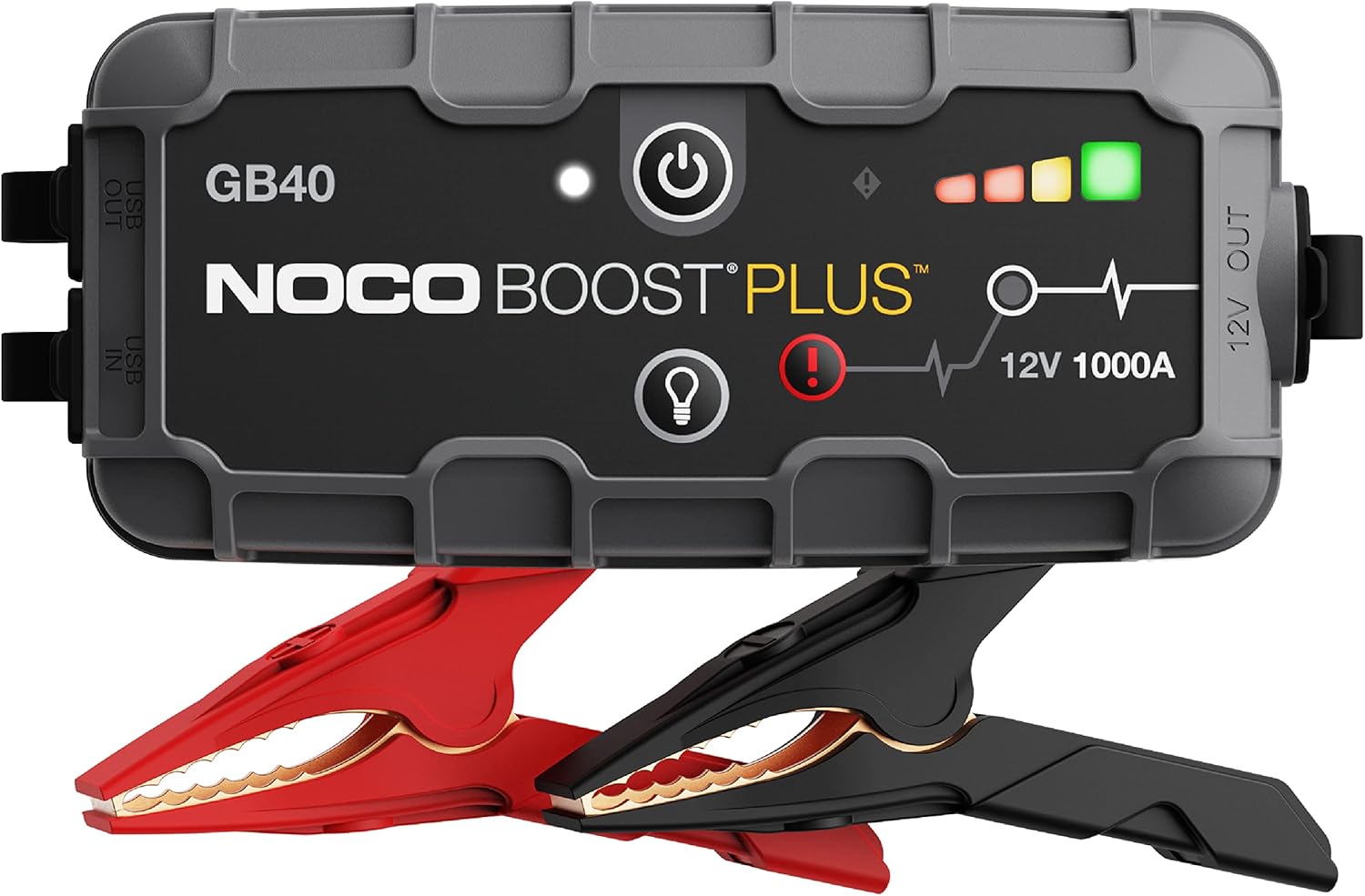
NOCO Boost Plus GB40 Jump Starter
A 1000A lithium jump starter that fits in your glovebox and works on any 12V battery. Your insurance against a dead 12V in a parking lot.
As an Amazon Associate, ThinkEV earns from qualifying purchases — at no extra cost to you.

Founder & Chief Editor
Vlad Pereira is the founder and chief editor of ThinkEV.ca, the Canadian electric-vehicle publication he writes and edits from Courtenay, British Columbia. He covers EV pricing, federal and provincial rebates, charging costs, and the Chinese manufacturers now entering Canada, from the buyer's side rather than the press-fleet side. ThinkEV is a venture of Vlad Pereira Online; his writing on health, income and the long game lives at vladpereira.com.
Frequently asked questions
What is the Canadian price for the Ioniq 6 N?
How does 800V charging actually change track-day practicality?
Does the active rear wing add real downforce or just look aggressive?
How does this compare to a Tesla Model S Plaid for track use?
Is the Ioniq 6 N eligible for Canada's EV rebate programs?
More EV & road-trip finds
Affordable upgrades worth a look — tap any to check the price on Amazon.
 ★ 8,681
Chemical Guys Complete Car Wash Kit
View on Amazon ★ 164
★ 164Solar-Powered LED Ambient Light
View on Amazon ★ 1,083
Crystal Push-Start Button Ring (2-Pack)
View on Amazon ★ 27,769
Car Cup Holder Coasters (4-Pack)
View on Amazon ★ 721
★ 72145W USB-C Fast Car Charger
View on Amazon ★ 119
★ 119Foldable Waterproof Trunk Organizer
View on Amazon ★ 268
★ 268Anti-Slip Leather Steering Wheel Cover
View on Amazon ★ 2,941
Microfiber Cleaning Cloths (Multi-Pack)
View on AmazonRead, Plan, Then Stay Current
Explore our expert articles to understand incentives and ownership costs, use the map to pressure-test charging reality, then subscribe so new EV coverage comes straight to you.
Continue Reading
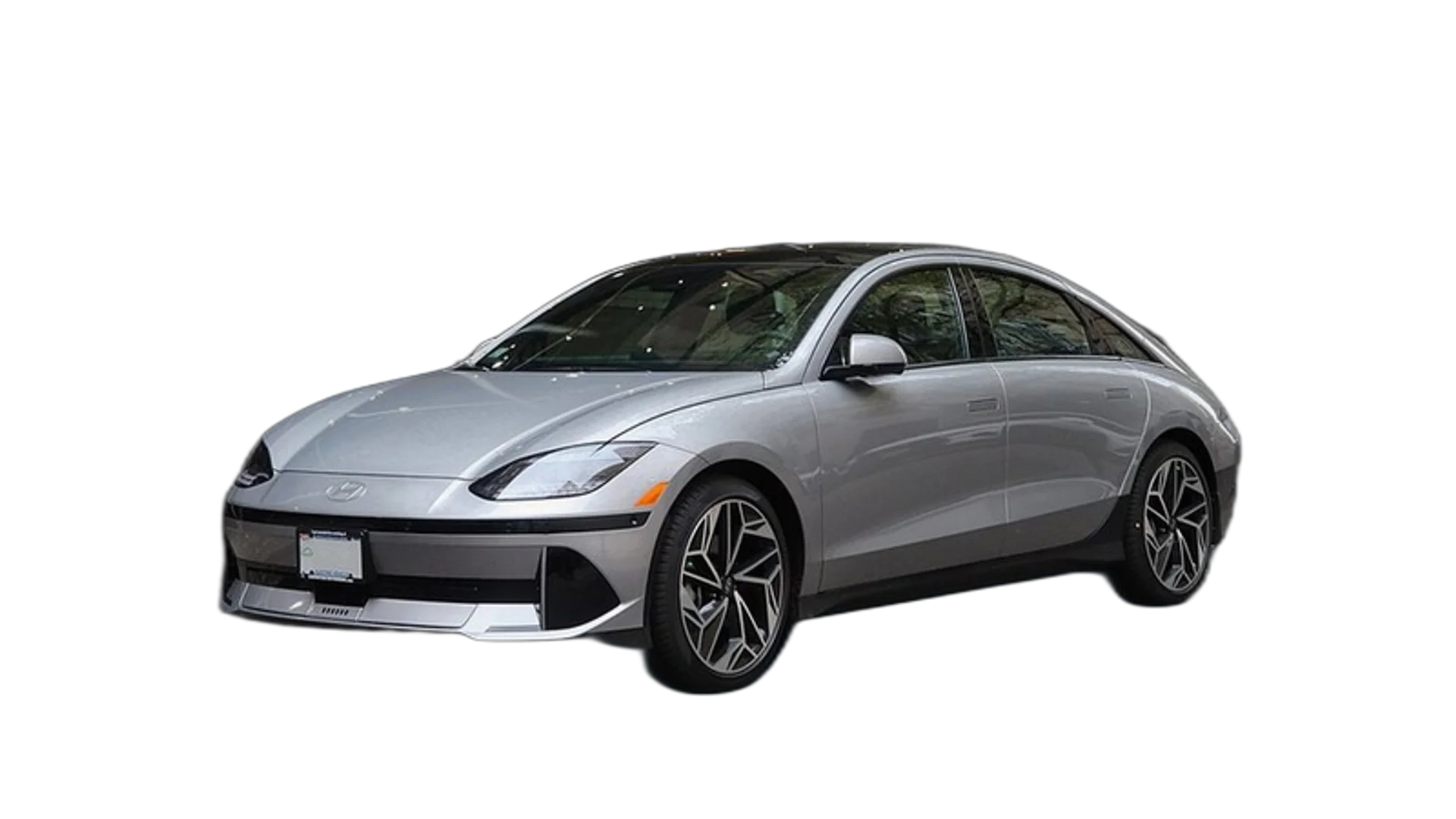
Hyundai IONIQ 6 N Still On Track for US Launch by End of 2026

Hyundai Dealer's $418 EV Charge Exposes Public Charger Loophole
2027 Hyundai IONIQ 5 Base Price Goes Up $250 to $35,250
Hyundai IONIQ 9 Calligraphy Black Ink Launches at £79,320
Hyundai and Kia Tell 14 EV Owners to Park Away From Structures