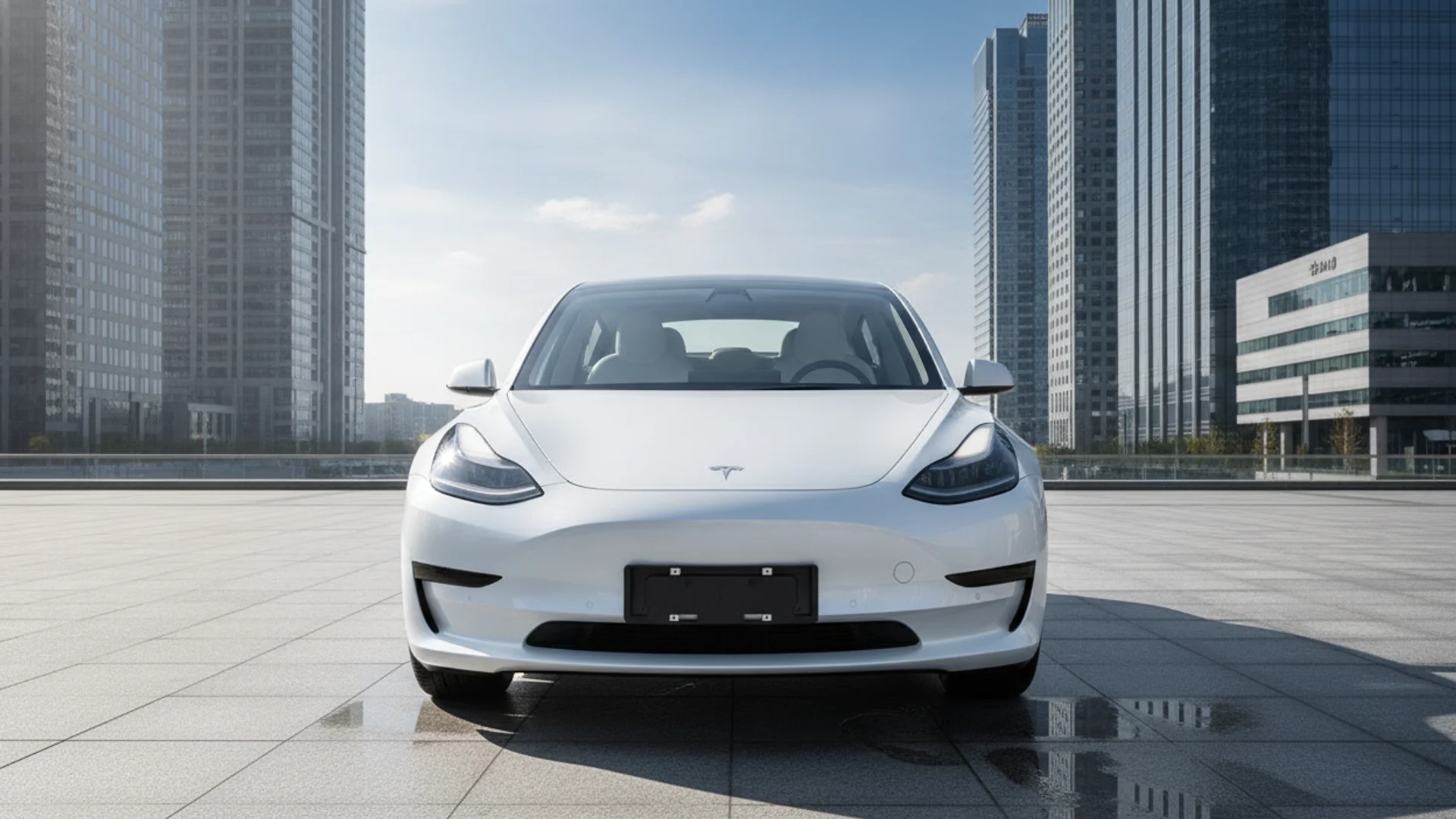
A BYD Seagull costs about $10,000 in Shanghai. That figure survives every exchange-rate adjustment you can reasonably throw at it, and that's the whole story in a sentence.
People want to know: are Chinese EVs cheap because of production, or because the yuan trades below its real purchasing power? It's the right question. It's also the question where most Western commentary quietly takes the easier answer, because the easier answer doesn't require admitting that Chinese manufacturers have built something durable. The production answer is correct, the currency answer is partially real but structurally minor, and Canadian buyers will discover which one matters more the moment the tariff wall starts coming down on January 16, 2026.
Currency is not the story. Industrial capacity is. And the data says so loudly enough that the comfortable Western framing has become a liability.
Key takeaways
- BYD's Blade Battery pack cost sits below US$60/kWh, $20–$40 less per kWh than comparable Western packs.
- Rhodium Group finds state subsidies explain just 5% of BYD's cost advantage over Tesla; scale and vertical integration do the rest.
- A 15% yuan undervaluation adjustment moves the Seagull from $10,000 to $11,500, still tens of thousands below any Western EV.
- Chinese industrial electricity runs at roughly half U.S. rates, a gigafactory cost advantage tariffs cannot touch.
- Canada's tariff wall starts coming down January 16, 2026, that's when the production gap, not the currency gap, becomes impossible to ignore.
The PPP Question Is Real, and Mostly Wrong
Grant the strongest version of the currency argument first. The view, which shows up in serious economic circles, says Chinese manufacturers sell in a currency artificially suppressed by 15%, by some expert estimations. Fifteen percent is not nothing. On a $40,000 vehicle, that's $6,000 of price gap that would evaporate at a "true" exchange rate.
Now look at the actual gap. A BYD Seagull lands around $10,000 domestically. Adjust it upward by 15% to neutralise the alleged undervaluation, and you're at $11,500. Adjust by 25% to be generous to the currency hawks, and you're at $12,500. The Seagull is still landing below every comparable Western EV by tens of thousands of dollars. The currency adjustment moves the decimal point a little. It doesn't move the argument.
The more disciplined version of this analysis comes from Rhodium Group, and it's not flattering to the currency-first crowd. Rhodium finds state subsidies explain just 5% of BYD's cost advantage over Tesla, with scale, lower-cost talent, and vertical integration doing the rest. Their published framing is explicit: the aim is to identify by how much each Chinese OEM is able to undercut Tesla's prices in China while maintaining similar, or even higher, margins, and the analysis examines what does and does not explain the price gap. Margins. That word matters. If BYD were surviving on currency tricks, its margins would be paper-thin. They aren't. They're competitive with, and often above, Tesla's.
The currency story is the comfortable Western explanation. It lets policymakers frame the issue as a financial distortion to be tariffed away rather than an industrial capacity gap to be closed. I understand the appeal. I think it's wrong as the primary driver, and pretending otherwise has cost North American manufacturers a decade they didn't have to lose.
A useful sanity check: a common assumption is that Chinese automakers are more competitive because they are more productive. Rhodium's published work spends serious effort interrogating whether that's the answer. Productivity matters, but it's not the whole story either, it's bundled with structural choices about who makes what, where, and at what scale. Currency is the smallest piece of the bundle.
Vertical Integration Is Doing the Heavy Lifting
The single most-underrated reason Chinese EVs are cheap is that BYD doesn't really act like a car company. It acts like a vertically integrated battery, semiconductor, motor, and shipping conglomerate that happens to also assemble cars. The cleanest framing is structural: vertical integration of the supply chain versus an independent supply chain and parts, plus far less SG&A overhead. That's not a marketing line. That's a balance sheet.
When a Western OEM buys a battery pack, it pays its cell supplier's margin, its module assembler's margin, its pack integrator's margin, and the freight cost between three factories. When BYD builds a pack, it captures all of that internally. Chinese EVs have cheaper components from supply chain dominance, especially for energy components. The energy components, cells, BMS hardware, motors, power electronics, are where the dollars are. BYD is in that supply chain at every layer.
The chemistry choice compounds the advantage. LFP cells run 15 to 25 percent cheaper per kWh than NMC, and BYD's Blade Battery pack cost sits well below US$60/kWh according to BloombergNEF and Bernstein Research, numbers the breakdown of EV battery degradation in Canada walks through in more detail. Western pack costs at comparable scale are routinely $20 to $40 higher per kWh. On a 60 kWh vehicle, that's a built-in $1,200 to $2,400 cost gap before anyone has bent metal. That single line item is bigger than the entire labour-arbitrage debate, and almost nobody quotes it.
Then add scale. BYD moved roughly 1.76 million battery-electric vehicles in 2024. Chinese electric vehicles are typically cheaper than those manufactured in countries like the USA due to a combination of economic scale, supply chain advantages, and state support, China is the world's largest EV market, which allows manufacturers like BYD and NIO to benefit from economies of scale, with cost per unit falling as production volumes rise. Scale isn't just a fixed-cost story. It's a learning-curve story. Every doubling of cumulative production volume historically takes 15 to 20 percent out of battery costs. BYD has been on that curve longer and harder than anyone else.
You can't out-financial-engineer this. You can't currency-adjust your way past a competitor who owns the cell, the chip, the motor, and the boat. The way Tesla narrowed its own cost gap, and the way every other Western OEM is now scrambling, is by trying to copy this structure, not by waiting for the yuan to revalue. That's the tell. The companies closest to the problem don't believe the currency story either. They're building gigafactories.
Gear worth having
As an Amazon Associate, ThinkEV earns a small commission from qualifying purchases — at no extra cost to you.

WeatherTech FloorLiner for Tesla Model 3
Deep-channel liners that trap every drop of slush and salt. The difference between a ruined interior and a showroom-fresh cabin after a Canadian winter.
As an Amazon Associate, ThinkEV earns from qualifying purchases — at no extra cost to you.
Labour, Energy, and SG&A: The Costs Nobody Quotes
The conversation tends to fixate on labour and then move on, which gets the order of operations wrong. Labour matters less than people think. The bigger structural items are energy and overhead.
Chinese industrial electricity runs at roughly half U.S. rates. Battery cell manufacturing is one of the most energy-intensive processes in the auto supply chain, drying electrodes, formation cycling, climate-controlled clean rooms. Half-price electricity at gigafactory scale is a real number. It is also a number that does not shift when the yuan revalues. My read: this is the single most-underweighted line item in the entire Western policy debate, and it's the one tariffs cannot touch.
Engineering talent is the second piece, and here I'll concede ground to the skeptics. The cost-per-engineer gap between China and the West is real but compressing fast. A senior battery engineer in Shenzhen in 2026 is not cheap in any meaningful sense, top Chinese OEMs are paying globally competitive packages because the talent pool is finite and the competition for it is brutal. This advantage is time-limited. It probably has another five to seven years of meaningful gap left, and then it converges.
On the assembly floor, the picture is more nuanced than the wage-arbitrage story suggests. Assembly labour marginal cost is a small cost component relative to the vehicle cost. That's the part of the cost stack the protectionist arguments tend to over-index on. Direct assembly labour might be five to seven percent of a finished EV's cost. Even halving it doesn't move the price-tag needle the way subsidy hawks imply. The labour story is real but small, and frankly, the obsession with it is doing the analytical work of distracting from the parts of the stack where the real gap lives.
The cost item that nobody quotes, and that is genuinely under-discussed, is SG&A: selling, general, and administrative. Chinese OEMs operate with structurally leaner overhead. Fewer dealer layers, leaner marketing budgets, flatter management structures, less legal and compliance scaffolding. None of this is illegal or unfair. It's a different organisational design that takes meaningful percentage points out of the per-vehicle cost. Western OEMs carry dealer franchise overhead that Chinese direct-to-consumer brands simply don't have. That's a permanent gap unless Western dealer franchise laws change, and they won't.
The operational cost gap survives currency normalisation, survives wage convergence, and survives a generous interpretation of the subsidy data. It's structural. For readers tracking how this plays out at the dealer lot, the provincial breakdown of which EVs are actually selling across Canada shows where the price-sensitivity already exists in the market, and where structurally cheaper imports will land hardest.
What Subsidies Actually Do, and Don't, Explain
Let's deal with the subsidy argument seriously, because it's the one I want to disagree with most carefully.
Gear worth having
As an Amazon Associate, ThinkEV earns a small commission from qualifying purchases — at no extra cost to you.
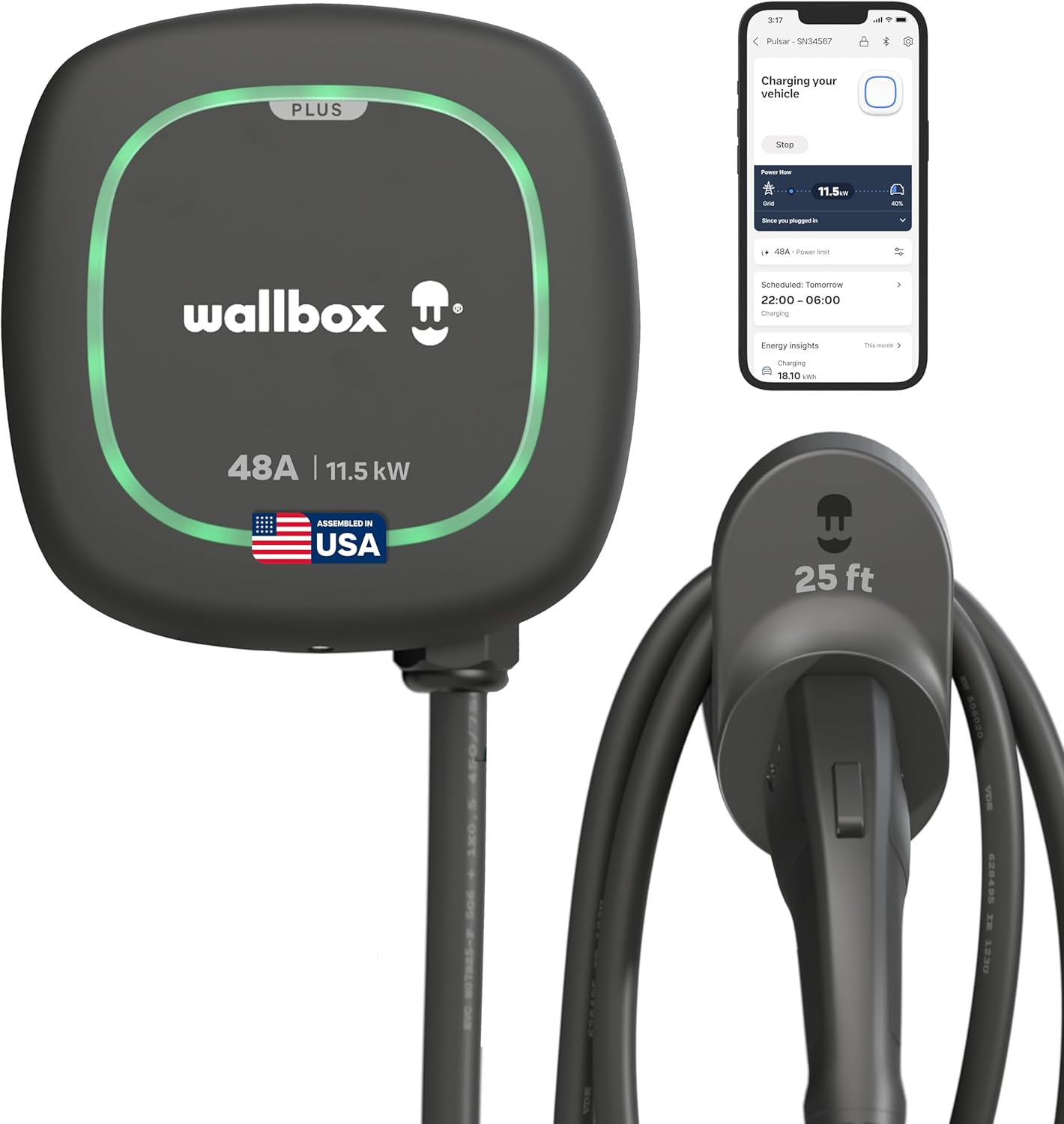
Wallbox Pulsar Plus 48A Level 2 Charger
Compact, sleek charger with app control and power sharing for two EVs. 48A / 11.5 kW, NEMA 14-50. Looks as good as your EV.
As an Amazon Associate, ThinkEV earns from qualifying purchases — at no extra cost to you.
The numbers are big. The Chinese government has invested heavily in the EV sector, since 2009, over $29 billion has been allocated to support the production of electric vehicles, and a 520 billion yuan, or roughly $71.8 billion, package of sales tax breaks was introduced to promote EV sales. Those are headline-grabbing figures, and Western policy hawks lean on them hard. The framing usually goes: of course Chinese EVs are cheap, look at what Beijing has spent.
Two problems with that framing.
First, the quantitative work most often cited by the same hawks actively contradicts the conclusion. Rhodium's per-vehicle reconstruction attributes only about 5% of BYD's cost edge over Tesla to direct state subsidies, the remainder is scale, talent costs, and vertical integration. Five percent is meaningful at the margin. It is not the engine. If you removed every yuan of direct state subsidy tomorrow, BYD's vehicles would still undercut Tesla's by tens of thousands of dollars. The subsidy did its real work a decade ago, in building the supply chain that now operates without ongoing handouts.
Second, the U.S. has run a comparable subsidy bet via the Inflation Reduction Act, and the price gap hasn't closed. Tax credits, manufacturing incentives, battery component sourcing requirements, billions in subsidy flowing into U.S. EV production. The gap persists. If subsidies were the structural explanation, dollar-for-dollar Western subsidy should be closing the gap roughly proportionally. It isn't. The Western subsidies are buying capacity, not cost competitiveness, and that's the giveaway.
There's a sharper version of the subsidy critique that deserves a direct answer. One commenter argued that Chinese manufacturers will sell 0 mileage used cars because the value lost is less than what the government pays them to build it. The zero-mileage used-car export laundering issue is real. It's been documented in trade flows to Russia, Central Asia, and a few other markets. It is also a niche behaviour at the edges of the system, not the structural explanation for why a BYD Seagull costs $10,000 to build. Confusing a real but marginal trade-law abuse with the core cost engineering is exactly the kind of category error that lets Western incumbents tell themselves a comforting story.
For the long view on how this competitive reckoning is playing out, the analysis of why legacy automakers are failing while Chinese brands are winning is the broader frame worth pairing with this piece. The subsidy question is one piece of a bigger industrial-strategy story, and that story is mostly about who built the supply chain when it was cheap.
Gear worth having
As an Amazon Associate, ThinkEV earns a small commission from qualifying purchases — at no extra cost to you.

TP-Link Kasa Smart Plug with Energy Monitoring
Track exactly how much electricity your Level 1 charger uses and schedule it for off-peak hours. Know your real cost per kWh.
As an Amazon Associate, ThinkEV earns from qualifying purchases — at no extra cost to you.
What This Means for Canadian Buyers Right Now
The editorial thesis becomes consequential here, not theoretical. Canada has a 100 percent tariff on Chinese-origin EVs that has been in place since October 2024. That tariff drops to 6.1 percent on January 16, 2026 under a 49,000-unit annual quota, the mechanics of which the breakdown of Canada's 49,000 Chinese EV quota and import system walks through in detail.
What does a structurally cheap Chinese EV look like at Canadian dealer prices? Even modeled at full 100 percent tariff today, the math is brutal. The MG ZS EV, a Chinese-built compact crossover, comes in at a modeled Canadian price around $31,500, roughly $12,000 below a Hyundai Kona Electric at $43,999. That's a tariff-loaded comparison. The unloaded comparison is worse for Korean and Japanese incumbents, and meaningfully worse for the European brands. For the broader picture of which Chinese brands are actually positioning for Canadian entry, the complete guide to every Chinese EV brand coming to Canada in 2026 is the inventory.
The reason this matters is that the production-cost advantage is durable. Tariffs are not. Canada has signalled, through the quota mechanism, through the EVAP exclusion of Chinese vehicles, through the diplomatic framing, that the protection is a transitional measure, not a permanent wall. The structural cost gap means the wall is the only thing keeping mainstream EV prices in Canada at their current levels. When the quota opens and the volume starts moving, Canadian price floors will be tested structurally, not temporarily. The Korean brands will respond. The Japanese will respond more slowly. The Europeans will respond with feature differentiation rather than price. The Americans will mostly hide behind the U.S. tariff wall and hope.
Here's the buy/wait/skip the reader can actually act on:
- Buy now if you need a vehicle this calendar year and a $5,000 to $8,000 price erosion 18 months out doesn't break your math. Depreciation on the car you don't buy is also a real cost.
- Wait if you're shopping in the $40,000 to $50,000 segment and can hold off until Q3 2026. That's the band where quota-era Chinese inventory will land first, and where the Korean and Japanese incumbents will be forced to respond hardest.
- Skip the panic-buy of a "premium" North American EV at full sticker right now. The premium you're paying is the tariff-protected premium, and it's the segment most exposed to compression.
The trajectory is downward, the price you see today is a tariff-protected price, and the people pretending it's a currency artifact are going to look very wrong, very publicly, by about 2028.
Gear worth having
As an Amazon Associate, ThinkEV earns a small commission from qualifying purchases — at no extra cost to you.

P3 Kill A Watt Electricity Usage Monitor
Plug in your charger and see exactly what you spend in kWh, cost, and watts. Settle the is-my-EV-really-cheaper debate with data.
As an Amazon Associate, ThinkEV earns from qualifying purchases — at no extra cost to you.
The Thesis I'm Prepared to Defend, and What Would Change It
The position is this: production economics, vertical integration, LFP scale, energy cost, lean SG&A, are the primary drivers of Chinese EV affordability. Currency effects (the PPP/yuan story) and direct state subsidies are real but secondary, and both are time-bounded. The currency argument flatters Western policymakers because it implies a financial fix; the production argument indicts a decade of Western industrial complacency, which is harder to admit.
I'm comfortable putting that thesis on the record. I'm also comfortable saying what would invalidate it, because a position you can't falsify is a manifesto, not an argument.
Three things would change my mind.
First: evidence that BYD's margins collapse at a normalised yuan rate. If a credible analyst, Rhodium, BloombergNEF, Bernstein, or a peer, published a margin reconstruction showing that BYD's profitability disappears at a 15 to 20 percent yuan revaluation, the currency-first crowd would have a real point. No such analysis exists today. The published margin work consistently shows Chinese OEMs holding profitability even under stress scenarios.
Second: Western OEMs closing the cost-per-kWh gap via LFP adoption and domestic gigafactory scale-up. Ford, GM, and Stellantis have all announced LFP roadmaps. Tesla is shifting parts of its battery sourcing to LFP. If the Western $/kWh number lands within 10 percent of Chinese benchmark cost by 2028, and that gap is plausibly closable on paper, the structural-advantage thesis weakens significantly. I'd watch that number quarterly. It's the single best leading indicator of whether the gap is durable.
Third: a meaningful Chinese wage acceleration that pushes manufacturing labour cost into convergence with Mexican or Eastern European rates. This is happening, slowly. The advantage compresses every year. The question is whether it compresses fast enough to matter before Western capacity catches up. My current read is that the labour gap closes before the supply-chain gap does, which means the structural advantage outlives the wage advantage.
What I'd watch in the next eighteen months: the first-year Canadian quota uptake numbers, the cell-sale pricing data flowing from Chinese suppliers to Western OEMs, and any meaningful margin disclosure from BYD or Geely that lets us reconstruct the cost-per-vehicle math from outside. Those three data streams will tell us whether the thesis holds, weakens, or breaks.
For now, the simplest, most defensible answer is this: Chinese EVs are cheap because of how they are built and by whom, not because of how the yuan trades. The currency story is a comfortable second-order effect. The production story is the first-order driver. Canadian buyers will see that difference at the dealer lot starting in January, and the rest of the conversation will catch up after the fact, the way it always does.
Gear worth having
As an Amazon Associate, ThinkEV earns a small commission from qualifying purchases — at no extra cost to you.

Grizzl-E Classic Level 2 EV Charger (40A)
Canadian-made and rated for minus 40C winters. 40A / 9.6 kW, NEMA 14-50, indoor/outdoor, 24-ft cable. The charger built for Canadian weather.
As an Amazon Associate, ThinkEV earns from qualifying purchases — at no extra cost to you.

Founder & Chief Editor
Vlad Pereira is the founder and chief editor of ThinkEV.ca, the Canadian electric-vehicle publication he writes and edits from Courtenay, British Columbia. He covers EV pricing, federal and provincial rebates, charging costs, and the Chinese manufacturers now entering Canada, from the buyer's side rather than the press-fleet side. ThinkEV is a venture of Vlad Pereira Online; his writing on health, income and the long game lives at vladpereira.com.
Frequently asked questions
Would a stronger yuan actually make Chinese EVs affordable for Canadians?
Do BYD's low prices come at the cost of thin margins?
How much does cheap Chinese electricity actually matter for EV pricing?
When Canadian tariffs drop in January 2026, what changes for buyers?
Is BYD's vertical integration something Western automakers can replicate quickly?
More EV & road-trip finds
Affordable upgrades worth a look — tap any to check the price on Amazon.
 ★ 2,941
Microfiber Cleaning Cloths (Multi-Pack)
View on Amazon ★ 55
★ 55LED Car Door Logo Projector Light
View on Amazon ★ 4,055
6-Speed Manual Shift Knob Display
View on Amazon ★ 27,769
Car Cup Holder Coasters (4-Pack)
View on Amazon ★ 721
★ 72145W USB-C Fast Car Charger
View on Amazon ★ 61
★ 61Toddler Car Seat Snack and Cup Tray
View on Amazon ★ 268
★ 268Anti-Slip Leather Steering Wheel Cover
View on Amazon ★ 96,686
PULIDIKI Car Cleaning Gel (Detailing Putty)
View on AmazonRead, Plan, Then Stay Current
Explore our expert articles to understand incentives and ownership costs, use the map to pressure-test charging reality, then subscribe so new EV coverage comes straight to you.
Continue Reading
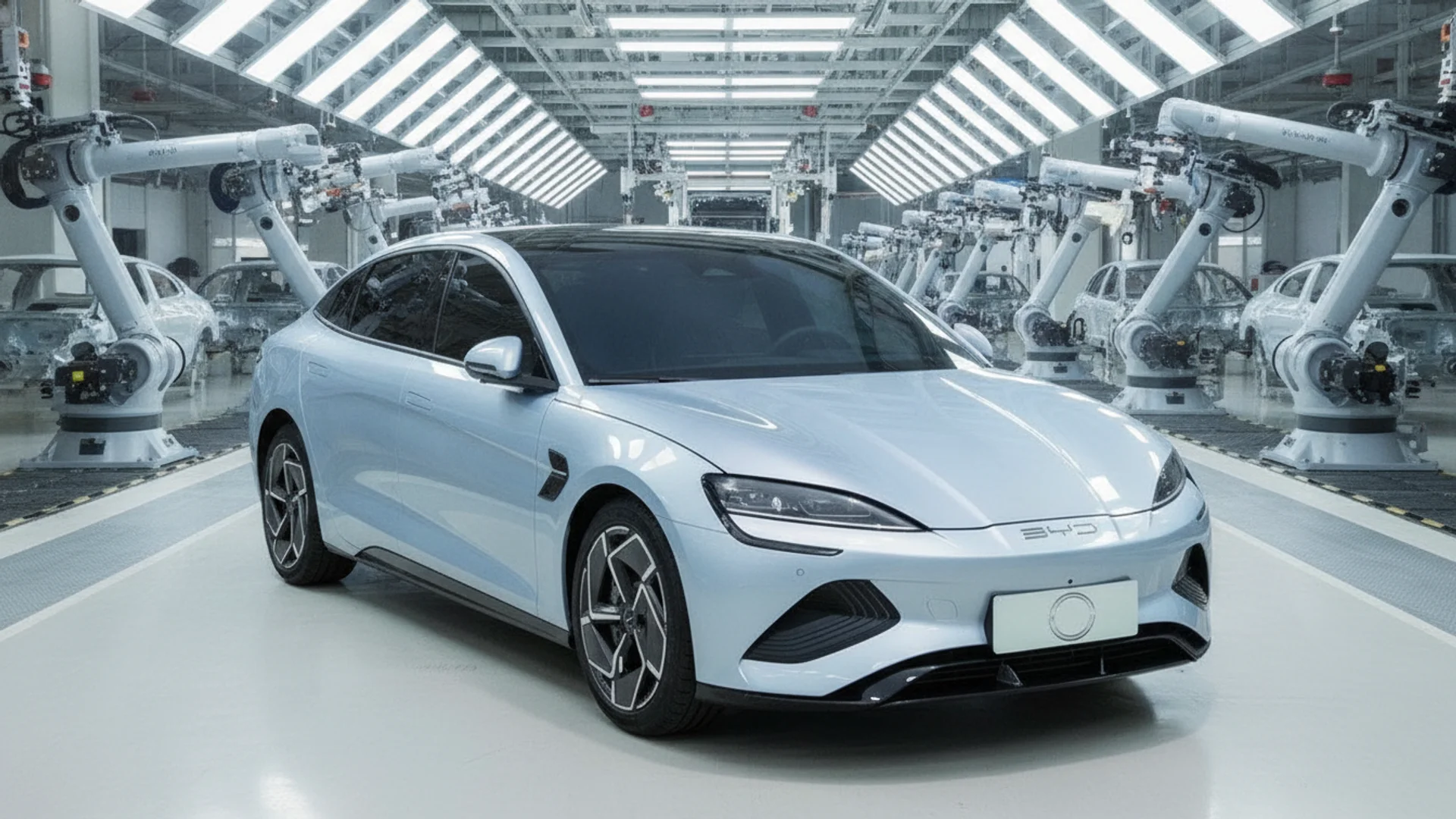
How BYD Builds EVs So Cheaply: The Vertical Integration Playbook
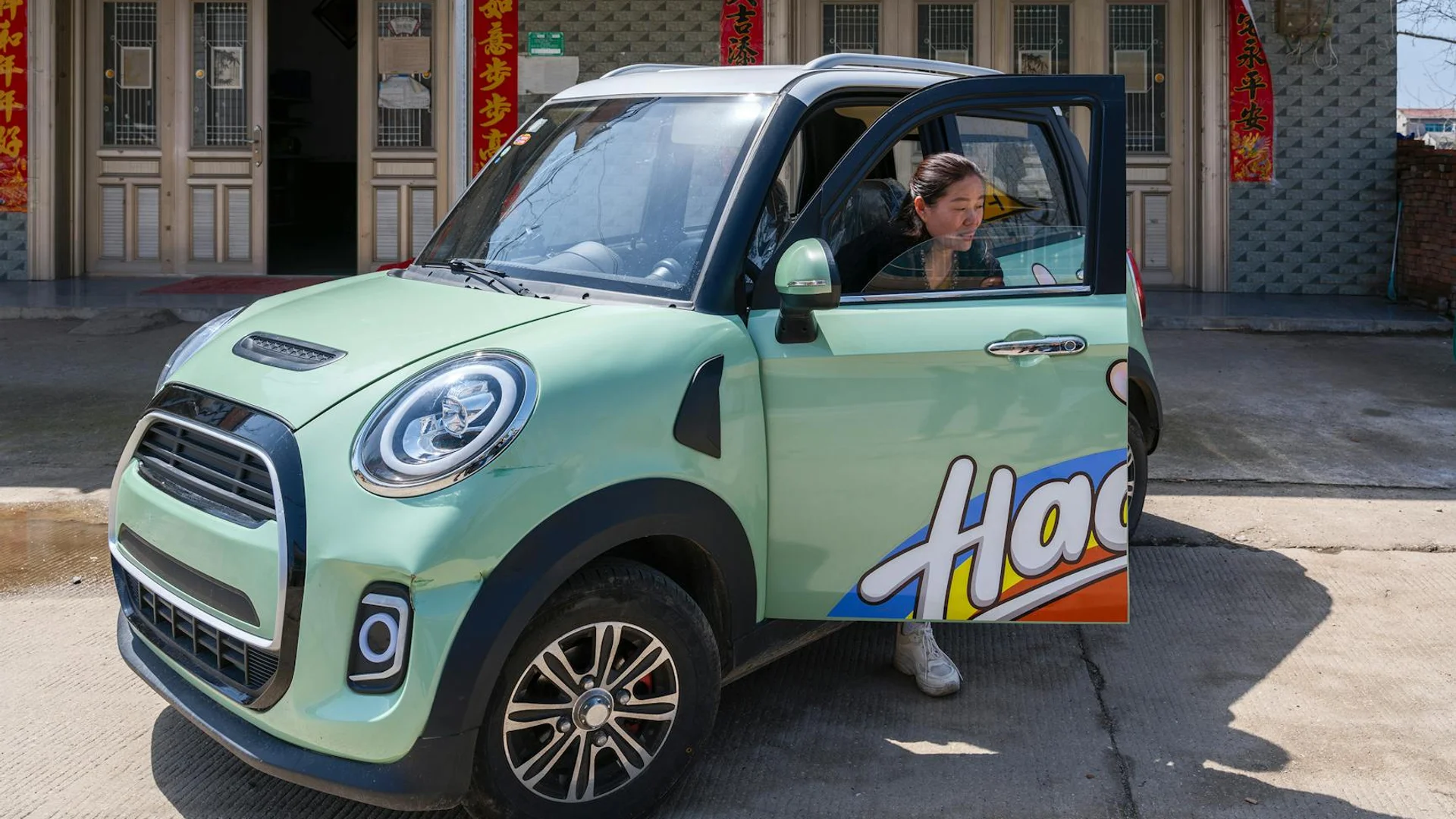
Chinese EVs Canada 2026: Complete Buyer's Guide & Market Map
BYD God's Eye: The Next Self-Driving Generation
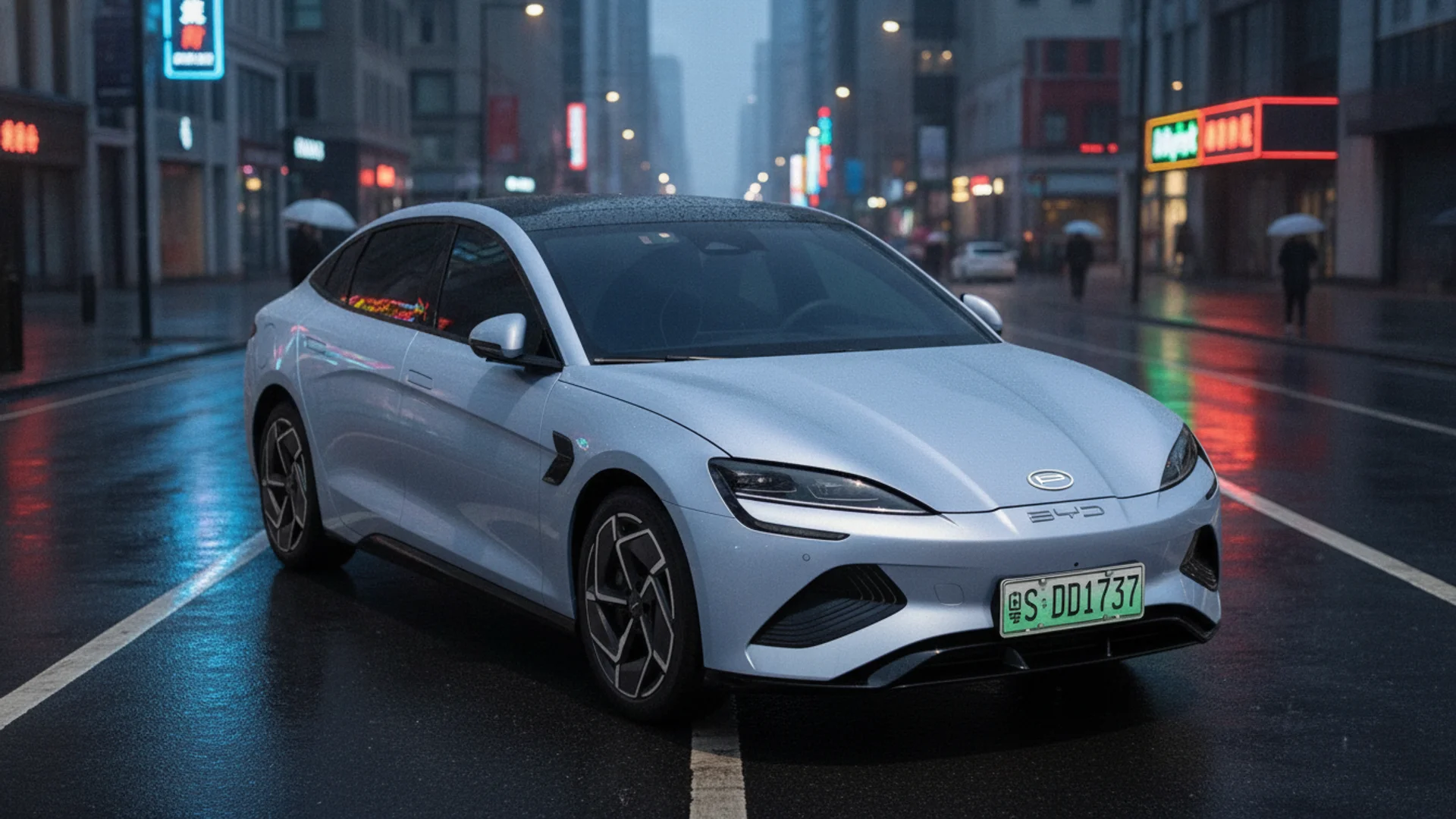
BYD Seal 06 DM-i: 128 km EV Range, $14K USD Starting Price
Why Chinese EV Interiors Feel a Generation Ahead