The federal government just made EVs $5,000 cheaper. Not in theory. Not "up to." Five thousand dollars off, applied right at the dealership, before you drive home. Canada's new Electric Vehicle Affordability Program, EVAP, launched on February 16, 2026, and if you're buying an EV this year, this is the single biggest thing you need to understand.
The full breakdown: how to claim it, who qualifies, which cars are on the list, and how to stack it with provincial incentives.
Key takeaways
- EVAP replaces the old iZEV program, up to $5,000 off BEVs and $2,500 off PHEVs, applied at the point of sale.
- The price cap is $50,000 final transaction value (including fees), not MSRP, and Canadian-made EVs have no cap at all.
- You get one EVAP rebate per person for the entire five-year program, where iZEV had allowed multiple claims over the years.
- The rebate shrinks every year: $5K in 2026, $4K in 2027, $3K in 2028-29, $2K in 2030, buy sooner to save more.
- Stack with Quebec's Roulez vert ($2,000) for up to $7,000 total savings, other provinces vary.
The Quick Version
The short version, for anyone who wants it:
- You're buying or leasing a new EV in Canada in 2026
- The total price (everything included) is $50,000 or less
- You've never claimed an EVAP rebate before
- The vehicle is on Transport Canada's eligible list
Hit all four? You get $5,000 knocked off at the dealer. Done. The dealer handles the paperwork with Transport Canada. You just sign a consent form.
Full details below.
What Is EVAP?
EVAP, the Electric Vehicle Affordability Program, is the federal government's replacement for the iZEV (Incentives for Zero-Emission Vehicles) program that ran from 2019 to early 2025 (iZEV funding was exhausted in January 2025). Same basic concept, different rules. The government is investing $2.3 billion over five years with a goal of putting 840,000 new EVs on Canadian roads.
The biggest changes from iZEV:
- Lower price cap. iZEV allowed vehicles up to $55,000 (base) or $65,000 (higher trims). EVAP uses a hard $50,000 final transaction value, meaning the out-the-door price including destination fees, dealer charges, and options. No wiggle room.
- One per lifetime. Under iZEV, you could claim multiple rebates over the years. Under EVAP, each person gets exactly one rebate for the entire five-year duration of the program. Choose carefully.
- Canadian-made bonus. Vehicles manufactured in Canada, like the Chrysler Pacifica PHEV, have no price cap whatsoever. This is the government incentivizing domestic production.
- Declining rebate. The rebate shrinks each year. Act now for the maximum benefit.
The Rebate Schedule
Here's how the rebate decreases over the program's lifetime:
- 2026: $5,000 BEV/FCEV, $2,500 PHEV
- 2027: $4,000 BEV/FCEV, $2,000 PHEV
- 2028: $3,000 BEV/FCEV, $1,500 PHEV
- 2029: $3,000 BEV/FCEV, $1,500 PHEV
- 2030: $2,000 BEV/FCEV, $1,000 PHEV
The program runs until March 31, 2031. But if you're reading this in 2026, you're looking at the best year to buy. That $5,000 is $3,000 more than what someone claiming in 2030 will get for the exact same car. Time is money, literally.
Who Qualifies?

The eligibility criteria are straightforward:
- You're a Canadian resident. You need a valid Canadian driver's licence or provincial/territorial ID.
- It's a new vehicle. Used EVs don't qualify. The vehicle must be new, previously unregistered in Canada.
- Final transaction value is $50,000 or less. This is the big one. Not the MSRP. Not the sticker price. The final transaction value, which includes the base price, all options, destination and delivery fees, dealer administration fees, AC tax, tire levies, everything before sales tax.
If that number hits $50,001, you're out.
- Canadian-made exception. If the vehicle was manufactured in Canada, there's no price cap. The Chrysler Pacifica PHEV qualifies regardless of trim level.
- One per person. You can only claim EVAP once. Ever. For the entire program. If two people in a household each buy an EV, they can each claim one rebate.
But you personally only get one shot.
- Purchase or lease. Both qualify. For leases, the rebate is applied to the capitalized cost.
Which EVs Are Eligible?
Transport Canada's official EVAP vehicle list currently includes 69 vehicles, 43 battery-electric vehicles and 26 plug-in hybrids. The list is expected to grow as new 2026 and 2027 models arrive.
Here are some of the most popular eligible BEVs:
Battery-Electric Vehicles ($5,000 rebate)
- Chevrolet Equinox EV (LT, LT AWD), Starting around $42,999
- Chevrolet Bolt EV (2027 model expected), The Bolt EUV ended production in 2023; a new Bolt is expected for 2027
- Kia EV4, Starting at $38,995
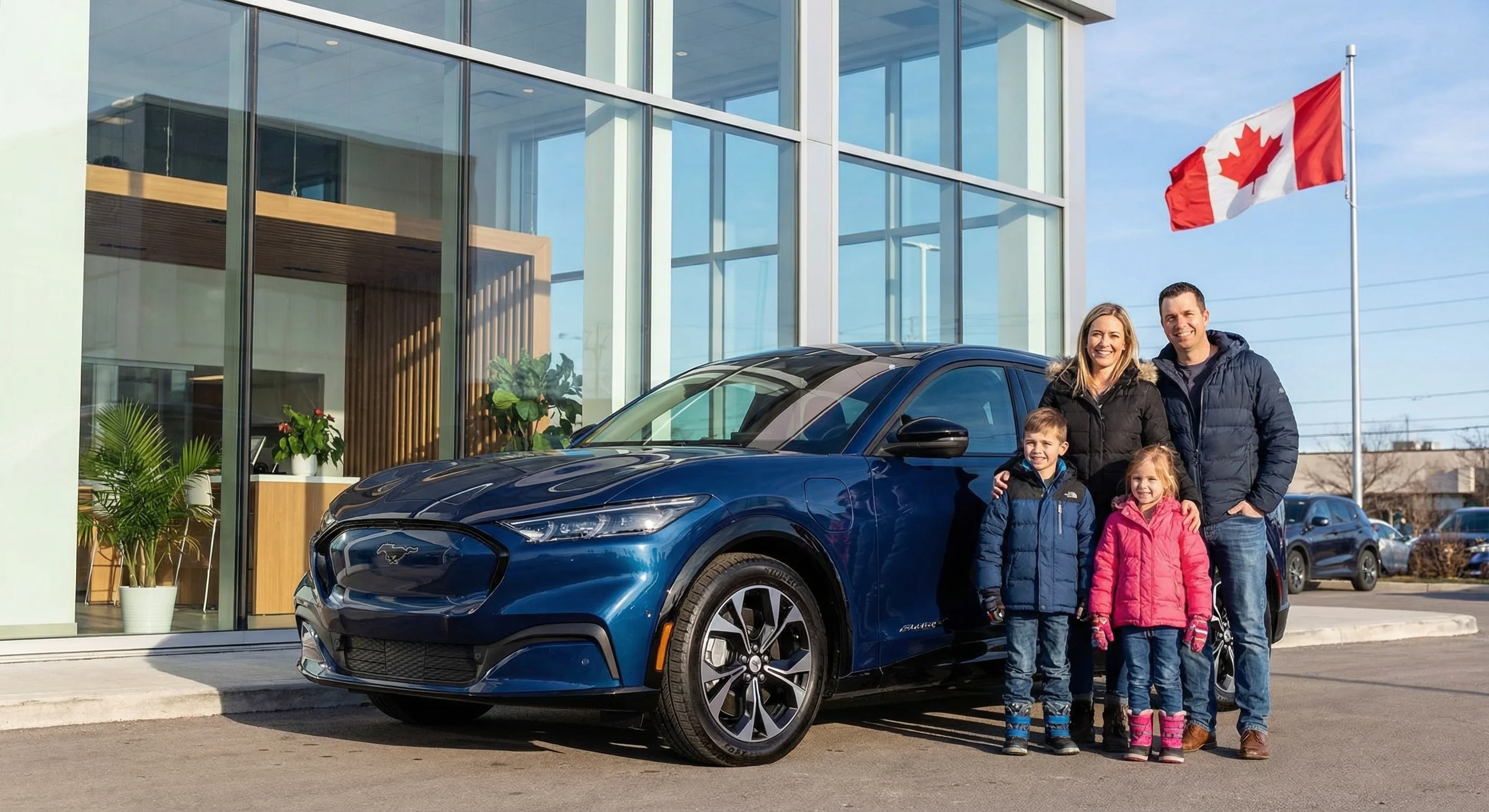
- Ford Mustang Mach-E Select RWD, Starting at $44,690, IS on the official eligible list and qualifies for the full $5,000
- Kia EV6 LIGHT RWD, Starting at $48,995, firmly on the eligible list and qualifies for the full $5,000
- Nissan Ariya, Nissan's current EV (Note: the Leaf was discontinued after 2024)
- Volkswagen ID.4 Base (2025), VW's electric crossover at its most affordable
- Hyundai Kona Electric, Compact, practical, well-priced
- Tesla Model Y RWD-B (2026), Base at $49,990, IS on the official EVAP eligible list. The $5,000 rebate applies if you keep the final transaction value (including all fees) at or under $50,000.
Confirm in writing with your dealer. Long Range AWD ($59,990) and Performance ($69,990) do not qualify.
- Mini Cooper SE, The fun option
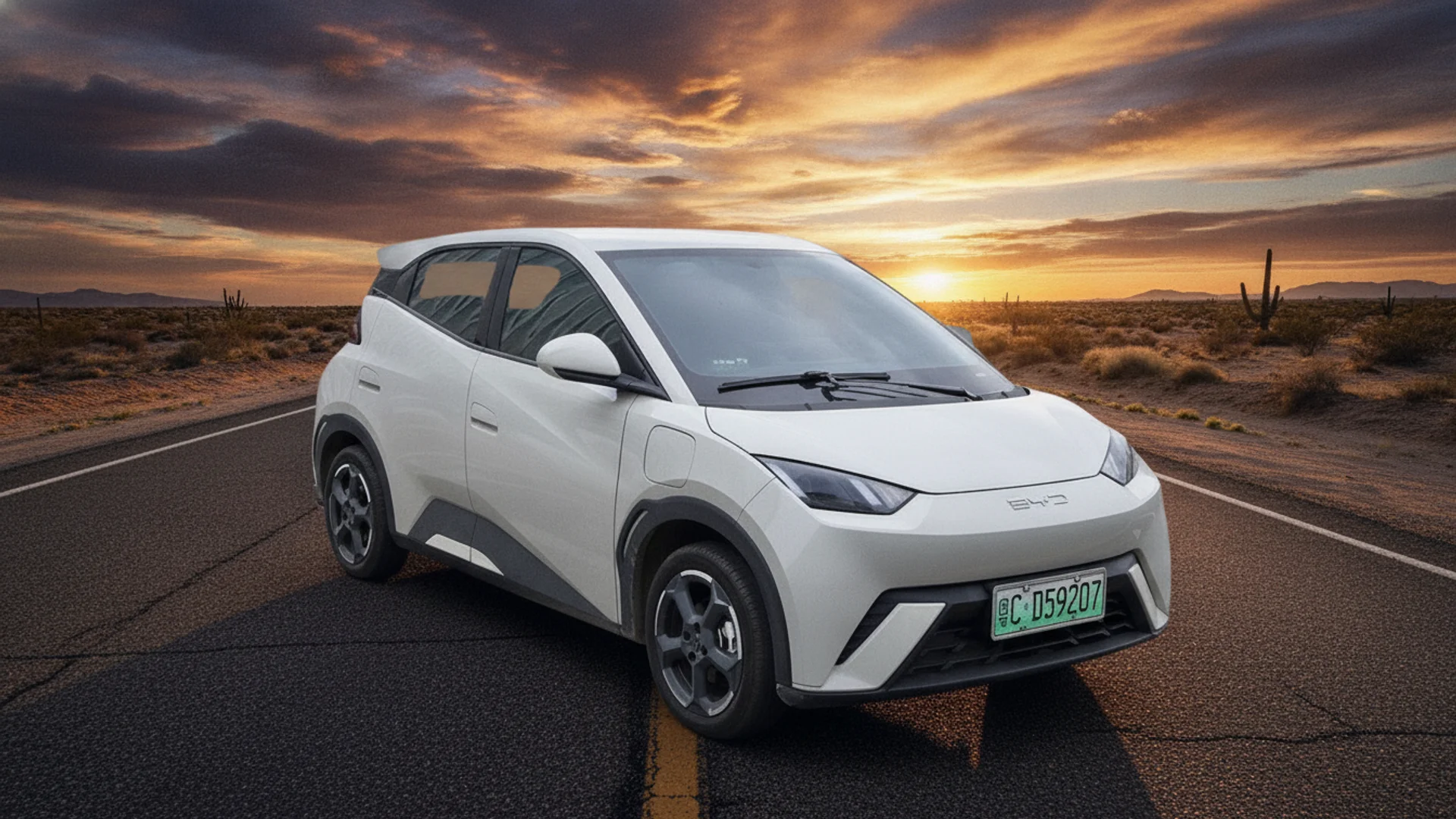
- Note: BYD vehicles (Seal, Dolphin, Seagull) are manufactured in China and therefore excluded from EVAP regardless of price. EVAP requires manufacture in Canada or an FTA country.
Plug-In Hybrids ($2,500 rebate)
- Chrysler Pacifica PHEV, No price cap (Canadian-made)
- Toyota RAV4 Prime, If you can find one under $50K all-in
- Mitsubishi Outlander PHEV, Popular in BC and Quebec
- Hyundai Tucson PHEV, Starting at $53,299 MSRP, but negotiable trims may qualify
What's NOT on the list
A few notable absences or near-misses:
- Tesla Model Y Long Range AWD ($59,990) and Performance ($69,990), Both well above the $50,000 cap. Not eligible.
- Tesla Model 3, The base Long Range AWD at approximately $54,990 exceeds the cap. Not eligible.
- Most premium EVs, BMW iX, Mercedes EQE, Audi Q8 e-tron, all priced well above $50K.
Note on the Tesla Model Y RWD base ($49,990): Transport Canada's official EVAP eligible vehicle list includes the 2026 Model Y RWD-B at $49,990. If you can keep the final transaction value at or under $50,000, which means negotiating dealer fees carefully, the base Model Y RWD qualifies for the $5,000 rebate. Confirm the final transaction value in writing with your dealer before signing.
Gear worth having
As an Amazon Associate, ThinkEV earns a small commission from qualifying purchases — at no extra cost to you.
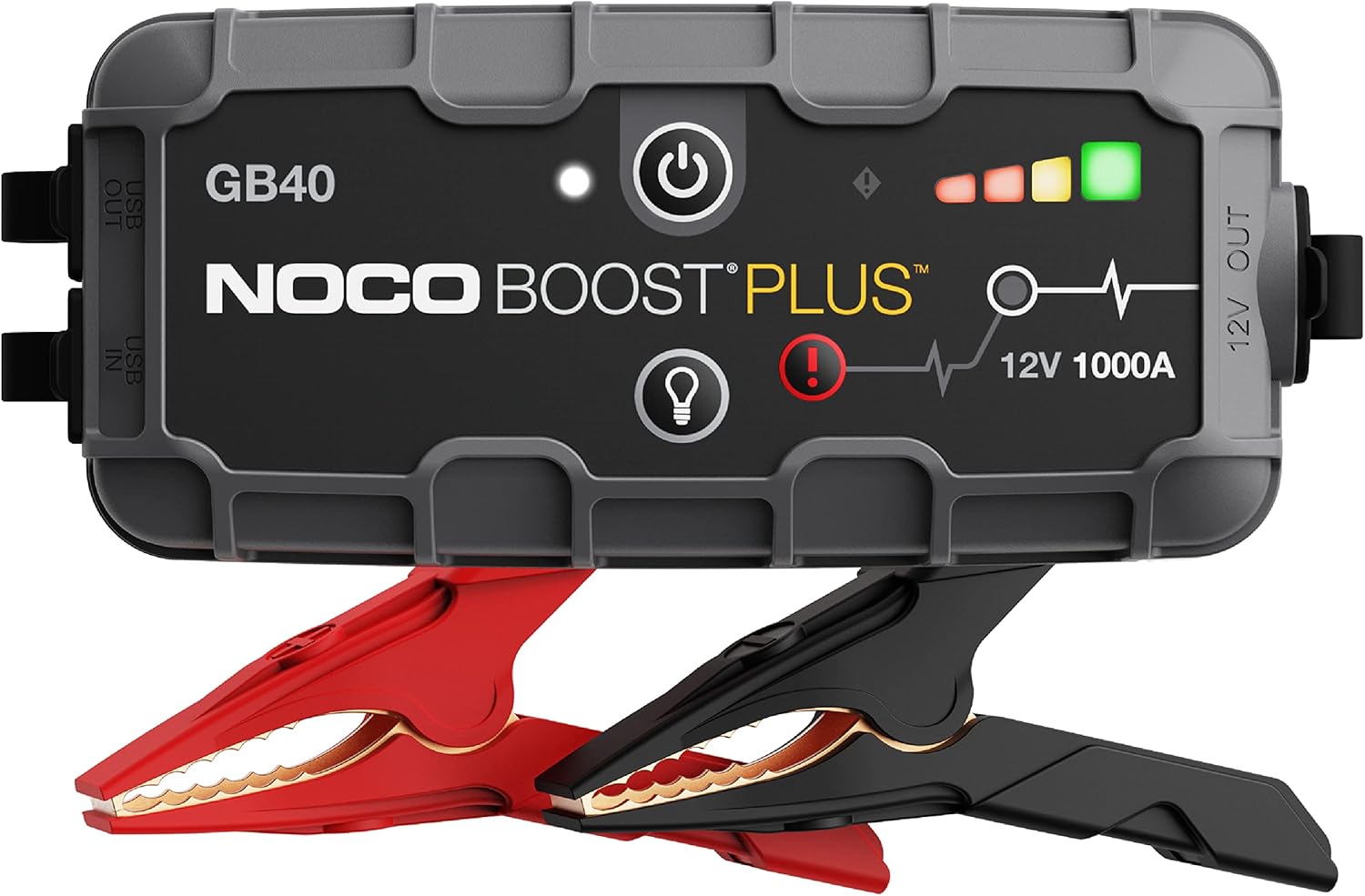
NOCO Boost Plus GB40 Jump Starter
A 1000A lithium jump starter that fits in your glovebox and works on any 12V battery. Your insurance against a dead 12V in a parking lot.
As an Amazon Associate, ThinkEV earns from qualifying purchases — at no extra cost to you.
The list is dynamic. Transport Canada updates it as new models launch and prices change. Always check the official EVAP vehicle list before committing.
Tesla and EVAP, What Actually Changed
This deserves its own section because it's the number-one question people ask.
The EVAP uses final transaction value, not base MSRP, as the price threshold. For most of the program's history, Tesla's fees pushed every model over cap. That picture has partially changed.
2026 Model Y RWD-B ($49,990), IS on the official EVAP eligible list. Transport Canada has confirmed this trim qualifies. If you purchase the base Model Y RWD and keep the final transaction value at or under $50,000, you get the $5,000 rebate. This means negotiating fees carefully, destination charges, provincial levies, and dealer fees all count toward the cap. Get the final transaction value in writing before signing.
Long Range AWD ($59,990) and Performance ($69,990), do NOT qualify. Both are well above cap.
The base Model Y RWD can now qualify for EVAP, but it's not automatic. The math has to work out on your specific purchase agreement. Higher trims get no rebate.
Gear worth having
As an Amazon Associate, ThinkEV earns a small commission from qualifying purchases — at no extra cost to you.

Grizzl-E Classic Level 2 EV Charger (40A)
Canadian-made and rated for minus 40C winters. 40A / 9.6 kW, NEMA 14-50, indoor/outdoor, 24-ft cable. The charger built for Canadian weather.
As an Amazon Associate, ThinkEV earns from qualifying purchases — at no extra cost to you.
Provincial Incentive Stacking Guide
EVAP is a federal program, and several provinces offer their own EV incentives that stack on top of it. The combined savings can be significant.
- Quebec: Up to $2,000 (Roulez vert), Stacks with EVAP, Max combined: $7,000
- British Columbia: Program paused (ended Nov 2025), N/A, $5,000 federal only
- Nova Scotia: No rebate + $500 bi-annual EV surcharge (Oct 2026), N/A, $5,000 federal only
- New Brunswick: Program ended (July 2025), N/A, $5,000 federal only
- Prince Edward Island: Up to $4,000 (Tesla excluded), Stacks with EVAP, Max combined: $9,000
- Yukon: Up to $5,000 (Tesla excluded), Stacks with EVAP, Max combined: $10,000
Quebec: The Best Deal in Canada
Quebec's Roulez vert program offers up to $2,000 for new BEVs (down from previous years, the amounts are declining). The MSRP cap under Roulez vert is $60,000, which is more generous than EVAP's $50,000 transaction value cap. If your EV qualifies for EVAP, it almost certainly qualifies for Roulez vert too. Combined: up to $7,000 off.
The Roulez vert program is scheduled to end December 31, 2026. If you're in Quebec, this is your year.
British Columbia: No Provincial Rebate Right Now
BC's CleanBC Go Electric passenger vehicle rebate program officially ended in November 2025. As of March 2026, there's no active provincial EV purchase rebate in BC. You still get the $5,000 federal EVAP, and BC Hydro offers up to $350 toward Level 2 charger installation, but that's it for now.
This could change. BC has a history of bringing programs back. Watch for announcements.
Atlantic Canada and Territories
PEI ($4,000) and Yukon ($5,000) offer provincial/territorial rebates that stack with EVAP, up to $9,000 and $10,000 in combined savings respectively. New Brunswick's rebate program ended in July 2025 and has not been replaced. Manitoba offers $4,000 through MPI (ending March 31, 2026) and Newfoundland & Labrador offers $2,500 (ending March 15, 2026). Check each province's current program status, as these programs have limited funding and can close without warning.
How to Claim Your Rebate

This is the easiest part. EVAP was designed to be a point-of-sale rebate, meaning the discount is applied before you pay, not as a rebate you claim after the fact.
Step 1: Choose Your Vehicle
Pick an eligible EV from Transport Canada's EVAP vehicle list. Confirm the final transaction value (including all fees) is $50,000 or less.
Step 2: Visit a Registered Dealer
The dealership must be registered with the EVAP program. Most major brand dealerships in Canada are already enrolled. Ask before you start negotiating.
Step 3: Sign the Consumer Consent Form
At the dealership, you'll complete the EVAP Consumer Consent Form electronically. This authorizes the dealer to submit your information to Transport Canada for eligibility verification.
Step 4: The Dealer Handles the Rest
The dealer submits an eligibility assessment on your behalf. Once approved, the $5,000 (or $2,500 for PHEVs) is applied directly to your bill of sale or lease agreement, clearly labelled as the EVAP rebate.
Step 5: Drive Home
That's it. No mail-in forms. No waiting for a cheque. No CRA involvement. The rebate shows up on your purchase agreement and the dealer gets reimbursed by Transport Canada.
Important timing note: The EVAP submission portal opens March 31, 2026. If you bought or leased an eligible EV between February 16 and March 31, your dealer will submit the claim retroactively once the portal goes live. You'll still get your money, it just takes a bit longer for the dealer to process.
The EVAP Calculus
EVAP is the most straightforward EV incentive Canada has ever offered: no income requirements, no complex application, point-of-sale discount.
The catch is that you only get one, and the rebate shrinks each year. If you're on the fence about going electric, 2026 is the best year to do it. Five thousand off now versus $2,000 off in 2030 is a $3,000 difference for the exact same decision made four years later.
Don't burn your one EVAP rebate on a PHEV at $2,500 unless you truly need the gas backup. Use it on a full BEV and take the full $5,000.
The EV market in Canada is about to get a lot more competitive. With BYD and other Chinese manufacturers entering the market, prices are headed down. But $5,000 off the current crop of Equinox EVs, EV6s, and ID.4s is a deal that's real right now.
Gear worth having
As an Amazon Associate, ThinkEV earns a small commission from qualifying purchases — at no extra cost to you.
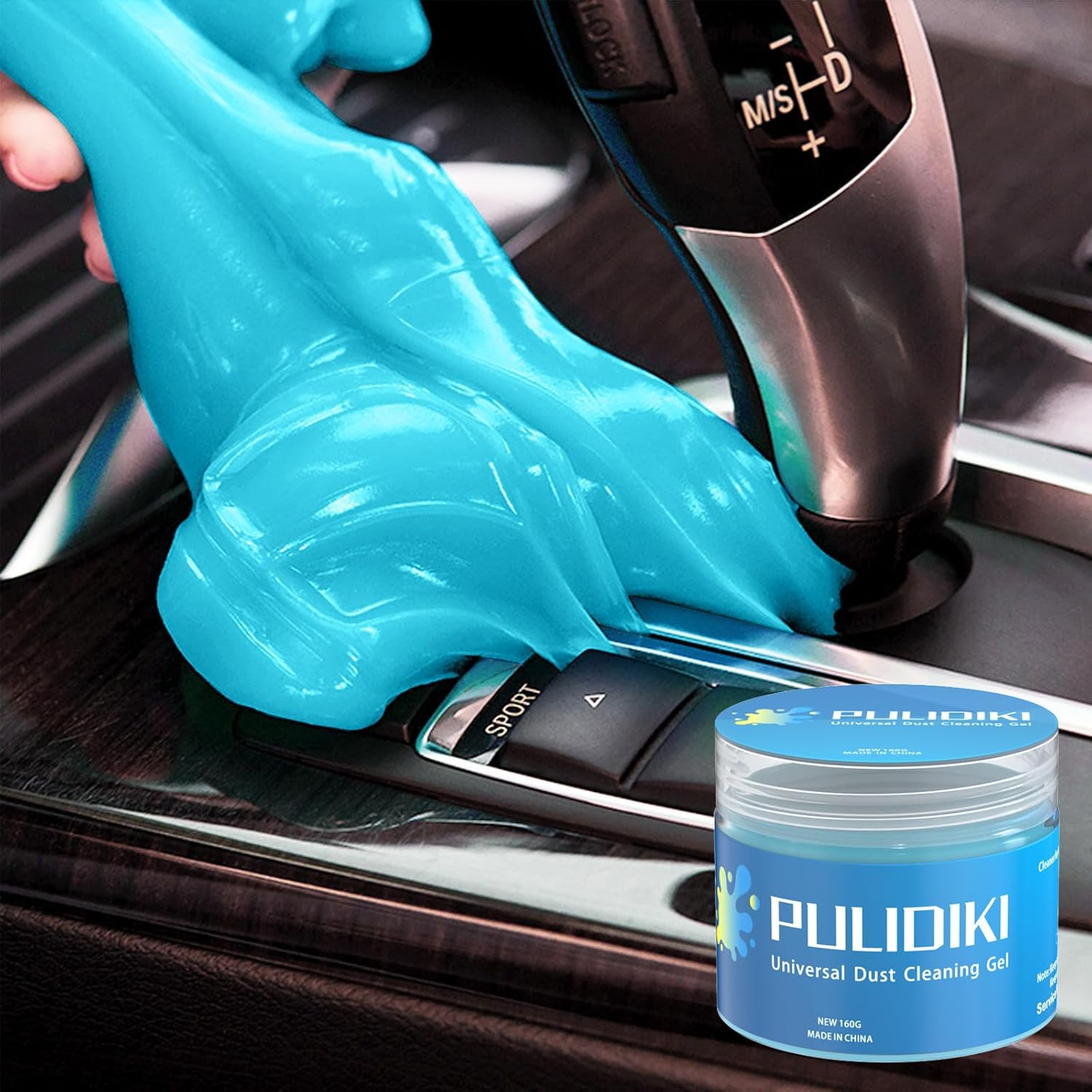
PULIDIKI Car Cleaning Gel (Detailing Putty)
Press it into vents, buttons, and seams and it lifts out dust you did not know was there. Weirdly satisfying, genuinely useful.
As an Amazon Associate, ThinkEV earns from qualifying purchases — at no extra cost to you.
Gear worth having
As an Amazon Associate, ThinkEV earns a small commission from qualifying purchases — at no extra cost to you.

WixGear Magnetic Air Vent Phone Mount (2-Pack)
A magnet strong enough that your phone never flinches over potholes or rail crossings. Two in the box, one for each car.
As an Amazon Associate, ThinkEV earns from qualifying purchases — at no extra cost to you.
Related Reading
- BYD Is Coming to Canada, What the Tariff Deal Really Means for Buyers, The biggest shake-up in the Canadian EV market, explained
- BYD Seal vs Tesla Model 3 Comparison, Head-to-head comparison of two popular sedans
- EV Incentives and Rebates in Canada: Complete 2026 Guide, Our broader incentive breakdown including used EVs and charger rebates
- EV Pricing Guide Canada 2026-2027, What every EV costs in Canada right now
Gear worth having
As an Amazon Associate, ThinkEV earns a small commission from qualifying purchases — at no extra cost to you.

Car Cup Holder Coasters (4-Pack)
Drop-in coasters that catch spills and crumbs so your cup holders stay clean. Rinse and reuse forever.
As an Amazon Associate, ThinkEV earns from qualifying purchases — at no extra cost to you.

Founder & Chief Editor
Vlad Pereira is the founder and chief editor of ThinkEV.ca, the Canadian electric-vehicle publication he writes and edits from Courtenay, British Columbia. He covers EV pricing, federal and provincial rebates, charging costs, and the Chinese manufacturers now entering Canada, from the buyer's side rather than the press-fleet side. ThinkEV is a venture of Vlad Pereira Online; his writing on health, income and the long game lives at vladpereira.com.
Frequently asked questions
Can I claim EVAP if I already got an iZEV rebate?
What counts toward the $50,000 final transaction value?
Does EVAP apply to leases?
Can two people in the same household each claim a rebate?
Will more vehicles be added to the eligible list?
Should I wait for 2027 when more vehicles might be available?
More EV & road-trip finds
Affordable upgrades worth a look — tap any to check the price on Amazon.
 ★ 119
★ 119Foldable Waterproof Trunk Organizer
View on Amazon ★ 392
★ 392Large Cup Holder Adapter (32-40oz)
View on Amazon ★ 8,681
Chemical Guys Complete Car Wash Kit
View on Amazon ★ 419
★ 419RGB Car Interior LED Strip Light
View on Amazon ★ 1,083
Crystal Push-Start Button Ring (2-Pack)
View on Amazon ★ 865
★ 865Collapsible Trunk Organizer
View on Amazon ★ 721
★ 72145W USB-C Fast Car Charger
View on Amazon ★ 61
★ 61Toddler Car Seat Snack and Cup Tray
View on AmazonRead, Plan, Then Stay Current
Explore our expert articles to understand incentives and ownership costs, use the map to pressure-test charging reality, then subscribe so new EV coverage comes straight to you.
Continue Reading

Is the $5,000 EVAP Rebate Worth Rushing For?

Rivian Canada 2026: R1T, R1S Prices and R2 Release Date
Why Cold Weather Cuts EV Range, the Real Reasons
Are Canada's Repair Shops Ready for Chinese EVs?
How to Test-Drive an EV: What Gas-Car Buyers Miss