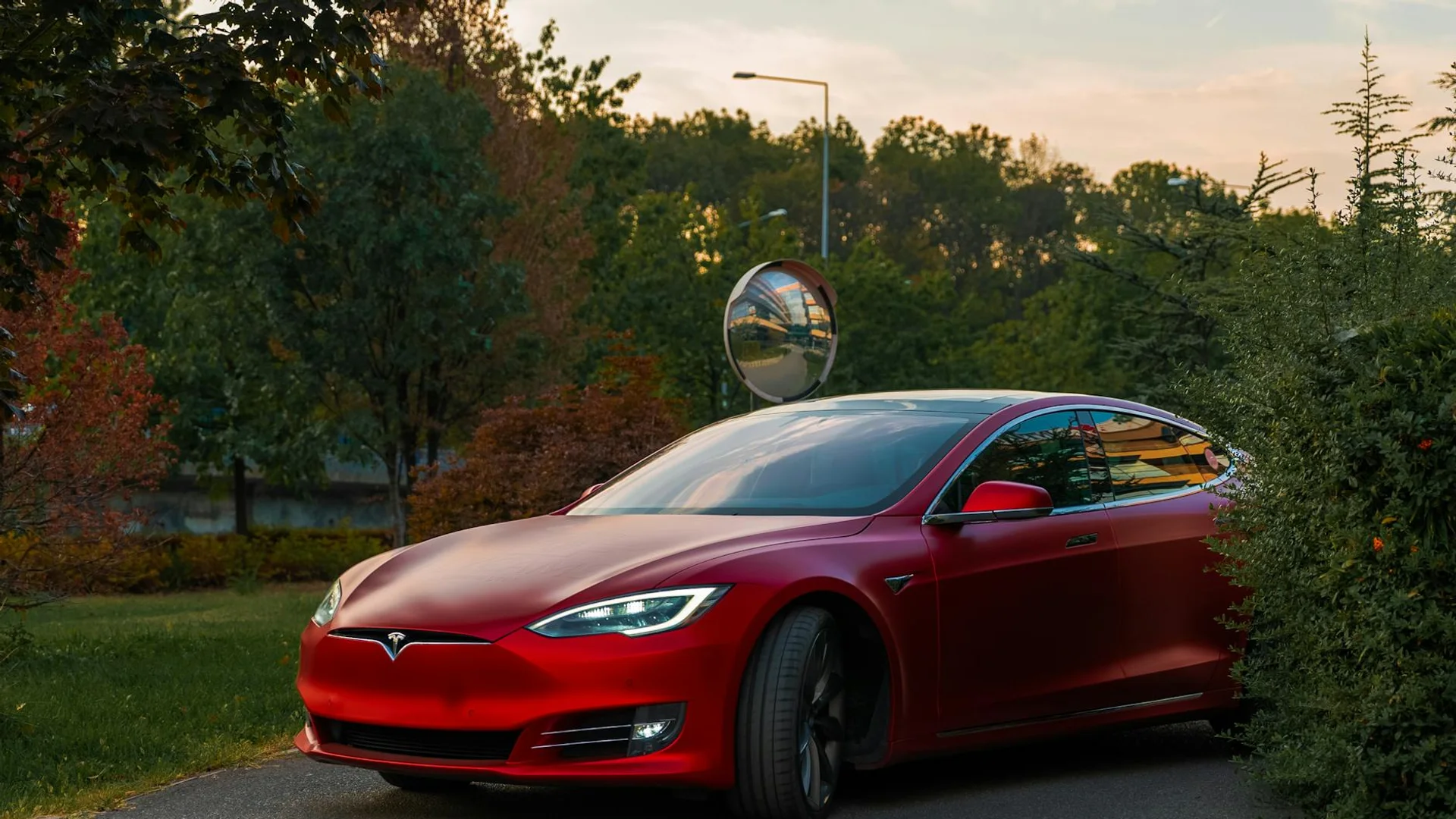
A Renault 4 and a Model Y share the highway at 120 km/h. One weighs about 1,450 kg. The other weighs nearly 2,000. By every intuition we carry from the gasoline era, small is light, light is efficient, the small one should run away with the energy contest. It doesn't. The gap, when it exists at all, runs the other way.
That single observation is the puzzle. It's also a window into how electric vehicles actually work, which is not how most people, including most EV owners, assume they work. The conventional wisdom about EV efficiency is a holdover from a fuel economy regime that no longer applies.
Key takeaways
- A car at 120 km/h spends energy fighting air, not mass, weight barely enters steady-state highway efficiency.
- A Renault 4's estimated 0.28–0.30 Cd creates 43% more drag than the Ioniq 6's 0.21, regardless of size.
- Doubling speed quadruples drag force, going from 80 to 120 km/h increases drag by roughly 125%.
- Compact EVs built for city stop-start driving pay a steep aerodynamic penalty on Canadian highways.
- The efficiency leaderboard sorts by drag coefficient, not curb weight, most EV reviews measure the wrong variable.
The Question That Embarrasses Intuition
The conversation that prompted this piece happened on a Reddit thread asking why small EVs aren't much more efficient than larger EVs. An EV owner posted a question that refuses to behave: why do super-small EVs like the Renault 4 or Chevy Bolt return roughly 3 to 3.5 mi/kWh at 120 km/h, barely better than a much larger Equinox EV, and noticeably worse than a Tesla Model 3? The top responses converged on the same uncomfortable answer: weight isn't the variable doing the work. The variable doing the work is air.
The intuition is hard to dislodge because it's correct in the gasoline world. A 1,200 kg econobox really does sip fuel where a 2,100 kg SUV gulps it. We've been trained for a century to read mass as the primary efficiency variable. EVs invalidate that training, and most of us haven't updated the mental model. This is the single most consequential consumer-knowledge gap in the EV market right now, bigger than range anxiety, bigger than charging-network confusion, and almost nobody is talking about it.
Newton's First Law is the cleanest way in. An object in motion stays in motion until a force acts on it. Once a car reaches highway speed, the engine, or motor, isn't accelerating it any more. It's only fighting the forces trying to slow it down. Those forces are drag, rolling resistance, and a small contribution from internal driveline losses. Mass barely enters the steady-state equation. It enters dramatically during acceleration, but on a long highway run, accelerations are a rounding error in the energy budget.
This is why the top-voted comment on that thread cut so directly to the point: weight matters a lot less than people think, because most of the energy a moving vehicle spends is spent overcoming drag, not getting up to speed. The size of the air the car has to push aside matters; the mass behind it almost doesn't. That sentence belongs on every EV window sticker.
The argument gets sharper when you look at real numbers. The Chevy Bolt EUV and Hyundai Ioniq 6 bracket the same passenger class on paper, but the Ioniq 6's drag coefficient and the Bolt's blockier silhouette put them in different efficiency tiers entirely. The car that wins isn't the smaller one. The car that wins is the slipperier one. EPA testing notes that charging a plug-in EV is not 100% efficient and that some energy is lost through conversion and heat, with MPGe values calculated to assume level 2 AC charging and account for losses from the charging cable and on-board vehicle charger, moving the measurement from the vehicle to the outlet in the wall, but those losses are small change next to the wind tax a vehicle pays at speed.
Size is largely irrelevant above 90 km/h and shape is everything, which means the engineering competition isn't being run on the axis most consumers are paying attention to. Buyers shop on dimensions, cargo room, and curb appeal. Engineers compete on Cd. Those are different conversations, and right now only one of them is producing efficient cars.
Drag Is the Tax Everything Pays Equally
The equation that governs all of this is unkind to round numbers. Drag force equals one-half × air density × velocity squared × frontal area × drag coefficient. Three of those terms are roughly fixed for a given car on a given day. The fourth, velocity, is squared.
That square is the brutal multiplier. Doubling speed quadruples drag force. Going from 80 km/h to 120 km/h doesn't increase drag by 50%; it increases drag by roughly 125%. The energy required to overcome that drag, integrated over distance, scales as velocity cubed. This is why every EV efficiency chart looks like a hockey stick once you push past 100 km/h, and why the gap between an aerodynamic sedan and a boxy SUV widens dramatically the faster you go. Anyone who's watched their dash readout collapse the moment they merged onto a Canadian highway knows this curve viscerally, even if they've never seen the equation.
Frontal area is the second variable, and it embarrasses the small-equals-efficient argument almost as much as drag coefficient does. Short cars need to be tall. A Chevy Bolt has to fit human passengers with adequate headroom, so it stands roughly 1.61 metres high. A Tesla Model Y stands about 1.62 metres. The Bolt's frontal area is smaller, but not dramatically so, perhaps 10% less. Multiply that against a worse drag coefficient and the small-car advantage evaporates inside a single equation. The Reddit thread surfaced this point too: the longer the car, the better you can manage airflow around it, and a shorter car has to be taller to give passengers sufficient space.
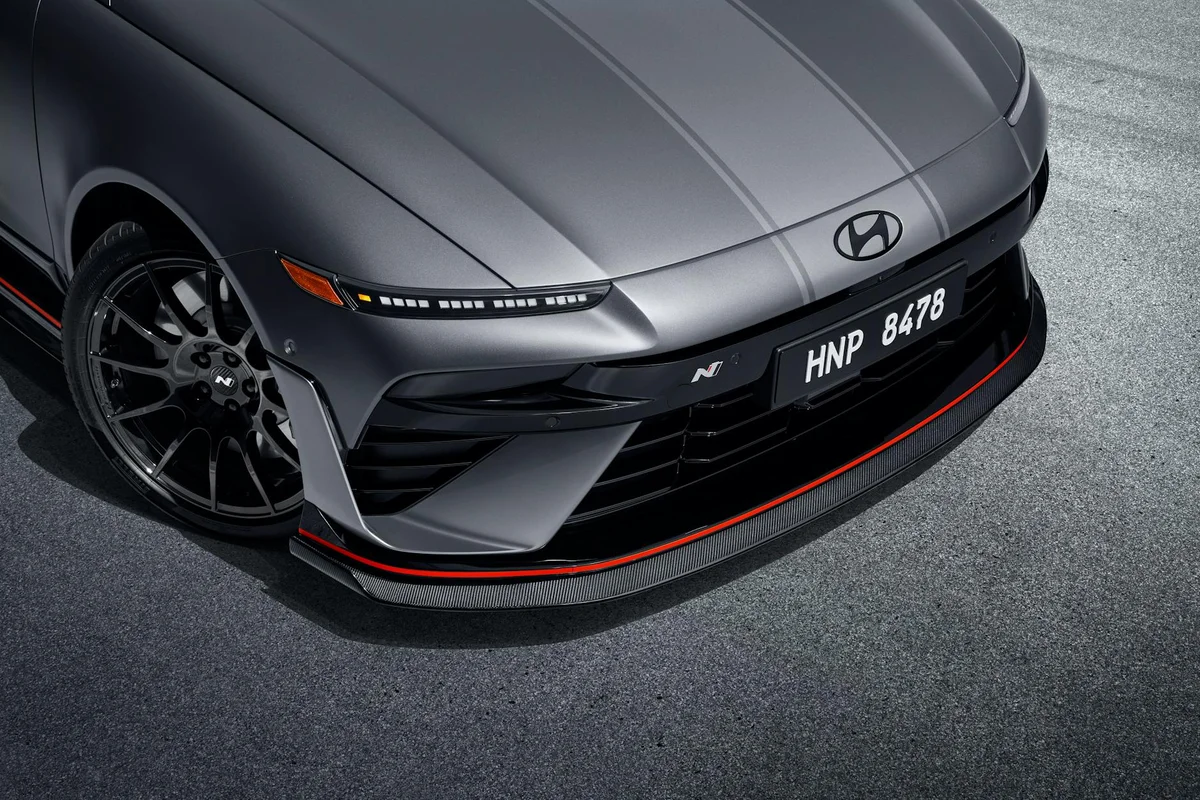
Drag coefficient itself is where modern EV engineering has done its most consequential work. The Hyundai Ioniq 6 sits at 0.21, a number that would have been considered concept-car territory fifteen years ago. The Mercedes EQS reaches 0.20. Tesla's Model 3 lives around 0.23. By contrast, retro-styled compact EVs like the Renault 4 are reported in enthusiast and industry coverage to sit in roughly the 0.28 to 0.30 range, figures that should be read as estimates, not certified values, until manufacturers publish them formally. A Bolt EUV's blockier proportions push its Cd into similar estimated territory.
The math punishes the gap. Drag force scales linearly with Cd, so a car with 0.30 Cd faces roughly 43% more drag at any given speed than a car with 0.21 Cd, all else equal. That's not a rounding error. That's the difference between the kind of highway figure that makes road trips relaxing and the kind that has you doing range arithmetic at every off-ramp. It's also why, as InsideEVs reported on EV emissions, compact electric sedans rather than compact crossovers are the greenest cars on the road, the sedan shape is doing real work.
The story isn't that small EVs are bad. It's that small EVs designed without aerodynamic discipline are bad, and most small EVs in the current market were designed with other priorities in mind. City compacts were architected for stop-start urban driving, where drag scarcely matters and packaging dominates. North American highway reality, where 120 km/h is normal and aerodynamic penalties are paid in joules per second, was somebody else's problem.
This is what doesn't get said in most EV reviews. The efficiency leaderboard isn't sorted by curb weight. It's sorted by the discipline a manufacturer brought to the wind tunnel. Reviewers who lead with 0–100 times and trunk volume are measuring the wrong things, and they've been measuring the wrong things for years.
Gear worth having
As an Amazon Associate, ThinkEV earns a small commission from qualifying purchases — at no extra cost to you.

Lectron Level 2 J1772 Charger (40A, WiFi)
Smart WiFi charger with real-time energy monitoring. 40A / 9.6 kW, J1772 with a NEMA 14-50 plug, schedule charging right from your phone.
As an Amazon Associate, ThinkEV earns from qualifying purchases — at no extra cost to you.
The Battery Floor Problem: Small Cars Carry Proportionally More
There's a structural reason small EVs struggle to reclaim the efficiency advantage their size suggests they should have, and it lives below the floor.
Battery packs are heavy in a way that doesn't scale linearly with vehicle size. A typical lithium-ion pack runs around 7 kg per kWh of usable capacity, sometimes more, sometimes less depending on chemistry and packaging. A 40 kWh pack therefore weighs roughly 280 kg before you bolt it into anything. A 75 kWh pack runs closer to 525 kg. The pack itself is the densest, heaviest single component in any EV, and the small car carries it in roughly the same absolute mass as the bigger car carries a moderately larger one.
The result is a battery-to-kerb-weight ratio that inverts everything we expect. A small EV with a 40 kWh pack and a 1,100 kg total mass is hauling the battery as roughly 25% of its weight. A mid-sized EV with a 75 kWh pack and 1,950 kg total mass carries the battery at about 27%. The ratio barely moves. The compact car gets no structural break for being smaller, because the energy storage demanded for usable range is roughly the same in absolute terms.
Pod Energy's analysis of EV weight makes the point cleanly: smaller EVs tend to carry proportionally more extra weight than their gasoline counterparts, because the battery takes up a bigger share of the total mass. The penalty isn't an SUV problem. It's most pronounced in exactly the cars consumers expect to be lightweight. Read that twice, because it inverts the entire mental model most buyers walk onto a dealer lot with.
What does this mean for actual energy consumption? Less than you'd guess. Rolling resistance scales with mass, but the constant of proportionality is small. The rolling-resistance coefficient for a typical passenger tire is around 0.01, which means a 1,800 kg EV facing rolling resistance generates roughly 180 newtons of opposing force at the contact patch. A 1,500 kg EV generates 150 newtons. The 30-newton delta over a 100 km drive at 100 km/h represents perhaps 0.8 kWh of energy difference, a few percent of total consumption, not the dramatic gap intuition predicts.
Compare that to drag. A vehicle with 2.3 m² of frontal area and a 0.30 Cd at 120 km/h is fighting roughly 460 newtons of aerodynamic drag. Drop the Cd to 0.21 and the drag falls to about 320 newtons. The 140-newton delta dwarfs the rolling-resistance gap by an order of magnitude. The aerodynamic decision is doing five to ten times the work of the weight decision in shaping highway efficiency. Five to ten times. That's the ratio the industry buries in the spec sheet.
The Fiat 500e is the cleanest illustration of this paradox. It's tiny, 3.6 metres long, comfortably the smallest EV in many North American markets. Its battery, sized for adequate urban range, still weighs roughly 250 kg. That puts the pack at nearly 25% of the car's total mass. Its drag coefficient is reported in the 0.30-ish range in enthusiast efficiency analysis, and while that single source isn't a manufacturer spec sheet, the figure is consistent with the body geometry, a number worth treating as an estimate until Stellantis publishes a certified Cd. The combined effect is that a Fiat 500e at highway speed is no more efficient than a midsize sedan that happens to be aerodynamically clean. The smallness it sells on the showroom floor doesn't translate to the energy meter.
The strongest counterargument: in pure stop-start urban driving, weight does matter, because every acceleration burns kinetic energy that regenerative braking only partially recovers. A heavier car accelerated harder loses more, even with regen. That's true. It's also why a Fiat 500e in Rome, accelerating from 0 to 40 km/h forty times an hour, looks like a brilliant piece of engineering. The argument here isn't that mass is irrelevant everywhere, it's that mass stops mattering the moment the duty cycle becomes a steady highway cruise, which is most of how Canadian and American owners actually use their cars. The urban case is real. It just isn't the case North American buyers should be optimising for.
The honest version of this story is that battery mass and aerodynamic priority aren't separate problems. They compound. A small EV designed without aero discipline pays twice, once because its battery represents a high mass fraction, and again because its shape pushes more air aside per kilometre. The cars that win on efficiency are the ones that solved both problems at the architecture stage.
Motor Efficiency Curves Don't Favour Small at Speed
There's a third variable that quietly punishes small EVs at highway speed, and it lives inside the motor itself. A five-point efficiency swing inside a single drivetrain component, invisible on every spec sheet ever printed, can be worth more energy across a 400 km drive than the entire weight difference between a Bolt and a Model Y.
Electric motors are not equally efficient across their operating range. They have a peak efficiency point, typically reported in the 85% to 96% range depending on motor type and operating point, and an efficiency curve that falls off as RPM and load drift away from that point. The Department of Energy notes that up to 80 percent of the energy in the battery is transferred directly to power the car, making it a highly efficient mode of transportation, but that fleet-wide figure averages over enormous variation between drivetrain designs. Where the peak sits depends on how the motor was designed. A motor optimised for urban stop-start operation has its sweet spot at low-to-mid RPM, low-to-mid load. A motor optimised for sustained highway cruise has its sweet spot at higher RPM, lower load.
Gear worth having
As an Amazon Associate, ThinkEV earns a small commission from qualifying purchases — at no extra cost to you.

TP-Link Kasa Smart Plug with Energy Monitoring
Track exactly how much electricity your Level 1 charger uses and schedule it for off-peak hours. Know your real cost per kWh.
As an Amazon Associate, ThinkEV earns from qualifying purchases — at no extra cost to you.
Small EVs tend to use motors optimised for the urban duty cycle. This makes sense for the platforms they originate from. The Renault 4 was conceived primarily as a European city-and-suburb car, where average speeds rarely exceed 60 km/h and the highway is an occasional event. The Chevy Bolt's drivetrain inherits design priorities from GM's broader Ultium toolkit, which has not historically prioritised highway endurance as a core use case.
When these motors operate at sustained 120 km/h on a North American interstate, they're running off-peak. They're delivering power, but they're delivering it at perhaps 88% efficiency where a highway-optimised motor would deliver it at 93%. That five-point gap, multiplied across hours of cruising, becomes a real chunk of the total energy budget, and it's invisible on the spec sheet, which only ever lists peak motor efficiency, not the curve.
Larger EV platforms increasingly use dual-motor architectures with the front and rear units optimised for different operating points. The Hyundai Ioniq 5's e-axle architecture lets the platform shed one motor entirely under steady cruise, running on a single rear unit operating closer to its peak. The Tesla Model Y dual-motor variants do similar load-balancing work. Compact single-motor city EVs cannot do this dance. They have one motor and one operating point, and at highway speed that operating point is rarely the efficient one.
Heat management compounds the problem. Smaller motors have less thermal mass. Under sustained highway load, they heat up faster, and the cooling system works harder to keep them in their operating envelope. Cooling systems consume power. The compact EV pays a small but persistent thermal-management tax that the larger platform, with its bigger thermal reserves, doesn't.
This is an engineering philosophy gap. European compact EV platforms were architected around a duty cycle that doesn't include four-hour highway runs at 120 km/h. North American mid-size EV platforms were architected around exactly that duty cycle. When the small European import meets the long Canadian highway, the mismatch shows up in the energy meter, and there's no software update that fixes it. The motor was designed for a different question.

Gear worth having
As an Amazon Associate, ThinkEV earns a small commission from qualifying purchases — at no extra cost to you.

PULIDIKI Car Cleaning Gel (Detailing Putty)
Press it into vents, buttons, and seams and it lifts out dust you did not know was there. Weirdly satisfying, genuinely useful.
As an Amazon Associate, ThinkEV earns from qualifying purchases — at no extra cost to you.
What the Efficiency Charts Actually Show
Walk through the actual numbers and the abstract argument becomes concrete. The published Wh/km figures across the current fleet aren't a tidy ranking. They're an indictment, and the indictment is written in drag coefficient.
The Hyundai Ioniq 6, sitting at the top of Recurrent's efficiency analysis, returns roughly 145 Wh/km in steady-state highway cruise. Its drag coefficient is 0.21, its kerb weight is around 1,800 kg, and its frontal area is moderate. The Tesla Model 3 Long Range follows close behind at roughly 155 Wh/km with a 0.23 Cd and similar mass per the same Recurrent fleet testing. Both are mid-size sedans. Neither is small.
Drop down the size class to the Chevy Bolt EUV, and the figure climbs to roughly 185 Wh/km at the same highway speed per Recurrent's compact-class results, despite the Bolt weighing about 180 kg less than the Ioniq 6. The smaller, lighter car uses roughly 28% more energy per kilometre. The Cd does the talking. The Bolt's blockier proportions and shorter length, combined with a Cd estimated in the 0.30 range, deliver more drag per kilometre than its weight reduction can offset.
Push the comparison to the Renault 4. Its drag coefficient hasn't been formally published in detail, and the 0.28 to 0.30 figures circulating in enthusiast efficiency coverage should be read as estimates pending a manufacturer release. Highway-speed energy consumption is reported in comparable efficiency surveys in the 195 Wh/km range. The car that intuition says should be the most efficient on the road is among the least efficient at sustained 120 km/h, beaten by sedans nearly twice its mass. That should rearrange how anyone shopping a small EV thinks about the value proposition.
The pattern repeats across the broader market. The Recurrent 2026 efficiency analysis makes a striking observation: EV efficiency actually declined since its peak in 2018, due to market preferences for larger, heavier, and less aerodynamic vehicles such as SUVs, trucks, and boxy crossovers. The fleet got worse not because batteries regressed, but because the body shapes consumers chose got worse, wider, taller, blunter. Drag coefficient is a product decision, and the product decisions of the last seven years have tilted away from efficiency.
The battery-to-kerb-weight ratio across the eight most-discussed models in current Canadian and US markets reveals no clean advantage for compact platforms. A Fiat 500e carries battery as roughly 25% of its mass. A Tesla Model 3 sits closer to 22%. A Hyundai Ioniq 6 lands near 20%. A Tesla Model Y comes in around 19%. The bigger cars have proportionally less battery weight to drag around, not more. They've used their structural envelope to spread the pack across a larger and more aerodynamic body, and the math rewards them for it.
The Autoblog analysis of large EVs makes a related but distinct point: massive EVs introduce real public-safety and infrastructure problems even where they don't introduce efficiency ones. A four-ton SUV ramming a 1,300 kg compact will not produce a pretty result, regardless of how aerodynamic the SUV happens to be. Aerodynamic discipline solves the energy problem; it does not solve the kinetic-energy-in-collision problem. These are separate axes, and the industry has not been honest about either of them.
What the charts actually show is a market sorted by drag coefficient first and weight a distant second. The interesting part is that this isn't physics constraining design, it's design constraining design. Manufacturers can build small aerodynamic cars or large aerodynamic cars. The choice between drag-prioritised and styling-prioritised happens in the studio, not in the wind tunnel.
Gear worth having
As an Amazon Associate, ThinkEV earns a small commission from qualifying purchases — at no extra cost to you.

WixGear Magnetic Air Vent Phone Mount (2-Pack)
A magnet strong enough that your phone never flinches over potholes or rail crossings. Two in the box, one for each car.
As an Amazon Associate, ThinkEV earns from qualifying purchases — at no extra cost to you.
Manufacturing Philosophy: Who Optimises for What
The reason the Ioniq 6 exists, and the reason the Renault 4 exists, and the reason the Bolt EUV looks the way it does, is not physics. It's strategy. Each of those cars was built by a company that decided, at the architectural stage, what mattered.
Hyundai's E-GMP platform, the chassis under the Ioniq 5, Ioniq 6, Kia EV6 and EV9, was built around aerodynamics as a primary engineering constraint. The Ioniq 6's 0.21 Cd was not a happy accident produced by stylists who happened to choose a slippery silhouette. It was a target set in a boardroom and engineered against from day one. The car's proportions, its rear deck, its underbody panelling, its mirror geometry, its wheel design, every visible element was negotiated against a wind-tunnel number. Hyundai treated air as the primary cost, and the entire industrial design followed. The discipline shows up in the silhouette; it also shows up in the energy meter.
GM's Ultium platform under the Bolt EUV operates from a different starting point. The Bolt EUV was, in effect, a city-platform stretched and updated. Its proportions inherit from a vehicle conceived as an urban appliance, where the relevant duty cycle was sub-80 km/h and the relevant constraint was packaging efficiency rather than aerodynamic efficiency. GM has built genuinely aerodynamic EVs, the Chevy Equinox EV does better than the Bolt on Cd despite being larger, but the Bolt itself reflects an earlier set of priorities. The car wasn't wrong for what it was designed to do. It just isn't optimised for what most North American owners actually do with it.
The Renault 4 revival is the most interesting case, because Renault made the choice with full knowledge of the trade-off. The original 1961 Renault 4 was a brand-defining piece of industrial design. The 2026 revival keeps the upright stance, the round headlamps, the proportions that make it instantly recognisable. Those decisions cost roughly 20 Wh/km in highway efficiency relative to a slipperier shape. Renault took the hit deliberately, because the brand value of the silhouette mattered more to them than the efficiency leaderboard. That's a defensible strategic choice. It's also a choice that consumers are paying for at every kilometre, whether they realise it or not.
The companies winning the efficiency contest aren't winning by building small. They're winning by treating air as the primary engineering constraint and routing every other decision through it. Hyundai made that choice. Tesla made that choice. Mercedes made that choice with the EQS. Lucid made it with the Air. The ones who didn't make it, and there are many, built cars that look like the future but consume electricity like the recent past.
For Canadian buyers, the implication is sharper than it looks on the showroom floor. Transport Canada's questions and answers page collects answers to the most frequently asked questions about the Electric Vehicle Affordability Program from Canadians, dealerships and authorized sellers, and the EVAP-eligible vehicle list spans a wide efficiency range. Run the numbers on the chart above: 145 Wh/km for the Ioniq 6 versus 195 Wh/km for the Renault 4 is a 34% delta in highway energy consumption, between two cars a Canadian buyer can put on the same shortlist with the same federal incentive applied. Over five years and 100,000 km, at typical Canadian electricity rates, that's hundreds of dollars in real money, and it's invisible at the moment of purchase. The rebate is identical. The fuel cost over five years of ownership is not.
Watch the next generation. The compact EVs being designed now for 2027 and 2028 launches will reveal whether the industry has internalised this lesson. If the next wave of small cars arrives with retro proportions and 0.30 Cds, manufacturers have decided that styling sells better than physics, and the efficiency curve will continue its drift in the wrong direction. If the next wave arrives with disciplined aerodynamics in compact packages, short, low, slippery, then the efficiency leaderboard gets scrambled in interesting ways for the first time since 2018. The Korean and Chinese manufacturers have the engineering culture to deliver the second outcome. Legacy European brands, where heritage silhouettes generate too much marketing value to sacrifice, are likelier to deliver the first.
The size of the car was never the question. The shape always was. The engineers know this. The marketing departments know this. The wind tunnel is not a mystery to anyone in the industry. The remaining question is whether enough buyers come to know it too, soon enough to push manufacturers toward the kind of small, slippery, efficient EV that physics permits and current product strategy mostly refuses to build.
That's the EV worth waiting for. It doesn't exist yet in any volume. It could.
Gear worth having
As an Amazon Associate, ThinkEV earns a small commission from qualifying purchases — at no extra cost to you.
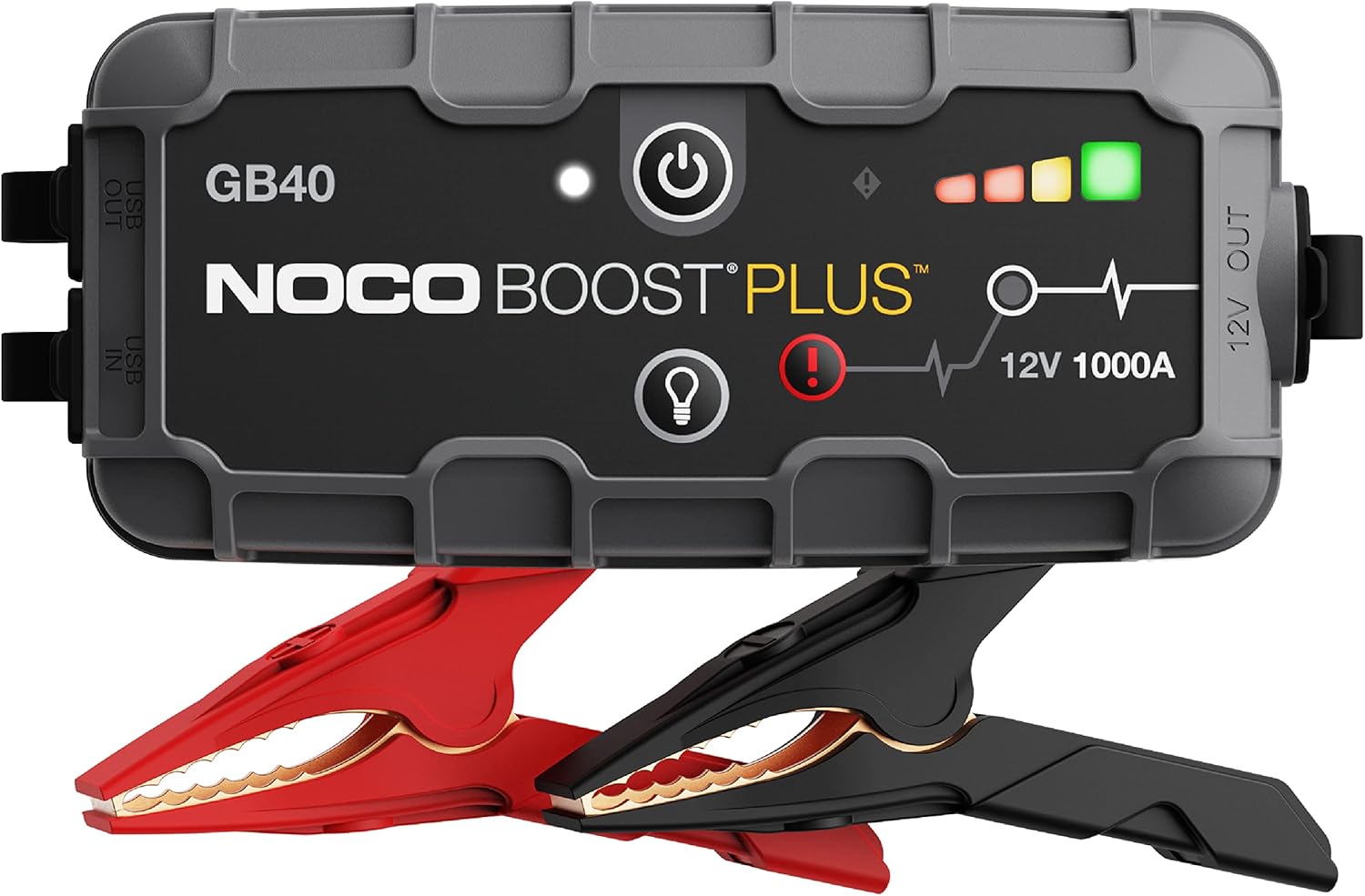
NOCO Boost Plus GB40 Jump Starter
A 1000A lithium jump starter that fits in your glovebox and works on any 12V battery. Your insurance against a dead 12V in a parking lot.
As an Amazon Associate, ThinkEV earns from qualifying purchases — at no extra cost to you.

Founder & Chief Editor
Vlad Pereira is the founder and chief editor of ThinkEV.ca, the Canadian electric-vehicle publication he writes and edits from Courtenay, British Columbia. He covers EV pricing, federal and provincial rebates, charging costs, and the Chinese manufacturers now entering Canada, from the buyer's side rather than the press-fleet side. ThinkEV is a venture of Vlad Pereira Online; his writing on health, income and the long game lives at vladpereira.com.
Frequently asked questions
Why does my Bolt feel less efficient on the 401 than city driving?
Does buying a lighter EV actually save money on electricity bills?
Which spec should I actually check before buying an EV for road trips?
Are Chinese EVs ahead on aerodynamics or just on price?
Will the next wave of small EVs fix the aerodynamics problem?
More EV & road-trip finds
Affordable upgrades worth a look — tap any to check the price on Amazon.
 ★ 546
★ 546Funny Headrest Face Covers (2-Pack)
View on Amazon ★ 12,396
K KNODEL Car Trash Can with Lid
View on Amazon ★ 1,866
70mai A810 4K Dual Dash Cam
View on Amazon ★ 119
★ 119Foldable Waterproof Trunk Organizer
View on Amazon ★ 392
★ 392Large Cup Holder Adapter (32-40oz)
View on Amazon ★ 47,507
HOMEXCEL Microfiber Cloths (12-Pack)
View on Amazon ★ 419
★ 419RGB Car Interior LED Strip Light
View on Amazon ★ 4,055
6-Speed Manual Shift Knob Display
View on AmazonRead, Plan, Then Stay Current
Explore our expert articles to understand incentives and ownership costs, use the map to pressure-test charging reality, then subscribe so new EV coverage comes straight to you.
Continue Reading
Automakers Sold You 'Efficient Small EVs', The Data Disagrees
What kWh Means for Your EV: Energy and Efficiency Explained
Why Chinese EVs Resemble Porsches: Aerodynamics
Why Most EV Efficiency Coverage Gets It Backwards

EV Efficiency Ratings Compared Across Four Markets