Key takeaways
- The BYD Atto 3 runs a 60.48 kWh LFP Blade Battery that BYD designs and builds in-house, warranted 8 years / 200,000 km.
- It earned a 5-star Euro NCAP rating with 91% adult-occupant protection, with adaptive cruise, lane-keep, automatic emergency braking, and blind-spot monitoring standard.
- It does not qualify for Canada's $5,000 federal EVAP rebate, because it's built in China, which the program excludes.
- DC fast charging peaks at about 80 kW, so a 10–80% cold-weather charge takes roughly 45 minutes, versus 20–30 for a Hyundai Ioniq 5 or Tesla Model 3.
- A standard heat pump helps real-world winter range hold an estimated 280–320 km around -10°C in Toronto and 240–280 km at -30°C in Winnipeg.
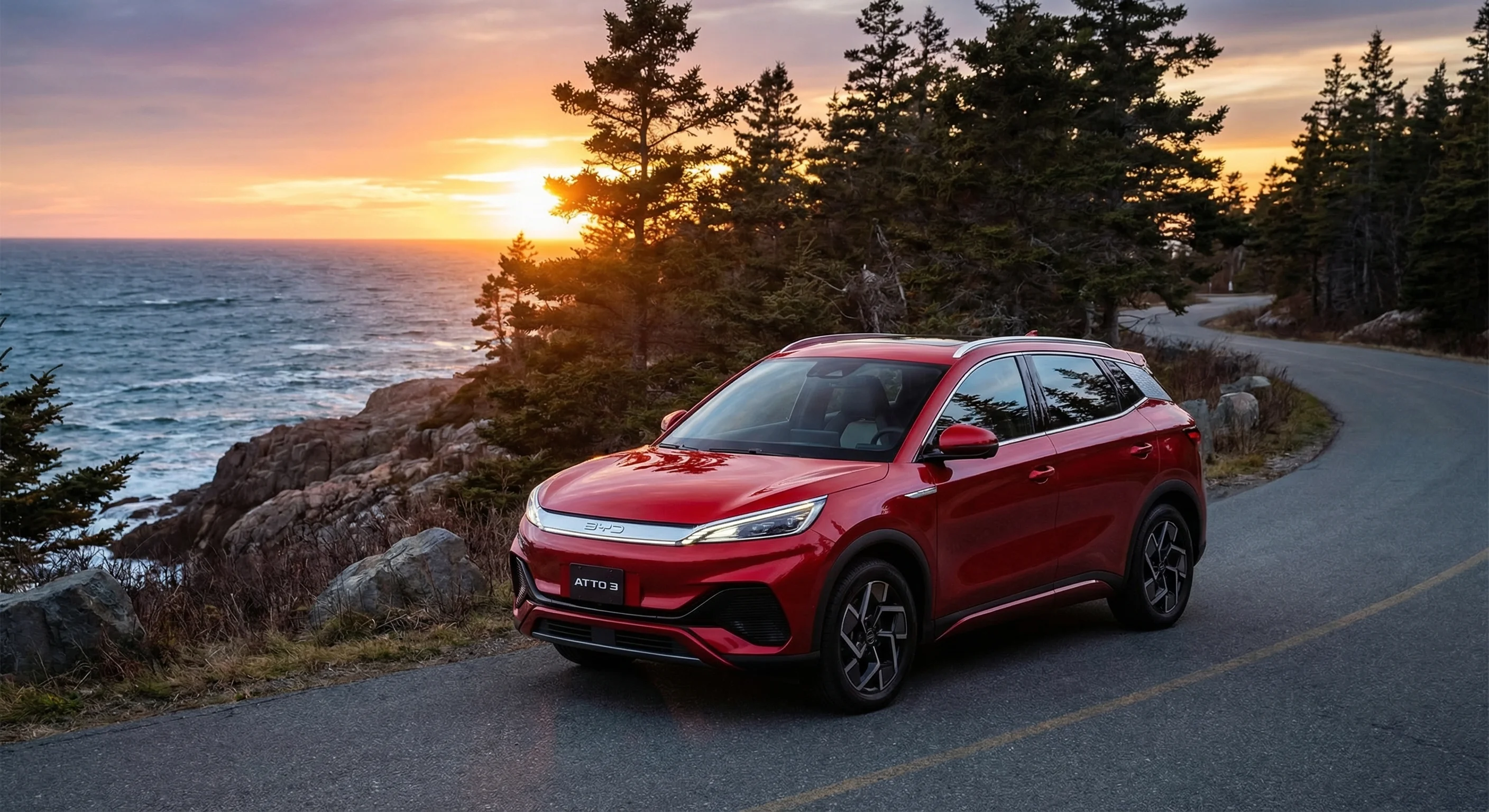
The BYD Atto 3 is a $30,000 compact SUV with 440 litres of cargo space, a 60 kWh LFP Blade Battery, and door pulls that vibrate like guitar strings when you touch them.
Budget EVs have a reputation, and it's not a good one. Hard plastics everywhere. Cloth seats that feel like a rental Corolla. Infotainment systems that lag two seconds behind every touch. You pay less, you get less, that's the deal we've accepted.
So when I started looking at BYD's compact SUV, I went in ready to find the catch. A $30,000 EV from a brand most Canadians have never heard of? There had to be something wrong with it.
There isn't an obvious product flaw.
Or rather, there are compromises, every car has compromises, but they're not where I expected them to be. The Atto 3 looks like a vehicle BYD has engineered seriously. The caveat for Canadians is that this post still sits partly in launch-preview territory, so some Canada-specific details remain estimates rather than final retail facts.
Let me show you what I mean.
The Interior That Has No Business Being This Nice
The door pulls look like guitar strings. Not metaphorically, they're actual stringed elements stretched across the door panel, and when you pluck them, they vibrate. It's a gimmick. I know it's a gimmick. But it's the kind of gimmick that makes you smile, and when did a $30,000 car last make you smile at a design detail?
The centre screen is the same 12.8-inch rotating unit from the more expensive BYD Seal. It flips between horizontal and portrait orientation with a button press. The software running on it isn't as polished as Tesla's, there's occasional lag, and some menu structures feel like they were translated from Chinese without much UX consideration, but it does wireless CarPlay and Android Auto. That's 90% of what most people need from an infotainment system.
Rear legroom is generous. A 5'10" passenger sits comfortably behind the driver's position with room to spare. The panoramic sunroof comes standard on higher trims, which is unusual at this price point. Cargo space hits 440 litres behind the rear seats, expanding to 1,338 with them folded. That beats the Kona Electric's 332 litres by a meaningful margin.
The materials aren't Audi-grade. Let's be clear about that. There's hard plastic in places where German cars would use soft-touch surfaces. But BYD did something clever: they put the nicer materials where your hands actually go. The steering wheel feels good. The armrest feels good. The parts you don't touch can be whatever they need to be to hit that price.
The Blade Battery: Why Chemistry Matters
BYD designs and manufactures its own battery cells, and the Atto 3 ships with a 60.48 kWh lithium iron phosphate (LFP) Blade pack. LFP chemistry charges to 100% nightly without the degradation seen on nickel-based cells, resists thermal runaway better than NMC, and uses no cobalt or nickel, three properties that shape almost every downstream ownership decision, from charging routine to long-term resale.
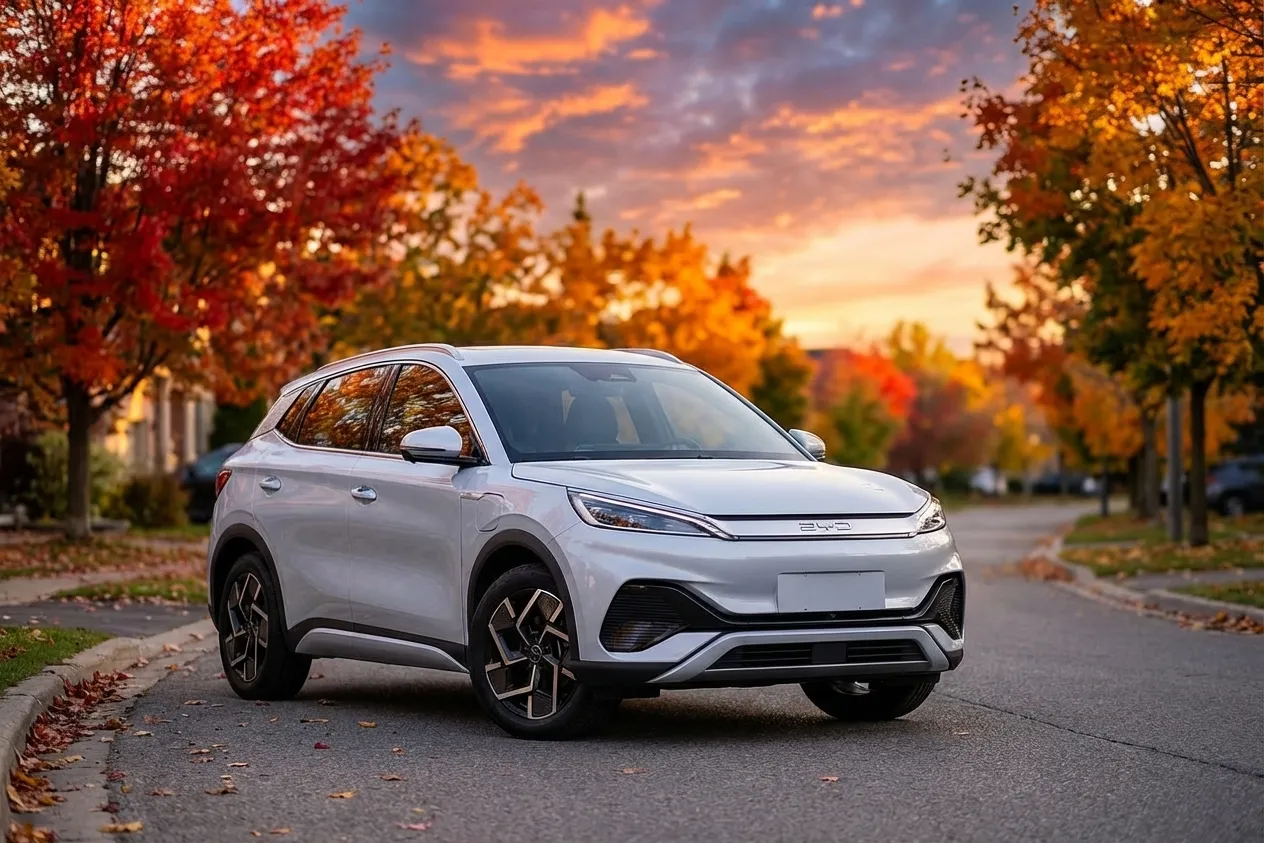
BYD makes their own batteries. This isn't marketing fluff, it genuinely changes what the car can offer.
The Atto 3 uses a 60.48 kWh lithium iron phosphate pack called the Blade Battery. If you've followed EV battery technology at all, you know that LFP chemistry is different from the nickel-based cells that Tesla and most other manufacturers use.
Here's what that means in practice.
You can charge to 100% every night without thinking about it. LFP cells don't degrade from high state-of-charge the way nickel cells do. Tesla actually recommends charging their LFP Model 3s to 100% regularly. With the Atto 3, you just plug in when you get home and let it fill up. No battery management anxiety.
It won't catch fire. BYD's nail penetration tests are dramatic YouTube viewing for a reason. They drove a steel nail through a Blade Battery pack and filmed what happened: nothing. The temperature barely rose. Do the same thing to a nickel-based pack and you get thermal runaway, flames, the whole show. LFP chemistry simply doesn't have that failure mode.
The battery should outlast your interest in keeping the car. LFP cells handle significantly more charge cycles before degradation than NMC or NCA chemistry. BYD warrants the battery for 8 years and 200,000 km, but the underlying technology should go much longer.
The tradeoff is energy density. LFP packs are heavier per kilowatt-hour, which means either less range or more weight for equivalent range. The Atto 3 weighs about 1,750 kg, not light, but not unreasonable for a small SUV with a 60 kWh battery.
What You'll Actually Get For Range
The official CLTC rating is 420 km. CLTC is a Chinese testing standard that's notoriously optimistic, like the old EPA numbers before the EPA got more realistic. Here's what I'd actually expect.
Summer driving with a mix of city and highway: 340-370 km. That's comfortable margin for pretty much any daily driving pattern. The average Canadian drives about 40 km per day, which means you could theoretically go a week between charges.
Winter driving in Toronto, around -10°C with heat running: 280-320 km. You're losing maybe 20% to cold weather and cabin heating. The Atto 3 has a heat pump, which helps, it's more efficient than the resistive heaters in older EVs, but physics is physics. Cold batteries hold less charge and heating takes energy.
Winter driving in Winnipeg at -30°C: 240-280 km. This is where you start planning your charging more carefully. Still plenty for daily commuting, but you'll want to plug in every night rather than every few days.
For most urban and suburban Canadians, this range is fine. The Atto 3 isn't a road trip vehicle, we'll get to that, but it handles the daily routine without drama.
The Charging Problem
80 kW DC fast-charging is slow.
At a Petro-Canada station on a cold January morning, you're looking at 45 minutes to go from 10% to 80%. Not the 20-30 minutes you'd get from a Hyundai Ioniq 5 or Tesla Model 3. Forty-five minutes.
If you're doing Vancouver to Kelowna regularly, this matters. Each charging stop becomes a genuine pause in your journey, not a quick coffee break. You'll want to pack snacks, download podcasts, and recalibrate your expectations about travel time.
Gear worth having
As an Amazon Associate, ThinkEV earns a small commission from qualifying purchases — at no extra cost to you.

VIOFO A229 Pro 4K Dash Cam
4K front plus 2K rear with parking mode and GPS. Your silent witness for insurance claims, with always-on sentry recording while parked.
As an Amazon Associate, ThinkEV earns from qualifying purchases — at no extra cost to you.
If you're doing North York to Mississauga every day and charging at home overnight, it doesn't matter at all. The car will always be full in the morning, and you'll never use a DC fast charger.
The Atto 3 is a commuter car that can road trip if you're patient. It's not a road tripper that happens to commute well. If that distinction matters to you, look elsewhere. If it doesn't, keep reading.
Winter: The Elephant in Every Canadian EV Conversation
Front-wheel drive only. There's no AWD option.
With proper winter tires, front-wheel drive handles 95% of Canadian winter driving just fine. The Atto 3's battery pack sits low in the chassis, keeping the centre of gravity down, which actually improves stability on slippery surfaces compared to a higher-riding gas vehicle.
But if you're in Saskatoon or Thunder Bay and regularly find yourself on unplowed roads at 6 AM, you should probably shop for something with all-wheel drive. That's not a criticism of the Atto 3 specifically, it's just reality about matching vehicle capabilities to conditions.
The heat pump helps with winter efficiency. The battery preconditioning feature warms the pack before you leave if you schedule your departure, which improves cold-start range and makes charging faster when you arrive at a DC station. These are thoughtful engineering choices that show BYD has considered cold-climate operation.
Safety: Boring In The Best Way
The Atto 3 earned a 5-star Euro NCAP rating in 2022 with 91% adult occupant protection, solid mid-luxury territory. Adaptive cruise, lane keep assist, automatic emergency braking, blind-spot monitoring, and rear cross-traffic alert all come standard. The Blade Battery structure is engineered to act as a crush-resistant member of the body shell, adding a layer of collision protection beyond the conventional crumple zones.

The Atto 3 earned a 5-star Euro NCAP rating in 2022. Adult occupant protection scored 91%. That's not quite Tesla Model 3 territory (96%), but it's solidly in the "very safe car" category.
Adaptive cruise control, lane keep assist, automatic emergency braking, blind-spot monitoring, rear cross-traffic alert, all standard. The Blade Battery structure is designed to be crush-resistant in collisions, adding another layer of protection beyond the usual crumple zones.
I'm not going to spend a lot of time on safety because there's nothing remarkable to say. The Atto 3 is as safe as cars that cost $20,000 more. That's kind of the point of the whole vehicle.
Gear worth having
As an Amazon Associate, ThinkEV earns a small commission from qualifying purchases — at no extra cost to you.
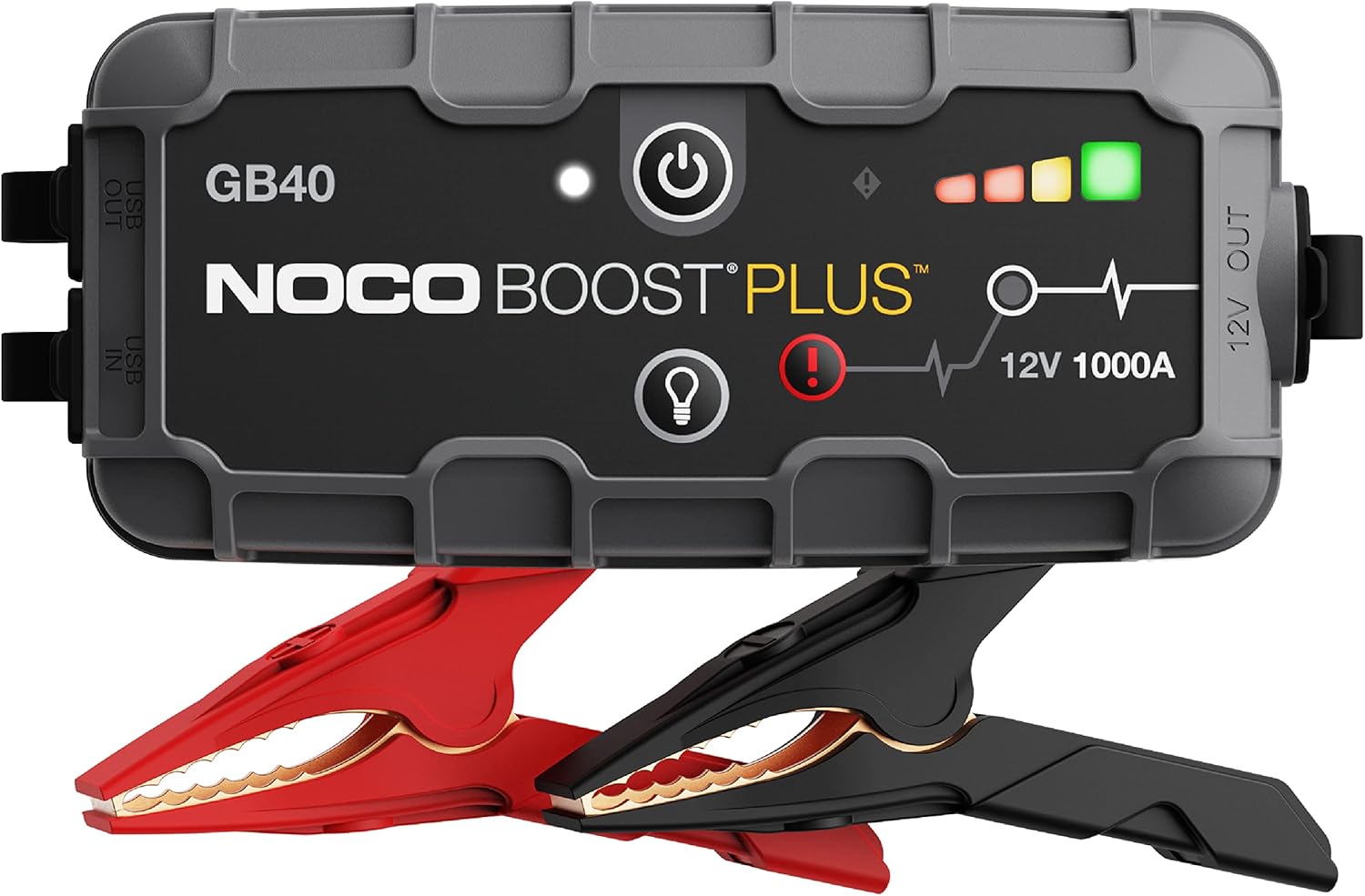
NOCO Boost Plus GB40 Jump Starter
A 1000A lithium jump starter that fits in your glovebox and works on any 12V battery. Your insurance against a dead 12V in a parking lot.
As an Amazon Associate, ThinkEV earns from qualifying purchases — at no extra cost to you.
The Price Equation
Expected Canadian pricing has been discussed around $29,990 to $34,990 depending on trim, but that still needs to be treated as estimated rather than final.
Here's the important caveat: the BYD Atto 3 does not qualify for the $5,000 federal EVAP rebate. EVAP requires vehicles manufactured in Canada or free trade agreement countries, BYD manufactures in China, which is excluded. So the federal rebate is off the table for any BYD vehicle.
Provincial rebates may still apply depending on the province's own rules. In Quebec, the $2,000 Roulez vert rebate ($60,000 MSRP cap) could bring pricing to $27,990-$32,990. In Ontario, there's no provincial EV rebate, so you're at the full $29,990-$34,990. Manitoba excludes Chinese-made EVs from its rebate, so the Atto 3 gets nothing there either.
For context: the older Chevrolet Bolt EV/EUV ended production in 2023, while the newer 2027 Bolt now has a published starting MSRP of C$39,999. A Hyundai Kona Electric starts higher than the Atto 3 discussion range. A Nissan Ariya starts much higher again.
The Atto 3 undercuts all of them while matching or exceeding their feature sets. I keep coming back to this point because it doesn't make intuitive sense. There should be a catch. There should be some glaring deficiency that explains the price gap.
The catch is that BYD is new to Canada, the dealer network is still developing, and resale value is unknown. Those are real considerations. But they're not deficiencies in the vehicle itself.
Gear worth having
As an Amazon Associate, ThinkEV earns a small commission from qualifying purchases — at no extra cost to you.

Grizzl-E Classic Level 2 EV Charger (40A)
Canadian-made and rated for minus 40C winters. 40A / 9.6 kW, NEMA 14-50, indoor/outdoor, 24-ft cable. The charger built for Canadian weather.
As an Amazon Associate, ThinkEV earns from qualifying purchases — at no extra cost to you.
Who Should Buy This
If you have home charging, a garage, a driveway outlet, or a condo with charger access, and you do mostly urban or suburban driving, the Atto 3 could make almost irresponsible amounts of sense if the Canadian launch pricing lands where expected. You get an EV that feels premium, uses a battery approach BYD has explained clearly, and may cost less than many new gas vehicles even without federal EVAP access.
If you need AWD for genuine winter capability, frequent long road trips, or the fastest possible charging speeds, look elsewhere. The Atto 3 does some things very well and other things just adequately. Know which matters to you.
What I Keep Thinking About
A few weeks after my initial analysis of the Atto 3, I find myself thinking about it more than I expected.
Not because it's exciting, it isn't, really. It doesn't have the raw acceleration of performance EVs or the tech-forward novelty of a Tesla. It's a sensible compact SUV that happens to be electric.
But it's a sensible compact SUV that costs $30,000, feels like it should cost $45,000, and uses battery technology that prioritises safety and longevity over every other consideration. That combination shouldn't exist, but it does.
For a lot of Canadian families, this might be the EV that finally makes the math work. Not the EV they dreamed about. The EV they may actually be able to afford if BYD's Canadian rollout lands cleanly.
Sometimes that matters more.
Gear worth having
As an Amazon Associate, ThinkEV earns a small commission from qualifying purchases — at no extra cost to you.

PULIDIKI Car Cleaning Gel (Detailing Putty)
Press it into vents, buttons, and seams and it lifts out dust you did not know was there. Weirdly satisfying, genuinely useful.
As an Amazon Associate, ThinkEV earns from qualifying purchases — at no extra cost to you.
Related Reading
- BYD Atto 3 vs Hyundai Kona EV, Head-to-head comparison of two affordable SUVs.
- BYD Dolphin Canada Review, BYD's other affordable EV option.
- Most Affordable EVs in Canada 2026, Every budget-friendly EV ranked.
Gear worth having
As an Amazon Associate, ThinkEV earns a small commission from qualifying purchases — at no extra cost to you.

WixGear Magnetic Air Vent Phone Mount (2-Pack)
A magnet strong enough that your phone never flinches over potholes or rail crossings. Two in the box, one for each car.
As an Amazon Associate, ThinkEV earns from qualifying purchases — at no extra cost to you.

Founder & Chief Editor
Vlad Pereira is the founder and chief editor of ThinkEV.ca, the Canadian electric-vehicle publication he writes and edits from Courtenay, British Columbia. He covers EV pricing, federal and provincial rebates, charging costs, and the Chinese manufacturers now entering Canada, from the buyer's side rather than the press-fleet side. ThinkEV is a venture of Vlad Pereira Online; his writing on health, income and the long game lives at vladpereira.com.
Frequently asked questions
Does the BYD Atto 3 qualify for EVAP in Canada?
What battery does the BYD Atto 3 use?
How does the Atto 3 handle Canadian winters?
How much does the BYD Atto 3 cost in Canada?
How does the BYD Atto 3 compare to the Hyundai Kona Electric?
More EV & road-trip finds
Affordable upgrades worth a look — tap any to check the price on Amazon.
 ★ 1,340
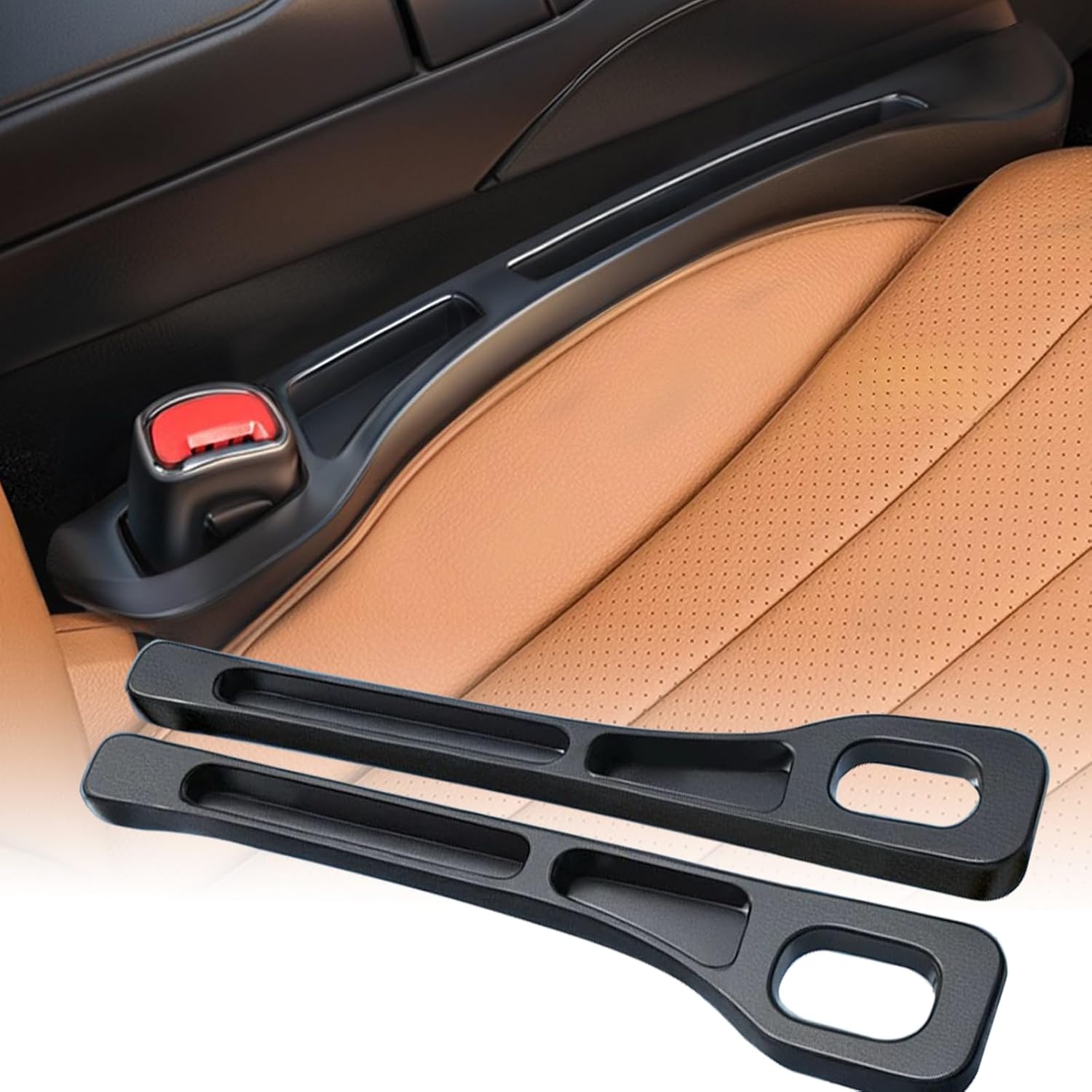
Car Seat Gap Filler (Universal)
View on Amazon ★ 297
★ 297360-Degree One-Hand Dashboard Phone Mount
View on Amazon ★ 87
★ 87Car Window Sun Shades for Kids (4-Pack)
View on Amazon ★ 68
★ 68WeatherTech FloorLiner for Tesla Model 3
View on Amazon ★ 4,050
Touchscreen Mist Screen Cleaner Kit
View on Amazon ★ 55
★ 55LED Car Door Logo Projector Light
View on Amazon ★ 4,626
HoogaLife Hanging Car Diffuser (2-Pack)
View on Amazon ★ 4,424
Sun Visor Card and Document Organizer
View on AmazonRead, Plan, Then Stay Current
Explore our expert articles to understand incentives and ownership costs, use the map to pressure-test charging reality, then subscribe so new EV coverage comes straight to you.
Continue Reading
BYD Dolphin Canada: Price, Specs and 2026 Review
BYD Shark 6 Canada: Price, Specs and 2026 Release
BYD Seal Canada Price: $45K Sedan, Is It Worth It?
Volvo EX30 Canada Review: The Small One to Want

Rivian R1T Canada Review 2026: 515 km Quad-Motor