Key takeaways
- $28,000 for a new electric car in Canada.
- The BYD Dolphin does not qualify for Canada's $5,000 federal EVAP rebate, because the program excludes Chinese-manufactured vehicles.
- The average new car price in Canada crossed $66,000 in 2025.
- BYD delivered over 4.5 million plug-in vehicles globally in 2025, more than any other automaker, and the Dolphin has been on sale in Australia, Europe, and South America since 2023.
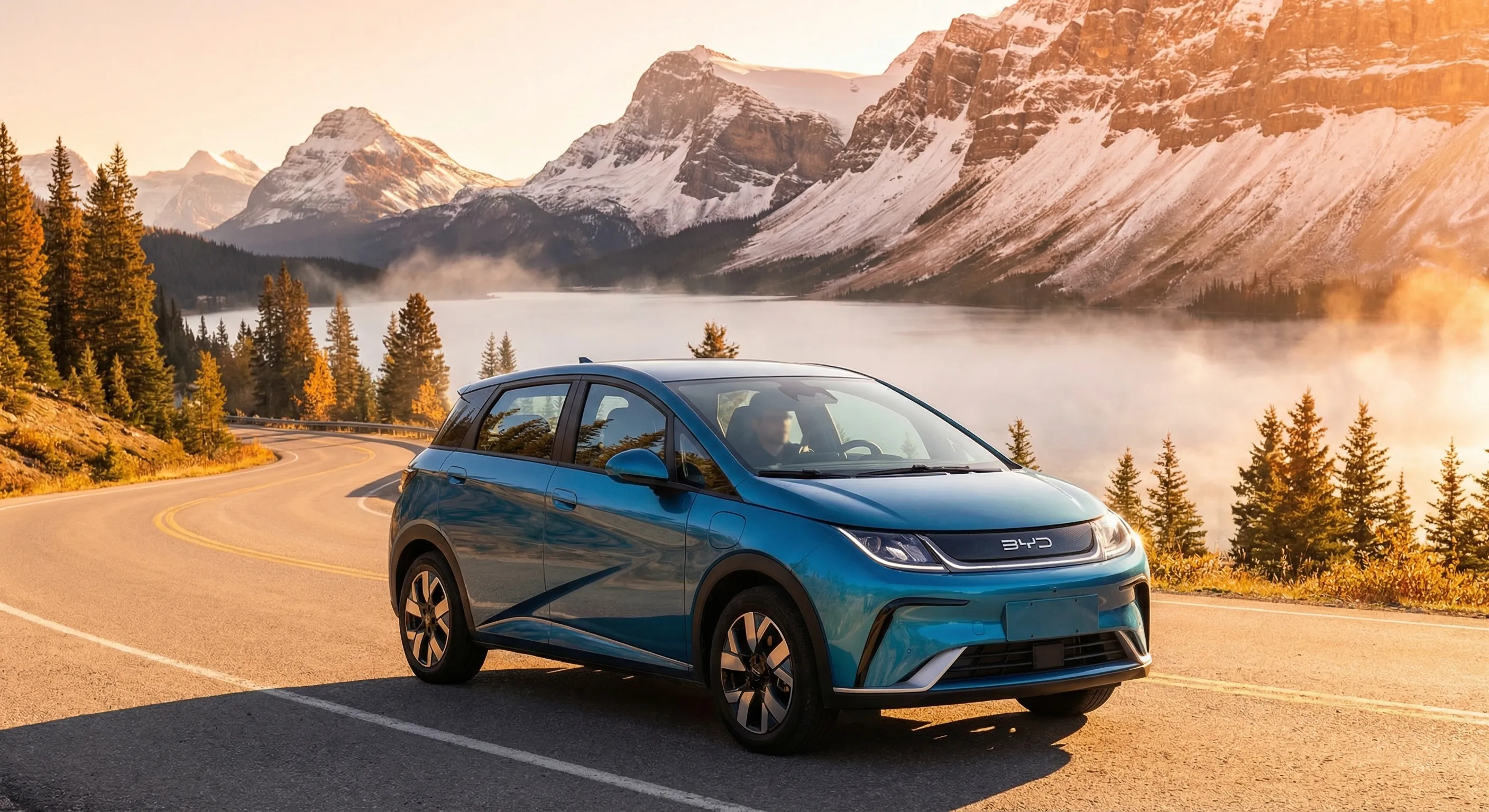
$28,000 for a new electric car in Canada. That number needs an asterisk: in Canada, the Dolphin is still a launch-and-estimate story rather than a fully settled showroom fact pattern.
In a market where the average new EV transaction price hovers around $55,000, the BYD Dolphin is being discussed at a price point that makes the Nissan Leaf look expensive and the Chevrolet Bolt look much closer than people expected. It doesn't qualify for the $5,000 federal EVAP rebate, EVAP excludes Chinese-manufactured vehicles. In Quebec, provincial treatment may still help. But the key correction is this: Canadian pricing, trim structure, and some charging details are still launch-dependent.
Here's some context for why this matters. The average new car price in Canada crossed $66,000 in 2025. The average used car price is still above $35,000. If the Dolphin lands near its expected pricing, it undercuts both by a significant margin. But this post should not pretend you can already walk into a mature Canadian BYD dealer network and drive one home nationwide.
BYD isn't a startup chasing its first delivery. They're the world's largest EV manufacturer, not by a little, by a lot. In 2025, BYD delivered over 4.5 million vehicles globally, surpassing every other automaker in plug-in vehicle sales. They build their own batteries, their own motors, their own semiconductors, and increasingly their own software. The vertical integration is staggering. Where other automakers buy cells from CATL or LG and motors from suppliers, BYD manufactures everything in-house. That's how they get the cost structure that allows a car like the Dolphin to plausibly be discussed in the high-$20,000s to low-$30,000s.
The Dolphin has been selling in Australia, Europe, and South America since 2023. That matters because Canadian buyers aren't looking at a prototype. They're looking at a global product that has already accumulated real-world feedback elsewhere. But Canadian market fit, connector setup, trim content, dealer execution, parts support, still needs to be proven in Canada specifically.
What does this mean for the Canadian EV market? Bluntly, it means the price floor just dropped by about $10,000. Every automaker selling an EV in the $35,000-$45,000 range now has to answer the question: why should a Canadian buyer pay $10,000 more for your car when the Dolphin exists? Some have good answers, faster charging, AWD, more cargo space, established dealer networks. But the question itself is new, and it's the kind of question that reshapes markets.
DESIGN AND EXTERIOR
The Dolphin is a compact hatchback, roughly the size of a Honda Fit or Mazda2. At 4,290 mm long, 1,770 mm wide, and 1,570 mm tall, it occupies a footprint that feels familiar to anyone who has driven a small Japanese hatchback. The wheelbase, at 2,700 mm, is generous for the exterior dimensions, a benefit of the skateboard EV platform that pushes the wheels out to the corners and maximizes interior space.
The design language is what BYD calls "Ocean Aesthetic," which translates to soft, flowing lines rather than the sharp creases and aggressive angles that dominate modern automotive design. The front end is friendly rather than intimidating, no fake grille, just a smooth face with pixel-style LED headlights that give the Dolphin a distinctive, modern look. The daytime running lights arc upward in a shape that suggests a dolphin leaping out of the water. It's cute without being childish, which is a surprisingly difficult balance to strike.
In profile, the Dolphin reads as a traditional hatchback with a few EV-specific details. The roofline curves gently toward the rear, the door handles are flush-mounted (a nod to aerodynamic efficiency), and there's a subtle character line that runs from the front fender through the door handles and into the rear quarter panel. The rear end is clean and simple, with full-width LED taillights connected by a light bar. It's a cohesive design that photographs well and looks better in person than in press images, the proportions are more balanced than photos suggest.
Colour options for the Canadian market include Surfing Blue, Coral Pink, Ski White, Cosmos Black, and Urban Grey. The brighter colours suit the car's personality better than the neutral tones, though I suspect Urban Grey and Cosmos Black will be the top sellers because Canada.
Build quality on the pre-production models shown at Canadian auto shows is genuinely impressive. Panel gaps are tight and consistent, tighter, than some cars costing twice as much. The paint is deep and even, without the orange peel texture that plagued early Chinese imports. BYD has clearly invested heavily in fit and finish, and it shows. Run your hand along the body panels and the surfaces are smooth, the seams are even, and the doors close with a solid, satisfying thunk rather than the hollow clang you might expect from a budget car.
How does it compare to the cars it's replacing in the market? The Honda Fit, which left Canada in 2020, was 4,065 mm long and weighed about 1,150 kg. The Mazda2, discontinued in 2022, was slightly shorter at 4,040 mm. The Dolphin is about 200 mm longer than either but occupies the same parking-space footprint and carries the same "easy to live with in a city" energy. It's the spiritual successor to those cars, except it's electric and it costs roughly the same as a well-equipped Fit did in its final year.
One observation about aerodynamics: the Dolphin's drag coefficient of 0.311 is decent but not exceptional. The Tesla Model 3 manages 0.23, and even the Hyundai Ioniq 6 hits 0.21. The Dolphin's upright hatchback shape trades some aerodynamic efficiency for interior space and practicality, which is the right call for a car at this price and in this segment. You don't buy a subcompact hatchback for its ability to slice through air at 140 km/h. You buy it because it fits in any parking spot and carries more stuff than it looks like it should.
INTERIOR DEEP-DIVE
Inside, the cabin punches above its price in ways that genuinely surprised me. The centrepiece is the 12.8-inch rotating touchscreen, it physically swivels between portrait and horizontal orientation at the press of a button, which is a party trick you won't find on any other car at this price. In portrait mode, the navigation display is tall and shows more of the road ahead. In horizontal mode, the media and climate controls have more room to breathe. It's more than a gimmick, once you've used portrait mode for navigation, going back to a fixed widescreen feels limiting.

The infotainment system runs on BYD's DiLink platform, which has improved significantly since the Dolphin's initial launch. Wireless Apple CarPlay and Android Auto are both supported, and the response time is snappy enough that you're not waiting for inputs to register. The built-in navigation is usable but not as polished as Google Maps or Apple Maps, so most drivers will default to their phone's system. Voice control works for basic commands, climate adjustment, phone calls, navigation destinations, but struggles with Canadian accents and French-language queries. It's functional rather than impressive.
The instrument cluster is a 5-inch digital display behind the steering wheel. It's small but clear, showing speed, battery percentage, range, and power consumption without clutter. Some reviewers have criticized it as being too small, and I understand that, the Kia EV3's full-width dual-screen setup is more visually impressive. But the Dolphin's display tells you everything you need to know without distracting you, and there's something to be said for restraint.
Materials are a mix of soft-touch plastics on the upper dashboard, door panels, and armrests, with harder plastics below the sight line. If Canadian pricing lands near the lower end of the current scenarios, this is not just acceptable, it's above average. The steering wheel is leather-wrapped and feels good in the hands. The gear selector is a small rotary dial on the centre console, which frees up space for a large storage bin and two cupholders. There's a wireless charging pad ahead of the gear selector, a USB-A port, and a USB-C port. Storage in the centre console is adequate, not cavernous, but enough for a phone, wallet, and the usual driving detritus.
The front seats are comfortable for long drives, with decent bolstering and enough adjustment range to accommodate a wide variety of body types. They're not heated on the base model (a notable omission for a Canadian-market car), but heated seats come standard on the upper trim. The driver's seat is six-way manual, while the passenger gets four-way manual. Power seats would be nice, but at this price, manual adjustment is the expectation.
The rear seat is where the Dolphin's packaging shines. Thanks to the flat floor, no transmission tunnel, no exhaust running underneath, the rear footwell is completely flat. Three adults can sit across the bench without the middle passenger straddling a hump. Legroom is genuinely good for the class. I'm 180 cm, and with the driver's seat set for my position, I had about three finger-widths of knee clearance behind it. Headroom is adequate, though anyone over 185 cm might brush the headliner. Four adults can ride in the Dolphin without complaints, which isn't something you can say about most subcompact hatchbacks. Five adults is a squeeze, but technically possible for short trips.
Cargo space measures 345 litres behind the rear seats, which expands to approximately 1,310 litres with the rear seats folded. That's competitive with the Honda Fit's 470 litres (seats up) and slightly less than the Kia EV3's 460 litres. The rear seats fold in a 60/40 split, though they don't fold completely flat, there's a slight step in the load floor. No frunk on the Dolphin, which is unsurprising given the front motor configuration on some trims. For daily use, groceries, a stroller, weekend bags, the cargo area is perfectly adequate. For a COSTCO run or moving day, you'll want to fold the rear seats.
The cabin is also reasonably quiet. At city speeds, the Dolphin is whisper-quiet in the way all EVs are, with only a faint hum from the motor. At highway speeds, some tire noise and wind noise filter in, but it's no worse than a comparable gas hatchback, and significantly better than the Honda Fit was. The doors seal well, and BYD has used acoustic glass on the windshield, which helps. It's a commuter car, and the noise levels are calibrated for commuting.
THE NUMBERS
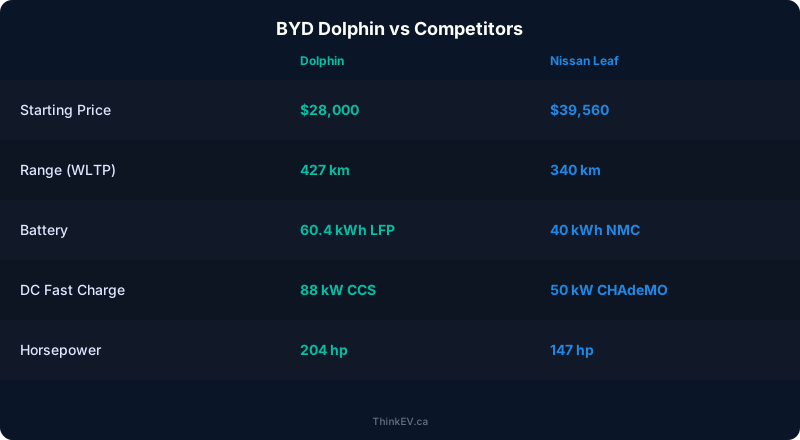
The Dolphin is commonly discussed in two battery configurations. The base model uses a 44.9 kWh Blade Battery with 340 km of rated range (WLTP). The extended range model bumps that to 60.4 kWh and 427 km. Those are the global-spec numbers currently informing the Canadian conversation, not a final locked Canadian order guide.
The base model produces 177 hp, while the extended range produces 204 hp. Both figures are more than adequate for the car's weight of approximately 1,520 kg (extended range). For reference, the Honda Fit had 130 hp and weighed 1,150 kg. The power-to-weight ratio of the Dolphin is actually better than the Fit's, and the instantaneous torque delivery of an electric motor makes the on-paper advantage feel even larger in practice.
After provincial rebates where applicable, the math still looks compelling. But the cleanest way to frame it today is as a modeled affordability scenario, not a final province-by-province price sheet. No federal EVAP rebate applies under the current rules for China-built vehicles. That still puts the Dolphin in territory where it's competing with used gas cars, not other new EVs.
To put that in perspective: a 2024 Hyundai Kona Electric with 30,000 km on the odometer sells for $28,000-$32,000 on the used market. The Dolphin, brand new, with a full factory warranty, starts at the same price or less. A new gas-powered Honda Civic starts at $31,285 before taxes. The Dolphin undercuts it by $3,000, and then saves you $1,500-$2,000 per year on fuel. The value proposition isn't just good. It's disruptive.
Gear worth having
As an Amazon Associate, ThinkEV earns a small commission from qualifying purchases — at no extra cost to you.

Grizzl-E Classic Level 2 EV Charger (40A)
Canadian-made and rated for minus 40C winters. 40A / 9.6 kW, NEMA 14-50, indoor/outdoor, 24-ft cable. The charger built for Canadian weather.
As an Amazon Associate, ThinkEV earns from qualifying purchases — at no extra cost to you.
BATTERY TECHNOLOGY
The Blade Battery is not just a marketing name. It's a genuinely innovative approach to battery design, and understanding it explains a lot about why BYD can price the Dolphin so aggressively while still delivering a car that doesn't feel cheap.
BYD uses lithium iron phosphate chemistry, LFP, rather than the nickel-manganese-cobalt (NMC) chemistry used by most other EV manufacturers. The "blade" refers to the shape of the cells: they're long, thin, and flat, stacked directly into the battery pack without the intermediate module layer that most manufacturers use. This cell-to-pack design eliminates the structural components needed to house modules, which means more of the battery pack's volume is actual energy storage rather than packaging. It's clever engineering that squeezes more capacity from a given space.
LFP chemistry has three significant advantages over NMC that directly benefit Dolphin owners.
First, thermal stability. LFP cells are generally more resistant to severe thermal escalation than the nickel-rich chemistries most EV buyers hear about. BYD's Blade Battery demonstrations are one reason the company leans so hard on this message. The fair reading is not that failure is impossible, but that LFP chemistry meaningfully improves the safety profile for an affordable daily-driver EV.
Second, cycle life. LFP batteries can handle 3,000 or more full charge-discharge cycles before experiencing meaningful degradation. NMC batteries typically tolerate 1,000-2,000 cycles. If you charge your Dolphin from empty to full every single day, which almost no one does, a 3,000-cycle lifespan translates to over eight years of daily cycling. In realistic use, where most charges are partial (topping up from 40% to 100%, for example), the Blade Battery should last the life of the car and beyond. BYD has stated that the battery should retain 80% of its original capacity after 5,000 cycles in laboratory conditions. Even accounting for real-world degradation factors, the battery will almost certainly outlast every other component of the car.
Third, you can charge to 100% every day without worrying about degradation. NMC batteries degrade faster when held at high states of charge, which is why most EV manufacturers recommend limiting daily charging to 80% and only charging to 100% before long trips. LFP chemistry doesn't have this vulnerability. The Dolphin's battery management system is designed for daily 100% charging, and BYD actively encourages it. In fact, the battery gauge is more accurate at 100%, so periodic full charges help the car's range estimation stay calibrated.
The trade-off? Energy density. LFP stores less energy per kilogram than NMC, which is why the Dolphin needs a 60.4 kWh battery to achieve 427 km of range, while an NMC-equipped car might achieve similar range with 55 kWh. The battery is heavier for the same capacity, which contributes to the Dolphin's curb weight. It's a trade-off that favours longevity and safety over outright efficiency, and for a car that's designed to be an affordable daily driver rather than a performance machine, it's the right call.
There's also a practical advantage that doesn't show up on spec sheets: LFP batteries are cheaper to produce because they don't require cobalt or nickel, both of which are expensive and ethically complicated to mine. This cost advantage is part of how BYD prices the Dolphin at $28,000 while still making a profit.
RANGE AND CHARGING
The 427 km rated range on the extended model is a WLTP figure, which tends to be optimistic for Canadian conditions. In real-world Canadian summer driving, a mix of city streets and highway with air conditioning running, expect roughly 350-390 km. That's a solid day of driving without plugging in. For most Canadians who commute less than 80 km per day, the extended range Dolphin delivers four to five days of driving between charges, even in summer when A/C is drawing power.
The base model's 340 km rated range translates to roughly 280-310 km in summer, which is still excellent for a city car. Three to four days of commuting between charges. The only scenario where the base model's range becomes a limitation is highway road trips, where the combination of higher speeds and no regen braking eats through the smaller battery quickly.
Winter is where range conversations get real in Canada, and it's worth being specific about the numbers. At -10 to -15 degrees Celsius, a typical January day in Toronto, Ottawa, or Montreal, expect the extended range model to deliver 260-310 km. At -20 to -25 degrees, a cold snap in the Prairies or a normal Tuesday in Winnipeg, expect 230-270 km. The base model drops to roughly 220-260 km at moderate winter temperatures.
Those numbers are lower than summer range, obviously, but they're still practical for daily use. A 40 km round-trip commute uses roughly 15-20% of the extended range battery in winter. You can comfortably go three to four days between plugging in even in the coldest conditions. The Dolphin's winter range doesn't eliminate range anxiety, but it pushes it out to edge cases, long highway drives in bitter cold, rather than being a daily concern.
DC fast charging maxes out at 88 kW, which is the Dolphin's one clear weakness. On a fast charger, 10% to 80% takes about 30 minutes, which is acceptable but not impressive. By comparison, the Hyundai Kona Electric charges at 100 kW, the Kia EV3 at 128 kW, and the Hyundai Ioniq 5 at 235 kW. For daily use with home charging, the 88 kW limit is irrelevant, you'll never notice it. For road trips involving multiple fast charge stops, the slower charging speed adds up. Two fast charge stops at 30 minutes each is an hour of waiting. The same stops in a Kia EV3 take about 45 minutes total. In an Ioniq 5, maybe 35 minutes. Over a long trip, those differences matter.
The Dolphin should be discussed more carefully on charging compatibility. Canadian connector hardware has not been fully published by BYD, so the safe framing is that it would need a Canadian-market charging setup and any NACS access story should be treated as conditional until BYD publishes it.
Home charging on a Level 2 (240V) charger takes about 8-9 hours for the extended range model from empty to full. Plug in after dinner, wake up to a full battery. For most Canadian drivers, this is the charging scenario that matters 95% of the time, and it works beautifully. A Level 2 home charger costs $500-$800 installed, pays for itself in convenience within the first month, and eliminates the need to visit any public charger for daily driving. If you're buying a Dolphin, budget for a home charger, it transforms the ownership experience.
One thing to note about the LFP battery's cold-weather charging behaviour: LFP is slower to accept charge when the battery pack is cold. If you pull up to a DC fast charger after the car has been sitting in -20 degree weather for hours, the initial charging rate might be as low as 30-40 kW until the battery warms up. Preconditioning, using the car's battery heater to warm the pack before arriving at a charger, is more important on the Dolphin than on NMC-equipped competitors. The good news: the Dolphin can precondition automatically when you set a DC fast charger as your navigation destination. Use this feature. It cuts cold-weather charge times nearly in half.
THE DRIVE
The Dolphin produces 204 hp from its single rear-mounted motor (extended range model; the base makes 177 hp), which is more than enough for a car that weighs 1,520 kg. The torque figure, 310 Nm, delivered instantly, is what makes it feel quicker than the horsepower suggests. Acceleration is smooth and linear. It won't pin you back in the seat the way a Tesla Model 3 does, but it merges onto Highway 401 without hesitation and handles passing manoeuvres with confidence. The 0-100 km/h time of about 7.0 seconds is typical for this segment and faster than most gas-powered hatchbacks.

In city driving, the Dolphin is in its element. The light steering, compact dimensions, and excellent visibility combine to make it effortless in traffic. Lane changes are quick. Parking in tight downtown spots, the kind of spots that make pickup truck drivers break out in a sweat, is easy. The turning circle is tight enough that U-turns on residential streets are no problem. It feels like the car was designed for city driving first and everything else second, which is exactly the right priority for its target market.
The ride quality is the surprise. BYD's suspension tuning is well-suited to Canadian roads, it absorbs potholes and rough pavement without the harshness you might expect from a budget car. The low centre of gravity (thanks to the floor-mounted battery) helps here, keeping the car stable and planted even over uneven surfaces. Speed bumps, railroad crossings, and the general state of Canadian municipal roads are handled with composure. It rides more like a car that costs $40,000 than one that costs $28,000.
The rear-mounted motor helps with traction, too. In the rain, a rear-drive car with the motor's weight over the driven wheels has an inherent advantage over a front-drive car. The Dolphin doesn't have the sophisticated torque-vectoring systems of more expensive EVs, but it doesn't need them for normal driving. In dry conditions, you'd never know the difference between front and rear drive. In wet conditions, the rear drive gives a slight edge in straight-line traction.
Gear worth having
As an Amazon Associate, ThinkEV earns a small commission from qualifying purchases — at no extra cost to you.
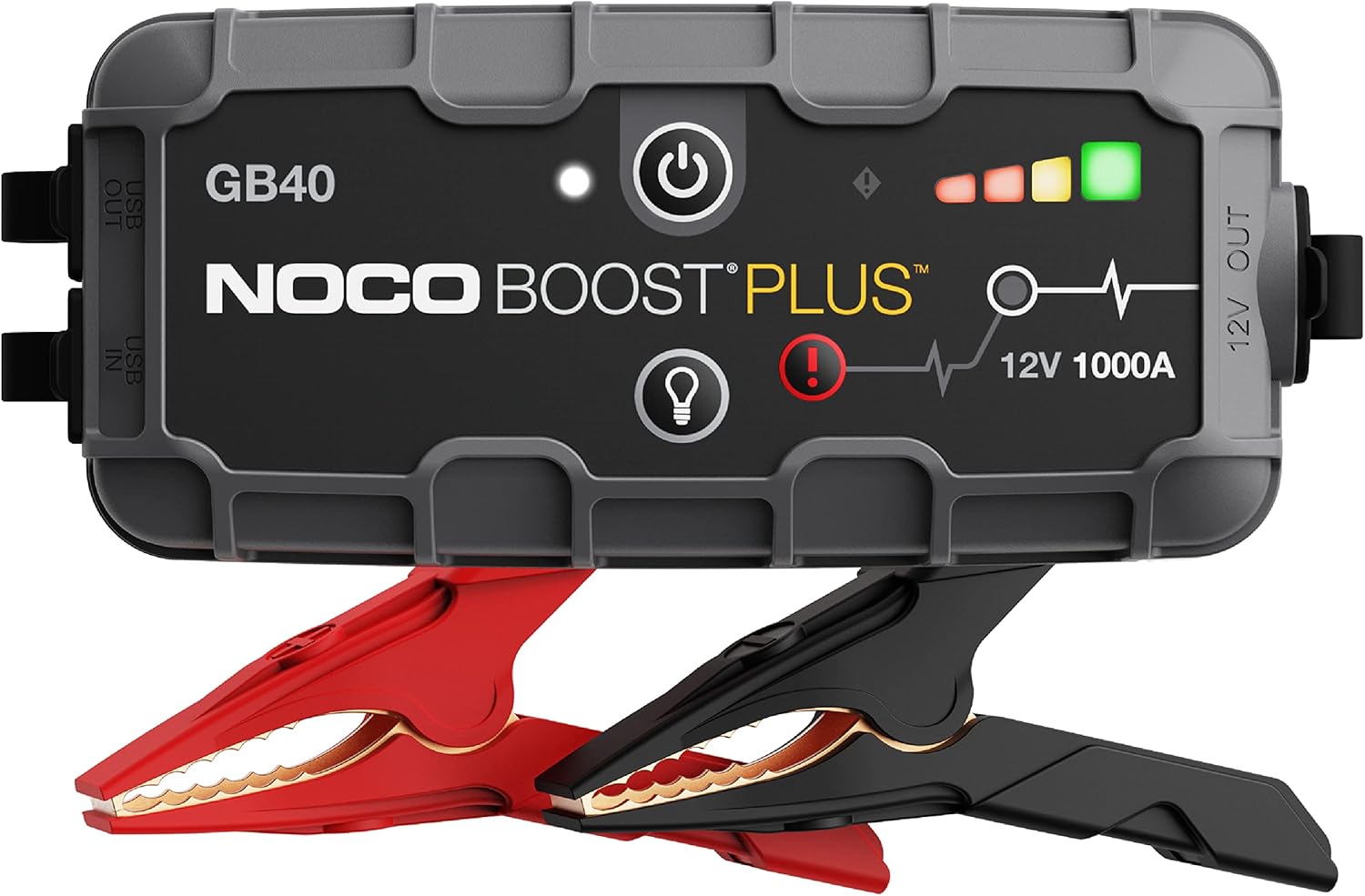
NOCO Boost Plus GB40 Jump Starter
A 1000A lithium jump starter that fits in your glovebox and works on any 12V battery. Your insurance against a dead 12V in a parking lot.
As an Amazon Associate, ThinkEV earns from qualifying purchases — at no extra cost to you.
Highway cruising is comfortable rather than exciting. At 110 km/h, the Dolphin is quiet enough for conversation and stable enough that you're not making constant corrections. The steering gets a bit light at highway speeds, some drivers prefer more weight for high-speed confidence, but it's never vague or unsettling. Crosswinds affect the Dolphin more than a heavier, lower car like a Tesla Model 3, which is the downside of the upright hatchback shape. But it's manageable, not dangerous.
Regenerative braking offers multiple levels, including a strong one-pedal driving mode. In the most aggressive regen setting, lifting off the accelerator produces noticeable deceleration, enough to drive through city traffic without touching the brake pedal most of the time. The transition from regenerative to friction braking is smooth, with none of the grabbiness that plagues some EVs. One-pedal driving isn't just a gimmick in the Dolphin, it's the most efficient and most enjoyable way to drive it.
The driver assistance suite includes adaptive cruise control, lane-keeping assist, automatic emergency braking, blind spot monitoring, and a rear cross-traffic alert. The 360-degree camera system uses four cameras to create a top-down view that's helpful for parking. The system is competent but not class-leading, the lane-keeping can be a bit overzealous on curved roads, and the adaptive cruise control takes a moment to react to cut-ins. It's adequate for highway commuting and useful in parking situations. Don't expect Tesla Autopilot-level capability, but also don't expect Tesla Autopilot-level price.
Road noise is moderate. At highway speeds, you'll hear some tire and wind noise, but it's no worse than a comparable gas-powered hatchback. The cabin is well-insulated for the price.
Gear worth having
As an Amazon Associate, ThinkEV earns a small commission from qualifying purchases — at no extra cost to you.

PULIDIKI Car Cleaning Gel (Detailing Putty)
Press it into vents, buttons, and seams and it lifts out dust you did not know was there. Weirdly satisfying, genuinely useful.
As an Amazon Associate, ThinkEV earns from qualifying purchases — at no extra cost to you.
WINTER REALITY
The LFP battery's cold-weather behaviour matters in Canada more than anywhere else the Dolphin is sold. This isn't a southern European commuter car being asked to handle a mild frost, it's going to face -30 degree mornings in Edmonton, ice storms in the Maritimes, and five months of below-zero temperatures across most of the country. So how does it actually hold up?
At -20 degrees Celsius, expect the range to drop by 30-35%, giving you roughly 260-280 km on the extended range model and 220-240 km on the base. That's still adequate for daily commuting. But it's worth being realistic: if your daily round-trip commute is 100 km and you can't charge at work, the base model's winter range leaves you with two days between charges rather than three. The extended range model gives you a more comfortable three-day buffer in the same scenario.
The heat-pump story also needs to stay conditional until the Canadian trim sheet is public. If the Dolphin launches here with a heat pump, that would materially improve winter efficiency versus a resistive-only setup. If it does not, winter range would likely land below the more optimistic scenarios people are quoting online.
Preconditioning, warming the car while it's still plugged in, is the single best thing you can do for winter range and charging speed. BYD supports remote preconditioning in other markets, and that functionality is expected to matter in Canada too, but buyers should still verify the exact Canadian app and trim feature set at launch. When you precondition while plugged in, the energy comes from the wall, not the battery, so you leave with a full battery and a warm cabin. This alone can recover 20-30 km of winter range. Make it a habit.
The heated steering wheel and heated seats (on upper trims) are your best friends in winter. They use a fraction of the energy that cabin heating does while keeping you comfortable. On mild winter days, the kind where it's -5 degrees and sunny, heated seats and a heated wheel might be all you need, allowing you to dial the cabin heat down to a minimum and preserve more range.
One thing to watch: the LFP battery's state-of-charge gauge can be less accurate in extreme cold. The battery management system sometimes underreports available range when the pack is very cold, then recovers as the battery warms up during driving. You might leave home showing 240 km of range and see it climb to 260 km after 15 minutes of driving as the battery comes up to operating temperature. It's disconcerting the first time it happens, but it's a known characteristic of LFP chemistry, not a defect. BYD recommends doing a full 100% charge once a week to help the BMS recalibrate its estimates.
Traction in winter conditions deserves mention. The Dolphin is rear-wheel drive only, no AWD option. For most Canadian winter driving on plowed roads with proper winter tires, RWD is perfectly adequate. The weight of the battery pack over the rear axle actually helps with rear-drive traction. But on unplowed roads, steep icy hills, or in the kind of heavy snow that buries a car overnight, AWD would be preferred. If you live in rural areas with unreliable plowing or regularly drive mountain passes, the lack of AWD is a meaningful limitation. If you live in a city where the roads are cleared within hours of a snowfall, it's not an issue.
Winter tires are mandatory in Quebec and highly recommended everywhere else in Canada. The Dolphin uses 195/60R16 tires on the base model and 205/55R17 on the extended range. A set of winter tires on steel rims for the 16-inch wheels will run about $700-$900, budget for it if it's not already included in your purchase agreement.
THE EVAP QUESTION
The elephant in the room. The BYD Dolphin does not qualify for Canada's federal Electric Vehicle Availability Program (EVAP) rebate of $5,000. Understanding why, and what it means for the car's real-world value, requires some context about Canadian trade policy and the evolving relationship with Chinese EV manufacturers.
EVAP requires that eligible vehicles be manufactured in Canada or in a country with which Canada has a free trade agreement. China is not a free trade partner, and BYD's vehicles are manufactured entirely in China. This isn't a BYD-specific exclusion, it applies to all Chinese-manufactured EVs, including any future models from NIO, XPeng, or other Chinese brands entering the Canadian market. The policy is designed to support domestic and allied manufacturing, and it achieves that goal, but the side effect is that the most affordable EVs on the market are excluded from the most significant federal incentive.
In October 2024, Canada imposed a 100% tariff on Chinese-manufactured EVs, effectively blocking them from the market. In January 2026, that changed: Canada created a permit-based path for up to 49,000 Chinese-built EVs per year to enter at the 6.1% MFN tariff rate. What we should not do is pretend that BYD has already published a final Canadian MSRP that cleanly bakes in every tariff, logistics, and dealer-margin variable.
Even without EVAP, the Dolphin could still become one of the most affordable new EVs in Canada if the low-$30,000 scenario holds. But that is still a launch thesis, not a finished price sheet. The nearest EVAP-eligible competitor is now the 2027 Chevrolet Bolt at a published C$39,999 starting MSRP, or roughly C$34,999 after the current federal EVAP. That means the affordability fight is real, but not as lopsided as earlier pre-launch comparisons suggested.
Quebec's Roulez vert program is the main provincial incentive that can still help the Dolphin on current rules, but the exact net price depends on the final Canadian MSRP and eligible trim structure. British Columbia's provincial rebate program has eligibility requirements similar to EVAP, so the Dolphin does not qualify there. Other provinces with active EV rebate programs, Nova Scotia, Prince Edward Island, New Brunswick, have varying eligibility criteria that may or may not include Chinese-manufactured vehicles. Check your provincial rebate program for current eligibility before purchasing.
The EVAP exclusion is a real cost to Canadian buyers, and it's worth acknowledging that. Five thousand dollars is significant, especially for buyers in the Dolphin's price range. But the exclusion doesn't change the fundamental value proposition. Even without EVAP, the Dolphin is cheaper than any EVAP-eligible alternative. The question isn't whether the Dolphin would be a better deal with EVAP, of course it would. The question is whether it's still the best value without it. And the answer, on pure math, is yes.
For a deeper look at how EVAP works, which vehicles qualify, and how to claim it, read our complete EVAP guide.
OWNERSHIP AND VALUE
The five-year ownership cost is where the Dolphin's case gets even stronger, because the purchase price is only the start.
Start with fuel costs. The average Canadian drives about 15,000 km per year. At the Dolphin's efficiency of approximately 15 kWh/100 km, that's 2,250 kWh of electricity per year. At the Canadian average residential electricity rate of roughly $0.13/kWh, annual fuel cost is about $293. The same distance in a gas-powered Honda Fit (6.0 L/100 km at $1.60/litre) costs about $1,440. That's a savings of $1,147 per year, or $5,735 over five years. In Quebec, where electricity rates are among the lowest in North America, the savings are even larger.
Maintenance costs for the Dolphin are minimal. No oil changes. No transmission fluid. No timing belt. No exhaust system to rust out. Brake pads last two to three times longer than on a gas car because regenerative braking does most of the stopping. The Dolphin's maintenance schedule is essentially tire rotations, cabin air filter changes, and brake fluid flushes, maybe $200-$300 per year versus $800-$1,200 for a comparable gas car. Over five years, that's another $2,500-$4,500 in savings.
Insurance will vary widely depending on your province, driving history, and insurer. Early data from Australian and European markets suggests the Dolphin insures at rates comparable to other subcompact vehicles in its price range. Some insurers are still cautious about Chinese EVs and may charge a modest premium due to unfamiliarity with parts availability and repair costs. Shop around. Get quotes from multiple insurers before purchasing.
The five-year total cost of ownership comparison still tells a compelling story, but it should be read as scenario math rather than a final Canadian ownership sheet. A BYD Dolphin extended range, modeled at about $33,000, with five years of electricity, insurance, and maintenance, could land around $45,000-$48,000 all-in. A Honda Civic, purchased at $31,285, with five years of gas, insurance, oil changes, and other maintenance, lands closer to $48,000-$53,000 all-in. If the Dolphin pricing scenario holds, the savings compound.
BYD's warranty for the Canadian market has not been finalized as of this writing. Other markets suggest competitive coverage is likely, but that should still be treated as expectation rather than confirmed Canadian fact. BYD Canada is building out its local support footprint, but buyers should verify the practical sales and service situation in their own city rather than assuming a mature nationwide network already exists.
And that's the one genuine concern with Dolphin ownership: service infrastructure. BYD's dealer and service network in Canada is still in its early stages. Major-city-first rollout is the most common expectation, but buyers should not assume a mature service map until BYD publishes one. In smaller markets, you may need to travel. This is a real consideration, and it's worth checking whether there's a practical BYD service facility within a reasonable distance of your home before purchasing. The good news is that EVs require far less routine service than gas cars, so you'll be visiting the dealer less often regardless.
For buyers comparing the Dolphin to other affordable options, our full cost-of-ownership breakdown covers the math in detail.
WHO SHOULD BUY THIS CAR
The BYD Dolphin is the right car for a specific set of buyers, and the wrong car for others. Knowing which category you fall into will save you from either missing one of the most interesting value plays in the Canadian EV market or buying a car that doesn't fit your needs.
City commuters with home charging. This is the Dolphin's sweet spot. If you drive less than 100 km per day, have access to a Level 2 charger at home (or even a standard 120V outlet for overnight trickle charging), and spend most of your time on urban and suburban roads, the Dolphin is almost perfectly designed for you. The compact size, easy manoeuvrability, and excellent city-speed efficiency make it a joy in traffic. You'll charge at home, never visit a gas station, and the 88 kW fast charging limitation will be completely irrelevant to your daily life.
Second-car families. If your household already has a larger vehicle for road trips, family vacations, and hardware store runs, the Dolphin is an ideal second car. It handles the daily commute, school runs, and grocery trips at a fraction of the operating cost of a gas car, while the larger vehicle stays in the driveway for the occasions when you actually need it. At $28,000, the Dolphin costs less than many families spend on their second car, and the fuel savings accelerate the payoff.
Young and first-time buyers. The Dolphin is the first EV that's genuinely accessible to buyers in their twenties. At $28,000, or $26,000 in Quebec, it's in the same price range as a new Civic or Corolla, but with dramatically lower operating costs. For a generation that's been priced out of new car ownership by $55,000 average transaction prices, the Dolphin represents a return to affordable mobility. The LFP battery's longevity means the car will last through years of ownership without expensive battery degradation, and the minimal maintenance costs are easier on a tight budget.
Budget-conscious environmentalists. Some buyers want an EV for environmental reasons but can't justify $50,000 or even $40,000. The Dolphin eliminates the cost barrier. You can drive electric, reduce your carbon footprint, and spend less money doing it than you would driving gas. That's a powerful combination.
Who should skip the Dolphin? A few profiles. Frequent road-trippers who regularly drive more than 400 km in a day should look at cars with meaningfully faster DC charging, the Kia EV3, Hyundai Ioniq 5, and similar higher-output options will save time on multi-stop journeys. Buyers who need AWD for unpaved roads, steep grades, or heavy snow should wait for an AWD option or look at the Chevy Equinox EV.
Anyone who lives far from a BYD service centre and isn't comfortable with limited dealer access should consider the more established networks of Hyundai, Kia, or Chevrolet. And buyers who prioritize interior luxury, advanced technology, or performance over value should look upmarket, the Dolphin is excellent for what it is, but what it is, is an affordable commuter-first hatchback rather than a do-everything hero car.
VERDICT
The BYD Dolphin could become the most affordable new EV in Canada, and it isn't obviously a compromise car on the evidence from other markets. The range story is credible, the interior is surprisingly good, and the ride quality appears refined for the price. But until Canadian launch details settle, the strongest phrasing here is still "could" rather than "is."
The 88 kW fast charging speed is the one significant weakness. If you do frequent long road trips, the Kona Electric or EV3 are better choices for that specific use case. The lack of AWD is a limitation in some parts of Canada, though rear-wheel drive with winter tires handles the vast majority of Canadian winter driving conditions.
The absence of the $5,000 EVAP rebate stings on principle, but doesn't automatically kill the value case. If Canadian pricing lands near the current scenarios, the Dolphin may still end up cheaper to buy and cheaper to own than many EVAP-eligible alternatives and comparably priced gas cars. The five-year total cost of ownership can still beat a Honda Civic in that model, but it remains modelled math until the final Canadian price sheet exists.
For city commuters, families needing a second car, young buyers entering the market, or anyone who wants to go electric without spending $50,000, the Dolphin is one of the clearest models to watch. If it lands near current pricing scenarios, it could be cheaper than many three-year-old used EVs while being brand new with a full warranty. It's the kind of car that makes people reconsider their assumptions about what EVs cost and who can afford them. And for the Canadian market, a market that desperately needs more affordable EV options, the Dolphin's eventual arrival could change the conversation materially.
The Dolphin does not qualify for EVAP under current federal rules. If its final Canadian pricing lands where current scenarios suggest, it may still compete aggressively without that rebate - but that is still a launch thesis, not a settled nationwide fact. The real question is whether the rest of the industry can respond.
Based on what I've seen so far, they're going to have to.
Gear worth having
As an Amazon Associate, ThinkEV earns a small commission from qualifying purchases — at no extra cost to you.

WixGear Magnetic Air Vent Phone Mount (2-Pack)
A magnet strong enough that your phone never flinches over potholes or rail crossings. Two in the box, one for each car.
As an Amazon Associate, ThinkEV earns from qualifying purchases — at no extra cost to you.
Related Reading
- BYD Dolphin vs Chevy Bolt 2027 Canada, Head-to-head comparison of Canada's two most affordable EVs.
- BYD Coming to Canada: Tariff Deal 2026, How BYD gained access to the Canadian market and what it means for pricing.
- Canada EV Rebate EVAP 2026 Guide, How to claim your $5,000 federal EV incentive (and which cars qualify).
- Most Affordable EVs in Canada 2026, Every EV under $40,000 ranked by value.
- Chinese EVs Safety: Euro NCAP Ratings, How BYD, NIO, and XPeng perform in crash tests.
- EV vs Gas Total Cost of Ownership Canada 2026, The five-year math on going electric in every province.
Gear worth having
As an Amazon Associate, ThinkEV earns a small commission from qualifying purchases — at no extra cost to you.

Car Cup Holder Coasters (4-Pack)
Drop-in coasters that catch spills and crumbs so your cup holders stay clean. Rinse and reuse forever.
As an Amazon Associate, ThinkEV earns from qualifying purchases — at no extra cost to you.

Founder & Chief Editor
Vlad Pereira is the founder and chief editor of ThinkEV.ca, the Canadian electric-vehicle publication he writes and edits from Courtenay, British Columbia. He covers EV pricing, federal and provincial rebates, charging costs, and the Chinese manufacturers now entering Canada, from the buyer's side rather than the press-fleet side. ThinkEV is a venture of Vlad Pereira Online; his writing on health, income and the long game lives at vladpereira.com.
Frequently asked questions
Does the BYD Dolphin qualify for Canada's $5,000 EVAP rebate?
Does the Dolphin support DC fast charging?
What is the real winter range of the BYD Dolphin?
How does the Dolphin compare to the Chevrolet Bolt?
What is the BYD Blade Battery and why does it matter?
Is the BYD Dolphin safe?
Can the BYD Dolphin handle Canadian winters without AWD?
Which BYD Dolphin trim should I buy, base or extended range?
What is BYD's warranty coverage in Canada?
More EV & road-trip finds
Affordable upgrades worth a look — tap any to check the price on Amazon.

TP-Link Kasa Smart Plug with Energy Monitoring
View on Amazon ★ 61
★ 61Toddler Car Seat Snack and Cup Tray
View on Amazon ★ 17,839
Qifutan Vent Phone Mount (Military-Grade Clip)
View on Amazon ★ 9,349
Auto Detailing Brush Set (10-Piece)
View on Amazon ★ 55
★ 55LED Car Door Logo Projector Light
View on Amazon ★ 4,055
6-Speed Manual Shift Knob Display
View on Amazon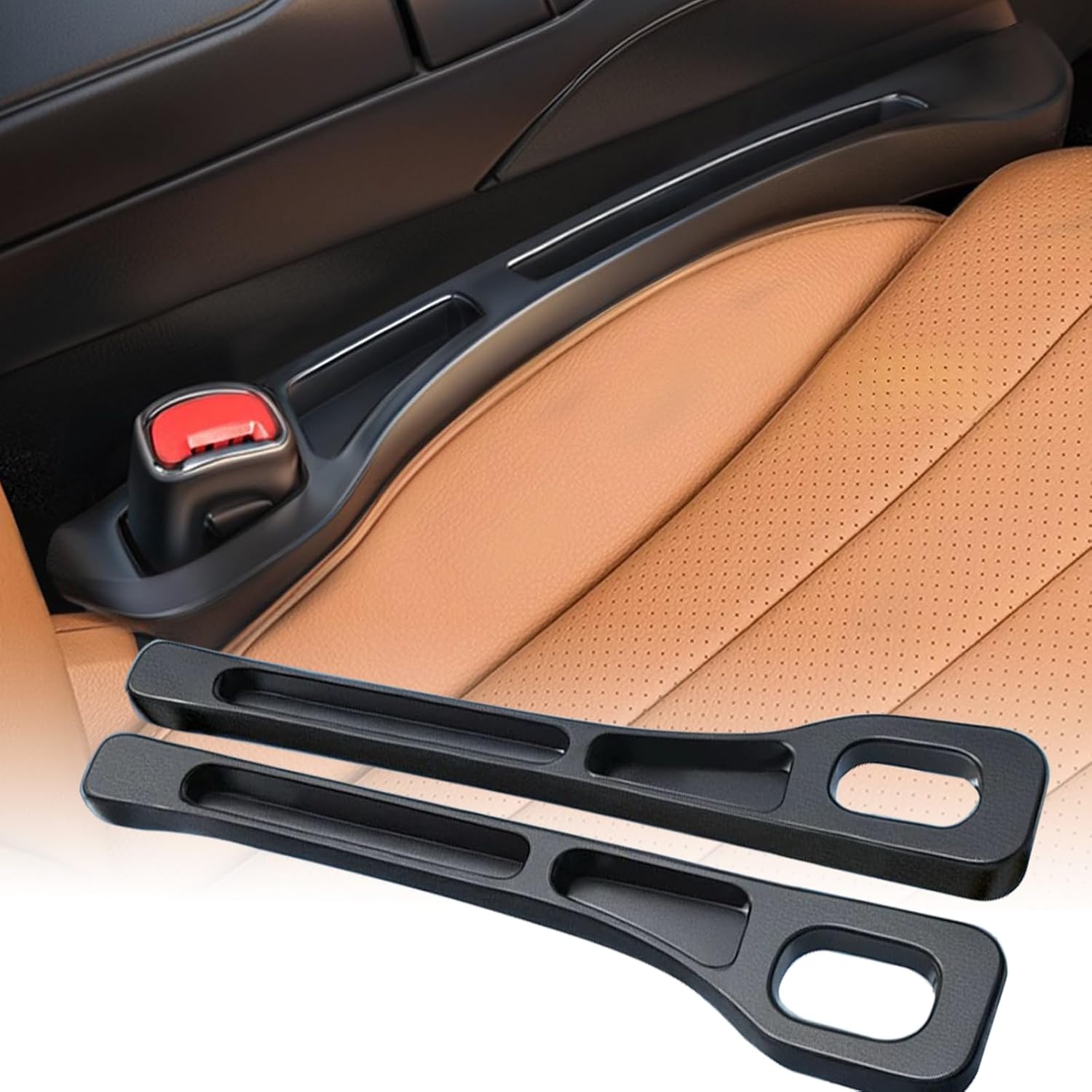 ★ 1,340
Car Seat Gap Filler (Universal)
View on Amazon ★ 12,834
P3 Kill A Watt Electricity Usage Monitor
View on AmazonRead, Plan, Then Stay Current
Explore our expert articles to understand incentives and ownership costs, use the map to pressure-test charging reality, then subscribe so new EV coverage comes straight to you.
Continue Reading
BYD Shark 6 Canada: Price, Specs and 2026 Release
BYD Atto 3 Canada Price 2026: $30K Compact SUV Real Review
BYD Seal Canada Price: $45K Sedan, Is It Worth It?
Volvo EX30 Canada Review: The Small One to Want

Rivian R1T Canada Review 2026: 515 km Quad-Motor