Key takeaways
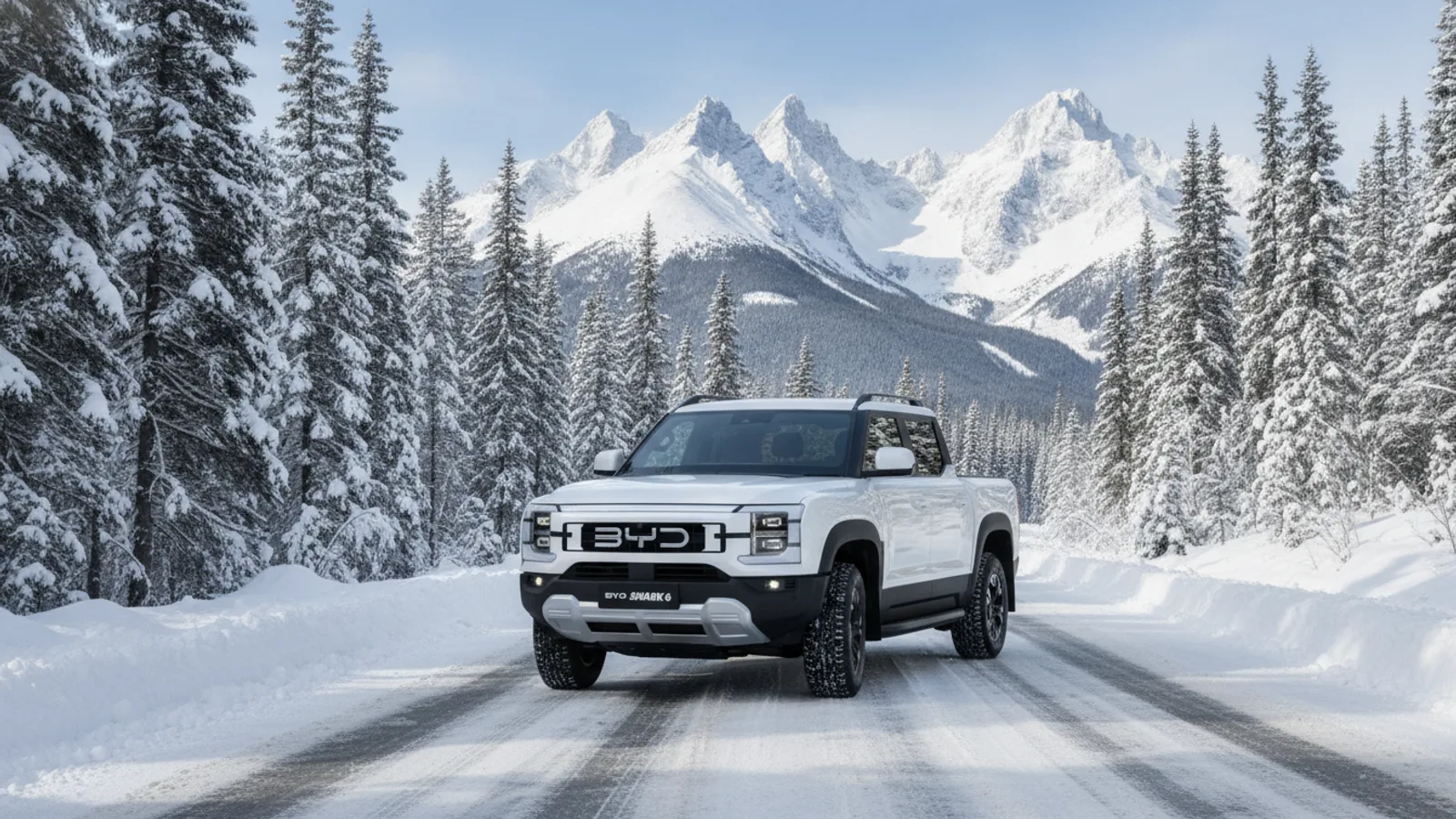
- BYD's Shark 6 is a plug-in hybrid pickup with a body-on-frame design, up to 3,500 kg towing on the Performance trim (2,500 kg on the base), and around 430 hp from dual electric motors plus a 1.5L turbocharged range extender.
- About 85 km of pure electric range on the WLTP cycle (BYD's ~100 km figure is the older NEDC number), with a total range exceeding 800 km once the gas engine works as a range extender.
- BYD claims the Shark 6 can operate in EV-only mode up to 120 km/h, which covers virtually all city and highway driving in Canada.
A Chinese pickup truck. In Canada. With a powertrain the Big Three have been promising for five years and still haven't delivered on a half-ton platform. BYD's Shark 6 is a plug-in hybrid pickup with a body-on-frame chassis, up to 3,500 kg towing on the Performance trim, dual electric motors, and around 85 km of all-electric range on the WLTP cycle, enough to handle most daily driving without burning a drop of fuel. The pricing question belongs to a separate post; this one is about what the truck actually does, and what BYD has and has not confirmed for Canada.
The pickup market here has been a Big Three stronghold for decades. BYD isn't a startup. They're the world's largest EV manufacturer, they make their own batteries, and they've been selling vehicles in Australia, Mexico, and South America for years. Canada is on the company's radar, but the models it has actually lined up for the Canadian market are passenger cars: the Seal, Atto 3, Dolphin, and Seagull. BYD has not confirmed the Shark 6 for Canada at all, which makes everything below a preview of a truck that may or may not cross the Pacific.
Whether Canadian truck buyers, a notoriously brand-loyal cohort, will walk past Ford and Ram dealers into a BYD showroom is the real question. The price says they should consider it. The brand calculus says many won't.
The BYD Shark 6's PHEV Approach
The Shark 6 isn't a pure electric truck. It's a plug-in hybrid electric vehicle (PHEV) built on BYD's DMO (Dual Mode Off-road) platform. That means it combines a 1.5-litre turbocharged four-cylinder engine with dual electric motors and a sizable battery pack. The result is about 85 km of pure electric range on the WLTP cycle (the ~100 km figure you'll see quoted is the older NEDC number), with a total range exceeding 800 km when the gas engine kicks in as a range extender.
This is a smart strategy for the Canadian market. Pure electric trucks like the F-150 Lightning and Chevy Silverado EV are expensive, heavy, and lose significant range in winter. The Shark 6 sidesteps all three problems. The gas engine means you're never stranded waiting for a charger on the Trans-Canada. The smaller battery keeps the weight and price down. And in daily use, commuting to work, running errands, short trips around town, most owners will run on electricity 80-90% of the time, which is where the real fuel savings come from.
BYD claims the Shark 6 can operate in EV-only mode up to 120 km/h, which covers virtually all city and highway driving in Canada. The gas engine only needs to fire up on longer highway trips or when you're towing heavy loads. For someone who drives 50 km each way to work and charges at home overnight, this truck could go weeks without visiting a gas station.
Towing and Capability
The Shark 6 isn't trying to out-haul a diesel F-350. It's aimed at the half-ton truck buyer who needs a bed for weekends at the cottage, occasional towing, and something that doesn't cost $80,000. Towing tops out at 3,500 kg on the Performance trim (the base and Premium are rated at 2,500 kg), which handles most recreational trailers, small boats, and utility trailers. The bed is a usable dual-cab size, long enough for plywood sheets, wide enough for a couple of dirt bikes.
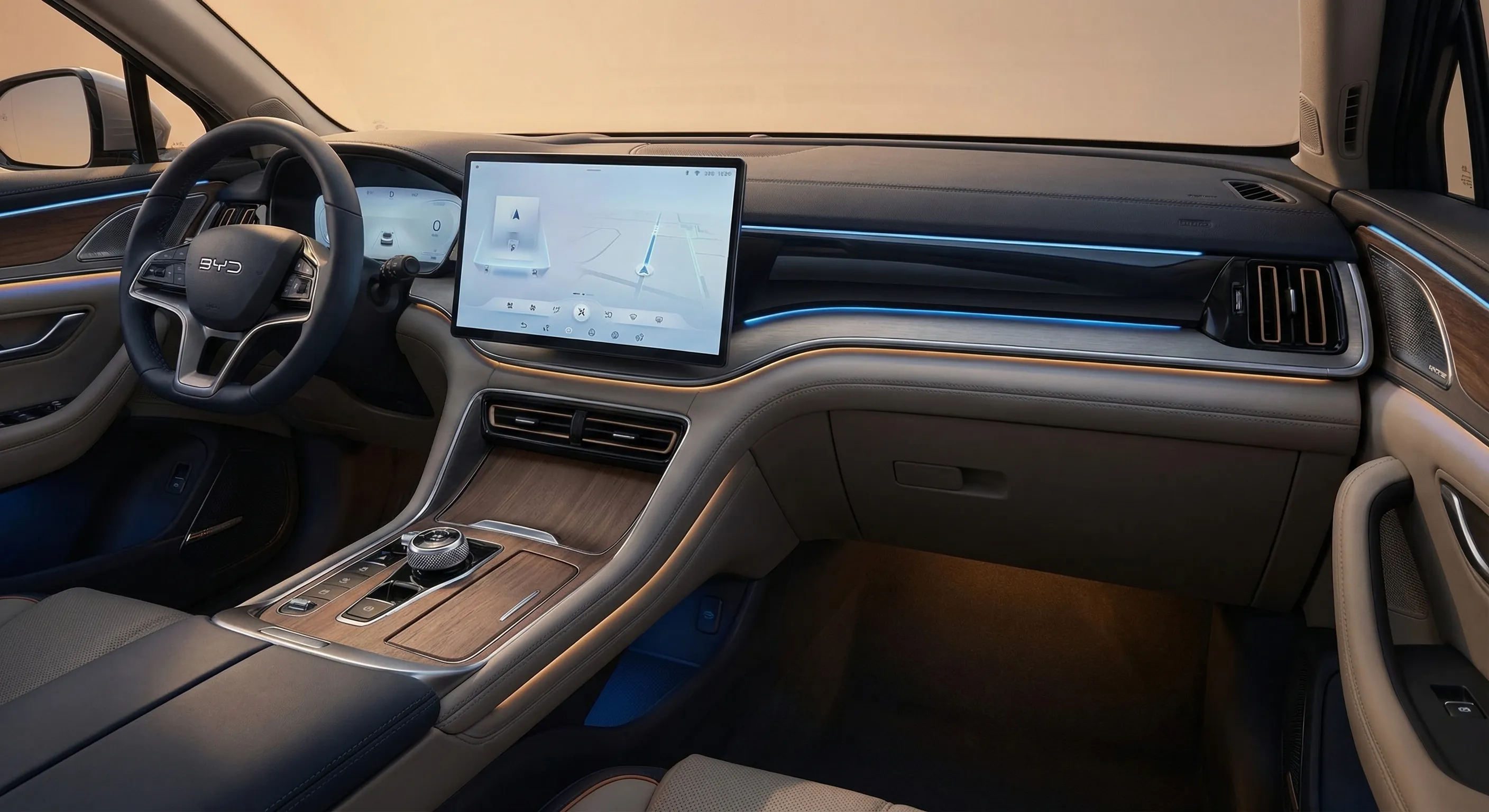
Combined system output is around 430 hp and over 650 Nm of torque, with the electric motors providing instant torque off the line. BYD's DMO platform includes a locking rear differential and terrain management modes for off-road use. It's not going to replace a Tacoma TRD Pro on the Rubicon Trail, but for gravel roads, muddy work sites, and snowy driveways in northern BC or rural Alberta, it should be more than adequate.
The bed includes a 220V power outlet capable of running power tools, which is becoming standard on electric and hybrid trucks. BYD also offers an optional bed-mounted toolbox with integrated charging for smaller devices. Payload capacity is rated at approximately 800 kg, which is competitive with the base F-150 but well below the Silverado EV's 1,300 kg rating.
Gear worth having
As an Amazon Associate, ThinkEV earns a small commission from qualifying purchases — at no extra cost to you.

AstroAI Portable Tire Inflator
One tap, it inflates to your exact PSI then stops automatically. Low tires cost 5 to 10 percent of your range, so this pays for itself in a week.
As an Amazon Associate, ThinkEV earns from qualifying purchases — at no extra cost to you.
What the BYD Shark 6 Should Cost in Canada
A mid-trim Shark 6 should land between $55,000 and $62,000 CAD, with loaded trims crossing the top of that band. No official Canadian price exists and BYD has not committed to selling the truck here, so that is a band rather than a number, and it stays a band until BYD Canada names an MSRP.
Two variables set it. The first is the tariff regime: Canada cut the surtax on Chinese-built EVs from 100% to 6.1% under a framework announced January 16, 2026, with import permits opening March 1. The second is BYD's own export-pricing pattern from Mexico and Australia, which has consistently run above the Chinese domestic figure by a predictable margin.
One thing is settled. The Shark 6 will not qualify for the $5,000 federal EVAP rebate. Chinese-origin vehicles are excluded regardless of price or tariff treatment, and that exclusion is a separate policy from the surtax cut.
For the full tariff math, the Seal export precedent, the 20-store dealer footprint risk, and the signals that would move the band, see BYD Shark Canada: The Real Price, the Dealer Gap, and What's Still Unconfirmed.
Gear worth having
As an Amazon Associate, ThinkEV earns a small commission from qualifying purchases — at no extra cost to you.
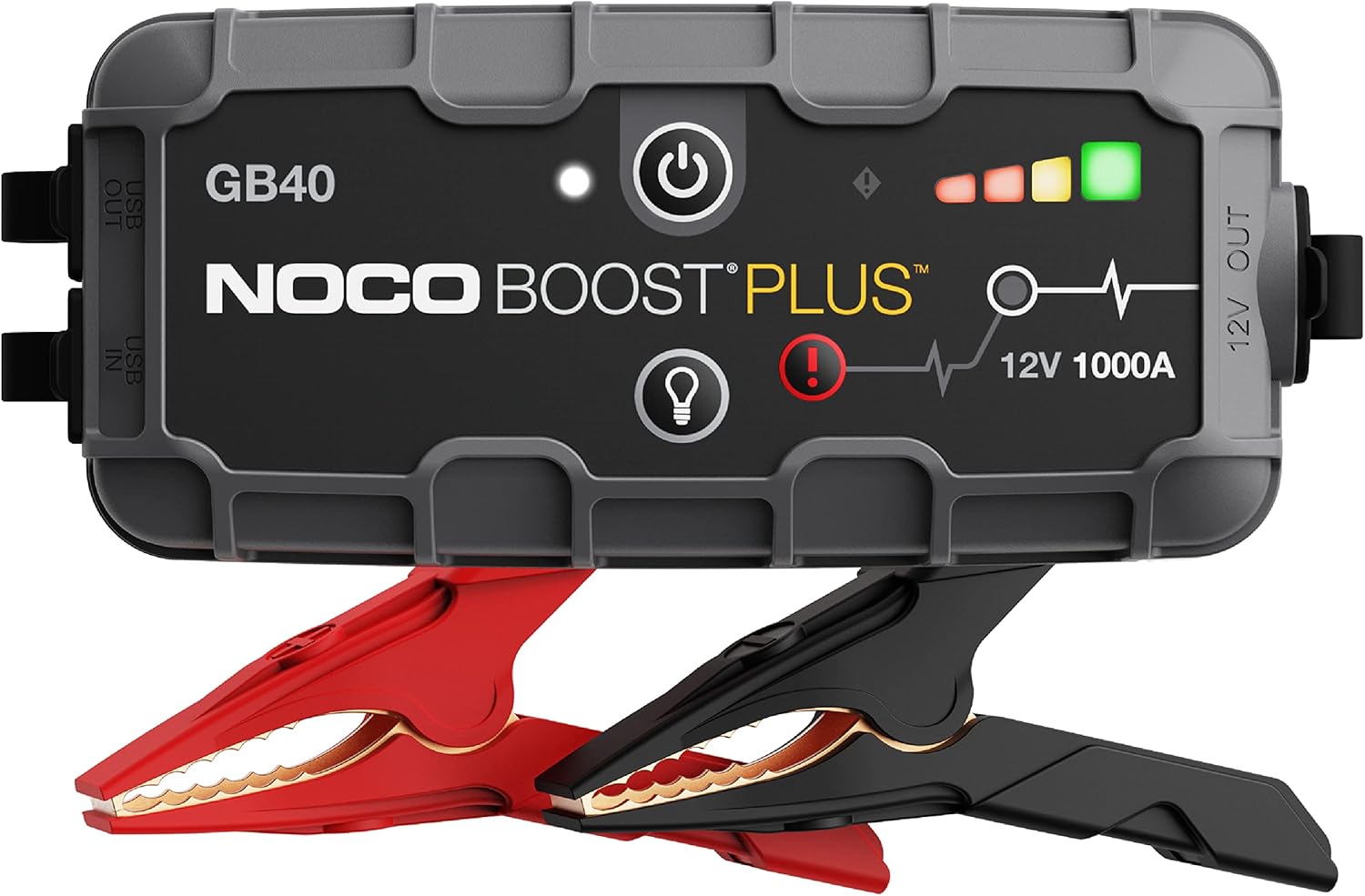
NOCO Boost Plus GB40 Jump Starter
A 1000A lithium jump starter that fits in your glovebox and works on any 12V battery. Your insurance against a dead 12V in a parking lot.
As an Amazon Associate, ThinkEV earns from qualifying purchases — at no extra cost to you.
The competition matters either way. The F-150 Lightning starts at $79,995 CAD and doesn't qualify for the federal EVAP rebate because its price is far above the $50,000 cap. The Chevy Silverado EV starts at $73,498. The Ram 1500 REV is expected around $75,000. Even at the high end of the Shark's expected Canadian band, the truck slots well below every battery-electric pickup currently sold in this country, and crucially, the PHEV architecture removes the range-anxiety calculus those BEV pickups have to defend against.
The obvious pushback is brand trust. Ford, GM, and Ram have dealer networks across Canada, decades of truck heritage, and parts availability in every town. BYD is new here, with up to 20 dealerships reportedly targeted by the end of 2026 and none confirmed open yet. If something breaks on a Shark 6 in Timmins or Prince George, getting it fixed could be a challenge in the early years. That's a legitimate concern, and the dealer-network discussion in the price post covers it in detail.
Winter and Canadian Conditions
The PHEV architecture gives the Shark 6 an inherent advantage in Canadian winters. When temperatures drop to -20C and the battery's range shrinks, the gas engine smoothly takes over. There's no range anxiety, no frantic searching for a DC fast charger on the 400-series highways. You just drive.

The electric range in winter will likely drop from about 85 km to 55-65 km, which is typical for PHEVs in cold weather. That's still enough for most daily commutes. The heated battery management system helps maintain charging performance in cold conditions, and the cabin uses a heat pump for climate control to minimize the drain on the battery. BYD's Blade Battery (LFP chemistry) is known for its thermal stability and tolerance of extreme temperatures, it's the same chemistry they use in vehicles sold in Scandinavia and Russia.
For towing in winter, the gas engine provides the primary power, with the electric motors adding supplemental torque. This is actually a strength, towing range on pure EVs drops dramatically in cold weather, sometimes by 50% or more. The Shark 6's hybrid system means towing range stays relatively consistent regardless of temperature.
Gear worth having
As an Amazon Associate, ThinkEV earns a small commission from qualifying purchases — at no extra cost to you.

Roadside Emergency Safety Kit
Jumper cables, a portable air compressor, tow strap, first aid, and more for when something goes wrong between chargers. Canadian winters do not forgive the unprepared.
As an Amazon Associate, ThinkEV earns from qualifying purchases — at no extra cost to you.
The Segment Gap
The BYD Shark 6 is the most structurally interesting truck to arrive in Canada in years. There is no other body-on-frame PHEV pickup on offer in this market: Ford Ranger and Toyota Tacoma are gasoline-only at every trim, the F-150 Lightning solves a different problem at $80K, and the Ramcharger isn't here yet. Whatever the final Canadian MSRP turns out to be, the Shark occupies a segment niche nobody else is occupying.
The risk is the brand. BYD has no track record with Canadian truck buyers, no established dealer network for warranty service, and no parts distribution infrastructure outside of major cities. Early adopters will be gambling that BYD builds out that support network fast enough to matter. For buyers in Toronto, Vancouver, Montreal, or Calgary, where BYD dealers will open first, that gamble is more manageable. For buyers in rural areas who depend on their truck for work, waiting 12-18 months for the dealer network to mature is probably the smarter play.
If BYD delivers on capability, and the Australian-market data says they have, the Shark 6 will force Ford, GM, and Ram to rethink their pricing strategies. A mid-size pickup with around 85 km of electric range and 800+ km total range is the kind of product that changes markets. Whether it changes the Canadian truck market depends on whether buyers can get past the badge on the tailgate, and whether the dealer network catches up to the product.
Gear worth having
As an Amazon Associate, ThinkEV earns a small commission from qualifying purchases — at no extra cost to you.

Portable Level 2 EV Charger (40A, NEMA 14-50)
Throw it in the trunk and charge anywhere with a 240V outlet. 40A portable with NEMA 14-50 plug. Your road-trip insurance policy.
As an Amazon Associate, ThinkEV earns from qualifying purchases — at no extra cost to you.
Related Reading
- BYD Shark Canada: The Real Price, the Dealer Gap, and What's Still Unconfirmed, Vlad's price-band post: tariff math, Seal export precedent, and the dealer-network risk that matters more than MSRP.
- Ford F-150 Lightning Canada Review 2026, Full review of Ford's electric pickup truck.
- BYD Coming to Canada: Tariff Deal 2026, The trade deal that opened the door for BYD in Canada.
- Canada EV Rebate EVAP 2026 Guide, How to claim your $5,000 federal EV incentive.
Gear worth having
As an Amazon Associate, ThinkEV earns a small commission from qualifying purchases — at no extra cost to you.

VIOFO A229 Pro 4K Dash Cam
4K front plus 2K rear with parking mode and GPS. Your silent witness for insurance claims, with always-on sentry recording while parked.
As an Amazon Associate, ThinkEV earns from qualifying purchases — at no extra cost to you.

Founder & Chief Editor
Vlad Pereira is the founder and chief editor of ThinkEV.ca, the Canadian electric-vehicle publication he writes and edits from Courtenay, British Columbia. He covers EV pricing, federal and provincial rebates, charging costs, and the Chinese manufacturers now entering Canada, from the buyer's side rather than the press-fleet side. ThinkEV is a venture of Vlad Pereira Online; his writing on health, income and the long game lives at vladpereira.com.
Frequently asked questions
Is the BYD Shark 6 fully electric or a hybrid?
Does the Shark 6 qualify for Canada's federal EVAP rebate?
How much can the Shark 6 tow?
When will BYD dealers open in Canada?
More EV & road-trip finds
Affordable upgrades worth a look — tap any to check the price on Amazon.
 ★ 55
★ 55LED Car Door Logo Projector Light
View on Amazon ★ 568
★ 568Personalized Photo and Text Keychain
View on Amazon ★ 21,304
Car Headrest Hooks (4-Pack)
View on Amazon ★ 692
★ 692USB-A to USB-C CarPlay Adapter (3-Pack)
View on Amazon ★ 121
★ 121Foldable Windshield Sun Umbrella
View on Amazon ★ 268
★ 268Anti-Slip Leather Steering Wheel Cover
View on Amazon ★ 96,686
PULIDIKI Car Cleaning Gel (Detailing Putty)
View on Amazon ★ 164
★ 164Solar-Powered LED Ambient Light
View on AmazonRead, Plan, Then Stay Current
Explore our expert articles to understand incentives and ownership costs, use the map to pressure-test charging reality, then subscribe so new EV coverage comes straight to you.
Continue Reading
BYD Dolphin Canada: Price, Specs and 2026 Review
BYD Atto 3 Canada Price 2026: $30K Compact SUV Real Review
BYD Seal Canada Price: $45K Sedan, Is It Worth It?
Volvo EX30 Canada Review: The Small One to Want
Rivian R1T Canada Review 2026: 515 km Quad-Motor