Key takeaways
- The Tesla Model Y accounts for roughly 30% of all EV sales in Canada.
- The Standard Range RWD starts at $49,990 CAD.
- The Long Range RWD is $54,990, the Long Range AWD is $59,990, and the Performance is $69,990.
- For most Canadian buyers, the Standard Range RWD at $49,990 (effective $44,990 after EVAP) is the entry point.
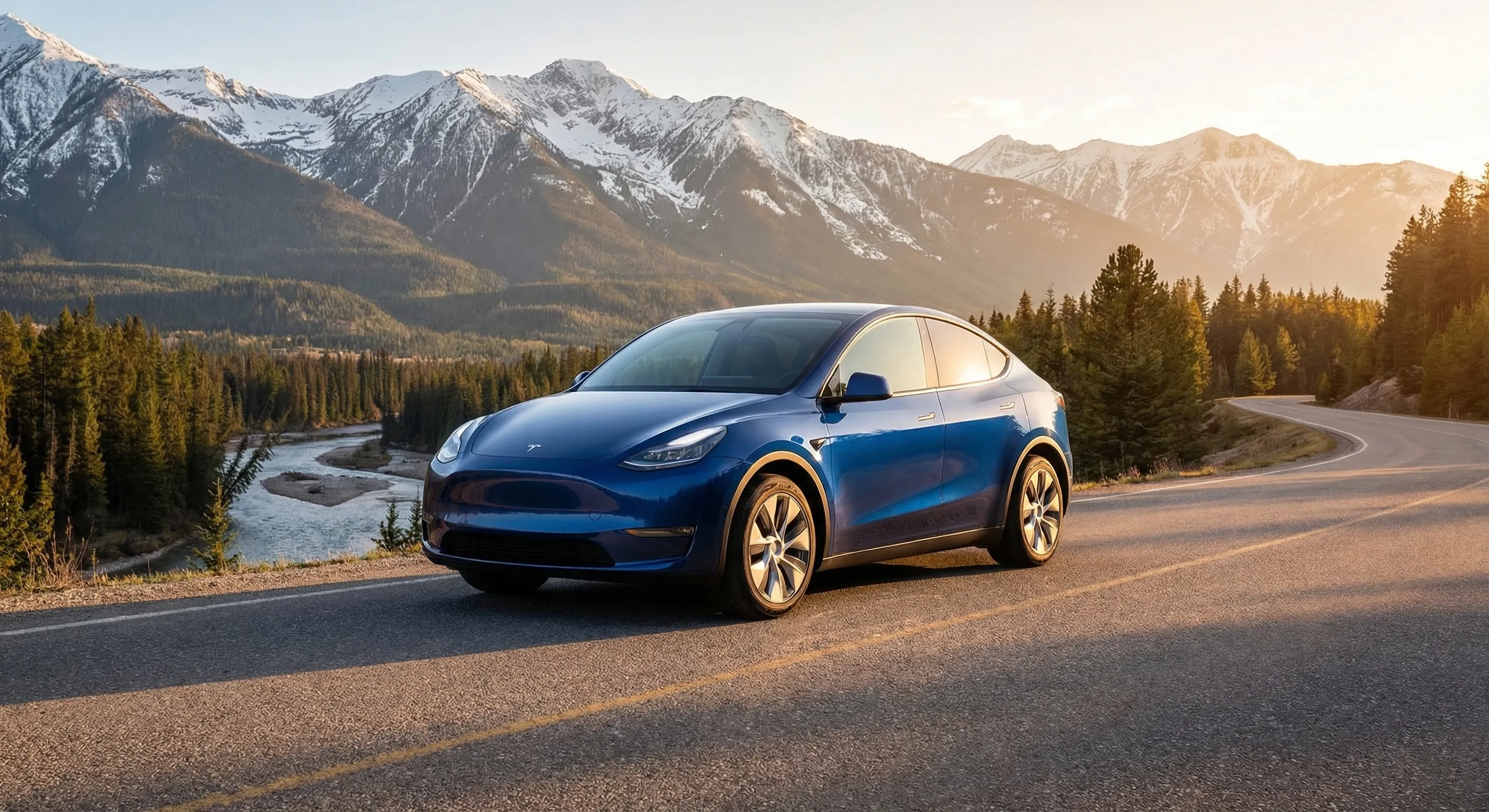
The Tesla Model Y accounts for roughly 30% of all EV sales in Canada. One in three electric vehicles sold in this country is a Model Y. That kind of market dominance doesn't happen by accident, and it doesn't happen because of hype. The Model Y sells because it does more things competently than any single competitor. It has the best charging network, strong range, decent cargo space, over-the-air updates that improve the car over time, and a brand recognition that no other EV manufacturer can match. The 2026 "Juniper" refresh keeps it sharp against a wave of new competitors.
The Standard Range RWD starts at $49,990 CAD. The Long Range RWD is $54,990, the Long Range AWD is $59,990, and the Performance is $69,990. The Standard Range RWD ($49,990) is now on Transport Canada's official EVAP eligible vehicle list and qualifies for the $5,000 federal rebate, provided dealer-added fees keep the final transaction value under $50,000. Higher trims (Long Range RWD, Long Range AWD, Performance) all exceed the EVAP cap and do not qualify. Tesla qualified under the old iZEV program, which ended March 31, 2025; now only the base RWD qualifies under EVAP. For most Canadian buyers, the Standard Range RWD at $49,990 (effective $44,990 after EVAP) is the entry point.
THE JUNIPER REFRESH
The 2026 Model Y "Juniper" is a mid-cycle refresh, not a redesign. The changes are subtle but meaningful. The front end gets a new continuous light bar across the full width of the nose, replacing the previous headlight design. The rear taillights are also updated. The overall silhouette is unchanged, it's still unmistakably a Model Y.
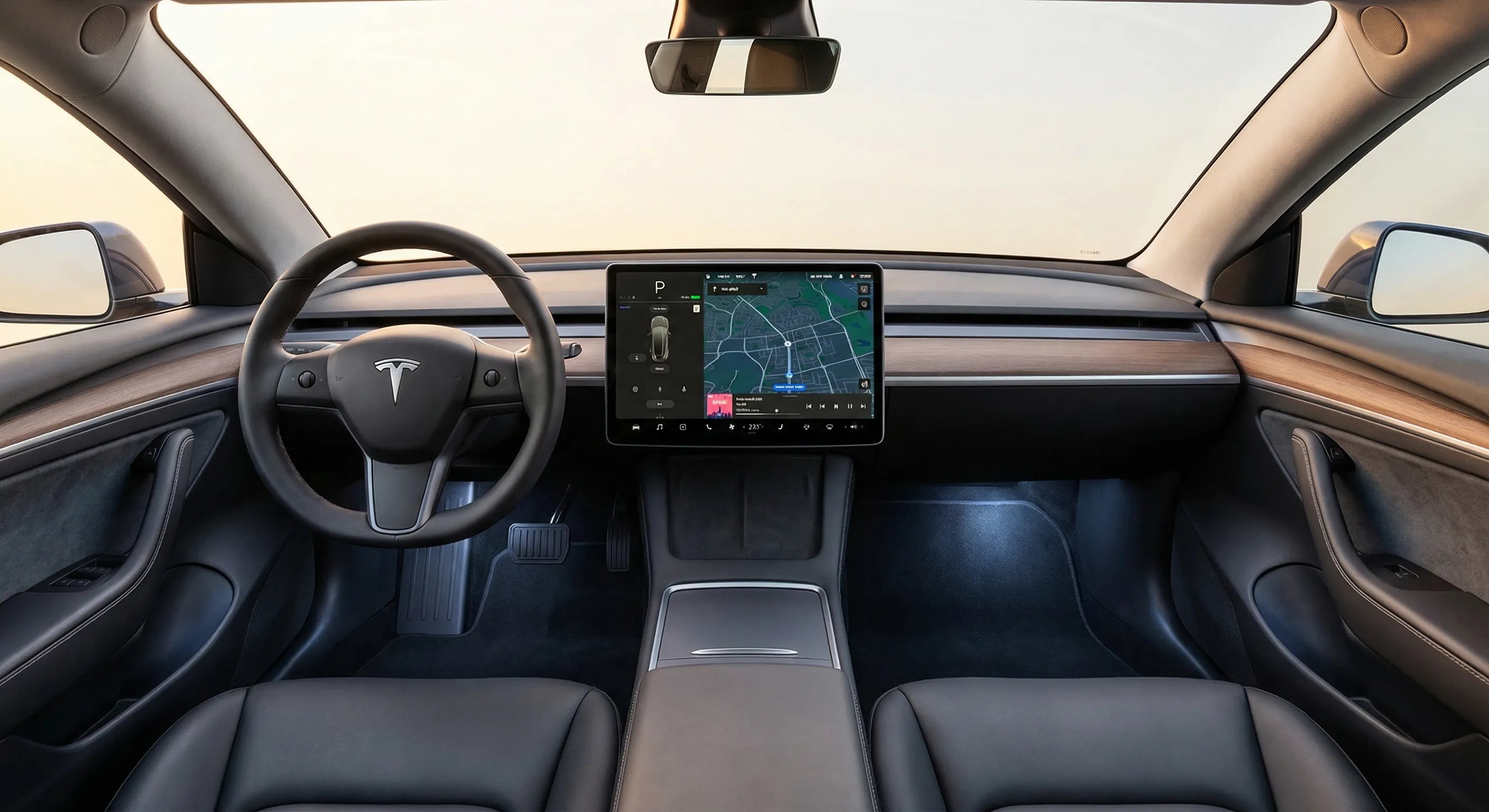
Inside, the changes are more noticeable. The dashboard has been redesigned with better materials, softer surfaces, tighter panel gaps, and a generally more refined feel. The rear seat gets its own small screen for climate and entertainment controls, which is a welcome addition for families. The front seats are revised with better support, and the ride quality has been improved through suspension tuning changes. The overall effect is a car that feels more premium than the pre-Juniper Model Y, which had started to feel dated compared to the Hyundai Ioniq 5 and Kia EV6.
The powertrain is largely unchanged. The Long Range RWD still makes approximately 340 hp from a single rear motor, and the AWD adds a front motor for approximately 384 hp combined. The Performance model makes approximately 456 hp. Tesla has improved the battery management software, which results in slightly better real-world efficiency, a few percent, not a revolution, but enough to eke out a bit more range from the same 82 kWh battery pack.
RANGE AND EFFICIENCY
The Long Range RWD is rated at 531 km, which translates to roughly 430-470 km in real-world Canadian summer driving. The AWD is rated at 497 km, or roughly 400-440 km real-world. These are among the best range figures in the crossover segment, and they come from Tesla's industry-leading efficiency. The Model Y gets more kilometres per kilowatt-hour than almost any crossover EV, which means lower electricity costs and fewer charging stops.
Winter range drops to approximately 350-390 km for the RWD and 310-350 km for the AWD. That's a 25-30% reduction, which is typical for EVs in Canadian cold. The Model Y's heat pump is effective at reducing the energy penalty from cabin heating, and the car's aerodynamic shape helps it retain range better than boxier competitors like the Ioniq 5.
CHARGING: THE STRUCTURAL ADVANTAGE
The Tesla Supercharger network is the Model Y's single biggest competitive advantage, and it's one that no competitor can replicate. Over 1,000 Supercharger stalls across Canada, covering every major highway corridor from Victoria to Halifax. The stations are reliable, fast (250 kW), and integrated into the car's navigation system. When you work through to a destination, the car automatically routes through Superchargers, preconditions the battery for optimal charging speed, and shows real-time stall availability.
Gear worth having
As an Amazon Associate, ThinkEV earns a small commission from qualifying purchases — at no extra cost to you.
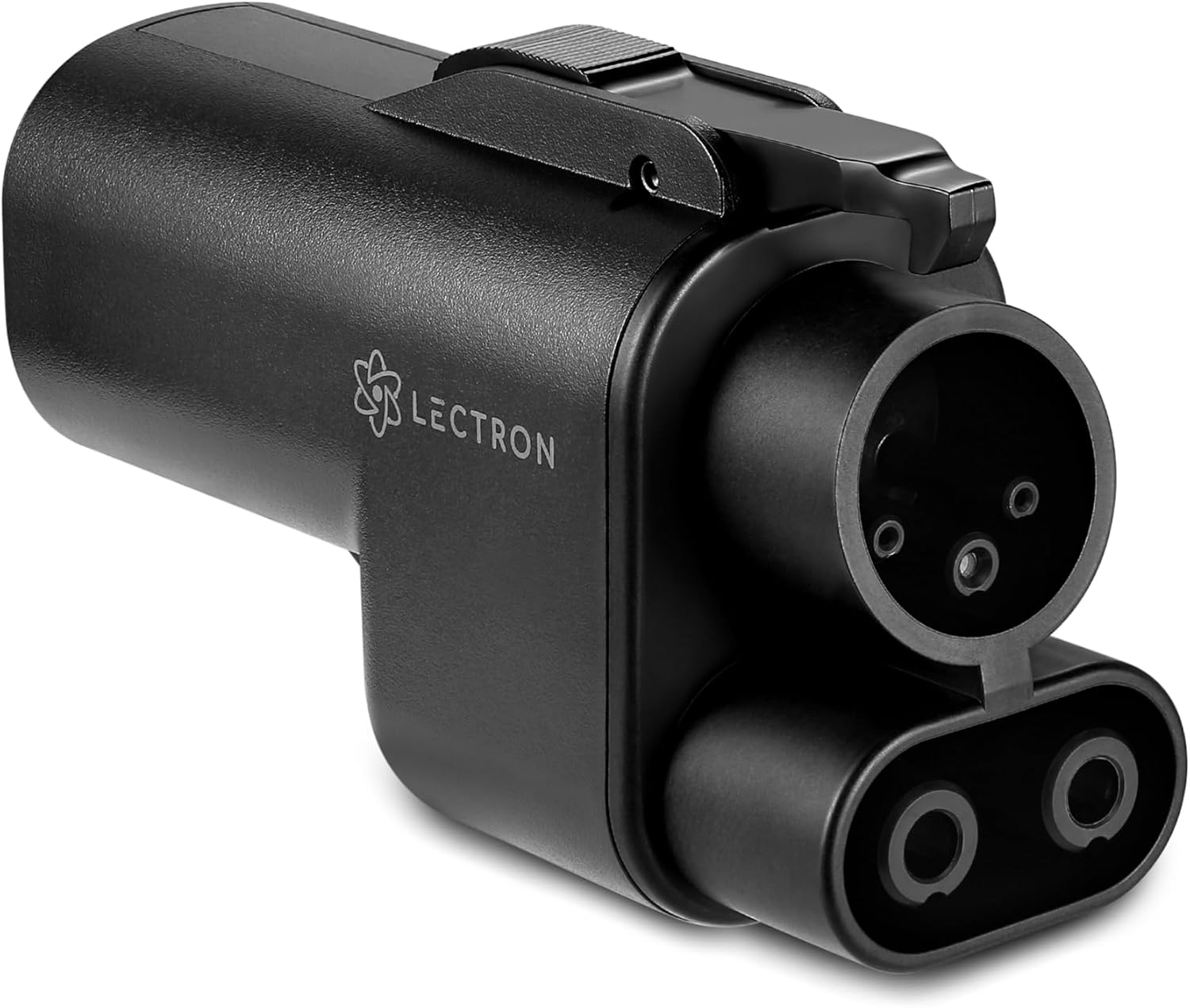
Lectron NACS to CCS Fast-Charge Adapter
Unlock every CCS fast charger for your Tesla, up to 500A DC. Never get stranded at a non-Tesla DC station again.
As an Amazon Associate, ThinkEV earns from qualifying purchases — at no extra cost to you.
Charging from 10% to 80% takes about 27 minutes on a 250 kW Supercharger. The charging curve is well-managed, the car accepts high power for longer than most competitors, which means less time waiting and more time driving. Plug and Charge is standard, you plug in, the car authenticates automatically, and charging starts. No app, no card, no fiddling.
For home charging, Level 2 on a 48A circuit fills the Long Range battery in about 8 hours overnight. Tesla also sells the Wall Connector, their proprietary home charger, for about $550 CAD. It's a good unit, but any NACS or J1772-with-adapter Level 2 charger works fine.
DRIVING
The Model Y drives well without being exciting. The acceleration is immediate and strong, the RWD hits 100 km/h in about 5.9 seconds, the AWD in about 4.8 seconds, and the Performance in about 3.7 seconds. All three are quick enough for any real-world driving situation.
The ride quality has been improved with the Juniper refresh. The suspension absorbs bumps better than the previous model, and road noise has been reduced. It's not luxury-car quiet, but it's noticeably better than before. The steering is light and precise, making city driving and parking easy. It doesn't have the engaging weight of a Mach-E or the communicative feedback of a BMW i4, but for daily driving, it's perfectly fine.
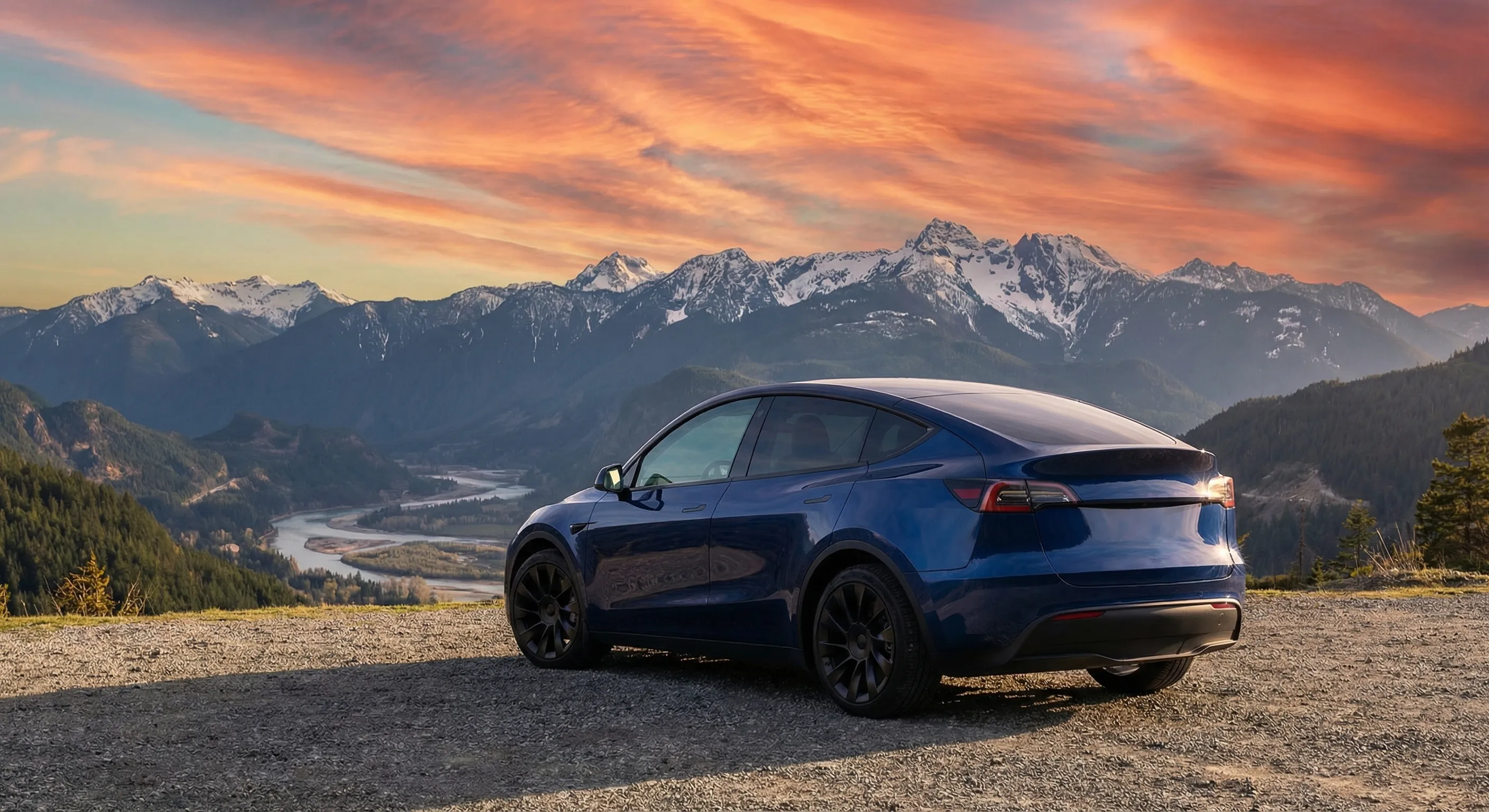
Regenerative braking in the Model Y is among the strongest in any EV, and one-pedal driving becomes second nature within a day. In city traffic, you rarely touch the brake pedal, which is both convenient and reduces brake wear.
Gear worth having
As an Amazon Associate, ThinkEV earns a small commission from qualifying purchases — at no extra cost to you.

WeatherTech FloorLiner for Tesla Model 3
Deep-channel liners that trap every drop of slush and salt. The difference between a ruined interior and a showroom-fresh cabin after a Canadian winter.
As an Amazon Associate, ThinkEV earns from qualifying purchases — at no extra cost to you.
SPACE AND PRACTICALITY
The Model Y offers approximately 2,158 litres of cargo space with the rear seats folded, plus a front trunk that holds about 117 litres. That's enough for hockey equipment, groceries, luggage, or a small piece of furniture. The rear seats fold flat, creating a usable cargo area. The optional seven-seat configuration adds a small third row that's suitable for children but not adults.
The back seat has good legroom and headroom for adults, and the flat floor (no transmission tunnel) means the middle seat is actually usable. For a compact crossover, the Model Y is one of the most practical choices available. The power liftgate and low cargo floor make loading easy.
Gear worth having
As an Amazon Associate, ThinkEV earns a small commission from qualifying purchases — at no extra cost to you.
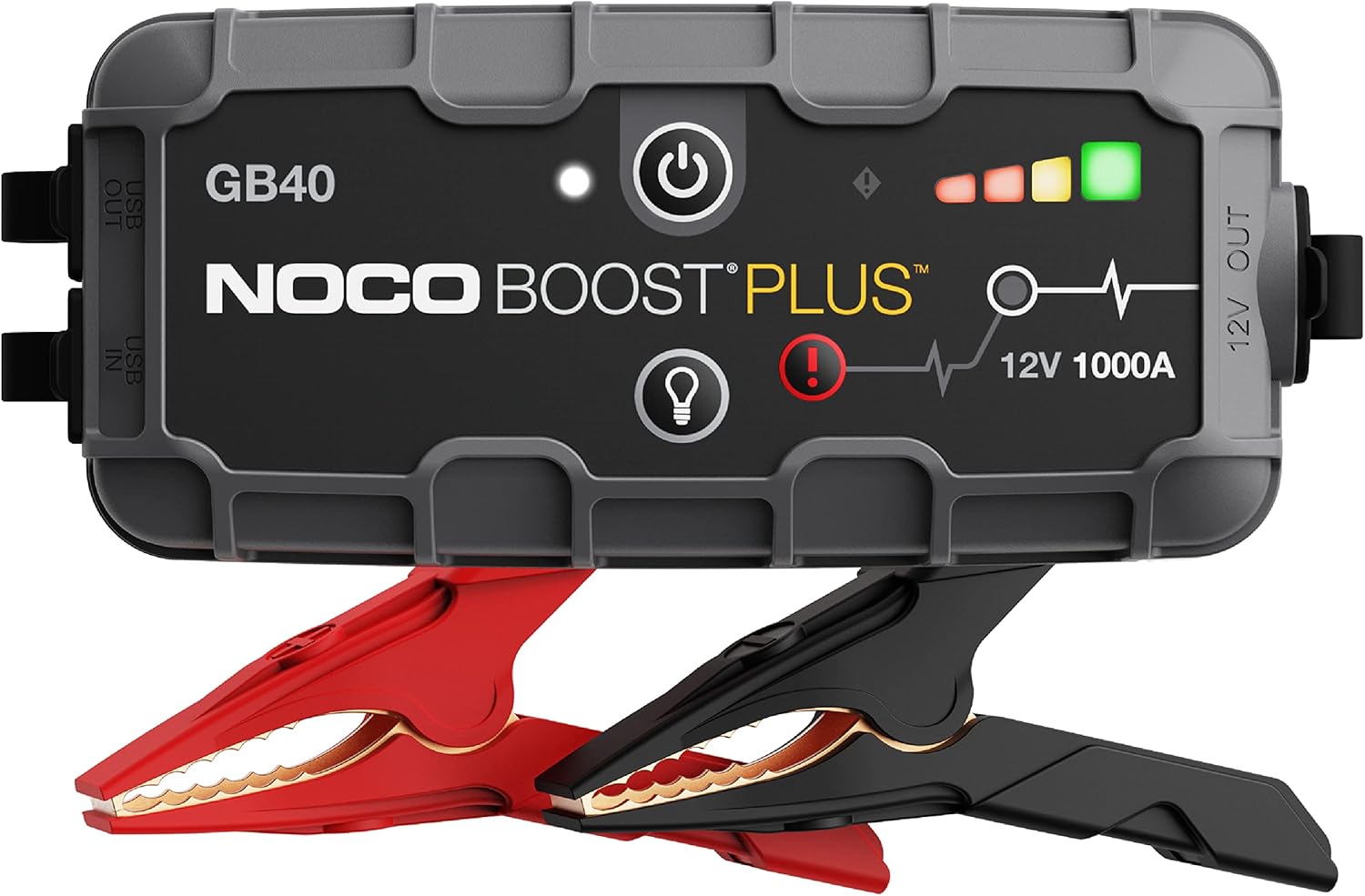
NOCO Boost Plus GB40 Jump Starter
A 1000A lithium jump starter that fits in your glovebox and works on any 12V battery. Your insurance against a dead 12V in a parking lot.
As an Amazon Associate, ThinkEV earns from qualifying purchases — at no extra cost to you.
WINTER PERFORMANCE
The Model Y handles Canadian winters well. The AWD version provides confident traction on snow and ice with proper winter tires. The RWD version is also capable with winter tires, though less so on steep, icy hills. The heat pump is effective at preserving range in cold weather, and the app-based preconditioning lets you warm the car and battery while it's still plugged in.
Tesla's Supercharger navigation automatically preconditions the battery when you're heading to a charger, which is critical in winter, a cold battery charges much slower than a warm one. This integrated approach to winter charging is something most competitors still don't match.
Gear worth having
As an Amazon Associate, ThinkEV earns a small commission from qualifying purchases — at no extra cost to you.
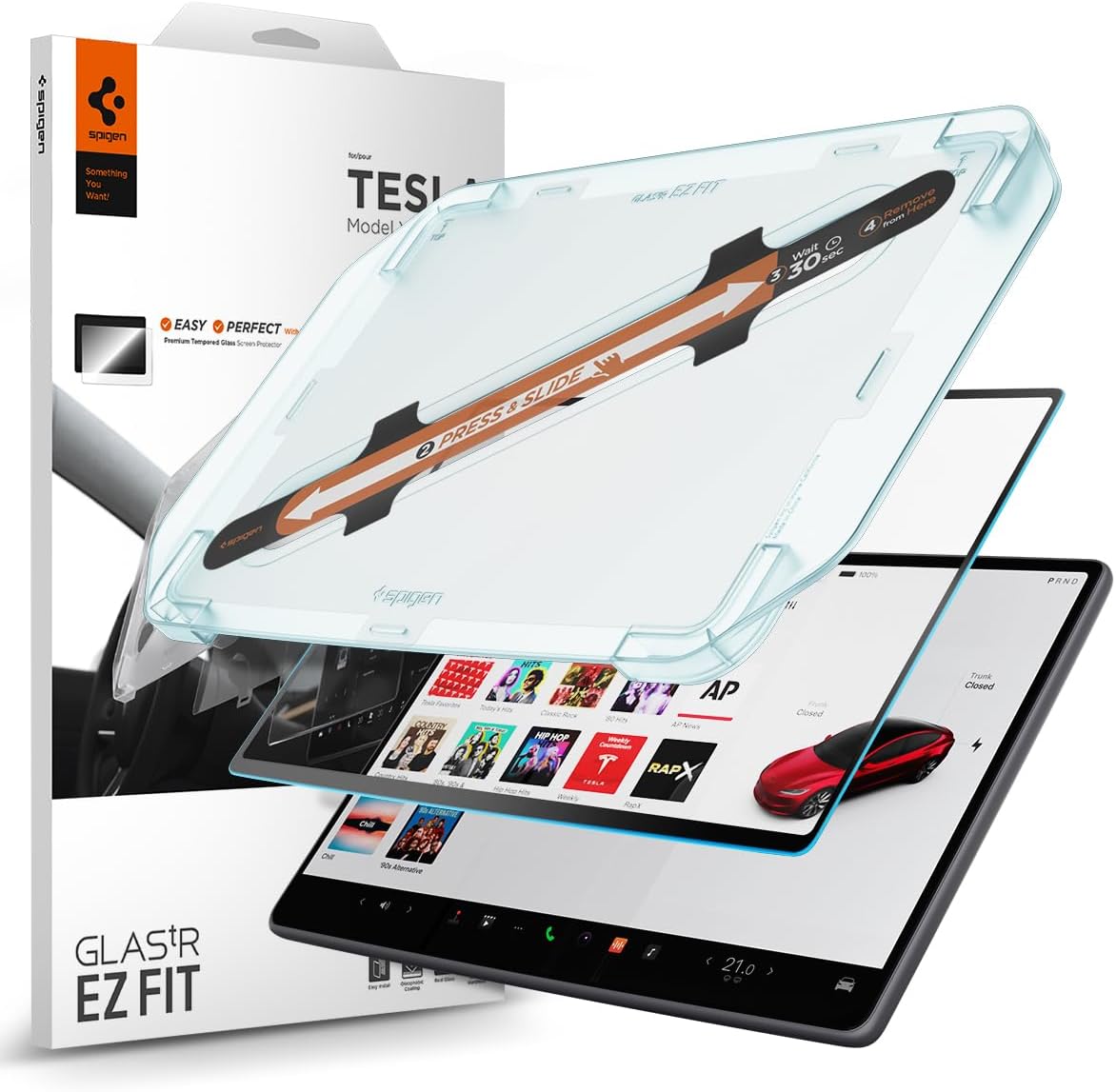
Spigen Tempered Glass for Tesla Model 3/Y
Tempered-glass protection for the touchscreen that kills fingerprints and scratches. Two minutes to install, lasts the life of the car.
As an Amazon Associate, ThinkEV earns from qualifying purchases — at no extra cost to you.
VERDICT
The Model Y isn't the best EV in any single category. The Ioniq 5 charges faster. The Mach-E handles better. The Equinox EV costs less. The ID.4 rides more comfortably. But the Model Y is the best EV across all categories combined. The Supercharger network, the range, the efficiency, the cargo space, the OTA updates, and the resale value add up to a package that's very difficult to beat on total value.
The Juniper refresh closes the interior quality gap that had been growing, and the updated design keeps it looking fresh. For Canadian buyers who want a single EV that does everything well and comes with the best charging infrastructure in the country, the Model Y remains the default choice. It earned that 30% market share, and the 2026 refresh ensures it keeps it.
Related Reading
- Ford Mustang Mach-E vs Tesla Model Y Canada 2026, The original rivalry compared head to head.
- Chevy Equinox EV vs Tesla Model Y Canada 2026, The affordable challenger takes on the king.
- Tesla Model 3 Highland Canada Review: Still the One to Beat?
- Model Y Is Still the World's Bestselling Car, So Why Is Tesla Losing Canada?
- Tesla Model Y vs Toyota RAV4: 5-Year Cost Comparison
Gear worth having
As an Amazon Associate, ThinkEV earns a small commission from qualifying purchases — at no extra cost to you.

VIOFO A229 Pro 4K Dash Cam
4K front plus 2K rear with parking mode and GPS. Your silent witness for insurance claims, with always-on sentry recording while parked.
As an Amazon Associate, ThinkEV earns from qualifying purchases — at no extra cost to you.

Founder & Chief Editor
Vlad Pereira is the founder and chief editor of ThinkEV.ca, the Canadian electric-vehicle publication he writes and edits from Courtenay, British Columbia. He covers EV pricing, federal and provincial rebates, charging costs, and the Chinese manufacturers now entering Canada, from the buyer's side rather than the press-fleet side. ThinkEV is a venture of Vlad Pereira Online; his writing on health, income and the long game lives at vladpereira.com.
Frequently asked questions
Does the Model Y qualify for the EVAP rebate?
What changed with the Juniper refresh?
How does winter range compare to competitors?
RWD or AWD for Canadian drivers?
More EV & road-trip finds
Affordable upgrades worth a look — tap any to check the price on Amazon.
 ★ 314
★ 314Mini USB LED Ambient Lamps (4-Pack)
View on Amazon ★ 4,626
HoogaLife Hanging Car Diffuser (2-Pack)
View on Amazon ★ 21,304
Car Headrest Hooks (4-Pack)
View on Amazon ★ 17,242
LISEN Mini USB-C Car Charger (54W)
View on Amazon ★ 87
★ 87Car Window Sun Shades for Kids (4-Pack)
View on Amazon ★ 268
★ 268Anti-Slip Leather Steering Wheel Cover
View on Amazon ★ 96,686
PULIDIKI Car Cleaning Gel (Detailing Putty)
View on Amazon ★ 55
★ 55LED Car Door Logo Projector Light
View on AmazonRead, Plan, Then Stay Current
Explore our expert articles to understand incentives and ownership costs, use the map to pressure-test charging reality, then subscribe so new EV coverage comes straight to you.
Continue Reading
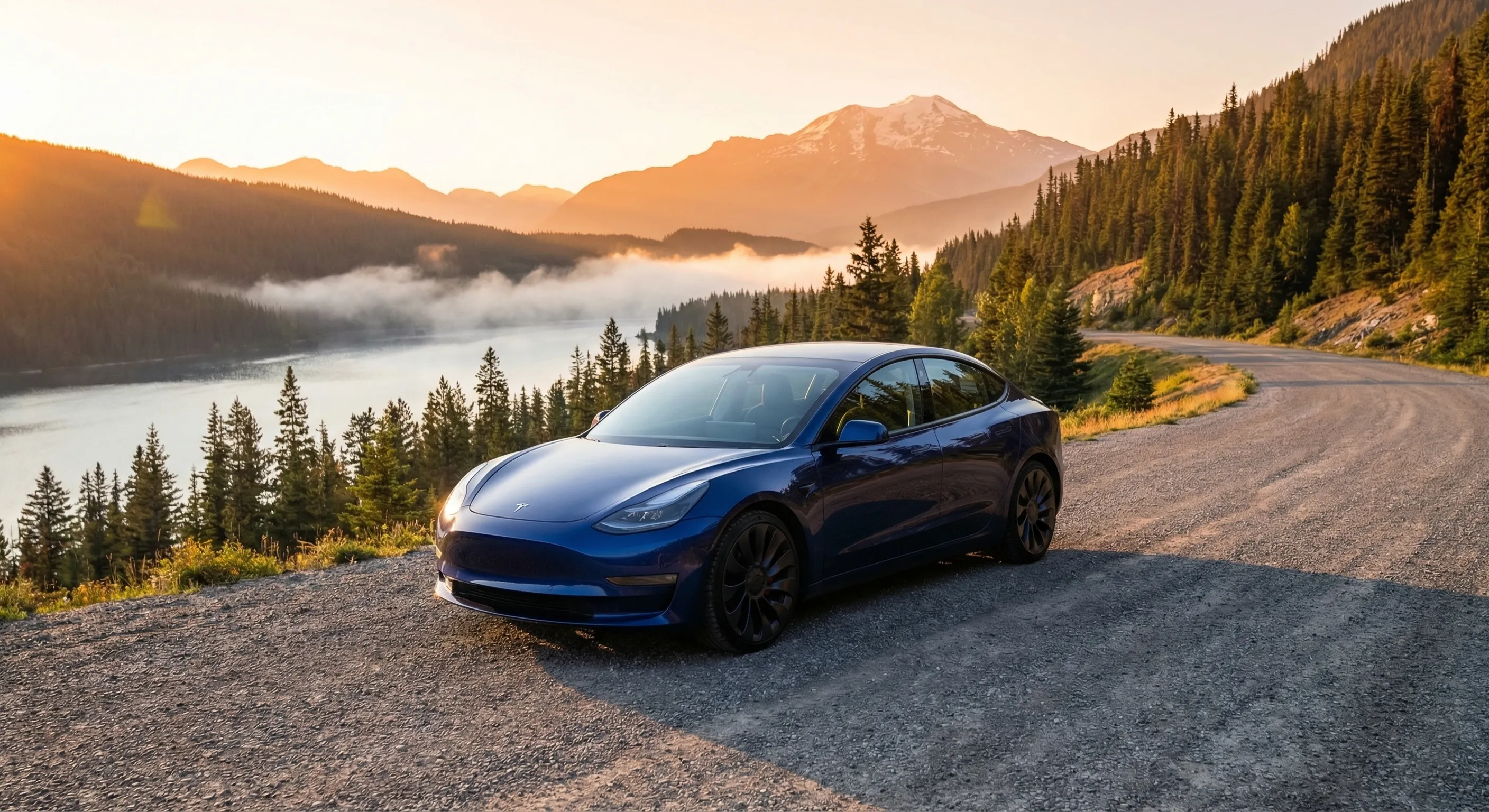
Tesla Model 3 Highland Review: Still the One to Beat?
Volvo EX30 Canada Review: The Small One to Want
Rivian R1T Canada Review 2026: 515 km Quad-Motor
Rivian R2 Canada Price 2026: The $57K Electric SUV
VW ID. Buzz Canada Review: $69,995 Electric Microbus