Key takeaways
- The average price for a new EV hovered around $55,000.
- The Canadian EV market share has climbed to 11%.
- Tesla's dominance has slipped from 45% to about 32%.
- The average new EV in Canada right now costs about $52,000 CAD, but that number is about to drop.
The average new EV in Canada still costs $52,000, more than the average gas car, and that gap has kept most families out of the market for years. What's changing in 2026 is not a small adjustment: entire brands, BYD, NIO, XPeng, Zeekr, Leapmotor, are now being seriously evaluated for Canadian launch with vehicles that could land under $30,000 if pricing holds.
Now look at where we are in early 2026. The Canadian EV market share has climbed to 11%. Tesla's dominance has slipped from 45% to about 32%. Hyundai and Kia have carved out real territory. And here's the part that matters most, an entirely new wave of manufacturers is now being seriously discussed for Canada, including vehicles that could land under $30,000 if launch pricing and policy conditions hold.
This could become one of the biggest shifts the Canadian auto market has seen in decades. We're not talking about one or two new models. We're talking about entire brands, BYD, NIO, XPeng, Zeekr, Chery, Leapmotor, MG, evaluating Canada with vehicles that may undercut today's dealer-lot pricing if they actually launch on the timelines being discussed.
This guide covers every model worth knowing about, when they're actually expected to arrive, what they'll cost, and, most importantly, what all of this means for your wallet, whether you buy one of these new entries or stick with an established brand.
I've done the research so you don't have to. This guide mixes official Canada policy, manufacturer specs from existing markets, and reported or modeled Canada launch scenarios. Where the Canadian retail picture is not yet official, I'll say so directly.
The Price Revolution Is Real
Here's a number that should stop you in your tracks: the average new EV in Canada right now costs about $52,000 CAD. The average new gas car costs about $45,000. That gap has been the single biggest barrier to EV adoption in this country.
The BYD Seal is still generally modeled around the mid-$40,000s in Canada. The Tesla Model 3 Long Range starts at $54,990 (there's no base or Standard Range Model 3 in Canada). That's roughly a $10,000 gap for vehicles that would compete directly if Seal launch pricing lands where current scenarios suggest.
The BYD Seal does not qualify for EVAP, excluded as a Chinese manufacturer. Tesla's situation is now partial: the Model 3 Long Range ($54,990) exceeds the EVAP cap and doesn't qualify, but the Tesla Model Y RWD base ($49,990) is now on the EVAP eligible list. In Quebec, the BYD Seal gets $2,000 Roulez vert only; the Model 3 Long Range also gets only $2,000 Roulez vert, making it approximately $52,990.
That's not a small difference. That's significant for Canadian families who've been priced out of EVs.
But the Seal isn't even the headline. The BYD Dolphin at around $28,000-$35,000 and the Seagull at potentially low-to-mid $20,000s, those are the models that could genuinely change the math for middle-income Canadians if Canadian launch pricing lands near the more optimistic scenarios. Think about what $10,000-$15,000 in savings means for a family. That's a year of daycare. That's a kitchen renovation. That's an RESP contribution that compounds for 18 years. When I talk about a price revolution, I'm talking about what happens if those modeled price bands become real retail offers.
What the established automakers are clearly nervous about is that these aren't cheap cars in the "you get what you pay for" sense. The BYD Seal earned a 91% adult protection score from Euro NCAP. The Atto 3 got five stars. These are genuinely well-engineered vehicles that happen to cost significantly less because Chinese manufacturers have vertically integrated their supply chains in ways that legacy automakers haven't.
Let me run the numbers on total cost of ownership, because the sticker price is only part of the story. A $28,000 BYD Dolphin charged at home costs roughly $500-$600 per year in electricity (at average Canadian rates of $0.13/kWh). A comparable $28,000 gas hatchback burns about $2,500-$3,000 in fuel per year (at $1.50/litre, 15,000 km annually). That's $2,000-$2,400 saved every single year on fuel alone, before you factor in no oil changes ($100-$150/year saved), no transmission servicing ($200-$300 saved over time), no exhaust system repairs, and fewer brake replacements (regenerative braking extends pad life by 2-3x).
Over five years, you're looking at $12,000-$15,000 in operating cost savings. A $28,000 EV that saves you $15,000 in operating costs over five years has an effective cost of $13,000. Find me a gas car at that price point. You can't.
Even if you have zero interest in buying a Chinese EV, the competitive pressure is already forcing every manufacturer to rethink pricing. That benefits every single Canadian car buyer. For a deeper dive into the pricing picture, check out our EV Pricing Guide for Canada 2026-2027.
The Tariff Situation
You can't talk about new EVs coming to Canada without understanding the tariff story, because it's the single biggest factor determining when and how these vehicles arrive.
In October 2024, the Canadian government slapped a 100% surtax on Chinese-manufactured electric vehicles. Overnight, a $30,000 BYD Atto 3 would have cost $60,000 at the border. That effectively shut the door on Chinese EV imports.
Then, on January 16, 2026, everything changed. Canada negotiated a trade deal that reduced that 100% tariff to just 6.1%, but with significant conditions attached:
- 49,000-vehicle annual quota, Only 49,000 Chinese-made EVs can enter Canada per year under the reduced tariff. After that, the 100% rate kicks back in. For context, Canada sells roughly 200,000 EVs per year total, so this quota allows Chinese brands to capture about a quarter of the market.
- Import permits opened March 1, 2026, Manufacturers had to apply for import permits starting March 1.
This is the bureaucratic gateway, no permit, no import. See our coverage of who got Canada's first Chinese EV import permits.
- Joint venture requirement within 3 years, Chinese manufacturers must establish a joint venture with a Canadian or allied-nation partner within three years. This is designed to ensure some economic benefit stays in Canada, think assembly, parts manufacturing, or technology sharing.
- Half the quota must be under $35,000 CAD, This is the most consumer-friendly part of the deal.
At least 24,500 of those 49,000 vehicles must have a retail price under $35,000. The government specifically designed this to ensure that the quota isn't gobbled up by expensive luxury EVs, it forces manufacturers to bring their affordable models first.
What does this mean practically? It means BYD, Chery, Leapmotor, and others have a regulated path into Canada, but it's a controlled one. The quota creates urgency for manufacturers and importers. For buyers, it means launch timing and supply could move unevenly rather than smoothly across the whole country.
There's also a political dimension here. The joint venture requirement is designed to eventually bring EV manufacturing capacity to Canada. If BYD partners with a Canadian company to assemble vehicles domestically within three years, that means Canadian jobs, Canadian supply chain development, and potentially vehicles that qualify for EVAP in the future. That's a long-term play, but it's worth understanding why the government structured the deal this way.
One more wrinkle: the tariff deal could be renegotiated. Political winds shift. If a future government decides to raise tariffs again, vehicles already imported stay, but future supply could be cut off. This adds another layer to the "wait or buy now" decision, if you want a Chinese EV at 6.1% tariff pricing, there's no guarantee that rate persists indefinitely.
For the full breakdown of how this deal works, read our detailed explainer on BYD coming to Canada after the tariff deal.
BYD: First Mover, Biggest Lineup
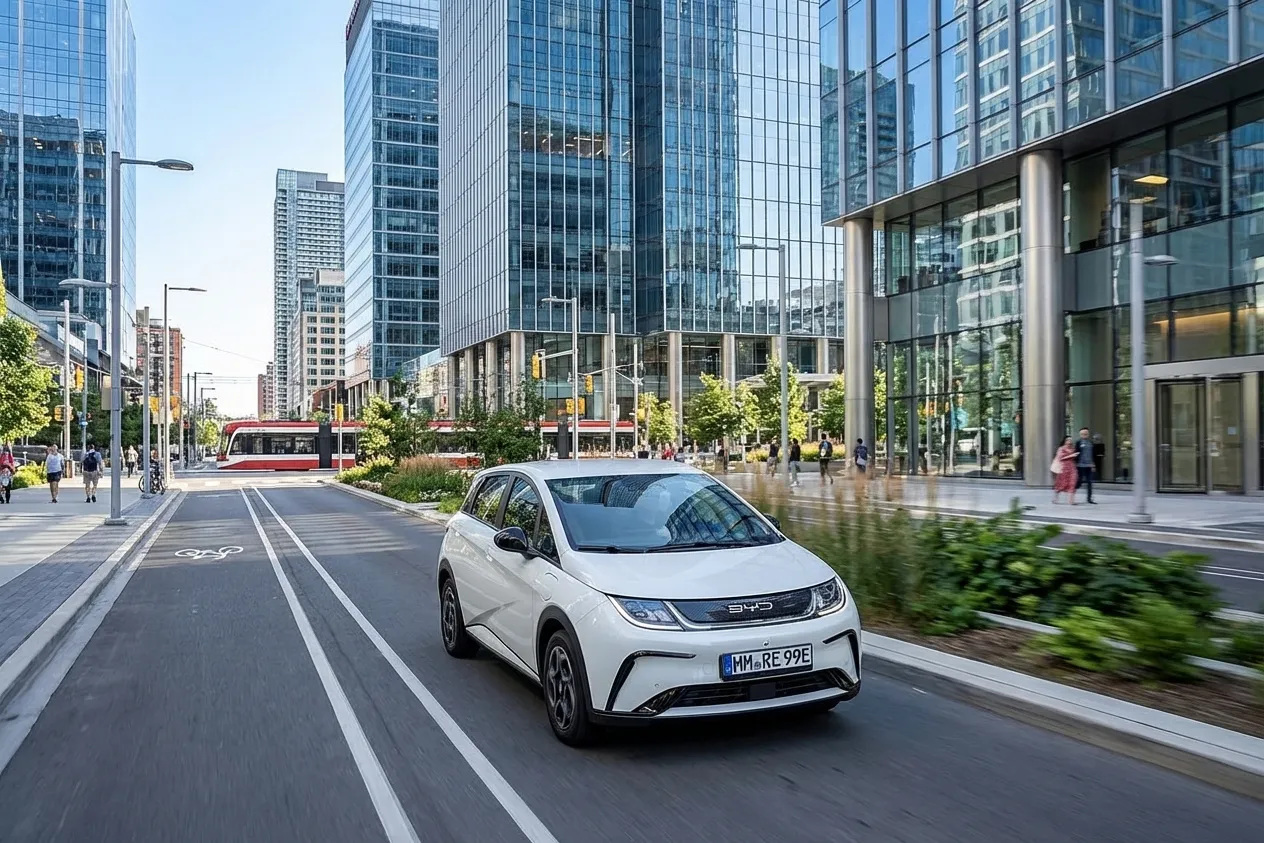
BYD is not yet selling in Canada as of March 2026. Canada's January 2026 trade deal reduced the tariff from 100% to 6.1% under a quota system, and import permits opened March 1. That creates a plausible launch path, but first retail deliveries and launch geography should still be treated as forecast rather than settled fact.
BYD, which stands for "Build Your Dreams", is not a startup. They're the world's largest EV manufacturer by volume, outselling Tesla globally since 2023. They make their own batteries, their own chips, and their own electric motors. That vertical integration is why they can price so aggressively while maintaining quality. Warren Buffett's Berkshire Hathaway has been an investor since 2008, if that tells you anything about the company's fundamentals.
Let's go model by model, because if BYD launches in scale, it is likely to do so with more than one vehicle rather than a single token entry.
BYD Seal
The Seal is BYD's direct answer to the Tesla Model 3, and it's the model that will get the most attention when it arrives.
- Price: modeled around the mid-$40,000s CAD
- Range: 530 km (WLTP)
- Power: 308 hp
- Battery: LFP Blade Battery
- Safety: Euro NCAP 5-star (91% adult protection)
- Interior: Nappa leather, Harman Kardon audio system, 15.6-inch rotating centre display
- Charging: CCS, DC fast charging support
The Blade Battery deserves a moment here. BYD developed this LFP (lithium iron phosphate) cell that's shaped like a blade and integrated directly into the pack structure. In their famous nail penetration test, the Blade Battery didn't catch fire or even release smoke when punctured, something NMC (nickel manganese cobalt) cells simply can't do. LFP chemistry also means better longevity. These packs are rated for over 3,000 full charge cycles before significant degradation.
If Seal launch pricing lands around the mid-$40,000s, it undercuts the Tesla Model 3 Long Range materially while offering comparable range and more standard luxury features. The trade-off? Tesla's charging, software, and service ecosystem is established across Canada. BYD's Canadian customer experience still needs to be proven rather than assumed.
For a head-to-head breakdown, check out our BYD Seal vs Tesla Model 3 comparison.
BYD Atto 3
The Atto 3 is where BYD could really disrupt the Canadian market. This is a compact SUV, the body style Canadians overwhelmingly prefer, at a price point that makes it accessible to mainstream buyers.
- Price: modeled roughly in the low-to-mid $30,000s CAD
- Range: 420 km (WLTP)
- Power: 204 hp
- Battery: LFP Blade Battery
- Safety: Euro NCAP 5-star
- Interior: Guitar-string design door panels, 12.8-inch rotating display
- Segment: Competes with Hyundai Kona Electric, Kia Niro EV
BYD vehicles don't qualify for the $5,000 federal EVAP rebate (Chinese manufacturing excludes them), but Quebec's current provincial rebate rules make the Atto 3 math more interesting there. The exact net-price story still depends on final Canadian MSRP and trim structure. If the Atto 3 lands where current estimates suggest, it moves much closer to mainstream compact-car pricing than today's EV market norm.
The Atto 3 has already proven itself in Europe and Australia. In those markets, owners consistently praise the ride quality (it's genuinely comfortable over rough roads), the spacious rear seats, and the overall build quality. Common criticisms include the infotainment system being slower than competitors and the exterior styling being somewhat generic. Fair trade-offs at this price.
For a deeper look, see our BYD Atto 3 Canadian review.
BYD Dolphin
The Dolphin is BYD's compact hatchback, and it might be the sweet spot of the entire lineup for urban Canadians.
- Price: modeled around the high-$20,000s to low-$30,000s CAD
- Range: ~400 km (WLTP)
- Power: 177 hp
- Battery: LFP Blade Battery
- Body: Compact hatchback
- Segment: Competes with Nissan Leaf (discontinued), Chevy Bolt (returning 2027)
If the Dolphin lands around the high-$20,000s to low-$30,000s, it fills a gap that's been painfully empty in the Canadian market. There's essentially no new EV under $35,000 in Canada right now (the Equinox EV starts at about $43,000). The Dolphin is one of the clearest candidates to change that, but it has not done so yet because the Canadian launch still is not live.
No EVAP rebate applies, but even without it, the Dolphin represents a fundamentally different value proposition than what's currently available. For urban dwellers who mostly commute, run errands, and take the occasional weekend trip, 400 km of range is more than enough. You're looking at fuel savings of roughly $2,000-$2,500 per year versus a comparable gas hatchback, which means the price premium over a gas car (if there even is one at this point) pays for itself within 2-3 years.
The Dolphin has been a massive seller in Europe, where it's one of the top-ten best-selling EVs in multiple countries. European reviewers consistently highlight the surprisingly refined ride quality for a car at this price point, the spacious interior (it's larger inside than the dimensions suggest), and the solid build quality. The LFP Blade Battery means you can comfortably charge to 100% daily without worrying about long-term degradation, something you can't do with NMC battery packs without accelerating wear.
For Canadians worried about winter range, figure on roughly 280-320 km in cold conditions. That's still more than enough for daily driving in any Canadian city. Most Canadians drive less than 50 km per day. Even in the depths of a Winnipeg January, a fully charged Dolphin gives you multiple days of driving before you need to plug in.
BYD Seagull
Consider this:, the Seagull is the model that could truly democratize EV ownership in Canada, and it's the one I'm watching most closely.
- Price: often modeled in the low-to-mid $20,000s CAD, with more aggressive estimates lower than that
- Range: ~300 km (WLTP)
- Power: 75 hp
- Battery: LFP Blade Battery
- Body: Micro/city car
- Segment: No direct competitor in Canada
Let me put that price in context. The cheapest new cars you can buy in Canada right now, gas or electric, are still in that high-teens to low-$20,000 zone. If the Seagull lands near the more aggressive projections, it would challenge those prices while being electric. That possibility is exactly why this model gets so much attention.
The Seagull is a city car, and it's honest about that. At 75 hp, it's not going to win any drag races. The ~300 km range is fine for daily driving but means it's not your road-trip vehicle. It's designed for exactly what most Canadians actually use their car for: commuting, groceries, school pickups, and short trips around town.
Remember the half-the-quota-under-$35,000 rule? The Seagull is one of the models that makes that possible. The more optimistic scenarios put it in the low-$20,000s; the more conservative ones put it several thousand dollars higher once compliance, logistics, and dealer margin are layered in. Either way, it is exactly the kind of affordable-EV candidate this trade framework was designed to encourage.
Now, I'm going to be honest about the Seagull's limitations for Canadian conditions. Winter range on a ~300 km WLTP car will likely drop to 200-240 km in cold weather. The 75 hp motor means highway merging requires planning. There's no all-wheel drive. The cabin is compact, it's a city car, not a family hauler.
But here's where perspective matters. If you're a single person or a couple in Vancouver, Toronto, Montreal, or any Canadian city with reasonable infrastructure, and your daily driving is under 80 km, the Seagull does everything you need at a price that makes car payments almost negligible. At $22,000 with a five-year loan, you're looking at roughly $370/month before interest. With fuel savings of $200/month versus gas, the effective cost drops to $170/month. That's less than most people's phone and internet bills combined.
For a broader look at affordable options, see Chinese EVs under $35,000 coming to Canada.
BYD Tang
The Tang is BYD's answer for families who need space, three rows of seats, seven-passenger capacity, and the kind of cargo room that makes it a genuine minivan or large SUV replacement.
- Price: $50,000-$60,000 CAD
- Range: ~500 km (WLTP)
- Seating: 7-seat SUV
- Battery: LFP Blade Battery
- Segment: Competes with Tesla Model X, Kia EV9
At $50,000-$60,000, the Tang doesn't play in the budget segment, but consider this: the Tesla Model X starts at $109,990 in Canada. The Kia EV9 starts at roughly $60,000. A seven-seat electric SUV at this price point is still significantly cheaper than most alternatives. For a family of five who needs that third row, the Tang could save $10,000-$50,000 compared to other options.
BYD Shark 6
BYD has also previewed the Shark 6, a plug-in hybrid electric pickup truck. Details for Canada are limited, and there's no confirmed timeline or pricing yet. But if BYD can bring a pickup truck at competitive pricing, that's huge for a country where the Ford F-150 has been the best-selling vehicle for decades. Keep this one on your radar.
Their dealer network is still developing. Service centres exist in major cities but not everywhere. Parts availability for unusual repairs might take longer than established brands. Resale value is a complete unknown, there's no data on what a three-year-old BYD is worth in Canada because none have been sold here yet. These are early-adopter trade-offs, and they're real.
For more on BYD's full Canadian strategy, read new EV brands coming to Canada.
Gear worth having
As an Amazon Associate, ThinkEV earns a small commission from qualifying purchases — at no extra cost to you.

Grizzl-E Classic Level 2 EV Charger (40A)
Canadian-made and rated for minus 40C winters. 40A / 9.6 kW, NEMA 14-50, indoor/outdoor, 24-ft cable. The charger built for Canadian weather.
As an Amazon Associate, ThinkEV earns from qualifying purchases — at no extra cost to you.
NIO: Premium with a Twist
NIO is positioning differently, they're not trying to be the affordable option. They're trying to offer BMW-level luxury at prices that undercut BMW by $15,000-$20,000.
Where BYD wins on price, NIO wants to win on experience. This is a company that runs "NIO Houses", part showroom, part lounge, part co-working space, in cities across China and Europe. They host events, run a community app, and treat car ownership as an ongoing relationship rather than a transaction. Whether that model translates to Canada remains to be seen, but it's a fundamentally different approach.
NIO ET5
The ET5 is NIO's entry point, a mid-size sedan that targets the BMW 3 Series and Mercedes C-Class.
- Price: $50,000-$55,000 CAD (estimated)
- Interior: Nappa leather, 23-speaker Dolby Atmos surround audio
- Technology: LiDAR-based driver assistance, NOMI AI dashboard companion
- Design: Low, sporty sedan with coupe-like roofline
At $50,000-$55,000, the ET5 slots in below where a comparably equipped BMW i4 or Mercedes EQE would land. The 23-speaker Dolby Atmos system is legitimately impressive, this isn't "premium audio" as marketing speak, it's genuinely one of the best factory sound systems in any car at any price. The NOMI AI robot on the dashboard is quirky, it has a face, it turns to look at you when you speak, and it handles voice commands. Gimmick or feature? Depends on your taste.
NIO ET7
The ET7 is the flagship sedan, competing with the BMW 7 Series and Mercedes S-Class.
- Price: $55,000-$65,000 CAD (estimated)
- Range: Up to 1,000+ km with optional 150 kWh battery
- Technology: Full suite LiDAR, NIO Autonomous Driving (NAD)
- Positioning: Flagship luxury sedan
The 150 kWh battery option is extraordinary. If the range figures from China translate to Canadian conditions (and there's always a winter penalty), you're looking at a sedan that could realistically do 700-800 km in fair weather. That's Toronto to Montreal and then some on a single charge. The catch is that the 150 kWh battery significantly increases the price, this would push the ET7 well above $65,000.
NIO ES6
The ES6 is a mid-size SUV, which is the body style most likely to succeed in Canada.
- Price: $50,000-$60,000 CAD (estimated)
- Body: Mid-size SUV
- Technology: Same LiDAR and NOMI platform as sedans
- Segment: Competes with Tesla Model Y, BMW iX3
Battery Swap: The Big Differentiator
The headline feature is battery swap. Instead of plugging in for 30+ minutes, you drive into an automated station where robots swap your depleted battery for a charged one in about 5 minutes. It's operational in China and Norway with over 2,000 stations.
Here's how it works: you pull up to a Power Swap Station (about the size of four parking spaces), drive onto a platform, and the car lifts slightly while an automated system unbolt your battery from below, slides it out, and installs a fully charged one. You never leave your seat. The whole process takes about five minutes, and you drive away with 100% charge.
In theory, this is incredible. In practice, my concern is significant: will NIO build that network in Canada? Battery swap requires enormous infrastructure investment. Each station costs hundreds of thousands of dollars and needs a constant supply of charged battery packs. In China, NIO has over 2,000 stations because the government subsidises infrastructure development. Norway has a handful. Canada has zero.
Five to fifteen stations on the Trans-Canada Highway isn't the same as comprehensive coverage. Until that network exists in meaningful numbers, a NIO in Canada is just another CCS-charging EV with a feature you can't really use. And you're paying a premium for that feature in the vehicle's price.
Battery swap also raises questions about battery ownership. In China, NIO offers a Battery-as-a-Service (BaaS) model where you buy the car without the battery and pay a monthly subscription. That lowers the purchase price but commits you to ongoing payments. Whether this model launches in Canada, and how it interacts with financing, insurance, and resale, is unclear.
Expected arrival: Possible 2027 entry, but nothing confirmed. NIO has said they're evaluating the Canadian market, but there's no dealer network announced, no service partnerships disclosed, and no firm timeline. I'm watching closely but managing expectations.
XPeng: Technology Focus
XPeng is less known than BYD or NIO, but their technology is arguably the most advanced of any Chinese EV manufacturer. If Tesla is the technology benchmark in North America, XPeng is making a strong case for that title in China.
XPeng G6
The G6 is XPeng's mid-size SUV and likely their strongest candidate for the Canadian market.
- Price: $40,000-$50,000 CAD (estimated)
- Architecture: 800V platform
- Charging: 10-80% in under 20 minutes
- Driver Assist: XNGP (XPeng Navigation Guided Pilot)
- Segment: Competes with Tesla Model Y, Hyundai Ioniq 5
The 800V architecture is the headline here. Most EVs today use 400V systems. 800V allows significantly faster charging, we're talking about adding 300 km of range in 15 minutes at a compatible charger. The Hyundai Ioniq 5 and Kia EV6 also use 800V, but XPeng's implementation is refined and the charging curve is impressively flat, meaning it maintains high charging speeds throughout the session rather than tapering off early.
Gear worth having
As an Amazon Associate, ThinkEV earns a small commission from qualifying purchases — at no extra cost to you.
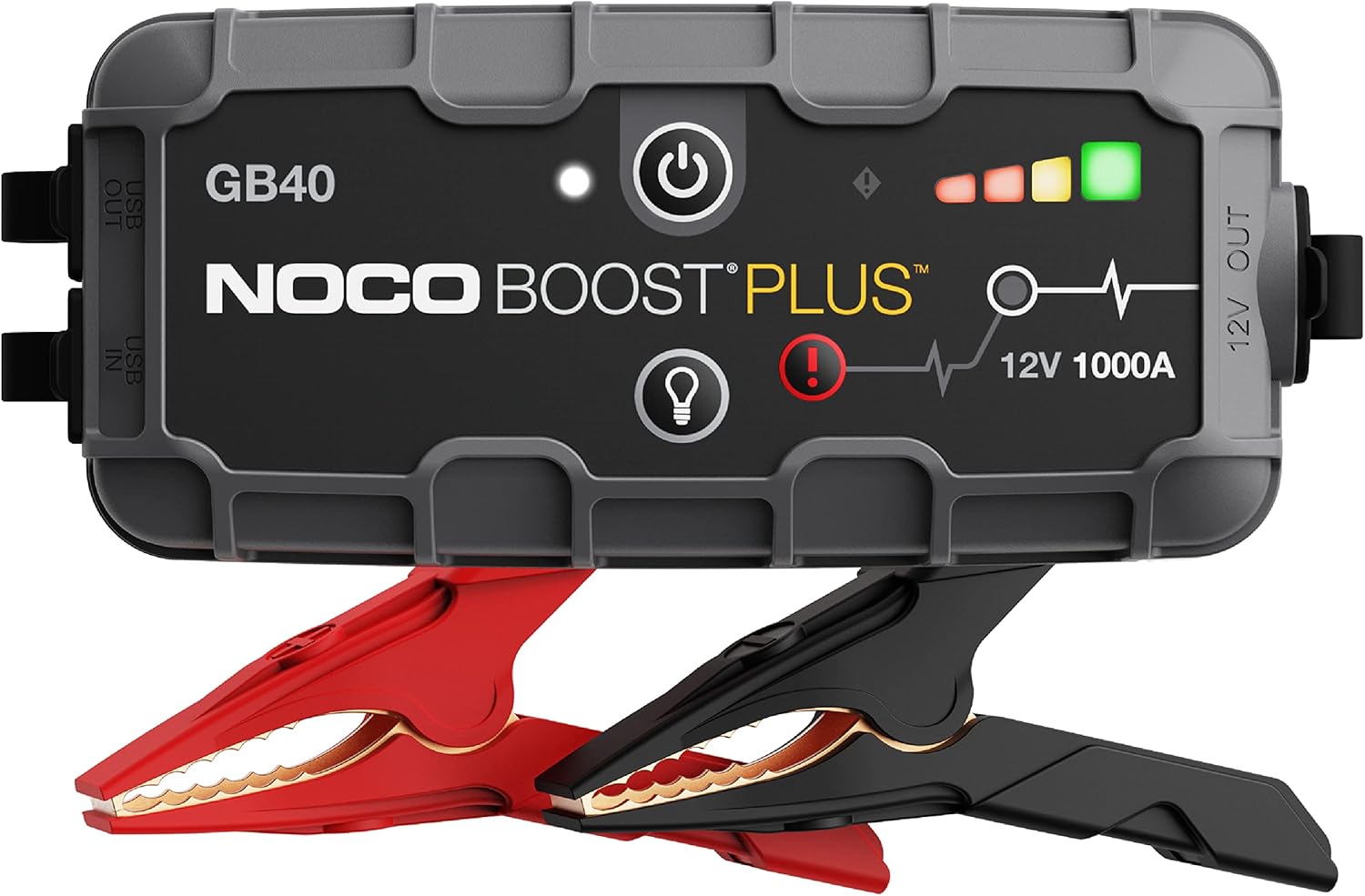
NOCO Boost Plus GB40 Jump Starter
A 1000A lithium jump starter that fits in your glovebox and works on any 12V battery. Your insurance against a dead 12V in a parking lot.
As an Amazon Associate, ThinkEV earns from qualifying purchases — at no extra cost to you.
XPeng G9
The G9 is the larger SUV, positioned as a premium offering.
- Price: $50,000-$60,000 CAD (estimated)
- Body: Large SUV
- Architecture: 800V platform
- Technology: Full XNGP suite, LiDAR
- Segment: Competes with BMW iX, Mercedes EQE SUV
XPeng P7
The P7 is their flagship sedan, and the range figures are impressive.
- Price: $45,000-$55,000 CAD (estimated)
- Range: 700+ km (WLTP)
- Architecture: 800V platform
- Design: Sleek sedan with a 0.236 drag coefficient (one of the lowest in production)
That 700+ km WLTP range is attention-grabbing. Even accounting for the 20-30% real-world reduction that Canadian winters impose, you're looking at 490-560 km in cold weather. That's genuinely usable long-distance range.
XNGP: XPeng's Autonomous Driving Play
XNGP, XPeng Navigation Guided Pilot, deserves special attention because it's arguably the closest competitor to Tesla's Full Self-Driving in terms of capability. In China, XNGP handles highway driving, urban navigation, parking, and complex intersection management without HD map pre-mapping. It uses a combination of cameras, LiDAR, and radar in a sensor fusion approach.
The key difference from Tesla: XPeng uses LiDAR in addition to cameras, while Tesla relies on cameras only. Both approaches have merits. LiDAR provides precise depth perception that cameras estimate. Cameras provide colour and texture information that LiDAR can't. XPeng's fusion approach is arguably more strong, but it adds cost and complexity.
For Canadian buyers who want advanced driver assistance, XPeng represents a genuine alternative to Tesla. Whether XNGP can perform at the same level on Canadian roads, with our unique signage, lane markings, and weather conditions, remains to be proven.
Will XNGP work as well in Canada as it does in China? That's an open question. Driver assistance systems need to be trained on local road conditions, Canadian lane markings, signage, roundabout designs, and winter conditions are all different from Chinese roads. Tesla has years of North American driving data. XPeng would be starting from scratch. Expect the system to improve over time, but initial performance in Canada may not match what you see in Chinese demo videos.
Expected arrival: 2027-2028. XPeng is established in Europe and expanding westward, but they haven't announced specific Canadian plans. Their technology is compelling enough that they're worth watching, particularly if you're the kind of buyer who values advanced tech as much as value pricing.
Other Brands to Watch
BYD, NIO, and XPeng get the most attention, but several other brands could enter Canada under the new tariff framework. Here's what to know about each.
Zeekr 001 and 007
Zeekr is Geely's premium EV brand (Geely also owns Volvo and Polestar, so they know the Western market). The Zeekr 001 is a performance liftback that's earned serious respect in Europe.
- Zeekr 001: $50,000-$65,000, performance liftback, 800V, 3.8 seconds 0-100 km/h, stunning design
- Zeekr 007: $40,000-$50,000, sedan, more accessible entry point
The 001 is legitimately one of the fastest EVs you can buy at any price. 3.8 seconds to 100 km/h puts it in Porsche Taycan territory at half the price. The 800V architecture means charging speeds to match. If Zeekr enters Canada, the 001 could be a very compelling alternative for buyers who want performance without the Porsche price tag.
Chery Omoda E5
Chery is one of China's oldest automakers, and the Omoda E5 is their compact SUV play.
- Price: $25,000-$30,000 CAD (estimated)
- Body: Compact SUV
- Positioning: Value-focused, practical
At $25,000-$30,000, the Omoda E5 would be one of the most affordable SUVs in Canada, gas or electric. Chery has established manufacturing relationships across South America and the Middle East, so they have experience adapting vehicles for diverse markets. Canadian-specific details are limited, but this is a brand worth tracking.
Leapmotor C10
Leapmotor has a partnership with Stellantis (the parent company of Chrysler, Dodge, Jeep, Ram, and Fiat), which gives them a potential shortcut to Canadian infrastructure through existing Stellantis dealer networks.
- Price: $25,000-$30,000 CAD (estimated)
- Body: Compact SUV
- Advantage: Stellantis partnership could mean existing dealer/service access
The Stellantis connection is significant. If Leapmotor vehicles can be sold and serviced through existing Chrysler/Dodge/Jeep dealerships, that immediately solves the biggest concern with new Chinese brands, the lack of a service network. No other Chinese brand has this kind of established-market partnership.
MG MG4
MG is now owned by SAIC Motor (Chinese state-owned), but the brand has history in the UK and Europe. The MG4 is already selling well in Europe.
- Price: $30,000-$35,000 CAD (estimated)
- Body: Hatchback
- Track Record: Already selling in Europe with positive reviews
The MG4 has won European Car of the Year recognition and has a solid reputation for ride quality and value. The hatchback body style may be a harder sell in SUV-obsessed Canada, but at this price point, it fills a genuine gap in the market.
The Common Thread
What connects all these brands is the underlying technology platform. Chinese EV manufacturers have spent the last decade building vertically integrated supply chains, they control battery production, motor manufacturing, chip design, and software development in ways that legacy automakers are still struggling to match. That's not a temporary cost advantage. That's a structural advantage that will persist even as tariffs and trade deals evolve.
The brands most likely to succeed in Canada are the ones that invest in local service infrastructure, build genuine dealer partnerships, and demonstrate commitment to Canadian buyers beyond just selling cars. BYD has the best chance simply because of their scale and resources. Leapmotor has the Stellantis shortcut. The others need to prove they're serious about this market.
For more on all these incoming brands, see our guide to Chinese EVs entering Canada.
How Established Brands Are Responding
Consider this:, even if you have absolutely zero interest in buying a Chinese EV, this wave of competition directly benefits you. Every established manufacturer is being forced to respond, and they're responding with better prices and better products.
Tesla's Price Strategy
Tesla has already cut prices multiple times since 2023. The Model 3 and Model Y are significantly cheaper than they were two years ago, and more cuts are expected. Tesla's advantage, the Supercharger network, the software ecosystem, the brand recognition, the proven resale values, is real. But a $10,000-$15,000 price gap against comparable Chinese EVs is impossible to ignore. Expect Tesla to continue adjusting pricing, potentially introducing a more affordable model, and emphasising their ecosystem advantages.
Hyundai and Kia's Position
Hyundai and Kia have been the strongest competitors to Tesla in Canada, and they're well-positioned for the Chinese EV wave. The Ioniq 5, Ioniq 6, EV6, and EV9 all qualify for the $5,000 EVAP rebate (because they're manufactured in South Korea, not China). That rebate advantage is significant, a $45,000 Ioniq 5 becomes $40,000 after EVAP, which is competitive with Chinese alternatives that don't qualify for the rebate.
Hyundai and Kia also have established dealer networks, proven cold-weather performance, and growing resale value data. These are meaningful advantages over brand-new entrants.
GM's Equinox EV Play
General Motors is positioning the Chevy Equinox EV as their volume play, starting around $42,999. It's built in North America, qualifies for EVAP, and has the Chevy dealer network behind it. The next-generation Bolt is expected in 2027, likely targeting an even lower price point. GM is clearly preparing for a price war.
What Competition Means for ALL Buyers
Here's the bottom line: more competition always benefits buyers. When BYD offers a compact SUV for $30,000, Hyundai can't keep the Kona Electric at $45,000 without losing market share. When XPeng offers 800V charging at $40,000, Tesla can't charge a premium for slower charging. When NIO offers luxury features at BMW prices, BMW has to improve their value proposition.
This competitive pressure flows through the entire market. Even buyers who never consider a Chinese brand will benefit from lower prices, better features, and more choices across the board.
Look at what's already happened. Tesla has cut Model 3 and Model Y prices multiple times since 2023. Hyundai has added features to the Ioniq 5 without raising the price. GM launched the Equinox EV at a lower price than analysts expected. Ford has been aggressively discounting the Mustang Mach-E. This didn't happen in a vacuum, manufacturers are positioning for a price war they know is coming.
The ripple effects extend beyond new cars. When new EV prices drop, used EV prices drop in response. Lease returns create more affordable inventory. Trade-in values on gas cars decline as EV adoption accelerates, which pushes more buyers toward EVs in a self-reinforcing cycle. Within three years, the Canadian EV market could look fundamentally different than it does today, more brands, lower prices, better technology, and genuine choices at every budget level.
What to Expect Timeline-Wise
Phase 1: Mid-to-Late 2026, BYD Arrives
2026 is the year BYD is expected to enter Canada, now that the tariff on Chinese EVs has dropped from 100% to 6.1% under a 49,000-vehicle annual quota. Import permits opened March 1, 2026, and the bureaucratic machinery is now in motion.
First deliveries haven't happened yet, but expect initial availability in major metros, Vancouver, Toronto, Montreal are the most likely launch markets. BYD will almost certainly prioritize the Atto 3 and Seal as their opening salvo, with the Dolphin and Seagull following within months.
Early adopters should expect limited inventory, potential wait lists, and a service footprint that's still being built out. This is the "pioneer phase" if launch happens on current expectations, you may get the most aggressive pricing, but you also accept the most uncertainty.
For a detailed month-by-month breakdown, see our new EV arrival timeline for Canada.
Phase 2: 2027, The Expansion Year
2027 is when things get really interesting. BYD's dealer network should be maturing. NIO might enter. Zeekr might enter. XPeng might announce Canadian plans. Chery and Leapmotor could have vehicles on the ground.
This is also when the used market starts to have data. The first BYDs sold in Canada will be approaching their one-year anniversary, and we'll start seeing real-world reliability data, maintenance costs, and early resale values. That information is important for risk-averse buyers who want evidence before committing.
By 2027, we should also have a clearer picture of winter performance. How do BYD's Blade Batteries handle a full Canadian winter? How accurate are the range estimates in -20C conditions? What about salt, snow, and ice on the undercarriage? These are questions that can only be answered by real Canadian ownership experience, and 2027 is when that data starts flowing.
Service networks should be expanding beyond major cities. Parts availability should be improving. The "early adopter tax" should be declining.
Phase 3: 2028-2030, Mature Market
By 2028-2030, we should see a genuinely mature multi-brand market. Multiple Chinese brands fully established with proper dealer and service networks. Battery swap infrastructure built out (if NIO succeeds and invests). Competitive pricing across the board driving all EV prices down. Used EV markets from new brands stabilised with real resale data. The joint venture requirement kicking in, potentially bringing manufacturing jobs to Canada.
This is the phase where the average Canadian buyer, not the early adopter, not the tech enthusiast, but the family shopping for reliable transportation, can confidently consider a Chinese EV alongside a Tesla, Hyundai, or GM product.
The EVAP Question
This is important enough to deserve its own section, because it directly affects your purchase math.
The federal Electric Vehicle Availability Program (EVAP) offers a $5,000 rebate on qualifying EVs. To qualify, the vehicle must meet the current transaction-value and origin rules, and, this is the critical part for this article, it must not be manufactured in China.
That last condition means that the Chinese-manufactured EVs covered here are excluded from EVAP under the current rules regardless of price. A low-$20,000s Seagull scenario doesn't qualify. A high-$20,000s or low-$30,000s Dolphin scenario doesn't qualify. None of them do under the current framework.
This creates an interesting pricing dynamic. Consider:
- BYD Atto 3 at $30,000 (no EVAP) = $30,000 out of pocket
- Hyundai Kona Electric at $42,000 (with $5,000 EVAP) = $37,000 out of pocket
- The gap narrows from $12,000 to $7,000
The EVAP exclusion partially offsets the Chinese price advantage, but doesn't eliminate it. For vehicles in the $25,000-$35,000 range, the Chinese brands still come out ahead even without the rebate.
Quebec's Roulez vert program ($2,000 rebate) does NOT exclude Chinese manufacturers. So Quebec buyers get the Roulez vert on Chinese EVs, making the value proposition even stronger in that province.
For a complete guide to available rebates, see our Canada EV rebate and EVAP 2026 guide.
Should You Wait or Buy Now?
This is the question I get most. Here's my framework, and I'm going to be more specific than the usual "it depends."
Buy Now If...
You need a vehicle immediately. If your current car is dead, dying, or costing you more in repairs than a car payment, don't wait. A Hyundai Kona Electric, Chevy Equinox EV, or used Tesla Model 3 is available right now. The savings from waiting 12 months for a Chinese alternative won't offset a year of repair bills or rental costs.
You do frequent road trips. Tesla's Supercharger network is mature and reliable across Canada. The CCS network is growing but still has gaps, especially in rural areas. If you regularly drive Vancouver to Kelowna, Calgary to Edmonton, or Toronto to Ottawa, the charging infrastructure advantage of established brands is worth paying for right now.
You value proven resale. A three-year-old Tesla Model 3 has established resale data. A three-year-old BYD Seal has zero Canadian resale data because none exist yet. If you plan to sell or trade in within 3-5 years, the uncertainty of an unknown resale value is a real financial risk.
You qualify for EVAP. If the vehicle you're considering qualifies for the current $5,000 federal rebate, that significantly narrows the price gap with Chinese alternatives. A mainstream EV in the mid-$40,000 range can become much more competitive once EVAP is applied, even against a Chinese alternative with a lower modeled sticker but no federal rebate.
Wait If...
You can manage another 6-18 months. If your current vehicle is running fine and you're shopping opportunistically rather than urgently, waiting for the Chinese brands to arrive could save you $10,000-$25,000. That's real money.
You want a sub-$30,000 EV. Nothing at this price exists in Canada right now. If a new EV under $30,000 is your target, you must wait, the BYD Dolphin, Seagull, Chery Omoda E5, and Leapmotor C10 are the only options, and none are here yet.
You're a second-car household. If this is your household's second vehicle and primarily used for commuting, the risk of early-adopter issues is much lower. You have a backup if something goes wrong, making it easier to justify waiting for a Chinese brand.
You're comfortable with uncertainty. Early adopters get the best deals but accept unknown service experiences, unproven resale values, and potentially limited parts availability. If that doesn't stress you out, the financial savings are substantial.
The Used EV Option
Here's a third path that many people overlook: the used EV market. Over 3,000 used EVs are selling per month in Canada, and prices have dropped significantly. A 2022 Tesla Model 3 Standard Range can be found for $30,000-$35,000. A 2023 Hyundai Ioniq 5 can be found for $35,000-$40,000. A 2022 Chevy Bolt can be found for under $20,000.
The used market gives you established brands at Chinese-brand prices, right now, no waiting required. The trade-off is older technology, some battery degradation, and no new-car warranty. But for budget-conscious buyers, this path deserves serious consideration. Check out our used EV market explosion coverage for current pricing data.
Gear worth having
As an Amazon Associate, ThinkEV earns a small commission from qualifying purchases — at no extra cost to you.

PULIDIKI Car Cleaning Gel (Detailing Putty)
Press it into vents, buttons, and seams and it lifts out dust you did not know was there. Weirdly satisfying, genuinely useful.
As an Amazon Associate, ThinkEV earns from qualifying purchases — at no extra cost to you.
The Bigger Picture
Here's what I find most exciting: regardless of which brand you buy, the competition benefits you.
Tesla, Hyundai, BMW, they can't ignore pricing that's 30% lower. Expect price adjustments, better incentives, and improved features across all brands as they compete for market share.
Even if you never buy a BYD, the fact that BYD exists makes your Tesla purchase better value than it would have been otherwise.
The arrival of Chinese EVs also accelerates the used EV market in a way most people aren't thinking about. When new EVs get cheaper, used EVs get cheaper too. A flood of $28,000-$45,000 new EVs puts downward pressure on used EV prices across the board. That $35,000 used Tesla Model 3? It'll probably be $30,000 by late 2027. That $20,000 used Bolt? It might be $16,000-$18,000.
For the first time in Canadian automotive history, we're looking at a future where a reliable, safe, efficient electric vehicle is accessible to middle-income families. Not as a stretch purchase, not as a financial sacrifice, but as a genuinely affordable option that saves money over its lifetime.
There's also a climate angle that matters. Canada has committed to banning new gas car sales by 2035. To hit that target, EV adoption needs to accelerate dramatically from the current 11% market share. Affordable EVs from Chinese manufacturers could be the single biggest driver of that acceleration. If a $22,000 Seagull or a $28,000 Dolphin can replace a $25,000 Corolla for millions of Canadian households, the transition from gas to electric stops being an aspirational choice and becomes a common-sense financial decision.
That's the real story. Canadian EV buyers finally have options. And options are always better than no options.
For a broader take on how this wave of arrivals is reshaping the market, read our coverage of new EVs taking Canada by storm. And for safety data on these incoming vehicles, see Chinese EVs safety and Euro NCAP ratings.
Gear worth having
As an Amazon Associate, ThinkEV earns a small commission from qualifying purchases — at no extra cost to you.

WixGear Magnetic Air Vent Phone Mount (2-Pack)
A magnet strong enough that your phone never flinches over potholes or rail crossings. Two in the box, one for each car.
As an Amazon Associate, ThinkEV earns from qualifying purchases — at no extra cost to you.
Related Reading
- New EV Arrival Timeline, When each model is expected to arrive.
- Most Affordable EVs Canada 2026, What's available now at the best prices.
- EV Pricing Guide Canada 2026-2027, Complete pricing breakdown.
- BYD Coming to Canada: The Tariff Deal, How the January 2026 trade deal works.
- Chinese EVs Entering Canada, The full picture of which brands are coming.
- Canada EV Rebate and EVAP Guide, Complete rebate eligibility breakdown.
Gear worth having
As an Amazon Associate, ThinkEV earns a small commission from qualifying purchases — at no extra cost to you.

Car Cup Holder Coasters (4-Pack)
Drop-in coasters that catch spills and crumbs so your cup holders stay clean. Rinse and reuse forever.
As an Amazon Associate, ThinkEV earns from qualifying purchases — at no extra cost to you.

Founder & Chief Editor
Vlad Pereira is the founder and chief editor of ThinkEV.ca, the Canadian electric-vehicle publication he writes and edits from Courtenay, British Columbia. He covers EV pricing, federal and provincial rebates, charging costs, and the Chinese manufacturers now entering Canada, from the buyer's side rather than the press-fleet side. ThinkEV is a venture of Vlad Pereira Online; his writing on health, income and the long game lives at vladpereira.com.
Frequently asked questions
What are the cheapest new EVs coming to Canada?
When does the new Chevy Bolt arrive?
Which new EVs qualify for the $5,000 EVAP rebate?
Are Chinese EVs safe?
What is the 49,000-vehicle quota?
Will BYD have service centres in Canada?
How does NIO's battery swap work?
Should I wait for Chinese EVs or buy now?
Do Quebec buyers get any rebate on Chinese EVs?
More EV & road-trip finds
Affordable upgrades worth a look — tap any to check the price on Amazon.
 ★ 546
★ 546Funny Headrest Face Covers (2-Pack)
View on Amazon ★ 4,424
Sun Visor Card and Document Organizer
View on Amazon ★ 308
★ 308Coiled Lightning Car Cable for iPhone (2-Pack)
View on Amazon ★ 119
★ 119Foldable Waterproof Trunk Organizer
View on Amazon ★ 392
★ 392Large Cup Holder Adapter (32-40oz)
View on Amazon ★ 4,050
Touchscreen Mist Screen Cleaner Kit
View on Amazon ★ 164
★ 164Solar-Powered LED Ambient Light
View on Amazon ★ 4,055
6-Speed Manual Shift Knob Display
View on AmazonRead, Plan, Then Stay Current
Explore our expert articles to understand incentives and ownership costs, use the map to pressure-test charging reality, then subscribe so new EV coverage comes straight to you.
Continue Reading
Chery EVs Coming to Canada: Models and Prices
Who Got Canada's First Chinese EV Import Permits
Uber and Lyft EV Switch Canada 2026: The Savings

Canada's EV Market Crash of 2025, and What's Next
New EV Brands Coming to Canada: BYD, Chery, Xpeng