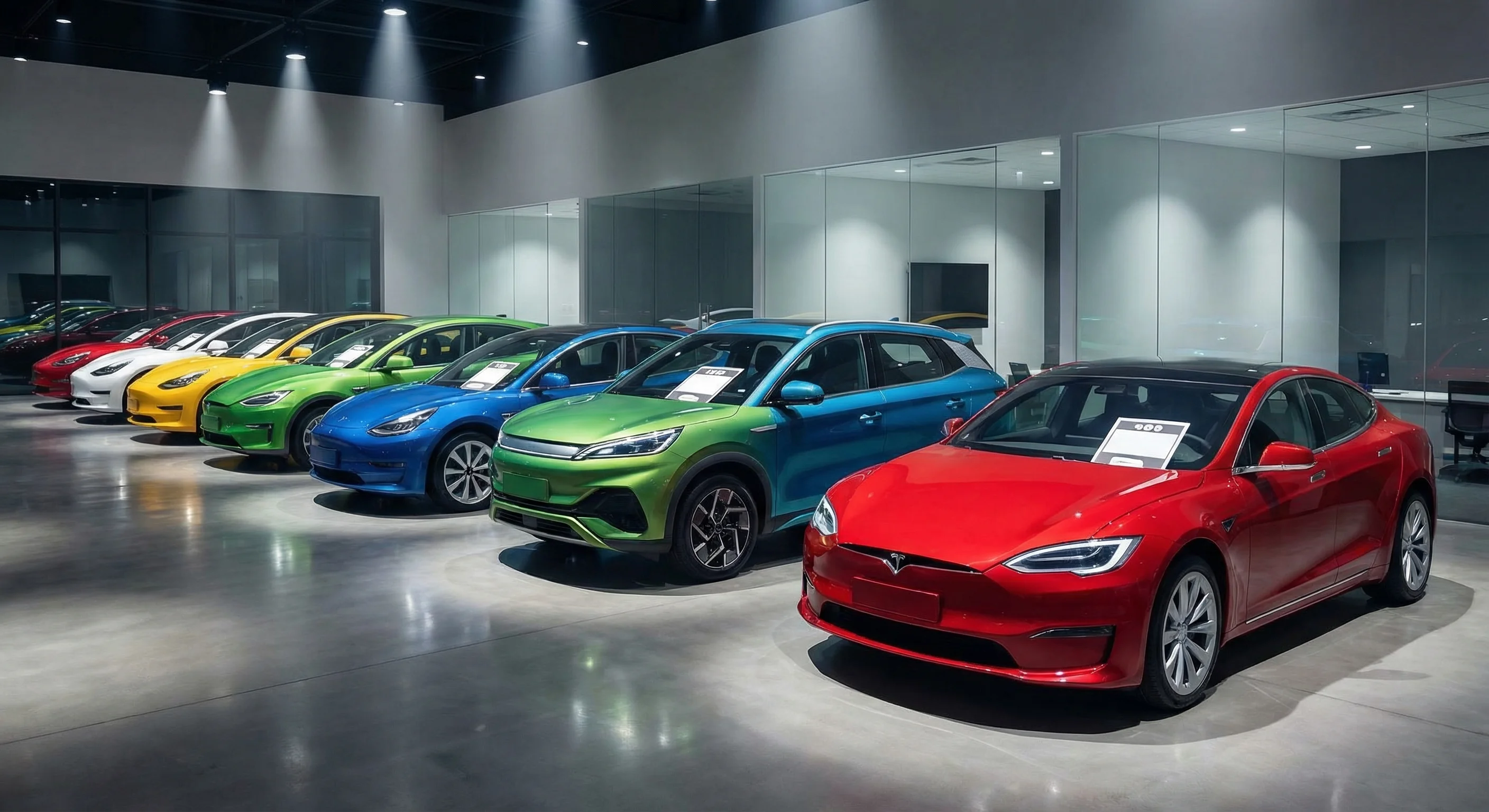
The cheapest new EV in Canada today costs about $39,000. That's the Kia EV4 Light, and it's been sitting alone at the bottom of the price chart for months. No competition. No pressure to drop further.
That could change, if the policy, permits, and model launches line up the way current reporting suggests.
On January 16, 2026, Canada broke with the United States and slashed its 100% tariff on Chinese EVs down to 6.1%. In exchange, China agreed to a quota system: 49,000 vehicles per year, expanding to 70,000 by 2030. Half of those imports must be priced under $35,000 CAD. That threshold is what changes the math for most buyers.
Import permits were reported to open March 1. But "the floodgates are open" is still too strong. What matters now is which vehicles actually clear compliance, show up with dealer support, and launch at prices close to the estimates people keep quoting.
Key takeaways
- Canada's January 16, 2026 trade framework replaced the 100% EV tariff with a 49,000-vehicle annual quota at a 6.1% rate, scaling toward 70,000 units a year by 2030.
- Seven Chinese EV models are modelled under the $35,000 mark under the quota, led by the BYD Seagull at an estimated ~$24,150 CAD, roughly $15,000 below today's cheapest EV, the Kia EV4 Light at $38,995.
- The MG4 has the strongest fast-charge spec of the sub-$35,000 group at 10–80% in 35 minutes and carries a 5-star Euro NCAP rating with 83% adult occupant protection.
- The Leapmotor C10 has a distribution edge over rival Chinese brands because it sells through Stellantis dealers, the same network that carries Jeep, Chrysler, and Dodge.
- None of the seven qualifies for the federal $5,000 EVAP rebate (it excludes Chinese-built vehicles), though Quebec's $2,000 Roulez vert may still apply because it uses an MSRP cap rather than a country-of-origin rule.
The Deal That Made This Possible
In October 2024, Canada followed the US and slapped a 100% tariff on Chinese-made EVs. A $20,000 car suddenly cost $40,000 at the border. It effectively banned Chinese EVs from the Canadian market.
Then the US started a trade war with everyone, including Canada. Suddenly, Ottawa needed new trade partners. China was happy to oblige, with conditions.
The Canada-China Economic and Trade Cooperation Roadmap, signed in Beijing on January 16, 2026, replaced the punitive tariff with a quota-based system. The key terms:
- 49,000 Chinese EVs per year at 6.1% tariff (standard MFN rate)
- Quota expands to 70,000 vehicles per year by 2030
- Half must be affordable, priced under $35,000 CAD at import
- Chinese automakers must invest in Canada, joint ventures for vehicles or batteries within 3 years
- Linked to agricultural trade, China reopens to Canadian canola in exchange
That last point is important. This isn't just a car deal. It's a broader trade agreement that gives both sides skin in the game. Canada gets affordable EVs and canola exports. China gets North American market access. Neither side wants to blow it up.
For a deeper look at the tariff history and what it means for the broader market, check out our guide to EV incentives in Canada.
The 7 Models: What You'll Actually Be Able to Buy
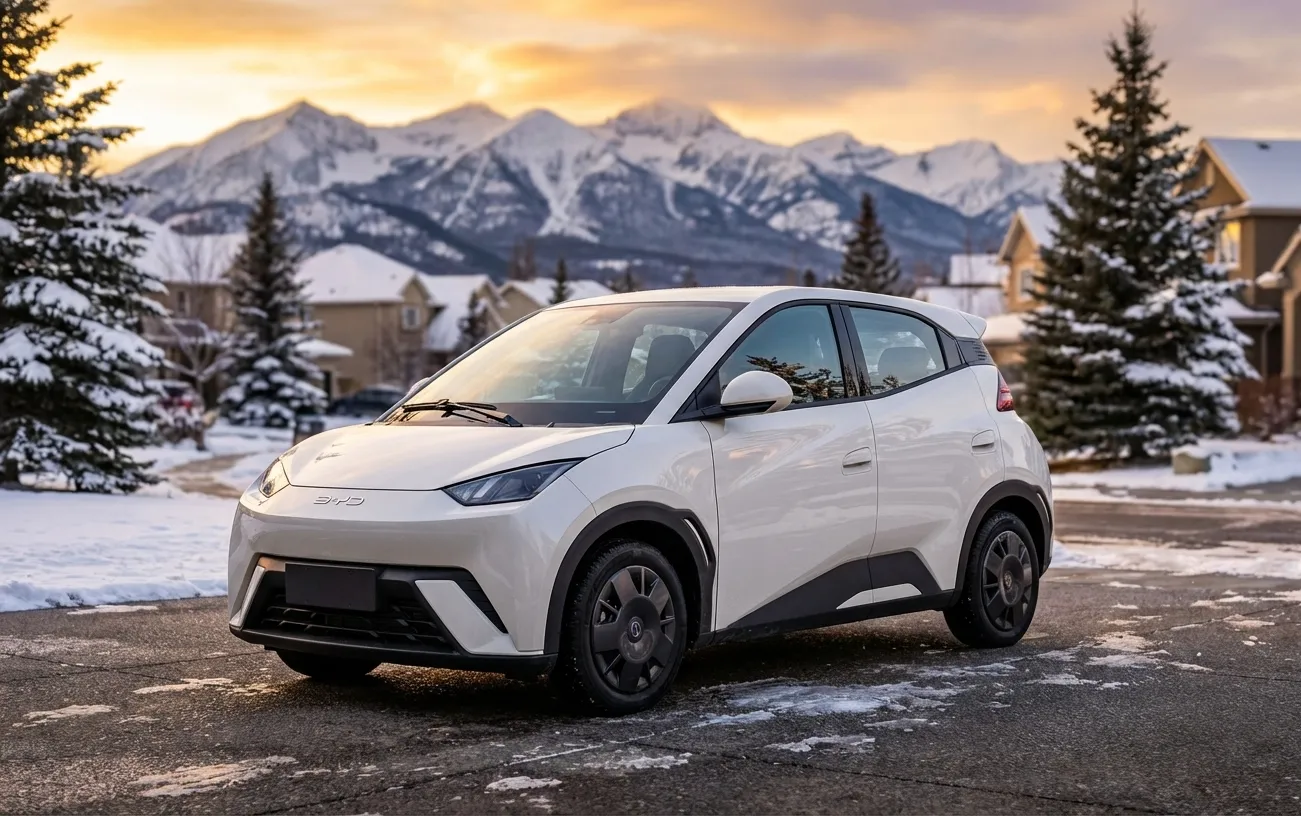
These are the vehicles most often modeled under the $35,000 threshold, based on public pricing in other markets, rough landed-cost math, and current industry commentary. That is not the same thing as confirmed Canadian retail inventory.
1. BYD Seagull (Atto 1), ~$24,150 CAD
The one that changes everything.
The Seagull is why this deal matters. At roughly $24,150 CAD including the 6.1% tariff, it would be the cheapest new EV ever sold in Canada, by about $15,000. That's not a typo.
- Range: Commonly discussed as a short-range city-EV setup, with smaller and larger battery versions in global-market reporting
- Motor: Global-market trims vary, and buyers should treat exact Canadian output as unconfirmed
- Charging: Commonly discussed as modest DC fast charging, reinforcing the Seagull's city-car role
- Safety: 1-star Euro NCAP rating (2024, tested configuration) with the usual caution that export trims and equipment can differ by market
- Battery story: Commonly discussed through BYD's Blade/LFP narrative, but buyers should avoid treating that shorthand as a substitute for official Canadian specs
The Seagull is a city car. It's compact, it's designed for urban driving, and the base model's 220 km range makes it a daily commuter, not a road-tripper. But that's exactly what most Canadians need, 80% of us drive under 60 km per day.
At this price, the Seagull would not qualify for the $5,000 federal EVAP rebate, EVAP excludes Chinese-manufactured vehicles, requiring manufacture in Canada or a free trade agreement country. Quebec's $2,000 Roulez vert rebate may still apply (it uses an MSRP cap, not a country-of-origin rule), bringing the price to roughly $22,150. That's still less than a base Honda Civic.
Expected availability: Common forecast is demo units first, then limited retail if Canadian compliance and dealer support fall into place. Treat timing as provisional.
2. BYD Dolphin, ~$30,150 CAD
The volume leader.
If the Seagull is the headline, the Dolphin is the model many observers see as the more realistic volume candidate. It appears to hit a broader sweet spot between affordability, practicality, and everyday usability than the smallest city-EV scenarios.
- Range: Often discussed in two broad battery/range tiers, with the longer-range version being the one most Canadians are reacting to
- Motor: Global-market outputs vary by trim and should not be assumed to map directly onto a future Canadian lineup
- Charging: Commonly discussed as meaningfully stronger than the Seagull, but still dependent on final Canadian hardware
- Safety: 5-star Euro NCAP in the tested configuration
- Battery story: Commonly discussed through BYD's Blade/LFP approach, with cold-weather equipment varying by trim and market
The Dolphin is the Corolla of Chinese EVs. It's a proper compact hatchback with genuine rear-seat room, a usable trunk, and a broader-use profile than the Seagull. The better-equipped global versions are what make it look competitive against much pricier Canadian-market EVs, but exact Canadian range and battery details still need confirmation.
No EVAP rebate if launched as a Chinese-manufactured import. Quebec's Roulez vert may still narrow the effective comparison depending on final MSRP and provincial eligibility rules.
Expected availability: Late 2026 is a common scenario, but not a confirmed showroom commitment.
3. MG4, ~$32,800 CAD
The fun one.
The MG4 is genuinely fun to drive at this price point. Rear-wheel drive. Near-perfect weight distribution. Reviewers worldwide have compared its handling to a Volkswagen Golf GTI.
- Range: 280 km (51 kWh) / 385 km (64 kWh) / 435 km (77 kWh)
- Motor: 125 kW (168 hp) standard / 150 kW (201 hp) Long Range
- Charging: DC fast charge 10-80% in 35 minutes
- Safety: 5-star Euro NCAP, 83% adult occupant protection
- Features: Active grille system and heat pump on higher trims
The MG4 has been a massive hit in Europe, Australia, and the UK. The Long Range version at 385 km puts it squarely in "only car you need" territory. And the XPower performance variant (not under $35K) does 0-100 in 3.8 seconds. The platform is seriously capable.
MG is owned by SAIC Motor. They have experience in export markets with strict safety standards, which helps the case for future Canada entry, but it does not remove Canadian regulatory uncertainty.
No EVAP rebate (Chinese-manufactured). After Quebec Roulez vert ($2,000): ~$30,800 CAD.
Expected availability: Late 2026 to early 2027.
4. MG ZS EV, ~$31,500 CAD
The practical SUV choice.
If you need an SUV form factor on a budget, the ZS EV is your entry point. It's MG's compact electric SUV, think Hyundai Kona Electric sized, but at a dramatically lower price.
- Range: 320 km (51 kWh battery)
- Motor: 115 kW (154 hp) / 280 Nm torque
- Charging: DC fast charge 0-80% in 40 minutes
- Safety: 5-star Euro NCAP
- Features: 10.1-inch touchscreen, panoramic sunroof (on higher trims)
The ZS EV has been the entry-level electric SUV benchmark in dozens of markets. It's not exciting. It's not revolutionary. It's a solid, sensible small SUV that happens to run on electricity and costs roughly $31,500. That's about $12,000 less than the Hyundai Kona Electric.
No EVAP rebate (Chinese-manufactured). After Quebec Roulez vert ($2,000): ~$29,500 CAD.
Gear worth having
As an Amazon Associate, ThinkEV earns a small commission from qualifying purchases — at no extra cost to you.
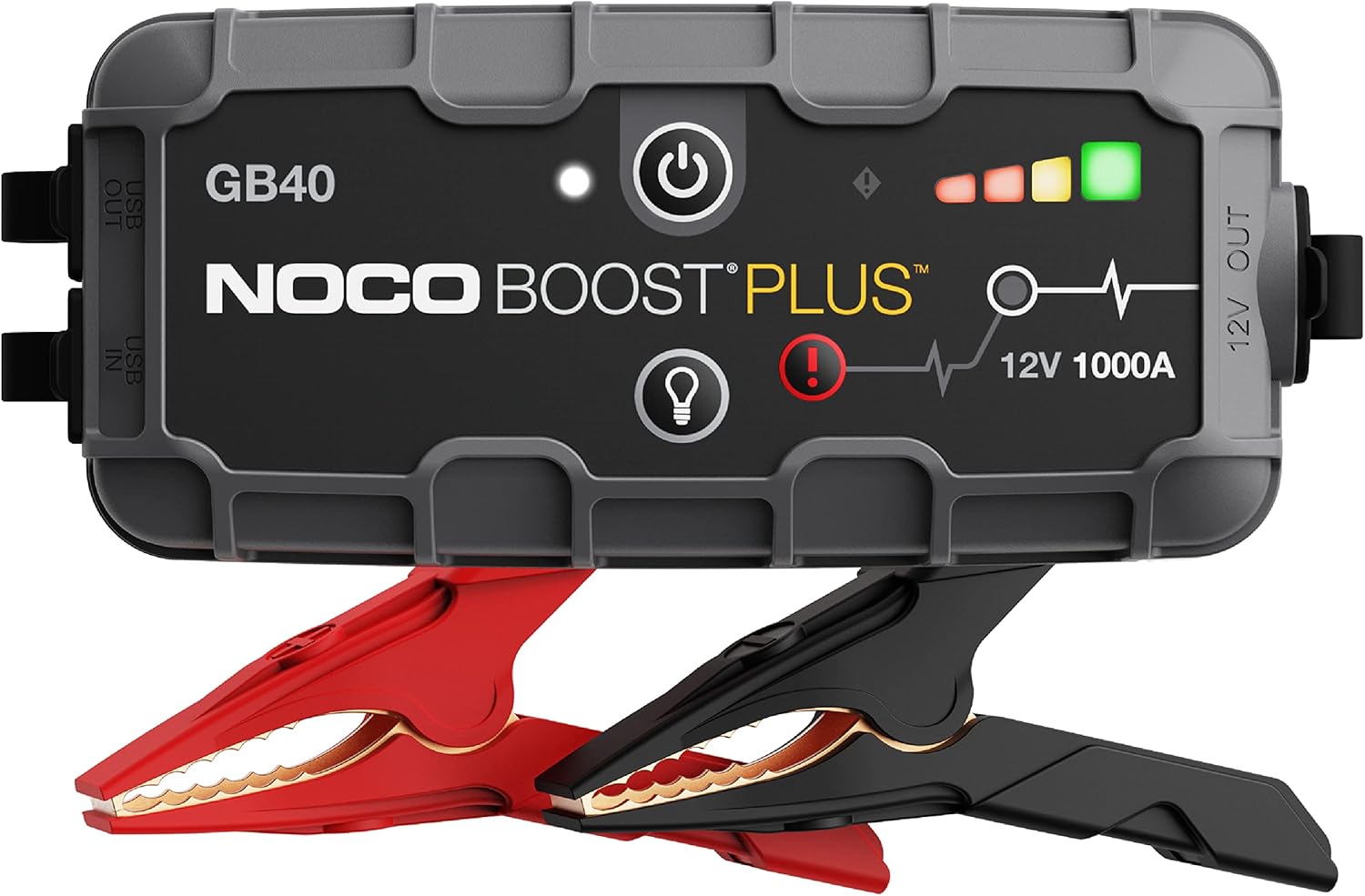
NOCO Boost Plus GB40 Jump Starter
A 1000A lithium jump starter that fits in your glovebox and works on any 12V battery. Your insurance against a dead 12V in a parking lot.
As an Amazon Associate, ThinkEV earns from qualifying purchases — at no extra cost to you.
Expected availability: 2027, pending Transport Canada validation.
5. BYD Atto 3, ~$34,500 CAD
The feature-packed compact SUV.
The Atto 3 sits right at the upper end of the $35,000 threshold, but what you get for the money is remarkable. This is a vehicle that, spec-for-spec, competes with the $53,000 Subaru Solterra.
- Range: 420 km (60.5 kWh Blade Battery)
- Motor: 150 kW (201 hp) / 310 Nm torque
- Charging: DC fast charge 10-80% in 29 minutes
- Safety: 5-star Euro NCAP, 89% adult occupant protection
- Features: 12.8-inch rotating touchscreen, 8-speaker system, NFC card key
BYD's Blade Battery is the standout here. It uses lithium iron phosphate (LFP) chemistry that passed the nail penetration test, a steel nail driven through the battery doesn't cause thermal runaway. That's a level of abuse tolerance that puts it ahead of most competitors.
No EVAP rebate if launched as a Chinese-manufactured import. Quebec's Roulez vert may still change the effective comparison depending on final MSRP and provincial eligibility rules.
Expected availability: Late 2026 to early 2027, initially in BC and Quebec.
6. Geely Galaxy E5, ~$29,000 CAD (estimated)
The dark horse.
Geely owns Volvo. That's worth knowing. The Galaxy E5 is Geely's own-brand compact electric SUV, and it benefits from Volvo's engineering DNA, particularly in chassis tuning, safety systems, and interior quality.
- Range: 530 km (standard) / 610 km (long range), CLTC rating
- Motor: 160 kW (215 hp) / 320 Nm torque
- Charging: DC fast charge, platform supports up to 150 kW
- Safety: Full suite of ADAS including AEB, lane centering, adaptive cruise
- Features: 15.4-inch 2.5K central touchscreen, digital instrument cluster
The Galaxy E5's range figures are CLTC (Chinese testing standard), which tend to be 15-20% higher than real-world Canadian driving. Expect 425-490 km in practice. Even at the lower end, that's exceptional for a sub-$30,000 vehicle.
Geely's possible advantage is infrastructure. If it leverages existing relationships or partner networks, the after-sales experience could be stronger than a greenfield launch. That remains hypothetical for now.
No EVAP rebate (Chinese-manufactured). After Quebec Roulez vert ($2,000): ~$27,000 CAD.
Expected availability: 2027, still working through Canadian regulatory pathways.
7. Leapmotor C10, ~$34,000 CAD (estimated)
The tech-forward crossover.
Leapmotor is partnered with Stellantis (the parent company of Jeep, Chrysler, and Dodge) for international sales. That partnership gives the C10 a distribution advantage that most Chinese brands lack, access to Stellantis's existing dealer infrastructure.
- Range: 420 km (standard) / 490 km (long range), CLTC rating
- Motor: 170 kW (228 hp), available in AWD
- Charging: DC fast charge 30-80% in 30 minutes
- Safety: Full L2+ driver assistance, 7 airbags, high-strength steel body
- Features: 14.6-inch touchscreen, Qualcomm 8295 chip, face recognition
The Stellantis partnership is one reason the C10 is worth watching. Existing distribution and service capability could help, but Canadian timing still depends on whether Stellantis actually chooses to use that machinery for this market.
The C10 launched in Europe through Stellantis dealers in late 2024. A Canadian pathway via the same network is the most logical next step.
No EVAP rebate (Chinese-manufactured). After Quebec Roulez vert ($2,000): ~$32,000 CAD.
Expected availability: Late 2026 to mid-2027, potentially through Stellantis dealer partners.
How They Stack Up Against Current Canadian EVs
The comparison that puts everything in perspective:
The cheapest EV you can buy in Canada right now is the Kia EV4 Light at $38,995. The Fiat 500e comes in at $39,995 with just 227 km of range. The Chevy Equinox EV starts at $42,999. The Hyundai Kona Electric is $43,999. (Note: the original Chevy Bolt ended production in 2023; a new Bolt is expected for 2027.)
On current scenario math, the Seagull, Dolphin, and MG4 would all land materially below the cheapest EVs on sale in Canada today. The exact gap will depend on final Canadian MSRP, trim, shipping, dealer margin, and any province-specific treatment.
The established brands will have to respond. Prices will drop. Options will multiply. Competition is the only thing that makes markets work for consumers, and until now, the Canadian EV market hasn't had real competition at the affordable end.
Gear worth having
As an Amazon Associate, ThinkEV earns a small commission from qualifying purchases — at no extra cost to you.

AstroAI Portable Tire Inflator
One tap, it inflates to your exact PSI then stops automatically. Low tires cost 5 to 10 percent of your range, so this pays for itself in a week.
As an Amazon Associate, ThinkEV earns from qualifying purchases — at no extra cost to you.
The Quality Question

Are these cars actually good? Or are they cheap because they cut corners on the things that matter?
The answer is more mixed than the strongest headlines suggest. Some models have strong crash-test or market-track-record stories. Others need much more careful qualification by trim, market, and test standard. These are not all equally proven.
That said, they're not perfect. Software can be quirky. Infotainment systems aren't always as polished as what you get from Hyundai or Kia. Dealer networks are still being built. If you need same-day warranty service in rural Saskatchewan, a BYD won't deliver that experience yet.
For a deeper dive into safety ratings and real-world reliability data, read our complete safety analysis of new EVs.
When Can You Actually Buy One?
The realistic timeline:
March 2026: Permit activity and applications are being discussed publicly, but buyers should still verify official notices rather than rely on market chatter.
Mid-2026: First demo and test units arrive, likely BYD models in BC and Quebec. Transport Canada cold-weather validation begins for models that haven't been tested in Canadian conditions.
Late 2026: Limited retail availability is plausible for the best-positioned brands, but should still be treated as contingent.
2027: Broader availability becomes more plausible if dealer networks and compliance work mature.
The bottleneck isn't the tariff anymore, it's regulatory compliance. Transport Canada requires crash testing, cold-weather battery performance validation, and emissions certification. These take months, not weeks. The companies that already sell vehicles in markets with similar standards (Europe, Australia) will move faster.
Gear worth having
As an Amazon Associate, ThinkEV earns a small commission from qualifying purchases — at no extra cost to you.

Grizzl-E Classic Level 2 EV Charger (40A)
Canadian-made and rated for minus 40C winters. 40A / 9.6 kW, NEMA 14-50, indoor/outdoor, 24-ft cable. The charger built for Canadian weather.
As an Amazon Associate, ThinkEV earns from qualifying purchases — at no extra cost to you.
The Verdict
This is the biggest shift in the Canadian EV market since Tesla built the Supercharger network. Not because any single model is revolutionary, but because seven affordable models entering the market simultaneously will force every manufacturer to compete on price.
The math is simple. When the cheapest EV costs $39,000, most families can't afford to go electric. When it costs $24,000, millions of Canadians suddenly can. A BYD Seagull in Quebec with the $2,000 Roulez vert rebate could cost around $22,000-$24,000 (no federal EVAP, Chinese-made vehicles are excluded from the $5,000 rebate). That's used-car money for a brand-new electric vehicle.
The established automakers know this is coming. Kia already dropped the EV4 to $38,995. Hyundai slashed $2,500 off the Kona Electric. Chevy is planning a new Bolt for 2027. And that's before a single Chinese EV has been delivered. Imagine what happens when they're actually on dealer lots.
If you're in the market for an affordable EV, 2026 is the year to monitor closely. But do not anchor a purchase decision to exact Chinese-EV timing until official Canadian launches and pricing exist.
I'll keep you updated as specific models receive Transport Canada approval and confirmed Canadian pricing is announced.
Gear worth having
As an Amazon Associate, ThinkEV earns a small commission from qualifying purchases — at no extra cost to you.

PULIDIKI Car Cleaning Gel (Detailing Putty)
Press it into vents, buttons, and seams and it lifts out dust you did not know was there. Weirdly satisfying, genuinely useful.
As an Amazon Associate, ThinkEV earns from qualifying purchases — at no extra cost to you.
Related Reading
- Every Dollar You Can Save on an EV in Canada (2026 Guide), Federal and provincial incentive breakdown
- Are New EVs Safe? The Complete Safety Analysis, Crash testing, battery safety, and what the data shows
- New EVs Coming to Canada: The Complete 2026-2027 Guide, Every new model arriving in the Canadian market
- The 10 Most Affordable EVs You Can Buy in Canada in 2026, The cheapest EVs ranked by after-rebate price
Gear worth having
As an Amazon Associate, ThinkEV earns a small commission from qualifying purchases — at no extra cost to you.

WixGear Magnetic Air Vent Phone Mount (2-Pack)
A magnet strong enough that your phone never flinches over potholes or rail crossings. Two in the box, one for each car.
As an Amazon Associate, ThinkEV earns from qualifying purchases — at no extra cost to you.

Founder & Chief Editor
Vlad Pereira is the founder and chief editor of ThinkEV.ca, the Canadian electric-vehicle publication he writes and edits from Courtenay, British Columbia. He covers EV pricing, federal and provincial rebates, charging costs, and the Chinese manufacturers now entering Canada, from the buyer's side rather than the press-fleet side. ThinkEV is a venture of Vlad Pereira Online; his writing on health, income and the long game lives at vladpereira.com.
Frequently asked questions
Will Chinese EVs qualify for the federal $5,000 EVAP rebate?
Can I import a Chinese EV myself, or do I have to buy from a dealer?
What about winter range? Will these Chinese EVs work in Canadian winters?
How does warranty and service work for Chinese EVs in Canada?
Are these prices guaranteed, or could they change?
More EV & road-trip finds
Affordable upgrades worth a look — tap any to check the price on Amazon.
 ★ 900
★ 900Personalized Photo Car Air Freshener
View on Amazon ★ 12,396
K KNODEL Car Trash Can with Lid
View on Amazon ★ 1,944
VIOFO A229 Pro 4K Dash Cam
View on Amazon ★ 87
★ 87Car Window Sun Shades for Kids (4-Pack)
View on Amazon ★ 68
★ 68WeatherTech FloorLiner for Tesla Model 3
View on Amazon ★ 8,681
Chemical Guys Complete Car Wash Kit
View on Amazon ★ 537
★ 537USB Star Projector Roof Light
View on Amazon ★ 568
★ 568Personalized Photo and Text Keychain
View on AmazonRead, Plan, Then Stay Current
Explore our expert articles to understand incentives and ownership costs, use the map to pressure-test charging reality, then subscribe so new EV coverage comes straight to you.
Continue Reading

Ford Mustang Mach-E Review 2026: Still Worth It?

Rivian R2 Canada Price 2026: The $57K Electric SUV
Chinese EVs Entering Canada 2026: BYD, Chery, Geely

Gen Z and Millennials Are Fuelling Canada's EV Boom

BYD Coming to Canada 2026: Tariff Deal and Pricing