Key takeaways
- Budget EVs (under $35,000) are now possible.
- The BYD Dolphin lands around $28,000, though it doesn't qualify for the federal EVAP rebate since BYD manufactures in China.
- In Quebec, the $2,000 Roulez vert rebate brings it to $26,000.
- Note that the Tesla Model Y RWD base at $49,990 is on the EVAP eligible list and qualifies for the $5,000 rebate, only the higher trims are excluded.
The BYD Dolphin starts at $28,000, but whether you actually pay that depends entirely on which province you're in and where the car was built. Federal EVAP eligibility, provincial top-ups, and manufacturing origin rules can swing the real price by $7,000 or more before you've turned a wheel.
Budget EVs (under $35,000) are now possible. The BYD Dolphin lands around $28,000, though it doesn't qualify for the federal EVAP rebate since BYD manufactures in China. In Quebec, the $2,000 Roulez vert rebate brings it to $26,000. Mid-range EVs ($35,000-$50,000) are where the real competition lives: the Chevy Equinox EV at $44,995, the Kia EV6, and the Hyundai Ioniq 5 all drop to $40,000-$45,000 after the $5,000 EVAP, competitive with equivalent gas SUVs.
Premium EVs ($50,000-$65,000) include the Tesla Model 3 Long Range, the Model Y Long Range AWD, and the BYD Seal; none of these specific trims qualify for EVAP (Model 3 and Model Y Long Range/Performance exceed the $50,000 cap, BYD is excluded as a Chinese manufacturer). Note that the Tesla Model Y RWD base at $49,990 is on the EVAP eligible list and qualifies for the $5,000 rebate, only the higher trims are excluded.
Budget EVs: Under $35,000
This segment barely existed in Canada until recently. Now there are real options.
The BYD Dolphin starts at approximately $28,000. However, BYD vehicles are manufactured in China and don't qualify for the federal EVAP rebate (EVAP requires vehicles made in Canada or FTA countries). In Quebec, the $2,000 Roulez vert rebate still applies, bringing it to $26,000. BC's CleanBC rebate is currently paused.
You get approximately 427 km of range, a 60.4 kWh LFP Blade Battery that won't degrade quickly, and a surprisingly well-finished interior for the price. The trade-offs are 88 kW maximum DC charging speed (slower than competitors) and no AWD option.
The Kia EV3 at approximately $38,495 is technically above this bracket but drops to $33,495 after EVAP. With 460 km of range and Kia's 800V architecture enabling faster charging, it's the strongest value proposition in the affordable EV segment.
The used market also matters here. A 2022-2023 Chevy Bolt can be found for $19,000-$24,000, making it one of the cheapest ways into EV ownership in Canada.
Mid-Range EVs: $35,000-$50,000
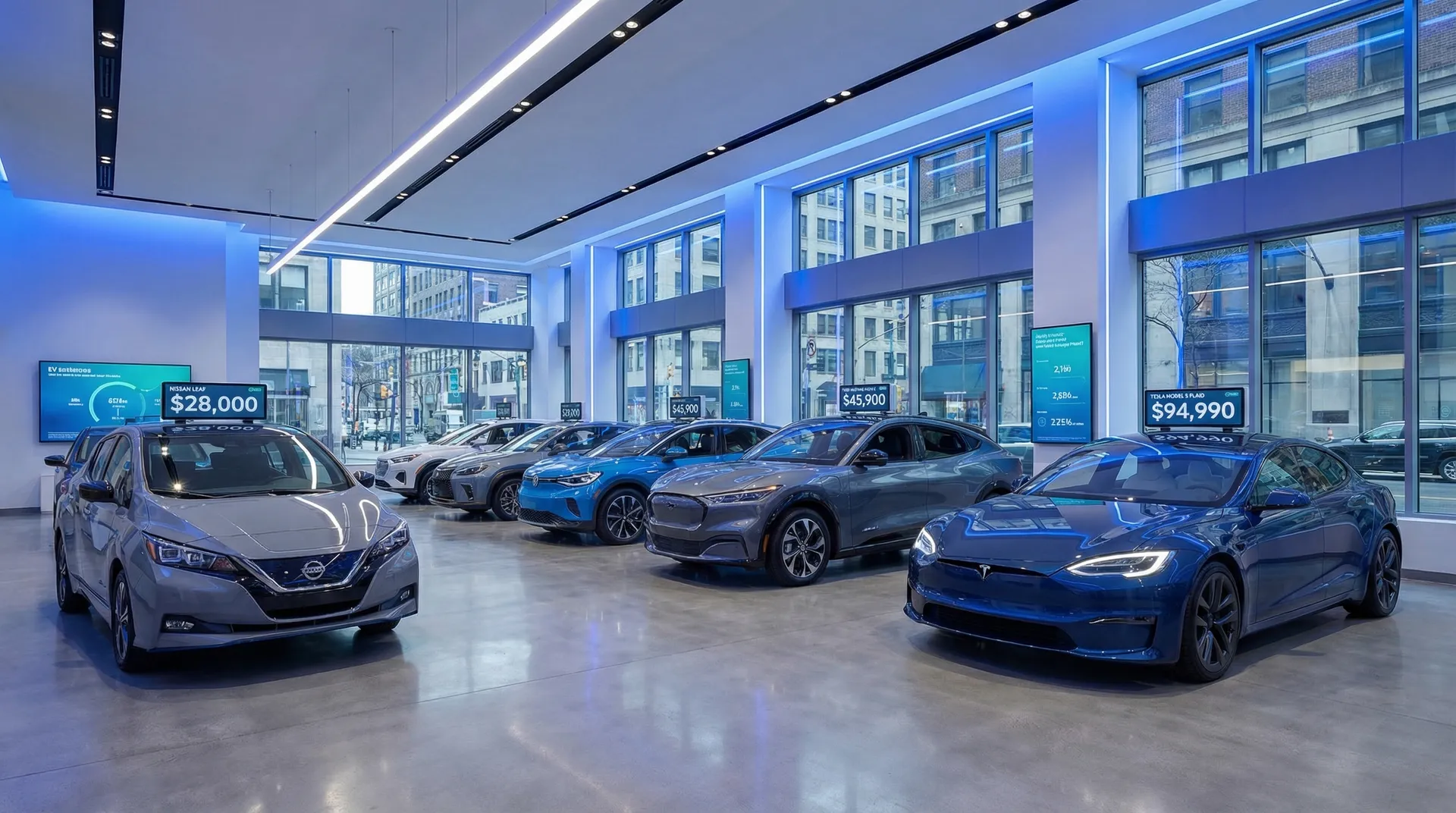
This is the segment that's exploding. The Chevy Equinox EV at $44,995 has been a breakout success, it's the first mainstream EV that genuinely competes with equivalent gas SUVs on sticker price, and the $5,000 EVAP drops it to $39,995. In Quebec, that's $37,995 after Roulez vert. For a vehicle with 500 km range and GM's dealer network, that's compelling.
The Tesla Model 3 starts at approximately $54,990 for the Long Range AWD, the cheapest Model 3 available in Canada. There is no base or standard-range Model 3 in the current Canadian lineup. At $54,990, the Model 3 exceeds the $50,000 transaction value threshold for EVAP after mandatory fees, so it does not qualify for the federal rebate. The Model 3 has up to 629 km of range (Long Range), access to the Supercharger network, and Tesla's software ecosystem. No Model 3 trim qualifies for EVAP in Canada.
The Hyundai Kona Electric at $42,999 is another strong contender. After EVAP: $37,999. It's smaller than the Equinox EV but has 480 km of range, a heat pump standard, and Hyundai's comprehensive warranty.
The BYD Atto 3 at approximately $30,000-$35,000 undercuts everything in this segment while offering 420 km of range, a 60.48 kWh LFP battery, and a 5-star safety rating.
Premium EVs: $50,000-$70,000
This segment is where EVAP eligibility gets tricky. The cap is $50,000 final transaction value, that includes base price, options, dealer fees, and accessories, but excludes taxes and freight. Canadian-made vehicles have no cap.
The Tesla Model Y RWD base starts at $49,990 for the 2026 model year and is on the official EVAP eligible vehicle list, it qualifies for the $5,000 federal rebate. The Long Range AWD at $59,990 and the Performance at $69,990 do not qualify; both exceed the $50,000 final transaction value cap. If you want a Tesla with the rebate, it's the RWD base or nothing.
Gear worth having
As an Amazon Associate, ThinkEV earns a small commission from qualifying purchases — at no extra cost to you.
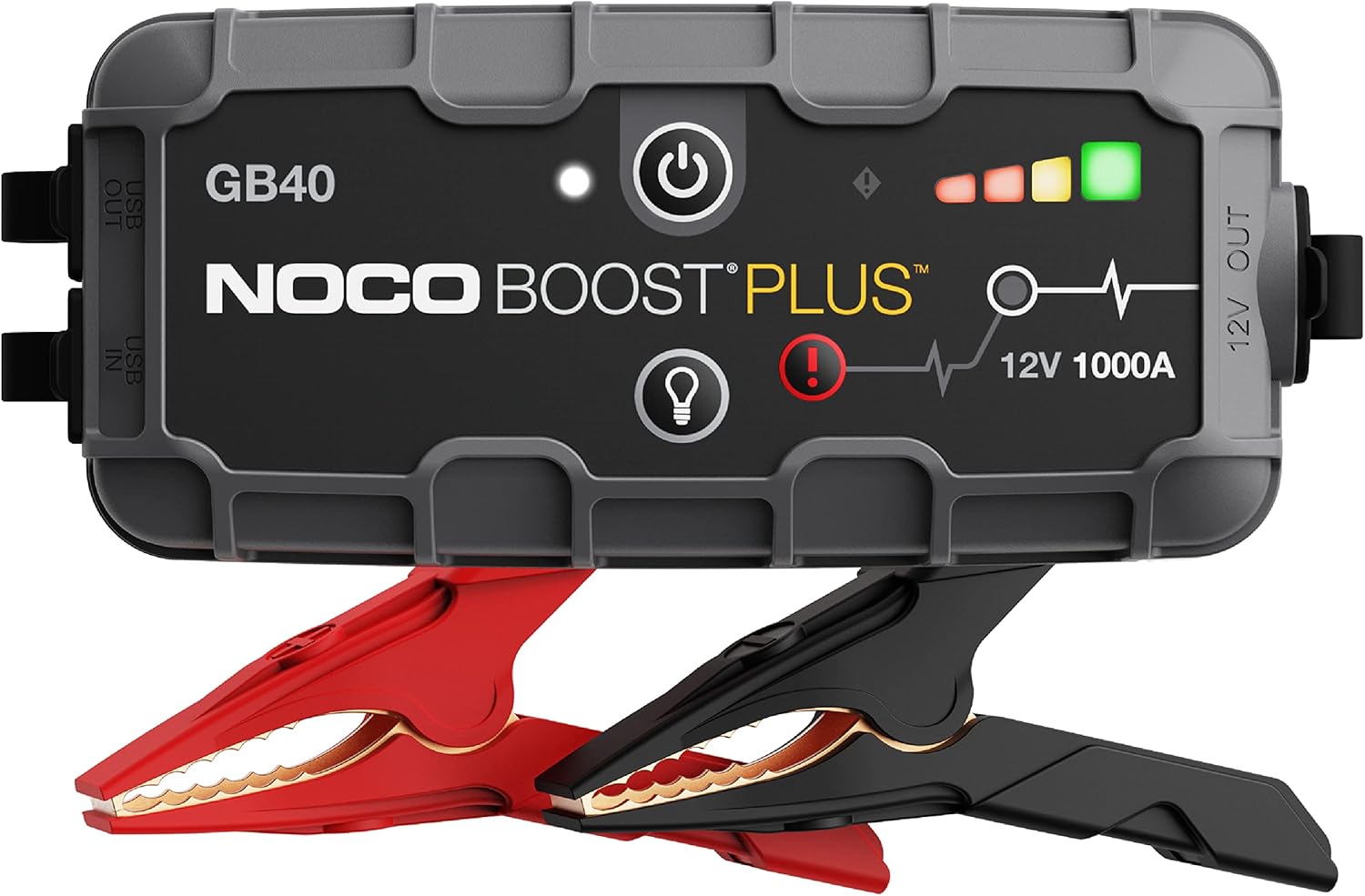
NOCO Boost Plus GB40 Jump Starter
A 1000A lithium jump starter that fits in your glovebox and works on any 12V battery. Your insurance against a dead 12V in a parking lot.
As an Amazon Associate, ThinkEV earns from qualifying purchases — at no extra cost to you.
The Kia EV6 LIGHT RWD starts at $48,995 and is on the official EVAP eligible vehicle list, it qualifies for the $5,000 rebate. The GT trim at $71,995 does not qualify. The 800V architecture means 10-80% charging in 18 minutes at a 350 kW station, the fastest in its class.
The BYD Seal at approximately $45,000-$50,000 offers 530 km of range and 308 hp with a premium interior. However, like all BYD vehicles, it doesn't qualify for EVAP (Chinese manufacturing).
Gear worth having
As an Amazon Associate, ThinkEV earns a small commission from qualifying purchases — at no extra cost to you.

Grizzl-E Classic Level 2 EV Charger (40A)
Canadian-made and rated for minus 40C winters. 40A / 9.6 kW, NEMA 14-50, indoor/outdoor, 24-ft cable. The charger built for Canadian weather.
As an Amazon Associate, ThinkEV earns from qualifying purchases — at no extra cost to you.
The Total Cost of Ownership
Purchase price is just the beginning. Here's a 5-year comparison between a Chevy Equinox EV buyer and a Toyota RAV4 buyer in Ontario.
The Equinox EV costs $44,995 minus $5,000 EVAP equals $39,995 out the door. Over 5 years at 20,000 km/year: approximately $8,000 for insurance, $3,200 for electricity (at Ontario off-peak rates), and $2,000 for maintenance. Total 5-year cost: approximately $53,195.
The Toyota RAV4 costs $38,000 with no rebates. Over 5 years: approximately $7,500 for insurance, $13,200 for gasoline (at $1.65/L and 8L/100km), and $5,000 for maintenance (oil changes, brakes, etc.). Total 5-year cost: approximately $63,700.
The EV saves approximately $10,500 over five years despite costing $2,000 more upfront. In Quebec, where electricity is cheaper and the provincial rebate applies, the savings are even larger.
Buying Strategy: Timing, Brand Pricing, and Monthly Costs
I get asked constantly: how can BYD sell for so much less? The short answer is manufacturing efficiency, not corner-cutting. BYD makes their own batteries, motors, and semiconductors, they control the entire supply chain, which is worth $8,000-$12,000 per vehicle compared to manufacturers who outsource these components. They produce over 3 million EVs per year, spreading fixed costs across massive volume, and they're accepting lower profit margins to gain market share.
Tesla reportedly makes $5,000-$8,000 per vehicle in profit; BYD operates at margins half that. The vehicles themselves aren't cheap in a quality sense, Euro NCAP gives them 5-star safety ratings, interior materials are premium, and build quality is industry-average or better. The savings come from how they're made, not what they're made with.

For new-to-Canada brands like BYD, early 2026 may see dealer markups of $2,000-$5,000 on popular models due to limited supply. Mid-2026 to early 2027 should normalize to MSRP pricing with reasonable inventory. Late 2027 and beyond could bring $1,000-$3,000 discounts through year-end clearance events. That said, don't over-optimize timing, the price advantage of EVs on operating costs means every month you wait is money spent on gasoline you could be saving on electricity.
On monthly payments, the spread is wide. A BYD Dolphin at $28,000 (no EVAP, Chinese-made), financed over 72 months at 6.5% APR with zero down, runs about $432/month. A Chevy Equinox EV at $39,995 after EVAP on the same terms runs about $615/month. A Tesla Model 3 Long Range at $54,990 (no EVAP, exceeds the $50,000 cap) on the same terms runs about $850/month. The difference between a Dolphin and a Model 3 is $495/month, over a 6-year financing term, that's $35,640. For most families, that gap is the difference between comfortable and stretched.
Gear worth having
As an Amazon Associate, ThinkEV earns a small commission from qualifying purchases — at no extra cost to you.

TP-Link Kasa Smart Plug with Energy Monitoring
Track exactly how much electricity your Level 1 charger uses and schedule it for off-peak hours. Know your real cost per kWh.
As an Amazon Associate, ThinkEV earns from qualifying purchases — at no extra cost to you.
EVs Are More Accessible Than They've Ever Been
EV prices in Canada are more accessible than they've ever been. A brand new EV with 400+ km range, modern features, and excellent safety ratings can cost under $35,000 after the federal EVAP rebate, the Kia EV3 drops to about $33,995 after the $5,000 incentive.
Even in provinces without additional rebates, $28,000-$40,000 gets you into a capable electric vehicle that costs less to fuel and maintain than any gas alternative.
The question isn't whether EVs are affordable anymore. For most Canadian families, they are. The question is which one fits your budget and your life.
Gear worth having
As an Amazon Associate, ThinkEV earns a small commission from qualifying purchases — at no extra cost to you.

P3 Kill A Watt Electricity Usage Monitor
Plug in your charger and see exactly what you spend in kWh, cost, and watts. Settle the is-my-EV-really-cheaper debate with data.
As an Amazon Associate, ThinkEV earns from qualifying purchases — at no extra cost to you.
Related Reading
- Canada EVAP Rebate Guide 2026, How to claim your $5,000 federal EV incentive.
- EV Rebates by Province Canada 2026, Every provincial and federal rebate compared.
- Most Affordable EVs in Canada 2026, Our top picks for budget-friendly electric vehicles.
Gear worth having
As an Amazon Associate, ThinkEV earns a small commission from qualifying purchases — at no extra cost to you.

PULIDIKI Car Cleaning Gel (Detailing Putty)
Press it into vents, buttons, and seams and it lifts out dust you did not know was there. Weirdly satisfying, genuinely useful.
As an Amazon Associate, ThinkEV earns from qualifying purchases — at no extra cost to you.

Founder & Chief Editor
Vlad Pereira is the founder and chief editor of ThinkEV.ca, the Canadian electric-vehicle publication he writes and edits from Courtenay, British Columbia. He covers EV pricing, federal and provincial rebates, charging costs, and the Chinese manufacturers now entering Canada, from the buyer's side rather than the press-fleet side. ThinkEV is a venture of Vlad Pereira Online; his writing on health, income and the long game lives at vladpereira.com.
Frequently asked questions
What is the cheapest new EV you can buy in Canada?
Does the Tesla Model 3 qualify for the EVAP rebate?
Is it cheaper to own an EV than a gas car in Canada?
What provincial rebates exist on top of the federal EVAP?
More EV & road-trip finds
Affordable upgrades worth a look — tap any to check the price on Amazon.
 ★ 392
★ 392Large Cup Holder Adapter (32-40oz)
View on Amazon ★ 8,681
Chemical Guys Complete Car Wash Kit
View on Amazon ★ 419
★ 419RGB Car Interior LED Strip Light
View on Amazon ★ 546
★ 546Funny Headrest Face Covers (2-Pack)
View on Amazon ★ 865
★ 865Collapsible Trunk Organizer
View on Amazon ★ 692
★ 692USB-A to USB-C CarPlay Adapter (3-Pack)
View on Amazon ★ 119
★ 119Foldable Waterproof Trunk Organizer
View on Amazon ★ 17,839
Qifutan Vent Phone Mount (Military-Grade Clip)
View on AmazonRead, Plan, Then Stay Current
Explore our expert articles to understand incentives and ownership costs, use the map to pressure-test charging reality, then subscribe so new EV coverage comes straight to you.
Continue Reading
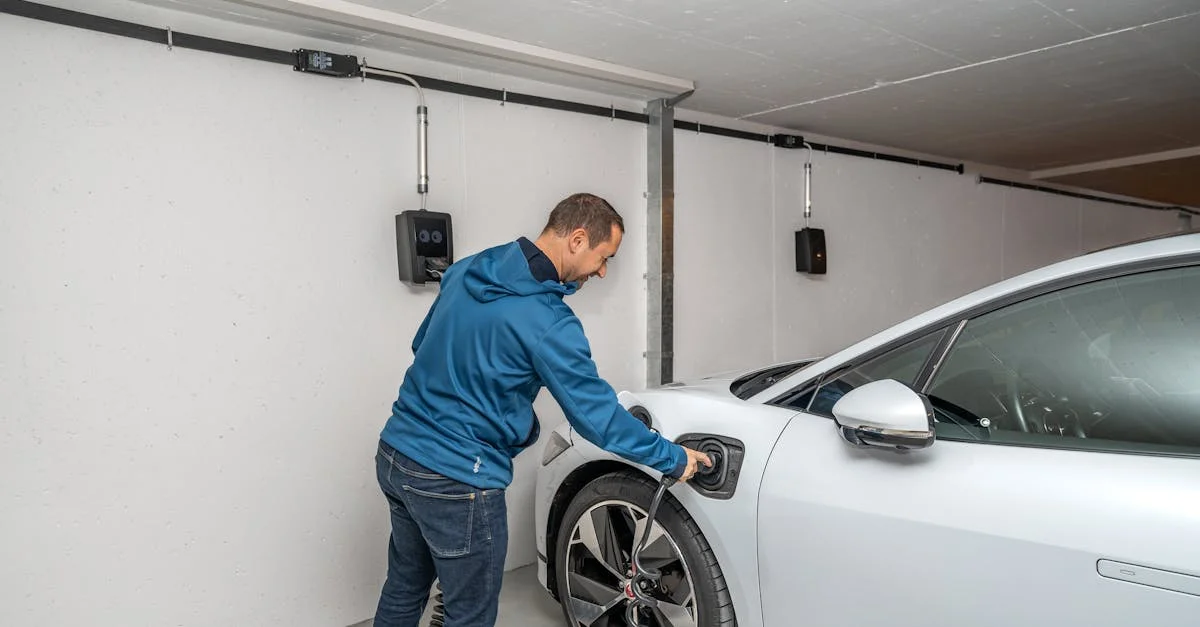
Hidden Costs of EV Ownership Nobody Tells You

EV Maintenance Costs Canada 2026: What You Pay

EV Charging Costs Canada 2026: Home vs Public
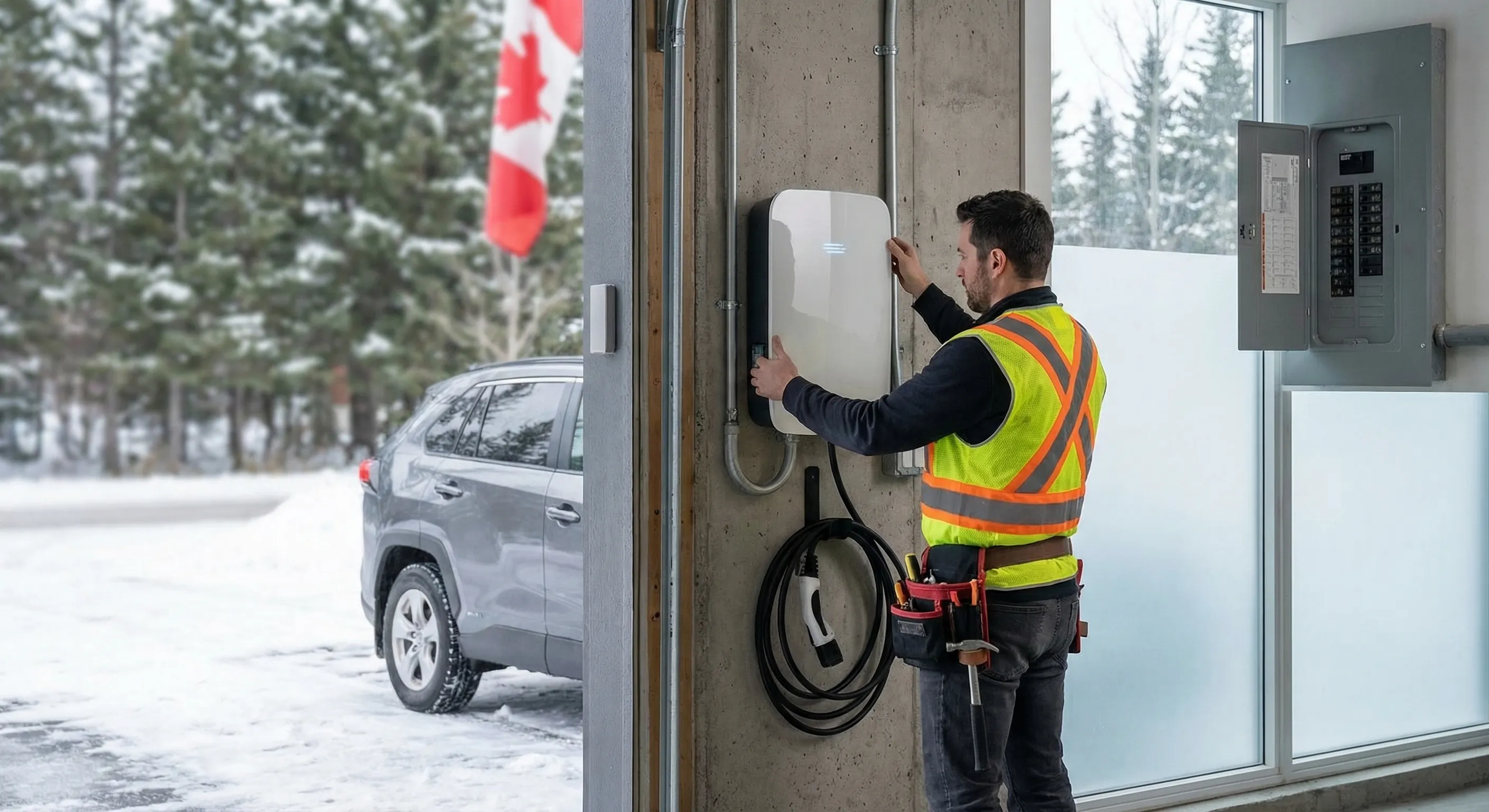
Level 2 EV Charger Installation: Real Costs in Canada

Rivian Canada 2026: R1T, R1S Prices and R2 Release Date