Key takeaways
- Canada cut its tariff on Chinese-built EVs from 100% to 6.1% on January 16, 2026, under a quota of 49,000 vehicles a year.
- No BYD vehicle qualifies for the $5,000 federal EVAP rebate, because the program excludes Chinese-manufactured cars regardless of the tariff.
- The Lotus Eletre, built in Wuhan and owned by Geely, is the first Chinese-built EV to reach Canadian retail, from about $119,900.
- The 2027 Chevrolet Bolt has a confirmed Canadian start of $39,999 and up to 422 km of range, with dealer availability set for Q1 2026.
- BC leads Canada at over 22% EV share of new sales, making Vancouver a likely launch market as BYD works toward 50–100 Canadian service locations by 2028.
On January 16, 2026, Canada cut its tariff on Chinese-manufactured EVs from 100% to 6.1%, turning a $30,000 car that would have cost $60,000 into one priced around $32,000. That policy shift is real. The retail footprint to sell those cars at scale in Canada is not ready yet, and the gap between announcement and delivery date is where buyers keep getting burned.
So let me give you an honest timeline based on what is actually published, on-sale, or formally announced, not what has been promised in investor presentations or hinted at in press conferences. I will tell you what I know, what I suspect, and what is pure speculation, clearly labelled.
The Canadian EV market is about to change dramatically. But the timing of that change matters enormously if you are deciding whether to buy now or wait.
The Big Picture: Why 2026-2027 Is Different
Every year since 2020, someone has declared it "the year everything changes" for Canadian EVs. And every year, the change has been incremental, a few new models, slightly lower prices, slightly more charging infrastructure. Nothing revolutionary.
2026-2027 is different for one specific reason: the tariff reduction. On January 16, 2026, Canada reduced the 100% tariff on Chinese-manufactured EVs to 6.1%, under a quota system allowing 49,000 vehicles per year. This single policy change opened the door to an entirely new category of affordable EVs that were previously priced out of the Canadian market. A $30,000 Chinese EV that would have cost $60,000 under the old tariff now costs roughly $32,000.
The broad market pressure is real. The exact pace of Canadian launches is still uneven, and several posts in this category have overstated certainty. So treat every brand timeline below as a confidence-ranked estimate unless a manufacturer or government source has published something firmer.
For detailed background on the tariff situation and what it means for buyers, we covered the policy extensively. Here I want to focus on the timeline: when can you actually walk into a dealership and drive something home?
Q1-Q2 2026: The Preparation Phase (Where We Are Now)
As of mid-2026, the first Chinese-built EV has reached Canadian retail, the Lotus Eletre (built in Wuhan, Geely-owned), on sale from about C$119,900. It's a six-figure luxury SUV, though; the mass-market Chinese brands most buyers are waiting for aren't retail-ready yet, and significant groundwork is still being laid.
BYD is one of the most watched entrants, but the confidence level still needs to stay below "settled." Dealer partnership work and launch planning are believable. A fully mature Canadian retail footprint is not.
The models being prepared for Canadian certification include:
-
BYD Seal, A mid-size sedan competing directly with Tesla Model 3. Expected Canadian MSRP around $45,000. BYD's Blade Battery (LFP chemistry) with 530 km range. The interior is genuinely impressive for the price, Nappa leather, Harman Kardon audio, a rotating 15.6-inch touchscreen. This is BYD's Tesla fighter, and the spec sheet is competitive. The real question is whether the driving experience and software match the hardware.
-
BYD Atto 3, A compact SUV at $30,000-$34,500. This is the volume play. At that price point, even without the $5,000 EVAP rebate (Chinese-manufactured vehicles are excluded), it undercuts the Chevy Equinox EV by roughly $10,000. In Quebec, where the $2,000 provincial Roulez vert rebate still applies to all EVs regardless of manufacturing origin, the Atto 3 drops to approximately $28,000-$32,500, making it one of the most affordable new EVs available anywhere in Canada.
-
BYD Dolphin, A subcompact hatchback at an estimated $28,000-$32,000. If this pricing holds, it would be the cheapest new EV in Canada, undercutting even the upcoming 2027 Chevrolet Bolt. The Dolphin is already one of the best-selling EVs globally, over 600,000 sold in 2025 alone. The car is proven. The Canadian pricing and distribution are what remain uncertain.
Critical caveat on all BYD pricing: No BYD vehicle will qualify for the $5,000 federal EVAP rebate, regardless of the tariff reduction. EVAP specifically excludes Chinese-manufactured vehicles. This means the effective price comparison between a BYD and a rebate-eligible alternative is more nuanced than the sticker prices suggest. A $30,000 BYD Atto 3 versus a $42,000 Chevy Equinox EV with EVAP becomes $30,000 versus $37,000, still a BYD advantage, but not the $12,000 gap the sticker prices show.

What is happening with other Chinese brands? Geely (parent of Volvo and Polestar) is exploring options through its existing Canadian relationships. Changan and SAIC (MG brand) have submitted regulatory paperwork but are further behind BYD in dealer network development. None of these are expected to deliver vehicles to Canadian customers in the first half of 2026.
Q3-Q4 2026: BYD's Expected Canadian Launch
This is when it gets real.
Based on current logistics timelines, dealer preparation progress, and the import permit approval process, first BYD deliveries to Canadian customers are expected in mid-to-late 2026, most likely Q3 (July-September) for initial markets, expanding through Q4.
Where first: Vancouver and Montreal are the leading candidates for initial availability. British Columbia has the highest EV adoption rate in Canada (over 22% of new vehicle sales), and Montreal has the second-highest. These markets offer the best early demand for a new EV brand. Toronto will likely follow quickly given its population density and BYD's corporate presence in the area.
Initial inventory will be limited. Expect waiting lists, limited colour and trim options, and allocation constraints typical of any new brand launch. The 49,000-vehicle annual import quota is shared across all Chinese manufacturers, and BYD will not get all of those slots. Realistic first-year Canadian BYD sales are probably 5,000-15,000 vehicles, significant, but not enough to satisfy demand if pricing holds as expected.
Service infrastructure will be the growing pain. This is the honest part that nobody at BYD's marketing department wants to emphasise. When you buy a Hyundai or Toyota, you are buying into a network of hundreds of Canadian service locations, decades of parts inventory, and thousands of trained technicians. BYD is starting from zero. Initial service will likely be handled through partner dealerships (potentially existing multi-brand dealers), with BYD-specific training programs rolling out through 2027. If your BYD needs warranty work in Saskatoon or Halifax in late 2026, the nearest trained technician might be in Vancouver or Toronto.
This is not a dealbreaker, it is a trade-off. You are getting a $30,000 EV with technology that competes with $45,000 alternatives, in exchange for being an early adopter in a developing service network. For budget-conscious buyers who live in or near major cities and primarily need a commuter vehicle, that trade-off is excellent. For people in smaller centres or rural areas who need reliable service access, it is worth waiting 12-18 months for the network to mature.
Gear worth having
As an Amazon Associate, ThinkEV earns a small commission from qualifying purchases — at no extra cost to you.

Grizzl-E Classic Level 2 EV Charger (40A)
Canadian-made and rated for minus 40C winters. 40A / 9.6 kW, NEMA 14-50, indoor/outdoor, 24-ft cable. The charger built for Canadian weather.
As an Amazon Associate, ThinkEV earns from qualifying purchases — at no extra cost to you.
Early 2027: The 2027 Chevrolet Bolt Arrives
While everyone focuses on Chinese brands, the most important Canadian-market EV launch of 2027 might be domestic.
The 2027 Chevrolet Bolt now has a published Canadian starting MSRP of C$39,999. Chevrolet Canada also says it offers up to 422 km estimated range, native NACS, up to 150 kW DC fast charging, and dealer availability in Q1 2026. That is the confirmed Bolt fact set. Battery chemistry, supplier, exact battery size, and several other commonly repeated details remain unconfirmed on the primary source page.
The new Bolt should stay central to any Canadian affordability conversation because the official fact pattern is already strong. But "strong" does not mean "zero-risk certainty." It means we finally have enough official information to stop guessing about the basics.
Timeline: Chevrolet Canada says the 2027 Bolt will be available at Chevrolet dealers in the first quarter of 2026. That is the date to use. Earlier wording in this category that pushed the car into a later generic 2027 bucket, or that over-anchored exact January timing, was too loose in both directions.
The strategic question for buyers is still straightforward: the BYD Dolphin at a lower estimated sticker price but no federal EVAP, or the 2027 Bolt at a published C$39,999 starting price with a stronger likelihood of qualifying under current EVAP rules and a mature service network. We will do the cleanest version of that comparison only using confirmed facts.
Mid-to-Late 2027: Possible NIO Entry
NIO's Canadian timeline is the most uncertain on this list, and I want to be direct about that. They have made encouraging noises about North American expansion in 2027. They have explored partnerships. They have registered corporate entities. But nothing is confirmed, and NIO has a history of ambitious announcements that slip.
If NIO does enter Canada, here is what they bring:
Premium positioning at competitive prices. The ET5 sedan would likely price around $50,000-$55,000 CAD, BMW 3 Series money. But the ET5 is not a stripped-down economy car at a luxury price. You get genuine luxury features: Nappa leather, a 256-colour ambient lighting system, 23-speaker Dolby Atmos audio, LiDAR-based driver assistance, and NOMI, NIO's AI dashboard assistant. The feature set competes with cars costing $20,000 more from German manufacturers.
Battery swap is the wildcard technology. NIO's 5-minute battery swap stations let you drive in with a depleted battery and drive out with a fully charged one, no charging wait. In China, this works brilliantly: NIO has over 2,500 swap stations handling millions of swaps. In Canada, it requires building infrastructure from scratch.
The challenge is math. Each swap station costs approximately $500,000-$1,000,000 to build and requires significant real estate. To make battery swap viable for Canadian drivers, NIO would need at minimum 5-15 stations on major corridors (Vancouver-Calgary, Toronto-Montreal, Toronto-Ottawa) before the experience becomes practical rather than novelty. That infrastructure investment probably means 2028-2030 before battery swap has meaningful coverage, even if NIO enters Canada in 2027.
My honest take on NIO: The cars are genuinely impressive. The technology is real. But I would not plan a purchase around NIO's Canadian timeline until You can see signed dealer agreements and physical swap stations under construction. If you are excited about NIO, keep watching. If you need a car in the next 12-18 months, buy from a brand that is actually here.
Gear worth having
As an Amazon Associate, ThinkEV earns a small commission from qualifying purchases — at no extra cost to you.
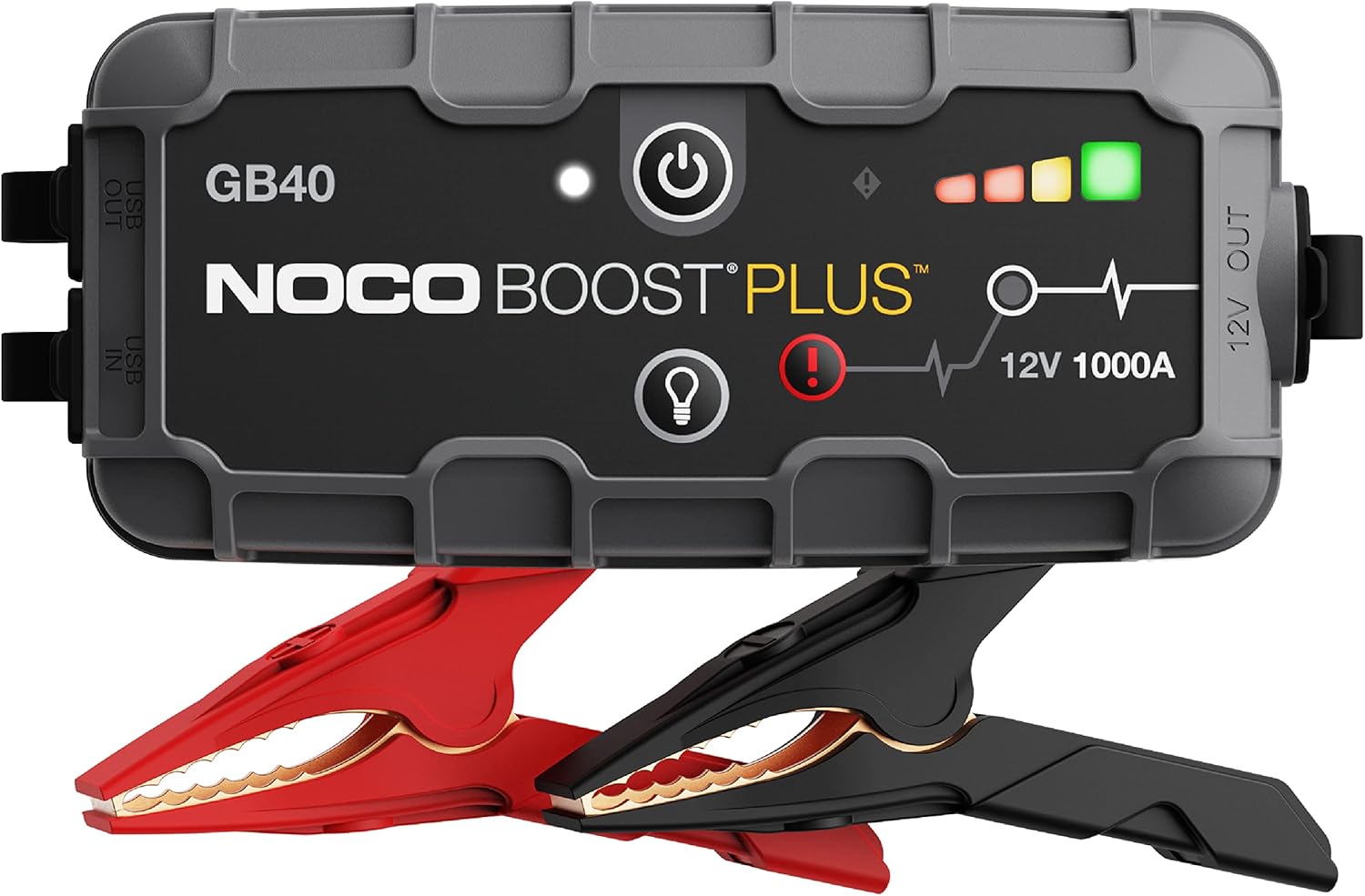
NOCO Boost Plus GB40 Jump Starter
A 1000A lithium jump starter that fits in your glovebox and works on any 12V battery. Your insurance against a dead 12V in a parking lot.
As an Amazon Associate, ThinkEV earns from qualifying purchases — at no extra cost to you.
2027: The Broader Market Expansion
Beyond BYD and NIO, several other manufacturers are evaluating Canadian market entry. Here is what I think is likely, possible, and speculative.
Likely (evidence of active preparation):
XPeng is the most interesting of the "next wave" Chinese brands. Their G6 SUV uses 800V architecture, the same fast-charging platform that makes the Hyundai Ioniq 5 and Kia EV6 so impressive at DC fast chargers. The G6 would compete directly with Tesla Model Y on range and charging speed, potentially at a $10,000-$15,000 discount. XPeng's XNGP driver assistance system is among the most advanced in the world, independent reviewers consistently rate it alongside Tesla's Autopilot and sometimes ahead of it. XPeng has been testing vehicles on Canadian roads and engaging with potential dealer partners.
Zeekr, backed by Geely (which also owns Volvo and Polestar), has a massive strategic advantage: existing Canadian infrastructure. Geely could potentially leverage Volvo and Polestar's Canadian dealer relationships for Zeekr distribution, dramatically shortening the timeline from "brand entry" to "available at a dealership near you." The Zeekr 7X and 001 are built on Geely's SEA platform, which is well-proven across millions of vehicles globally. If any Chinese brand can achieve rapid Canadian dealer coverage, it is Zeekr.
Possible (corporate interest but limited concrete action):
Changan has submitted some regulatory paperwork but is not as far along as BYD or XPeng. Their Avatr luxury brand (a joint venture with Huawei for software and CATL for batteries) targets the premium segment. Pricing would likely be $60,000+, competing with BMW and Mercedes EVs rather than the affordable segment.
SAIC/MG could bring the MG4, which has been hugely successful in Europe and Australia. The MG4 at an estimated $32,000-$38,000 would slot into the affordable compact segment. MG has brand recognition in Canada from its British heritage, which could ease market entry.
Speculative (announced but unconfirmed):
ORA/Great Wall might bring their distinctively styled vehicles to Canada. The ORA 03 (also called Good Cat in some markets) has a retro-inspired design that is polarising but memorable, it looks like a Porsche 356 crossed with a modern hatchback. At an estimated $28,000-$33,000, it would compete on price. But Great Wall has less international experience than BYD or Geely, and their Canadian entry timeline is the least defined of any brand on this list.
By the end of 2027, Canadian buyers could realistically have 2-4 new EV brands to choose from (BYD almost certainly, Zeekr and XPeng probably, NIO possibly), plus the established players adjusting their pricing and feature sets to compete. The competitive pressure alone is worth celebrating, even if you never buy a Chinese EV, their presence pushes everyone else to offer better value.
How Established Brands Are Responding
The arrival of affordable Chinese EVs is already changing what established manufacturers offer Canadian buyers, even before a single BYD has been sold here.
Chevrolet announced the 2027 Bolt with pricing that undercuts their own Equinox EV. They are clearly positioning for a price war they know is coming.
Hyundai and Kia have been aggressive on pricing. The Kia EV3 and upcoming EV4 are targeted squarely at the affordable segment. Hyundai's new compact EV platform (likely badged Inster in some markets) could bring a sub-$35,000 offering to Canada.
Tesla cut Canadian prices multiple times in 2025. The Model 3 Standard Range at $54,990 is still above the $50,000 EVAP threshold, but the Model Y has dropped to just above $55,000. Further cuts seem inevitable as competition intensifies.
Volkswagen is investing heavily in the ID. family. The ID.2 (expected 2027-2028) targets the $30,000-$35,000 range and could be VW's answer to the BYD Dolphin.
The pattern is clear: prices are falling, features are increasing, and the pace of improvement is accelerating. Whether you buy now or wait, you benefit from this competitive pressure.
What This Timeline Means for Your Purchase Decision
This is the practical part. Here is how I would think about timing if I were shopping for an EV in Canada right now.

If you need a car now (Q1-Q2 2026): Buy from an established brand. The Chevy Equinox EV at $42,999 minus $5,000 EVAP ($37,999 effective) is the best value currently available. The Kia EV6 and Hyundai Ioniq 5 offer excellent technology with the 800V platform. Tesla remains the default for charging convenience. Do not wait for vehicles that are not yet available, if you need a car, get a car.
If you can wait 6-12 months (Q3 2026 - Q1 2027): BYD becomes available. If you live in Vancouver, Toronto, or Montreal and you are comfortable being an early adopter with a developing service network, BYD offers remarkable value. The Atto 3 at $30,000 or the Dolphin at $28,000 are genuinely disruptive prices. But go in with realistic expectations about service availability and understand that no EVAP rebate applies.
If you can wait 18-24 months (mid-2027 to early 2028): This is the sweet spot for value. The 2027 Bolt arrives with EVAP eligibility. BYD's dealer and service network matures significantly. XPeng and possibly Zeekr add more options. Competition-driven price cuts propagate across all brands. Used EV inventory from new brands begins establishing resale data, giving you more confidence in long-term value.
If you can wait 24-36 months (2028-2029): Maximum optionality. Multiple Chinese brands with mature networks. Possible NIO battery swap infrastructure. Next-generation battery technology (higher density, faster charging) arriving in new models. Solid-state batteries potentially in early production vehicles. But you also spend two or three more years paying for gas, insurance, and maintenance on an older vehicle, those costs add up to $5,000-$10,000 per year that could be saved with an EV.
The Caveats
I want to be direct about the uncertainties in this timeline, because too many EV articles present speculation as fact.
NIO might not come to Canada in 2027. Or ever. Companies announce expansion plans that do not materialise. Until You can see signed dealer agreements and vehicles on ships headed for Canadian ports, I am treating NIO's Canadian entry as "possible" rather than "definite." Do not make a purchase decision based on NIO's timeline.
Battery swap infrastructure is even more uncertain. It requires massive capital investment and only makes financial sense above a certain scale of vehicles on the road. If NIO's Canadian sales disappoint, the swap network investment might be scaled back or delayed indefinitely.
Tariff situations can change. The current 6.1% tariff and 49,000-vehicle quota reflect the January 2026 trade deal. Political shifts, a new government, trade tensions with China, pressure from domestic manufacturers, could result in tariff increases. Current pricing assumptions reflect current trade conditions. This is not to create fear, it is to acknowledge reality.
Service and parts availability will lag for years. BYD is working toward 50-100 Canadian service locations by 2028. That sounds like a lot, but Hyundai has over 230 Canadian dealers today. Toyota has over 280. The gap in convenience will be real for years, especially outside of major urban centres. If you live in Lethbridge or Thunder Bay or Moncton, your nearest BYD service centre might be a multi-hour drive away well into 2028.
Gear worth having
As an Amazon Associate, ThinkEV earns a small commission from qualifying purchases — at no extra cost to you.

PULIDIKI Car Cleaning Gel (Detailing Putty)
Press it into vents, buttons, and seams and it lifts out dust you did not know was there. Weirdly satisfying, genuinely useful.
As an Amazon Associate, ThinkEV earns from qualifying purchases — at no extra cost to you.
The Most Significant Stretch In The Market's History
The Canadian EV market is entering the most significant period in its history. The tariff reduction has opened the door to affordable Chinese EVs that will reshape competition and drive prices down across every brand. BYD is coming in 2026. New competitors are following in 2027. The 2027 Chevrolet Bolt will offer the best EVAP-eligible value we have seen.
But transformation takes time. The first BYD buyers will be early adopters working through a developing service network. The established brands still offer proven reliability, comprehensive dealer coverage, and EVAP eligibility that Chinese manufacturers cannot match. There is no single right answer, there is a right answer for your specific situation, timeline, risk tolerance, and budget.
Here is what I know for certain: whether you buy an EV today or in 2028, you will get a better vehicle at a better price than you would have two years ago. That is the real story. Competition is working. And every month that passes, the value proposition for going electric improves.
Gear worth having
As an Amazon Associate, ThinkEV earns a small commission from qualifying purchases — at no extra cost to you.

WixGear Magnetic Air Vent Phone Mount (2-Pack)
A magnet strong enough that your phone never flinches over potholes or rail crossings. Two in the box, one for each car.
As an Amazon Associate, ThinkEV earns from qualifying purchases — at no extra cost to you.
Related Reading
- BYD Coming to Canada: What the Tariff Deal Means, Full analysis of the tariff reduction and BYD's market entry
- Every New EV Coming to Canada 2026-2027, Complete model-by-model guide to new arrivals
- Most Affordable EVs in Canada 2026, What is available right now at the best prices
- Canada's EVAP Rebate: Complete 2026 Guide, Which vehicles qualify and how to claim
- Used EV Market Explosion in Canada, Growing options in the secondhand market
Gear worth having
As an Amazon Associate, ThinkEV earns a small commission from qualifying purchases — at no extra cost to you.

Car Cup Holder Coasters (4-Pack)
Drop-in coasters that catch spills and crumbs so your cup holders stay clean. Rinse and reuse forever.
As an Amazon Associate, ThinkEV earns from qualifying purchases — at no extra cost to you.

Founder & Chief Editor
Vlad Pereira is the founder and chief editor of ThinkEV.ca, the Canadian electric-vehicle publication he writes and edits from Courtenay, British Columbia. He covers EV pricing, federal and provincial rebates, charging costs, and the Chinese manufacturers now entering Canada, from the buyer's side rather than the press-fleet side. ThinkEV is a venture of Vlad Pereira Online; his writing on health, income and the long game lives at vladpereira.com.
Frequently asked questions
When is BYD coming to Canada?
What new EVs are coming to Canada in 2027?
Will Chinese EVs qualify for the EVAP rebate?
Should I wait for BYD or buy now?
How many Chinese EVs can enter Canada under the quota?
Will NIO battery swap be available in Canada?
What is the cheapest new EV coming to Canada?
How will new EV arrivals affect used EV prices?
More EV & road-trip finds
Affordable upgrades worth a look — tap any to check the price on Amazon.
 ★ 164
★ 164Solar-Powered LED Ambient Light
View on Amazon ★ 1,349
Cool Swinging Duck Dashboard Ornament
View on Amazon ★ 21,304
Car Headrest Hooks (4-Pack)
View on Amazon ★ 1,866
70mai A810 4K Dual Dash Cam
View on Amazon ★ 121
★ 121Foldable Windshield Sun Umbrella
View on Amazon ★ 268
★ 268Anti-Slip Leather Steering Wheel Cover
View on Amazon ★ 2,941
Microfiber Cleaning Cloths (Multi-Pack)
View on Amazon ★ 419
★ 419RGB Car Interior LED Strip Light
View on AmazonRead, Plan, Then Stay Current
Explore our expert articles to understand incentives and ownership costs, use the map to pressure-test charging reality, then subscribe so new EV coverage comes straight to you.
Continue Reading
Chery EVs Coming to Canada: Models and Prices
Who Got Canada's First Chinese EV Import Permits
Uber and Lyft EV Switch Canada 2026: The Savings

Canada's EV Market Crash of 2025, and What's Next
New EV Brands Coming to Canada: BYD, Chery, Xpeng