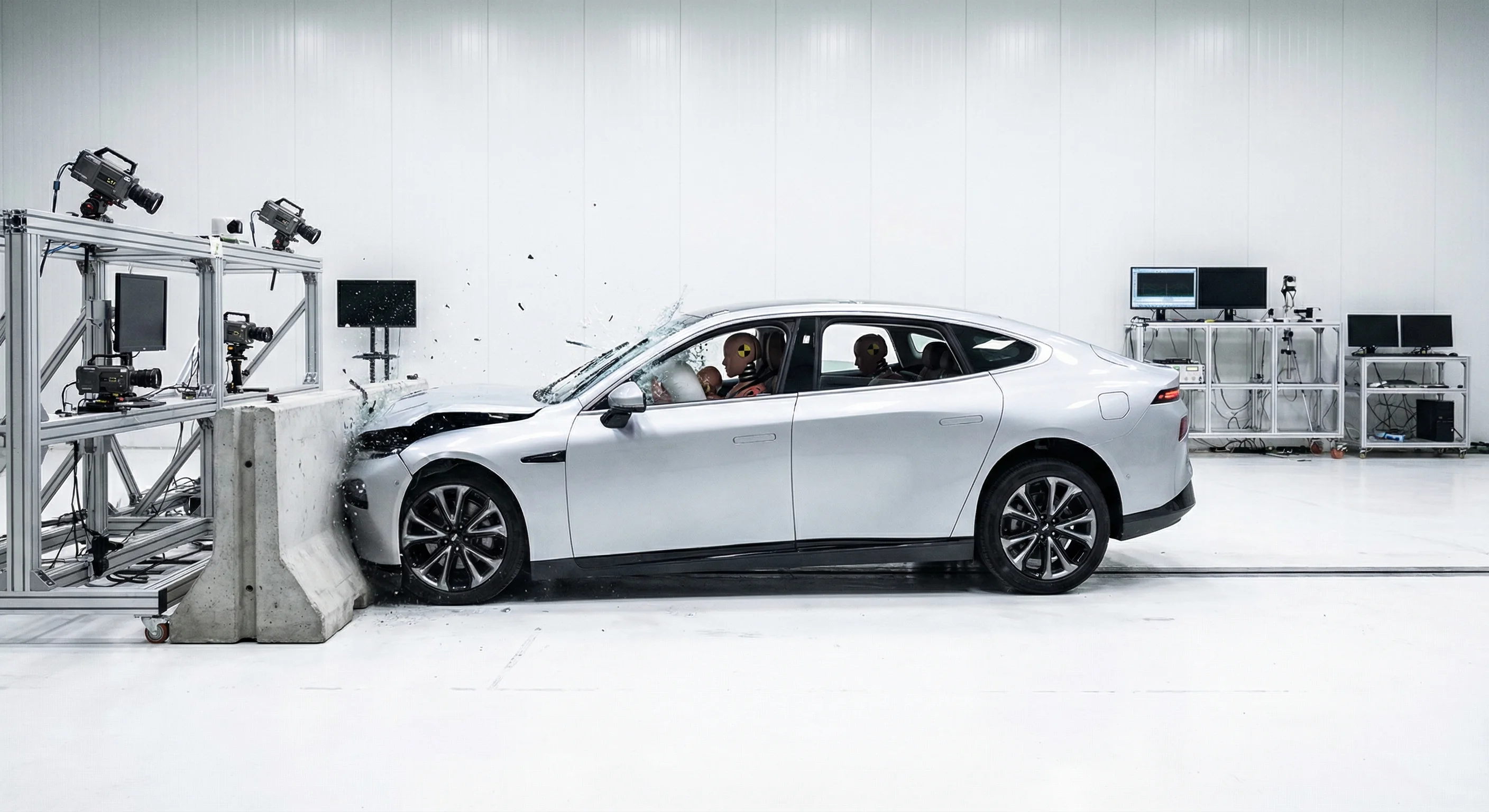
In Euro NCAP's most recent round of testing, every Chinese EV submitted earned 5 stars. The BYD Seal scored 89% adult protection, matching or exceeding Tesla Model 3, VW ID.4, and BMW iX1. That result did not come with an asterisk or a footnote about adjusted scoring criteria. It came from the same barrier and pole tests those European cars went through.
The safety case for Chinese EVs is now settled by data, not by reputation. What remains is the question of whether the data reaches buyers before the assumption does.
Key takeaways
- Every Chinese EV tested by Euro NCAP in 2024-2025 earned 5 stars, including BYD Seal, Dolphin, Sealion 7, and Xpeng P7
- BYD Seal scored 89% adult protection, matching or exceeding Tesla Model 3, VW ID.4, and BMW iX1
- BYD's Blade Battery technology uses lithium iron phosphate (LFP) chemistry that physically cannot experience thermal runaway
- Chinese EVs must meet the same Transport Canada safety standards as any vehicle sold in Canada
- The one legitimate concern: some Chinese EVs scored lower on driver-assistance systems, but crash protection is excellent
The Perception Problem
A 2025 consumer poll found that safety was the top concern for 47% of Canadians considering a Chinese-made EV. Not price. Not warranty. Safety.
This skepticism isn't irrational. "Made in China" carried real quality concerns for decades, from toys to electronics to early Chinese cars that genuinely did perform terribly in crash tests. A 2007 Brilliance BS6 scored zero stars in Euro NCAP. Zero. That reputation stuck.
But here's what happened between 2007 and now: China invested hundreds of billions of dollars into automotive manufacturing. BYD alone spends more on R&D annually than Ford and GM combined. The Chinese automotive industry in 2026 is not the Chinese automotive industry of 2007. Pretending otherwise is like judging today's Korean cars by 1990s Hyundai quality.
The data has changed. Your assumptions should too.
What Euro NCAP Actually Tests
Euro NCAP scores every new model in four categories: Adult Occupant Protection (front, side, and pole impact), Child Occupant Protection (smaller dummies plus child-seat compatibility), Vulnerable Road Users (pedestrians, cyclists, hood-impact zones), and Safety Assist (autonomous emergency braking, lane keeping, driver monitoring). A 5-star rating requires strong performance in all four. The protocol is widely regarded as more rigorous than the U.S. NHTSA system.

Euro NCAP is the gold standard for vehicle safety testing worldwide. More rigorous than NHTSA (the U.S. system) and more comprehensive than any other testing body.
They evaluate four categories:
Adult Occupant Protection, Front impact, side impact, pole impact, and whiplash. How well does the car protect adult passengers in various crash scenarios?
Child Occupant Protection, Similar crash scenarios with child-sized dummies, plus assessment of child seat installation and compatibility.
Vulnerable Road Users, How well does the car protect pedestrians and cyclists in a collision? Includes hood impact zones and active safety interventions.
Safety Assist, Electronic safety systems: autonomous emergency braking, lane keeping, speed assistance, driver monitoring. This is the technology category.
A 5-star rating means the vehicle scored well across all four categories. It's not a participation trophy, plenty of new cars score 4 stars or fewer. Getting 5 stars from Euro NCAP means the vehicle is genuinely among the safest on the road.
Chinese EV Safety Scores: The Numbers
Six high-volume Chinese EVs sold in Europe have completed Euro NCAP testing as of early 2026. All six earned 5-star ratings. The breakdowns below show each vehicle's score across the four protection categories, which clarifies where Chinese manufacturers genuinely lead (occupant and structural protection) and where they still trail (electronic driver-assistance systems).
BYD Seal, 5 Stars
- Adult Occupant: 89%
- Child Occupant: 87%
- Vulnerable Road Users: 82%
- Safety Assist: 76%
The Seal's 89% adult protection score is exceptional. For context, the Tesla Model 3 scored 96%, higher, but the Tesla was tested under different (earlier) protocols. Under the same testing protocol, the BYD Seal's score is competitive with the best vehicles from any manufacturer.
The 76% safety assist score is the weak point. BYD's driver-assistance technology works, but it's not as sophisticated as Tesla Autopilot or Hyundai's Highway Driving Assist. This is a software gap, not a structural safety gap. Your passengers are extremely well-protected in a crash; the car just won't avoid as many crashes autonomously.
BYD Dolphin, 5 Stars
- Adult Occupant: 89%
- Child Occupant: 87%
- Vulnerable Road Users: 85%
- Safety Assist: 79%
The Dolphin actually scored higher than the Seal in both vulnerable road user and safety assist categories. At roughly $28,000 CAD, this is remarkable, you're getting safety scores that rival vehicles costing twice as much.
BYD Sealion 7-5 Stars
The newest BYD to be tested, the Sealion 7 SUV earned 5 stars in Euro NCAP's 2025 testing round. It was singled out as one of the top-scoring vehicles across all brands tested that year.
BYD Atto 3-5 Stars (with a caveat)
The Atto 3 earned its 5 stars in 2022, but Euro NCAP flagged it for having one of the lowest driver-assistance scores they'd ever recorded. The car itself is safe in a crash, the structure, airbags, and occupant protection are excellent. But the ADAS features (lane keeping, emergency braking sensitivity) were underwhelming.
BYD has since updated the Atto 3's software to address some of these concerns. But this is a fair criticism: BYD's passive safety (the physical structure) is world-class, while their active safety (the electronic systems) is still catching up.
Xpeng P7-5 Stars
Xpeng's sedan earned top marks across the board, demonstrating that BYD isn't the only Chinese manufacturer producing safe vehicles.
Geely EX5-5 Stars
Geely (which also owns Volvo, yes, that Volvo) scored 5 stars with their EX5 SUV. Given that Geely literally owns one of the world's safest car brands, this shouldn't surprise anyone, but it still challenges the "Chinese cars aren't safe" narrative.
How They Compare to Western EVs
Let's put the Chinese scores next to some familiar names.
Gear worth having
As an Amazon Associate, ThinkEV earns a small commission from qualifying purchases — at no extra cost to you.

VIOFO A229 Pro 4K Dash Cam
4K front plus 2K rear with parking mode and GPS. Your silent witness for insurance claims, with always-on sentry recording while parked.
As an Amazon Associate, ThinkEV earns from qualifying purchases — at no extra cost to you.
- BYD Seal (China), 5 Stars, Adult: 89%, Child: 87%, Road Users: 82%, Safety Assist: 76%
- BYD Dolphin (China), 5 Stars, Adult: 89%, Child: 87%, Road Users: 85%, Safety Assist: 79%
- Tesla Model 3 (USA), 5 Stars, Adult: 96%, Child: 86%, Road Users: 74%, Safety Assist: 98%
- Hyundai Ioniq 5 (Korea), 5 Stars, Adult: 88%, Child: 86%, Road Users: 63%, Safety Assist: 88%
- VW ID.4 (Germany), 5 Stars, Adult: 93%, Child: 89%, Road Users: 76%, Safety Assist: 85%
A few observations:
The BYD Dolphin scored higher than the Hyundai Ioniq 5 in vulnerable road user protection, 85% vs 63%. That's a massive gap, and it's the Chinese car winning.
Tesla leads in safety assist (98%) thanks to Autopilot's sophistication, and scores highest in adult occupant protection (96%). But note: the Model 3 was tested under an earlier, slightly different protocol. Direct percentage comparisons across protocol years aren't perfectly apples-to-apples.
The overall picture: Chinese EVs match or exceed Western rivals in crash protection. They trail in electronic driver-assistance features. The gap is closing with every model year.
The Blade Battery: Why BYD's Chemistry Matters
BYD's Blade Battery is a lithium iron phosphate (LFP) pack that deserves special attention.
In BYD's famous nail penetration test, they drove a nail through the battery cell to simulate the worst possible damage scenario. The result: no fire. No smoke. No thermal runaway. The cell's surface temperature barely exceeded 30°C.
Do the same test with a conventional nickel-manganese-cobalt (NMC) battery, the type used in many Western EVs, and it can reach 500°C+ and potentially catch fire.
This isn't theoretical. LFP chemistry is inherently more thermally stable than NMC. The trade-off is slightly lower energy density (meaning less range per kilogram of battery), but BYD has compensated for this through clever cell-to-pack engineering.
Does this mean NMC batteries are dangerous? No. Modern NMC packs have extensive thermal management, firebreaks, and monitoring systems. EV fires are statistically far less common than gasoline car fires. But if battery fire anxiety is a concern for you, and for many Canadians, it is, BYD's LFP technology offers a genuine technical advantage.
Gear worth having
As an Amazon Associate, ThinkEV earns a small commission from qualifying purchases — at no extra cost to you.

Roadside Emergency Safety Kit
Jumper cables, a portable air compressor, tow strap, first aid, and more for when something goes wrong between chargers. Canadian winters do not forgive the unprepared.
As an Amazon Associate, ThinkEV earns from qualifying purchases — at no extra cost to you.
Canadian Safety Requirements
No vehicle can be sold in Canada without meeting Transport Canada's Motor Vehicle Safety Standards (CMVSS). These are legally binding requirements covering:
- Occupant protection in frontal, side, and rear impacts
- Roof crush resistance
- Fuel system integrity (adapted for battery electric vehicles)
- Advanced safety features including electronic stability control
- Battery safety standards including thermal management
Chinese EVs entering Canada through the tariff deal must pass every one of these tests. There is no shortcut. If a BYD Seal is available at a Canadian dealer, it has met the same federal safety standards as a Ford, Toyota, or BMW sold at the dealership next door.
Additionally, many Chinese EVs sold in Canada will be the same vehicles already certified and sold in Europe, Australia, and other markets with rigorous safety standards.
What the Insurance Industry Thinks
Insurance carriers price risk from claims data, not press releases. Early European loss data on BYD, Xpeng, and Geely-branded EVs is normal to slightly favourable: bodily-injury claims are tracking below class average, and structural rigidity is producing fewer multi-system injury cases. Repair costs run higher in some markets due to parts-supply lead times, a logistics issue, not a safety one. Canadian premiums should land in line with comparable European brands.
Insurance companies are data-driven. They don't care about brand perception, they care about claims costs and accident outcomes.
Early data from European insurers suggests Chinese EVs are performing normally in terms of accident rates and repair costs. BYD's structural rigidity has actually led to lower bodily injury claims in some markets, though repair costs can be higher due to limited parts availability (a supply chain issue, not a safety issue).
In Canada, insurance rates for Chinese EVs will likely be comparable to similarly-priced vehicles from established brands. If anything, the LFP battery chemistry may eventually earn BYD owners a discount on comprehensive coverage, since fire risk is lower.
Gear worth having
As an Amazon Associate, ThinkEV earns a small commission from qualifying purchases — at no extra cost to you.
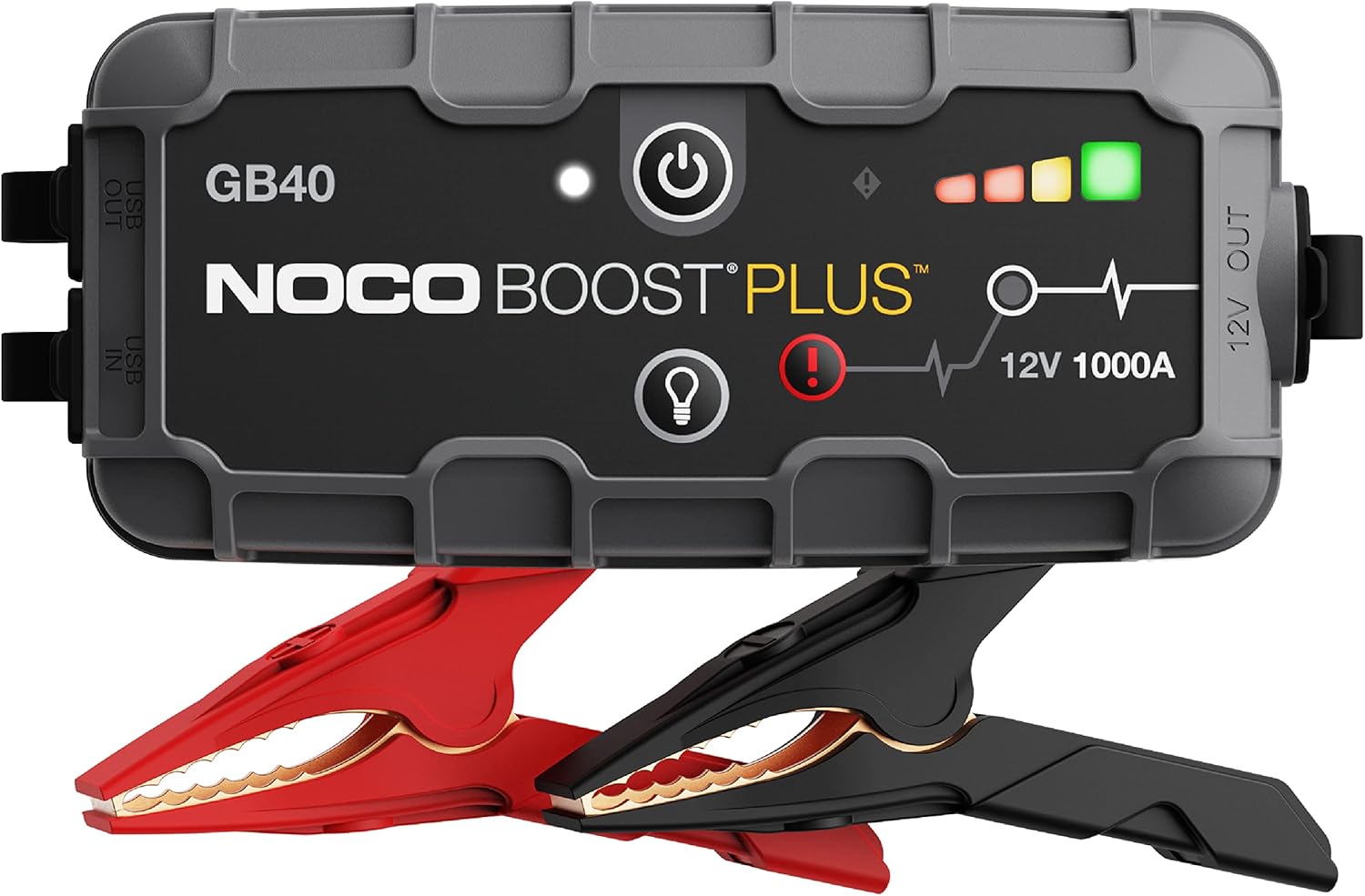
NOCO Boost Plus GB40 Jump Starter
A 1000A lithium jump starter that fits in your glovebox and works on any 12V battery. Your insurance against a dead 12V in a parking lot.
As an Amazon Associate, ThinkEV earns from qualifying purchases — at no extra cost to you.
The Assessment
Here's where I land on this:
What Chinese EVs do well: Crash protection. Structural safety. Occupant protection. Battery safety (especially BYD's LFP technology). On these fundamentals, they are world-class. The data is unambiguous.
Where they trail: Driver-assistance systems. Lane keeping, adaptive cruise control, autonomous emergency braking, the electronic systems that prevent accidents from happening in the first place. BYD's ADAS is functional but not as polished or capable as Tesla, Hyundai, or Mercedes systems.
The trajectory: Every new Chinese EV model scores higher in safety assist than the last. The gap is closing rapidly. By 2027, I expect this to be a non-issue.
The Verdict
Are Chinese EVs safe? Yes. Unequivocally yes.
The data doesn't leave room for debate. Every Chinese EV tested by Euro NCAP, the world's most demanding safety body, has earned 5 stars. BYD's crash protection scores match or exceed vehicles from BMW, Volkswagen, and Hyundai. Their LFP battery technology is the safest chemistry on the market.
The "Made in China means unsafe" narrative belongs in 2007, not 2026. If you're considering a BYD, Xpeng, or Geely EV and safety is your concern, the crash test data should put your mind at ease.
The legitimate concern? Driver-assistance technology. If you want the most advanced automated driving features, Tesla and Hyundai still lead. But the car itself, the metal, the structure, the airbags, the battery, is built to protect you. The scores prove it.
Gear worth having
As an Amazon Associate, ThinkEV earns a small commission from qualifying purchases — at no extra cost to you.

Amazon Basics Seat Belt Cutter and Window Hammer
The 10-dollar tool you hope to never use: cuts a jammed belt and shatters a window in an emergency. Mount it within reach.
As an Amazon Associate, ThinkEV earns from qualifying purchases — at no extra cost to you.
Related Reading
- BYD Is Coming to Canada, What the Tariff Deal Really Means for Buyers, The deal structure, timeline, and impact
- 7 Chinese EVs Under $35,000 Coming to Canada, Every model, price, and spec
- The 10 Most Affordable EVs You Can Buy in Canada in 2026, All your budget options ranked
Gear worth having
As an Amazon Associate, ThinkEV earns a small commission from qualifying purchases — at no extra cost to you.

Escape Tool Keychain (5-Pack, Glass Breaker)
A keychain-sized window breaker and belt cutter for every set of keys in the family. Tiny, until the day it matters.
As an Amazon Associate, ThinkEV earns from qualifying purchases — at no extra cost to you.

Founder & Chief Editor
Vlad Pereira is the founder and chief editor of ThinkEV.ca, the Canadian electric-vehicle publication he writes and edits from Courtenay, British Columbia. He covers EV pricing, federal and provincial rebates, charging costs, and the Chinese manufacturers now entering Canada, from the buyer's side rather than the press-fleet side. ThinkEV is a venture of Vlad Pereira Online; his writing on health, income and the long game lives at vladpereira.com.
Frequently asked questions
Are Chinese EVs safe to buy in Canada?
What safety rating does the BYD Seal have?
Is the BYD Blade Battery safer than other EV batteries?
How do Chinese EV safety ratings compare to Tesla?
Do Chinese EVs meet Canadian safety standards?
More EV & road-trip finds
Affordable upgrades worth a look — tap any to check the price on Amazon.
 ★ 1,349
Cool Swinging Duck Dashboard Ornament
View on Amazon ★ 12,396
K KNODEL Car Trash Can with Lid
View on Amazon ★ 721
★ 72145W USB-C Fast Car Charger
View on Amazon ★ 121
★ 121Foldable Windshield Sun Umbrella
View on Amazon ★ 268
★ 268Anti-Slip Leather Steering Wheel Cover
View on Amazon ★ 47,507
HOMEXCEL Microfiber Cloths (12-Pack)
View on Amazon ★ 164
★ 164Solar-Powered LED Ambient Light
View on Amazon ★ 1,083
Crystal Push-Start Button Ring (2-Pack)
View on AmazonRead, Plan, Then Stay Current
Explore our expert articles to understand incentives and ownership costs, use the map to pressure-test charging reality, then subscribe so new EV coverage comes straight to you.
Continue Reading
Are New EVs Safe? Crash Data and Battery Fires
Chinese EVs in Canada: Security Politics vs Value
Should I Wait for BYD to Come to Canada?
Chinese EV Resale Value in Canada: What to Expect
What BYD's Solid-State Battery Means for Canada