Key takeaways
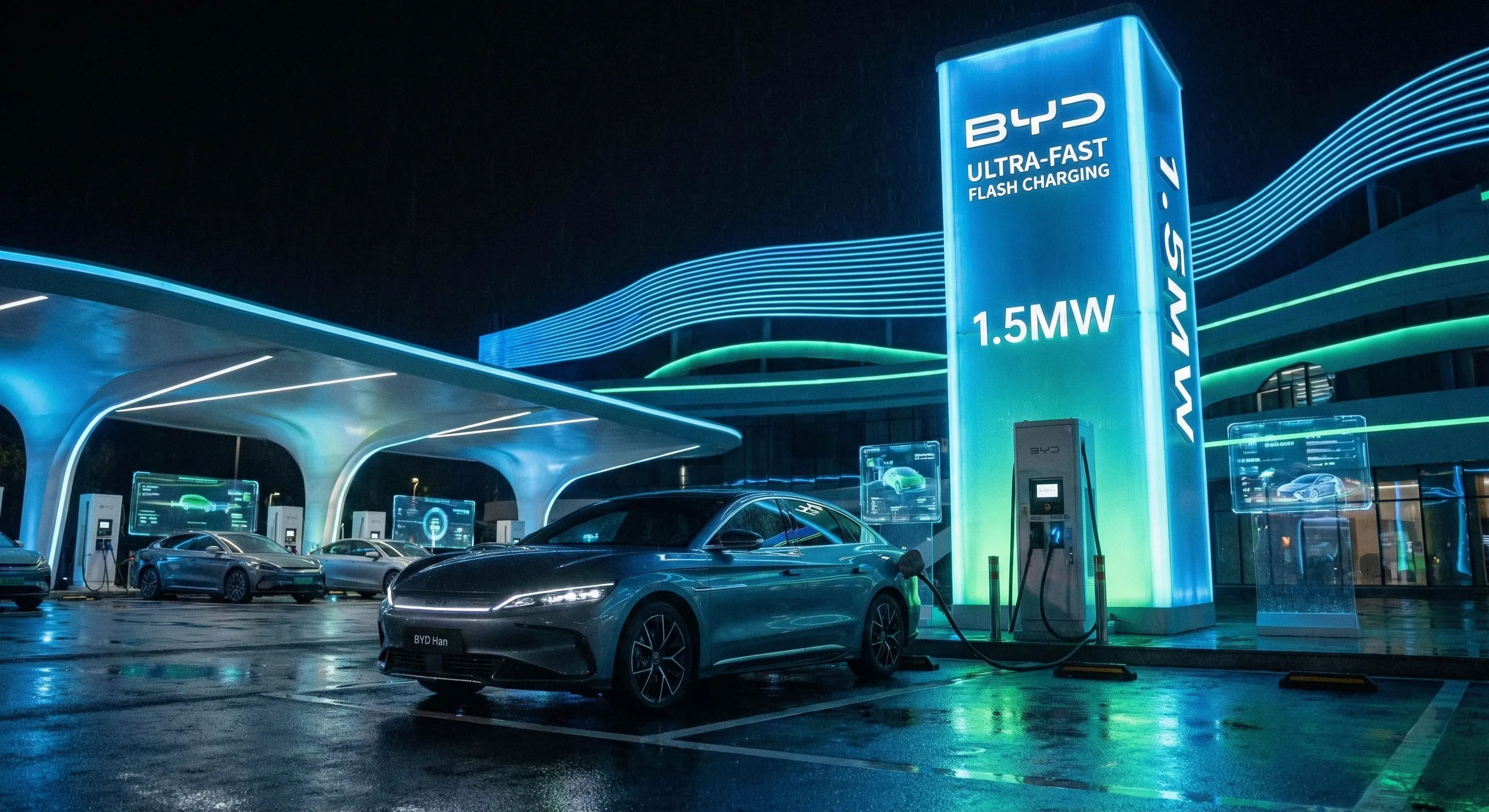
- BYD's flash charging delivers about 400 km of range in roughly 5 minutes, versus 25–30 minutes for a Tesla Supercharger V4 doing the same top-up.
- BYD Blade 2.0 holds 85% of its rated capacity at -20°C, against 60–75% for typical NMC and 65–72% for standard LFP, the number that matters most for Canadian winters.
- The 1.5 MW flash charger runs at about 4.3 times the peak power of Canada's fastest public chargers, which top out at 350 kW, and draws as much as roughly 450 homes at once.
- BYD isn't selling cars in Canada as of early 2026; the tariff fell from 100% to 6.1% in January under a 49,000-unit quota, but Chinese EVs remain excluded from the $5,000 federal EVAP rebate.
- LFP Blade cells last 2,000–3,000-plus cycles to 80% capacity versus 1,000–1,500 for NMC, and Blade-equipped taxis in China with 200,000-plus km still hold 92–95%.
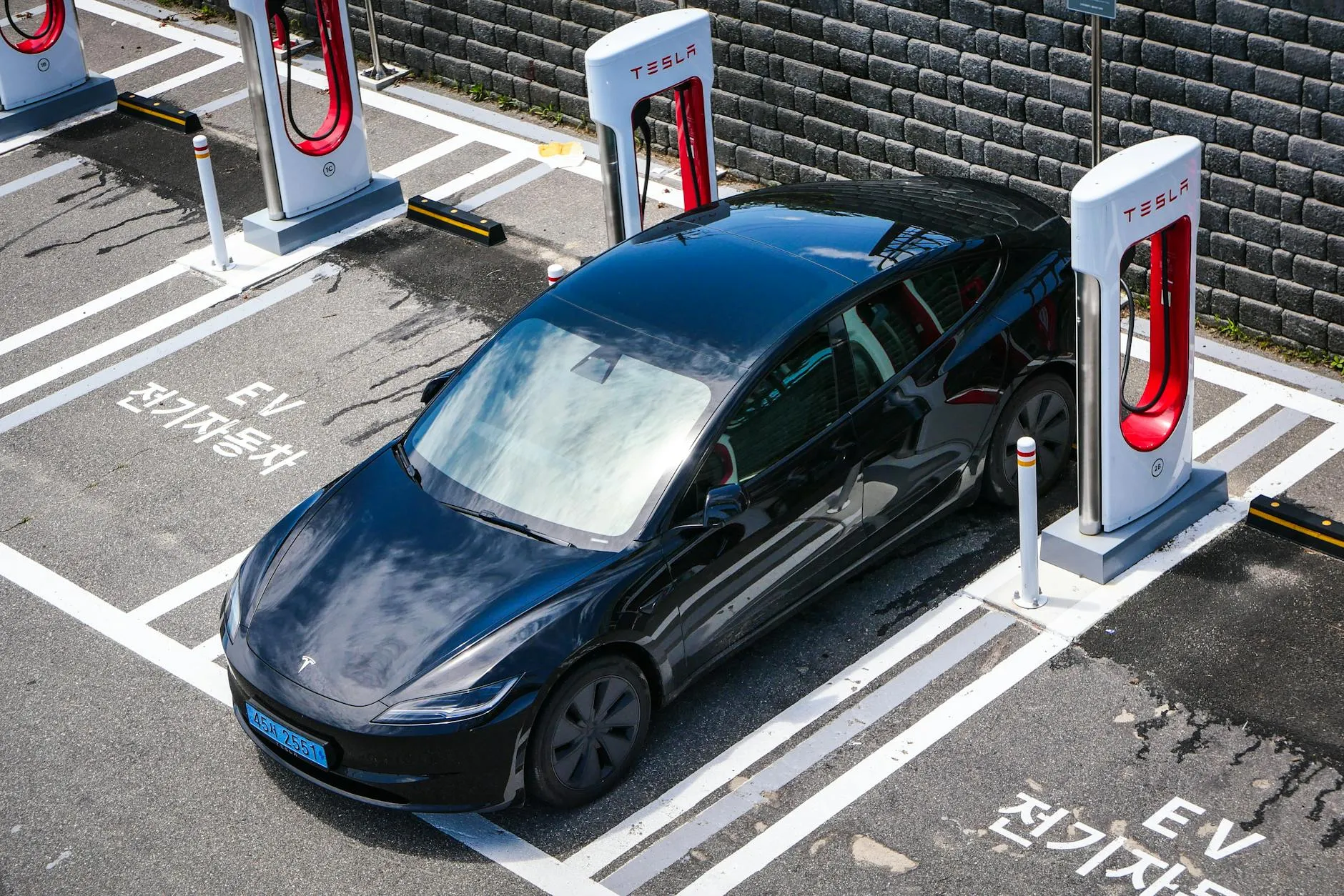
Five minutes. That's it. That's all BYD's new flash charging system needs to hand you 400 kilometres of range. Let me put that in perspective: a standard 50 kW DC fast charger, the kind filling most Canadian parking lots right now, would take roughly 90 minutes to do the same job. A Tesla Supercharger V4, the current gold standard for North American charging speed, maxes out at 350 kW and would still need about 25–30 minutes for an equivalent top-up.
BYD's new system runs at 1,500 kW, 1.5 megawatts. That's not an incremental improvement. That's a different category of technology entirely.
And here's the part that matters most for anyone who drives in Canada: the Blade 2.0 battery at the heart of this system retains 85% of its capacity at -20°C. On a morning when most current EVs are already down 20–40% before you've even left the driveway, BYD's battery is delivering range you can actually count on.
I've been watching battery technology closely for years, and I don't reach for the word "significant" lightly. But this one warrants it. Here's everything you need to know.
What BYD's 1.5 MW Flash Charging Actually Is
Let's start with the raw numbers because they're genuinely staggering.
BYD's flash charging system operates at a peak power of 1,500 kW (1.5 megawatts). To charge at that rate, you need both the infrastructure (the charger) and the vehicle (the battery) to support it. BYD is building both sides of that equation, the charger hardware and the Blade 2.0 battery cells, as an integrated system.
For comparison, here's where the current charging situation sits:
- Standard Level 2 home charging: 7.2–19.2 kW
- Standard DC fast charging (most Canadian stations): 50–150 kW
- CCS chargers at newer highway stations: 150–350 kW
- Tesla Supercharger V3: up to 250 kW
- Tesla Supercharger V4: up to 350 kW
- Hyundai/Kia E-GMP platform: up to 350 kW
- BYD flash charging: up to 1,500 kW
The gap between the current "best in class" (350 kW) and BYD's flash charging (1,500 kW) is 4.3x. That's not a spec bump, that's a generational leap.
In practical terms:
- At 350 kW (Tesla V4, Hyundai E-GMP): you gain roughly 58 km per minute under ideal conditions
- At 1,500 kW (BYD flash): you gain roughly 80 km per minute, but the real advantage is the consistency; BYD's system is engineered to sustain that rate across the charging curve rather than tapering aggressively
The "400 km in 5 minutes" figure comes from BYD's own testing data for the Blade 2.0-equipped vehicles, charged on their 1.5 MW infrastructure. That works out to approximately 80 km per minute, or 1.33 km added per second.
The Blade 2.0 Battery: What Makes It Different
BYD's original Blade battery, introduced in 2020, was already a significant engineering achievement. The cell-to-pack design eliminated the traditional module layer, letting BYD arrange cells directly into a structural pack that was lighter, more rigid, and safer than conventional lithium-ion packs.
The Blade 2.0 keeps the core cell-to-pack architecture but upgrades almost everything else:
Chemistry: Still LFP, But Optimised for Speed
Blade 2.0 uses lithium iron phosphate (LFP) chemistry, the same fundamental formula as Blade 1.0. LFP is important for several reasons:
- No cobalt or nickel, cheaper, more stable supply chain
- Intrinsically safer than NMC (nickel manganese cobalt), doesn't go into thermal runaway as easily
- Better cycle life, retains capacity over more charge-discharge cycles
- Better performance at extreme temperatures compared to NMC
The breakthrough with Blade 2.0 is that BYD has modified the LFP cell architecture to handle ultra-high charge rates without degrading. Traditional LFP cells struggle above 2C–3C charge rates. Blade 2.0 is designed to handle charge rates an order of magnitude higher, enabled by:
- Redesigned electrode structures with shorter ion diffusion paths
- New electrolyte formulation reducing internal resistance at high currents
- Integrated thermal management directly in the cell layer, not just at the pack level
Range: 900 km WLTP / 725 km EPA
BYD has announced WLTP-rated range of 900 km for flagship Blade 2.0 vehicles, translating to approximately 725 km EPA (EPA tests tend to be 15–20% lower than WLTP). That puts it in range territory previously occupied only by hydrogen fuel cell vehicles or premium long-range EVs with enormous battery packs.
For Canadian driving contexts: 725 km EPA range means most people in British Columbia, Alberta, or Ontario would be doing cross-province drives, not just commuting, on a single charge.
The Cold Weather Story: 85% at -20°C
This is the number that every Canadian EV driver should care about most.
Current EV batteries, both NMC and standard LFP, lose significant capacity in cold weather. The physics are unavoidable: lithium-ion chemistry slows down as temperature drops, reducing how quickly ions can move through the electrolyte. But the magnitude of that loss varies enormously by design.
Here's where things currently stand for typical EVs in a Canadian winter:
- NMC batteries at -20°C: typically retain 60–75% of rated capacity
- Standard LFP batteries at -20°C: typically retain 65–75% of rated capacity (LFP historically struggles more in cold than NMC at extreme lows)
- BYD Blade 2.0 at -20°C: retains 85% of rated capacity
That 10–20 percentage point gap is massive in real-world terms. If you're driving a vehicle with 500 km of rated range and your battery drops to 65% capacity at -20°C, you're working with 325 km. On Blade 2.0, you'd have 425 km, a 100 km difference that can be the difference between making it to your destination and calling for a tow.
At -30°C, a temperature Canadians in Alberta, Saskatchewan, Manitoba, and northern Ontario routinely face, BYD reports that charging time increases by "just a few minutes" compared to the 5-minute benchmark. That's extraordinary. At -30°C, many current EVs not only lose range dramatically but struggle to accept charge at all without thermal pre-conditioning.
Charging Speed Comparison: By the Numbers
Let's get granular about what different charging speeds actually mean for a Canadian driver. I'm going to use a 75 kWh usable battery as the baseline, roughly representative of a mid-range EV like a BYD Dolphin or a Tesla Model 3 Long Range.
Charging from 10% to 80% (the recommended range for DC fast charging):
With a 75 kWh battery, 10% to 80% means filling roughly 52.5 kWh. Here's how long that takes at each power level:
- Level 2 at 7.2 kW: approximately 7 hours 18 minutes
- Level 2 at 19.2 kW: approximately 2 hours 44 minutes
- DC fast charge at 50 kW: approximately 63 minutes (accounting for taper)
- DC fast charge at 150 kW: approximately 28 minutes (accounting for taper)
- Tesla Supercharger V4 / Hyundai E-GMP at 350 kW: approximately 18–22 minutes (taper kicks in around 50%)
- BYD flash charge at 1,500 kW: approximately 4–6 minutes (system designed for flat charging curve)
The "flat charging curve" point is critical. Most EVs start tapering their charge rate well before they reach 50% state of charge. A car rated at 350 kW peak charging might actually average only 150–200 kW over the session. BYD has engineered the Blade 2.0 to maintain a much flatter curve, meaning the peak power is closer to the average power.
Kilometres added per minute (approximate, real-world conditions):
- Level 2 at 7.2 kW: roughly 3.5 km/min
- Level 2 at 19.2 kW: roughly 9 km/min
- DC fast at 50 kW: roughly 25 km/min
- DC fast at 150 kW: roughly 60 km/min
- Tesla V4 / E-GMP at 350 kW: roughly 55–70 km/min (actual average, not peak)
- BYD flash at 1,500 kW: roughly 80 km/min sustained
The psychological threshold this crosses:
There's a number that matters to everyday drivers: the time it takes to fill a gas tank. Most Canadians spend 3–8 minutes at a gas station. BYD's 5-minute charging effectively crosses that threshold. You're not "waiting for your car to charge", you're doing the same thing you've always done.
This matters enormously for EV adoption. The single most persistent concern from non-EV drivers isn't range, it's charging time. Once charging time equals refuelling time, that objection evaporates.
Why This Threatens NIO, CATL, and Battery Swap Tech
BYD's flash charging announcement landed like a bomb in the broader battery industry, and the ripple effects are worth understanding.
NIO and Battery Swap
NIO built its entire premium EV strategy around battery swap, the idea that instead of waiting to charge, you pull into a swap station, a robot swaps your depleted battery for a full one in 4–5 minutes, and you're back on the road. It was clever engineering that solved the charging time problem by sidestep: don't charge the battery in the car, charge it in the station.
The business model requires NIO to own massive fleets of batteries at every swap station, plus the stations themselves, enormous capital cost. It works, and NIO has been expanding swap stations rapidly across China. But if BYD can deliver 400 km of range in 5 minutes without requiring battery ownership and a dedicated swap network, the economics of battery swap become very hard to justify.
Why would a driver choose battery swap, which requires buying into a battery-as-a-service subscription, when a BYD flash charger can deliver the same result in roughly the same time, at a conventional charging station, without subscription overhead?
CATL and the Competition
CATL, the world's largest battery manufacturer, recently reported record-breaking financial results. CATL supplies batteries to a huge portion of the global EV market, including Tesla, BMW, Hyundai, and dozens of others. BYD is CATL's most formidable competitor, and the Blade 2.0 announcement puts pressure on CATL to accelerate its own ultra-fast charging battery development.
CATL has its own fast-charging technology, the Shenxing battery, which can add 400+ km of range in about 10 minutes, but BYD has now halved that figure. The gap is significant enough that CATL will need to respond with a credible next-generation product to retain its lead with automakers who care about charging speed.
CALB and Solid-State
CALB (China Aviation Lithium Battery) recently debuted a 60 Ah solid-state battery cell, part of the broader industry shift toward solid electrolyte batteries. Solid-state batteries promise higher energy density, better safety, and theoretically better cold-weather performance than liquid electrolyte lithium-ion.
The key question is: does BYD's Blade 2.0 improvement make solid-state less urgent? In the short term, possibly. If LFP chemistry can be pushed to deliver 85% cold-weather capacity retention and 5-minute charging with existing manufacturing infrastructure, the solid-state timeline pressure eases slightly.
There's also interesting work from research labs, like Donut Lab's solid-state battery, which reportedly retains 97.7% charge after 10 days, but these remain laboratory demonstrations. BYD is shipping production cells. That's the gap that matters most to consumers.
What Canadian EV Infrastructure Looks Like Right Now
To understand what BYD's technology means for Canada specifically, you need to understand where Canadian charging infrastructure actually stands, because it's not where most people think it is.
Canada's charging network has grown significantly in recent years, but the distribution is uneven and the power levels are mostly modest:
Level 2 (AC) Charging
The majority of public EV charging in Canada is Level 2, everything from 3.6 kW to 19.2 kW. These stations are in parking garages, shopping centres, hotels, and workplaces. They're fine for topping up during a multi-hour stop, but not for road trips.
For home charging guidance, we've covered the best Level 2 chargers available in Canada and a complete installation guide for home Level 2 chargers, most Canadian homes can get to 48A / 11.5 kW with a 60A circuit.
DC Fast Charging
The bulk of Canadian DC fast charging sits in the 50–150 kW range. A 50 kW charger is frustratingly slow for a modern EV, adding roughly 200 km in an hour, or 25 km in 5 minutes. A 150 kW charger is meaningfully faster but still not "grab a coffee and go."
The fastest publicly accessible chargers in Canada right now are:
- Tesla Supercharger V3: up to 250 kW (for Tesla vehicles; now open to other EVs via adapter in many locations)
- Tesla Supercharger V4: up to 350 kW (rolling out in major Canadian cities)
- Electrify Canada: up to 350 kW at flagship locations, 50–150 kW at most others
- FLO: mostly 50–100 kW
- ChargePoint: mostly 62–62.5 kW for DC fast at standard locations
Electrify Canada's 350 kW stations are the current ceiling for most non-Tesla EVs on Canadian highways. And they're not evenly distributed, our EV charging infrastructure overview for Canada covers the network in detail, but the summary is: the Trans-Canada corridor has reasonable fast charging coverage, and everything else is patchwork.
What 1.5 MW Charging Requires
Here's the reality check: BYD's 1.5 MW flash charging requires infrastructure that doesn't currently exist in Canada. To put the power requirements in perspective:
- A standard 50 kW DC fast charger draws power roughly equivalent to 15–20 homes
- A 350 kW fast charger draws power equivalent to 100+ homes
- A 1,500 kW flash charger draws power equivalent to roughly 450 homes simultaneously
That requires grid upgrades, dedicated transformer substations at charging locations, and significant civil infrastructure. This is not something that happens overnight. In China, BYD is deploying this infrastructure alongside its vehicles as a coordinated launch, the chargers and the cars arrive together.
In Canada, the timeline is different. Which brings us to the critical question: when does this actually reach Canadian consumers?
BYD's Canada Timeline: Where Things Stand
BYD is not yet selling vehicles in Canada as of March 2026. The 100% EV tariff imposed in October 2024 made direct sales non-viable. That tariff was reduced to 6.1% in January 2026 under a quota arrangement of approximately 49,000 vehicles, but Chinese EVs remain excluded from the federal Electric Vehicle Availability Programme (EVAP), meaning they don't qualify for the $5,000 federal purchase incentive.
We covered the full picture of BYD's path into Canada including the tariff situation, the short version is that BYD is actively exploring Canadian market entry through assembly partnerships that would qualify for better tariff treatment.
There's an interesting angle worth noting: BYD's flash charging technology was initially announced in the context of ride-hailing fleet applications. Ride-hailing vehicles, taxis, Uber, Lyft drivers, operate at high daily utilisation rates and can't afford long charging stops. BYD explicitly designed the Blade 2.0 and flash charging system to serve this market first, which means the initial deployment in any given market is likely to follow commercial fleet adoption rather than consumer vehicle sales.
For Canadian consumers, the realistic scenario looks something like this:
- 2026–2027: Flash charging infrastructure deployed in China; some early adoption in other markets. BYD negotiates Canadian market entry arrangements.
- 2027–2028: If BYD secures Canadian market access (through manufacturing partnerships or policy changes), first Blade 2.0 vehicles could reach Canadian buyers. Flash charging infrastructure investment begins.
- 2028–2030: Flash charging becomes a consumer-accessible option in major Canadian markets.
This isn't a "you can have it next week" announcement. It's a "the EV game just changed, and Canada will eventually get there" announcement.
The Cold Weather Data Canadian Drivers Actually Need
I want to spend more time on the winter performance numbers because this is where Canadian EV adoption lives and dies.
The range anxiety narrative in Canada isn't really about range on a summer day, it's about range on a January morning in Edmonton at -25°C when you need to get to work and back. That's the scenario that keeps potential EV buyers in their internal combustion vehicles.
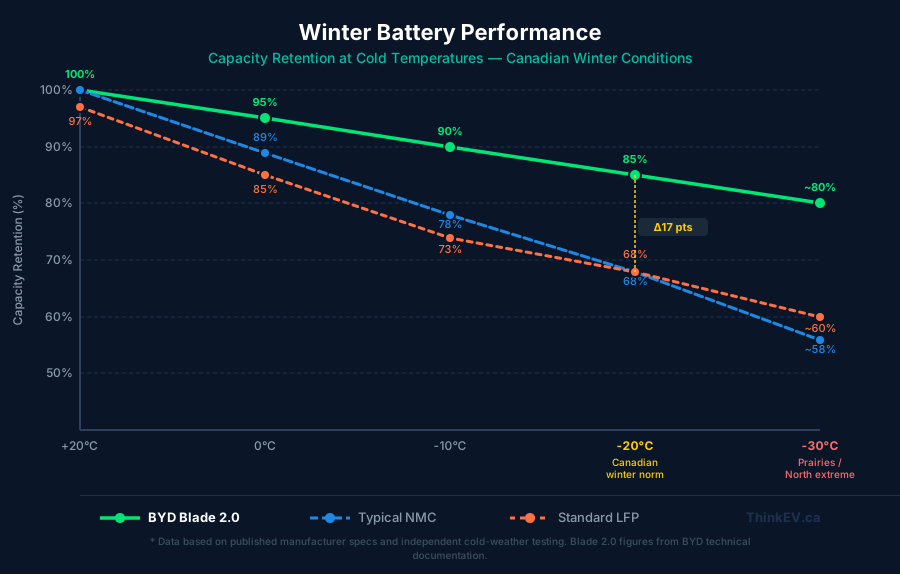
Here's what current data tells us about battery performance across temperatures:
At +20°C (summer baseline):
- NMC batteries: 100% rated capacity (this is what the spec sheet measures)
- Standard LFP batteries: 95–100% rated capacity (LFP is slightly conservative in spec ratings)
- BYD Blade 2.0: 100% rated capacity
At 0°C (autumn/spring shoulder season):
- NMC batteries: typically 85–92% capacity
- Standard LFP batteries: typically 80–88% capacity (LFP struggles more in moderate cold)
- BYD Blade 2.0: approximately 93–95% (based on interpolation from BYD's published data points)
At -10°C (a common Canadian winter morning):
- NMC batteries: typically 72–82% capacity
- Standard LFP batteries: typically 68–78% capacity
- BYD Blade 2.0: approximately 90% (BYD data)
At -20°C (serious Canadian winter):
- NMC batteries: typically 60–75% capacity
- Standard LFP batteries: typically 65–72% capacity
- BYD Blade 2.0: 85% capacity (BYD's confirmed figure)
At -30°C (extreme Canadian winter, Prairie provinces, northern communities):
- NMC batteries: typically 50–65% capacity
- Standard LFP batteries: typically 55–65% capacity
- BYD Blade 2.0: approximately 78–82% (extrapolated; BYD mentions "a few extra minutes of charge time" rather than a specific capacity figure at -30°C)
We ran extensive winter testing across multiple vehicles in our EV winter range test for Canada, and the pattern holds: most EVs suffer more in cold weather than their marketing suggests. The BYD Blade 2.0 numbers represent a genuine step forward, not just better marketing.
Why LFP Usually Struggles More in Cold (And Why Blade 2.0 Doesn't)
This is a bit counterintuitive. LFP chemistry is safer and longer-lasting than NMC, but historically it's been worse in cold weather, the flat discharge curve (which makes accurate state-of-charge readings harder) gets even more pronounced in cold, and the lower energy density means less thermal mass per unit of range.
BYD has addressed this through two mechanisms in Blade 2.0:
First, the cell-to-pack architecture allows more efficient thermal management, the heating elements are closer to the cells and can pre-condition the battery more quickly. Second, BYD's electrode reformulation reduces the impedance spike that LFP chemistry typically experiences in cold temperatures. The result is that Blade 2.0's LFP chemistry behaves closer to optimised NMC in cold weather while retaining LFP's advantages in safety, longevity, and cost.
How This Compares to Other Fast-Charging Developments in 2026
BYD's announcement doesn't exist in isolation. The broader battery and charging industry is moving quickly right now, and it's worth framing where Blade 2.0 sits in the competitive field.
CATL Shenxing (Record Financial Results)
CATL's record financial results in 2025 reflect strong demand for its Shenxing fast-charging battery, which it supplies to multiple automakers. Shenxing can add approximately 400 km of range in about 10 minutes, impressive by today's standards, but double BYD's flash charging time.
CATL has the advantage of supplying dozens of automakers, meaning Shenxing technology reaches more models faster than BYD's proprietary approach. But BYD controlling both battery and vehicle gives it tighter integration, and the current data suggests that integration is paying off in performance.
2027 Chevy Bolt: A Different Approach
The 2027 Chevrolet Bolt was recently tested with its new charging setup, and it represents an interesting counterpoint to the ultra-fast charging narrative. The Bolt is engineering for affordable, accessible charging rather than maximum speed, it accepts up to 78 kW DC fast charging, which is modest by current standards but pairs with a reasonable price point.
The Bolt story illustrates that not every EV buyer needs 1.5 MW flash charging. For someone charging mostly at home overnight, topping up their car like their phone, a 50–150 kW DC fast charger covers all their road trip needs. The flash charging story is most compelling for high-utilisation vehicles and drivers who routinely make long-distance trips.
That said, the existence of 5-minute charging changes the psychology of EV ownership even for people who'll rarely use it. Knowing the option exists, like knowing you can fill up quickly when needed, reduces the background anxiety of ownership.
Solid-State: Still Coming, Still Not Here
The most discussed alternative to liquid electrolyte lithium-ion batteries remains solid-state. Toyota, Samsung SDI, Solid Power (backed by BMW and Ford), and numerous Chinese labs are all working on solid-state cells. CALB's 60 Ah solid-state cell is a real milestone.
But "60 Ah solid-state cell in a lab" and "mass-produced solid-state batteries in vehicles you can buy" are years apart. The manufacturing challenges remain significant: solid electrolytes are brittle, hard to manufacture at scale, and finicky at the cell-to-pack integration level.
BYD's Blade 2.0 is shipping now in Chinese-market vehicles. Solid-state is shipping in demonstration quantities at premium prices. For Canadian consumers, the practical timeline difference is probably 3–5 years, and Blade 2.0 will have had that runway to mature further.
What the Charging Cost Picture Looks Like
One thing Reddit discussions have noted correctly: BYD has signalled that 1.5 MW flash charging is designed to be competitively priced, it's not a luxury tier.
This is somewhat counterintuitive. Higher power chargers typically cost more per kWh because they require more infrastructure investment to amortise. But BYD is approaching this like a hardware scale problem: build enough of these chargers at volume, and the unit economics improve dramatically.
For Canadian pricing context, I'll ground this in what we already know from our EV charging costs by province analysis:
- Home Level 2 charging in BC: roughly $0.026–$0.039/km (BC Hydro at $0.1298/kWh)
- Home Level 2 charging in Alberta: roughly $0.035–$0.055/km (average $0.167/kWh)
- Electrify Canada fast charging: approximately $0.55–$0.65/kWh at DC stations
- Tesla Supercharger (non-Tesla): approximately $0.55–$0.70/kWh
If BYD's flash charging comes to Canada at premium pricing similar to today's fast chargers, a 5-minute session (400 km of range) at $0.60/kWh would cost approximately $36–$40 depending on the vehicle's efficiency. That's more than home charging but compares reasonably to gasoline: 400 km in a 10L/100km SUV costs roughly $60–$80 at current fuel prices.
The home charging vs. flash charging comparison matters most for BYD's ride-hailing target market. A taxi driver doing 600 km per day can't charge at home overnight and work the day, they need fast turnaround. For that use case, flash charging economics work even at premium per-kWh pricing.
What This Means for Canadian EV Road Trip Planning
Road trip planning is where charging speed has the most immediate practical impact. If you're driving from Vancouver to Calgary, roughly 1,000 km, here's how different charging scenarios change the trip:
Current reality (2026) with a typical 350 kW-capable EV:
Using our EV road trip charging planning guide methodology, a Calgary run from Vancouver would involve 2–3 charging stops of 20–35 minutes each, adding roughly 60–90 minutes to the trip. At current Canadian fast charging infrastructure, you're often limited to 50–150 kW anyway, making those stops 45–60 minutes.
With BYD flash charging (future scenario):
If BYD flash charging were available along that corridor, those 2–3 stops would drop to 5–10 minutes each, adding only 15–30 minutes total. For a 10–12 hour drive, that's a negligible overhead.
The winter road trip scenario:
In January, crossing the Rockies in an EV with a battery that retains only 65–70% capacity in cold weather means your 400 km rated range drops to 260–280 km. You're stopping more often, for longer, in cold conditions. With Blade 2.0's 85% retention at -20°C, that same vehicle has 340 km effective range, one fewer stop, shorter stops, and dramatically less anxiety.
BYD's Existing Vehicles: What the Platform Delivers Today
BYD isn't asking Canadians to wait for some vaporware future. The Blade 2.0 architecture is built on years of lessons from the original Blade battery, which has been powering real vehicles in real markets since 2020.
We've done detailed reviews of several BYD vehicles that would reach Canada under Blade 1.0 or early Blade 2.0 platforms:
The BYD Atto 3 remains BYD's most accessible SUV, a practical family hauler that demonstrates the Blade battery's durability credentials in a real-world ownership context.
The BYD Dolphin is the compact hatchback that makes the strongest value argument, its efficiency figures are exceptional, and the Blade battery chemistry gives it longevity that challenges European rivals on lifecycle cost.
The BYD Seal is where BYD's battery technology ambitions collide with premium EV expectations, it's the vehicle most directly competing with Tesla Model 3 and Hyundai IONIQ 6.
Each of these vehicles demonstrates the underlying Blade architecture's real-world credentials. Blade 2.0 is the next evolution of an already-proven platform, not a clean-sheet bet.
For those already tracking EV battery degradation and long-term capacity loss: LFP chemistry, which underpins Blade 2.0, consistently outperforms NMC on cycle life. Real-world Blade battery owners in China have reported degradation curves that are among the flattest in the industry.
The Ride-Hailing Angle: Why This Technology Arrives Via Taxis First
One detail in the initial BYD flash charging announcement deserves more attention than it's received: BYD explicitly designed this system with ride-hailing vehicles in mind.
Gear worth having
As an Amazon Associate, ThinkEV earns a small commission from qualifying purchases — at no extra cost to you.

Grizzl-E Classic Level 2 EV Charger (40A)
Canadian-made and rated for minus 40C winters. 40A / 9.6 kW, NEMA 14-50, indoor/outdoor, 24-ft cable. The charger built for Canadian weather.
As an Amazon Associate, ThinkEV earns from qualifying purchases — at no extra cost to you.
Think about the operational reality for an Uber driver in Vancouver or a taxi operator in Calgary. That driver might log 400–600 km per day across multiple shifts. With a standard 50–150 kW DC fast charger, meaningful charging stops (adding 200+ km) take 30–60 minutes. Over a working day, two or three of those stops consume 1.5–3 hours of non-earning time. At typical gig economy rates, that's $30–$60 per hour of lost income per charging stop, a serious economic drag.
With flash charging:
- A 5-minute stop adds 400 km
- Two stops per day still adds more than enough range for a full shift
- Total "charging overhead" per day: approximately 10 minutes
- Lost income: negligible
This is why the economics of ride-hailing fleet adoption are compelling even at premium per-kWh pricing. If flash charging costs $0.70/kWh (higher than standard fast charging), a 5-minute session adding 400 km costs roughly $38–$42 depending on vehicle efficiency. Compare that to a 45-minute stop at $0.45/kWh for the same distance, which would cost about the same in electricity but 40 minutes more in lost productivity.
The fleet deployment model matters for Canadians for a specific reason: fleet adoption creates the utilisation base that justifies charging infrastructure investment. When a city has a significant BYD ride-hailing fleet, the business case for building flash charging stations in that city changes. You don't need 100,000 consumer vehicles to justify a fast charging station, you need 300 taxis running six days a week.
This was the same pattern that built Tesla's Supercharger network: commercial necessity (Tesla owners needed to be able to road trip) drove infrastructure investment before mass consumer adoption. BYD's flash charging will likely follow the same arc, with commercial fleets leading and consumer adoption catching up as the infrastructure density reaches the threshold where a regular driver can rely on it.
For Canada specifically, the urban centres most likely to see early ride-hailing fleet EV adoption, Vancouver, Toronto, Montréal, are also the cities where charging infrastructure investment generates the highest return. The path to flash charging in Canada probably runs through a taxi fleet deal in one of those cities, not a government announcement.
The Battery Degradation Advantage Canadians Are Missing
There's a long-term dimension to the Blade 2.0 announcement that's getting less attention than the 5-minute charging headline, but which may matter more to the average buyer over a 10-year ownership horizon.
LFP chemistry, the foundation of both Blade 1.0 and Blade 2.0, has a fundamentally different degradation curve than NMC (nickel manganese cobalt) chemistry. And Blade 2.0 pushes that advantage further.
The cycle life difference:
NMC batteries in current EVs typically rate for 1,000–1,500 full charge cycles before reaching 80% of original capacity. That sounds like a lot, but consider: if you charge your EV daily and deplete roughly 50% per day (a typical commuting pattern), you're doing roughly 180 half-cycles per year, equivalent to about 90 full cycles. At that rate, NMC reaches 80% capacity in roughly 11–17 years.
LFP chemistry rates for 2,000–3,000+ full cycles to 80% capacity. On the same usage pattern, that's 22–33 years. The Blade 2.0's cell architecture improvements push cycle life further still.
What this means in real money:
Battery replacement is the largest potential repair cost for an EV. A 75 kWh NMC pack replacement runs $12,000–$18,000 in Canada. LFP packs cost less to manufacture (no cobalt or nickel) and last longer, a double economic benefit.
Over a 10-year ownership period, the probability of needing a partial or full battery replacement drops significantly with LFP vs. NMC chemistry. When you add BYD's cold-weather performance advantage, the fact that Blade 2.0 batteries aren't being stressed as severely in winter conditions, degradation slows further still.
BYD's real-world data from Blade 1.0 deployments in China backs this up. Blade battery taxis, which do the kind of high-cycle, rapid-charge operation that would stress any battery pack, show degradation curves that independent testers have rated as the flattest in the industry. Some Blade-equipped vehicles with 200,000+ km on the odometer retain 92–95% of original battery capacity.
For a complete picture on EV battery degradation and what to expect from different chemistries, our EV battery degradation guide covers the data in detail.
The second-hand market implication:
Battery longevity has a direct effect on used EV values. A 5-year-old BYD with an LFP battery retaining 95% capacity is worth substantially more than a 5-year-old NMC vehicle at 85%. As Canadian EV adoption grows and a used market develops, Blade battery chemistry will command a premium in residual values, and buyers of new Blade 2.0 vehicles will benefit from that premium when they trade in.
The Physics of 1.5 MW Charging: What It Takes to Move That Much Electricity
I find this stuff genuinely fascinating, so let me get into the engineering for a moment. The numbers involved in 1.5 MW charging are almost absurd in scale.
Power flow in context:
A typical residential electrical panel in Canada supplies 100–200A at 240V, that's 24–48 kW. A Level 2 charger typically draws 7.2–11.5 kW, using a fraction of that capacity. Even a 19.2 kW Level 2 charger is well within a normal 200A panel.
A 50 kW DC fast charger draws about the same power as 15 average Canadian homes simultaneously. A 350 kW Electrify Canada charger draws as much as 105 homes at once.
A 1,500 kW flash charger draws as much as 450 homes simultaneously. In raw grid terms, you're talking about the instantaneous load of a small residential neighbourhood delivered through a single charging cable.
That's not impossible, large industrial facilities draw that kind of power continuously. But it requires:
- A dedicated medium-voltage grid connection (typically 12–25 kV, not the 600V or lower used for standard commercial buildings)
- On-site transformer equipment to step down to vehicle-compatible voltages
- Potentially on-site battery energy storage to manage peak demand and avoid utility demand charges
- Heavy-gauge cabling throughout the installation, rated for the full load current
- Liquid-cooled charging cables (the physics of pushing that much current through a handheld cable without it becoming a burn hazard require active cooling)
The liquid-cooled cable detail:
This is where BYD's engineering gets particularly interesting. At 1.5 MW, even with high voltage (around 1,000V), the current through the charging cable is roughly 1,500A. For comparison, a typical 50 kW DC charger cable carries about 125A. Residential wiring in your home typically handles 15–20A.
Pushing 1,500A through a cable that a human holds without it instantly overheating requires active liquid cooling, a glycol-water solution continuously circulates through the cable, carrying heat away from the conductors. The cable itself is roughly the diameter of a garden hose, but it's significantly heavier and more complex internally than any current EV charging cable.
BYD's connector system is purpose-designed for this application. It's not the standard CCS2 or CHAdeMO connector you see on current DC fast chargers, it's a proprietary high-power connector with the liquid cooling channels integrated. This is one reason why flash charging infrastructure can't simply be a software-upgraded version of existing chargers. It's a new hardware category.
On-site battery storage as a grid buffer:
The most practical path to deploying flash charging in Canada's grid environment is pairing each flash charger with substantial on-site battery storage, typically a lithium iron phosphate battery system in the 1–4 MWh range. This battery charges slowly from the grid (drawing 100–300 kW continuously, well within grid capacity), then delivers peak power (1.5 MW for 5 minutes) to the vehicle without placing that instantaneous spike on the distribution grid.
The economics of this approach improve as battery storage costs continue to fall. Industrial LFP battery storage currently runs approximately $150–$200/kWh in Canada. A 2 MWh buffer for a flash charging installation costs $300,000–$400,000, significant, but not prohibitive for a commercial charging hub serving a commercial fleet.
The China-to-Canada Technology Transfer: How Fast Can It Happen?
China's EV technology advantage is no longer a future projection, it's a present reality, and flash charging is the most visible manifestation of that gap. The interesting question for Canadians is: what does the transfer timeline actually look like?
There are several distinct pathways:
Pathway 1: BYD direct market entry (most BYD-specific)
If BYD resolves the tariff and incentive exclusion issues and enters Canada directly, it would bring the full technology stack, vehicles, chargers, and potentially its own charging network, as it's deployed in China. This is the fastest path to flash charging for Canadian consumers, but it requires either policy changes or a manufacturing-in-Canada arrangement that qualifies for better tariff treatment.
The 6.1% tariff rate that took effect January 16, 2026 under the 49,000-vehicle quota makes BYD vehicles economically viable for the Canadian market, even without federal EV incentives. The missing piece is distribution infrastructure and service networks, which BYD would need to build from scratch or through partnerships.
Pathway 2: Technology licensing to Western manufacturers (medium-term)
BYD is increasingly open to licensing agreements. Several European automakers are in early discussions about using BYD's battery technology in locally-manufactured vehicles. If a North American manufacturer (Ford, GM, Stellantis) licensed Blade 2.0 technology for vehicles built in Canada, those vehicles would qualify for Canadian incentives and face no tariff issues, while delivering BYD's battery performance.
This pathway is slower (licensing negotiations, manufacturing retooling, homologation) but removes all the market access barriers. The vehicles would be "made in Canada" from a policy perspective even if the battery chemistry originated at BYD.
Pathway 3: Competitive pressure forces equivalent technology from existing players (most likely for near-term)
Hyundai, Kia, GM, and others know exactly what Blade 2.0 delivers. Their engineering teams have access to the same technical publications. The competitive pressure of BYD's technology announcements is already accelerating timelines at competing manufacturers.
Hyundai's E-GMP platform is currently their best charging technology (350 kW capable), and the next-generation solid-state-adjacent battery platform they're developing, internally called "S-Line", is targeting exactly the cold-weather and high-charge-rate performance that Blade 2.0 delivers. GM's Ultium platform is undergoing similar evolution.
For Canadian buyers who need a vehicle now, the relevant question isn't "when does BYD arrive" but "when does BYD's technology level arrive in a vehicle I can buy with incentives?" The answer to that question is probably 2027–2028 for cold-weather performance improvements and 2028–2030 for flash-class charging speeds.
The Cost of Waiting vs.
Buying Now
This is the section I get asked about the most: given that better technology is clearly coming, should Canadians wait?
The answer requires separating the question by use case.
If you drive 20,000+ km per year across long distances:
You're the buyer for whom the charging speed gap matters most. The difference between a 20-minute charging stop and a 5-minute charging stop, multiplied by 3–4 times per long trip, multiplied by the frequency of your long trips, adds up to real time. If you're driving Edmonton to Calgary regularly, or Vancouver to Kelowna, the technology gap between today and 2028 is meaningful.
For this buyer: consider waiting until 2027–2028 when the competitive response to BYD's technology gap will be available in vehicles you can buy in Canada with incentives. The 2027 Hyundai IONIQ lineup and the 2028 GM EVs will both be significantly better in cold-weather performance and charging speed than the 2026 equivalents.
If you drive 15,000 km per year with a mix of commuting and occasional long trips:
The current generation of EVs already serves this use case well. The difference between 350 kW and 1,500 kW charging only matters on road trips. If you charge mostly at home using Level 2, which is how 80–90% of EV owners charge, the peak DC charging speed of your vehicle rarely comes into play.
For this buyer: the 2026 model year offers genuinely capable vehicles. An IONIQ 6 or Tesla Model 3 LR with 350 kW charging capability and good cold-weather performance will serve you well for 10+ years. Waiting means two more years of internal combustion vehicle costs (or two more years without the lower running costs of an EV).
If you're in a northern Canadian community:
The cold-weather performance gap is your primary concern, and it's where the technology gap is most significant. The jump from 65–70% capacity at -30°C (current average) to 78–82% (Blade 2.0 extrapolated) is meaningful. However, remote communities also face the longest wait for flash charging infrastructure, the charging network economics only work in high-utilisation urban/highway environments.
For this buyer: the focus should be on existing vehicles with the best cold-weather performance (Hyundai IONIQ 6 and Tesla Model Y have the best current cold-weather data), plus maximising home charging infrastructure. Level 2 home charging is the backbone of EV economics regardless of what public charging technology does.
Check our charging costs by province guide for detailed numbers on what home vs. public charging costs in your province.
The Policy Gap Canada Needs to Close
BYD's flash charging announcement is a reminder that Canada's EV policy framework is being overtaken by technology it didn't anticipate. Several specific policy gaps are worth naming:
Charging infrastructure power ratings in building codes:
Most Canadian provincial building codes still treat EV charging as an "electrical load management" issue, focused on circuit capacity for Level 2 chargers. There is no national standard or provincial code guidance for 1.5 MW charging infrastructure, liquid-cooled cable requirements, or medium-voltage grid connections for charging stations.
This isn't an abstract concern. Building permits for commercial EV charging infrastructure in Canada already face long timelines, 6–18 months from application to energisation. If there's no precedent in the local building code for a 1.5 MW installation, add another 6–12 months for variance applications and engineering reviews.
Proactive code development now, even for technology that won't be deployed commercially for 2–3 years, would meaningfully accelerate the infrastructure buildout when vehicles arrive.
The EVAP exclusion of Chinese EVs:
The federal Electric Vehicle Availability Programme excludes Chinese-manufactured EVs from the $5,000 purchase incentive. This was politically motivated (to protect domestic and allied-country manufacturing) and there's a coherent policy rationale for it. But the practical effect is that Canadian buyers pay $5,000 more for a BYD vehicle than for an equivalent Hyundai or Tesla, even though the BYD may have superior technology.
As BYD explores Canadian assembly partnerships, which would make its vehicles "manufactured in Canada" from a policy perspective, the EVAP exclusion becomes moot. But the window between BYD entering Canada and establishing Canadian assembly could be 12–18 months during which its vehicles remain EVAP-excluded despite being purchasable.
The federal government has a decision to make: does the public interest in accelerating EV adoption (served by offering incentives on the best-available technology) outweigh the industrial policy interest in favouring North American and allied manufacturing? It's a genuine tension, and it will be resolved, one way or another, by market and diplomatic pressure over the next 2–3 years.
The Infrastructure Investment Question
The elephant in the room for Canadian adoption of ultra-high-power charging is grid infrastructure. Canada's electrical grid was not designed with 1.5 MW charging stations in mind.
Grid capacity challenges:
A single 1.5 MW charger at peak load draws approximately the same power as 450 average Canadian homes. A charging station with 6 of these units would draw 9 MW, roughly equivalent to a small industrial facility. This isn't impossible, but it requires dedicated grid connections, transformer infrastructure, and likely battery storage buffers to manage demand peaks.
The good news: battery energy storage systems (BESS) increasingly solve this problem. Instead of drawing 1.5 MW directly from the grid in real time, a charging station can have large battery banks that charge slowly from the grid overnight and deliver power instantly when a vehicle arrives. This is already how some high-power charging stations in Europe manage grid constraints.
Who builds the Canadian infrastructure?
In China, BYD is the infrastructure builder, it's rolling out flash chargers as a captive network. In North America, the charging infrastructure business is separate from vehicle manufacturing. Electrify Canada, Tesla, FLO, and ChargePoint are the players, and they make investment decisions based on utilisation projections and equipment costs.
The transition to 1.5 MW charging in Canada will require:
- Government coordination on grid upgrades (federal/provincial infrastructure funding)
- Charging network operators willing to invest in next-generation hardware
- Vehicles compatible with flash charging to create the utilisation base
- Standardisation of the connector and communication protocols for 1.5 MW charging
This is a 5–10 year infrastructure buildout problem, not a 2-year problem. But the direction is clear, and Canada has policy mechanisms, the Zero Emission Vehicle Infrastructure Programme (ZEVIP), provincial rebates, to accelerate investment.
The Bigger Picture: BYD Reshaping the Global EV Market
BYD is no longer just a Chinese automaker. It's the largest EV manufacturer in the world by volume, having surpassed Tesla in global EV sales in late 2023 and maintained that position through 2024 and 2025. It manufactures its own batteries, its own semiconductors, its own motors, and increasingly its own charging infrastructure.
That vertical integration is what makes the Blade 2.0 announcement credible in a way that a traditional automaker announcing "ultra-fast charging support" wouldn't be. When BYD says it can charge to 400 km in 5 minutes, it's because BYD designed the charger, designed the cells, designed the pack management system, and designed the vehicle, as a single integrated engineering programme.
For Canadian consumers, the key implications of BYD's growing dominance are:
- Pricing pressure: BYD's scale means it can undercut competitors on price while maintaining technology leadership. If and when it enters Canada, expect prices that force a response from established players.
- Technology acceleration: When BYD ships a major battery technology advance, CATL, LG Energy Solution, Samsung SDI, and Panasonic all feel the pressure to respond. The beneficiary is the global EV buyer.
- Cold weather expertise: BYD's engineering teams are explicitly targeting the -20°C and -30°C scenarios. The Canadian winter driving use case is being engineered for, not apologised for.
The tariff situation remains the main barrier to Canadian consumers directly accessing these benefits, but as we covered in our piece on BYD's path into Canada, the political and economic pressure to resolve that barrier is growing.
What Should Canadian EV Owners Do Right Now?
If you're in the market for an EV today and Blade 2.0 isn't available in Canada, what's the actionable takeaway from all of this?
For buyers making a purchase in the next 12 months:
- Prioritise vehicles with good cold-weather performance right now, our EV winter range test is the most relevant guide. Hyundai IONIQ 6, Kia EV6, and Tesla Model Y Long Range have the best winter performance in the vehicles Canadians can currently buy.
- Choose vehicles with 350 kW charging capability if road trips matter to you, even if most Canadian chargers top out at 150 kW, future-proofing your vehicle purchase costs nothing extra.
- Invest in a good home Level 2 setup, the best Level 2 chargers ranked covers the options, because 80–90% of your charging will happen at home anyway.
For buyers who can wait 2–3 years:
The 2027–2028 EV market will look dramatically different from 2026. Blade 2.0 vehicles, if BYD secures Canadian market entry, plus competitive responses from Hyundai, GM, and possibly Toyota will give buyers options that don't exist today. The cold-weather performance gap and charging speed gap that define current EV limitations will both shrink substantially.
For current EV owners:
Your vehicle's charging speed isn't going to improve retroactively, but the charging infrastructure around you will. Keep an eye on Electrify Canada's network expansion and Tesla's continued Supercharger expansion. The Canadian charging situation in 2027 will have meaningfully more 150–350 kW stations than it does today, which benefits every EV on the road.
FAQ
This Is Deployed Technology, Not A Press Release
BYD's 1.5 MW flash charging and Blade 2.0 battery aren't a press release, they're deployed technology in production vehicles. The 400 km in 5 minutes figure, the 85% cold-weather capacity at -20°C, the 900 km WLTP range, these numbers come from systems that are charging real vehicles right now in China.
For Canadian EV owners and buyers, the implications are both immediate and long-term:
Immediately: this changes what "good" looks like for EV batteries. The cold-weather performance bar has been raised. Any EV competing for Canadian buyers now needs to answer the Blade 2.0 winter benchmark. Expect the IONIQ 8, next-generation Model Y, and upcoming GM vehicles to all cite their -20°C performance figures more prominently.
Long-term: if BYD secures Canadian market entry, through manufacturing partnerships, policy changes, or trade agreement adjustments, Canadian buyers will have access to vehicles with the lowest charging time and best cold-weather performance of any mass-market EV. That fundamentally changes the EV adoption calculus for winter-country drivers who've been sitting on the fence.
The 5-minute charging threshold is more than a tech spec. It's the moment where the last remaining psychological barrier to EV adoption, "but what if I need to charge quickly?", effectively disappears. That matters everywhere. In Canada, where winter and distance make charging anxiety especially acute, it matters most.
The question isn't whether this technology will reach Canada. It's when, and whether Canadian policy and infrastructure investment move fast enough to meet it.
Gear worth having
As an Amazon Associate, ThinkEV earns a small commission from qualifying purchases — at no extra cost to you.

Lectron Level 2 J1772 Charger (40A, WiFi)
Smart WiFi charger with real-time energy monitoring. 40A / 9.6 kW, J1772 with a NEMA 14-50 plug, schedule charging right from your phone.
As an Amazon Associate, ThinkEV earns from qualifying purchases — at no extra cost to you.
Related Reading
Gear worth having
As an Amazon Associate, ThinkEV earns a small commission from qualifying purchases — at no extra cost to you.

ChargePoint Home Flex Level 2 Charger (50A)
Premium 50A / 12 kW charger with the best app ecosystem. Hardwired or NEMA 14-50, with real-time energy tracking and smart scheduling.
As an Amazon Associate, ThinkEV earns from qualifying purchases — at no extra cost to you.

Founder & Chief Editor
Vlad Pereira is the founder and chief editor of ThinkEV.ca, the Canadian electric-vehicle publication he writes and edits from Courtenay, British Columbia. He covers EV pricing, federal and provincial rebates, charging costs, and the Chinese manufacturers now entering Canada, from the buyer's side rather than the press-fleet side. ThinkEV is a venture of Vlad Pereira Online; his writing on health, income and the long game lives at vladpereira.com.
Frequently asked questions
What does BYD's 1.5 MW flash charging mean in plain terms?
Is BYD flash charging available in Canada?
Why does 85% battery capacity at -20°C matter so much for Canadians?
What's the difference between BYD Blade 1.0 and Blade 2.0?
Can any current Canadian charger charge a Blade 2.0 vehicle?
How does BYD flash charging compare to NIO's battery swap system?
Will 1.5 MW charging damage the battery faster?
Does ultra-fast charging cost more per kWh than standard fast charging?
More EV & road-trip finds
Affordable upgrades worth a look — tap any to check the price on Amazon.
 ★ 2,941
Microfiber Cleaning Cloths (Multi-Pack)
View on Amazon ★ 164
★ 164Solar-Powered LED Ambient Light
View on Amazon ★ 546
★ 546Funny Headrest Face Covers (2-Pack)
View on Amazon ★ 27,769
Car Cup Holder Coasters (4-Pack)
View on Amazon ★ 308
★ 308Coiled Lightning Car Cable for iPhone (2-Pack)
View on Amazon ★ 119
★ 119Foldable Waterproof Trunk Organizer
View on Amazon ★ 392
★ 392Large Cup Holder Adapter (32-40oz)
View on Amazon ★ 96,686
PULIDIKI Car Cleaning Gel (Detailing Putty)
View on AmazonRead, Plan, Then Stay Current
Explore our expert articles to understand incentives and ownership costs, use the map to pressure-test charging reality, then subscribe so new EV coverage comes straight to you.
Continue Reading

What Happens When EV Batteries Die? Canada's Recycling Problem
Ontario EV Charging in 2026: Where It Stands
EV Charging in a Condo or Apartment in Canada
EV Battery Degradation: How Long They Last in Canada
EV Charging Costs Canada 2026: Home vs Public