Key takeaways
- Two different philosophies about what a car should be, separated by a $10,000 price difference.
- The Seal starts at roughly $45,000; the cheapest Model 3 in Canada is $54,990. That $10,000 gap matters in most buyers' budgets.
- Neither qualifies for the federal EVAP rebate, Tesla exceeds the $50,000 cap, and BYD is excluded as a Chinese manufacturer.
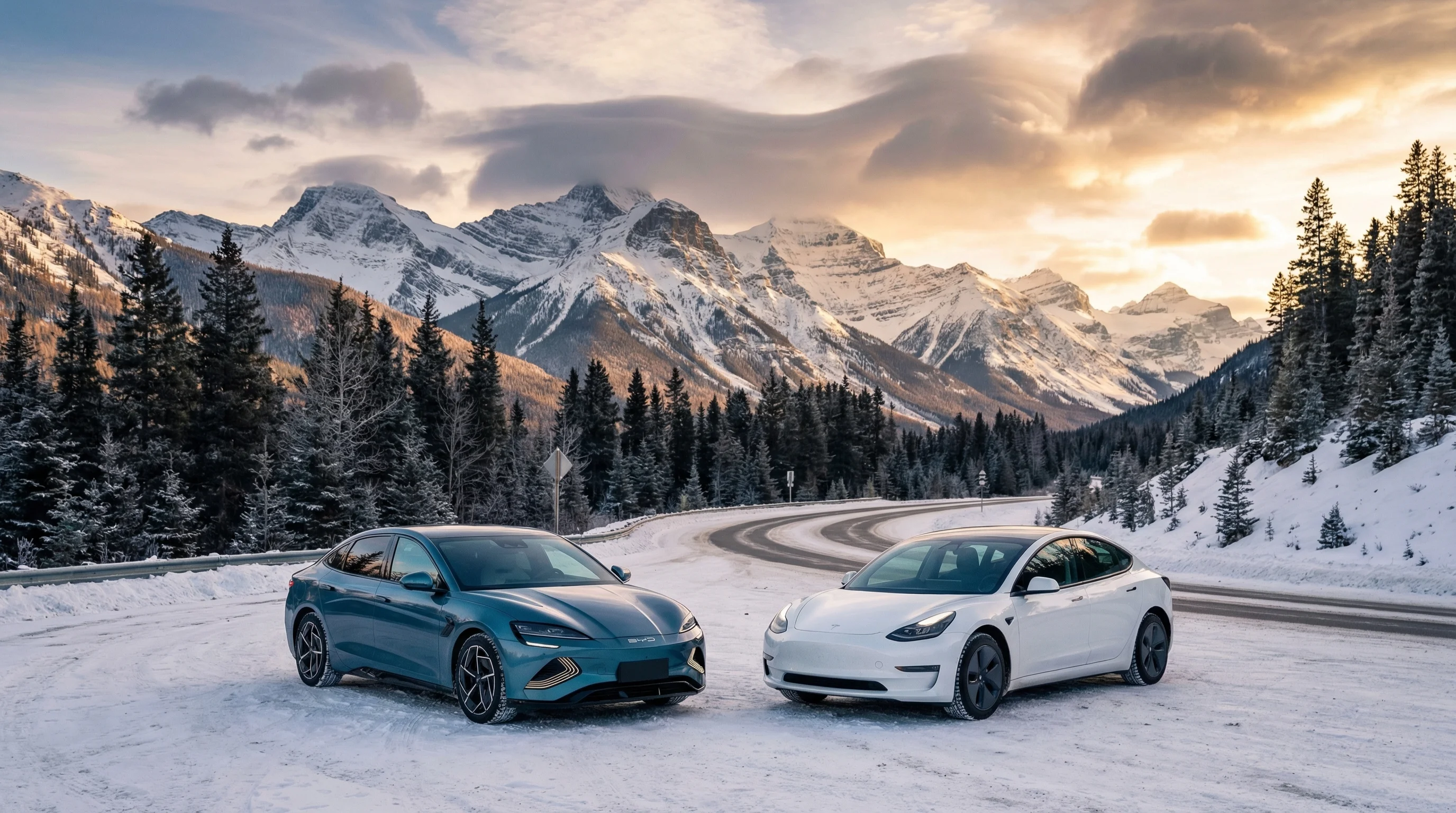
The BYD Seal vs Tesla Model 3 comparison keeps getting framed as David vs Goliath. These are two different philosophies about what a car should be, separated by a $10,000 price difference.
The right choice depends on what you actually value, not on which spec sheet looks better.
The Quick Version
If you need a car today, road trip regularly on the Trans-Canada, and value an established charging network over everything else, Tesla wins. The Supercharger network is extensive, reliable, and everywhere. That's worth real money for people who travel.
If you can wait for dealership availability, do most of your driving locally with occasional road trips, and think saving $10,000 is more important than brand familiarity, the Seal wins. You get more car for significantly less money.
That's the call.
What Actually Differs
Both are electric sedans. Both seat five. Both offer roughly 500+ km of range. Both accelerate faster than most people need. Both have comprehensive safety features and earned 5-star Euro NCAP ratings.
The differences that matter:
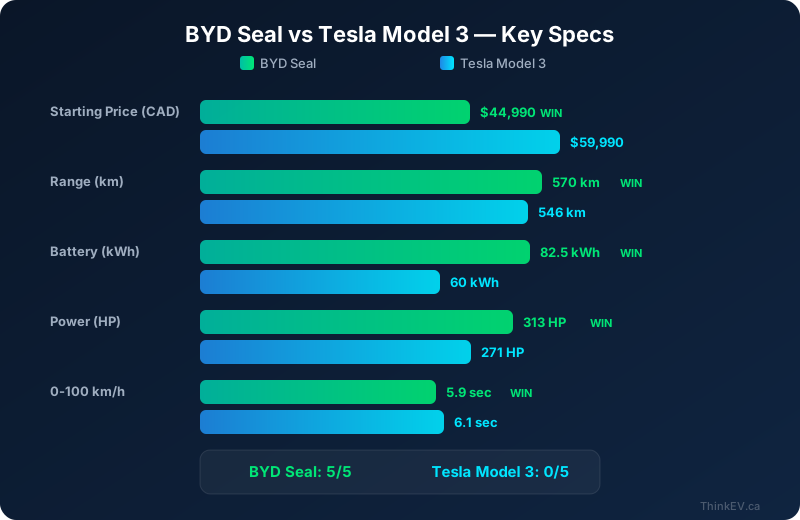
The Model 3 starts at $54,990 in Canada (Long Range, there's no base or standard-range Model 3 sold here). The Seal starts at about $45,000. That's roughly $10,000, enough to matter in pretty much anyone's budget. Neither qualifies for the federal EVAP rebate, Tesla exceeds the $50,000 cap, and BYD is excluded as a Chinese manufacturer.
Tesla's software is more polished. Updates come frequently. Features like Autopilot (and the optional Full Self-Driving upgrade) are more mature than anything BYD offers. If you care about having the most advanced driver assistance today, Tesla has an edge.
BYD's interior uses higher-quality materials at the base level. Nappa leather, Harman Kardon audio, and that rotating screen are standard. The Model 3's base interior is more spartan, vegan leather, minimal controls, the famous single-screen everything. Some people love that minimalism. Others find it cheap-looking for the price.
The Seal's Blade Battery uses LFP chemistry that won't catch fire under abuse conditions. Tesla's battery uses nickel-based chemistry with higher energy density but theoretical thermal runaway risk. Both are safe by any normal definition, but if battery fire anxiety keeps you up at night, BYD has a technical advantage.
Tesla has 500+ Supercharger stalls across Canada. BYD uses CCS charging, which works at Electrify Canada, Petro-Canada, and other public networks, but the coverage is less consistent. On major corridors, you're fine. In rural areas, Tesla has more options.
The Money Question
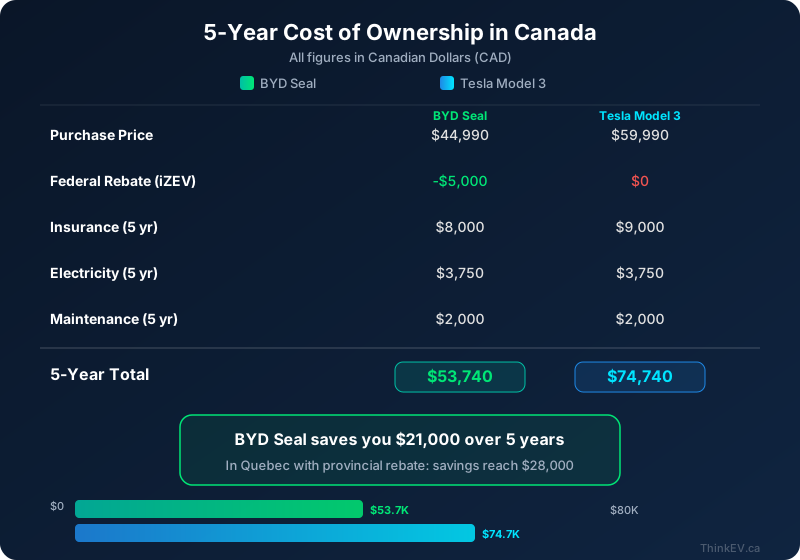
Running actual numbers for a 5-year ownership scenario tells a different story.
Starting with purchase price: the Model 3 at $54,990 (Long Range, the cheapest trim sold in Canada) versus the Seal at $45,000. Neither qualifies for the federal EVAP rebate, the Model 3 exceeds the $50,000 final transaction value cap, and the BYD Seal is manufactured in China, which excludes it from EVAP regardless of price (only vehicles made in Canada or FTA countries qualify). In Quebec, both can get the $2,000 Roulez vert provincial rebate ($60,000 MSRP cap), bringing them to $52,990 and $43,000 respectively.
That's roughly a $10,000 difference in Quebec. Not as dramatic as it first looks, but still significant, especially when the Seal matches or exceeds the Model 3 on many specs.
Insurance runs maybe $100-200/year more for the Tesla, higher replacement value, more expensive parts. Call it $1,000 over five years.
Electricity costs are similar. Both cars are efficient, both get about 6-7 km per kWh in mixed driving. Figure $3,500-4,000 for five years of charging.
Maintenance is comparable. EVs don't need oil changes, and both manufacturers have reasonable service costs. Maybe $2,000 over five years for either car.
Where it gets complicated: resale value. Tesla holds value remarkably well, expect 50-60% after five years based on historical data. BYD in Canada? Nobody knows. They're new. If BYD depreciates faster (say, 45-50%), some of that purchase price savings disappears. If they hold value better than expected, the savings stick.
Even in a worst-case depreciation scenario for BYD, you're still coming out ahead on total cost of ownership. The initial price gap is just too large.
The Charging Reality
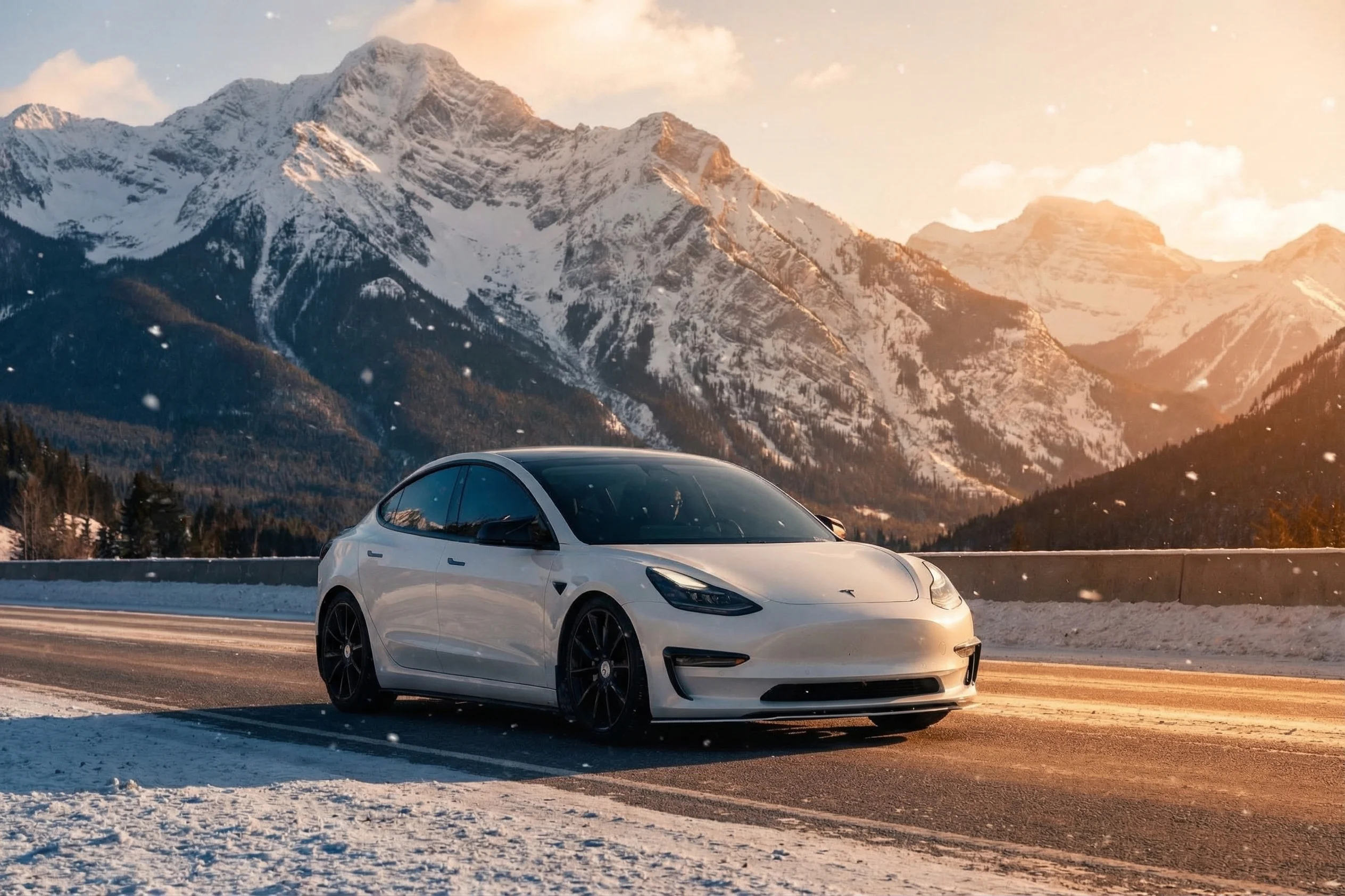
The charging question is simpler than it looks at first.
If you have home charging, a garage, a driveway outlet, or condo charger access, you'll charge at home 90% of the time regardless of which car you buy. Public charging only matters for road trips.
For road trips, Tesla's Supercharger network is genuinely better. More locations, more reliability, better app integration. But the Seal uses CCS, which means it works at every non-Tesla fast charger in Canada. Electrify Canada, Petro-Canada Electric Highway, ChargePoint, FLO, all compatible.
Gear worth having
As an Amazon Associate, ThinkEV earns a small commission from qualifying purchases — at no extra cost to you.
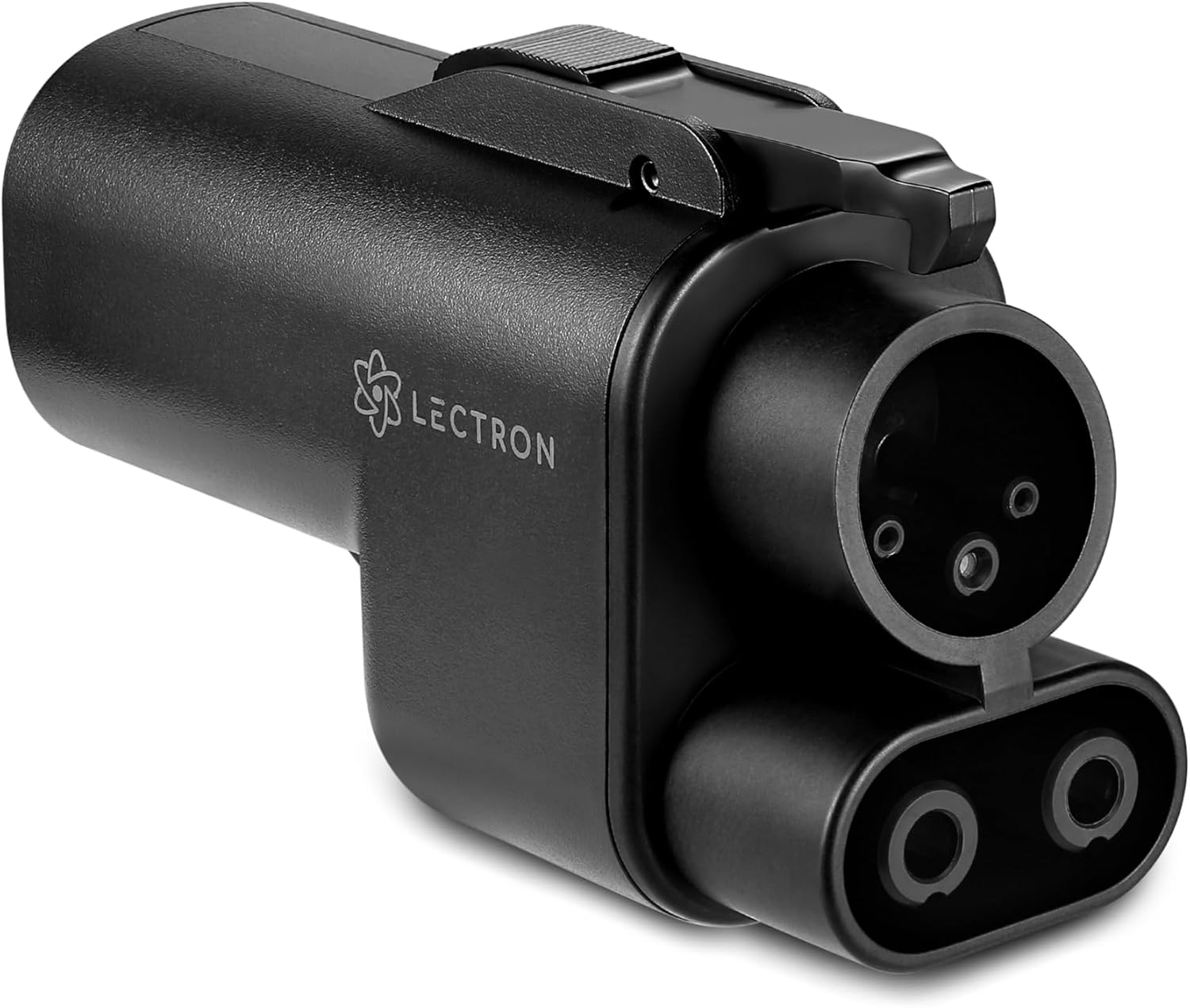
Lectron NACS to CCS Fast-Charge Adapter
Unlock every CCS fast charger for your Tesla, up to 500A DC. Never get stranded at a non-Tesla DC station again.
As an Amazon Associate, ThinkEV earns from qualifying purchases — at no extra cost to you.
You can also buy a Tesla-to-CCS adapter for about $250, which gives non-Tesla vehicles access to the Supercharger network. Coverage is expanding, though speeds may be limited.
Gear worth having
As an Amazon Associate, ThinkEV earns a small commission from qualifying purchases — at no extra cost to you.

VIOFO A229 Pro 4K Dash Cam
4K front plus 2K rear with parking mode and GPS. Your silent witness for insurance claims, with always-on sentry recording while parked.
As an Amazon Associate, ThinkEV earns from qualifying purchases — at no extra cost to you.
The practical question: how often do you actually road trip? If you're doing Vancouver to Kelowna every weekend, the Supercharger network matters. If you're doing Toronto to Ottawa twice a year, the CCS network is perfectly adequate.
Most people overestimate how much they road trip. If you're honest about your driving patterns, charging network differences might matter less than you think.
The Technology Gap
Tesla's software is better.
The interface is more responsive. Updates come more frequently. Autopilot handles highway driving with a confidence that BYD's driver assistance doesn't match. If you spring for Full Self-Driving, you get features like automatic lane changes and work through-on-autopilot that BYD can't replicate.
BYD's software works. It does what you need. CarPlay and Android Auto are available for people who prefer their phone's interface. But if you want advanced EV technology, Tesla is still ahead.
That said: how much do you actually use these features? If you're someone who enables Autopilot on every highway drive and loves watching your car update with new features monthly, Tesla offers something you'll appreciate. If you mostly just want to drive the car and listen to music, the technology gap might not matter as much as the price gap.
Winter Considerations
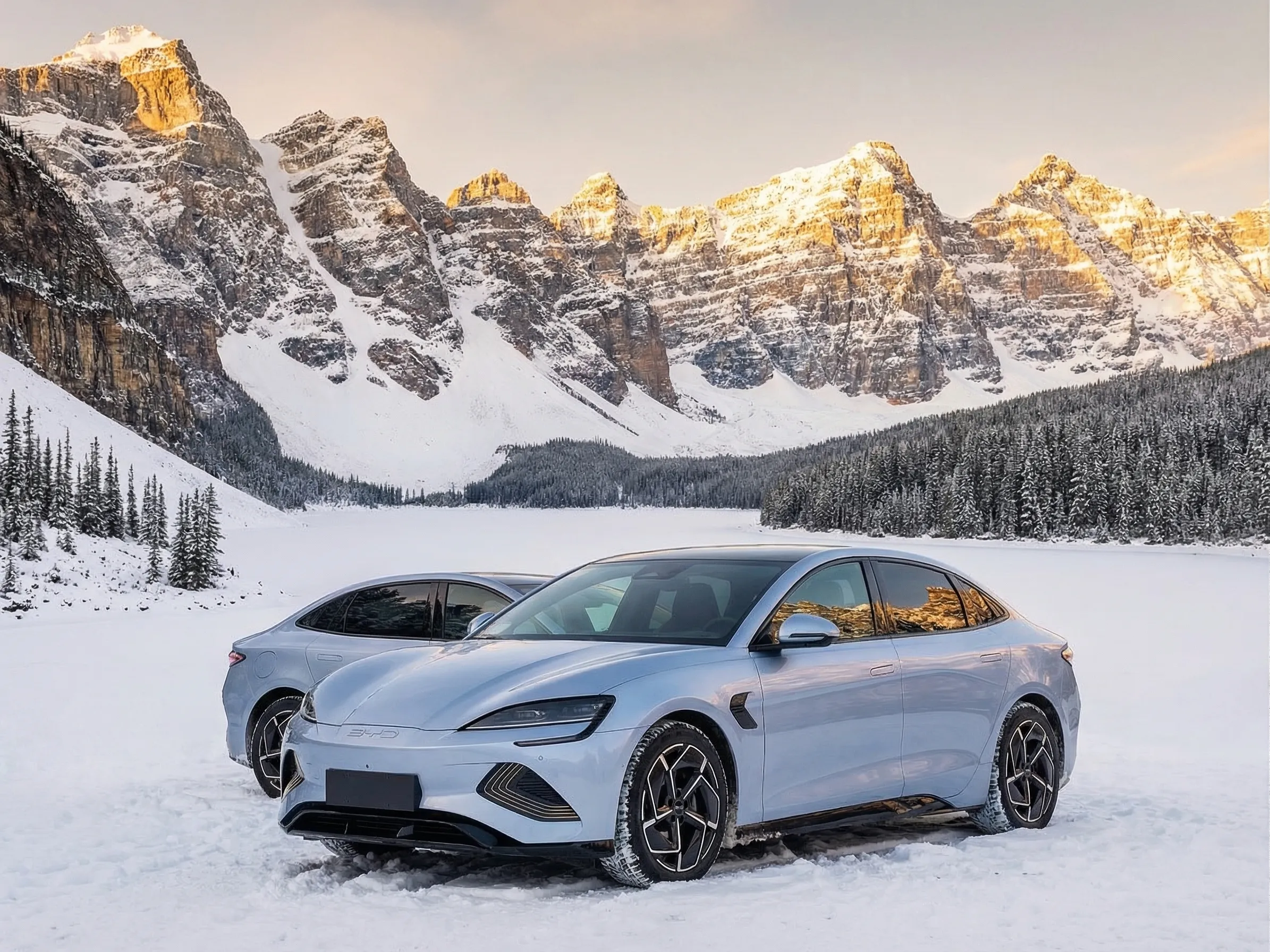
The Seal is rear-wheel drive only, BYD doesn't offer AWD on it at all. The base Model 3 in Canada is actually the Long Range AWD at $54,990, so it comes with all-wheel drive standard. Tesla also offers a Performance variant at approximately $69,990.
For most Canadian winter driving with proper winter tires, RWD is fine. The low center of gravity (thanks to the floor-mounted battery) helps with stability. Traction control on both vehicles is competent.
If you regularly deal with unplowed roads, steep driveways, or genuine backcountry conditions in winter, you might need AWD. That means either stepping up to the more expensive Tesla or looking at a different vehicle entirely.
Both cars have heat pumps for efficient cabin heating. Both offer battery preconditioning to improve cold-start range. Expect about 25-30% range reduction in deep winter for either vehicle, that's normal for EVs.
Gear worth having
As an Amazon Associate, ThinkEV earns a small commission from qualifying purchases — at no extra cost to you.
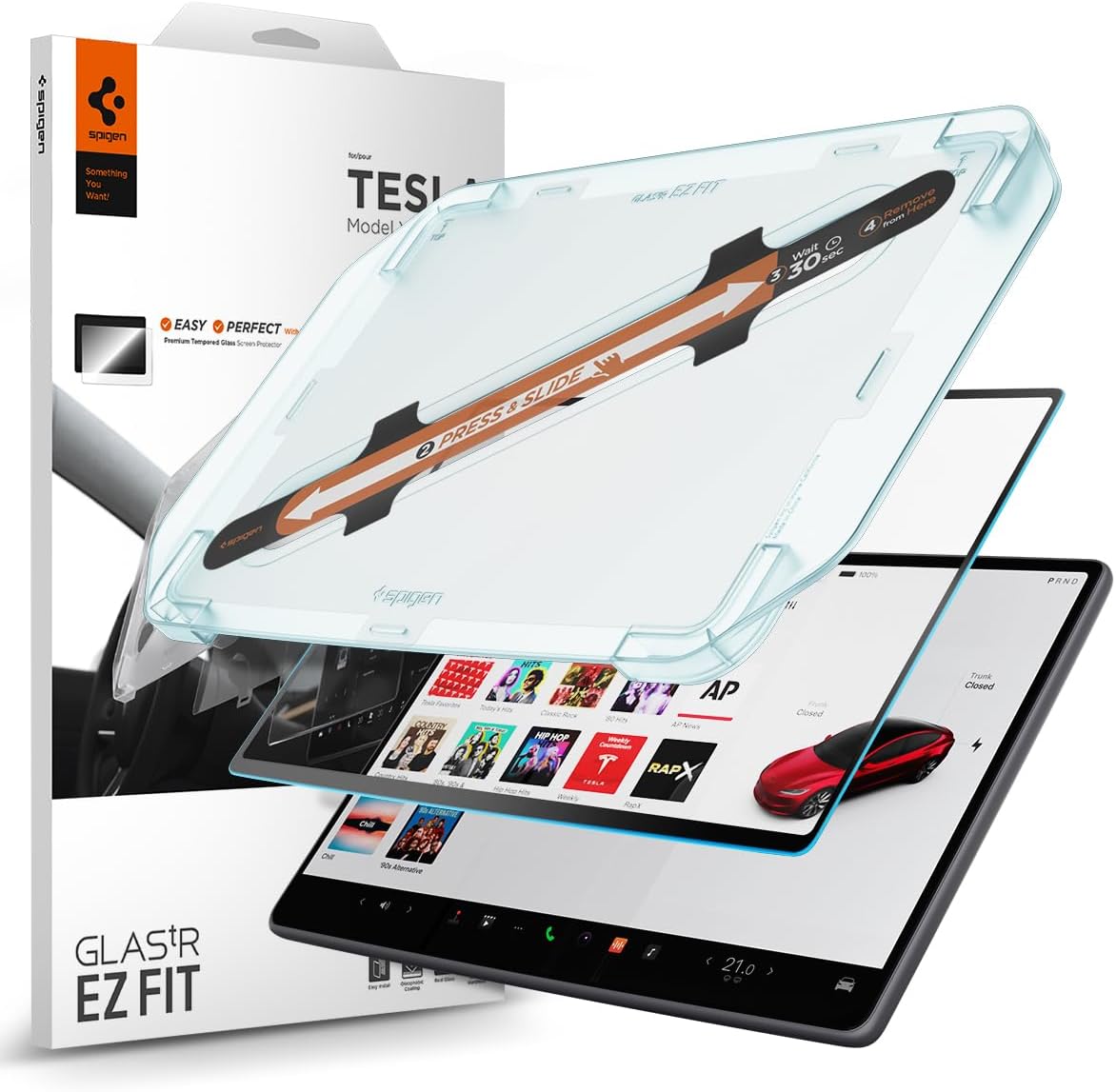
Spigen Tempered Glass for Tesla Model 3/Y
Tempered-glass protection for the touchscreen that kills fingerprints and scratches. Two minutes to install, lasts the life of the car.
As an Amazon Associate, ThinkEV earns from qualifying purchases — at no extra cost to you.
Brand and Resale Anxiety
There is a psychological factor worth naming directly.
When you buy a Tesla, everyone knows what that is. You're buying from the company that made EVs cool, the one everyone's heard of, the one with the cultural cachet and the established resale market.
When you buy a BYD, people will ask "a what?" You'll explain that it's a Chinese EV manufacturer, the largest in the world actually, makes their own batteries, great safety ratings. Some people will be impressed by your willingness to try something new. Others will wonder if you made a mistake.
This matters to some buyers and not to others. If you care about what your neighbors think of your car, that's a legitimate consideration. If you don't, it's not.
Resale value is the financial expression of this brand recognition. Tesla's established market means predictable depreciation. BYD's newness means uncertainty. That uncertainty comes with risk, but also with the potential reward of saving $10,000+ upfront.
The Decision Framework
Choose Tesla if you road trip frequently and depend on the Supercharger network. If you want the most advanced driver assistance available today. If resale value is critical over a long ownership horizon. If brand recognition matters to you.
Choose BYD if you mostly charge at home and the CCS network covers your occasional road trips. If saving $10,000 outweighs having the most polished software. If you're comfortable with a new brand. If interior materials and standard features matter more than brand prestige.
The $10,000 Question
$10,000 is a lot of money. A semester of university tuition, a significant chunk of a down payment, several years of home charging costs.
Tesla is a better-established product with a better-established support network. That's worth something. But it isn't worth $10,000 for every buyer, and it depends on how you actually use the car.
BYD is betting that, for most practical purposes, their car does everything the Tesla does at a price that makes Tesla look greedy. The spec sheet says they have a case.
A genuine alternative to Tesla at a $10,000 discount is already a win for Canadian EV buyers. Competition benefits everyone, regardless of which car you choose.
Gear worth having
As an Amazon Associate, ThinkEV earns a small commission from qualifying purchases — at no extra cost to you.

WeatherTech FloorLiner for Tesla Model 3
Deep-channel liners that trap every drop of slush and salt. The difference between a ruined interior and a showroom-fresh cabin after a Canadian winter.
As an Amazon Associate, ThinkEV earns from qualifying purchases — at no extra cost to you.
Related Reading
- Tesla Model 3 Highland Canada Review, The full review of what you're comparing against.
- BYD Seal Review, Full BYD Seal review.
- Most Affordable EVs in Canada 2026, All the budget options compared.
Gear worth having
As an Amazon Associate, ThinkEV earns a small commission from qualifying purchases — at no extra cost to you.

Tesla Key Card Holder with AirTag Slot
Stop fishing the keycard out of your wallet, and slot an AirTag in case the car wanders off in a lot.
As an Amazon Associate, ThinkEV earns from qualifying purchases — at no extra cost to you.

Founder & Chief Editor
Vlad Pereira is the founder and chief editor of ThinkEV.ca, the Canadian electric-vehicle publication he writes and edits from Courtenay, British Columbia. He covers EV pricing, federal and provincial rebates, charging costs, and the Chinese manufacturers now entering Canada, from the buyer's side rather than the press-fleet side. ThinkEV is a venture of Vlad Pereira Online; his writing on health, income and the long game lives at vladpereira.com.
Frequently asked questions
Is the BYD Seal cheaper than the Tesla Model 3 in Canada?
Which has better charging infrastructure?
Which is better for Canadian winters?
Is the BYD Seal available in Canada?
Which has more range, BYD Seal or Tesla Model 3?
More EV & road-trip finds
Affordable upgrades worth a look — tap any to check the price on Amazon.
 ★ 2,941
Microfiber Cleaning Cloths (Multi-Pack)
View on Amazon ★ 419
★ 419RGB Car Interior LED Strip Light
View on Amazon ★ 4,055
6-Speed Manual Shift Knob Display
View on Amazon ★ 27,769
Car Cup Holder Coasters (4-Pack)
View on Amazon ★ 308
★ 308Coiled Lightning Car Cable for iPhone (2-Pack)
View on Amazon ★ 61
★ 61Toddler Car Seat Snack and Cup Tray
View on Amazon ★ 17,839
Qifutan Vent Phone Mount (Military-Grade Clip)
View on Amazon ★ 96,686
PULIDIKI Car Cleaning Gel (Detailing Putty)
View on AmazonRead, Plan, Then Stay Current
Explore our expert articles to understand incentives and ownership costs, use the map to pressure-test charging reality, then subscribe so new EV coverage comes straight to you.
Continue Reading
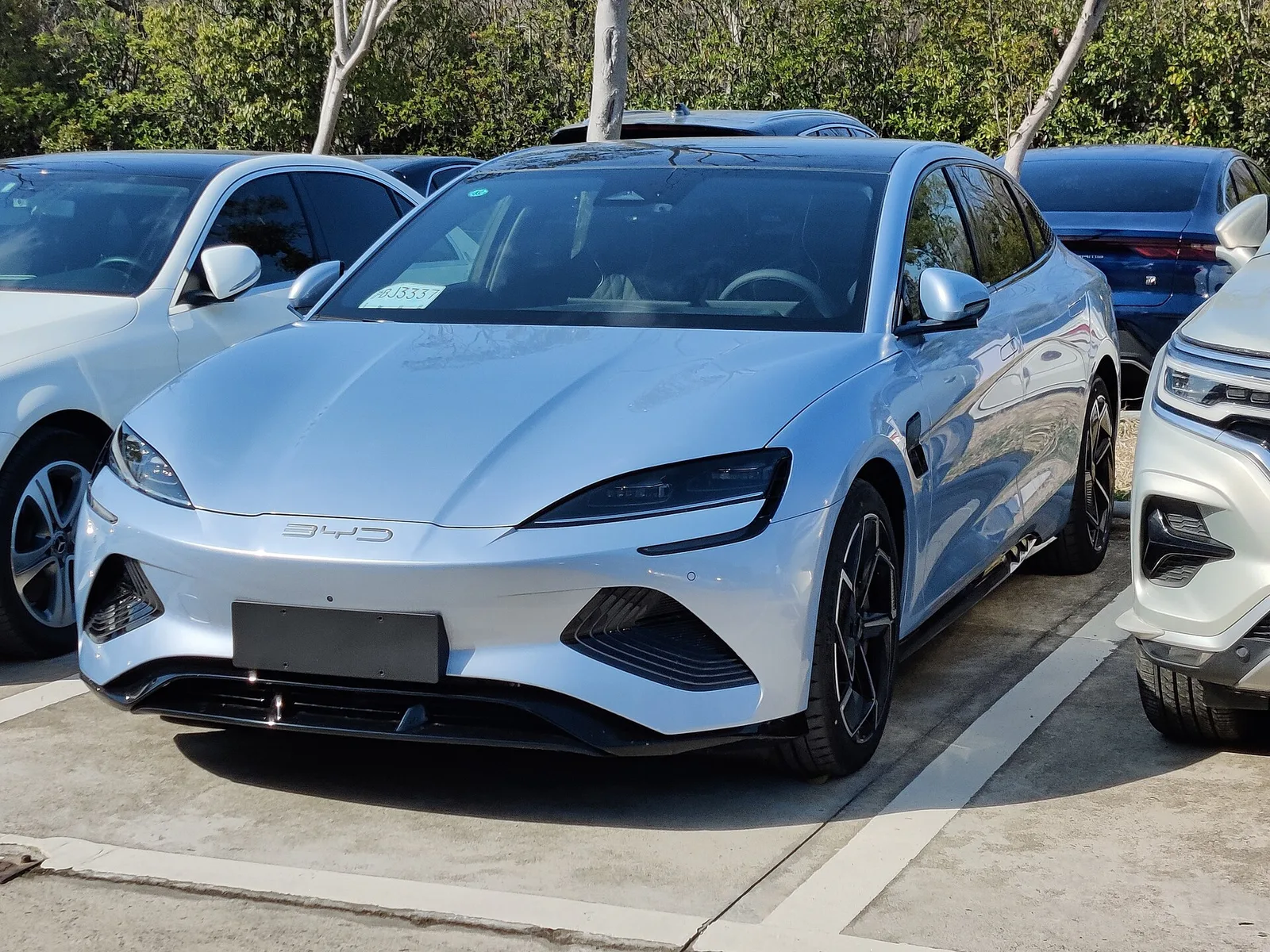
BYD Seal Price in Canada: Policy, Not Engineering

New or Used EV: Which Is the Smarter Buy in 2026?
EV Highway vs City Range: Why They Flip
Buy or Lease an EV in Canada? The 2026 Answer
Single-Motor vs Dual-Motor EVs: What AWD Actually Adds