Key takeaways
- In October 2024, Canada slapped a 100% tariff on Chinese-manufactured electric vehicles.
- That framework shifted to a 6.1% tariff with a 49,000-vehicle annual quota, shared across all Chinese brands, and roughly half (24,500) must be priced under $35,000 CAD.
- 49,000 vehicles sounds like a lot, but Canada sold roughly 180,000 EVs in 2025.
- BYD makes its own batteries, motors, power electronics, and semiconductors, and since batteries are 30–40% of an EV's cost, that vertical integration is a structural price edge over rivals buying cells from CATL or Panasonic.
- No Chinese-built EV qualifies for the $5,000 federal EVAP rebate, but Stellantis owns 51% of Leapmotor International, giving that brand a ready-made Canadian footprint through Chrysler, Jeep, Dodge, and Ram dealers.
Canada sold roughly 180,000 EVs in 2025. The new 49,000-vehicle annual quota for Chinese-manufactured vehicles, split across every brand, not per brand, gives new entrants a narrow window to establish themselves before the quota fills. That constraint is the most important thing to understand about BYD, NIO, Xpeng, Zeekr, and the others working toward a Canadian launch.
Three years ago, if you wanted an electric car in Canada, the list of plausible brands was short. Now we're looking at BYD, NIO, XPeng, Zeekr, and several others including Chery, Leapmotor, MG, and potentially Changan as brands to watch. That does not mean they are all equally likely or equally near-term.
This post is about the brands, who they are, what they stand for, how they build cars, and why their strategies matter for Canadian buyers. If you want model-by-model breakdowns with specs and pricing, check out our complete 2026-2027 new EV guide. Here, I'm going deeper on the companies themselves.
Let me walk you through what's actually happening.
The Trade Deal That Opened the Door
Before we talk brands, you need to understand the policy shift that made all of this possible.
In October 2024, Canada slapped a 100% tariff on Chinese-manufactured electric vehicles. That effectively killed any market entry plan overnight. A lower-priced Chinese EV that might otherwise have looked compelling would have doubled in landed cost before normal retail expenses even entered the picture.
Then, on January 16, 2026, Ottawa reportedly struck a new deal. The tariff framework shifted from 100% to 6.1%, but with significant conditions attached. Here's what the framework is commonly described as looking like:
- 6.1% tariff on Chinese-manufactured EVs (down from 100%)
- 49,000-vehicle annual quota, that's total across all Chinese brands, not per brand
- Affordability requirement, commonly described as pushing lower-priced vehicles into the quota mix
- Investment language, often described as requiring some form of Canadian partnership or manufacturing follow-through over time
- No EVAP eligibility, Chinese-manufactured vehicles remain excluded from the federal $5,000 rebate regardless of price
That quota number matters. 49,000 vehicles sounds like a lot, but Canada sold roughly 180,000 EVs in 2025. If BYD alone wanted to match their European volumes, they'd eat that quota by themselves. Multiple brands competing for a limited number of import permits creates a land-rush dynamic.
Import permits were reported to open March 1, 2026 under the new framework. As of mid-March 2026, no retail deliveries have occurred yet. Late 2026 remains the broad earliest scenario for meaningful activity, not a guarantee.
For the full breakdown of the tariff deal and its implications, see our BYD tariff deal analysis.
BYD: The Giant You Haven't Heard Of Yet
BYD sold 4.55 million vehicles in 2025, 2.26 million of them battery-electric. That's more than Tesla's 1.64 million. More than any other automaker on Earth. BYD is the world's largest EV manufacturer, and most Canadians have never heard of them.
That anonymity may be temporary.
Who BYD Actually Is
BYD stands for "Build Your Dreams," and the company started in 1995 as a rechargeable battery manufacturer. That origin story matters because batteries are the single most expensive component in any EV, typically 30-40% of the total vehicle cost. BYD doesn't buy batteries from someone else. They make their own. They also make their own electric motors, their own power electronics, their own semiconductors, and increasingly their own vehicle software.
This is what the industry calls vertical integration, and nobody does it better than BYD. When Tesla needs batteries, they buy from Panasonic or CATL and negotiate prices. When BYD needs batteries, they walk across the factory floor. That structural cost advantage shows up directly in the sticker price.
Warren Buffett's Berkshire Hathaway invested in BYD back in 2008 when the company was still primarily a battery manufacturer. That investment, roughly $230 million at the time, turned into billions. Buffett saw what was coming before most people knew what an EV was.
The Blade Battery Advantage
BYD's proprietary Blade Battery technology uses lithium iron phosphate (LFP) chemistry in a cell-to-pack design that eliminates the traditional module layer. The practical result: more energy density per unit of pack volume, lower cost per kilowatt-hour, and a chemistry that is inherently resistant to thermal runaway.
The nail penetration test BYD published is dramatic video if you haven't seen it. It does support the broader case that LFP chemistry behaves differently under abuse than many nickel-rich chemistries. But buyers should still treat manufacturer demonstrations as one input, not the whole safety story.
For Canadian winters, LFP chemistry has one drawback: it loses more range in extreme cold compared to NMC (nickel manganese cobalt) cells. BYD addresses this with thermal management systems that pre-condition the battery, but it's something Saskatchewan and Manitoba buyers should understand.
BYD's Expected Canadian Lineup
The models BYD is most likely to bring to Canada first include:
-
BYD Dolphin, A compact hatchback positioned against the Chevy Bolt's memory and the Nissan Leaf. Often discussed around the high-$20,000s to low-$30,000s CAD. This is BYD's volume-play scenario, not a confirmed Canadian sticker.
-
BYD Atto 3, A compact SUV competing with the Hyundai Kona Electric and Kia Niro EV. Commonly modeled in the low-to-mid-$30,000s CAD, though final Canadian pricing is still unconfirmed.
-
BYD Seal, This is the Tesla Model 3 fighter. A sleek sedan commonly discussed around the mid-$40,000s CAD. Treat the Canadian hardware and pricing picture as probable, not settled.
-
BYD Seagull, The budget champion. This is a city-oriented hatchback that sells for the equivalent of $13,000-$15,000 CAD in China. Even with the 6.1% tariff and shipping costs, it could land under $25,000 in Canada. Range is shorter, around 300 km WLTP, but for urban commuters and second-car buyers, that's plenty. Whether BYD brings the Seagull to Canada first or waits is unclear, but the quota's requirement that half of all imports be priced under $35,000 creates a strong incentive.
-
BYD Tang, A 7-seat family SUV competing with nothing in the current affordable EV space. Expected around $50,000-$60,000 CAD. For families who need three rows and can't stomach $80,000+ for a Tesla Model X, the Tang fills a gap nobody else is addressing at this price point.
No BYD vehicle qualifies for the federal EVAP rebate if it launches as a Chinese-manufactured import. That means the effective comparison against rebate-eligible competitors like the Hyundai Ioniq 5 or Kia EV6 needs to account for a $5,000 gap. BYD may still look cheaper in many modeled scenarios, but the rebate loss narrows the advantage.
BYD's Canadian Strategy
BYD isn't trying to sell cars online like Tesla. They're pursuing a traditional dealer partnership model, which means finding existing dealership groups willing to add a BYD franchise or building standalone BYD showrooms. As of March 2026, dealer partnerships are forming, particularly in British Columbia and Quebec, which have the strongest EV demand, but no BYD dealerships have opened yet.
Expected arrival: late-2026 activity is plausible, with 2027 a more realistic window for broader rollout.
For a deeper look at BYD's Canadian market entry, read our full BYD Canada analysis.
NIO: Premium Positioning with Revolutionary Tech
If BYD is the volume play, NIO is the prestige play. They're not trying to be the cheap Chinese alternative. They're trying to be the better luxury EV at a lower price than BMW, Mercedes, or Tesla's premium offerings.
NIO's Identity and Philosophy
NIO was founded in 2014 by William Li, sometimes called "the Elon Musk of China", a comparison he reportedly dislikes. The company positions itself as a premium lifestyle brand, not just a car manufacturer. NIO owners get access to NIO Houses (clubhouse-style community spaces), NIO Life (a lifestyle merchandise brand), and a level of owner community engagement that makes Tesla's fan base look casual.
In China, NIO has cultivated an almost cult-like following among affluent urban professionals. Their vehicles start around $50,000 USD equivalent and go well above $80,000. This is not a budget brand.
The Battery Swap Revolution
The headline feature, the one that could genuinely change how Canadians think about EV ownership, is battery swap.
Here's how it works: instead of plugging in and waiting 30+ minutes at a DC fast charger, you drive into an automated NIO Power Swap Station. A robotic system lowers your depleted battery pack out of the vehicle, slides in a fully charged one, and you drive away. The entire process takes about 5 minutes. No cables. No waiting. No charging anxiety.
NIO has deployed over 2,000 swap stations globally, primarily in China but also in Norway and other European markets. Each station holds 13-21 battery packs and can handle roughly 300 swaps per day.
The implications for Canada are significant, if the infrastructure arrives. Battery swap eliminates the cold-weather charging penalty entirely because the swap station maintains batteries at optimal temperature. It eliminates range anxiety because swapping is as fast as filling a gas tank. And NIO's Battery-as-a-Service (BaaS) model means you can buy the car without the battery, reducing the purchase price by roughly $10,000-$15,000, and pay a monthly subscription for battery access instead.
The caveat: building swap stations in Canada is a massive infrastructure investment. If NIO ever commits to Canada, an initial corridor strategy around the largest EV markets would be the more plausible first step, not a national network. Full Canadian coverage would take years. Charging-port and adapter details should also be treated as model-specific until Canadian specs are official, so swap should be viewed as a possible differentiator rather than a guaranteed ownership path.
NIO's Expected Lineup for Canada
-
NIO ET5, A midsize sedan competing with the Tesla Model 3 and BMW i4. In other markets, NIO positions it with swappable-battery flexibility, premium interior materials, and a tech-heavy feature set. If it ever comes to Canada, buyers should verify the exact battery, charging, and subscription details from the official Canadian spec sheet rather than assuming the overseas configuration carries over unchanged.
-
NIO ET7, The flagship sedan. Think Mercedes EQS competitor. The ET7 uses NIO's Aquila Super Sensing system with a roof-mounted LiDAR unit providing 1,550 nm wavelength detection, superior in fog, rain, and snow compared to camera-only systems. Expected around $75,000-$90,000 CAD.
-
NIO ES6, A midsize SUV competing against the Tesla Model Y and BMW iX3. This would likely be NIO's volume model in Canada because Canadians love SUVs. Expected around $60,000-$70,000 CAD.
All NIO vehicles feature NOMI, an AI assistant with a physical presence, a small round screen mounted on the dashboard that moves, makes eye contact, and responds to voice commands with personality. It sounds gimmicky until you experience it. European reviewers have called it the most human-feeling in-car AI in any production vehicle.
NIO's Canadian Timeline Reality Check
Here's where I need to be honest: NIO's Canadian entry is less certain than BYD's. NIO has been more cautious about Western expansion, and they've faced financial pressures that have slowed their European rollout. Their Norwegian operation took longer to break even than projected.
NIO has not announced formal Canadian market entry plans. The 2027 timeline is based on industry analysis, their European expansion pace, and the opportunity created by the new tariff framework. They might come. They might focus on growing their European presence first. I'm watching their announcements but tempering enthusiasm with realism.
Expected arrival: possible 2027, but still clearly speculative.
XPeng: The Technology Play
XPeng is the brand that makes Tesla engineers nervous. Not because of price, because of technology.

XPeng's Tech-First Identity
Founded in 2014 by He Xiaopeng (a tech entrepreneur who previously co-founded UCWeb, which Alibaba acquired for $4 billion), XPeng approaches car manufacturing the way a Silicon Valley company would. Software comes first. Hardware is the platform that runs it.
XPeng's R&D spending as a percentage of revenue is among the highest in the global auto industry. They employ over 6,000 engineers, and roughly half work on autonomous driving and AI. This isn't a company that buys technology from suppliers, they develop their own driving systems, their own voice AI, their own navigation stack.
XNGP: Autonomous Driving That Works
XPeng's XNGP (XPeng Navigation Guided Pilot) is their advanced driver-assistance system, and it's genuinely impressive. In China, XNGP handles city driving, not just highway cruising, but working through intersections, traffic lights, construction zones, and pedestrian-heavy urban streets.
The system uses a combination of cameras, LiDAR sensors, millimetre-wave radar, and ultrasonic sensors. The LiDAR advantage is significant for Canadian conditions: where camera-only systems can struggle with low winter sun angles, snow-obscured lane markings, and fog, LiDAR maintains spatial awareness regardless of lighting conditions.
Whether XNGP will launch in Canada with the same capabilities as the Chinese version depends on regulatory approval from Transport Canada and extensive local mapping and testing. Don't expect city-level autonomy on day one. But the hardware comes built into every vehicle, and software updates can unlock features over time, assuming regulatory green lights.
XPeng's Expected Canadian Lineup
-
XPeng G6, A compact SUV built on XPeng's 800-volt SEPA 2.0 platform. The 800V architecture means ridiculously fast charging: 10-80% in under 20 minutes at a compatible 350 kW station. That's faster than almost anything else on the market. Range is approximately 570 km WLTP. Expected around $40,000-$50,000 CAD.
-
XPeng G9, A full-size premium SUV that's been called one of the best-riding EVs in any market. It features rear-wheel steering, air suspension, and a cabin that reviews consistently describe as "shockingly quiet." Expected around $55,000-$65,000 CAD.
-
XPeng P7, A sleek four-door sedan with a 710 km WLTP range that competes directly with the Tesla Model 3 Long Range. The P7's design language is more conventional European than the minimalist Tesla approach, which may appeal to buyers who want their EV to look like a proper car rather than a gadget. Expected around $45,000-$55,000 CAD.
XPeng's Timeline
XPeng has already launched in several European markets, and their vehicles have received generally positive reviews. Canada is a logical next step, but XPeng has indicated they'll prioritize markets where they can establish proper service and delivery infrastructure before expanding.
Expected arrival: 2027-2028. They've been methodical about expansion, which bodes well for the quality of their Canadian operation when it arrives.
Zeekr: The Geely Connection
Zeekr might be the smartest market entry play of any brand on this list. Here's why: they're not starting from scratch.
The Geely Advantage
Zeekr is owned by Geely, a Chinese automotive conglomerate that also owns Volvo Cars, Polestar, Lotus, and London Electric Vehicle Company (the black cab maker). That's not trivia, it's the single most important thing about Zeekr's Canadian prospects.
Geely's ownership of Volvo means Zeekr has access to:
- World-class safety engineering, Volvo's safety expertise is arguably the best in the world, and that knowledge flows across Geely's brands
- Existing dealer networks, Volvo has 40+ dealer locations across Canada. Polestar operates through Volvo's network. Zeekr could potentially leverage these relationships
- Proven cold-weather engineering, Volvo and Polestar vehicles are engineered for Scandinavian winters, which are as brutal as Canadian ones
- Regulatory compliance expertise, Volvo already navigates Transport Canada and CMVSS requirements every day
Zeekr vehicles are built on Geely's Sustainable Experience Architecture (SEA) platform, the same platform underpinning Polestar EVs, the Volvo EX30, and the Lotus Eletre. This isn't an untested architecture. Millions of kilometres have validated it.
Zeekr's Expected Canadian Lineup
-
Zeekr 001, A shooting brake (wagon/fastback hybrid) with serious performance credentials and a body style that barely exists in Canada's EV market today. In overseas form, it is marketed with long-range variants and strong acceleration. But Canadian battery, pack-size, and real-world range claims should all be treated as provisional until an official launch spec exists.
-
Zeekr 007, A midsize sedan with a minimalist, tech-forward interior and a strong value proposition in overseas-market discussions. The 007 is typically positioned against the Tesla Model 3 and Polestar 2, but Canadian battery details, trim mix, and pricing should still be treated as forecast rather than confirmed.
Zeekr's Canadian Strategy
Zeekr's most plausible move would be to explore Volvo- or Polestar-adjacent infrastructure. Whether Geely would actually allow that is another question, especially if it risks cannibalizing Polestar or Volvo EV sales. The point is not that a Canadian network is ready to activate tomorrow, but that Zeekr has a more credible pathway than a brand starting from zero.
Expected arrival: 2026-2027 is the optimistic scenario. Zeekr could move faster than some rivals if Geely chooses to leverage its existing infrastructure, but that remains a strategic possibility rather than a confirmed plan.
Chery: The Budget Play
Chery is one of China's largest automakers by export volume, and they're taking a very different approach from the brands above. Where BYD aims for value and NIO aims for luxury, Chery is targeting the budget-conscious buyer who wants an EV but can't afford $40,000+.
The Omoda E5
Chery's primary Canadian candidate is the Omoda E5, a compact SUV that's already selling in Europe and several other international markets. Key specs:
- Range: approximately 430 km WLTP
- 150 kW fast charging capability
- Spacious interior for the segment
- Expected price: $28,000-$32,000 CAD
That price point is significant because it would likely fit the lower-priced part of the quota framework if current reporting on the affordability requirement is correct. Buyers should still verify the exact quota mechanics from official notices rather than assuming every commentary summary is precise.
Chery's brand isn't well known in North America, but they've been exporting vehicles globally for over 20 years. They're the largest Chinese automaker by export volume to non-Chinese markets. Their quality has improved dramatically over the past decade, and their European launch models have received generally favourable reviews, though not at the level of BYD or NIO.
The challenge for Chery in Canada: brand building from zero, establishing service infrastructure, and competing with BYD models at similar price points where BYD has stronger brand recognition and arguably better technology.
Expected arrival: 2027. Chery has been aggressive about international expansion and has the manufacturing capacity to move quickly.
Leapmotor: The Stellantis-Backed Dark Horse
Leapmotor might be the most interesting strategic play on this list, and it has nothing to do with the cars themselves. It's about who's backing them.
The Stellantis Connection
Stellantis, the parent company of Jeep, Chrysler, Dodge, Ram, Fiat, Peugeot, and Alfa Romeo, invested $1.5 billion in Leapmotor in 2023 and formed a joint venture called Leapmotor International. Stellantis holds 51% of this joint venture and is responsible for Leapmotor's sales outside China.
This is significant for Canadian market entry because Stellantis already has an enormous dealer network across Canada through its Chrysler, Jeep, Dodge, and Ram brands. The infrastructure for selling, servicing, and supporting Leapmotor vehicles already exists. No other Chinese brand has that advantage.
The Leapmotor C10
The C10 is a midsize SUV that's been Leapmotor's international launch vehicle. It features:
- A clean, conservative design that won't alienate traditional car buyers
- Approximately 420 km WLTP range
- Qualcomm Snapdragon SA8295P cockpit chip (the same one used in premium vehicles from BMW and Mercedes)
- Expected price: $35,000-$40,000 CAD
The C10 won't wow anyone with its specifications. It's not the fastest, the longest-range, or the most technologically advanced option. But it's competent, reasonably priced, and, most importantly, it comes with the backing of one of the world's largest automakers.
For the buyer who wants a lower-cost EV but is cautious about a totally new retail footprint, Leapmotor's Stellantis tie-up may prove easier to trust than a pure start-from-scratch launch. That still depends on how much of Stellantis' real Canadian sales and service footprint is actually made available.
Expected arrival: Late 2026 to early 2027. Stellantis has the infrastructure to move quickly when they decide to.
MG: The British-Chinese Hybrid
MG is a fascinating case study in automotive brand reinvention. The name is British, Morris Garages, founded in 1924, famous for sporty roadsters. The ownership is Chinese, SAIC Motor acquired the brand in 2007. The result is a Chinese-manufactured vehicle line carrying a Western badge.
The MG4 Electric
The MG4 has been a massive success in Europe and the United Kingdom, where it's consistently among the best-selling EVs. It's a compact hatchback that reviewers have praised for sharp handling, a low centre of gravity, and a price that undercuts every competitor.
Key details:
- Rear-wheel drive (the budget version) or all-wheel drive (the performance version)
- Range: 350-450 km WLTP depending on battery size
- European price equivalent translates to roughly $30,000-$38,000 CAD
- Received a 5-star Euro NCAP safety rating
The MG4's handling has been compared favourably to the Volkswagen Golf, a benchmark that no EV in its price range has matched. If it drives as well in Canada as European reviewers say, it could become the default recommendation for buyers who want a fun, affordable EV.
MG's advantage over purely Chinese brands: brand familiarity. Even though most Canadians under 50 haven't driven an MG, the name carries positive associations. It doesn't trigger the same "Chinese brand" hesitancy that BYD or Chery might face.
For safety data on Chinese-manufactured EVs already tested in Europe, see our Euro NCAP safety rating analysis.
Expected arrival: 2027. MG has been actively exploring North American market entry but hasn't confirmed Canadian timelines.
ORA/Great Wall: The Style Statement
Most EVs look either like generic cars or like blobs. ORA, a sub-brand of Great Wall Motors, is doing something different, making vehicles with distinctive, retro-inspired design.
The ORA 03 (previously called Good Cat, and yes, that was its real name) looks like a VW Beetle crossed with a Porsche 911. It's polarizing. It's also memorable in a sea of forgettable shapes.
Great Wall Motors is one of China's largest automakers, best known for SUVs and pickup trucks. Their Haval brand is a dominant force in several Asian and Middle Eastern markets. ORA is their bet on the idea that EV buyers want personality, not just specifications.
Expected arrival: 2027-2028. Their European sales have been growing steadily, and the Australian launch has been well-received.
Changan: The Long Game
Changan is one of China's oldest automakers, tracing its roots back to 1862 (yes, 1862, they originally made weapons for the Qing dynasty). They're not rushing into Canada, they're taking time to build the right products and establish partnerships.
Their Avatr brand is co-developed with Huawei (yes, that Huawei) and CATL (the world's largest battery maker). The technology stack is impressive, even if the timeline is longer. Huawei's HarmonyOS-based infotainment and autonomous driving system is considered among the best in China, rivalling XPeng's XNGP.
Expected arrival: 2028 or later. Worth watching, but not imminent.
What Established Brands Should Be Worried About
Three incumbents face structurally different threats. Tesla's price floor and brand premium come under direct attack from BYD's sub-$35,000 offerings and NIO's premium tech. Hyundai and Kia, the strongest mainstream EV programs in Canada today, will need to defend the $45,000-$55,000 band against vehicles with comparable range and 800V architecture priced $10,000-$15,000 lower. The Big Three legacy automakers face the most exposed truck and SUV pricing.
Gear worth having
As an Amazon Associate, ThinkEV earns a small commission from qualifying purchases — at no extra cost to you.

Grizzl-E Classic Level 2 EV Charger (40A)
Canadian-made and rated for minus 40C winters. 40A / 9.6 kW, NEMA 14-50, indoor/outdoor, 24-ft cable. The charger built for Canadian weather.
As an Amazon Associate, ThinkEV earns from qualifying purchases — at no extra cost to you.
Here's what I keep coming back to: the Canadian EV market is about to get a lot more uncomfortable for established players. And frankly, some of them deserve it.
Tesla's Vulnerability
Tesla's cheapest option in Canada is the Model Y Standard Range RWD at $49,990. When competitors can offer solid EVs for $25,000-$35,000, something has to give. Tesla has massive brand recognition and the best charging network in North America, but they've also been coasting on brand loyalty while competitors catch up on technology and surpass them on price.
Tesla's software advantage, once considered unassailable, has narrowed considerably. XPeng's XNGP and NIO's autonomous driving systems are competitive or arguably superior in certain conditions. Tesla's interior quality has been a frequent complaint, and Chinese brands are delivering nicer cabins at lower prices.
The Supercharger network remains Tesla's strongest moat in Canada. But as NACS becomes the standard connector and other networks expand, that advantage erodes. Tesla also faces a brand perception challenge in Canada that didn't exist two years ago, Elon Musk's political activities have turned off a meaningful segment of the progressive, environmentally-conscious buyers who were Tesla's core early adopters.
I've talked to EV owners across Canada who literally don't want a Tesla badge on their car anymore, regardless of how good the vehicle is. That's an opening Chinese brands can exploit without trying.
Hyundai and Kia's Position
Hyundai and Kia have done the best job of any established brands at offering competitive EVs. The Ioniq 5, Ioniq 6, EV6, and EV9 are all excellent vehicles with 800V architecture, strong real-world range, and interiors that punch above their price class. But their pricing starts around $45,000-$55,000 for well-equipped models. When BYD offers comparable vehicles for $30,000-$45,000, Hyundai and Kia will face real pricing pressure.
Their advantages are substantial: EVAP rebate eligibility (where manufactured in eligible countries), established dealer and service networks across every Canadian province, known resale values backed by years of Canadian market data, and vehicles that have been validated in Canadian winters with actual owner data, not manufacturer claims. Those are genuine advantages that take years to build.
But price is price. A family in Winnipeg choosing between a $48,000 Ioniq 5 and a $30,000 BYD Atto 3, even accounting for the $5,000 EVAP rebate on the Hyundai, is looking at a $13,000 gap. That buys a lot of peace of mind about service networks.
The German Luxury Brands
BMW, Mercedes, and Audi have the most to lose in the premium segment. NIO's interior quality matches or exceeds theirs at lower prices. Zeekr's performance credentials rival BMW's. And the German brands have been painfully slow to offer competitive EV range and charging speeds.
The BMW i4 starts at $57,000. The NIO ET5 could arrive at $55,000-$65,000 with a dramatically better feature set, swappable battery, 23-speaker Dolby Atmos, LiDAR-based driver assistance, and an AI companion that actually works. German brand prestige will protect them for a while, but prestige only stretches so far when the value gap is this wide.
Mercedes has particularly struggled with their EV pricing strategy, the EQS starts above $130,000 in Canada. NIO's ET7, a direct competitor, could land at half that price with comparable luxury and better technology. That's not a gap marketing can bridge.
The Price Cascade Effect
Even if you never buy a Chinese EV, you'll benefit from their presence. Industry analysts expect EV prices across all brands to fall 15-25% by 2028 as competition intensifies. When Tesla has to compete with BYD on price, they'll cut prices, they've already done it multiple times globally. When Hyundai has to compete with Chery on price, they'll follow. The entire market reprices downward.
We've seen this movie before. When Hyundai and Kia entered North America decades ago, they were dismissed as cheap and unreliable. They forced every established brand to offer more value. Japanese automakers responded by improving quality and features. The entire industry got better. Chinese EVs are about to do the same thing, except the disruption is happening faster because the technology gap is smaller.
More choice is coming too. Don't like sedans? There will be SUVs. Don't like SUVs? There will be wagons and shooting brakes. Every segment will have multiple options at multiple price points.
The buying experience is evolving. Some brands will sell through traditional dealers. Some will go direct-to-consumer like Tesla. Leapmotor will be at your local Chrysler dealer. You'll have options for how you want to buy.
Gear worth having
As an Amazon Associate, ThinkEV earns a small commission from qualifying purchases — at no extra cost to you.

Portable Level 2 EV Charger (40A, NEMA 14-50)
Throw it in the trunk and charge anywhere with a 240V outlet. 40A portable with NEMA 14-50 plug. Your road-trip insurance policy.
As an Amazon Associate, ThinkEV earns from qualifying purchases — at no extra cost to you.
The Tariff and Quota Framework: What Buyers Need to Understand
Canada's new tariff framework isn't just a policy detail, it directly affects what you'll pay and what's available.
The 49,000-Vehicle Quota
The annual quota of 49,000 Chinese-manufactured EVs is widely described as being allocated across all brands. How the allocation works:
- Brands apply for import permits through the federal framework
- Allocation details should be treated carefully and verified from official notices, not inferred from commentary alone
- Half the quota (approximately 24,500 vehicles) must be vehicles priced under $35,000 CAD
- The remaining half can be any price point
This quota creates scarcity. In a scenario where BYD, Chery, MG, Leapmotor, and Zeekr all want meaningful Canadian volumes, 49,000 vehicles won't be enough. Expect waiting lists, limited model availability, and possible regional prioritization (BC and Quebec first, then Ontario, then everywhere else).
The Joint Venture Requirement
The trade deal requires Chinese manufacturers to establish Canadian manufacturing partnerships within 5 years. This could mean:
- Battery assembly plants in Canada
- Component manufacturing facilities
- Final assembly partnerships with existing Canadian auto plants
- R&D centres
This requirement benefits Canada's economy but adds cost and complexity for Chinese brands. It also creates an interesting dynamic: brands that invest early in Canadian manufacturing could eventually have vehicles that qualify for EVAP rebates, since the "manufactured in Canada" requirement would be met.
No EVAP, But Provincial Rebates May Apply
Chinese-manufactured EVs don't qualify for the $5,000 federal Incentives for Zero-Emission Vehicles Program (iZEV/EVAP). However, some provincial rebates may still apply:
- Quebec's Roulez vert ($2,000) may apply depending on eligibility rules
- British Columbia's provincial program has its own criteria
- Other provinces vary in their approach to Chinese-manufactured vehicles
Check provincial programs carefully, eligibility rules may change as Chinese brands enter the market.
Service Network Challenges for New Entrants
This is the part most "Chinese EVs are coming!" articles skip, and it's the part that matters most for the person actually buying one of these cars.
The Service Reality
A great car is less great if the nearest service centre is 500 km away. And building a national service network in Canada, a country that's 7,821 km wide with population concentrated along the US border, is enormously expensive and time-consuming.
Here's what each brand faces:
- BYD: Building from scratch, likely through dealer-group partnerships. The strongest EV markets would be the most plausible first service points, but buyers should not assume national coverage early.
- NIO: Their China model includes mobile service vans. If they attempted something similar in Canada, it could help in dense corridors, but it would not remove the need for actual parts and repair infrastructure.
- XPeng: No announced Canadian service strategy yet.
- Zeekr: Could potentially leverage Volvo/Polestar-adjacent infrastructure, which would be one of the faster pathways if Geely chose to do it.
- Leapmotor: Stellantis gives Leapmotor one of the more credible infrastructure stories on paper, but buyers should still verify which Canadian stores and service bays are actually committed.
Parts Availability
Common wear items (brakes, filters, wipers, tires) will be available through aftermarket suppliers. But body panels, electronic modules, sensors, and battery components will need to come from the manufacturer. For a new brand without established Canadian parts distribution:
- Common repairs: days to weeks
- Uncommon parts: weeks to months
- Collision repair: potentially months if specialized panels are needed
Compare that to Toyota, where any part for any model is typically available within 48 hours anywhere in Canada.
Warranty Considerations
Many Chinese brands advertise competitive warranties in global markets. BYD, for example, offers strong warranty terms in several markets. But buyers should confirm the actual Canadian warranty booklet once a vehicle launches. A warranty is only as useful as the service network backing it, and a 5-hour drive to the nearest authorized repair centre can erase much of the practical value.
Financing and Insurance: The Hidden Friction Points
Sticker price is only one number in the math. Canadian buyers should also expect first-cycle headwinds on financing terms and insurance premiums for new-to-market Chinese brands. Banks price uncertainty into interest rates and loan-to-value ratios. Insurers price unknown repair networks, parts availability, and historical loss data. Both gaps shrink as Canadian sales volume and claims data accumulate, usually within two to three model years.
Getting Financed
Major Canadian banks and credit unions finance vehicles based partly on brand familiarity and resale data. For brands with no Canadian track record:
- Interest rates may be higher (lenders price in uncertainty)
- Loan-to-value ratios may be more conservative (larger down payments required)
- Lease terms may be less favourable (uncertain residual values)
Some Chinese brands may offer captive financing (manufacturer-backed loans) to offset this, as Hyundai and Kia did when they were building their Canadian presence decades ago.
Insurance Premiums
Insurance companies set rates based on claims data, repair costs, and parts availability. For a brand-new entrant with no Canadian claims history:
- Premiums will likely be higher than comparable established-brand vehicles
- Some insurers may decline coverage entirely until they have sufficient data
- Collision coverage may be particularly expensive due to uncertain repair costs
Get insurance quotes before committing to a purchase from a new brand. The premium difference could add $500-$1,500 per year compared to a Hyundai or Toyota.
Resale Value: The Great Unknown
This is the honest conversation nobody in the "Chinese EVs are amazing" camp wants to have.
The Depreciation Risk
Resale value for any new brand in any market is an unknown. The factors working against strong resale values for Chinese EVs in Canada:
- No established used market, Canadian buyers can't look up what a 3-year-old BYD Dolphin is worth because none exist here
- Brand perception, "Chinese car" still carries negative connotations for some Canadian buyers, which affects demand on the used market
- Technology evolution, Chinese EV technology is advancing so rapidly that a 3-year-old model may feel significantly outdated compared to the newest version
- Uncertain brand longevity, Buyers worry about purchasing from a brand that might exit the market, leaving them with an orphaned vehicle
The Counterargument
The lower purchase price provides some buffer. In a simplified scenario, a lower-cost EV can still lose less money in absolute dollars even if its percentage depreciation is worse than a more expensive rival. That does not make depreciation irrelevant, but it does explain why some buyers will still accept higher resale risk if the entry price is far lower.
Also, as Chinese brands establish themselves in Canada and build market presence, resale values should stabilize. Hyundai went through the same cycle when they entered North America, initially terrible resale values that improved as brand perception evolved. Today, a 3-year-old Hyundai holds its value about as well as most competitors. BYD and others will likely follow the same trajectory, but the transition takes 5-10 years of market presence.
There's also a structural factor that may help EV resale values generally: the battery. A long battery warranty and solid real-world degradation data can support used-market confidence. But I would not describe that as a guaranteed resale floor until we have actual Canadian ownership and degradation data for these brands.
My Advice
If you're buying a Chinese EV in 2026 or 2027, plan to keep it for at least 5-7 years. Don't buy one expecting to flip it in 3 years for a reasonable return. The math works if you factor in the savings over a comparable established-brand EV, but only if you hold it long enough.
Gear worth having
As an Amazon Associate, ThinkEV earns a small commission from qualifying purchases — at no extra cost to you.
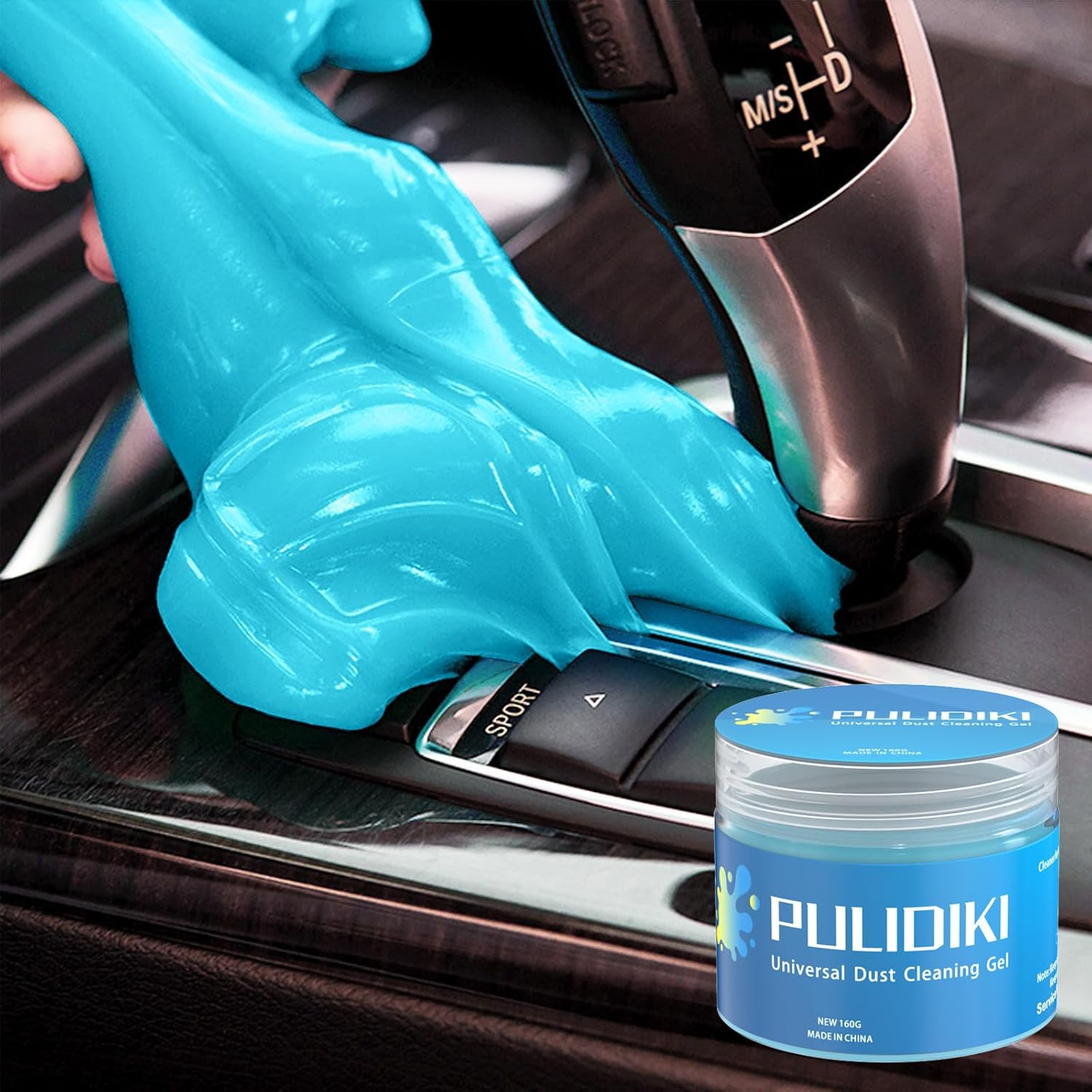
PULIDIKI Car Cleaning Gel (Detailing Putty)
Press it into vents, buttons, and seams and it lifts out dust you did not know was there. Weirdly satisfying, genuinely useful.
As an Amazon Associate, ThinkEV earns from qualifying purchases — at no extra cost to you.
Canadian Winters: The Real-World Test
Every EV brand selling in Canada needs to answer one question: how does it perform at -30 degrees Celsius?
Range Loss in Cold Weather
All EVs lose range in extreme cold. LFP batteries (used by BYD) typically lose more range in cold weather than NMC batteries, roughly 30-40% at -20C compared to 20-30% for NMC. BYD addresses this with active thermal management that pre-conditions the battery while the car is plugged in, but if you're parked unplugged outdoors in a Winnipeg parking lot for 8 hours, you'll feel the difference.
NIO's battery swap concept would be one possible response to this problem if it ever arrived here at scale: swap stations can keep packs at optimal temperature and reduce some charging friction in winter. XPeng and Zeekr also market thermal-management and pre-conditioning features in other markets, but Canadian equipment and trim assumptions should still be verified model by model.
Cold-Weather Validation Data
Here's what we actually know about Chinese EV winter performance:
- BYD has extensive cold-weather data from northern China (Harbin regularly hits -30C) and Scandinavia. Their European models have performed adequately in Norwegian winters.
- NIO has been operating in Norway since 2021 through multiple winters. Norwegian owners report acceptable cold-weather performance with battery pre-conditioning.
- XPeng and Zeekr have European winter data but limited extreme-cold testing published publicly.
- Chery, Leapmotor, MG have less publicly available cold-weather data for their EV lineups.
Norwegian data is encouraging but not perfectly applicable. Norway's coastal climate, cold and wet, is different from the dry, extreme cold of the Canadian prairies. A car that performs well in Oslo at -15C may behave differently in Regina at -35C. Until we have Canadian-specific winter testing data from owners in Alberta, Saskatchewan, and Manitoba, there's an element of the unknown.
That said, the fundamentals of EV cold-weather performance are well understood, and Chinese manufacturers have access to the same thermal management engineering that makes Hyundai, Kia, and Tesla EVs functional in Canadian winters. This is a solvable engineering problem, not a fundamental flaw.
A Reality Check on Timelines
I'm genuinely excited about what's coming, but I need to temper expectations.
What's Actually Confirmed
- Canada-China tariff deal: reported as done (January 2026)
- 6.1% tariff and 49,000-vehicle framework: widely reported as active
- Import permits: reported as open as of March 1, 2026
- BYD's relative regulatory lead: widely reported, but still not the same as a finished retail launch
- First retail deliveries: not yet occurred as of mid-March 2026
What's Probable but Not Confirmed
- BYD retail activity beginning in late 2026
- Zeekr entering through Geely's existing infrastructure, 2026-2027
- Leapmotor through Stellantis dealerships, late 2026 to early 2027
- Chery and MG arriving by 2027
What's Speculative
- NIO Canadian market entry (they haven't announced it)
- XPeng Canadian timeline (2027-2028 is industry speculation)
- Battery swap stations in Canada (depends entirely on NIO committing)
- XNGP autonomous features being approved by Transport Canada
- Any brand hitting price points lower than their European pricing
Brands That Might Not Make It
Not all these brands will succeed in Canada. The market is too small (180,000 EVs sold in 2025) and the infrastructure investment too large for everyone to thrive. Some predictions:
- Most likely to succeed: BYD (scale, pricing), Leapmotor (Stellantis backing), Zeekr (Geely infrastructure)
- Will come but face challenges: Chery, MG (brand building from zero)
- May not come at all or delay significantly: NIO, XPeng, Changan (cautious about Western expansion)
For details on which companies have already secured import permits, see our coverage on who got Canada's first Chinese EV import permits.
The Smart Approach: How to Work through This
If you're considering waiting for these new brands, or wondering whether to jump on the first BYD that hits a Canadian lot, here's a practical framework.
Before You Buy from a New Brand
Check service coverage in your area. A great car is less great if the nearest service centre is 500 km away. Don't just check the city you live in, check your regular travel routes.
Ask about parts availability. Common items should be stocked locally. Rare parts might take weeks to arrive from overseas. Ask the dealer directly: "If I need a new side mirror, how long will that take?"
Look for Canadian-specific winter testing. Norway data is encouraging, but it's not Saskatchewan. Ask about cold-weather range testing in Canadian conditions, not just WLTP or CLTC numbers.
Get insurance quotes before committing. Some insurers charge premiums for unfamiliar brands. Get quotes from at least three insurers before finalizing your purchase.
Understand the financing terms. Compare rates for the Chinese brand against what you'd get for a Hyundai or Kia at the same price point. If there's a 2% rate difference, calculate the total cost over the loan term.
Accept that resale value is unknown. You might take a bigger depreciation hit than with established brands. The lower purchase price provides some buffer, but it's a genuine uncertainty. Plan to keep the vehicle long-term.
Check whether your province offers rebates. Federal EVAP is off the table, but provincial programs may apply.
The Waiting Game
If you need a car now, buy the best available option now. Don't drive a dying gas car for two years hoping BYD prices drop further. The savings aren't worth the hassle and cost of maintaining a deteriorating vehicle.
If you can comfortably wait 6-12 months, waiting for BYD's Canadian launch could save you $10,000-$20,000 compared to current options. That's real money.
If you're patient and your current vehicle is fine, 2027-2028 will offer the most choice and likely the best pricing as multiple brands compete for Canadian buyers.
For a comparison of pricing on affordable Chinese EVs specifically, read our guide on Chinese EVs under $35,000 coming to Canada.
The Canadian EV Market Just Cracked Wide Open
The Canadian EV market three years ago: Tesla, and some options most people ignored.
The Canadian EV market by 2028: a dozen brands across every price point, with serious competition driving down prices and driving up features.
The brands coming to Canada aren't just offering cheaper alternatives, they're offering different philosophies. BYD's vertical integration and value proposition. NIO's luxury-plus-innovation approach. XPeng's technology-first mentality. Zeekr's leverage of Geely's global empire. Leapmotor's Stellantis-backed pragmatism. Chery's budget play. MG's Western-badge-Eastern-manufacturing hybrid.
Some will succeed brilliantly. Some will stumble. Some might never actually arrive. But collectively, they're forcing every automaker selling EVs in Canada to offer more for less. That benefits every buyer, regardless of which badge they choose.
Whether you buy from one of these new brands or not, you'll benefit from their presence. More competition means better deals for everyone.
The wave looks much more plausible than it did a year ago. But the exact brand list, retail timing, and first-shipment reality still need to be verified as events unfold.
For the latest on Chinese EVs entering the Canadian market, we're tracking every development as it happens.
Gear worth having
As an Amazon Associate, ThinkEV earns a small commission from qualifying purchases — at no extra cost to you.

WixGear Magnetic Air Vent Phone Mount (2-Pack)
A magnet strong enough that your phone never flinches over potholes or rail crossings. Two in the box, one for each car.
As an Amazon Associate, ThinkEV earns from qualifying purchases — at no extra cost to you.
Related Reading
- BYD Coming to Canada, Tariff deal details and BYD's Canadian entry plan.
- Every New EV Coming to Canada 2026-2027, Complete model-by-model guide with specs and pricing.
- Chinese EVs Entering Canada in 2026, Market entry timeline and regulatory framework.
- Chinese EV Safety: Euro NCAP Ratings, Crash test results for Chinese EVs already sold in Europe.
- Chinese EVs Under $35,000 Coming to Canada, The affordable models targeting Canadian buyers.
- New vs Established EV Brands, Should you buy from a new or established brand?
Gear worth having
As an Amazon Associate, ThinkEV earns a small commission from qualifying purchases — at no extra cost to you.
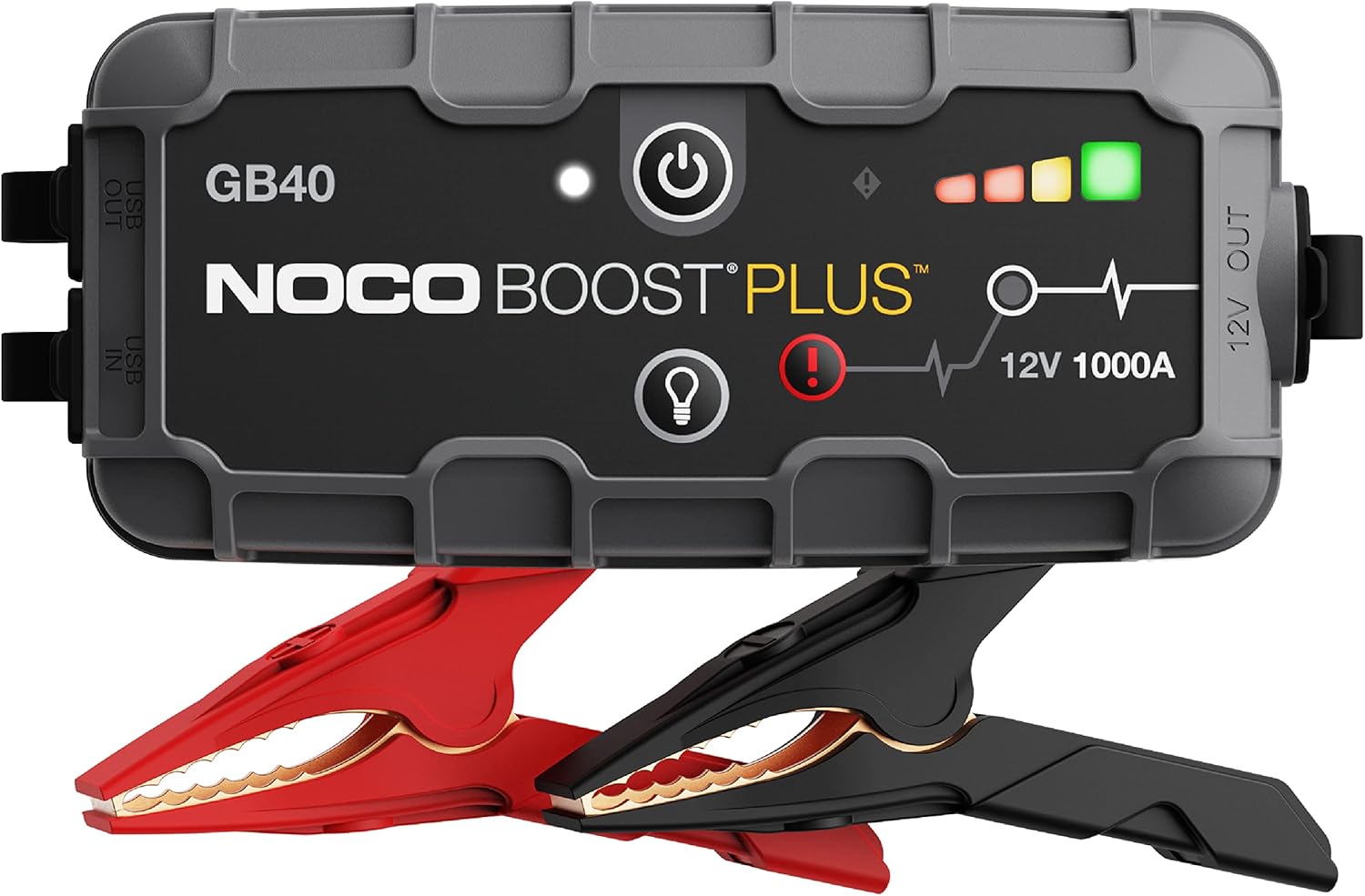
NOCO Boost Plus GB40 Jump Starter
A 1000A lithium jump starter that fits in your glovebox and works on any 12V battery. Your insurance against a dead 12V in a parking lot.
As an Amazon Associate, ThinkEV earns from qualifying purchases — at no extra cost to you.

Founder & Chief Editor
Vlad Pereira is the founder and chief editor of ThinkEV.ca, the Canadian electric-vehicle publication he writes and edits from Courtenay, British Columbia. He covers EV pricing, federal and provincial rebates, charging costs, and the Chinese manufacturers now entering Canada, from the buyer's side rather than the press-fleet side. ThinkEV is a venture of Vlad Pereira Online; his writing on health, income and the long game lives at vladpereira.com.
Frequently asked questions
Which new EV brands are coming to Canada?
Will new EV brands be cheaper than current options?
Do new brand EVs work with Canadian charging networks?
When is BYD coming to Canada?
Will Chinese EVs qualify for Canada's $5,000 EVAP rebate?
What about service and warranty for new Chinese EV brands?
How does the 49,000-vehicle quota work?
What is NIO's battery swap and will it come to Canada?
Should I wait for Chinese EVs or buy an established brand now?
More EV & road-trip finds
Affordable upgrades worth a look — tap any to check the price on Amazon.
 ★ 164
★ 164Solar-Powered LED Ambient Light
View on Amazon ★ 401
★ 401Crochet Daisy Rear-View Mirror Charm
View on Amazon ★ 21,304
Car Headrest Hooks (4-Pack)
View on Amazon ★ 297
★ 297360-Degree One-Hand Dashboard Phone Mount
View on Amazon ★ 61
★ 61Toddler Car Seat Snack and Cup Tray
View on Amazon ★ 17,839
Qifutan Vent Phone Mount (Military-Grade Clip)
View on Amazon ★ 12,051
Windex Electronics Screen Wipes
View on Amazon ★ 419
★ 419RGB Car Interior LED Strip Light
View on AmazonRead, Plan, Then Stay Current
Explore our expert articles to understand incentives and ownership costs, use the map to pressure-test charging reality, then subscribe so new EV coverage comes straight to you.
Continue Reading
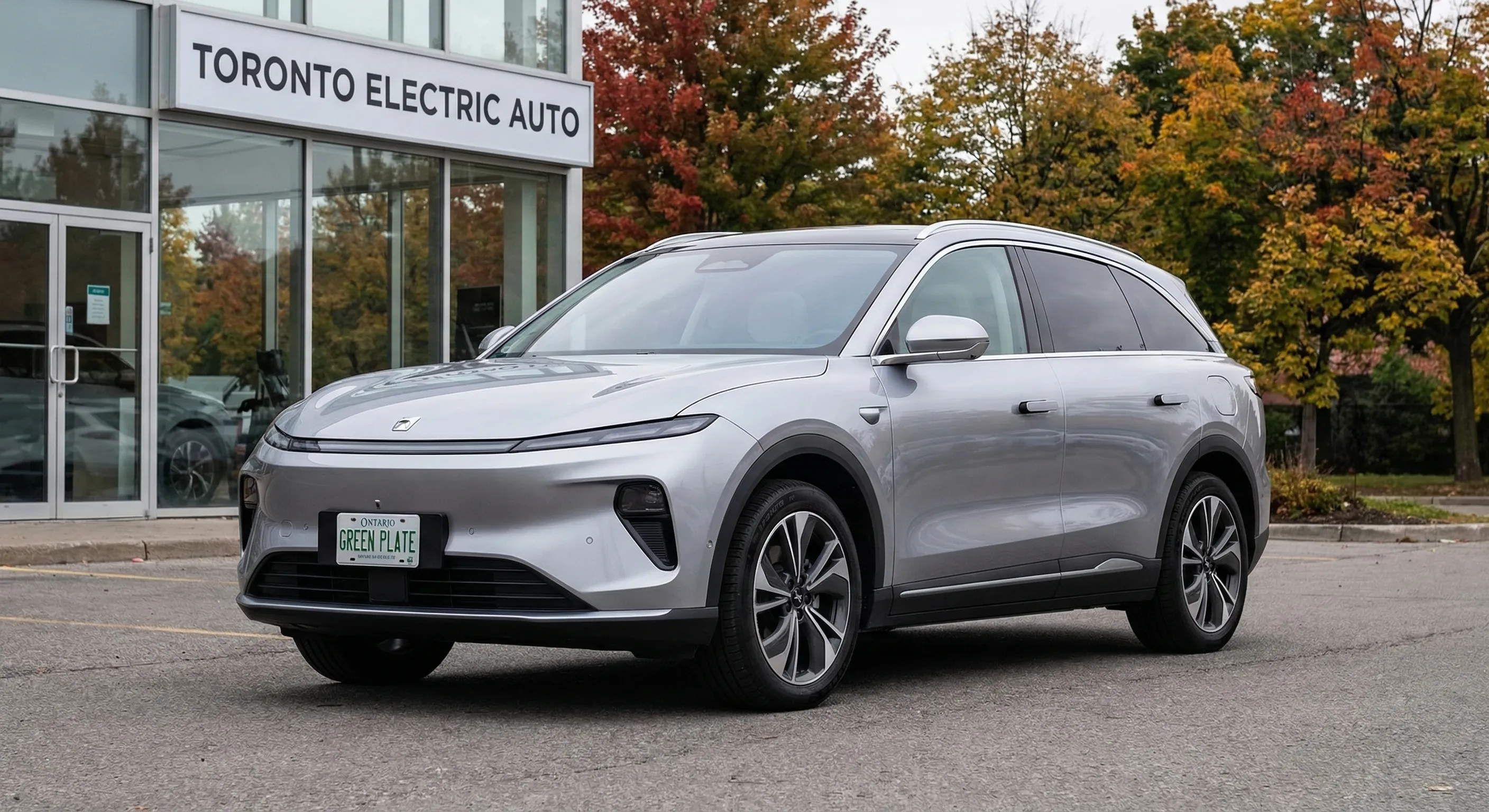
Chery EVs Coming to Canada: Models and Prices
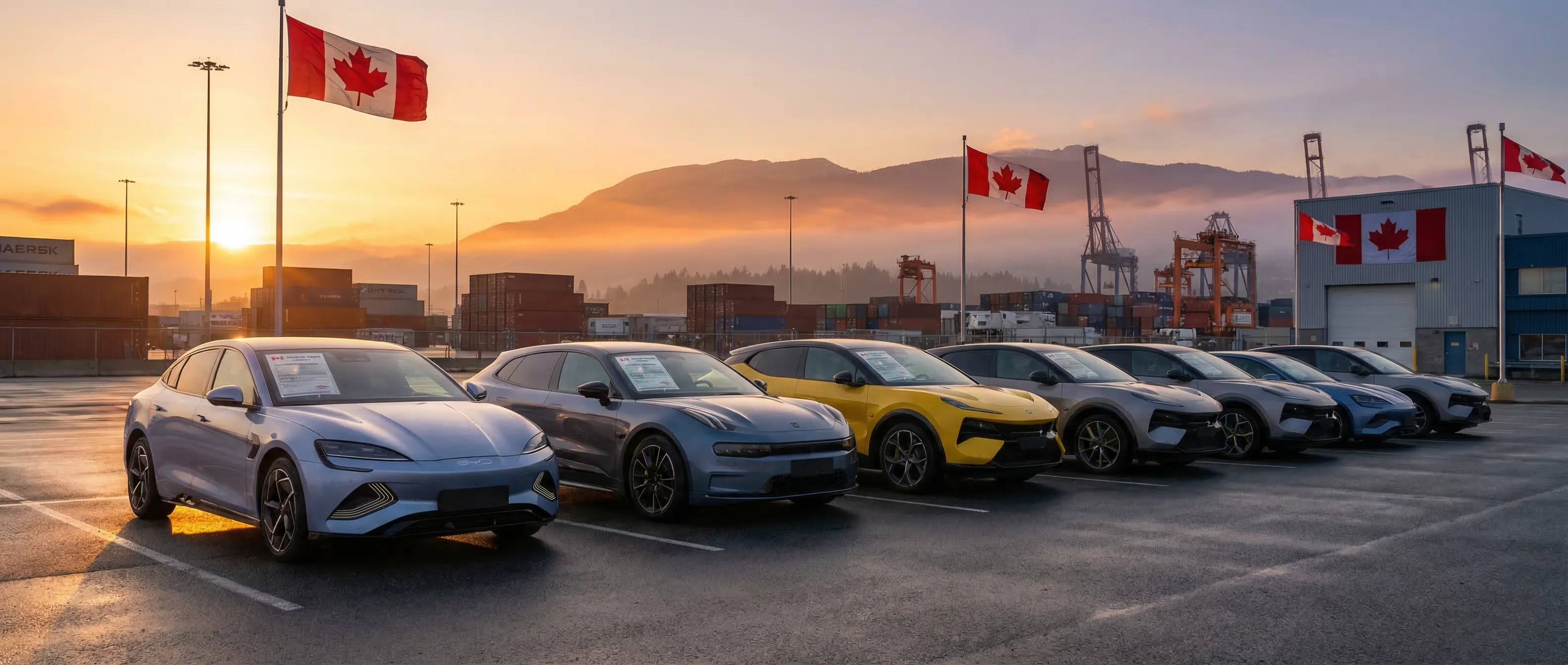
Who Got Canada's First Chinese EV Import Permits
Uber and Lyft EV Switch Canada 2026: The Savings

Canada's EV Market Crash of 2025, and What's Next
When Will New EVs Arrive in Canada? The Timeline