Key takeaways
- Most Canadian EV owners save $150–$200/month on fuel alone, that's $1,800–$2,400 back in your pocket every year
- A Level 2 home charger runs $1,500–$2,500 installed, most owners recover that cost within 18 months of fuel savings
- Winter range loss is real, plan for 20–30% reduction at -15°C, but owners say it stops being a concern after the first winter
- The Ioniq 6 can currently be had for under $30K after stacking federal + provincial + manufacturer discounts
- Maintenance costs drop by 60–70%, no oil changes, no transmission fluid, no spark plugs, no exhaust
Here's something almost nobody tells you about switching to an EV: the hardest part isn't the car. It's unlearning twenty years of habits built around gas stations.
You've spent your whole driving life knowing exactly how fuelling works. Pull in, pump, drive away. The gauge goes up, you go home. Switching to an EV doesn't just change your car, it changes how you think about energy. And for most Canadian owners, that mental shift takes about three months. After that? Most of them say they'd never go back.
EV owners across Canada, on Reddit, in Facebook groups, at charging stations, consistently answer one question the same way: what do you wish you'd known before you switched? The answers are consistent, honest, and sometimes surprising. This guide is those answers, with the dollar amounts filled in.
This isn't a press release. This is what people actually said when asked directly.
The research specifically focused on threads from Canadians who were on the fence: people switching from a Lexus or Corolla, people managing two vehicles at home, first-time buyers who got surprising deals, and long-term owners who've now been through two or three Canadian winters. The perspective here is grounded in real experience, not manufacturer talking points.
One thing struck me immediately across all those conversations: the people who were happiest with their switch were the ones who went in with clear eyes. They knew the winter range situation. They had a charger sorted before the car arrived. They understood the public network well enough to plan road trips. The people who had complaints were mostly people who'd been oversold on "it's exactly like owning a gas car." It's not exactly like owning a gas car. It's different, and for most of them, better. But different.
This guide is the honest friend who's already done the research and is leaning over the fence to tell you what the data actually shows.
The Real Cost Difference, Gas vs.
Electricity by Province
Let's start with the number everyone wants to know first.
The average Canadian drives about 20,000 km per year. At typical gas prices across Canada in early 2026, around $1.55–$1.78 per litre depending on province, and assuming a reasonably efficient gas car burning 7.5 litres per 100 km, you're looking at roughly $2,300–$2,700 per year on fuel. That's $190–$225 per month going into a tank.
An EV in the same conditions, 16 kWh per 100 km, which is a realistic average, costs you between $19 and $46 per month to charge at home. Even in the most expensive provinces for electricity, EV charging is dramatically cheaper than gas.
The gap is widest in Quebec, where electricity averages about $0.071 per kWh thanks to Hydro-Québec. A Quebec EV owner running 20,000 km per year pays roughly $19 per month to charge. Their neighbour in the same car burning gas pays $206 per month at the pump. That's a $187/month difference, or $2,244 per year in free money.
Alberta and Saskatchewan have higher electricity rates (around $0.167–$0.17 per kWh all-in), so the gap is smaller, but EV owners there still pay roughly $45/month to charge versus $186–$188/month for gas. Still $140+ per month better.

British Columbia is interesting. Gas prices in BC are the highest in Canada, around $1.78/litre in early 2026, but BC Hydro's residential rate is quite reasonable at around $0.14/kWh. BC EV owners pay roughly $37/month to charge versus $223/month for gas. That $186/month difference is the most compelling financial case for switching that I've seen anywhere in the country outside Quebec.
Here's how to run your own calculation:
- Your monthly km: take your annual odometer reading and divide by 12
- Your gas cost: (monthly km / 100) × (L/100km) × (local gas price per litre)
- Your EV charging cost: (monthly km / 100) × 16 × (local electricity rate)
For a more detailed province-by-province breakdown with actual rates, see our EV charging costs by province guide. And for the full 5-year picture including purchase price, insurance, and depreciation, the EV vs gas total cost of ownership comparison runs the complete numbers.
One thing owners consistently report: the savings feel different than they expected. "I thought it would feel like saving money," one Ioniq 5 owner from Kelowna said. "It actually just feels like gas stopped costing anything. It's like the car charges itself while I sleep."
That's not magic, it's just that home charging happens overnight, invisibly, and the cost is folded into a utility bill you're already paying. You stop thinking about it the same way you stop thinking about your internet bill.
The "am I crazy?" moment. Almost every EV switcher has it. It's the moment right before they pull the trigger, usually sitting at a gas pump in January, watching the total climb past $90 on the display, and they think: why am I still doing this? One Reddit thread literally titled "Am I crazy?" captured it perfectly. The poster was about to buy an Ioniq 5 and just needed someone to tell them they weren't making a mistake. The thread got 140 comments. Almost all of them said: do it.
The people who validated that feeling weren't being cheerleaders. They were people who had done the math and found it obvious. The hesitation isn't irrational, you're making a real commitment, changing a major habit, spending real money on a charger installation. Those concerns deserve serious answers, not dismissal.
This guide gives you those answers. Province by province, dollar by dollar.
Who this guide is for: You already drive. You're considering an EV but want real numbers, not press-release numbers. You have a driveway or garage (apartment dwellers, there's a section for you too). You drive a reasonably normal amount, 15,000–25,000 km per year. You live somewhere in Canada that gets real winters.
If that's you, read on. The math is going to be more interesting than you expect.
Home Charging Setup, What It Actually Costs and What to Expect
The most common mistake first-time EV buyers make: they think about the car cost and forget to budget for the charger.
Here's the breakdown.
Level 1 charging (120V wall outlet): Free to set up, adds about 8–12 km of range per hour. For most Canadians, this is not enough for daily use. If you drive 50 km per day, you'd need to charge for 5–6 hours every night just to break even. It works as a backup option or if you drive very little, but it's not a real solution for most households.
Level 2 charging (240V dedicated circuit): This is what you want. Level 2 adds 30–50 km of range per hour. An overnight charge of 8–10 hours gives you 250–500 km, more than a week's driving for most Canadians, replenished every single night.
The cost to set this up:
- The charger unit itself: $500–$1,100 for a quality Canadian-market unit. The Grizzl-E Classic (made in Alberta) runs about $650 and is one of the most popular choices for its durability and cold-weather performance. ChargePoint Home Flex is around $900 and adds Wi-Fi and energy monitoring.
- Professional installation: $500–$1,500 depending on your home's electrical situation and how far the panel is from where you park.
- Panel upgrade (if needed): $1,500–$3,000. Most homes built after 2000 with a 200-amp panel won't need this. Homes with 100-amp panels, common in houses built before 1980, may need an upgrade.
Total realistic range: $1,100–$3,600 depending on your situation.
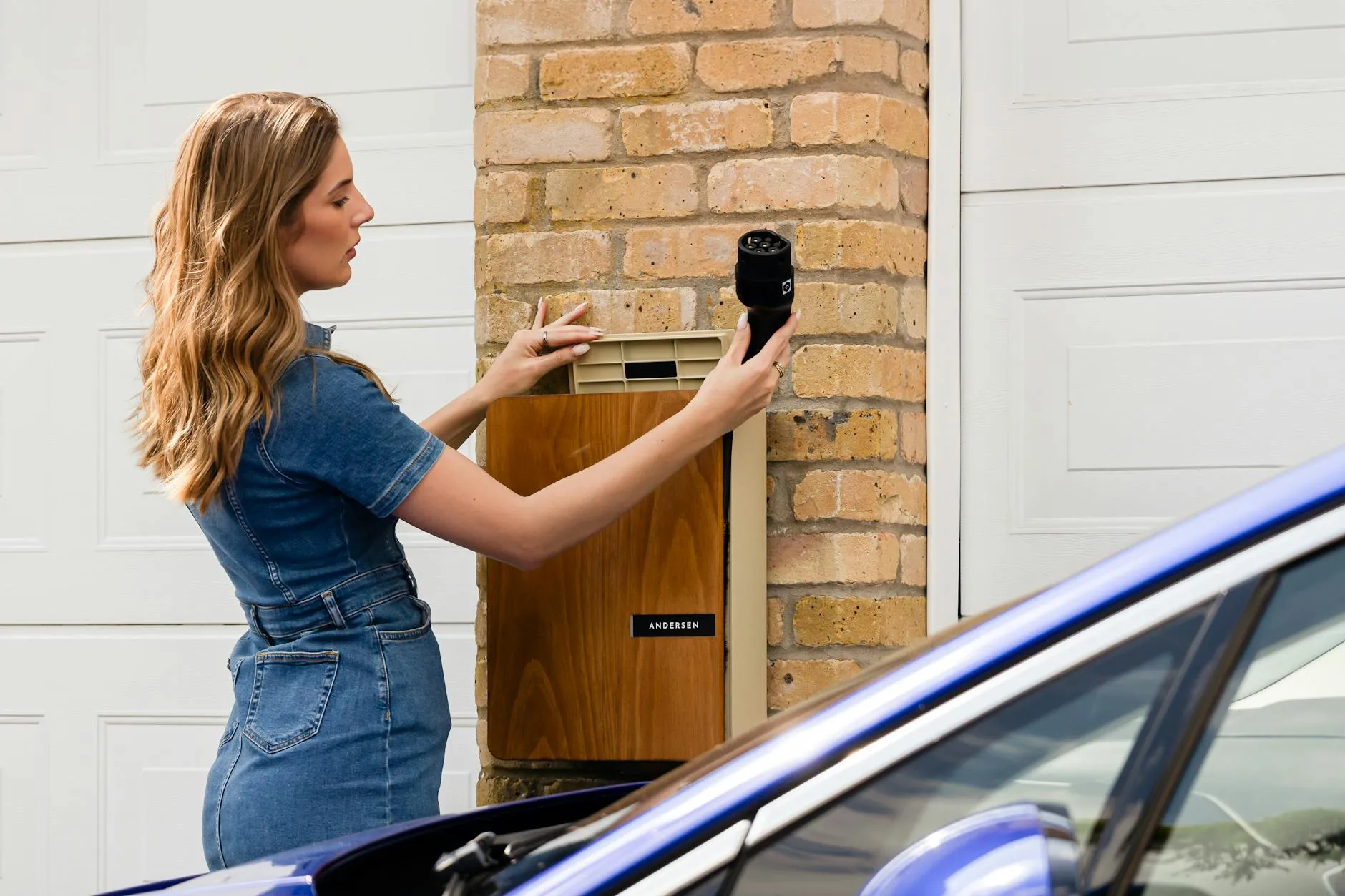
That cost pencils out quickly: if you're saving $150–$187 per month on fuel, a $2,000 installation pays for itself in 11–14 months. After that, every month is pure savings.
A few things that catch people off guard:
The permit requirement. Most provinces require a permit for a new 240V circuit installation. Your electrician handles this, it costs $50–$150, but don't let anyone install without a permit. Unpermitted electrical work can void your home insurance and create headaches when you sell.
The NEMA 14-50 vs. hardwired decision. A NEMA 14-50 outlet is the same type used by RVs and electric ranges. A plug-in charger connects to it. Hardwired means the charger is permanently connected to your panel. Most EV owners choose plug-in because you can take the charger with you when you move. Hardwired makes sense if local code requires it or if you want the highest possible amperage.
Smart scheduling. If you're in Ontario or another province with time-of-use electricity pricing, charging during off-peak hours (overnight, usually midnight to 7 AM) can cut your charging cost by 30–40%. The Grizzl-E Classic and most modern chargers have built-in scheduling for this.
For the full installation guide with step-by-step instructions and a list of contractors, see how to install a Level 2 EV charger at home in Canada. And for a ranked list of the best chargers available in Canada right now, see our best Level 2 EV chargers guide.
One owner in Ottawa said he budgeted $1,800 for his charger setup and ended up spending $1,350, his panel was already 200 amps and the electrician ran a short conduit. "I stressed about the install cost for weeks," he said. "In retrospect, it was the easiest part of the whole switch."
Getting quotes. Get at least two quotes from licensed electricians before committing. Prices vary significantly, Quotes range from $650 to $2,200 for essentially the same job in the same city. The variation comes from how electricians price their labour, how they assess panel capacity, and how they route the conduit. Don't just go with the dealer's recommended electrician, they often charge a premium.
The rebate you might be missing. Several provinces and utilities offer rebates on Level 2 charger installation. BC Hydro's EV charging rebate programme has offered up to $350 toward home charger installation costs. In Quebec, Hydro-Québec's rebate programme has offered similar amounts. Ontario's rebate was discontinued, but some utilities (like Toronto Hydro) have had their own programmes. Check your utility's website or call them directly, this is money that's sitting there and many EV owners never claim it.
What happens when you have a detached garage? Running a 240V circuit from the house panel to a detached garage is more work than a simple install in an attached garage, but it's entirely normal. The electrician runs conduit underground or overhead between the structures. Expect to add $400–$800 to the install cost for a typical 10–20 metre run. If you're in a rural area with a longer run to an outbuilding, costs go up further. Get the assessment done before you buy the car.
Winter Range Reality, How Bad Is It Really?
This is the question I get more than any other. And I'm going to give you the answer rather than the defensive one.
Yes, EVs lose range in winter. The cold affects battery chemistry, lithium-ion batteries don't deliver their full capacity at low temperatures. Add in the energy demand of cabin heating (which uses electricity instead of waste engine heat), and you're looking at a real-world range reduction.
How much? Based on CAA testing and real-owner reports from across Canada:
- At 0°C: roughly 10–15% range reduction
- At -10°C: roughly 20–25% range reduction
- At -20°C: roughly 25–35% range reduction
- At -30°C and below (Prairies, Northern Ontario): up to 40% in extreme conditions
That sounds alarming until you do the math. A Tesla Model Y Long Range is rated at 533 km. At -20°C with a 30% reduction, you have 373 km of real range. In a typical Canadian city, that's still four to five days of driving before you need to charge. You're not stranded.
The vehicles with heat pumps perform significantly better in winter. The heat pump recovers heat from the outside air instead of generating it electrically, using roughly half the energy of a resistance heater. On the Ioniq 5, the heat pump typically reduces winter range loss to 20–25% instead of 30–35%. It's one of the more impactful spec differences when buying an EV for Canadian use.
Three habits that make winter range management much easier:
Pre-condition while plugged in. Almost every modern EV lets you schedule cabin pre-conditioning from the app. Set it to warm the car 15–20 minutes before you leave while still plugged in. The car reaches operating temperature using grid power instead of battery power, and you leave home with 100% range and a warm cabin.
Park plugged in whenever possible. A cold battery that sits in a -20°C garage all night is a cold battery at 7 AM. A plugged-in battery gets trickle-charged to maintain temperature. Most owners in cold climates have heated garages or at minimum plug in every night regardless of charge level.
Use scheduled departure. Heated seats and steering wheel are dramatically more efficient than heating the whole cabin. Use them. Dress in layers for short trips. Winter is not the time to blast the climate control to 22°C and maintain it for a 3 km errand.
I talked to a Hyundai Ioniq 5 owner in Winnipeg, one of the coldest cities in Canada, who commutes 45 km each way in conditions that regularly hit -30°C. "First winter was stressful," she said. "Second winter I didn't think about it at all. I'd figured out my patterns. I never once ran out of range or even got close."
That matches almost every long-term EV owner I've spoken with. The first winter requires adjustment. After that, it's just normal driving.
The cold-soak problem and the fix. "Cold soak" is what happens when your EV sits outside in -25°C for 8 hours while you work. The battery gets cold. Cold batteries charge slower and deliver less range. The fix: plug in whenever you can, even at work, even at Level 1. Many employers are starting to install Level 2 charging at workplaces. If yours has an outdoor outlet anywhere near your parking spot, that 8 km/hr from Level 1 is enough to maintain the battery's temperature. Even a plugged-in Level 1 connection prevents the worst cold-soak effects.
Winter tires matter more in an EV. EVs are significantly heavier than equivalent gas cars, the Ioniq 5 weighs 2,100 kg versus a RAV4's 1,600 kg. More mass means more momentum and longer stopping distances on ice and snow. Winter tires are strongly recommended for any EV in Canada. The added rolling resistance from winter tires does reduce range, typically 3–6%, but the safety benefit far outweighs this. Budget $800–$1,200 for a set of winter tires and steel rims, which is the same cost as for any vehicle.
One thing nobody talks about enough: EVs in winter have zero engine block heater costs. Gas car owners in Manitoba, Saskatchewan, and Northern Ontario regularly spend $8–$15 per month running block heaters through the winter just to keep their engines startable. That's $80–$150 per winter you just stop paying.
For the complete winter data including CAA test results and real-world range by model, see our EV winter range test guide.
Insurance, Does It Cost More?
Short answer: yes, usually, but less than you might think, and the gap is narrowing.
EVs generally cost 10–20% more to insure than comparable gas vehicles in Canada. There are a few legitimate reasons for this:
Higher repair costs. EV body panels, sensors, cameras, and battery protection systems cost more to repair after a collision. A front-end impact that costs $4,000 on a gas car might cost $6,000–$8,000 on an EV because of proximity sensors, structural battery protection, and integrated components.
Battery replacement risk. Even though battery failures are rare, the potential cost is high enough that insurers factor it into premiums as a tail risk.
Higher vehicle value. Most EVs cost more than comparable gas vehicles, and collision coverage is based on replacement cost.
A Honda Civic driver in Ontario might pay around $1,800–$2,200 per year for full coverage. A comparable Hyundai Ioniq 6 driver is looking at $2,000–$2,600. That's roughly $200–$400 more per year.
A few things worth knowing:
Insurance rates vary enormously by province, driving record, age, and insurer. In British Columbia, ICBC insures everyone, the EV premium difference tends to be smaller because it's a regulated monopoly. In Ontario and Alberta, where rates are competitive, shopping insurers matters more.
Some insurers offer EV-specific discounts. Intact and Aviva have both introduced EV discount programmes in recent years. The logic: EV drivers tend to be more safety-conscious, less likely to be impaired (no late-night gas station runs), and their cars have advanced collision avoidance systems that reduce claims.
One practical note: when insuring an EV, make sure your policy explicitly covers home charger damage. Most standard home policies do cover permanently installed chargers, but check. A few insurers treat them as an endorsement rather than a default inclusion.
The net picture: EV insurance costs $200–$400 more per year than comparable gas vehicle insurance in most provinces. That's $17–$33 per month. Against a monthly fuel savings of $150–$200, the insurance premium difference is a rounding error.
Maintenance, What Disappears, What Remains
This is where most EV owners say they feel the biggest quality-of-life improvement. Not the fuel savings, the maintenance savings.
Here is what you stop paying for entirely when you switch to an EV:
- Oil changes ($80–$120 every 5,000–8,000 km, roughly $240–$480 per year)
- Transmission fluid service ($150–$300 every 50,000–100,000 km)
- Spark plugs ($150–$400 every 60,000–100,000 km)
- Serpentine belt ($300–$600 at replacement)
- Coolant flush ($100–$200 every 50,000 km, EVs have smaller, simpler thermal systems)
- Exhaust system repairs (variable, but easily $500–$2,000 over a vehicle's life)
- Catalytic converter replacement (can be $1,500–$3,000+ if needed)
- Starter motor and alternator (standard failure points in aging gas cars)
What you still pay for:
- Brake pads and rotors: These last significantly longer in EVs because regenerative braking does most of the work. Most EV owners report 80,000–120,000 km on a set of front pads versus 40,000–60,000 km on a gas car. You'll still need to replace them eventually, budget $300–$600, but much less often.
- Tires: Same as any car. EVs are heavier and have more immediate torque, which can accelerate wear on aggressive drivers.
Budget $800–$1,200 every 40,000–60,000 km.
- Cabin air filter: $25–$50 every 15,000–30,000 km. Easy DIY.
- Wiper blades: Same as any car.
- 12V auxiliary battery: Every EV has a small 12V battery (separate from the traction battery) that powers accessories. It typically lasts 4–6 years and costs $100–$200 to replace.
- Annual inspection and tire rotation: Budget $100–$150 per year.
The numbers: independent analysis consistently shows EV maintenance costs run about $400–$600 per year. Gas car maintenance averages $1,200–$1,600 per year over a vehicle's life. That's a saving of roughly $800–$1,000 per year, or $4,000–$5,000 over five years.
For a detailed breakdown with real-world cost data from Canadian owners, see EV maintenance costs in Canada, what you actually pay.
One thing that surprises owners: the lack of urgent maintenance. With a gas car, you're always a few thousand kilometres away from an oil change. With an EV, you might go a year between any scheduled service at all. "I keep waiting for the car to need something," one Tesla Model 3 owner in Calgary said. "After two years I've replaced wiper blades and that's it."
That experience is typical. The EV powertrain has roughly 20 moving parts versus 2,000+ in an internal combustion drivetrain. Fewer parts means fewer failure points.
Gear worth having
As an Amazon Associate, ThinkEV earns a small commission from qualifying purchases — at no extra cost to you.

Grizzl-E Classic Level 2 EV Charger (40A)
Canadian-made and rated for minus 40C winters. 40A / 9.6 kW, NEMA 14-50, indoor/outdoor, 24-ft cable. The charger built for Canadian weather.
As an Amazon Associate, ThinkEV earns from qualifying purchases — at no extra cost to you.
The Best Deals Right Now, Stacking Rebates in Canada
This is where the current market is genuinely interesting. The window to get substantial rebates is open, but it won't stay open forever.
Here's what's available right now for most Canadians:
Federal iZEV/EVAP rebate: $5,000 for fully electric vehicles under $55,000 MSRP (or $60,000 for longer-range models and SUVs). Applied at point of sale, no rebate form to file. The vehicle must be assembled in Canada, the US, or a free trade agreement country. Chinese-made vehicles like the BYD Dolphin do not qualify.
Provincial rebates: These vary significantly by province. Quebec offers $4,000 (income-tested, you must apply). BC offers up to $4,000 through the CleanBC Go Electric programme. Prince Edward Island offers $5,000. Ontario, Alberta, and Saskatchewan currently have no provincial EV rebates.
Manufacturer discounts: Early 2026 has been wild. Hyundai has been stacking massive manufacturer discounts on top of government rebates. In February 2026, multiple Canadian Reddit users reported Ioniq 6 deals in the range of $16,000–$17,000 off. That's a $46,998 car going for around $30,000 after:
- $5,000 federal EVAP rebate
- Provincial rebate (if applicable)
- $9,000–$11,000 manufacturer discount
One Reddit user in Ontario described "accidentally ending up with a crazy deal", they went in expecting to pay mid-$40s and left having negotiated a package worth $16,000 off before taxes.
The lesson here: the official MSRP is not your price. EV manufacturers are competing aggressively for market share. Always negotiate, always ask what incentives are available, and always check the current rebate stacking guide before you go to a dealership.

A few vehicles worth knowing about right now:
Hyundai Ioniq 6: After all available discounts and rebates, the most financially compelling EV in Canada right now. The 2025 model has a 385 km real-world range rating, charges at 220 kW DC fast charging, and qualifies for all federal and most provincial incentives. The aerodynamic sedan shape is polarising, some people love it, some find it too unconventional, but the engineering is excellent. Heat pump is standard. Ultra-fast charging in a Canadian-eligible package is its defining advantage.
Chevrolet Equinox EV: Starts at $42,999, drops to $37,999 after the $5,000 federal rebate. Made in North America, so it qualifies. Practical crossover that most families can live with easily. The Equinox EV is the most "normal" looking option in the segment, it just looks like a regular Chevy Equinox, which is either a plus or a minus depending on your perspective. Range on the standard trim (402 km rated) is solid.
Hyundai Ioniq 5: If you want an SUV with heat pump, V2L (vehicle-to-load, meaning it can power your devices or a fridge during a power outage), and genuinely impressive range, the Ioniq 5 is the most well-rounded EV for Canadian families right now. The 800V architecture means ultra-fast charging, and the interior space is remarkable for the footprint. The square retro styling has aged well. After federal rebate and current manufacturer incentives, expect $42,000–$47,000 for most trims.
Tesla Model Y: Still the most common EV in Canada. No dealer markup nonsense, configurable online, reliable Supercharger network, and the resale value is solid. Current pricing after EVAP starts around $49,990 for the base Long Range model. The all-glass roof can be polarising in sunny Canadian summers, but the overall package, particularly the Supercharger network's coverage, remains the most road-trip-ready option in the country.
Kia EV6: The EV6 shares the Ioniq 5's excellent 800V platform but comes in a sportback body style. Slightly more driver-oriented, slightly less cargo space. Strong heat pump performance and excellent fast charging. Worth cross-shopping against the Ioniq 5 directly.
The conversation about Corolla owners: The thread about "thinking of switching a Corolla for an Ioniq EV" nailed the calculus. A 2026 Corolla costs about $27,000. An Ioniq 6 after rebates is $30,000–$33,000. The Corolla owner is paying $3,000–$6,000 more for the switch. That difference gets erased in about 18–24 months of fuel savings alone, and that's before maintenance savings, before the driving experience improvement, before any other factor. For high-mileage commuters, the break-even is even faster.
The Lexus question. The "Lexus to Tesla Model Y" conversation is real and I've seen it many times. The answer is almost always yes. A Lexus IS driver who switches to a Tesla Model Y is upgrading in most practical categories, smoother power delivery, lower running costs, better technology, while paying about the same or less in total five-year ownership cost. The one area where Lexus wins is traditional luxury finishing quality, particularly interior materials. If that matters to you, the Model Y's minimalist interior won't feel like an upgrade. But on range, performance, charging network, and monthly cost? It's not close.
For the complete current rebate guide including all provincial programmes and income thresholds, see our EVAP rebate guide for 2026.
Common Regrets and Surprises
I asked Canadian EV owners to tell me what they regret or what surprised them. Here's a condensed version of what came back.
What people regret:
"Not switching sooner" came up constantly. The second most common response was "not budgeting for the charger installation upfront", people who bought the car and then discovered their garage wiring wasn't ready for a Level 2 install.
A small number of owners mentioned specific vehicle choices they'd make differently. One Subaru Solterra owner brought up what he called "the charge port placement rant", the Solterra (and its twin, the Toyota bZ4X) has its charge port on the front left fender, which means in a parking garage or charge station with specific layouts, you sometimes have to approach from an awkward direction or the cord doesn't reach. "Nobody mentioned that before I bought it," he said. "It's not a dealbreaker but it's genuinely annoying."
A few owners mentioned underestimating how much their charging habits would change after having kids or changing jobs. One dad who switched to a longer commute found that his original Level 2 charger wasn't giving him enough range overnight. He upgraded from a 32-amp to a 48-amp charger, a $500 swap, and the problem was solved.
What surprised people (positively):
Almost universally: the driving experience. EVs have instant torque delivery. The acceleration feels different from any gas car, even a sporty one. There's no gear shift, no rev-matching, no waiting for the engine to reach its power band. You press the accelerator and the car moves, immediately and smoothly. Owners describe it as driving a more capable car than they paid for.
The one-pedal driving revelation surprised many people. Regenerative braking lets you drive through most traffic by just lifting off the accelerator, the car slows itself, recapturing that kinetic energy as electricity. Owners who live in hilly or traffic-heavy cities notice this most. After a month, going back to a gas car feels like driving with no engine braking at all.
Several owners specifically mentioned the silence. Cabin noise at highway speeds is significantly lower in EVs because there's no powertrain vibration or exhaust noise. Road and wind noise become the dominant sounds. A few owners described long highway drives as "much less tiring" as a result.
The cybersecurity concern one Reddit user raised is worth addressing. Some potential buyers worry about EVs being remotely hackable, particularly with vehicles that have extensive over-the-air update capabilities. This is a legitimate area of ongoing research, but real-world security incidents are extremely rare. The major EV manufacturers (Tesla, Hyundai, GM) have serious security teams and responsible disclosure programmes. This shouldn't be a reason to avoid EVs, but it's reasonable to keep software updated and avoid third-party apps that request unusual access to your vehicle account.
Two-EV Household Logistics
More and more Canadian families are running two EVs. The logistics are manageable, but there are a few things to figure out upfront.
Sharing one Level 2 charger: Most households can do this with a single charger if driving patterns are staggered. If both drivers commute in opposite directions or return home at different times, one charger is usually sufficient. The first car to arrive plugs in; when it's done (or before bed), the second car plugs in. A smart charger with scheduling helps enormously, you can set both cars to finish charging by 7 AM at off-peak rates.
Running two chargers on one panel: This is where the electrical assessment matters. Two Level 2 chargers drawing 32 amps each simultaneously is a 64-amp load, that's a significant circuit. A 200-amp panel can accommodate this, but you'll want an electrician to assess your total load and confirm you have headroom. Some owners install a load-sharing device (like the Emporia Energy Controller or the Grizzl-E Duo) that divides available amperage intelligently between two cars.
Which car gets priority charging? The car with the longer next-day drive charges first. Set your scheduled departure times in each car's app, the vehicles will manage charge priority automatically on most platforms.
DC fast charging for two EVs: You rarely need it at home, but when road-tripping, having two EVs means planning two charging windows. The upside: two EVs with similar charging speeds can both plug in at a fast charger station simultaneously (at different stalls) and be ready within 30–45 minutes of each other.
One two-EV household in Victoria described their setup: "We have a Tesla Model Y and a Kia EV6. One NEMA 14-50 outlet and one hardwired 48-amp charger. The Model Y charges on the outlet most nights since it has bigger range. The EV6 gets the dedicated charger. Never once had a conflict." Their combined monthly charging cost: about $55 for both cars combined.
Used EVs, The $35K–$45K Sweet Spot
The used EV market in Canada has changed significantly in the last 12 months. Supply has caught up with demand for the first time, and prices have corrected from the inflated peaks of 2022–2023.
A 2023–2024 Hyundai Ioniq 5 in the $35,000–$42,000 range is a reasonable used buy right now. A 2022–2023 Tesla Model Y Long Range can be found for $40,000–$46,000. The used Model 3 market has inventory with prices starting around $28,000 for higher-mileage examples.
One question that came up on Reddit: "Is a used 2025 Ioniq 5 Limited for $36,000 sketchy?" The answer is: it depends. That's below typical market value, which warrants investigation. Things to check:
- Battery degradation: Most EVs from reputable manufacturers have 10-year/160,000 km battery warranties on the traction battery. Verify the remaining warranty transfers. On an Ioniq 5, check the battery health report via the BlueLink app or ask the dealer to run a diagnostic.
- Accident history: Get a CarFax or AutoCheck report. Collision history on an EV is more important than on a gas car because even moderate front or rear impacts can affect battery structural protection.
- Charging history: Fast charging frequently (DC fast charging multiple times per day, every day) accelerates battery degradation faster than normal use.
Most EVs log this data, ask for it.
- Why the low price: A $36K listing for a near-new Ioniq 5 Limited (which lists for $65,000+) is either a rare deal or something is wrong. In this specific case on Reddit, the context suggested it was a private seller moving out of country quickly. That can produce genuine deals, but verify everything.
EV battery degradation is genuinely slower than most people fear. A 2019 Tesla Model 3 at 150,000 km typically shows 5–8% battery degradation. An Ioniq 5 at 80,000 km typically shows 2–4%. These are manageable numbers. See our EV battery degradation guide for the full data.
For a complete guide to buying used EVs in Canada, including what to inspect and which models hold their value best, see our used EV market guide.
For anyone buying in the $28,000–$40,000 range, also check our most affordable EVs in Canada 2026 guide, new incentive-stacked deals sometimes compete with used prices.
Public Charging and Road Trip Reality
Home charging covers 90% of charging for most EV owners. But the other 10%, road trips, unfamiliar cities, flat battery emergencies, is what people worry about before they buy.
The picture:
Canada's public charging network is adequate for most trips and improving quickly. Petro-Canada has over 50 fast-charging locations across Highway 1 and Trans-Canada routes. Electrify Canada (VW-funded) is building out a national DC fast charging network. Tesla Superchargers are now open to non-Tesla EVs with the right adaptor. FLO has an extensive Level 2 network in parking garages and shopping centres across most major cities.
Route planning matters on road trips. An EV road trip is different from a gas road trip. You don't stop every 600 km for 5 minutes, you stop every 250–350 km for 20–30 minutes. The math is comparable in total time for most trips. The difference is that EV charging stops tend to align with meal breaks, coffee stops, and rest areas rather than quick fuel top-ups. Apps like A Better Routeplanner (ABRP) and PlugShare are essential tools, they map charging stops against your vehicle's consumption.
CCS1 vs NACS: Most non-Tesla EVs in Canada currently use CCS1 (Combined Charging System). Tesla uses NACS (North American Charging Standard). Adapters are available that let CCS1 vehicles use Tesla Superchargers, and most new non-Tesla EVs are starting to ship with NACS ports. This is evolving fast, within 2–3 years, NACS will likely be the dominant standard.
Rural charging gaps remain real. If you regularly drive through remote northern areas or between small towns without charging infrastructure, plan carefully. Northern BC, Northern Ontario, Yukon, and rural Alberta all have spotty coverage. For these routes, a longer-range EV (500+ km rated) is the right choice, and pre-trip planning with ABRP is non-negotiable.
For a complete Canadian EV road trip planning guide with route-specific charging stop recommendations, see our EV road trip charging planning guide.
A word on public charging etiquette: unplug when you're done. Move your car when you're at 100% if others are waiting. Don't ICE a charging stall (park a gas car in an EV charging space). The community norms for charging are strong and most EV owners take them seriously. See our public EV charging etiquette guide for the full rundown.
Making the Decision, What Real Owners Say
After all those numbers, here's what owners consistently say when you ask them if they'd do it again.
Almost all of them say yes, immediately.
The financial case is strong and is getting stronger. At current Canadian fuel prices, any EV owner driving the national average of 20,000 km per year is saving $150–$200/month on fuel alone. After a five-year ownership period, even accounting for higher purchase price and slightly higher insurance, the total cost savings versus a comparable gas vehicle are substantial, our full calculation shows $22,705 over five years for a $45,000 purchase price comparison. See that full breakdown in our 5-year EV vs gas cost comparison.
But the practical quality-of-life improvements are what keep owners loyal beyond the economics.
Waking up every morning to a full charge. Never stopping at a gas station in a snowstorm. Maintenance appointments that take 30 minutes instead of an afternoon. The silence at highway speed. The acceleration that still makes people smile after two years.
One owner from Hamilton, Ontario described it this way: "I was on the fence for months. I kept running the numbers, worrying about winter, worrying about charging. Finally my wife said 'just do it' and we bought an Ioniq 5. Six months later I genuinely can't remember why I was nervous. It's just a better car. Everything about the ownership experience is better."
The people who are most satisfied are the ones who did their homework on the home charging setup before buying, not after. Get that electrical assessment done before the car arrives. Budget the charger installation as part of the total vehicle cost. After that, most of the worry dissolves on its own.
The people who are least satisfied are the ones who switched expecting no adjustments. There is a learning curve. Winter range reduction is real. Long road trips require planning. If you come in with realistic expectations, you'll likely end up as satisfied as the overwhelming majority of Canadian EV owners.
Is it worth switching? For most Canadians driving a typical commute pattern with access to home charging: yes. Clearly and unambiguously yes.
Gear worth having
As an Amazon Associate, ThinkEV earns a small commission from qualifying purchases — at no extra cost to you.

PULIDIKI Car Cleaning Gel (Detailing Putty)
Press it into vents, buttons, and seams and it lifts out dust you did not know was there. Weirdly satisfying, genuinely useful.
As an Amazon Associate, ThinkEV earns from qualifying purchases — at no extra cost to you.
Related Reading
- EV vs Gas: Total Cost of Ownership in Canada (2026), Five and ten year numbers for three real vehicle comparisons
- How to Install a Home EV Charger in Canada, Step-by-step guide with real cost ranges and contractor tips
- EV Rebates by Province, Canada 2026, Every available rebate stacked, province by province
- Best Level 2 EV Chargers in Canada 2026, Ranked by performance, price, and cold-weather reliability
- EV Winter Range Test, Real Canadian Data, CAA test results and real-owner winter data for 14 EVs
Gear worth having
As an Amazon Associate, ThinkEV earns a small commission from qualifying purchases — at no extra cost to you.

WixGear Magnetic Air Vent Phone Mount (2-Pack)
A magnet strong enough that your phone never flinches over potholes or rail crossings. Two in the box, one for each car.
As an Amazon Associate, ThinkEV earns from qualifying purchases — at no extra cost to you.

Founder & Chief Editor
Vlad Pereira is the founder and chief editor of ThinkEV.ca, the Canadian electric-vehicle publication he writes and edits from Courtenay, British Columbia. He covers EV pricing, federal and provincial rebates, charging costs, and the Chinese manufacturers now entering Canada, from the buyer's side rather than the press-fleet side. ThinkEV is a venture of Vlad Pereira Online; his writing on health, income and the long game lives at vladpereira.com.
Frequently asked questions
How much does it actually cost to charge an EV at home in Canada?
What's the best EV to buy in Canada in 2026 for someone switching from a sedan?
Do I really need a Level 2 charger, or can I just use a regular outlet?
How much range does an EV actually lose in a Canadian winter?
Does the $5,000 federal EV rebate still apply in 2026?
Is it worth buying a used EV instead of new?
I live in an apartment. Can I still own an EV?
How do I find public charging stations in Canada?
More EV & road-trip finds
Affordable upgrades worth a look — tap any to check the price on Amazon.
 ★ 68
★ 68WeatherTech FloorLiner for Tesla Model 3
View on Amazon ★ 8,681
Chemical Guys Complete Car Wash Kit
View on Amazon ★ 419
★ 419RGB Car Interior LED Strip Light
View on Amazon ★ 900
★ 900Personalized Photo Car Air Freshener
View on Amazon ★ 865
★ 865Collapsible Trunk Organizer
View on Amazon ★ 1,944
VIOFO A229 Pro 4K Dash Cam
View on Amazon ★ 87
★ 87Car Window Sun Shades for Kids (4-Pack)
View on Amazon ★ 268
★ 268Anti-Slip Leather Steering Wheel Cover
View on AmazonRead, Plan, Then Stay Current
Explore our expert articles to understand incentives and ownership costs, use the map to pressure-test charging reality, then subscribe so new EV coverage comes straight to you.
Continue Reading

Import a Chinese EV Canada to US: Why It Fails
EV Market Under $50K in Canada: Why This Price Band Matters
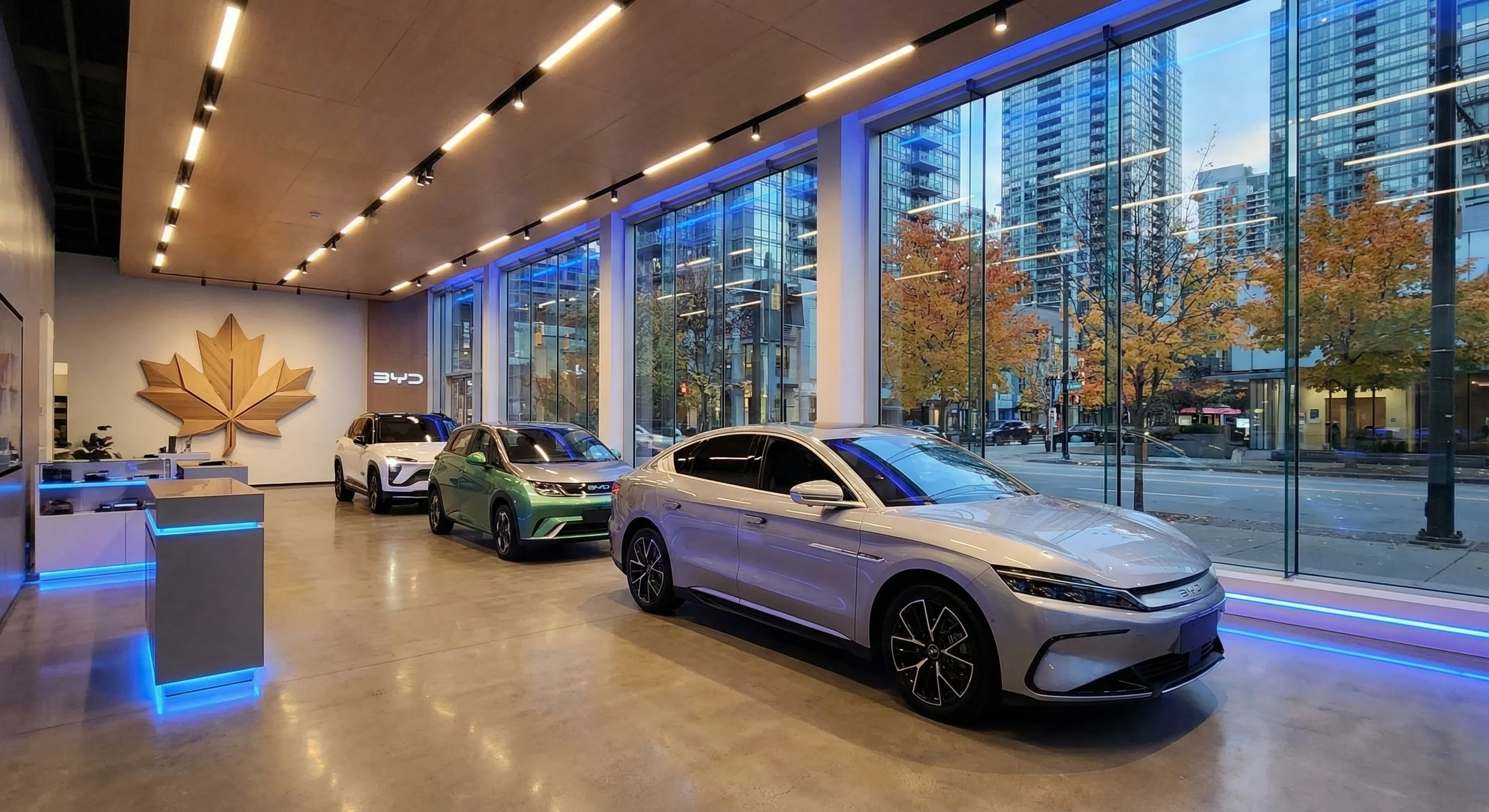
Every Chinese EV Brand Coming to Canada in 2026

Nunavut EV Feasibility: Can Electric Cars Work in the Arctic?

Why Legacy Automakers Keep Losing to Chinese EV Brands