Key takeaways
- A full charge on a 60 kWh battery costs about $4.20 in Quebec and about $10.55 in Nova Scotia, 2.5 times more for the same electrons.
- Roughly 80% of EV charging in Canada happens at home, so your provincial residential rate determines your daily cost of ownership more than any other factor.
- Ontario's Ultra-Low Overnight rate of $0.028/kWh from 11 PM to 7 AM charges an EV at $0.42 per 100 km, cheaper than Quebec's standard residential rate.
- BC Hydro's Step 2 rate ($0.1509/kWh) is 56% higher than Step 1, and most BC households adding an EV push into Step 2 for at least part of their charging.
The cost to charge an EV in Canada varies dramatically depending on where you live, when you charge, and how you charge. A full charge on a 60 kWh battery costs about $4.20 in Quebec and about $12.00 in Nova Scotia. That's a threefold difference for the exact same amount of energy. Where you plug in matters more than what you drive.
Every province and territory is covered below: residential electricity rates, cost per 100 km, home vs. public Level 2 vs. DC fast charging, and the gas-cost comparison. Every number is sourced from 2026 utility rate schedules, network pricing pages, and NRCan data.
The single most important number for any EV owner is their home electricity rate. Roughly 80% of EV charging in Canada happens at home, so your provincial residential rate determines your daily cost of ownership more than any other factor. The breakdown across the country follows.
HOME CHARGING BY PROVINCE, THE COMPLETE PICTURE
Home charging is always the cheapest option. You're buying electricity at residential rates, which are lower than any public charging network charges. For the math below, I'm using a reference EV that consumes 15 kWh per 100 km, roughly average for a compact crossover like a Hyundai Kona Electric or Chevy Equinox EV. I'm also using a 60 kWh battery as the reference for full-charge costs. Your actual numbers will vary based on your specific vehicle's efficiency, but these give you a solid baseline for comparison.
One note: the rates I'm listing are the energy charges themselves. In most provinces, your actual bill includes delivery charges, regulatory fees, and taxes on top of the energy rate. These add anywhere from 20% to 60% to your effective per-kWh cost depending on province. I'm noting where these are significant, but the energy rate is what most people mean when they talk about electricity costs, and it's the variable portion that changes with how much you charge.
Quebec, $0.07-$0.09/kWh
Cost per 100 km: $1.05-$1.35 Full charge (60 kWh): $4.20-$5.40 Annual cost (20,000 km): $210-$270
Quebec is the undisputed champion of cheap EV charging in North America. Hydro-Quebec's Heritage Pool provides roughly 99% of the province's electricity from hydroelectric generation, and the residential rate structure reflects that abundance. The first 40 kWh per day (about 1,200 kWh per billing period) costs approximately $0.0735/kWh. Consumption beyond that threshold costs about $0.1065/kWh. Most EV owners adding 8-10 kWh per day for commuting stay comfortably within the lower tier.
This is why Quebec has among the highest EV adoption rates in Canada, the fuel cost advantage over gasoline is overwhelming. A gas car at 8L/100 km paying $1.65/L costs $13.20 per 100 km. The EV costs about $1.20 per 100 km. That's a 91% savings. Over 20,000 km per year, you're saving roughly $2,400 on fuel alone compared to gasoline. Over five years, that's $12,000. Combined with Quebec's Roulez vert rebate program, the economics are almost absurdly favourable.
The other thing about Quebec is that the rate is flat, there's no time-of-use pricing, no need to schedule your charging for off-peak hours. Plug in when you get home, plug in at 3 AM, plug in on Saturday afternoon. It doesn't matter. It's all cheap.
Manitoba, $0.09-$0.10/kWh
Cost per 100 km: $1.35-$1.50 Full charge (60 kWh): $5.40-$6.00 Annual cost (20,000 km): $270-$300
Manitoba Hydro's rates are nearly as cheap as Quebec's, also powered by massive hydroelectric capacity on the Nelson River system. The basic residential rate is approximately $0.09914/kWh for the first 900 kWh per month, with surplus energy costing about $0.06670/kWh. Yes, you read that correctly, the surplus rate is actually cheaper than the base rate. Manitoba is one of the few places in Canada where using more electricity gets cheaper per unit.
This inverted rate structure means heavy electricity users, including EV owners running heat pumps and charging vehicles, get rewarded rather than penalized. A household adding 300 kWh per month for EV charging often pushes into the cheaper surplus tier for that incremental usage. It's a genuinely EV-friendly pricing model, even if Manitoba Hydro didn't design it with EVs in mind.
Despite these rock-bottom rates, Manitoba's EV adoption lags behind Quebec significantly. No provincial purchase rebate, brutally cold winters that reduce battery range, and sparser public charging infrastructure all contribute. But for the EV owners who are there, the operating costs are extraordinary. At $1.40 per 100 km, you're spending less on fuel per year than most people spend on coffee per month.
British Columbia, Step 1: $0.0964/kWh, Step 2: $0.1509/kWh
Cost per 100 km: $1.45-$2.26 Full charge (60 kWh): $5.78-$9.05 Annual cost (20,000 km): $289-$453
BC Hydro uses a two-step residential rate structure, and understanding it is critical for EV owners. Step 1 covers the first 1,350 kWh per two-month billing period at $0.0964/kWh. Everything above that threshold costs $0.1509/kWh under Step 2. That's a 56% jump.
In practice: a typical BC household uses about 900-1,100 kWh per billing period before adding an EV. Adding an EV that draws 250-400 kWh per billing period (depending on driving habits) will push most households into Step 2 territory for at least some of their charging. If you're a high-use household, electric heating, hot tub, EV, you could be charging entirely at the Step 2 rate.
At Step 1 rates, BC is very competitive, $1.45 per 100 km. At Step 2, it's still cheap compared to gasoline but noticeably more expensive than Quebec or Manitoba. The sweet spot is keeping your total household consumption within the Step 1 threshold by charging during periods when other household loads are low, or by investing in energy efficiency elsewhere in your home to create room under the cap.
BC also has the CleanBC Go Electric program offering vehicle purchase rebates, and combined with the federal EVAP incentive, BC remains one of the best provinces in Canada for EV ownership economics. The Lower Mainland and Vancouver Island have excellent public charging infrastructure too, which helps offset range anxiety concerns.
Alberta, $0.12-$0.18/kWh
Cost per 100 km: $1.80-$2.70 Full charge (60 kWh): $7.20-$10.80 Annual cost (20,000 km): $360-$540
Alberta is Canada's wild card for electricity pricing. The province has a deregulated electricity market, which means there's no single utility setting the rate. You choose your retailer, you choose your contract type, and the rate you pay depends on those choices. That wide $0.12-$0.18 range isn't theoretical, it reflects real differences between locked-in contract rates and floating regulated rate option (RRO) prices.
The Regulated Rate Option (RRO) is the default for customers who haven't chosen a competitive retailer. It fluctuates monthly based on wholesale power pool prices and has historically been volatile. In winter 2025-26, RRO rates ranged from $0.11 to $0.19/kWh depending on the month and the utility area (ENMAX in Calgary, EPCOR in Edmonton, etc.). Smart EV owners in Alberta lock in a competitive fixed-rate contract when prices are low and ride it for the term.
The other Alberta factor: delivery and transmission charges are substantial. Your energy rate might be $0.13/kWh, but by the time you add distribution, transmission, local access fees, and riders, you could be paying an effective $0.20-$0.25/kWh. This is true across the province. It makes the "I pay $0.13" claim misleading because your actual per-kWh cost is significantly higher.
Despite Alberta's fossil fuel heritage, EV adoption is growing in Calgary and Edmonton, driven partly by younger demographics and partly by the math: even at $0.18/kWh, charging an EV costs $2.70 per 100 km compared to $13.20 for gasoline. That's still an 80% savings. Alberta's municipal and utility rebate programs are also expanding.
Gear worth having
As an Amazon Associate, ThinkEV earns a small commission from qualifying purchases — at no extra cost to you.
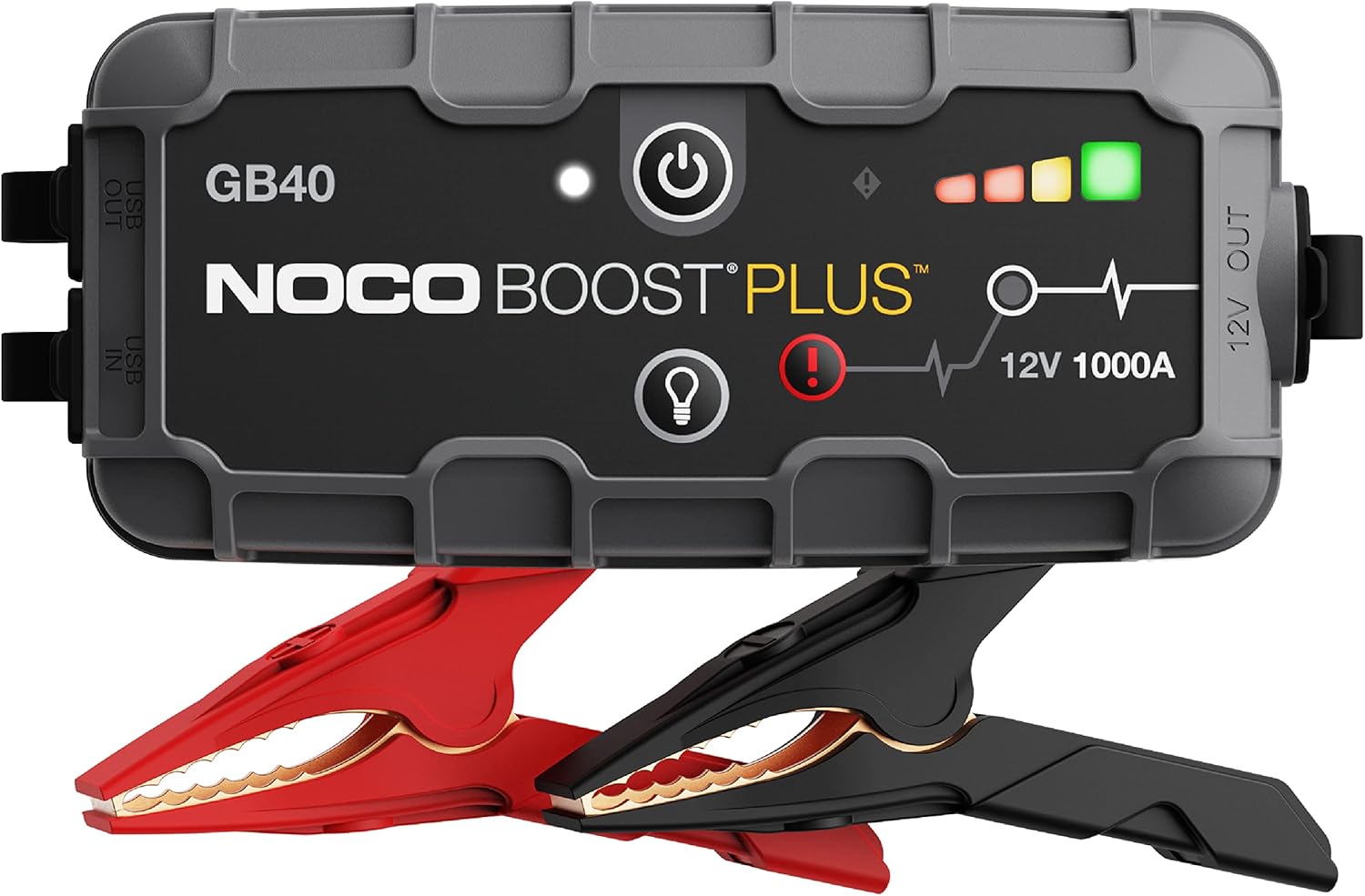
NOCO Boost Plus GB40 Jump Starter
A 1000A lithium jump starter that fits in your glovebox and works on any 12V battery. Your insurance against a dead 12V in a parking lot.
As an Amazon Associate, ThinkEV earns from qualifying purchases — at no extra cost to you.
Ontario, TOU: Off-Peak $0.076, Mid-Peak $0.122, On-Peak $0.182/kWh
Cost per 100 km: $1.14 (off-peak) to $2.73 (on-peak) Full charge (60 kWh): $4.56 (off-peak) to $10.92 (on-peak) Annual cost (20,000 km): $228 (off-peak) to $546 (on-peak)
Ontario is the most complex electricity market in Canada for EV owners, and understanding it can save you more money than in any other province. The Time-of-Use (TOU) pricing structure creates a massive incentive to charge overnight.
The current TOU schedule:
- Off-Peak: $0.076/kWh, Weekdays 7 PM to 7 AM, all day weekends and holidays
- Mid-Peak: $0.122/kWh, Weekdays 11 AM to 5 PM (summer) or 7 AM to 11 AM and 5 PM to 7 PM (winter)
- On-Peak: $0.182/kWh, Weekdays 7 AM to 11 AM and 5 PM to 7 PM (summer) or 11 AM to 5 PM (winter)
The spread between off-peak and on-peak is 140%. That's not a rounding error. It's the difference between Quebec-competitive charging costs and Nova Scotia-level costs, all within the same province. If you charge exclusively off-peak, Ontario becomes one of the cheapest places to charge an EV in Canada at $1.14 per 100 km. If you charge at random times, you're paying close to $2.00 per 100 km.
Ontario also offers an Ultra-Low Overnight (ULO) rate plan for customers with smart meters, which provides an even lower overnight rate of approximately $0.028/kWh from 11 PM to 7 AM, in exchange for higher daytime rates. For EV owners who can reliably schedule all their charging overnight, ULO can cut charging costs by more than half compared to standard off-peak TOU. At $0.028/kWh, that's $0.42 per 100 km, cheaper than Quebec. The catch is that any daytime usage (including from the rest of your household) gets charged at much steeper rates, so ULO only makes sense if your household can genuinely shift most consumption to overnight.
Ontario's grid is also remarkably clean, nuclear and hydro dominate, with zero coal since 2014. So you're not just saving money, you're driving on some of the cleanest electricity in the country. The delivery charges (Global Adjustment and distribution fees) do add significantly to the per-kWh cost, but TOU scheduling still saves serious money on the energy portion.
Saskatchewan, $0.15-$0.17/kWh
Cost per 100 km: $2.25-$2.55 Full charge (60 kWh): $9.00-$10.20 Annual cost (20,000 km): $450-$510
SaskPower is the sole electricity provider in Saskatchewan, and their residential rate reflects a grid that still relies heavily on natural gas and some remaining coal generation. The standard residential rate is approximately $0.1576/kWh for the first 615 kWh per month, stepping up to about $0.1714/kWh for usage above that threshold.
Saskatchewan's grid is among the most carbon-intensive in Canada, which is an environmental consideration even though it doesn't affect your charging costs directly. The province has committed to net-zero by 2050 and is expanding wind generation capacity, but the grid won't clean up overnight, literally or figuratively.
From a pure cost perspective, Saskatchewan sits in the middle of the pack. At $2.40 per 100 km, you're paying roughly double what Quebec residents pay but still saving 82% compared to gasoline. The annual fuel cost of around $480 compares to roughly $2,640 for gasoline, saving you about $2,160 per year. Over five years, that's $10,800 in fuel savings, enough to offset a meaningful chunk of any purchase price premium.
SaskPower doesn't currently offer time-of-use pricing, so there's no scheduling benefit. Charge whenever it's convenient.
New Brunswick, $0.13-$0.15/kWh
Cost per 100 km: $1.95-$2.25 Full charge (60 kWh): $7.80-$9.00 Annual cost (20,000 km): $390-$450
NB Power's residential rate sits at approximately $0.1304/kWh for the first 1,400 kWh per month, with consumption beyond that charged at about $0.1488/kWh. The grid runs on a mix of hydro, nuclear (Point Lepreau), and thermal generation.
New Brunswick's provincial EV rebate program ended in July 2025 and has not been replaced, so buyers rely on the $5,000 federal EVAP alone. This has dampened adoption compared to provinces with stacking rebate programs. The charging infrastructure is also relatively sparse outside Moncton, Fredericton, and Saint John, though NB Power has been expanding its public charging network along the Trans-Canada and key provincial highways.
At $2.10 per 100 km, New Brunswick offers solid savings over gasoline. The 1,400 kWh first-tier threshold is generous enough that most households can absorb EV charging without hitting the higher rate, especially during shoulder seasons when heating loads are lower.
Nova Scotia, $0.17-$0.18/kWh
Cost per 100 km: $2.55-$2.70 Full charge (60 kWh): $10.20-$10.80 Annual cost (20,000 km): $510-$540
Nova Scotia Power's rates are among the highest in Canada, reflecting a grid still partially dependent on coal and imported natural gas. The standard residential rate is approximately $0.17588/kWh. A full charge costs roughly $10.55. That's 2.5 times what the same charge costs in Quebec.
Even at the highest residential rates in Canada, Nova Scotia EV owners still pay dramatically less per kilometre than gasoline. At $2.63 per 100 km compared to $13.20 for gas, you're still saving 80%. The savings are less dramatic than in hydro provinces, but they're still substantial, about $2,114 per year, or $10,570 over five years.
Nova Scotia is aggressively adding renewable generation, offshore wind projects and solar, which should put downward pressure on rates over the next decade. The province also recently introduced modest EV incentive programs and is expanding its public charging network. For early adopters paying higher rates now, the trajectory is positive.
Nova Scotia Power has also piloted time-of-use rates, which could eventually give EV owners in the province the same off-peak scheduling benefit that Ontario owners already enjoy. If implemented broadly, overnight rates could drop to $0.10-$0.12/kWh, transforming the economics significantly.
Newfoundland and Labrador, $0.12-$0.14/kWh
Cost per 100 km: $1.80-$2.10 Full charge (60 kWh): $7.20-$8.40 Annual cost (20,000 km): $360-$420
Newfoundland and Labrador Hydro has benefited from the completion of the Muskrat Falls hydroelectric project, which has helped stabilize residential rates despite the project's well-documented cost overruns. The standard residential rate is approximately $0.12924/kWh for the first 1,000 kWh per month, stepping up slightly beyond that.
At $1.95 per 100 km, Newfoundland sits in the affordable middle ground for EV charging, cheaper than the other Atlantic provinces thanks to hydro generation, though not as cheap as Quebec or Manitoba. The annual cost of around $390 compares to $2,640 for gasoline, delivering savings of approximately $2,250 per year.
The challenge in Newfoundland isn't cost, it's infrastructure. Public charging stations are concentrated along the Trans-Canada Highway and in St. John's, with significant gaps in rural areas. The harsh winters also reduce battery range, making home charging infrastructure (a Level 2 charger in the garage) essentially mandatory rather than optional.
Prince Edward Island, $0.16-$0.18/kWh
Cost per 100 km: $2.40-$2.70 Full charge (60 kWh): $9.60-$10.80 Annual cost (20,000 km): $480-$540
Maritime Electric's rates are higher due to PEI's reliance on imported electricity, the province generates only about 25-30% of its own power (mostly wind) and imports the rest via undersea cables from New Brunswick. The standard residential rate is approximately $0.1658/kWh, with higher tiers beyond certain usage thresholds.
PEI's $4,000 provincial rebate (Tesla vehicles excluded) helps offset the higher operating costs, and when stacked with the $5,000 federal EVAP, island buyers can access up to $9,000 in combined incentives. That's significant. At PEI's rates, the higher operating costs compared to Quebec amount to about $270 more per year, the provincial rebate covers nearly 15 years of that difference.
The island's small geographic size is actually an advantage for EV ownership. PEI is roughly 280 km from tip to tip, meaning even a modest-range EV can traverse the entire province on a single charge. Public charging infrastructure exists in Charlottetown, Summerside, and along major routes, though it's not dense. Home charging handles most needs.
The Territories, Yukon, NWT, and Nunavut
The three territories are a different story entirely. Electricity pricing varies dramatically between communities served by hydroelectric grids and those running on diesel generators.
Yukon: Whitehorse and communities on the hydro grid pay approximately $0.13-$0.16/kWh. Yukon Energy's rates are reasonable for a northern jurisdiction. The territory's $5,000 Good Energy rebate program makes it one of the most generous in Canada when stacked with EVAP. Cost per 100 km: approximately $1.95-$2.40. Communities on diesel generation pay significantly more, and EV adoption in those areas is impractical.
Northwest Territories: Yellowknife and hydro-served communities pay approximately $0.30-$0.38/kWh, significantly higher than southern Canada. Communities on diesel pay $0.50-$1.00+/kWh. At $0.34/kWh, charging costs about $5.10 per 100 km, still cheaper than gasoline at northern prices ($1.80-$2.20/L, or $14.40-$17.60 per 100 km), but the savings margin is thinner.
Nunavut: Almost entirely diesel-generated electricity at $0.60-$1.10/kWh, heavily subsidized. At these rates, EV charging would cost $9.00-$16.50 per 100 km. However, gasoline in Nunavut runs $2.00-$2.50/L, so the gas car costs $16.00-$20.00 per 100 km. The math still favours EVs slightly, but the extreme cold (reducing range by 30-50%), lack of charging infrastructure, and limited road networks make EVs largely impractical in most Nunavut communities today.
PUBLIC LEVEL 2 CHARGING, NETWORK-BY-NETWORK BREAKDOWN
Public Level 2 charging typically costs $0.20-$0.35 per kWh in Canada, depending on the network and the province. At 7.2 kW, Level 2 adds about 30-40 km of range per hour, useful for topping up while you shop, eat, or work, but not fast enough for road-trip charging. The breakdown below covers what each major network actually charges and which membership tiers earn back their fees.

FLO (AddEnergie)
FLO is Canada's largest EV charging network, and their Level 2 pricing varies by region. In Quebec, FLO Level 2 stations typically charge $0.20-$0.25/kWh, reflecting the province's cheaper electricity. In Ontario and the Maritimes, expect $0.25-$0.30/kWh. In BC and Alberta, prices range from $0.22-$0.28/kWh.
FLO's membership program ($0/month for basic, $10.99/month for Plus) offers discounted per-kWh rates at participating stations. For frequent public chargers, the Plus membership can save $15-$30 per month depending on usage, but if you're charging publicly that often, you should really be looking at workplace or home charging solutions instead.
Some FLO stations charge by the hour rather than by kWh. Hourly rates typically run $1.00-$2.50 per hour. On a 7.2 kW Level 2 charger, $2.00/hour works out to about $0.28/kWh, comparable to per-kWh pricing. But on a 3.3 kW charger, that same $2.00/hour translates to $0.61/kWh. Always check whether a station charges by kWh or by time, and strongly prefer per-kWh pricing.
ChargePoint
ChargePoint operates differently from FLO, they sell the hardware to property owners (malls, offices, municipalities) who then set their own pricing. This means ChargePoint station pricing is wildly variable. I've seen free ChargePoint stations at Ikea locations, $0.15/kWh at some municipal lots, and $0.35/kWh at downtown parking garages.
The ChargePoint app shows pricing before you start a session, so there are no surprises. But the inconsistency means you can't assume a ChargePoint station will be cheap, or expensive. Check the app, compare to alternatives, and make an informed choice.
Some ChargePoint stations add idle fees ($2-$5 per hour after charging is complete) to discourage people from using chargers as free parking. These are reasonable, move your car when it's done charging, and you'll never pay one.
Ivy Charging Network
Ivy is an Ontario-focused network (joint venture between Ontario Power Generation and Hydro One). Their Level 2 stations charge approximately $0.25/kWh, which is competitive for Ontario. Their coverage is concentrated along Ontario's 400-series highways and in urban centres like Toronto, Ottawa, and Hamilton.
Tesla Destination Chargers
Tesla's Level 2 destination chargers at hotels, restaurants, and resorts are almost always free to Tesla owners and increasingly accessible to non-Tesla vehicles via NACS. These are a genuinely good deal if you're staying at a participating hotel, you arrive with 20% battery, plug in overnight, and leave with 100% at zero cost. Check Tesla's map or PlugShare for locations.
Free Public Level 2 Charging
Free Level 2 chargers still exist across Canada, though they're becoming rarer as networks seek to recover costs. Common sources include:
- Municipal chargers in some cities (particularly in Quebec, where Hydro-Quebec has subsidized free stations)
- Shopping centres like malls and Ikea locations
- Some employer workplaces
- Select provincial and national parks
- Certain hotels and resorts (as a guest amenity)
ChargeHub's map and PlugShare both allow you to filter for free stations. If you can reliably access free charging while you shop or work, it's essentially free fuel, the best possible scenario outside of home charging. But don't plan your EV ownership economics around free charging. These stations can be decommissioned, have pricing added, or be perpetually occupied. Treat them as a bonus, not a strategy.
Gear worth having
As an Amazon Associate, ThinkEV earns a small commission from qualifying purchases — at no extra cost to you.

Grizzl-E Classic Level 2 EV Charger (40A)
Canadian-made and rated for minus 40C winters. 40A / 9.6 kW, NEMA 14-50, indoor/outdoor, 24-ft cable. The charger built for Canadian weather.
As an Amazon Associate, ThinkEV earns from qualifying purchases — at no extra cost to you.
DC FAST CHARGING, THE REAL COSTS
DC fast charging is the most expensive way to charge but the fastest. This is the charging you use on road trips, in emergencies, or when you don't have home charging access. Understanding network pricing is essential because costs vary significantly, and the difference between the cheapest and most expensive networks can be 40-50%.
Electrify Canada
Electrify Canada charges approximately $0.33-$0.40/kWh depending on the station and power level. Their Pass+ membership ($5.99/month) reduces per-kWh rates by about $0.04-$0.08, which pays for itself if you DC fast charge more than twice per month. A 10-80% charge on a 60 kWh battery (42 kWh delivered) costs roughly $14-$17 without membership.
Electrify Canada stations are positioned along major highway corridors, particularly in Ontario, Quebec, BC, and Alberta. Their chargers range from 150 kW to 350 kW, with higher-powered chargers sometimes commanding a premium rate. The 350 kW chargers are only useful if your car can accept that much power, most current EVs max out at 150-250 kW.
One important detail: Electrify Canada has been expanding aggressively and their station reliability has improved significantly since 2024. Uptime rates above 95% are now typical at most locations, though some older stations can still be finicky.
Petro-Canada Electric Highway
Petro-Canada (Suncor) charges approximately $0.35-$0.45/kWh. Their stations are positioned along the Trans-Canada Highway and major interprovincial corridors, making them critical infrastructure for coast-to-coast road trips. They were among the first to build a transcontinental network.
The pricing is on the higher end, but the convenience factor is significant. Petro-Canada stations are at existing gas stations with washrooms, food, and other amenities, you're not sitting in an empty parking lot. For road trips, this matters. A 10-80% charge costs roughly $15-$19.
Petro-Canada does not currently offer a membership discount program, so what you see is what you pay.
Tesla Superchargers
Tesla Superchargers charge approximately $0.35-$0.45/kWh for non-Tesla vehicles using NACS adapters, and approximately $0.30-$0.40/kWh for Tesla owners. The pricing varies by location and, in some cases, by time of day. Tesla has begun implementing demand-based pricing at high-traffic stations, where rates increase during peak hours.
The Tesla Supercharger network is the most reliable in Canada, uptime consistently exceeds 98%. Stations are well-located, typically at shopping centres and highway service plazas with amenities nearby. The charging experience is also the most smooth: plug in, charging starts automatically, billing happens via your Tesla account or the Tesla app (for non-Tesla vehicles).
Gear worth having
As an Amazon Associate, ThinkEV earns a small commission from qualifying purchases — at no extra cost to you.

TP-Link Kasa Smart Plug with Energy Monitoring
Track exactly how much electricity your Level 1 charger uses and schedule it for off-peak hours. Know your real cost per kWh.
As an Amazon Associate, ThinkEV earns from qualifying purchases — at no extra cost to you.
A 10-80% charge on a 60 kWh battery costs roughly $13-$17 for Tesla owners and $15-$19 for non-Tesla vehicles. Tesla's pricing advantage for its own vehicles is modest but real.
FLO DCFC
FLO's DC fast chargers range from $0.30 to $0.45/kWh depending on location and power level. FLO Plus members get discounted rates, typically saving $0.05-$0.08/kWh. FLO's DCFC network is most concentrated in Quebec and Ontario, with growing coverage in the Maritimes and BC.
FLO's DC stations tend to be lower-powered (50-100 kW) compared to Electrify Canada or Tesla, which means longer charging times for the same amount of energy. On a 50 kW charger, a 10-80% charge on a 60 kWh battery takes about 50 minutes. On a 150 kW charger, the same charge takes 17-20 minutes. Time is money, both in the literal sense (if the station charges by time) and in the opportunity cost of sitting around.
DCFC Cost Per 100 km by Province
The per-100 km cost of DC fast charging is remarkably consistent across Canada because network pricing doesn't vary as much as residential electricity rates. Approximate range using average DCFC pricing ($0.35-$0.55/kWh):
- Cheapest scenario (Electrify Canada member, off-peak): $0.33/kWh = $4.95 per 100 km
- Mid-range (Tesla Supercharger, Tesla owner): $0.35/kWh = $5.25 per 100 km
- Typical (Petro-Canada, non-member): $0.40/kWh = $6.00 per 100 km
- Expensive (premium station, non-member): $0.50/kWh = $7.50 per 100 km
- Worst case (high-demand location, peak pricing): $0.55/kWh = $8.25 per 100 km
Even at the worst-case $8.25 per 100 km, DC fast charging is still 37% cheaper than gasoline at $13.20 per 100 km. But it's four to eight times more expensive than home charging in cheap provinces. This is why the advice is always the same: charge at home whenever possible, use DC fast charging only when you need to.
ANNUAL COST COMPARISON, HOME VS PUBLIC VS MIXED
Three real-world scenarios across provinces show how charging habits affect your annual costs. Assuming 20,000 km per year.
Scenario 1: 90% Home / 10% DCFC (Typical Owner With Home Charging)
This is the standard pattern, daily commuting charged at home, with occasional DC fast charging on road trips or long days out.
- Quebec: $189 home + $99 DCFC = $288/year
- Manitoba: $243 home + $105 DCFC = $348/year
- BC (Step 1): $260 home + $105 DCFC = $365/year
- Ontario (off-peak): $205 home + $108 DCFC = $313/year
- Ontario (mixed TOU): $360 home + $108 DCFC = $468/year
- Alberta: $405 home + $111 DCFC = $516/year
- Saskatchewan: $432 home + $111 DCFC = $543/year
- New Brunswick: $351 home + $108 DCFC = $459/year
- Nova Scotia: $459 home + $111 DCFC = $570/year
- Newfoundland: $324 home + $108 DCFC = $432/year
- PEI: $432 home + $111 DCFC = $543/year
Scenario 2: 100% Public Charging (Condo/Apartment Without Home Charging)
This is the nightmare scenario, and it's the reality for about 30% of Canadian households who live in multi-unit residential buildings without charger access.
- All provinces: Using a mix of 70% public Level 2 ($0.27/kWh avg) and 30% DCFC ($0.40/kWh avg) = approximately $1,170/year
That's roughly four times the cost of home charging in Quebec and about double the cost in expensive provinces. It's still cheaper than gasoline ($2,640/year), but the savings margin shrinks from 85-90% to about 56%. This is why condo and apartment charging solutions are the single most important infrastructure challenge for Canadian EV adoption. Without home charging access, the economics still work, but they're not nearly as compelling.
Scenario 3: Workplace Charging (Free Level 2 at Work + Home Evenings)
For the lucky ones with employer-provided charging, the math is outstanding.
- Quebec: $105 home + $0 work = $105/year (50% home, 50% free work charging)
- Ontario (off-peak): $114 home + $0 work = $114/year
- Nova Scotia: $255 home + $0 work = $255/year
If your workplace offers free charging, you should be arriving every morning with your car plugged into the work charger and doing 50-60% of your charging there. Combined with cheap overnight home charging, some EV owners report annual fuel costs under $150. That's $12.50 per month. For transportation.
GAS COST COMPARISON BY PROVINCE
A 12,000 km/year driver in a gas car burning 8 L/100 km pays between $2,240 (Alberta) and $2,752 (BC) per year at March 2026 pump prices. The province-by-province table below shows the full range. The pattern is counter-intuitive: the provinces with the cheapest electricity (Quebec, Manitoba) generally have the highest gas prices, which amplifies the EV cost advantage in hydro provinces and narrows it slightly in oil-producing ones.
To put EV charging costs in proper perspective, let's look at what gasoline costs per province. Gas prices vary regionally too, driven by provincial fuel taxes, distance from refineries, and local market conditions. Using March 2026 average prices for regular gasoline and a gas car consuming 8L/100 km:
- Alberta: $1.40/L = $11.20 per 100 km = $2,240/year (lowest gas prices, oil-producing province)
- Manitoba: $1.48/L = $11.84 per 100 km = $2,368/year
- Saskatchewan: $1.50/L = $12.00 per 100 km = $2,400/year
- Ontario: $1.55/L = $12.40 per 100 km = $2,480/year
- Quebec: $1.62/L = $12.96 per 100 km = $2,592/year (high provincial gas tax)
- New Brunswick: $1.58/L = $12.64 per 100 km = $2,528/year
- Nova Scotia: $1.60/L = $12.80 per 100 km = $2,560/year
- Newfoundland: $1.68/L = $13.44 per 100 km = $2,688/year
- BC: $1.72/L = $13.76 per 100 km = $2,752/year (carbon tax + TransLink tax in Metro Vancouver)
- PEI: $1.56/L = $12.48 per 100 km = $2,496/year
Notice the irony: the provinces with the cheapest electricity (Quebec, Manitoba) tend to have higher gasoline prices, while provinces with cheaper gas (Alberta) have pricier electricity. This amplifies the EV advantage in hydro provinces and narrows it slightly in Alberta, but the EV wins everywhere.
Annual Savings: EV Home Charging vs Gasoline
Annual fuel cost savings of home-charged EV ownership over gasoline, province by province:
- Quebec: $2,592 - $240 = $2,352 saved/year ($11,760 over 5 years)
- BC: $2,752 - $371 = $2,381 saved/year ($11,905 over 5 years)
- Manitoba: $2,368 - $285 = $2,083 saved/year ($10,415 over 5 years)
- Ontario (off-peak): $2,480 - $228 = $2,252 saved/year ($11,260 over 5 years)
- Ontario (mixed): $2,480 - $420 = $2,060 saved/year ($10,300 over 5 years)
- Newfoundland: $2,688 - $390 = $2,298 saved/year ($11,490 over 5 years)
- New Brunswick: $2,528 - $420 = $2,108 saved/year ($10,540 over 5 years)
- Nova Scotia: $2,560 - $525 = $2,035 saved/year ($10,175 over 5 years)
- PEI: $2,496 - $510 = $1,986 saved/year ($9,930 over 5 years)
- Saskatchewan: $2,400 - $480 = $1,920 saved/year ($9,600 over 5 years)
- Alberta: $2,240 - $450 = $1,790 saved/year ($8,950 over 5 years)
Every single province delivers at least $1,790 in annual fuel savings. The cheapest EV charging province (Quebec) combined with its expensive gasoline delivers the highest savings: nearly $12,000 over five years on fuel alone. For a deeper look at how these fuel savings fit into the total ownership picture, see our EV vs Gas Total Cost of Ownership analysis.
SMART CHARGING STRATEGIES, HOW TO MINIMIZE YOUR COSTS
The difference between a smart charger and a dumb one isn't the hardware, it's the behaviour. Here's how to optimize your charging costs in each rate structure.
Ontario TOU Optimization
Ontario has the most to gain from smart charging because the TOU spread is so large. The playbook:
Step 1: Set your car's charging schedule. Every modern EV has a built-in charging scheduler. Set it to start at 7:01 PM (the beginning of off-peak) or, better yet, at 11 PM if you're on the ULO rate plan. The car will accept the plug connection immediately but won't draw power until the scheduled time.
Step 2: Consider the ULO rate plan. If your household can genuinely shift 80%+ of electricity consumption to overnight hours, the Ultra-Low Overnight rate of $0.028/kWh makes EV charging almost free, $0.42 per 100 km. Run the numbers on your total household bill, though. The higher daytime rates on ULO ($0.24/kWh mid-peak, $0.28/kWh on-peak) will cost you more if you run air conditioning, dryers, or other heavy loads during the day.
Step 3: Use weekends aggressively. All day Saturday and Sunday is off-peak on the standard TOU plan. If you need a top-up during the week and missed the overnight window, wait for the weekend.
Step 4: Avoid the 5 PM trap. The worst time to charge in Ontario is 5-7 PM on a weekday in winter (on-peak, $0.182/kWh). If you arrive home at 5:30 and plug in without a schedule, you're paying 2.4 times more than if you waited 90 minutes. That 90-minute wait saves you 58% on your charging session.
BC Step Rate Management
BC Hydro's two-tier system penalizes high consumption. Smart EV owners can manage this by:
- Monitoring usage against the 1,350 kWh threshold each billing period. BC Hydro's app shows real-time consumption against the Step 1 cap.
- Offsetting other electricity use during high-charging months. Run the dryer less, optimize heating, and use natural ventilation in summer to stay under the Step 1 threshold.
- Charging at work or free public stations during high-use billing periods (winter, when electric heating pushes base consumption up). Every kWh you charge for free at work is a kWh that stays under your Step 1 cap at home.
Alberta Contract Timing
In Alberta's deregulated market, your contract terms matter enormously. Strategies include:
- Lock in when wholesale prices are low. Alberta's pool price is public information. When it dips below $0.08/kWh for sustained periods, that's the time to sign a fixed-rate contract.
- Compare retailers aggressively. UCaHelp.ca and Energy Rates Alberta show real-time comparisons. A $0.03/kWh difference on a locked contract saves $90/year on EV charging alone.
- Avoid the RRO in winter. The Regulated Rate Option spikes in cold months when demand peaks. If you're still on the RRO, switch to a fixed contract before November.
Universal Strategies (All Provinces)
Charge to 80%, not 100%. The last 20% of a battery charge takes disproportionately long and, on DC fast chargers, costs more because the charging speed drops. At home, this doesn't save money per kWh but it preserves battery health. On DCFC, stopping at 80% is both faster and cheaper per usable kilometre.
Precondition your battery from the plug. In winter, use your car's preconditioning feature while it's still plugged in. This warms the battery and cabin using grid electricity instead of battery power, preserving range and reducing the total energy you need from the battery during your drive.
Install a Level 2 charger, not a Level 1 trickle charger. A 240V Level 2 charger delivers 7.2-9.6 kW and can fully charge most EVs overnight. The wall outlet Level 1 charger (120V, 1.4 kW) takes 40+ hours for a full charge and is only viable for very short commuters. The upfront cost of a Level 2 install ($800-$2,000 including electrician) pays for itself in convenience and enables you to take full advantage of off-peak rates in TOU provinces. For charger recommendations, see our Best Level 2 EV Chargers Canada 2026 guide.
WORKPLACE CHARGING, THE HIDDEN ECONOMIC ADVANTAGE
Workplace charging deserves its own section because it fundamentally changes the economics of EV ownership, and it's growing fast. According to NRCan data, employer-installed charging stations grew by over 40% in 2025 across Canada.
Why Employers Offer Free Charging
The electricity cost to an employer is trivial. A Level 2 charger running 8 hours during a workday delivers about 50-60 kWh of electricity. At average commercial rates ($0.10-$0.15/kWh), that's $5-$9 of electricity per day per car. Most employers see this as a low-cost employee benefit, cheaper than a gym subsidy and increasingly expected by employees driving EVs.
Some employers are moving to paid workplace charging ($0.10-$0.20/kWh), which is still significantly cheaper than public Level 2 networks. Even at $0.20/kWh, workplace charging costs less than any public network and is more convenient because you're already parked there for 8 hours.
The Math on Workplace Charging
If you can charge at work for free and drive 40 km round-trip commuting, you need about 6 kWh per day, roughly 45 minutes on a Level 2 charger. Over a 250-day work year, that's 1,500 kWh of free charging, worth $105 (at Quebec rates) to $270 (at Nova Scotia rates). Not life-changing money, but it adds up, and it means your home charger only needs to handle weekend and evening driving.
For employees without home charging (renters, condo dwellers), workplace charging is significant. It can replace 50-70% of their charging needs at dramatically lower cost than public networks. If your employer offers free charging and you can't charge at home, you've just solved the primary economic objection to EV ownership.
Asking Your Employer
If your workplace doesn't have chargers yet, the business case is straightforward: Level 2 charger installation costs $2,000-$5,000 per port, NRCan's Zero-Emission Vehicle Infrastructure Program (ZEVIP) covers up to 50% of installation costs, the annual electricity cost per vehicle is under $1,500, and it's a tax-deductible business expense. Frame it as an employee retention tool and a sustainability initiative, and most progressive employers will at least investigate it.
RATE TREND PREDICTIONS, WHERE PRICES ARE HEADED
The trends in Canadian electricity rates and EV charging costs are visible, even without a regulator's vantage point.
Residential Electricity Rates (2026-2030)
Quebec: Stable. Hydro-Quebec has massive surplus capacity and exports electricity profitably. Residential rates will likely increase 2-3% annually with inflation, keeping Quebec the cheapest place to charge an EV in Canada for the foreseeable future.
Ontario: Slowly increasing. The Global Adjustment (which funds nuclear refurbishment and renewable contracts) will continue driving up delivered costs. Expect TOU rates to climb 3-5% annually. The ULO overnight rate may also increase, but it's likely to remain the cheapest option.
BC: Moderate increases. BC Hydro's approved rate increases of 3-4% annually through 2028 will push Step 1 toward $0.11/kWh and Step 2 toward $0.17/kWh. Still competitive, but the gap between BC and Alberta will narrow.
Alberta: Volatile. The deregulated market means rates will continue swinging with wholesale natural gas prices and renewable energy buildout. As more wind and solar come online, wholesale prices during sunny/windy periods should drop, potentially creating very cheap charging windows.
Atlantic provinces: Declining trend (eventually). Nova Scotia's offshore wind projects and New Brunswick's nuclear modernization should put downward pressure on rates by 2028-2030. PEI's growing wind capacity will reduce import dependence. Newfoundland benefits from Muskrat Falls for the long term.
Prairies: Gradual increases. Saskatchewan's coal-to-renewable transition will require infrastructure investment, pushing rates up 4-6% annually in the near term.
DC Fast Charging Rates (2026-2030)
DCFC pricing is likely to come down modestly as:
- Competition increases between networks
- Utilization rates improve (fixed costs spread over more sessions)
- Battery energy storage at stations reduces demand charges
- Government incentives continue subsidizing infrastructure buildout
Average DCFC pricing should drop from $0.35-$0.45/kWh to $0.28-$0.38/kWh by 2028. The floor is probably around $0.25/kWh. Below that, it's hard for networks to cover infrastructure costs without heavy subsidization.
The Net Effect
Even with residential rate increases, the cost advantage of EVs over gasoline will widen over the next five years. Why? Because oil prices are inherently volatile and trend upward with carbon pricing, while electricity rates increase slowly and predictably. A 3% annual electricity rate increase means your charging cost goes from $300/year to $348/year over five years. A 3% annual gasoline price increase means your fuel cost goes from $2,640/year to $3,061/year. The gap widens, not narrows.
The federal carbon price, scheduled to reach $170/tonne CO2 by 2030, adds approximately $0.38/L to gasoline but only $0.01-$0.03/kWh to clean electricity. This structural advantage for EVs is baked into Canadian climate policy and isn't going away regardless of which party forms government, the Supreme Court has upheld the carbon pricing framework.
Charge At Home Overnight And You've Solved 80% Of It
Charge at home, overnight, on the cheapest rate your utility offers. That single habit determines 80% of your EV fuel costs. If you're in Ontario, use the off-peak TOU rate, or better yet, investigate the ULO plan. If you're in Alberta, shop for a competitive fixed rate and lock it in. If you're in Quebec or Manitoba, just plug in whenever you want, it's all cheap. If you're in BC, keep an eye on your Step 1 threshold and charge strategically.
Public charging costs 2-5x more than home charging. DC fast charging costs 3-7x more. These are for convenience and road trips, not for daily use. The EV owners who report high charging costs are almost always the ones without home charging, if you rent or live in a condo without charger access, the economics shift significantly, but they still favour EVs over gasoline in every province.
The math works everywhere in Canada. In Quebec, you save $2,350 per year on fuel. In Nova Scotia, the most expensive province for EV charging, you still save over $2,000. Even in the Northwest Territories, EVs cost less to fuel than gas cars. The only variable is how much less, and smart charging habits can move that needle significantly.
Condo and apartment charging solutions are the next frontier for Canadian EV adoption. If you're a property manager, a condo board member, or a developer, the single most impactful thing you can do for EV uptake is install Level 2 chargers in your parking structure. The technology exists, the economics work, and the demand is there. For guidance on home and building charging setups, check our Level 2 charger guide.
For a broader look at EV savings beyond just fuel, including maintenance, insurance, and depreciation, read our Total Cost of Ownership comparison. And if you're planning a road trip and need to understand charging logistics, our EV Road Trip Charging Guide covers everything from route planning to payment apps.
Gear worth having
As an Amazon Associate, ThinkEV earns a small commission from qualifying purchases — at no extra cost to you.

P3 Kill A Watt Electricity Usage Monitor
Plug in your charger and see exactly what you spend in kWh, cost, and watts. Settle the is-my-EV-really-cheaper debate with data.
As an Amazon Associate, ThinkEV earns from qualifying purchases — at no extra cost to you.
Related Reading
- EV Rebates by Province Canada 2026, Every federal and provincial incentive available now.
- EV vs Gas: Total Cost of Ownership Canada 2026, The complete financial picture beyond just fuel.
- Best Level 2 EV Chargers Canada 2026, Which home charger to buy and why.
- EV Maintenance Costs Canada, What you actually pay for service and repairs.
- EV Road Trip Charging Guide Canada 2026, Route planning, apps, and payment strategies.
- How to Install a Level 2 EV Charger at Home, Step-by-step installation walkthrough.
Gear worth having
As an Amazon Associate, ThinkEV earns a small commission from qualifying purchases — at no extra cost to you.

Lectron Level 2 J1772 Charger (40A, WiFi)
Smart WiFi charger with real-time energy monitoring. 40A / 9.6 kW, J1772 with a NEMA 14-50 plug, schedule charging right from your phone.
As an Amazon Associate, ThinkEV earns from qualifying purchases — at no extra cost to you.

Founder & Chief Editor
Vlad Pereira is the founder and chief editor of ThinkEV.ca, the Canadian electric-vehicle publication he writes and edits from Courtenay, British Columbia. He covers EV pricing, federal and provincial rebates, charging costs, and the Chinese manufacturers now entering Canada, from the buyer's side rather than the press-fleet side. ThinkEV is a venture of Vlad Pereira Online; his writing on health, income and the long game lives at vladpereira.com.
Frequently asked questions
What is the cheapest province to charge an EV?
Is it cheaper to charge an EV than to buy gas?
Should I charge during off-peak hours?
How much does a full charge cost?
How much does DC fast charging cost on a road trip?
Can I charge an EV in a condo or apartment?
What is Ontario's Ultra-Low Overnight (ULO) rate?
How do EV charging costs change in winter?
Is it worth installing a Level 2 home charger?
More EV & road-trip finds
Affordable upgrades worth a look — tap any to check the price on Amazon.
 ★ 568
★ 568Personalized Photo and Text Keychain
View on Amazon ★ 12,396
K KNODEL Car Trash Can with Lid
View on Amazon ★ 17,242
LISEN Mini USB-C Car Charger (54W)
View on Amazon ★ 121
★ 121Foldable Windshield Sun Umbrella
View on Amazon ★ 268
★ 268Anti-Slip Leather Steering Wheel Cover
View on Amazon ★ 47,507
HOMEXCEL Microfiber Cloths (12-Pack)
View on Amazon ★ 537
★ 537USB Star Projector Roof Light
View on Amazon ★ 546
★ 546Funny Headrest Face Covers (2-Pack)
View on AmazonRead, Plan, Then Stay Current
Explore our expert articles to understand incentives and ownership costs, use the map to pressure-test charging reality, then subscribe so new EV coverage comes straight to you.
Continue Reading
Ontario EV Charging in 2026: Where It Stands
Hidden Costs of EV Ownership Nobody Tells You
EV Charging in a Condo or Apartment in Canada

EV Maintenance Costs Canada 2026: What You Pay

EV Road Trip Canada: How to Plan the Charging