Key takeaways
- The federal EVAP rebate ($5,000), the SCRAP-IT trade-in bonus, and the BC Hydro charger rebate remain available.
- New BEVs got $4,000, PHEVs got $2,000, used BEVs got $2,000, used PHEVs got $1,000.
- Sources include NRCan, Transport Canada, and provincial program documentation.
Update (March 2026): BC's CleanBC Go Electric passenger vehicle rebate is currently PAUSED. The $4,000 BEV / $2,000 PHEV new vehicle rebate is not accepting applications at this time. The information below is kept as reference for when the program resumes, the BC government has historically restarted funding, but there is no confirmed date. The federal EVAP rebate ($5,000), the SCRAP-IT trade-in bonus, and the BC Hydro charger rebate remain available.
This province built one of the most comprehensive EV incentive frameworks in North America, layered it with federal programs until the combined stack hit $15,350, led the country in per-capita EV adoption for years, and then paused the centrepiece program with no resumption date. If you're a BC resident looking at an electric vehicle right now, you deserve an accounting of what that means, what's still on the table, and how to extract maximum value from a diminished but still meaningful set of programs.
The CleanBC Go Electric program launched in 2015 as part of the province's broader climate strategy. At its peak, BC was running the most generous provincial EV rebate west of Quebec. New BEVs got $4,000, PHEVs got $2,000, used BEVs got $2,000, used PHEVs got $1,000. Stack that with the federal EVAP at $5,000, the SCRAP-IT trade-in bonus at up to $6,000, and BC Hydro's $350 charger rebate, and a BC buyer could shave $15,350 off their EV purchase. That is not a rounding error. That is a used Honda Civic. That is the difference between "interesting but can't afford it" and "signing the papers."
And now the passenger vehicle portion is paused.
This is the tension at the heart of the BC EV market in 2026. The infrastructure is excellent, best DCFC coverage outside Ontario. The electricity is cheap, BC Hydro rates are among the lowest in the country. The right-to-charge legislation is progressive. The charging networks are dense on every major corridor. But the financial incentive that pulled thousands of buyers across the line is sitting in a government filing cabinet waiting for someone to approve a new funding envelope.
This covers everything: what's paused, what's still live, how to stack the remaining programs, the electricity math, the charging network, winter considerations, the best vehicles for BC buyers right now, the right-to-charge framework, the full cost comparison, and where the policy is headed. Whether CleanBC comes back tomorrow or stays dark for another year, you'll know exactly where you stand.
CleanBC Go Electric Rebate
Status: PAUSED as of March 2026. The CleanBC Go Electric passenger vehicle rebate is not currently accepting applications. When active, the program offers up to $4,000 for battery electric vehicles (BEVs) and $2,000 for plug-in hybrid electric vehicles (PHEVs). The money is applied directly at the dealership, you don't pay full price and wait for a cheque in the mail. Your dealer handles the paperwork, and the rebate comes off your purchase price on the spot.
The full funding history matters if you're trying to time a purchase. CleanBC Go Electric has been through multiple funding rounds since 2015. The pattern is consistent: the government allocates a block of money, demand outstrips supply, applications get paused, a new allocation appears six to twelve months later, and the cycle repeats. The program exhausted its funding allocation in 2023, was topped up, ran through that money by mid-2024, was topped up again, and the latest round was paused in late 2025.
This is not the first pause. The program has paused at least three times in its history, and it has always resumed. That historical pattern is the strongest signal we have, it suggests the pause is a funding gap, not a policy cancellation. The BC government has not signalled any intention to permanently kill the program. The CleanBC Roadmap to 2030, which is still official provincial policy, includes continued consumer incentives for ZEV adoption. The question is not whether the money comes back; it's when.
When active, the eligibility requirements are straightforward. You need a valid BC driver's licence. You need to be purchasing a new EV from an authorized dealer in BC. The vehicle must be on the provincial approved list. Leases of 48 months or longer qualify for the full rebate amount; shorter leases receive a prorated amount. Most major EVs qualify, though notably Tesla is excluded from BC's provincial rebate, that exclusion has been in place since the program's inception and is unlikely to change.
One detail most guides skip: the CleanBC rebate also applies to used EVs. Used BEVs get $2,000 and used PHEVs get $1,000, provided the purchase is through an authorized dealer. The used EV market in BC is one of the strongest in the country, the province has the highest per-capita EV registration rate in Canada, which means there's a healthy supply of two- and three-year-old EVs cycling through dealerships. When the program resumes, that used vehicle rebate will be worth watching closely. A two-year-old Chevy Bolt at $22,000 with a $2,000 provincial rebate and a SCRAP-IT bonus becomes genuinely cheap transportation.
For anyone watching the political climate: the BC NDP has historically been the party most invested in CleanBC's EV programs. If there is a government change, the future of these incentives becomes less certain. But even the BC Conservatives have acknowledged that EV infrastructure investment has economic benefits for the province, so an outright cancellation would be politically difficult regardless of who holds power. My read: the program resumes in 2026. The timing depends on the provincial budget cycle, and I'd guess late spring or summer. But I don't have a crystal ball, and neither does your dealer, so if anyone at a dealership tells you the rebate is "definitely coming back next month," ask them for their source.
Stacking Federal and Provincial Rebates
BC's CleanBC passenger rebate ended in late 2025, so for now BC buyers get only the federal EVAP ($5,000 BEV / $2,500 PHEV) on a new vehicle. If the province ever reintroduces a passenger rebate, the power move would be stacking it with EVAP, up to $9,000 on a new BEV ($5,000 federal + $4,000 provincial), but treat that as hypothetical until it's announced.
The federal EVAP has its own rules, and they're worth understanding in detail because they trip up more buyers than any other program element. The vehicle's final transaction value, defined as base price plus options plus dealer fees plus accessories, excluding taxes, freight/PDI, winter tires, and warranties, must be under $50,000. Canadian-made vehicles have no price cap. That single exception changes the math dramatically for certain vehicles.
Two scenarios follow: current (CleanBC paused) and future (CleanBC active), using real vehicles that BC buyers are cross-shopping right now.
Scenario 1: Current incentives only (EVAP + SCRAP-IT)
The Chevrolet Equinox EV starts at $44,995. It's built in Ingersoll, Ontario, which means it has no EVAP price cap, every trim qualifies for the full $5,000. After EVAP, you're at $39,995. If you have a qualifying trade-in for SCRAP-IT, that drops to $33,995-$36,995. The Hyundai Kona Electric at $44,999 also qualifies for EVAP, bringing it to $39,999. The Kia EV6 LIGHT RWD at $48,995 is on the official EVAP eligible list and qualifies for the full $5,000. Higher EV6 trims exceed the cap, so confirm your specific trim is eligible before committing.
Scenario 2: Full stack when CleanBC resumes (EVAP + CleanBC + SCRAP-IT)
For now, the live number on that Equinox EV is $39,995 after the federal $5,000 alone, and the Kona Electric is $39,999. If a provincial rebate returns, the Equinox would drop to $35,995 after stacking EVAP ($5,000) and a $4,000 provincial rebate, and adding SCRAP-IT could reach $29,995-$32,995 for a brand-new compact SUV with over 400 km of range. Even federal-only, these compete directly with gas-powered equivalents; the provincial cushion BC buyers used to get just made it lopsided.
Now, the Tesla question. The 2026 Tesla Model Y RWD base ($49,990) IS on Transport Canada's official EVAP eligible list, it qualifies for the $5,000 rebate if you can keep the final transaction value at or under $50,000 after all dealer fees. That requires careful negotiation; confirm in writing before signing. Even so tesla is excluded from BC's CleanBC provincial rebate entirely. That means a Tesla buyer in BC gets at most $5,000 (EVAP, if fees stay under cap), while a Kona Electric buyer gets up to $9,000 when CleanBC is active. That is a $4,000-plus penalty for choosing the brand. The Long Range AWD ($59,990) and Performance ($69,990) get no rebate at all. Whether any of this matters to you depends on how much brand loyalty is worth in dollar terms.
For higher-trim vehicles: the Kia EV6 GT at $72,995 blows past the EVAP cap and is not Canadian-made, so it gets zero federal rebate. When CleanBC is active, it would still qualify for the $4,000 provincial rebate. But paying $72,995 minus $4,000 is still $68,995, a very different conversation than $44,995 minus $9,000.
The takeaway is simple. In BC, vehicle selection is not just about specs and preferences, it's about rebate eligibility. Choosing a vehicle that qualifies for every available program can save you $9,000-$15,000 more than choosing one that qualifies for none. That's not shopping advice; it's financial planning. For more on how each province stacks up, see our EV rebates by province guide.
SCRAP-IT: Trade-In Bonus
The SCRAP-IT program is BC's secret weapon, and it's the one incentive that doesn't care whether CleanBC is paused or not. It operates independently, it's available right now, and it can put $3,000 to $6,000 toward your EV purchase on top of everything else.
SCRAP-IT is designed to get old, high-polluting vehicles off BC roads permanently. If you own a vehicle that's at least 12 years old, that means manufactured 2014 or earlier for 2026, and it's been registered in BC for at least six months under your name, you can receive a bonus of $3,000 to $6,000 toward the purchase of a new or used EV. The vehicle must be currently registered, insured, and in running condition. You can't drag a rusted-out shell from a field and claim the bonus. It needs to be a real vehicle that's actually producing emissions on BC roads.
The exact amount depends on several factors: the age and type of the vehicle being scrapped, its emissions profile, and the type of EV you're purchasing. Generally, scrapping an older, higher-emitting vehicle (think pre-2010 truck or SUV) toward a new BEV purchase gets you closer to the $6,000 ceiling. Scrapping a 2013 compact car toward a used PHEV puts you closer to the $3,000 floor. The program administrators assess each application individually.
This is critically important: the SCRAP-IT bonus is separate from whatever your dealer offers as trade-in value. You keep the dealer trade-in value and get the SCRAP-IT bonus on top. So if your 2012 Honda Civic is worth $3,000 as a trade-in and qualifies for a $4,000 SCRAP-IT bonus, that's $7,000 total coming off your new EV purchase before any other rebates. That stacking is what makes this program so powerful. Most people walk into a dealership thinking their old car is worth $2,000-$3,000 in trade-in value and nothing more. SCRAP-IT can double or triple the effective value of that old vehicle.
The application process runs through participating dealers or directly through the SCRAP-IT website. If you're going through a dealer, make sure they're a registered SCRAP-IT participant, not every dealer is enrolled. If you're applying directly, you'll submit your vehicle information, proof of registration and insurance history, and your intended EV purchase details. The program reviews the application, and if approved, you receive a voucher that the dealer applies to your purchase. The old vehicle is then physically scrapped, it's not resold, it's destroyed. That's the whole point.
Timing strategy matters. The program has limited spots each year, and it's first-come, first-served. In 2025, SCRAP-IT funding ran out by September. That means buyers who waited until fall to apply were shut out completely. If you're planning to use this program in 2026, apply early, ideally in the spring when the new funding cycle starts. Don't wait for a specific vehicle to arrive at the dealer. Get your SCRAP-IT application in process first, then shop for the EV. The voucher has a validity window, so you'll have time to find the right car.
Here are some practical tips from buyers who've successfully used SCRAP-IT:
- Start the application 4-6 weeks before you plan to buy. Processing takes time, and you don't want to be waiting at the dealership for approval.
- Have your vehicle's registration history ready. The six-month BC registration requirement is strictly enforced. If you moved to BC five months ago with your old vehicle, you don't qualify yet.
- The vehicle must pass a basic inspection to prove it's operational.
It doesn't need to be in great shape, but it needs to start and drive.
- If your old vehicle is worth more as a private sale than the SCRAP-IT bonus, do the math. A 2012 Toyota Tacoma might fetch $8,000-$10,000 on the private market, making the $6,000 SCRAP-IT bonus a worse deal financially. The program makes the most sense for vehicles that have minimal resale value.
- You can combine SCRAP-IT with a used EV purchase.
A $20,000 used Bolt EUV with $4,000 SCRAP-IT becomes $16,000, well below what most people pay for a three-year-old gas SUV.

Gear worth having
As an Amazon Associate, ThinkEV earns a small commission from qualifying purchases — at no extra cost to you.

Grizzl-E Classic Level 2 EV Charger (40A)
Canadian-made and rated for minus 40C winters. 40A / 9.6 kW, NEMA 14-50, indoor/outdoor, 24-ft cable. The charger built for Canadian weather.
As an Amazon Associate, ThinkEV earns from qualifying purchases — at no extra cost to you.
BC Hydro Charging Rebate
If you're installing a Level 2 home charger, BC Hydro offers a $350 rebate toward the cost of the charger and installation. This is available to BC Hydro residential customers who purchase and install a qualified Level 2 (240V) charging station at their home. The charger must be ENERGY STAR certified and installed by a licensed electrician. No DIY installations qualify, even if you're a licensed electrician doing your own work, the invoice needs to come from a third-party contractor.
The $350 doesn't cover the full cost of installation, a typical Level 2 charger plus installation runs $1,200-$2,500 in BC depending on your electrical panel situation, the distance from the panel to where you want the charger mounted, and whether you need a panel upgrade. Homes built before the 1980s often have 100-amp panels that need upgrading to 200 amps before they can support a Level 2 charger and the rest of the household load. That panel upgrade alone can cost $1,500-$3,000. Homes built after 2000 with 200-amp service are usually straightforward, run the wire, mount the unit, connect, done. Budget $1,200-$1,500 for those jobs.
The application process is simple. After you buy and install your Level 2 charger, submit the receipt and electrician's invoice to BC Hydro through their online portal. The rebate is issued as a credit on your hydro bill within 6-8 weeks. Keep your receipts, BC Hydro requires the original purchase receipt for the charger and the electrician's invoice showing labour and materials.
For ENERGY STAR certified chargers, you have solid options. The Grizzl-E Level 2 is a popular choice among BC buyers, it's Canadian-designed, weather-rated for outdoor installation, and ENERGY STAR certified. ChargePoint Home Flex, JuiceBox 40, and the Emporia EV charger are also ENERGY STAR certified and qualify for the BC Hydro rebate. If you want the full breakdown, our Level 2 charger installation guide covers everything from panel assessment to charger selection.
For condo and apartment residents, BC's right-to-charge legislation (passed in 2023) means strata councils can't unreasonably deny EV charger installations, but more on that in a dedicated section below. The practical reality is that multi-unit residential installations are more complex and more expensive. Shared parking garages need load management systems, dedicated meters, and sometimes transformer upgrades. The BC Hydro rebate still applies, but $350 against a $5,000-$8,000 condo installation barely scratches the surface.
FortisBC customers in the BC Interior, that covers the Okanagan, Kootenays, and parts of the Thompson region, have similar rebate programs. FortisBC offers up to $350 for Level 2 charger installation and has its own list of qualified equipment. Check with FortisBC directly for their current program details and application process, as the requirements differ slightly from BC Hydro's.
Electricity Costs in BC
British Columbia genuinely shines on electricity cost, and it's the factor that doesn't depend on any government program being paused or active. BC Hydro rates are among the lowest in Canada, and they make the fuel cost equation for EVs absolutely devastating compared to gasoline.
BC Hydro uses a two-step residential rate structure. Step 1 is $0.0964 per kWh for the first 1,350 kWh per billing period (roughly two months). Step 2 kicks in at $0.1509 per kWh for everything above that threshold. For most households, EV charging falls partly in Step 1 and partly in Step 2, depending on your total household consumption. Even at the Step 2 rate, $0.1509 per kWh is cheap by Canadian standards, Ontario peak rates hit $0.18, and Nova Scotia averages over $0.17.
The real numbers: A typical EV uses about 16 kWh per 100 km. If you drive 20,000 km per year, the Canadian average, that's 3,200 kWh of electricity annually. At a blended BC Hydro rate of roughly $0.12 per kWh (weighted average of Step 1 and Step 2 based on typical household consumption), you're paying $384 per year to fuel your EV. That's $32 per month.
Now compare that to gasoline. Regular gas in BC averaged $1.72 per litre in early 2026, higher than the national average thanks to the province's carbon tax and the TransLink fuel tax in Metro Vancouver. A compact gas SUV like the RAV4 burns about 8.5 litres per 100 km. That's 1,700 litres per year at $1.72 per litre = $2,924 per year, or $244 per month. The EV costs 87% less to fuel. That's not a marginal improvement, that's a category change.
For perspective: the annual fuel savings of $2,540 is enough to cover the monthly payment difference between an Equinox EV and a RAV4 on a 72-month finance term. The EV effectively pays for its own price premium through fuel savings alone. For the detailed provincial comparison, see our EV charging costs by province guide.
FortisBC, which serves the BC Interior, has a similar two-tier structure. The rates are slightly different, approximately $0.0991 per kWh for the first 1,600 kWh per two-month period and $0.1427 per kWh above that. The net effect is comparable to BC Hydro: cheap charging that makes the gasoline comparison look absurd.
BC Hydro has been piloting a Time-of-Use (TOU) rate option in select areas. Under TOU, off-peak rates (typically 9 PM to 7 AM) drop even lower, making overnight EV charging even cheaper. If TOU rolls out province-wide, and there are indications it will, the economics get even better. Set your EV to charge at midnight, and you're looking at roughly $0.07-$0.08 per kWh. At those rates, a full charge on a 77 kWh battery (like the Ioniq 5 Long Range) costs about $5.40. That's less than the price of a latte and a muffin, and it gets you 400 km of range.
One thing to understand about BC's electricity: it's almost entirely hydroelectric. Over 90% of BC Hydro's generation comes from dams. That means when you charge your EV in BC, you're running on one of the cleanest grids in the world. The emissions reduction from switching to an EV in BC is larger than almost any other jurisdiction because you're not just swapping gasoline for electricity, you're swapping gasoline for renewable electricity. In provinces with coal or gas-heavy grids, the emissions benefit is smaller. In BC, it's massive.
Charging Infrastructure
BC has the second-best public DCFC (fast-charging) network in Canada, behind only Ontario. And depending on how you measure it, chargers per EV, chargers per highway kilometre, coverage of major travel corridors, BC arguably leads the country. If range anxiety is holding you back from buying an EV in this province, I need to tell you: the infrastructure has largely solved that problem.
The major corridors are what matter for practical EV ownership. You don't care about total charger counts in a press release. You care about whether you can drive from Vancouver to Kelowna without ending up stranded on the Coquihalla.
Highway 1 (Trans-Canada): Full DCFC coverage from Vancouver through Hope, Kamloops, Revelstoke, Golden, and into Alberta. Multiple charging stops at 80-150 km intervals. This is the spine of BC's charging network, and it's been functional for years. Petro-Canada has stations along the entire route. Electrify Canada has fast chargers at several key points. FLO operates Level 3 stations at strategic rest stops.
Highway 99 (Sea-to-Sky): Vancouver to Squamish to Whistler is well-served. Multiple Tesla Superchargers, FLO stations, and ChargePoint units along this corridor. Weekend ski traffic has driven infrastructure investment, nobody wants their customers stranded at Brandywine Falls in January.
Highway 97 (Northern Corridor): Kamloops to Prince George to Dawson Creek. This is where coverage gets thinner, but it exists. Stations are spaced at 150-250 km intervals, which works for most modern EVs but requires planning. If you're driving a vehicle with 400+ km of range, you can make Prince George to Kamloops without anxiety. If you're in an older EV with 250 km of range, you'll need to plan stops more carefully.
Highway 5 (Coquihalla): Hope to Kamloops via the Coquihalla is a critical connector, and it has DCFC stations at Hope, Merritt, and Kamloops. The Coquihalla is also one of BC's most challenging winter drives, more on that in the next section.
Vancouver Island: Victoria to Nanaimo to Campbell River is well-covered. BC Ferries terminals at Tsawwassen, Horseshoe Bay, Swartz Bay, and Duke Point all have charging available. The network thins north of Campbell River, but Port Hardy has charging stations, and the mid-island coverage is solid.
The major networks operating in BC include Tesla Superchargers (the largest single network, now open to non-Tesla vehicles via the NACS adapter), Electrify Canada (350 kW fast chargers at major highway stops), Petro-Canada (integrated into their gas station network along Highway 1), FLO (extensive Level 2 and Level 3 coverage across the province), and ChargePoint (mostly Level 2 at destinations like malls, hotels, and workplaces, but expanding their DC fast-charging presence).
A note on charging costs at public stations: DCFC charging in BC typically runs $0.35-$0.55 per kWh depending on the network and power level. That's three to four times your home charging cost. Public fast charging is for road trips, not daily driving. If you're commuting in Metro Vancouver or the Okanagan, home charging is where the economics work. Public charging is the highway fuel stop, you use it when you need it, not as your primary fuelling strategy. For more on planning road trips with charging stops, see our EV road trip charging guide.
Gear worth having
As an Amazon Associate, ThinkEV earns a small commission from qualifying purchases — at no extra cost to you.
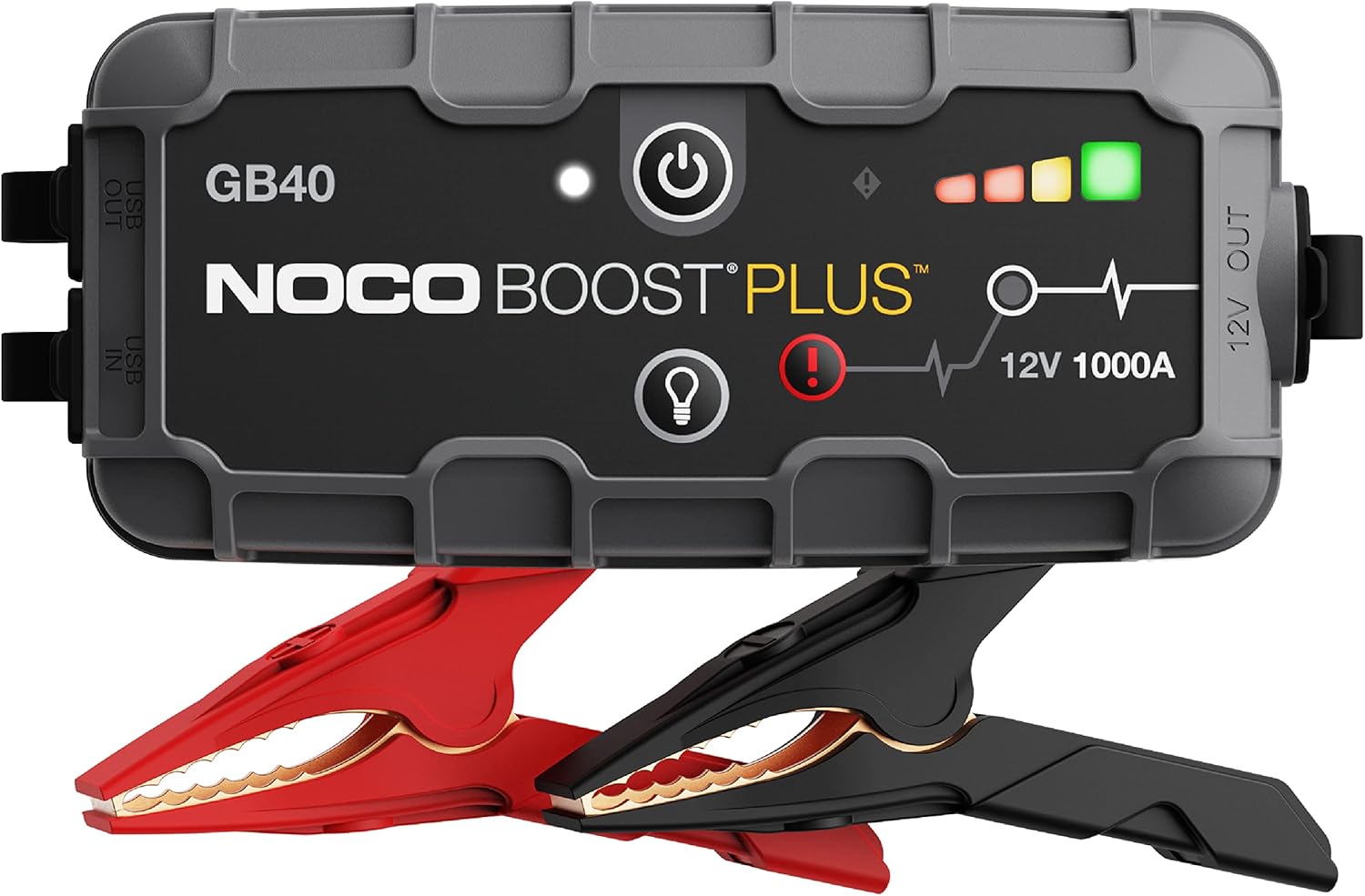
NOCO Boost Plus GB40 Jump Starter
A 1000A lithium jump starter that fits in your glovebox and works on any 12V battery. Your insurance against a dead 12V in a parking lot.
As an Amazon Associate, ThinkEV earns from qualifying purchases — at no extra cost to you.
Winter Driving in BC
BC's winter driving conditions are wildly variable depending on where you live, and this matters enormously for EV range planning. Saying "winter in BC" is meaningless without specifying the region. Let me break it down.
Coastal BC (Vancouver, Victoria, Lower Mainland, Sunshine Coast): Winters are mild. Average temperatures range from 3 to 8 degrees Celsius from December through February. Snow is rare at sea level, maybe one or two events per winter that melt within days. EV range loss in these conditions is minimal: 10-15% compared to optimal summer driving. If you live in Metro Vancouver, winter range anxiety is not a real concern. A vehicle rated at 400 km will deliver 340-360 km in January conditions. That's still more than enough for any daily commute in the Lower Mainland.
Southern Interior (Kelowna, Penticton, Kamloops): This is where it gets real. Average winter temperatures range from -5 to -10 degrees Celsius, with cold snaps pushing to -15 or -20. Snow is persistent from November through March. EV range loss in these conditions runs 20-30%, depending on how much you use cabin heating. A 400 km rated vehicle will deliver 280-320 km in typical Kelowna winter conditions. That's still plenty for daily driving, most Interior commutes are under 50 km, but you need to factor it into road trip planning.
Northern BC (Prince George, Fort St. John, Dawson Creek, Terrace): Harsh winters. Average temperatures from -15 to -25 degrees Celsius from December through February, with cold snaps pushing to -35 or lower. EV range loss runs 30-40% in these conditions. A 400 km rated vehicle may deliver 240-280 km in January in Prince George. Combined with the longer distances between charging stations on Highway 97 and Highway 16, northern BC requires more careful EV ownership planning. It's doable, people drive EVs in northern BC, but you need a vehicle with adequate range (350+ km rated) and you need to plan winter trips with charging stops built in. For a deeper look at how cold affects EV range, our winter range test results cover this in detail.
Mountain passes: The Coquihalla (Highway 5), Rogers Pass (Highway 1), Kootenay Pass (Highway 3), and Pine Pass (Highway 97) all involve significant elevation changes and winter conditions. Climbing a mountain pass in an EV uses more energy than flat driving, but descending regenerates energy. The net effect is usually a wash, but cabin heating demand at altitude, where it's colder than the valley floor, adds to consumption. Budget an extra 10-15% consumption for mountain pass driving in winter.
One genuine advantage EVs have in BC winters: instant torque and low centre of gravity make them excellent in snow. An EV with winter tires handles snow and ice better than most gas-powered vehicles. The Kona Electric and Equinox EV have earned strong reputations among BC owners for winter handling. Heat pump equipped EVs (most 2024+ models) lose less range to cabin heating than resistive heater models. If you're buying for the Interior or Northern BC, prioritize a heat pump model.
Best EVs for BC Buyers
Given BC's current incentive picture, EVAP available, CleanBC paused, SCRAP-IT available, here are the vehicles that make the most financial sense for BC buyers right now, and what they'll look like if CleanBC resumes.
Chevrolet Equinox EV, Starting at $44,995
The best deal in BC, period. Built in Canada (Ingersoll, Ontario), so there's no $50,000 EVAP price cap, every trim qualifies. With EVAP ($5,000) alone: $39,995. With EVAP + SCRAP-IT ($3,000-$6,000): $33,995-$36,995. If CleanBC resumes, add another $4,000: $29,995-$32,995. Over 400 km of range, a proper compact SUV with usable cargo space, and GM's Ultium platform which has matured into a reliable powertrain. This is the vehicle I'd point most BC buyers toward right now.
Hyundai Kona Electric, Starting at $44,999
Nearly identical rebate eligibility to the Equinox EV under the $50,000 EVAP cap. With EVAP: $39,999. With EVAP + SCRAP-IT: $33,999-$36,999. Compact, efficient, with a heat pump standard on all trims and about 400 km of range. Strong choice for anyone who doesn't need full SUV size.
Kia EV6 LIGHT RWD, Starting at $48,995
Firmly under the EVAP cap and on the official eligible vehicle list, you get the $5,000 EVAP. After EVAP: $43,995. With SCRAP-IT: potentially $37,995-$40,995. The EV6 is a brilliant vehicle, fast, comfortable, 800V architecture for rapid charging, and the base LIGHT RWD at $48,995 clears the cap cleanly. Higher EV6 trims exceed $50,000, so confirm the specific trim qualifies before signing.
Nissan Leaf, Starting at approximately $38,000
The budget entry. Well under the EVAP cap, so $5,000 comes off easily: $33,000. With SCRAP-IT: $27,000-$30,000. The Leaf's limitation is range, about 240 km in optimal conditions, 170-200 km in winter. For a Lower Mainland commuter doing under 80 km per day, that's perfectly fine. For Interior or Northern BC buyers, the range is tight.
Chevrolet Blazer EV, Starting at approximately $50,995
Another Canadian-built vehicle (Ingersoll), so no EVAP price cap. Even at higher trims, you get the full $5,000. Larger than the Equinox EV, more range, more power. With EVAP: approximately $45,995. With EVAP + SCRAP-IT: approximately $39,995-$42,995. If you need a mid-size SUV and want full incentive eligibility, this is the play.
Volkswagen ID.4, Starting at approximately $45,995
Built in Chattanooga, Tennessee, FTA-eligible, under the $50,000 cap in base trim. With EVAP: approximately $40,995. Solid AWD option for Interior BC buyers who want German engineering and winter capability. The ID.4's AWD system is specifically well-regarded for snow performance.
When CleanBC resumes, all of these vehicles (except Tesla) pick up an additional $4,000. That changes the calculation significantly, especially at the Equinox EV and Kona Electric price points, where the full stack brings the effective price below $35,000. At that level, you're competing with the Honda CR-V and Toyota RAV4 on sticker price while demolishing them on operating costs. To see how these vehicles compare across the full market, check our most affordable EVs in Canada guide.

Gear worth having
As an Amazon Associate, ThinkEV earns a small commission from qualifying purchases — at no extra cost to you.
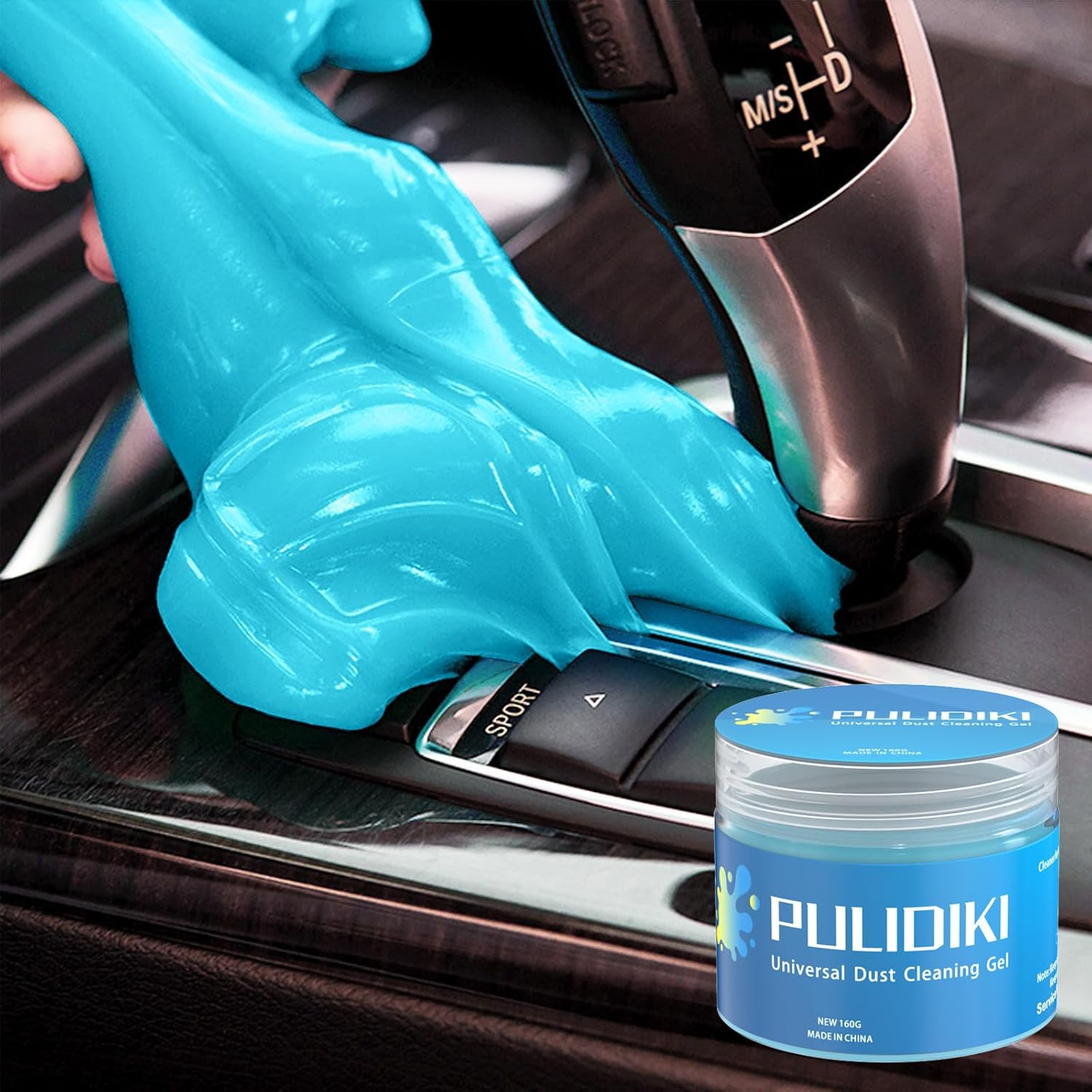
PULIDIKI Car Cleaning Gel (Detailing Putty)
Press it into vents, buttons, and seams and it lifts out dust you did not know was there. Weirdly satisfying, genuinely useful.
As an Amazon Associate, ThinkEV earns from qualifying purchases — at no extra cost to you.
Right-to-Charge Legislation
In 2023, BC passed legislation that fundamentally changed the game for EV ownership in multi-unit residential buildings. The Strata Property Act amendments, commonly called the "right-to-charge" law, establish that strata councils cannot unreasonably deny an owner's request to install an EV charger in their parking stall. This is not a recommendation. It's law.
The legislation says this plainly: if you own a strata unit with a designated parking space, you have the right to install a Level 2 EV charger at your own expense. The strata council can impose reasonable conditions, they can require a licensed electrician, they can require the installation meets building code, they can require you carry appropriate insurance, but they cannot simply say "no." A blanket denial is a violation of the Strata Property Act.
The practical reality is more nuanced than the legal framework. Some stratas have embraced this proactively, installing shared charging infrastructure with load management systems. Others have been dragging their feet, imposing procedural hurdles that function as de facto denials without technically being denials. If your strata council requires a $10,000 engineering study before they'll consider your application, that's arguably an unreasonable barrier, but fighting it means going to the Civil Resolution Tribunal, which takes time and energy.
The process that works for most strata owners:
- Submit a written request to your strata council specifying your parking stall number, the charger model you want to install, and the licensed electrician who will do the work.
- Include confirmation that the installation will meet the BC Building Code and electrical safety standards.
- Offer to pay all installation costs yourself, including any load management equipment the building requires.
- Reference the Strata Property Act amendments explicitly. Strata councils that try to deny requests often back down when they realize the legal framework supports the owner.
- If the council denies or unreasonably delays, file a dispute with the Civil Resolution Tribunal. BC has made the process accessible, and CRT rulings have consistently favoured EV charger installation requests.
For renters in BC, the situation is different. Renters don't have the same statutory right to install chargers, that's a conversation with your landlord, and the outcome depends on their willingness and the building's electrical capacity. Some landlords see it as a property improvement and cooperate; others see it as a liability and refuse. BC's Residential Tenancy Branch hasn't established firm precedent here yet.
The big-picture significance of right-to-charge cannot be overstated. In Metro Vancouver, over 50% of residents live in multi-unit buildings. Without this legislation, half the population would be structurally excluded from convenient EV ownership. The law isn't perfect, enforcement is slow, and some buildings genuinely lack the electrical capacity for multiple chargers without significant upgrades, but it moved BC from "condo residents can't have EVs" to "condo residents have a legal path to EV charging." That's a material shift.
5-Year Cost Comparison
The numbers on a direct matchup: the Chevrolet Equinox EV versus the Toyota RAV4, which represents the actual decision most BC buyers are making. Same segment, same use case, real 2026 prices with currently available BC incentives.
Purchase price:
- RAV4 LE AWD: $36,790
- Equinox EV 2LT: $44,995
- Equinox EV after EVAP ($5,000): $39,995
- Equinox EV after EVAP + SCRAP-IT ($4,000 average): $35,995
- Price advantage: RAV4 by $795 (no SCRAP-IT) OR Equinox EV by $795 (with SCRAP-IT)
With SCRAP-IT, the Equinox EV is actually cheaper than the RAV4 at point of sale. Without SCRAP-IT, it's $3,205 more. Let's model both scenarios over five years at 20,000 km annually.
Annual fuel costs (20,000 km/year):
- RAV4 (8.5 L/100 km at $1.72/L): $2,924/year
- Equinox EV (17 kWh/100 km at $0.12/kWh): $408/year
- Annual fuel savings: $2,516
- 5-year fuel savings: $12,580
Annual maintenance:
- RAV4: $1,200/year (oil changes, filters, brakes, transmission service)
- Equinox EV: $650/year (tires, cabin filter, brake inspection, coolant)
- Annual maintenance savings: $550
- 5-year maintenance savings: $2,750
Insurance (BC average):
- RAV4: $1,900/year
- Equinox EV: $2,050/year
- Annual insurance penalty: $150 more for EV
- 5-year insurance penalty: $750
5-year total cost of ownership (with SCRAP-IT):
- RAV4: $36,790 + $14,620 fuel + $6,000 maintenance + $9,500 insurance = $66,910
- Equinox EV: $35,995 + $2,040 fuel + $3,250 maintenance + $10,250 insurance + $350 charger (net after rebate) = $51,885
- 5-year savings with Equinox EV: $15,025
5-year total cost of ownership (without SCRAP-IT):
- RAV4: $66,910
- Equinox EV: $39,995 + $2,040 fuel + $3,250 maintenance + $10,250 insurance + $350 charger = $55,885
- 5-year savings with Equinox EV: $11,025
If CleanBC resumes and you can stack the full $4,000 provincial rebate, the savings jump to $15,025-$19,025 over five years. That's real money, enough to cover a family vacation every year for half a decade.
The deeper you go into the numbers, the clearer it gets. The EV doesn't just compete with the gas equivalent in BC, it demolishes it on total cost. The combination of cheap BC Hydro electricity, high gasoline prices (BC has the highest pump prices in the country thanks to the carbon tax and TransLink levy), and available incentives creates a cost environment that overwhelmingly favours the EV. For the full national picture with more vehicle matchups, see our EV vs gas total cost of ownership comparison.
Policy Analysis
The CleanBC Go Electric pause is a self-inflicted wound at the worst possible time.
BC had momentum. The province's EV registration share was climbing, approaching 25% of new vehicle sales. The infrastructure investment was paying off. The rebate stack was pulling in buyers who wouldn't have considered an EV five years ago. And then the centrepiece incentive got paused because the funding envelope ran out and the budget process didn't replenish it fast enough.
Context matters here. Quebec's Roulez Vert program has been running continuously since 2012. It's been modified, the amounts have changed, the eligibility has shifted, but it has never paused. Quebec understood something fundamental: consistency in policy signals matters as much as the dollar amount. When a buyer sees "up to $4,000 rebate" on a government website, and then clicks through to find "currently paused, no resumption date," that buyer doesn't wait patiently, that buyer puts the EV purchase on hold entirely, or buys a gas car instead.
Every day the CleanBC pause continues, some number of BC residents are making purchase decisions without the incentive that would have tipped them toward electric. Those decisions don't reverse when the program comes back. The gas car gets bought. The emissions get locked in for the vehicle's 12-15 year lifespan. And BC's ZEV adoption curve flattens at exactly the moment it should be steepening.
The political context matters here. The BC NDP has been the party of CleanBC. They built the program, funded it, expanded it. But even under NDP governance, the program has experienced these funding gaps. The issue isn't political will, it's bureaucratic mechanics. The program burns through its allocation faster than the budget cycle replenishes it, because EV demand in BC has consistently exceeded government projections. That's actually a success story, the program worked so well that it ran out of money, but the result feels like failure to the buyer standing at a dealership right now.
What should BC do? Three things. First, establish a rolling funding mechanism that doesn't depend on annual budget allocations. Set aside a dedicated fund and replenish it automatically. Second, reduce the per-vehicle amount if necessary to extend the program's reach. A $3,000 rebate that's always available is worth more than a $4,000 rebate that's available eight months out of twelve. Third, target the used EV rebate more aggressively. BC's used EV market is maturing, and $2,000 toward a used Bolt or Leaf is incredibly cost-effective for the province per tonne of CO2 avoided.
My prediction: the CleanBC passenger vehicle rebate resumes in 2026. The BC government cannot credibly maintain its CleanBC Roadmap to 2030 emission targets without consumer EV incentives. The policy direction hasn't changed; the funding mechanics are just catching up. I'd bet on a late spring or summer announcement with a refreshed funding allocation. But I've been wrong before, and if you're buying an EV in BC right now, you should plan on the incentives that actually exist today, not the ones you hope are coming back.
For a real-time view of where EVAP funding stands nationally, check our EVAP program tracker.
How to Apply
The process is simpler than most people expect, but it helps to have the sequence clear. Here's the order of operations for each available program.
Federal EVAP ($5,000 for BEVs / $2,500 for PHEVs):
- Confirm your chosen vehicle is on the EVAP eligible vehicles list at nrcan.gc.ca. Check the specific trim level, higher trims may exceed the $50,000 cap.
- Confirm your dealership is an EVAP-enrolled participant. Most franchise dealers are; independent used-car dealers generally are not.
- At the point of sale, tell your dealer you want to apply for EVAP. The dealer handles all paperwork and applies the rebate directly to your purchase price. You don't fill out government forms.
- The $5,000 comes off your purchase price on the spot. It appears as a line item on your purchase agreement.
- One EVAP rebate per person for the program's entire five-year lifespan. Use it wisely.
SCRAP-IT ($3,000-$6,000):
- Confirm your old vehicle meets eligibility: manufactured 2014 or earlier (for 2026), registered in BC for at least 6 months under your name, currently insured and in running condition.
- Apply through the SCRAP-IT website or through a participating dealer. Apply early, spring is best. The program is first-come, first-served and has run out of funding before year-end in recent years.
- Submit your vehicle information, registration history, and intended EV purchase details.
- If approved, you receive a voucher. Present the voucher at the dealership when purchasing your EV.
- Your old vehicle is surrendered and permanently scrapped. This is non-reversible, don't apply unless you're sure.
CleanBC Go Electric (PAUSED, for when it resumes):
- When active, visit the dealership and tell them you want to apply for the CleanBC rebate along with EVAP.
- The dealer handles the CleanBC paperwork at point of sale. The rebate ($4,000 BEV / $2,000 PHEV) comes off your purchase price immediately.
- For used EVs, the amounts are $2,000 BEV / $1,000 PHEV through authorized dealers.
- Check the CleanBC website for the current eligible vehicles list and program status before visiting the dealer.
BC Hydro Charger Rebate ($350):
- Purchase an ENERGY STAR certified Level 2 (240V) charger.
- Hire a licensed electrician to install it. Keep both receipts, the charger purchase receipt and the electrician's invoice.
- After installation, apply through BC Hydro's online portal.
- The $350 rebate is issued as a credit on your hydro bill within 6-8 weeks.
- FortisBC customers: apply through FortisBC's equivalent program with similar documentation requirements.
General tips:
Gear worth having
As an Amazon Associate, ThinkEV earns a small commission from qualifying purchases — at no extra cost to you.

WixGear Magnetic Air Vent Phone Mount (2-Pack)
A magnet strong enough that your phone never flinches over potholes or rail crossings. Two in the box, one for each car.
As an Amazon Associate, ThinkEV earns from qualifying purchases — at no extra cost to you.
- Keep copies of everything: rebate applications, purchase agreements, receipts, vouchers, and approval confirmations.
- If you're buying in the fall, check SCRAP-IT funding levels first, the program can run out of money before year-end.
- Ask your dealer to confirm rebate eligibility in writing before signing. "It should qualify" is not the same as "it qualifies."
- If you're combining SCRAP-IT with EVAP, coordinate the timing so both vouchers and rebates can be applied at the same transaction.
Related Reading
- EV Rebates by Province: Complete Canada 2026 Guide, How every province stacks up
- Alberta EV Incentives and Rebates 2026, What's available next door
- EVAP Program Updates and Tracker Canada 2026, Federal rebate status and changes
- How to Install a Level 2 Charger at Home, Step-by-step installation guide
- Best Level 2 EV Chargers in Canada 2026, Top chargers ranked and reviewed
- EV vs Gas: Total Cost of Ownership in Canada, Full 5 and 10-year comparison
Gear worth having
As an Amazon Associate, ThinkEV earns a small commission from qualifying purchases — at no extra cost to you.

Car Cup Holder Coasters (4-Pack)
Drop-in coasters that catch spills and crumbs so your cup holders stay clean. Rinse and reuse forever.
As an Amazon Associate, ThinkEV earns from qualifying purchases — at no extra cost to you.

Founder & Chief Editor
Vlad Pereira is the founder and chief editor of ThinkEV.ca, the Canadian electric-vehicle publication he writes and edits from Courtenay, British Columbia. He covers EV pricing, federal and provincial rebates, charging costs, and the Chinese manufacturers now entering Canada, from the buyer's side rather than the press-fleet side. ThinkEV is a venture of Vlad Pereira Online; his writing on health, income and the long game lives at vladpereira.com.
Frequently asked questions
What's the maximum total savings on a new EV in BC in 2026?
Does leasing an EV qualify for BC rebates?
Can I get BC rebates on a used EV?
Is the CleanBC rebate coming back in 2026?
Does Tesla qualify for BC EV rebates?
Should I wait for CleanBC to resume before buying?
How does SCRAP-IT work with my dealer trade-in?
Can condo owners install EV chargers in BC?
What are the electricity rates for EV charging in BC?
More EV & road-trip finds
Affordable upgrades worth a look — tap any to check the price on Amazon.
 ★ 2,941
Microfiber Cleaning Cloths (Multi-Pack)
View on Amazon ★ 55
★ 55LED Car Door Logo Projector Light
View on Amazon ★ 401
★ 401Crochet Daisy Rear-View Mirror Charm
View on Amazon ★ 21,304
Car Headrest Hooks (4-Pack)
View on Amazon ★ 17,242
LISEN Mini USB-C Car Charger (54W)
View on Amazon ★ 61
★ 61Toddler Car Seat Snack and Cup Tray
View on Amazon ★ 17,839
Qifutan Vent Phone Mount (Military-Grade Clip)
View on Amazon ★ 47,507
HOMEXCEL Microfiber Cloths (12-Pack)
View on AmazonRead, Plan, Then Stay Current
Explore our expert articles to understand incentives and ownership costs, use the map to pressure-test charging reality, then subscribe so new EV coverage comes straight to you.
Continue Reading
Alberta EV Rebates 2026: What You Actually Get
Manitoba EV Rebates 2026: $4,000 Incentive Ends March 31
Newfoundland EV Rebates 2026: What You Can Claim
PEI EV Rebates 2026: The Island's Surprising $5,000 EV Deal
Quebec EV Rebates 2026: The Roulez Vert Changes