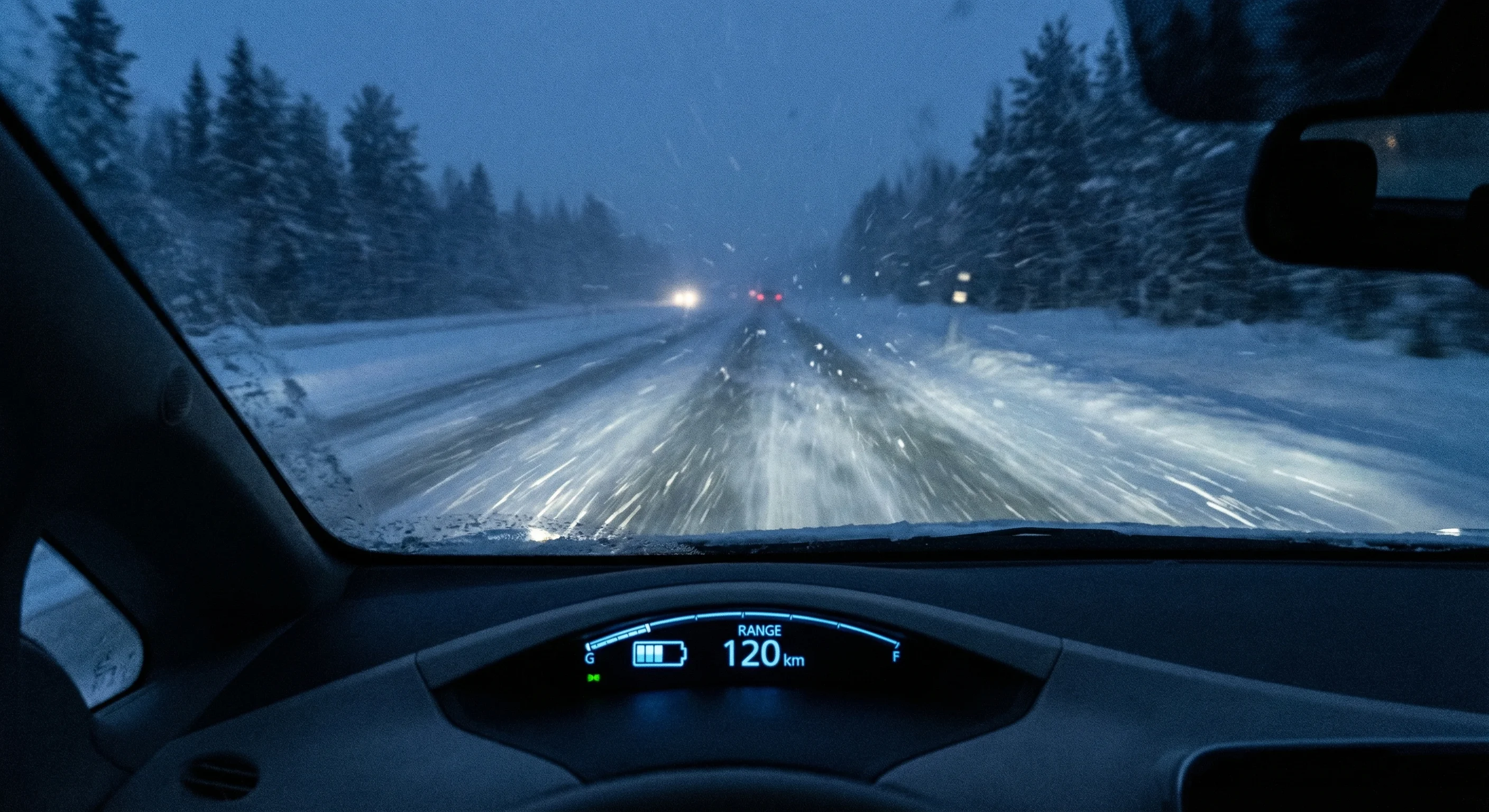
Every EV loses range in winter. That's physics, cold batteries discharge slower, cabin heating eats energy, and tire resistance increases on cold pavement. The question isn't whether your EV will lose range in January. It's how much.
The Canadian Automobile Association answered that question definitively. They took 14 of the most popular EVs in Canada and drove them from Ottawa to Mont Tremblant in temperatures between -7°C and -15°C. No lab conditions. No controlled environments. Just real Canadian winter on real Canadian roads.
The results ranged from "barely noticeable" to "you might want to rethink that road trip."
Key takeaways
- CAA tested 14 EVs in real Canadian winter conditions (-7°C to -15°C), range losses varied from 14% to 39%.
- The Polestar 2 and Chevrolet Silverado EV tied for best winter performance, retaining 86% of rated range.
- EVs with heat pumps retain 5–10% more winter range than resistive-heater cars, per Recurrent's 30,000-vehicle analysis confirmed by the CAA test, and preconditioning the battery improved cold fast-charging acceptance by 20–30%.
- Tesla Model 3 charged fastest in cold, adding 205 km in just 15 minutes of DC fast charging.
- Even the worst performer (39% loss) still delivered over 250 km of usable winter range.
The Test: Ottawa to Mont Tremblant in Sub-Zero
This wasn't a laboratory exercise. CAA and BCAA partnered to run their Winter EV Performance Study on actual Canadian highways in February 2025, with temperatures hovering between -7°C and -15°C, a normal Canadian winter day, not an extreme cold snap.
The 14 vehicles represented more than two-thirds of Canadian EV sales. Sport, luxury, SUV, sedan, and truck categories were all included. Each vehicle was driven on the same route, in the same conditions, on the same day. No cherry-picking. No asterisks.
They measured two things: how far each EV actually drove versus its official rated range, and how quickly each one charged during a 15-minute DC fast-charging session. Both numbers matter for real-world winter driving in Canada.
The Full Rankings: Every EV Tested
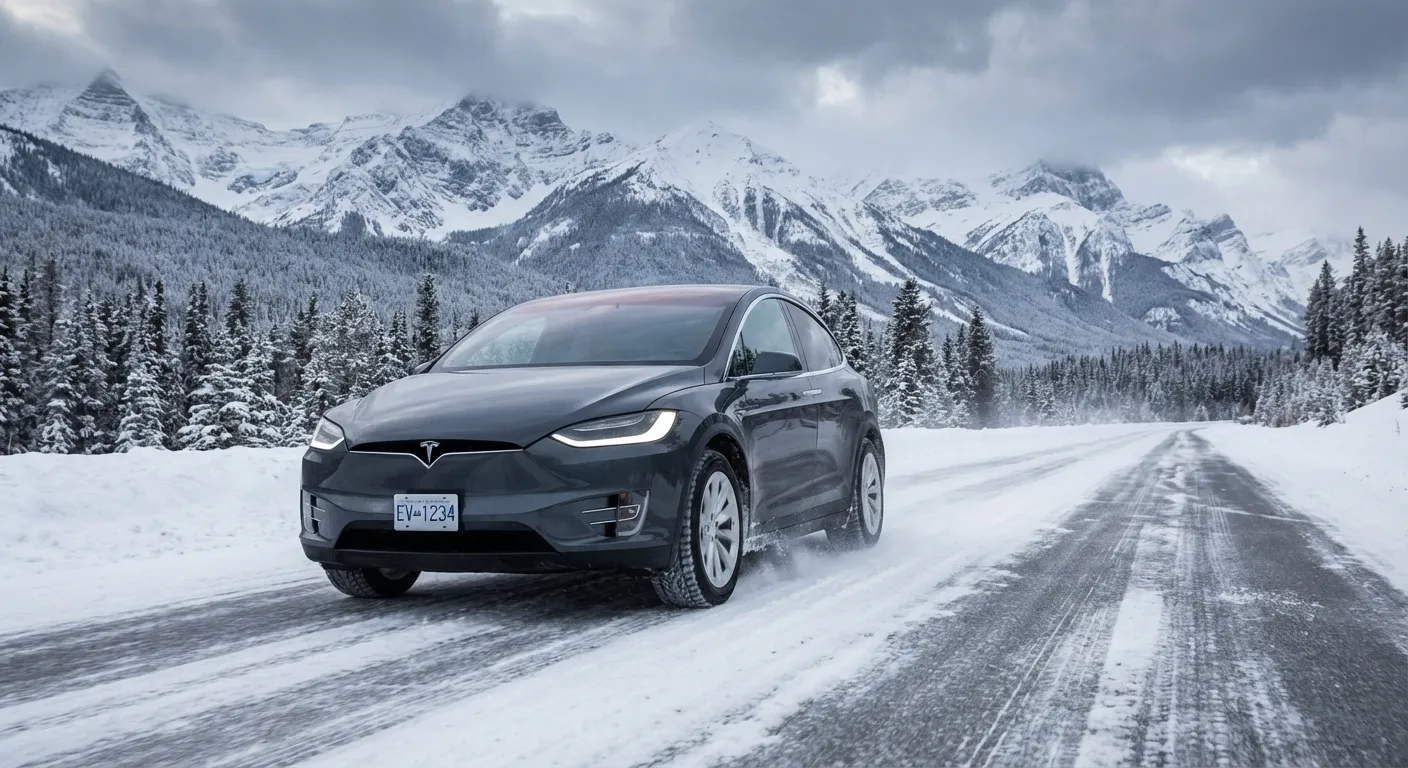
Fourteen EVs covering most of Canada's mainstream sales drove the same Ottawa-to-Mont-Tremblant route at -7°C to -15°C. The spread between best and worst was 25 percentage points, bigger than the gap between most price tiers. Three vehicles held 80%+ of their rated range. Two lost nearly 40%. The rankings below show every car, best winter retention first.
Tier 1: Winter Champions (14-20% loss)
Polestar 2, 14% range loss Rated at 444 km. Achieved 384 km. The Polestar's efficient heat pump and battery thermal management proved their worth. For a sedan at this price point, that's exceptional cold-weather performance.
Chevrolet Silverado EV, 14% range loss Rated at 724 km. Achieved roughly 623 km in winter conditions. When you start with a massive battery, even modest percentage losses leave you with plenty of usable range. Over 600 km in deep winter is remarkable.
Kia EV9, 20% range loss The three-row SUV held up well despite its size. Losing only 20% in sub-zero conditions puts it ahead of many smaller, lighter vehicles. If you need a family hauler that handles Canadian winters, the EV9 delivers.
Tier 2: Solid Performers (24-30% loss)
Honda Prologue, 24% range loss A pleasant surprise. Honda's first mainstream EV performed respectably in its first Canadian winter test. The Ultium platform (shared with GM) showed decent thermal management.
Volkswagen ID.4, 28% range loss The ID.4 sits right in the middle of the pack. A 28% loss on a 400+ km rated range still gives you nearly 290 km in winter, enough for most daily driving and shorter highway trips.
Kia Niro EV, 30% range loss Tied with the Tesla Model 3. The Niro's smaller battery means that 30% loss hits harder in absolute terms, but for a daily commuter, you're still looking at about 285 km of winter range.
Tesla Model 3, 30% range loss A 30% loss puts the Model 3 in the middle of the pack for range retention, not class-leading, but not terrible. Where Tesla compensated was in charging speed. More on that below.
Tier 3: The Struggle Bus (31-39% loss)
Ford Mustang Mach-E, 31% range loss Just below the midpoint. The Mach-E's performance in cold weather has been a consistent weak point across multiple tests. Still delivers around 300 km in winter, which works for most scenarios.
Chevrolet Equinox EV, 34% range loss This one hurts because the Equinox EV is otherwise Canada's best-value EV. A 34% winter loss on its 513 km rating means about 339 km in cold weather, still very livable, but you'll want to factor this into road trip planning.
Ford F-150 Lightning, 35% range loss The Lightning's winter performance is concerning for truck buyers who need to tow in cold weather. A 35% reduction on an already-modest range means winter towing could get tight.
Hyundai Ioniq 5, 36% range loss Surprising, given Hyundai's 800V architecture. The Ioniq 5 lost more range than expected, though its excellent charging speed partially compensates.
Toyota bZ4X, 37% range loss Toyota's EV continues to underperform in cold weather testing. The bZ4X already has a modest range rating, and losing 37% of it in winter puts it at around 260 km, tight for anything beyond city driving.
Volvo XC40 Recharge, 39% range loss The worst performer in the test. Nearly four out of every ten kilometers vanished in the cold. For a premium vehicle, that's a tough number to justify, though Volvo's overall safety and build quality remain excellent.
The Charging Factor: Speed Matters in Cold
Range loss tells half the story. How fast you can put range back matters just as much, maybe more, for winter road trips.
During 15-minute DC fast-charging sessions, the differences were dramatic.
Gear worth having
As an Amazon Associate, ThinkEV earns a small commission from qualifying purchases — at no extra cost to you.
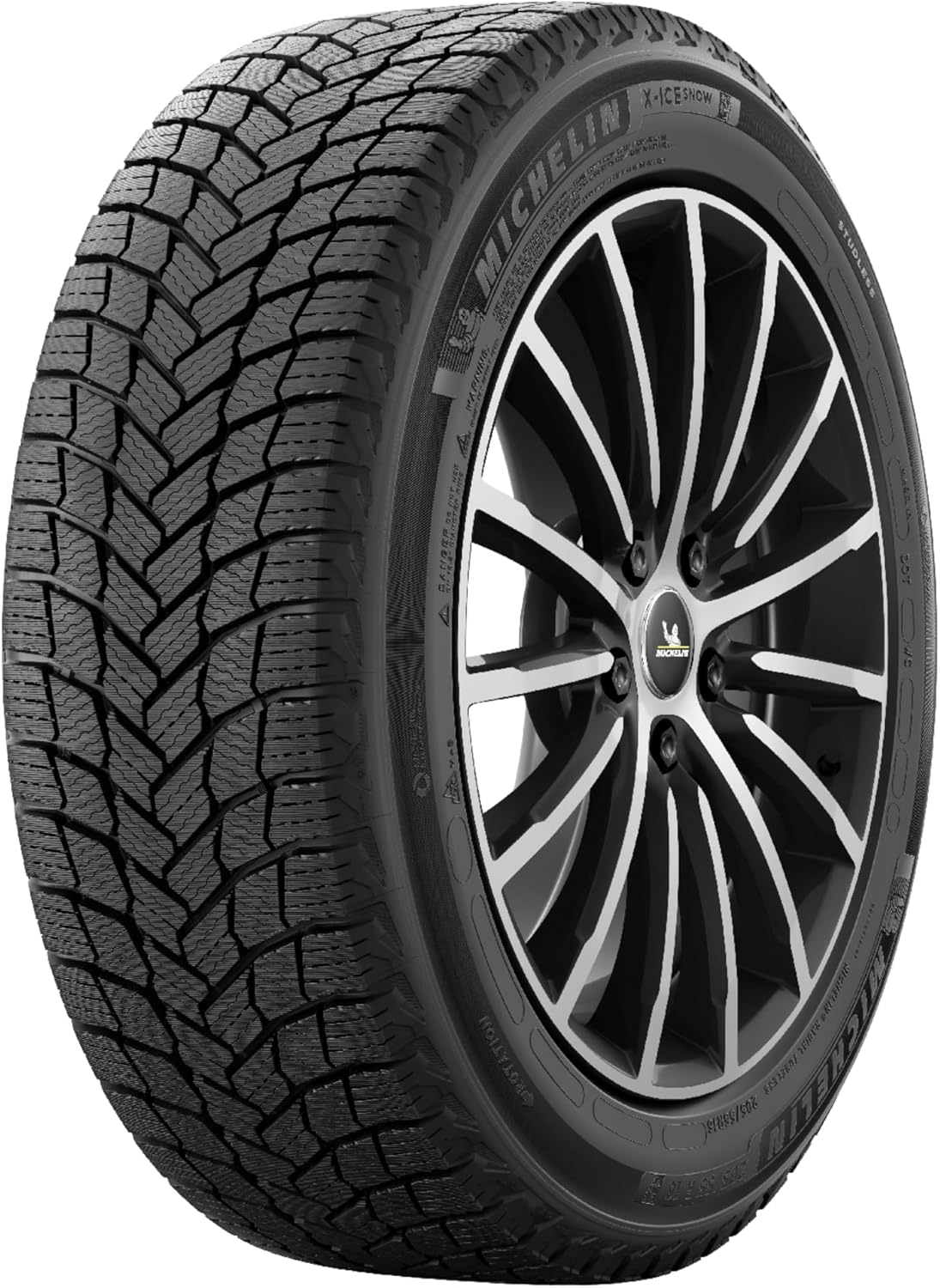
Michelin X-Ice Snow Tires (EV-rated)
EV-specific winter tires with low rolling resistance that recover up to 15 percent of cold-weather range. Mandatory in Quebec, smart everywhere else.
As an Amazon Associate, ThinkEV earns from qualifying purchases — at no extra cost to you.
Tesla Model 3 led by a mile: 205 km added in 15 minutes. That's enough to turn a coffee stop into a full recharge for your next leg. The Supercharger network's cold-weather preconditioning means the battery is warm and ready when you plug in.
Chevrolet Silverado EV came second with 199 km in 15 minutes, thanks to its massive battery accepting high charge rates.
Chevrolet Equinox EV managed 131 km, decent, but less than half what the Tesla added in the same time.
Other vehicles ranged from 80-120 km in 15 minutes. For winter road trips, this spread matters. A vehicle that charges fast can compensate for poor range retention. A vehicle that loses 39% of range and charges slowly? That's a long, cold trip.
What Actually Causes Winter Range Loss
Three things eat your winter range, and they're not equally important.
Cabin heating is the biggest factor. An EV's heater can draw 3-7 kW continuously. On a 60 kWh battery, that's 5-12% of your total capacity per hour of driving, just to keep you warm. This is why heat pumps matter, they're 2-3x more efficient than resistive heaters.
Battery chemistry and cold. Lithium-ion batteries produce less power in cold temperatures. Chemical reactions slow down, internal resistance increases, and the battery management system may limit discharge to protect cell health. Preconditioning helps enormously.
Increased rolling resistance. Cold tires on cold roads create more friction. Denser cold air increases aerodynamic drag. These factors cost 3-5% of range on their own.
Gear worth having
As an Amazon Associate, ThinkEV earns a small commission from qualifying purchases — at no extra cost to you.

WeatherTech FloorLiner for Tesla Model 3
Deep-channel liners that trap every drop of slush and salt. The difference between a ruined interior and a showroom-fresh cabin after a Canadian winter.
As an Amazon Associate, ThinkEV earns from qualifying purchases — at no extra cost to you.
The Heat Pump Advantage
Across multiple studies, including Recurrent's analysis of 30,000+ vehicles and this CAA test, EVs with heat pumps consistently retain 5-10% more range than those without.
Heat pumps work by transferring heat from outside air into the cabin, rather than generating heat from scratch with a resistive heater. Even at -15°C, there's enough thermal energy in the air for a heat pump to operate at 2-3x the efficiency of a resistive heater.
Most modern EVs now include heat pumps as standard: Tesla Model 3 (2021+), Hyundai Ioniq 5, Kia EV6/EV9, Polestar 2, Volkswagen ID.4. If you're shopping for an EV in Canada, confirm it has a heat pump. It's non-negotiable for winter driving.
Battery Preconditioning: The Free Range Saver
Battery preconditioning warms the battery pack before you drive or before you arrive at a fast charger. It uses a small amount of energy to dramatically improve both range and charging performance in cold weather.
How much does it help? In CAA's testing, vehicles that preconditioned their batteries before charging accepted energy 20-30% faster than cold-soaked batteries. Tesla's automatic preconditioning when you work through to a Supercharger is a genuinely useful feature.
Most EVs now offer preconditioning through their apps, schedule your departure time and the car will warm both the cabin and battery while still plugged into your home charger. You leave with a warm battery and a warm cabin, using grid electricity instead of your driving range.
7 Tips for Maximizing Winter Range
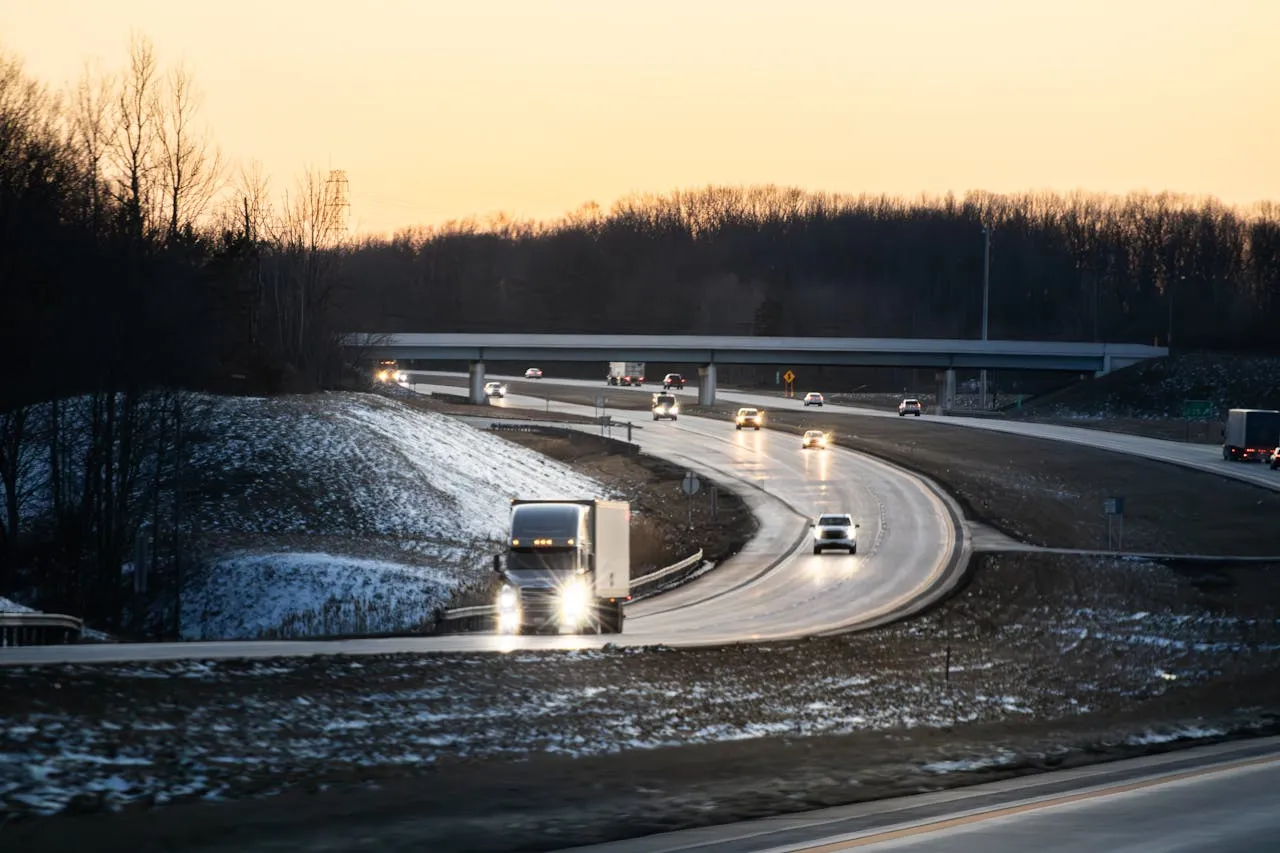
The car you drive matters less than how you drive it in cold weather. CAA's testing showed that owners who precondition the battery, run a heat pump, and time their charging during off-peak hours can recover 40-50 km of effective range, sometimes more than the gap between two different EVs in the same test. These seven habits do most of the work.
-
Precondition while plugged in. Schedule your departure so the car warms up on grid power, not battery power. This alone can save 10-15% of range.
-
Use seat heaters over cabin heat. Heated seats and steering wheel use a fraction of the energy that blasting the cabin heater does. Drop the thermostat to 18°C and turn on the seat warmers.
-
Keep your charge between 20-80%. Cold batteries lose capacity at the extremes. Staying in the middle of the charge curve gives you the most usable energy.
-
Park indoors when possible. A garage that's even 5°C warmer than outside makes a measurable difference in battery performance and morning range.
-
Slow down slightly. Aerodynamic drag increases exponentially with speed. Dropping from 120 km/h to 110 km/h on the highway can add 10-15 km of range.
-
Use Eco mode. It limits power output and heater draw. For highway cruising, you won't notice the difference. For your range, you will.
-
Plan charging stops before you need them. In winter, don't push your range to the limit. Plan stops at 20-30% remaining rather than 10%.
The Verdict
Winter range loss is real, but it's manageable. The CAA test proves that even the worst-performing EV in their lineup, with 39% range loss, still delivered over 250 km of usable winter range. For the vast majority of Canadian drivers who commute under 60 km per day, every single EV tested would handle winter daily driving without breaking a sweat.
The real question isn't "can EVs handle Canadian winters?" They can. All of them.
The real question is: if you regularly drive 300+ km in a single winter day, which EV handles it best? The answer is the Polestar 2, Chevrolet Silverado EV, or Kia EV9, with Tesla Model 3 compensating for middling range retention with industry-leading charging speed.
Choose your EV based on your actual winter driving patterns, not worst-case scenarios you'll encounter twice a year.
Gear worth having
As an Amazon Associate, ThinkEV earns a small commission from qualifying purchases — at no extra cost to you.

AstroAI Portable Tire Inflator
One tap, it inflates to your exact PSI then stops automatically. Low tires cost 5 to 10 percent of your range, so this pays for itself in a week.
As an Amazon Associate, ThinkEV earns from qualifying purchases — at no extra cost to you.
Gear worth having
As an Amazon Associate, ThinkEV earns a small commission from qualifying purchases — at no extra cost to you.

EcoNour 27-inch Snow Brush and Ice Scraper
An aluminum brush and scraper combo that clears a windshield fast without scratching. Non-negotiable for Canadian mornings.
As an Amazon Associate, ThinkEV earns from qualifying purchases — at no extra cost to you.
Related Reading
- Canada's New $5,000 EV Rebate (EVAP), The Complete 2026 Guide, Maximize your savings on any EV purchase
- The Kia EV4 Is Canada's Cheapest Long-Range EV, Is it worth $38,995?
- The 10 Most Affordable EVs You Can Buy in Canada in 2026, Every budget option ranked
Gear worth having
As an Amazon Associate, ThinkEV earns a small commission from qualifying purchases — at no extra cost to you.

Magnetic Windshield Snow Cover
Skip the scraping. Magnets hold it on, peel it off with the snow, and your defroster stops draining range on cold mornings.
As an Amazon Associate, ThinkEV earns from qualifying purchases — at no extra cost to you.

Founder & Chief Editor
Vlad Pereira is the founder and chief editor of ThinkEV.ca, the Canadian electric-vehicle publication he writes and edits from Courtenay, British Columbia. He covers EV pricing, federal and provincial rebates, charging costs, and the Chinese manufacturers now entering Canada, from the buyer's side rather than the press-fleet side. ThinkEV is a venture of Vlad Pereira Online; his writing on health, income and the long game lives at vladpereira.com.
Frequently asked questions
How much range do EVs really lose in Canadian winters?
Which EV has the best winter range in Canada?
Does a heat pump really help with winter EV range?
How fast do EVs charge in cold weather?
Can I drive an EV through a Canadian winter road trip?
More EV & road-trip finds
Affordable upgrades worth a look — tap any to check the price on Amazon.
 ★ 4,055
6-Speed Manual Shift Knob Display
View on Amazon ★ 12,396
K KNODEL Car Trash Can with Lid
View on Amazon
TP-Link Kasa Smart Plug with Energy Monitoring
View on Amazon ★ 61
★ 61Toddler Car Seat Snack and Cup Tray
View on Amazon ★ 268
★ 268Anti-Slip Leather Steering Wheel Cover
View on Amazon ★ 47,507
HOMEXCEL Microfiber Cloths (12-Pack)
View on Amazon ★ 314
★ 314Mini USB LED Ambient Lamps (4-Pack)
View on Amazon ★ 4,626
HoogaLife Hanging Car Diffuser (2-Pack)
View on AmazonRead, Plan, Then Stay Current
Explore our expert articles to understand incentives and ownership costs, use the map to pressure-test charging reality, then subscribe so new EV coverage comes straight to you.
Continue Reading
Which EV Actually Works in a Canadian Winter?
Norway's -27C Winter EV Test: Chinese Cars Beat Tesla
Longest-Range Electric Cars You Can Buy in Canada (2026)
Tesla Model Y vs Toyota RAV4: 5-Year Cost Canada
Dodge Charger Daytona vs Tesla Model 3 Performance