Key takeaways
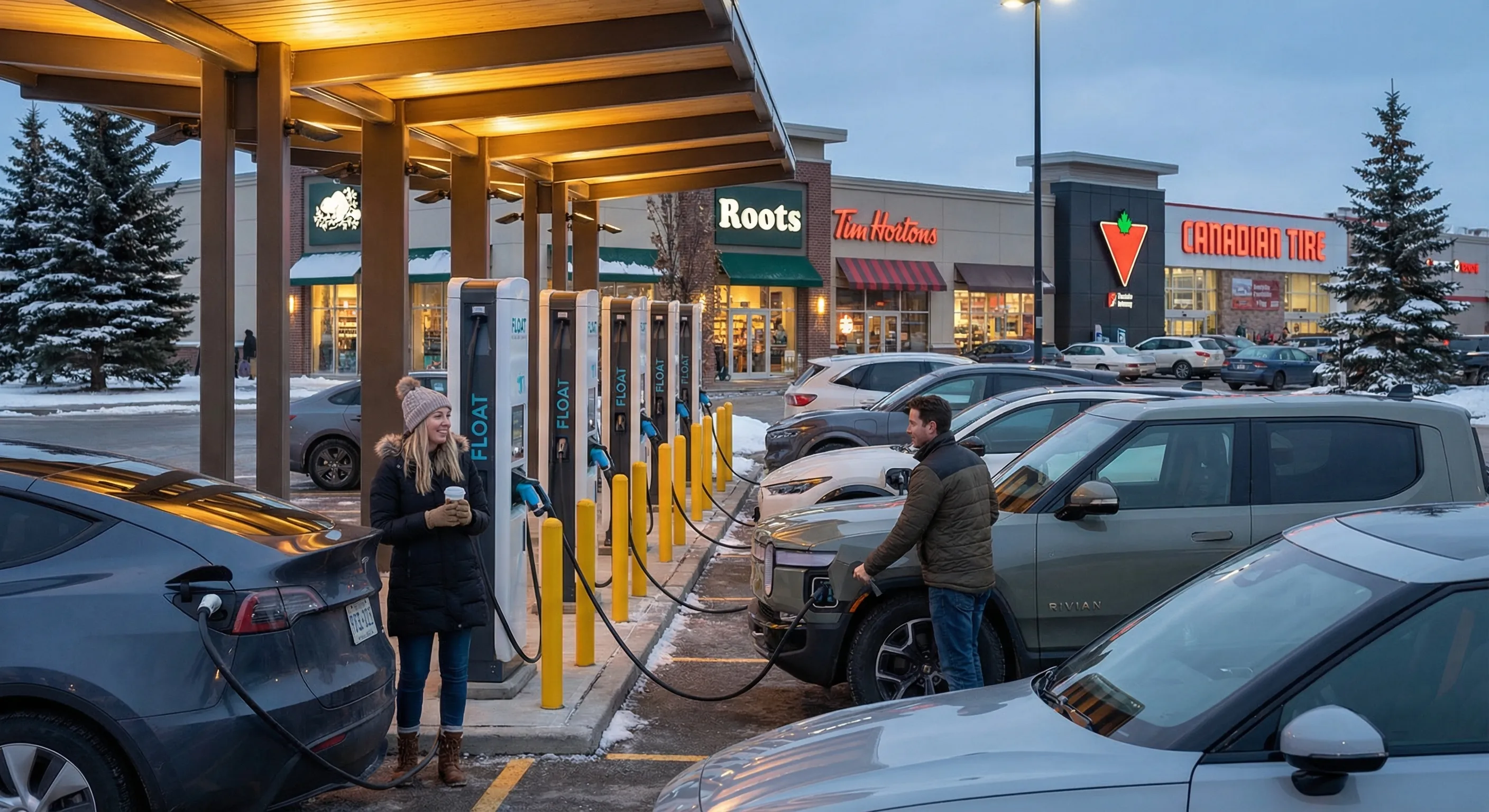
- Electrify Canada runs 400+ DC fast chargers along major corridors, peaking at 350 kW so 800V cars like the Ioniq 5 and EV6 charge 10–80% in under 20 minutes, and Petro-Canada's Electric Highway is the only coast-to-coast network from Halifax to Victoria.
- The 10-80% window is where DC fast charging is fastest, below 10% you risk running out, and above 80% charging speed drops dramatically.
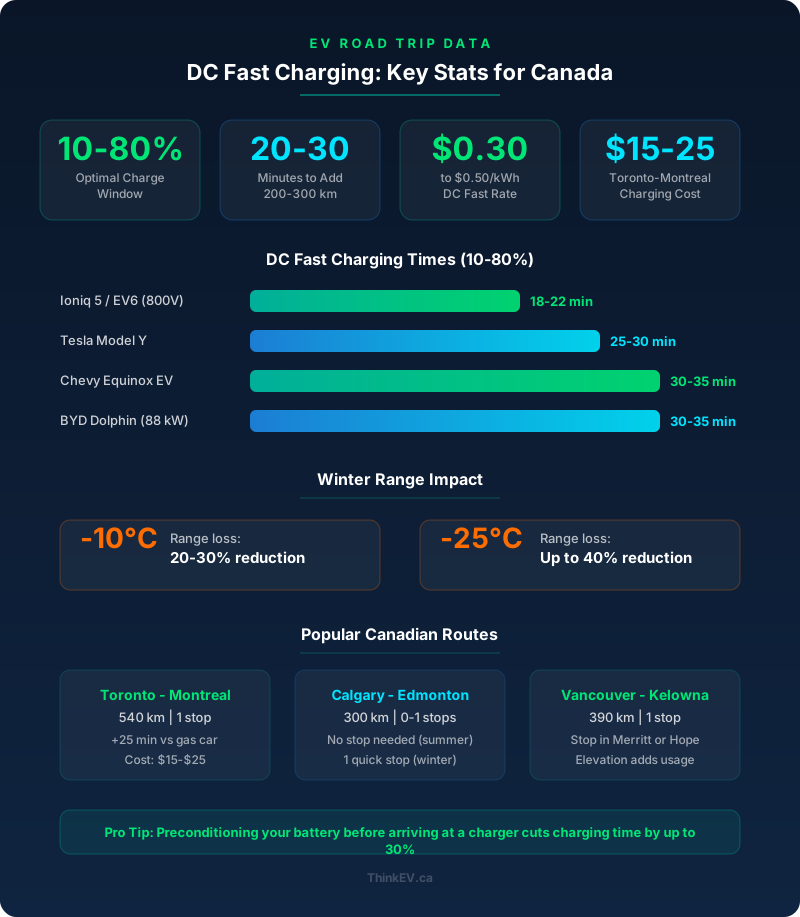
- Most modern EVs add 200-300 km of range in 20-30 minutes in that sweet spot.
- A 20-minute DC fast charge adds enough range for the next 200-250 km.
- Charging stops aligned with meal and rest breaks add less than 30 minutes to a typical EV road trip versus the same drive in a gas car.
An EV road trip requires 10 minutes of planning and zero anxiety if you do it right. The process is simple: check your car's real-world range, find DC fast chargers along your route, and plan to charge between 10-80% at each stop. That is it. The 10-80% window is where DC fast charging is fastest, below 10% you risk running out, and above 80% charging speed drops dramatically. Most modern EVs add 200-300 km of range in 20-30 minutes in that sweet spot.
The key insight that makes EV road trips work: you were going to stop anyway. On a 5-hour drive, you would normally stop for food, washrooms, and stretching. The difference is that now your car charges while you eat. A 20-minute DC fast charge adds enough range for the next 200-250 km. If your stops align with your charging needs, and they usually do, the total trip time increases by less than 30 minutes compared to a gas car.
Here is what nobody in the auto industry wants to say out loud: the anxiety around EV road trips is manufactured. It is a talking point that persists because it benefits people who sell gasoline. The actual experience of planning and executing an EV road trip in Canada in 2026 is so routine, so unremarkable, that the only people still worried about it are people who have never done it. This guide exists to make your first one boring, in the best possible way.
CANADA'S CHARGING NETWORK IN 2026
Before we get into planning, you need to understand what is actually out there. The narrative that Canada lacks charging infrastructure is two years out of date. Here is the reality.
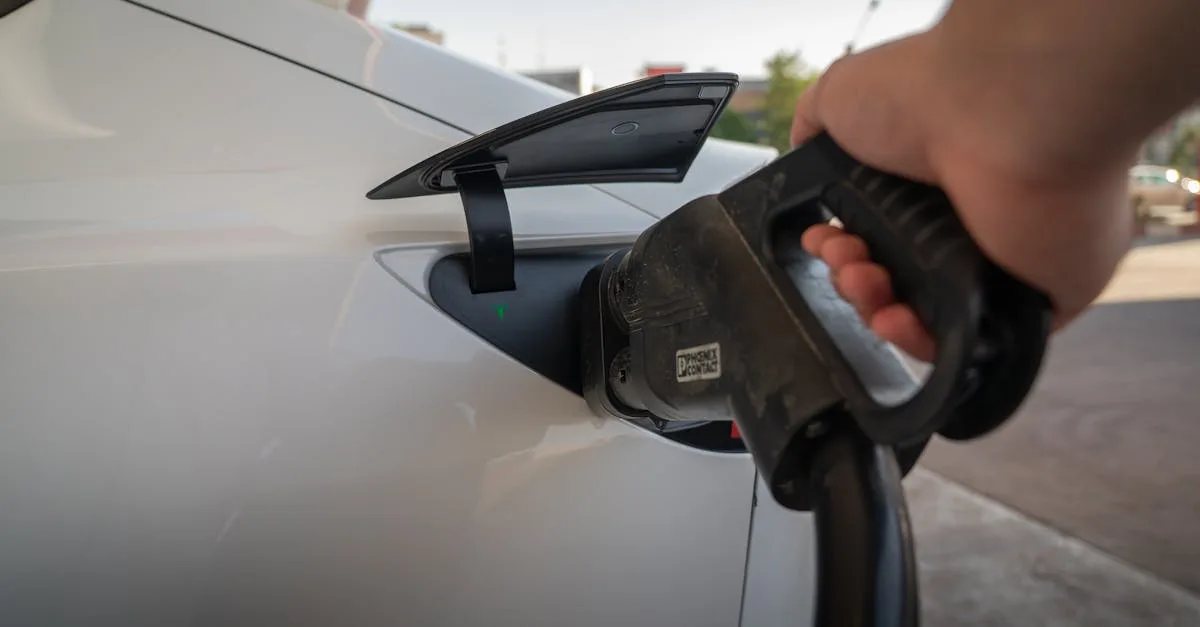
Electrify Canada operates over 400 DC fast chargers across the country, with stations concentrated along major highway corridors. Their chargers max out at 350 kW, which means 800V vehicles like the Hyundai Ioniq 5 and Kia EV6 can charge from 10-80% in under 20 minutes. Pricing runs $0.35-$0.55/kWh depending on your membership tier and province. Their Pass+ membership ($4/month) drops per-kWh rates by about $0.08, paying for itself after two or three sessions.
Petro-Canada Electric Highway has over 300 DC fast chargers and holds the distinction of being the only coast-to-coast network in Canada. Their stations span from Halifax to Victoria, including some of the most remote stretches of the Trans-Canada. If you are crossing through Northern Ontario or the Prairies, Petro-Canada is often your lifeline. The real value of Petro-Canada is coverage, not speed, they went where other networks would not.
Tesla Superchargers are the largest network with over 800 stalls across Canada. Since Tesla opened Superchargers to non-Tesla vehicles with CCS adapters and NACS ports, this network is now available to most modern EVs. Tesla's network is consistently rated the most reliable, with uptime numbers that other networks envy.
FLO operates over 5,000 Level 2 chargers and a growing DCFC network, making them the dominant Level 2 provider in Canada. Their chargers are everywhere, municipal parking lots, shopping centres, workplaces, hotels. For overnight and destination charging, FLO is your default.
ChargePoint has over 3,000 Level 2 stations in Canada, primarily at workplaces and commercial locations. Their DCFC presence is smaller but growing.
Between these networks and independent operators (BC Hydro, Hydro-Quebec's Circuit electrique, various municipal programs), Canada's major corridors are well-served. The gaps exist in specific places, we will cover those later, but the idea that you cannot road trip an EV across Canada is objectively false.
THE TOOLS: A REAL COMPARISON
Three apps handle 95% of EV road trip planning in Canada. But they are not interchangeable, and knowing which one to use when is the difference between a smooth trip and a frustrating one.
A Better Route Planner (ABRP)
ABRP is the gold standard for pre-trip planning and it is not close. Enter your vehicle model, starting charge level, and destination. ABRP calculates the optimal charging stops based on your car's real-world efficiency, current weather conditions, elevation changes along the route, your speed, and even headwinds. It accounts for cold weather range loss using actual temperature data, not estimates.
What makes ABRP indispensable is its vehicle-specific modelling. It does not use generic range estimates, it knows the exact charging curve and energy consumption profile of your specific EV. A Hyundai Ioniq 5 charges differently than a Tesla Model Y, which charges differently than a Chevy Equinox EV. ABRP models each one precisely.
The free version covers everything most people need. The premium version ($5.49 CAD/month) adds live traffic data, more detailed weather integration, and the ability to share routes with other ABRP users. Worth it for frequent road trippers, not necessary for the occasional trip.
Best for: Planning routes before you leave. Setting up contingency stops. Comparing different route options. Winter trip planning where range estimates matter most.
Weakness: Real-time charger availability data is not as strong as dedicated charger apps. Always cross-reference with ChargeHub or PlugShare before committing to a stop.
ChargeHub
ChargeHub is the best app for finding chargers in real time. It shows which stations are available, occupied, or out of service, critical information when you are counting on a specific stop. It covers every charging network in Canada: Electrify Canada, Petro-Canada Electric Highway, FLO, Tesla Superchargers, ChargePoint, and independent operators.
ChargeHub's killer feature is its network aggregation. Instead of checking five different apps to see if a charger is online, ChargeHub pulls status data from all of them into one map. You can filter by connector type, charging speed, network, and real-time availability. Their route planner is decent but not as sophisticated as ABRP for vehicle-specific modelling.
ChargeHub also offers ChargeHub Passport, a payment app that works across multiple networks. Instead of having accounts with Electrify Canada, FLO, and ChargePoint separately, you can pay through one app. The convenience is real, though you sometimes pay a slight markup compared to network-specific membership pricing.
Best for: Checking charger availability in real time while on the road. Finding nearby chargers when you need to deviate from your plan. Payment consolidation.
Weakness: Route planning is not as precise as ABRP. Does not model vehicle-specific charging curves or weather impacts as accurately.
PlugShare
PlugShare has the largest user-contributed database of charging stations in North America. What sets it apart from ChargeHub is the community layer, user reviews, photos of stations, and real-time check-ins from other EV drivers. If you want to know whether that charger at the rural gas station in Northern Ontario actually works, PlugShare's user reviews will tell you.
PlugShare is particularly valuable for finding Level 2 chargers at hotels, campgrounds, and smaller towns. The community-contributed data means it catches stations that official network apps miss, the RV park with a 14-50 outlet, the hotel that installed a Level 2 charger but never listed it on any network. PlugShare's photo feature is also invaluable, users upload pictures of the actual charging setup so you can see where to park, what the cable reach looks like, and what condition the equipment is in.
Best for: Community reviews and real-world station reliability data. Finding non-networked or independent chargers. Hotel and destination charging research.
Weakness: Real-time availability data is less reliable than ChargeHub because it depends on user check-ins rather than network API data.
Your Car's Built-In Route Planner
Worth using as a second opinion, especially on the road. Tesla's planner is excellent and integrates directly with Supercharger availability. Hyundai, Kia, Ford, and GM all have built-in planners that are improving with each software update. The advantage of in-car planners is smooth integration with battery preconditioning, when you route to a charger through your car's navigation, the car automatically warms the battery so it is ready to fast charge when you arrive.
Best for: Real-time route adjustments while driving. Battery preconditioning integration. Tesla owners who stay on the Supercharger network.
Weakness: Usually limited to one or two charging networks. Does not show the full picture of what is available.
The winning combination: Plan with ABRP before you leave. Verify charger status with ChargeHub as you approach each stop. Use PlugShare for community reviews when heading somewhere unfamiliar. Let your car's planner handle preconditioning. This four-app approach covers every scenario you will encounter on a Canadian road trip.
THE PLANNING PROCESS
Step 1: Know your real-world range. Your car's rated range is a best-case number produced under ideal laboratory conditions that do not exist on Canadian highways. At highway speeds (110-120 km/h), expect 15-20% less than the rated figure. In winter, subtract another 20-30% on top of that. A car rated at 450 km might deliver 360 km at highway speed in summer and 270 km in January. Plan around the realistic number, not the sticker.
Here is a rough guide for popular EVs at highway speed in summer:
- Hyundai Ioniq 5 Long Range (rated 488 km): realistic highway range 380-410 km
- Tesla Model Y Long Range (rated 531 km): realistic highway range 420-450 km
- Kia EV6 Long Range (rated 499 km): realistic highway range 390-420 km
- Chevy Equinox EV (rated 515 km): realistic highway range 400-430 km
- Ford Mustang Mach-E (rated 402 km): realistic highway range 310-340 km
- Tesla Model 3 Long Range (rated 546 km): realistic highway range 430-460 km
- BYD Sealion 7 (rated 502 km): realistic highway range 390-420 km
In winter, knock 20-30% off those numbers. In extreme cold (-25C and below), knock off 35-40%.
Step 2: Identify DC fast chargers on your route. Open ABRP, enter your start, destination, and vehicle. It will suggest stops. Cross-reference with ChargeHub to verify the stations are operational. For popular corridors like Toronto-Montreal (Highway 401) or Calgary-Edmonton (Highway 2), charger spacing is dense enough that you will have multiple options at each stop.
Step 3: Plan to arrive at each charger with 10-20% battery. This maximizes your time in the fast-charging sweet spot (10-80%). Arriving with 30-40% means you will charge less at each stop but may need an extra stop overall. Arriving below 10% is risky, if a charger is occupied or broken, you need a backup.
Step 4: Build in one backup charger. For every planned stop, know where the next-closest alternative is. Chargers occasionally go offline, and arriving to find a broken station with 8% battery is the one scenario that actually creates stress. Having a Plan B eliminates this entirely.
Step 5: Check charger status the morning of your trip. Open ChargeHub and verify that your planned stops are showing as operational. If anything is flagged as offline, adjust your plan before you leave, not when you are 20 km away with 15% battery.
Step 6: Share your route. ABRP lets you share planned routes. Send it to your travel companion so they can follow along and help work through to chargers. If you are travelling solo, having the route accessible on both your phone and your car's screen adds redundancy.
Gear worth having
As an Amazon Associate, ThinkEV earns a small commission from qualifying purchases — at no extra cost to you.

Portable Level 2 EV Charger (40A, NEMA 14-50)
Throw it in the trunk and charge anywhere with a 240V outlet. 40A portable with NEMA 14-50 plug. Your road-trip insurance policy.
As an Amazon Associate, ThinkEV earns from qualifying purchases — at no extra cost to you.
BATTERY PRECONDITIONING: THE DETAIL MOST PEOPLE MISS
Battery preconditioning is the single most important technical detail for EV road trips, and most drivers either do not know about it or do not use it properly. Here is why it matters and how to do it right.
Why It Matters
Lithium-ion batteries have an optimal operating temperature range for fast charging, roughly 25-35C. When the battery is cold, which in Canada means most of the year, it cannot accept charge as quickly. A cold battery at 5C might charge at half the rate of a warm battery at 30C. At -15C, you might see charging speeds drop by 60-70%.
Preconditioning is the process of warming the battery before you arrive at a charger. Your car runs current through the battery pack to generate heat, bringing it up to optimal temperature so it can accept the maximum charging rate the moment you plug in.
The difference is dramatic. Without preconditioning on a winter day, a Hyundai Ioniq 5 might charge at 80-100 kW instead of its maximum 240 kW. That turns a 20-minute stop into a 45-minute stop. Multiply that by two or three charging stops and preconditioning saves you over an hour on a single road trip.
How to Do It
For Tesla: Work through to a Supercharger using the car's built-in navigation. The car automatically begins preconditioning when you are 15-30 minutes away. You will see a notification that says "Preconditioning battery for fast charging." This only works when you use Tesla's navigation, third-party navigation apps do not trigger preconditioning.
For Hyundai/Kia (E-GMP platform): Work through to a charger using the car's built-in navigation system. Preconditioning activates automatically. You can also manually trigger it through the climate settings on some models. The car will display a battery heating icon in the instrument cluster.
For Ford Mustang Mach-E/F-150 Lightning: Use FordPass navigation to route to a charger. The vehicle begins preconditioning the battery automatically when it detects a DC fast charger as a waypoint.
For Chevy Equinox EV/Blazer EV/Silverado EV: Work through to a charger through the vehicle's Google Built-In navigation. The Ultium platform preconditions automatically when routing to compatible chargers.
For all other EVs: Check your owner's manual. Most EVs built since 2023 support some form of automatic preconditioning when routing to a DC fast charger through the built-in navigation system. The common thread is that you must use the car's own navigation, not Apple CarPlay or Android Auto, to trigger preconditioning.
When to Start
Preconditioning needs time to work. In mild weather (5-15C), 10-15 minutes is usually sufficient. In cold weather (-5 to -15C), allow 20-30 minutes. In extreme cold (-20C and below), the battery may need 30-45 minutes of preconditioning to reach optimal temperature.
This means you should set your charger as a navigation waypoint well before you arrive, not when you are 5 minutes away. ABRP and your car's planner can help here. If your next charger is 200 km away and you are driving at 110 km/h, you have about 110 minutes of driving time. Set the charger as your destination when you leave your previous stop, and the car will begin preconditioning with plenty of time to spare.
The Energy Cost
Preconditioning uses energy, typically 1-3 kWh depending on the outside temperature and how cold the battery is. This reduces your available range slightly, which ABRP already accounts for in its calculations. The energy cost is trivial compared to the time savings: spending 2 kWh to precondition saves you 20-30 minutes of charging time. That is an excellent trade.
CHARGING DURING THE STOP
The 10-80% rule exists because of how lithium-ion batteries charge. From 10-50%, most modern EVs accept their maximum charging rate. From 50-80%, the rate gradually decreases. From 80-100%, it slows dramatically, that last 20% can take as long as the first 70%. On a road trip, never charge past 80% unless it is your last stop of the day.
Typical DC fast charging times for popular EVs (10-80%):
- Hyundai Ioniq 5 / Kia EV6 (800V): 18-22 minutes at 350 kW station
- Tesla Model Y: 25-30 minutes at Supercharger
- Chevy Equinox EV: 30-35 minutes at 150 kW+
- BYD Dolphin: 30-35 minutes at 88 kW max
Use your charging time productively. Most DC fast chargers in Canada are located near food, washrooms, and shopping. Electrify Canada stations are often at Canadian Tire locations. Petro-Canada Electric Highway stations have the usual highway services. Tesla Superchargers vary but increasingly have nearby amenities.
Here is an insider observation: the networks that co-locate with good amenities win. Petro-Canada understood this from day one, their chargers are at gas stations with washrooms, coffee, and food. Electrify Canada's placement at Canadian Tire stores is smart. The worst charging experiences happen at stations plopped in empty parking lots with nothing within walking distance. When you have multiple charger options for a stop, choose the one with better amenities. Twenty minutes goes fast when you are eating lunch. Twenty minutes in an empty parking lot feels like an hour.
Check our guide on public EV charging etiquette for more on being a considerate charger user.
SEASONAL TRIP PLANNING: SUMMER VS WINTER
Summer Road Trips
Summer is the easy season for EV road trips. Batteries perform at or near rated efficiency, charging speeds are at their peak, and range loss from climate control (air conditioning) is modest, typically 5-10% compared to ideal conditions.
Summer-specific advantages:
- Maximum battery range, plan with 15% less than rated range at highway speed and you will be accurate
- Peak charging speeds, no preconditioning delays
- Longer daylight hours for driving
- More destination chargers available at campgrounds, parks, and resorts
- Many hotels offer Level 2 charging as an amenity Summer-specific challenges:
- Charger congestion during long weekends (Victoria Day, Canada Day, August long weekend)
- Heat can slightly reduce range in extreme conditions (35C+), though this effect is much smaller than cold weather losses
- Construction season means highway slowdowns that actually help your range (slower speed = better efficiency)
Summer planning tip: On long weekends, charge before you leave and try to avoid the busiest chargers during peak travel hours (Friday 3-7 PM, Sunday 1-5 PM). If you must charge during peak times, have two backup options identified. Charger congestion is a real summer problem on popular corridors like Highway 400 northbound to cottage country.
Winter Road Trips
Winter changes the equation substantially, but not unmanageably. Canadians drive in winter conditions all the time, this is just one more variable to account for. For cold-weather range data by model, see EV winter range test results.
Range loss: Expect 20-30% less range at -10C and up to 40% less at -25C and below. This is partly from battery chemistry (cold batteries hold less energy and discharge less efficiently) and partly from cabin heating (which draws 3-5 kW of continuous power, significant when your motor is only using 15-20 kW at highway speed). Using seat heaters and steering wheel heaters instead of blasting cabin heat can save 10-15% of range. Dress warmly and keep the cabin temperature at 18-19C instead of 22-23C.
Slower charging: Cold batteries charge more slowly. Without preconditioning, charging times can double in extreme cold. Always use your car's navigation to trigger preconditioning (see the section above). This is non-negotiable in winter.
Winter planning rules:
- Increase your buffer. Instead of arriving at chargers with 10-20%, aim for 15-25%.
- Plan for one additional stop compared to summer on trips over 400 km.
- Always have a backup charger identified for each planned stop.
- Precondition the battery for every single charging stop. No exceptions.
- Start the trip with a full charge (100% if your car supports it for road trips, otherwise whatever your manufacturer recommends as the maximum for long trips).
- Carry an emergency kit: blankets, snacks, water, phone charger. This is good advice for any winter driving, not just EVs.
- Check road conditions before you leave. A highway closure that forces a detour changes your charging plan entirely.
The cold weather range advantage nobody talks about: Highway speed limits drop in winter conditions. Driving 90-100 km/h instead of 110-120 km/h significantly improves your energy efficiency. Blowing snow that forces you to slow down is actually helping your range. The real-world winter range penalty on a snowy highway is often less than the theoretical number because you are driving slower.
EMERGENCY PLANNING: WHEN THINGS GO WRONG
Chargers break. It happens. The question is not whether you will encounter a broken charger, you will, but whether you have a plan for when it happens. Here is a structured approach to handling charging failures on the road.
Before the Trip
- Identify backup chargers for every planned stop. ABRP shows alternatives on the map. Write them down or save them as favourites in ChargeHub.
- Download offline maps. If you lose cell service in rural areas, you want your backup locations accessible.
- Check ChargeHub and PlugShare for recent user reports on your planned chargers. If a station has multiple recent reports of downtime, consider using the backup as your primary.
- Save the support phone numbers for every charging network you might use. Electrify Canada: 1-833-632-2778. Petro-Canada: 1-800-668-0220. FLO: 1-844-725-4356.
When You Arrive at a Broken Charger
Step 1: Try a different stall. Multi-stall stations often have one or two units down while others work fine. Check all stalls before giving up on the station.
Step 2: Try a different connector. Some CCS connectors are finicky. Unplug, wait 10 seconds, try again. Try the cable on the other side if the station has two connectors.
Step 3: Call the network's support line. The number is usually on the charger. Electrify Canada, Petro-Canada, and FLO all have 24/7 support. They can sometimes remotely reset a charger or authorize a session. This works more often than you would expect, roughly 30-40% of the time based on EV owner reports.
Step 4: Work through to your backup. If the station is genuinely down, head to your pre-identified backup charger. Because you planned to arrive with 10-20% battery, you have enough range to reach a nearby alternative.
Step 5: If range is critical and no backup is close enough, look for Level 2 chargers in the nearest town. A Level 2 charger adds 30-40 km of range per hour, enough to top up and reach the next DC fast charger. FLO and ChargePoint Level 2 stations are everywhere.
Step 6: As an absolute last resort, a standard 120V household outlet (Level 1) adds about 6-8 km of range per hour. This is glacially slow but can get you enough charge to reach a proper charger. Hotels, campgrounds, and even friendly homeowners with an outdoor outlet can help in a true emergency. This is where a portable Level 2 charger (like the Lectron unit) earns its keep, plug into a 240V dryer outlet or RV outlet and you are adding 25-35 km of range per hour.
The Real Talk on Reliability
Here is the uncomfortable truth the charging industry does not want to acknowledge: charger reliability in Canada is not good enough. Industry-wide uptime hovers around 80-85% for DCFC stations, meaning roughly one in five chargers is offline at any given time. Tesla's Supercharger network is the exception, consistently hitting 95%+ uptime. The other networks are improving but still have work to do.
This is why backup planning is not optional, it is essential. The good news is that the density of chargers on major corridors means a broken charger is an inconvenience, not a crisis. On the 401 between Toronto and Montreal, there are so many charger options that you would need spectacular bad luck to be truly stranded. On more remote routes, the stakes are higher, which is why those routes require more conservative planning.
Read more about the state of Canada's charging infrastructure and what is being done about reliability.
ROUTE-BY-ROUTE BREAKDOWN
Toronto to Montreal (540 km, Highway 401)
This is Canada's most-driven EV corridor and the easiest road trip to plan. Charger density is excellent, you could not run out of charge on this route if you tried.
Gear worth having
As an Amazon Associate, ThinkEV earns a small commission from qualifying purchases — at no extra cost to you.
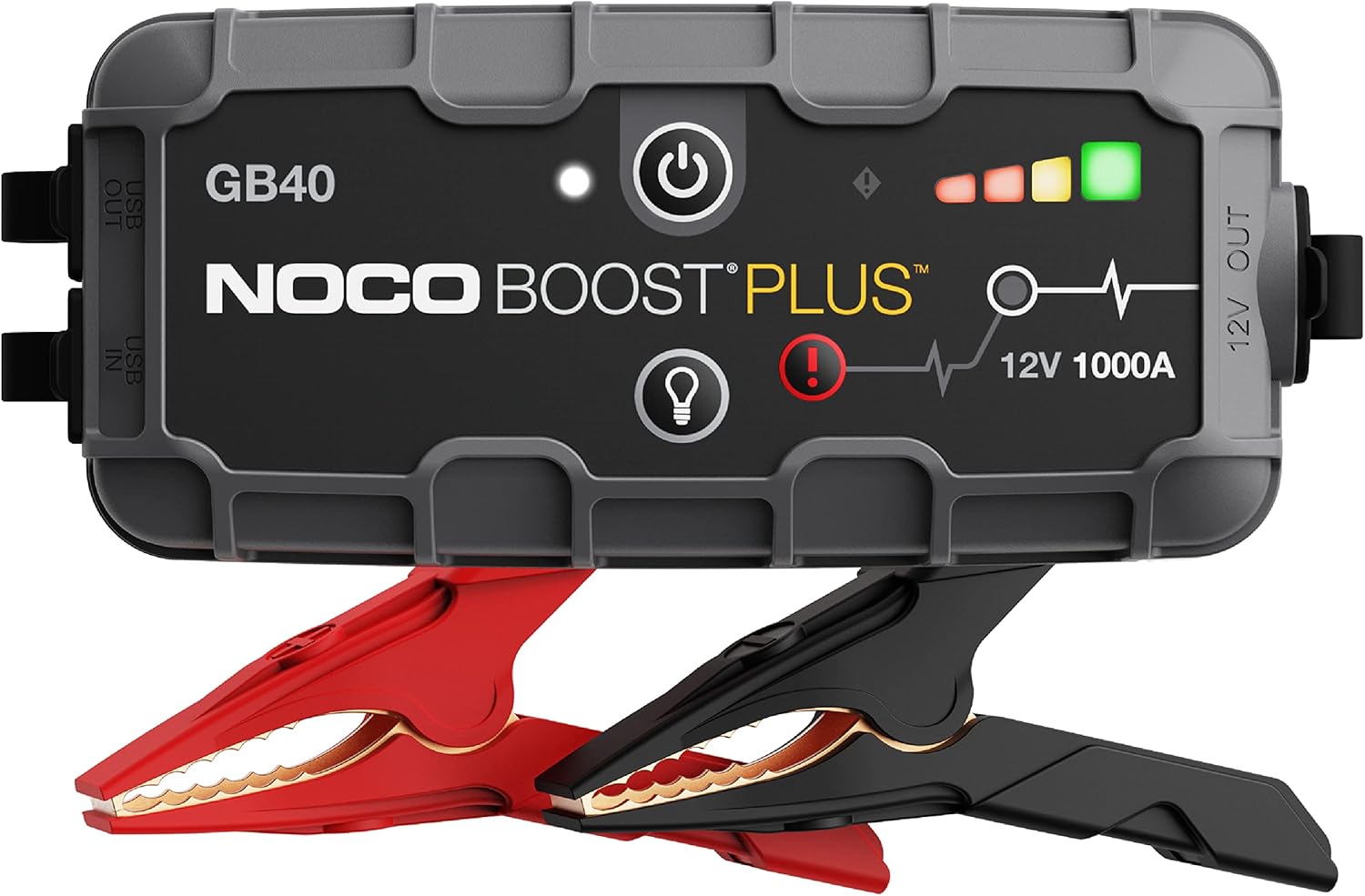
NOCO Boost Plus GB40 Jump Starter
A 1000A lithium jump starter that fits in your glovebox and works on any 12V battery. Your insurance against a dead 12V in a parking lot.
As an Amazon Associate, ThinkEV earns from qualifying purchases — at no extra cost to you.
Summer plan: Start with a full charge. One DC fast charging stop around Kingston or Brockville (250 km in). Charge for 20-25 minutes. Arrive in Montreal with 20-30% battery. Total added time compared to a gas car: about 25 minutes.
Winter plan: Start with a full charge. First stop at Napanee or Kingston (220 km, allowing for winter range loss). Charge for 25-30 minutes. Second quick stop at Cornwall or the Quebec border area if needed. Arrive in Montreal with 15-20% battery. Total added time: about 45 minutes.
Charger options: Electrify Canada in Kingston, Petro-Canada in several locations along the 401, Tesla Superchargers in multiple towns. You have at least 3-4 independent charger options in the Kingston-Brockville stretch alone.
Cost: One DC fast charge session: $15-$25 depending on your vehicle and the network. The same trip in a mid-size gas car (8L/100km, gas at $1.55/L): about $67. You save $42-$52 in fuel costs.
Vancouver to Kelowna (390 km, Highway 1 to Highway 97C)
This route is more challenging because of elevation changes on the Coquihalla Highway, but it is entirely doable with proper planning.
Summer plan: Full charge in Vancouver. One charging stop in Merritt or Hope (about 200 km). The Coquihalla involves significant elevation gain that increases energy consumption substantially, expect 20-25% worse efficiency on the uphill sections. The good news is regenerative braking recovers significant energy on the downhill runs. Plan conservatively and you will be fine.
Winter plan: The Coquihalla in winter is a different beast. Reduced range from cold, energy-intensive heating, and potentially slower speeds through mountain passes all compound. Plan for a stop in Hope (150 km) and another in Merritt (260 km). Charge to 80-85% at each stop to give yourself a comfortable buffer for the mountain sections. Precondition your battery for both stops. Keep an eye on road conditions, if the Coquihalla is closed due to weather, the alternative route via Highway 1 through Kamloops adds 150 km and requires additional charging.
Charger options: BC Hydro chargers along Highway 1, Petro-Canada in Hope, Electrify Canada in Merritt. The Kelowna area has multiple charging options including Tesla Superchargers.
Cost: Two DC fast charge sessions: $25-$40. Gas equivalent: about $55. Savings: $15-$30.
Calgary to Banff (130 km, Trans-Canada Highway 1)
Short enough that most EVs do not need to charge en route, even in winter. The elevation gain heading into the Rockies increases consumption, but 130 km is well within range for any modern EV.
Any season: Charge to 80% at home before leaving. Drive to Banff. Charge in Banff while you are sightseeing, dining, or at your hotel. Several hotels in Banff offer Level 2 destination charging, and there are DC fast chargers in the town.
The real question on this route is not getting to Banff, it is what you do when you get there. If you are day-tripping and heading back the same day, charge in Banff before returning. If you are staying overnight, plug into a hotel Level 2 charger and wake up to a full battery. If you are continuing into BC (through Rogers Pass to Revelstoke), plan your next charging stop carefully, the stretch through the Rockies is remote and charger options are limited. Charge to 100% before this stretch.
Halifax to Moncton (275 km, Trans-Canada Highway 104/2)
Atlantic Canada's EV infrastructure has improved dramatically. This corridor is well-covered.
Summer plan: Full charge in Halifax. Drive to Moncton without stopping, 275 km is within range for most EVs at highway speed. Arrive with 20-35% battery depending on your vehicle.
Winter plan: Full charge in Halifax. One quick stop in Truro or Amherst (about 130-150 km). Charge for 15-20 minutes. Arrive in Moncton with comfortable range.
Charger options: Petro-Canada Electric Highway has stations along this route, plus FLO and independent operators. The Trans-Canada through Nova Scotia and New Brunswick is part of the coast-to-coast Petro-Canada network.
Cost: Zero to one DC fast charge session: $0-$18. Gas equivalent: about $34. Savings: $16-$34.
Winnipeg to Saskatoon (790 km, Trans-Canada Highway 1 to Highway 16)
This is a longer haul and one of the more challenging corridor routes in Canada, not because of mountains or extreme conditions, but because of the sheer distance and the spacing between chargers on the Prairies.
Summer plan: Full charge in Winnipeg. First stop in Portage la Prairie or Brandon (about 200-270 km). Second stop around Moosomin or Indian Head area (200 km further). Third stop or straight shot into Saskatoon depending on your vehicle's range. Expect 2-3 charging stops. The terrain is flat but the Prairies are windy, a sustained headwind can increase consumption by 15-20%.
Winter plan: Add one additional stop compared to summer. The Prairies in winter mean extreme cold (-25 to -35C is common) and brutal headwinds. Budget for 35-40% range reduction. Precondition before every stop. Carry emergency supplies, the distance between towns on the Prairies is significant.
Charger options: Petro-Canada Electric Highway has stations along this route. Coverage is improving but spacing is wider than on eastern corridors. Verify station status the morning of your trip, when your next charger is 200 km away, you cannot afford to arrive at a broken one.
Cost: 2-3 DC fast charge sessions: $35-$60. Gas equivalent: about $98. Savings: $38-$63.
Calgary to Edmonton (300 km, Highway 2)
The Alberta corridor is one of the most popular and best-served EV routes in Western Canada.
Summer plan: Most EVs with 400+ km of rated range can do this without stopping. Leave with 90% charge and arrive with 30-40% battery. No stop needed.
Winter plan: One quick 10-15 minute top-up at Red Deer (midpoint) is plenty. The corridor has excellent charger coverage with multiple options at Red Deer including Electrify Canada and Petro-Canada. Even in Alberta's cold winters, 300 km with one buffer stop is comfortable for any modern EV.
Cost: Zero to one DC fast charge session: $0-$15. Gas equivalent: about $37. Savings: $22-$37.
Gear worth having
As an Amazon Associate, ThinkEV earns a small commission from qualifying purchases — at no extra cost to you.

Grizzl-E Classic Level 2 EV Charger (40A)
Canadian-made and rated for minus 40C winters. 40A / 9.6 kW, NEMA 14-50, indoor/outdoor, 24-ft cable. The charger built for Canadian weather.
As an Amazon Associate, ThinkEV earns from qualifying purchases — at no extra cost to you.
COST COMPARISON: EV VS GAS ROAD TRIPS
Let us talk money, because this is where EVs make their case most powerfully. The math is straightforward, and it consistently favours the EV. For provincial electricity rate breakdowns, see our EV charging costs by province guide.
The Variables
DC fast charging costs: $0.35-$0.55/kWh in Canada depending on the network, your membership status, and your province. Use $0.45/kWh as a reasonable average for planning purposes.
Home charging costs: $0.07-$0.18/kWh depending on your province. Quebec is the cheapest at around $0.07/kWh. Alberta and the Maritimes are at the high end around $0.14-$0.18/kWh. Ontario's time-of-use rates mean you pay $0.07-$0.08/kWh if you charge overnight. Starting every road trip with a full home charge is dramatically cheaper than any public charging, see our guide to the best Level 2 chargers in Canada.
Gasoline costs: $1.45-$1.75/L across Canada in early 2026, depending on province and proximity to a refinery.
Average gas car consumption: 8-10L/100km for a mid-size sedan at highway speed. 10-13L/100km for an SUV.
Average EV consumption: 16-20 kWh/100km for a mid-size EV at highway speed in summer. 20-26 kWh/100km in winter.
Route-by-Route Savings
Toronto to Montreal (540 km):
- Gas car (8.5L/100km at $1.60/L): $73
- EV on DC fast charging only (18 kWh/100km at $0.45/kWh): $44
- EV starting with full home charge, one DCFC stop: $22-$30
- Savings: $43-$51 per trip
Vancouver to Kelowna (390 km):
- Gas car (9L/100km at $1.75/L): $61
- EV on DCFC (20 kWh/100km at $0.45/kWh, mountain route): $35
- EV starting with full home charge, one DCFC stop: $18-$25
- Savings: $36-$43 per trip
Winnipeg to Saskatoon (790 km):
- Gas car (8.5L/100km at $1.55/L): $104
- EV on DCFC (18 kWh/100km at $0.45/kWh): $64
- EV starting with full home charge, 2-3 DCFC stops: $45-$55
- Savings: $49-$59 per trip
The Annual Picture
If you drive 20,000 km per year (about average for a Canadian driver), the fuel savings add up fast:
- Home charging only (12 cents/kWh average): $432/year in electricity vs $2,720/year in gas (at 8.5L/100km, $1.60/L). Annual savings: $2,288.
- Mix of home and DCFC (70% home, 30% DCFC): roughly $720/year vs $2,720/year in gas. Annual savings: $2,000.
Over 5 years of ownership, that is $10,000-$11,400 in fuel savings alone. Add in reduced maintenance costs (no oil changes, no transmission service, fewer brake replacements thanks to regenerative braking) and the total cost of ownership advantage is substantial.
PROVINCIAL CHARGING GAPS AND HOW TO HANDLE THEM
Not every province is equally well-served. Here is an assessment of where the gaps are and how to work through them.
Ontario
The 401 corridor from Windsor to the Quebec border is Canada's best-served EV highway. Dense charger coverage, multiple networks, excellent redundancy. Highway 400 north to Barrie and beyond is good through Sudbury but thins out north of that. Northern Ontario (the Trans-Canada between Sudbury and Sault Ste. Marie, and north to Timmins) has gaps that require careful planning, 200+ km stretches with limited options.
How to handle it: For Northern Ontario trips, charge to 100% before entering remote stretches. Identify every available charger, including Level 2 options in small towns. Petro-Canada Electric Highway is often your only DCFC option on these segments.
Quebec
The 401's extension (Autoroute 20) from Montreal to Quebec City is well-covered. The Laurentian Autoroute (Autoroute 15) north of Montreal has decent coverage. Eastern Quebec heading toward the Maritimes is improving but chargers are spaced further apart. Northern Quebec (anything north of Trois-Rivieres) is essentially off-grid for EV road trips.
How to handle it: Hydro-Quebec's Circuit electrique has an extensive Level 2 network. For remote areas, plan for Level 2 top-ups where DCFC is not available. Quebec's cheap electricity ($0.07/kWh) means Level 2 charging is almost free.
British Columbia
The Lower Mainland and Sea-to-Sky corridor are excellent. Highway 1 through the interior (Hope to Kamloops to Revelstoke) has improving coverage but mountain passes increase consumption unpredictably. Northern BC (Highway 97 to Prince George and beyond) has significant gaps.
How to handle it: BC Hydro has been aggressive about deploying chargers along provincial highways. Check their network map for the latest additions. For northern routes, plan conservatively, charge to 100% before remote stretches and drive at reduced speed to maximize range.
Alberta
The Calgary-Edmonton corridor (Highway 2) is excellent. East-west routes into the Rockies and toward Saskatchewan are adequate but less dense. Northern Alberta (toward Fort McMurray) has limited coverage.
How to handle it: Alberta's charger network is expanding rapidly thanks to provincial incentives. For routes outside the main corridor, verify charger availability the day of your trip.
The Prairies (Saskatchewan and Manitoba)
The Trans-Canada through the Prairies has basic DCFC coverage but chargers are spaced further apart than in Ontario or BC. Side trips off the Trans-Canada can be challenging. The extreme cold in winter compounds the problem, range loss and wider charger spacing is a difficult combination.
How to handle it: Plan for 200-250 km between stops maximum, even if your car theoretically has more range. Build in larger buffers. In winter, this becomes 150-200 km between stops. Petro-Canada Electric Highway is often your primary option. Check station status obsessively the day of your trip.
Atlantic Canada
Nova Scotia and New Brunswick have solid Trans-Canada coverage. PEI is small enough that charger density is adequate. Newfoundland's Trans-Canada has DCFC coverage from St. John's to Corner Brook, but spacing is wide and options are limited.
How to handle it: For Newfoundland trips, plan meticulously. Know every charger on your route and carry a portable Level 2 charger as backup. The weather can be harsh and range reductions from cold and wind are significant.
NORTHERN AND RURAL ROUTE CHALLENGES
Let us be direct: if you are planning an EV road trip through Northern Ontario, Northern BC, the Yukon, the Northwest Territories, or rural Newfoundland, the experience is fundamentally different from driving the 401 or Highway 2.
The Reality
Charger spacing in northern and rural Canada can exceed 300 km. That is fine for an EV with 500+ km of rated range in summer, but it leaves zero margin for error. In winter, with 30-40% range reduction, that 300 km gap becomes a genuine obstacle for most EVs.
Cell service is unreliable or nonexistent. You cannot check ChargeHub for station status if you have no signal. Download offline maps and charger locations before you enter remote areas.
Tow truck response times in remote areas can be hours. Running out of charge 150 km from the nearest town is a dramatically worse experience than running out of gas, because a gas car can be refuelled from a jerry can while an EV needs a flatbed tow to the nearest charger.
How to Mitigate
- Charge to 100% before entering remote stretches. Yes, charging from 80-100% is slow. Do it anyway. Those extra 20% of battery capacity are your insurance policy.
- Drive at 90-100 km/h instead of 110-120 km/h on remote stretches. The efficiency gain at lower speeds is significant, 15-20% more range.
- Carry a portable Level 2 charger and appropriate adapters. If you can find a 240V outlet (RV parks, industrial sites, farm equipment shops), you can add meaningful range.
- Travel with a full emergency kit: blankets, food, water, warm clothing, charged battery bank for your phone.
This applies to all winter driving in remote Canada, not just EVs.
- Tell someone your route and expected arrival time. Basic backcountry travel protocol.
- Consider a PHEV for truly remote routes. If your regular driving involves frequent trips through areas with no charging infrastructure, a plug-in hybrid might be the more practical choice until charging coverage improves. This is not defeatism, it is pragmatism.
TOWING WITH AN EV: RANGE CONSIDERATIONS
Towing with an EV is possible, the Ford F-150 Lightning, Rivian R1S, Tesla Cybertruck, and Chevy Silverado EV are all capable tow vehicles. But towing destroys EV range in a way that gas vehicle owners do not experience with liquid fuel.
The Range Impact
Expect 30-50% range reduction when towing, depending on the weight and aerodynamics of your trailer. A Tesla Model Y with a rated range of 531 km might deliver 250-300 km towing a small utility trailer. A Ford F-150 Lightning towing a 3,000 kg travel trailer might get 150-200 km of range.
This means more frequent charging stops, longer trip times, and the need for much more careful route planning. On the 401, where chargers are every 80-100 km, this is manageable. On the Prairies, where chargers might be 200 km apart, towing an EV requires very careful planning.
Towing Trip Planning Tips
- Use ABRP with the tow mode enabled (it adjusts consumption calculations for added weight and drag)
- Plan charging stops every 150-200 km maximum when towing
- Never let your battery drop below 15%, the reduced range means your margin for error is smaller
- Budget for significantly longer charging times, as you will be putting more kWh into the battery at each stop
- Be aware that charging while the trailer is attached can be awkward at some stations, the cable may not reach if the charge port is on the opposite side from where you park
- Some campgrounds and RV parks have 50-amp outlets (NEMA 14-50) that can provide Level 2 charging overnight, perfect for topping up while you sleep
HOTEL AND DESTINATION CHARGING
Smart destination charging can eliminate the need for DC fast charging stops entirely on shorter trips, and significantly reduce them on longer journeys.
Finding Hotels with Chargers
- ChargeHub and PlugShare both let you filter for hotels with EV charging. PlugShare's community reviews are particularly helpful for verifying that a hotel's charger actually works and is available to guests.
- Hotel chain apps: Hilton, Marriott, and IHG properties are increasingly installing Level 2 chargers. Filter for "EV charging" when booking. Best Western has a partnership with ChargePoint that has put chargers at many Canadian locations.
- Tesla Destination Chargers: Tesla has deployed Level 2 chargers at hundreds of hotels, restaurants, and shopping centres across Canada. These are free to use for Tesla owners and accessible to other EVs with the appropriate adapter.
The Destination Charging Strategy
If you are driving 400 km from Toronto to Ottawa, you have two options:
- One DC fast charge stop along the 401 (20 minutes, $15-$20)
- Arrive in Ottawa, plug into your hotel's Level 2 charger overnight (free or $5-$10), and wake up to a full battery
Option 2 is cheaper and requires zero waiting. You pull in, plug in, go to your room, and the car charges while you sleep. By morning, you have a full battery for the next day.
The key insight: Destination charging turns your hotel into your gas station. Book hotels with Level 2 chargers and you will find that many shorter road trips (under 400 km) require zero DCFC stops and zero charging-related time additions.
Campground Charging
Many campgrounds offer 30-amp or 50-amp RV outlets (NEMA TT-30 or NEMA 14-50). With the right adapter and a portable Level 2 EVSE, you can charge at 20-30 km of range per hour overnight. This is slower than DCFC but more than adequate for overnight charging, 10 hours of Level 2 charging adds 200-300 km of range.
Check with the campground before you arrive. Some charge extra for electricity, some include it in the site fee, and some have time-of-use policies. A quick phone call saves surprises.
EV Road Trips In Canada Work
EV road trips in Canada work. The charging corridor along the Trans-Canada, Highway 401, Highway 2, and the major inter-city routes is mature enough for reliable travel. It is not perfect, charger reliability needs improvement, northern routes need more coverage, and the charging industry needs to get serious about uptime. But for the vast majority of Canadian road trips, the ones between major cities, along major highways, in populated regions, the infrastructure is there.
The key is spending 10 minutes planning before you leave: know your real-world range, identify your charging stops and backups, precondition your battery before every DCFC stop, and charge in the 10-80% window. Once you have done two or three EV road trips, the process becomes second nature, and you will wonder why you ever thought it was complicated.
Here is my prediction as someone who watches this industry obsessively: by 2028, EV road trip planning in Canada will be as unremarkable as checking the gas gauge before a trip. The infrastructure is being built. The apps are mature. The vehicles are capable. The only thing left is for people to actually try it and discover that the anxiety was never warranted in the first place.
For the routes and regions where the infrastructure is not yet adequate, remote northern areas, parts of the Prairies, rural Newfoundland, to plan more conservatively, carry backup charging equipment, and accept that EV road tripping in those areas requires more preparation than the same trip in a gas car. That gap is closing rapidly, but it exists today and pretending otherwise helps nobody.
Start with an easy corridor trip. Toronto to Montreal. Calgary to Edmonton. Vancouver to Kelowna. Build your confidence on routes where chargers are plentiful and mistakes are cheap. Then expand from there. The technology works. The network works. You just need to use it.
Gear worth having
As an Amazon Associate, ThinkEV earns a small commission from qualifying purchases — at no extra cost to you.

Roadside Emergency Safety Kit
Jumper cables, a portable air compressor, tow strap, first aid, and more for when something goes wrong between chargers. Canadian winters do not forgive the unprepared.
As an Amazon Associate, ThinkEV earns from qualifying purchases — at no extra cost to you.
Related Reading
- EV Charging Costs by Province Canada 2026, What you will pay to charge at home and on the road, province by province.
- EV Winter Range: What to Really Expect, Cold weather range data for popular models sold in Canada.
- Best Level 2 EV Chargers Canada 2026, Home charging setup for any EV, reviewed and ranked.
- EV Charging Infrastructure Canada 2026, The state of Canada's charging network and what is coming next.
- Public EV Charging Etiquette Tips Canada 2026, How to be a good charging citizen on the road.
Gear worth having
As an Amazon Associate, ThinkEV earns a small commission from qualifying purchases — at no extra cost to you.

Foldable Waterproof Trunk Organizer
Three waterproof compartments that keep groceries and gear upright, then collapse flat when you need the space.
As an Amazon Associate, ThinkEV earns from qualifying purchases — at no extra cost to you.

Founder & Chief Editor
Vlad Pereira is the founder and chief editor of ThinkEV.ca, the Canadian electric-vehicle publication he writes and edits from Courtenay, British Columbia. He covers EV pricing, federal and provincial rebates, charging costs, and the Chinese manufacturers now entering Canada, from the buyer's side rather than the press-fleet side. ThinkEV is a venture of Vlad Pereira Online; his writing on health, income and the long game lives at vladpereira.com.
Frequently asked questions
How much longer does an EV road trip take compared to a gas car?
What if a charger is broken when I arrive?
How much does it cost to charge during a road trip?
Does cold weather make EV road trips impractical?
What is battery preconditioning and why does it matter?
Can I tow a trailer on an EV road trip?
Which charging app should I use for planning an EV road trip?
How do I find hotels with EV chargers along my route?
Is it possible to drive an EV across all of Canada?
More EV & road-trip finds
Affordable upgrades worth a look — tap any to check the price on Amazon.
 ★ 2,941
Microfiber Cleaning Cloths (Multi-Pack)
View on Amazon ★ 55
★ 55LED Car Door Logo Projector Light
View on Amazon ★ 4,626
HoogaLife Hanging Car Diffuser (2-Pack)
View on Amazon ★ 27,769
Car Cup Holder Coasters (4-Pack)
View on Amazon ★ 21,310
Magnetic Car Phone Mount
View on Amazon ★ 121
★ 121Foldable Windshield Sun Umbrella
View on Amazon ★ 68
★ 68WeatherTech FloorLiner for Tesla Model 3
View on Amazon ★ 96,686
PULIDIKI Car Cleaning Gel (Detailing Putty)
View on AmazonRead, Plan, Then Stay Current
Explore our expert articles to understand incentives and ownership costs, use the map to pressure-test charging reality, then subscribe so new EV coverage comes straight to you.
Continue Reading
Ontario EV Charging in 2026: Where It Stands
EV Charging in a Condo or Apartment in Canada

Best Family EV Canada 2026: 10 Ranked by Space
EV Charging Costs Canada 2026: Home vs Public

Nova Scotia EV Rebates 2026: $3,000 Off + EV Tax Reality Check