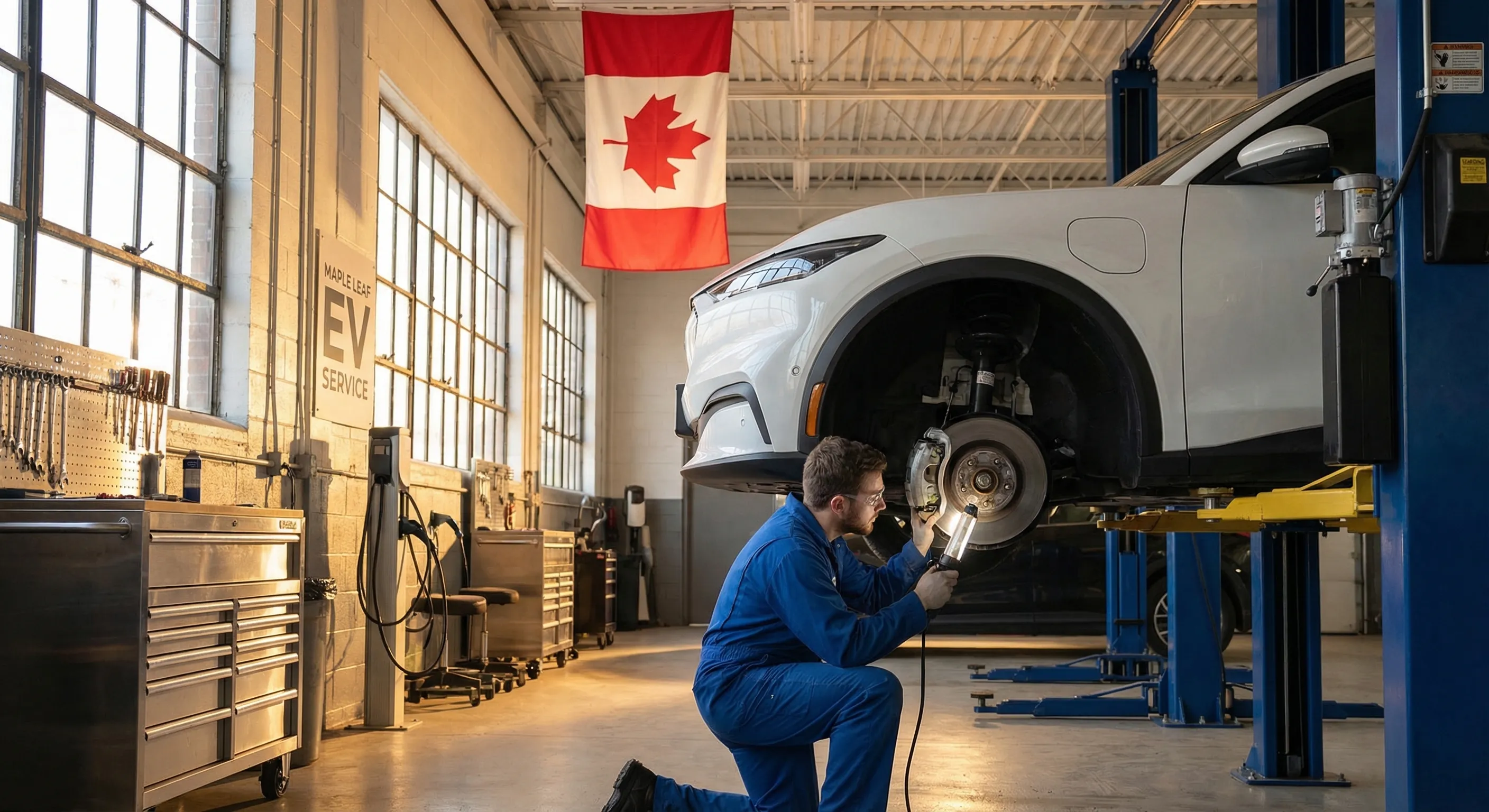
Key takeaways
- The data paints a clear picture: EV maintenance costs average $500-800 per year versus $1,000-1,500 per year for a comparable gas car.
- This alone saves $800-1,200 over 5 years.
- No catalytic converter theft risk either (a growing problem with gas vehicles, some Toyota Prius owners are paying $3,000+ for replacement converters).
I've analysed the maintenance schedules for every major EV sold in Canada, and here's the short version: you'll spend about 40-50% less on maintenance compared to a gas car over 5 years.
But "less" doesn't mean "nothing." And that distinction matters more than most EV advocates want to admit.
I've been tracking real-world maintenance costs from Canadian EV owners, not manufacturer estimates, not theoretical projections, but actual invoices and receipts shared in forums, Facebook groups, and owner communities. The data paints a clear picture: EV maintenance costs average $500-800 per year versus $1,000-1,500 per year for a comparable gas car. That's a meaningful difference, but it's not zero.
Let me show you exactly what you'll pay, when you'll pay it, and how to minimize every dollar.
What You Don't Pay For (Compared to Gas)
Let's start with everything that simply doesn't exist on an EV:
- Oil changes: $0. No engine oil. This alone saves $800-1,200 over 5 years.
- Transmission fluid: $0. Most EVs use a single-speed reduction gear.
- Spark plugs: $0. No combustion.
- Exhaust system: $0. No muffler, catalytic converter, or exhaust pipe.
- Timing belt/chain: $0. No engine.
- Fuel filter, air filter (engine): $0.
- Alternator and starter motor: $0. The electric motor handles both functions.
- Head gasket, valve cover gasket: $0. No engine block, no gaskets to blow.
- Emission system repairs: $0. No catalytic converter theft risk either (a growing problem with gas vehicles, some Toyota Prius owners are paying $3,000+ for replacement converters).
That's roughly $3,000-5,000 in maintenance you'll never pay over the life of the vehicle. For some gas cars, especially turbocharged engines that need premium oil and more frequent service, the savings climb even higher.
But here's what I find fascinating: when I talk to prospective EV buyers, most of them drastically overestimate how much maintenance an EV requires. They assume it's roughly equivalent to a gas car. It's not even close. The mechanical simplicity of an EV drivetrain, roughly 20 moving parts versus 2,000+ in a gas engine and transmission, translates directly into fewer things that can break, fewer fluids to change, and fewer scheduled service visits.
That said, "fewer" is not "none." Let's talk about what you will pay for.
The Complete Component-by-Component Breakdown
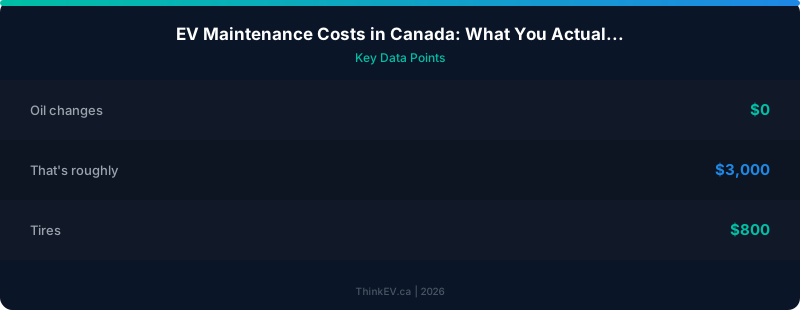
Tires: Your Biggest Recurring Cost, $800-1,600 Every 40,000-60,000 km
This is where EV ownership gets expensive, and most people don't see it coming. EVs are heavier than equivalent gas cars, a Tesla Model 3 weighs about 1,760 kg versus 1,495 kg for a similarly sized Toyota Camry. That's nearly 300 kg of extra weight pressing down on four rubber contact patches. Add in the instant torque that electric motors deliver (zero-rpm peak torque means more shear force on the rubber every time you accelerate), and you get tires that wear 10-15% faster than on a comparable gas car.
Some aggressive drivers report even higher wear, up to 20-30% faster, but that's largely a driving style issue. If you're flooring it at every green light because the instant torque is addictive (and it is), your tires will suffer.
EV-specific tires are designed to address this. Brands like Michelin e.Primacy, Continental EcoContact 6, and Bridgestone Turanza EV use harder rubber compounds that resist the extra weight, lower rolling resistance for better range, and reduced road noise (important since EVs have no engine noise to mask tire noise). In Canada, expect to pay:
- Compact EV (Bolt, Leaf, Dolphin): $160-250 per tire, $640-1,000 per set installed
- Mid-size EV (Model 3, Ioniq 5, ID.4): $200-350 per tire, $800-1,400 per set installed
- Large/performance EV (Model Y, EV6 GT, Mustang Mach-E): $250-400 per tire, $1,000-1,600 per set installed
Tire rotation is critical for maximizing tire life on an EV. Most manufacturers recommend every 10,000-12,000 km. Budget about $50-80 per rotation at Canadian Tire, Costco, or your dealership. If you skip rotations, you'll end up replacing tires 15,000-20,000 km earlier than necessary, which costs far more than the rotation itself.
A note on all-season versus seasonal tires in Canada: If you're running dedicated winter tires (and in most of Canada, you should be), your all-season tires only see about 6-7 months of use per year. This effectively extends their lifespan in calendar terms, even though you're also buying and maintaining a second set of rubber. I'll cover the winter tire situation in detail below.
Brakes: Minimal Cost, Thanks to Regenerative Braking
This is where EVs really shine, and the savings are genuinely dramatic. Regenerative braking captures kinetic energy and feeds it back to the battery, handling 50-75% of your deceleration in normal driving. Some EVs with strong regen (like Tesla with one-pedal driving or the Hyundai Ioniq 5 with i-Pedal) can handle up to 80% of stopping without ever touching the friction brakes.
What does that mean for brake wear? Your pads and rotors last dramatically longer. Tesla owners regularly report 150,000+ km on original brake pads. Hyundai Ioniq 5 owners in Canadian forums report similar results. I've seen multiple Bolt EV owners at 120,000+ km who've never replaced brake pads.
Budget for brake pad replacement every 100,000-150,000 km instead of the typical 50,000-80,000 km for gas cars. When you do eventually need new pads, expect:
- Front brake pads: $150-300 per axle (parts and labour)
- Rear brake pads: $150-250 per axle
- Rotor replacement (if needed): $200-400 per axle on top of pad cost
- Full brake job (pads + rotors, both axles): $600-1,200
But here's the catch that catches Canadian EV owners off guard: brake caliper corrosion from road salt.
Because you use the friction brakes so rarely, the calipers can seize from road salt buildup. This is a real problem in Ontario, Quebec, New Brunswick, Nova Scotia, and PEI, anywhere that uses road salt heavily. I've seen forum posts from Ioniq 5 owners in Ottawa who had seized calipers at just 40,000 km because they relied entirely on regen braking and the mechanical brakes literally rusted to the rotors.
The fix is simple: Use your mechanical brakes firmly a few times per week, especially during winter. Some manufacturers (Tesla, BMW) specifically recommend periodic "brake conditioning" drives. Just brake firmly from 80 km/h to 30 km/h a few times to scrub the rust off the rotors. It sounds counterintuitive, you're wearing out brakes on purpose, but it prevents much more expensive caliper seizure repairs ($400-800 per caliper).
Coolant System: $150-300 Every 4-6 Years
EV batteries need thermal management. Unlike your phone battery that just heats up when it's working hard, EV battery packs have sophisticated liquid cooling systems that maintain the cells at their ideal operating temperature range (typically 20-40°C). This system uses a coolant, usually a propylene glycol-based fluid, that circulates through channels in the battery pack.
Over time, this coolant degrades and needs replacing. Most manufacturers recommend a coolant flush every 4-6 years or 100,000-150,000 km. Costs vary by brand:
- Tesla: $150-200 for a coolant flush at a Tesla service centre
- Hyundai/Kia: $150-250 at a dealership
- Chevrolet: $150-200 at a GM dealer
- Ford: $175-250 at a Ford dealer
- BYD: $100-200 (BYD's Blade Battery thermal system is simpler but still needs periodic checks)
This is not a DIY job. The battery thermal management system operates under pressure and requires specific procedures to bleed air from the system. Getting it wrong can cause hot spots in the battery pack, which accelerates degradation. Always use a manufacturer-authorized or EV-certified technician.
Some EVs also have a separate coolant loop for the drive motor and inverter. Tesla uses a combined system; Hyundai and Kia use separate loops. If your EV has separate loops, expect slightly higher costs for a complete coolant service ($200-350).
Cabin Air Filter: $30-80 Every 20,000-30,000 km
Your EV still has a cabin air filter that cleans the air coming into the interior. This is the one filter you'll still replace regularly, and it's honestly the most satisfying DIY maintenance you can do on an EV because it's so easy.
On most EVs, the cabin filter is behind the glovebox and takes 5-10 minutes to replace. YouTube has tutorials for literally every model. The filter itself costs $20-50 on Amazon.ca; a dealership will charge $80-120 installed, which is absurd markup for a 5-minute job.
Pro tip for Canadian owners: Consider a HEPA or activated carbon cabin filter if you live in an area affected by wildfire smoke (which is increasingly most of western Canada). Brands like BOSCH make premium cabin filters for most EV models that filter finer particles. They cost $30-60 versus $20-35 for a standard filter, but the difference during smoke season is noticeable.
Tesla-specific note: Tesla Model 3 and Model Y have a HEPA filter option that's excellent but expensive to replace, $80-120 for the filter alone, and it's not as easy to access as most other EVs. The Model S and X with the "Bioweapon Defence Mode" use an even larger HEPA filter that costs $120-180.
Windshield Washer Fluid: $15-30/Year
Same as any car. In Canadian winters, you'll go through more washer fluid because of road salt spray. Budget $15-30/year for winter-rated fluid (rated to -40°C in most of Canada). Not exciting, but it's real money that adds up.
Buy it in bulk from Costco or Canadian Tire when it goes on sale in the fall. You'll use 8-12 litres per winter in provinces with heavy road salt use. Summer washer fluid with bug remover is cheaper ($4-6 per jug) but don't mix it with winter fluid, it'll freeze in October and crack your washer reservoir.
12V Battery: $150-300 Every 4-5 Years
Here's the component that surprises most new EV owners. Your EV has a small 12V battery, completely separate from the main high-voltage battery pack, that powers the electronics, door locks, computer systems, and accessories. It's essentially the same as a gas car's 12V battery, and it dies on roughly the same schedule: every 4-5 years.
The difference? When your 12V battery dies in a gas car, you can still often jump-start it and drive to get a replacement. When your 12V battery dies in an EV, the car is completely immobilized. You can't open the charge port. You may not be able to open the doors (some EVs have manual releases, some don't). The main battery could be at 100% charge and it doesn't matter, without the 12V, nothing works.
This is the most common "unexpected" EV repair and the single most important thing to stay ahead of. A quality AGM 12V battery costs $150-300 installed. Some EVs (newer Teslas, some Hyundai models) are moving to lithium-ion 12V batteries that last longer (8-10 years) but cost more to replace ($300-500).
Gear worth having
As an Amazon Associate, ThinkEV earns a small commission from qualifying purchases — at no extra cost to you.
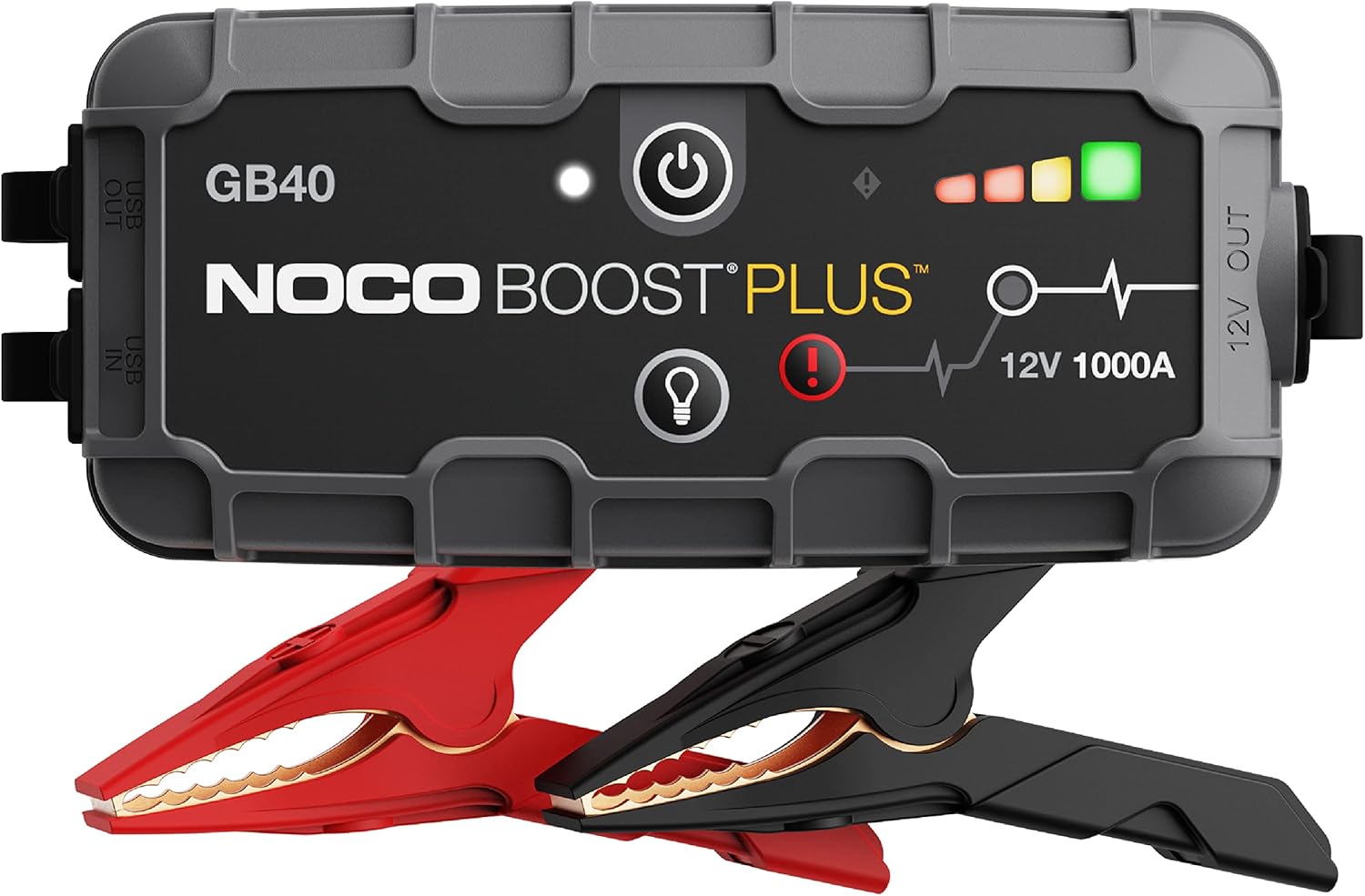
NOCO Boost Plus GB40 Jump Starter
A 1000A lithium jump starter that fits in your glovebox and works on any 12V battery. Your insurance against a dead 12V in a parking lot.
As an Amazon Associate, ThinkEV earns from qualifying purchases — at no extra cost to you.
Proactive replacement is the smart move. Don't wait for your 12V to die in a Walmart parking lot in January. Most auto parts stores will test your 12V battery for free. If it's showing degraded capacity after 3-4 years, replace it preemptively. The $200 you spend on a planned replacement is infinitely better than the tow truck and stress of an unexpected failure.
Suspension Components: $0-500 Over 5 Years
EVs use conventional suspension systems, struts, shocks, control arms, bushings, just like gas cars. The extra weight of the battery pack does put marginally more stress on these components, but modern EVs are engineered for their weight, so suspension components generally last their normal lifespan.
Expect to check/replace:
- Shock absorbers/struts: 80,000-120,000 km ($400-800 per axle to replace)
- Control arm bushings: 100,000-150,000 km ($200-400 per side)
- Wheel bearings: 120,000-180,000 km ($200-350 per wheel)
- Ball joints: 100,000-150,000 km ($150-300 per side)
Within the first 5 years and 100,000 km, you're unlikely to need any suspension work unless you're driving on particularly rough roads. This is a longer-term cost to budget for, primarily in years 6-10.
Canadian-specific note: Potholes. Canadian roads are brutal on suspension components, especially in spring when frost heaves create craters that would qualify as archaeological dig sites. If you hit a bad pothole, get your alignment checked ($80-120), misalignment accelerates tire wear, which is already your biggest cost.
Wiper Blades: $30-60/Year
Standard maintenance item, identical to gas cars. Replace your wiper blades once or twice a year depending on use. Canadian winters destroy wiper blades faster, the combination of ice scraping, freezing temperatures, and road grime degrades the rubber quickly.
- Standard wiper blades: $15-25 per blade
- Winter/beam wiper blades: $20-35 per blade
- Tesla-specific note: Tesla uses a single large wiper blade on the Model 3/Y that costs $30-50 to replace
Budget $30-60 per year. It's a small cost but it adds up over time, and good wipers are a safety item you shouldn't neglect.
Year-by-Year Maintenance Schedule: What to Expect

One of the most common questions I get is "when does all this stuff actually happen?" So here's a realistic year-by-year schedule for a typical Canadian EV owner driving 20,000 km per year.
Year 1: The Honeymoon (Budget: $200-400)
Your first year with a new EV is blissfully cheap. Everything is new, everything is under warranty, and your maintenance consists of:
- Tire rotation (2x at 10,000 and 20,000 km): $100-160
- Windshield washer fluid: $15-30
- Wiper blades (1 set): $30-60
- Total: $145-250
That's it. Seriously. No oil change appointments, no transmission checks, no engine air filter. You'll almost forget your EV requires any maintenance at all.
The one thing to watch: check your tire pressure monthly. Cold Canadian weather drops tire pressure (roughly 1 PSI per 5°C drop), and low tire pressure increases rolling resistance, reduces range, and accelerates tire wear. Keep a digital tire pressure gauge in your glovebox.
Year 2: Still Easy (Budget: $300-600)
- Tire rotation (2x): $100-160
- Cabin air filter replacement: $30-80
- Windshield washer fluid: $15-30
- Wiper blades (1 set): $30-60
- Winter tire swap (if seasonal): $60-100 (mount/balance if not on rims)
- Total: $235-430
Year 2 adds the cabin air filter, which is a 5-minute DIY job. If you're paying a dealer $120 for this, you're donating money to their holiday party fund. Watch a YouTube video, order the filter from Amazon.ca for $25, and do it yourself.
Year 3: Tires Enter the Chat (Budget: $800-1,800)
This is the year costs jump because most Canadian EV owners need their first set of replacement tires around 40,000-60,000 km. If you've been rotating diligently, you might stretch to year 4. If not, year 3 is when you'll notice the wear.
- Tire rotation (2x): $100-160
- New tires (if needed at ~50,000 km): $800-1,600
- Windshield washer fluid: $15-30
- Wiper blades (1 set): $30-60
- Total: $945-1,850 (or $145-250 if tires hold)
The tire replacement is the big variable. If your tires still have good tread at your year 3 inspection, you might push this to year 4. But don't push it too far, driving on worn tires in Canadian winter is genuinely dangerous, and the liability risk isn't worth the savings.
Year 4: The 12V Battery Year (Budget: $400-800)
By year 4 (80,000 km), you're past the initial warranty period for most basic components, and the 12V battery is approaching end of life.
- Tire rotation (2x): $100-160
- Cabin air filter replacement: $30-80
- 12V battery replacement: $150-300
- Windshield washer fluid: $15-30
- Wiper blades (1 set): $30-60
- New tires (if not replaced in year 3): $800-1,600
- Total: $325-630 (without tires) or $1,125-2,230 (with tires)
Get your 12V battery tested in the fall before winter hits. A dead 12V in a Canadian winter parking lot is a genuinely terrible experience.
Gear worth having
As an Amazon Associate, ThinkEV earns a small commission from qualifying purchases — at no extra cost to you.

Roadside Emergency Safety Kit
Jumper cables, a portable air compressor, tow strap, first aid, and more for when something goes wrong between chargers. Canadian winters do not forgive the unprepared.
As an Amazon Associate, ThinkEV earns from qualifying purchases — at no extra cost to you.
Year 5: The Coolant Year (Budget: $500-900)
Year 5 (100,000 km) is when the coolant flush typically comes due, and you might start thinking about brake inspection.
- Tire rotation (2x): $100-160
- Coolant flush: $150-300
- Brake inspection: $50-100
- Windshield washer fluid: $15-30
- Wiper blades (1 set): $30-60
- Total: $345-650
The brake inspection is worth the $50-100 even if your pads still have plenty of material. It lets a technician check for caliper corrosion (the road salt issue I mentioned earlier) and rotor condition. Catching a seized caliper early is far cheaper than letting it damage the rotor.
5-year total: approximately $2,500-4,500 depending on driving habits, tire choices, and whether you DIY the simple stuff. Compare that to $5,000-7,500 for a comparable gas car over the same period.
Brand-Specific Maintenance Costs
Not all EVs are created equal when it comes to maintenance costs. Here's what you'll actually pay by brand, based on owner reports and manufacturer schedules.
Tesla (Model 3, Model Y)
Tesla is simultaneously the best and worst for maintenance costs. Best because the cars themselves require remarkably little scheduled maintenance. Worst because when you do need something, Tesla parts and service are expensive and wait times can be long.
Scheduled maintenance costs:
- Cabin air filter: $80 at Tesla, $25-40 DIY
- Brake fluid test (every 2 years): $50-100
- Coolant flush: $150-200
- A/C desiccant replacement (every 4 years on Model 3): $150-200
- Tire rotation: $50-80 (Tesla service), $35-60 elsewhere
Tesla-specific quirks:
- Tesla no longer recommends annual service inspections. Their position is "service it when the car tells you to." This saves money but means you need to be proactive about catching issues.
- Tesla Mobile Service is excellent, a technician comes to your home or workplace for many repairs. Availability varies by region; Vancouver and Toronto have good coverage, smaller cities less so.
- Aftermarket parts availability is improving but still limited compared to legacy automakers. This keeps parts costs higher than they need to be.
5-year maintenance estimate: $2,200-3,500
Hyundai/Kia (Ioniq 5, Ioniq 6, EV6, EV9)
Hyundai and Kia have become the value leaders for EV maintenance in Canada. Their maintenance schedules are straightforward, parts are readily available through a massive dealer network, and they use many of the same components as their gas cars (cabin filters, 12V batteries, wiper blades), which keeps costs down.
Scheduled maintenance costs:
- Cabin air filter: $30-60 at dealer, $15-30 DIY
- Brake fluid replacement (every 2 years): $80-150
- Coolant flush (every 4 years): $150-250
- Reduction gear oil check (every 60,000 km): $50-80
- Tire rotation: $40-70
Hyundai/Kia-specific advantages:
- Large dealer network across Canada means competitive pricing and short wait times
- Excellent 5-year/100,000 km comprehensive warranty covers almost everything in the first 5 years
- Straightforward DIY access to cabin filters, 12V batteries, and wiper blades
- The E-GMP platform (used by Ioniq 5, Ioniq 6, EV6, EV9) is well-engineered with few known reliability issues
5-year maintenance estimate: $2,000-3,200
GM/Chevrolet (Bolt EV/EUV, Equinox EV, Blazer EV)
GM's EV maintenance approach is conventional, they have a detailed maintenance schedule with regular service intervals, similar to their gas cars. The upside is clear guidance on what to do when. The downside is that some of these intervals are arguably more frequent than necessary.
Scheduled maintenance costs:
- Cabin air filter (every 36,000 km): $40-70 at dealer, $20-35 DIY
- Coolant flush (every 5 years/240,000 km): $150-200
- Battery coolant (Bolt EV/EUV): $100-150 (separate from drivetrain coolant)
- Tire rotation (every 12,000 km): $50-80
- Brake fluid (every 5 years): $80-120
GM-specific notes:
- The Bolt EV/EUV are being phased out, so parts availability should remain strong as dealers clear inventory
- The Ultium platform (Equinox EV, Blazer EV) is newer, so long-term maintenance data is still limited
- GM dealers are everywhere in Canada, which keeps labour costs competitive
5-year maintenance estimate: $2,100-3,400
Ford (Mustang Mach-E, F-150 Lightning)
Ford's EV maintenance schedule leans conservative, more frequent intervals than Tesla but in line with industry norms. The F-150 Lightning has some unique considerations due to its size and truck duty cycle.
Scheduled maintenance costs:
- Cabin air filter (every 30,000 km): $40-80 at dealer, $20-40 DIY
- Coolant flush (every 5 years): $175-250
- Brake fluid (every 3 years): $80-130
- Tire rotation (every 12,000 km): $50-80
- F-150 Lightning specific, front axle fluid check: $60-100
Ford-specific notes:
- The F-150 Lightning eats tires. It weighs over 2,900 kg, and owners report tire replacement intervals as low as 30,000-40,000 km, especially on the rear. Budget accordingly.
- Ford dealer EV certification is progressing but uneven. Some dealers are excellent; others are still learning. Ask about EV-specific technician certification before booking service.
- The Mustang Mach-E has proven to be reliable with few unexpected maintenance issues
5-year maintenance estimate: $2,300-3,800 (Mach-E) or $3,000-5,000 (Lightning, due to tire costs)
Dealer vs. Independent Shop: Where to Get Your EV Serviced
This is one of the most important decisions you'll make as an EV owner, and it directly impacts your maintenance costs.
Dealership Service
Advantages:
- Manufacturer-trained technicians with EV-specific certification
- Access to proprietary diagnostic software (critical for high-voltage system issues)
- OEM parts guaranteed to work correctly
- Service records tracked in the manufacturer's system (valuable for warranty claims and resale)
- Warranty work is free and smooth
Disadvantages:
- Higher labour rates ($120-180/hour at most Canadian dealers versus $80-130 at independents)
- Tendency to upsell unnecessary services (I've seen dealers recommend "EV fluid checks" at 10,000 km that aren't in the manufacturer's schedule)
- Longer wait times, especially at popular dealers in Vancouver, Toronto, and Montreal
- Some dealers still don't have EV-certified technicians (especially in smaller markets)
When to use the dealer: Warranty work (always), high-voltage system issues, battery diagnostics, software updates, and any work that requires proprietary tools.
Independent EV Shops
The independent EV service market in Canada is growing rapidly but it's still in its early stages. Finding a good one can save you 20-40% on maintenance costs.
Where to find EV-certified independents:
- Canadian Tire, Many locations now handle EV tire rotations, brake service, and basic maintenance. Not all locations have EV-certified techs, so call ahead.
- CAA-recommended shops, CAA's EV resource page lists certified providers by province
- NAPA Auto Care, Expanding EV service capabilities across Canada
- Tesla Mobile Service, Comes to your home for many repairs (Tesla only)
- Local EV specialty shops, Search "[your city] EV repair", these are popping up in every major Canadian city
- Costco Tire Centre, Great for tire mounting, rotation, and balancing. Competitive pricing.
When to use an independent: Tire rotation, tire replacement, 12V battery replacement, cabin air filter (though DIY this), wiper blades, brake service, alignment, and general inspections. These are all standard automotive tasks that don't require manufacturer-specific tools.
The Cost Difference
For common maintenance tasks, here's what you'll save at an independent versus a dealer:
Gear worth having
As an Amazon Associate, ThinkEV earns a small commission from qualifying purchases — at no extra cost to you.

TP-Link Kasa Smart Plug with Energy Monitoring
Track exactly how much electricity your Level 1 charger uses and schedule it for off-peak hours. Know your real cost per kWh.
As an Amazon Associate, ThinkEV earns from qualifying purchases — at no extra cost to you.
- Tire rotation: Dealer $60-80, independent $35-60, save $25-20
- Cabin air filter installed: Dealer $80-120, independent $50-70, DIY $20-40
- 12V battery replacement: Dealer $250-350, independent $150-250
- Brake pad replacement (per axle): Dealer $300-500, independent $200-350
- Alignment: Dealer $120-180, independent $80-120
Over 5 years, using independents for routine work and dealers only for warranty and complex issues can save you $300-600.
DIY Maintenance: What You Can (and Can't) Do Yourself
One of the overlooked benefits of EV ownership is how much maintenance you can handle yourself with basic tools and a YouTube tutorial. Here's my honest assessment of what's DIY-friendly and what's not.
Easy DIY (No Special Tools Needed)
Cabin air filter replacement, Difficulty: 1/5 This is the gateway drug of DIY EV maintenance. Pop open the glovebox, unclip a cover, slide out the old filter, slide in the new one. Five minutes, $20-40 for the filter, and you save $60-80 in labour. Every major EV has YouTube tutorials for this.
Wiper blade replacement, Difficulty: 1/5 Identical to a gas car. Buy the right size, clip off the old ones, clip on the new ones. Two minutes, $20-50 for a set. Not worth paying anyone to do this.
Windshield washer fluid top-up, Difficulty: 0/5 I'm including this because I've met people who pay for this at service appointments. Open the hood, find the blue cap, pour in fluid. Done.
Tire pressure check and adjustment, Difficulty: 1/5 A digital tire pressure gauge costs $10-15 and is essential for any EV owner. Check monthly, adjust at any gas station air pump (most are free or $1-2). Proper tire pressure improves range, extends tire life, and improves handling.
12V battery replacement, Difficulty: 2/5 On most EVs, the 12V battery is accessible under the hood or in the trunk area. It's the same process as any car: disconnect negative terminal, disconnect positive terminal, remove bracket, swap battery, reconnect in reverse order. The battery itself costs $100-200 from Canadian Tire or Amazon.ca, versus $150-300 installed at a shop. Just make sure you buy the correct size and type (usually AGM).
Tire rotation (if you have a jack and stands), Difficulty: 3/5 This is doable if you own a hydraulic jack ($50-100), jack stands ($40-80), and a torque wrench ($30-50). The process is identical to any car. However, EVs are heavy, so make sure your jack is rated for the vehicle weight. Many EV owners find it simpler and safer to pay $50 for this service.
Intermediate DIY (Some Knowledge Required)
Brake pad inspection, Difficulty: 2/5 Most brake calipers have inspection windows that let you check pad thickness without removing the wheel. On some EVs, you need to remove the wheel for a clear view. If pads are above 3mm, you're fine. Below that, plan for replacement.
Brake pad replacement, Difficulty: 3/5 If you've done this on a gas car, it's the same on an EV. Caliper slides off, old pads out, new pads in, push the piston back, reassemble. The main difference is that EV brake pads can be corroded/seized from disuse, which makes the caliper pins harder to work with. Budget 1-2 hours per axle.
Don't Touch It (Leave to Professionals)
High-voltage battery system, Danger: Lethal The main battery pack operates at 400-800 volts. This is not a DIY area under any circumstances. Even with the car powered down, capacitors can hold lethal charges. Only manufacturer-authorized or EV-certified technicians with high-voltage safety training should work on anything connected to the orange cables.
Coolant system, Difficulty: 4/5 (and risky) While technically doable, flushing the battery coolant system requires knowing the correct bleed procedure to remove air pockets. An air pocket in the battery cooling loop can create a hot spot that accelerates cell degradation or, in extreme cases, triggers a thermal event. Not worth the risk.
Software/firmware updates, No DIY option Most EVs receive over-the-air (OTA) updates, but some require a dealer visit. Never attempt to modify EV software yourself.
Drive motor service, Difficulty: 5/5 The electric drive motor is sealed and designed to last the life of the vehicle. If something goes wrong with it, it's a warranty claim or a very expensive professional repair. No DIY here.
Winter-Specific Maintenance for Canadian EV Owners
Canada's winters create unique maintenance challenges for EV owners. This section is specifically for the 8-9 months of the year when temperatures drop below 10°C in most of the country.
Winter Tires: Not Optional (Budget: $600-1,200 Per Set)
Winter tires are legally required in Quebec and BC (on most highways), and practically mandatory everywhere else in Canada. For EVs, winter tires serve a dual purpose: safety and range preservation.
EV-specific winter tires are becoming more available. Nokian Hakkapeliitta R5 EV, Michelin X-Ice Snow, and Continental VikingContact 7 all have EV-rated versions with lower rolling resistance and noise-optimized tread patterns.
Pricing for EV winter tires in Canada:
- Compact EV: $150-250 per tire, $600-1,000 per set
- Mid-size EV: $200-300 per tire, $800-1,200 per set
- Large/truck EV: $250-400 per tire, $1,000-1,600 per set
Mount on dedicated rims if you can afford it ($80-150 per steel rim). This eliminates the $60-100 per swap cost for remounting and rebalancing twice a year, and pays for itself within 2-3 seasons.
Storage: If you don't have garage space, many Canadian Tire and Costco locations offer tire storage for $60-100 per season.
Undercoating and Rust Protection
This is more controversial in the EV world, but I'll share my analysis. Traditional gas cars benefit from annual undercoating (Krown, Rust Check) because their underbodies have exposed metal components that corrode from road salt.
EVs have a different underbody situation. The battery pack occupies most of the underside and is sealed in its own enclosure. The exposed suspension components, subframes, and brake components are still susceptible to corrosion, but the overall exposed surface area is smaller.
My recommendation: Annual rust protection ($100-150 for Krown or equivalent) is still worthwhile in salt-heavy provinces (Ontario, Quebec, Maritimes, Manitoba). Focus on:
- Suspension components
- Brake calipers and mounting hardware
- Subframe and crossmembers
- Wheel wells
- Exposed fasteners and mounting points
Skip the undercoating sprays that get on the battery enclosure, the sealed battery pack doesn't need it, and some spray-on products can trap moisture against the enclosure seals.
Washer Fluid: The Unsung Winter Essential
In provinces with heavy road salt, you'll go through 8-12 litres of winter washer fluid per season. That's $20-35 at regular prices. Buy in bulk at Costco when it goes on sale in October, I've seen 4-litre jugs for $3-4 each.
Always use -40°C rated fluid in Canada. Even in Vancouver, overnight temperatures can drop below -10°C, and a frozen washer system means you can't clear salt spray from your windshield, which is a genuine safety hazard.
12V Battery in Cold Weather
Cold weather is the enemy of 12V batteries. A 12V battery that's marginal in summer will die in winter. If your 12V battery is more than 3 years old, get it tested at any Canadian Tire, NAPA, or auto parts store (free test at most locations) before winter hits.
Signs your 12V is failing:
- Slow dashboard boot-up when you approach the car
- Doors hesitating when unlocking
- Infotainment system resetting itself
- Warning messages about 12V battery or low-voltage system
- Car taking longer to "wake up" in cold weather
Replace it proactively. A $200 battery swap in October is vastly better than a tow truck in February.
Battery Health Monitoring: What to Watch For
Your EV's high-voltage battery is the single most expensive component in the vehicle ($10,000-25,000 to replace out of warranty), so monitoring its health is critical for long-term ownership economics.
Understanding Battery Degradation
All lithium-ion batteries lose capacity over time. This is normal. The question is how fast, and whether the degradation is within expected parameters.
Typical degradation rates:
- Year 1: 2-5% (the steepest drop, and it's normal)
- Years 2-5: 1-2% per year
- Years 5-10: 0.5-1.5% per year
- 10-year total: 10-15% for most modern EVs
A 2024 study from Geotab, using data from thousands of real-world EVs, found that the average EV battery retains 87% of its original capacity after 8 years. That's better than most people expect.
For a deeper analysis of battery longevity, check out our complete guide to EV battery degradation.
What to Monitor
State of Health (SoH): Most EVs display battery health somewhere in the infotainment system, though some manufacturers (looking at you, Tesla) make it harder to find than others. Third-party apps like:
- ABRP (A Better Route Planner): Connects via OBD-II adapter and tracks battery health over time
- LeafSpy (Nissan Leaf): The gold standard for Leaf battery monitoring
- TeslaFi/Tessie (Tesla): Tracks battery degradation trends over months/years
- EV Watchdog (Hyundai/Kia): OBD-II based monitoring for E-GMP platform
Charging patterns matter: The two biggest factors in battery degradation you can control are:
- State of charge extremes: Keeping your battery between 20-80% for daily use (instead of 0-100%) significantly reduces degradation
- DC fast charging frequency: Regular DC fast charging generates more heat than Level 2 charging, which accelerates degradation. Occasional DC fast charging for road trips is fine; daily DC fast charging is not ideal
Temperature: Extreme heat is worse than extreme cold for battery longevity. If you live in a heat-prone area (southern Ontario, Okanagan), parking in shade or a garage helps.
When to Worry
Don't worry about:
- 2-5% drop in the first year (normal settling)
- Range fluctuations between summer and winter (temperature effect, not degradation)
- Slightly different range estimates day to day (algorithms adjust based on driving style and conditions)
Do worry about:
- More than 10% degradation in the first 3 years
- Sudden drops in capacity (5%+ in a short period)
- Uneven cell voltages (visible in third-party apps), this indicates a failing cell module
- The car consistently not reaching its estimated range even in ideal conditions
If you see concerning degradation, document it and contact your dealer. If the battery drops below 70% capacity within the warranty period (8 years for all major manufacturers), it should be replaced under warranty.
Warranty Coverage Deep-Dive: What's Covered and What Isn't
Understanding your warranty is just as important as understanding your maintenance schedule. Here's what the major manufacturers actually cover, and the gaps you need to know about.
Battery and Drivetrain Warranty (The Big One)
Every EV sold in Canada comes with a battery warranty by law. Here's what the major manufacturers offer:
- Tesla: Battery and drive unit, 8 years / 160,000 km (Model 3/Y Standard Range) or 8 years / 240,000 km (Long Range/Performance)
- Hyundai: Battery, 8 years / 160,000 km, Drivetrain, 5 years / 100,000 km
- Kia: Battery, 8 years / 160,000 km, Drivetrain, 5 years / 100,000 km
- Chevrolet: Battery, 8 years / 160,000 km, Drivetrain, 5 years / 100,000 km
- Ford: Battery, 8 years / 160,000 km, Drivetrain, 5 years / 100,000 km
- BYD: Battery, 8 years / 200,000 km, Drivetrain, 6 years / 150,000 km
- Nissan: Battery, 8 years / 160,000 km, Drivetrain, 5 years / 100,000 km
- BMW: Battery, 8 years / 160,000 km, Drivetrain, 4 years / 80,000 km
- Volkswagen: Battery, 8 years / 160,000 km, Drivetrain, 4 years / 80,000 km
The 8-year battery warranty is an industry standard. If your battery degrades below 70% capacity within that period, the manufacturer replaces or repairs it at no cost.
Comprehensive/Bumper-to-Bumper Warranty
This covers everything else, electronics, interior components, power windows, climate system, infotainment, etc.
- Tesla: 4 years / 80,000 km (basic vehicle)
- Hyundai: 5 years / 100,000 km (best in class)
- Kia: 5 years / 100,000 km
- Chevrolet: 3 years / 60,000 km
- Ford: 3 years / 60,000 km
- BYD: 6 years / 150,000 km (industry-leading)
What's Typically NOT Covered
This is where people get surprised:
- Tires, Covered only for manufacturing defects, not wear. If your tires wear out at 30,000 km, that's on you.
- Brake pads and rotors, Wear items, not covered under warranty
- Wiper blades, Wear items
- 12V battery, Usually covered for 1-3 years only, not the full warranty period
- Cabin air filter, Not covered (maintenance item)
- Cosmetic damage, Paint chips, interior wear, curb rash
- Damage from incorrect charging equipment, If you use a non-certified charger and it damages the onboard charger, the warranty may not cover it
- Damage from aftermarket modifications, Lowering springs, aftermarket wheels, software modifications can void relevant warranty coverage
Extended Warranty: Worth It?
Given the low maintenance costs and long battery warranties on EVs, most extended warranties are a bad deal. The math rarely works in the buyer's favour. The one exception is if you plan to keep the car beyond 8 years, an extended warranty on the battery and drivetrain from years 8-10 or 8-12 can provide peace of mind for the one component that's catastrophically expensive to replace.
5-Year and 10-Year TCO Comparison vs.
Gas Equivalents
Let's put all of this together into a comprehensive total cost of ownership analysis. This isn't just maintenance, it's fuel, insurance, and maintenance combined for a complete financial picture.
5-Year TCO (100,000 km)
Mid-range EV (Tesla Model 3, Hyundai Ioniq 5) vs. Gas Sedan (Toyota Camry, Honda Accord)
Maintenance costs (5 years):
- EV: $2,500-4,000
- Gas: $5,000-7,500
- EV saves: $2,000-4,000
Fuel/energy costs (5 years at 100,000 km):
- EV: $2,500-4,000 (at $0.10-0.16/kWh, 16-18 kWh/100km)
- Gas: $10,000-14,000 (at $1.50-2.00/L, 7-8 L/100km)
- EV saves: $7,000-10,000
Insurance (5 years):
- EV: $7,500-12,500 ($1,500-2,500/year)
- Gas: $6,000-10,000 ($1,200-2,000/year)
- Gas saves: $1,000-3,000
5-year total operating cost (fuel + maintenance + insurance):
- EV: $12,500-20,500
- Gas: $21,000-31,500
- EV saves: $8,000-12,000 over 5 years
That's $1,600-2,400 per year in total savings. Not including the purchase price difference (which narrowing thanks to incentives) or the federal and provincial rebates that can knock $5,000-12,000 off the purchase price.
For the complete financial picture beyond maintenance, see our EV vs Gas Total Cost of Ownership analysis.
10-Year TCO (200,000 km)
The 10-year picture is where EVs really pull ahead, because:
- No major engine maintenance (timing belt/chain replacement at 150,000-200,000 km costs $500-1,500 on gas cars)
- No transmission service (CVT or automatic transmission fluid changes add up)
- Still no brake replacement on many EVs (while gas cars are on their second or third set)
- Battery still under or recently past warranty with 85-90% capacity
Maintenance costs (10 years, 200,000 km):
- EV: $5,500-9,000
- Gas: $12,000-18,000
- EV saves: $6,000-10,000
Fuel/energy costs (10 years):
- EV: $5,000-8,000
- Gas: $20,000-28,000
- EV saves: $14,000-20,000
10-year total operating savings: $18,000-28,000
Even accounting for potentially higher insurance costs and the possibility of needing one battery coolant system service and a second set of tires, the EV wins decisively on total operating costs over a decade.
How Insurance Relates to Maintenance
Here's something most EV guides don't cover: your insurance costs are directly affected by maintenance-related factors.
Why EV insurance is higher:
- Higher vehicle value (replacement cost is the primary factor)
- Specialized repair requirements (fewer shops can do bodywork)
- Expensive battery pack creates higher total loss risk (even minor accidents can total an EV if the battery enclosure is compromised)
- Parts availability can be limited, extending repair times and rental car costs
How good maintenance lowers insurance costs:
- Clean maintenance records can support lower premiums at some insurers
- Properly maintained tires and brakes reduce accident risk
- Some insurers offer discounts for telematics data showing safe driving (which correlates with good maintenance habits)
- Dash cam footage (see our affiliate products) can protect you in at-fault disputes
Insurance shopping tips for Canadian EV owners:
- Get quotes from at least 3 providers (rates vary wildly for EVs)
- Ask specifically about EV discounts, some insurers offer them, some don't
- Beaker (beaker.ca), Kanetix (kanetix.ca), and LowestRates.ca are good comparison tools
- CAA Insurance often has competitive EV rates for members
The relationship between maintenance and insurance is indirect but real. A well-maintained EV with good tires and working brakes is objectively less risky to insure than a neglected one.
What The Maintenance Numbers Actually Show
After analysing maintenance data from thousands of Canadian EV owners, talking to mechanics, and reading manufacturer schedules, here's what the numbers show with confidence:
EV maintenance costs $500-800 per year versus $1,000-1,500 per year for a comparable gas car. That's a 40-50% savings that compounds over the life of the vehicle.
The biggest costs are:
- Tires, wear 10-15% faster due to weight and torque. Budget $800-1,600 per set.
- Coolant flush, every 4-6 years, $150-300
- 12V battery, every 4-5 years, $150-300
- Everything else is under $100 per occurrence
The things people worry about, battery replacement, motor failure, expensive electronics, are almost entirely covered by warranty for the first 8 years. After that, the data shows these components rarely fail. The motors in modern EVs are designed to last 500,000+ km with no scheduled maintenance.
The biggest money-saving moves:
- DIY your cabin air filter (save $60-80 per change)
- Rotate tires religiously every 10,000-12,000 km (extends tire life by 15,000-20,000 km)
- Use independent shops for routine work (save 20-40% versus dealers)
- Replace your 12V battery proactively before it fails (avoid tow truck costs)
- Charge to 80% daily instead of 100% (extends battery life, reduces long-term costs)
- Condition your brakes in winter (prevents expensive caliper seizure)
Stop overthinking it. Maintain your tires, replace your cabin filter, watch your 12V battery, and get your coolant flushed every few years. That's 90% of EV maintenance in Canada.
The remaining 10%? Enjoy the silence of not visiting a Jiffy Lube every 5,000 km. Your weekends deserve better.
For more on the complete financial picture of EV ownership, check out our guide on EV charging costs by province and how EV batteries actually hold up over time.
Gear worth having
As an Amazon Associate, ThinkEV earns a small commission from qualifying purchases — at no extra cost to you.

P3 Kill A Watt Electricity Usage Monitor
Plug in your charger and see exactly what you spend in kWh, cost, and watts. Settle the is-my-EV-really-cheaper debate with data.
As an Amazon Associate, ThinkEV earns from qualifying purchases — at no extra cost to you.
Related Reading
- EV vs Gas Car: Total Cost of Ownership in Canada, The complete financial comparison beyond just maintenance
- Best Level 2 EV Chargers for Canadians in 2026, Save money charging at home instead of paying for public charging
- How Long Do EV Batteries Actually Last?, Battery degradation data, longevity, and what to expect over 10+ years
- EV Winter Range Test: Real Canadian Results, How cold weather affects range and what to do about it
- EV Charging Costs by Province in Canada, What you'll actually pay to charge at home and on the road
- Every Dollar You Can Save on an EV in Canada, Federal and provincial rebates guide
Gear worth having
As an Amazon Associate, ThinkEV earns a small commission from qualifying purchases — at no extra cost to you.

Grizzl-E Classic Level 2 EV Charger (40A)
Canadian-made and rated for minus 40C winters. 40A / 9.6 kW, NEMA 14-50, indoor/outdoor, 24-ft cable. The charger built for Canadian weather.
As an Amazon Associate, ThinkEV earns from qualifying purchases — at no extra cost to you.

Founder & Chief Editor
Vlad Pereira is the founder and chief editor of ThinkEV.ca, the Canadian electric-vehicle publication he writes and edits from Courtenay, British Columbia. He covers EV pricing, federal and provincial rebates, charging costs, and the Chinese manufacturers now entering Canada, from the buyer's side rather than the press-fleet side. ThinkEV is a venture of Vlad Pereira Online; his writing on health, income and the long game lives at vladpereira.com.
Frequently asked questions
How much does EV maintenance cost per year in Canada?
Do EVs need oil changes?
How often do EV brake pads need replacing?
Why do EV tires wear out faster?
What is the EV battery warranty in Canada?
Can I service the EV at an independent mechanic or do I have to use the dealer?
What EV maintenance can I do myself?
Do Canadian winters cause extra EV maintenance costs?
How do I monitor the EV battery health?
More EV & road-trip finds
Affordable upgrades worth a look — tap any to check the price on Amazon.
 ★ 268
★ 268Anti-Slip Leather Steering Wheel Cover
View on Amazon ★ 8,681
Chemical Guys Complete Car Wash Kit
View on Amazon ★ 419
★ 419RGB Car Interior LED Strip Light
View on Amazon ★ 1,349
Cool Swinging Duck Dashboard Ornament
View on Amazon ★ 865
★ 865Collapsible Trunk Organizer
View on Amazon ★ 17,242
LISEN Mini USB-C Car Charger (54W)
View on Amazon ★ 121
★ 121Foldable Windshield Sun Umbrella
View on Amazon ★ 392
★ 392Large Cup Holder Adapter (32-40oz)
View on AmazonRead, Plan, Then Stay Current
Explore our expert articles to understand incentives and ownership costs, use the map to pressure-test charging reality, then subscribe so new EV coverage comes straight to you.
Continue Reading
Hidden Costs of EV Ownership Nobody Tells You
EV Charging Costs Canada 2026: Home vs Public
Level 2 EV Charger Installation: Real Costs in Canada
How Much Will EVs Cost in Canada? The Complete Pricing Guide
Do EVs Need Oil Changes? What Actually Needs Servicing