Canada's EV rebate picture changed dramatically in early 2026. The old iZEV program is gone. Several provincial programs have ended. New ones have launched. If you're buying an electric vehicle this year, you need an up-to-date picture of what's actually available, not last year's numbers.
This is that picture. Every federal dollar, every provincial dollar, every charger rebate, broken down by where you live.
Key takeaways
- Federal EVAP (replacing iZEV): up to $5,000 for BEVs under $50,000 final transaction value, applied at the dealership
- Quebec's Roulez vert offers up to $2,000 provincial (down from $4,000 in 2025), program ends December 31, 2026
- Manitoba offers $4,000 provincial, extended in Budget 2026; it runs until its $25M fund is exhausted.
- Stack federal + provincial for up to $9,000 total savings (Manitoba) or $7,000 (Quebec)
- BC (paused), New Brunswick (ended), and Nova Scotia (ended) have no active provincial EV rebates, you get federal only
The Federal EVAP Program
The Electric Vehicle Affordability Program (EVAP) replaced iZEV on February 16, 2026. Same concept, the government helps you buy an EV, but with different rules that matter.
What You Get
- Battery Electric Vehicles (BEVs): $5,000 rebate in 2026
- Plug-In Hybrids (PHEVs): $2,500 rebate in 2026
- Canadian-made vehicles: No price cap (e.g., Chrysler Pacifica PHEV)
The rebate declines each year: $5,000 in 2026, $4,000 in 2027, $3,000 in 2028-29, $2,000 in 2030. If you're reading this in 2026, you're looking at the best year to buy.
Eligibility
The EVAP uses a $50,000 final transaction value cap, not MSRP. This is critical. The final transaction value includes the base price, all options, destination fees, dealer fees, AC tax, tire levies, everything before sales tax. If that total exceeds $50,000, you don't qualify.
Tesla's situation has changed. The Tesla Model Y RWD base at $49,990 is on the official EVAP eligible vehicle list and qualifies for the $5,000 rebate. The Model Y Long Range AWD ($59,990) and Performance ($69,990) do not qualify, those trims exceed the cap. No Model 3 trim qualifies (cheapest is $54,990 Long Range, over the threshold). If you want a Tesla with EVAP, it's the Model Y RWD base only.
Other requirements:
- Must be a Canadian resident with valid ID
- Vehicle must be new and previously unregistered in Canada
- One rebate per person for the entire five-year EVAP program
- Both purchases and leases qualify
How to Apply
You don't. The dealership applies EVAP at point of sale. You sign a Consumer Consent Form, the dealer submits to Transport Canada, and $5,000 comes off your bill. The dealer portal opened March 31, 2026. Vehicles purchased between February 16 and March 31 are processed retroactively.
For the full EVAP deep-dive, see our Complete EVAP Guide.
Province-by-Province Comparison Table

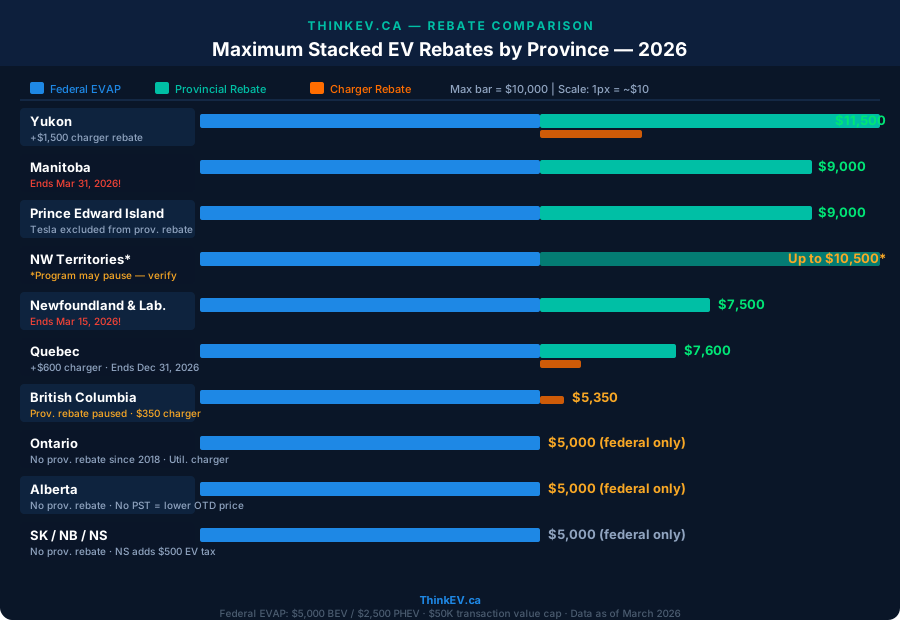
Here's the complete picture for every province and territory in Canada as of March 2026.
| Province / Territory | Provincial EV Rebate (BEV) | PHEV Rebate | MSRP / Price Cap | Charger Rebate | Stacked Total (with EVAP) |
|---|---|---|---|---|---|
| Quebec | $2,000 | $2,000 | $60,000 MSRP | $600 | $7,000 |
| Manitoba | $4,000 | $4,000 | $70,000 MSRP | None | $9,000 |
| Prince Edward Island | $4,000 | $2,000 | $70,000 MSRP (used) | None | $9,000 |
| Yukon | $5,000 | $5,000 | Varies | $1,500 | $10,000 |
| Newfoundland & Labrador | $2,500 | $1,500 | Varies | None | $7,500 |
| Northwest Territories | $5,000* | $5,000* | Varies | $500 | Up to $10,000* |
| British Columbia | None (paused late 2024) | None | N/A | $350 (BC Hydro) | $5,000 |
| Ontario | None (cancelled 2018) | None | N/A | Utility-dependent | $5,000 |
| Alberta | None | None | N/A | None | $5,000 |
| Saskatchewan | None | None | N/A | None | $5,000 |
| New Brunswick | None (ended July 2025) | None | N/A | None | $5,000 |
| Nova Scotia | None (ended April 2025) | None | N/A | None | $5,000 |
| Nunavut | None | None | N/A | None | $5,000 |
Detailed Province Breakdowns
Quebec, Roulez vert ($2,000 BEV + $5,000 EVAP = $7,000)
Quebec used to be the undisputed champion of EV incentives. In 2025, the Roulez vert program offered $4,000 for new BEVs. As of January 1, 2026, that's been cut in half to $2,000. And the entire program ends December 31, 2026, after that, the provincial rebate disappears completely.
The silver lining: Quebec's $60,000 MSRP cap is more generous than EVAP's $50,000 transaction value cap, so if your vehicle qualifies for EVAP, it definitely qualifies for Roulez vert. The $600 home charger rebate is still active. And Quebec still offers $2,000 for used BEVs, making it the only province with meaningful used EV incentives.
How to apply: The provincial rebate is typically applied at the dealership for participating dealers. You can also apply directly through the Roulez vert program at quebec.ca. You'll need your bill of sale and vehicle registration. Processing takes 4-8 weeks if applied after purchase.
Which EVs qualify: Any new BEV or PHEV with an MSRP under $60,000. This is broader than EVAP's list, vehicles that exceed the $50,000 transaction value cap for federal can still get the Quebec $2,000. However, for maximum savings, target vehicles that qualify for both.
The math: A 2026 Chevrolet Equinox EV LT at $42,999, subtract $5,000 EVAP, subtract $2,000 Roulez vert. You're at $35,999 before tax. Add Quebec's 14.975% sales tax and you're looking at about $41,390 out the door. That's a midsize electric SUV for Civic money.
Manitoba, $4,000 Provincial + $5,000 EVAP = $9,000 (Ending March 31, 2026)
Manitoba is currently the best province in Canada for EV rebate stacking. The provincial Electric Vehicle Rebate Program offers $4,000 for new BEVs, with a $70,000 MSRP cap that's the most generous in the country. Combined with EVAP's $5,000, Manitoba buyers can save $9,000 on a single vehicle.
There's a critical catch: the Manitoba program ends March 31, 2026. The $25 million funding pool may also run out before that deadline. If you're a Manitoba resident considering an EV, this is a time-sensitive decision. The program also covers used EVs at $2,500, and both businesses and individuals qualify.
How to apply: Purchase from a Manitoba dealership, then apply through Manitoba Public Insurance (MPI) at evrebate.mpi.mb.ca. You'll need your purchase agreement, vehicle registration, and proof of Manitoba residency. The $4,000 comes as a rebate cheque after processing.
Which EVs qualify: Any new BEV or PHEV with an MSRP of $70,000 or less, purchased from a Manitoba dealer. Model year must be 2023 or newer in 2026. This covers virtually every mainstream EV on the market.
The math: A 2026 Kia EV4 at $38,995, subtract $5,000 EVAP, subtract $4,000 Manitoba. You're at $29,995 before tax. With Manitoba's 12% combined tax, that's about $33,594 out the door. A brand-new long-range EV for under $34,000.
British Columbia, No Provincial Rebate (Federal $5,000 Only)
BC's CleanBC Go Electric passenger vehicle rebate, which once offered $4,000 for BEVs, has been paused since late 2024. The province has not announced a replacement or timeline for resumption. BC residents get the federal $5,000 EVAP and nothing else for the vehicle purchase.
The charger situation is better. BC Hydro still offers up to $350 toward Level 2 home charger installation through its EV charger rebate program. It's not much, but it offsets a portion of the $1,500-$2,500 typical installation cost.
What happened: BC paused the program amid budget pressures, and the federal EVAP launch gave the province cover to leave it suspended. EV advocates in BC disagree. For now, BC buyers pay $4,000 more than their Manitoba or PEI counterparts for the same vehicle.
Gear worth having
As an Amazon Associate, ThinkEV earns a small commission from qualifying purchases — at no extra cost to you.

Grizzl-E Classic Level 2 EV Charger (40A)
Canadian-made and rated for minus 40C winters. 40A / 9.6 kW, NEMA 14-50, indoor/outdoor, 24-ft cable. The charger built for Canadian weather.
As an Amazon Associate, ThinkEV earns from qualifying purchases — at no extra cost to you.
The math: That same 2026 Kia EV4 at $38,995, subtract $5,000 EVAP only. You're at $33,995 before tax. With BC's combined 12% tax, that's about $38,075 out the door. Compare that to $33,594 in Manitoba. The $4,481 difference is real money.
Ontario, No Provincial Rebate (Federal $5,000 Only)
Ontario hasn't had a provincial EV rebate since Doug Ford cancelled it in 2018. Eight years later, that hasn't changed. Ontario EV buyers get the $5,000 federal EVAP and that's the end of it.
The province does have utility-run charger programs. Some Ontario electricity utilities offer rebates of up to $1,000 for home charger installation. Alectra Utilities, Toronto Hydro, and Hydro Ottawa have all run charger incentive programs, check with your specific utility.
The tax hit: Ontario's 13% HST is applied to the post-rebate price. On a $38,995 EV with $5,000 EVAP, you pay 13% on $33,995, putting you at about $38,415 out the door. Not terrible, but $4,821 more than a Manitoba buyer pays for the identical car.
HOV lane access: Ontario does offer Green Vehicle Permit holders access to HOV lanes regardless of passenger count. It's not $4,000, but it saves time on the 401 and the DVP. Small consolation.
Alberta, No Provincial Rebate (Federal $5,000 Only)
Alberta has never offered a provincial EV purchase rebate and shows no signs of starting one. The province does offer infrastructure funding for commercial EV charging installations, but nothing for individual buyers.
Alberta buyers get the $5,000 EVAP. The upside? Alberta has no provincial sales tax, only 5% GST. On that $38,995 EV after the $5,000 EVAP rebate, you'd pay about $35,695 out the door. The lack of PST actually makes Alberta more affordable than Ontario or BC despite having no provincial EV rebate.
Prince Edward Island, $4,000 Provincial + $5,000 EVAP = $9,000
PEI offers a $4,000 rebate for new BEVs and $2,000 for PHEVs, administered at point of sale for PEI dealerships. If you purchase outside PEI (but within Atlantic Canada), you can apply for the rebate after registering in PEI.
Important limitation: Tesla vehicles are no longer eligible for PEI's provincial rebate as of March 25, 2025. Other manufacturers qualify. Used vehicles must have a sticker price of $70,000 or less.
Yukon, $5,000 Provincial + $5,000 EVAP = $10,000
The Yukon offers the most generous provincial/territorial EV rebate in Canada at up to $5,000 for zero-emission vehicles with an electric range of 50 km or more. Combined with EVAP, that's $10,000 off your purchase price.
Leases are prorated based on duration, with three-year or longer leases qualifying for the full amount. Like PEI, Tesla vehicles are no longer eligible for the Yukon rebate as of April 3, 2025. The Yukon also offers one of Canada's best charger rebates, 50% of purchase and installation costs up to $1,500 for residential installations.
Newfoundland & Labrador, $2,500 Provincial + $5,000 EVAP = $7,500
NL Hydro offers $2,500 for BEVs and $1,500 for PHEVs through its Electric Vehicle Rebate Program. The catch: this program ends March 15, 2026. If you're in Newfoundland, you have roughly two weeks from this article's publication date to act.
Vehicles must be purchased from a licensed NL dealership. Apply online through NL Hydro after purchase with your bill of sale, registration permit, and lease contract (if applicable).
The Rest: No Provincial Rebates
Saskatchewan, New Brunswick, and Nova Scotia all lack active provincial EV purchase rebates in 2026. New Brunswick's Plug-In NB program ended July 1, 2025 after issuing 6,000 EV rebates. Nova Scotia ended its Electrify Nova Scotia program in April 2025 and actually introduced a new $500 bi-annual tax on EV owners.
Nunavut has no EV incentive program of any kind.
Northwest Territories offers up to $5,000 through the Arctic Energy Alliance, but the program has experienced funding pauses. Verify availability directly with the AEA before making purchasing decisions.
Residents of these provinces and territories get the $5,000 federal EVAP only.
How to Stack Rebates for Maximum Savings

Stacking is simple in theory: the federal EVAP and provincial rebates are independent programs. Claiming one does not affect the other. Here's how to maximize your savings.
Step 1: Confirm Federal EVAP Eligibility
Check that your target vehicle appears on Transport Canada's official EVAP eligible vehicle list. Confirm the final transaction value (everything before tax) is $50,000 or less. Remember, this is not MSRP. Negotiate dealer fees down if you're close to the cap.
Step 2: Confirm Provincial Eligibility
Check your province's specific requirements. Key differences to watch:
- MSRP caps vary: Quebec allows $60,000, Manitoba allows $70,000, EVAP uses $50,000 transaction value
- Tesla exclusions: PEI and Yukon have explicitly excluded Tesla vehicles
- Dealer requirements: Some provinces require purchase from an in-province dealer
- Program deadlines: Manitoba ends March 31, 2026. NL ends March 15, 2026. Quebec ends December 31, 2026.
Step 3: Buy Smart
At the dealership, confirm both rebates are being applied. The federal EVAP should appear as a line item on your bill of sale. Provincial rebates are either applied at point of sale or require a separate post-purchase application depending on your province.
Step 4: Apply for Charger Rebates Separately
Charger rebates are always a separate application. Install your Level 2 charger, keep all receipts, then apply through your provincial program.
Example: Buying a 2026 Hyundai Ioniq 5 in Quebec
Let's say you're buying a base 2026 Hyundai Ioniq 5 in Quebec with a final transaction value of $47,000.
- Final transaction value: $47,000
- Federal EVAP rebate: -$5,000
- Quebec Roulez vert: -$2,000
- Net price before tax: $40,000
- Quebec sales tax (14.975%): +$5,990
- Out-the-door price: $45,990
- Home charger rebate (Roulez vert): -$600
That's $7,600 in total savings. The same vehicle in Ontario costs $47,460 out the door, a $1,470 difference just from the provincial rebate.
Example: Buying a 2026 Kia EV4 in Manitoba
- MSRP / transaction value: $38,995
- Federal EVAP rebate: -$5,000
- Manitoba provincial rebate: -$4,000
- Net price before tax: $29,995
- Manitoba sales tax (12%): +$3,599
- Out-the-door price: $33,594
$9,000 off. A brand-new long-range EV for under $34,000. This is the best EV deal in Canada right now, but only until March 31, 2026.
Home Charger Rebates by Province
A Level 2 home charger typically costs $500-$800 for the unit and $800-$1,500 for installation, depending on your electrical panel and distance from the garage. Several provinces help offset this.
- Quebec: Up to $600, Roulez vert program, ends Dec 31, 2026
- Yukon: Up to $1,500-50% of purchase + installation costs
- British Columbia: Up to $350, BC Hydro program
- Northwest Territories: Up to $500-100% of costs, via Arctic Energy Alliance
- Ontario: Up to $1,000, Utility-dependent (Alectra, Toronto Hydro, etc.)
- Manitoba: None, No charger rebate program
- Alberta: None, No charger rebate program
- Saskatchewan: None, No charger rebate program
- Atlantic (NB, NS, PEI, NL): None, No active charger rebate programs
The Yukon's charger rebate is the most generous in the country, $1,500 covers most residential installations entirely. Quebec's $600 covers the unit itself in many cases. BC's $350 helps but won't cover installation labour.
Pro tip: Check with your electricity provider directly, regardless of province. Some utilities run their own charger incentive programs separate from provincial ones. You may be able to stack.
A quality Level 2 charger makes home charging effortless. You plug in at night, wake up to a full battery, and never visit a gas station again.
Gear worth having
As an Amazon Associate, ThinkEV earns a small commission from qualifying purchases — at no extra cost to you.
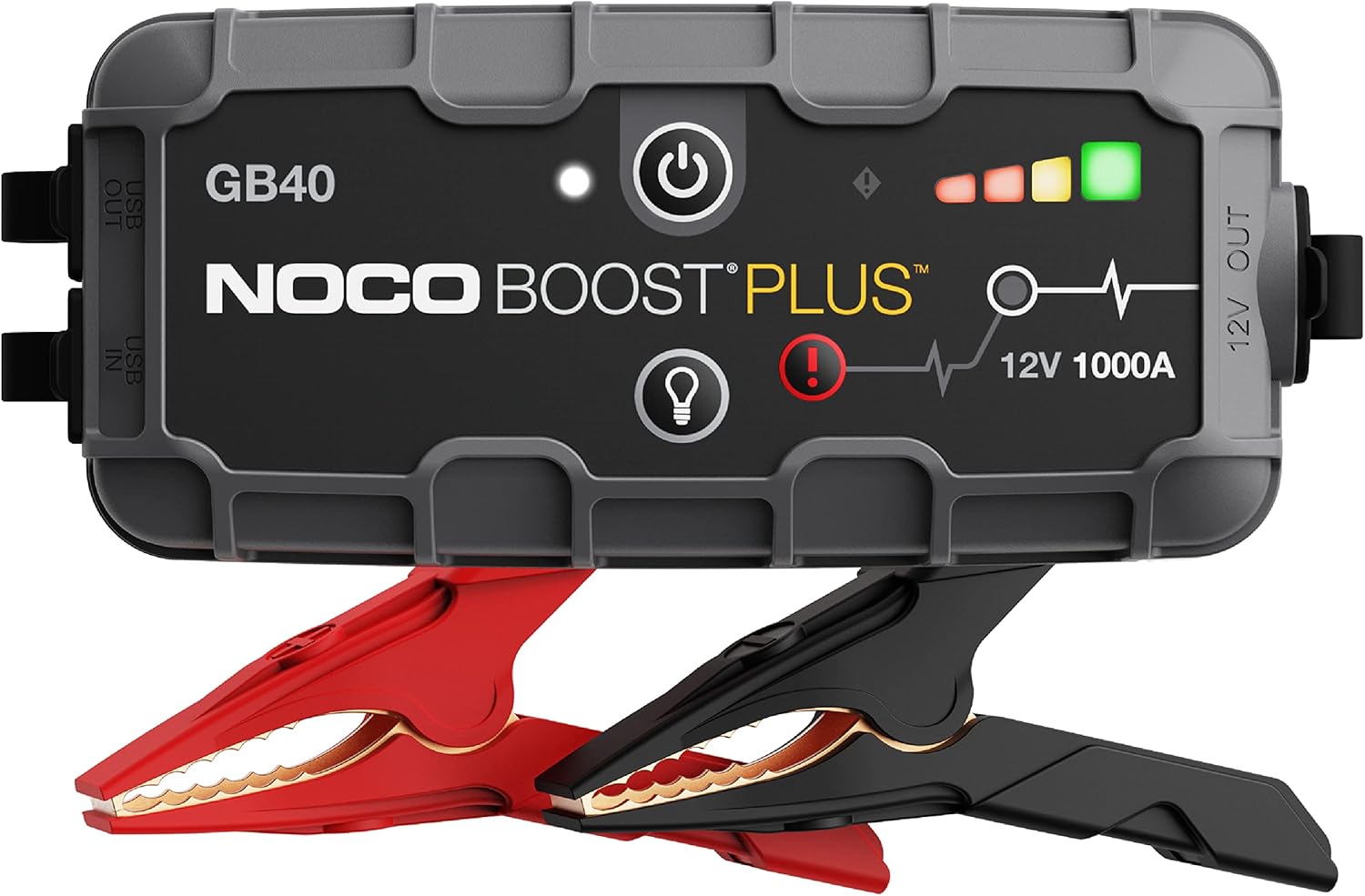
NOCO Boost Plus GB40 Jump Starter
A 1000A lithium jump starter that fits in your glovebox and works on any 12V battery. Your insurance against a dead 12V in a parking lot.
As an Amazon Associate, ThinkEV earns from qualifying purchases — at no extra cost to you.
EV Insurance Savings by Province
EV insurance premiums vary significantly by province due to different regulatory frameworks. Here's what you should know.
Quebec has the lowest auto insurance premiums in Canada thanks to its public no-fault system (SAAQ). EV insurance in Quebec is notably cheaper than in Ontario or BC.
Ontario has the highest average premiums in Canada. However, several insurers offer EV-specific discounts of 5-15%. Belairdirect, Desjardins, and Intact all have EV discount programs. The key is shopping around, the spread between the cheapest and most expensive EV quotes in Ontario can exceed $2,000 annually.
British Columbia uses ICBC's public system. ICBC does not currently offer specific EV discounts, but EVs often qualify for lower premiums due to advanced safety features (automatic emergency braking, lane keep assist) that many electric vehicles include as standard.
Alberta has a competitive private insurance market. EV premiums are generally comparable to equivalent ICE vehicles, though repair costs for EVs can be higher due to specialized parts.
Manitoba and Saskatchewan use public insurance systems (MPI and SGI respectively). Neither offers explicit EV discounts, but premiums tend to be lower than Ontario and BC.
Regardless of province, get multiple quotes before insuring your EV. Many drivers find that EV insurance costs about the same or slightly more than a comparable gas vehicle, but the fuel savings more than compensate.
Gear worth having
As an Amazon Associate, ThinkEV earns a small commission from qualifying purchases — at no extra cost to you.
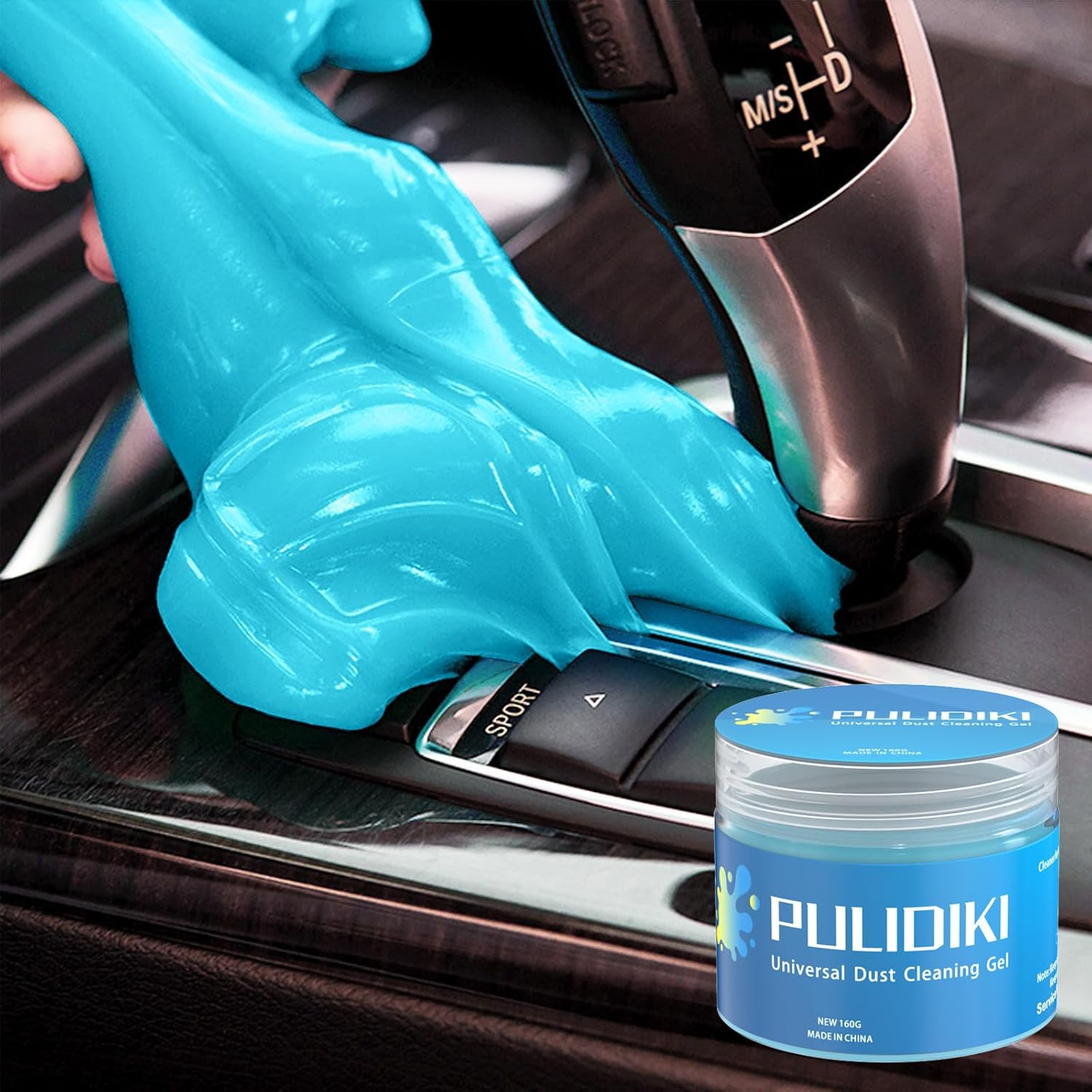
PULIDIKI Car Cleaning Gel (Detailing Putty)
Press it into vents, buttons, and seams and it lifts out dust you did not know was there. Weirdly satisfying, genuinely useful.
As an Amazon Associate, ThinkEV earns from qualifying purchases — at no extra cost to you.
A Tale Of Rebate Haves And Have-Nots
The 2026 Canadian EV rebate picture is a tale of haves and have-nots. If you live in Manitoba, PEI, or Yukon, you can stack federal and provincial rebates for $9,000-$10,000 in savings. If you live in Ontario, Alberta, Saskatchewan, or the provinces that recently ended their programs (BC, NB, NS), you get the federal $5,000 and that's it.
Several programs are on the clock. Manitoba ends March 31, 2026. Newfoundland ends March 15, 2026. Quebec's Roulez vert ends December 31, 2026. And the federal EVAP itself drops from $5,000 to $4,000 on January 1, 2027.
The message is clear: if you're going electric in 2026, sooner is better. The rebates are real, they're significant, and they won't last forever.
Gear worth having
As an Amazon Associate, ThinkEV earns a small commission from qualifying purchases — at no extra cost to you.

WixGear Magnetic Air Vent Phone Mount (2-Pack)
A magnet strong enough that your phone never flinches over potholes or rail crossings. Two in the box, one for each car.
As an Amazon Associate, ThinkEV earns from qualifying purchases — at no extra cost to you.
Related Reading
- Canada's New $5,000 EV Rebate (EVAP), The Complete 2026 Guide, The federal EVAP program, eligibility, and eligible vehicles
- Every Dollar You Can Save on an EV in Canada (2026 Guide), Broader incentive breakdown including used EVs and charger rebates
- The 10 Most Affordable EVs You Can Buy in Canada in 2026, Every affordable EV ranked by after-rebate price
- EV Pricing Guide Canada 2026-2027, What every EV costs in Canada right now
Gear worth having
As an Amazon Associate, ThinkEV earns a small commission from qualifying purchases — at no extra cost to you.

Car Cup Holder Coasters (4-Pack)
Drop-in coasters that catch spills and crumbs so your cup holders stay clean. Rinse and reuse forever.
As an Amazon Associate, ThinkEV earns from qualifying purchases — at no extra cost to you.

Founder & Chief Editor
Vlad Pereira is the founder and chief editor of ThinkEV.ca, the Canadian electric-vehicle publication he writes and edits from Courtenay, British Columbia. He covers EV pricing, federal and provincial rebates, charging costs, and the Chinese manufacturers now entering Canada, from the buyer's side rather than the press-fleet side. ThinkEV is a venture of Vlad Pereira Online; his writing on health, income and the long game lives at vladpereira.com.
Frequently asked questions
Can I get both federal and provincial EV rebates?
What is the price cap for the federal EVAP rebate?
Does Ontario have an EV rebate in 2026?
How long does it take to receive the EVAP rebate?
Do used EVs qualify for rebates in Canada?
Are there EV rebates for businesses in Canada?
More EV & road-trip finds
Affordable upgrades worth a look — tap any to check the price on Amazon.
 ★ 268
★ 268Anti-Slip Leather Steering Wheel Cover
View on Amazon ★ 12,051
Windex Electronics Screen Wipes
View on Amazon ★ 419
★ 419RGB Car Interior LED Strip Light
View on Amazon ★ 568
★ 568Personalized Photo and Text Keychain
View on Amazon ★ 979
★ 979Leather Headrest Purse Hook
View on Amazon ★ 21,310
Magnetic Car Phone Mount
View on Amazon ★ 121
★ 121Foldable Windshield Sun Umbrella
View on Amazon ★ 392
★ 392Large Cup Holder Adapter (32-40oz)
View on AmazonRead, Plan, Then Stay Current
Explore our expert articles to understand incentives and ownership costs, use the map to pressure-test charging reality, then subscribe so new EV coverage comes straight to you.
Continue Reading
Alberta EV Rebates 2026: What You Actually Get
BC EV Rebates 2026: What's Left After the Cuts
Manitoba EV Rebates 2026: $4,000 Incentive Ends March 31
Newfoundland EV Rebates 2026: What You Can Claim
PEI EV Rebates 2026: The Island's Surprising $5,000 EV Deal