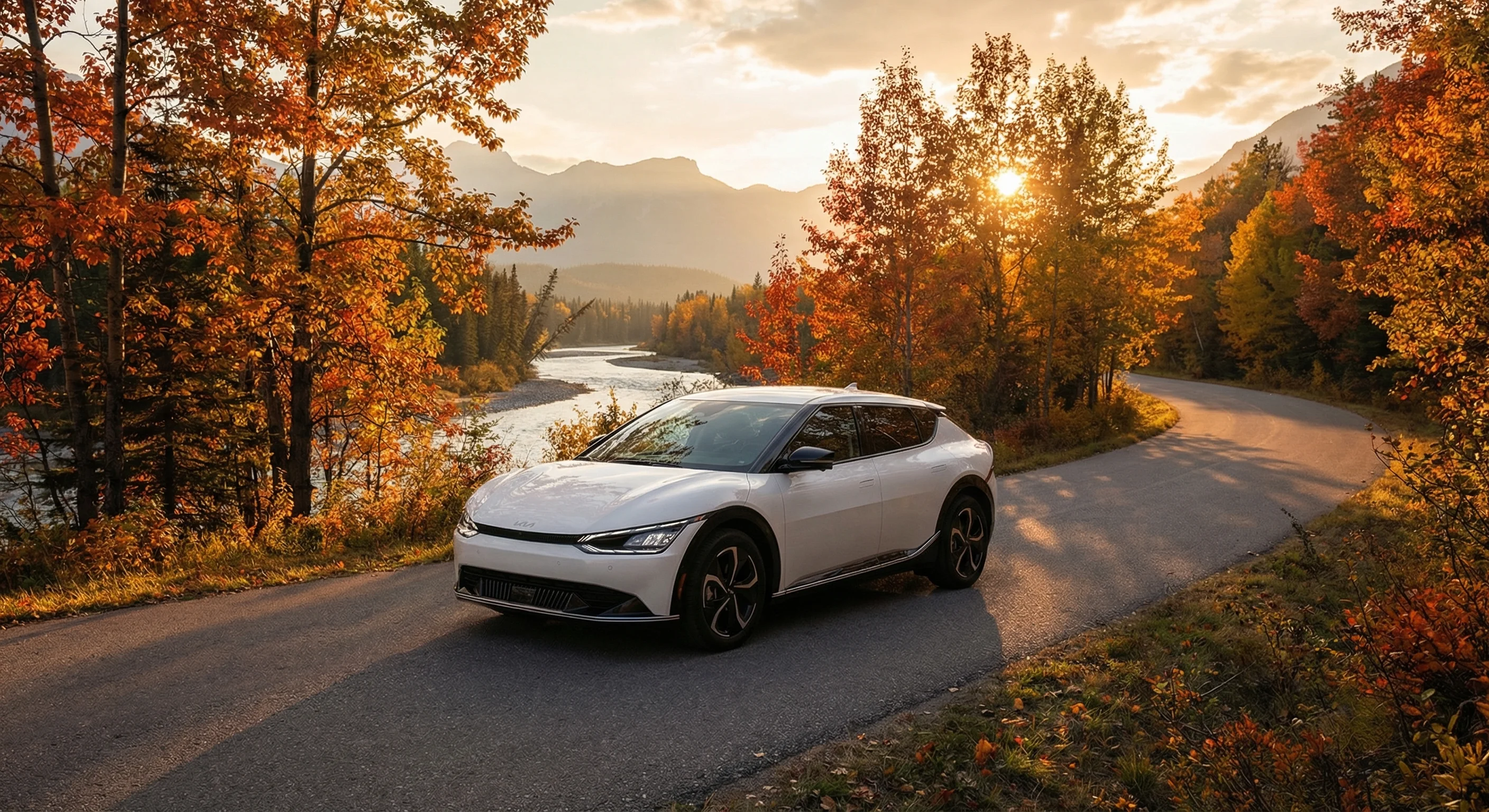
Under $40,000. Over 500 km of range. A native NACS charging port. And it qualifies for Canada's $5,000 federal rebate.
The 2026 Kia EV4 is the kind of car that makes spreadsheets exciting. On paper, nothing in Canada touches it for the price-to-range ratio. But the question that matters isn't whether the spec sheet looks good, it's whether the real-world experience holds up when you're driving through a January ice storm on the Trans-Canada.
I've dug into every spec, cross-referenced every price, and compared it against every competitor that matters. Here's what the data actually says.
Key takeaways
- Starting at $41,145 (including destination) for the Light trim with 391 km range, the cheapest long-range option is the Wind trim at $45,145 with 552 km range, making it Canada's most affordable long-range EV.
- 552 km WLTP range on the 81.4 kWh battery, expect 440-490 km in real-world Canadian driving, and 330-380 km in deep winter.
- Four of five trims qualify for the $5,000 EVAP federal rebate (GT-Line Limited exceeds the cap), real out-the-door price as low as $36,145 before provincial incentives.
- Native NACS port means direct Tesla Supercharger access, no adapter needed, no speed limits.
- After the EVAP rebate the EV4 Wind lands at $40,145, roughly $14,845 below a Tesla Model 3 Long Range AWD that doesn't qualify, and Wind-and-up trims add a heat pump that holds about 83% of range at 0°C.
First Impressions: Looks That Grow on You
The EV4 doesn't scream for attention. It's angular but not aggressive, more origami than Lamborghini. The design language borrows from Kia's "Opposites United" philosophy, and in person, it works. The low roofline, sharp creases, and flush door handles give it a modern silhouette without trying too hard.
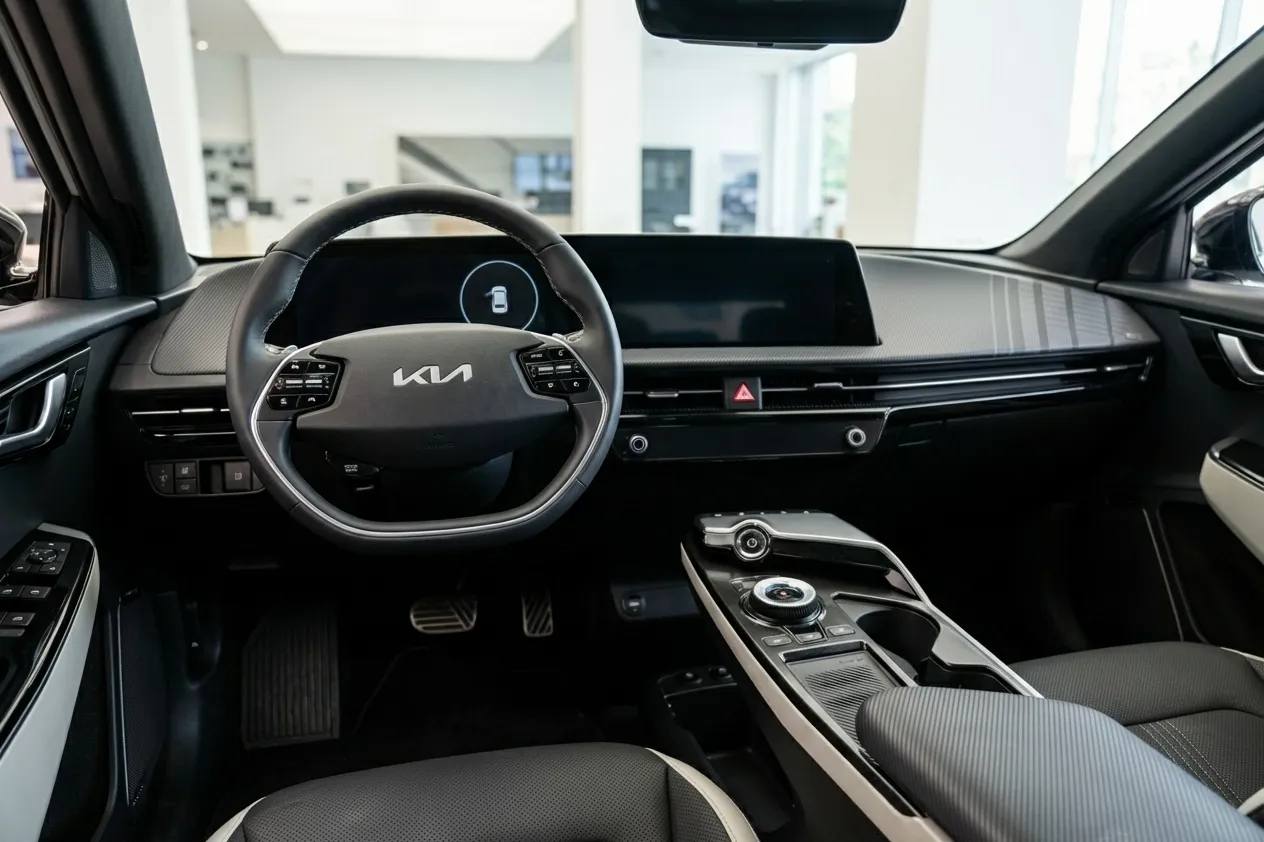
What surprised me more is the interior. Kia has clearly learned from the backlash against touch-everything dashboards. You get physical buttons for climate control. Actual knobs. The kind of interface decisions that make you think someone at Kia actually drives their own cars in winter with gloves on.
The cabin is built around three screens, a 12.3-inch driver display, a 12.3-inch infotainment touchscreen, and a 5-inch climate control display. The layout is horizontal and clean, emphasizing width. Materials are a mix of soft-touch surfaces, fabric dash accents, and synthetic leather on the higher trims that feel premium for the price point.
Rear seat space is genuinely impressive thanks to the 2,820 mm wheelbase. Adults can sit back there comfortably on long drives, something you can't say about every EV sedan. Cargo space comes in at 490 litres in the sedan variant, which is competitive with the Ioniq 5 and larger than the Tesla Model 3.
The Trim Breakdown: Where the Money Goes
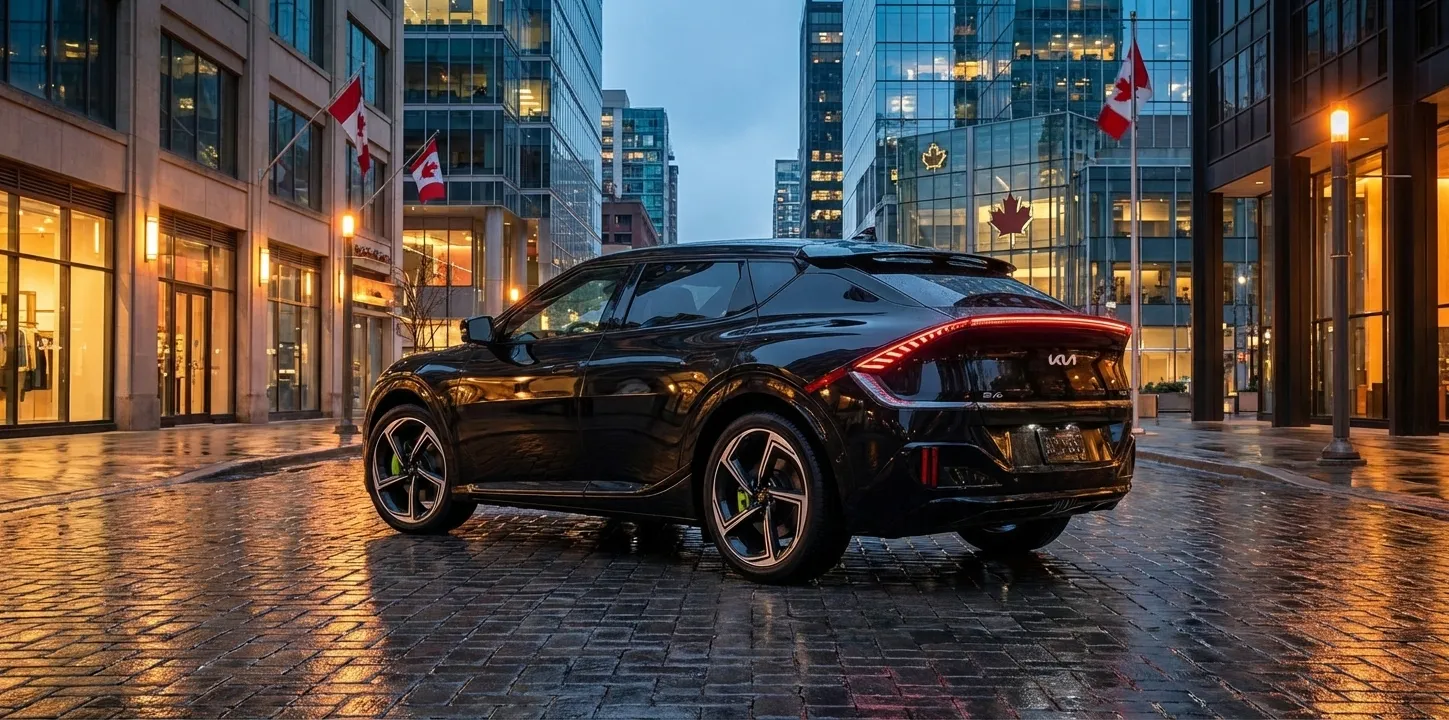
Here's the full Canadian lineup with destination included:
EV4 Light (58.3 kWh), $41,145: The entry point. You get 391 km of range, the 201 hp front motor, LED lighting, 17-inch alloy wheels, dual-zone climate, and the 12.3-inch infotainment with navigation. It's well-equipped for a base model, but you're leaving the real range story on the table.
EV4 Wind (81.4 kWh), $45,145: This is where the EV4 gets interesting. The long-range battery bumps you to 552 km. You also get a heat pump, critical for Canadian winters, plus a power driver's seat with lumbar support. This is the trim most Canadians should buy.
EV4 Wind Premium, $47,645: Adds 19-inch wheels, a wide sunroof, synthetic leather seats, heated steering wheel, wireless phone charger, and rain-sensing wipers. Solid value for $2,500 more.
EV4 GT-Line, $50,645: Sport-tuned suspension, unique exterior styling, GT-Line specific interior trim. For people who want the look without the extra horsepower.
EV4 GT-Line Limited, $54,145: The fully loaded option. Everything from the GT-Line plus premium audio, additional driver assistance features, and upgraded materials.
All prices include Kia's $2,150 destination charge. Four of the five trims qualify for the $5,000 EVAP rebate. The GT-Line Limited at $54,145 exceeds the $50,000 EVAP price cap, so you'd need to negotiate below $50,000 to qualify for that one.
Range and Battery: Let's Talk Real Numbers
The 552 km WLTP figure is the headline, and it's legitimate, for European test cycles in mild conditions. Here's what that means for actual Canadian driving.
Summer, highway driving (110 km/h): Expect 440-490 km. Highway speeds eat range faster than city driving in an EV (the opposite of gas cars), and Canadian highway speeds tend to sit at 110-120 km/h. Budget for about a 15-20% reduction from the WLTP number.
Fall/Spring mixed driving: 460-520 km is realistic. This is where the EV4 shines, the 81.4 kWh battery is large enough that you can handle most commutes and errands for an entire week without charging.
Winter, -15 to -25 C: This is where math gets honest. Based on CAA winter testing data, expect 25-35% range reduction depending on temperature and driving habits. That puts the EV4 at roughly 360-410 km in typical Canadian winter conditions. Still enough to handle a Toronto-to-Ottawa run with one charging stop.
Deep winter, -30 C and below: You're looking at 330-370 km. The heat pump on the Wind and above trims helps significantly here, EVs with heat pumps retain roughly 83% of their rated range at 0 C versus 75% without one. On the Light trim (no heat pump), winter range will be noticeably worse.
The 58.3 kWh Light trim offers 391 km of rated range, which translates to roughly 260-310 km in winter. That's fine for a daily city commuter but tight for longer drives between November and March.
The Drive: Comfort Over Performance
Let's set expectations correctly. The EV4 is not trying to be a performance car.
The 150 kW (201 hp) front-mounted motor pushes the long-range model to 100 km/h in 7.7 seconds. The lighter standard-range model does it in 7.4 seconds. These are fine, normal, perfectly adequate numbers. You'll merge onto the 401 without drama. You won't win any drag races at the lights.
What the EV4 does well is ride quality. Reviewers across the board, Top Gear, Autocar, Auto123, single out the suspension as a standout. It's softly sprung and well-damped, soaking up potholes and rough Canadian roads with a composure that feels more expensive than the price tag suggests.
NVH (noise, vibration, harshness) is impressive for the segment. Road noise is minimal at highway speeds. There's no motor whine. It's the kind of car where you notice how quiet it is, which is exactly what you want for a daily commuter or road trip machine.
Gear worth having
As an Amazon Associate, ThinkEV earns a small commission from qualifying purchases — at no extra cost to you.
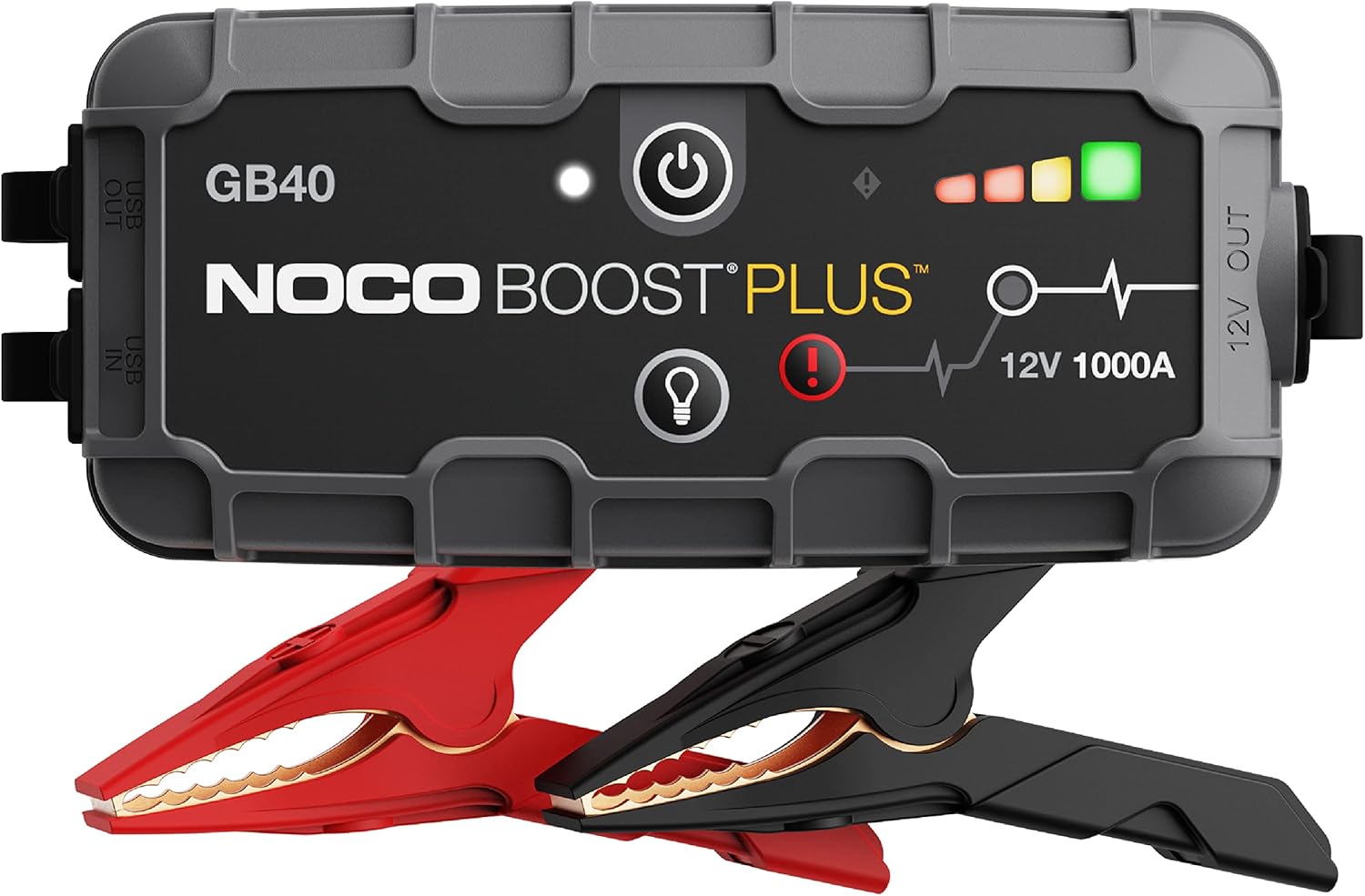
NOCO Boost Plus GB40 Jump Starter
A 1000A lithium jump starter that fits in your glovebox and works on any 12V battery. Your insurance against a dead 12V in a parking lot.
As an Amazon Associate, ThinkEV earns from qualifying purchases — at no extra cost to you.
The front-wheel-drive setup is fine for most Canadian driving with proper winter tires. The floor-mounted battery lowers the centre of gravity, which helps with stability in corners and on slippery surfaces. AWD is available on the Wind AWD and Wind Premium AWD trims for buyers who need it, though pricing for those variants puts them closer to $50,000+.
How It Compares: The Real Competition
Here's the EV4 stacked against its closest competitors in Canada:
Kia EV4 Wind vs.
Tesla Model 3 Long Range AWD
The Model 3 Long Range AWD, the cheapest Model 3 available in Canada (there is no base or Standard Range Model 3), starts at roughly $54,990. The EV4 Wind starts at $45,145 (including destination). That's a $9,845 gap before incentives. The Model 3 doesn't qualify for the $5,000 EVAP rebate (price exceeds the cap), while the EV4 does. After rebates, you're looking at $40,145 vs $54,990, a $14,845 difference.
Range is close: the Model 3 Long Range AWD offers about 554 km (NRCan), and the EV4 Wind offers 552 km (WLTP). Real-world, call it roughly even. Tesla wins on software, Autopilot, and the Supercharger network (though the EV4's NACS port evens the charging gap). The EV4 wins on price, interior materials at this price point, and cargo space.
Kia EV4 Wind vs.
Hyundai Ioniq 5 RWD
The Ioniq 5 starts at $55,499. The EV4 Wind at $45,145. Same Hyundai Motor Group corporate umbrella, but different platforms, the Ioniq 5 uses the 800V E-GMP architecture while the EV4 uses a 400V variant.
The Ioniq 5 charges faster (10-80% in about 18 minutes on a 350 kW charger vs. 31 minutes for the EV4) and offers more space as a crossover. But the EV4 costs $10,354 less and offers comparable range. If charging speed isn't your top priority, the EV4 is the better value play.
Kia EV4 Wind vs.
Chevrolet Equinox EV
The Equinox EV starts at $44,995, slightly below the EV4 Wind at $45,145. Range is 513 km for the Equinox vs. 552 km for the EV4. Both qualify for EVAP. The Equinox is a crossover with more cargo space and a slightly higher driving position. The EV4 is a sedan with better range and a sleeker profile.
This one comes down to body style preference. If you need the extra space and height, the Equinox is hard to beat. If you value range per dollar, the EV4 edges ahead.
Charging and Infrastructure: The NACS Advantage
The biggest infrastructure story with the EV4 is the native NACS port. Unlike many competitors that launched with CCS and require adapters for Tesla Superchargers, the EV4 comes ready to plug into the Supercharger network straight from the factory.
This matters in Canada. Tesla has the most extensive fast-charging network in the country, with 500+ Supercharger stalls from coast to coast. Having native NACS means full-speed charging without adapter fiddling, which is a genuine quality-of-life improvement.
DC fast charging from 10-80% takes about 31 minutes on the long-range battery. That's not class-leading, the Ioniq 5 does it in under 20 minutes, and the Tesla Model 3 is similarly faster. But 31 minutes is practical. It's a coffee stop. It's a bathroom break and a stretch.
For home charging on a Level 2 (240V) setup, expect a full charge in about 7-8 hours overnight. Most Canadians will plug in at home and wake up to a full battery, the fast-charging speed only matters for road trips.
The EV4 also works at Electrify Canada, Petro-Canada Electric Highway, FLO, and ChargePoint stations. You're covered on every major corridor in Canada.
After Rebates: The Real Price
Let's do the actual cost math.
Federal EVAP rebate: $5,000 (all trims except GT-Line Limited, which needs to be negotiated below $50,000).
Provincial rebates (2026):
- Quebec: Up to $2,000 through roulez vert
- British Columbia: No current provincial EV rebate
- Ontario: No current provincial EV rebate
- Other provinces: Varies, check your local programs
Real out-the-door pricing after federal rebate:
- Light: $41,145 before rebate, $36,145 after EVAP, $34,145 after QC rebate
- Wind: $45,145 before rebate, $40,145 after EVAP, $38,145 after QC rebate
- Wind Premium: $47,645 before rebate, $42,645 after EVAP, $40,645 after QC rebate
- GT-Line: $50,645 before rebate, $45,645 after EVAP, $43,645 after QC rebate
A $36,145 EV with 391 km of range (Light) or a $40,145 EV with 552 km of range (Wind). Those are real numbers. Those are numbers that make the "EVs are too expensive" argument feel outdated.
Gear worth having
As an Amazon Associate, ThinkEV earns a small commission from qualifying purchases — at no extra cost to you.

AstroAI Portable Tire Inflator
One tap, it inflates to your exact PSI then stops automatically. Low tires cost 5 to 10 percent of your range, so this pays for itself in a week.
As an Amazon Associate, ThinkEV earns from qualifying purchases — at no extra cost to you.
For context, the average new car transaction price in Canada is hovering around $48,000. The EV4 Wind, after rebates, costs $7,000 less than the average new car, with zero fuel costs.
The Verdict
The Kia EV4 isn't the flashiest EV in Canada. It's not the fastest. It doesn't have the coolest party tricks or the most advanced software.
What it is: the most rational EV purchase available to Canadian buyers in 2026.
At $46,185 for the Wind trim, $41,185 after the federal rebate, you get 552 km of range, a heat pump, a native NACS charging port, a comfortable ride, a well-designed interior with physical controls, and a car that works on the Trans-Canada in July and on an icy Laurentian back road in February.
The competition either costs significantly more (Tesla Model 3, Ioniq 5), offers less range for the same money (Equinox EV), or compromises on features to hit a lower price point.
Is it perfect? No. The 400V architecture means slower DC charging than 800V competitors. The 7.7-second 0-100 time won't thrill anyone. And Kia's infotainment, while functional, doesn't match Tesla's polish.
But if you're a Canadian buyer looking for the best combination of range, price, and practicality, the math points here. It's not even close.
The EV4 is the car that makes the EV transition make financial sense for normal people. And that might be more important than any performance number.
Gear worth having
As an Amazon Associate, ThinkEV earns a small commission from qualifying purchases — at no extra cost to you.

Grizzl-E Classic Level 2 EV Charger (40A)
Canadian-made and rated for minus 40C winters. 40A / 9.6 kW, NEMA 14-50, indoor/outdoor, 24-ft cable. The charger built for Canadian weather.
As an Amazon Associate, ThinkEV earns from qualifying purchases — at no extra cost to you.
Gear worth having
As an Amazon Associate, ThinkEV earns a small commission from qualifying purchases — at no extra cost to you.

Digital Tire Pressure Gauge
Low tires quietly cost 5 to 10 percent of your range. A 10-second check with an accurate digital gauge keeps every kWh on the road.
As an Amazon Associate, ThinkEV earns from qualifying purchases — at no extra cost to you.
Related Reading
- EV Incentives and Rebates in Canada: Complete 2026 Guide, Maximize your savings with our complete incentive breakdown
- EV Charging Infrastructure Canada Guide, Everything you need to know about charging across Canada
- New EVs Coming to Canada 2026-2027, The complete timeline of what's arriving at Canadian dealerships
Gear worth having
As an Amazon Associate, ThinkEV earns a small commission from qualifying purchases — at no extra cost to you.

PULIDIKI Car Cleaning Gel (Detailing Putty)
Press it into vents, buttons, and seams and it lifts out dust you did not know was there. Weirdly satisfying, genuinely useful.
As an Amazon Associate, ThinkEV earns from qualifying purchases — at no extra cost to you.

Founder & Chief Editor
Vlad Pereira is the founder and chief editor of ThinkEV.ca, the Canadian electric-vehicle publication he writes and edits from Courtenay, British Columbia. He covers EV pricing, federal and provincial rebates, charging costs, and the Chinese manufacturers now entering Canada, from the buyer's side rather than the press-fleet side. ThinkEV is a venture of Vlad Pereira Online; his writing on health, income and the long game lives at vladpereira.com.
Frequently asked questions
What is the real-world range of the Kia EV4 in a Canadian winter?
Does the Kia EV4 qualify for Canada's federal EV rebate?
Can the Kia EV4 charge at Tesla Superchargers?
When can I buy the Kia EV4 in Canada?
Should I get the standard range or long-range EV4?
More EV & road-trip finds
Affordable upgrades worth a look — tap any to check the price on Amazon.
 ★ 1,340
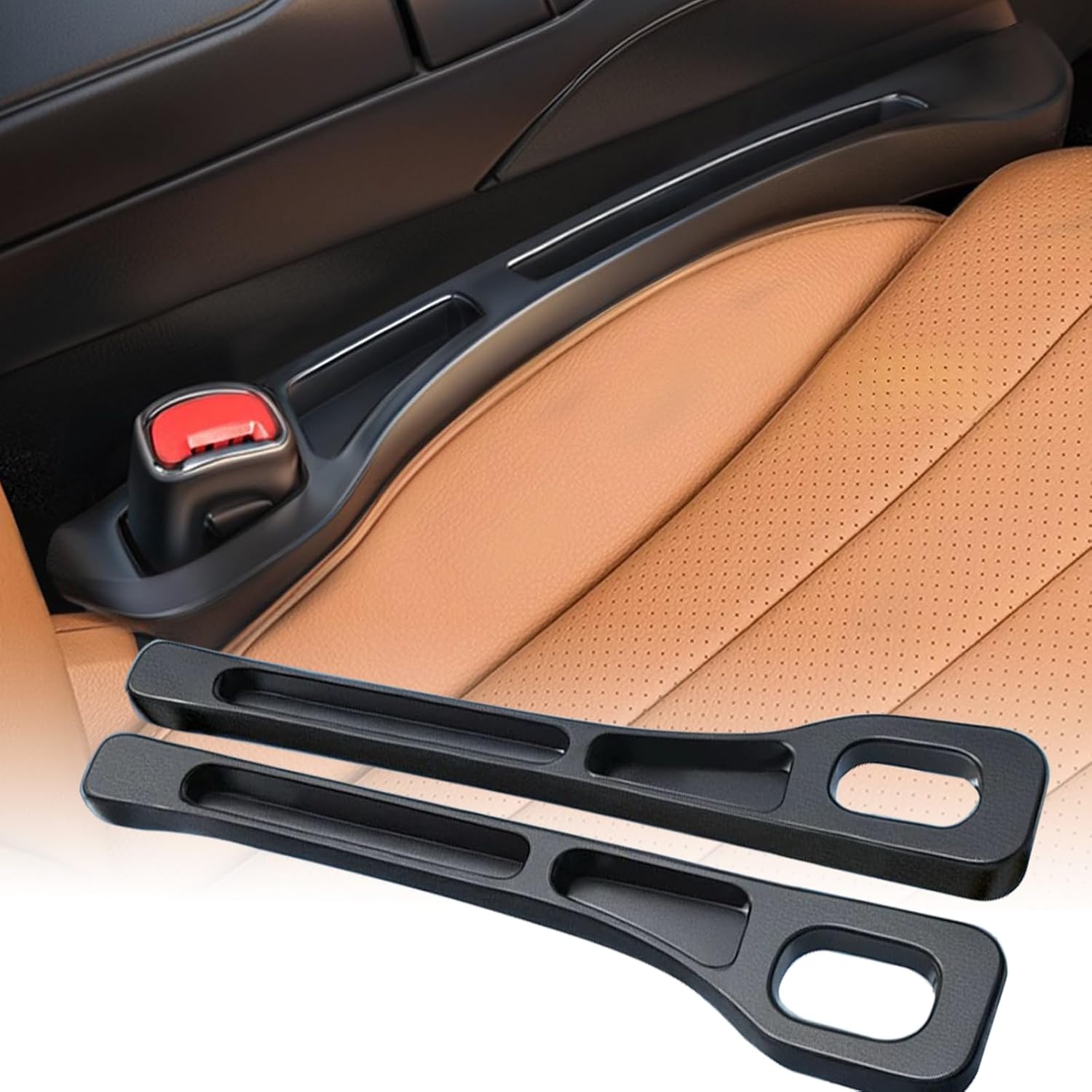
Car Seat Gap Filler (Universal)
View on Amazon
TP-Link Kasa Smart Plug with Energy Monitoring
View on Amazon ★ 121
★ 121Foldable Windshield Sun Umbrella
View on Amazon ★ 268
★ 268Anti-Slip Leather Steering Wheel Cover
View on Amazon ★ 9,349
Auto Detailing Brush Set (10-Piece)
View on Amazon ★ 55
★ 55LED Car Door Logo Projector Light
View on Amazon ★ 568
★ 568Personalized Photo and Text Keychain
View on Amazon ★ 4,424
Sun Visor Card and Document Organizer
View on AmazonRead, Plan, Then Stay Current
Explore our expert articles to understand incentives and ownership costs, use the map to pressure-test charging reality, then subscribe so new EV coverage comes straight to you.
Continue Reading

Kia EV3 Canada Price 2026: The $38K Electric SUV
Kia EV5 Canada Review 2026: The $48K Electric SUV
Kia EV6 Canada Review: The Most Overlooked EV
Kia EV9 Canada Review: Three Rows, 541 km, $64K

Volvo EX30 Canada Review: The Small One to Want