Key takeaways
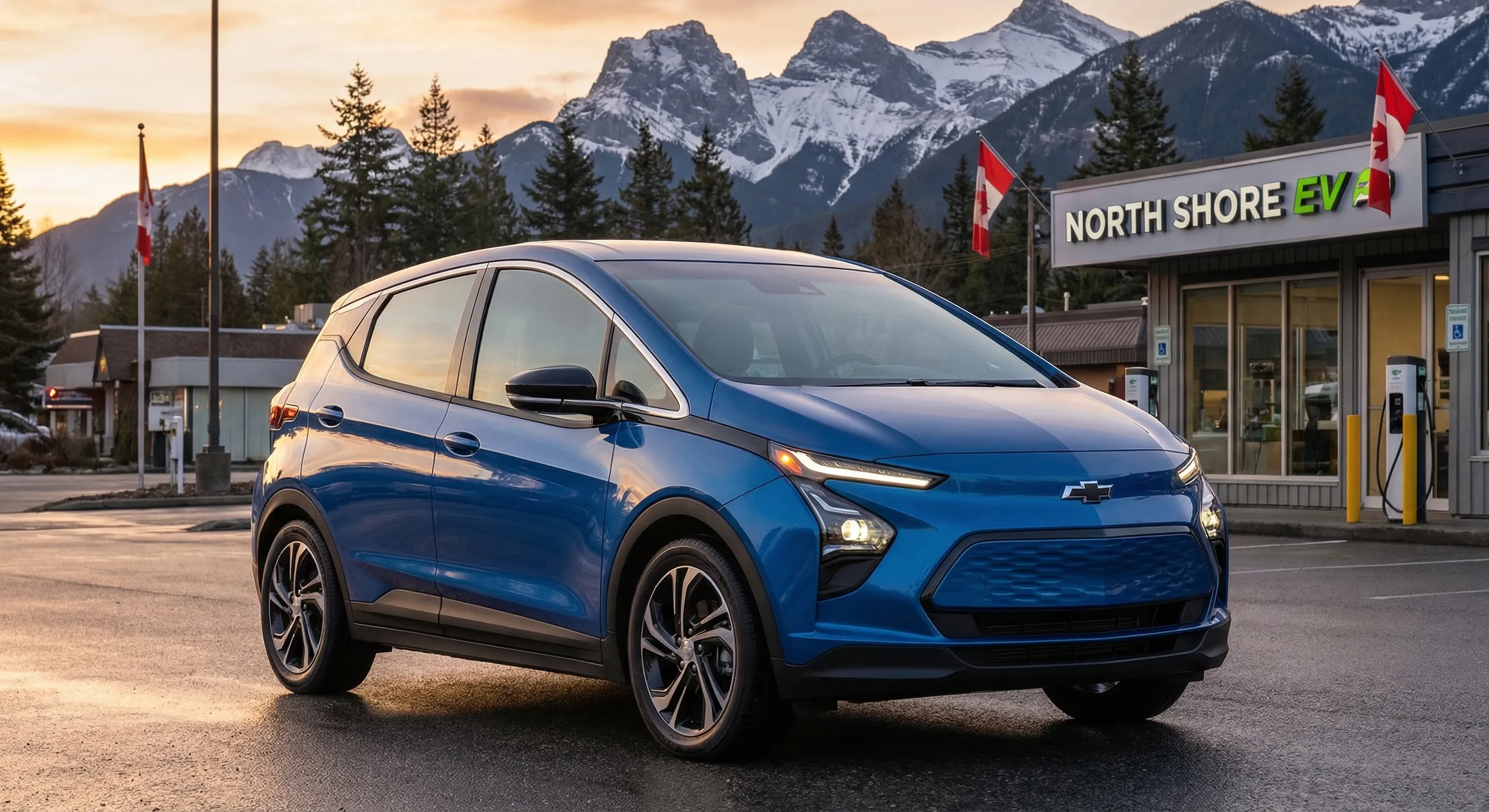
- Chevrolet Canada has confirmed the 2027 Bolt starts at C$39,999, offers up to 422 km estimated range, uses a native NACS port, and supports up to 150 kW DC fast charging.
- GM says the new Bolt can charge from 10% to 80% in 26 minutes, which is a major improvement over the old Bolt's charging reputation.
- The Bolt is officially slated for Chevrolet dealers in Q1 2026, but several hardware details people keep repeating online still are not confirmed by GM.
- At C$39,999 with the $5,000 federal EVAP rebate applied, the after-rebate start in Ontario is roughly C$34,999 before any provincial stacking.
- The Bolt is GM's first vehicle with a native NACS (SAE J3400) port for direct Supercharger access; GM sells a CCS adapter for $189 and a J1772 adapter for $67.
The Affordable EV Segment Just Got Interesting
The 2027 Chevrolet Bolt matters because Chevrolet Canada has finally published the core facts Canadians actually need. We now have a starting MSRP, an estimated range figure, a native charge-port standard, a peak DC fast-charging number, and a dealer-availability window. That is enough to analyse the car seriously. It is not enough to fill in the rest from speculation.
The old Bolt had a real weakness: public fast charging. That reputation is exactly what the new numbers are trying to answer. Chevrolet says the 2027 Bolt supports up to 150 kW DC fast charging and can go from 10% to 80% in 26 minutes. Whether that holds up as class-leading in real Canadian winter road-trip use is something owners and instrumented tests will prove later, but on paper this is a much more credible charging story than the old car carried.
The bigger correction, though, is editorial discipline. There has been too much confident talk around the new Bolt's battery chemistry, supplier, exact pack size, and a long list of inferred hardware details. Those claims do not belong in the confirmed bucket unless GM publishes them. If you're evaluating the car today, the right split is simple: trust the manufacturer page for hard facts, and treat everything else as analysis or open questions.
That still leaves the Bolt in a strong position. A C$39,999 starting price, up to 422 km estimated range, native NACS, and Chevrolet dealer availability in the first quarter of 2026 is already enough to make it one of the most relevant affordable EV launches for Canadian buyers.

What We Can Actually Confirm
Chevrolet Canada's published Bolt facts are straightforward. The 2027 Bolt starts at C$39,999. GM quotes up to 422 km of estimated range. The car uses a native NACS port. DC fast charging is quoted at up to 150 kW, with a 10% to 80% session in 26 minutes. Canadian dealer availability is stated as the first quarter of 2026.
Those are the facts I would use in a purchase conversation. They tell you the new Bolt should be easier to live with on Canadian highway corridors, should fit more cleanly into the NACS transition, and should stay in the part of the market where the federal incentive still matters. They do not tell you the chemistry, the supplier, the exact usable battery size, or the precise cold-weather charging curve.
That distinction matters because unsupported details are exactly how EV coverage loses trust. If a post states LFP as fact and GM has not confirmed LFP, that is not a harmless flourish. Same for supplier claims, "already at dealers since January" timing, or connector wording that ignores the native NACS port. The fix is not to stop analysing. The fix is to separate analysis from confirmation every single time.
So yes, the new Bolt looks materially more modern than the old one. But the responsible way to say it is this: GM has confirmed enough to show the car is credible, and not enough to justify a fully filled-in spec sheet from memory.
What the Charging Test Actually Showed
The charging test that went viral on Reddit, headlined "2027 Chevy Bolt EV Charging Test Proves GM Understood The Assignment," revealed several things that matter.
First, peak charging rate. The 2027 Bolt on Ultium appears to hit peak rates in the 150-175 kW range, which is a 3x improvement over the old BEV2 Bolt. That peak means the car can accept charge at rates compatible with the newer 150 kW and 350 kW fast chargers being deployed across Canada's highway corridors by Electrify Canada and the expanding FLO network.
Second, the charging curve. The test showed the 2027 Bolt maintaining its peak rate from roughly 10% to 50% state of charge before beginning a gradual taper. That's a much flatter curve than most budget EVs, which spike and drop. A flatter curve means more of your charging session is happening at high speed, which translates to less total time at the station.
Third, the battery pre-conditioning system appears to work. When navigation is set to a fast charger, the Ultium battery management system begins heating or cooling the pack to optimal charging temperature before arrival. The old Bolt had no such system. You pulled up to a charger in January, and the cold pack would severely limit charging speed until it warmed up. That could add 15-20 minutes to a winter fast charge. The 2027 system eliminates most of that penalty.

Canadian Pricing and EVAP Eligibility
The 2027 Chevy Bolt does have an official Canadian starting MSRP now: C$39,999 before incentives.
That published starting price matters more than all the earlier estimate chains. It means the Bolt sits squarely in the part of the market where Canadians will compare it against incentive-eligible compact EVs and against cheaper but less-established entrants like the BYD Dolphin. It also means you no longer need to reverse-engineer the Bolt from old pricing and platform assumptions.
On current rules, a C$39,999 Bolt should be in federal EVAP territory, but that still needs to be framed properly. Eligibility depends on the programme rules in force at purchase and the final transaction value, not on blog confidence. The right wording is "expected to qualify under current EVAP rules" rather than treating the rebate as a permanent universal fact no matter trim, timing, or dealer add-ons.
Provincial stacking varies dramatically:
- British Columbia: ended its CleanBC Go Electric passenger rebate in late 2025, federal $5,000 only now.
- Quebec: $2,000 provincial (Roulez vert), ending December 31, 2026. Combined: up to $7,000 off.
- Ontario: No provincial EV rebate as of 2026. Federal rebate only.
- Nova Scotia: Up to $3,000 provincial. Combined: up to $8,000 off.
- PEI: Up to $5,000 provincial. Combined: up to $10,000 off.
Using the confirmed C$39,999 starting price, the current federal rebate would bring the effective starting point to roughly C$34,999 before any provincial stacking. That is still compelling. It just does not need invented assumptions to make the case.
For full provincial breakdowns, see our EV rebates by province guide.
The Kia Niro EV Transition and What It Means
The Niro EV still matters in this segment, but the story is murkier than some of the online coverage has made it sound. Kia Canada still has 2025 Niro EV materials live, which means the framing is not "the Niro EV is gone everywhere." The framing is that the Niro EV is no longer the clear forward-looking affordable-EV anchor it once was, while Kia's next-generation compact EV story is shifting toward vehicles like the EV3 and EV5.
That uncertainty changes the comparison set. For the past few years, the Niro EV was one of the primary alternatives to the Bolt in the sub-$45,000 Canadian EV space. It had EVAP eligibility, solid real-world range around 385-400 km, a comfortable and practical interior, and enough ground clearance to handle Canadian winters with reasonable confidence.
What has changed is not that the Niro EV instantly disappeared from Canada. What has changed is that Kia's future affordable-EV direction now looks less centered on the Niro EV nameplate and more centered on the newer dedicated-EV lineup.
What fills the void?
Kia hasn't published a simple Canada-market "Niro EV replacement" announcement. The EV6 sits in a higher price bracket at $45,000+. The EV3 has been announced globally, but as of early 2026 it still does not have a confirmed Canadian price-and-on-sale sheet. So the practical buyer takeaway is: the Niro EV remains part of the current conversation, but Kia's next affordable-EV chapter is still in transition.
This gap in the market directly benefits the 2027 Bolt. Buyers who would have cross-shopped Niro EV vs. Bolt now have fewer compelling alternatives in that price tier. The Bolt's main competition shifts to:
- BYD Dolphin, real threat at approximately $35,000 CAD, but EVAP ineligible and still building brand trust in Canada
- Hyundai Kona Electric, similar pricing around $42,000, EVAP eligible, strong real-world performance, but limited cargo space
- Chevy Equinox EV, GM's own product at approximately $42,000, more space, similar platform, competing directly with the Bolt for GM's own customers
- Nissan Leaf replacement (Nissan Ariya starting at $55,000), Nissan essentially abandoned the sub-$45,000 segment; the Leaf is end-of-life with no direct successor at that price point
The removal of the Niro EV specifically clears a lane that the 2027 Bolt can drive straight through.
2027 Bolt vs. the Competition
2027 Chevy Bolt vs. BYD Dolphin
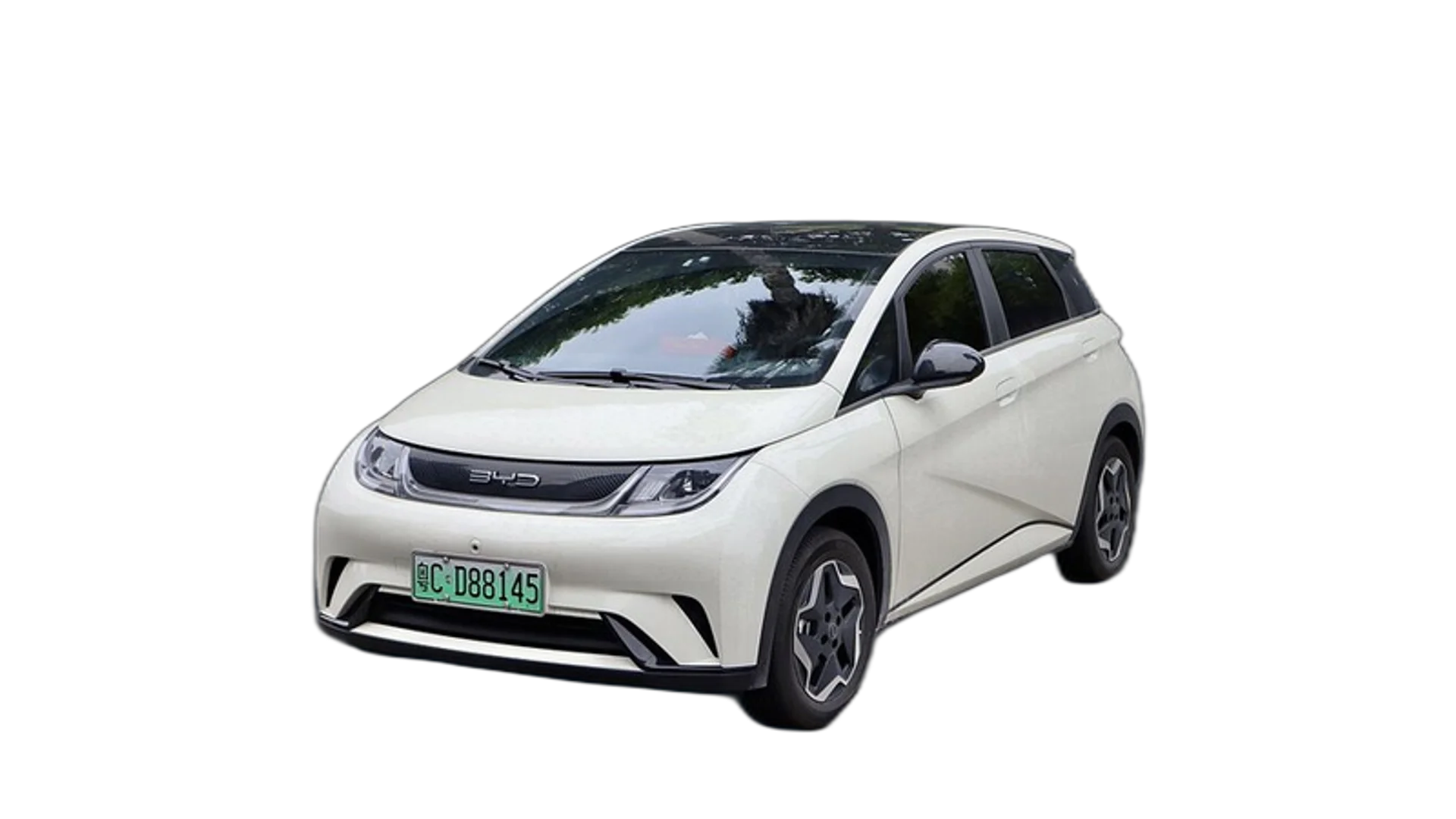
The BYD Dolphin is genuinely impressive, and the head-to-head between these two is the most interesting fight in affordable EVs right now. The Dolphin undercuts the Bolt on MSRP by roughly $3,000-5,000 depending on trim. Its real-world range is competitive, its interior quality is surprisingly good, and its charging performance on the Blade Battery chemistry is strong.
But the Dolphin has two problems in Canada right now. First: EVAP ineligibility. BYD vehicles are manufactured in China, and under the current EVAP rules, Chinese-manufactured EVs are excluded regardless of the tariff reduction that brought Chinese EV duties down to 6.1% in January 2026. That $5,000 federal rebate doesn't apply. In provinces with stacking rebates, the Bolt's total rebate advantage can be $8,000-13,000 over the Dolphin. That wipes out the Dolphin's price advantage and then some.
Second: dealer network. BYD's Canadian dealer footprint is still early-stage. The major-metro path looks more plausible than the rural one, but buyers should still verify what practical sales and service access exists in their own province. GM's Chevy dealer network is much broader across Canada, which still matters for mainstream buyers.
Verdict on this matchup: Bolt wins for most Canadians, primarily because of rebate eligibility and dealer access. If the EVAP rules ever change to include Chinese EVs, this calculation flips.
2027 Chevy Bolt vs. Hyundai Kona Electric
The Hyundai Kona Electric is probably the Bolt's closest legitimate competitor after the Niro EV's exit. Both are EVAP eligible. Both have strong real-world range. Both are practical for city and suburban use.
The Kona Electric edges the Bolt on refinement, the interior is slightly more premium-feeling, the ride is better on rough pavement, and Hyundai's BlueLink connected services are excellent. The Kona also has a legitimate heat pump standard across all trims, which matters significantly in Canadian winters for range preservation.
The Bolt's advantages: lower starting MSRP (by roughly $3,000-4,000), the Ultium platform's charging performance, and GM's broader network support infrastructure.
The answer: if you can afford the Kona Electric and you value ride quality and interior refinement, it's worth the premium. If you're maximising value per dollar, the Bolt is the better buy.
Verdict: Bolt wins on value, Kona wins on quality. For budget-conscious buyers, that means Bolt.
2027 Chevy Bolt vs. Chevy Equinox EV
This is the most interesting internal GM fight. The Chevy Equinox EV shares the Ultium platform with the 2027 Bolt, starts at approximately $42,000 CAD, and offers meaningfully more interior space, particularly cargo volume and rear passenger room.
The Equinox EV is a crossover. The Bolt is a compact hatchback. For a family with gear, the Equinox is the practical choice. For a single buyer or couple with normal luggage needs, the Bolt's smaller footprint can actually be an advantage in dense urban environments, parking, maneuverability, and slightly lower energy consumption on the highway.
Both qualify for EVAP. Both use the Ultium platform with its fast-charging advantages. The $4,000 price premium for the Equinox EV buys you tangibly more space.
Verdict: Equinox EV for families, Bolt for everyone else. That's segmentation, not hedging. If you need the space, spend the extra money. If you don't, the Bolt is the better deal.
The Used EV Market Complication
There's a real wildcard in this entire analysis: used EV prices. Reddit threads about affordable EVs right now are full of posts like "Is a used 2025 Ioniq 5 Limited for $36,000 sketchy?" The answer is usually no, that's a legitimate market price.
The used Hyundai Ioniq 5 at $36,000 is a compelling alternative to a new 2027 Bolt at $38,000. You get a larger, more premium vehicle with an 800V charging architecture that charges significantly faster. The main risk is battery warranty, used EVs typically have the remaining portion of the manufacturer warranty, and Hyundai's 8-year/160,000 km battery warranty is among the best in the industry.
If you're comfortable with used vehicles, the used EV market in Canada has genuinely shifted the value equation. Ioniq 5, Ioniq 6, and even lightly used Model 3s are appearing at prices that directly compete with new affordable EVs.
The 2027 Bolt still wins over used competition on one critical dimension: known provenance. You know the battery history of a new car. You don't know whether the used Ioniq 5 on Facebook Marketplace spent a winter in northern Ontario at -35°C with its battery repeatedly hitting thermal limits. For risk-averse buyers, new beats used even at a price premium.
GM's Canada Strategy and Why It Matters
The 2027 Bolt doesn't exist in isolation. It's a piece of GM's broader Canadian EV push. And the Canadian strategy tells you something about how seriously GM is taking this market.
GM dethroned Tesla in Canadian EV sales by executing a multi-tier product strategy that covered entry-level (Bolt), crossover (Equinox EV), premium crossover (Blazer EV), and full-size truck (Silverado EV). The Bolt is the volume anchor of that strategy, it's the car that gets GM into garages, onto driveways, and into the EV consideration set for buyers who aren't ready to spend $55,000+.
The Ioniq 6 getting a $16,000 manufacturer rebate in some markets is a sign of how aggressive EV pricing warfare has become. Hyundai is discounting a $55,000+ vehicle down to near-Bolt territory because the competition is fierce. When manufacturers with $60,000 vehicles are cutting $16,000 to compete with $38,000 vehicles, you understand the pressure the affordable segment is under.
For Canadians, this is genuinely good news. Competition drives prices down, and the combination of EVAP eligibility, manufacturer incentives, and provincial stacking means 2026-2027 is arguably the best time in Canadian history to buy an affordable EV.
The GM vs. Tesla story in Canada is also relevant here. GM's sales momentum isn't coming from the Blazer EV or the Silverado, it's coming from volume at the affordable end of the market. The Equinox EV and the revived Bolt are central to that strategy. GM has financial and strategic incentives to price these vehicles aggressively and support them well.
Charging Infrastructure Compatibility
A fast-charging number means nothing without infrastructure to match it. Here's where the 2027 Bolt's real-world charging situation stands in Canada.
The key point is now different from the old Bolt era: Chevrolet Canada says the 2027 Bolt uses a native NACS port. That changes how you think about infrastructure compatibility immediately. The Bolt should fit the growing NACS ecosystem natively, while older CCS or J1772 infrastructure becomes part of the adapter conversation instead of the native-port conversation.
The question is whether Canadian charging infrastructure can actually deliver the 150+ kW that the 2027 Bolt is capable of accepting. Increasingly yes, in the right locations.
Electrify Canada's highway corridor stations are rated at 150 kW per stall in most locations, with some sites at 350 kW. The FLO network has been aggressively upgrading older 50 kW stations to 150 kW hardware. ChargePoint's commercial installations are predominantly 150 kW capable.
Where it gets challenging is rural Canada. Many smaller towns and highway rest stops still have 50 kW equipment. At 50 kW, even the best-designed Ultium battery can't charge faster than the hardware allows. This isn't a Bolt problem, it's a Canadian infrastructure problem that applies to every EV on the market.
The practical takeaway: on major highway corridors between Canadian cities, the 2027 Bolt's improved charging speed is fully usable. On secondary routes and in rural areas, you're often still limited by infrastructure rather than the car. Plan your routes accordingly.
One advantage the Bolt has over Tesla-exclusive vehicles: access to the growing number of dealership-adjacent charging installations. GM has been partnering with Chevy dealers to install Level 2 charging, and many dealers also have DC fast charging available. For routine top-ups and shorter trips, this dealer network charging option is genuinely useful.
Winter Performance: The Canadian Test
Any EV review written for a Canadian audience that doesn't address winter is incomplete. So here it is.
The 2027 Bolt's Ultium architecture includes active thermal management that was genuinely missing from the BEV2 platform. This changes the winter story in several ways.
Range in cold weather: all EVs lose range in the cold. Physics doesn't care about your marketing. At -20°C, expect roughly 25-30% range reduction from the rated figure. On a 400 km rated Bolt, that means approximately 280-300 km of real-world range in a hard Canadian winter. That's the morning commute plus errands without any drama for most Canadians. It's only a problem if you're regularly doing highway runs exceeding 250 km without charging.
Battery heating: the Ultium system's active thermal management significantly improves cold-start charging. The old BEV2 Bolt would show dramatically reduced charging rates at cold temperatures, sometimes 20-25 kW, until the battery warmed up. The 2027 Bolt's active heating system means the pack is closer to optimal temperature before you even pull up to the charger.
Pre-conditioning: like the Kona Electric and Ioniq models, the 2027 Bolt supports cabin pre-conditioning while plugged in at home. You set your departure time, the car heats itself using grid power rather than battery power, and you leave with both a warm cabin and a full battery. Over a Canadian winter, this feature alone can prevent 20+ km of daily range loss from cabin heating.
One thing the Bolt doesn't have that the Kona Electric does: a standard heat pump across all trims. Heat pumps are significantly more efficient than resistive heating in cold weather, they can maintain cabin temperature with 2-3x less energy consumption than a traditional electric heater. The Bolt's winter efficiency story is good but could be better with heat pump standard equipment. Watch for whether GM includes this on the production 2027 models.
Real Ownership Costs: Five-Year Math
The Tesla Model 3 and Ford Mustang Mach-E ranking highest in EV ownership satisfaction in recent studies tells you something: satisfied owners care about total cost of ownership, not just MSRP. Let's run the five-year math on the 2027 Bolt.
Purchase price (Ontario, after federal EVAP rebate):
- MSRP: $38,000
- Federal rebate: -$5,000
- Net: $33,000
Compare that to the 2026 national affordable EV pricing guide which has the BYD Dolphin at approximately $35,000 without any rebate, making the after-rebate Bolt cheaper out the gate.
Gear worth having
As an Amazon Associate, ThinkEV earns a small commission from qualifying purchases — at no extra cost to you.

Grizzl-E Classic Level 2 EV Charger (40A)
Canadian-made and rated for minus 40C winters. 40A / 9.6 kW, NEMA 14-50, indoor/outdoor, 24-ft cable. The charger built for Canadian weather.
As an Amazon Associate, ThinkEV earns from qualifying purchases — at no extra cost to you.
Five-year operating cost estimates (Ontario pricing, 20,000 km/year):
Fuel/electricity costs:
- Average Bolt consumption: approximately 17 kWh/100 km
- Annual consumption: 3,400 kWh
- Ontario residential electricity (off-peak average): approximately $0.087/kWh
- Annual electricity cost: approximately $296
- Five-year electricity total: approximately $1,480
For comparison, the same kilometres in a mid-size gas car at $1.60/L and 9 L/100 km:
- Annual fuel: $2,880
- Five-year fuel: $14,400
Five-year fuel savings: approximately $12,920.
Maintenance:
- No oil changes: approximately $600-800 saved over five years
- Brake replacement intervals significantly extended due to regenerative braking: $500-800 saved
- No transmission service
- Typical added costs: tire replacement is similar to any vehicle; 12V battery replacement is a known expense around year 4-5 ($150-250)
- Net maintenance advantage over gas: approximately $1,000-1,500 over five years
Insurance:
- EVs typically cost 5-15% more to insure than comparable gas vehicles in Canada due to repair costs for high-voltage systems
- Estimated premium over gas vehicle: $150-300/year
- Five-year insurance premium increase: approximately $750-1,500
Five-year total cost advantage over comparable gas vehicle (Ontario): approximately $13,420-14,420.
This analysis is why the EV pricing guide for 2026-2027 consistently identifies the affordable EV tier as the most financially compelling purchase decision in Canadian automotive history.
GM's Dealer Network: The Silent Advantage Nobody Talks About
There's a dimension to the 2027 Bolt's value proposition that barely shows up in any spec comparison, and it's one of the most practically important factors for Canadian buyers outside major metro areas: the Chevy dealer network.
Chevrolet has a broad Canada-wide dealer footprint spread across every province and territory. Not concentrated only in Vancouver, Toronto, and Montreal, actually spread out into smaller markets as well. That geographic density matters for three reasons.
First, warranty service. EVs are still evolving mechanically, and there are occasional software issues, charging port failures, and high-voltage component replacements that require manufacturer-trained technicians. Being 25 minutes from a certified service centre is meaningfully different from being 3 hours away from the nearest BYD-authorised facility.
Second, Level 2 charging access. GM has been systematically installing public Level 2 EVSE charging equipment at Chevy dealerships across the country as part of their broader network buildout. These aren't fast chargers, they top at 7-11 kW, but for travellers who stop at a dealership for service during a road trip, getting a free partial charge while waiting is a legitimate convenience that smaller brands simply can't replicate.
Third, trade-in and resale. Resale value matters. When you eventually sell or trade in the Bolt, the existence of a nationwide dealer network creates more buyers, more competition, and higher residual values. Used BYD vehicles in Canada right now sell almost exclusively through private sales or a handful of metro-area BYD dealers. Used Chevy Bolts trade through the entire Chevy dealer infrastructure, which is a structurally more liquid used car market.
This isn't an abstract benefit. If you've ever tried to get an obscure brand's vehicle serviced in rural Canada, you know exactly why dealer network density is a real factor in the purchase decision.
The Software Story: Ultium OS vs.
What Came Before
The software experience in cars has become a genuine differentiator. Early Bolt owners will remember the infotainment system as one of the vehicle's biggest weaknesses. The screen was small by modern standards, the interface was slow, and the over-the-air update capability was limited. GM improved this somewhat in the 2022-2023 Bolts, but the BEV2 architecture's hardware constraints put a ceiling on how much software could improve.
The Ultium platform changes the hardware substrate entirely. The 2027 Bolt runs on GM's next-generation vehicle compute architecture, which supports significantly faster processing, higher-resolution displays, and genuine OTA update capability, not just map updates, but actual software functionality upgrades delivered wirelessly.
What does this mean practically?
The infotainment system in the 2027 Bolt supports Google Built-in (Android Auto and Google Maps natively embedded, not mirrored from a phone) and wireless Apple CarPlay. For the majority of Canadians who use their phone's mapping rather than a built-in nav system, this is the difference between a smooth experience and a mediocre one.
Charging optimisation software: the Ultium charging management system learns your typical charging patterns and can pre-condition the battery more efficiently as it builds a model of your driving behaviour. First-generation EVs couldn't do this, the charging management was static. Second-generation Ultium software is adaptive.
OTA updates matter specifically for EV efficiency. Battery management software significantly impacts both real-world range and charging speed. Several Ioniq 5 and Model 3 owners have seen meaningful range improvements delivered via software updates, not hardware changes. The Ultium platform's OTA architecture means the 2027 Bolt could get meaningfully better over the course of your ownership rather than staying static.
Energy management: the Ultium platform's energy management system handles regen braking calibration, HVAC efficiency routing (knowing when to pre-heat vs. use cabin air recirculation), and charging speed optimisation more intelligently than the BEV2 ever could. This doesn't show up in a spec sheet but it shows up in your monthly electricity bill and your actual range experience.
For buyers who've owned an older Bolt or who've heard horror stories about the original's software quality: the 2027 model is categorically different. Ultium is GM's competitive answer to Tesla's software-first approach. It's not at Tesla's level, as GM still lags on the polish of the Tesla ecosystem, but it's no longer an embarrassment.
The EV Ownership Satisfaction Data: What It Tells Us About the Segment
Recent EV ownership satisfaction studies put the Tesla Model 3 and Ford Mustang Mach-E at the top of owner satisfaction rankings. The Tesla Model 3 Canada review details why the Model 3 continues to lead: it's the software and charging network integration above all else. Model 3 owners are satisfied because the ecosystem works, finding a Supercharger, the route planning that automatically includes charging stops, the predictive battery management. The car functions as a system.
The Mach-E's high satisfaction scores are more interesting. It's not the fastest, it's not the cheapest, and Ford's charging network access is through Ford's BlueCruise partner agreements. The satisfaction comes from usability, the interior, the quiet ride, the reliable HVAC, and the Ford dealer service network that Mach-E owners trust.
Both of these data points tell us something about what makes affordable EV owners satisfied vs. disappointed: it's not peak specs, it's reliability of experience.
The old Bolt had a satisfaction problem that was partly the charging issue and partly a software and interior quality issue. Bolt owners liked the efficiency and the price. They didn't like the slow public charging, the mediocre infotainment, and the cabin that felt slightly underdone compared to competitors. All three of those issues are addressed by the 2027 Ultium-based model.
The implication: if the 2027 Bolt lands with build quality and software comparable to the Equinox EV and Blazer EV, which share the same platform, owner satisfaction should be significantly higher than the original Bolt's. The reviews we've seen from Equinox EV and Blazer EV owners consistently mention the improved interior quality and software experience as major positives.
Understanding EVAP: Why Rebate Eligibility Is the Most Important Variable
Canada's Electric Vehicle Availability Programme is deceptively simple on the surface but has some nuances that significantly affect which vehicles are eligible. Since it determines a $5,000 swing in purchase price for every vehicle in this segment, it's worth understanding in detail.
The EVAP programme offers up to $5,000 off the purchase or lease of a new fully electric or plug-in hybrid vehicle. The key eligibility rules:
Vehicle price caps: for battery electric vehicles, the MSRP must be $55,000 or less (base trim). For larger vehicles like SUVs, the cap is $60,000. The 2027 Bolt at approximately $38,000-42,000 MSRP clears this threshold with significant room.
Canadian or FTA manufacturing: this is the rule that excludes BYD, Geely, MG, and other Chinese-manufactured EVs. Vehicles must be assembled in Canada, the United States, or a country with a Free Trade Agreement with Canada that includes automotive manufacturing provisions. China does not have an FTA with Canada. This isn't a tariff rule, it's an EVAP programme rule that's separate from the 6.1% tariff that now applies to Chinese EVs. Even with tariffs reduced, Chinese EVs are still EVAP ineligible.
Income cap: the buyer's net household income cannot exceed $160,000 in the year of purchase. This excludes very high earners but covers the overwhelming majority of Canadian households.
One-per-household limit: each eligible household can receive the rebate once per 12-month period. If you bought an EV last year and received the EVAP rebate, you cannot claim it again until 12 months have passed.
On current published information, the 2027 Bolt appears to check the main EVAP boxes: North American manufacturing, price well under the cap, and standard passenger-car classification. Buyers should still verify the live programme rules and dealer paperwork at purchase, because eligibility is determined at transaction time rather than by blog confidence.
For the full provincial picture and how to stack rebates province by province, the EV rebates by province guide is the definitive resource. But the short version: most provinces are now federal-only at $5,000 (Ontario, BC, Alberta, Saskatchewan). Manitoba and PEI stack to about $9,000; Quebec to $7,000 (until it ends Dec 31, 2026). Where you live still matters, but the spread has narrowed.
The Ioniq 6 Wildcard: Manufacturer Rebates and the Pricing War
The aggressive manufacturer rebate happening with the Ioniq 6, in some markets a $16,000 discount bringing a $55,000 vehicle down toward $39,000, tells a bigger story about what's happening in the Canadian EV market.
Hyundai is a company that has consistently been on the right side of EV adoption timing. They launched the Ioniq 5 at a price that undercut most competitors while delivering 800V charging architecture that objectively outperformed more expensive rivals. They followed with the Ioniq 6, a stunning aerodynamic sedan that achieves among the best real-world efficiency numbers of any production EV. And now they're cutting price aggressively to maintain volume.
Why? Because the sub-$45,000 segment is genuinely competitive for the first time. The 2027 Bolt, the BYD Dolphin (for buyers willing to accept EVAP ineligibility), and the Kona Electric are all fighting for the same budget-conscious buyer. Hyundai would rather discount a higher-trim Ioniq 6 than lose that sale entirely.
This pricing dynamic has a direct implication for 2027 Bolt buyers: negotiate. Manufacturer incentives are happening across the board in the affordable segment right now. Ask your Chevy dealer about loyalty incentives, conquest incentives (for switching from another brand), and any regional marketing support programmes. The sticker price is rarely the actual transaction price in the current market environment.
The broader point is that the EV pricing war benefits Canadian consumers directly. When Hyundai is cutting $16,000 off a vehicle to stay competitive, and GM is building on a platform that was previously reserved for $55,000+ vehicles, and BYD is entering the market with genuinely competitive hardware at lower price points, buyers win.
This is why the EV pricing guide for Canada 2026-2027 is so useful right now. Prices are moving faster than any single article can track, and understanding the baseline MSRP vs. actual transaction price difference is essential before stepping into a dealership.
What Needs to Be Better
A balanced review means identifying the real weaknesses. Here are the honest ones for the 2027 Bolt.
The size. The Bolt is a compact hatchback, and while that's fine for solo commuters or couples, Canadian families with kids, gear, and the inevitable hockey bag will find cargo space limiting. The Equinox EV solves this at a $4,000 premium. If you need space, the Bolt will frustrate you.
The brand carry-over. The old Bolt had a rough history, the 2017-2022 models had a high-profile battery recall related to LG Energy Solution cells that could catch fire. GM replaced packs under warranty and the situation was resolved, but the brand memory lingers. What we can say safely is that the 2027 Bolt is a different program from that earlier recalled car. What we should not do is invent new 2027 battery chemistry or supplier details just to answer recall anxiety more confidently than the source material allows.
Cargo versatility. The Bolt's flat load floor and hatchback opening are practical, but the vehicle simply doesn't have the vertical cargo space of a crossover. Loading a cargo bike, a large appliance, or camping equipment is a different calculation in a compact hatch versus a crossover.
Update (March 2026): The 2027 Bolt ships with a native NACS (SAE J3400) port, GM's first vehicle to do so. This gives it direct access to Tesla Superchargers and the growing NACS network. GM offers adapters for older CCS ($189) and J1772 ($67) chargers. This is a significant advantage over competitors still shipping with CCS.
Driver assistance suite. GM's Super Cruise, the hands-free highway driving system, is reserved for higher-priced GM vehicles. The 2027 Bolt will have GM's standard suite of active safety features (automatic emergency braking, lane keep assist, adaptive cruise control), but won't have the hands-free capability that makes highway driving genuinely easier on the Trans-Canada. At the price point, this is acceptable, but it's worth knowing.
Who the 2027 Bolt Is Actually For
There's a precise buyer profile for the 2027 Chevy Bolt, and being honest about it helps people make better decisions.
The 2027 Bolt is for:
- Single buyers or couples who primarily drive in urban and suburban environments, with occasional highway trips
- First-time EV buyers who want a North American brand with established dealer support
- Budget-conscious buyers in rebate-rich provinces (Quebec, BC, PEI, Nova Scotia) where total incentives can push the net price below $30,000
- Drivers who want native NACS charging with direct Tesla Supercharger access and adapter support for legacy CCS/J1772 stations
- People replacing a compact or subcompact gas car who want a direct segment equivalent, not an upsell to a crossover
The 2027 Bolt is probably not the right choice for:
- Families with more than 1-2 children who regularly transport gear
- Buyers doing regular long-distance highway driving (500+ km/day) who need the absolute fastest charging speeds in the segment
- Buyers in provinces with no provincial EV rebate who want to maximise the total value equation against the BYD Dolphin
- People who specifically need a higher ride height for rough roads or all-terrain capability
This isn't a universal recommendation. It's a targeted one.
The Verdict
The 2027 Chevy Bolt EV is one of the most compelling sub-$40,000 EVs for most Canadians, and the case for it is much stronger now that Chevrolet Canada has published the core facts.
The platform upgrade to Ultium was not optional, the old BEV2 Bolt was genuinely becoming uncompetitive and GM knew it. The charging test results confirm that GM addressed the single biggest weakness of the previous generation. With a 150+ kW peak charging rate, a flat charging curve, and active battery pre-conditioning, the 2027 Bolt holds its own on road trips against vehicles costing $20,000 more. That was the old Bolt's biggest weakness, and it's fixed.
The Kia Niro EV's discontinuation removed the market's primary value alternative. The BYD Dolphin is a genuine threat but locked out of Canadian federal rebates. The Hyundai Kona Electric is better but costs more. The Equinox EV is the same platform with more space but at a higher price.
What we're left with is a revived nameplate on a mature platform, with expected EVAP eligibility under current rules, a national dealer network, and charging performance that finally looks fit for real-world Canadian use.
Is it perfect? No. The size limits, the lingering brand recall memory, and the missing heat pump standard are real. But at an after-rebate price that can get below $33,000 in Ontario and below $25,000 in Quebec, "perfect" is not the standard. "Best value for what you get" is.
The 2027 Chevy Bolt is now firmly back in the affordable-EV conversation in Canada. GM finally published enough real information to make that claim without leaning on speculation. Canadians should pay attention.
Gear worth having
As an Amazon Associate, ThinkEV earns a small commission from qualifying purchases — at no extra cost to you.

Emporia Smart Level 2 EV Charger (48A)
Budget-friendly 48A charger with WiFi and per-session energy tracking. Best bang for buck if you want smart features under 500 dollars.
As an Amazon Associate, ThinkEV earns from qualifying purchases — at no extra cost to you.
Related Reading
- BYD Dolphin vs. Chevy Bolt 2027, Full Canada Comparison, The most important affordable EV matchup of 2027 in Canada
- Chevy Equinox EV Canada Review 2026, How the Bolt's bigger sibling stacks up for Canadian families
- EV Rebates by Province, Complete Canada Guide 2026, Every federal and provincial incentive, fully up to date
- Most Affordable EVs in Canada 2026, The full sub-$45,000 EV market ranked and rated
- Used EV Market Explosion in Canada 2026, Is a used Ioniq 5 at $36,000 worth it versus a new Bolt?
Gear worth having
As an Amazon Associate, ThinkEV earns a small commission from qualifying purchases — at no extra cost to you.

70mai A810 4K Dual Dash Cam
4K front and 2K rear with STARVIS 2 HDR night vision and 24/7 parking surveillance, recording while parked without draining the 12V. A budget alternative to Tesla Sentry.
As an Amazon Associate, ThinkEV earns from qualifying purchases — at no extra cost to you.

Founder & Chief Editor
Vlad Pereira is the founder and chief editor of ThinkEV.ca, the Canadian electric-vehicle publication he writes and edits from Courtenay, British Columbia. He covers EV pricing, federal and provincial rebates, charging costs, and the Chinese manufacturers now entering Canada, from the buyer's side rather than the press-fleet side. ThinkEV is a venture of Vlad Pereira Online; his writing on health, income and the long game lives at vladpereira.com.
Frequently asked questions
Does the 2027 Chevy Bolt qualify for the federal EVAP rebate in Canada?
How does the 2027 Bolt's charging speed compare to the old Bolt?
What is the expected range of the 2027 Chevy Bolt in Canadian winters?
Is the BYD Dolphin a better deal than the 2027 Chevy Bolt in Canada?
What happened to the Kia Niro EV, and what should I buy instead?
Where can I charge the 2027 Chevy Bolt across Canada?
Should I buy the 2027 Chevy Bolt or wait for the Kia EV3?
Does the 2027 Bolt have the same battery recall risk as older Bolt models?
More EV & road-trip finds
Affordable upgrades worth a look — tap any to check the price on Amazon.
 ★ 537
★ 537USB Star Projector Roof Light
View on Amazon ★ 900
★ 900Personalized Photo Car Air Freshener
View on Amazon ★ 21,304
Car Headrest Hooks (4-Pack)
View on Amazon ★ 848
★ 848Coiled USB-C to USB-C Car Cable (2-Pack)
View on Amazon ★ 87
★ 87Car Window Sun Shades for Kids (4-Pack)
View on Amazon ★ 68
★ 68WeatherTech FloorLiner for Tesla Model 3
View on Amazon ★ 96,686
PULIDIKI Car Cleaning Gel (Detailing Putty)
View on Amazon ★ 314
★ 314Mini USB LED Ambient Lamps (4-Pack)
View on AmazonRead, Plan, Then Stay Current
Explore our expert articles to understand incentives and ownership costs, use the map to pressure-test charging reality, then subscribe so new EV coverage comes straight to you.
Continue Reading
The 10 Most Affordable EVs You Can Buy in Canada in 2026
Ford Mustang Mach-E Review 2026: Still Worth It?

Kia EV3 Canada Price 2026: The $38K Electric SUV
BYD Dolphin Canada: Price, Specs & 2026 Launch Date
Buy or Lease an EV in Canada? The 2026 Answer