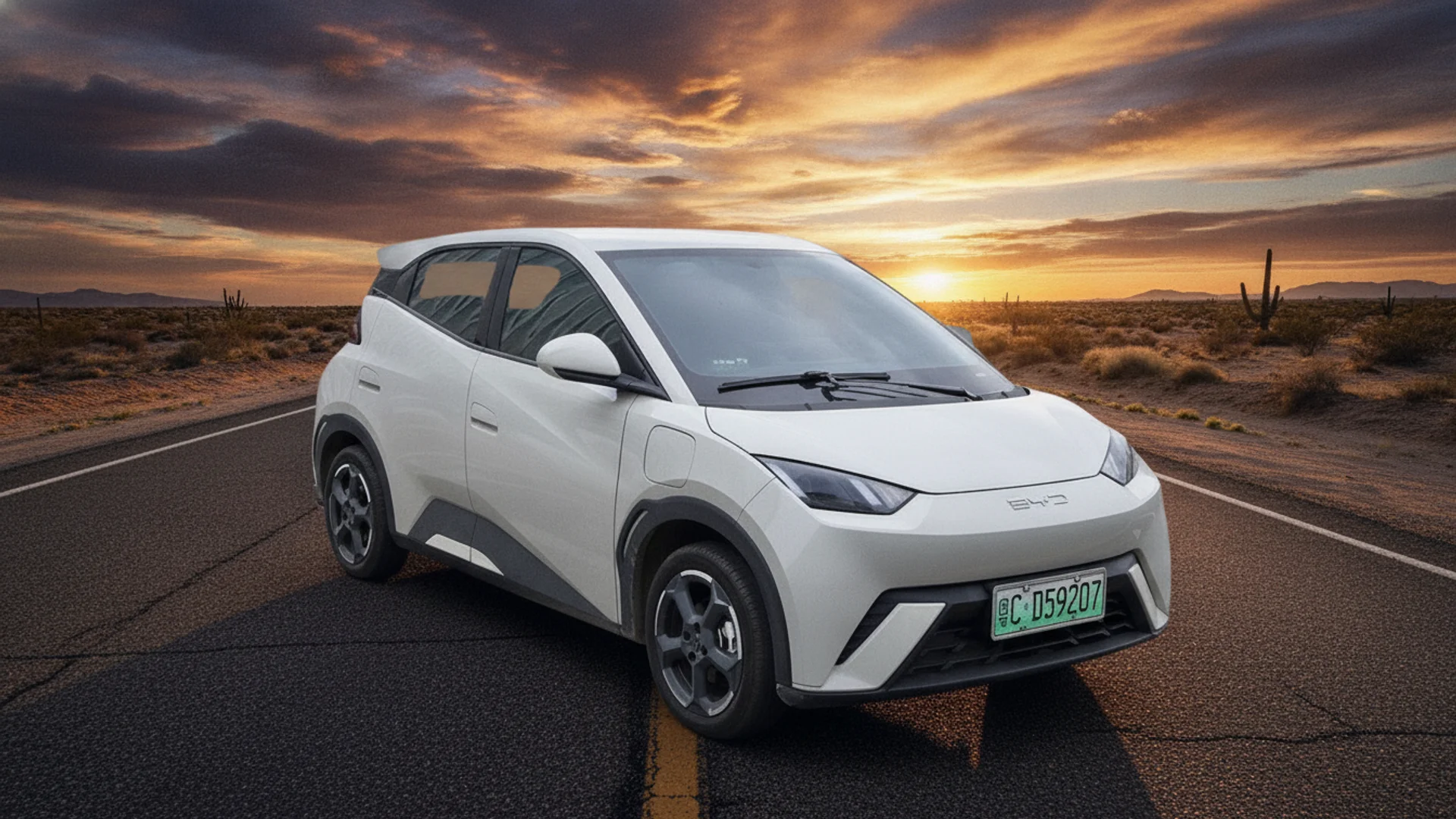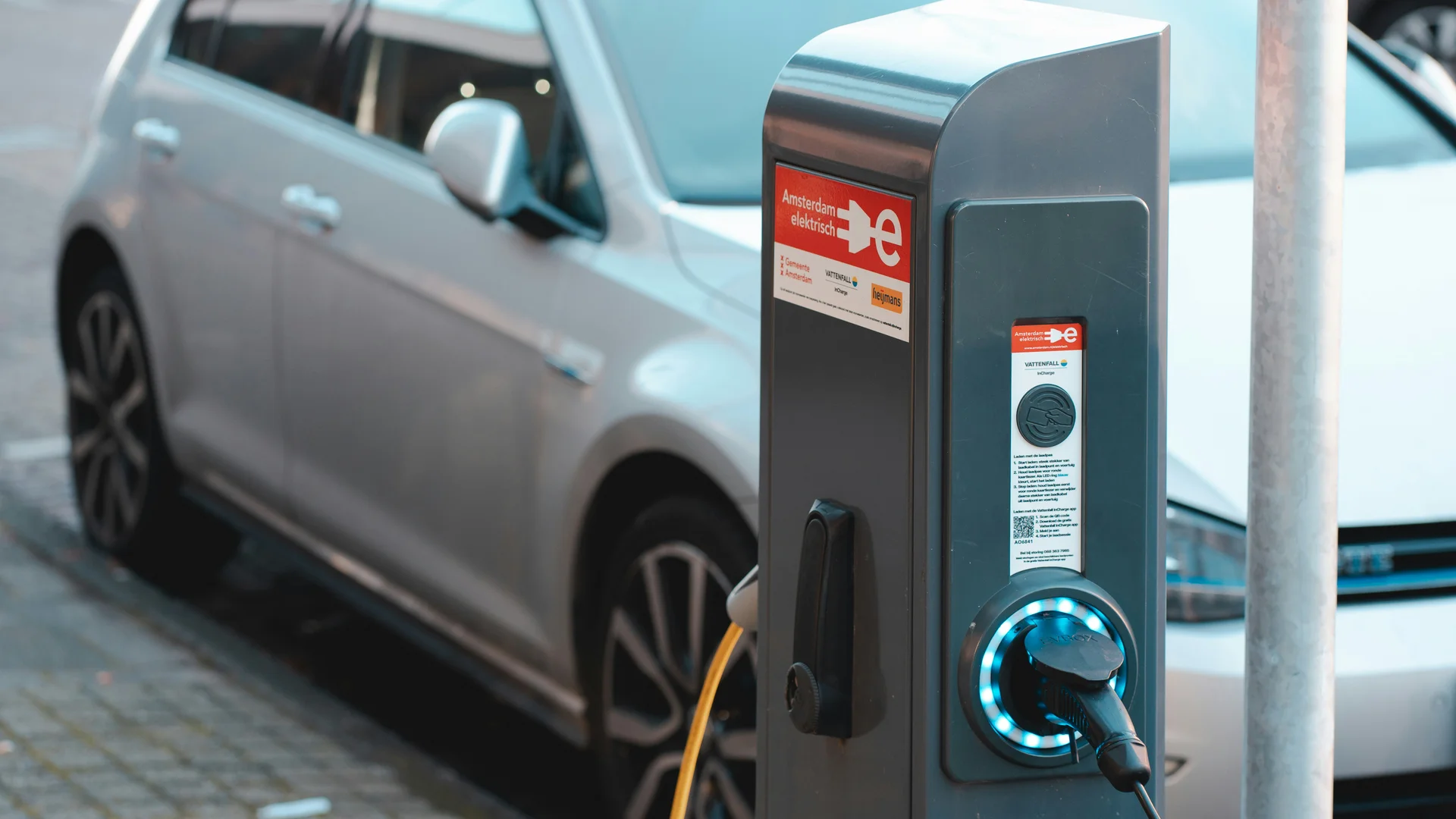
You're shopping for an electric SUV under $60,000 and a brand you've never heard of just dropped its price by $2,000 and threw in a free home charger. That's the deal GAC is running on its Aion V in Australia right now, and if you're a Canadian buyer tracking which Chinese EVs are about to land here, this is the kind of signal that matters.
The short version: the Aion V isn't sold in Canada yet. GAC has no dealer network here, no homologation, no announced launch date. But Australia is the canary for Chinese EV market entry into right-hand-drive and Commonwealth markets, and Canadian launches typically trail Australian ones by six to eighteen months. When a state-backed Chinese giant starts cutting prices and bundling chargers in Sydney, the next stop on that map is often Vancouver.
Below: what the Aion V actually is, what the price cut translates to in Canadian terms, how it stacks up against the EVs on Canadian lots today, and whether to wait for it or buy something else now.
Key takeaways
- GAC's Australian EOFY deal bundles AUD $2,000 cashback plus a free home charger on the Aion V.
- Australia typically trails Canadian Chinese EV launches by six to eighteen months, making it a useful signal market.
- Canada's January 2026 tariff cut dropped Chinese EV duties from 100% to 6.1% under a 49,000-unit quota.
- The $2,000 price cut signals inventory pressure as BYD, MG, Geely, Chery, and Nio crowd the same Australian segment.
- Bundled home chargers quietly save Canadian buyers $1,500–$2,500 in real ownership costs, rivalling headline rebates.
What Is the GAC Aion V and Why Should Canadians Care?
GAC, Guangzhou Automobile Group, is China's fourth-largest automaker. It's not a startup, not a niche EV brand, and not a name you can dismiss as a curiosity. It builds joint-venture vehicles with Toyota and Honda for the Chinese market, runs its own Aion-branded EV lineup, and posts annual sales numbers that would put it in the top ten globally if you counted only its own-brand output.
The Aion V is GAC's mid-size electric SUV. Think segment-wise of the BYD Atto 3, the MG ZS EV, or, closer to Canadian context, the Hyundai Kona Electric and the upcoming Kia EV5. It's the volume play, not the halo. GAC sells it across China, parts of Southeast Asia, and now Australia.
Why the Australian launch matters to Canadians: Australia and Canada share a lot of market characteristics for Chinese EV entry. Both are right-side-of-the-Pacific markets with English-language regulatory regimes, both have moderate populations spread across long distances, both have charging-infrastructure rollouts that mirror each other in pace, and both have Chinese tariff structures that have softened in the last twelve months. When BYD launched the Atto 3 in Australia in 2022, Canadian arrival followed in 2026. When MG arrived in Australia in 2017, Canadian arrival is still being negotiated. The pattern isn't a guarantee, but it's a pattern.
The case against treating Australia as a Canadian leading indicator runs like this: Australia has no domestic auto industry to protect, no equivalent of Unifor lobbying Ottawa, no integrated North American supply chain to defend. Canada has all three. That structural difference means Australian launch timing tells you a Chinese brand has decided to play in right-hand-drive English-speaking markets, it does not tell you Ottawa will let them in on the same terms. The rebut is partial. The January 2026 tariff cut already happened, the door is already cracked open, and the question is no longer if but how fast. Australia still sets the product cadence even when Canada sets the policy ceiling.
The other reason to pay attention now: understanding the product before it arrives is how you negotiate hard once it does. If you know the Aion V's specs, weaknesses, and Australian price before a Canadian dealer ever quotes you, you're already ahead of the average buyer walking onto the lot.
GAC has not confirmed Canadian dealer plans publicly. The relevant timeline anchor is the federal tariff cut on Chinese EVs, which dropped from 100% to 6.1% in January 2026 under a 49,000-unit quota. That's the door. Whether GAC walks through it in 2027 or 2028 is the open question.
What Does the Price Cut Actually Mean? Breaking Down the EOFY Deal
The deal, per The Driven's reporting on GAC's Australian announcement, has two pieces. There's AUD $2,000 cashback on the top variant of the Aion V, and there's a free home charger bundled with every purchase. End-of-financial-year sales in Australia run through June 30, the Australian financial year ends differently than ours, so the offer is time-bound.
Let's break down what those numbers actually mean for a buyer.
The $2,000 cashback is straightforward. It's a direct price reduction, applied at point of sale. On a top-trim Aion V that lists around AUD $45,000 before incentives, that's roughly a 4.4% discount. Not massive, but not symbolic either, it's the kind of move a brand makes when it has inventory on the lot and needs to clear it before the new financial year starts fresh.
The free home charger is the more interesting piece. GAC hasn't specified the exact model in its Australian announcement, but bundled EV charger deals in the Australian market typically include a 7 kW Level 2 wall unit with installation credit, valued at AUD $1,000 to $1,500 depending on hardware and trade labour. Stack that on the cashback and you're looking at a combined effective saving in the neighbourhood of AUD $3,000 to $3,500 on a single purchase.
Why does this matter for Canada-watchers? Two reasons.
First, EOFY-style discounts are a signal about inventory pressure. When a Chinese brand new to a market is already cutting prices in its first sales year, that tells you something about how the launch is going. It could mean GAC overestimated demand, or it could mean competition from BYD, MG, and the wave of newer entrants like Geely's EX2 and Chery's iCar brand is hotter than GAC expected. Either reading is useful when you're sizing up which Chinese brand will actually make it to a Canadian dealership.
The competitive context tightens further if you look at what's queued behind GAC in the same Australian showrooms. The Geely EX2 is targeted as one of Australia's cheapest electric cars when it arrives between July and September, aimed directly at the BYD Atto 1 price band. Chery is fielding the Lepas L4 and L6 EVs alongside its plug-in hybrids, and a separate Chery sub-brand, iCar, has been confirmed for Australian launch in 2027 with a range of boxy off-road electrified SUVs. Nio's Firefly sub-brand, focused on smaller, more affordable electric cars, has submitted certification documents to the Australian Government. And GAC's own Aion UT has been confirmed for Australian launch to rival the BYD Atto 1, Geely EX2, GWM Ora and MG4 Urban. That's six Chinese sub-brands compressing into one segment in eighteen months. The $2,000 cashback isn't generosity, it's positioning before the floor falls out.
Second, bundled-charger deals are quietly the most underrated EV incentive going. Canadian buyers tend to focus on the rebate column, $5,000 federal, plus provincial top-ups, and ignore the charger-and-installation cost, which can easily run $1,500 to $2,500 by the time you're driving home. A free charger isn't headline-grabbing the way a $5,000 rebate is, but it lands in the same bucket: real money off the total cost of getting on the road.
When Chinese brands do come to Canada in volume, expect bundled-charger deals to be one of the main marketing levers. They're cheap for the manufacturer (charger margins are slim, installation is contracted out) and they remove one of the most cited barriers to first-time EV ownership.
Gear worth having
As an Amazon Associate, ThinkEV earns a small commission from qualifying purchases — at no extra cost to you.

ChargePoint Home Flex Level 2 Charger (50A)
Premium 50A / 12 kW charger with the best app ecosystem. Hardwired or NEMA 14-50, with real-time energy tracking and smart scheduling.
As an Amazon Associate, ThinkEV earns from qualifying purchases — at no extra cost to you.
Aion V Specs That Matter: Range, Charging Speed, and Cargo Room
Here's where the Aion V starts to look less like a bargain and more like a compromise.
Range first. GAC quotes Aion V variants at 500 to 600 km on the CLTC cycle, the Chinese test standard, which is famously generous. The closer-to-honest WLTP-equivalent figures, based on Australian regulatory filings and independent reviewer estimates, land between 420 and 460 km. In Canadian winter conditions, knock another 25–35% off the WLTP number, and you're looking at real-world cold-weather range in the 280–340 km bracket. That's competitive with the Hyundai Kona Electric's 418 km WLTP figure, but not a leap ahead.
DC fast charging is where the Aion V drops behind the pack. GAC rates it at 80 kW peak DC charging. For context: BYD's Atto 3 peaks at 88 kW, the Hyundai Kona Electric at 100 kW, and the Kia EV9, admittedly a different price class, at 240 kW on an 800-volt architecture. A 10–80% charge on the Aion V will take roughly 35–40 minutes at an ideal DC station. On a Trans-Canada road trip, that's not a deal-breaker, but it's slower than what the competition is now offering at the same price point.
The defence GAC could mount: the two main types of EV chargers are alternating current (AC) and direct current (DC), and most Aion V owners will spend the overwhelming share of their charging time on AC at home, where 7 kW is the practical ceiling regardless of what the car can theoretically accept. That's true for daily commuting in Vancouver or Montreal. It stops being true the moment you drive Toronto to Ottawa on a Friday in February, or thread the Coquihalla in a snowstorm. The 80 kW ceiling is a road-trip tax, not a daily-driver tax, and Canadian buyers should be honest with themselves about which of those they actually do.
AC charging at home is fine. Standard 7 kW Level 2, full charge overnight from a depleted battery. Nothing unusual there.
Size-wise, the Aion V sits in the Kia EV5 / Hyundai Kona Electric footprint. Length around 4.6 metres, wheelbase around 2.7 metres, cargo capacity in the 425–450 litre range with the seats up. Comfortable for a family of four, tight for five adults on a long trip, decent for everything in between. The interior leans on a large central touchscreen, the standard Chinese EV move, with an ADAS suite that includes adaptive cruise, lane-centring, and automated parking on the higher trims. V2L (vehicle-to-load, the feature that lets you power a campsite or run tools off the car) is reported on the top-trim Aion V, matching what Hyundai and Kia have made standard.
What's missing: the Aion V doesn't have the 800-volt architecture that's becoming standard on premium Chinese exports. Geely's high-end models, reviewed by The Globe and Mail in their coverage of the first made-in-China EV under Canada's new quota, are good for 600 horsepower and filled with all the battery and driving technology Geely can give them, much of it learned from the Volvo and Polestar brands that are also Geely-owned, including LiDAR for vehicle and obstacle recognition, 800-volt architecture for ultra-fast charging, a Dolby Atmos sound system, adjustable air suspension with four-wheel steering and six electronic driving modes. That is what the top of the Chinese export shelf now looks like. The Aion V is the budget play, not the showpiece. That's not a flaw, it's just positioning. But it does mean Canadian buyers tempted by Chinese-EV pricing should understand which segment they're actually shopping in.
A named comparison worth holding next to the Aion V is the Mazda CX-6e, due in late 2026 with a mid-$55,000 Australian starting price and Mazda's local arm indicating driving range of more than 450 km. That's the legacy-OEM answer to the Chinese wave: same segment, similar range, Japanese badge, dealer network already built. Aion V wins on price by AUD $10,000-plus. Mazda wins on resale, service certainty, and the boring-but-real fact that you've heard of the brand. Canadian buyers will see versions of this exact trade-off across every Chinese-vs-Japanese matchup that lands in the next two years.
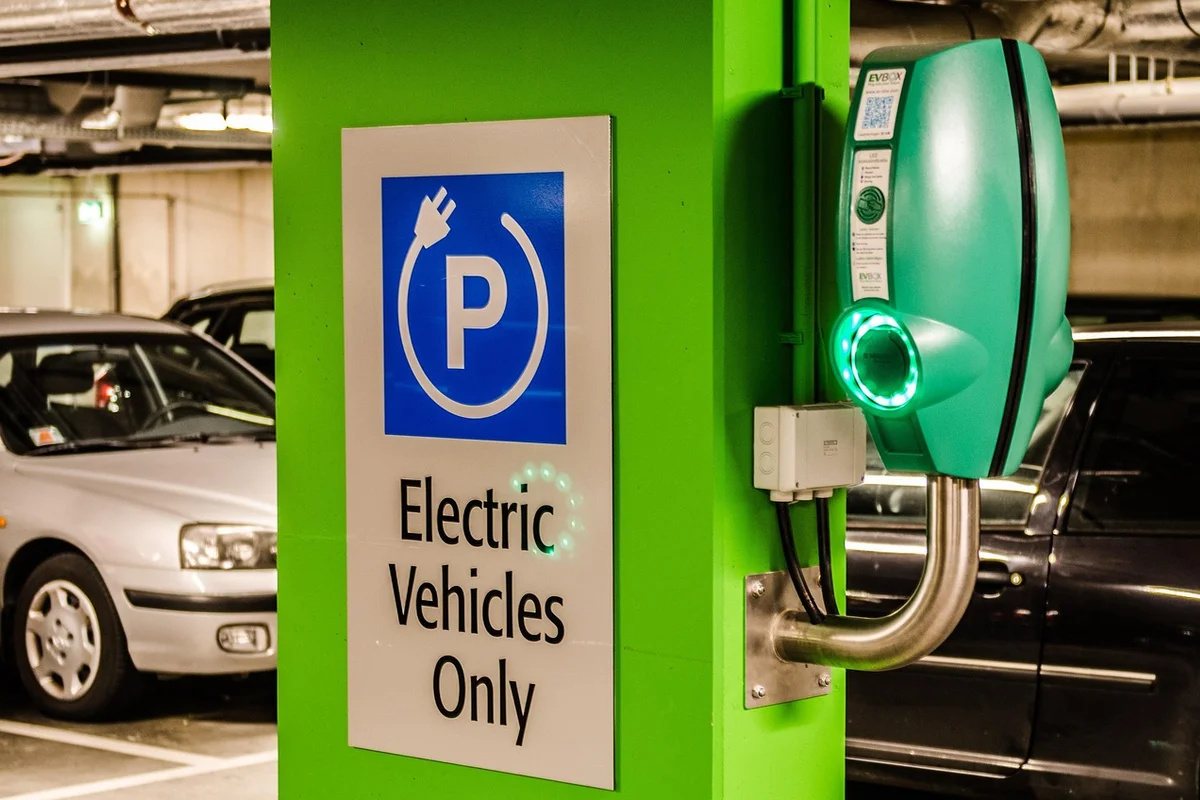
Currency conversion is rough, but useful as a sanity check. The Aion V in Australia lists between AUD $40,000 and $45,000 before the EOFY discount, depending on trim. At current exchange rates, that's roughly CAD $36,500 to $41,000.
Canadian markups on Chinese imports historically run 15–25% above the equivalent Australian launch price, a function of homologation costs, smaller dealer networks, and lower volume amortisation. Realistic Canadian landed pricing on the Aion V, if it arrives, would likely sit between CAD $42,000 and $52,000.
That's the table you should hold in your head when shopping right now.
At $42,000, the base Aion V would be priced just above the Hyundai Kona Electric's $42,999 CAD entry, which qualifies for the $5,000 EVAP rebate, making the effective Kona price $37,999. The Aion V, as a Chinese-built vehicle, is currently excluded from EVAP, which means it would face the Kona at full sticker. Unless GAC priced aggressively below $40,000, the rebate-adjusted Kona wins on price every time.
Gear worth having
As an Amazon Associate, ThinkEV earns a small commission from qualifying purchases — at no extra cost to you.

WeatherTech FloorLiner for Tesla Model 3
Deep-channel liners that trap every drop of slush and salt. The difference between a ruined interior and a showroom-fresh cabin after a Canadian winter.
As an Amazon Associate, ThinkEV earns from qualifying purchases — at no extra cost to you.
At the $45,000–$48,000 range, the Aion V would land against the upcoming Kia EV5, priced from $43,495 CAD, which does qualify for EVAP, bringing the EV5 base trim to roughly $38,495 in Ontario after rebate. Same problem for the Aion V: even with a $3,000 EOFY-style Canadian incentive, it would struggle to undercut the EV5 net price.
At the top end, $50,000-plus, the Aion V starts to compete with the Volkswagen ID.4, the Tesla Model Y, and the higher Kia EV5 trims. At that price, range and DC fast-charging speed matter more, and the Aion V's 80 kW ceiling is a real disadvantage.
The takeaway: for the Aion V to make sense in Canada, it would need to land below $40,000 CAD before any rebate, ideally closer to $35,000. That's possible, Chinese manufacturers have demonstrated they can hit those numbers when they want to, but it requires a level of price commitment that brands typically reserve for their second or third year in a market, not their launch year.
The reference point worth watching: Tesla now sells the Shanghai-made Model 3 in Canada at C$39,490, which is the first stress test of the post-tariff-cut framework. If Chinese brands want to compete, they're competing against that number, not against the old pre-tariff math. And the Model 3 carries its own loaded history, Elon Musk originally presented it as likely being affordable by most people able to purchase new cars, aiming for a $30,000 price point. That promise never quite landed at the price Musk first floated, but the Canadian C$39,490 is the closest Tesla has come on this side of the border. The Aion V's competitive ceiling, in other words, is set by a vehicle that spent a decade chasing a number it only just hit.
The Free Charger Offer: What Home Charging Actually Costs in Canada
Bundled-charger deals look like a marketing add-on. They're not. They're real money, and Canadian buyers should price them carefully.
Here's what Level 2 home charging actually costs in Canada in 2026:
- The Grizzl-E Classic, Canadian-designed and CSA-certified, runs $499 CAD for the 40-amp model
- The Grizzl-E Smart, with Wi-Fi, app scheduling, and energy monitoring, is $649 CAD
- The Tesla Wall Connector, NACS-only, is $799 CAD and compatible only with Tesla or NACS vehicles
- Mid-tier branded chargers (ChargePoint Home Flex, Wallbox Pulsar Plus, JuiceBox 40) sit in the $650–$900 range
Installation is where the budget swings. A simple install, panel has spare capacity, charger goes on a garage wall near the panel, total run under 5 metres, runs $500 to $800 in most provinces. A complex install, panel upgrade required, long conduit run, exterior mount with weather protection, can hit $1,500 to $2,500. Quebec and BC tend to be on the lower end; Ontario and Alberta on the higher end, partly because of labour markets and partly because older housing stock there often needs panel work.
The federal NRCan home-charger rebate covers up to $600 of installation costs through the Zero Emission Vehicle Infrastructure Program, but it applies to the install, not the charger hardware. Some provinces stack their own top-ups: BC's CleanBC program adds up to $350 for purchase and installation combined; Quebec's Roulez vert program runs separate rebates that change frequently.
Net result: a bundled "free charger" deal, assuming it includes both hardware and an installation credit, is worth roughly $1,500 to $2,500 in Canadian dollars. Not a rounding error. When you compare an EV that bundles the charger against one that doesn't, run the math on out-of-pocket cost, not sticker.
This is the underrated lever in Canadian EV pricing. If a Chinese brand arrives in Canada with bundled-charger deals as a launch promotion, and GAC's Australian playbook suggests they will, they'll be hard to ignore on total cost of ownership, even if the sticker price doesn't undercut Hyundai or Kia outright.
The counter-case from a Tesla or NACS-camp buyer is that a bundled charger from a Chinese brand is locked to a CCS connector, and the broader North American charging build-out is tipping NACS-first. That's a real concern for resale and for the third-party charger ecosystem two years out. The rebut: every Chinese brand entering the Canadian market is shipping CCS for now, and the NACS adapter market is already mature. A bundled Level 2 CCS charger isn't a dead-end purchase; it's the same J1772 plug Hyundai, Kia, Ford, and GM still use on the home-charging side. The NACS war is being fought at DC fast-charging stations, not on garage walls.
Gear worth having
As an Amazon Associate, ThinkEV earns a small commission from qualifying purchases — at no extra cost to you.

Grizzl-E Classic Level 2 EV Charger (40A)
Canadian-made and rated for minus 40C winters. 40A / 9.6 kW, NEMA 14-50, indoor/outdoor, 24-ft cable. The charger built for Canadian weather.
As an Amazon Associate, ThinkEV earns from qualifying purchases — at no extra cost to you.
Chinese EVs Entering Canada: The Timeline and What's Realistic
The tariff math changed in January 2026, and that's the entire reason this conversation is happening.
Until late 2025, Chinese-built EVs faced a 100% surtax entering Canada, which effectively shut them out of the market. Under the Carney-Beijing trade framework announced in October 2025, that surtax dropped to 6.1% effective January 16, 2026, applied to a quota of 49,000 Chinese-built vehicles per year. Above the quota, the original 100% tariff still applies.
That number, 49,000, is small. Canada's annual new-vehicle market runs around 1.8 million units. Even at full quota, Chinese imports would represent under 3% of the market. The quota is also brand-agnostic: Tesla's Shanghai-built Model 3, BYD's Atto and Seal, MG's ZS, and theoretically anything else Chinese-built all share the same allocation.
BYD, Chery, and Geely appear furthest along on actual Canadian market entry, based on dealer recruitment, trademark filings, and confirmed homologation work. GAC isn't on the visible shortlist for 2026 or 2027. That doesn't mean it won't arrive, Chinese brands often move from "no announcement" to "dealers in twelve cities" in eighteen months, but right now, the Aion V is an Australian product, not a Canadian one.
JAC is another name worth tracking on the same timeline. The JAC E30X is being evaluated as JAC studies multiple SUVs, electric vans and even premium passenger vehicles for the Australian market, and Forthing, yet another Chinese brand, is readying a competitor to popular Geely and BYD SUVs aimed at the Toyota RAV4 Hybrid and Tesla Model Y price band. If you assume even a third of the brands currently piloting in Australia eventually make a Canadian play, the 49,000-unit quota fills up fast. The first three or four brands through the gate will get clean runway. The latecomers will fight for slivers of allocation against Tesla's Shanghai Model 3 throughput, and that throughput already exists at scale.
The second constraint is EVAP eligibility. Canada's federal $5,000 EV rebate currently excludes Chinese-built vehicles, regardless of brand. That's a policy choice, not a tariff matter, and it can be changed at any point by the federal government. As of mid-2026, there's no public timeline for revising the exclusion. The provincial rebates are mixed, Quebec's Roulez vert applies to qualifying EVs by model and price cap regardless of country of origin, while Ontario's reinstated EVAP follows the federal exclusion.
So the realistic Canadian buyer's view: even if GAC announces a Canadian launch tomorrow, the Aion V would arrive ineligible for the $5,000 federal rebate. That's not a hypothetical $5,000 disadvantage, it's a real one, and it stays in effect until federal policy changes.
The Australian market gives Canadian buyers an early look, but it isn't a perfect mirror. Australia doesn't have an EVAP-style rebate exclusion. Its consumer-facing prices on Chinese EVs are closer to pre-rebate Canadian numbers. That's worth keeping in mind when you read about Chinese EVs being 40% cheaper, the comparison is real, but the rebate math swings it back closer than the sticker suggests.
Should You Wait for GAC, or Buy a Competing EV Now?
Here's the call.
Buy now if you need a vehicle in 2026 and the Hyundai Kona Electric ($42,999 CAD, effective $37,999 after EVAP) or the Kia EV5 ($43,495 CAD, effective $38,495 in Ontario) fits your budget. Both are at Canadian dealers now, both qualify for the rebate, both have established service networks, and both will hold value better in the short term than a brand-new market entrant. If you want the absolute lowest sticker right now and don't need an SUV body, the Nissan Leaf S at $39,998 CAD remains the cheapest new EV available in Canada, it's the floor the Aion V would have to beat after rebate math, not before.
Wait if you're flexible on timing, meaning you can hold off twelve to twenty-four months, and sub-$40,000 CAD after rebates is a hard requirement that the current Canadian-eligible options can't meet. The Aion V might land there. BYD's Dolphin almost certainly will. Geely's EX2 is being aimed at exactly that price ceiling. The wait could be worth it if your budget genuinely can't stretch.
Watch for three triggers that would flip the call: a GAC dealer announcement in Canada (signals a 12-month runway to availability), an EVAP eligibility change for Chinese-built vehicles (changes the rebate math overnight), and any update to the 49,000-unit tariff quota (expansion would loosen pricing pressure across all Chinese imports). I'd add a fourth I'm watching personally, whether the second of the three Carney-Beijing review cycles, expected late 2026, treats the quota as a ceiling to defend or a starting point to grow. If it's the latter, the Chinese share of the Canadian market doubles within eighteen months and every legacy OEM repricing model I've seen gets torn up.
Skip if DC fast-charging speed above 100 kW is a priority for your driving pattern. The Aion V's 80 kW ceiling is its real weakness, and no incentive package will fix it on a long road trip. If you're routinely driving Toronto-to-Ottawa or Vancouver-to-Kelowna, get a Kona Electric, a Kia EV5, or step up to a BYD Seal when it lands in volume.
Where I'd put my own money: if I were buying in 2026 and could absorb a $5,000 rebate gap, I'd wait one more cycle. Not because the Aion V specifically is worth waiting for, the specs aren't compelling enough, but because the second wave of Chinese entrants (Geely EX2, BYD Dolphin, possibly Firefly) is set up to undercut the current Korean lineup more aggressively than GAC has shown willingness to. The bet is on the segment, not the badge.
Gear worth having
As an Amazon Associate, ThinkEV earns a small commission from qualifying purchases — at no extra cost to you.

Lectron Level 2 J1772 Charger (40A, WiFi)
Smart WiFi charger with real-time energy monitoring. 40A / 9.6 kW, J1772 with a NEMA 14-50 plug, schedule charging right from your phone.
As an Amazon Associate, ThinkEV earns from qualifying purchases — at no extra cost to you.
A Small Australian Deal, A Useful Canadian Signal
The GAC Aion V EOFY deal is a small story for Australian buyers and a useful signal for Canadian ones. The product itself is a middle-of-the-pack Chinese EV, competitive on price, average on range, behind the curve on charging speed. The deal mechanics, cashback plus bundled charger, are exactly the playbook to expect when Chinese brands start serious Canadian market entry in 2027 and beyond.
What I'd watch next: whether GAC files for Canadian homologation in the next six months, whether the federal government revisits EVAP eligibility for Chinese-built EVs, and whether the 49,000-unit quota gets renegotiated upward as part of any second-stage Carney-Beijing trade work. Any of the three would change the math.
For now, if you're buying in 2026, the Kona Electric and Kia EV5 are the answers. If you can wait, the Chinese wave is real and it's coming. The Aion V might be on it. The deal in Sydney this week is the early forecast.
Gear worth having
As an Amazon Associate, ThinkEV earns a small commission from qualifying purchases — at no extra cost to you.

Magnetic EV Charger Plug Cover
A magnetic cap that keeps rain, road salt, and grit out of your home charger handle between sessions.
As an Amazon Associate, ThinkEV earns from qualifying purchases — at no extra cost to you.

Founder & Chief Editor
Vlad Pereira is the founder and chief editor of ThinkEV.ca, the Canadian electric-vehicle publication he writes and edits from Courtenay, British Columbia. He covers EV pricing, federal and provincial rebates, charging costs, and the Chinese manufacturers now entering Canada, from the buyer's side rather than the press-fleet side. ThinkEV is a venture of Vlad Pereira Online; his writing on health, income and the long game lives at vladpereira.com.
Frequently asked questions
When could the Aion V realistically arrive at Canadian dealerships?
Does the free home charger bundle translate to real savings?
Is the price cut a sign GAC is struggling in Australia?
Would the Aion V qualify for Canadian federal EV rebates?
Which current Canadian EV is the closest real alternative right now?
More EV & road-trip finds
Affordable upgrades worth a look — tap any to check the price on Amazon.
 ★ 268
★ 268Anti-Slip Leather Steering Wheel Cover
View on Amazon ★ 8,681
Chemical Guys Complete Car Wash Kit
View on Amazon ★ 164
★ 164Solar-Powered LED Ambient Light
View on Amazon ★ 900
★ 900Personalized Photo Car Air Freshener
View on Amazon ★ 865
★ 865Collapsible Trunk Organizer
View on Amazon ★ 1,944
VIOFO A229 Pro 4K Dash Cam
View on Amazon ★ 87
★ 87Car Window Sun Shades for Kids (4-Pack)
View on Amazon ★ 392
★ 392Large Cup Holder Adapter (32-40oz)
View on AmazonRead, Plan, Then Stay Current
Explore our expert articles to understand incentives and ownership costs, use the map to pressure-test charging reality, then subscribe so new EV coverage comes straight to you.
Continue Reading
BYD in Canada: What You Can Buy and What It Costs
Xpeng's AI Chief: Language Is Poison for Self-Driving
BYD Pays When God's Eye Crashes, Tesla Does Not
BYD Will Pay if Its Self-Driving System Crashes
Are Canada's Repair Shops Ready for Chinese EVs?