Key takeaways
- The Grizzl-E Classic is the best overall pick for Canadians, Canadian-made, rated to -40°C, and priced at $499 CAD.
- The ChargePoint Home Flex is the highest-amperage unit reviewed at 50A and $709 CAD, while the Lectron Portable L2 is the only portable pick, 40A at about $315 CAD with a 16-ft cable for road trips.
- Installation costs in Canada typically run $500–$1,500 for the electrical work, plus $50–$200 in permit fees.
- A 40A charger adds 40–50 km of range per hour. A 48A charger adds 50–60 km. For most drivers, the difference is irrelevant overnight.
- Several provinces offer home charger rebates, BC gives up to $350, PEI up to $750, and Quebec up to $600 toward installation.
What Is Level 2 Charging?
Level 1 charging uses a standard 120V household outlet. It adds about 6–8 km of range per hour. If you drive 50 km a day, you need 7+ hours plugged in just to recover that. It works in a pinch, but it's painfully slow for daily use.
Level 2 charging uses a 240V circuit, the same voltage your dryer or stove runs on. A dedicated Level 2 charger adds 40–60 km of range per hour depending on amperage. Plug in at 6 PM, wake up at 6 AM with a full battery. That's the experience most EV owners have, and it's why Level 2 is the standard for home charging.
The charger itself (technically an EVSE, Electric Vehicle Supply Equipment) costs $300–$1,000 CAD. Installation requires a licensed electrician to run a 240V circuit from your electrical panel to your parking spot, install a NEMA 14-50 outlet or hardwire the unit, and pull any required permits.
In Canada, total installation cost including the electrician, materials, and permits typically ranges from $500 to $1,500. More if your panel needs an upgrade or the run is long. Less if your panel is close to the garage and has spare capacity.
The 5 Best Level 2 EV Chargers for Canadians
These five cover every use case, from budget-conscious buyers to road-trippers who need portability.
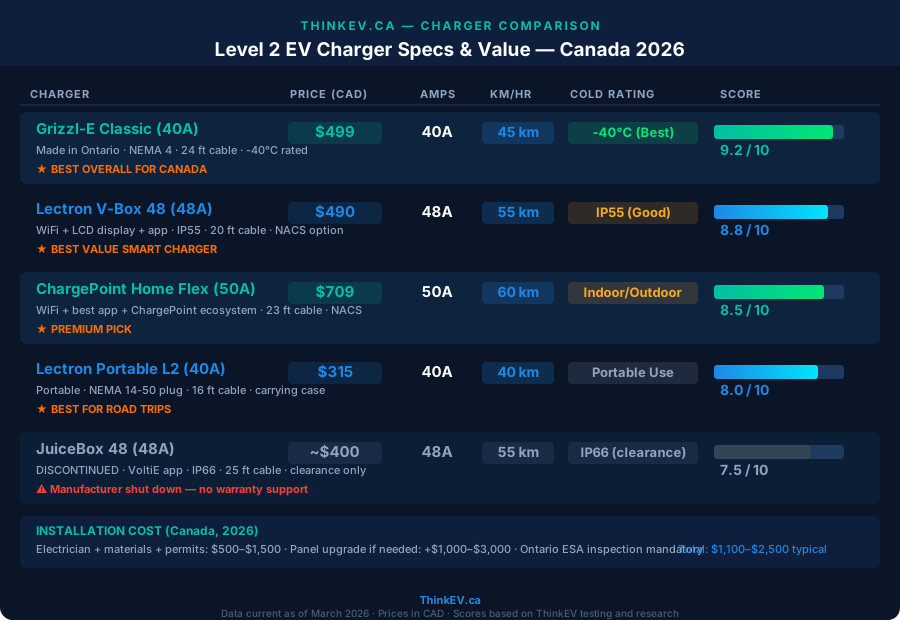
- Grizzl-E Classic, 40A, $499 CAD, no smart features, 24 ft cable, Best for Canada (9.2/10)
- Lectron V-Box 48, 48A, ~$490 CAD, WiFi + display + app, 20 ft cable, Best Value (8.8/10)
- JuiceBox 48, 48A, ~$599 USD, WiFi + Alexa + Google, 25 ft cable, Smart Features* (7.5/10)
- ChargePoint Home Flex, 50A, $709 CAD, WiFi + app ecosystem, 23 ft cable, Premium Pick (8.5/10)
- Lectron Portable L2, 40A, ~$315 CAD, no smart features (portable), 16 ft cable, Road Trips (8.0/10)
JuiceBox 48 smart features require VoltiE app after Enel X Way shutdown. See review below.
Individual Reviews
Each charger below was scored on five criteria: build quality and cold-weather rating (relevant down to -40°C in most of Canada), charge speed at typical home panel sizes (32A and 40A), cable length and weight, app and smart-grid feature set, and Canadian price and warranty support. The five units that made the list each lead at least one criterion; the top three lead on at least three.
1. Grizzl-E Classic (40A), Best Overall for Canada
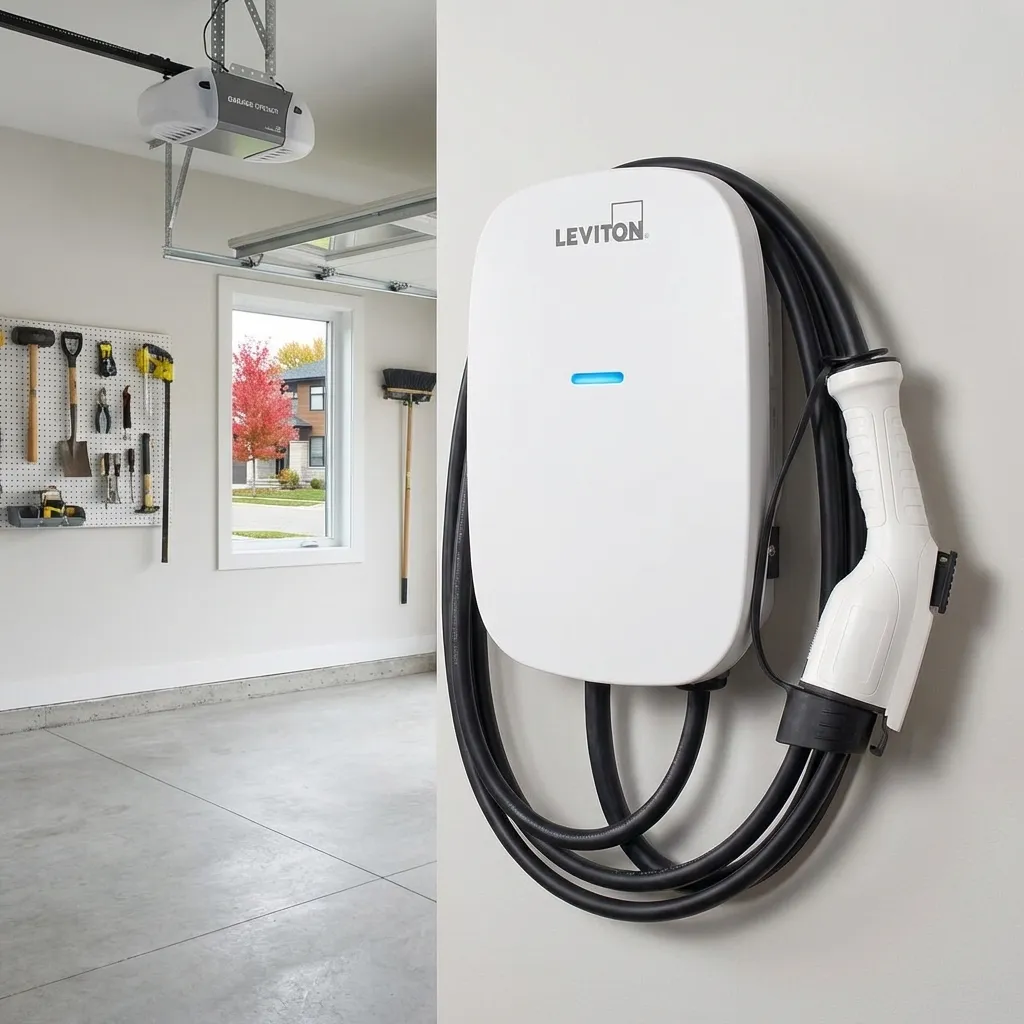
The Grizzl-E Classic is designed and manufactured in Ontario, Canada. That matters for two reasons: the company understands Canadian electrical codes and climate, and you get Canadian customer support in your timezone.
At $499 CAD from grizzl-e.com, it delivers everything that matters at a fair price. 40 amps of charging power adds about 45 km of range per hour, enough to fully charge any EV overnight. The NEMA 4-rated metal enclosure handles rain, snow, ice, and temperatures down to -40°C. The 24-foot cable is longer than most competitors, giving you flexibility in parking position.
There are no WiFi features. No app. No scheduling. For most people, that's fine. You plug in when you get home, you unplug in the morning. The charger handles everything else, overcurrent protection, ground fault detection, temperature monitoring, and voltage regulation.
Pros: Canadian-made, -40°C rated, rugged metal enclosure, 24 ft cable, adjustable amperage (16/24/32/40A), UL/CSA certified, excellent price
Cons: No smart features, no energy monitoring, no app
Gear worth having
As an Amazon Associate, ThinkEV earns a small commission from qualifying purchases — at no extra cost to you.

Grizzl-E Classic Level 2 EV Charger (40A)
Canadian-made and rated for minus 40C winters. 40A / 9.6 kW, NEMA 14-50, indoor/outdoor, 24-ft cable. The charger built for Canadian weather.
As an Amazon Associate, ThinkEV earns from qualifying purchases — at no extra cost to you.
2. Lectron V-Box 48 (48A), Best Value Smart Charger
The Lectron V-Box 48 delivers the most features per dollar of any charger on this list. At approximately $490 CAD equivalent (pricing varies by retailer and exchange rate), you get 48A charging, WiFi connectivity, a built-in LCD display, and an app for scheduling and monitoring.
The 2.75-inch display shows real-time data: power draw, charging time, line voltage, kWh dispensed, and internal temperature. That's useful information if you're on time-of-use billing and want to verify your charger is operating during off-peak hours.
At 48A, it pushes 11.5 kW, about 55 km of range per hour. The IP55-rated housing handles Canadian weather, though the plastic enclosure isn't as bomb-proof as the Grizzl-E's metal box. The 20-foot cable is adequate for most garages but shorter than the Grizzl-E's 24 feet.
It ships with both NEMA 14-50 plug and hardwire options. ETL and Energy Star certified. Available with either J1772 or NACS connectors depending on your vehicle.
Pros: 48A power output, built-in display, WiFi and app control, Energy Star certified, available with NACS connector, competitive price
Cons: 20 ft cable (shorter than Grizzl-E), plastic enclosure, less proven cold-weather track record
3. JuiceBox 48 (48A), Smart Features with a Caveat
Important note: Enel X Way shut down its North American operations in 2024. The JuiceBox 48 is discontinued and no longer manufactured. Existing units still work for basic charging, but the original app is dead. Third-party app VoltiE now provides smart features for connected JuiceBox units, though the experience isn't as polished.
If you find one at a discount, and they're still floating around at retailers clearing inventory, it remains a physically capable charger. 48A, 11.5 kW output, IP66-rated polycarbonate enclosure, and a 25-foot cable. The hardware is solid. It's the software and long-term support that's the question mark.
At full price ($599 USD / ~$830 CAD), it's a bad buy. At a clearance discount, it could be reasonable if you're comfortable with the VoltiE workaround and the lack of manufacturer support.
Pros: 48A output, IP66 weatherproof, 25 ft cable, widely available at clearance prices
Cons: Manufacturer shut down, original app dead, no warranty support, smart features require third-party VoltiE app, no new units being made
4. ChargePoint Home Flex (50A), Premium Pick
The ChargePoint Home Flex is the most polished charger on this list. 50 amps (up to 12 kW), a well-designed app that actually works, and integration with ChargePoint's massive public network, meaning you manage home and public charging from one account.
At $709 CAD from chargepoint.com (Canadian store), it's the most expensive option here. You're paying for the app ecosystem, reliable WiFi connectivity, energy usage tracking, charging schedules, and Alexa/Google Assistant integration. The 23-foot cable and adjustable amperage (16/24/32/40/50A via app) give you flexibility.
ChargePoint is a publicly traded company with a long track record. Unlike Enel X, they're not going anywhere. That matters when you're buying a product you expect to use for 10+ years.
Available as NEMA 14-50 plug-in, NEMA 6-50 plug-in, or hardwired. Now also offered with a NACS connector for Tesla owners. UL listed and Energy Star certified.
Pros: 50A / 12 kW output, excellent app, ChargePoint ecosystem, adjustable amperage via app, NACS option, Canadian store with CAD pricing, reliable company
Cons: Most expensive option at $709 CAD, smart features require WiFi connection, 23 ft cable
Gear worth having
As an Amazon Associate, ThinkEV earns a small commission from qualifying purchases — at no extra cost to you.

Lectron Level 2 J1772 Charger (40A, WiFi)
Smart WiFi charger with real-time energy monitoring. 40A / 9.6 kW, J1772 with a NEMA 14-50 plug, schedule charging right from your phone.
As an Amazon Associate, ThinkEV earns from qualifying purchases — at no extra cost to you.
5. Lectron Portable Level 2 (40A), Best for Road Trips
Every EV owner should have a portable Level 2 charger in their trunk. The Lectron Portable Level 2 is the one to get.
At approximately $315 CAD ($230 USD), it comes with a NEMA 14-50 plug, 16-foot cable, and a carrying case. Plug it into any 240V outlet, at a campground, a friend's house, your cottage, or an RV park, and charge at up to 40A (9.6 kW). That's about 40 km of range per hour from any standard dryer outlet.
It's also a perfectly fine permanent home charger if you want to avoid wall-mounting anything. Just coil the cable and plug it into your garage outlet.
No smart features, no WiFi. Just plug and charge. UL 2251 certified handle, ETL and Energy Star certified unit, and a 1-year warranty.
Pros: True portability, includes carrying case, works at any NEMA 14-50 outlet, solid build quality, dual Level 1/Level 2 capability
Cons: 16 ft cable (shortest on this list), no smart features, 1-year warranty (shorter than competitors)
Gear worth having
As an Amazon Associate, ThinkEV earns a small commission from qualifying purchases — at no extra cost to you.

ChargePoint Home Flex Level 2 Charger (50A)
Premium 50A / 12 kW charger with the best app ecosystem. Hardwired or NEMA 14-50, with real-time energy tracking and smart scheduling.
As an Amazon Associate, ThinkEV earns from qualifying purchases — at no extra cost to you.
Installation Cost Breakdown for Canada
Installing a Level 2 charger in Canada requires a licensed electrician. Here's what the work involves and what it costs across the country.
What the Electrician Does
Your electrician will install a dedicated 240V circuit from your electrical panel to your parking spot. This means running wire (typically 6-gauge for 40A or 4-gauge for 50A), installing a breaker, mounting a NEMA 14-50 outlet or hardwiring the charger, and ensuring everything meets the Canadian Electrical Code.
Cost by Province
Total installed cost, labour, parts, and permits, typically runs $650 to $2,150 nationally, with the spread driven mostly by labour rates and provincial inspection requirements. Ontario sits at the high end because of the mandatory ESA inspection. Quebec and PEI come in lower than the unsubsidized cost would suggest because of the Roulez vert and provincial charger rebates. Use the per-province ranges below as a calibration check against your contractor's quote.
- Ontario, Labour $800–$1,800, permits $100–$200, total $900–$2,000 (ESA inspection required)
- British Columbia, Labour $800–$2,000, permits $50–$150, total $850–$2,150 (Vancouver rates higher)
- Alberta, Labour $700–$1,500, permits $50–$150, total $750–$1,650 (Calgary/Edmonton premium)
- Quebec, Labour $700–$1,500, permits $50–$150, total $750–$1,650 ($600 Roulez vert rebate)
- Saskatchewan / Manitoba, Labour $600–$1,300, permits $50–$100, total $650–$1,400 (lower labour rates)
- Atlantic Provinces, Labour $600–$1,400, permits $50–$150, total $650–$1,550 (PEI $750 charger rebate)
What Can Increase the Cost
Panel upgrade ($1,000–$3,000): If your electrical panel is full or undersized (100A panel in an older home), you may need an upgrade to 200A service. This is the single biggest cost variable.
Long wire runs ($200–$500 extra): If your panel is in the basement and your parking spot is in a detached garage 30 metres away, the electrician needs more wire and conduit. Every extra metre of wire costs money.
Trenching for outdoor runs ($500–$1,500): Running wire underground from your house to a detached garage or carport requires trenching and outdoor-rated conduit.
Ontario-Specific: ESA Inspection
Ontario requires an Electrical Safety Authority (ESA) inspection for any new 240V circuit. Your electrician pulls the permit (typically $100–$200) and schedules the inspection. The ESA inspector confirms the work meets code. This is non-negotiable in Ontario, don't let anyone skip it.
Pro Tip: NEMA 14-50 Outlet vs.
Hardwired
Get a NEMA 14-50 outlet installed, not a hardwired setup. The outlet costs the same to install but gives you flexibility. You can unplug and swap chargers, take your portable charger on road trips, or upgrade your charger later without calling an electrician again. The only exception is the ChargePoint Home Flex at 50A, at that amperage, hardwiring is required by code.
Gear worth having
As an Amazon Associate, ThinkEV earns a small commission from qualifying purchases — at no extra cost to you.

Portable Level 2 EV Charger (40A, NEMA 14-50)
Throw it in the trunk and charge anywhere with a 240V outlet. 40A portable with NEMA 14-50 plug. Your road-trip insurance policy.
As an Amazon Associate, ThinkEV earns from qualifying purchases — at no extra cost to you.
Do I Need a Smart Charger?
Most Canadian EV owners do not. If you park in one garage, run a single EV, and charge overnight, a non-smart charger like the Grizzl-E Classic does everything that matters. The features that justify the extra $150-$300 are time-of-use rate scheduling (especially Ontario TOU), load sharing between two EVs on one circuit, solar-excess charging, and aggregated energy reporting for tax or accounting purposes.
When a Basic Charger Is Fine
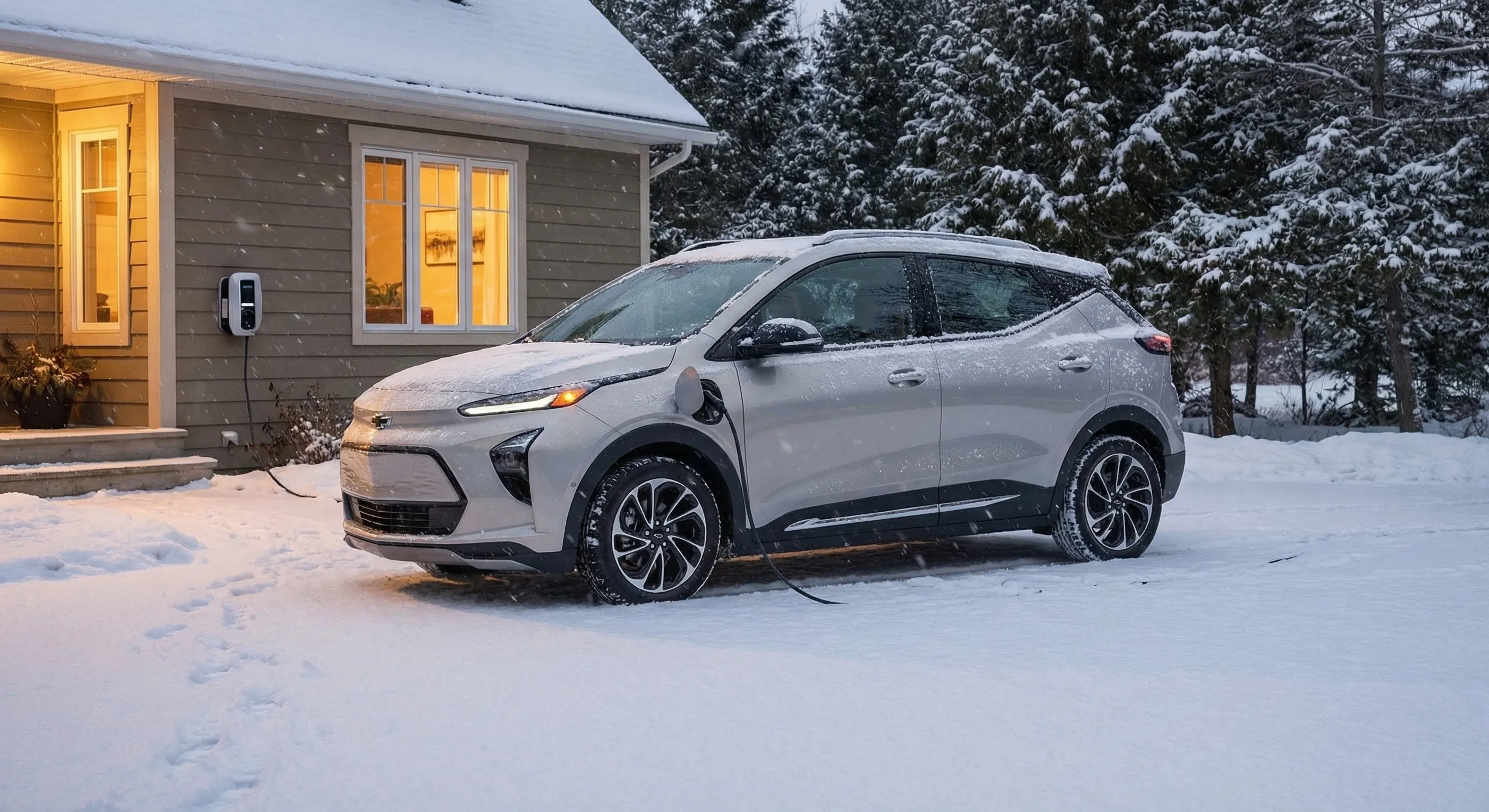
If you park in a garage with a single EV and charge overnight, a basic charger like the Grizzl-E Classic does everything you need. You plug in, it charges, you unplug in the morning. There's nothing to schedule because you're always charging at the same time. There's nothing to monitor because your car tells you the battery level.
Most Canadian EV owners fall into this category. A $499 Grizzl-E Classic serves them perfectly.
When Smart Features Matter
Time-of-use billing. If your utility charges different rates for peak and off-peak hours (Ontario's TOU rates are common), a smart charger can automatically start charging at 7 PM or 11 PM when rates drop. This can save $20–$40 per month depending on your driving and your utility's rate spread.
Multiple EVs. If your household has two EVs sharing one circuit, a smart charger with load management can alternate charging between vehicles without tripping breakers.
Solar integration. If you have rooftop solar and want to charge your EV with excess generation, a smart charger with energy monitoring helps you match charging to solar output.
Data and reporting. If you use your EV for business and need to track charging costs for tax purposes or expense reports, a smart charger with kWh logging makes this automatic.
The Verdict
For the majority of Canadian EV owners, people who park at home, plug in at night, and drive to work, a basic charger is the right call. Save $200+ and put it toward the electrician instead.
Our Recommendation
For most Canadians, the Grizzl-E Classic is the right charger. It's Canadian-made, priced fairly, built like a tank, rated for our worst winters, and does exactly what a home charger needs to do. No unnecessary complexity.
If you want smart features and you're on time-of-use billing, the Lectron V-Box 48 gives you the best combination of power, features, and price.
If you want the premium experience and plan to use ChargePoint's public network, the ChargePoint Home Flex justifies its price with the best app and longest track record.
And every EV owner should have a Lectron Portable Level 2 in the trunk. It turns any NEMA 14-50 outlet into a charging station, at campgrounds, cottages, or a friend's garage.
Related Reading
Gear worth having
As an Amazon Associate, ThinkEV earns a small commission from qualifying purchases — at no extra cost to you.

EV Charging Cable Organizer
A wall-mounted holster that turns a tangled garage cable into a clean setup. Five minutes to install, looks good forever.
As an Amazon Associate, ThinkEV earns from qualifying purchases — at no extra cost to you.

Founder & Chief Editor
Vlad Pereira is the founder and chief editor of ThinkEV.ca, the Canadian electric-vehicle publication he writes and edits from Courtenay, British Columbia. He covers EV pricing, federal and provincial rebates, charging costs, and the Chinese manufacturers now entering Canada, from the buyer's side rather than the press-fleet side. ThinkEV is a venture of Vlad Pereira Online; his writing on health, income and the long game lives at vladpereira.com.
Frequently asked questions
How much does it cost to install a Level 2 charger in Canada?
Can I install an EV charger myself?
What's the difference between 40A and 48A chargers?
Do Level 2 chargers work in Canadian winters?
How long does it take to charge an EV on Level 2?
Are there rebates for home EV chargers in Canada?
More EV & road-trip finds
Affordable upgrades worth a look — tap any to check the price on Amazon.
 ★ 2,941
Microfiber Cleaning Cloths (Multi-Pack)
View on Amazon ★ 314
★ 314Mini USB LED Ambient Lamps (4-Pack)
View on Amazon ★ 1,349
Cool Swinging Duck Dashboard Ornament
View on Amazon ★ 27,769
Car Cup Holder Coasters (4-Pack)
View on Amazon
TP-Link Kasa Smart Plug with Energy Monitoring
View on Amazon ★ 121
★ 121Foldable Windshield Sun Umbrella
View on Amazon ★ 268
★ 268Anti-Slip Leather Steering Wheel Cover
View on Amazon ★ 96,686
PULIDIKI Car Cleaning Gel (Detailing Putty)
View on AmazonRead, Plan, Then Stay Current
Explore our expert articles to understand incentives and ownership costs, use the map to pressure-test charging reality, then subscribe so new EV coverage comes straight to you.
Continue Reading

EV Charging on Road Trips Across Canada, Is It Viable Yet?
The Best Electric SUVs in Canada (2026): Ranked by Value

Longest-Range Electric Cars You Can Buy in Canada (2026)

EV Adoption Is Not Slowing Down: What the Data Says

Electric School Buses Are Changing Canadian Streets