Key takeaways
- ✓The price gap is real because Chinese brands arrived with tighter battery economics, faster product cycles, and less sentimental attachment to oversized vehicles.
- ✓The biggest North American barrier is not charging hardware or basic safety. It is trust in service, politics, software, and long-term support.
- ✓Canada feels this tension harder than most markets because buyers need affordable EVs, winter confidence, and a service network they can actually reach.
- ✓The right question is not whether every Chinese EV deserves a yes. It is whether North America is asking smarter questions than an automatic no.
A comparable Chinese EV can cost $28,000 CAD in markets where it competes directly against North American models priced at $43,000 to $48,000 before the financing office gets involved. That gap is not the result of corner-cutting. It reflects tighter battery economics, faster product cycles, and a willingness to build smaller vehicles. The price alone should be enough to shift the conversation. In Canada, it mostly has not.
That is why this topic matters. If Chinese EVs were merely a curiosity, none of this would be interesting. But they are not a curiosity anymore. They are a real pressure point on pricing, product planning, and the story North American automakers keep telling themselves about what consumers will tolerate.
For most people, the first part of the argument is easy to understand. A cheaper EV with decent range, modern software, and strong equipment should be attractive. The second part is harder. Cars are not phones. If a phone disappoints you, it is irritating. If a car disappoints you, it strands you, empties your wallet, and forces you into a service system you may already resent.
That is why buyers in Vancouver, Toronto, Calgary, Montreal, or Halifax do not evaluate a new EV badge the way they evaluate a cheap television. They are buying into a network. Parts. Service. Battery support. Insurance. Software. Resale. Public charging. Winter behavior. They are buying into the answer to a future argument they have not had yet.
This is where Chinese EVs run into a wall in North America. On paper, they often look like the kind of thing the market has been asking for: smaller, cheaper, better-equipped, and less bloated. In practice, they arrive carrying every anxiety people already have about China, globalization, government subsidies, and whether the company will still answer the phone five years from now.
So the question is not whether Chinese EVs are cheap. They are. The question is why that is still not enough.

The Price Gap Is Real Because the Economics Are Different
Start with the economics. Chinese EVs often start cheaper because their manufacturers are building around different assumptions. They are more comfortable with compact vehicle formats, more aggressive with battery integration, and less dependent on premium-margin trucks and SUVs to keep the business alive.
That matters immediately in Canada. If a buyer sees one EV at roughly $28,000 CAD, another at $35,000 CAD, and a mainstream North American alternative at $43,000 CAD or $48,000 CAD before the financing office starts adding pain, the conversation changes fast. That price gap is the difference between "interesting" and "possible."
It also changes what buyers forgive. People will put up with a slower 0-100 time, a slightly smaller trunk, or a more anonymous badge if the car saves them $10,000 upfront and another meaningful amount every year in fuel and maintenance. The budget does not care where the brand story came from.
This is where Chinese EV companies have been sharper than many North American brands. They were willing to build around LFP chemistry, tighter pack integration, smaller footprints, and less macho product positioning. That combination gave them an easier path to sane pricing. Not perfect pricing. Sane pricing.
North America has spent years pretending the EV transition could be built mostly around large crossovers, expensive trims, and halo vehicles that make the company look modern while still protecting legacy margins. That strategy produced some good cars, but it also produced a lot of sticker shock. Buyers noticed.
Look at the way price bands behave. Around $25,000 CAD, the conversation becomes about access. Around $35,000 CAD, it becomes about tradeoffs. Around $45,000 CAD, it becomes about justification. Once you are above that, you are not selling electrification as much as you are selling identity, lifestyle, or tech theatre.
Chinese brands have pushed hardest at the first two bands. That is exactly where North American consumers have been under-served. A lot of them do not need a six-second family SUV or an 800-km luxury statement. They need a commuter car, a compact crossover, or a second household vehicle that does not ask for luxury-car money.
That is why the Chinese EV threat feels more serious than the usual import panic. This is not only about undercutting premium models. It is about exposing how weak the affordable end of the EV market still looks in North America.
The battery cost story sits underneath all of it. Battery packs still dominate EV cost structures, which means a company with a cheaper and more disciplined battery strategy gets room to price more aggressively. That is one reason BYD's battery direction matters so much. If the pack cost drops, the whole vehicle story changes.
Natural Resources Canada keeps publishing running-cost guidance that points in the same direction, while Transport Canada keeps publishing adoption targets that only make sense if sticker prices get less punishing. The International Energy Agency keeps making the broader version of the same point: scale and battery economics decide who gets EVs into the mainstream first. None of that guarantees a perfect import story. It does explain why the price gap exists.
Then there is product pace. Chinese automakers do not behave like companies preserving a slow annual cycle with cosmetic trim updates and marketing language doing half the work. They move faster. More frequent updates. More aggressive equipment packaging. Less reverence for existing segment boundaries. That speed makes it harder for slower-moving brands to defend higher prices with weak feature lists.
For buyers, this usually gets experienced in very plain terms. Heated seats included. Better screens included. Driver-assistance tech included. Higher trim features moved downward faster than many North American buyers are used to seeing. That changes perceived value even before anyone mentions tariffs or battery chemistry.
This does not mean every headline price survives contact with Canada. Homologation, shipping, dealers, policy, and after-sales support all add cost. A vehicle that looks unbelievable in China can become merely competitive by the time it reaches Vancouver or Montreal. But merely competitive is still a big deal if the incumbent offering was overpriced to begin with.
That is the first reason North Americans should stop dismissing these vehicles with a reflex. Even if a Chinese EV never becomes the perfect deal, it can still force the local market to behave better.
The Product Is Not the Main Barrier. Trust Is.
The real barrier is not the steering, the battery, or the charge port. Buyers are afraid of being stuck with a product that looks great at purchase and turns vague, distant, or expensive the moment ownership gets complicated.
That fear is not irrational. It is exactly what people should worry about when they buy a car. If anything, too many buyers worry about the wrong things. They get hung up on national identity and miss the more practical questions.
Can I get it repaired within a reasonable distance?
Will the company still support software updates?
Does the dealer network actually know how to fix it?
Will my insurer treat this thing like a normal car or a rolling parts-supply problem?
What happens if resale collapses because the brand still feels unfamiliar in my province?
Those are the questions that decide the market. They are also the reason cheap pricing alone does not win.
North Americans, especially Canadians, have been trained by decades of car buying to attach trust to familiar brands almost automatically. Ford, GM, Toyota, Honda, Hyundai, Kia, Nissan. Even when those brands disappoint people, they still come wrapped in recognisable failure. There is a weird comfort in that. You know where the nearest dealer is. You know what your neighbour thinks about the brand. You know how the resale conversation sounds.
Chinese brands do not have that comfort layer yet. So every uncertainty feels magnified.
This gets worse because the old story about Chinese manufacturing still lingers. Some buyers are still mentally living in a world of bad toys, weak plastics, and counterfeit electronics from twenty years ago. They map that story onto modern EVs even when the manufacturing reality no longer fits. That is one reason the trust gap is so stubborn. The product moved on faster than the stereotype did.
It also does not help that cars are one of the few products where nationalism still sells cleanly. A phone can be globally assembled and nobody cares by dinner. A car still gets treated like an extension of region, industry, family identity, and political instinct. That makes buyers more conservative than they want to admit.
There is also an emotional penalty for being early. A person who buys the first BYD on the block is not just buying transport. They are volunteering to answer questions for everyone else. They are accepting that the first weird software bug, strange warning light, or delayed part becomes proof to sceptics that they made a foolish decision. That social pressure is real.
This is why trust has to be earned through more than pricing. It needs:
- consistent support
- visible dealer competence
- decent software behavior
- normal ownership stories
- a sense that the company is not improvising its way through North America
Until that happens, North American buyers will keep paying a familiarity tax. They will choose the more expensive badge because the future argument feels easier.
That is not the same thing as saying they are right. It is saying they are behaving like people buying risk, not just transport.
Charging Compatibility Is Less of a Problem Than People Think
Charging compatibility is no longer the decisive barrier. It still matters, but it is rarely the reason a serious buyer walks away once the export version of the vehicle is properly configured for the market.
This is important because charging fear remains one of the easiest lazy arguments against Chinese EVs. People still talk as if a Chinese import is automatically going to arrive speaking a different electrical language from the rest of the continent. That used to be a more reasonable concern. It is a much weaker one now.
Serious export programs adapt. They use the connector and charging standards the target market expects. They support the software stack buyers expect. They do what every automaker entering a new region has always had to do. This is not exotic. It is just product localisation.
The better question is not whether the plug fits. It is whether the ownership experience around charging feels mature. That includes:
- route planning
- battery preconditioning
- real-time charger visibility
- payment simplicity
- winter charging behavior
- software quality around charging failures
That is where the Chinese EV story becomes more interesting. Some of these companies are not merely catching up. They are coming from hyper-competitive domestic markets where charging speed, software cadence, and user-facing tech have already been treated as serious battlegrounds. That experience shows up.
For Canada, though, the technical answer is only half the story. The practical answer still matters more. A buyer in Ottawa does not just want to know that the connector works. They want to know that the car will cold-soak overnight in February, precondition correctly on the way to a fast charger, and not collapse into a glitchy mess when the charger is half-broken and the station software is in a foul mood.
That is why the charging question keeps mutating into a trust question too. If buyers trust the company, they tend to treat charging issues like normal EV friction. If they do not trust the company, the same charging issue feels like evidence that the entire product should never have been imported.
It is also worth separating home charging from public charging. For most Canadian households that can install a Level 2 charger, home charging still does the heavy lifting. That is where dependable hardware matters most. A car can have gorgeous fast-charging numbers and still feel annoying if the home setup is weak. That is why a decent charger guide still matters. Buyers obsess over peak kilowatts and ignore the plug they will actually use all year.
If you're shopping right now, keep the charging checklist boring. Ask what the export-market connector is. Ask how winter preconditioning works. Ask what happens when the charging software misbehaves. Ask where the nearest qualified service point is. If the answers sound slippery, the price advantage is probably not enough.
Gear worth having
As an Amazon Associate, ThinkEV earns a small commission from qualifying purchases — at no extra cost to you.

Grizzl-E Classic Level 2 EV Charger (40A)
Canadian-made and rated for minus 40C winters. 40A / 9.6 kW, NEMA 14-50, indoor/outdoor, 24-ft cable. The charger built for Canadian weather.
As an Amazon Associate, ThinkEV earns from qualifying purchases — at no extra cost to you.
Gear worth having
As an Amazon Associate, ThinkEV earns a small commission from qualifying purchases — at no extra cost to you.

Portable Level 2 EV Charger (40A, NEMA 14-50)
Throw it in the trunk and charge anywhere with a 240V outlet. 40A portable with NEMA 14-50 plug. Your road-trip insurance policy.
As an Amazon Associate, ThinkEV earns from qualifying purchases — at no extra cost to you.
The Grizzl-E keeps coming up for a reason. For a Canadian homeowner who just wants the car to charge without drama in winter, it does the job. The more boring the charger, the better. That is true whether the badge on the car says Hyundai, Tesla, or BYD.
Portable charging matters too, especially for renters and travellers.
Gear worth having
As an Amazon Associate, ThinkEV earns a small commission from qualifying purchases — at no extra cost to you.
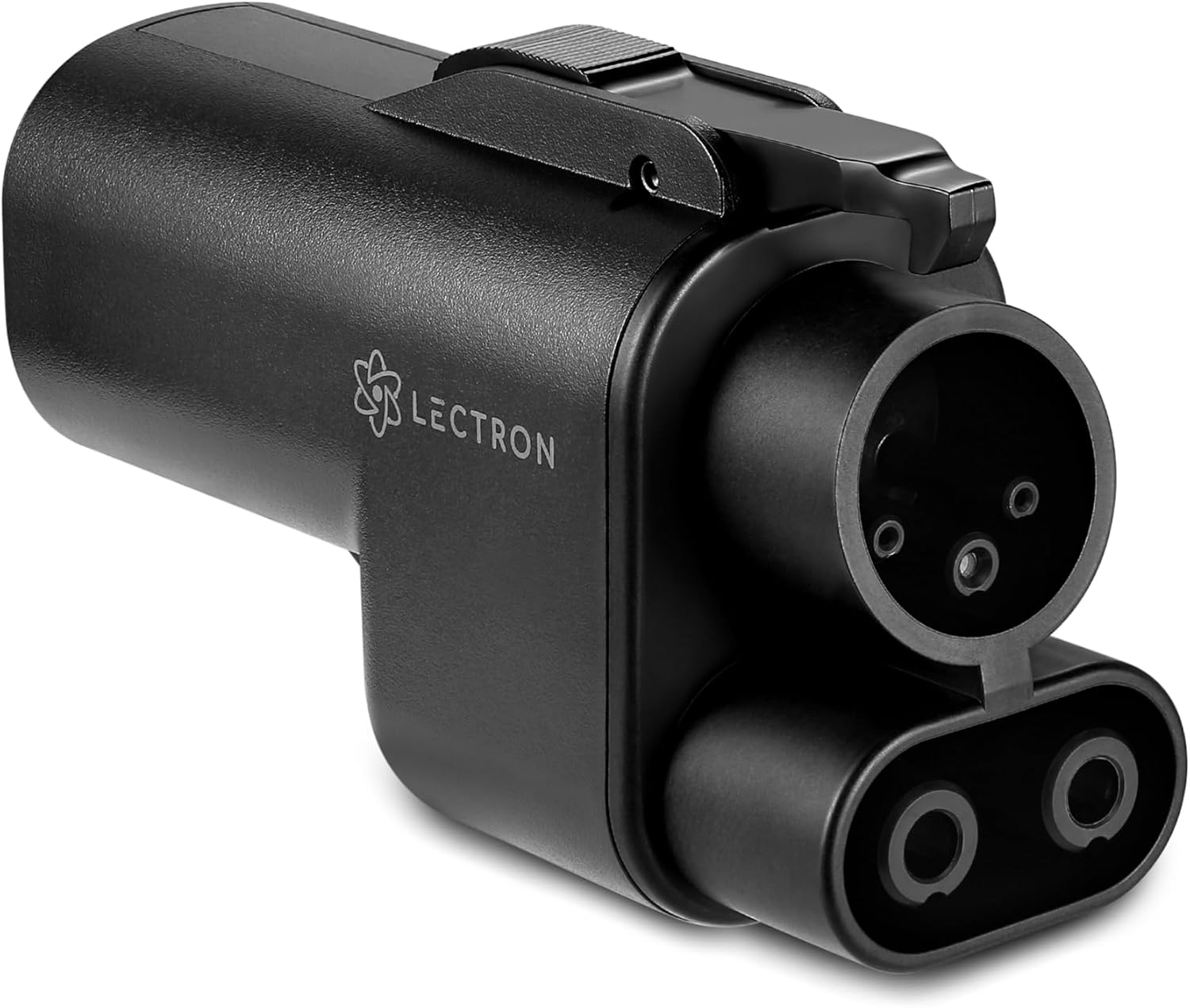
Lectron NACS to CCS Fast-Charge Adapter
Unlock every CCS fast charger for your Tesla, up to 500A DC. Never get stranded at a non-Tesla DC station again.
As an Amazon Associate, ThinkEV earns from qualifying purchases — at no extra cost to you.
That is where a portable Level 2 setup stops feeling like a gimmick and starts feeling like backup insurance. If the landlord situation is messy, the cottage has a usable outlet, or the family trip depends on improvisation, portability matters more than people admit in the showroom.
The larger point is this: charging compatibility is becoming a solved class of problem. Charging trust is not. North Americans keep mixing the two together, which makes the whole subject sound more mysterious than it really is.
Politics and Perception Are Distorting the Market
Politics is making the product feel riskier than the average buyer can evaluate calmly. By the time a lot of people hear about a Chinese EV, it has already been framed as a trade issue, a subsidy issue, a national-security issue, or a loyalty test.
That matters because most car buyers do not have the time or patience to disentangle those layers. They hear "Chinese EV" and immediately get three overlapping narratives.
First: it must be unfairly subsidized.
Second: it must be a threat to domestic industry.
Third: it must come with a surveillance or data-risk angle.
None of those concerns are fully imaginary. All of them are also selectively applied. That is the irritating part.
North American governments subsidize EV production and buying too. Europe subsidizes too. Companies across the auto industry rely on global supply chains that already pass through Chinese battery materials, cells, components, screens, and electronics. Buyers are already driving around in vehicles shaped by Chinese manufacturing. They just feel different about it when the logo changes.
That logo effect matters more than many analysts want to admit. A Chinese battery under a Tesla badge feels like industrial reality. A Chinese badge over the same broad supply chain suddenly becomes a geopolitical morality play.
Tariffs and reviews make this worse. Once governments start signalling that a vehicle is not merely a market entrant but a policy problem, buyers absorb that signal emotionally even if they do not understand the details. The car starts feeling provisional. People assume support might vanish. Incentives might disappear. Rules might change. That uncertainty punishes the brand before the test drive even happens.
In Canada, that distortion is especially annoying because the market desperately needs more real competition at the affordable end. Instead, politics often pushes the conversation toward symbolic positioning. Protecting domestic capacity matters, of course. So does keeping the market from becoming a museum of overpriced EVs politely waiting for better conditions.
This is where the perception story hurts buyers most. A lot of households do not care who wins the trade-policy argument in the abstract. They care whether their next vehicle costs $35,000 CAD or $49,000 CAD. They care whether a compact EV can replace a gas commuter without turning the budget inside out. They care whether the market still expects them to treat electrification like a luxury hobby.
If Chinese competition puts pressure on pricing, domestic brands will say that pressure is unfair. Some of it may well be. But from the buyer's chair, unfair pricing already exists. It is just pointing in the other direction. The current market asks ordinary households to absorb price inflation, slow model rollouts, and constant explanations about why affordable EVs are still somehow just around the corner.
That is one reason I think the politics conversation gets less convincing the longer it drags on. It assumes consumers should protect a market structure that is not protecting them back.
There is also a strange moral inconsistency here. North American buyers will cheerfully accept globalised electronics, foreign-built vehicles from familiar allies, and batteries assembled through complex international supply chains. But a Chinese badge flips the switch from commerce to ideology. At some point that stops being prudence and starts being theatre.
That theatre has a cost. It delays competition. It softens urgency. It gives domestic brands more time to act as if the buyer's pain threshold is still infinite. That may be good politics in the short term. It is not obviously good consumer policy.
For Canada, that delay is expensive. The federal target is 100% zero-emission new vehicle sales by 2035. That target will not be reached through speeches alone. It needs products that buyers in Mississauga, Surrey, Regina, and Laval can finance without feeling like they signed up for a policy experiment.
North America Is Also Defending a Story About Itself
A lot of resistance to Chinese EVs is really resistance to the idea that North America no longer leads every part of the conversation it once assumed belonged to it.
Cars are not neutral objects here. They are status, memory, aspiration, and regional mythology with licence plates. That makes foreign competition feel more personal than it would in a less emotionally loaded category.
North American buyers have grown up inside a car culture that treats certain shapes and stories as natural. Trucks are not only vehicles. They are political signals. Muscle cars are not only transport. They are historical nostalgia with financing. Even people who do not actively care about cars still swim inside those narratives.
Chinese EV brands show up and break the script. They do not always care about the same symbols. They are more willing to optimise for compact packaging, interior tech, aggressive pricing, and battery-led economics. They often feel less romantic and more transactional.
That should work in their favour in a practical age. Sometimes it does. Sometimes it fails because North Americans are still buying identity alongside utility.
Tesla understood that years ago. The company did not win only because of specs. It won because it sold a future people wanted to be seen participating in. Chinese brands, by contrast, still often arrive looking like they expect the spreadsheet to close the sale. It helps, but it does not finish the job.
This is where the perception battle gets subtle. The product may already be credible. The narrative still feels foreign. Buyers do not only ask, "Is this good?" They ask, "Does this fit the story I tell myself about what I drive?"
That sounds shallow, but it is not a trivial factor. A lot of purchase behaviour is emotional filtering dressed up in rational language. People say they are worried about charging or quality when they are really uneasy about being the first person in the family to show up in a badge nobody knows how to place.
That is why time and repetition matter. The first brand feels risky. The fifth brand feels normal. The first car on the block feels like an experiment. The hundredth feels like market reality.
North America went through this with Japanese brands. Then with Korean brands. It framed both waves as threats before quietly normalising them once the products became too competent and too common to dismiss. There is no guarantee the Chinese EV path will unfold the same way, but the pattern should at least look familiar.
You can already see the generational split forming. A younger buyer is often less loyal to the domestic badge than to the monthly payment, software quality, and whether the interior feels current. If traditional brands keep asking for more money while delivering thinner equipment lists, that buyer is not going to stay loyal out of romance.
If the market eventually shifts, it will not be because everyone had a sudden ideological conversion. It will be because price, product, and visibility wore down the resistance. That is usually how this works.
Gear worth having
As an Amazon Associate, ThinkEV earns a small commission from qualifying purchases — at no extra cost to you.

Tesla Key Card Holder with AirTag Slot
Stop fishing the keycard out of your wallet, and slot an AirTag in case the car wanders off in a lot.
As an Amazon Associate, ThinkEV earns from qualifying purchases — at no extra cost to you.
What Happens If North America Keeps Saying No
If North America keeps saying no, buyers keep paying too much, the affordable end of the EV market stays weak, and the transition keeps looking more elitist than it needs to.
Every automatic no has an opportunity cost. If credible low-cost competitors stay out or stay marginal, established brands face less pressure to fix the parts of the market they have neglected. That means fewer mainstream EVs at plausible prices, slower downward pressure on margins, and more polite excuses about why the affordable model is coming next year.
That is bad for buyers, bad for adoption, and bad for the credibility of the whole EV project. Once enough households decide the transition is clearly being built for richer people first, the politics gets uglier and the skepticism gets harder to reverse.
Canada is especially exposed here. It wants higher EV adoption, but it also asks buyers to handle winter, distance, charging complexity, and high vehicle pricing at the same time. If the market does not produce more convincing entry points, then more households will either hold onto older gas vehicles or move reluctantly into used EVs with concerns they do not feel equipped to evaluate.
Competition could change that. Even buyers who never purchase a Chinese EV would still benefit if those vehicles force stronger pricing, better feature packaging, and quicker product responses from everyone else. That is the part people miss. More competition does not only help the importer. It disciplines the incumbents.
There is also the climate angle, though I think it gets used too lazily sometimes. The reason cheaper EVs matter is not because every consumer wakes up ranking personal emissions at breakfast. It is because affordability is what turns policy goals into ordinary behaviour. If EVs remain expensive status objects, adoption slows. If they become normal household purchases, adoption accelerates without speeches having to do all the work.
Picture the decision the way a household actually sees it. A used gas crossover at $27,000 CAD. A mainstream new EV at $46,000 CAD. A lower-cost import at $34,000 CAD. That is not an ideological choice. It is a decision about whether electrification feels plausible or reckless. Competition matters because it moves that comparison closer to the middle.
That is why the question is bigger than BYD, NIO, Xpeng, Geely, or any one model. It is about whether the market will let affordable electrification become normal, or whether it will keep defending a slower and more expensive path because it feels culturally safer.
If you want the practical Canadian angle on that, the best companion reads are our BYD Seagull Canada preview, our BYD Dolphin Canada review, and our 2026 federal EV rebate guide. Those pieces answer the less ideological part of this story: price, incentives, range, and daily-use math.
My view is pretty simple. North America does not need to say yes to every Chinese EV. It does need to stop treating "Chinese" as a complete analysis. Ask harder questions. Demand service support. Demand sane pricing. Demand winter competence. Demand real software polish. But if the product clears those bars, the badge alone is not a serious reason to walk away.
That is the point. Smarter skepticism is useful. Reflex dismissal is expensive. If you're shopping in Canada right now, compare the landed price, ask where the car gets serviced, ask what happens in winter, ask what battery support looks like after year five, and then decide whether the risk is real or just inherited from an old story. Most buyers don't need ideological purity. They need a car that works and a payment that does not wreck the month.
That is a much better place to end than another automatic no.
Gear worth having
As an Amazon Associate, ThinkEV earns a small commission from qualifying purchases — at no extra cost to you.
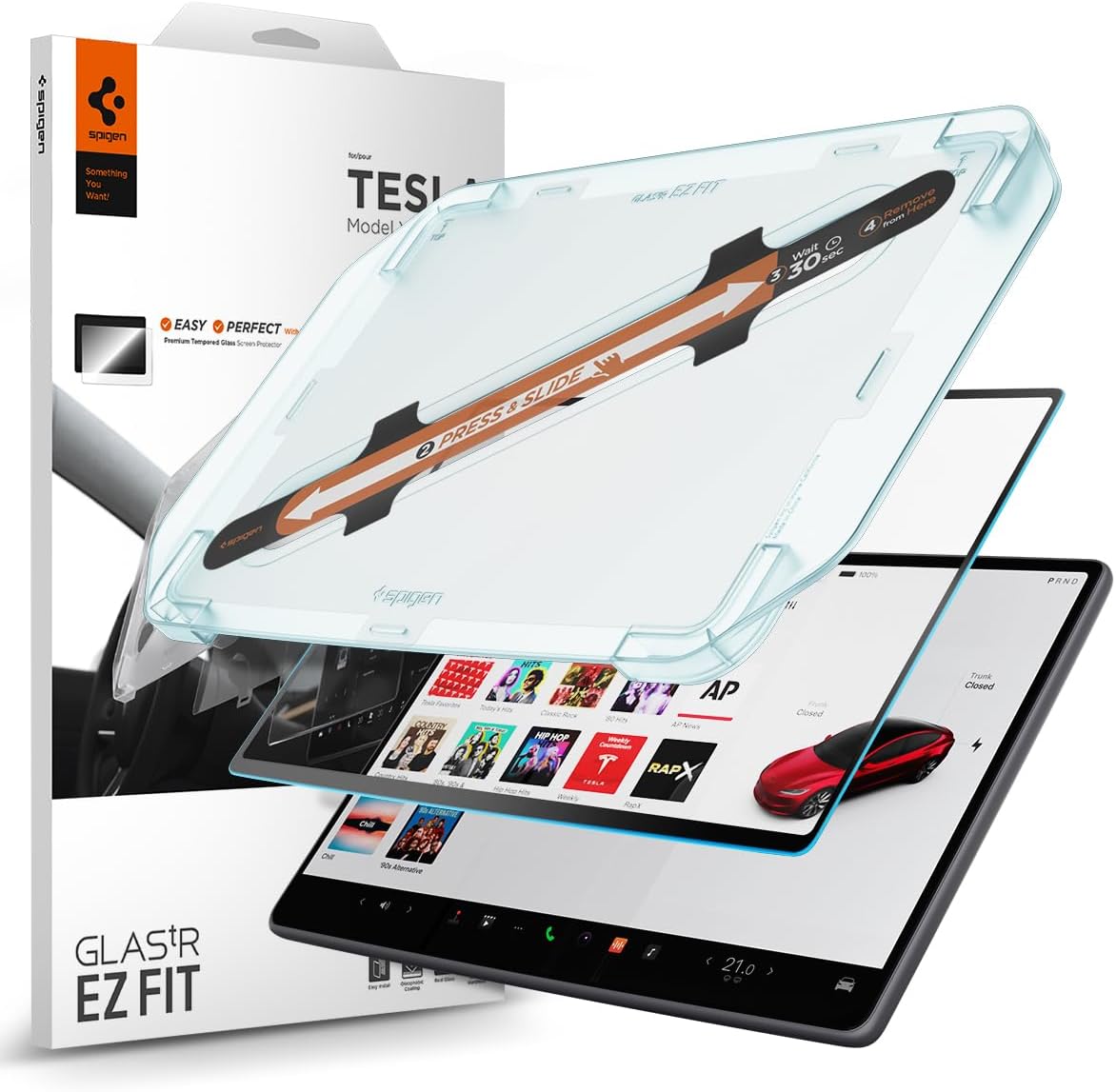
Spigen Tempered Glass for Tesla Model 3/Y
Tempered-glass protection for the touchscreen that kills fingerprints and scratches. Two minutes to install, lasts the life of the car.
As an Amazon Associate, ThinkEV earns from qualifying purchases — at no extra cost to you.

Founder & Chief Editor
Vlad Pereira is the founder and chief editor of ThinkEV.ca, the Canadian electric-vehicle publication he writes and edits from Courtenay, British Columbia. He covers EV pricing, federal and provincial rebates, charging costs, and the Chinese manufacturers now entering Canada, from the buyer's side rather than the press-fleet side. ThinkEV is a venture of Vlad Pereira Online; his writing on health, income and the long game lives at vladpereira.com.
Frequently asked questions
Are Chinese EVs actually safe enough for Canadian buyers?
Will Chinese EVs work with Canadian charging networks?
Why do North Americans still hesitate if the savings are real?
What should Canadian buyers compare first?
More EV & road-trip finds
Affordable upgrades worth a look — tap any to check the price on Amazon.
 ★ 17,839
Qifutan Vent Phone Mount (Military-Grade Clip)
View on Amazon ★ 8,681
Chemical Guys Complete Car Wash Kit
View on Amazon ★ 419
★ 419RGB Car Interior LED Strip Light
View on Amazon ★ 401
★ 401Crochet Daisy Rear-View Mirror Charm
View on Amazon ★ 865
★ 865Collapsible Trunk Organizer
View on Amazon ★ 297
★ 297360-Degree One-Hand Dashboard Phone Mount
View on Amazon ★ 61
★ 61Toddler Car Seat Snack and Cup Tray
View on Amazon ★ 68
★ 68WeatherTech FloorLiner for Tesla Model 3
View on AmazonRead, Plan, Then Stay Current
Explore our expert articles to understand incentives and ownership costs, use the map to pressure-test charging reality, then subscribe so new EV coverage comes straight to you.
Continue Reading

New or Used EV: Which Is the Smarter Buy in 2026?

EV Highway vs City Range: Why They Flip
Buy or Lease an EV in Canada? The 2026 Answer

Single-Motor vs Dual-Motor EVs: What AWD Actually Adds
BYD Shark 6 Price in Canada: $55K–$62K Estimate, Explained