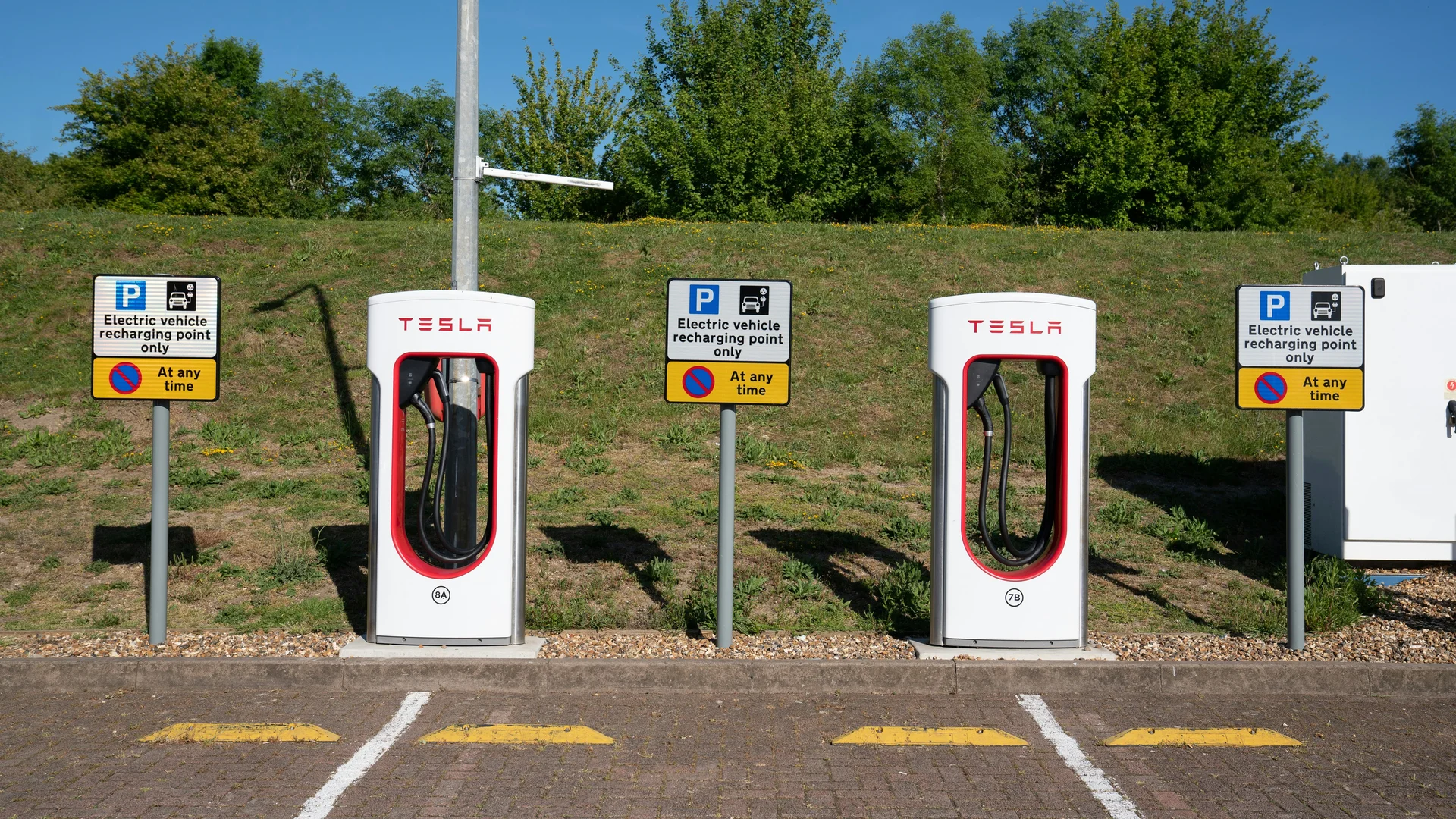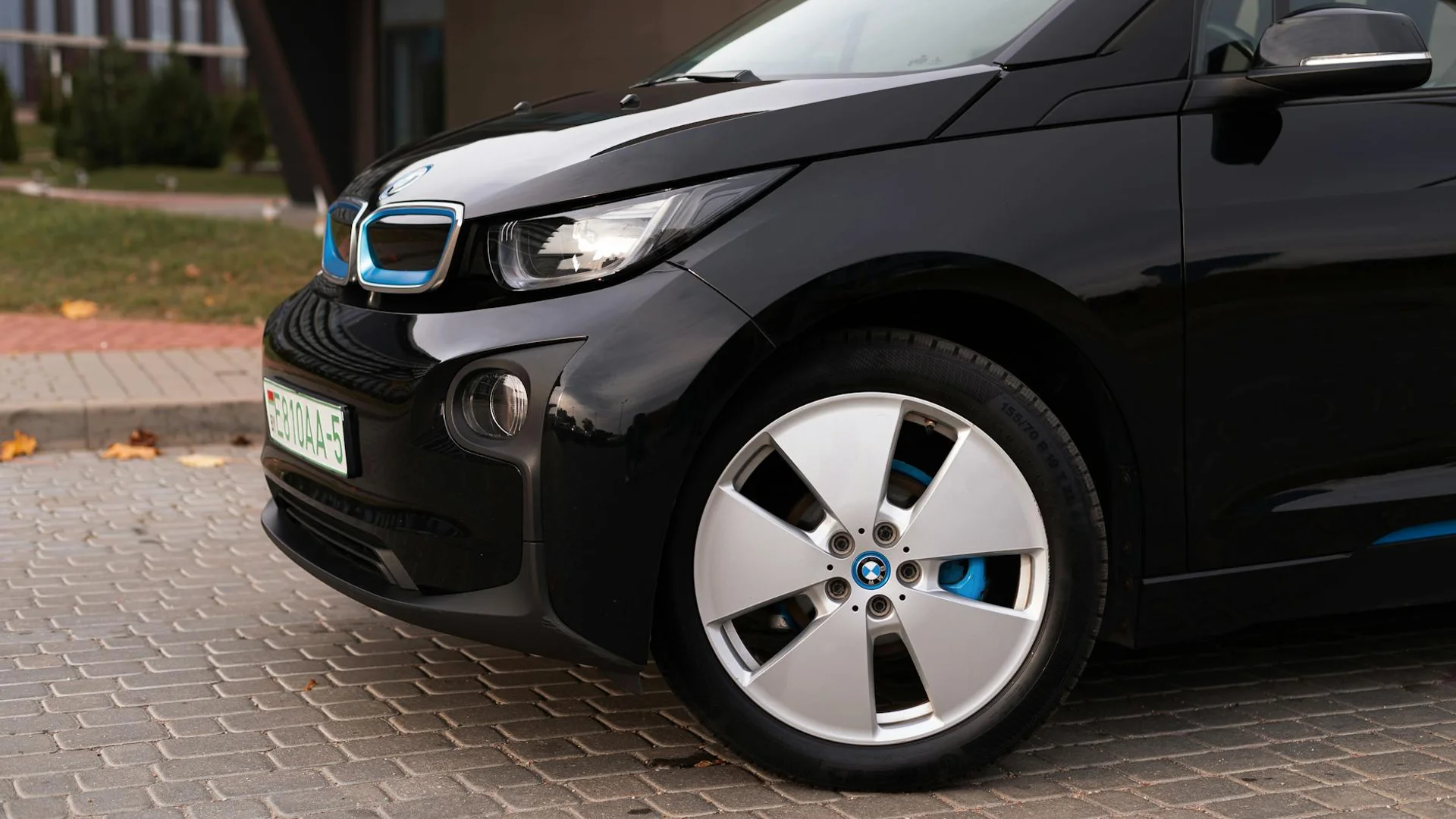
IONNA crossed 100 operational stations in April 2026. Two weeks later, BMW activated a 20 percent discount at every one of them. The press release frames it as a customer perk. Stripped of the marketing language, it is something else, a policy instrument, deployed at a specific moment, with a specific expiry, in a specific jurisdiction. That distinction matters because the rules governing who can discount what, where, and on what infrastructure are not settled. They are being written in real time, by manufacturers, by network operators, and by regulators who have not yet decided where the lines fall.
The official announcement, posted by BMW of North America on May 14, 2026, describes the launch of a preferred pricing program at IONNA charging locations across the U.S., further enhancing the public charging experience for BMW and MINI electric vehicle drivers. The mechanism is automatic. The discount is generous. The implications are larger than the headline suggests, and they extend well beyond the United States, to the European Alternative Fuels Infrastructure Regulation, the UK's 2023 EV Infrastructure Regulations, the NEVI programme's non-discrimination clauses, and the still-undefined Canadian federal framework for DC fast-charging access.
Read as a pricing story, this is a small announcement. Read as a policy story, it is the second move in a multi-year repositioning of how OEM-co-owned charging networks intend to price access. The policy story is worth working through.
Key takeaways
- BMW activated a 20% IONNA discount for BMW and MINI EV drivers on May 14, 2026, expiring September 30, 2026.
- The discount is OEM-gated, only accessible through Plug & Charge or the BMW app, invisible to third-party app users.
- GM moved first among IONNA's eight founding partners; BMW's discount is the second OEM-specific pricing tier on the network.
- Non-partner EV drivers, Tesla, Rivian, Lucid, Polestar owners, pay full undiscounted IONNA rates while founder-brand drivers get rebates.
- Canada has no IONNA footprint as of May 2026, so Canadian BMW drivers see none of this preferred pricing.
What the Preferred Pricing Program Actually Says
The terms are narrow and precise. According to BMW's press release, drivers of BMW and MINI EVs who initiate charging with Plug & Charge or the BMW app will receive 20% off charging sessions through September 30, 2026. The activation mechanism is the part that signals intent: the offering is fully integrated within the vehicle's digital ecosystem and automatically applied, no additional cards, subscriptions, or manual activation required.
Three structural elements require attention before going further.
First, the geographic scope is U.S.-only. There is no Canadian IONNA footprint as of May 2026, and the preferred pricing program does not contemplate one. Canadian BMW and MINI drivers remain on the existing third-party network mix, Electrify Canada, Petro-Canada's Electric Highway, FLO, Ivy, and the growing Tesla Supercharger NACS-adapter access. For a complete picture of how those networks price against each other across provinces, the EV charging infrastructure analysis walks through each operator's per-kWh structure.
Second, the activation is OEM-gated. The discount is not advertised at the station, not promoted in a coupon stream, not accessible to a driver who happens to own a BMW but charges via a third-party app or RFID card. It exists only inside BMW's manufacturer-controlled digital perimeter, Plug & Charge or the BMW-branded app. This matters for the regulatory question covered later in this piece: a discount that activates only through manufacturer-controlled telematics is functionally different from a discount available to any driver of any qualifying vehicle.
The case against treating this as significant is that promotional pricing on closed channels is unremarkable, airlines do it, hotels do it, every loyalty programme since American Airlines launched AAdvantage in 1981 has done it. The rebuttal, if the NEVI non-discrimination language holds in application, which the regulatory section below covers as unsettled, is that none of those industries received federal infrastructure subsidies on the condition of non-discriminatory access. The closer parallel is not airline miles. It is a toll road that accepts public construction funding and then offers a 20 percent rebate to drivers of one manufacturer's cars. That comparison is uncomfortable for a reason.
Third, the programme has a hard expiry, September 30, 2026. According to InsideEVs' coverage of the launch, American BMW and Mini EV drivers can enjoy discounted charging at Ionna's stations until September 30, 2026. That date is not arbitrary. It coincides with the end of IONNA's first full year past the 100-site milestone, and it gives BMW a clean off-ramp to either extend, convert to a permanent tier, or quietly let the programme lapse. Time-limited pricing programmes are a standard test instrument. The data BMW collects between May and September will determine what happens next.
The programme covers both BMW and MINI EV models with no model-year exclusions stated in the official release. Plug & Charge eligibility, which requires a Shell Recharge contract certificate to be downloaded to the vehicle, is the practical gate. According to IONNA's own FAQ, eligible drivers create a Shell Recharge account inside the BMW app, after which a Plug & Charge contract certificate is automatically provisioned to the vehicle. The discount is real. The mechanism is closed.
IONNA's Founding-Partner Discount Framework: Who Gets What
IONNA is not a neutral charging utility. It is a joint venture between eight automakers, and the structure of that joint venture is now beginning to shape the pricing landscape in ways that were not visible during its first year of operation.
Special offers including loyalty rewards, pre-paid discount cards, and everyday base discounts without subscriptions are, per InsideEVs' coverage of the 100-station milestone, coming to EV owners who drive cars built by Ionna's founding partners, BMW, Honda, Hyundai, Kia, Mercedes-Benz, Stellantis, and Toyota. General Motors is also a founding partner. That makes eight OEMs with structural standing to negotiate preferential pricing on the network they collectively own.
GM moved first. According to industry coverage of IONNA's evolution, General Motors activated the inaugural OEM-specific discount programme at the network before BMW followed. BMW's May 14 announcement is the second domino. The implication is straightforward: if eight partners each negotiate their own preferential tier, the network's stated baseline, what IONNA has described as "Friends & Family pricing for everyone" without subscriptions, fragments into a branded pricing maze. The driver of a non-partner EV (a Tesla, a Rivian, a Lucid, a Polestar, a Chinese-brand import) becomes the only customer paying the full undiscounted rate.
This is the structural question that sits underneath the headline. The phrase "loyalty rewards and pre-paid discount cards" is not a small footnote in a press cycle. It is a description of an emerging two-tier marketplace, where loyalty is not initiated by the consumer but assigned by the manufacturer at the point of vehicle purchase. The driver does not opt in. The manufacturer opts the driver in by virtue of which logo is on the hood.
What this implies for network economics is the more consequential question. IONNA's pitch to investors and policymakers has been the clean, simple "Friends & Family for everyone" pricing, a public-utility-flavoured commitment to non-discriminatory access. Founding-partner discount tiers do not break that commitment in letter, but they substantially erode it in spirit. The baseline rate becomes the price paid by drivers without a structural relationship to the network's owners.
The defence IONNA's partners will offer is that the founding OEMs took on capital risk no other manufacturer was willing to underwrite, and that returning some of that risk premium to their drivers is a reasonable commercial outcome. That argument has force. It also has limits. The capital risk was partially offset by the implicit prospect of NEVI funding, by site-host agreements with retail anchors, and by the strategic value of controlling the connector standard during the CCS-to-NACS transition. The shareholders carried risk, but the policy environment carried much of it with them. A discount tier funded entirely by private capital is one conversation. A discount tier funded by capital that was de-risked through public infrastructure programmes is a different conversation.
For context on how this compares to other charging networks Canadian readers will recognise, the CCS vs NACS standards analysis covers the connector economics that sit beneath the pricing economics, both shape what "open access" actually means in practice.
Gear worth having
As an Amazon Associate, ThinkEV earns a small commission from qualifying purchases — at no extra cost to you.

Lectron Level 2 J1772 Charger (40A, WiFi)
Smart WiFi charger with real-time energy monitoring. 40A / 9.6 kW, J1772 with a NEMA 14-50 plug, schedule charging right from your phone.
As an Amazon Associate, ThinkEV earns from qualifying purchases — at no extra cost to you.
Network Scale and Deployment Velocity: The Infrastructure Context
The pricing programme does not exist in a vacuum. It exists on top of the fastest-growing automaker-backed charging network in the U.S., and the deployment velocity matters for evaluating what the discount is actually worth.
IONNA's 100-station milestone is the inflection point. Two years after the network was announced and roughly 13 months after the first site opened, the build-out reached three digits. The pipeline is much larger, 340 additional sites are in process, according to coverage of the milestone announcement. That trajectory is unusual in U.S. fast-charging deployment, where Electrify America took roughly five years to reach a comparable footprint and where Tesla's Supercharger network expanded over more than a decade.
The hardware specification is the second structural factor. IONNA uses 400-kilowatt DC fast chargers exclusively, and its stations offer clean amenities. That 400 kW headline rate sits above the operational ceiling of most existing U.S. and Canadian DCFC infrastructure. Electrify Canada operates 200+ stalls at 50+ locations with chargers rated up to 350 kW, priced at $0.43 per kWh or $0.31 per kWh with a $4 monthly membership. Most non-Tesla networks in North America cluster at 150 to 250 kW peak. The 400 kW capability becomes operationally meaningful as 800V-architecture vehicles proliferate, the Hyundai Ioniq 5 and 6, Kia EV6 and EV9, Porsche Taycan, Audi e-tron GT, and the BMW Neue Klasse architecture that underpins the upcoming iX3, iX5, and i3 platforms.
That last point connects the discount to the product roadmap. According to BMW-focused industry coverage of the IONNA partnership, some IONNA stations will offer 400 kW NACS access, which will give upcoming iX3, iX5, and i3 owners a substantial boost in charging times. The 20 percent discount, in other words, is being deployed in the months immediately preceding a major BMW EV product cycle. It is pre-loading loyalty before the new models ship. That is not coincidence. It is product launch sequencing dressed as a charging promotion.
A skeptic would push back that BMW's EV volumes in the U.S. are not large enough for this kind of loyalty pre-loading to matter at IONNA's scale, the iX, i4, and i5 together moved fewer than 50,000 units in the U.S. in 2025, against a network being built to serve millions of cars across eight brands. The rebuttal is that the marginal cost of running a digital discount through Plug & Charge is essentially zero, and the marginal value of converting a wavering BMW intender into a confirmed BMW buyer in the quarter before iX3 deliveries begin is several thousand dollars per conversion. The maths works at small scale precisely because the cost side is negligible.
The Canadian context is conspicuously absent. There is no announced IONNA buildout north of the border as of May 2026. For Canadian readers wondering how DC fast charging speeds change in our actual operating environment, the cold weather EV charging analysis lays out why theoretical peak rates and observed winter rates can diverge by 50 percent or more, a factor that affects how meaningful a 400 kW headline truly is between October and April.
Pricing Mechanics: What 20 Percent Off Actually Means
IONNA has not published its standing per-kWh rate, the discount is announced without the denominator. The savings are therefore a function of comparable network benchmarks rather than confirmed IONNA pricing.
One published reference point is worth anchoring against. According to InsideEVs' coverage of IONNA's first-week pricing pattern, Ionna will charge $0.20 per kilowatt-hour for the first week at every new location it opens this year, a deliberate introductory rate designed to drive trial behaviour. The standing rate is materially higher, and the gap between the introductory $0.20 and the everyday rate is itself a clue: if the network's strategy involves prolonged price-elastic experimentation, the 20 percent BMW discount is best read as a structured continuation of the same testing pattern, not a one-time gesture.
Comparable U.S. DC fast-charging rates provide a working estimate for the everyday rate. Electrify America operates in the range of $0.43 to $0.48 per kWh for non-member pricing. EVgo's projected fast-charging rates sit between $0.45 and $0.65 per kWh, dropping to $0.35 to $0.50 with a paid membership tier. If IONNA's baseline rate is in the same competitive range, somewhere between $0.45 and $0.55 per kWh, a 20 percent reduction brings the effective rate to roughly $0.36 to $0.44 per kWh for BMW and MINI drivers.
The dollar math, in concrete terms, looks like this. A BMW iX with a usable battery in the 80 kWh range, charging from 20 percent to 80 percent, consumes roughly 48 kWh per session. At a hypothetical $0.48 base rate, the session costs $23.04 undiscounted and $18.43 after the 20 percent reduction, a saving of $4.61. For a driver completing two public DCFC sessions per week, that compounds to approximately $480 to $600 per year, depending on the assumed base rate.
That figure is material but not transformative. For comparison, the Canadian pricing landscape for the same charging behaviour runs noticeably higher. Tesla Supercharger pricing in Canada ranges from $0.39 to $0.55 per kWh; Electrify Canada charges $0.32 to $0.49 per kWh; Petro-Canada's Electric Highway sits at $0.35 to $0.45 per kWh and does not currently offer a membership discount tier. The provincial charging cost analysis breaks these networks down by province.
The deeper observation is that public DCFC pricing remains substantially more expensive than home Level 2 charging across all jurisdictions. A driver with a home charger pays $0.08 to $0.15 per kWh in most Canadian provinces and $0.10 to $0.30 per kWh in most U.S. states. The 20 percent IONNA discount does not change that hierarchy. It compresses it modestly. For drivers without home-charging access, apartment renters, condo dwellers, drivers in dense urban cores, the discount is more consequential, and the workplace charging access analysis covers why structural access to charging at home or work alters the per-kWh calculus more than any promotional discount on the public network.
Gear worth having
As an Amazon Associate, ThinkEV earns a small commission from qualifying purchases — at no extra cost to you.
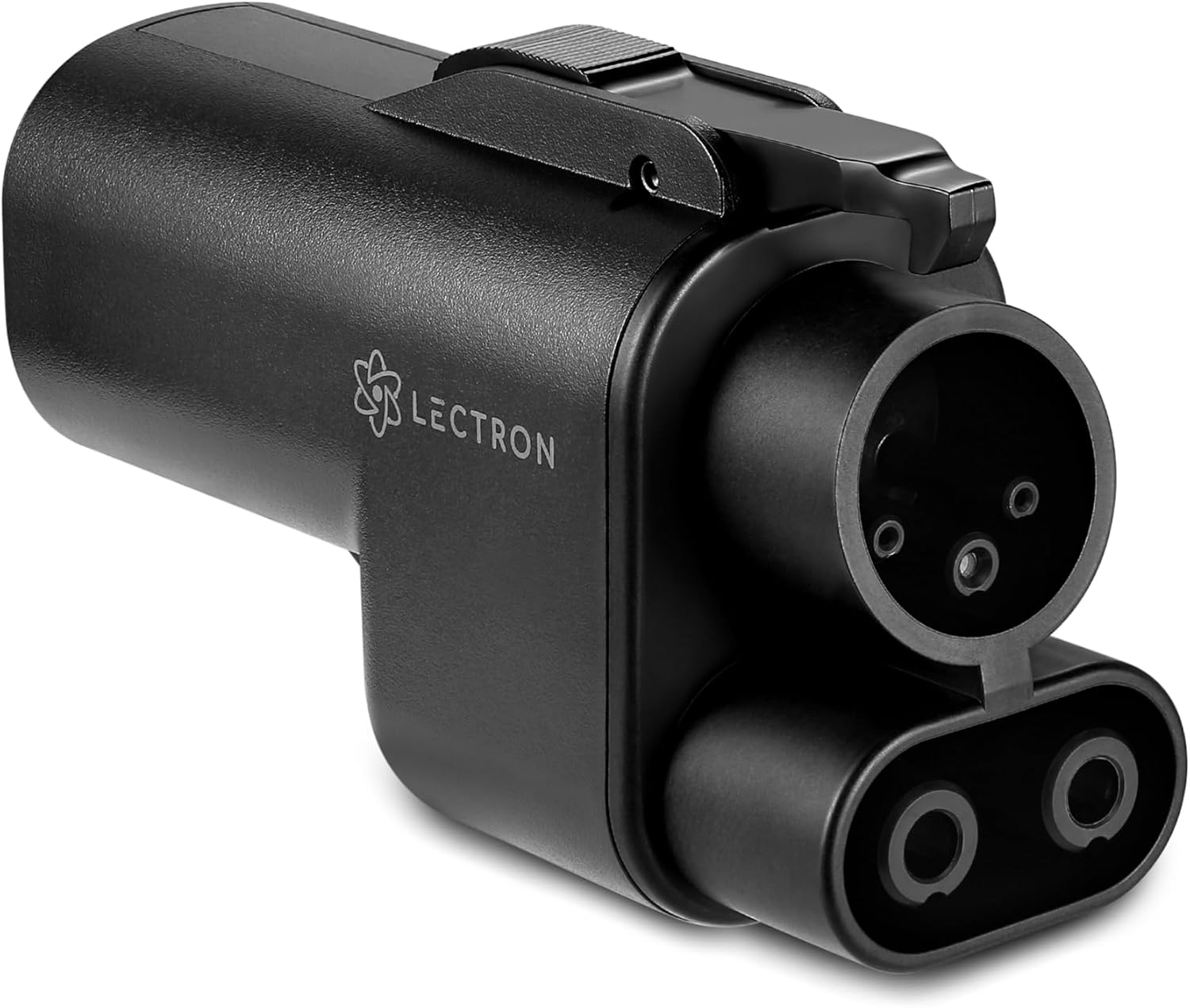
Lectron NACS to CCS Fast-Charge Adapter
Unlock every CCS fast charger for your Tesla, up to 500A DC. Never get stranded at a non-Tesla DC station again.
As an Amazon Associate, ThinkEV earns from qualifying purchases — at no extra cost to you.
Gear worth having
As an Amazon Associate, ThinkEV earns a small commission from qualifying purchases — at no extra cost to you.

Grizzl-E Classic Level 2 EV Charger (40A)
Canadian-made and rated for minus 40C winters. 40A / 9.6 kW, NEMA 14-50, indoor/outdoor, 24-ft cable. The charger built for Canadian weather.
As an Amazon Associate, ThinkEV earns from qualifying purchases — at no extra cost to you.
Regulatory and Policy Levers Behind OEM-Network Discount Programs
This is where the BMW announcement intersects with unsettled law. The pricing question is small. The policy question is large.
The U.S. NEVI programme, the National Electric Vehicle Infrastructure formula programme, is administered through state Departments of Transportation under Federal Highway Administration oversight. It requires that charging stations receiving NEVI funds remain open to all vehicles at non-discriminatory pricing. The plain reading of "non-discriminatory" has not been formally tested against the question of OEM-gated discount tiers. If an IONNA station received NEVI funding, and that station offers a 20 percent discount activated only through one manufacturer's app, the question becomes whether the discount constitutes prohibited discrimination or permitted promotional pricing. The Department of Energy and the Federal Highway Administration have not issued formal guidance on that question as of May 2026. The precedent is unsettled.
The counter-position, and it is one IONNA's lawyers will likely argue if challenged, is that NEVI's non-discrimination language was drafted against the historical concern of network-exclusive charging (Tesla's pre-2023 closed Supercharger model), not against promotional pricing layered on top of open access. By that reading, an IONNA station that accepts any vehicle, charges any driver at the posted rate, and offers contactless payment satisfies the non-discrimination requirement regardless of whether some drivers receive promotional rebates through manufacturer apps. The argument has textual support. It also has the structural weakness that "promotional" pricing covering eight founding OEMs simultaneously begins to look less like a promotion and more like a structural pricing tier.
The European framework is more explicit. The Alternative Fuels Infrastructure Regulation, known as AFIR, came into force across the EU in April 2024 with phased implementation through 2025 and beyond. AFIR Article 5 requires per-kWh pricing displayed transparently at charging stations of 50 kW and above, with non-discriminatory access for all users. Ad-hoc pricing, the price available to a driver with no contract, no app, and no subscription, must be available and clearly posted. A pricing structure where the 20 percent reduction is accessible only through one manufacturer's app would, on the plain reading of AFIR, raise compliance questions. The regulation does not prohibit OEM-branded discount programmes outright, but it does require that the underlying ad-hoc pricing remain available and non-discriminatory.
The UK has gone further. The Public Charge Point Regulations 2023, which came into force progressively through 2024 and 2025, require open access at every public charging point above 8 kW, contactless payment at every charging point above 8 kW, and price transparency at the point of use. The structural assumption of the UK regulation is that any driver of any qualifying vehicle should be able to plug in, pay, and charge without an account, subscription, or manufacturer-specific app. An OEM-exclusive 20 percent discount tier would not be unlawful, the discount itself is permissible, but the network would still be required to offer fully open, contactless, transparently priced access to every other driver.
Canada has no equivalent federal framework. There is no national open-access mandate for DC fast charging. Provincial rules vary. Quebec's Hydro-Québec network operates under provincial utility oversight. Ontario's mix of Electrify Canada, Petro-Canada, FLO, and Ivy operates under standard commercial terms with no federal pricing mandate. The federal Zero Emission Vehicle Infrastructure Programme (ZEVIP) provides capital funding to network operators but does not condition that funding on pricing structure. The result is a Canadian regulatory environment that would, in principle, present no barrier to an IONNA-style OEM-preferential pricing tier if IONNA were to expand north, but the network has not signalled such expansion.
China's regulatory structure is different again. The GB/T charging standard is mandated nationally, pricing is set at the provincial level under State Grid and China Southern Power Grid oversight, and there is no OEM-exclusive discount framework operating at meaningful scale. Chinese EV manufacturers, BYD, Geely, NIO, XPeng, Li Auto, generally do not own or co-own the public charging networks their vehicles use. The structural setup that makes IONNA's founding-partner discount tiers possible does not have a Chinese analogue at present.
Multi-Jurisdiction Comparison: How Charging Discount Policy Diverges
The EU would likely flag this. Canada would not flinch. The U.S. cannot decide. The same business model, an OEM-gated discount on a manufacturer-co-owned charging network, would face materially different regulatory treatment depending on jurisdiction. The breakdown:
- United States (federal): NEVI non-discrimination clause, unsettled in application. OEM-gated discount: legal grey zone; no DOE or FHWA guidance issued as of May 2026.
- European Union: AFIR Article 5, ad-hoc pricing required and transparently displayed at every station of 50 kW and above. OEM-gated discount: permitted only if the baseline ad-hoc rate remains open, transparent, and non-discriminatory underneath the loyalty layer.
- United Kingdom: Public Charge Point Regulations 2023, full open access, contactless payment, and price transparency mandated at every public charging point above 8 kW. OEM-gated discount: permitted as a layer on top, but cannot block contactless ad-hoc access at the posted rate.
- Canada (federal): No federal open-access mandate. ZEVIP capital funding does not condition disbursement on pricing structure. OEM-gated discount: no regulatory barrier to OEM-preferential pricing if a partnered network were to operate domestically.
- China: GB/T charging standard mandated nationally; pricing set at the provincial level under State Grid and China Southern Power Grid oversight. OEM-gated discount: no structural OEM-network framework exists at meaningful scale, so the model has no domestic analogue.
The interesting comparison is the precedent set by Tesla's Supercharger network in the U.S. NEVI context. Tesla, in order to access NEVI funds for Supercharger expansion, agreed to open a portion of its network to non-Tesla vehicles using the Magic Dock CCS adapter and now the NACS standard rollout. That precedent, that NEVI funding triggers an open-access obligation, sits in direct tension with the OEM-gated discount model IONNA's founding partners are now deploying. The question regulators will eventually have to answer is whether opening access is sufficient for NEVI compliance, or whether non-discriminatory pricing on that access is also required.
A second precedent worth weighing is the EVgo membership model, which has operated for nearly a decade in the U.S. without triggering NEVI scrutiny. EVgo charges non-members $0.45 to $0.65 per kWh and members $0.35 to $0.50, with the membership available to any driver for a monthly fee. That tiered pricing has been treated as commercially routine because the membership is open to all comers. The structural difference with the BMW–IONNA programme is that BMW drivers cannot pay to opt out of the discount, and non-BMW drivers cannot pay to opt in. The tier is keyed to vehicle ownership, not to a fee any driver can elect. That distinction is the legal hinge, and it is the one regulators will likely focus on if they choose to focus at all.
Nobody knows. The legal architecture has not caught up to the commercial architecture. BMW's 20 percent discount is operating in that gap.
Gear worth having
As an Amazon Associate, ThinkEV earns a small commission from qualifying purchases — at no extra cost to you.

ChargePoint Home Flex Level 2 Charger (50A)
Premium 50A / 12 kW charger with the best app ecosystem. Hardwired or NEMA 14-50, with real-time energy tracking and smart scheduling.
As an Amazon Associate, ThinkEV earns from qualifying purchases — at no extra cost to you.
What Comes After September: The Loyalty Ecosystem Endgame
The September 30 expiry is the most analytically interesting feature of the announcement, and it deserves more attention than the discount rate itself.
Three outcomes are plausible. First, BMW extends the programme, either at the same 20 percent rate or at a stepped-down permanent tier of 10 to 15 percent. This is the soft-landing path. Second, BMW converts the programme into a paid loyalty tier, a subscription analogue to EVgo's membership model, where BMW drivers pay a monthly fee for guaranteed discounted access. This is the EVgo-pattern path. Third, BMW lets the programme lapse and accepts a churn cost to non-IONNA networks as drivers re-evaluate where they charge. This is the least likely path, but it is the one that would signal BMW judged the loyalty data as inconclusive.
The InsideEVs coverage of IONNA's 100-station milestone hints at where the network sees the broader trajectory. The mention of loyalty rewards, pre-paid discount cards, and everyday base discounts without subscriptions, coming to EV owners who drive cars built by Ionna's founding partners, describes a fully fledged tiered marketplace, not a one-off promotional gesture. The 20 percent BMW discount is best read as the second installment in a multi-year programme, not as a discrete summer offer.
The structural risk for IONNA, and the question regulators should be tracking, is the market-share threshold at which a multi-OEM charging network's preferential pricing for its founding partners begins to function as a coordinated discount cartel rather than parallel commercial behaviour. The framework worth applying here is the hub-and-spoke conspiracy analysis familiar to U.S. Sherman Act Section 1 and EU Article 101 TFEU horizontal-coordination cases. IONNA sits at the hub. Eight founding OEMs sit at the spokes. The coordinated tier of preferential discounts is the wheel that connects them. Hub-and-spoke liability is not triggered by parallel pricing alone, competitors are generally allowed to set similar prices independently, but it does require that the spokes were aware of each other's participation in the common framework. The "founding partners" branding, used openly in IONNA's investor and consumer communications, arguably satisfies that awareness threshold by design. Antitrust authorities have applied this framework carefully in other industries, most recently in algorithmic pricing cases in U.S. hospitality and rental housing, and the structural parallel to charging is closer than the regulatory attention to date suggests.
The counter-argument here is that the founding-partner model is the only structure under which eight competing automakers were willing to pool capital for a charging network in the first place, and that breaking the structure would simply return the U.S. to the pre-IONNA equilibrium where no one builds reliable high-speed infrastructure outside Tesla's closed system. There is real force to that argument. The historical record of attempts to build neutral, well-capitalised charging networks in the U.S. before IONNA is, charitably, mixed. Electrify America exists because of a diesel-emissions settlement. EVgo has struggled financially. ChargePoint sells hardware rather than operating sites at scale. If the price of getting reliable 400 kW infrastructure into a hundred locations in thirteen months is tolerating an OEM-tiered pricing model, the policy trade-off is not obvious.
The rebuttal to the counter-argument is that "the alternative is no infrastructure" is precisely the framing every dominant network coalition has used at every regulatory inflection point, from the original railway trusts forward, and that the appropriate policy response is not to abandon scrutiny but to define the boundary conditions before market share crosses the threshold where retroactive correction becomes unworkable.
Three indicators are worth tracking between now and the end of September. First, whether Hyundai, Honda, or Mercedes-Benz activates a similar OEM-gated discount before the BMW programme expires, that would confirm the founding-partner playbook is being executed in coordination rather than as individual promotional decisions. Second, whether the Federal Highway Administration or any state DOT issues guidance on the NEVI non-discrimination question, even informal guidance would shift the legal terrain materially. Third, whether IONNA announces any Canadian expansion before the end of 2026, that would force the Canadian regulatory environment to make explicit choices it has so far been able to leave implicit.
What would change the cartel framing: a sustained period, twelve months or longer, in which the IONNA partner discounts diverge meaningfully from one another rather than converging on a common 15-to-20 percent band. Divergence would suggest the partners are competing on charging economics. Convergence would suggest they are coordinating. The data point is observable, and it will exist within a year.
The most defensible forecast is that the programme extends in modified form past September, the second and third founding partners activate their own tiers before the end of 2026, and the first formal regulatory inquiry, most likely at the EU level rather than U.S., opens before the end of 2027. The BMW announcement is small. The pattern it sits inside is not.
The pricing programme is the headline. The policy framework is the story.
Gear worth having
As an Amazon Associate, ThinkEV earns a small commission from qualifying purchases — at no extra cost to you.

Magnetic EV Charger Plug Cover
A magnetic cap that keeps rain, road salt, and grit out of your home charger handle between sessions.
As an Amazon Associate, ThinkEV earns from qualifying purchases — at no extra cost to you.

Founder & Chief Editor
Vlad Pereira is the founder and chief editor of ThinkEV.ca, the Canadian electric-vehicle publication he writes and edits from Courtenay, British Columbia. He covers EV pricing, federal and provincial rebates, charging costs, and the Chinese manufacturers now entering Canada, from the buyer's side rather than the press-fleet side. ThinkEV is a venture of Vlad Pereira Online; his writing on health, income and the long game lives at vladpereira.com.
Frequently asked questions
Does the BMW discount apply at Canadian IONNA stations?
Can I get the discount using an RFID card or third-party app?
Which other automakers are getting similar IONNA discounts?
What happens to the discount after September 30, 2026?
Does a founding-partner discount violate NEVI non-discrimination rules?
More EV & road-trip finds
Affordable upgrades worth a look — tap any to check the price on Amazon.
 ★ 4,626
HoogaLife Hanging Car Diffuser (2-Pack)
View on Amazon ★ 12,396
K KNODEL Car Trash Can with Lid
View on Amazon ★ 1,866
70mai A810 4K Dual Dash Cam
View on Amazon ★ 87
★ 87Car Window Sun Shades for Kids (4-Pack)
View on Amazon ★ 68
★ 68WeatherTech FloorLiner for Tesla Model 3
View on Amazon ★ 47,507
HOMEXCEL Microfiber Cloths (12-Pack)
View on Amazon ★ 314
★ 314Mini USB LED Ambient Lamps (4-Pack)
View on Amazon ★ 1,349
Cool Swinging Duck Dashboard Ornament
View on AmazonRead, Plan, Then Stay Current
Explore our expert articles to understand incentives and ownership costs, use the map to pressure-test charging reality, then subscribe so new EV coverage comes straight to you.
Continue Reading
Hyundai Dealer's $418 EV Charge Exposes Public Charger Loophole

GM Energy Pass: One Universal Interface For Public Charging
Public EV Charging in Canada: Networks and Payment
Public EV Chargers in Canada: 33,000 Now, 447,000
How Long to Charge an EV: The Three Numbers That Matter