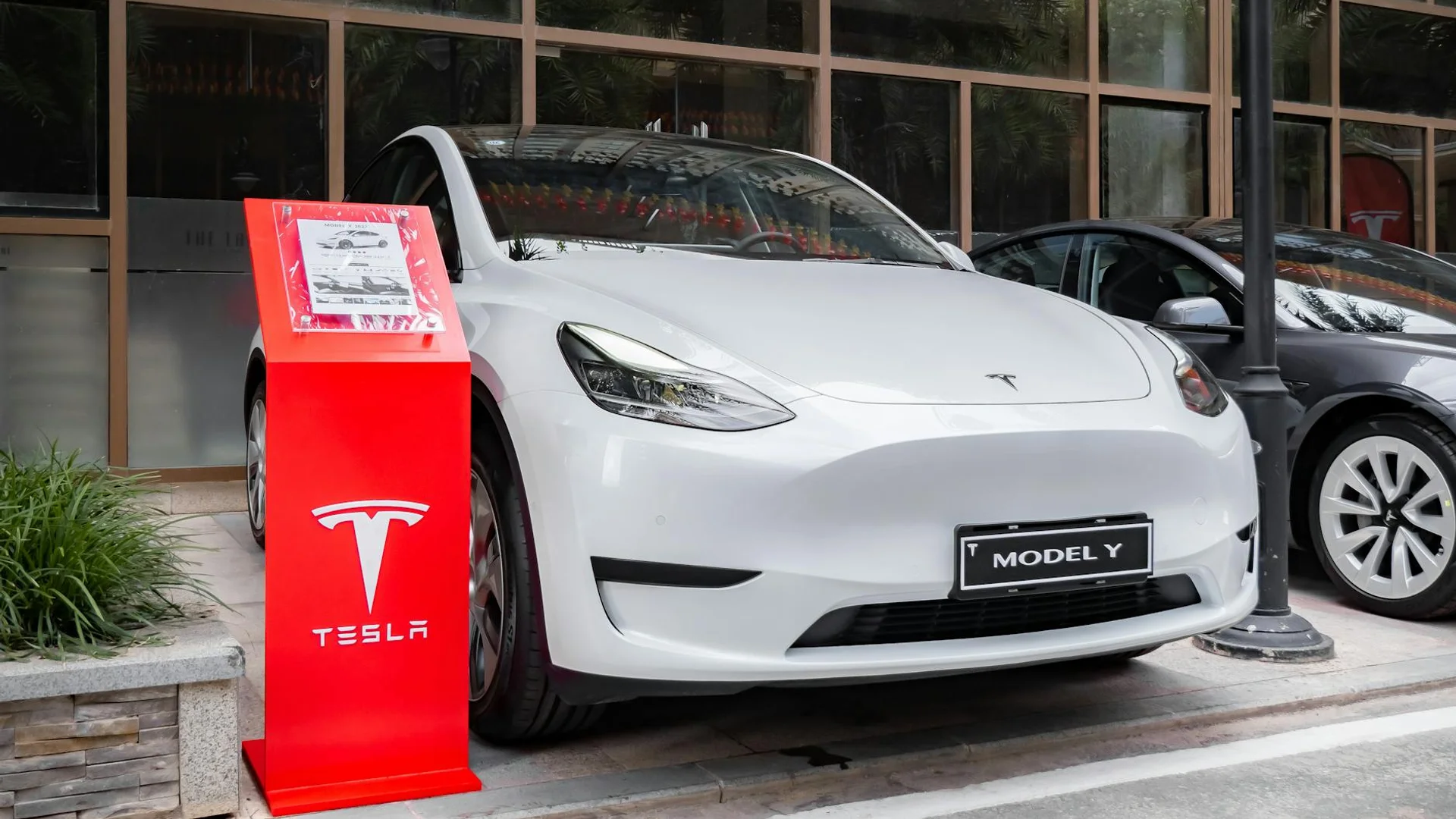
On May 1, 2026, Tesla listed a Shanghai-built Model 3 Premium RWD in Canada at C$39,490. The trim it effectively replaced, the Long Range AWD, sourced from Fremont, had been the only Model 3 available in the Canadian market and started at C$54,990. The new listing is 28% below that figure, and roughly half the C$79,990 figure that appears in some early reporting comparing pre-deal and post-deal pricing brackets. The number is not aspirational; it is a tariff artefact.
I'll be blunt up front: this is the single most important EV policy datapoint of 2026 in Canada, and most of the press coverage is treating it as a Tesla story. The price is not a discount. It is a tariff outcome. The figure, which converts to roughly $29,000 USD, is made possible by sourcing the vehicle from Giga Shanghai instead of Fremont, California, the first time Tesla is selling China-made vehicles in Canada since the country imposed a 100% tariff on Chinese EVs back in 2024. What changed between October 2024 and May 2026 was not Tesla's cost structure. It was Canada's trade architecture with Beijing. This car was always this cheap to build; the question was always which jurisdiction would let it land at that price.
Key takeaways
- Tesla's Shanghai-built Model 3 at C$39,490 is 28% below the Fremont-sourced Long Range AWD it replaced.
- Canada's 6.1% tariff applies only within a 49,000-unit annual quota; above that, the 100% surtax snaps back automatically.
- Tesla pre-emptively repatriated its Fremont Model 3 inventory to the US so Canadian demand would draw from Shanghai quota first.
- At C$39,490, the Model 3 Premium RWD clears EVAP's C$50,000 transaction-value cap on price grounds, but Shanghai-built sourcing puts federal rebate eligibility in dispute under the country-of-assembly rule.
- Every Chinese OEM targeting Canada now competes for the same quota Tesla is consuming, BYD, Zeekr, Omoda 5 share one 49,000-unit ceiling.
The Tariff Architecture: How 100% Became 6.1%
Canada's 100% surtax on Chinese-origin EVs took effect October 1, 2024, mirroring the headline rate the United States had set under Section 301 earlier that year. The instrument was a surtax layered on top of the standard MFN (Most-Favoured-Nation) tariff applied to passenger vehicles, not a replacement of it. In policy terms, that distinction matters: a surtax is a discretionary trade measure, reviewable and negotiable, while the underlying MFN rate is the baseline applied to nearly all WTO trading partners.
In January 2026, Prime Minister Mark Carney negotiated a bilateral mechanism with Beijing that cut the effective rate dramatically, but only within a defined volume cap. The new rate is 6.1%, applied under an annual quota of 49,000 Chinese-origin EVs. When the Canadian government announced earlier this year it would allow 49,000 EVs to be imported from China sans full-fat tariffs, analysts and trade-press commentators widely predicted that a substantial fraction of that volume would be claimed by Tesla before Chinese OEMs could file allocation paperwork. That prediction took about four months to confirm.
The 6.1% figure is not arbitrary. It tracks closely to the MFN rate Canada applies to motor vehicles from non-FTA partners, meaning the post-deal tariff is at the policy floor, not a punitive level. Chinese EVs entering under this quota are now treated, in tariff terms, almost identically to vehicles imported from countries with no special trade preference. The 100% surtax has not been repealed; it has been conditionally suspended for a fixed volume. Above the cap, the original rate snaps back.
This is a hybrid instrument, and it is worth naming clearly. A pure quota would limit volume regardless of price; a pure tariff would set price regardless of volume; this structure does both, but only sequentially. Inside the cap, the price signal is liberal. Outside the cap, the price signal is prohibitive. The reader should think of it less as "Canada lowered the tariff" and more as "Canada created a 49,000-unit window at a near-zero tariff, with a 100% wall on either side of it."
Chinese-origin vehicles are ineligible for EVAP federal incentives under country-of-assembly criteria, and whether Tesla's Shanghai-built Model 3 inherits that ineligibility is the live policy question. One reading: the rule attaches to where the vehicle is assembled, full stop, and a Shanghai-built Model 3 is therefore excluded regardless of brand. The other reading: EVAP eligibility runs on a published vehicle list curated by Transport Canada, and the listing decision treats Tesla as a Tesla product determined by transaction-value cap. Transport Canada has not, as of this writing, posted a definitive ruling on whether the Shanghai-built Premium RWD will appear on the eligible-vehicle list. Until they do, prospective buyers should treat the federal rebate as not-yet-confirmed and verify with the dealer at point of sale. The brand-versus-origin distinction is the legal seam Tesla is testing, and every other Chinese-origin entrant will have to assess the answer on its own facts.
The way Brussels solves this and the way Ottawa solves it are different bets at different stages of the policy cycle. The EU is pricing protection. Canada is pricing managed access. That distinction is the story.
Quota Mechanics: 49,000 Units, One Line, Multiple Claimants
The 49,000-unit cap is annual and aggregate. It is not divided per manufacturer, per brand, or per importer of record. The first qualifying shipments through the door consume the quota until it runs out. There is no published carryover provision, and no public schedule indicates unused 2026 quota would roll into 2027.
This is the mechanic that turns a trade deal into a race. Tesla was first by design. Tesla had strategically moved its remaining US-built Model 3 inventory back to the United States in anticipation of the quota opening. That sentence describes deliberate supply-chain repositioning, Fremont-sourced Model 3 inventory was repatriated to the American market specifically so that Canadian customer demand would have to be served from Shanghai, drawing down the quota Tesla wanted to claim before BYD, Geely, Chery, or any other manufacturer could file allocation paperwork.
The structural risk for late entrants is straightforward. If Tesla sells 25,000 Shanghai-built Model 3 units into Canada in the first three quarters of 2026, plausible given pent-up demand at a sub-C$40,000 price point, only 24,000 units of quota remain for every other Chinese-origin vehicle combined. BYD's Atto 3, Seal, and Dolphin lines, plus Geely's Zeekr and Polestar 4, plus Chery's Omoda 5, all compete for the same residual headroom. The first entrants set the pace; the late entrants face supply cliffs.
There is a second-order effect worth flagging. Tesla's allocation consumption rate is now a piece of competitive intelligence. Every Chinese OEM with Canadian launch ambitions has to track Tesla's monthly Canadian Model 3 sales, not because Tesla is their direct competitor on every segment, but because Tesla's units burn the same quota line that the competitor's units would otherwise occupy. The quota turns indirect competitors into direct competitors for a shared scarce resource.
What happens when the quota fills mid-year is the load-bearing policy question, and Ottawa has not published a fallback schedule. The default reading of the surtax order is that units imported after exhaustion revert to the 100% rate. That reversion would be automatic unless Cabinet intervened. The intervention question, extend the quota, extend the rate unconditionally, or let it snap back, is the single most consequential 2026 EV-policy decision Canada has not yet made.
Gear worth having
As an Amazon Associate, ThinkEV earns a small commission from qualifying purchases — at no extra cost to you.

WeatherTech FloorLiner for Tesla Model 3
Deep-channel liners that trap every drop of slush and salt. The difference between a ruined interior and a showroom-fresh cabin after a Canadian winter.
As an Amazon Associate, ThinkEV earns from qualifying purchases — at no extra cost to you.
Price Delta and EVAP Eligibility: What the Numbers Actually Mean
The C$39,490 sticker is the headline figure, and the effective price to a Canadian buyer depends on which incentives the vehicle ultimately qualifies for. The Model 3 Premium RWD at this price clears EVAP's federal transaction-value cap, which sits at C$50,000 for passenger vehicles (no cap applies to Canadian-made vehicles). On price grounds, this is the first Model 3 trim ever to clear that threshold, the Long Range AWD has historically started above C$50,000.
Whether the rebate actually applies is the country-of-assembly question discussed above. If Transport Canada lists the Shanghai-built Premium RWD on the EVAP eligible-vehicle list, the federal rebate runs up to C$5,000, dropping the after-rebate floor near C$34,490. If the listing decision goes the other way and the Shanghai-built Model 3 is excluded the way Chinese-brand EVs are, the C$39,490 sticker is the actual buyer-facing price minus only what provincial programs offer. Provincial layers vary widely: British Columbia's CleanBC passenger rebate is currently paused, Quebec's Roulez Vert offers up to C$8,000 BEV under a C$65,000 MSRP cap, and Ontario does not run a provincial EV purchase rebate (cancelled with the cap-and-trade reversal in 2018 and not reinstated). The honest version: assume the C$39,490 sticker plus any Quebec rebate if you live there, and treat the federal layer as a possible upside rather than a certainty.
In Quebec, a buyer using full federal-plus-provincial stacking, if both layers apply, lands close to C$26,490 ($5,000 federal EVAP plus $8,000 Roulez Vert). In British Columbia with the passenger rebate paused, the federal-only path drops the price to roughly C$34,490 if eligibility lands favourably. The Giga Shanghai Model 3 offers 463 km (288 miles) of range and a 0-100 km/h time of 5.2 seconds. That is not a stripped variant pretending to be a Model 3, it is the Premium RWD with most of the comfort and active-safety content the Long Range carries, minus the second motor and a portion of the battery pack.
The price-cap clearance has a potential second-order effect on the federal balance sheet that is worth naming. If Transport Canada does include the Shanghai-built Model 3 on the eligible-vehicle list, EVAP outlay scales with units sold; at 25,000 units claiming a $5,000 rebate, that's C$125 million of federal spending on a single SKU that the program's $2.3-billion five-year envelope was not specifically modelled to absorb at this volume. If the Shanghai-built Model 3 is excluded under the country-of-assembly rule, that fiscal pressure does not arise, but neither does the consumer price relief. Either way, the listing decision is the load-bearing variable that determines who actually pays the discount: Beijing through the tariff concession, or Ottawa through the rebate.
Readers tracking how country-of-origin and assembly criteria intersect with eligibility can consult the EVAP program updates tracker for 2026, which walks through the dimensions that determine whether a given SKU clears the gate.
My bet, stakes attached: if quota exhaustion happens before October 2026, and the maths says it will, the federal cabinet will choose the snap-back path, not the expansion path. That is the route that preserves the negotiating leverage Beijing has not yet given Ottawa anything in return for. Anyone forecasting an unconditional rate extension is forecasting a political concession that there is no diplomatic record of being prepared.
Multi-Jurisdiction Comparison: How Other Markets Handle Chinese EV Tariffs
Canada's 6.1% quota-gated rate is structurally unusual. Most G7 economies handle the same political problem, domestic auto-industry protection versus consumer EV affordability, with cruder instruments. A jurisdictional comparison clarifies how unusual the Canadian instrument actually is.
- Canada (post-deal): 6.1% in-quota, 100% out-of-quota, hybrid tariff-rate quota, 49,000 units per year.
- United States: 100%, Section 301 surtax, no relief mechanism, no quota window.
- European Union: 10% base MFN plus 17.4% to 37.6% countervailing duties (BYD 17.4%, Geely 19.9%, SAIC 37.6%), manufacturer-specific anti-subsidy schedule, no quota, no cap.
- United Kingdom: approximately 6.7%, standard MFN, no surtax, no special instrument, no cap.
- Brazil: 35% in 2026, stepping down to 18% by 2028, phased import tariff, no quota, designed to encourage in-country assembly.
The interesting part is what the comparison shows about strategy, not just rates. The EU chose a manufacturer-specific countervailing duty model, a rate calibrated to each manufacturer's assessed subsidy receipts. The result is that BYD vehicles enter the EU at roughly 27.4% combined tariff (10% base plus 17.4% countervailing), while SAIC-built MGs enter at roughly 47.6%. The European instrument punishes the subsidy structure, not the country.
The United States chose a flat-rate Section 301 instrument with no relief mechanism. The effective result is exclusion: at 100% with no quota window, Chinese-origin EVs are not a competitive proposition in the U.S. market. This is what the Carney government chose not to replicate.
The United Kingdom did effectively nothing. Post-Brexit, the UK applies its standard MFN rate to Chinese vehicles, around 6.7%. UK consumers face essentially open market access to Chinese EVs, and the BYD Atto 3, Dolphin, and Seal all sell in the UK at prices closer to their true ex-factory cost. Canada's new 6.1% in-quota rate is, in tariff terms, slightly more liberal than the UK's blanket rate, but only inside the volume cap.
Brazil is the outlier in the other direction: a phased reduction from 35% to 18% by 2028, with no quota gating, applied to BYD, GWM, and Chery vehicles that are increasingly assembled in-country to escape the import schedule. Brazil's instrument is a transition curve designed to encourage local assembly, not a permanent rate.
Canada's structure does not fit any of these archetypes cleanly. The 49,000-unit cap is small enough to act as a hard constraint, but the in-quota rate is liberal enough that consumer-facing prices behave as if there is no surtax at all. It is a G7-unique design, and it will be studied, particularly if quota exhaustion produces a mid-year supply cliff that the other jurisdictions can observe in real time.
Gear worth having
As an Amazon Associate, ThinkEV earns a small commission from qualifying purchases — at no extra cost to you.

Grizzl-E Classic Level 2 EV Charger (40A)
Canadian-made and rated for minus 40C winters. 40A / 9.6 kW, NEMA 14-50, indoor/outdoor, 24-ft cable. The charger built for Canadian weather.
As an Amazon Associate, ThinkEV earns from qualifying purchases — at no extra cost to you.
Supply Chain Reclassification: Giga Shanghai's New Role
Giga Shanghai's output had a relatively stable destination mix before this deal: Europe, the Asia-Pacific region, and the Chinese domestic market itself. The factory has been Tesla's highest-volume Model 3 producer since 2022. The Fremont line had served the U.S. and Canadian markets simultaneously.
The Carney-Beijing deal reorganizes that mix. Giga Shanghai now serves Europe, Asia-Pacific, and Canada. Fremont serves the U.S. domestic market only. The reorganization is not a cost story, Shanghai has been the cheaper line for years, it is a tariff-arbitrage story. The new arrangement extracts the cost advantage of Shanghai production for the Canadian market in a way that was legally blocked from October 2024 through January 2026.
There is a second route effect that gets less attention. The U.S. imposed 25% tariffs on Canadian-built vehicles in 2025 as part of broader bilateral trade friction; Canada responded with reciprocal measures. A Shanghai-origin Model 3 entering Canada directly is not subject to either of those bilateral tariffs, it never touches the U.S.-Canada trade lane. The supply chain is simpler, not more complex, and the cost-to-serve is lower than the Fremont route ever was for Canadian customers, even before the surtax existed.
Origin-of-manufacture is now a first-order pricing variable for North American EVs. It is no longer an operational footnote disclosed in the warranty book. The same physical vehicle, same battery chemistry, same drive unit family, same chassis, carries materially different consumer prices depending on which Tesla factory built it. The Model 3 Performance variant, which remains Fremont-sourced for Canada, sits in a different price universe than the Shanghai-built Premium RWD. The Performance variant also dropped to C$74,990 from C$89,990, a 17% cut. That cut is meaningful, but it is not the same instrument: the Performance reduction reflects Tesla pricing strategy, not tariff arbitrage.
The price gap between the C$39,490 Premium RWD and the C$74,990 Performance is now C$35,500, a delta wide enough to fit an entire competing nameplate inside it. That gap exists because one car crosses a tariff line the other does not. Readers tracking how this plays against direct rivals can compare against the Kia EV4 versus Tesla Model 3 Canada matchup, which was built around the Long Range AWD as the only Canadian Model 3 trim, analysis that the May 1 listing now partially supersedes.
Gear worth having
As an Amazon Associate, ThinkEV earns a small commission from qualifying purchases — at no extra cost to you.
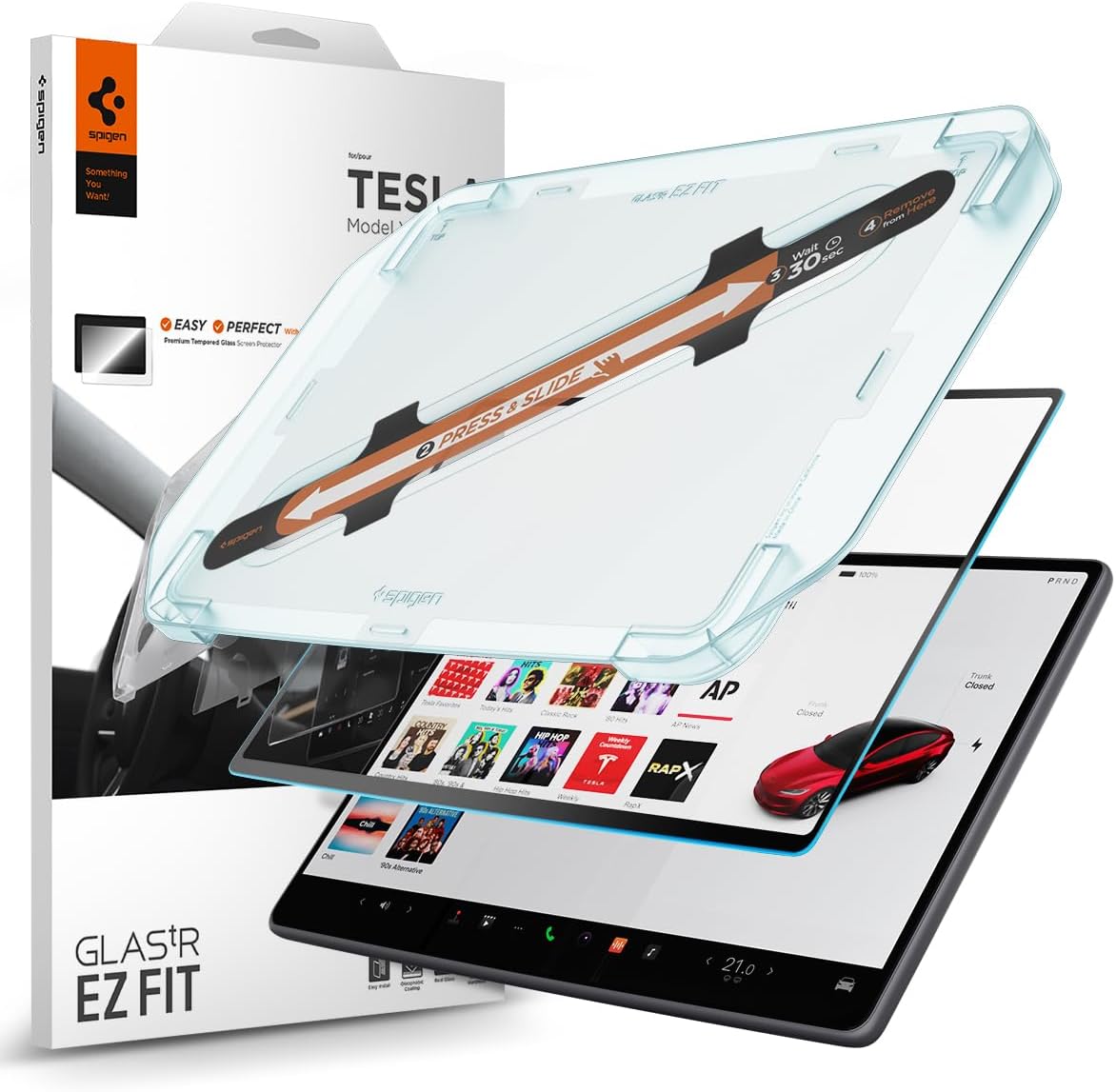
Spigen Tempered Glass for Tesla Model 3/Y
Tempered-glass protection for the touchscreen that kills fingerprints and scratches. Two minutes to install, lasts the life of the car.
As an Amazon Associate, ThinkEV earns from qualifying purchases — at no extra cost to you.
ZEV Mandate Compliance: Does Cheaper Supply Accelerate Provincial Targets?
The federal ZEV (Zero-Emission Vehicle) mandate requires that 20% of new passenger vehicle sales be ZEVs in 2026, scaling to 60% by 2030 and 100% by 2035. Provincial mandates in British Columbia and Quebec operate on their own timelines, generally more aggressive than the federal floor. The mandates regulate manufacturer compliance, not consumer behaviour, automakers either deliver the required mix or pay penalties (or buy credits from compliant peers).
A C$39,490 Model 3 changes the compliance math for Tesla in Canada, and indirectly for every other OEM. Tesla was already a compliance credit seller, the only ZEVs it produces are ZEVs, and its Canadian volume generates surplus credits. A lower-priced trim expands Tesla's total addressable Canadian market, which compounds its credit-generation rate. The competitive consequence is that legacy OEMs needing to buy credits face a steeper market price.
For OEM compliance planning, the question is whether the price cut shifts the marginal Canadian EV buyer from "considering" to "purchasing" at a scale large enough to change the 20%-of-sales math. The reading is that it probably does, but the constraint binds against the 49,000-unit quota, not against demand. Even if every Premium RWD allocated to Canada sells in 2026, that is 49,000 units against a Canadian new-vehicle market of roughly 1.8 million annually. The mandate math improves at the margin, not structurally.
What does shift structurally is the price floor for the segment. Once Canadian buyers see a sub-C$40,000 Tesla, the price ceiling for competitive non-Chinese-origin EVs, Hyundai Ioniq 5, Kia EV6, Chevrolet Equinox EV, comes under direct pressure. The pricing equilibrium for the C$45,000-to-C$55,000 segment was built around a Tesla price point that no longer exists in this market. That repricing will not happen in 2026; OEMs do not move sticker prices mid-cycle on competitive reaction alone. It will appear in 2027 model-year pricing decisions, which are being finalized now.
Readers tracking which Chinese brands are entering Canada, on what timeline, and against what regulatory backdrop can compare the complete guide to Chinese EVs in Canada for 2026, Tesla's first-mover quota claim is the opening move in that broader sequence.
Where to Watch the Policy in Real Time
A policy this consequential should be trackable in primary sources, not just press releases. The instruments themselves are public documents, and a reader who wants to track quota burn rate, allocation decisions, and price effects across the 2026 cycle can monitor four feeds directly.
The first is the Department of Finance Canada's tariff and trade policy page, where the original surtax order, its amendments, and any quota expansion or contraction will be published. The page also hosts the regulatory impact assessment statements that accompany cabinet decisions, those documents disclose the volume assumptions and revenue projections behind the rate-setting, which is the only way to verify whether the 49,000-unit cap was sized to a particular Tesla volume forecast or to total Chinese OEM capacity. Readers tracking Cabinet's posture should bookmark this page first.
The second is the Statistics Canada motor vehicle international merchandise trade data, which publishes monthly import statistics by HS code, country of origin, and value. The HS code for new passenger battery-electric vehicles is the primary tracking key, once Tesla begins importing Premium RWD units from Shanghai, the volume will appear in the monthly release for that HS code under "China, People's Republic of." The lag is roughly six weeks from import to publication. By Q3 2026, the cumulative volume against the 49,000-unit ceiling will be inferable from this data in close to real time.
The third is the International Energy Agency's Global EV Outlook and its associated EV Trade Tracker, which compiles cross-jurisdictional tariff treatment of Chinese EVs and updates rate-and-quota changes within weeks of cabinet decisions. The IEA's comparative methodology is unusually rigorous, they normalize MFN rates, surtaxes, anti-subsidy duties, and quota structures into a single effective-rate matrix that lets readers compare Canada's hybrid instrument against the EU's manufacturer-specific schedule and the U.S. flat-rate Section 301 framework. For long-cycle policy analysis, this is the cleanest single source.
The fourth is the parliamentary record. The Standing Committee on International Trade regularly hears testimony from Canadian auto-industry stakeholders on the surtax framework, including, in 2025, multiple sessions on the design of the eventual quota mechanism. The committee's reports and minutes are public, and they contain the most granular discussion of which OEMs were modelled into the 49,000-unit cap, which segments were assumed exposed, and what flanking measures (battery-mineral provenance rules, EVAP eligibility tests, ZEV mandate credit treatment) were considered in parallel. A reader serious about predicting the 2027 renewal decision should read the 2025 committee record before forming a view.
The press will track Tesla's monthly Canadian sales. That number is interesting but not load-bearing. The load-bearing numbers are in the four feeds above, and unlike the press cycle, they do not move on hype.
A fifth signal is worth adding for readers tracking the manufacturer-strategy side. Tesla's quarterly investor disclosures and the supplementary regional breakdowns the company files with the U.S. Securities and Exchange Commission disclose Canadian unit volumes with a one-quarter lag. Cross-referencing those filings against the Statistics Canada import series gives the cleanest read on Tesla's quota-burn pacing, because Tesla's reported Canadian deliveries should line up with Shanghai-origin imports under the 49,000-unit ceiling, and any drift between the two series indicates either inventory buildup, channel stuffing, or a routing reclassification that the public data has not yet caught. For the 2027 renewal decision, that drift signal is the most predictive datapoint outside cabinet documents, and it is fully public, filed quarterly, indexed in EDGAR. The reader willing to spend twenty minutes per quarter cross-referencing the two feeds will be ahead of every press analyst who waits for the official quota-balance disclosure that Ottawa has not committed to publish.
Gear worth having
As an Amazon Associate, ThinkEV earns a small commission from qualifying purchases — at no extra cost to you.
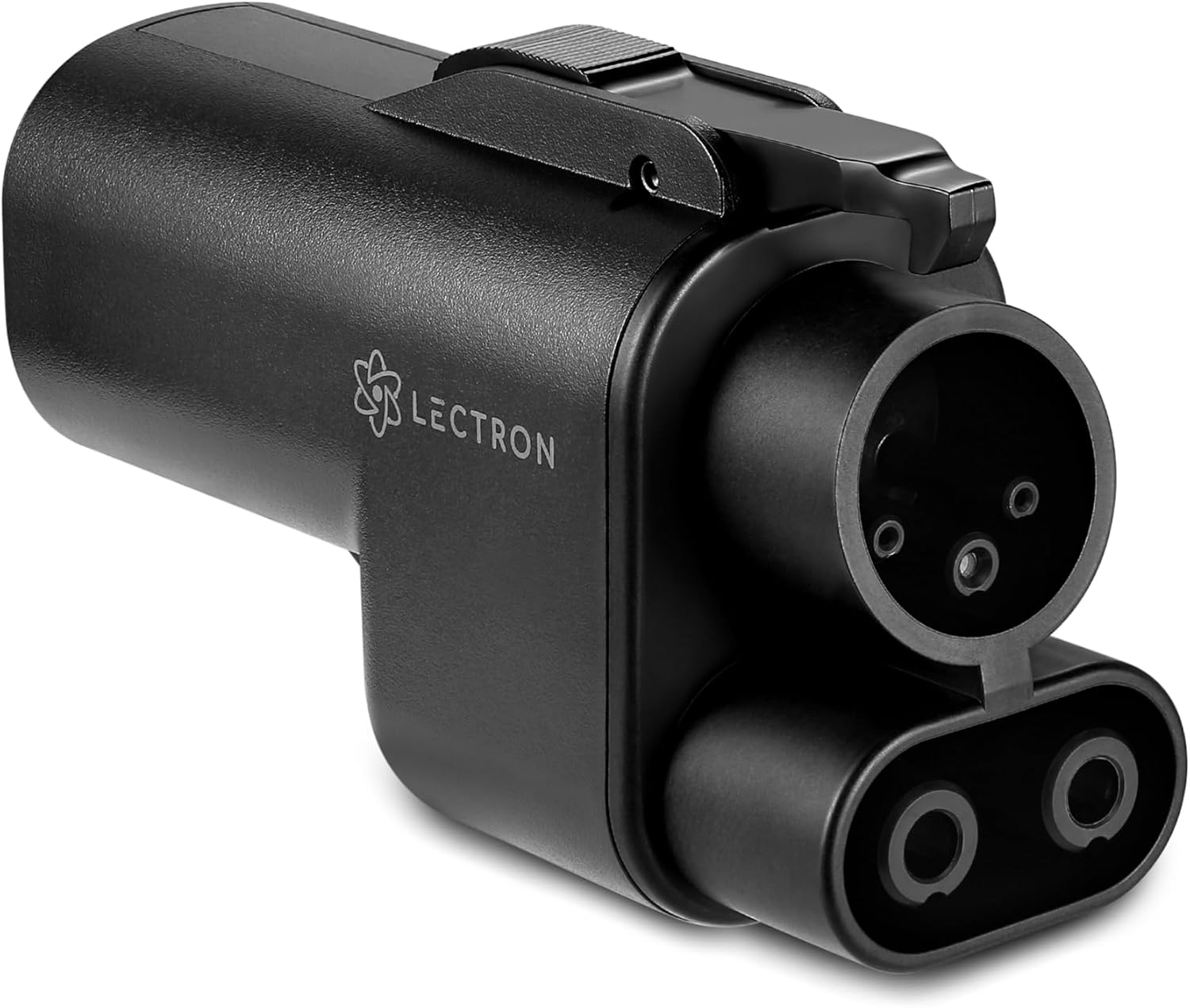
Lectron NACS to CCS Fast-Charge Adapter
Unlock every CCS fast charger for your Tesla, up to 500A DC. Never get stranded at a non-Tesla DC station again.
As an Amazon Associate, ThinkEV earns from qualifying purchases — at no extra cost to you.
What the Quota Exhaustion Scenario Means for 2027 Policy
The 49,000-unit cap is small enough to plausibly exhaust within 2026, particularly if Tesla absorbs 20,000 to 25,000 units of it on Model 3 Premium RWD alone. Mid-year exhaustion would force a policy decision Ottawa has not signalled.
Three plausible paths exist. Cabinet could expand the quota in-year, straightforward administratively, but politically costly given domestic auto-industry pressure. Cabinet could extend the 6.1% rate unconditionally, removing the cap, the most consumer-friendly outcome and the one Chinese OEMs are lobbying for, but the one that most directly threatens Canadian-assembled vehicle competitiveness. Or Cabinet could let the surtax snap back to 100% on units above the cap, the legal default, and the path of least administrative resistance.
The third path is the one to bet on, absent a strong signal otherwise. The deal was negotiated with a quota for a reason: it gave the Carney government a political ceiling on Chinese EV market penetration. Removing the ceiling mid-year would surrender that political control without extracting any concession from Beijing in return. The reversion-to-100% outcome is the path that preserves the negotiating leverage for the 2027 renewal window.
That makes 2027 the structural hinge point. Whether Canada extends the quota at the same rate, expands the volume, restructures the instrument toward an EU-style manufacturer-specific schedule, or lets the deal lapse, that decision sets the price trajectory for Canadian EVs for the second half of the decade. The data point worth watching is not Tesla's Canadian sales volume. It is the Cabinet briefing materials that will leak in late Q3 2026 when the quota is two-thirds consumed. The most probable outcome is a one-year quota extension at the same 6.1% rate with a volume increase to roughly 80,000 units, sufficient to give BYD and Geely real entry windows without abandoning the structural cap. The signal that changes that forecast is a public statement from Industry Canada framing the quota as a transitional measure rather than a stable instrument.
The verdict is that the Carney-Beijing framework is the most sophisticated trade instrument any G7 country has applied to Chinese EVs, and the next twelve months will determine whether it gets copied or quietly walked back. The way Brussels handles the same problem and the way Ottawa handles it are different instruments answering different political questions, and only one of them allows for in-quota price competition. The Canadian instrument allows it. The European instrument does not. For the broader policy environment shaping these decisions, Canada's complete EV incentives map for 2026 covers the federal and provincial layers stacking against the new tariff window, and the full Chinese-EV-in-Canada guide tracks which brands are filing under the quota first.
Gear worth having
As an Amazon Associate, ThinkEV earns a small commission from qualifying purchases — at no extra cost to you.

Tesla Key Card Holder with AirTag Slot
Stop fishing the keycard out of your wallet, and slot an AirTag in case the car wanders off in a lot.
As an Amazon Associate, ThinkEV earns from qualifying purchases — at no extra cost to you.

Founder & Chief Editor
Vlad Pereira is the founder and chief editor of ThinkEV.ca, the Canadian electric-vehicle publication he writes and edits from Courtenay, British Columbia. He covers EV pricing, federal and provincial rebates, charging costs, and the Chinese manufacturers now entering Canada, from the buyer's side rather than the press-fleet side. ThinkEV is a venture of Vlad Pereira Online; his writing on health, income and the long game lives at vladpereira.com.
Frequently asked questions
Does the C$39,490 price qualify for the federal EVAP rebate?
What happens to the price if Canada's 49,000-unit quota fills mid-year?
Why did Tesla pull Fremont-built Model 3 inventory from Canada beforehand?
Can Chinese brands like BYD still enter Canada under the same quota?
Is the Model 3 from Shanghai treated as a Chinese-brand vehicle for EVAP?
More EV & road-trip finds
Affordable upgrades worth a look — tap any to check the price on Amazon.
 ★ 121
★ 121Foldable Windshield Sun Umbrella
View on Amazon ★ 392
★ 392Large Cup Holder Adapter (32-40oz)
View on Amazon ★ 12,051
Windex Electronics Screen Wipes
View on Amazon ★ 419
★ 419RGB Car Interior LED Strip Light
View on Amazon ★ 1,349
Cool Swinging Duck Dashboard Ornament
View on Amazon ★ 979
★ 979Leather Headrest Purse Hook
View on Amazon ★ 1,866
70mai A810 4K Dual Dash Cam
View on Amazon ★ 119
★ 119Foldable Waterproof Trunk Organizer
View on AmazonRead, Plan, Then Stay Current
Explore our expert articles to understand incentives and ownership costs, use the map to pressure-test charging reality, then subscribe so new EV coverage comes straight to you.
Continue Reading
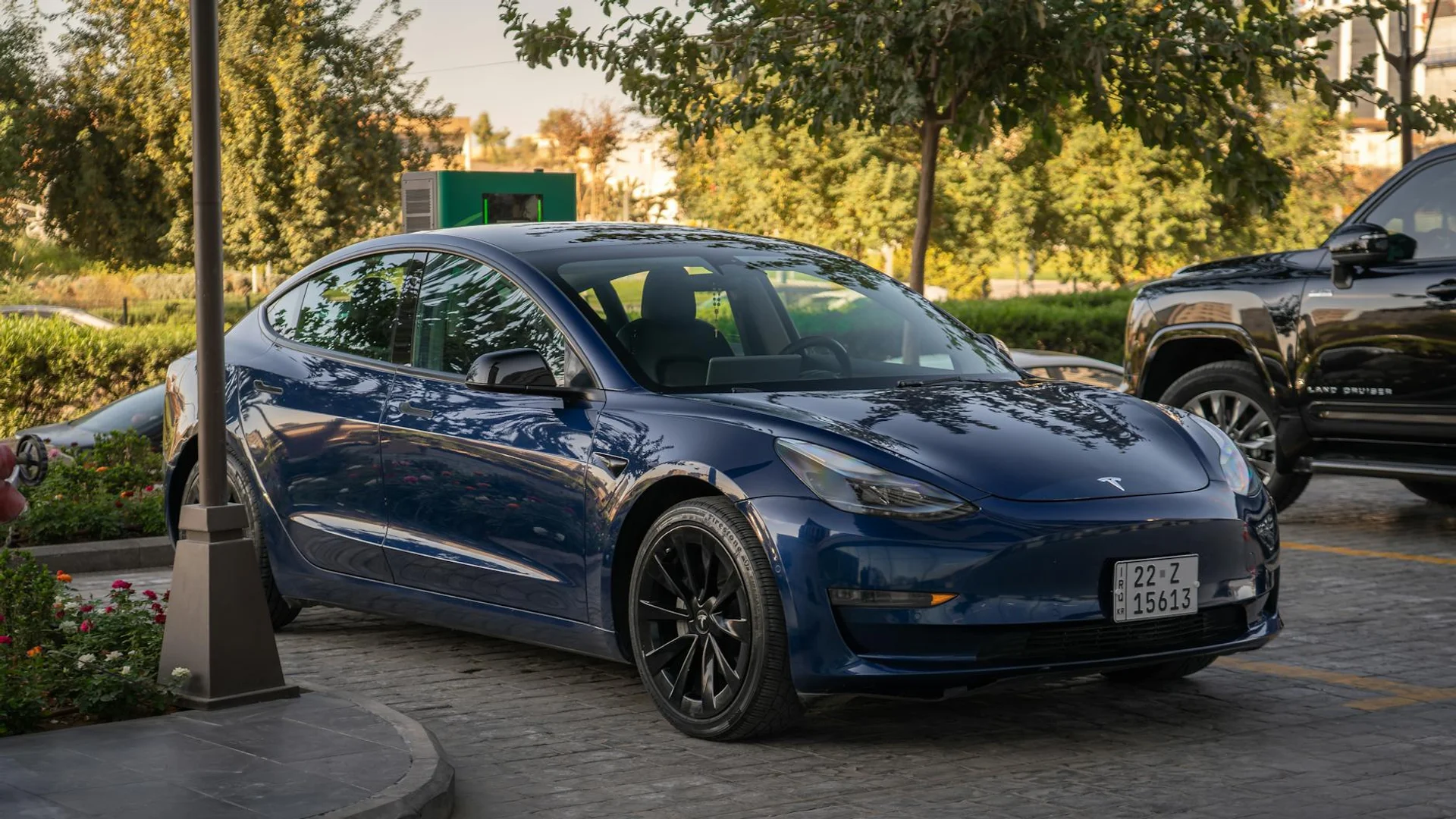
Canada's Tariff on Tesla: What It Adds to the Price in 2026
Home Charging Access: The Structural Gap in EV Uptake

Are Canada's Repair Shops Ready for Chinese EVs?
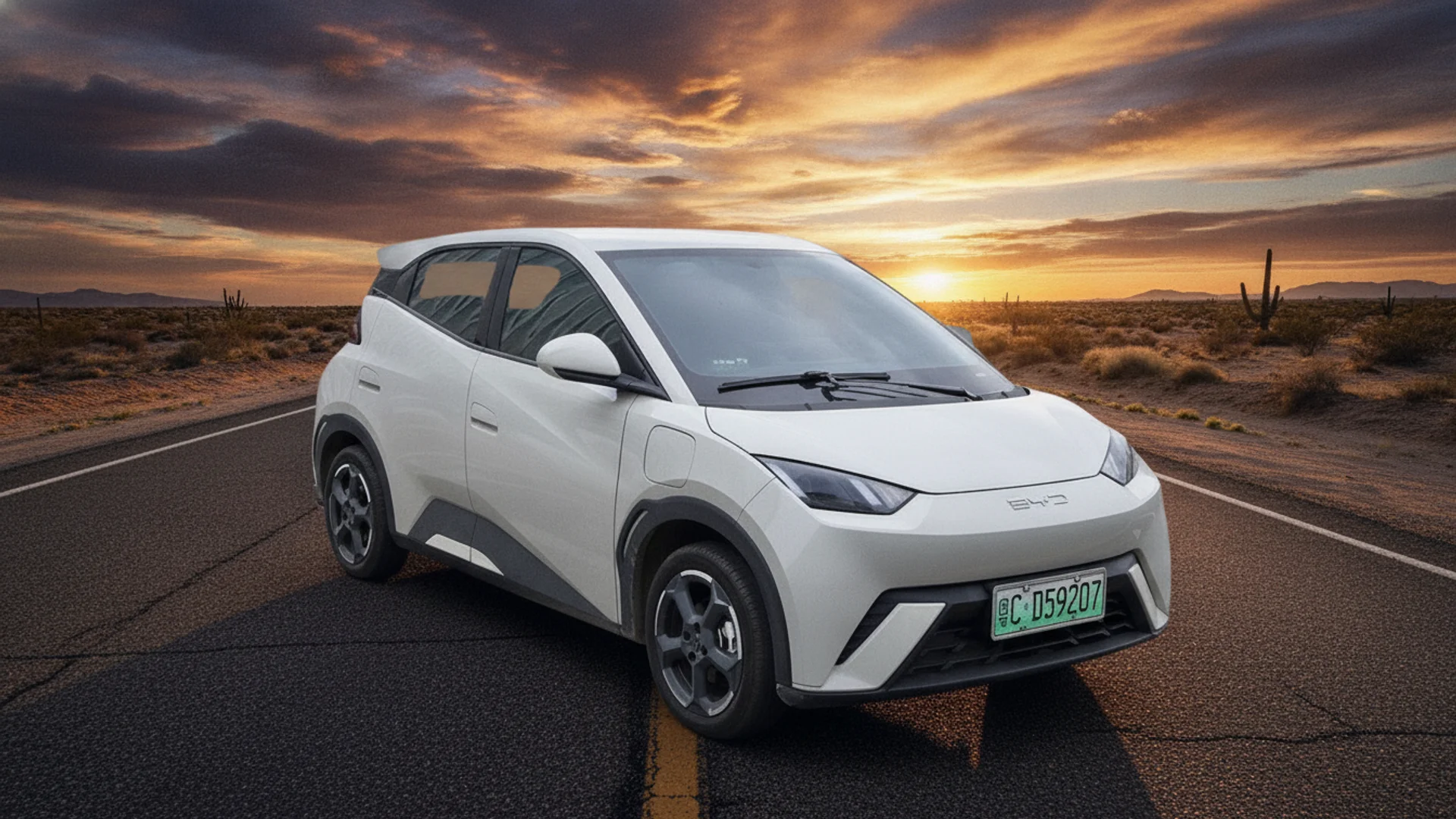
BYD Seagull Canada: Real Price, Real Specs, Real Wait

BYD Auto Explained: World's Biggest EV Maker, Blocked From Canada