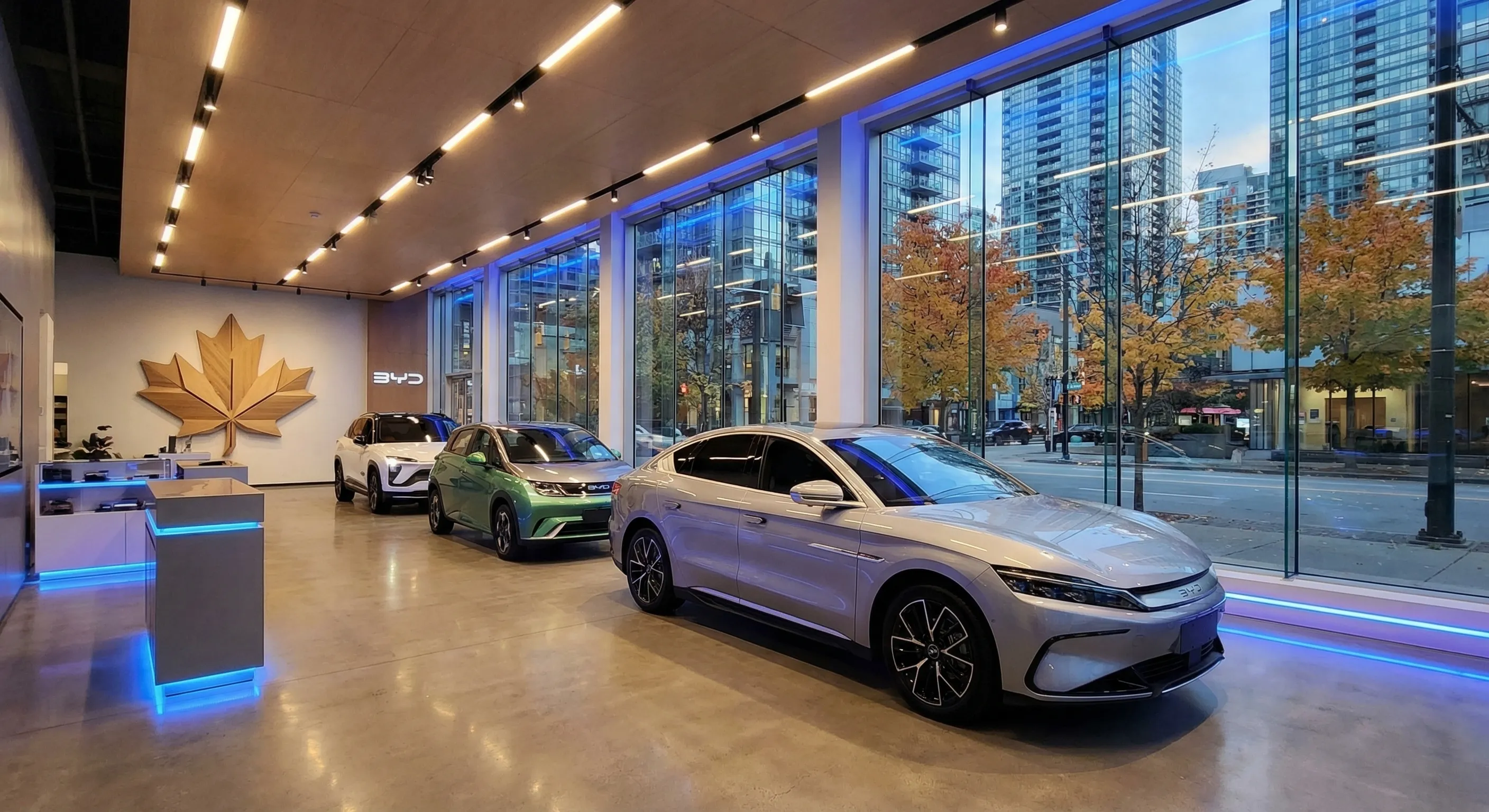
BYD outsold Tesla globally in 2024. Canada's 100% surtax kept every unit out. A January 2026 quota deal changed the math, and the first dealerships open their doors in Q4 of this year, about ten weeks from now.
The short answer: late 2026, 20+ dealerships at opening, starting around C$25,000, four models in the launch lineup. The complication is the rebate math, and the complication after that is the 49,000-unit quota BYD has to share with every other Chinese-origin EV crossing the border. I'll put a band on what you'll actually pay and name the specific triggers that would move it.
Key takeaways
- BYD's Canadian launch is blocked from federal and provincial EV rebates due to country-of-origin rules.
- The 49,000-unit quota is shared across all Chinese-origin EVs, BYD, Chery, Geely, MG combined.
- BYD's Transport Canada Appendix G preclearance gave it a procedural head start over Geely and SAIC.
- The Seagull is targeting C$22,500–C$26,500, potentially the cheapest new EV sold in Canada.
- Twenty-plus dealerships open Q4 2026, concentrated in BC and Ontario, with first deliveries likely January–February 2027.
Quick Answer: Late 2026, 20+ Dealers, From ~C$25,000
BYD confirmed a late-2026 Canadian launch with twenty-plus dealerships operating at opening and a lineup of four models starting near C$25,000. Transport Canada's Appendix G preclearance registration for the Shenzhen and Xi'an plants completed in early March 2026, BYD was the first Chinese-headquartered automaker on that registry, which is the dull, procedural reason it reaches Canadian showrooms before Geely or SAIC.
The scale behind that registration matters. BYD delivered more than 4.6 million vehicles in 2025 and crossed the ten-million cumulative NEV mark in late 2024, this is not a boutique entrant feeling its way into a new market. The Canadian launch is sized against a company that already builds its own cells, its own motors, its own semiconductors, and its own ships to move the cars.
The headline price does not include a federal rebate. EVAP, the February 2026 replacement for iZEV, excludes China-built vehicles on country-of-origin grounds, regardless of final transaction value. BC's Go Electric and Quebec's Roulez vert do the same at the provincial level. A C$25,000 sticker on a BYD Seagull is a real C$25,000 before taxes; a C$39,490 Shanghai-built Tesla Model 3 is a real C$39,490. Neither gets the $5,000 BEV cheque. The rebate exclusion is the single most important number in this whole guide, and it is the one most buyers forget to factor until the finance office prints the deal sheet.
For the broader context on which brands land when, the full 2026-2027 Canadian EV arrival schedule covers everyone from BYD through Geely and the Korean refresh.
The Tariff Quota That Made the Launch Possible
On January 16, 2026, Canada replaced its 100% surtax on Chinese-origin EVs with a 6.1% duty, applied to the first 49,000 units imported annually. Above the quota, the rate reverts to 100%, which is the same as blocked. That is a 93.9-point tariff cliff hiding behind a single policy line, and it is the reason the launch date is late 2026 and not late 2024.
The quota is not BYD-specific. It is a pooled allocation shared across every Chinese-origin EV entering Canada: BYD, Geely's Zeekr and Volvo-badged units built in Taizhou, Chery's Omoda and Jaecoo, SAIC's MG brand, NIO if it files on time. If the pool fills by August, every importer waits until the quota resets in January. BYD's registry filing gives it a procedural edge, not a reserved slot.
Quota consumption is the number to watch. The federal government has not yet published a running tally, which is the sort of transparency gap that resolves itself only after an industry group writes a letter. Twenty-four thousand five hundred import permits were released in the first allocation tranche. If BYD alone takes 15,000 of those for its launch inventory, plausible given a four-model opening lineup, the remaining headroom for Chery, Geely, and the rest is tight.
The obvious objection is that 49,000 units a year is already enough to disrupt Canadian pricing, that the quota is a ceiling in name only once you count volume ramp in year two. I don't buy it. Ottawa negotiated the 6.1% number as a political compromise; any serious consumption breach in year one invites a renegotiation downward, not upward. The pool is engineered to be felt but not to break anything. The structural read: 49,000 units at 6.1% is enough to open the Canadian market to Chinese EVs, not enough to flood it. Volkswagen Canada sold roughly 70,000 units in 2024 across its entire lineup. The quota is one Volkswagen, split among a dozen brands. For the full picture of how BYD, Chery, and Geely divide the pool, see Chinese EV entry into Canada and the price bands under the 6.1% tariff.
Gear worth having
As an Amazon Associate, ThinkEV earns a small commission from qualifying purchases — at no extra cost to you.

WeatherTech FloorLiner for Tesla Model 3
Deep-channel liners that trap every drop of slush and salt. The difference between a ruined interior and a showroom-fresh cabin after a Canadian winter.
As an Amazon Associate, ThinkEV earns from qualifying purchases — at no extra cost to you.
Which Four Models Are Coming, and What They Cost
The launch lineup is Seagull, Dolphin, Atto 3, Seal. One hatchback at the bottom, one hatchback a notch above, one crossover, one sedan. BYD has run this exact ordering in Mexico, Australia, and across Europe, which suggests the Canadian playbook is copy-paste rather than custom-built.
Seagull. The target price is sub-C$25,000, which would make it the cheapest new EV sold in Canada. The Chinese-market version lists at roughly ¥69,800, about C$13,500 at current rates, so even with shipping, the 6.1% duty, dealer margin, and Canadian homologation, there is comfortable headroom to land under C$25,000. The band I'd commit to: C$22,500–C$26,500, with the uncertainty concentrated in whether BYD prices to volume (bottom of the band) or to margin (top). CLTC range figures of 405 km will translate to roughly 300 km on Canada's harsher cycle, which is enough for a city car and marginal for anything else.
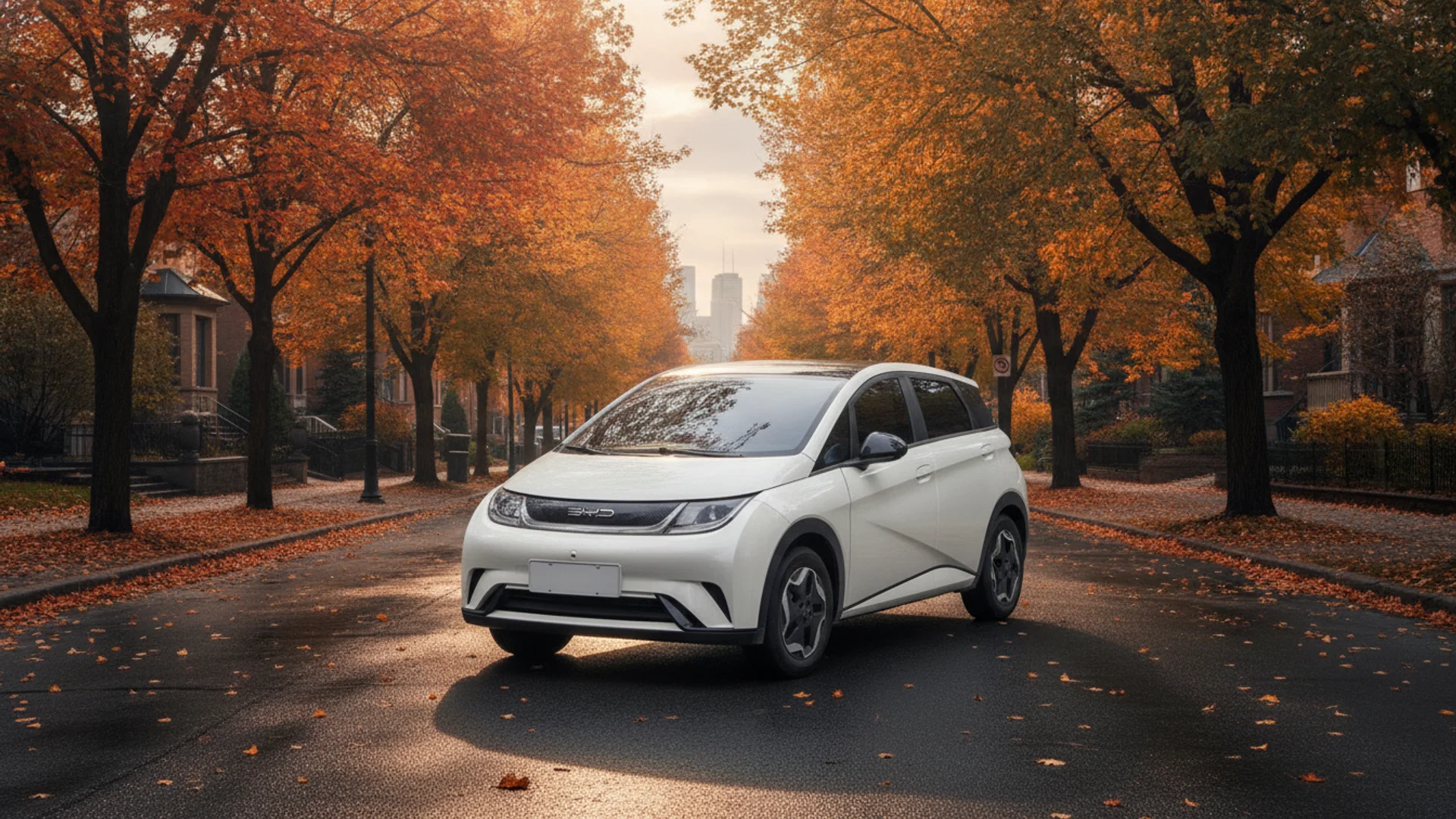
Dolphin. Mid-C$30,000s, call it C$33,000–C$38,000 for the trims most likely to arrive. The European-spec Dolphin has been reviewed well and competes directly with the MG4 and the base Volkswagen ID.3.
Atto 3. The volume model. In every market BYD has entered, the Atto 3 is the one that outsells the other three combined. Canadian band: C$39,000–C$45,000, slotting under the Hyundai Kona Electric and well under the Volkswagen ID.4.
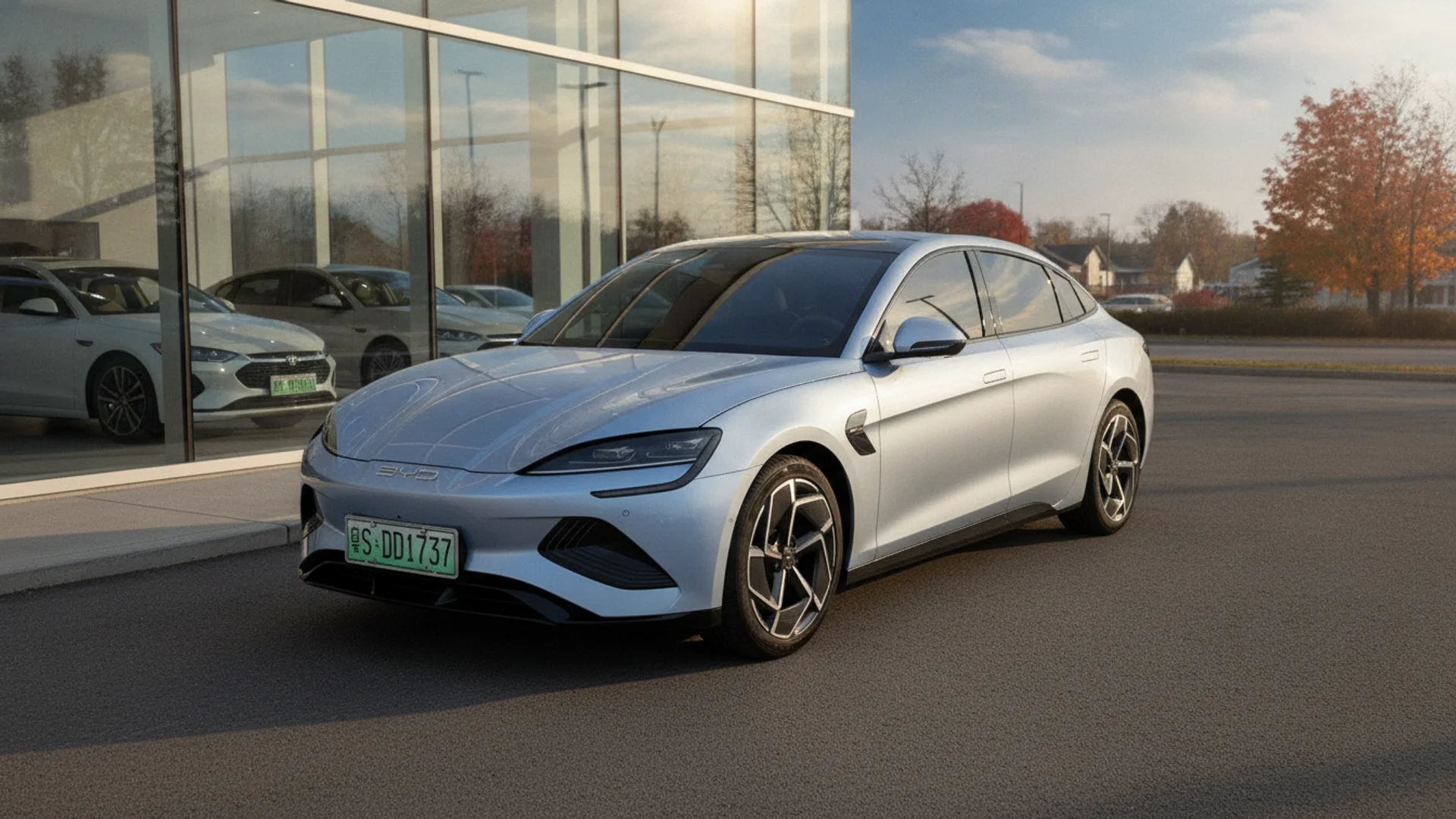
Seal. The one that gets compared to the Model 3. Up to 570 km WLTP range in the rear-wheel-drive trim, designed by Wolfgang Egger (ex-Audi, ex-Alfa Romeo), targeting the C$42,000–C$48,000 band. The Shanghai-built Model 3 now starts at C$39,490 in Canada. The Seal is not undercutting the Model 3 on sticker, it is pitching a longer-range alternative at a modest premium with a very different brand proposition.
Gear worth having
As an Amazon Associate, ThinkEV earns a small commission from qualifying purchases — at no extra cost to you.

USB Star Projector Roof Light
Casts a drifting starfield across the headliner from a single USB port. The cheapest way to make the cabin feel special.
As an Amazon Associate, ThinkEV earns from qualifying purchases — at no extra cost to you.
In aggregate, BYD's Canadian pricing lands roughly C$6,600 to C$14,900 below comparable rivals before anyone applies the rebate math. The rebate math narrows that gap considerably. We get to it below. For the model-by-model deep dive, the four-model BYD Canada lineup breakdown covers each car's spec sheet in detail.
Dealerships, Provinces, and When to Expect Inventory
Twenty-plus dealerships at opening, built as a standalone network rather than bolted onto an existing franchise group. The locations lean toward British Columbia and Ontario, with a smaller presence in Quebec and Alberta, the four provinces that account for roughly 85% of Canadian EV registrations. The Maritimes and the Territories wait.
"Late 2026" means Q4. In practice, that means showroom doors open in November or December, with the first wave of retail deliveries landing between January and February 2027 for anyone not on an opening-day interest list. BYD's global pattern is to ship the Atto 3 and the Dolphin first and bring the Seal and Seagull in six to eight weeks later as production ramps on Canadian-homologated units.
Pre-registration interest lists are open at most dealer sites. None of them currently take a deposit that locks allocation, which is the right structure for the dealer and the wrong structure for the buyer, because it means your position in the queue is advisory rather than contractual. Expect that to change by Q3 2026 when the launch becomes imminent and deposits start converting interest into committed sales.
The service infrastructure is the quiet question. BYD builds its own cells, its own motors, its own battery packs. A warranty claim three years in requires a parts pipeline that the twenty opening dealerships are building from scratch. The first-year ownership experience will be a referendum on parts availability, not on the cars themselves. The reassurance, such as it is, is that BYD has been running EV fleets for public operators since the e6 began field testing in Shenzhen in May 2010, the parts logistics muscle exists, it just has not been stretched to a Canadian winter yet.
Gear worth having
As an Amazon Associate, ThinkEV earns a small commission from qualifying purchases — at no extra cost to you.

Grizzl-E Classic Level 2 EV Charger (40A)
Canadian-made and rated for minus 40C winters. 40A / 9.6 kW, NEMA 14-50, indoor/outdoor, 24-ft cable. The charger built for Canadian weather.
As an Amazon Associate, ThinkEV earns from qualifying purchases — at no extra cost to you.
The Rebate Gap and What It Actually Means for Your Price
Here is where the C$25,000 Seagull stops being C$25,000 cheaper than a Chevy Equinox EV.
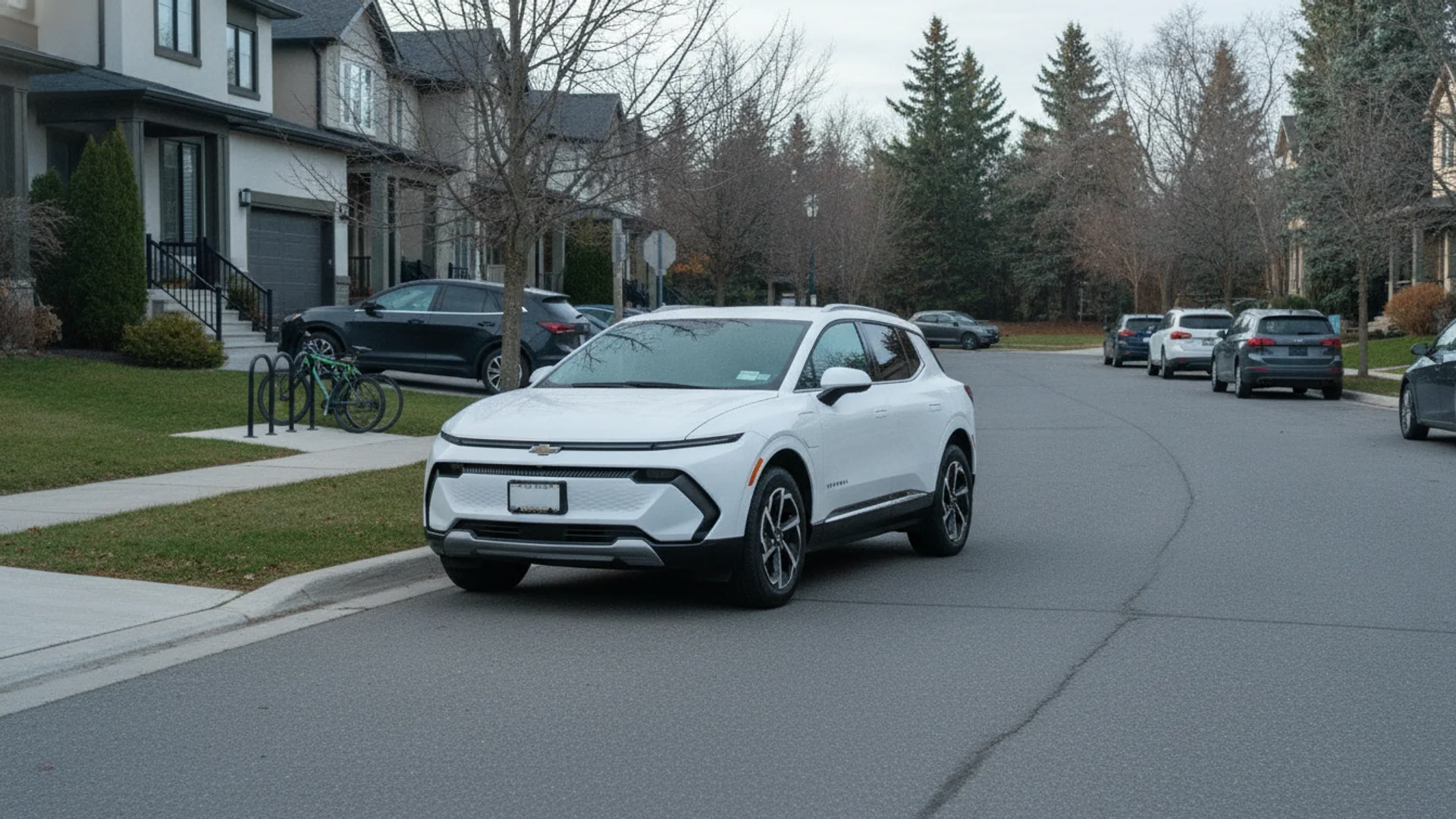
EVAP pays up to $5,000 for an eligible BEV on vehicles capped at a C$50,000 final transaction value. The Chevy Equinox EV LT1 at C$43,998 qualifies. The Hyundai IONIQ 5 base trim at C$46,999 qualifies. The Tesla Model 3 at C$39,490 does not, Shanghai-built, excluded from EVAP. The BYD Seagull at C$25,000 does not, Shenzhen-built, excluded.
The provincial layer compounds it. British Columbia's Go Electric pays up to C$4,000 on eligible BEVs and excludes China-built vehicles. Quebec's Roulez vert pays C$2,000 and does the same. A BC buyer looking at a Chevy Equinox EV sees a net price around C$34,998 after both rebates. The same buyer looking at a BYD Atto 3 at an estimated C$41,000 sees C$41,000.
Run the math across the lineup and the pre-rebate advantage of roughly C$6,600–C$14,900 compresses to a post-rebate advantage of C$1,600–C$9,900 against rebate-eligible competitors. Still an advantage. Still real. Just not the dramatic undercut the sticker price suggests.
Charging compatibility is one place where the news is boring in a good way, BYD's North American spec uses CCS1 at the port and the car talks to FLO, Electrify Canada, Petro-Canada, and ChargePoint hardware without an adapter. BC Hydro's public network is covered. CHAdeMO is not required and will not appear on the spec sheet. The one caveat is Tesla Supercharger access, which depends on the NACS adapter programme BYD has not yet confirmed for Canada.
Residual values are the other unknown. BYD has no Canadian lease history, so bank residuals at launch will be conservative, which pushes lease payments up relative to the cash price. Expect three-year residuals in the 42-48% range at launch versus 52-58% for established Korean and Japanese electric nameplates. That is a lease premium of C$40-C$80 a month on a C$40,000 car. If you intend to lease, this is the number that matters more than the sticker.
Gear worth having
As an Amazon Associate, ThinkEV earns a small commission from qualifying purchases — at no extra cost to you.

PULIDIKI Car Cleaning Gel (Detailing Putty)
Press it into vents, buttons, and seams and it lifts out dust you did not know was there. Weirdly satisfying, genuinely useful.
As an Amazon Associate, ThinkEV earns from qualifying purchases — at no extra cost to you.
What to Do Right Now If You're Considering a BYD
Join a dealer interest list, it costs nothing and gets you on the Q3 2026 allocation call. Do not expect a binding slot before then.
Watch two numbers. First, the quota consumption rate. The federal government has not yet published running figures, but industry trackers will. If the 49,000-unit pool is 60% consumed by June 2026, orders placed after August will likely slip to the 2027 allocation. Second, the final homologated range figures on the Seagull. If the Canadian-cycle range lands above 320 km, the car is a genuine city-and-suburb proposition; below 280 km, it is a second-car buy.
Benchmark against the right competitors. For the Seagull: the Nissan Leaf. For the Dolphin: the Chevy Bolt EUV successor and the base MG4. For the Atto 3: the Chevy Equinox EV LT1 at C$43,998 and the Hyundai Kona Electric. For the Seal: the Tesla Model 3 at C$39,490, the Hyundai IONIQ 6, and the Polestar 2. Run the net-of-rebate price against the net-of-rebate price. Sticker is the trap.
If the Seagull is your target, plan for 2027 delivery, not 2026. It will be the lowest allocation priority at launch, BYD makes more money per unit on the Seal and the Atto 3, so quota units will be weighted toward those. The Seagull is the headline-grabber, not the launch volume model.
Three concrete checkpoints will tell you whether this read holds. One: the Transport Canada quota tally, if it is published and shows BYD has reserved more than 20,000 of the 49,000 permits for its launch inventory, Chery's Omoda and Geely's Zeekr face a 2027 Canadian debut whether they want one or not. Two: the Seagull's final Canadian MSRP when it appears on a dealer window sticker before December 31, 2026, anything above C$27,000 breaks the volume thesis and makes the Dolphin the real entry point. Three: whether EVAP's country-of-origin rule survives the next federal budget intact, because if it is softened, say, to a final-assembly test rather than a parts-origin test, the entire post-rebate advantage math in the section above flips in BYD's favour overnight. The first of those three resolves inside the next ninety days.
Gear worth having
As an Amazon Associate, ThinkEV earns a small commission from qualifying purchases — at no extra cost to you.

WixGear Magnetic Air Vent Phone Mount (2-Pack)
A magnet strong enough that your phone never flinches over potholes or rail crossings. Two in the box, one for each car.
As an Amazon Associate, ThinkEV earns from qualifying purchases — at no extra cost to you.

Founder & Chief Editor
Vlad Pereira is the founder and chief editor of ThinkEV.ca, the Canadian electric-vehicle publication he writes and edits from Courtenay, British Columbia. He covers EV pricing, federal and provincial rebates, charging costs, and the Chinese manufacturers now entering Canada, from the buyer's side rather than the press-fleet side. ThinkEV is a venture of Vlad Pereira Online; his writing on health, income and the long game lives at vladpereira.com.
Frequently asked questions
Can I get a federal or provincial EV rebate on a BYD?
Will the 49,000-unit quota run out before I can order?
How does the Seal actually compare to the Tesla Model 3?
Which provinces get dealerships at launch?
When realistically will the first cars reach customers?
More EV & road-trip finds
Affordable upgrades worth a look — tap any to check the price on Amazon.
 ★ 1,340
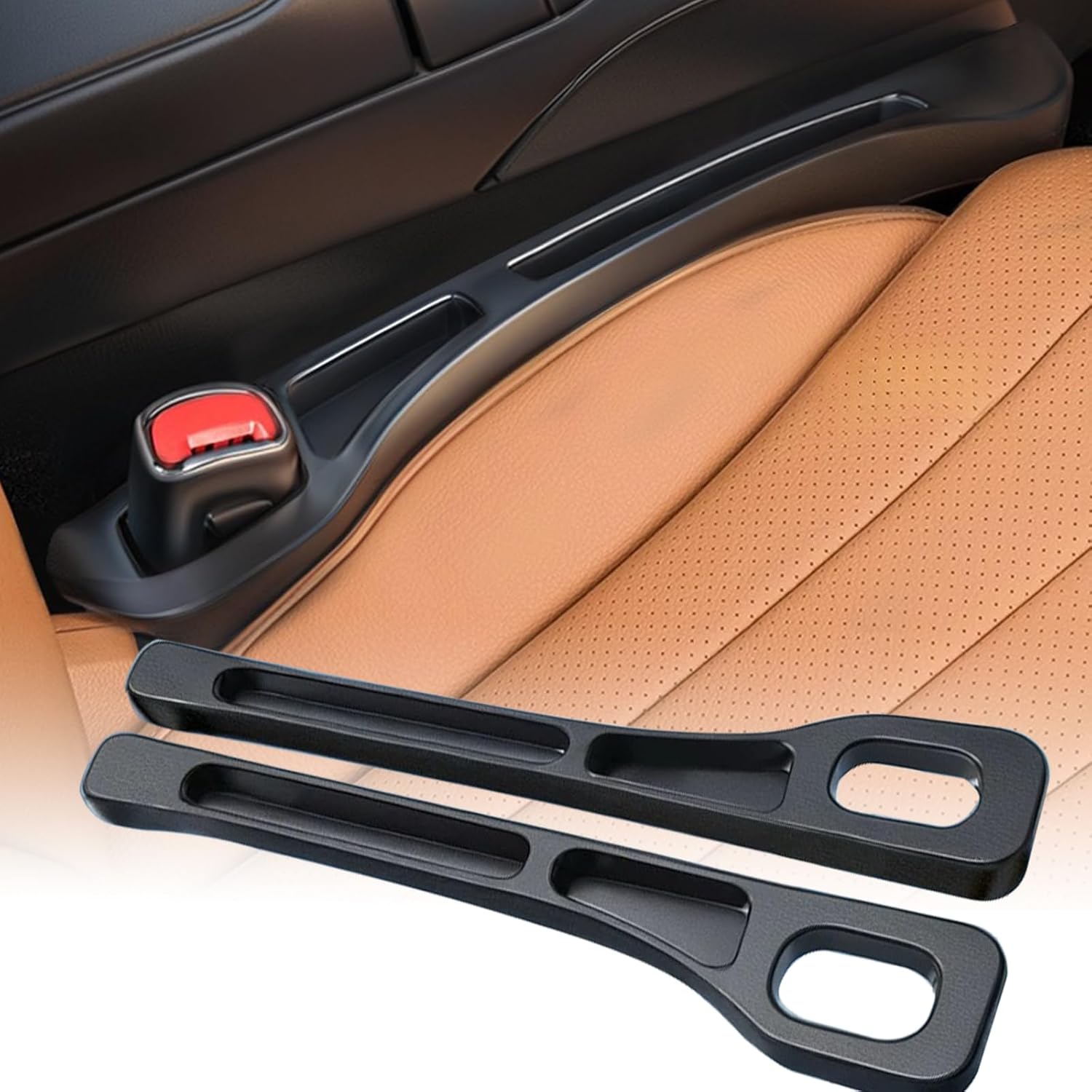
Car Seat Gap Filler (Universal)
View on Amazon ★ 297
360-Degree One-Hand Dashboard Phone Mount
View on Amazon ★ 61
Toddler Car Seat Snack and Cup Tray
View on Amazon ★ 17,839
Qifutan Vent Phone Mount (Military-Grade Clip)
View on Amazon ★ 12,051
Windex Electronics Screen Wipes
View on Amazon ★ 164
Solar-Powered LED Ambient Light
View on Amazon ★ 4,055
6-Speed Manual Shift Knob Display
View on Amazon ★ 4,424
Sun Visor Card and Document Organizer
View on AmazonRead, Plan, Then Stay Current
Explore our expert articles to understand incentives and ownership costs, use the map to pressure-test charging reality, then subscribe so new EV coverage comes straight to you.
Continue Reading
Are Canada's Repair Shops Ready for Chinese EVs?
BYD Dolphin Canada: Price, Specs & 2026 Launch Date
BYD Canada: The Quota Math Behind Ottawa's Bet
Import a Chinese EV Canada to US: Why It Fails
EV Market Under $50K in Canada: Why This Price Band Matters