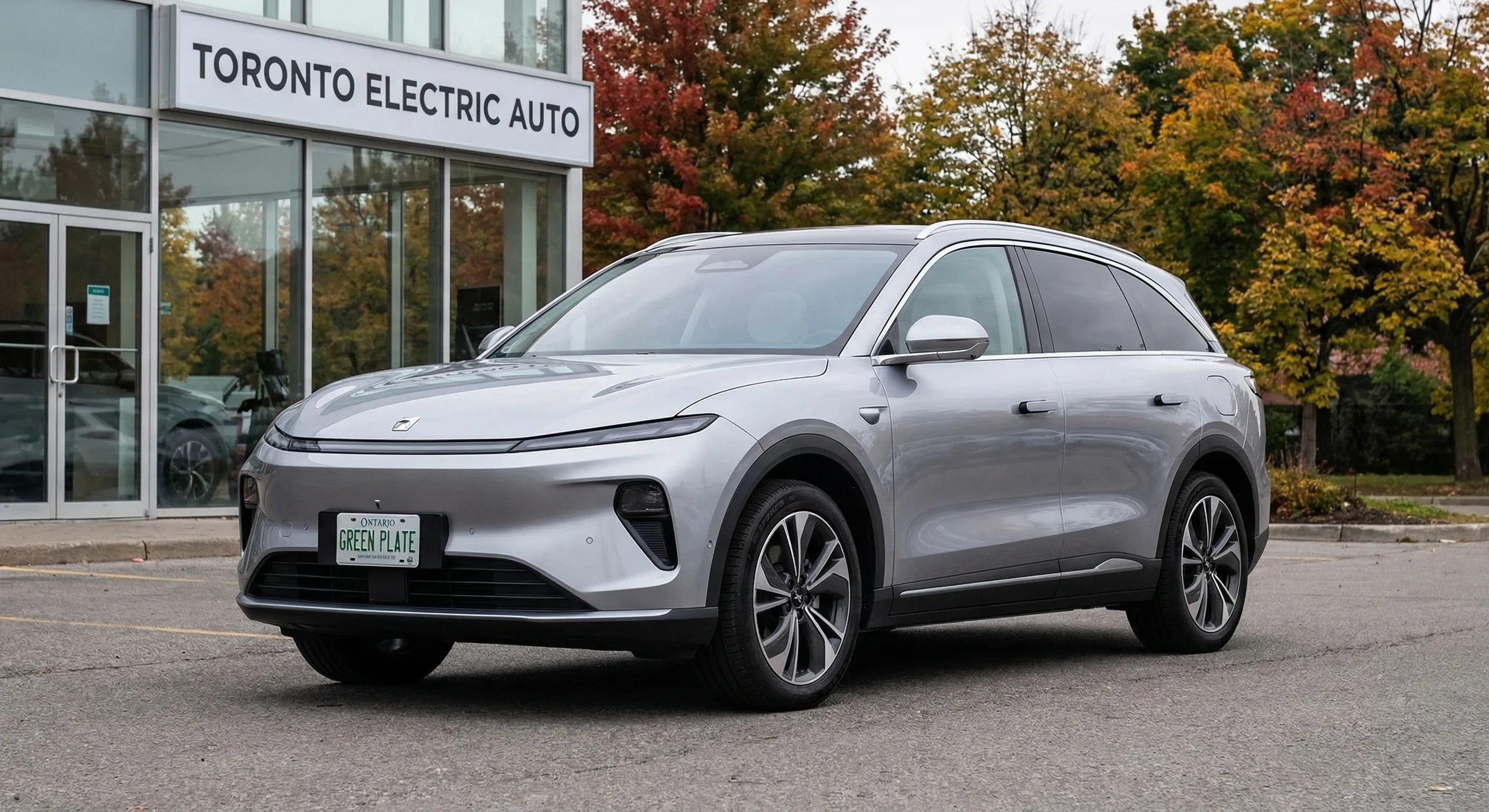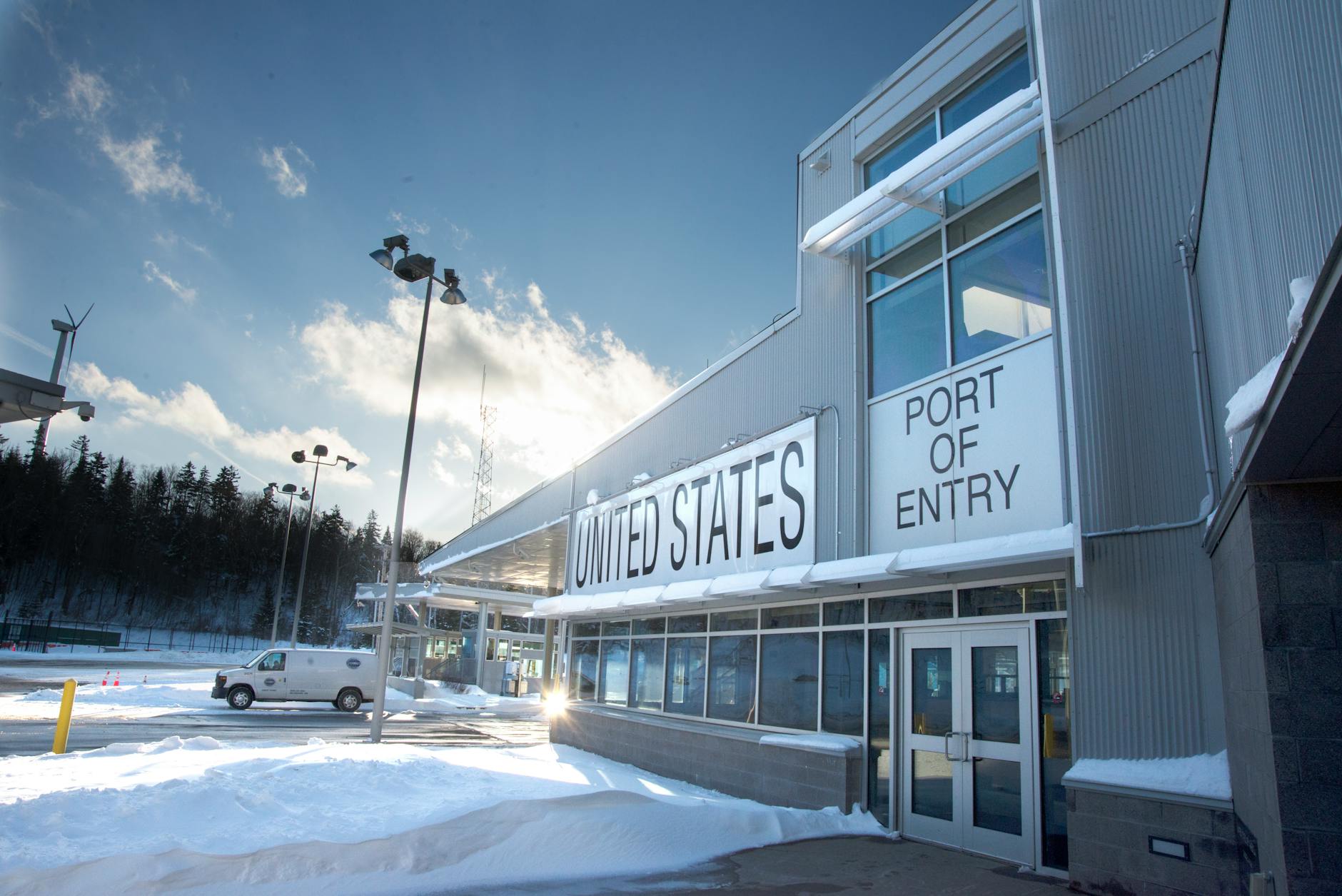
The Detroit News ran it. EV forums are full of it. Every few weeks someone with a sharp calculator and access to Google Maps asks the same version of the question: Canada's buying Chinese EVs at 6.1% tariff. The US is charging 100%. There's a border between the two countries. What's stopping someone from buying a BYD in Toronto and driving it to Detroit?
The short answer is: everything.
The longer answer is what this post is about, because the barriers are not vague or theoretical.
They are layered, specific, and enforced by agencies that do not negotiate at the border booth. US Customs and Border Protection assesses country of manufacture, not country of purchase. A BYD manufactured in Shenzhen and sold at a dealer in Mississauga is still a Chinese-manufactured vehicle the moment it reaches the Peace Bridge. Canada's 6.1% quota arrangement with Beijing is a bilateral deal that governs what enters Canada.
It stops at the Canadian side of the border. It has no bearing on what the US charges.
There's also a grey market layer to this conversation that doesn't get enough coverage. Schemes exist. People have tried variations of this. The consequences include vehicle seizure, significant fines, and potential criminal liability for tariff fraud. That's worth laying out clearly before anyone reads an online forum post and concludes this is doable with the right workaround.
Key takeaways
- US Customs treats vehicles by country of manufacture, not where you bought them. A BYD from Toronto is still a Chinese EV at the border.
- Canada's 6.1% tariff on Chinese EVs is a Canada-China bilateral deal. It grants no exemption or reduction to US import duties, which remain at 100%.
- Chinese EVs sold in Canada are certified to Canadian safety standards, not US FMVSS. You cannot register them in any US state.
- USMCA rules of origin require significant North American content. Chinese-built EVs do not meet that threshold regardless of where they were sold.
- Grey market import attempts risk vehicle seizure, fines, and criminal tariff fraud charges. Personal use exemptions do not apply to new vehicle purchases.
The Temptation Is Real, So Is the Arithmetic
The curiosity makes sense. Canada and the US share the longest land border in the world, a deeply integrated auto industry, and decades of vehicle trade flowing in both directions. The tariff gap between what Canada charges on Chinese EVs (6.1%, within the 49,000-unit annual quota) and what the US charges (100%) is one of the widest you will find anywhere in bilateral trade. On a $40,000 BYD Atto 3, that gap represents roughly $37,640 in theoretical duty savings. The Detroit News covered it. Automotive journalists framed it as an arbitrage opportunity sitting 90 minutes from the border.
Add the fact that Americans have started driving to Canada specifically to test drive Chinese EVs, because the vehicles genuinely do not exist in the US market at any price, and you have all the ingredients for a grey market impulse. People who drove a BYD Seal in Toronto and were impressed want one. They know it's available in Canada. They know Canada's tariff is dramatically lower. The conclusion that follows, "there must be a way", is understandable. It is also wrong.
The tariff gap exists because Canada and the US made different policy choices in 2024 and 2025. Canada negotiated a quota-based reduction after the October 2024 surtax created significant diplomatic friction with Beijing. The reduction to 6.1% came into effect on January 16, 2026, covering 49,000 vehicles per year. The US, under both the Biden and Trump administrations, maintained or escalated its position. Chinese EVs face 100% tariffs on top of the base Section 301 tariffs, and they are explicitly excluded from the Inflation Reduction Act's Clean Vehicle Tax Credit.
Those are two separate policy frameworks operating in two separate jurisdictions. They do not interact in a way that benefits American importers.
What the Tariffs Actually Are, And Why Origin Is Everything
The fundamental error in the "buy it in Canada" logic is treating a vehicle's most recent retail transaction as its country of origin. That is not how customs law works anywhere.
US Customs and Border Protection classifies goods by country of manufacture under Schedule B of the Harmonized Tariff Schedule. For vehicles, that means the country where the vehicle was assembled. A BYD Atto 3 assembled at BYD's Shenzhen facility is a Chinese-origin good. Buying it from a dealer in Brampton, Ontario does not change its manufacturing origin. That transaction is a domestic Canadian retail sale, it has no standing in US customs classification.
When CBP processes a vehicle at a land border crossing, officers verify the vehicle identification number, the bill of sale, and the country of manufacture documentation. The 100% tariff on Chinese-built EVs is an origin-based tariff. It attaches to the vehicle based on where it was made, and it remains attached regardless of how many times ownership changes hands between the Chinese factory and the US border crossing.
The 2026 US tariff picture is actually worse than the base 100% number suggests. In the broader trade conflict stemming from the China EV deal, the Trump administration threatened and in some cases implemented additional 25% tariffs on Canadian goods, including vehicles exported from Canada. That means a Chinese EV sold in Canada, if someone attempted a formal commercial import into the US, could theoretically face the 100% Chinese EV tariff plus the additional Canadian vehicle tariff. The stacking is intentional. It reflects exactly the kind of circumvention the policy is designed to prevent.
Canada's 6.1% quota tariff is a bilateral arrangement between Ottawa and Beijing. It governs the terms under which vehicles manufactured in China may enter the Canadian market within the 49,000-unit annual quota. It is not a global rate reduction. It is not a rate that flows through to re-exports. It creates no legal basis for a US importer to claim any tariff reduction. The vehicles are Canadian-market goods once they've been imported into Canada and sold. They don't carry a special status that transfers south.
How US Customs Actually Works at the Border
Understanding the mechanics at the crossing matters, because some of the grey market schemes floating online are premised on misunderstandings of how CBP actually operates.
When someone crosses a US land border driving a vehicle they recently purchased in Canada, several things flag the transaction immediately. Temporary dealer plates are the most obvious. A Canadian dealer will put temporary plates on a newly purchased vehicle, and those plates, along with a bill of sale in your name showing a recent purchase, create an automatic customs review situation. This is not a vehicle you're returning home with. It's an import.
CBP officers at land crossings have access to the Vehicle Import Worksheet process and can initiate a customs entry for any vehicle attempting to enter. For a Chinese-manufactured EV, that entry triggers the 100% tariff calculation. The officer does not have discretion to waive this based on where you bought the car. The tariff schedule is federal law.
If you drive up to a crossing with a new BYD on temporary Canadian dealer plates and a fresh bill of sale, one of two things happens. Either you're turned back and told to go through the formal commercial import process, which involves a licensed customs broker, formal entry documentation, payment of all applicable duties, and coordination with NHTSA and EPA for vehicle compliance, or the vehicle is seized pending investigation if CBP believes an import violation is underway.
The "personal use exemption" is another common misunderstanding. The personal use exemption under US customs law allows travellers to bring back goods purchased abroad without paying duty, up to a $800 personal exemption limit and with reduced rates above that. It applies to baggage and personal effects. It does not apply to motor vehicle purchases. The IRS and CBP have been explicit about this. A vehicle is a major purchase that requires formal importation regardless of whether it's for personal use. The exemption will not save you from the tariff.
The Registration and Safety Standards Wall
Even if someone managed to get a Chinese EV across the border, through confusion, error, or a more sophisticated scheme, they would immediately face an immovable secondary barrier: state registration.
Every state requires vehicles to meet Federal Motor Vehicle Safety Standards before they can be titled and registered. FMVSS is a comprehensive federal framework covering crash structure, lighting, airbag deployment, seat belt requirements, electronic stability control, and dozens of other specific engineering standards. These are not general performance guidelines. They are precise technical requirements verified through NHTSA certification.
Chinese EV manufacturers selling in Canada certify their vehicles to Canadian Motor Vehicle Safety Standards. CMVSS and FMVSS are similar in intent and overlap substantially in content, but they are legally distinct standards. A CMVSS-certified vehicle is not FMVSS-certified. No state DMV will register a vehicle without FMVSS certification. The vin number on the door is not sufficient. The manufacturer must have formally submitted the vehicle for NHTSA compliance certification, and BYD, SAIC, Geely, and every other Chinese manufacturer currently selling in Canada has not done this for the US market. They have never sold vehicles in the US. They have no US FMVSS certifications.
The only legal pathway around FMVSS for a non-compliant vehicle is a Registered Importer modification. RIs are NHTSA-certified shops that physically modify vehicles to bring them into FMVSS compliance, changing lighting, airbag systems, bumpers, and whatever else doesn't meet the standard. This process can cost between $10,000 and $30,000 depending on the vehicle, takes months, and is not guaranteed to succeed for every model. It exists for grey market European and Japanese vehicles that have high collector value and large enough enthusiast communities to support the RI industry. It is not an economically viable path for someone trying to save money on a daily driver.
The EPA compliance requirement compounds this. Vehicles sold in the US must meet EPA emissions standards. Electric vehicles still require EPA certification for their battery management systems, thermal management, and related systems. Again, Chinese manufacturers selling in Canada have Canadian certification. US EPA certification is a separate process they have not completed.
No FMVSS certification. No EPA certification. No registration. No legal path to drive the vehicle on US public roads.
USMCA Rules of Origin, Why the Trade Agreement Doesn't Help
A reasonable person might look at the Canada-US-Mexico Agreement and assume it creates some vehicle mobility between the three countries. The agreement does facilitate substantial tariff-free vehicle trade, but only for vehicles that actually originate in North America under the agreement's rules of origin.
USMCA requires that passenger vehicles meet a 75% regional value content threshold to qualify for tariff-free treatment between the three countries. That content calculation is based on where parts are manufactured, where the vehicle is assembled, and where key components like batteries and steel originate. A vehicle assembled in China, using Chinese components and a Chinese battery supply chain, with final assembly in a Chinese factory, fails this test categorically. It has essentially zero USMCA-originating content.
Buying a Chinese EV at a Canadian dealership does not change its USMCA eligibility. The rules of origin assessment happens at the factory level. The transaction record in Canada is irrelevant to the USMCA calculation. CBP evaluates origin at the point of production, not the point of sale.
This was not an oversight in the agreement. The rules of origin requirements were specifically designed to prevent exactly this scenario: third-country goods using Canada or Mexico as a transshipment point to access the US market under preferential tariff rates. Automotive rules of origin in USMCA are among the most detailed and stringent in any trade agreement precisely because the US-Canada-Mexico auto industry integration is so deep, and because policymakers wanted to ensure only genuinely North American production benefits from the agreement.
The Chinese EV scenario is textbook transshipment evasion, at least in theory. The rules of origin provisions close that door before it opens.
What About Personal Vehicle Tourism?
The One Partial Exception
There is one scenario where a Chinese EV can legitimately cross the US border: a Canadian resident who owns one, driving it into the US for temporary personal use.
CBP policy permits foreign nationals to bring their personal vehicles into the United States for temporary stays, typically up to 12 months (though in practice tourism visits are much shorter). This is standard international vehicle travel.
A Canadian who bought a BYD Sealion 6 in Vancouver can absolutely drive it to Seattle for the weekend, or road trip through California, without triggering any import violation. The vehicle is their personal property registered in Canada, and they are a Canadian resident making a temporary visit.
Gear worth having
As an Amazon Associate, ThinkEV earns a small commission from qualifying purchases — at no extra cost to you.
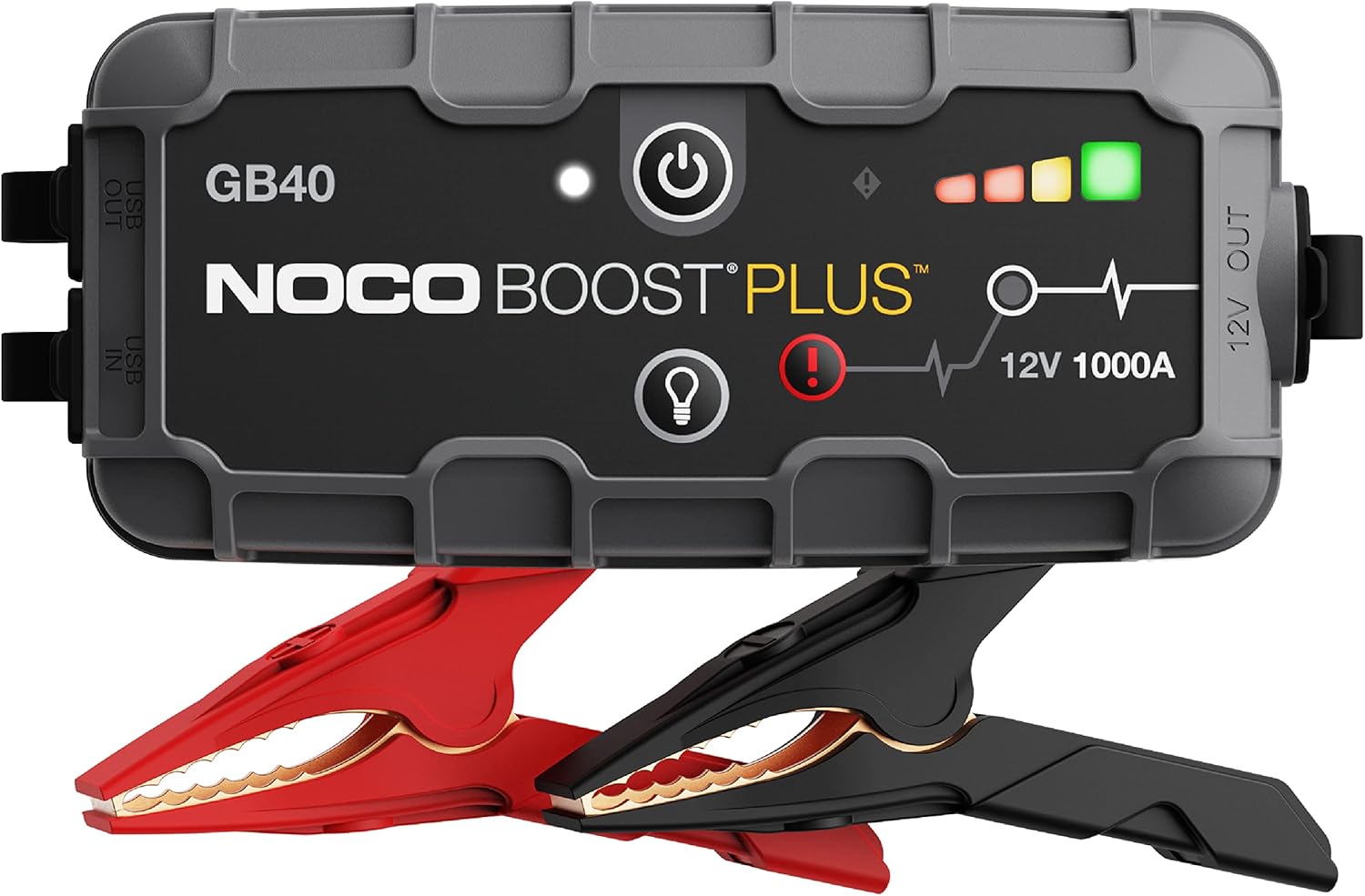
NOCO Boost Plus GB40 Jump Starter
A 1000A lithium jump starter that fits in your glovebox and works on any 12V battery. Your insurance against a dead 12V in a parking lot.
As an Amazon Associate, ThinkEV earns from qualifying purchases — at no extra cost to you.
This is why Americans are seeing Chinese EVs in US border cities and at charging stations along the I-5 and I-90.
Those vehicles are driven by Canadians on personal trips. They are not imports. CBP permits this exactly the way they permit any Canadian driving their personal vehicle into the US.
What this is not: a loophole for American buyers. A US resident cannot purchase a Chinese EV in Canada, register it there using a friend's address, and then regularly "visit" their car parked in Canada.
CBP specifically watches for patterns of this kind. The combination of US residency, a recently purchased Canadian-registered vehicle, and frequent cross-border travel with that vehicle will draw scrutiny. The agency has enforcement tools including pattern analysis and residency verification.
Canadians who own Chinese EVs and cross the border regularly have nothing to worry about.
Americans who think Canadian residency can be simulated for the purpose of circumventing import rules are mistaken about how thoroughly CBP investigates vehicle import schemes.
Gear worth having
As an Amazon Associate, ThinkEV earns a small commission from qualifying purchases — at no extra cost to you.

Portable Level 2 EV Charger (40A, NEMA 14-50)
Throw it in the trunk and charge anywhere with a 240V outlet. 40A portable with NEMA 14-50 plug. Your road-trip insurance policy.
As an Amazon Associate, ThinkEV earns from qualifying purchases — at no extra cost to you.
For Canadians who do make regular cross-border trips in their EV, whether it's a Chinese brand or anything else, a portable jump starter in the boot is worth having. Not for the drive battery, but because the 12V auxiliary battery in any EV can die the same as any other car, and it will strand you identically. The NOCO Boost GB40 handles most passenger vehicles and fits cleanly in the cargo area.
The Grey Market Risk, What Actually Happens When People Try
Grey market vehicle imports are not a new phenomenon. The Japanese domestic market import scene, the European grey market for US-spec vehicles, the parallel import trade in luxury cars between markets, these have existed for decades. What's different about the Chinese EV situation is the scale of the tariff gap, which creates pressure for improvised schemes.
The schemes that get discussed online generally involve some combination of:
- Attempting to cross with Canadian dealer plates and hoping for a confused border agent
- Using a Canadian intermediary to hold ownership while the American "borrows" the vehicle long-term
- Undervaluing the vehicle in customs declarations to reduce the calculated duty
- Misrepresenting the vehicle's country of origin in documentation
Each of these is either ineffective, illegal, or both.
The border crossing scheme fails at first contact with any experienced CBP officer. Temporary dealer plates on a new vehicle are a clear flag, and CBP has explicit training on identifying vehicle import attempts. The "borrowing" scheme fails because CBP can and does investigate vehicle residency situations, and a US resident driving a recently purchased Canadian-registered vehicle on a regular basis does not meet the personal use exemption criteria.
Customs fraud, deliberately misrepresenting the value or origin of goods to avoid applicable duties, is a federal crime under 18 U.S.C. § 542 and related statutes. For vehicle imports, it can also trigger penalties under 19 U.S.C. § 1592, which provides for civil penalties up to four times the unpaid duties and, in cases of fraud, criminal referral. The vehicle itself is subject to seizure and forfeiture under 19 U.S.C. § 1595a.
The practical outcome for someone who attempts a grey market Chinese EV import and gets caught: the vehicle is seized. They lose the vehicle. They face fines that can exceed the value of the vehicle. And if CBP determines the misrepresentation was intentional, which is not hard to establish when someone has documentation showing a Chinese-manufactured vehicle and submitted paperwork claiming a different origin, they face criminal liability.
The warranty situation makes this even worse. Chinese EV manufacturers selling in Canada provide warranties through their Canadian dealer networks. Those warranties are market-specific. A BYD sold at a Canadian BYD dealer, serviced under the Canadian warranty program, has no valid warranty coverage in the US. If someone successfully got one into the US through a grey market scheme, they'd be operating an unregistered, uninsured vehicle with no warranty coverage and no authorized service network. That is not a practical transportation option.
What Americans Can Actually Do Instead
If you're American and you want a Chinese EV, the options that exist are real, legal, and more useful than a grey market scheme.
Drive to Canada and test drive one. This is already happening, documented by the Detroit News and others. Dealerships in border cities like Vancouver, Calgary, and Toronto are seeing American customers for exactly this reason. You cannot buy and import it, but you can experience the product. If you're curious about BYD build quality, the technology, the range, or the driving dynamics, go drive one. It costs you a tank of gas and a border crossing.
Wait for the policy environment to shift. The US tariff situation is political, not permanent. There are scenarios, a revised trade deal, a future administration with different priorities, WTO pressure, or Chinese manufacturers building in North America to qualify under USMCA, where Chinese EVs become available in the US market through legitimate channels. That may be years away. But it's a real possibility, and the vehicles will presumably still be good when it happens.
Consider vehicles with Chinese technology but North American assembly. Volvo, which is owned by Geely, assembles some models in South Carolina. The relationship between Chinese capital and North American manufacturing is more complex than the headlines suggest. Some vehicles from Chinese-affiliated manufacturers are legitimate US market products. Know what you're buying and how it qualifies.
Look at the current US EV market. The Chevrolet Equinox EV at $35,000, the Kia EV3 coming to North America, the upcoming wave of sub-$40,000 EVs from US-aligned manufacturers, the market is moving. The price gap between Chinese EVs and North American alternatives is narrowing. By the time any grey market scheme could theoretically work, the economic motivation may have largely disappeared.
Gear worth having
As an Amazon Associate, ThinkEV earns a small commission from qualifying purchases — at no extra cost to you.

Grizzl-E Classic Level 2 EV Charger (40A)
Canadian-made and rated for minus 40C winters. 40A / 9.6 kW, NEMA 14-50, indoor/outdoor, 24-ft cable. The charger built for Canadian weather.
As an Amazon Associate, ThinkEV earns from qualifying purchases — at no extra cost to you.
For Americans making cross-border EV road trips to check out the Canadian market, a portable Level 2 charger is a practical accessory. The Lectron portable Level 2 charger works with any J1772 outlet and gives you flexibility at destinations that have a 240V dryer outlet but no dedicated EVSE. Worth having in the trunk regardless of which side of the border you're charging on.
The Political Layer: Trump's Threatened Tariff Escalation
The tariff situation in 2026 is not static. It's worth understanding the political dimension because it directly affects the math for anyone thinking about cross-border EV transactions.
The Trump administration has been vocal about the Canada-China EV quota deal. The position from Washington is that Canada's 6.1% rate on Chinese EVs represents a potential circumvention risk, that Chinese manufacturers could use Canada as a platform to eventually get vehicles to the US market at below-tariff rates.
The administration has threatened, and in some cases implemented, additional 25% tariffs on Canadian goods as leverage in this dispute.
The practical effect: even the formal commercial import pathway for a Chinese EV from Canada is not just subject to the 100% Chinese EV tariff. It may also be subject to additional Canadian-vehicle tariffs depending on how CBP classifies the shipment.
The tariff stacking that results makes any economic case for grey market importing even more absurd than the base numbers suggest.
Canada's position has been that the quota deal is legitimate, structured to ensure the vehicles entering Canada stay in Canada, and consistent with Canada's obligations under international trade law. Ottawa has pushed back on the circumvention framing.
But the political friction is real, and it affects the regulatory environment in ways that tighten rather than loosen the barriers for anyone thinking about cross-border EV arbitrage.
The Detroit News coverage of cross-border curiosity is accurate about one thing: Americans are interested in Chinese EVs and frustrated by their inability to access them. What the coverage sometimes undersells is how comprehensively closed every formal and informal pathway actually is under current law. The interest is real. The legal pathway is not.
The Long Game: What Changes This
None of the current barriers are permanent features of the universe. They are the product of specific policy decisions made in specific political contexts. Those decisions can change.
The most direct path to Chinese EVs in the US is US policy change, a reduction in tariffs through a future trade agreement, executive action, or a shift in the domestic political calculus around EV competitiveness.
If a future administration decides the consumer benefit of cheaper EVs outweighs the trade protection argument, the 100% tariff comes down and Chinese manufacturers can enter the US market directly. The Canada routing becomes unnecessary because the direct route opens.
The second path is North American manufacturing by Chinese-affiliated automakers.
BYD has been reported to be evaluating manufacturing in Mexico. Geely-affiliated Volvo assembles vehicles in the US. If a Chinese parent company builds a manufacturing operation with sufficient USMCA content in Canada or Mexico, those vehicles could qualify for tariff-free treatment and potentially for the Clean Vehicle Tax Credit. This is a multi-year capital investment, not an imminent development, but it's a real pathway that several manufacturers are evaluating.
The third path is gradual pressure through WTO dispute mechanisms.
Canada, the EU, and other jurisdictions have challenged US tariffs at the WTO with varying success. Long-term, trade law may create obligations that constrain how aggressively the US can maintain origin-based vehicle tariffs. This is the slowest and most uncertain path, but it's part of the background context.
None of these paths run through a Canadian car dealership.
They run through Washington policy decisions, boardrooms in Shenzhen and Detroit, and trade negotiating rooms in Geneva. Anyone who tells you there's a retail-level workaround to 100% tariffs and FMVSS certification requirements is either misinformed or selling something.
For now, if you are American and you want to understand the Chinese EV market, the most useful thing you can do is follow what's happening in Canada.
The vehicles arriving here under the 49,000-unit quota are the product pipeline that would enter the US market if tariffs were reduced. The Canadian market is effectively a preview of what becomes available to Americans if and when policy shifts.
That's a genuinely useful perspective. It's just not a purchasing opportunity, not yet, not under current law.
Gear worth having
As an Amazon Associate, ThinkEV earns a small commission from qualifying purchases — at no extra cost to you.

PULIDIKI Car Cleaning Gel (Detailing Putty)
Press it into vents, buttons, and seams and it lifts out dust you did not know was there. Weirdly satisfying, genuinely useful.
As an Amazon Associate, ThinkEV earns from qualifying purchases — at no extra cost to you.
Related Reading
- Chinese EVs Entering Canada: What's Actually Arriving in 2026, The full picture of which Chinese EV brands and models are entering the Canadian market under the 49,000-unit quota, with pricing and timeline details
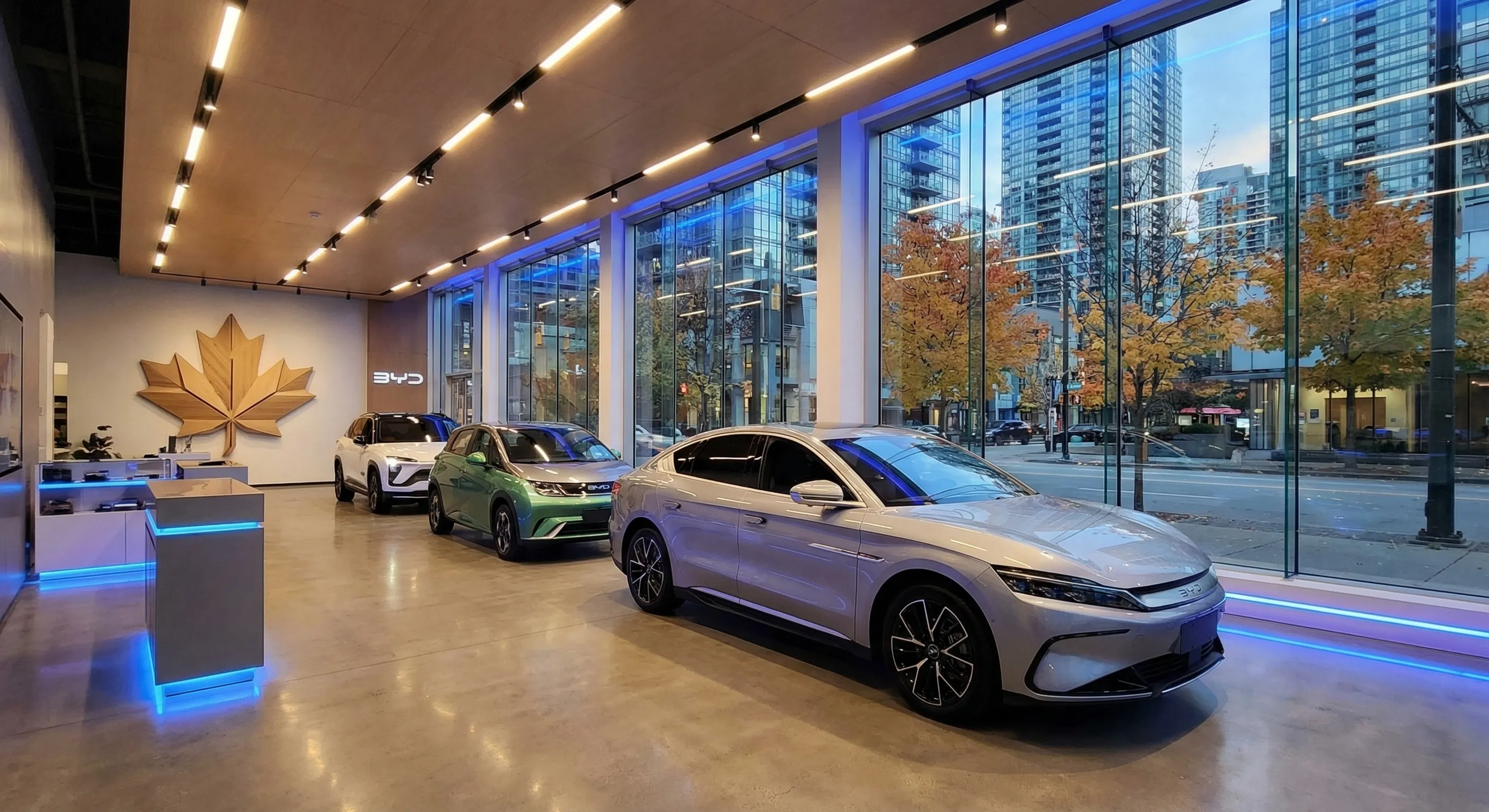
- BYD Dealerships in Canada: 20 Locations Including Toronto, Where to find BYD dealers in Canada, what models are available, and what Canadian buyers need to know before visiting a showroom
- Can Americans Buy Chinese EVs Through Canada?, A practical breakdown of every barrier facing American buyers, including customs, registration, insurance, and FMVSS requirements
Gear worth having
As an Amazon Associate, ThinkEV earns a small commission from qualifying purchases — at no extra cost to you.

WixGear Magnetic Air Vent Phone Mount (2-Pack)
A magnet strong enough that your phone never flinches over potholes or rail crossings. Two in the box, one for each car.
As an Amazon Associate, ThinkEV earns from qualifying purchases — at no extra cost to you.

Founder & Chief Editor
Vlad Pereira is the founder and chief editor of ThinkEV.ca, the Canadian electric-vehicle publication he writes and edits from Courtenay, British Columbia. He covers EV pricing, federal and provincial rebates, charging costs, and the Chinese manufacturers now entering Canada, from the buyer's side rather than the press-fleet side. ThinkEV is a venture of Vlad Pereira Online; his writing on health, income and the long game lives at vladpereira.com.
Frequently asked questions
Does buying a Chinese EV in Canada change its tariff status when entering the US?
Can I use the personal use exemption to bring a Chinese EV from Canada into the US?
Why does USMCA not cover Chinese EVs bought in Canada?
What happens if someone tries to import a Chinese EV from Canada illegally?
Can Americans drive to Canada to test drive Chinese EVs?
More EV & road-trip finds
Affordable upgrades worth a look — tap any to check the price on Amazon.
 ★ 17,839
Qifutan Vent Phone Mount (Military-Grade Clip)
View on Amazon ★ 9,349
Auto Detailing Brush Set (10-Piece)
View on Amazon ★ 419
★ 419RGB Car Interior LED Strip Light
View on Amazon ★ 4,055
6-Speed Manual Shift Knob Display
View on Amazon ★ 865
★ 865Collapsible Trunk Organizer
View on Amazon
TP-Link Kasa Smart Plug with Energy Monitoring
View on Amazon ★ 61
★ 61Toddler Car Seat Snack and Cup Tray
View on Amazon ★ 68
★ 68WeatherTech FloorLiner for Tesla Model 3
View on AmazonRead, Plan, Then Stay Current
Explore our expert articles to understand incentives and ownership costs, use the map to pressure-test charging reality, then subscribe so new EV coverage comes straight to you.
Continue Reading
EV Market Under $50K in Canada: Why This Price Band Matters
Every Chinese EV Brand Coming to Canada in 2026

Switching From Gas to an EV in Canada: The Guide

Nunavut EV Feasibility: Can Electric Cars Work in the Arctic?
Why Legacy Automakers Keep Losing to Chinese EV Brands