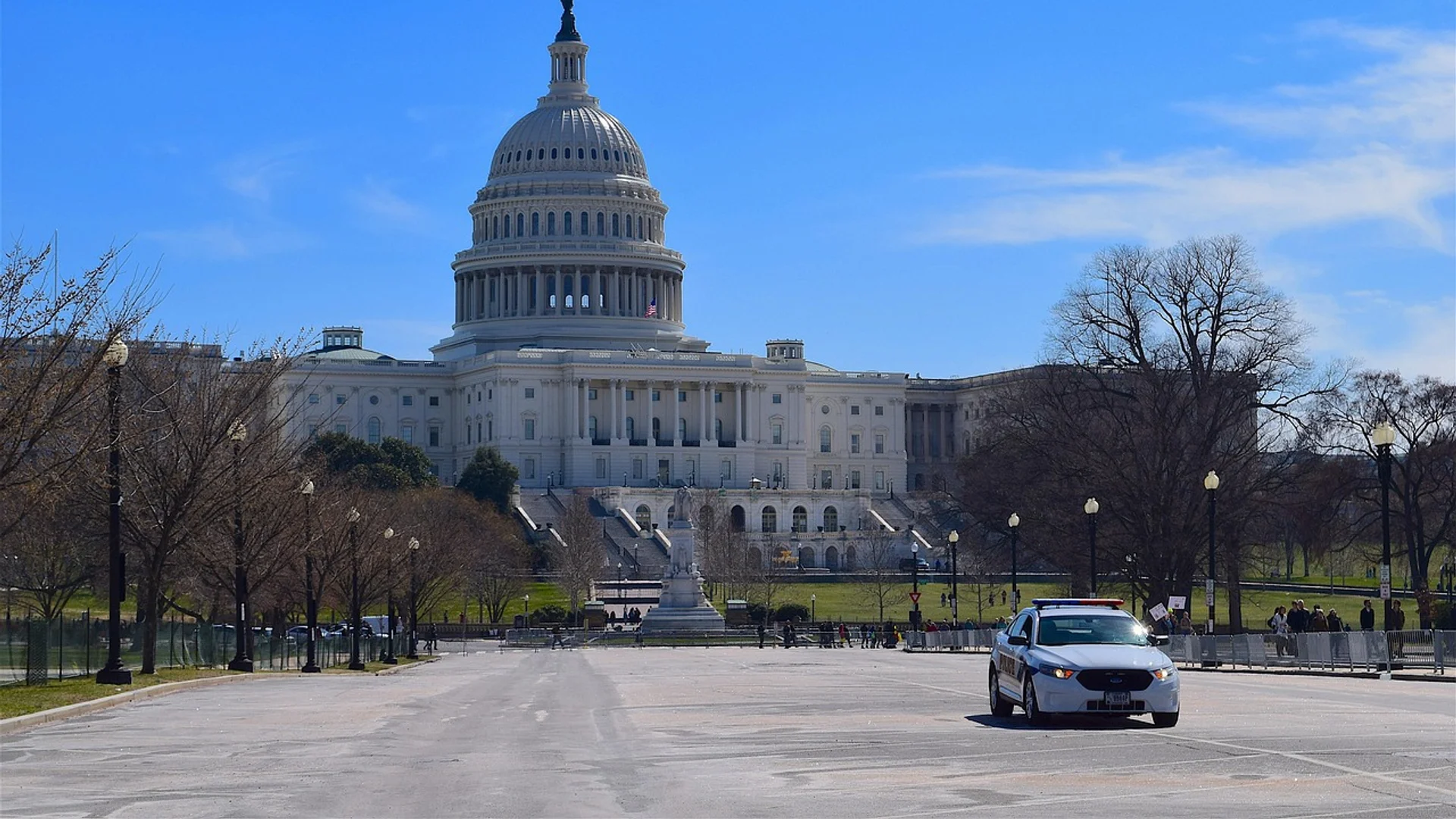
The most revealing line from a recent Model Y buyer's account was not about range, price, or the dealer losing the charging cable. It was the buyer admitting that the real project for the next two weeks was cleaning the garage. That sentence is a policy data point, not a lifestyle complaint, every major EV incentive programme in the developed world is built on the assumption that the buyer already has, or can readily build, a Level 2 charging station at home. The housing data says that assumption breaks for a significant share of the population the policy is supposed to reach.
The buyer's experience is policy-revealing in a way the purchase decision itself is not. The intuition runs through the responses such accounts attract: one observer asks directly how much resistance to EV adoption is "simply unwillingness to clean the garage." Another notes that exterior charging is fine and a garage is not strictly required to charge an EV. A third just charges in the driveway on 220 volts. The engineering is correct. The policy stack, however, is not designed around their workarounds, it is designed around the implicit garage. That mismatch is what this piece is about.
The garage is the symptom, not the story.
Key takeaways
- Canada's EVAP and iZEV programmes require no proof of home charging access before issuing rebates.
- Toronto and Vancouver apartment dwellers, over 40% of residents, are structurally excluded from the garage assumption.
- The IRA covers 30% of EVSE installation costs, but only if the buyer already has somewhere to install it.
- Norway codified condo charging rights in 2017; Canada still treats the precondition as a household problem.
- Census garage counts overstate functional charging access because most North American garages are occupied by stored goods.
The Charging-at-Home Assumption Baked Into Every EV Policy
Canada's Electric Vehicle Affordability Programme (EVAP), launched on February 16, 2026, applies a $5,000 point-of-sale rebate to eligible vehicles and runs through 2030. It carries no requirement that the buyer demonstrate access to Level 2 home charging, no proof of a dedicated 240-volt circuit, no certification that the residence can accommodate an EVSE. The same is true of the federal iZEV programme that predates it. Eligibility is built around the vehicle and the buyer's income; it is not built around the buyer's ability to charge the vehicle at the place where the vehicle will be parked overnight.
The United Kingdom's Office for Zero Emission Vehicles, the United States Inflation Reduction Act Section 30C credit, and the European Union's Alternative Fuels Infrastructure Regulation each address the home-charging question differently, but all three operate from the same premise: the residential charging environment is a thing the household manages on its own, downstream of the purchase incentive. The IRA covers 30 percent of qualifying EVSE installation costs up to $1,000 USD through 2032. OZEV's grant historically subsidised home charger installs at up to £350, but only for households with off-street parking. The EU's AFIR mandates public-network density along the trans-European transport corridors; residential charging is delegated to member states, with no bloc-level subsidy.
The structural blind spot is that all of these instruments quietly assume the buyer has a garage, a driveway, or at minimum a dedicated parking space against which they can install a permanent EVSE. Where that assumption holds, the incentives compound elegantly. Where it does not hold, the buyer faces a compounding cost the rebate does not address.
The case against treating this as a policy gap is that the market is self-correcting. EV buyers self-select into housing they can charge in, the argument runs; subsidising charging access for households that have not already solved the problem is regressive, capturing budget that should fund public-network buildout instead. The argument has merit at the margin. It fails as a general claim because the housing-stock numbers below show the non-garage population is structurally large, urban, and increasingly the demographic the incentive is trying to convert. A self-correcting market in 2028 is a market that has thrown away three years of urban adoption growth waiting for housing turnover to do work that a building-code amendment could do in eighteen months.
The deeper rebuttal is that "self-correction" in housing markets operates on a thirty-year capital-stock cycle, not a five-year policy cycle. The median Canadian detached home was built before 1990 and runs a 100-amp service panel that cannot accommodate a 40-amp EVSE circuit without an upgrade. Waiting for the market to clear the backlog is waiting for half a generation of demolitions and substantial renovations. The rebate window closes in 2030. The arithmetic does not work.
Norway is the major exception, and the comparison is instructive. Norwegian law has codified condominium charging access rights since 2017, sameie (condominium association) members have a statutory right to install charging equipment in their building's parking facility, subject to reasonable conditions. China went further with a 2020 amendment to its residential building code requiring EV-ready parking infrastructure in new construction. These are supply-side fixes addressing the precondition. The Anglosphere policy stack, by contrast, optimises the demand-side incentive and treats the precondition as a household problem.
Who Actually Has a Garage: Housing Data Across EV Markets
Statistics Canada's 2021 Census of Population recorded that 53.6 percent of occupied private dwellings in Canada were single-detached houses, the housing type most likely to include garage or driveway parking. The share is significantly lower in the urban cores where EV adoption messaging is heaviest. In Toronto CMA, single-detached share is closer to 39 percent; in Vancouver CMA, around 27 percent of dwellings. Apartments in buildings of five or more storeys account for roughly 18 percent of Canadian housing stock nationally, and over 40 percent in Toronto and Vancouver proper.
The American Housing Survey conducted by the US Census Bureau in 2021 found approximately 63 percent of US occupied housing units had a garage or carport, higher than Canada's single-detached share, but with the same urban-rural skew. UK Department for Transport data places off-street parking availability at roughly 57 percent of British households, with the figure falling below 40 percent in inner London and major Scottish urban areas. Australia's housing pattern is closer to Canada's, with a similar skew toward apartment living in Sydney and Melbourne CBDs.
The pattern is consistent across the four major Anglosphere EV markets: a clear majority of households in suburban and exurban areas have residential charging access; a significant minority, between 33 and 43 percent depending on country and definition, do not. That minority is concentrated precisely in the urban populations where EV sales growth has been strongest and where the absence of internal-combustion infrastructure (no easy gas-station alternative) makes home charging most critical.
The garage that does exist often does not function as a parking space, which is a second-order issue the housing statistics undercount. North American garages tend to absorb household storage at a rate that exceeds the rate at which households dispose of stored items. Practitioner guides written for homeowners attempting cleanouts confirm the pattern at field level, one step-by-step garage cleanout guide treats the process as a multi-day project requiring sort-keep-discard discipline most households defer indefinitely; another garage organisation guide frames the task as "intimidating" before any vehicle-parking calculation enters the picture. The household that keeps its garage available for vehicles year-round, with built-out shelving for the displaced "stuff," is the disciplined minority, visible in suburban anecdote precisely because it is unusual, not because it is normal. Census counts of single-detached housing therefore overstate the share of households whose garage is actually available for an EV plus a Level 2 EVSE. The functional share is lower than the structural share, and the gap is invisible to the policy designers reading the census tables.
There is also a real opportunity-cost issue the policy framing should not gloss over. A widely circulated list of items homeowners regret discarding during garage cleanouts catalogues paint, hardware, seasonal sports gear, and lumber offcuts as common regrets, items with option value that only becomes visible months after the bin truck has left. The cleanout is not a cosmetic exercise. It is a forced disposition of household capital, and the policy stack does not score it as a cost.
Multi-unit residential buildings (MURBs) are the segment where the policy gap is widest. Natural Resources Canada's iMHZEV programme covers MURB charging infrastructure on the operator side, but actual uptake has been modest, NRCan reporting suggests fewer than 12 percent of eligible MURBs have applied. The reasons are structural: condominium boards face split incentives, electrical-panel capacity constraints, and cost-allocation disputes that the federal funding instrument does not resolve.

Gear worth having
As an Amazon Associate, ThinkEV earns a small commission from qualifying purchases — at no extra cost to you.

Lectron Level 2 J1772 Charger (40A, WiFi)
Smart WiFi charger with real-time energy monitoring. 40A / 9.6 kW, J1772 with a NEMA 14-50 plug, schedule charging right from your phone.
As an Amazon Associate, ThinkEV earns from qualifying purchases — at no extra cost to you.
Level 2 Penetration Rates vs EV Sales Growth: The Infrastructure Lag
Canadian EV registrations crossed approximately 350,000 vehicles by the end of 2025, with sales growth tracking near 40 percent year-over-year through the EVAP launch quarter. Home Level 2 charger installations have not kept pace. Reasonable estimates derived from CSA-certified EVSE shipments and provincial rebate-programme intake data suggest fewer than 180,000 dedicated Level 2 home installations are operating in Canadian residences. The remainder of the EV fleet relies on Level 1 (120-volt) charging from standard outlets, on public Level 2 networks, on DC fast-charging stops, or on workplace charging, none of which were designed as primary daily-charging solutions for a 60-plus kWh battery pack.
Hardware cost is not the primary barrier. A Grizzl-E Classic, manufactured in Kitchener, Ontario, retails for roughly $700 CAD. ChargePoint Home Flex sits in the same range. Installation costs vary widely depending on panel capacity, run distance, and provincial electrical permit requirements, but typical installed totals range from $800 to $2,200 CAD for a straightforward single-family home with an adequate panel. For the Level 2 home charger buyer evaluating product choice in Canada, the unit-economics question is tractable.
The harder cases sit elsewhere. Older homes with 100-amp service panels often require panel upgrades before a dedicated 40-amp EVSE circuit becomes viable, a $2,500 to $4,500 CAD addition. Two-vehicle EV households face an electrical load management decision that is not a product-purchase problem but an engineering allocation problem. Renters cannot install permanent EVSE without landlord consent, and most do not get it. Condo owners face the MURB-uptake problem cited above. The 40 percent annual growth in vehicle sales is being absorbed by the half of the buyer pool that has the easiest charging path; the other half is increasingly visible as a structural ceiling.
A useful comparison case is the Chevrolet Equinox EV versus Tesla Model Y purchase decision Canadian shoppers face in 2026. Both vehicles assume overnight home charging in their marketing materials. Neither manufacturer's purchase-flow checkpoints the charging precondition, there is no GM or Tesla step in the Canadian buying process that asks the buyer about panel capacity or off-street parking before order confirmation. The vehicle ships; the buyer discovers the precondition gap on delivery. The delivery-day discovery is the policy data point. It does not appear in any Transport Canada adoption-modelling exercise I am aware of. The Model Y versus Equinox EV comparison Canadian shoppers actually run is a comparison of vehicles. The comparison that should run alongside it, panel capacity, parking tenure, condo board posture, does not have a consumer-facing tool.
A counter-case worth naming: the BYD Seal arriving in Canadian dealerships under the reduced tariff regime, which supports Apple CarPlay and Android Auto natively, is being marketed against the Tesla Model 3 on user-experience grounds. It will be sold to the same urban demographic the EVAP cap targets. Its launch will be limited by the same residential infrastructure ceiling, regardless of how the infotainment comparison shakes out.
Multi-Jurisdiction Policy Response: What Governments Are and Are Not Doing
The instruments in use across the major markets fall into three categories: residential EVSE subsidies, MURB infrastructure grants, and building-code mandates. Their reach and effectiveness differ sharply.
The layout makes the gap visible. Canada is the only jurisdiction among the major Anglosphere EV markets without a direct federal residential EVSE subsidy, without a federal building-code mandate, and without statutory MURB charging access rights. The provinces have moved unevenly, BC's CleanBC Go Electric programme funds residential EVSE rebates up to $350; Quebec's Roulez Vert covers up to $600, but the federal stack is conspicuously thin on the precondition side.
The UK's Part S amendment to the Building Regulations, in force from June 2022, requires all new residential buildings with associated parking to include an EV charge point or, where infrastructure is impractical, cable routes to enable later installation. That is a supply-side mandate operating ahead of demand. China's 2020 GB 50763 amendment imposed similar requirements at scale. Canada's National Building Code includes voluntary "EV-ready" provisions, but adoption by provinces and municipalities has been patchy.
The defence Ottawa would mount if pressed is that residential building codes are constitutionally provincial, that condominium law is constitutionally provincial, and that federal action in either area would invite charter-of-jurisdiction litigation Ottawa does not want. The defence is technically correct and politically convenient. It is also why the Canadian Council of Ministers responsible for Transportation and Highway Safety exists, to coordinate exactly this kind of cross-jurisdictional mismatch, and why the council's silence on residential EVSE infrastructure is the policy choice that matters here. Federalism is the reason given. Coordination capacity is the reason that holds water.
The pattern: jurisdictions that have moved fastest on EV adoption, Norway, China, the UK in its policy framing if not its rollout, have treated residential charging as infrastructure to be built, not a consumer choice to be subsidised. North America's federal-level instruments have leaned the other way.
Gear worth having
As an Amazon Associate, ThinkEV earns a small commission from qualifying purchases — at no extra cost to you.

EV Charging Cable Organizer
A wall-mounted holster that turns a tangled garage cable into a clean setup. Five minutes to install, looks good forever.
As an Amazon Associate, ThinkEV earns from qualifying purchases — at no extra cost to you.
The Driveway Charging Workaround: Regulatory and Practical Constraints
The garage assumption is also somewhat softer than the policy framing suggests, because outdoor Level 2 charging is technically and legally viable in Canada. Canadian Electrical Code Rule 86-300 (the section governing electric vehicle supply equipment) permits outdoor 240V EVSE installation provided the equipment is rated for outdoor use, the disconnect is appropriately located, and the installation meets standard wiring methods. No garage is required. A NEMA 14-50 outlet installed on an exterior wall, with weatherproof housing and proper bonding, brings a typical $400 to $600 CAD install cost. A hardwired outdoor EVSE on a dedicated circuit is comparably priced when the panel and run distance cooperate.
The constraints are not electrical. They are jurisdictional and practical. Provincial permit requirements vary: British Columbia's permitting process for residential EVSE is comparatively light; Quebec's is more involved, with mandatory master electrician sign-off and slower utility coordination. Municipal bylaws can restrict exterior outlet placement, particularly in heritage zones. Homeowner association covenants, far more common in Ontario new-build subdivisions and BC stratas than the policy literature acknowledges, can prohibit visible exterior charging equipment outright.
The practical barriers are real but undersold. Cord management across a driveway introduces trip hazards and theft risk. Cold-weather flexibility of EVSE cabling degrades below minus 20 Celsius. Snow accumulation can bury connectors. None of these are showstoppers, but each adds friction the policy stack does not account for. For households evaluating whether leaving an EVSE adapter plugged into an exterior outlet is acceptable, the answer is a function of the outlet's condition, the EVSE's environmental rating, and the local electrical inspection regime, not a single national standard.
A counter to the "just clean the garage" framing deserves direct acknowledgement: not every garage cleanout is a charging decision. Households retain paint, hardware, and seasonal gear that carries non-zero option value, much of which they later wish they had kept once it was discarded. The friction is not purely cosmetic. A buyer who is asked to choose between the EV and the storage capacity they have spent a decade accumulating is being asked to subordinate a real household function to a policy goal. That is a fair ask, but it is an ask, and the rebate stack does not currently acknowledge it.
The case against the workaround framing entirely is that exterior charging is fundamentally a worse product than garage charging, exposure to weather, vandalism risk, and the daily friction of plugging in outdoors in a Canadian February. Concede the point. Then note that "worse product" is exactly the gap a policy instrument is supposed to close: the household that chooses ICE because the EV's daily-use experience requires standing in a snowbank at minus 25 is making a rational decision the rebate does not address. The takeaway is that "no garage" does not automatically mean "no Level 2 charging." It means "more friction, more permitting variability, and more cases where a household decides the workaround is not worth the trouble." That decision is what the policy stack should be addressing.
EVAP Eligibility Gap: Which Buyers Are Left Out of the Incentive Stack
EVAP's $5,000 point-of-sale rebate is income-tested and applies to eligible new battery-electric and long-range plug-in hybrid vehicles under defined MSRP caps. A Tesla Model Y Long Range at $54,990 CAD is within the EVAP cap and qualifies for the rebate. So does the Hyundai Kona Electric at an MSRP of $42,999 (after-EVAP price $37,999), and a wide range of mid-market BEVs from Chevrolet, Kia, Ford, and others, context the EV incentives Canada 2026 stacking guide lays out in detail across federal and provincial layers.
The eligibility gap is not in the vehicle list. It is in what the rebate does and does not address. A buyer purchasing a Model Y under EVAP receives $5,000 off the vehicle. A buyer who also requires a panel upgrade, a NEMA 14-50 outlet install, and a Level 2 EVSE faces $1,500 to $5,500 in additional infrastructure spend that no federal rebate touches. Provincial programmes partially close this gap in BC and Quebec; the gap remains wide in Ontario, Alberta, and Atlantic Canada.
The incentive design is optimised for the median EVAP buyer profile: suburban, single-family, mid-income, with an attached garage and adequate electrical service. For that buyer, EVAP plus iZEV (where it still applies as a stacked instrument under transitional rules) plus a provincial programme plus the vehicle's own price reductions produces a coherent purchase economics. For the urban condo buyer, the renter, or the homeowner with a 100-amp panel that cannot accommodate a 40-amp EVSE circuit, the incentive stack is structurally incomplete. The buyer can purchase the vehicle. The buyer cannot purchase a viable daily-charging solution within the same rebate envelope.
The model-mix evidence makes this concrete. The Nissan Leaf was discontinued after the 2024 model year in Canada, Nissan's replacement is the Ariya, a larger and more expensive vehicle that assumes a more capable home-charging setup. The market moved up-market faster than the residential infrastructure stack moved to support it. The EVAP cap nominally preserves access to mid-market vehicles, but the absence of a residential EVSE subsidy on the same instrument means the policy is rebating a vehicle class whose charging profile presupposes infrastructure the policy is not building.
The mid-market squeeze extends to the next wave of entrants. The Kia EV4, positioned as the cheapest long-range EV in the Canadian lineup, and the Kia EV9 Wind AWD at $74,995 CAD at the top end, bracket the EVAP-eligible range that defines the 2026 buyer pool. Both presume the same overnight Level 2 setup. Neither manufacturer's Canadian configurator surfaces the infrastructure question. The information asymmetry between vehicle marketing and household readiness is the policy gap in operational form.
Norway addressed this in 2017 by legislating condominium charging access rights. The UK addressed it in 2022 by mandating new-build EV readiness. Canada has not addressed it. The federal instruments treat residential charging as the buyer's problem, downstream of the purchase decision the rebate is shaping.
Gear worth having
As an Amazon Associate, ThinkEV earns a small commission from qualifying purchases — at no extra cost to you.

Grizzl-E Classic Level 2 EV Charger (40A)
Canadian-made and rated for minus 40C winters. 40A / 9.6 kW, NEMA 14-50, indoor/outdoor, 24-ft cable. The charger built for Canadian weather.
As an Amazon Associate, ThinkEV earns from qualifying purchases — at no extra cost to you.
Gear worth having
As an Amazon Associate, ThinkEV earns a small commission from qualifying purchases — at no extra cost to you.

ChargePoint Home Flex Level 2 Charger (50A)
Premium 50A / 12 kW charger with the best app ecosystem. Hardwired or NEMA 14-50, with real-time energy tracking and smart scheduling.
As an Amazon Associate, ThinkEV earns from qualifying purchases — at no extra cost to you.
What a Structurally Complete EV Policy Stack Looks Like
A policy stack that addressed the precondition rather than only the purchase would include three elements that Canada currently lacks at the federal level. First, a building-code mandate requiring EV-ready electrical capacity in new residential construction, the UK Part S model, adapted to the Canadian National Building Code. The marginal cost of EV-ready provisioning in new construction is in the low hundreds of dollars per parking space; the cost of retrofitting an existing MURB is an order of magnitude higher. Building it in is the cheaper intervention.
Second, statutory MURB charging access rights, the Norway model. A condominium owner who wants to install charging equipment in their dedicated parking space should not be able to be vetoed by a board, subject to reasonable conditions on cost-sharing, electrical capacity, and aesthetic standards. Canadian provincial condominium acts currently treat charging equipment as a common-element modification requiring board approval, which produces precisely the veto pattern Norway eliminated.
Third, a residential EVSE subsidy with a means-tested top-up for buyers in MURBs and rental housing, closing the gap between the IRA Section 30C model and the structural reality that the buyers who most need help installing charging equipment are the buyers least able to pay for it out of pocket.
iMHZEV exists, and the MURB stream is the right instrument; the uptake number is the indictment. Under 12 percent of eligible buildings is not a programme design that has reached its addressable market. It is a programme design that is failing the precondition test.
The case against intervention on the precondition side rests on two arguments worth meeting directly. The first is that public Level 2 and DC-fast networks are scaling fast enough to substitute for residential charging in the medium term, a household without a garage can rely on workplace chargers, a Petro-Canada Electric Highway stop along the highway corridor, or municipal curbside infrastructure. The second is that residential mandates risk overshooting if the EV-share trajectory underperforms, leaving builders with stranded wiring no household will use. Both arguments are defensible. Neither survives the cost-benefit analysis once you price in the marginal install cost in new construction (low hundreds of dollars) against the retrofit cost a decade later (low thousands). Building optionality in at the framing stage is cheap insurance. Refusing to is the more speculative bet.
A single provincial building-code amendment with teeth, Ontario or BC moving first, would suggest the federalism defence is a coordination problem rather than a constitutional one, and the next federal budget cycle would have room to act. The three signals worth tracking: the next NRCan iMHZEV release, the 2027 census housing-tenure tables for the EV-buying cohort, and any condominium-law amendment in any province that codifies a unit-owner right to install charging equipment. The precondition gap will narrow in BC and Quebec on provincial action alone, will widen in Ontario and Alberta absent federal-provincial coordination, and will become the most-cited reason for the gap between projected and actual urban EV adoption when Transport Canada publishes its 2028 modal-share review. The garage-cleanout problem looks like a lifestyle anecdote and reads like one. It is not. It is the visible surface of a structural gap in how Canada, and most of the developed world, has built its EV policy stack. The incentive is generous; the precondition is unaddressed. Until the building code, the condominium statute, and the residential subsidy all catch up to the assumption the rebate is making, the garage cleanout will continue to be the unspoken first step in a $55,000 purchase decision. Watch the iMHZEV MURB uptake figure in the next NRCan release. If it has not moved above 15 percent by the 2027 reporting cycle, the precondition problem has begun to throttle adoption growth in the urban populations the incentive most needs to reach.
Gear worth having
As an Amazon Associate, ThinkEV earns a small commission from qualifying purchases — at no extra cost to you.

Magnetic EV Charger Plug Cover
A magnetic cap that keeps rain, road salt, and grit out of your home charger handle between sessions.
As an Amazon Associate, ThinkEV earns from qualifying purchases — at no extra cost to you.

Founder & Chief Editor
Vlad Pereira is the founder and chief editor of ThinkEV.ca, the Canadian electric-vehicle publication he writes and edits from Courtenay, British Columbia. He covers EV pricing, federal and provincial rebates, charging costs, and the Chinese manufacturers now entering Canada, from the buyer's side rather than the press-fleet side. ThinkEV is a venture of Vlad Pereira Online; his writing on health, income and the long game lives at vladpereira.com.
Frequently asked questions
Does Canada's EVAP rebate cover anything related to home charger installation?
What share of Canadian households actually lack dedicated EV charging access?
Can you just charge in a driveway or outdoors without a garage?
Has any country actually solved the building-stock charging access problem?
Even with a garage, why might Level 2 charging still not be straightforward?
More EV & road-trip finds
Affordable upgrades worth a look — tap any to check the price on Amazon.
 ★ 68
★ 68WeatherTech FloorLiner for Tesla Model 3
View on Amazon ★ 8,681
Chemical Guys Complete Car Wash Kit
View on Amazon ★ 55
★ 55LED Car Door Logo Projector Light
View on Amazon ★ 900
★ 900Personalized Photo Car Air Freshener
View on Amazon ★ 865
★ 865Collapsible Trunk Organizer
View on Amazon ★ 21,310
Magnetic Car Phone Mount
View on Amazon ★ 87
★ 87Car Window Sun Shades for Kids (4-Pack)
View on Amazon ★ 268
★ 268Anti-Slip Leather Steering Wheel Cover
View on AmazonRead, Plan, Then Stay Current
Explore our expert articles to understand incentives and ownership costs, use the map to pressure-test charging reality, then subscribe so new EV coverage comes straight to you.
Continue Reading
Workplace EV Charging Canada 2026: Employer Guide
Shanghai-Made Tesla Model 3 in Canada: C$39,490

New or Used EV: Which Is the Smarter Buy in 2026?
How to Test-Drive an EV: What Gas-Car Buyers Miss

BYD Seagull Canada: Real Price, Real Specs, Real Wait