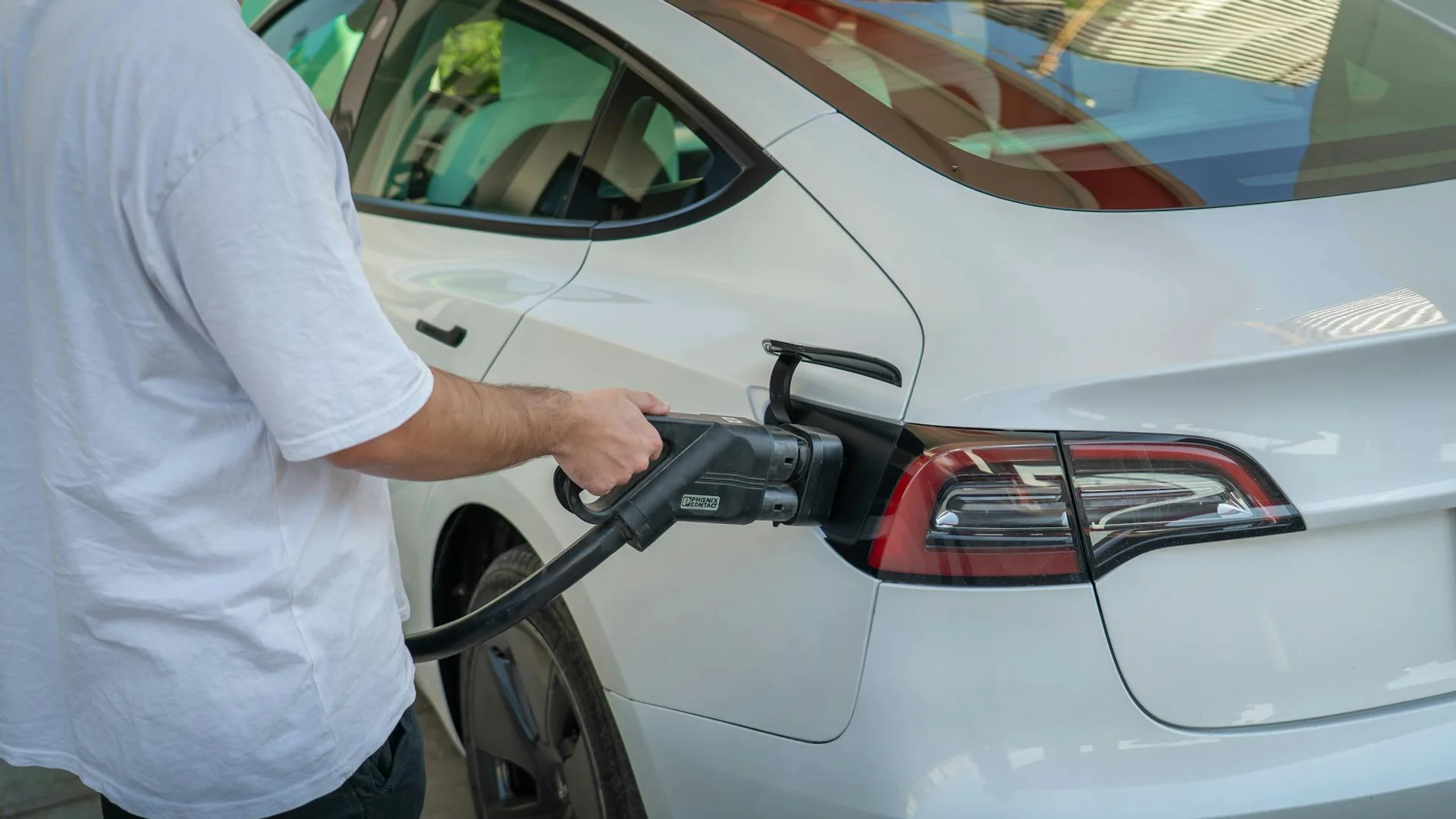
The federal EVAP rebate is $5,000. Stack it with the most generous provincial programs still running, Manitoba's or PEI's $4,000, and you reach $9,000 off the right vehicle. But the provincial map thinned out sharply in 2025–2026: BC, New Brunswick, Nova Scotia, Newfoundland and the Yukon have all paused or ended their passenger rebates, and Quebec's is down to $2,000 and sunsetting. Knowing which programs survive, and which vehicles qualify, is most of the game now.
The trick is not the existence of the programs. The trick is knowing which vehicles qualify, which dealers actually process the rebates at point of sale, what the income caps and ownership terms are, and how to time the application so you get the full amount rather than missing the window. What follows is the complete map: every active federal and provincial program in 2026, the eligibility rules, the stacking strategy, the application process, and how Canada's incentive structure compares to the US Inflation Reduction Act and EU programs.
Key takeaways
- Federal EVAP (the program that replaced iZEV, live since February 16, 2026) offers up to $5,000 on eligible BEVs and $2,500 on PHEVs when the final transaction value is at or under $50,000, no price cap on EVs built in Canada, applied at point of sale by participating dealers.
- Manitoba and PEI run the most generous active provincial rebates, $4,000 each, about $9,000 stacked with federal. Quebec's Roulez vert is down to $2,000 (ending December 31, 2026). BC, New Brunswick, Nova Scotia, Newfoundland and the Yukon have paused or ended their passenger rebates.
- Stacking maximums in 2026: Manitoba and PEI ~$9,000 (federal $5,000 + provincial $4,000); Quebec $7,000; BC, Ontario, Alberta, Saskatchewan and the wound-down provinces are federal-only at $5,000.
- Chinese-built EVs are excluded from federal rebate eligibility. Provincial programs generally follow federal eligibility. This affects pricing decisions on BYD, NIO, and other Chinese imports landing in 2026.
- Used EV rebates have thinned out, Quebec still offers up to $1,000; the federal program does not cover used vehicles.
How the Federal EVAP Rebate Works in 2026
Canada's federal EV rebate changed in 2026. The original program, iZEV (Incentives for Zero-Emission Vehicles), paused in early 2025 when its funding ran out and formally closed on March 31, 2025. Its replacement, EVAP (the Electric Vehicle Affordability Program), launched on February 16, 2026 and runs through March 2031. The headline figure, up to $5,000, carried over, but the eligibility rules did not: EVAP caps on a vehicle's final transaction value rather than its MSRP (details below).
The amounts (declining over the life of the program):
- $5,000 for battery-electric (BEV) and hydrogen fuel-cell vehicles in 2026, stepping down to $4,000 (2027), $3,000 (2028–2029) and $2,000 (2030).
- $2,500 for plug-in hybrids (PHEVs) in 2026, declining to $1,000 by 2030.
- $0 for any vehicle whose final transaction value is over $50,000, though there is no price cap at all on EVs assembled in Canada.
The final-transaction-value rule is the trap most buyers miss, and it works the opposite way to the old iZEV MSRP test. EVAP looks at the actual price you agree to, base price plus options, accessories and dealer fees, not the model's MSRP. Taxes, freight/PDI, winter tires and extended warranties are excluded from the $50,000 calculation. So a well-optioned trim that pushes your final price over $50,000 loses the rebate even if the base model lists for less; conversely, an EV assembled in Canada has no cap at all.
The mechanics:
- Applied at point of sale by participating Canadian dealers.
- Dealer subtracts the rebate from your invoice and is reimbursed by Transport Canada.
- You do not file anything separately. You do not wait for a cheque.
- Buying or leasing both qualify; leases must run 12 months or longer.
Eligibility:
- New vehicle (used vehicles are not federal-eligible).
- Vehicle must be on Transport Canada's approved EV list, updated quarterly.
- Buyer must be a Canadian resident with a valid provincial driver's licence.
- Vehicle must be registered in Canada.
- Per-individual cap: one rebate per person for the duration of the program, one rebate per VIN.
- Per-business cap: ten rebates per fiscal year (fleet rule).
What is NOT eligible:
- Chinese-built EVs are excluded from the program as of late 2024. This includes vehicles manufactured in China regardless of brand, BYD, NIO, XPeng, Zeekr, MG (when SAIC-built), and the Polestar 2 (Volvo-Geely China-built). The Polestar 3 (Charleston, South Carolina) and Polestar 4 (Renault Korea) are eligible.
- Used vehicles.
- Vehicles purchased from non-participating dealers (rare but happens, confirm before signing).
- Vehicles registered outside Canada.
Provincial Programs, The Complete 2026 Map
Each province operates its own program with separate eligibility, amounts, and application processes. The provincial map is summarized here and detailed in each provincial guide.
Quebec, Roulez vert (winding down)
Quebec's Roulez vert is still active but a shadow of its former self: the BEV rebate was cut from $7,000 (2024) to $4,000 (2025) to $2,000 in 2026, and it ends entirely on December 31, 2026.
- New BEV: up to $2,000.
- New PHEV: $1,000 (battery ≥ 15 kWh) or $500 (8–15 kWh).
- Used BEV from a Quebec dealer: up to $1,000.
- Home Level 2 charger: up to $600 (often stacks with utility programs).
Vehicle price cap: MSRP under $65,000 CAD.
Stacking with federal EVAP: yes. Maximum stacked savings on a new BEV: $5,000 + $2,000 = $7,000.
Full Quebec detail: the Roulez vert provincial guide.
British Columbia, Go Electric (passenger rebate ended)
BC paused its CleanBC Go Electric passenger rebate in May 2025 and ended it in November 2025, with the province signalling that consumer EV rebates are now Ottawa's responsibility. A BC buyer's only vehicle rebate today is the federal $5,000.
- New BEV / PHEV: no provincial rebate (program ended).
- Home Level 2 charger: BC Hydro still offers up to $350.
- Commercial and medium-/heavy-duty Go Electric rebates continue, and a refreshed commercial program is expected in 2026.
Stacking with federal EVAP: none on the vehicle, federal $5,000 only.
Full BC detail: the CleanBC Go Electric guide.
Atlantic Provinces, Nova Scotia, New Brunswick, Newfoundland, PEI
PEI is now the only Atlantic province with an active passenger-EV rebate, the others wound down in 2025–2026:
- Prince Edward Island (detail): up to $4,000 new BEV / $2,000 new PHEV (revised down from $5,750 in June 2025; Tesla excluded). Still the most generous active Atlantic offer.
- Nova Scotia (detail): the provincial light-duty rebate ended April 2025. Federal only.
- New Brunswick (detail): the EV rebate ended July 2025. Federal only.
- Newfoundland and Labrador (detail): the $2,500 BEV rebate ended March 15, 2026. Federal only.
Maximum stacked savings in Atlantic Canada: Federal $5,000 + PEI $4,000 = $9,000.
Prairie Provinces, Manitoba, Saskatchewan
- Manitoba (detail): $4,000 for a new BEV or PHEV through MPI (extended in Budget 2026; Tesla and Chinese-made EVs excluded). Stack with federal $5,000 = $9,000 maximum.
- Saskatchewan (detail): no provincial EV rebate. Federal $5,000 only. SaskPower offers small rebates ($200-$500) on Level 2 chargers.
Alberta
Alberta has no provincial new-vehicle EV rebate. The federal $5,000 is the only direct incentive. Some municipalities (Edmonton, Calgary) offer charging-infrastructure rebates of $250-$500.
Ontario
Ontario ended its previous EV rebate program in 2018 and has not reinstated one as of 2026. The federal $5,000 is the direct incentive. Ontario does offer a Green Plate program (high-occupancy lane access, time-of-use electricity pricing) and modest municipal charging rebates in Toronto, Ottawa, and Hamilton.
Territories (Yukon, NWT, Nunavut)
- Yukon: the Good Energy passenger-EV rebate ended March 31, 2026. Federal $5,000 only.
- Northwest Territories: the Arctic Energy Alliance EV rebate is currently paused. Federal $5,000 only.
- Nunavut: no formal EV rebate (limited charging infrastructure makes broad EV ownership impractical in most communities).
Stacking Strategy, How to Maximize the Total
The optimal stacking strategy depends on where you live and what you are buying. Three scenarios:
Gear worth having
As an Amazon Associate, ThinkEV earns a small commission from qualifying purchases — at no extra cost to you.

Grizzl-E Classic Level 2 EV Charger (40A)
Canadian-made and rated for minus 40C winters. 40A / 9.6 kW, NEMA 14-50, indoor/outdoor, 24-ft cable. The charger built for Canadian weather.
As an Amazon Associate, ThinkEV earns from qualifying purchases — at no extra cost to you.
Scenario 1: PEI new BEV
- Federal EVAP: $5,000
- PEI rebate: $4,000
- Total: $9,000 off the vehicle purchase, the highest active stack in Canada.
Scenario 2: Manitoba new BEV (under $70,000, non-Tesla, non-Chinese)
- Federal EVAP: $5,000
- Manitoba MPI rebate: $4,000
- Total: $9,000 off the vehicle purchase.
Scenario 3: Quebec new BEV (MSRP under $65,000)
- Federal EVAP: $5,000
- Quebec Roulez vert: $2,000
- Home charger Roulez vert: $600
- Total: $7,000 off the vehicle, plus the charger rebate, but the Quebec rebate ends December 31, 2026.
Scenario 4: BC, Ontario, Alberta, or an ended-program province
- Federal EVAP: $5,000
- Total: $5,000 off the vehicle purchase. Slightly higher if your municipality or utility offers charging rebates.
The structural conclusion for 2026: the provincial map has thinned out, so for most buyers the federal $5,000 is the rebate. Manitoba and PEI are the two standout stacking environments at $9,000; Quebec is worth acting on before its December 31, 2026 sunset.
Used EV Rebates, A Limited but Real Path
The federal program does not cover used EVs, and the provincial used-EV programs have thinned out. Quebec is the main one left:
- Quebec Roulez vert (used): up to $1,000 on a used BEV purchased from a Quebec dealer.
- BC's and the Yukon's used-EV rebates ended alongside their new-vehicle programs.
The math for used buyers: a $1,000 Quebec reduction on (say) a $25,000 used Tesla Model 3 brings it to $24,000, modest. For most buyers the used-EV decision is now purely market-price-based; provincial rebates no longer move the math much.
The used EV market analysis covers where the deals actually are in 2026.
The Application Process, Step by Step
For new vehicles, the application is dealer-administered and largely invisible to the buyer. The process:
- Confirm vehicle eligibility before you sign anything. Transport Canada publishes the approved EV list quarterly. The dealer should also confirm.
- Confirm the dealer is EVAP-registered. Most major Canadian dealers are. Specialty/independent dealers occasionally are not, ask before signing.
- Sign the purchase agreement with the rebate line itemized. The federal $5,000 (or applicable amount) appears as a credit on the invoice. Provincial rebates may appear separately depending on province.
- Take delivery. The rebate has already been applied to your invoice; no further action required.
- Provincial rebates that are NOT point-of-sale (some Atlantic and Prairie programs reimburse separately): submit the application form within 90-120 days of vehicle delivery. Forms are on the provincial Ministry website.
Common mistakes:
- Buying from a non-participating dealer and trying to claim the federal rebate after the fact (cannot be done).
- Configuring above the federal $50,000 final-transaction-value cap and assuming the rebate still applies (it does not, options and dealer fees count toward the cap, though Canadian-built EVs are exempt; provincial caps work differently, so check each program's wording).
- Missing the provincial submission deadline on provinces that reimburse rather than point-of-sale-apply.
- Buying a Chinese-built EV and assuming a rebate stack exists (it does not).
How Canadian Incentives Compare to the US, EU, and UK
For Canadian readers crossing borders and US/EU readers comparing notes:
United States, Inflation Reduction Act (IRA):
- Up to US$7,500 federal tax credit on eligible EVs. Different structure: it is a tax credit (reduced via dealer credit since 2024) rather than a point-of-sale rebate.
- Eligibility depends on vehicle assembly location (must be in North America), battery component sourcing (must be majority North American or free-trade-partner), and battery critical mineral sourcing (similar rules).
- Income caps: $150,000 single / $300,000 joint.
- The IRA system explicitly excludes vehicles with Chinese battery components. This is the primary reason Chinese-built EVs cannot access the US incentive pool.
European Union:
- Wildly variable by country. Germany ended its main EV bonus in late 2023. France runs a means-tested up-to-€7,000 incentive. Italy, Netherlands, and others operate smaller programs.
- The EU also imposes 17.0%-35.3% counter-vailing tariffs on Chinese-built EVs (October 2024 onward), the structural opposite of Canada's recently-lowered tariff.
United Kingdom:
- The plug-in car grant for individuals ended in 2022. UK incentives now focus on commercial vehicles, charging infrastructure, and benefit-in-kind tax advantages for company cars.
- No country-specific Chinese EV tariff, leaving the UK market relatively open.
Norway (a useful benchmark even though not in EU):
- No purchase incentive needed; the long-running incentive package (no VAT, free toll roads, reduced parking) made Norway the world's first majority-EV new-car market.
The Canadian position relative to peers: more generous than the UK (no UK retail rebate), comparable to the US per-dollar but with different structural rules, less generous than Norway's mature incentive stack, more generous than most EU countries in 2026 because of the German program end.
What Could Change in 2026-2027
Three policy axes worth watching for Canadian buyers:
Federal program funding: EVAP runs on a multi-year budget, $2.275 billion, scheduled through March 31, 2031, but it pays out only until the money is gone. iZEV's predecessor exhausted its funding early and was paused, so the program's pace or structure (income testing, vehicle-type narrowing) could change at any federal budget cycle.
Provincial program adjustments: Quebec's Roulez vert is scheduled to end entirely on December 31, 2026. BC ended its passenger rebate in late 2025 and is reworking its Go Electric program around commercial vehicles. Ontario has periodically signalled interest in reintroducing a provincial rebate; whether that happens depends on provincial election dynamics.
Chinese EV eligibility: the current federal exclusion of Chinese-built EVs could be revisited if a manufacturer establishes North American assembly (Volvo/Polestar already qualify through their Charleston SC plant). BYD has not announced North American assembly plans. NIO and XPeng have signalled European production interest but no North American commitments.
Gear worth having
As an Amazon Associate, ThinkEV earns a small commission from qualifying purchases — at no extra cost to you.
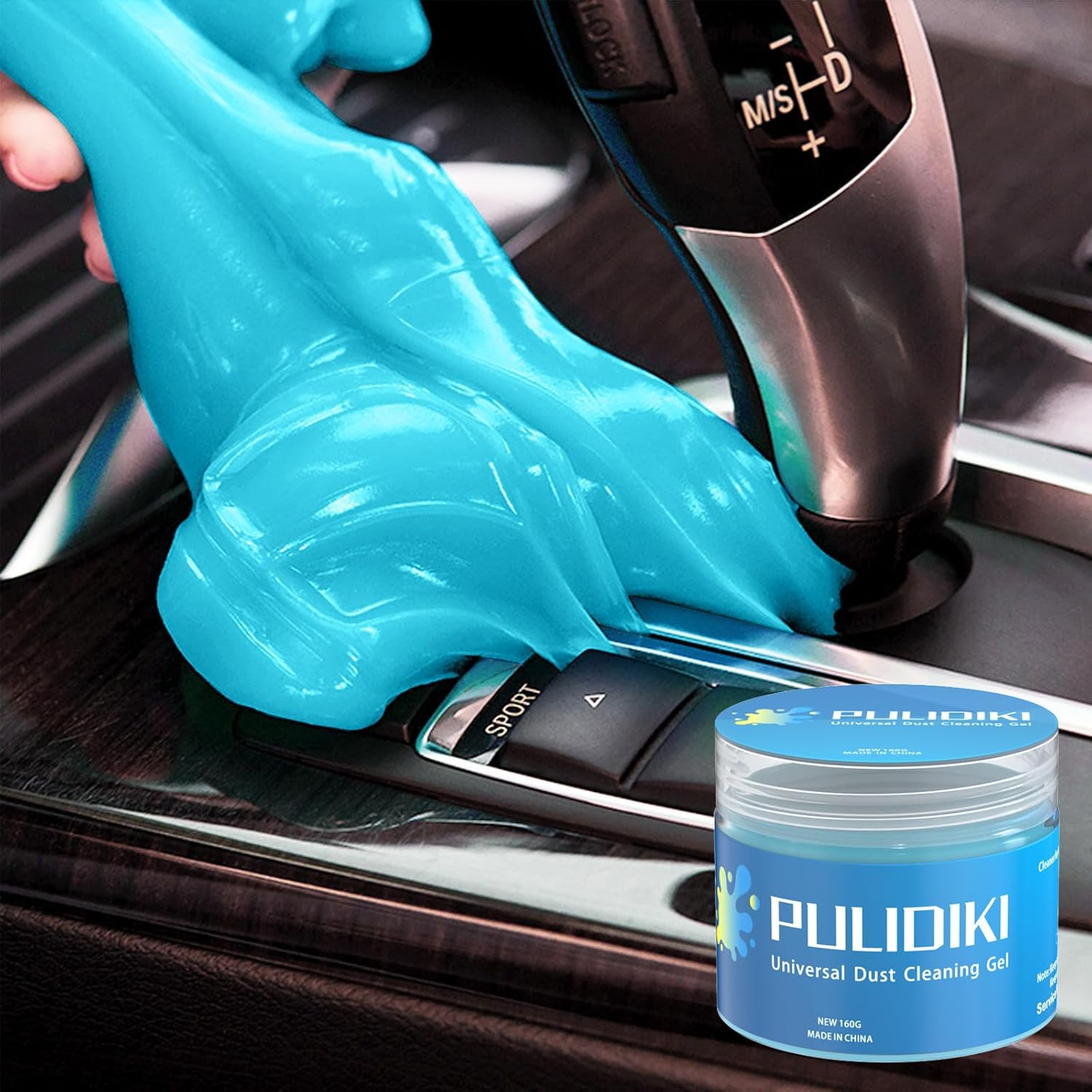
PULIDIKI Car Cleaning Gel (Detailing Putty)
Press it into vents, buttons, and seams and it lifts out dust you did not know was there. Weirdly satisfying, genuinely useful.
As an Amazon Associate, ThinkEV earns from qualifying purchases — at no extra cost to you.
Match The Vehicle To The Province To Max The Stack
The Canadian EV incentive stack in 2026 is real money: $5,000 federal everywhere, plus $4,000-$7,000 provincial in most provinces with programs. The single-most-leveraged move for a Canadian buyer is matching the vehicle (base MSRP under cap, on the approved list, non-Chinese-built unless that is a strategic choice) to the province (Quebec for income-eligible high-stack, NB for no-income-test high-stack, BC for second-tier-but-still-meaningful stack).
The buyers who get the smallest stack are in Ontario, Alberta, and Saskatchewan, large provinces with no active provincial program. The federal $5,000 still applies, and the larger dealer networks in those provinces offset some of the rebate gap on availability.
The biggest mistake we see is buyers assuming the rebate exists or doesn't without checking the current quarterly approval list. Programs change, vehicles get added or removed, and the "is my exact 2026 trim eligible" question deserves a verification step before signing the purchase agreement. Five minutes with the federal approved-list page and your provincial program page covers it.
Gear worth having
As an Amazon Associate, ThinkEV earns a small commission from qualifying purchases — at no extra cost to you.

WixGear Magnetic Air Vent Phone Mount (2-Pack)
A magnet strong enough that your phone never flinches over potholes or rail crossings. Two in the box, one for each car.
As an Amazon Associate, ThinkEV earns from qualifying purchases — at no extra cost to you.

Founder & Chief Editor
Vlad Pereira is the founder and chief editor of ThinkEV.ca, the Canadian electric-vehicle publication he writes and edits from Courtenay, British Columbia. He covers EV pricing, federal and provincial rebates, charging costs, and the Chinese manufacturers now entering Canada, from the buyer's side rather than the press-fleet side. ThinkEV is a venture of Vlad Pereira Online; his writing on health, income and the long game lives at vladpereira.com.
Frequently asked questions
Can I combine the federal EVAP rebate with my provincial rebate?
Do I have to apply for the federal rebate myself?
Do Chinese EVs like BYD qualify for the federal rebate?
Can I get a rebate on a used EV in Canada?
What is the base MSRP cap and why does it matter?
Are there income caps on the federal rebate?
How long is the iZEV / EVAP program funded?
More EV & road-trip finds
Affordable upgrades worth a look — tap any to check the price on Amazon.
 ★ 68
★ 68WeatherTech FloorLiner for Tesla Model 3
View on Amazon ★ 4,050
Touchscreen Mist Screen Cleaner Kit
View on Amazon ★ 55
★ 55LED Car Door Logo Projector Light
View on Amazon ★ 900
★ 900Personalized Photo Car Air Freshener
View on Amazon ★ 865
★ 865Collapsible Trunk Organizer
View on Amazon ★ 12,834
P3 Kill A Watt Electricity Usage Monitor
View on Amazon ★ 87
★ 87Car Window Sun Shades for Kids (4-Pack)
View on Amazon ★ 268
★ 268Anti-Slip Leather Steering Wheel Cover
View on AmazonRead, Plan, Then Stay Current
Explore our expert articles to understand incentives and ownership costs, use the map to pressure-test charging reality, then subscribe so new EV coverage comes straight to you.
Continue Reading
EV Rebates in Canada: How EVAP and Provincial Stacking Work
Federal EV Rebate Canada 2026: EVAP Pays $5,000
How to Test-Drive an EV: What Gas-Car Buyers Miss
BYD Seagull Canada: Real Price, Real Specs, Real Wait
BYD Auto Explained: World's Biggest EV Maker, Blocked From Canada