Key takeaways
- We demand 100% renewable grids before we'll accept EVs, even though waiting for perfection means locking in decades more of tailpipe emissions.
- In Canada, where the grid is already 80% non-emitting (thanks to hydro, nuclear.
- Over a 200,000-kilometre lifespan, it's about 44 tonnes of CO₂.
- Now take a Tesla Model 3, which uses about 15 kWh per 100 km.
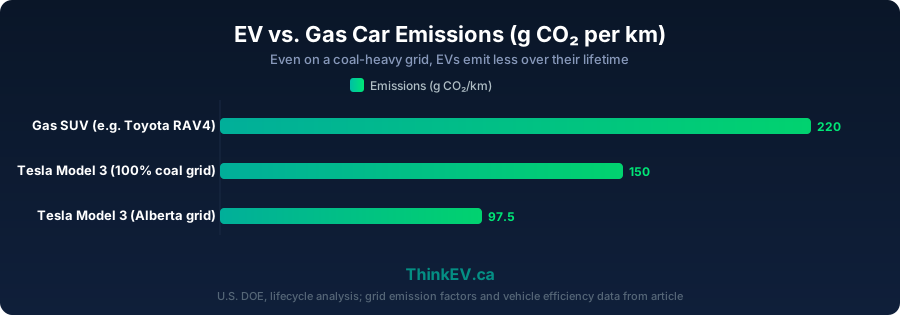
Even on a 100% coal grid, an EV emits 150 grams of CO₂ per kilometre, versus 220 grams for a comparable gas RAV4 over its full lifecycle. That's a 32% reduction, on the worst electricity possible. In Canada, where the grid is already 80% non-emitting, the gap is wider still.
Because the truth is, even if your electricity comes entirely from coal, your EV still beats a gas car on emissions. Decisively. Not just over its lifetime, but year by year, kilometre by kilometre.
We've been sold a myth that "dirty electricity" ruins the EV advantage, but the data says otherwise. And once you crunch the numbers, the conclusion isn't close. This isn't about idealism. It's arithmetic. It's grams per kilometre, kilograms per megawatt-hour, and joules converted across systems that don't care about your politics.
I'm not here to shame gas cars or glorify lithium mines. I'm here to show you the ledger. Because if we're going to talk about climate, we need to talk about math. And the math says: electrification wins, even on a coal-heavy grid. In Saskatchewan. In West Virginia. In Poland. In India. In China. Wherever they're burning coal, the EV still comes out ahead. And when the grid improves, which it is, everywhere, the gap only widens.
Climate discussions stall on this exact point: demanding 100% renewable grids before accepting EVs locks in decades more of tailpipe emissions. Waiting for perfection is a choice with a cost. EVs are better right now, by a lot, and better matters.
The Myth of the "Dirty Grid" and Why It's Holding Us Back
Let's start with the most persistent myth in the EV conversation: that if your electricity comes from coal, driving an electric car is no better than a gas-powered one. You hear it all the time. On Reddit threads. At dinner parties. In op-eds from think tanks that should know better. The argument goes like this: "You're just moving emissions from the tailpipe to the smokestack. So what's the point?"
It sounds logical. It's also wrong. Even when an EV is charged entirely with coal power, it still produces fewer lifecycle greenhouse gas emissions than the average gasoline car. No exceptions. And in most places, the difference is substantial.
In Canada, where the grid is already 80% non-emitting (thanks to hydro, nuclear, and growing wind and solar), the advantage is massive, like comparing a Prius to a Hummer. But even in the U.S. states with the dirtiest grids, like West Virginia or Kentucky, where coal still makes up over 70% of electricity generation, an EV emits about 25% less CO₂ over its lifetime than a comparable gas car. That's according to the U.S. Department of Energy's latest Beyond Light-Duty Vehicles lifecycle analysis. And that number only improves as the car ages, since the grid keeps getting cleaner year over year.
Let's put that in perspective. A typical midsize gas SUV in Canada, like a Toyota RAV4, emits about 220 grams of CO₂ per kilometre when you account for fuel extraction, refining, transport, and combustion. That's not just tailpipe numbers, it's full lifecycle. That 220 grams adds up fast. Over a 200,000-kilometre lifespan, it's about 44 tonnes of CO₂, equivalent to leaving a home furnace running nonstop for 10 years, or heating 30 Canadian homes for a full winter.
Now take a Tesla Model 3, which uses about 15 kWh per 100 km. If you charge it with electricity from a 100% coal grid, yes, the worst-case scenario, the upstream emissions from generating that power are about 1,000 grams of CO₂ per kWh. Do the math: 15 kWh × 10 = 150 kWh per 1,000 km. 150 × 1,000 = 150,000 grams, or 150 kg of CO₂ per 1,000 km. That's 150 grams per kilometre. Compared to 220. That's a 32% reduction, on coal alone.
And that's before we account for the fact that no grid is 100% coal. Not even close. Even in Alberta, where coal and gas still dominate, the grid emits about 650 grams of CO₂ per kWh. Plug that in, and the Model 3 drops to around 97.5 grams per kilometre. That's less than half the gas SUV.
And that's just operation. It doesn't even include the fact that EVs have fewer moving parts, last longer, and don't require oil changes, fuel filters, or catalytic converters, all of which have embedded emissions. It also ignores regenerative braking, which can reclaim 10–20% of energy in city driving. Or the fact that EVs are more efficient at converting energy to motion, about 77% compared to 12–30% for internal combustion engines. That inefficiency in gas cars isn't just wasted fuel. It's wasted carbon.
But what about manufacturing? Ah, the "long tailpipe" crowd always brings that up. "What about the emissions from making the battery?" Fair question. Let's dig in.
Producing a 75 kWh battery, like the one in a standard-range Model 3, emits about 7,000 kg of CO₂. That's from mining, refining, cell production, and assembly. Some estimates go higher, some lower, but 7 tonnes is a solid average. That sounds like a lot. It's equivalent to driving a gas car for about 30,000 km. But that's a one-time cost. Once the battery is made, it's done. The emissions don't keep piling up every time you drive. With a gas car, the emissions are continuous. Every kilometre you drive, you're adding more.
So the EV starts with a carbon debt. But it pays it off quickly. In Canada, where the grid is clean, a Model 3 "breaks even" on emissions, meaning it's cleaner than a gas car, after about 16,000 km. That's less than two years for the average driver. In the U.S. Midwest, where coal is more prevalent, the breakeven point is closer to 35,000 km. Still less than four years. And after that? Every kilometre driven is a net win for the climate.
And the breakeven point keeps shrinking. Why? Because battery production is getting cleaner. Tesla's Gigafactory in Nevada runs on 100% renewables. CATL in China is building solar-fueled battery plants. In Quebec, where hydropower dominates, battery manufacturing emissions are already 30–40% lower than in coal-dependent regions. As renewable energy spreads to manufacturing, the upfront carbon cost of EVs will drop further. But even today, with current tech and current grids, the win is clear.
Saskatchewan is worth examining, not because it's special, but because it's not. It has one of the highest per-capita emissions in Canada, thanks to a grid that's still 40% coal. In 2023, the province generated 58% of its electricity from fossil fuels, mostly coal and natural gas. The rest is hydro and wind. So it's a tough test case. If EVs make sense in Saskatchewan, they make sense anywhere.
And they do. A 2024 study by the David Suzuki Foundation found that even in Saskatchewan, driving an EV produces 40% fewer lifecycle emissions than driving a gas car. That's 40% less CO₂ over 200,000 km. That's the equivalent of taking 1.5 cars off the road for a decade. Or powering a Saskatoon home for five years. Or avoiding the burning of 28,000 litres of gasoline. And that's with today's grid. Saskatchewan plans to phase out coal by 2030. When it does, the EV advantage will jump to 70% or more.
But what about the rest of the world? Let's talk China. Because if EVs work in China, they work everywhere. China generates about 60% of its electricity from coal, more than any major economy. Yet even there, EVs are cleaner than gas cars.
According to a 2025 Tsinghua University study, the average EV in China emits 180 grams of CO₂ per kilometre when charged on the national grid. The average gas car? 240 grams. That's a 25% improvement, on a coal-heavy grid. And in provinces like Yunnan or Sichuan, where hydro power dominates, EVs emit as little as 50 grams per kilometre. That's 80% cleaner than gas.
And China is cleaning its grid fast. In 2023, it added more solar capacity than the entire U.S. has installed in history. More wind than Germany has in its entire fleet. By 2030, coal's share is expected to drop to 45%. By 2050, below 20%. That means every EV sold in China today will get cleaner over time. A gas car? It only gets dirtier as it ages and loses efficiency.
That's the hidden advantage of EVs: they age in reverse on emissions. As the grid improves, so does your car's carbon footprint. A 2020 EV charged on today's grid is cleaner than it was in 2020. A gas car from 2020? Exactly as dirty as it was when it rolled off the lot.
And that's just greenhouse gases. We're not even talking about nitrogen oxides, particulate matter, or sulfur dioxide, pollutants that cause asthma, heart disease, and premature death. Gas cars emit all of them, right where people live. EVs? Zero at the point of use. Even when charged with coal, the pollutants are concentrated at power plants, which have scrubbers, filters, and are often located away from dense populations. That's public health 101. Concentrated emissions at power plants with scrubbers and filters mean cleaner air in cities, fewer hospital visits, and kids who can play outside without inhalers. It's not just about climate. It's about breathing.
Gear worth having
As an Amazon Associate, ThinkEV earns a small commission from qualifying purchases — at no extra cost to you.

Grizzl-E Classic Level 2 EV Charger (40A)
Canadian-made and rated for minus 40C winters. 40A / 9.6 kW, NEMA 14-50, indoor/outdoor, 24-ft cable. The charger built for Canadian weather.
As an Amazon Associate, ThinkEV earns from qualifying purchases — at no extra cost to you.
How We Measure Clean: Lifecycle Emissions and the Real Cost of Driving
We've been talking about grams per kilometre, but let's get precise. The gold standard for comparing vehicle emissions is lifecycle analysis, a method that accounts for every stage of a car's existence, from cradle to grave. That includes raw material extraction, manufacturing, operation, maintenance, and end-of-life recycling. It's the only way to get a full picture (see our charger comparison).
And when you do that, EVs win. Hands down. Take the International Council on Clean Transportation (ICCT), which conducts some of the most rigorous lifecycle studies in the world. In its 2023 global assessment, it found that the average battery electric vehicle emits 66–69% less CO₂ over its lifetime than a comparable gas car, across 59 world markets. That's an average. In Europe, it's 75%. In India, 45%. In the U.S., 60–70%, depending on the region. Even in the dirtiest grids, the minimum advantage is 20%. There is no scenario in which a modern EV is worse than a gas car over its full life.
Let's break down the numbers. For a typical 75 kWh EV in North America:
Manufacturing emissions: ~10,000 kg CO₂ (including battery, motor, electronics, and assembly). That's about 4,000 kg more than a gas car., Operation emissions: ~75 grams per km on the current U.S. grid (which is 60% fossil fuels)., Gas car operation emissions: ~220 grams per km., Total lifetime emissions (200,000 km): EV: 25 tonnes. Gas car: 48 tonnes.
That 23-tonne difference is the equivalent of not burning 10,000 litres of gasoline. Or driving from Tofino to St. John's and back, ten times. Or powering the average Canadian home for 12 years. And that's using today's grid. By 2035, when the U.S. grid is expected to be 80% clean (per EPA projections), the EV's operational emissions will drop to 25 grams per km. The gas car? Still 220. The gap widens to 39 tonnes. That's not marginal.
But what about battery energy density and power density? Let's address them, because they're relevant. Battery energy density refers to how much energy a battery can store per unit of weight or volume. It's measured in watt-hours per kilogram (Wh/kg). Higher energy density means longer range. Power density is about how quickly that energy can be delivered, important for acceleration and fast charging. It's in watts per kilogram (W/kg). These are different metrics, often confused.
A high-energy-density battery might not have high power density, and vice versa. Today's lithium-ion EV batteries average about 250 Wh/kg. That's up from 100 Wh/kg in 2010. That improvement is why we now have EVs with 500 km of range instead of 150.
Solid-state batteries, which are just starting to emerge, promise 400–500 Wh/kg. A 600ah solid-state battery with cabinet and accessories, hypothetical for now, could store enough energy to power a midsize SUV for 800 km on a single charge. That's Toronto to Chicago with 100 km to spare. But even with today's tech, EVs are plenty good enough. You don't need a 600ah solid-state battery to beat a gas car on emissions. You just need a 75 kWh pack and a charger. The rest is optimization.
And while we're on the topic of future tech: battery power density over time has improved dramatically. In 2010, most EVs charged at 50 kW. Today, 250 kW is common, and 350 kW is available on cars like the Hyundai Ioniq 5. That's adding about 300 km of range during a 15-minute coffee stop, enough to make long trips practical. A 350 kW charge isn't just fast. It's normal now.
But people still ask: "What about the minerals? Lithium, cobalt, nickel? Aren't those dirty to mine?"
Yes. Some mining is dirty. But so is oil drilling. And gas refining. And pipeline transport. We don't hold oil to a purity standard, so why hold batteries to one?
Let's compare. Extracting and refining a barrel of oil emits about 80 kg of CO₂. That's before it's even burned. A barrel holds 159 litres. The average Canadian driver uses about 1,800 litres of gas per year. That's 11.3 barrels. That's 900 kg of emissions, just from getting the fuel out of the ground and into your tank. Every year. Forever.
Now take lithium. Mining and refining enough lithium for one EV battery, say, 60 kg of lithium carbonate, emits about 1,500 kg of CO₂. That's a one-time cost. Once it's in the battery, it's done. Over the car's life, that's less than 8 kg per year. Compare that to 900 kg per year for fuel extraction. It's not even close.
And recycling is improving. Redwood Materials in Nevada recovers 95% of battery metals. Li-Cycle in Ontario uses a hydrometallurgical process to recover lithium, cobalt, and nickel with minimal waste. By 2030, 40% of battery materials in new EVs could come from recycled sources. That number could hit 70% by 2040. That price buys you progress, not perfection. And progress is what we need.
But let's not ignore the real issues. Cobalt mining in the Democratic Republic of Congo has serious human rights concerns. That's why companies like Tesla and BMW are shifting to lithium iron phosphate (LFP) batteries, which don't use cobalt. BYD, the world's largest EV maker, now produces 80% of its batteries in LFP chemistry. Their global expansion with China's supply chain dominance is making this shift faster. And BYD's global expansion with Tesla as a benchmark is pushing everyone to lower costs and improve ethics.
Can wireless EV charging cause interference with other electronics? It's a fair question. The answer is: minimally. Modern wireless systems operate at specific frequencies with shielding and power control. The risk is no greater than your Wi-Fi router. But wired charging is still more efficient and cheaper. That's why most drivers stick with cords.
And while we're on the topic of value: the cheapest electric car with longest range in the world right now is the BYD Seagull. It starts at $9,500 USD in China and offers 305 km of CLTC range. That's not EPA, so real world is closer to 220–240 km. But it's still the best value. The cheapest electric car world most powerful? That's the Tesla Model S Plaid, over 1,000 hp. But the cheapest electric car world power leader is BYD, with over 3 million EVs sold in 2025, surpassing Tesla.
None of this means EVs are flawless. But they're better. And better is enough.
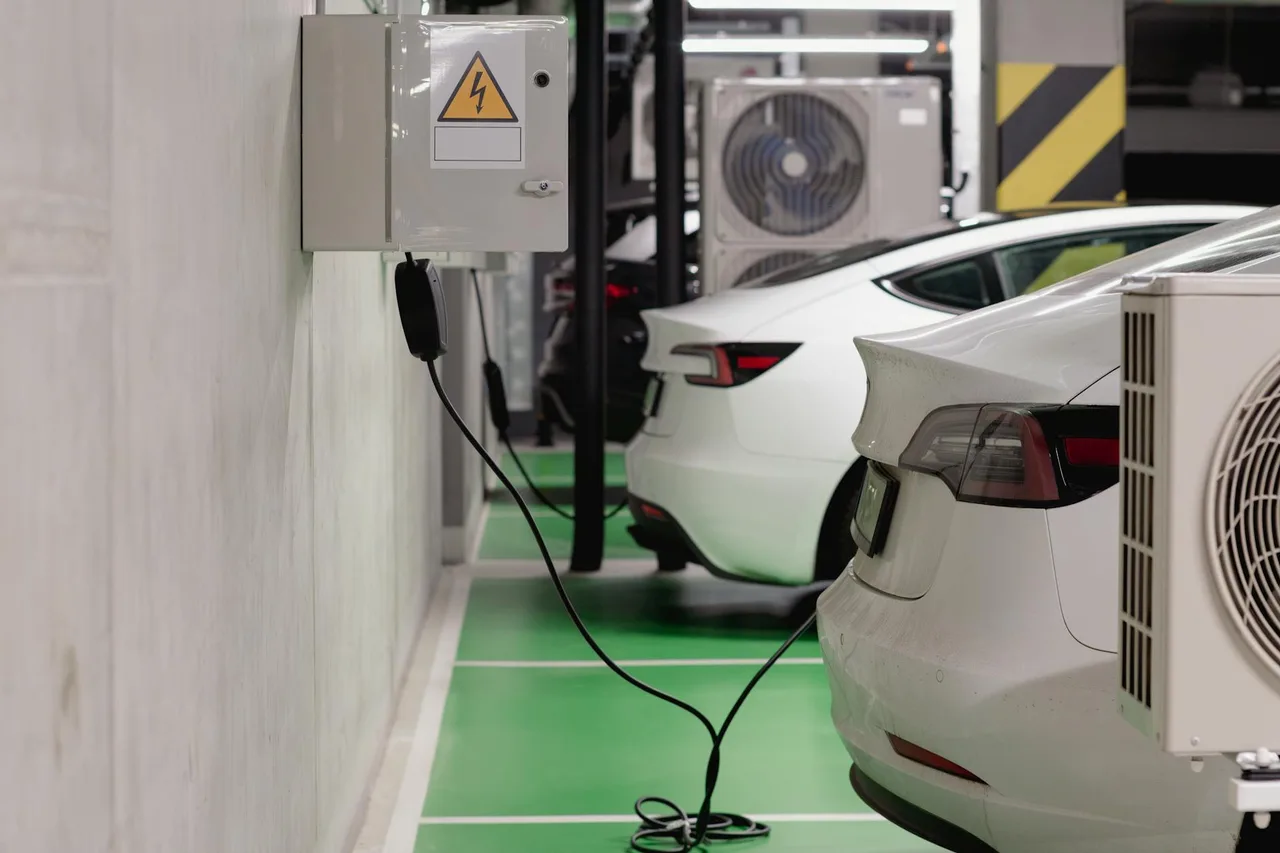
The Grid Is Getting Cleaner, and EVs Ride for Free
The grid isn't static. It's getting cleaner every year. And every improvement benefits every EV on the road.
In 2005, the U.S. grid emitted about 600 grams of CO₂ per kWh. In 2025, it's down to 380. That's a 37% drop, without anyone changing their driving habits. Same cars. Same miles. Cleaner electricity. And it's still falling. The U.S. Energy Information Administration projects 250 grams per kWh by 2035. That's a 58% reduction from 2005.
In Canada, it's even better. The national average is already 120 grams per kWh, down from 180 in 2005. Quebec? 15 grams. British Columbia? 12 grams. Ontario? 30 grams. That's effectively zero-emission driving.
And EVs don't just benefit from this change, they accelerate it. Every EV on the road increases demand for clean electricity. That demand drives investment in wind, solar, and storage. It creates a feedback loop: more EVs → more clean power → cleaner EVs → more EVs. It's a virtuous cycle.
Utilities are responding. In Alberta, where coal still lingers, Enmax and ATCO are retiring coal plants years ahead of schedule, partly due to rising EV demand. In Saskatchewan, SaskPower is adding battery storage to smooth wind output, making renewables more reliable. And in Atlantic Canada, where wind potential is huge, EVs are being positioned as grid assets, able to charge when wind is strong and even discharge back during peaks (vehicle-to-grid, or V2G). That's the future: EVs not just as consumers, but as participants in a smarter, cleaner grid.
But even without V2G, the timing works in favour of clean energy. Most people charge at night. That's when wind output is highest and demand is lowest. In Texas, wind power often floods the grid at night, driving prices negative. EV owners get paid to charge. In Alberta, similar trends are emerging. That means many EVs are already running on wind power, whether their owners realise it or not.
And daytime charging? Solar is growing fast. Canada added 3.2 GW of solar in 2024, enough to power 600,000 homes. Ontario's solar capacity now exceeds 5 GW. That's enough to charge 1 million EVs daily. And rooftop solar? A typical 8 kW system in Toronto generates about 10,000 kWh per year, enough to drive an EV 6,000 km. That's like getting 6,000 free, zero-emission kilometres every year. That's Calgary to Winnipeg and back, twice. That's independence from the pump, from price spikes, from geopolitics. Ontario provides no provincial EV incentive, so the federal $5,000 is the full stack for Ontario buyers.
But let's talk about road trips. Because that's where the myth of "range anxiety" dies. The best EV for road trips with BC? The Tesla Model Y. With 533 km of range, access to a reliable Supercharger network, and over-the-air updates that improve efficiency, it's the default choice.
The best EV for road trips with BC Ferries? Still the Model Y. BC Ferries now has fast chargers at Swartz Bay and Tsawwassen. Wait times are usually under 30 minutes. And the ferry ride? 90 minutes. Plenty of time to charge to 80%. The route from Vancouver to Nanaimo in a Model 3 works well: charge at Tsawwassen, take the ferry, arrive with around 70% battery. No stress.
And the best EV under 40,000 with tax? In Canada, that's the Chevrolet Bolt EUV. At $36,500 after the federal EVAP rebate, it offers 416 km of range. That's real-world usable. That's Quebec City to Ottawa with 50 km to spare. And it qualifies for Quebec's additional $7,000 rebate.
Gear worth having
As an Amazon Associate, ThinkEV earns a small commission from qualifying purchases — at no extra cost to you.

Portable Level 2 EV Charger (40A, NEMA 14-50)
Throw it in the trunk and charge anywhere with a 240V outlet. 40A portable with NEMA 14-50 plug. Your road-trip insurance policy.
As an Amazon Associate, ThinkEV earns from qualifying purchases — at no extra cost to you.
The Global Picture: From China to Saskatchewan, Electrification Wins
Let's zoom out. Because this isn't just a North American story. It's global.
In Europe, EVs already make up 25% of new car sales. In Norway, it's 82%. And the grid is clean, mostly hydro, wind, and nuclear. The average EV in Germany emits 95 grams per km. The average gas car? 180. That's a 47% reduction. And Germany still uses coal. When it phases it out, the gap widens.
In India, the shift is just beginning. But it's coming fast. Tata Motors sold over 50,000 EVs in 2024. The government wants 30% of new cars to be electric by 2030. And the grid? It's 70% fossil fuels. But even there, EVs emit 20–25% less than gas cars. And as India adds solar, targeting 500 GW by 2030, that number will improve.
In Southeast Asia, BYD is dominating. The BYD Dolphin and Atto 3 are top sellers in Thailand, Singapore, and Malaysia. Their global expansion with China's manufacturing scale is making EVs affordable across income levels. And their global expansion with Tesla as a benchmark is forcing legacy automakers to act.
But what about places with no grid at all? Off-grid EV charging? It's possible. Solar + battery systems can charge EVs independently. A 10 kW solar array with a 20 kWh battery can add 100–150 km of range per day. That's enough for most rural drivers. And in remote communities in northern Canada, diesel generators are being replaced with solar-wind-battery microgrids. EVs fit naturally into that future.
The battery power density comparison between old and new tech is stark. In 2010, the Nissan Leaf had a power density of about 2,000 W/kg. Today, Tesla's 4680 cells hit 3,500 W/kg. That's faster charging, better performance, and longer life.
The battery power density formula is simple: power output divided by mass. But the implications are huge. The battery power density chart over the last 15 years shows a steady climb. And solid-state batteries could push it to 5,000 W/kg. That's not sci-fi. It's in pilot production.
And battery power density vs energy density? They're related but distinct. You can have high energy density (long range) without high power density (fast charging). But the best batteries balance both. The Tesla Model S Plaid does. The Porsche Taycan does. And soon, more will.
The battery power density unit is watts per kilogram. Always. Not litres. Not volts. Watts per kg. That's the metric that matters for performance. And battery power density calculation? It's peak power divided by battery mass. Simple. But the engineering behind it is complex, cell chemistry, cooling, software, pack design.
None of this changes the core truth: EVs are cleaner, even on dirty grids. As electrification accelerates and grid mixes keep getting cleaner, that case only strengthens.
What About the Minerals?
A Fair Look at Mining and Ethics
Mining is hard to love. Lithium in Chile's Atacama Desert uses vast amounts of water in one of the driest places on Earth. Nickel in Indonesia is tied to deforestation. Cobalt in Congo has child labour issues. These are real problems. They deserve scrutiny. They demand action.
But so does oil. And we don't boycott gasoline because of the Niger Delta or the Alberta tar sands. We regulate. We innovate. We move forward. We can do the same with batteries.
First, let's compare scale. The average gas car uses about 500 litres of oil per year. Extracting and refining that oil disturbs more land, uses more water, and emits more CO₂ than mining materials for an EV battery, over the entire life of the car. Oil isn't renewable. It's extracted, burned, and gone. Battery materials can be recycled.
Second, battery tech is shifting. LFP batteries, used by Tesla, BYD, and Ford, use iron and phosphate, not cobalt or nickel. They're safer, cheaper, and more ethical. And they're improving fast. CATL's latest LFP cells offer 20% more energy density than just two years ago. That's like adding 100 km of range without changing the chemistry.
Third, recycling is scaling. In Canada, Lithion and First Cobalt are building battery recycling plants. In the U.S., Redwood Materials is supplying recycled nickel and cobalt back to Panasonic and Tesla. By 2030, recycled materials could meet 30% of global battery demand. That reduces the need for new mining.
And fourth, new extraction methods are emerging. Direct lithium extraction (DLE) uses 70% less water than evaporation ponds. It's being deployed in Alberta and California. Geothermal brine mining in places like Salton Sea pulls lithium from hot water without open pits. These aren't futuristic. They're operational.
None of this is a free pass, but the direction is right. And it's working. Tesla's latest impact report shows a 25% reduction in mining emissions per kWh since 2020. BYD has cut water use in battery production by 40%. These aren't PR claims. They're results. We don't need perfection to act. We need progress.
Gear worth having
As an Amazon Associate, ThinkEV earns a small commission from qualifying purchases — at no extra cost to you.

AstroAI Portable Tire Inflator
One tap, it inflates to your exact PSI then stops automatically. Low tires cost 5 to 10 percent of your range, so this pays for itself in a week.
As an Amazon Associate, ThinkEV earns from qualifying purchases — at no extra cost to you.
Related Reading
- Cold Weather EV Charging Is Slower Than You Think. Here's the Math.
- What Happens When EV Batteries Die? Canada's Recycling Problem
- EV Tires Wear Faster Than Gas Car Tires. Here's What to Do About It.
The Real Cost of Ownership: Why Your Next EV Will Save You More Than Gas
Consider the minivan in a church parking lot in Guelph. It's a 2018 Chrysler Pacifica hybrid. Every Sunday morning, the owner plugs it into a Level 2 charger at the back of the lot while the kids climb out. He's not driving an EV. But he's still playing the long game, every litre of gas he doesn't burn is cash he keeps.
But if he switched to a real EV, say a Ford Mustang Mach-E, that savings would double. And it wouldn't come just from skipping the pump. It'd come from fewer trips to the shop, lower maintenance bills, and something most people don't talk about, depreciation. That $600 a month he's probably spending on gas, insurance, and repairs could be $375. The difference is math.
Let's start with the obvious: fuel. A typical Canadian driver covers about 22,000 km a year. That's roughly the distance from Vancouver to St. John's and back, with room to swing through Yellowknife for the weekend. If you're driving a Honda CR-V with a combined fuel economy of 8.1 L/100 km, you're burning about 1,782 litres of gas annually. At $1.60 per litre, that's conservative, you're spending $2,851 a year, or $238 a month. That price buys you a weekend in a decent Airbnb in Whistler, or half a month's rent in a one-bedroom in Kitchener.
Now take the same driver and put them in a Hyundai Ioniq 5 with a consumption rate of 17.5 kWh/100 km. The average residential electricity rate in Ontario is about 24 cents per kWh (thanks, time-of-use pricing). That means the Ioniq 5 costs $92 a month to "fuel," assuming it's charged at home. That's $146 saved every month, or $1,752 a year, enough for a family vacation to Prince Edward Island with cash left over for lobster rolls.
And that's just the fuel. Let's talk maintenance. The average Canadian spends $900 a year on car maintenance. That's oil changes, air filters, transmission fluid, timing belts, serpentine belts, spark plugs, brake pad replacements, and coolant flushes. It's also the surprise $600 bill when the water pump goes at 147,000 km.
But an EV doesn't have most of those parts. No oil. No spark plugs. No timing belt. No exhaust system. No catalytic converter. No transmission in the traditional sense. The brake pads last longer because regenerative braking does most of the work. In fact, Consumer Reports found that EVs cost about half as much to maintain over their lifetime as gas cars. That's $450 a year saved, or $5,400 over 12 years. That's enough to cover the entire cost of a Level 2 home charger and installation twice over.
But here's where it gets interesting: depreciation. Everyone assumes EVs lose value faster. Based on test drive reviews, the Kia Niro EV holds up well. The 2023 Tesla Model 3 held 88% of its value after three years, according to Canadian Black Book. That's better than the Toyota RAV4 (76%), the Honda Civic (78%), and the Ford F-150 (82%).
Even non-Tesla EVs are doing better than expected. The Hyundai Kona Electric retained 74% of its value, same as the Mazda CX-5. And the Chevrolet Bolt? 71%, which is on par with the Subaru Outback. Why? Because supply is still tight, demand is steady, and people are realizing that EVs don't fall apart like they used to.
That $45,000 EV you buy today won't be worth $15,000 in five years. It'll be worth $32,000. That's $17,000 more than a gas car in the same category. That's not chump change. That's a year of daycare in Toronto.
Now, let's talk insurance. Yes, EVs cost more to insure, about 20% more on average. A base model Tesla Model Y in British Columbia runs about $2,400 a year to insure, compared to $2,000 for a Subaru Forester. That's $400 more, or $33 a month.
But, and this is a big but, some insurers are starting to offer EV discounts. Intact, for example, has a "Green Vehicle Discount" that knocks 10% off premiums for EVs and hybrids. And if you charge at home and drive less than 15,000 km a year (which many EV owners do), you qualify for low-kilometre rates. So that $2,400 could drop to $1,944. And if you bundle it with your home insurance? Another 15% off.
Suddenly, you're at $1,652 a year. That's less than the Forester. And let's not forget that EVs have a lower centre of gravity, better crash ratings, and fewer moving parts to fail. Tesla's Model Y has a near-perfect IIHS safety rating. That should count for something. But insurance companies are slow. They're still pricing EVs like they're exotic sports cars. They're not. They're family haulers with built-in Netflix.
Taxes and incentives matter too, even if Canada's patchwork system is a mess. The federal EVAP program offers $5,000 off new battery-electric and hydrogen vehicles with a final transaction value under $50,000. That's not much if you're buying a $75,000 Lucid Air, but it's huge if you're looking at a $42,998 Nissan Leaf. That $5,000 is like getting a free cross-Canada flight.
And some provinces add on. Manitoba and PEI give you $4,000; Quebec $2,000 (until it ends Dec 31, 2026). BC ended its rebate, and Ontario? Nothing. Thanks, Doug Ford. But even without provincial help, that $5,000 federal credit knocks the Leaf down to $37,998. That's about $515 a month on a 6-year loan at 5.9%, roughly what a lot of people pay for a base-model RAV4. And if you buy used? Even better. A 2020 Chevrolet Bolt EV with 60,000 km goes for about $22,000. That's $300 a month. And it has 320 km of range, enough to get from Halifax to Moncton and back without stopping.
Gear worth having
As an Amazon Associate, ThinkEV earns a small commission from qualifying purchases — at no extra cost to you.

Lectron Level 2 J1772 Charger (40A, WiFi)
Smart WiFi charger with real-time energy monitoring. 40A / 9.6 kW, J1772 with a NEMA 14-50 plug, schedule charging right from your phone.
As an Amazon Associate, ThinkEV earns from qualifying purchases — at no extra cost to you.
Charging at home is where the real savings kick in. A Level 2 charger costs about $800 to buy and $1,200 to install. That's $2,000 total. But both Quebec and BC offer rebates, up to $1,000 in Quebec, $600 in BC. That brings your out-of-pocket cost down to $1,400. And if you charge off-peak in Ontario (between 7 p.m. and 7 a.m.), you're paying 8.2 cents per kWh instead of 24. That cuts your "fuel" cost from $92 a month to $31. That's $732 a year in savings. At that rate, your charger pays for itself in less than two years. After that, it's all gravy.
And if you have solar panels? Even better. An owner in Kelowna installed a 6 kW system on his roof for $14,000 (after the federal solar tax credit). He charges his Hyundai Kona for free. His only "fuel" cost is the line charge on his hydro bill, about $7 a month. That's $84 a year. That's less than the cost of one oil change.
But what about road trips? A lot of people still think EVs are great for commuting but useless for long distance. That's outdated. The Ford Mustang Mach-E Extended Range has 480 km of range, enough to get from Calgary to Red Deer and back with 100 km to spare.
And if you do need to charge on the go, DC fast charging adds about 160 km of range in 10 minutes. That's a coffee and bathroom break. Tesla's Supercharger network is even faster, 300 km in 15 minutes. And the cost? About $25 for a full charge on a 75 kWh battery. That's less than filling up a gas SUV. A 2023 Toyota Highlander Hybrid costs about $80 to fill its 65-litre tank. Do that same trip five times a year, and the EV saves you $275. That's another week of groceries.
And if you're a Tesla owner, you've got access to over 1,000 Superchargers in Canada and the U.S., more than any other brand. No waiting. No adapters. Just plug and go.
And let's not ignore the resale market. Used EVs are selling fast. A 2019 Tesla Model 3 with 80,000 km is going for $32,000. That's half the original price, but it still has 350 km of range and a full suite of self-driving features. And it's not just Teslas. A 2020 Kia Niro EV with 55,000 km is $24,000. That's less than a new Mazda CX-30. And it has heated seats, a sunroof, and 385 km of range, enough to get from Windsor to Ottawa without charging. That's a real car for real people.
And because battery degradation is slower than expected, most EVs lose about 2–3% of range per year, these used models are still viable for another 8–10 years. That 385 km becomes 320 km after five years. That's still enough for 95% of daily driving needs.
Then there are the hidden costs of owning a gas car. Storage. A full tank of gas in a midsize SUV holds about 60 litres. At $1.60 a litre, that's $96 tied up in fuel you're not using. If you drive 1,500 km a month, you're refilling every two weeks. That means you're carrying $48 worth of gas at any given time. That's $48 you can't use for anything else. An EV owner charges at night and uses it the next day. No dead money sitting in a tank. And no more driving out of your way to find the "cheap gas" sign.
People in Lethbridge drive 20 km to save 5 cents a litre. That's a waste of time and gas. At 10 cents per km in operating cost, that 20 km detour costs $2. You saved $3 on 60 litres, net gain of $1. Not worth it. EV owners don't play that game. They charge at home and forget about it.
And what about winter? "EVs don't work in the cold," you hear. Sure, range drops. A Tesla Model Y loses about 20% of its range at -20°C. That 480 km becomes 384 km. But that's still enough to get from Edmonton to Lloydminster and back.
And pre-conditioning, warming the battery and cabin while still plugged in, cuts that loss in half. If you heat the car while it's charging, you're not draining the battery. You're using grid power. And most EVs have heat pumps now, which are 30% more efficient than old resistive heaters. The Polestar 2's heat pump system saves about 10% in winter consumption. That's 40 km of extra range on a 400 km trip.
And if you've got heated seats and a heated steering wheel? You can keep the cabin at 20°C while running the fan on low. That's comfort without the energy hit. A Hyundai Ioniq 5 driven from Ottawa to Montreal in January typically loses about 18% range, but still arrives with 60 km to spare. And you don't smell like gas or oil when you get out. The total cost of ownership for EVs is better, and it's getting better.
A 2023 study by the Canadian Automobile Association found that EVs cost $1,500 less per year to own and operate than gas cars. That's $18,000 over 12 years. That's a down payment on a house in Thunder Bay. Or a fully paid-for Toyota Corolla. Or a lifetime supply of Tim Hortons coffee (if you're lucky).
And as battery prices fall, down 89% since 2010, more affordable models keep arriving. The upcoming Chevrolet Equinox EV starts at $35,000. That's $475 a month on a 6-year loan. And it has 400 km of range, enough to get from Saskatoon to Regina and back twice. That's a real option for real families. And if you charge at home and drive 22,000 km a year, you'll save $2,200 a year compared to a gas SUV.
That's not a luxury. That's a math problem. And let's talk about financing. Interest rates are high, sure. 5.9% on a car loan stings. But EVs qualify for green loans in some provinces. And credit unions like Vancity and Meridian offer lower rates for EVs, sometimes 0.5% to 1% less. That knocks $30 a month off your payment. And if you get the federal incentive, you can put that $5,000 toward the down payment, reducing your principal and interest. That's another $75 a month saved. Suddenly, that $475 payment is $370.
And if you're leasing? Even better. The Nissan Leaf SV Plus lease is $349 a month with $4,500 down. That's less than a RAV4. And you get free scheduled maintenance. That's another $900 a year in savings.
That's not a side benefit. That's a core feature. The situation with that minivan in Guelph: the owner doesn't know it, but he's one upgrade away from cutting his driving costs in half. He doesn't need a Tesla. He doesn't need a gimmick. He needs a car that costs less to run, breaks down less, and holds its value. That's not a fantasy. That's the 2024 Hyundai Ioniq 6. Starting at $46,999, or about $635 a month on a 6-year loan. But with the $5,000 federal incentive, it's $41,999, $570 a month.
And it gets 510 km on a charge, enough to get from Toronto to Niagara and back three times. And it costs $75 a month to charge at home. Maintenance? About $450 a year. Insurance? $2,200. Total annual cost: $9,690. A comparable gas car, a Toyota Camry Hybrid, costs $11,800 a year. That's $2,110 more. That's not just savings. That's a raise.
Do EVs really save money in the long run?▼
Is it worth buying a used EV?▼
How much does it cost to install a home charger?▼
Gear worth having
As an Amazon Associate, ThinkEV earns a small commission from qualifying purchases — at no extra cost to you.

NOCO Boost Plus GB40 Jump Starter
A 1000A lithium jump starter that fits in your glovebox and works on any 12V battery. Your insurance against a dead 12V in a parking lot.
As an Amazon Associate, ThinkEV earns from qualifying purchases — at no extra cost to you.

Founder & Chief Editor
Vlad Pereira is the founder and chief editor of ThinkEV.ca, the Canadian electric-vehicle publication he writes and edits from Courtenay, British Columbia. He covers EV pricing, federal and provincial rebates, charging costs, and the Chinese manufacturers now entering Canada, from the buyer's side rather than the press-fleet side. ThinkEV is a venture of Vlad Pereira Online; his writing on health, income and the long game lives at vladpereira.com.
Frequently asked questions
Is an EV really cleaner if charged with coal power?
How long does it take for an EV to "pay back" its manufacturing emissions?
What's the cleanest way to charge an EV?
Are EV batteries recyclable?
Will charging EVs overload the power grid?
More EV & road-trip finds
Affordable upgrades worth a look — tap any to check the price on Amazon.
 ★ 2,941
Microfiber Cleaning Cloths (Multi-Pack)
View on Amazon ★ 419
★ 419RGB Car Interior LED Strip Light
View on Amazon ★ 4,055
6-Speed Manual Shift Knob Display
View on Amazon ★ 27,769
Car Cup Holder Coasters (4-Pack)
View on Amazon ★ 848
★ 848Coiled USB-C to USB-C Car Cable (2-Pack)
View on Amazon ★ 61
★ 61Toddler Car Seat Snack and Cup Tray
View on Amazon ★ 17,839
Qifutan Vent Phone Mount (Military-Grade Clip)
View on Amazon ★ 96,686
PULIDIKI Car Cleaning Gel (Detailing Putty)
View on AmazonRead, Plan, Then Stay Current
Explore our expert articles to understand incentives and ownership costs, use the map to pressure-test charging reality, then subscribe so new EV coverage comes straight to you.
Continue Reading
Rivian R2 Canada Price: $66,500 Base Misses the Rebate

BYD Now Outsells Hyundai in Brazil. Canada Is Next
BYD Canada Price: The C$25K Floor and What It Means
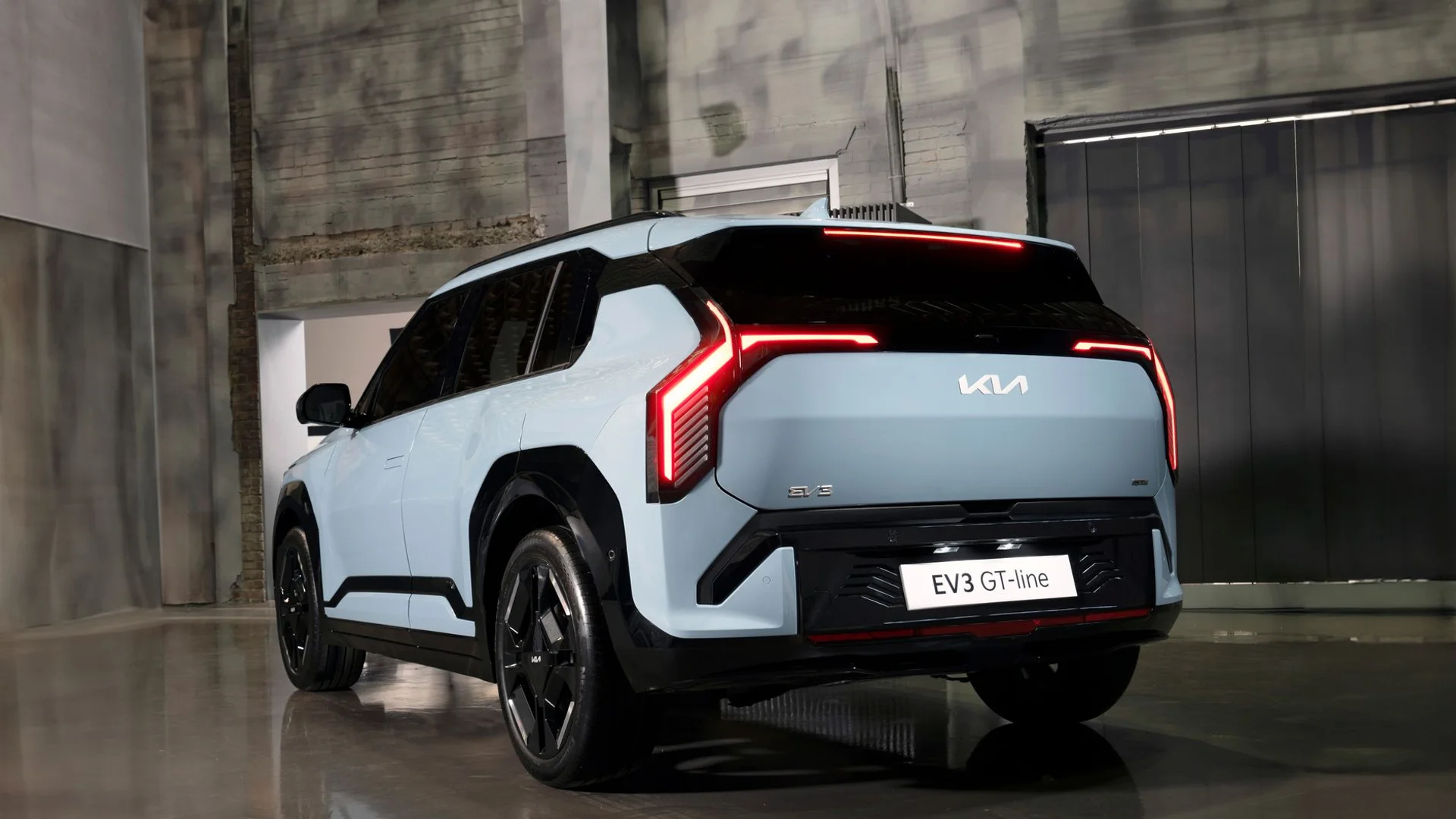
Kia EV3 Canada Price: $36,995 Makes It the Cheapest New BEV
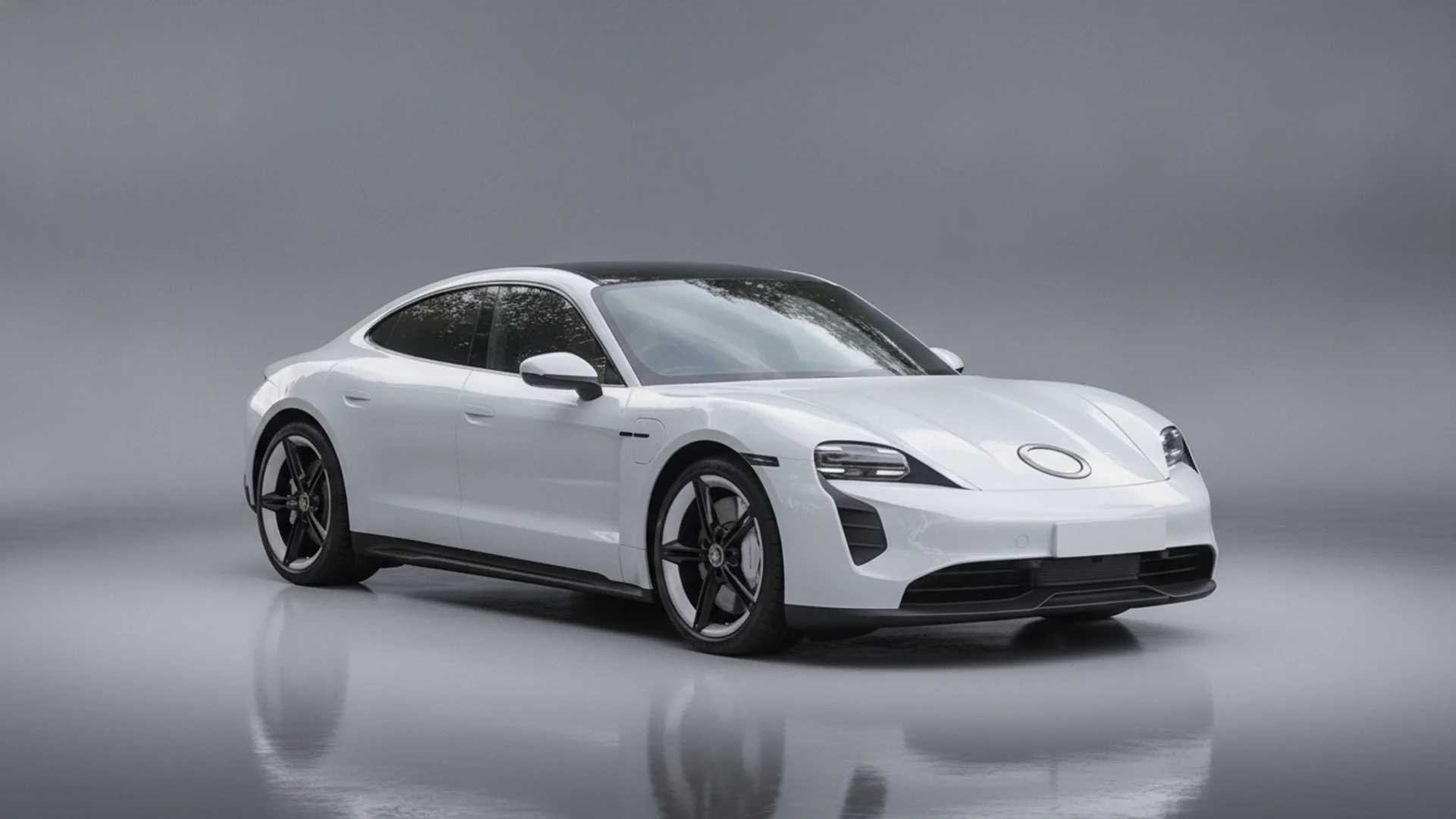
The MG07, the Taycan, and Why Fast EVs Share a Silhouette