Key takeaways
- Not the often-parroted "$10,000 combined." Zero.
- What you actually get as an NWT resident buying a new EV in 2026 is the federal EVAP rebate: $5,000 for a battery-electric vehicle, $2,500 for a qualifying plug-in hybrid.
- The $5,000 from Ottawa is the $5,000 you get, nothing more.
- That said, $5,000 still meaningfully changes the math on a lot of vehicles.
Most important: before you read a single word of this guide: the Northwest Territories has no territorial EV rebate. Not $2,000. Not $3,000. Not the often-parroted "$10,000 combined." Zero. The NWT territorial government has not launched an EV incentive program as of 2026, and I'm not going to pretend otherwise just to make this feel like a warmer, more hopeful article.
That foundation of misinformation, the copy-pasted boilerplate about "stacking federal and territorial incentives" that shows up in guide after guide, does real harm. It sends people into dealerships with the wrong numbers, creates false expectations, and obscures a decision that is already complicated enough without bad data layered on top. So we're starting here, with the truth, and building from it.
What you actually get as an NWT resident buying a new EV in 2026 is the federal EVAP rebate: $5,000 for a battery-electric vehicle, $2,500 for a qualifying plug-in hybrid. One program. One number. Applied at the point of sale by a participating dealer. That's it. If a guide told you it was more, someone made it up.
Now here's the part most guides get even more wrong than the rebate numbers: whether an EV makes sense in the NWT at all depends entirely on where in the NWT you live. Yellowknife, with hydro power, urban distances, and a thin but growing charging network, is genuinely one of the more honest cases for northern EV adoption in Canada. A remote diesel-powered community without a public charger within 200 kilometres is an entirely different decision. Treating those two situations as the same question is how guides fail their readers.
We're going to work through both, properly, with real numbers. No feel-good gloss.
The Only Federal Program That Applies: EVAP
The Electric Vehicle Affordability Program launched on February 16, 2026. It's a five-year federal program running through 2030, administered through Transport Canada, and it applies to every Canadian province and territory, including the NWT.
The mechanics are genuinely clean, which is worth noting because some provincial incentive systems are a bureaucratic mess. You buy a new eligible vehicle from a participating dealer. The rebate is applied directly at the point of sale, reducing your purchase price before you sign anything. You don't fill out a rebate form afterwards. You don't wait for a cheque to arrive six weeks later. The dealer handles the paperwork on the backend with Transport Canada, and your only job is to show up with proof of NWT residency.
For most people, the rebate structure breaks down like this:
- Battery-electric vehicles (BEVs): $5,000 for vehicles with a final transaction value under $50,000 (cars) or $60,000 (SUVs and trucks)
- Plug-in hybrids (PHEVs): $2,500 for models with at least 50 km of rated electric range
- Chinese-manufactured vehicles: excluded entirely, regardless of brand
- Used vehicles: not eligible, EVAP covers new purchases only
- Per-person limit: one rebate claim for the entire five-year program, not once per year
That last point surprises people. You get one EVAP rebate across the life of the program. Not annually. Once. If you claim it on a vehicle in 2026 and sell that car in 2028 and want to buy another EV, you don't get a second rebate.
For NWT residents, this is the complete picture. There's no second layer, no territorial addition, no stacking to be done. The $5,000 from Ottawa is all you get.
That said, $5,000 still meaningfully changes the math on a lot of vehicles. A Chevrolet Equinox EV AWD priced around $46,500 drops to $41,500 after EVAP, which lands it squarely in the price range of a mid-trim gas SUV without touching operating costs. A Hyundai Ioniq 5 AWD sitting around $53,000 becomes $48,000, still premium territory, but the five-year operating cost story starts to shift the comparison.
Whether that operating cost advantage holds in NWT conditions is a different question, and it doesn't hold universally. That depends on your electricity source, and the NWT has a split on that front that is genuinely extreme by Canadian standards.
Electricity in the NWT: Two Completely Different Stories
If there's one variable that determines whether an EV makes financial sense in the NWT, it's not range, it's not the charger network, and it's not cold weather. It's your electricity source, and the NWT's grid situation is unlike anything else in Canada.
Yellowknife runs on hydroelectric power from the Snare and Taltson systems, operated by the Northwest Territories Power Corporation. Residential electricity rates in Yellowknife sit at approximately $0.15 per kilowatt-hour. That number is genuinely competitive with southern Canada. At $0.15/kWh, charging a 75 kWh battery from near-empty costs roughly $11.25. Accounting for 90% charging efficiency through a Level 2 charger, you're looking at about $12.50 to deliver a full charge to the battery. In Yellowknife, fuelling an EV on home electricity is cheap, the cost-per-kilometre advantage over gasoline is real and substantial.
Here's the contrast that should stop you mid-sentence. Remote NWT communities, Inuvik, Fort Simpson, Norman Wells, Tulita, Fort Good Hope, Colville Lake, are powered predominantly by diesel generation. The Northwest Territories Power Corporation's community electricity rates for diesel-generation communities run to $0.45–$0.60 per kilowatt-hour or higher, depending on the settlement and the seasonal cost of diesel fuel delivery. These are subsidised rates. Without the NTPC Community Subsidy Program, the actual cost of generation would be higher still.
For everyday use, that works out to: at $0.50/kWh, that same 75 kWh charge costs $37.50–$41.00 delivered. You're probably still cheaper than gasoline, pump prices in remote NWT communities regularly hit $1.80–$2.20 per litre, but the cost advantage compresses dramatically. And that's before accounting for the range reductions that come with NWT winters, which we'll work through in the next section.
The bottom line on electricity is this: Yellowknife residents can genuinely save money operating an EV. Remote community residents are looking at a much tighter equation, sometimes negative compared to a fuel-efficient gas vehicle, and the economics aren't the only reason it's complicated. The full picture on remote communities comes later. For now, remember this split, because it determines which version of this guide you're actually reading.
What NWT Winter Actually Does to EV Range
I want to be direct here, because there's a lot of EV coverage that treats cold-weather range loss as a minor footnote with an asterisk. In the NWT, it's not a footnote. It is potentially the defining constraint on the vehicle's usefulness.
Lithium-ion batteries operate through electrochemical reactions, and those reactions slow in cold temperatures. Below 0°C, range begins to drop. Below -20°C, the degradation becomes significant. At -30°C to -40°C, the operational reality for NWT winters across most of the territory, you're looking at real-world range losses of 40% to 50% compared to rated range under optimal conditions.
To cut to it: plan for roughly half your rated range on the coldest days.
The longer answer is vehicle-specific. A Tesla Model 3 Long Range AWD has an EPA-rated range of approximately 576 km. In NWT winter cold, your working range is 290–350 km. A Hyundai Ioniq 6 Long Range AWD, rated at around 581 km, delivers roughly 290–350 km in deep cold. The Chevrolet Equinox EV with a 513 km rated range becomes somewhere in the 260–310 km band at extreme temperatures.
These numbers are not catastrophic for Yellowknife urban driving. The city is geographically contained. Most daily driving involves distances measurable in single-digit kilometres. The cold-weather range of any of these vehicles is sufficient for urban Yellowknife use with margin to spare, as long as you're charging at home overnight and not relying on public infrastructure for your daily cycle.
Where it gets difficult is highway travel. The Yellowknife Highway (NWT Highway 3) runs 320 km connecting Yellowknife to the rest of Canada's highway network at Enterprise. In summer, that drive is well within range for most modern EVs. In a January cold snap at -40°C, you're pushing the limits of even a long-range vehicle. There are no DC fast chargers along that route as of early 2026. That journey requires a full charge before departure, careful speed management, fast highway driving in deep cold accelerates range loss significantly, and real discipline about climate control use. Asking someone to run their heat carefully at -40°C is not a small ask.
The point isn't that it can't be done. People do it. But it requires preparation and honesty about what you're signing up for. NWT highway travel in an EV is a calculated exercise. It is not plug-in-and-go.
Preconditioning changes the calculation meaningfully. This is the practice of using the car's onboard heater to warm both the cabin and the battery pack while still plugged into the charger, before you leave home. A cold battery charges more slowly, delivers less power, and degrades faster under heavy load. Preconditioning keeps the battery in its optimal thermal range before you start demanding performance from it. Most modern EVs handle this through their app or a scheduled departure time. In NWT conditions, use it every single day without exception.
For everyday use, that works out to: budget an extra 30–45 minutes and roughly 3–5 kWh of electricity per morning in -40°C temperatures. At Yellowknife's $0.15/kWh, that's an extra $0.45–$0.75 per day. At a diesel community's $0.52/kWh, it's $1.50–$2.50. Not a deal-breaker, but it adds up over a winter and belongs in your annual cost calculation.
The block-heater analogy comes up often: do EVs need one? Not in the traditional sense. A traditional block heater warms the engine coolant and oil, making cold starts easier and reducing wear on an ICE. EVs don't have an engine block to heat. Preconditioning serves the same function, it brings the battery to optimal temperature before you need it. The key difference is that preconditioning uses the vehicle's own thermal management system while plugged in. If your EV is plugged in overnight, preconditioning handles what a block heater does for a gas vehicle. If it sits unplugged for hours in -40°C, the battery will cool, and you'll feel it immediately when you start driving.
Design your daily routine around keeping the vehicle plugged in. In NWT temperatures, that isn't optional, it's the foundation of the whole system.

The Charging Infrastructure Gap Is Real and Wide
I'm not going to oversell what exists in the NWT. The public charging infrastructure is sparse, the geographic coverage is thin, and anyone telling you otherwise is either working from outdated data or wishful thinking.
Yellowknife has a small but growing cluster of public charging options, a mix of Level 2 AC chargers and at least one DC fast charging option accessible to non-Tesla vehicles as of early 2026. The exact count changes as new installations come online. The Natural Resources Canada PlugShare-compatible database at chargelab.ca is your best real-time source. Don't trust any article, including this one, to have the definitive live count, that data ages within months.
Outside Yellowknife, public charging becomes extremely limited. Fort Smith, Hay River, and Inuvik have seen some Level 2 installations in recent years, largely through federal Zero Emission Vehicle Infrastructure Program (ZEVIP) funding, but the density is nowhere near what exists in southern Canada. For many NWT communities, the current public charger count is zero.
ZEVIP has committed over $700 million nationally for charging infrastructure, with specific attention to underserved communities and highway corridors. The NWT is included in that framing. Here's the assessment: funding commitments and completed, operational chargers are two different things. The translation from federal announcement to physical charger in a remote northern context involves logistics, construction costs, grid connections, maintenance agreements, contractor availability, that are substantially more complicated than installing a unit in a Toronto parking garage. The gap between "committed" and "operational" in northern Canada has historically been measured in years, not months.
For NWT residents, the practical implication is straightforward: do not count on public charging infrastructure for your daily driving needs right now. If you're going to own an EV in the NWT in 2026, you need home charging capability as your foundation. Everything else is supplemental.
Home charging in the NWT means Level 2, not Level 1. A standard 120V Level 1 outlet is close to useless as a primary charging method here. The math is simple: Level 1 delivers roughly 5–8 km of range per hour. In Yellowknife's cold, where your real-world range may already be reduced by 40%, and where preconditioning is drawing down the battery before you leave, adding range at 5 km per hour is not going to keep pace. A Level 2 charger at 7.2 kW delivers 40–50 km of range per hour. Overnight, that's a full recovery from almost any state of charge.
Gear worth having
As an Amazon Associate, ThinkEV earns a small commission from qualifying purchases — at no extra cost to you.

Grizzl-E Classic Level 2 EV Charger (40A)
Canadian-made and rated for minus 40C winters. 40A / 9.6 kW, NEMA 14-50, indoor/outdoor, 24-ft cable. The charger built for Canadian weather.
As an Amazon Associate, ThinkEV earns from qualifying purchases — at no extra cost to you.
The Grizzl-E is a consistently recommended Level 2 charger for Canadian winter conditions specifically because of its cold-weather performance rating and its straightforward, no-subscription model. In NWT temperatures, you want hardware engineered with the assumption that -40°C is a real operating condition, not an extreme edge case. Check the spec sheet on whatever unit you're considering: the operating temperature floor is listed, and some chargers have lower limits that are inadequate for NWT winters.
Budget $800–$1,500 for the charger unit itself. Budget $500–$1,500 for professional electrical installation, depending on your panel capacity, the distance from your panel to your parking spot, and contractor availability in your community. If your home's electrical panel is already near capacity, common in older Yellowknife housing stock, you may need a panel upgrade, which adds to the total. Get an electrical quote before you buy the car.
In remote communities, installation costs can climb higher. Getting a licensed electrician may involve significant travel costs that push quotes well above southern Canadian equivalents. Factor that in if you're not in Yellowknife.
Five-Year Cost of Ownership: The Actual Numbers
Here's what almost every NWT EV article refuses to do: build a real cost-of-ownership model using NWT-specific numbers rather than national averages that have no relationship to northern driving reality. Let's fix that.
We're comparing two vehicles: the Chevrolet Equinox EV AWD versus the gas-powered Chevrolet Equinox AWD. Same brand, same body style, same basic utility. We're isolating powertrain cost differences as cleanly as possible.
Scenario A: Yellowknife, hydroelectric power at $0.15/kWh
Purchase price, Gas Equinox AWD at a mid-range trim: approximately $41,000–$43,000. Equinox EV AWD: approximately $45,000–$48,000 before incentives; call it $46,500 as a midpoint. After the $5,000 EVAP rebate, the EV lands at roughly $41,500. The starting purchase price difference is essentially zero to $500 in favour of the gas version depending on trim. That's an unusually narrow gap for an EV comparison, and it's why the Equinox EV deserves serious consideration for budget-conscious buyers.
Fuel costs, The gas Equinox AWD in real-world northern driving averages closer to 12–13L/100km than its rated 9.2L/100km. Cold engine starts, idling to warm up, stop-and-go in winter, these factors push consumption up. At $1.75 per litre for regular in Yellowknife, 15,000 km per year costs approximately $3,150–$3,413. Call it $3,200 as a working midpoint.
Electricity costs, At $0.15/kWh with a real-world cold-weather efficiency of 22 kWh per 100 km (accounting for winter degradation and preconditioning), 15,000 km per year requires roughly 3,300 kWh. That's $495 per year in electricity. Add charger infrastructure amortised over five years, hardware at $1,200 and installation at $1,000, totalling $2,200 spread over five years, and that's $440 per year. Total annual electricity and charger cost: approximately $935.
Annual fuel saving: $2,265 per year in Yellowknife. Over five years: $11,325 in fuel savings.
Maintenance, EVs have no oil changes (saving $120–$200 per year), no transmission fluid, no spark plugs, brake pads that last significantly longer due to regenerative braking. Conservative maintenance savings over five years: $800–$1,500.
The five-year total cost advantage for the Equinox EV in Yellowknife: approximately $12,000–$13,000 before accounting for any residual value differences. The $5,000 EVAP rebate effectively covers the entire charger infrastructure investment, with money left over. This is not a marginal case. It's a decisive economic argument.
Scenario B: Remote NWT diesel community at $0.52/kWh
The EV's 3,300 kWh annual electricity draw costs $1,716 per year. Add charger amortisation at $440, though in remote communities, installation often exceeds $2,000 on its own, pushing the annual charger cost higher. Use $600 as a conservative amortised figure. Total annual electricity and charger cost: $2,316.
The gas vehicle at $3,200 annual fuel still beats the EV by only $884 per year, a five-year saving of $4,420. When installation costs in remote communities push the charger infrastructure total to $3,000–$4,000, the annual amortised charger cost rises to $600–$800, and the five-year economic case for the EV effectively evaporates or turns negative.
That's the number that tells the full story: the same vehicle, the same driver, the same 15,000 km per year, and the five-year outcome swings by $8,000–$9,000 purely based on electricity source. Yellowknife's hydro grid and remote NWT's diesel grid create two completely different EV markets within one territory.
The Honest Case for EVs in Yellowknife
Yellowknife makes a surprisingly compelling case for EV ownership, and I say that as someone who tries hard not to oversell this category.
The city's electricity is hydroelectric. At $0.15/kWh, energy costs for an EV are genuinely low by any Canadian standard, not just a northern one. The urban driving environment, most destinations within 30 km, is well within range even in deep winter. The climate is stable in its brutality: you know it will be cold, you plan for it, you precondition every morning, you come home to a garage where you plug in. NWT residents don't need to be educated on adapting to their environment. That's not a cultural insight, it's an observation that the daily discipline EV ownership demands in cold climates is already the way life works in Yellowknife.
The five-year cost comparison works. We ran those numbers above. The $5,000 EVAP rebate narrows the purchase price gap to near-zero on vehicles like the Equinox EV. The annual fuel savings in Yellowknife are $2,000–$2,500 depending on driving patterns. The maintenance savings are real and add up over a six- or seven-year ownership period. For someone who intends to keep their vehicle, which describes most NWT residents who aren't refreshing their fleet every 36 months, the economics are genuinely favourable.
There's one caveat on battery longevity that deserves honesty. Repeatedly cycling lithium-ion batteries in extreme cold does accelerate long-term degradation compared to moderate-climate use. The degree varies by battery chemistry and thermal management system. Vehicles with active battery thermal management, Tesla, Hyundai Ioniq, Kia EV, Chevrolet Equinox EV, handle cold cycling substantially better than vehicles with passive thermal management. This doesn't show up in year one or two. But by year six or seven, a northern-climate battery may have lost slightly more capacity than an identical vehicle used in Victoria. Plan for it when you're calculating residual value. It doesn't reverse the economics, but it belongs in the accounting.
For Yellowknife residents with home charging access and predominantly urban driving: the case is real. Not theoretical. Not "maybe in a few years." Real, now, in 2026, with the EVAP program active and hydro electricity at $0.15/kWh.
The Honest Case Against EVs in Remote NWT Communities
I'm not going to tell remote NWT residents that an EV makes sense when the infrastructure and economics don't support it. That would be irresponsible.
If you live in a community powered by diesel generation with electricity at $0.45–$0.60/kWh, the operating cost advantage of an EV compresses to a sliver or disappears entirely. Gasoline is expensive in these communities, often $1.90–$2.20 or more per litre, but diesel-generated electricity is also expensive in absolute terms. The arithmetic is close, and "close" is not a good enough reason to take on the infrastructure challenges that come with remote NWT EV ownership.
Those infrastructure challenges are real and layered:
Home charging installation. No public charger means you're entirely dependent on home charging. Home charging requires a 240V circuit and a Level 2 unit. In a remote NWT community, installation may require flying in a licensed electrician, sourcing parts that aren't locally available, and working through permitting timelines not calibrated for urgency. The upfront infrastructure cost is substantially higher than in Yellowknife.
Range and geography. Cold-weather range loss is more significant in remote contexts because your trips aren't confined to a small urban area. Visiting a neighbouring community, making a supply run, or travelling any NWT highway involves distances that a cold-reduced range makes genuinely stressful. The buffer you have in Yellowknife, knowing a charger is 15 minutes away, doesn't exist across most of the territory.
Dealer service. EV warranty repairs and software updates that require shop time mean trailering the vehicle hundreds of kilometres to Yellowknife. That wipes out a significant portion of any cost savings. The NWT dealer network for EVs outside Yellowknife is not thin, it's close to absent.
Emergency planning. In a remote community, a breakdown on a highway is a serious event regardless of powertrain. In an EV, if you've misjudged range in extreme cold, the consequences are worse than running out of gas, there's no jerry can solution.
The answer for remote NWT residents right now is: wait. The infrastructure investment is coming. ZEVIP funding is flowing. Battery technology continues to improve. Buying an EV before the infrastructure can support it isn't forward-thinking, it's expensive and frustrating. If you're in a remote community with a specific use case that makes an EV viable, guaranteed home charging, short daily distances, an existing electrical setup that already supports Level 2, those factors change the calculation. But the default answer for remote NWT in 2026 is not yet.
Best EVs for NWT Conditions in 2026
Not all EVs are equally suited to NWT conditions. I want to be specific here rather than listing whatever's popular nationally.
The most critical specification for NWT is active battery thermal management. This system uses liquid cooling, and in some cases, heating, to keep the battery within its optimal temperature range regardless of external temperature. In Yellowknife winters, this isn't a nice-to-have. It's fundamental to maintaining usable range and preventing accelerated degradation. Every vehicle on this list has it.
Chevrolet Equinox EV AWD gets specific mention first because of its price point. Starting around $45,000 for AWD versions, after the $5,000 EVAP rebate it lands at $40,000, in the territory of mainstream gas SUVs. The range is competitive (approximately 400–460 km rated, translating to roughly 240–280 km in NWT winter conditions). The GM dealer network is more established in some NWT communities than Korean or European brands. It's not the most exciting EV on the market, but it's arguably the most practical entry point for NWT buyers watching the budget.
Gear worth having
As an Amazon Associate, ThinkEV earns a small commission from qualifying purchases — at no extra cost to you.
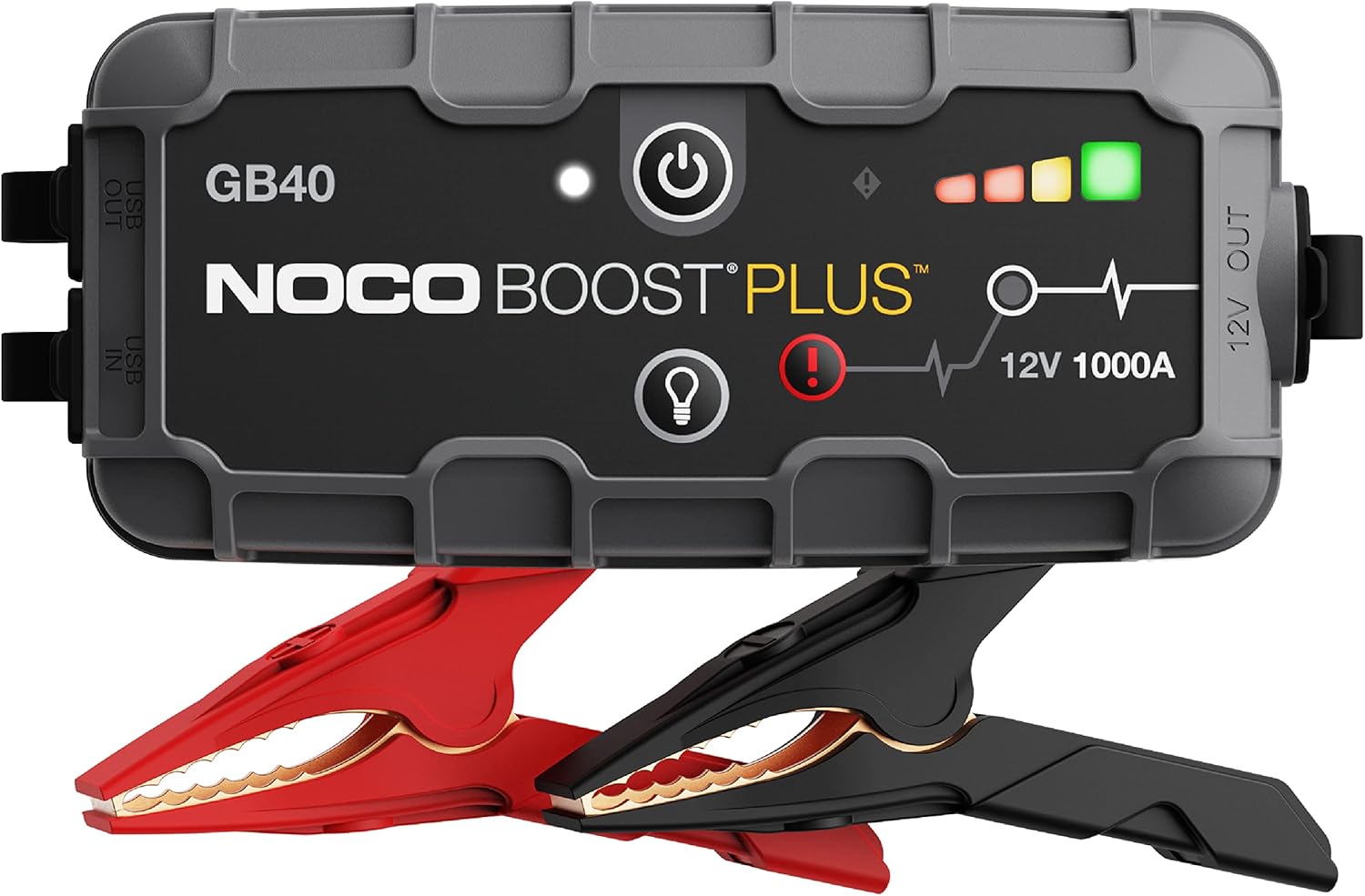
NOCO Boost Plus GB40 Jump Starter
A 1000A lithium jump starter that fits in your glovebox and works on any 12V battery. Your insurance against a dead 12V in a parking lot.
As an Amazon Associate, ThinkEV earns from qualifying purchases — at no extra cost to you.
Hyundai Ioniq 5 AWD and Hyundai Ioniq 6 AWD both have strong cold-weather thermal management and hit a favourable balance of range, price, and practicality. The 800V ultra-fast charging architecture on both models means that when a DC fast charger is available, they use it far more efficiently than 400V vehicles. In a territory where fast chargers are sparse, getting from 10% to 80% in 18 minutes rather than 45 minutes is the difference between a reasonable stop and a logistics problem. Pricing on the Ioniq 5 AWD starts around $52,000–$58,000 depending on trim, EVAP eligibility depends on the final transaction value staying under $60,000 for the SUV category.
Tesla Model Y Long Range AWD sits at roughly $65,000 before EVAP, making it tight against the $60,000 SUV EVAP cap for many trim levels, verify current pricing carefully. Tesla's cold-weather performance with active thermal management is well-documented across years of real-world data. The Model Y's cargo capacity and all-wheel drive make it practical for NWT conditions. The Supercharger network in Canada is expanding. The main drawback for NWT is price: you may struggle to stay within the EVAP threshold for the Long Range trim.
Tesla Model 3 Long Range AWD is more accessible on price and shares the same cold-weather performance credentials. Starting around $56,000–$59,000 depending on configuration, it needs careful attention to the $50,000 EVAP cap for non-SUV vehicles. The Model 3's lower ground clearance and car seating position aren't ideal for NWT road conditions in shoulder seasons, but for Yellowknife urban driving it's a strong option.
Kia EV6 AWD shares the Ioniq 5/6 platform and 800V charging architecture. The Kia EV9 is a three-row SUV with substantial range and substantial price, for larger NWT families who need three rows and can manage the transaction value against the EVAP threshold, it makes sense. Check pricing before you assume it's EVAP-eligible.
What to actively avoid: any EV with passive thermal management, any EV whose manufacturing origin disqualifies it from EVAP, and any model where the Canadian dealer network is thin enough that warranty service becomes a logistics nightmare. The NWT is not a market for early-adopter risk tolerance.
Jump-Starting and Cold-Weather Emergency Preparedness
There's a specific cold-weather risk in NWT EV ownership that most guides skip entirely: the 12V accessory battery. Modern EVs have two battery systems, the large high-voltage traction battery that drives the motor, and a small 12V battery (lead-acid or lithium depending on the model) that powers the vehicle's electronics, lights, locks, and computer systems. The 12V battery can fail in extreme cold, just as it does in any other vehicle.
The risk in an EV context is more acute than it sounds. A dead 12V battery can leave you locked out of your vehicle entirely, unable to access the traction battery and unable to drive. In Yellowknife in January, this is a genuine safety concern, not just an inconvenience. Traditional lead-acid 12V batteries perform poorly below -20°C. Their cold cranking capacity drops significantly, and an EV parked outside overnight at -40°C with a borderline 12V battery is a liability waiting to activate.
EV manufacturers have moved toward lithium 12V batteries in newer models, Tesla's transition is the most discussed example, and Hyundai has done the same in recent Ioniq models. Lithium 12V batteries handle extreme cold substantially better than lead-acid. If you're buying a vehicle and cold-weather 12V reliability matters to you, and it should, check which battery chemistry your specific model year uses.
A quality lithium jump-starter should be considered mandatory equipment in any NWT vehicle, EV or otherwise. These compact units can jump a dead 12V battery enough to boot the vehicle's systems and get you moving. Keep it in the cabin, not the cargo area. A unit stored in a freezing trunk overnight at -40°C will have dramatically reduced output capacity compared to one that's been in the warm cabin. The NOCO Boost GB40 is a consistently recommended option that handles the cold and provides enough output for most passenger vehicle 12V systems.
Gear worth having
As an Amazon Associate, ThinkEV earns a small commission from qualifying purchases — at no extra cost to you.

PULIDIKI Car Cleaning Gel (Detailing Putty)
Press it into vents, buttons, and seams and it lifts out dust you did not know was there. Weirdly satisfying, genuinely useful.
As an Amazon Associate, ThinkEV earns from qualifying purchases — at no extra cost to you.
Beyond the 12V battery, standard cold-weather preparedness applies with extra weight in an EV context. Keep your traction battery above 30% charge as a minimum operating threshold in winter. Don't let it sit below 20% in cold temperatures for extended periods, lithium cells perform poorly and degrade faster at low states of charge in extreme cold. Don't charge to 100% habitually, 80% is the standard recommendation for daily cycling, with 100% reserved for days when you need maximum range for a specific trip.
That 80% daily charging limit deserves more than it usually gets. Charging a lithium battery to 100% creates chemical stress on the cells, particularly at the top end of the state-of-charge curve. In a moderate climate, charging to 100% daily might cost you 5–8% of battery capacity over the vehicle's lifetime. In the NWT, where cold temperatures already stress the battery during operation and charging, the cumulative effect is more pronounced. Staying at 80% for daily cycles costs you nothing in Yellowknife urban driving, 80% of a 400–500 km rated range is still far more than any daily distance, and it meaningfully extends the battery's working lifespan.
For NWT highway travel, carry emergency supplies regardless of powertrain. A breakdown in winter on a remote highway is serious. Standard emergency kit: warm blankets, extra clothing, hand warmers, water, high-calorie food, a first aid kit, and a satellite communication device if you're on remote highways. Sections of NWT Highway 3 and most other NWT highways have minimal cellular coverage. A cell phone gives you zero protection on those stretches. An inReach or Spot satellite messenger, or an Apple Watch Ultra with Emergency SOS satellite, changes a remote breakdown from a potential emergency into a managed wait. At $350–$500 plus a service plan, the cost is a rounding error on the total EV purchase.
For EV-specific highway situations: know your vehicle's "keep warm" feature, which most modern EVs include. It uses the traction battery to maintain cabin temperature at the cost of range. If you're stranded and waiting for help, this feature keeps you out of genuine danger. A modern EV with 40–50 km of remaining range can typically run its cabin heater for three to five hours on that reserve while maintaining a survivable interior temperature, enough time for roadside assistance to reach you on most NWT highways, assuming you've called ahead.
Plan for it. Don't improvise it.
Home Charging Installation in the NWT: What to Actually Expect
Getting a Level 2 charger installed in the NWT is functionally similar to the rest of Canada, with northern caveats that affect cost and timeline.
Assess your electrical panel first. A Level 2 charger at 7.2 kW requires a dedicated 40A or 50A 240V circuit. Most modern NWT homes have 100A or 200A service, and a 40–50A dedicated circuit is typically feasible, but it depends on what else is already drawing on the panel. In cold climates, electrical loads are inherently higher: electric heating, heat tape on pipes, block heaters on vehicles. NWT panels may already be carrying a significant baseline load. Have a licensed electrician assess your panel before you buy the car or the charger. Finding out your panel needs an upgrade after you've taken delivery adds cost and delays.
Contractor availability matters in the NWT. Yellowknife has a reasonable pool of licensed electricians, but scheduling can be constrained during periods of high construction activity. In remote communities, getting a licensed electrician may involve travel costs that push installation quotes above $2,000. Budget $500–$2,000 for installation in Yellowknife. Budget higher, potentially significantly higher, in remote communities.
Material specifications matter in NWT cold. PVC conduit becomes brittle in extreme cold. Outdoor-rated flexible conduit or metal conduit is better suited to the temperature extremes the NWT delivers. A competent northern electrician already knows this. If you're managing a contractor unfamiliar with cold-climate work, confirm the material specs explicitly.
Check operating temperature ratings on the charger itself. Some chargers have lower operating temperature limits that are inadequate for NWT winters. The Grizzl-E Classic and Level 2 are rated for operation down to -40°C. Read the spec sheet, not the marketing copy.
As of early 2026, no specific NWT territorial subsidy for home charger installation exists. Federal programs through Natural Resources Canada's Energy Efficiency program have historically offered rebates or subsidies that applied nationally, including the NWT. These programs come and go. Check with the Northwest Territories Power Corporation and Natural Resources Canada at nrcan.gc.ca for any active home charging incentives at time of purchase.
The Infrastructure Investment That's Coming, and What "Coming" Actually Means
The federal government has made substantial commitments to expanding Canada's EV charging network, and the NWT is included. Zero Emission Vehicle Infrastructure Program (ZEVIP) funding has been allocated to northern and remote communities, and several NWT projects have received funding approvals in recent program cycles.
Here's the assessment of what "coming" means in practice: the gap between a federal funding announcement and an operational charger in a remote NWT community is measured in years, not months. The remoteness of NWT communities, the shortage of local electrical contractors experienced with commercial EV charging installation, permitting requirements, and the logistics of moving equipment to communities not accessible by road year-round, all of that creates friction that doesn't exist when you're putting a charger in a BC parking lot.
For everyday use, that works out to: don't buy an EV in 2026 on the assumption that infrastructure you've heard is "coming" will arrive on the timeline you're hoping for. Plan for the infrastructure that exists today. Any new chargers that come online before your vehicle reaches end-of-life are upside, not foundation.
The longer-term trajectory is positive. As Canada's EV fleet grows, the political and economic pressure to support it with infrastructure, including in remote and northern Canada, grows with it. The NWT territorial government, even without launching its own rebate program, has made public commitments to EV infrastructure and fleet electrification. Yukon has launched territorial programs that will create direct comparison pressure for NWT policymakers. That pressure is real and it accumulates.
But policy timelines in territorial government are not short. Infrastructure buildout in remote conditions doesn't happen quickly. For a 2026 vehicle purchase decision, the relevant question is what exists right now, not what might exist in 2028.
What the Policy Gap Actually Says About the NWT
The absence of a territorial NWT EV rebate is a policy gap that penalises NWT residents relative to the rest of Canada.
Every other Canadian jurisdiction with an active EV incentive program gives its residents a financial advantage that NWT residents don't receive. Yukon has a territorial program. BC has the CleanBC rebate up to $4,000. Quebec layered up to $7,000 in provincial support on top of the federal program for years. NWT residents get only the federal $5,000, the same baseline every Canadian gets, with nothing on top.
Here's what makes this particularly striking: NWT residents face higher costs for vehicle ownership across the board. Fuel costs more. Maintenance costs more. Logistics cost more. The case for a territorial top-up to accelerate EV adoption is arguably stronger in NWT than in southern Canada, not weaker. A territorial rebate of even $2,000–$3,000 would meaningfully change the math for Yellowknife buyers currently on the fence. The absence of one is a policy choice, and it's worth naming as such rather than simply leaving it out of the conversation.
The NWT Legislative Assembly has not made EV incentives a legislative priority in recent sessions. That's a territory facing real fiscal constraints and competing policy priorities, housing, healthcare, infrastructure, that legitimately crowd out EV rebate programs. But fiscal constraints are not the same as permanence.
If you live in the NWT and believe the territorial government should launch an EV rebate program, contact your MLA and say so plainly. The programs that exist in Yukon and BC didn't materialise from nowhere. They came from political pressure, industry advocacy, and demonstrated demand. That's how territorial policy moves.
The Real Decision Framework for NWT Residents
Let me put this together cleanly, because I think the buried point in all of this is that the decision isn't actually that complicated once you have the right framework.
If you live in Yellowknife and you own your home, have a garage or covered parking where you can install a Level 2 charger, and do most of your driving within the city: the case for an EV in 2026 is genuinely strong. You have cheap hydro electricity. You have a sufficient (if thin) public charging network as backup. The $5,000 EVAP rebate takes the edge off the purchase price. Your five-year total cost of ownership versus a comparable gas vehicle is competitive and likely favourable. The case is real. Go buy the car. Do it with good cold-weather preparation, precondition every morning, keep the battery above 30% in winter, install a Level 2 charger before you take delivery.
If you live in Yellowknife in an apartment or townhouse without dedicated parking and charging access, the equation shifts. You're dependent on public charging, which in Yellowknife is functional but not abundant. If your building situation doesn't allow a home charger, you're taking on inconvenience that may or may not be tolerable depending on how close the nearest Level 2 or DC fast charger is to your regular routes. Doable, but harder.
If you live in Hay River, Fort Smith, or Inuvik, larger NWT communities with some charging infrastructure in place or in development, the case is weaker than Yellowknife but not impossible, particularly as ZEVIP projects come online. I'd personally wait another year or two for the infrastructure picture to clarify before committing, unless you have a specific home-charging solution already in place.
If you live in a smaller or remote NWT community powered by diesel generation: wait. The infrastructure, the economics, and the logistics aren't there yet. This will change. But not at a scale in 2026 that makes an EV purchase a clearly sound decision for most remote NWT residents.
For anyone on the fence, there's a practical middle path: a plug-in hybrid. PHEVs qualify for the $2,500 EVAP rebate, provide electric driving for most daily urban distances, and eliminate EV-specific range anxiety entirely because they carry a gas engine as backup. For Yellowknife residents who do both urban driving and regular highway trips into the territorial backcountry, a PHEV may be the honest bridge technology for the 2026–2028 period while the charging network develops.
Getting the EVAP Rebate in the NWT: The Practical Walkthrough
The process is simpler than most people expect. Here's exactly how it works.
Step 1: Identify participating dealers. Not every vehicle dealer is enrolled in EVAP. Transport Canada maintains a current list of participating dealers at tc.gc.ca, search "EVAP participating dealers." In Yellowknife, the dealer selection for EVs is not large. Verify that your specific intended dealer is enrolled before you spend time negotiating.
Step 2: Confirm vehicle eligibility. The EVAP eligible vehicle list is maintained by Transport Canada and updated periodically. Chinese-manufactured vehicles are excluded. Check the list directly rather than relying on dealer claims, dealers have an obvious interest in selling the vehicle regardless of incentive eligibility.
Step 3: Negotiate price independently of the rebate. The rebate is applied to the transaction value for purposes of calculating the EVAP cap. Dealers who conflate "EVAP cap" with "maximum price we can charge" may be doing creative framing. The transaction value ceiling, $50,000 for cars, $60,000 for SUVs and trucks, is before taxes and before the rebate. Negotiate as you would any vehicle purchase. The rebate flows through the dealer to you as a point-of-sale price reduction.
Step 4: Provide proof of NWT residency. A driver's licence, utility bill, or other government-issued documentation with an NWT address is the standard. The dealer collects this as part of the EVAP application process.
Step 5: Take delivery. The rebate is reflected on your purchase agreement and invoice. The dealer claims it back from Transport Canada on the backend. Your obligation ends at the purchase document.
There's no income test for EVAP. No waiting list. No application form you file after the fact. One rebate per person, for the life of the program, applied at the point of sale. The simplicity is one of the program's genuine policy achievements.
Where the NWT Stands in the National Picture
Canada's national EV adoption rate crossed the 10% new vehicle sales threshold in 2024 and has continued upward in 2025. The EV transition is accelerating, and the infrastructure investment flowing through federal, provincial, municipal, and private channels is calibrated to a Canadian EV fleet that will look dramatically different in 2030 than it does today.
The NWT is starting from a harder baseline than southern Canada. A population of roughly 45,000 people. Large geography. Extreme climate. Limited dealer network. No territorial rebate. Diesel-dependent remote communities. These are real structural constraints, and naming them honestly isn't pessimism. It's the foundation of a decision made with clear eyes.
But Yellowknife in 2026 is a genuinely viable EV environment for residents with the right setup. The federal EVAP program works. The hydroelectric electricity is cheap. The vehicles have been engineered to handle cold that would have been fatal to first-generation EVs. The category has matured enough that northern EV ownership isn't an experiment anymore, it's a reasoned choice with a real economic case attached.
For individual NWT residents making vehicle decisions in 2026: the information is here, and it's honest about the gaps. If you're in Yellowknife and ready to make the move to electric, the case is real. If you're in a remote community, patience is the right call. The infrastructure is coming. The question is how long you're willing to wait, and whether you can structure a home-charging situation that makes the economics work in the meantime.
The policy conversation about territorial NWT EV incentives is overdue. That's a separate fight, and it's one that NWT residents and advocates need to have loudly with their legislators. But it's a fight worth having, because the gap between what NWT residents get and what residents in Yukon or BC receive isn't justified by geography or fiscal constraints. It's a choice that can be changed.
Gear worth having
As an Amazon Associate, ThinkEV earns a small commission from qualifying purchases — at no extra cost to you.

WixGear Magnetic Air Vent Phone Mount (2-Pack)
A magnet strong enough that your phone never flinches over potholes or rail crossings. Two in the box, one for each car.
As an Amazon Associate, ThinkEV earns from qualifying purchases — at no extra cost to you.
Related Reading
- Yukon EV Incentives and Rebates 2026, Your northern neighbour's EV programs
- EV Winter Range Test Canada 2026, How EVs perform in Canadian cold
- EVAP Program Updates and Tracker Canada 2026, Federal rebate status
Gear worth having
As an Amazon Associate, ThinkEV earns a small commission from qualifying purchases — at no extra cost to you.

Car Cup Holder Coasters (4-Pack)
Drop-in coasters that catch spills and crumbs so your cup holders stay clean. Rinse and reuse forever.
As an Amazon Associate, ThinkEV earns from qualifying purchases — at no extra cost to you.

Founder & Chief Editor
Vlad Pereira is the founder and chief editor of ThinkEV.ca, the Canadian electric-vehicle publication he writes and edits from Courtenay, British Columbia. He covers EV pricing, federal and provincial rebates, charging costs, and the Chinese manufacturers now entering Canada, from the buyer's side rather than the press-fleet side. ThinkEV is a venture of Vlad Pereira Online; his writing on health, income and the long game lives at vladpereira.com.
Frequently asked questions
How does the federal EVAP rebate work in the NWT?
Does the NWT have its own territorial EV rebate?
How much does it cost to charge an EV in the NWT?
Can an EV handle the NWT's winter weather?
Are there enough charging stations in the NWT?
What are the best EVs for the NWT?
Is it worth buying an EV in the NWT?
More EV & road-trip finds
Affordable upgrades worth a look — tap any to check the price on Amazon.
 ★ 17,839
Qifutan Vent Phone Mount (Military-Grade Clip)
View on Amazon ★ 9,349
Auto Detailing Brush Set (10-Piece)
View on Amazon ★ 164
★ 164Solar-Powered LED Ambient Light
View on Amazon ★ 401
★ 401Crochet Daisy Rear-View Mirror Charm
View on Amazon ★ 1,340
Car Seat Gap Filler (Universal)
View on Amazon
TP-Link Kasa Smart Plug with Energy Monitoring
View on Amazon ★ 61
★ 61Toddler Car Seat Snack and Cup Tray
View on Amazon ★ 68
★ 68WeatherTech FloorLiner for Tesla Model 3
View on AmazonRead, Plan, Then Stay Current
Explore our expert articles to understand incentives and ownership costs, use the map to pressure-test charging reality, then subscribe so new EV coverage comes straight to you.
Continue Reading

New Brunswick EV Incentives 2026: What's Available

Ontario EV Incentives 2026: The Complete Picture
Every Dollar You Can Save on an EV in Canada (2026 Guide)

Alberta EV Rebates 2026: What You Actually Get
BC EV Rebates 2026: What's Left After the Cuts