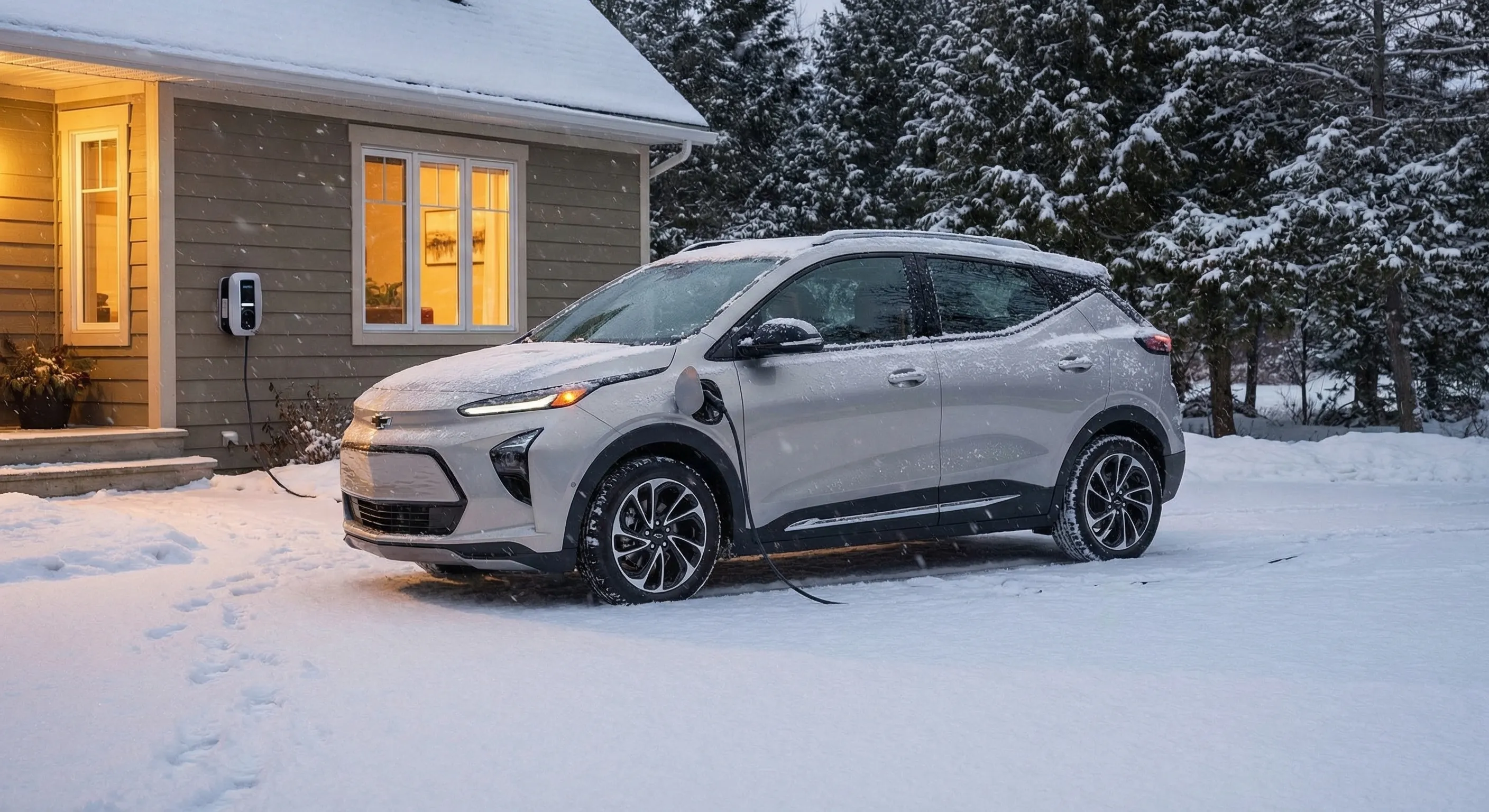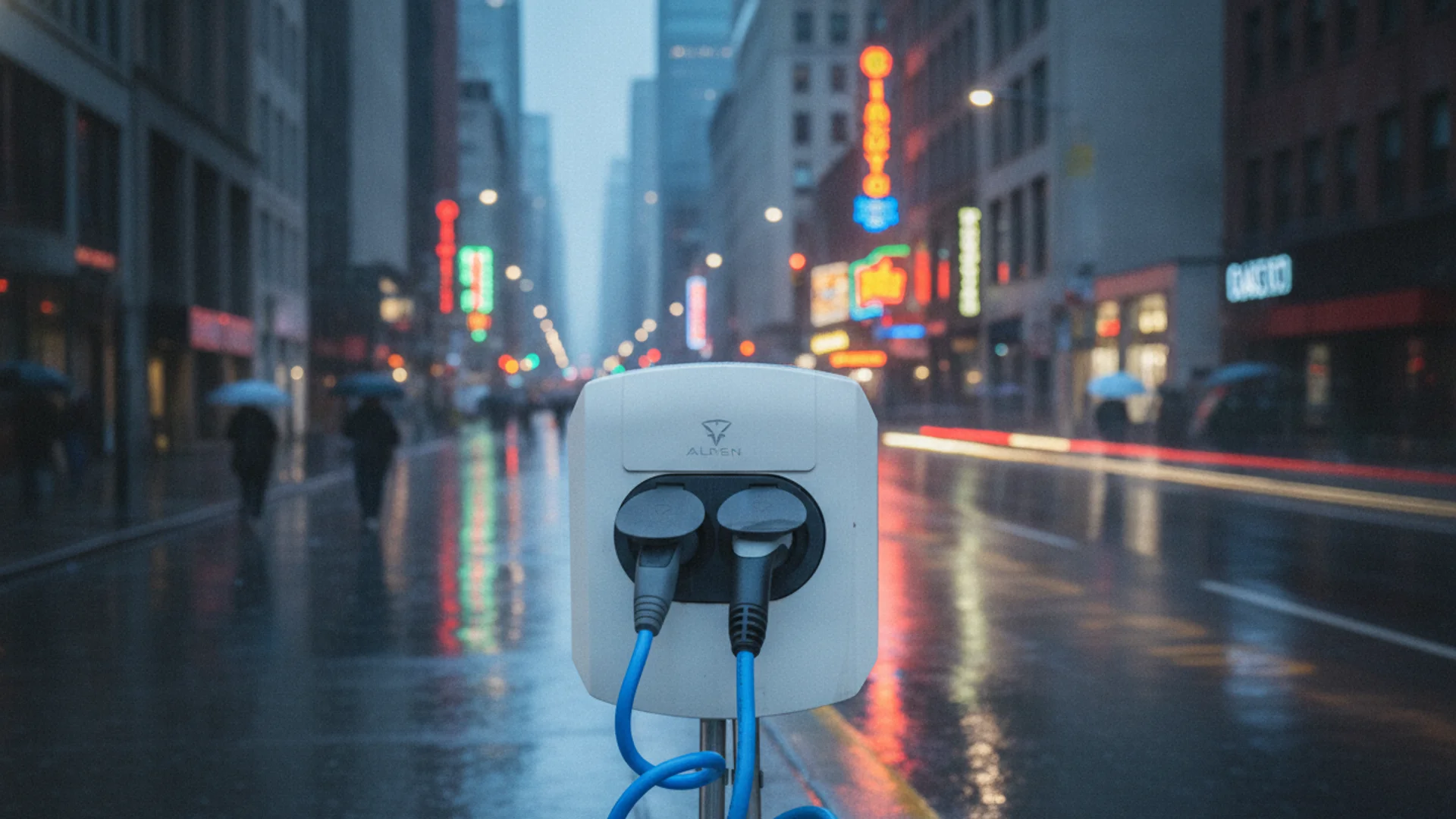
Charging time is decided by three numbers, the outlet's level, the battery's size, and the car's onboard acceptance rate, and most drivers only ever need to think about one of them. The answer to "how long does it take to charge an EV" is a 10-minute splash, a 30-minute fast-charge stop, or an 8-hour overnight session, and which one applies depends on what you're trying to do that day, not on the car you bought. The variables are knowable, the arithmetic is straightforward, and in nearly every case it is the car's onboard charger limit, not the wall, not the station, not the weather, that sets the ceiling.
Car and Driver's writers compared the question to asking how long it takes to cross the country, true enough as a framing device, but the variables are finite and the math is not mystical. Three numbers, in order of importance: the car, the station, the temperature.
Key takeaways
- A 350 kW station won't push 350 kW into a car built to accept 150, the car's onboard charger sets the ceiling, not the station.
- DC fast charging 10-to-80% ranges from 18 minutes in a Kia EV6 to 90 minutes on an older 50 kW FLO charger.
- A 32-amp Level 2 circuit handles every passenger EV sold in Canada in 2026 without leaving usable capacity on the table.
- The last 20% of a charge takes as long as the first 60%, on a road trip, stop at 80% and drive to the next station.
- BYD's Blade 2.0 claims 4-to-6 minutes at 1,500 kW, but the fastest post in Canada today is 350 kW.
Quick Answer: The Three Numbers That Actually Matter
Level 1 charging, a standard 120-volt household outlet, delivers about 3 to 8 kilometres of range per hour. That is genuinely useful for a plug-in hybrid with a 15 kWh pack and roughly pointless for a 77 kWh battery EV. Overnight on a 120V outlet gets you maybe 50 kilometres back, which is fine if your commute is short and your driveway is patient.
Level 2 charging at 240 volts is the answer for almost every Canadian home. A 32-amp circuit delivers 7.7 kW, which works out to roughly 40 to 65 kilometres of range per hour depending on the vehicle's efficiency. A 60 to 80 kWh pack fills overnight in 7 to 10 hours. The pack is full before the coffee maker turns on.
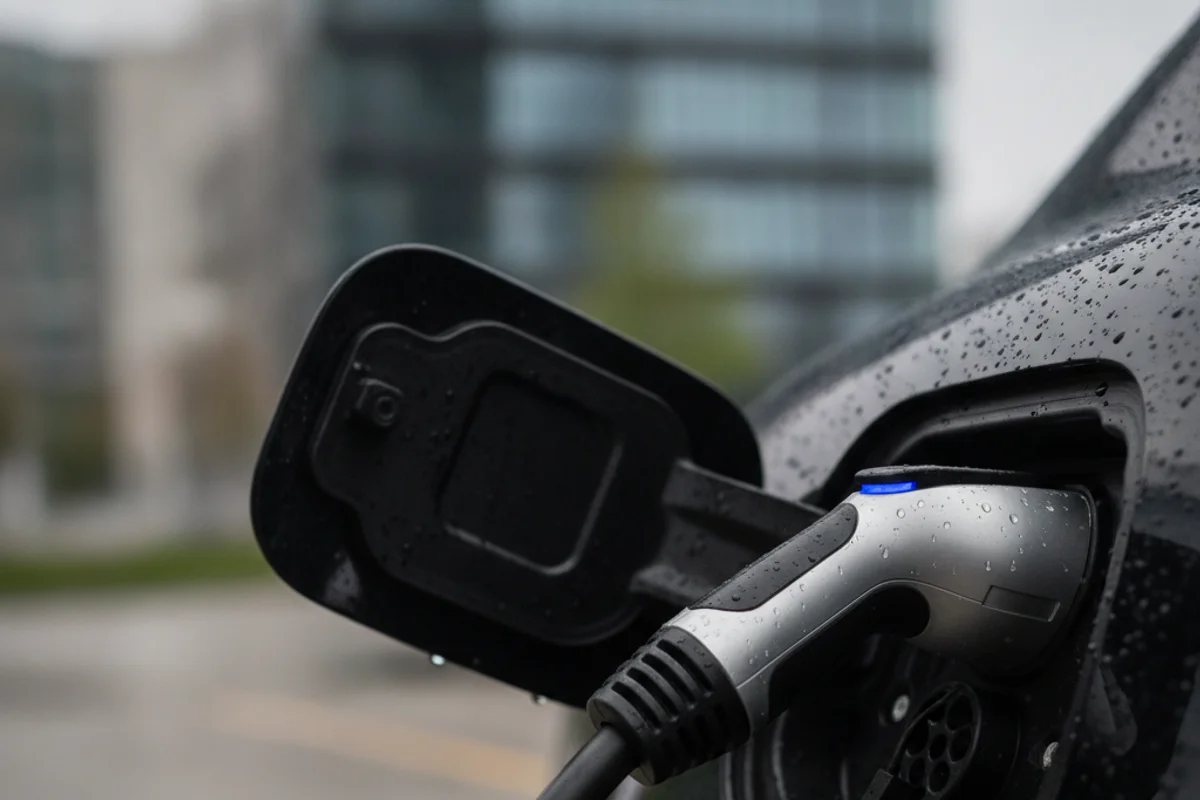
DC fast charging is where the headline numbers come from. The original Level 3 hardware used an off-vehicle power converter, which is the engineering reason fast chargers can move 50 to 350 kW into the battery instead of the 7 to 11 kW a home AC charger handles. A 10-to-80% session takes anywhere from 20 to 45 minutes depending on which charger and which car you've paired.
The binding constraint is almost always the vehicle's onboard charger limit. A 350 kW station does not magically push 350 kW into a car designed to accept 150. The station is a faucet. The car is the cup.
Gear worth having
As an Amazon Associate, ThinkEV earns a small commission from qualifying purchases — at no extra cost to you.

Portable Level 2 EV Charger (40A, NEMA 14-50)
Throw it in the trunk and charge anywhere with a 240V outlet. 40A portable with NEMA 14-50 plug. Your road-trip insurance policy.
As an Amazon Associate, ThinkEV earns from qualifying purchases — at no extra cost to you.
Level 1 and Level 2: What Home Charging Actually Delivers
Level 1 is the wall outlet your toaster uses. A standard 15-amp 120V circuit delivers around 1.4 kW after the EVSE's safety margins, which adds 8 to 12 kilometres of range overnight. This is not a serious home-charging strategy for a full EV, it is a backup option for the night your Level 2 hardware throws a fault.
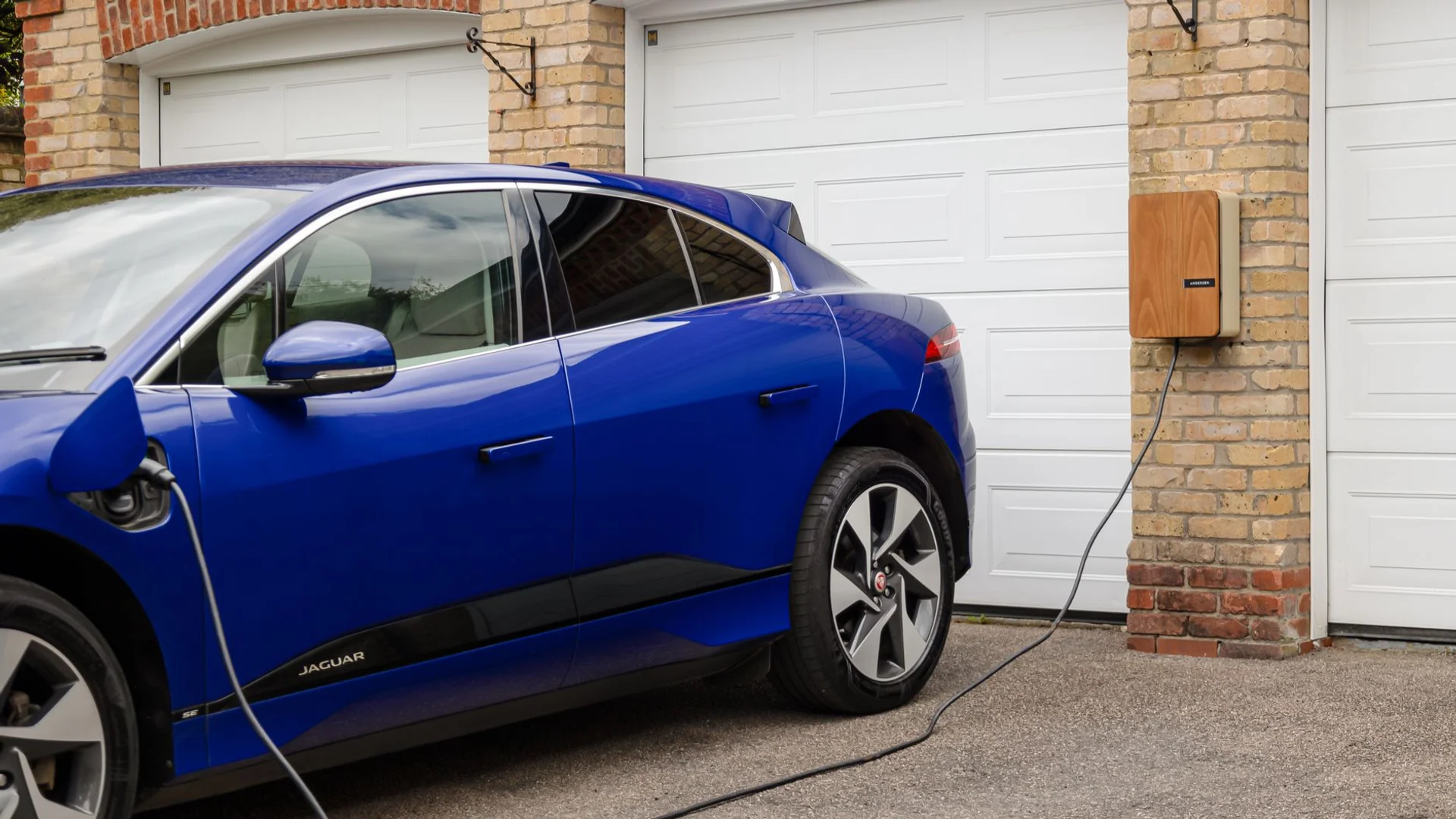
Level 2 is the real answer. A 32-amp dedicated 240V circuit delivers 7.7 kW, which fills a 60 kWh battery from 20% in roughly 6 to 7 hours. A 48-amp circuit on a 60-amp breaker delivers 11.5 kW and cuts the same session to 4 to 5 hours. For the install math, the panel-capacity question matters more than the headline charger spec.
Here is the wrinkle most buyers miss: the vehicle's onboard AC charger has its own ceiling. A VW ID.Buzz LWB or a Kia EV4 accepts 11 kW maximum. Plug either into a 48-amp circuit, and you still charge at 11 kW, the car will not pull the extra power. Pay for the bigger circuit anyway only if you plan to switch vehicles or want headroom for a second EV. A 32-amp install handles every current passenger EV's onboard charger limit without leaving capacity on the table.
The objection here, fairly raised, is that future-proofing matters: the next car might accept 19.2 kW, and a 48-amp circuit costs maybe 15% more at install than a 32-amp one but five times more after the panel and conduit are sealed up. Concede that. If your panel has headroom and your electrician is already in the garage, oversize. If you are choosing between spending the extra $1,500 on the circuit or on a snow tire set, the 32-amp circuit does not bottleneck a single passenger EV sold in Canada in 2026.
The iZEV federal rebate has historically covered the vehicle, not the EVSE; provincial programmes vary. Check the current Natural Resources Canada incentive list before committing, the rebate landscape shifts every fiscal year, and the dollar figure on a website published last March may not be the dollar figure on offer this week.
For Canadian winter homeowners, the case for hard-wired Level 2 over a plug-in unit is durability, not speed. A breaker that lives outside the panel, in a garage that hits -25°C, has a harder life than the spec sheet acknowledges. The 2026 round-up of cold-rated Level 2 units covers which enclosures hold up.
DC Fast Charging: Speed Bands, Acceptance Rates, and the 20–80 Rule
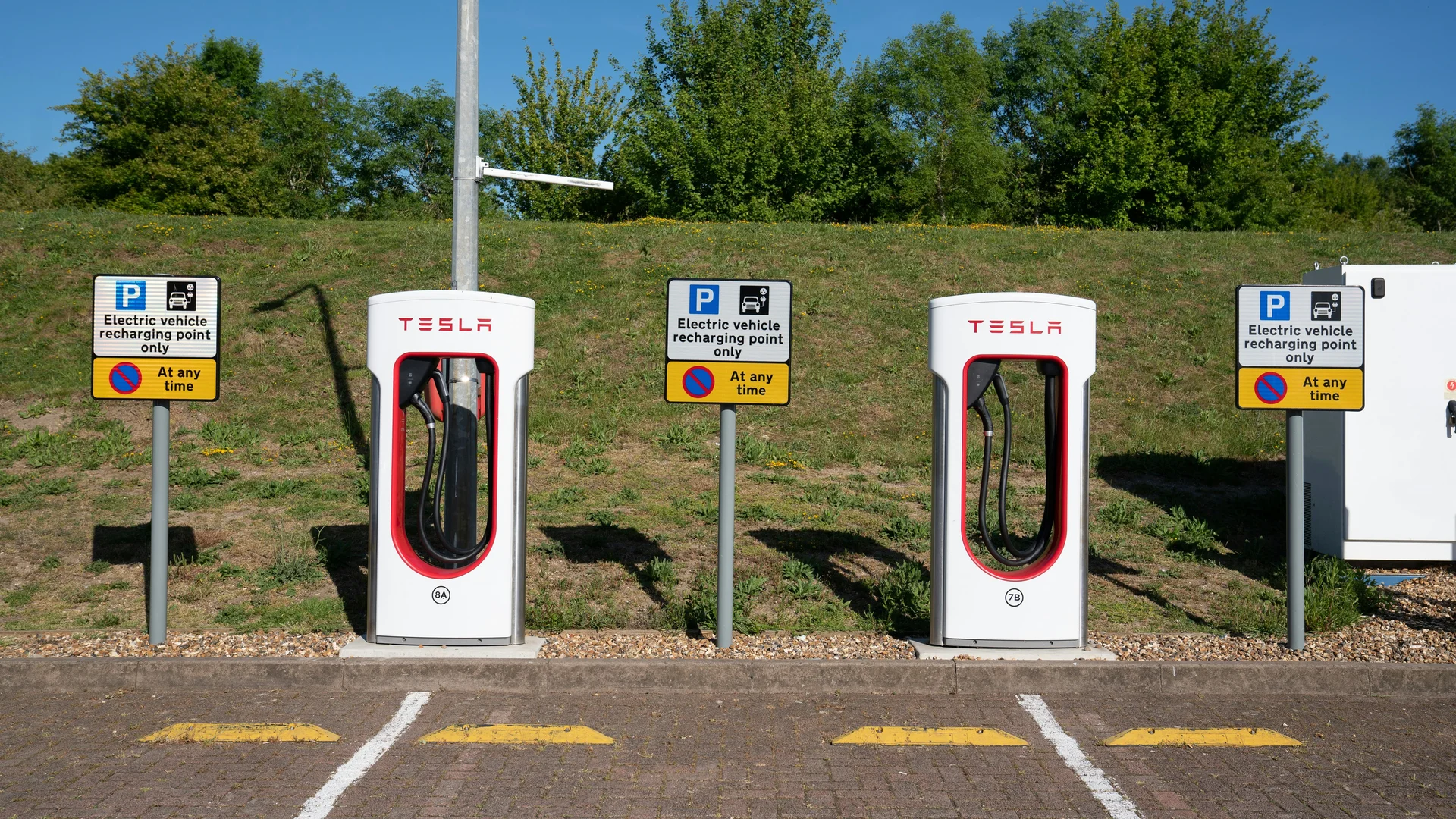
A 50 kW DC fast charger is the floor of the public network. On a 77 kWh pack, a 10-to-80% session takes 75 to 90 minutes. That is a lunch stop, not a coffee stop. Most of FLO's older Quebec and Ontario corridor installs sit at this speed; newer Petro-Canada and IONNA sites push higher.
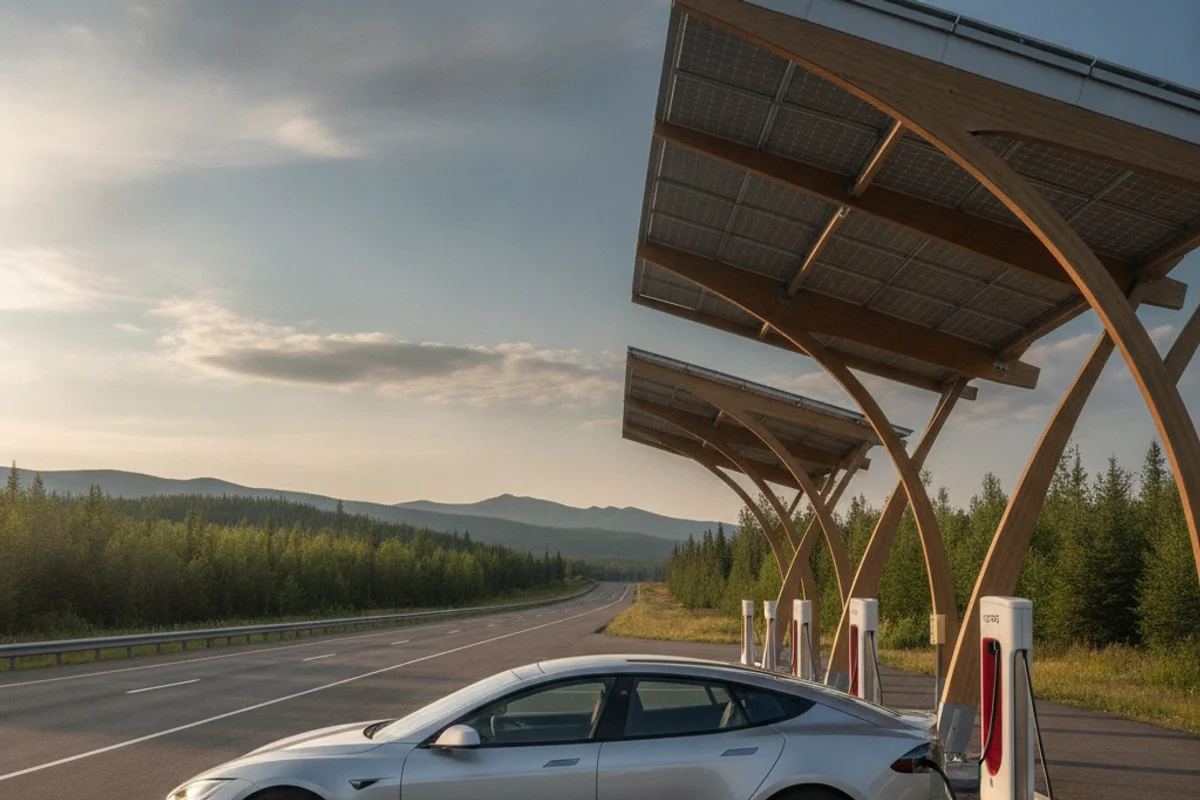
A 150 to 200 kW charger is the current sweet spot. The same 77 kWh pack hits 10-to-80% in roughly 30 to 40 minutes. The VW ID.Buzz peaks at 170 kW and lands a 10-to-80% session at about 30 minutes, the realistic window for a stretch, a coffee, and a washroom break before the dashboard tells you to unplug.
The headline-grabbing 800-volt architectures, the Kia EV6, the Hyundai Ioniq 6, the Porsche Taycan, accept up to 350 kW at compatible stations. The EV6's 800V pack hits 10-to-80% in roughly 18 minutes at a compatible post. Plug a 400-volt car into the same 350 kW station and it will draw 100 to 150 kW. The station does not care; the car's voltage architecture is the gate. The 800V cars are not faster because of marketing, they are faster because moving electrons at higher voltage means less heat, less cable stress, and a flatter charging curve.
Compare two real cars at the same station for the practical contrast. A Kia EV6 GT-Line on a 350 kW post finishes a 10-to-80% session in 18 minutes. A Nissan Leaf Plus with a 62 kWh CHAdeMO pack on the same forecourt, assuming a CHAdeMO plug still exists, which is increasingly the assumption that bites, manages 40 to 60 minutes for the equivalent state-of-charge window. Same coffee shop. Different planet. The architecture difference compounds over a four-stop road trip into roughly two hours of waiting-room delta.
Gear worth having
As an Amazon Associate, ThinkEV earns a small commission from qualifying purchases — at no extra cost to you.

Heavy-Duty Outdoor Timer (Preconditioning)
Schedule your Level 1 charger or block-heater outlet, rated for the outdoors. Warm the battery on grid power before you leave, not on your range.
As an Amazon Associate, ThinkEV earns from qualifying purchases — at no extra cost to you.
The 20-to-80% convention exists because the charging curve tapers above 80%. The battery management system protects the cells by tapering current as voltage approaches the cell limit. The last 20% of capacity routinely takes as long as the first 60%. On a road trip, charging to 100% costs you more time than driving the extra distance to the next station. Every lithium-ion EV's charging curve tapers above 80% for the same chemistry reason.
The exception worth watching is BYD's Blade 2.0 chemistry, which the company claims will run a 10-to-80% session in 4 to 6 minutes on a 1,500 kW post and roughly 18 to 22 minutes on a current 350 kW post. The 1,500 kW post does not exist in Canada and will not exist here in 2026. The 350 kW number is the one to mark on the calendar: if BYD ships a Blade 2.0 vehicle into Canada by Q4 2027 and it hits 18 minutes at an existing Electrify Canada post, the 800V architecture stops being the speed ceiling. Until then, the 20-to-80 rule is not a myth, and it is not battery-coddling superstition. It is arithmetic.
Gear worth having
As an Amazon Associate, ThinkEV earns a small commission from qualifying purchases — at no extra cost to you.

Grizzl-E Classic Level 2 EV Charger (40A)
Canadian-made and rated for minus 40C winters. 40A / 9.6 kW, NEMA 14-50, indoor/outdoor, 24-ft cable. The charger built for Canadian weather.
As an Amazon Associate, ThinkEV earns from qualifying purchases — at no extra cost to you.
Cold Weather, Battery Age, and the Variables That Shift Every Number
Below -10°C, lithium-ion cells move ions sluggishly. The battery management system caps charging current to protect the cells from lithium plating, which is the failure mode that permanently kills capacity. A 150 kW peak-rated charging session in February might average 75 kW. A session that takes 21 minutes at room temperature stretches to 42 minutes in the cold, 21 extra minutes per stop, multiplied across a four-stop day, is a different trip.
The fix is preconditioning. Most current EVs will warm the pack en route to a fast charger if you set the station as the navigation destination, the car's thermal management heats the battery to its ideal acceptance temperature so the session starts at full speed instead of building up to it. Preconditioning is the difference between a winter road trip that works and a winter road trip that becomes a series of waiting-room sessions.
Battery degradation has a more modest impact on charging time than most owners assume. A pack that has lost 10% of original capacity charges at roughly the same rate as when new, the cells accept current the same way; there are just fewer of them effectively storing it. Once capacity drops below 80% of original, typically 8 to 12 years for a properly thermally-managed pack, the charging curve flattens earlier and the 20-to-80 session lengthens. Most owners trade the car before this becomes a daily annoyance.
Charging from 0% is rare in practice. EV drivers do not run packs to zero; the dashboard warnings and range anxiety kick in around 15 to 20%. The headline "10 minutes for 200 km" claims usually assume a session starting around 10 or 20%, not at empty. The real-world session is almost always shorter than the empty-to-full headline number, because nobody actually charges that way.
Gear worth having
As an Amazon Associate, ThinkEV earns a small commission from qualifying purchases — at no extra cost to you.

Lectron Level 2 J1772 Charger (40A, WiFi)
Smart WiFi charger with real-time energy monitoring. 40A / 9.6 kW, J1772 with a NEMA 14-50 plug, schedule charging right from your phone.
As an Amazon Associate, ThinkEV earns from qualifying purchases — at no extra cost to you.
How to Plan Around Charging Time Without Overcomplicating It
For a daily driver in a Canadian city or suburb, charging time is a non-issue. Overnight Level 2 makes the question disappear. The car arrives home below half, plugs in, and is at 80% by morning. The "how long does it take" framing assumes a gas-station mental model where you stop dedicated time to refuel. Home charging breaks that model. Park, plug, walk away, wake up to a full pack.
For road trips, the math sharpens. Target 20-to-80% sessions at 150 kW or higher stations along your corridor. Budget 25 to 35 minutes per stop, long enough for coffee, a snack, and the washroom. If you are routing through northern Ontario, northern Quebec, or anywhere east of Edmonton off the Trans-Canada, plan an extra hour: the corridor density of 150 kW+ stations drops sharply outside the major highway routes, and you will land on 50 kW sites that need 75 to 90 minutes per session. The current state of Canada's charging infrastructure is improving, but unevenly.
The reality of the Canadian public network: FLO and BCAA have built dense Level 2 destination-charging coverage that is useful while you're at a restaurant or hotel and useless if you need to add 300 km in an hour. Petro-Canada's Electric Highway, IONNA's joint-venture sites, Tesla's Supercharger network (now CCS-open to non-Tesla vehicles on most sites), and the regional networks fill the DC fast-charge map. The corridor reality is dense between Windsor and Quebec City, dense between Vancouver and Hope, thin everywhere else.
The real question is when charging happens. For most drivers, the answer is "while parked, mostly at home, occasionally on a road trip." A weekly commute of 250 kilometres, on a 60 kWh battery, with a 7.7 kW home charger, means plugging in for one overnight session per week. The car spends 99% of its life parked anyway. The argument that EVs are inconvenient because charging is slow misreads which clock the inconvenience runs on.
Track one number through 2027 to know whether the calculus has shifted: median time for a 10-to-80% session on Canada's top-twenty most-used corridor stations, as reported in NRCan's annual EV infrastructure summary. If that median drops below 22 minutes, which requires both 800V vehicles becoming majority of new sales and 350 kW posts becoming majority of installs, the 20-to-80 rule becomes a habit instead of a constraint, and road-trip planning collapses to "stop when you're hungry." Until that median moves, the number to plan around is your weekly distance, divided by the kilometres-per-hour your home charger delivers. For most Canadian drivers, that arithmetic comes out to one overnight session per week. The headline DC fast-charging figures matter on the road trip. They do not matter on Tuesday.
Gear worth having
As an Amazon Associate, ThinkEV earns a small commission from qualifying purchases — at no extra cost to you.

ChargePoint Home Flex Level 2 Charger (50A)
Premium 50A / 12 kW charger with the best app ecosystem. Hardwired or NEMA 14-50, with real-time energy tracking and smart scheduling.
As an Amazon Associate, ThinkEV earns from qualifying purchases — at no extra cost to you.

Founder & Chief Editor
Vlad Pereira is the founder and chief editor of ThinkEV.ca, the Canadian electric-vehicle publication he writes and edits from Courtenay, British Columbia. He covers EV pricing, federal and provincial rebates, charging costs, and the Chinese manufacturers now entering Canada, from the buyer's side rather than the press-fleet side. ThinkEV is a venture of Vlad Pereira Online; his writing on health, income and the long game lives at vladpereira.com.
Frequently asked questions
Does a bigger charger mean I charge faster at home?
Why do fast chargers at the same station charge cars so differently?
Is charging to 100% worth it on a road trip?
What's realistic from a 50 kW public charger, the older FLO stations?
Can a Level 1 outlet work as a permanent home setup?
More EV & road-trip finds
Affordable upgrades worth a look — tap any to check the price on Amazon.
 ★ 87
★ 87Car Window Sun Shades for Kids (4-Pack)
View on Amazon ★ 68
★ 68WeatherTech FloorLiner for Tesla Model 3
View on Amazon ★ 12,051
Windex Electronics Screen Wipes
View on Amazon ★ 55
★ 55LED Car Door Logo Projector Light
View on Amazon ★ 900
★ 900Personalized Photo Car Air Freshener
View on Amazon ★ 979
★ 979Leather Headrest Purse Hook
View on Amazon ★ 848
★ 848Coiled USB-C to USB-C Car Cable (2-Pack)
View on Amazon ★ 121
★ 121Foldable Windshield Sun Umbrella
View on AmazonRead, Plan, Then Stay Current
Explore our expert articles to understand incentives and ownership costs, use the map to pressure-test charging reality, then subscribe so new EV coverage comes straight to you.
Continue Reading
How Long Does It Take to Charge an Electric Car? (2026 Guide)
Public EV Charging in Canada: Networks and Payment
Public EV Chargers in Canada: 33,000 Now, 447,000
Dual EV Chargers in One Garage: Load Management
How Charging Networks Decide Stall Count Per Site