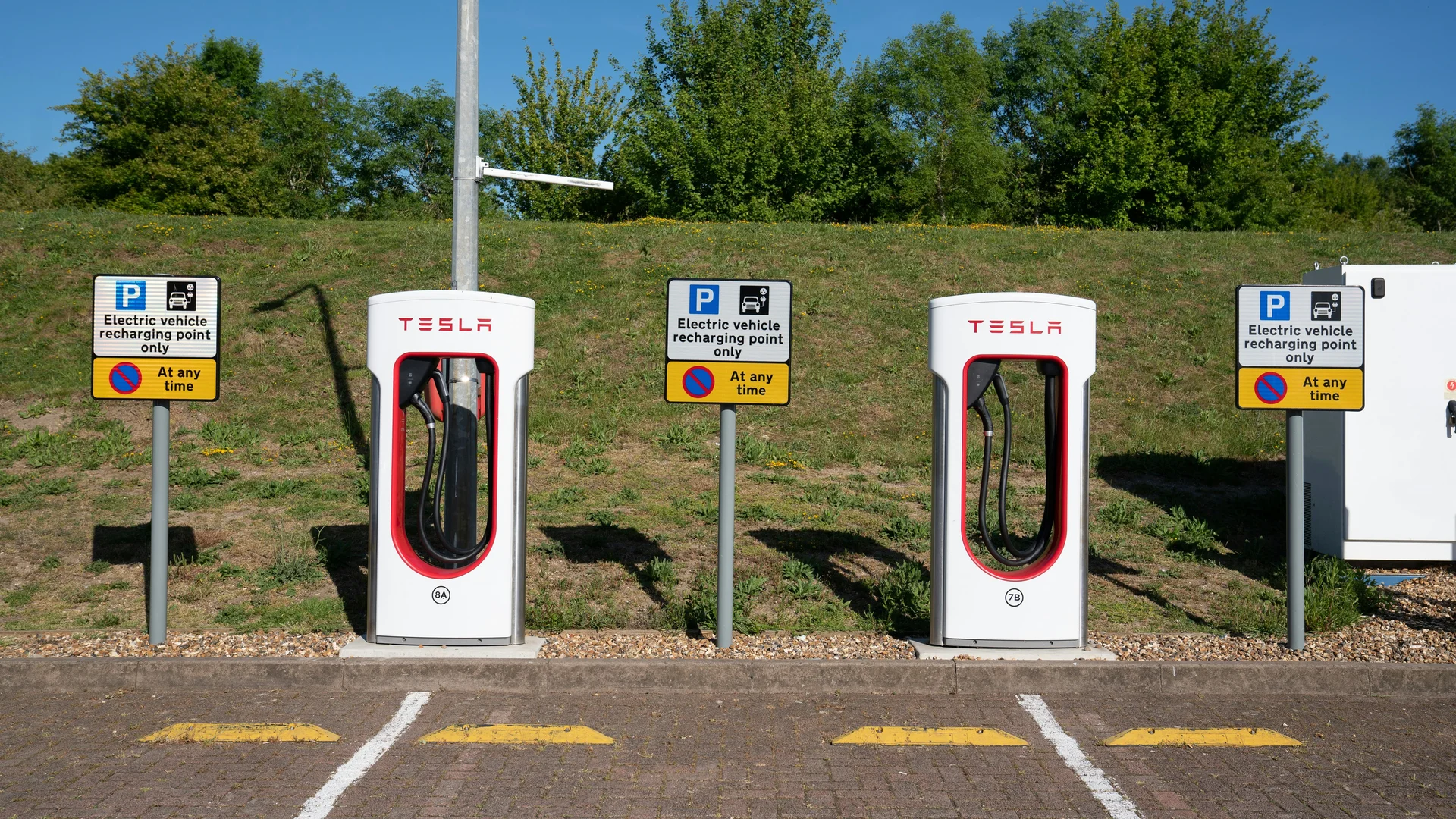
Natural Resources Canada puts the current public network at roughly 33,000 chargers. The 2035 target is 447,000. That is not a rounding error. It is a factor of thirteen, and the gap sits between what Canadians can plug into today and what the country's own modelling says mass EV adoption will demand.
The build rate is accelerating. It is also not accelerating fast enough. What follows puts a number on the gap, breaks down what the headline count actually measures, and names the two thresholds worth watching in 2026.
Key takeaways
- Canada needs 447,000 public chargers by 2035, but current 17.4% growth only gets us to 137,000.
- DC fast chargers are expanding at 33.6% annually, the only segment that enables actual highway travel.
- The February 2026 federal announcement funds 8,000 stalls against a remaining gap of 414,000.
- One-third of Canadian households have no driveway, making public charging non-optional for roughly 4 million renters.
- The '33,000 vs 16,000 charger' headline discrepancy is definitional, stations vs. connectors, not a data error.
Quick Answer: Where Canada's Public Charging Network Stands Right Now
The working figure to carry into any conversation about Canadian EV infrastructure is roughly 33,000 public charging points, per Natural Resources Canada's most recent count. The network is growing at 17.4 per cent year-over-year, with DC fast chargers, the segment that actually enables long-distance travel, expanding at 33.6 per cent, meaningfully outpacing Level 2 installations.
A quick caveat on the count itself. Some databases cite closer to 16,000 stations. Both numbers can be right at the same time: a station is a physical location, a connector is a plug, and a single station typically carries multiple connectors. The federal indicator tracks stations; industry trackers often report connectors. When you see "33,000" in one headline and "16,000" in another, that is almost always what is happening, not a data error, a definitional one.
The scale of federal commitment is worth naming precisely:
- More than $500 million already committed to FLO, Parkland and JOLT, enabling up to 5,400 new, public, fast charging stations
- An additional $1 billion added to the Canada Infrastructure Bank's Charging and Hydrogen Refuelling Infrastructure Initiative
- An $84.4 million February 2026 round adding 8,000-plus stalls across 122 projects, on top of the Zero Emission Vehicle Infrastructure Program's existing base of 30,000-plus funded charging points
- Up to $5,000 in EV Affordability Program savings on the demand side
The pipeline is real. Whether it is enough is a different question, and the arithmetic below is not kind.
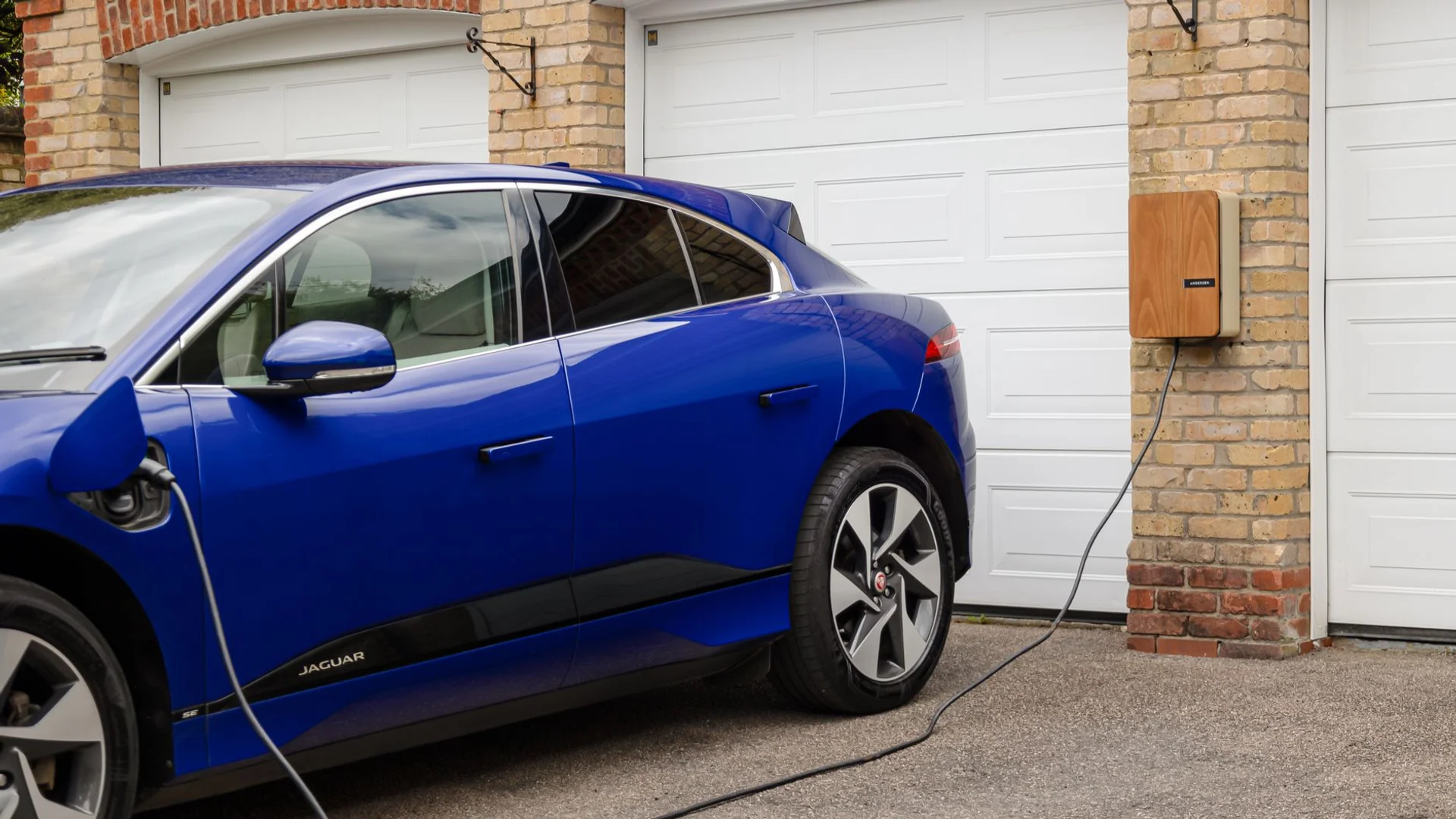
A common objection to numbers like these is that Canadians overwhelmingly charge at home, so the public-network math is overblown. Home charging is genuinely the base case, Statistics Canada has been tracking household charger ownership on a two-year cadence in table 38-10-0173-01, and the direction of travel there is up. But the objection collapses the moment you consider the roughly one-third of Canadian households in apartments and condos with no assigned parking, and the highway corridors that no amount of overnight residential charging can substitute for. The public network is not competing with the driveway. It is the piece that decides whether the driveway math even matters to a renter in Mississauga.
Level 1, Level 2, DC Fast: What the Numbers Actually Measure
The headline "33,000 chargers" hides three very different pieces of hardware doing three different jobs.
Level 1 is a household outlet. It adds a handful of kilometres of range per hour and is essentially only useful overnight for a plug-in hybrid or a short-commute BEV. Level 2 is the 240-volt workhorse, the pedestal at a grocery store, the wallbox in a condo garage, the destination charger at a hotel. It adds roughly 40 kilometres of range per hour. This is not a speed. It is a philosophy. Level 2 is where you leave the car for hours and come back to a fuller battery.
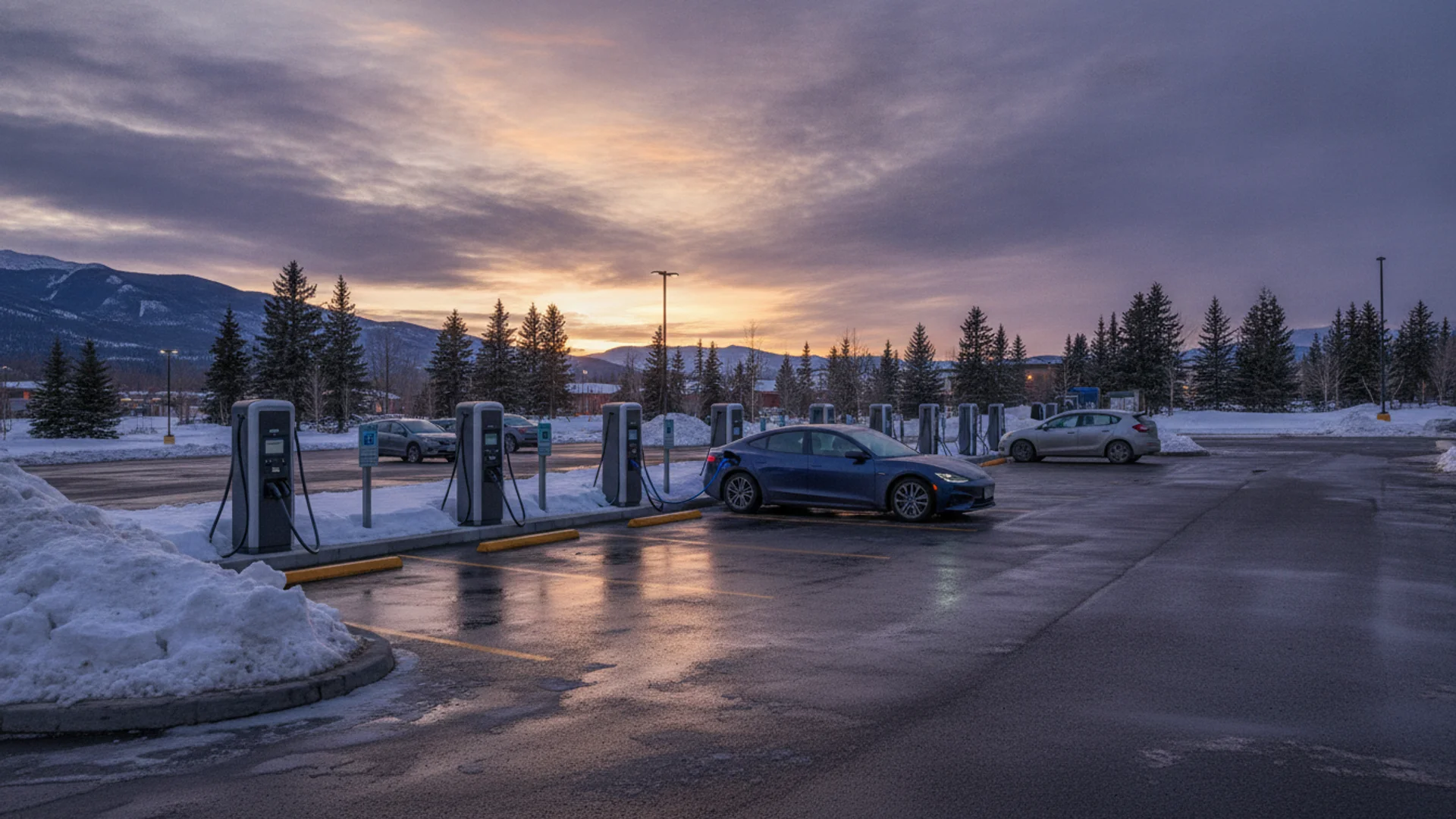
DC fast charging is the only category that behaves like refuelling. A 150 kW cabinet can move a modern EV from 20 to 80 per cent in around 25 minutes; a 350 kW cabinet does it faster on cars that can accept the peak. This is the segment that turns an EV from a commuter appliance into a road-trip vehicle. It is also the segment growing fastest in Canada, 33.6 per cent year-over-year, and the one with the highest capital cost per stall, which is why it depends most heavily on federal ZEVIP dollars to pencil out on lower-traffic corridors.
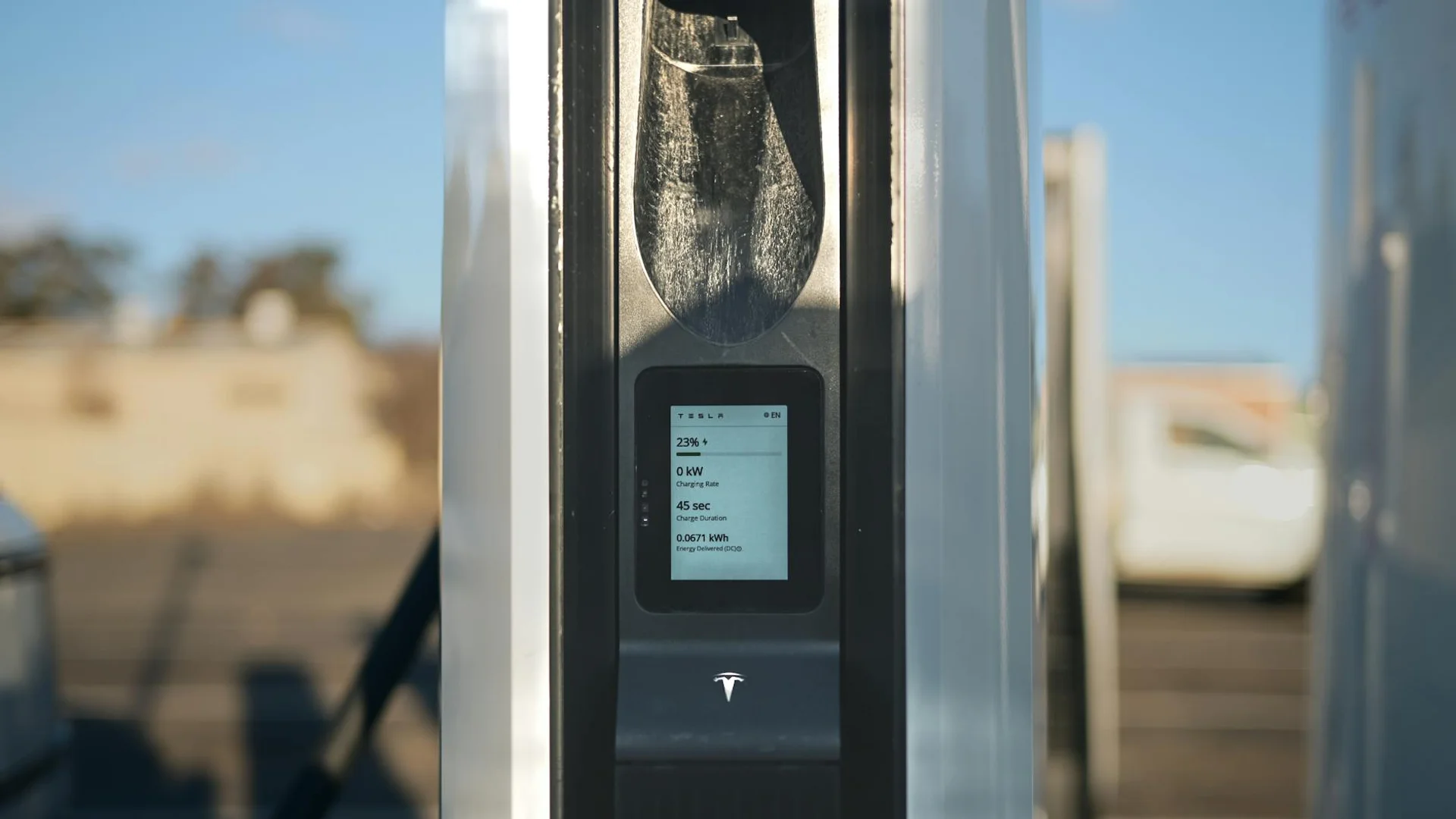
The station-versus-connector distinction matters more than it looks. A 12-stall DC fast site counts as one station in the federal indicator and as twelve plugs on the ground. A policy dashboard that tracks stations understates useful capacity; one that tracks connectors overstates redundancy at any single location. Neither number tells you the metric that actually determines your day: is a working plug of the right type available when you arrive. Global benchmarks are a useful sanity check here, public charging accounted for approximately 46 per cent of global EV charging infrastructure, which puts Canada's mix roughly in line with international norms and confirms the residential-plus-public split is not a national quirk to be engineered away. For the deeper breakdown of what a "reliable" plug even means in Canadian conditions, the reliability problem behind Canada's public charger count is the piece to read.
Gear worth having
As an Amazon Associate, ThinkEV earns a small commission from qualifying purchases — at no extra cost to you.

Lectron Level 2 J1772 Charger (40A, WiFi)
Smart WiFi charger with real-time energy monitoring. 40A / 9.6 kW, J1772 with a NEMA 14-50 plug, schedule charging right from your phone.
As an Amazon Associate, ThinkEV earns from qualifying purchases — at no extra cost to you.
Provincial Distribution: Where the Chargers Are and Where They Aren't
British Columbia and Ontario carry the bulk of Canadian public charging infrastructure. Quebec sits third, driven largely by Hydro-Québec's Electric Circuit and FLO's home-province density. The Prairies and Atlantic Canada trail on a per-capita basis, and the territories are effectively a rounding error at the national level.
BC Hydro's fast-charge corridor along the Trans-Canada and the Sea-to-Sky is the closest thing Canada has to a spine network. It is not complete, but it is coherent, the stations are spaced with the physics of a real EV in mind, not marketing. FLO covers the urban clusters in Quebec, Ontario, and BC. Petro-Canada's EV Fast Charge network runs coast-to-coast along the Trans-Canada with 50 to 200 kW cabinets. Tesla's Supercharger network, now open to non-Tesla vehicles at select sites via NACS adapters, remains the most reliable single operator by a wide margin.
The rural and northern gaps are structural rather than temporary. A DC fast station serving five vehicles a week does not amortize its build cost, and the federal ZEVIP program exists precisely because those sites do not exist under commercial logic alone. Provincial utilities have picked up some of the slack, BC Hydro in particular, but the map still has holes you can drive a Highway 16 through. If you want the province-by-province math on what it actually costs to keep a car charged in each region, the full provincial charging-cost breakdown is the reference.
Gear worth having
As an Amazon Associate, ThinkEV earns a small commission from qualifying purchases — at no extra cost to you.

TP-Link Kasa Smart Plug with Energy Monitoring
Track exactly how much electricity your Level 1 charger uses and schedule it for off-peak hours. Know your real cost per kWh.
As an Amazon Associate, ThinkEV earns from qualifying purchases — at no extra cost to you.
The 2035 Math: 33,000 to 447,000 Is Not a Gradual Slope
Here is where the numbers stop being comfortable.
A 2024 estimate prepared for Natural Resources Canada put the requirement at approximately 447,000 public charging and 11.9 million at home charging ports by 2035, in a scenario where EVs accounted for 100 per cent of new car sales, a projection that remains instructive for a future where three in four new cars sold need to be charged.
Start from 33,000 today. Compound at the current 17.4 per cent year-over-year growth rate. Nine years of that gets Canada to roughly 137,000 chargers by 2035. That is triple the current network. It is also less than a third of the requirement. To hit 447,000 from 33,000 in nine years requires sustained growth closer to 34 per cent annually, roughly double the current pace, every year, for nearly a decade.
The $84 million February 2026 announcement funds 8,000 stalls. The math on the full gap is closer to 414,000 additional public stalls. At the ZEVIP program's typical cost-share, closing that gap implies public and private spending in the tens of billions over the next nine years. The $84 million is real money and a real signal, but as a share of what the modelling implies, it is under two per cent of the shortfall.
The optimistic reading is that growth rates in infrastructure build-outs rarely stay linear once industrial capacity catches up, Norway hit similar inflection points after crossing 20 per cent EV market share, and Canada is roughly there now on new light-duty sales. The pessimistic reading is that Norway is a country of five million people with a single national grid operator and a sovereign wealth fund, and Canada is 40 million people spread across ten provincial grid regulators with capital budgets already committed elsewhere. Both readings can be true. Structural growth acceleration is possible but not automatic, and the current federal pipeline does not close the gap on its own math.
Demand policy is doing its job. The EV Affordability Program lets drivers save up to $5,000, aimed at making EVs more accessible for Canadians to go electric, and provincial rebates in Quebec and BC layer on top. Supply-side infrastructure is the limiting variable. Without supply acceleration, the charger network becomes the ceiling on adoption rather than the enabler of it, and the ceiling starts pressing on demand well before 2035.
Gear worth having
As an Amazon Associate, ThinkEV earns a small commission from qualifying purchases — at no extra cost to you.

Grizzl-E Classic Level 2 EV Charger (40A)
Canadian-made and rated for minus 40C winters. 40A / 9.6 kW, NEMA 14-50, indoor/outdoor, 24-ft cable. The charger built for Canadian weather.
As an Amazon Associate, ThinkEV earns from qualifying purchases — at no extra cost to you.
How to Actually Find a Charger, and What to Do When the App Lies
Three tools cover the practical case in Canada: PlugShare, ChargeHub, and the federal locator built on Natural Resources Canada's data. PlugShare has the strongest user-review layer, which matters because network operators self-report uptime and their numbers are frequently optimistic. ChargeHub is stronger on Canadian network coverage specifically. The federal locator is authoritative on the fact of installation, less so on whether the stall is working today.
Connector fragmentation is the hidden usability tax. The North American Charging Standard, the unified EV charging standard across North America, whose physical connector Tesla introduced and originally called the Tesla charging connector, is the direction of travel, but the transition is incomplete. A 2026 CCS-equipped car pulling into a NACS-only station needs an adapter. A NACS-native car at a legacy CCS station needs the reverse. The station count on your app does not tell you which of those stations your specific car can actually use without a $200 accessory in the glovebox.
Reliability data is the third catch. Canadian network uptime figures are not publicly standardized, operators report to their own methodology, if they report at all. PlugShare's user check-ins are the closest thing to a public reliability signal, and they are downstream of frustration rather than a real-time feed. The practical rule that survives contact with the road: plan hard around DC fast stations on long trips, keep a fallback in mind at every planned stop, and treat Level 2 as opportunistic top-ups at destinations rather than mission-critical infrastructure. For the full argument on whether the current network is actually adequate for cross-country travel, the road-trip viability breakdown walks the numbers.
Gear worth having
As an Amazon Associate, ThinkEV earns a small commission from qualifying purchases — at no extra cost to you.

Magnetic EV Charger Plug Cover
A magnetic cap that keeps rain, road salt, and grit out of your home charger handle between sessions.
As an Amazon Associate, ThinkEV earns from qualifying purchases — at no extra cost to you.
The Threshold Worth Watching Is the Ratio, Not the Count
Canada's charging infrastructure is adequate for urban EV ownership, marginal for rural, and a genuine constraint for cross-country travel outside the Tesla network. The 17.4 per cent growth rate is real progress, the network is meaningfully better than it was three years ago on any major corridor a driver actually uses.
The metric worth tracking is not the absolute charger count. It is the ratio of public chargers to EVs on the road. That ratio has been tightening as adoption accelerates, and it is the number that determines whether the network feels abundant or scarce at 8 p.m. on a Sunday in July at a highway rest stop. The February 2026 federal posture, the ZEVIP top-up, the CIB's additional $1 billion, the continued EVAP rebate, signals that federal commitment is holding. Execution risk now sits with project delivery timelines and with technology like BYD's 1.5 MW flash charging, which could compress the per-stall throughput problem dramatically if it arrives in Canada at scale.
Two checkpoints are worth pinning to the calendar. First, the year-end 2026 public-plug total: the current trajectory implies roughly 38,000 to 39,000 chargers by December, and anything materially below 37,000 means the 17.4 per cent growth rate has already slipped. Second, delivery on the 5,400 CIB-enabled fast stations and the 8,000-stall ZEVIP round, those two commitments alone should visibly bend the DC fast segment of the federal locator by mid-2027, and their absence from the map at that point is the earliest hard signal that the pipeline is announcement-heavy rather than build-heavy. If both hold, the network stays ahead of adoption. If either slips, the 2035 gap starts closing on itself in ways the current build pace cannot recover from.
Gear worth having
As an Amazon Associate, ThinkEV earns a small commission from qualifying purchases — at no extra cost to you.

ChargePoint Home Flex Level 2 Charger (50A)
Premium 50A / 12 kW charger with the best app ecosystem. Hardwired or NEMA 14-50, with real-time energy tracking and smart scheduling.
As an Amazon Associate, ThinkEV earns from qualifying purchases — at no extra cost to you.

Founder & Chief Editor
Vlad Pereira is the founder and chief editor of ThinkEV.ca, the Canadian electric-vehicle publication he writes and edits from Courtenay, British Columbia. He covers EV pricing, federal and provincial rebates, charging costs, and the Chinese manufacturers now entering Canada, from the buyer's side rather than the press-fleet side. ThinkEV is a venture of Vlad Pereira Online; his writing on health, income and the long game lives at vladpereira.com.
Frequently asked questions
Why do headlines quote 33,000 chargers and 16,000 stations simultaneously?
Does strong home charging adoption reduce pressure on the public network?
Which provinces have the worst charging gaps right now?
What growth rate does Canada actually need to hit 447,000 by 2035?
How much federal money is committed to EV charging right now?
More EV & road-trip finds
Affordable upgrades worth a look — tap any to check the price on Amazon.
 ★ 61
★ 61Toddler Car Seat Snack and Cup Tray
View on Amazon ★ 17,839
Qifutan Vent Phone Mount (Military-Grade Clip)
View on Amazon ★ 12,051
Windex Electronics Screen Wipes
View on Amazon ★ 537
★ 537USB Star Projector Roof Light
View on Amazon ★ 4,055
6-Speed Manual Shift Knob Display
View on Amazon ★ 979
★ 979Leather Headrest Purse Hook
View on Amazon ★ 12,834
P3 Kill A Watt Electricity Usage Monitor
View on Amazon ★ 87
★ 87Car Window Sun Shades for Kids (4-Pack)
View on AmazonRead, Plan, Then Stay Current
Explore our expert articles to understand incentives and ownership costs, use the map to pressure-test charging reality, then subscribe so new EV coverage comes straight to you.
Continue Reading
Public EV Chargers in Canada: Which Count Is Right
How Charging Networks Decide Stall Count Per Site

Why Cold Weather Cuts EV Range, the Real Reasons
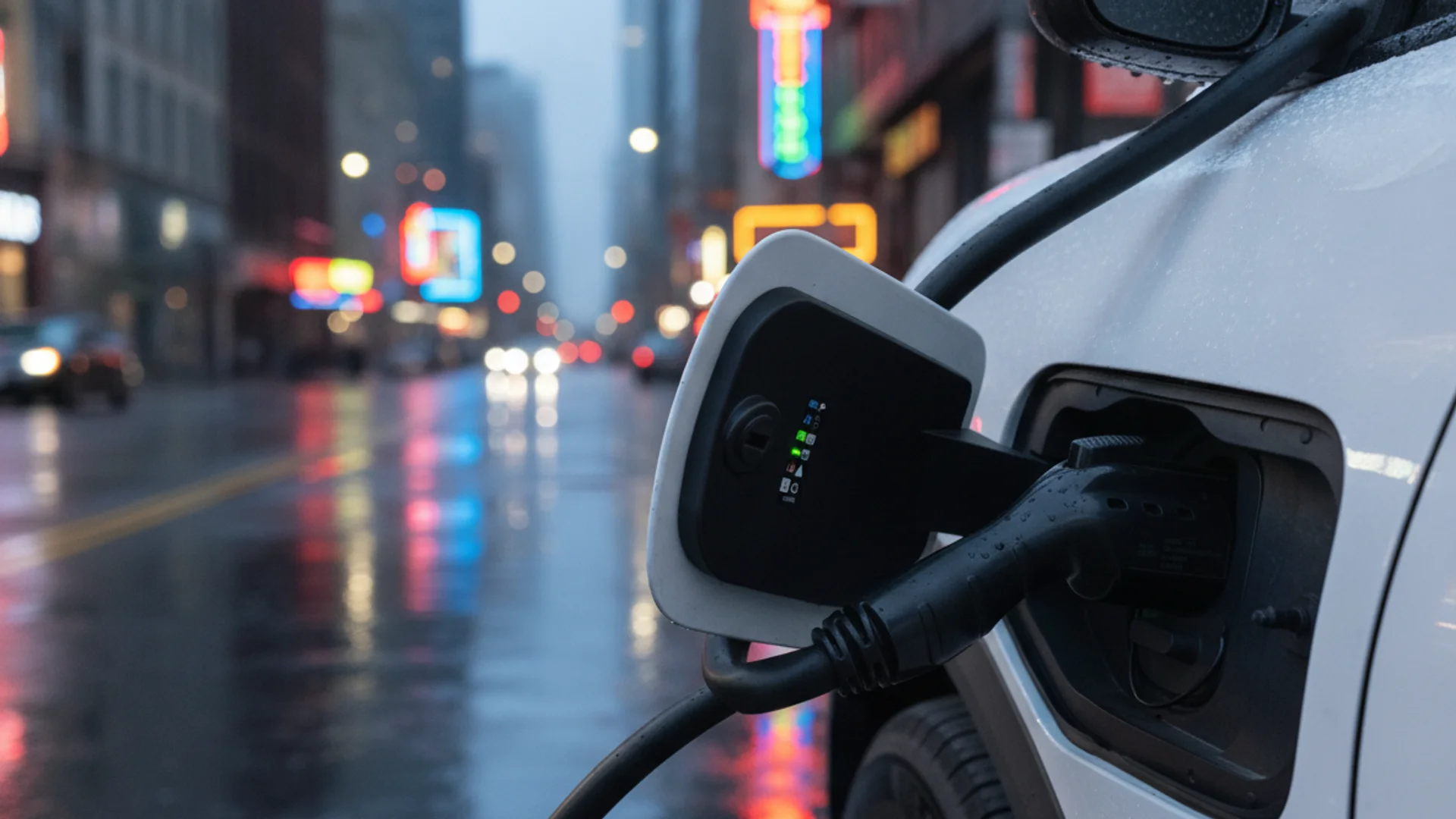
Public EV Charging in Canada: Networks and Payment
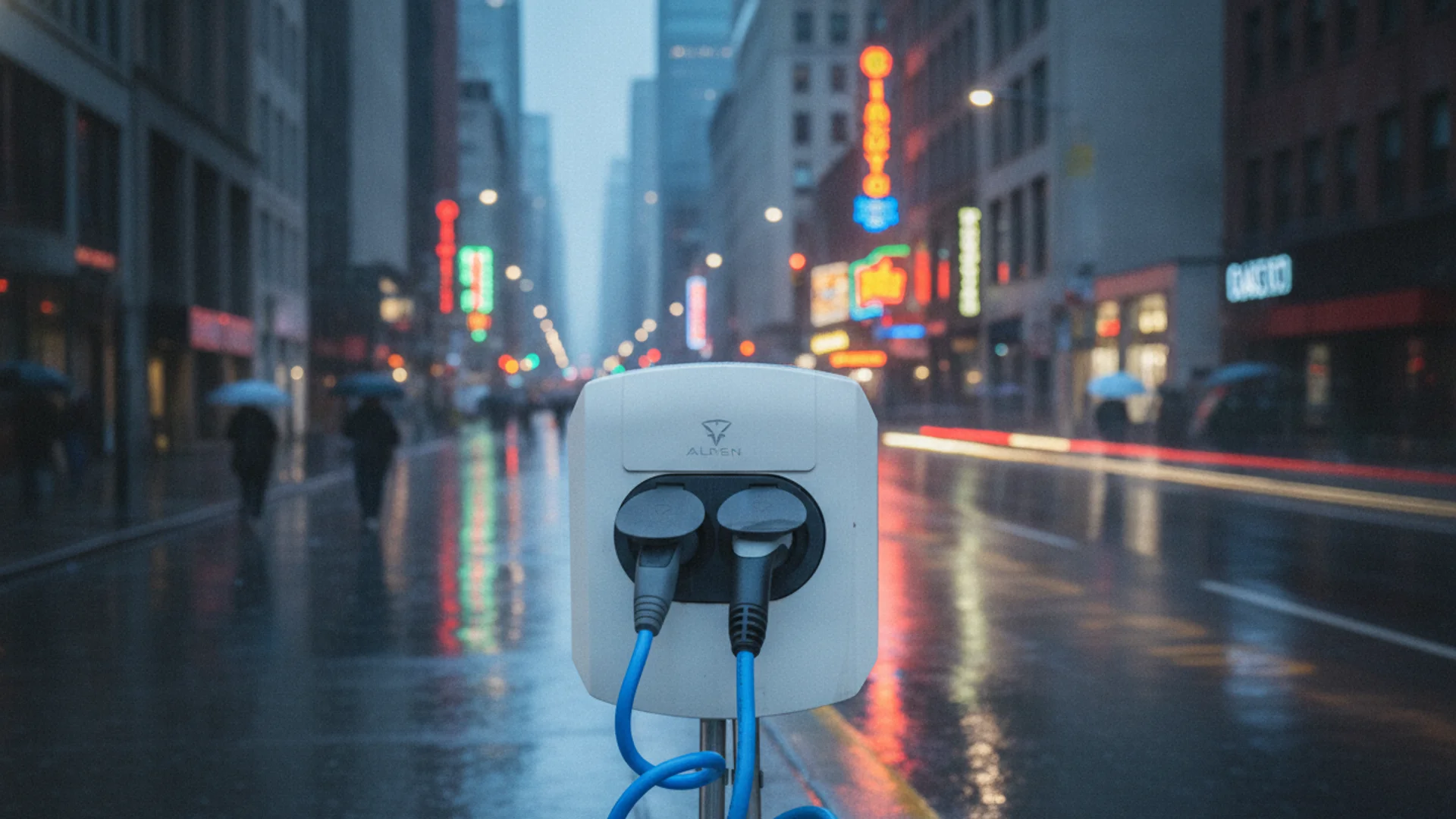
How Long to Charge an EV: The Three Numbers That Matter