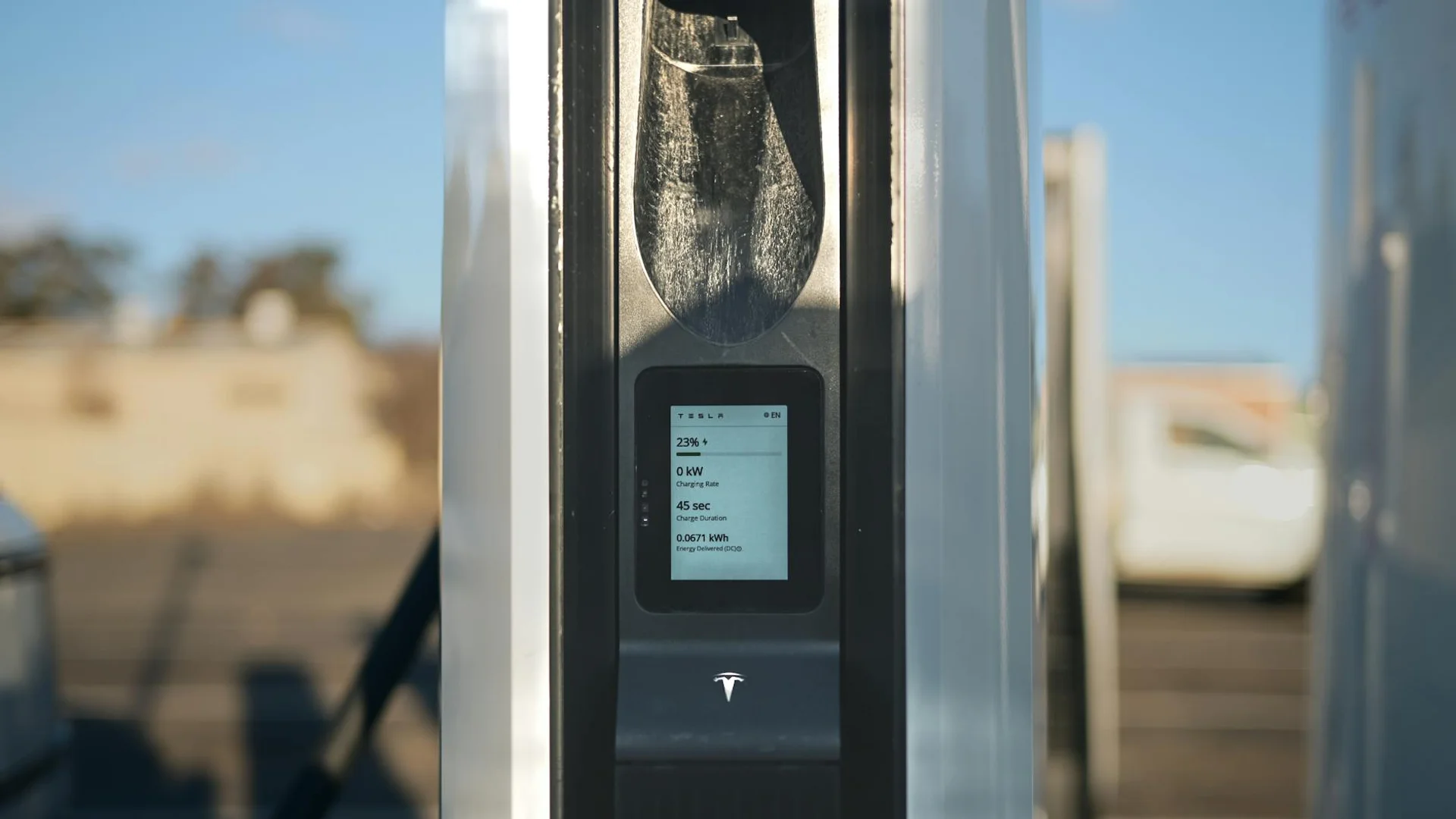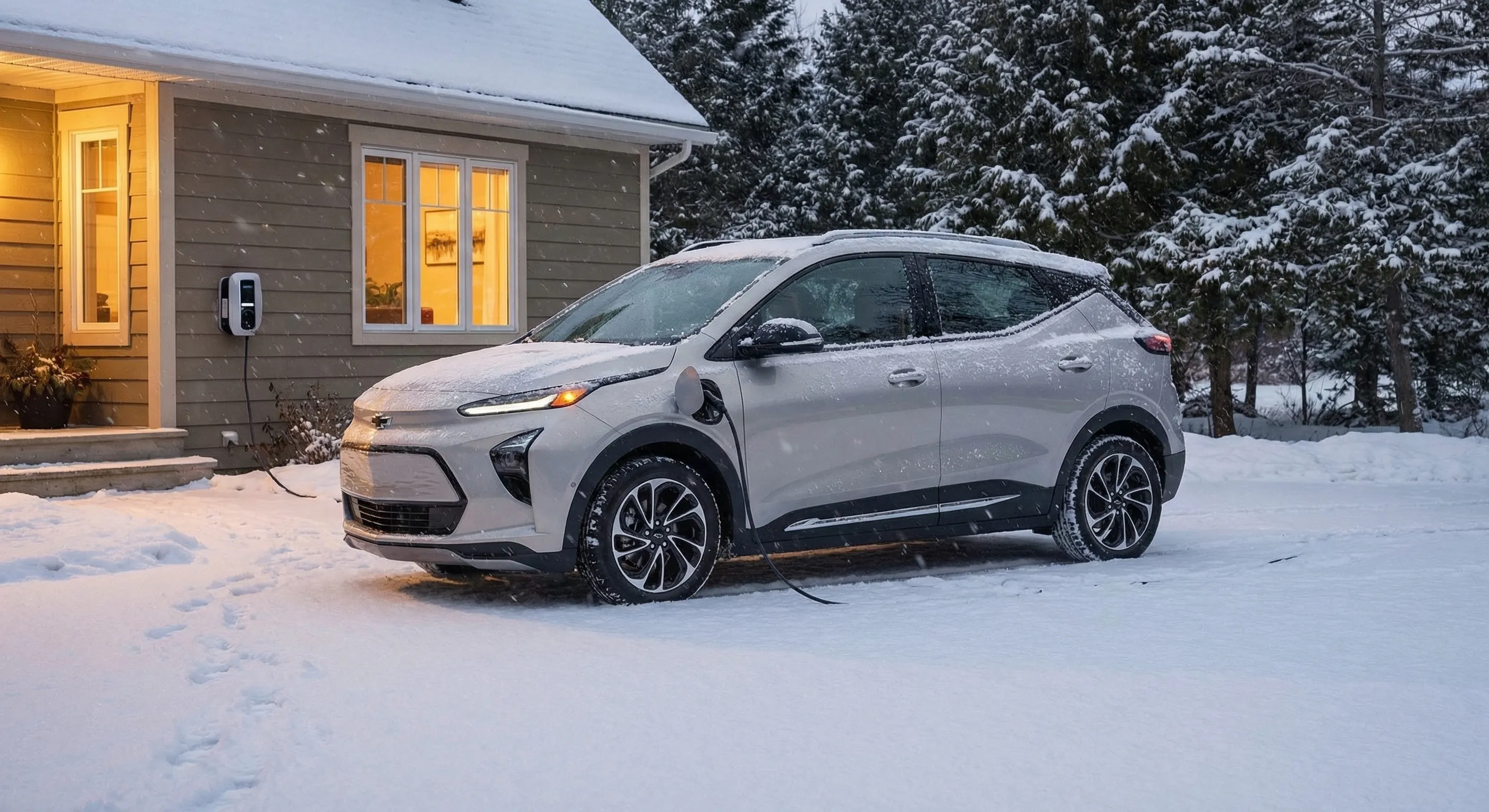
Charging is the part of EV ownership where the brochure and the daily reality diverge most. A new buyer reads "300 kW DC fast charging" on a spec sheet and pictures a fifteen-minute fill-up on every trip. A two-year owner has learned that the kW number on the charger is a ceiling, not a guarantee, that their car will hit it for maybe twelve minutes of a session, that cold weather, queue length, payment friction, and the actual cable on the actual pedestal all matter, and that the home Level 2 outlet is doing 95% of the daily work the spec sheet ignored.
Numbers are sourced from network operator pricing pages, provincial utility schedules, and field testing reported by the winter range program. Where Canada differs from the US or Europe is called out explicitly.
Key takeaways
- Six networks cover most of Canada: FLO, Petro-Canada Electric Highway, Electrify Canada, Tesla Supercharger, Circuit Électrique (Quebec), and BC Hydro EV. They differ on coverage, pricing model, and connector type.
- DC fast charging costs $0.30 to $0.65 per kWh depending on network and province. Public Level 2 is typically $1.00 to $2.50 per hour or free at municipal sites. Home Level 2 is the cheapest by far at $0.07 to $0.16 per kWh on residential electricity.
- A hardwired Level 2 EVSE delivers 7.2 to 11.5 kW (about 30 to 50 km of range per hour) for $1,200 to $2,500 installed in most Canadian metros, before BC, Quebec, and federal rebates that can take the net cost below $1,000.
- Cold weather reduces DC fast charging speeds by 30-50% below -10°C until the pack warms. Pre-conditioning while plugged in at home is the single most effective Canadian winter charging habit.
- Circuit Électrique, Hydro-Québec's network, ran 4,000+ Level 2 and 800+ DC fast stations in 2026 on a grid that is over 99% hydroelectric, while Tesla's Supercharger network posts 99%+ Canadian uptime and is now open to non-Tesla CCS vehicles.
The Three Charging Levels, What Actually Matters
Charging levels exist on a continuum, but the practical decision is binary: do you need to add range now, or overnight? That decision routes you to either Level 1/Level 2 or DC fast charging, and the technology behind each is meaningfully different.
Level 1 (120V) runs at 1.4 to 1.9 kW. That works out to about 5-8 km of range per hour for a typical EV. The cable shipped with your car plugs into a standard household outlet. This is what 60-70% of new Canadian EV owners use for their first year, often successfully, see our detailed answer to is trickle charging bad for the cell-chemistry reasoning. Slow is the feature, not the bug, because most Canadian commutes don't need anything faster.
Level 2 (240V) runs at 7.2 to 11.5 kW. Roughly 30 to 50 km of range per hour. Requires a dedicated 240V circuit and an EVSE (Electric Vehicle Supply Equipment) that handles the safety handshake with the car. This is the daily-driver baseline for households with two EVs, longer commutes, or any need to fill the pack reliably overnight. The best Level 2 chargers ranked comparison covers the unit-by-unit analysis.
DC fast charging (sometimes called Level 3) runs from 50 kW to 350 kW or more. Twenty minutes to add 200+ km of range under good conditions. The connector is either CCS (standard for most non-Tesla EVs in Canada) or NACS (Tesla's standard, now opening to other brands). The trade-offs of CCS versus NACS are summarized in that piece.
Most Canadian EV charging happens at home overnight at Level 2. Road trips happen on DC fast. The middle layer, public Level 2 at workplaces, malls, and street parking, is the convenience tier most owners use occasionally but rarely depend on.
The Six Major Networks Operating in Canada
Each network operates differently. The differences matter when you are planning a road trip and discovering that the network you assumed had coverage actually does not, or that the pricing changes meaningfully across a provincial border.
FLO, Quebec-rooted, national reach, app-friendly
FLO is the largest Canadian-headquartered charging network. Originally an AddÉnergie operation out of Quebec City, FLO operates 50,000+ ports across Canada and the US. The network is strongest in Quebec and Ontario but has meaningful presence in BC, Alberta, the Maritimes, and northern routes.
FLO's pricing model varies by host site. Municipal and utility-sponsored FLO stations often run flat hourly rates ($1.50 to $2.50/hour for Level 2; $0.30 to $0.40/kWh for DC fast). Privately-hosted FLO stations (parking lots, condos, commercial sites) set their own rates. The FLO app handles authentication, payment, and station status, generally well-rated.
Petro-Canada Electric Highway, Trans-Canada coverage spine
Petro-Canada's Electric Highway is the most consistent DC fast-charging spine along the Trans-Canada Highway. Suncor operates 200+ stations along major corridors, generally co-located with existing Petro-Canada gas stations. Pricing runs $0.27 to $0.33 per minute (which is the unusual part, most networks bill per kWh, Petro-Canada bills by time).
The per-minute pricing is friendly when your car charges fast (Hyundai Ioniq 5 or 6, Kia EV6, anything on 800V architecture) and unfriendly when your car charges slow (older Nissan Leaf, second-gen Bolt) because you pay for the minutes you sit there regardless of kWh delivered.
Electrify Canada, High-power CCS focus, US-aligned
Electrify Canada is the Canadian arm of Electrify America, the network Volkswagen funded as part of the Dieselgate settlement. Coverage focuses on 150-350 kW CCS DC fast charging at major retail-corridor sites (Walmart, Canadian Tire, highway services).
Pricing is per-kWh, generally $0.42 to $0.65 depending on member status and time of day. Higher than FLO or Petro-Canada at the kWh rate but typically faster delivery and more reliable session start. The Electrify Canada app is the same app as Electrify America's, which is useful for cross-border trips.
Tesla Supercharger, Most coverage, opening to other brands
Tesla's Supercharger network has the most total stalls in Canada and the highest reliability metrics. As of 2026, the network has opened most stalls to non-Tesla CCS vehicles via either the CCS Magic Dock or the built-in NACS connector that increasingly comes standard on new EVs from Ford, GM, Rivian, Volvo, and others.
Pricing for non-Tesla vehicles is roughly $0.42 to $0.58 per kWh, with Tesla subscribers ($12.99/month) getting a 30% discount. The network's reliability is the differentiator, uptime metrics regularly exceed 99%.
Circuit Électrique, Quebec, Hydro-Québec, low-carbon
Circuit Électrique is Hydro-Québec's network and the dominant network within Quebec. 4,000+ Level 2 and 800+ DC fast charging stations as of 2026, with explicit policy goals to keep coverage ahead of EV adoption in the province.
Pricing is $1.00/hour Level 2 and $11.04/hour DC fast (Quebec uses hourly even at DC). The Quebec advantage is the underlying generation mix: Hydro-Québec is over 99% hydroelectric, which means a Circuit Électrique kWh has near-zero marginal carbon. For Quebec EV owners, this is the cleanest energy in any major North American jurisdiction.
BC Hydro EV, BC infrastructure, Highway 1 spine
BC Hydro operates the EV charging network across British Columbia, with focus on Highway 1, Highway 97, and Highway 16 corridors plus Vancouver Island. 100+ DC fast stations as of 2026, expanding under the BC CleanBC program.
Pricing is $0.34 to $0.39 per kWh for DC fast. The BC Hydro app is the primary interface; ChargePoint roaming works at most BC Hydro sites.
Provincial Coverage Snapshot
Coverage density and dominant network vary meaningfully by province. A 2026 buyer's network priorities should track their actual driving footprint, not the national-coverage marketing maps.
- British Columbia: BC Hydro on the Highway 1/97/16 spines, Tesla Superchargers on the Lower Mainland and Sea-to-Sky, FLO in cities. Vancouver Island has decent coverage; remote interior corridors are thinner. BC EV charging detail in our province guide.
- Alberta: Petro-Canada Electric Highway is dominant on Highway 1 and Highway 2. Tesla Superchargers in Calgary, Edmonton, and Banff. FLO and ChargePoint in urban cores. Rural Alberta is the most challenging province for public DC charging.
- Saskatchewan / Manitoba: Petro-Canada is the only consistent spine. FLO at municipal sites. Density is low; road trips require planning. Manitoba and Saskatchewan details cover provincial picture.
- Ontario: The most diverse network mix in the country. FLO is strongest, Petro-Canada and Electrify Canada cover Highway 401 and the QEW, Tesla has dense Lower Mainland equivalents in the GTA, BC Hydro is absent, ChargePoint is meaningful at workplaces.
- Quebec: Circuit Électrique is dominant, assume Circuit Électrique unless you have a Tesla. FLO and ChargePoint also present. Coverage density is the highest in Canada relative to population.
- Maritimes (NS / NB / NL / PE): NB Power has its own network in New Brunswick. Nova Scotia uses FLO and Petro-Canada. PEI has limited but functional coverage. NL coverage is concentrated on the Avalon and TCH; remote routes require careful planning.
What Charging Costs by Province (Mid-2026)
Three pricing tiers most Canadian EV owners encounter:
Home Level 2 (residential electricity): $0.07 to $0.16 per kWh depending on province. Quebec and Manitoba have the lowest rates; Ontario peak rates are the highest. For a typical EV consuming roughly 17 kWh per 100 km, that's $1.20 to $2.70 per 100 km of driving, the cheapest charging tier by far.
Public Level 2 (FLO, ChargePoint, municipal): $0 to $2.50 per hour. Many municipal and condo sites are free. Commercial sites typically $1.50-$2.50/hour. At a 7.2 kW Level 2 you're adding roughly 30-50 km of range per hour, so the effective cost per 100 km is in the $3-$8 range when paying.
DC fast charging: $0.30 to $0.65 per kWh. For a typical 60 kWh add at the road-trip stop, that's $18-$39. Per 100 km, DC fast runs $5-$11, roughly the cost of fuel for an equivalent gas car but with the time penalty.
Detailed pricing by province across all three tiers is in our EV charging cost by province guide.
Home Charging Setup, What You Actually Need
Most Canadian EV households end up with a Level 2 home setup within their first year of ownership. The decision is not whether but when, and the answer depends on commute length, household EV count, and whether you can practically run Level 1 without anxiety.
The hardware decision is between plug-in EVSE on a 14-50 outlet (versatile, portable) and hardwired EVSE (cleaner, slightly faster, fewer failure points). The trade-offs are covered in is it okay to leave the charging adapter plugged in, the short version is that for daily-driver use, hardwired delivers the best long-term reliability. For renters or multi-location users, plug-in EVSE on a properly-installed EV-rated 14-50 is the right call.
Cost ranges in mid-2026 Canadian metros:
- EV-rated 14-50 outlet installed: $400 to $900 depending on panel distance.
- Plug-in EVSE (ChargePoint Home Flex, Wallbox Pulsar Plus, Grizzl-E): $700 to $1,300.
- Hardwired EVSE installed: $1,200 to $2,500 all-in.
Rebates that reduce net cost:
- Federal iZEV / EVAP home charger top-up when stacked with vehicle purchase.
- BC's CleanBC charging rebate, up to $350 for home Level 2.
- Quebec's Roulez Vert charging rebate, up to $600.
- Manitoba Hydro EV rebate, up to $300.
- Many provincial electricity utilities offer additional rebates of $100-$500.
Net all-in cost in a rebate-friendly province for a quality hardwired install runs $800 to $1,400 after stacking. That's a one-time cost amortized over five-to-eight years of ownership.
Road Trip Charging in Canada, The Practical Realities
The Canadian road-trip charging picture in 2026 is substantially better than three years ago but still has rough patches. Three things matter more than total station count:
Reliability: Tesla Supercharger sits at the top tier with consistent 99%+ uptime. Electrify Canada and BC Hydro typically deliver high-90s. FLO and Petro-Canada have improved but occasional broken pedestals still appear. The fewer total stations on a corridor, the more reliability matters because a broken charger is the trip-ending event.
Connector compatibility: CCS is universal for non-Tesla CCS vehicles. The Tesla Supercharger network is gradually opening to CCS via the Magic Dock or the new NACS standard. As of mid-2026, plan road trips by checking your car's connector and the destination network's compatibility, A Better Routeplanner is the most reliable trip-planning tool.
Charging speed at temperature: Cold weather charging is meaningfully slower. Below -10°C, expect DC fast charging speeds to drop 30-50% until the battery preconditions and warms. Pre-conditioning the pack while plugged in at home before leaving is the single most effective Canadian winter habit. The winter range test numbers are honest about how this changes range planning.
For corridor-specific planning, our EV road trip charging guide covers the Trans-Canada Highway, Highway 401 corridor, and BC's Highway 1/Highway 97 routes in detail.
How Canadian Charging Compares to the US, UK, and EU
For readers crossing borders or comparing notes with relatives abroad:
- United States: More total stations, lower per-station reliability historically (Electrify America has been working on this), pricing similar ($0.40-$0.55/kWh average DC fast). Tesla Supercharger network is mature and now broadly open to non-Tesla EVs.
- United Kingdom: Roughly comparable per-capita coverage to Canada with more rapid (50+ kW) chargers per kilometre of highway. Pricing is higher, £0.50-£0.80/kWh ($0.85-$1.40 CAD) on most rapid networks. UK rapid charging is the most expensive in the major Western markets.
- Europe (Continental): Best-of-class coverage along major motorways through Ionity, Allego, Fastned, and Tesla. Pricing varies wildly by country, Norway is the cheapest, Germany roughly comparable to Canada, Italy more expensive.
- Australia: Less coverage outside metro areas, growing fast on the eastern seaboard. Chargefox is the major network. Pricing $0.50-$0.70 AUD/kWh.
Canada sits in the middle. Reliability has improved meaningfully through 2025-2026. Pricing is reasonable by global standards. Coverage is excellent in metro areas, adequate along the Trans-Canada spine, and thinner in northern and rural routes.
Gear worth having
As an Amazon Associate, ThinkEV earns a small commission from qualifying purchases — at no extra cost to you.

Grizzl-E Classic Level 2 EV Charger (40A)
Canadian-made and rated for minus 40C winters. 40A / 9.6 kW, NEMA 14-50, indoor/outdoor, 24-ft cable. The charger built for Canadian weather.
As an Amazon Associate, ThinkEV earns from qualifying purchases — at no extra cost to you.
For 90% of Canadian EV owners, the charging picture is: install a Level 2 at home, get on the FLO or ChargePoint app, add a network app for your provincial road trips (Petro-Canada in the Prairies, Tesla or Electrify on Highway 401, BC Hydro on Highway 1 west of Hope, Circuit Électrique inside Quebec), and stop thinking about it. The pre-2024 anxiety about Canadian charging coverage is mostly out of date, the network has filled in, reliability has improved, and pricing is reasonable.
The remaining frictions are real but bounded: northern routes, the prairie middle, the first hour of a road trip in mid-January from a cold start. None of them are reasons not to buy an EV in 2026. All of them are reasons to take ten minutes with A Better Routeplanner before a long trip and to install your home Level 2 in the first six months rather than the first year.
Gear worth having
As an Amazon Associate, ThinkEV earns a small commission from qualifying purchases — at no extra cost to you.

TP-Link Kasa Smart Plug with Energy Monitoring
Track exactly how much electricity your Level 1 charger uses and schedule it for off-peak hours. Know your real cost per kWh.
As an Amazon Associate, ThinkEV earns from qualifying purchases — at no extra cost to you.
Gear worth having
As an Amazon Associate, ThinkEV earns a small commission from qualifying purchases — at no extra cost to you.

P3 Kill A Watt Electricity Usage Monitor
Plug in your charger and see exactly what you spend in kWh, cost, and watts. Settle the is-my-EV-really-cheaper debate with data.
As an Amazon Associate, ThinkEV earns from qualifying purchases — at no extra cost to you.

Founder & Chief Editor
Vlad Pereira is the founder and chief editor of ThinkEV.ca, the Canadian electric-vehicle publication he writes and edits from Courtenay, British Columbia. He covers EV pricing, federal and provincial rebates, charging costs, and the Chinese manufacturers now entering Canada, from the buyer's side rather than the press-fleet side. ThinkEV is a venture of Vlad Pereira Online; his writing on health, income and the long game lives at vladpereira.com.
Frequently asked questions
Can I get by with just Level 1 charging at home in Canada?
How much does it cost to charge an EV in Canada?
Which Canadian charging network has the best coverage?
How long does it take to install a Level 2 home charger in Canada?
Does cold weather hurt DC fast charging speed?
What's the difference between CCS and NACS connectors?
More EV & road-trip finds
Affordable upgrades worth a look — tap any to check the price on Amazon.
 ★ 900
★ 900Personalized Photo Car Air Freshener
View on Amazon ★ 12,396
K KNODEL Car Trash Can with Lid
View on Amazon ★ 15,014
Spigen Tempered Glass for Tesla Model 3/Y
View on Amazon ★ 87
★ 87Car Window Sun Shades for Kids (4-Pack)
View on Amazon ★ 68
★ 68WeatherTech FloorLiner for Tesla Model 3
View on Amazon ★ 47,507
HOMEXCEL Microfiber Cloths (12-Pack)
View on Amazon ★ 55
★ 55LED Car Door Logo Projector Light
View on Amazon ★ 568
★ 568Personalized Photo and Text Keychain
View on AmazonRead, Plan, Then Stay Current
Explore our expert articles to understand incentives and ownership costs, use the map to pressure-test charging reality, then subscribe so new EV coverage comes straight to you.
Continue Reading
Public EV Charging in Canada: Networks and Payment
Public EV Chargers in Canada: 33,000 Now, 447,000
How Long to Charge an EV: The Three Numbers That Matter
Emporia EV Charger Review: Worth It for Canadian Homes?
How Long Does It Take to Charge an Electric Car? (2026 Guide)