Key takeaways
- There is a $20,000 question sitting in every Canadian EV shopper's lap right now, and most of them don't even know it exists yet.
- Early Canadian EV4 pricing has been discussed around $38,995.
- The Tesla Model 3 - the only trim Tesla sells in Canada, the Long Range AWD - starts at $54,990.
- If the EV4 lands around $38,995 in Canada, the sticker gap to the Model 3 starts near $15,000 before incentives.
There is a $20,000 question sitting in every Canadian EV shopper's lap right now, and most of them don't even know it exists yet.
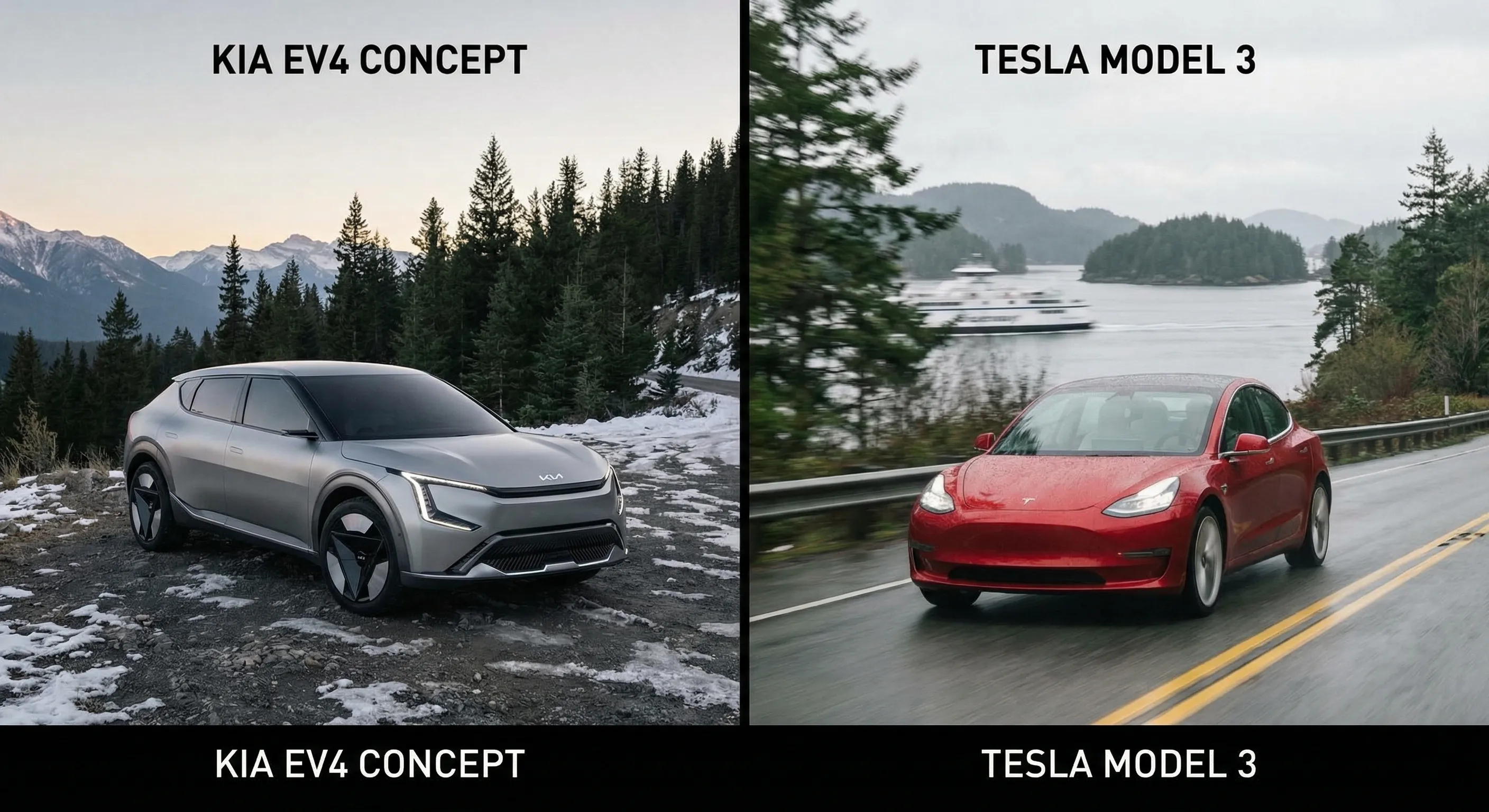
Early Canadian EV4 pricing has been discussed around $38,995. The Tesla Model 3 - the only trim Tesla sells in Canada, the Long Range AWD - starts at $54,990. If the EV4 lands at that early-discussed price and the qualifying trim remains EVAP-eligible, the effective gap could stretch toward $20,000 once the $5,000 federal rebate is applied to the Kia and not the Tesla. In Manitoba or PEI, where provincial rebates stack on top, the spread could stretch further. That is not a rounding error. That is a second car.
Here is the uncomfortable truth: the Model 3 is a better car in several measurable ways. Faster charging. Better cold-weather range retention. A more refined software ecosystem. Superior acceleration. Standard AWD. But "better" is not the same as "worth $20,000 more," and for the vast majority of Canadian buyers in 2026, commuters, families, people switching from gas for the first time, the EV4 delivers 90% of the experience at 60% of the price.
The EV sedan market in Canada has fundamentally shifted. Two years ago, the Model 3 was the default recommendation. It had the range, the charging network, and the brand cachet. Nobody else was close. That era is over. Kia walked into the room with a sedan that targets the same mainstream EV-sedan buyer, is expected to use the same broad North American charging ecosystem, offers Apple CarPlay (which Tesla still refuses to support), and could cost dramatically less than the Model 3 if Canadian pricing and EVAP eligibility hold. The market has changed, and this comparison reflects the new reality.
This analysis covers price, range, charging, driving dynamics, interior, winter performance, warranty, and total cost of ownership. Every section ends with a clear winner.
DECISION FRAME
If the EV4 lands around $38,995 in Canada, the sticker gap to the Model 3 starts near $15,000 before incentives. If the Kia also qualifies for the $5,000 federal EVAP rebate while the Model 3 does not, the effective difference pushes toward roughly $20,000. In Quebec, stacked provincial support could widen that gap further. Ontario offers no provincial rebate, but the federal gap still stands if the EV4's qualifying trim remains under the threshold.
That $20,000 isn't abstract. It's a car payment difference. It's depreciation risk. It's money that could go toward home charging infrastructure, a maintenance reserve, or simply staying out of debt. The Model 3 is a better car in several specific ways, but "better" has to be worth the premium, and for most Canadian buyers in 2026, it isn't.
Monthly payments make the gap tangible. At current rates (around 6.5% for a 72-month auto loan), the EV4 Standard at $33,995 after EVAP runs approximately $530/month. The Model 3 at $54,990, no EVAP, runs roughly $860/month. That is a $330/month difference. Over the life of the loan, the Model 3 buyer pays almost $24,000 more in total payments. Real money leaving your account every single month for six years.
Consider depreciation risk next. Tesla vehicles have historically held their value well, but 2025-2026 has been brutal. The Model 3's resale values dropped 15-20% year-over-year as competition flooded the market and Tesla's brand perception shifted. The EV4 is too new for depreciation data, but Kia's EV6 has shown solid retention, around 65-70% value after three years. More importantly, the EV4's lower entry price means less absolute dollar exposure. A 30% depreciation hit on a $34,000 car costs you $10,200. That same 30% on a $55,000 car costs $16,500. Lower purchase price is a built-in hedge against depreciation.
For buyers who prefer leasing, the math shifts slightly. Lease payments on the EV4 will reflect its lower MSRP, but the real advantage is flexibility: you avoid the depreciation gamble entirely and can re-evaluate in three years when the EV market will look completely different. Given how fast the EV market is moving, a lease on the EV4 suits buyers who want to keep their options open.
One more angle that most comparisons ignore: insurance. The Model 3 consistently costs more to insure than comparable sedans in every Canadian province. Higher MSRP, higher repair costs, fewer authorized body shops. In Ontario, expect to pay $200-400 more per year to insure a Model 3 versus an EV4. Over five years, that adds another $1,000-2,000 to the Model 3's ownership premium.
Winner: Kia EV4, on projected transaction math - if Kia Canada pricing and EVAP eligibility land where early reporting suggests, the EV4's effective cost is dramatically lower than the Model 3's. The Model 3 still does not qualify for EVAP at current pricing.
PRICE AND VALUE
The EV4 comes in two trims, and the Model 3 comes in exactly one (for Canada). The breakdown:
Kia EV4 Standard - early Canada pricing discussed around $38,995
- 64 kWh battery
- Approximately 400 km estimated range
- 128 kW DC fast charging
- Expected North American charging compatibility in this class
- Wireless Apple CarPlay and Android Auto
- 12.3-inch infotainment display
- If EVAP eligible: roughly $33,995 effective price
Kia EV4 Long Range - early Canada pricing discussed around $42,995
- 84.6 kWh NMC battery
- 552 km WLTP range
- 128 kW DC fast charging
- Expected North American charging compatibility in this class
- Wireless Apple CarPlay and Android Auto
- 12.3-inch infotainment display
- If EVAP eligible: roughly $37,995 effective price
Tesla Model 3 Long Range AWD, $54,990 MSRP
- 82 kWh NMC battery
- 629 km NRCan rated range (real-world 530-570 km summer)
- 250 kW DC fast charging at Superchargers
- 15.4-inch centre screen plus 8-inch rear screen
- No Apple CarPlay or Android Auto
- Dual-motor all-wheel drive standard
- Not EVAP eligible (exceeds $55,000 threshold for base model pricing consideration, and the effective base is $54,990)
Provincial incentives stack on top of EVAP for the EV4. The Model 3 does not qualify for any of these.
- Ontario: $33,995 (EV4 Standard) or $37,995 (Long Range), EVAP only, no provincial rebate
- Quebec: $31,995 or $35,995, EVAP + $2,000 Roulez vert
- Manitoba: $29,995 or $33,995, EVAP + $4,000 provincial rebate (ends March 31, 2026, act fast)
- PEI: $29,995 or $33,995, EVAP + $4,000 provincial rebate
- NWT: $28,995 or $32,995, EVAP + $5,000 territorial rebate
A Manitoba buyer can get into a brand-new EV4 Standard for under $30,000. That is Honda Civic territory. Meanwhile the Model 3 sits at $54,990 everywhere in Canada with zero rebate stacking. The cheapest Model 3 in the country costs $25,000 more than the cheapest EV4 in Manitoba. That gap is not a rounding error.
Five-Year Total Cost of Ownership
The real comparison is five-year total ownership cost: purchase, charging, maintenance, and insurance, assuming you finance and keep the car.
EV4 Long Range, 5-Year TCO
- Purchase (after EVAP): $37,995
- Finance charges (6.5%, 72 months, first 5 years): ~$7,200
- Home charging (~15,000 km/year): ~$2,250 (5 years at ~$37.50/month)
- Maintenance: ~$3,500 (tires, brake fluid, cabin filters, wiper fluid)
- Insurance (~$1,800/year): ~$9,000
- Total 5-year cost: ~$59,945
- Estimated resale value: ~$22,800 (60% retention)
- Net 5-year cost: ~$37,145
Model 3 Long Range AWD, 5-Year TCO
- Purchase (no EVAP): $54,990
- Finance charges (6.5%, 72 months, first 5 years): ~$10,400
- Home charging (~15,000 km/year): ~$2,250 (5 years at ~$37.50/month)
- Maintenance: ~$3,000 (Tesla service intervals are slightly less frequent)
- Insurance (~$2,200/year): ~$11,000
- Total 5-year cost: ~$81,640
- Estimated resale value: ~$30,250 (55% retention, conservative given recent trends)
- Net 5-year cost: ~$51,390
The five-year TCO gap is approximately $14,000 in the EV4's favour. That factors in the Model 3's slightly lower maintenance costs and assumes Tesla's resale value stabilizes. If Tesla resale continues to slide, the gap widens further. Both cars save roughly $1,750-2,200/year in fuel compared to an equivalent gas sedan, that part is a wash between them.
For context on how both compare against gas alternatives, see our EV vs Gas: Total Cost of Ownership breakdown.
Winner: Kia EV4, lower purchase price, EVAP eligibility, provincial stacking, and a $14,000 five-year TCO advantage. The math is not close.
RANGE
On paper, this is nearly a tie. The Model 3 Long Range AWD (the only trim sold in Canada, no base or Standard Range is available here) is rated at approximately 629 km by NRCan. The EV4 Long Range is rated at 552 km WLTP. Different testing standards complicate direct comparison, NRCan ratings tend to be more conservative than WLTP, which means the real-world gap is narrower than the numbers suggest. In practice, expect the Model 3 to deliver 530-570 km in warm weather and the EV4 Long Range around 440-490 km. The EV4 Standard, with its smaller 64 kWh battery, lands around 320-360 km in real conditions.
In winter, the gap opens slightly. Transport Canada data shows both cars losing 15-30% range in sub-zero temperatures, but the Model 3's software updates have pushed its cold-weather performance ahead of the EV4's, closer to 10% loss vs 15% for the EV4 below -10°C. For most of Canada that's a real consideration, particularly in Manitoba, Saskatchewan, and the northern parts of every province.
Highway vs city range matters more than most buyers realize. The EV4 and Model 3 both lose efficiency at sustained highway speeds (110-120 km/h), but the Model 3's larger effective battery and superior aerodynamics (Cd 0.219 vs the EV4's estimated 0.28) give it a meaningful highway advantage. On a steady 110 km/h highway run, expect the Model 3 to deliver around 480-510 km and the EV4 Long Range around 390-430 km. In city driving, both do better than their rated ranges, regenerative braking recaptures energy from all that stop-and-go.
Real-world road trip examples:
- Toronto to Ottawa (450 km): The Model 3 makes this in one shot in summer, no stop needed. The EV4 Long Range can do it if you start fully charged and drive conservatively, but realistically you want one 15-minute top-up around Kingston. In winter, both cars need a charging stop.
- Calgary to Edmonton (300 km): Both handle this comfortably year-round, even in January. No charging stop required for either car.
- Vancouver to Kelowna (390 km via the Coquihalla): The elevation gain eats range. The Model 3 handles it without stopping in summer. The EV4 Long Range needs a quick stop in Merritt. In winter, both need a stop.
- Montreal to Quebec City (250 km): Easy for both, year-round. No stop needed.
Provincial range variations are worth considering. In British Columbia's Lower Mainland, where winters are mild and commutes are moderate, the EV4's range is never a concern, even the Standard trim handles a Vancouver daily driver's needs with ease. In the prairies, where winter temperatures regularly hit -25C to -35C and distances between towns are long, the Model 3's winter range advantage becomes genuinely practical. In Ontario, Quebec, and the Maritimes, where most Canadians live, both cars handle daily driving year-round without issue, and the range difference only matters on the occasional long trip.
For the average Canadian driver, around 15,000 km per year, roughly 40 km per day, neither range figure is a constraint. Both cars handle a full week of average commuting on a single charge. Even in the worst case, a -25C January week in Winnipeg, the EV4 Long Range still delivers 330-400 km on a full charge. That is eight to ten days of average commuting without plugging in, though you should always plug in nightly when possible.
The Model 3 has a real but narrow edge in range and winter retention. It matters most on long highway runs and in cold climates.
For a deeper look at cold-weather range data, check our EV Winter Range Test results.
Winner: Tesla Model 3, marginal advantage in rated range and a genuine edge in cold-weather retention. The gap narrows significantly in daily driving, but it is real on highway road trips.

CHARGING
The EV4 supports DC fast charging at up to 128 kW, reaching 10-80% in about 31 minutes. The Model 3 is faster, hitting the same window in roughly 25 minutes at a Supercharger thanks to its 250 kW peak charging rate. That is a six-minute difference at a DC fast charger, noticeable but not life-changing.
The EV4 is expected to support broad North American fast-charging compatibility, but Canadian port configuration and direct Tesla access still need to be confirmed by Kia Canada. The Model 3 has fully confirmed Supercharger access today, and Tesla's Plug & Charge makes the process smooth - pull in, plug in, drive away.
The charging infrastructure gap that once separated Tesla from every other brand has narrowed, but it has not disappeared. Tesla's Supercharger network still has the strongest reliability reputation in Canada, and the Model 3 is the one car in this comparison with fully confirmed native access on day one.
Charging costs are roughly equivalent between the two. At home on Level 2, both cars cost approximately $30-50/month to charge for a typical 15,000 km/year driver, depending on your provincial electricity rate. Ontario drivers pay around $0.13/kWh (off-peak TOU), Quebec drivers enjoy $0.07/kWh (the cheapest in the country), and Alberta drivers pay $0.12-0.18/kWh depending on their retailer. At public DC fast chargers, expect to pay $0.35-0.55/kWh depending on the network and location, Superchargers tend to be at the lower end of that range, Electrify Canada at the higher end.
Home charging comparison is straightforward. Both cars accept Level 2 charging (240V). The EV4 Long Range's 84.6 kWh battery charges from 10-100% in approximately 8 hours on a 48A Level 2 charger. The Model 3's 82 kWh battery does the same in about 7.5 hours. If you plug in when you get home from work, both are full by morning. A quality Level 2 home charger like the Grizzl-E Classic runs $500-600 installed and is the single best investment any EV owner can make.
Gear worth having
As an Amazon Associate, ThinkEV earns a small commission from qualifying purchases — at no extra cost to you.
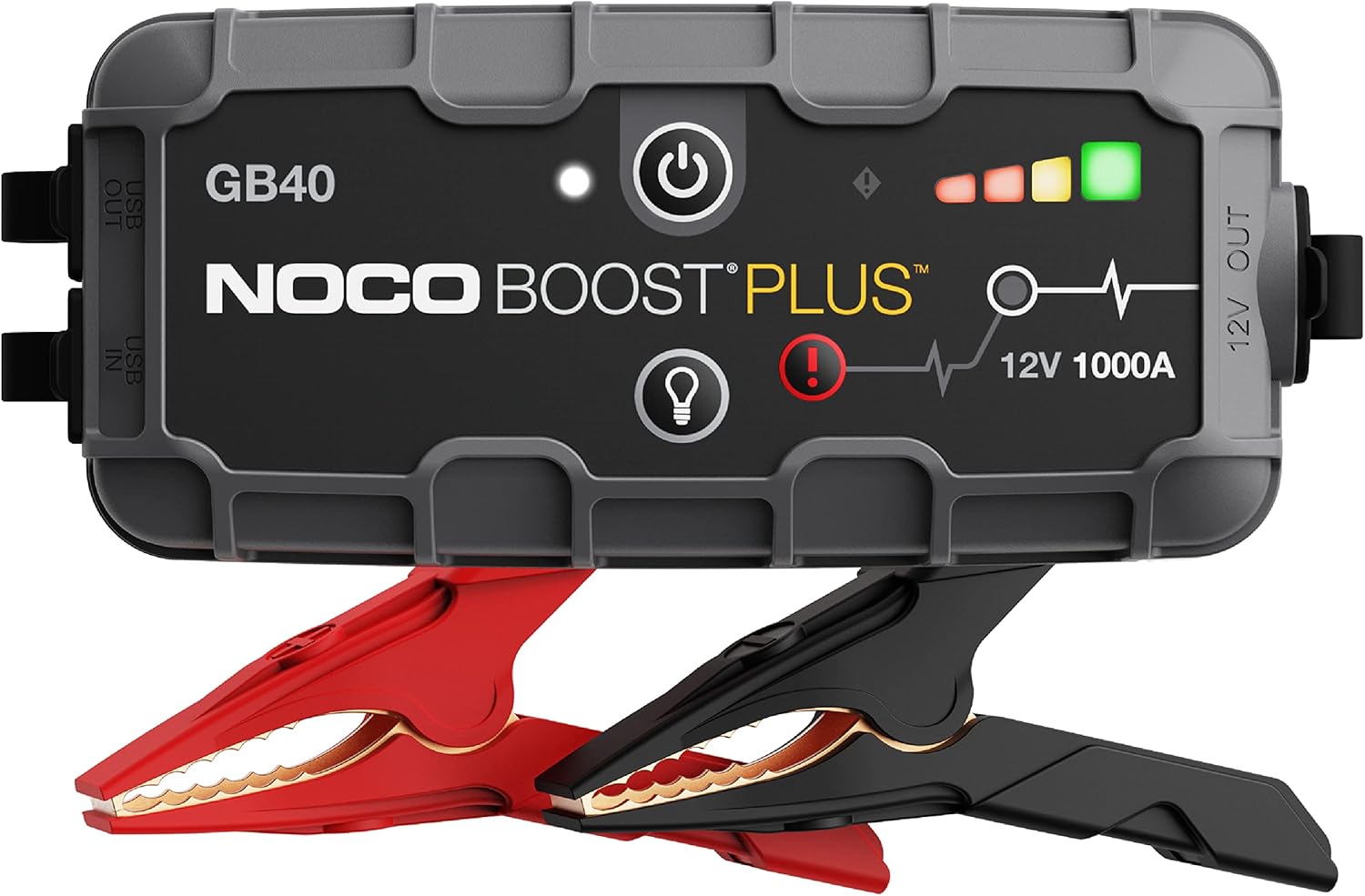
NOCO Boost Plus GB40 Jump Starter
A 1000A lithium jump starter that fits in your glovebox and works on any 12V battery. Your insurance against a dead 12V in a parking lot.
As an Amazon Associate, ThinkEV earns from qualifying purchases — at no extra cost to you.
For a guide to choosing the right home charger, see our Best Level 2 EV Chargers in Canada roundup.
Winner: Tesla Model 3 - faster DC charging speed, and the Supercharger network remains the gold standard for reliability. The EV4 may narrow the gap if Canadian charging details land the way early reporting suggests.
DRIVING
This is where the price gap starts to show, and also where you have to decide what kind of driving experience you actually care about.
Acceleration: The Model 3 Long Range AWD hits 0-100 km/h in 4.4 seconds. That is legitimately quick, quicker than most sports sedans that cost twice as much. For context, a BMW 330i does it in about 5.8 seconds and costs $52,000. The EV4 Long Range does it in approximately 5.8 seconds, and the EV4 Standard in roughly 7.5 seconds. The EV4 Long Range is still faster than most gas sedans in its price range, quicker than a Honda Accord, a Toyota Camry, or a Mazda3, but the Model 3 is in a different league.
If launch speed matters to you, and be honest about whether it actually does when you are merging onto the 401 at 7:45 AM, the Model 3 wins this handily. But 5.8 seconds is not slow. It is quick enough that passengers notice. It is quick enough that highway merges feel effortless. The Model 3 is faster. The EV4 is fast enough.
Handling: Tesla's dual-motor AWD system and low centre of gravity give the Model 3 sharp, responsive handling. The car feels planted and athletic through corners. The EV4 is no slouch, its E-GMP derived platform keeps the battery low and the weight distribution reasonable, but it's tuned more for comfort than aggression. The steering is lighter, the body roll slightly more noticeable. Most Canadian buyers will never push either car hard enough to notice, but enthusiasts will prefer the Model 3's dynamics.
Ride comfort: Here the EV4 fights back. Kia has a long history of tuning comfortable rides for North American roads, and the EV4 benefits from that institutional knowledge. The suspension absorbs potholes and frost heaves better than the Model 3, which can feel stiff on rough Canadian roads, particularly in highland-refresh form with its stiffer suspension tuning. If your daily route includes cracked urban roads (so, most Canadian cities), the EV4's ride is more pleasant.
Noise levels: The Model 3 Highland is impressively quiet at highway speeds thanks to its improved double-pane glass and acoustic refinements. The EV4 is good but not quite at the same level, a touch more wind noise around the mirrors above 100 km/h and slightly more road noise on coarse pavement. Neither car has engine noise, obviously, so the differences are subtle. The Model 3 edges it.
Steering feel: The Model 3's steering is precise and well-weighted. The EV4's steering is lighter and more relaxed, easier for parking and low-speed manoeuvring, less communicative at speed. This is a preference, not a verdict. If you want a relaxed commuter feel, the EV4's steering is perfectly fine. If you want the car to feel connected and responsive, the Model 3 is better.
Regenerative braking: Both cars offer strong regenerative braking, and both can be driven primarily with one pedal in city conditions. Tesla's implementation is more refined, smoother transitions, better modulation at low speeds, and a more natural feel when coming to a complete stop. The EV4's one-pedal mode works well but can feel slightly abrupt at very low speeds. Both recapture meaningful energy, expect 10-15% efficiency improvement in city driving from regen alone.
Highway cruising: The Model 3's Autopilot (included standard) handles highway driving assist competently, adaptive cruise control, lane centring, automatic lane changes on highways. The EV4 offers Highway Driving Assist (HDA), which provides adaptive cruise and lane keeping. Both work well for long highway stretches. Tesla's system is more polished and handles more edge cases, but Kia's HDA is reliable and predictable.
Braking: Both cars offer excellent stopping power. The Model 3's larger brake hardware and lower curb weight give it a slight edge in emergency braking distances. The EV4's brakes are more than adequate, you will never feel unsafe, but the Model 3 stops shorter by a car length or two from highway speeds. In practice, both cars benefit enormously from regenerative braking that scrubs speed before the friction brakes even engage, which means brake pad wear is minimal on both vehicles. Do not be surprised if your first brake pad replacement is at 100,000 km or beyond.
Winner: Tesla Model 3, faster, sharper, quieter, with better driver-assist technology. But the EV4's ride comfort is genuinely superior on rough roads, and for daily commuting, the driving differences are less dramatic than the spec sheets suggest.
INTERIOR AND TECHNOLOGY
The interior is where these two cars take fundamentally different design philosophies and make you pick a side.
The Tesla Model 3 approach: Minimalism taken to its logical extreme. Almost every function lives behind the 15.4-inch centre touchscreen. Climate controls, wiper speed, glove box release, headlight adjustments, all screen-based. There is no instrument cluster behind the steering wheel. The rear passengers get an 8-inch screen for media and climate. The materials are clean and modern, vegan leather seats, matte wood or carbon fibre trim depending on colour, but some buyers find the cabin cold and sterile. There are no physical buttons for anything except the two scroll wheels on the steering wheel, window switches, and the hazard light button.
The Kia EV4 approach: A more conventional cabin with a clear driver focus. The dashboard features a 12.3-inch infotainment display, and depending on trim, a digital instrument cluster. Physical climate controls. Actual buttons for frequently used functions. The design is less futuristic than the Model 3 but more immediately usable, you don't need to learn a new interface language to adjust the fan speed.
Gear worth having
As an Amazon Associate, ThinkEV earns a small commission from qualifying purchases — at no extra cost to you.

Grizzl-E Classic Level 2 EV Charger (40A)
Canadian-made and rated for minus 40C winters. 40A / 9.6 kW, NEMA 14-50, indoor/outdoor, 24-ft cable. The charger built for Canadian weather.
As an Amazon Associate, ThinkEV earns from qualifying purchases — at no extra cost to you.
Apple CarPlay and Android Auto: The EV4 has them, wireless. The Model 3 does not and never will. This is a bigger deal than Tesla fans want to admit. If your phone is the centre of your digital life, and for most Canadians it is, Apple CarPlay gives you Waze, Google Maps, your podcast app, your music app, and your messaging app on a familiar interface. Tesla's built-in navigation is good (arguably better than Apple Maps for EV-specific routing), and Spotify is integrated, but you are locked into Tesla's ecosystem. No Waze. No easy podcast app switching. No familiar interface. For some buyers this is fine. For others it is a dealbreaker.
Materials quality: The EV4's interior materials are solid for the price, soft-touch surfaces where your hands land, reasonable plastics in non-contact areas. The Model 3 Highland's interior is a step above in terms of material quality, the vegan leather is supple, the trim feels premium. But remember: you are paying $20,000 more. Dollar for dollar, the EV4 delivers good value.
Storage and practicality: The Model 3 has excellent hidden storage, a deep centre console, a covered shelf under the rear seats, and a frunk (front trunk) that fits a carry-on suitcase. The EV4 has a traditional cabin layout with reasonable storage but lacks a frunk. Trunk space is competitive, both are sedan-sized, with the Model 3 at 682 litres (trunk plus frunk combined) and the EV4 at approximately 490 litres (trunk only).
Passenger space: Both sedans seat five. Rear legroom is comparable, adequate for two adults, tight for three. The Model 3's glass roof gives an airy feeling but can let in more heat in summer (the UV coating helps but doesn't eliminate it entirely). The EV4's rear headroom is slightly better for taller passengers.
Cargo capacity: The Model 3 wins on total cargo volume when you count the frunk. The EV4's trunk-only approach means less total carrying capacity, but the trunk opening itself is well-shaped and easy to load. For weekly groceries and normal life, both are fine. For road trips with a family of four, the Model 3's frunk advantage is real, you can pack the trunk with suitcases and still have the frunk for snacks, charging cables, and winter gear.
Over-the-air updates: Tesla's OTA update system is the industry benchmark. New features, performance improvements, and bug fixes arrive regularly, sometimes adding capabilities that did not exist when you bought the car. Kia offers OTA updates for the EV4 as well, but the cadence is slower and the scope narrower. If you value your car getting meaningfully better over time, Tesla has the edge. If you want your car to work well on day one and stay consistent, the EV4's approach is perfectly acceptable.
Voice control and smart home integration: Tesla's voice control is responsive and handles a wide range of commands. The EV4 relies on Apple CarPlay's Siri or Android Auto's Google Assistant for most voice tasks, which work well if you are already in that ecosystem. Neither car integrates deeply with Canadian smart home platforms. Tesla can control some Tesla-branded home products (Powerwall, solar), but for most Canadian buyers, this is irrelevant.
Winner: Kia EV4, Apple CarPlay alone is worth the win for most buyers. The more conventional interface is easier to live with daily, and the materials are solid for the price. The Model 3's minimalism and screen quality are impressive but divisive, and the lack of CarPlay remains a genuine gap in 2026.
WINTER PERFORMANCE
This section matters more in Canada than almost anywhere else. Both of these sedans will spend five to six months per year in conditions that range from chilly to genuinely brutal, and their cold-weather behaviour directly affects your daily life.
All-wheel drive: The Model 3 Long Range comes standard with dual-motor AWD in Canada. There is no option to buy a single-motor Model 3 here. That means every Canadian Model 3 buyer gets mechanical AWD traction by default. The EV4 is expected to launch primarily as front-wheel drive in Canada, with AWD availability depending on trim and timing. For prairie and northern buyers, AWD is not optional, it is a requirement. The Model 3 has a structural advantage here.
If the EV4 FWD is your only option, it is still manageable with winter tires. Front-wheel-drive EVs with good winter rubber perform respectably, the heavy battery keeps weight over the front axle. But AWD is genuinely better in deep snow, on ice, and during the unexpected moments that define Canadian winter driving.
Winter tires: Both cars need them. This is not optional in Canada, legally required in Quebec and BC (select highways), and practically essential everywhere else. Budget $800-1,200 for a set of four winter tires mounted on steel rims for either car. The Model 3 uses a staggered wheel setup on some trims, which can complicate winter tire shopping. The EV4 uses a more conventional setup. Both cars fit standard winter tire sizes without difficulty. Michelin X-Ice, Bridgestone Blizzak, and Continental VikingContact are all strong choices for either vehicle.
Heat pumps and preconditioning: Both cars use heat pump systems for cabin and battery heating, far more efficient than the resistive heaters in older EVs. The Model 3's heat pump has been refined over several software updates and is considered one of the best in the industry. The EV4's heat pump is newer but benefits from Hyundai-Kia's extensive cold-weather testing in Korea (which gets proper cold winters). Both cars support preconditioning, you can warm the cabin and battery from your phone while the car is still plugged in, which preserves range and means you step into a warm car. Use this feature religiously in winter.
Winter range retention: This is where the Model 3 pulls ahead. In temperatures below -10C, the Model 3 retains approximately 85-90% of its rated range thanks to aggressive thermal management and software optimization. The EV4 retains approximately 75-85% in the same conditions. On paper, that is a 5-10% difference. In practice, it means the Model 3 Long Range delivers around 475-510 km in winter versus the EV4 Long Range's 415-470 km. Both are perfectly adequate for daily driving, but the Model 3 gives more margin for error on cold highway trips.
For detailed winter range data across multiple EVs, see our comprehensive winter range test.
Cabin heating speed: The Model 3 heats up slightly faster thanks to its more powerful climate system and seat heaters that kick in immediately. The EV4 is close behind. Both cars are dramatically faster to warm up than any gas vehicle, no waiting for an engine to reach operating temperature. Preconditioning while plugged in eliminates this comparison entirely, which is why plugging in nightly is so critical for Canadian EV owners.
Windshield and visibility: Canadian winters mean snow, sleet, and road salt spray. The Model 3's sleek, raked windshield looks great but can accumulate more snow and ice than the EV4's more conventional windshield angle. Both cars have heated windshield wiper areas and effective defrost systems. The Model 3's frameless doors can occasionally freeze shut in extreme cold, a known issue that Tesla has mitigated with software-controlled window drops, but it still catches new owners off guard at -30C. The EV4's conventional framed doors avoid this issue entirely.
Practical winter considerations: One thing that Tesla does well is over-the-air updates that improve winter behaviour. Tesla has shipped multiple updates over the years that improved battery preheating, defrosting, and cold-start performance. Kia also offers OTA updates for the EV4, but Tesla's update cadence and winter-specific optimizations are more aggressive. Tesla's Scheduled Departure feature, which lets you set a time for the car to be preconditioned and ready to go, is particularly well-implemented for Canadian commuters who leave at the same time every morning.
Winner: Tesla Model 3, standard AWD, superior winter range retention, and a more mature cold-weather system give it a clear edge. The EV4 is capable in winter, but the Model 3 is better equipped for the harsh end of Canadian winters.
WARRANTY AND SERVICE
This is where Kia's traditional automaker infrastructure becomes a genuine competitive advantage.
Kia EV4 warranty:
- Comprehensive: 5 years / 100,000 km
- Powertrain: 5 years / 100,000 km
- Battery: 8 years / 160,000 km (to 70% capacity)
- Corrosion perforation: 5 years / unlimited km
- Roadside assistance: 5 years / unlimited km
Tesla Model 3 warranty:
- Basic vehicle: 4 years / 80,000 km
- Battery and drive unit: 8 years / 160,000 km (to 70% capacity)
- Body rust-through: not explicitly covered to the same standard
- Roadside assistance: 4 years / 80,000 km
The numbers tell the story. Kia gives you one extra year and 20,000 more kilometres of comprehensive coverage. The battery warranties are identical, 8 years, 160,000 km, 70% capacity floor. For most Canadian buyers who drive 15,000-20,000 km per year, that extra year of Kia warranty means coverage through year five instead of running out in year four.
Service network: This is the bigger story. Kia has approximately 190 dealerships across Canada, including locations in small and mid-sized towns, places like Red Deer, Kamloops, Sudbury, Moncton, Thunder Bay, Charlottetown. If something goes wrong, there is likely a Kia dealer within a reasonable drive, even in rural Canada.
Tesla has service centres in major cities: Toronto, Montreal, Vancouver, Calgary, Ottawa, Edmonton, Winnipeg, and a handful of others. If you live in a major metro, Tesla service is fine, mobile service vans handle many repairs at your home or office, and the service centres are competent. But if you live in Sault Ste. Marie, Prince George, or Corner Brook, you are looking at a significant drive or an expensive flatbed tow to the nearest Tesla service centre. For a $55,000 car, that is a real consideration.
Parts availability: Kia uses standardized parts across its lineup, and the Hyundai-Kia group's massive global scale means replacement parts are generally available quickly. Tesla's parts supply chain has improved but still suffers from delays on certain body panels and components, particularly after collisions. If your Model 3 gets rear-ended, you might wait weeks for a replacement bumper. Collision repair shops comfortable working on Teslas are also less common outside major cities.
Service costs: Both cars have low maintenance costs compared to gas vehicles, no oil changes, no spark plugs, no transmission fluid. Budget $500-800/year for either car, covering tire rotations, brake fluid changes (every 2-3 years), cabin air filters, wiper blades, and washer fluid. Tesla's service pricing is transparent and posted online. Kia dealer service pricing varies by location but is generally competitive.
Collision repair: This deserves its own mention because it is one of the most under-discussed ownership costs. If your Model 3 is involved in a fender bender, you may find that repair estimates come in 20-40% higher than equivalent repairs on a Kia, and wait times for parts can stretch into weeks. Tesla-certified body shops are limited in number across Canada, many cities have only one or two. Kia's use of more conventional body construction and widely available parts means faster, cheaper repairs. Insurance companies factor this into premiums, which is one reason Model 3 insurance costs are consistently higher.
Roadside assistance: Kia includes 5 years of roadside assistance. Tesla provides 4 years. Both cover towing, lockout service, flat tire changes, and jump starts. However, Tesla's roadside assistance is handled through the Tesla app, which can be excellent in cities (fast response, mobile charger dispatch) and frustrating in rural areas (limited contractor availability). Kia's roadside assistance works through traditional towing networks that cover the entire country, including remote areas.
For a full breakdown of what EV maintenance actually costs, read our EV Maintenance Costs guide.
Winner: Kia EV4, longer warranty, vastly larger service network, better rural access, more predictable parts availability, and lower collision repair costs. For anyone outside a major city, this is not close.
VERDICT
Buy the EV4 if the Canadian pricing and EVAP assumptions hold. On projected transaction math, it lands dramatically below the Model 3 while still offering the essentials most buyers care about: solid range, a mainstream charging path, Apple CarPlay, a comfortable interior, and Kia's broader service footprint.
The Model 3 is the superior car in four specific areas: charging speed, cold-weather range retention, acceleration, and software polish. If you drive long distances frequently in a cold province, if you want AWD as a standard feature, and if you are willing to live inside Tesla's closed ecosystem, the Model 3's premium has a case. It is a genuinely excellent car, just an expensive one.
The right trim depends on your situation:
Buy the EV4 Standard (if pricing lands around $33,995 after EVAP) if: You are a first-time EV buyer, a commuter with a daily round trip under 100 km, or someone who wants the lowest possible entry point into a competent electric sedan. This is the value play, and it is a very strong one.
Buy the EV4 Long Range (if pricing lands around $37,995 after EVAP) if: You want the range confidence for occasional road trips, you live in a province with cold winters but don't want to pay Model 3 prices, or you want the sweet spot of range and value. This is the trim we would recommend to most Canadian buyers.
Buy the Model 3 ($54,990) if: You prioritize driving dynamics, you need AWD, you do frequent highway trips exceeding 400 km, you want the best winter range retention available, or you are already invested in Tesla's ecosystem. The Model 3 is the better car, it just costs $20,000 more to be better in ways that most daily drivers will rarely notice.
The scorecard: Out of seven comparison categories, the EV4 wins three (Decision Frame/Price, Interior/Technology, Warranty/Service), the Model 3 wins four (Range, Charging, Driving, Winter Performance). The Model 3 wins more categories. But the categories the EV4 wins, price, daily usability, and long-term ownership confidence, are the ones that matter most to the widest audience. Winning on acceleration does not help you make your car payment.
Here is the final framing: if you could buy the Model 3 for $40,000 with the EVAP rebate, this would be a much harder call. At that price, the Model 3's superior dynamics, range, and winter capability would clearly justify the modest premium over the EV4. But at $54,990 with zero rebate eligibility, Tesla is asking Canadian buyers to pay a $20,000 premium for incremental improvements. That is a hard sell in 2026, and most buyers should not take it.
For most Canadians in 2026, the EV4 projects as the smarter purchase if the expected pricing and eligibility picture holds. The $20,000 you save can cover a Level 2 home charger ($600), five years of insurance premiums, winter tires for both seasons, and still leave $10,000 in your emergency fund. The Model 3 is a luxury. The EV4 is a tool. Most people need a tool.
If you are still on the fence, consider this: if the EV4 Long Range lands around $37,995 after EVAP, it could offer 552 km of WLTP-rated range, broad charging compatibility, Apple CarPlay, a 5-year warranty, and nationwide dealer coverage. That is an extraordinarily complete package for under $38,000. Two years ago, nothing like this existed at this price point. The EV4 has changed the game, and the Model 3's response so far has been to... keep charging $54,990.
For more on the EV4 specifically, read our full Kia EV4 Canada review. For the Model 3 side, see our Tesla Model 3 Highland Canada review. And if you are considering other alternatives in this price range, our Most Affordable EVs in Canada roundup covers the full field. For buyers also eyeing the BYD Seal, that comparison covers another strong Model 3 challenger.
Gear worth having
As an Amazon Associate, ThinkEV earns a small commission from qualifying purchases — at no extra cost to you.
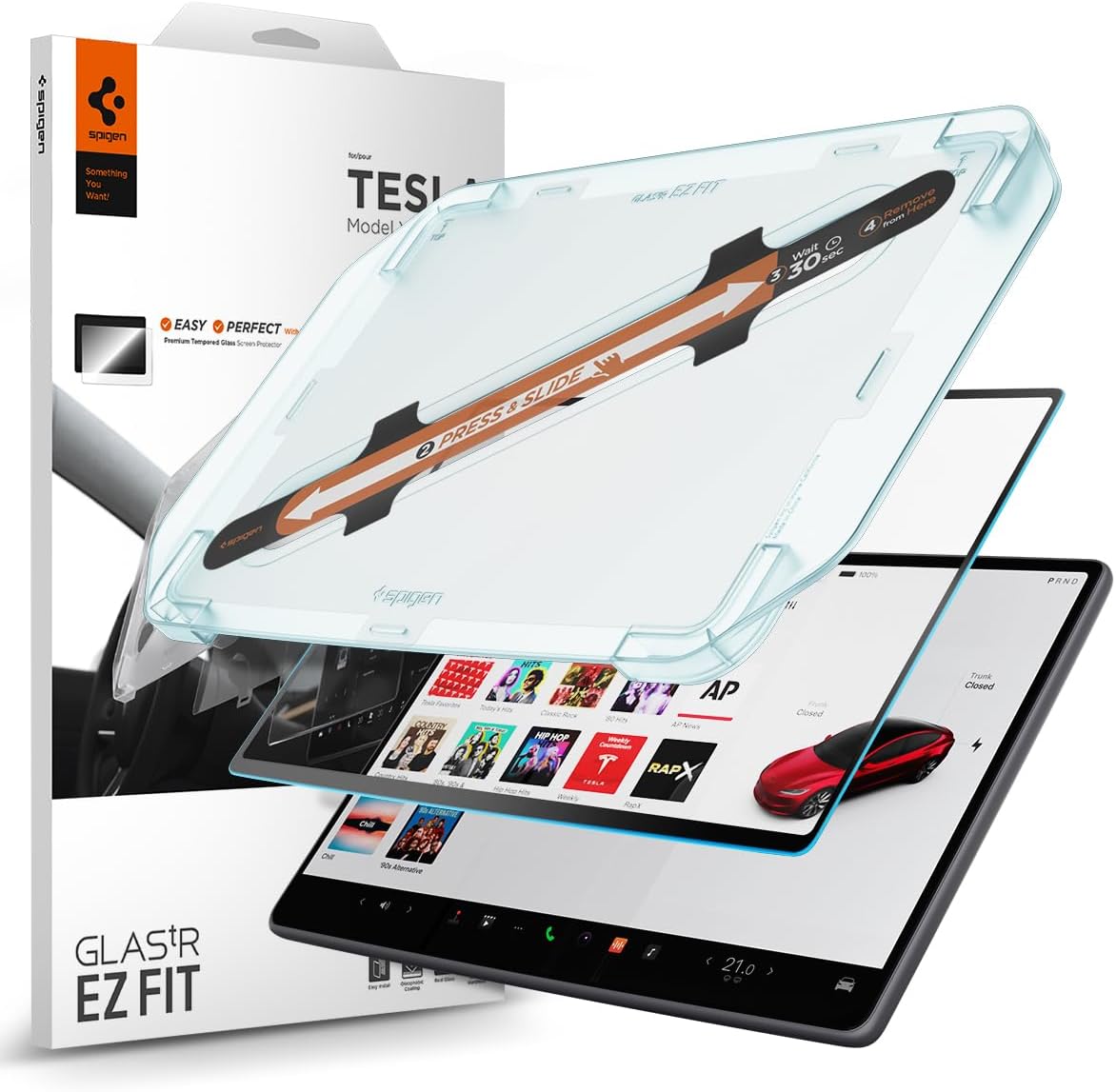
Spigen Tempered Glass for Tesla Model 3/Y
Tempered-glass protection for the touchscreen that kills fingerprints and scratches. Two minutes to install, lasts the life of the car.
As an Amazon Associate, ThinkEV earns from qualifying purchases — at no extra cost to you.
Gear worth having
As an Amazon Associate, ThinkEV earns a small commission from qualifying purchases — at no extra cost to you.

WeatherTech FloorLiner for Tesla Model 3
Deep-channel liners that trap every drop of slush and salt. The difference between a ruined interior and a showroom-fresh cabin after a Canadian winter.
As an Amazon Associate, ThinkEV earns from qualifying purchases — at no extra cost to you.
Related Reading
- Kia EV4 Canada Review: The Cheapest Long-Range EV, Our full standalone review of the EV4 for Canadian buyers.
- Tesla Model 3 Highland Canada Review, Everything you need to know about the refreshed Model 3 in Canada.
- BMW i4 vs Tesla Model 3, How the Model 3 stacks up against the premium German alternative.
- Most Affordable EVs in Canada 2026, The full field of budget-friendly EVs compared.
- Canada EVAP Rebate Guide 2026, How to claim the $5,000 federal rebate and stack provincial incentives.
- EV Pricing Guide: Canada 2026-2027, Complete pricing breakdown for every EV available in Canada.
Gear worth having
As an Amazon Associate, ThinkEV earns a small commission from qualifying purchases — at no extra cost to you.
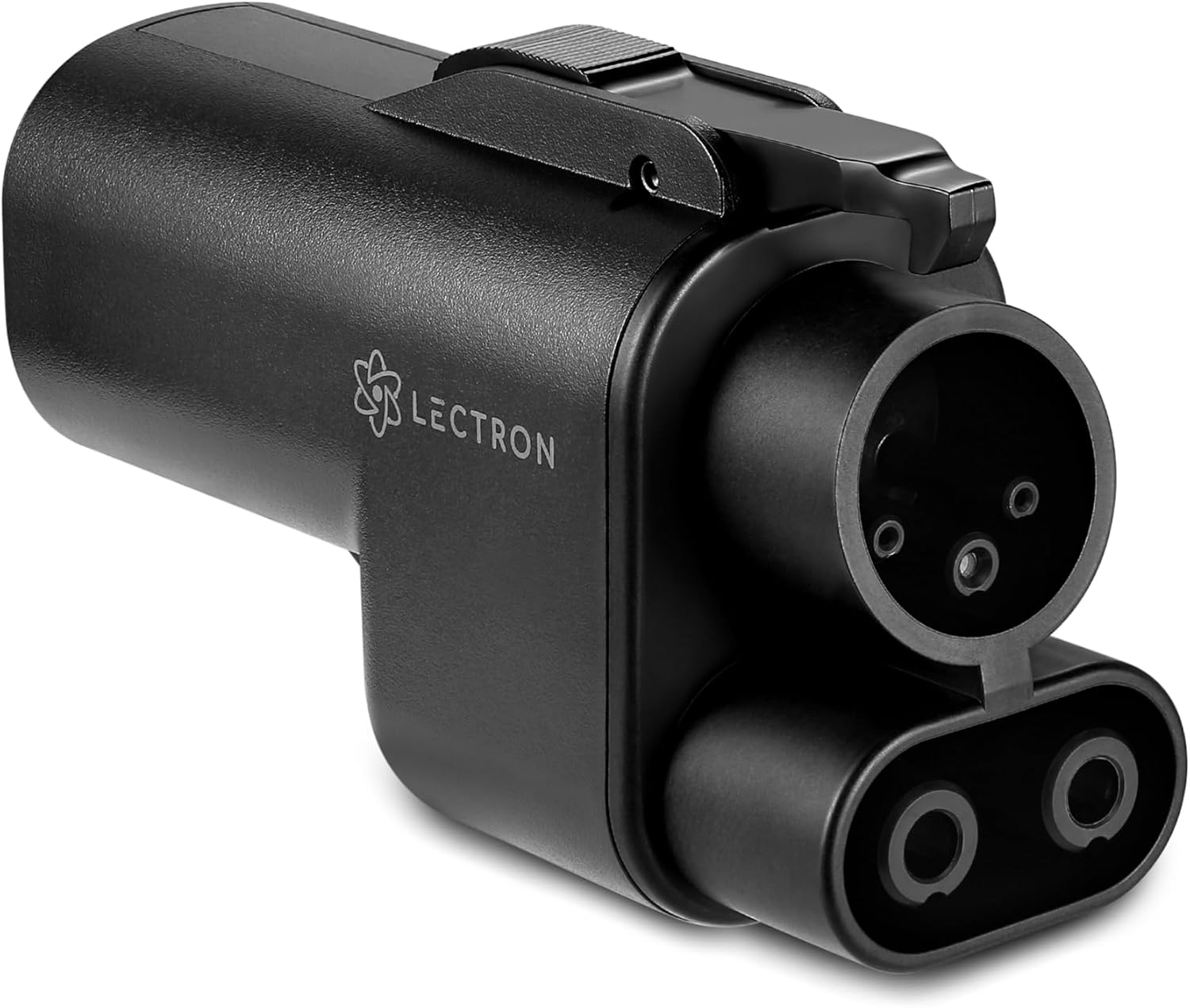
Lectron NACS to CCS Fast-Charge Adapter
Unlock every CCS fast charger for your Tesla, up to 500A DC. Never get stranded at a non-Tesla DC station again.
As an Amazon Associate, ThinkEV earns from qualifying purchases — at no extra cost to you.

Founder & Chief Editor
Vlad Pereira is the founder and chief editor of ThinkEV.ca, the Canadian electric-vehicle publication he writes and edits from Courtenay, British Columbia. He covers EV pricing, federal and provincial rebates, charging costs, and the Chinese manufacturers now entering Canada, from the buyer's side rather than the press-fleet side. ThinkEV is a venture of Vlad Pereira Online; his writing on health, income and the long game lives at vladpereira.com.
Frequently asked questions
Is the Kia EV4 a good first car for new EV buyers?
Can the Kia EV4 handle Canadian winters?
Does the EV4 have access to the Tesla Supercharger network?
Is the Tesla Model 3 worth $20,000 more than the EV4?
Which provinces offer the best deals on the Kia EV4?
How much does it cost to charge the EV4 or Model 3 at home?
Does the Kia EV4 have Apple CarPlay?
How do the warranties compare between the EV4 and Model 3?
Should I buy the EV4 Standard or Long Range?
More EV & road-trip finds
Affordable upgrades worth a look — tap any to check the price on Amazon.
 ★ 4,626
HoogaLife Hanging Car Diffuser (2-Pack)
View on Amazon ★ 12,396
K KNODEL Car Trash Can with Lid
View on Amazon ★ 21,310
Magnetic Car Phone Mount
View on Amazon ★ 87
★ 87Car Window Sun Shades for Kids (4-Pack)
View on Amazon ★ 392
★ 392Large Cup Holder Adapter (32-40oz)
View on Amazon ★ 47,507
HOMEXCEL Microfiber Cloths (12-Pack)
View on Amazon ★ 314
★ 314Mini USB LED Ambient Lamps (4-Pack)
View on Amazon ★ 1,349
Cool Swinging Duck Dashboard Ornament
View on AmazonRead, Plan, Then Stay Current
Explore our expert articles to understand incentives and ownership costs, use the map to pressure-test charging reality, then subscribe so new EV coverage comes straight to you.
Continue Reading
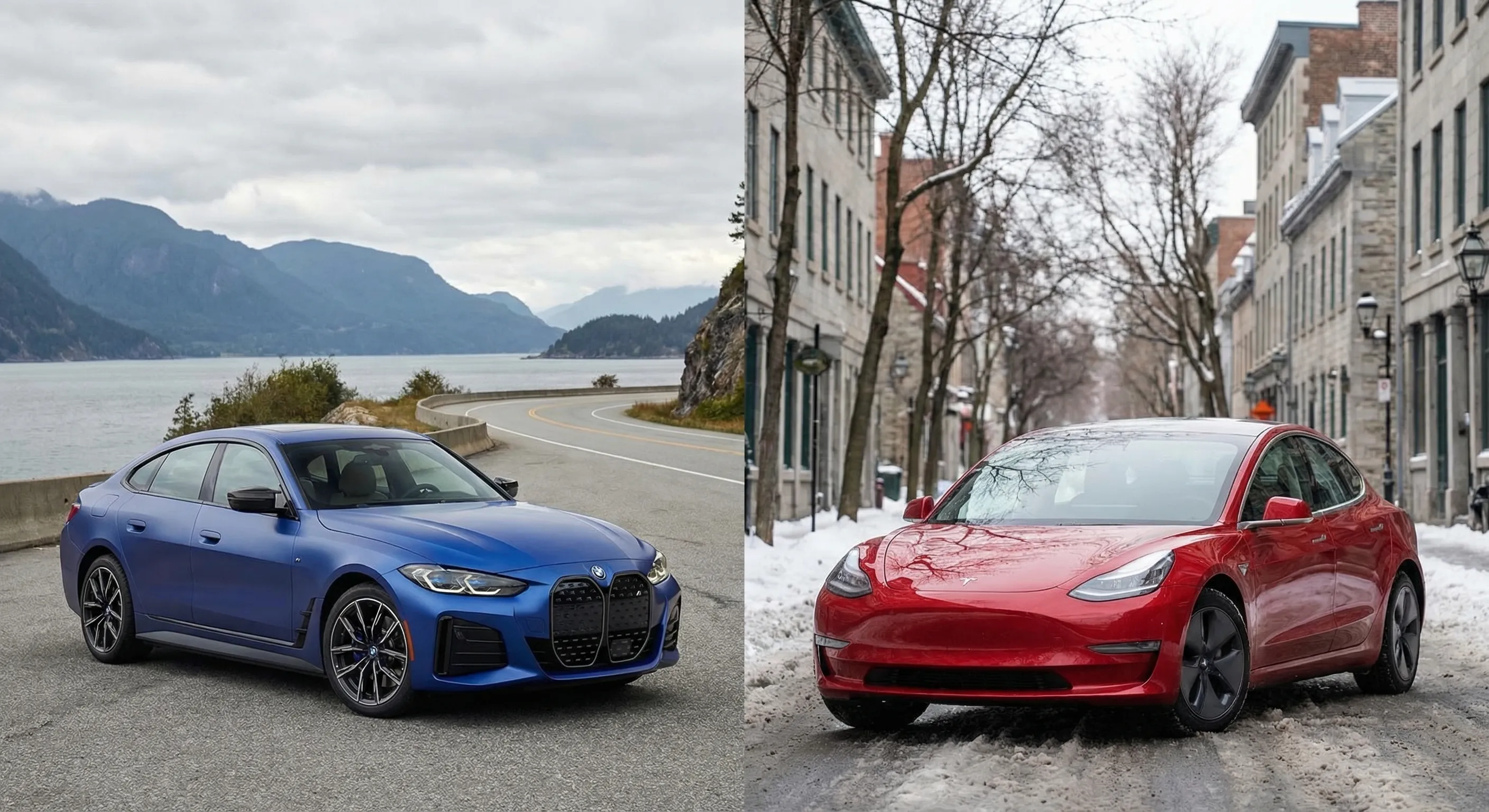
BMW i4 vs Tesla Model 3: Is the $11K Premium Worth It?
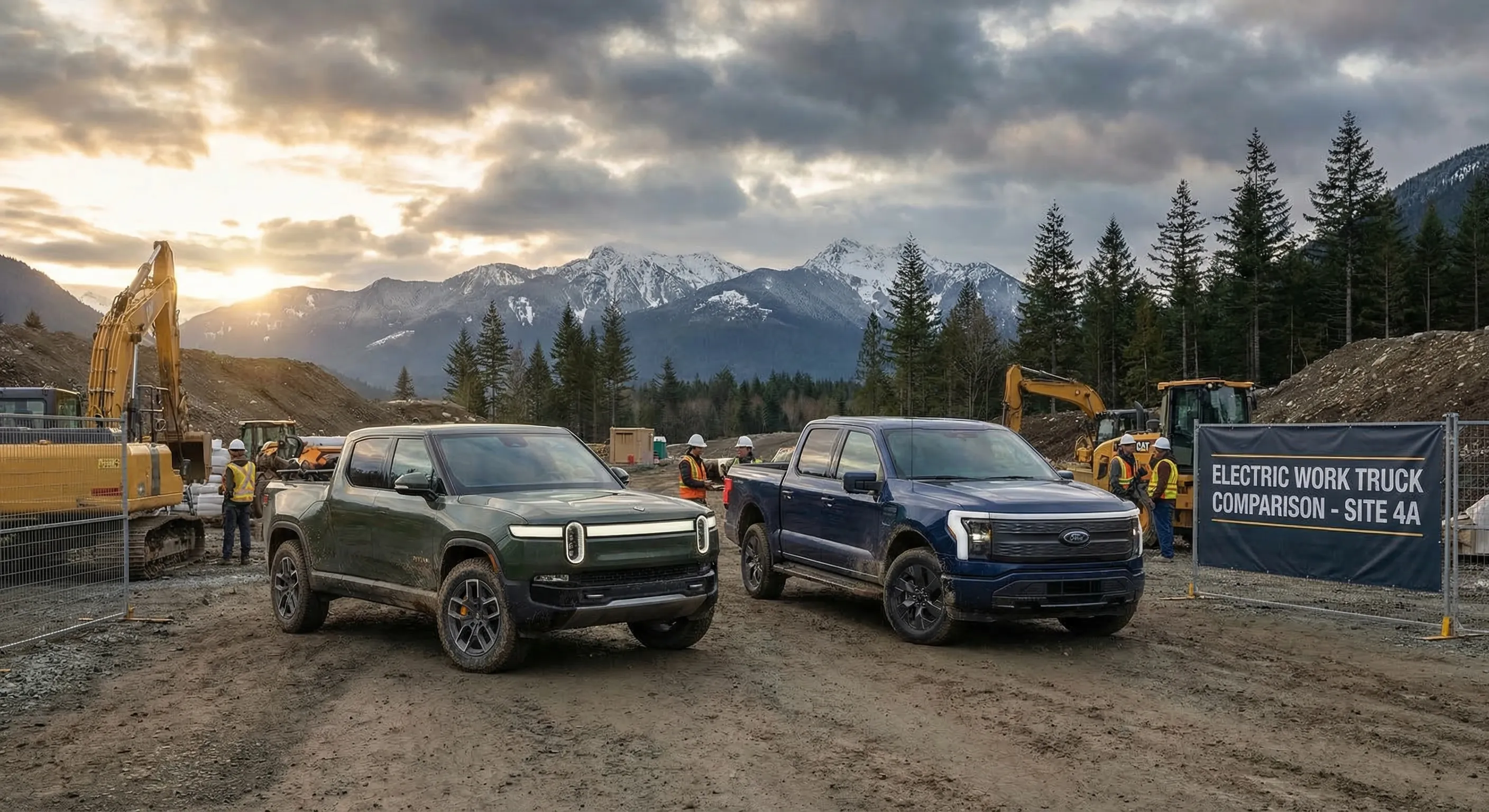
Rivian R1T vs F-150 Lightning: Canada 2026 Test
EV vs Gas: 5-Year Cost of Ownership in Canada
BYD Atto 3 vs Hyundai Kona EV: The $35K Comparison
BYD Dolphin vs Chevy Bolt 2027: Cheapest EVs