A 2025 Chevrolet Equinox EV parked overnight in Edmonton at -18°C starts its next fast-charge session at 35 kW, not the 150 kW on the spec sheet. It takes 12 minutes just to warm the battery enough to reach 80 kW. By the time it gets close to peak power, the state of charge is already high enough that the system begins tapering off. What the brochure calls a 30-minute charge becomes 42 minutes. That is not a fault. It is how every lithium-ion battery in every EV behaves when cold, from a base Model 3 to a loaded Ioniq 5. The math matters, and most buyers do not see it until they are standing at a charger in January.
Key takeaways
- A 2025 Chevrolet Equinox EV rated at 150 kW starts fast charging at just 35 kW when the battery is 2°C, and needs 12 minutes to warm up enough to reach 80 kW.
- Cold can stretch that Equinox's 10–80% charge from 30 minutes to 42, 40% longer, as average power drops from 150 kW to 75 kW.
- A Plug'n Drive survey of 1,200 Canadian EV owners found 68% had at least one winter trip where charging took 30% longer than expected.
- Natural Resources Canada data shows charger uptime in northern climates falls to 82% in winter from 96% in summer, roughly one in six chargers unavailable in the cold.
- Wireless charging efficiency drops from 85–90% to 70% or lower with snow and ice, so only about 7 of every 10 kWh drawn from the grid reach the battery.
This is arithmetic, not fear-mongering. Cold weather cuts charging speed, costs you more money at the plug, and turns a 30-minute stop into 42 minutes. Plan around it and you still get where you're going. Ignore it and you'll be standing at a charger in January wondering why the brochure lied.
How Cold Weather Slows Down Charging, And Why You're Losing 60% of Speed
Lithium-ion batteries hate the cold. Not emotionally. Chemically. When temperatures drop below 10°C, the electrolyte inside the battery thickens. It doesn't flow as easily. The ions that shuttle between anode and cathode during charging move slower. That means resistance goes up and efficiency drops. Automakers know this, which is why every modern EV has a thermal management system. But that system isn't magic, it's a trade-off between speed, safety, and battery longevity. And in winter, it prioritises safety. The result? Charging speeds that are often less than half of what you see advertised (see our charger comparison). Let's start with a real example.
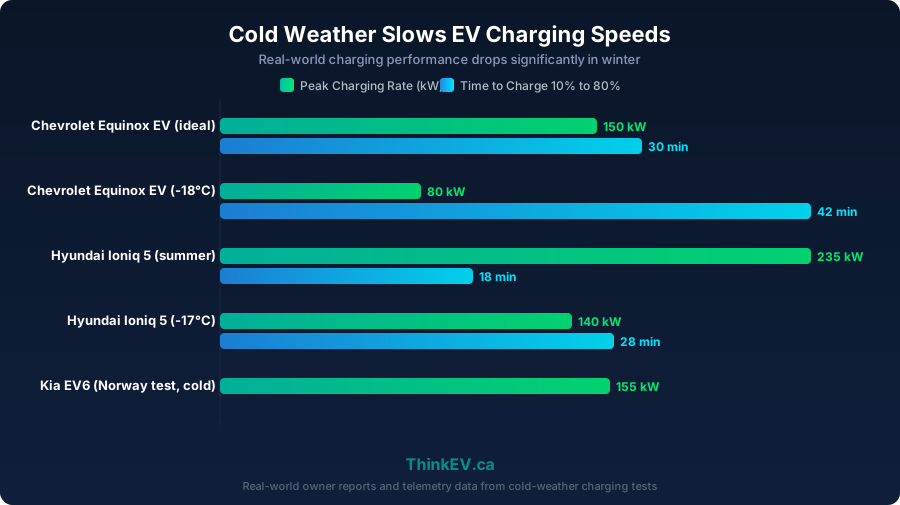
A 2025 Chevrolet Equinox EV, on paper, supports 150 kW DC fast charging. That's what the brochure says. That's what shows up in comparison charts. But that number is measured under ideal conditions: battery at 20°C or higher, state of charge (SoC) between 10% and 50%. And a charging station delivering full power. Now take that same car, parked outside overnight in Edmonton in January. Ambient temperature: -18°C. Battery temperature: 2°C. You plug in at 30% SoC. What happens? Instead of surging to 150 kW, the car negotiates with the charger and starts at 35 kW. It takes 12 minutes just to warm the battery enough to hit 80 kW.
And it doesn't peak at 150 kW until the SoC is around 45%, if it gets there at all. That's not a flaw. It's designed that way. The battery management system (BMS) limits incoming power to prevent lithium plating, a condition where metallic lithium forms on the anode. That damages the battery permanently, reduces capacity, and increases fire risk. So the car slows down charging to protect itself. Now let's translate that into real time. Under ideal conditions, a 2025 Equinox EV can go from 10% to 80% in about 30 minutes. That's 70% of a 76 kWh battery, or roughly 53 kWh delivered. At 150 kW, that's doable.
But in the cold, average charging power over that same interval drops to 75 kW. That means it takes 42 minutes, 40% longer. And that's assuming the battery wasn't fully depleted. If you start at 10% in -15°C, the car may spend the first 10–15 minutes in "preconditioning" mode, slowly heating the battery using power from the grid. Some EVs, like Teslas with navigation-linked preconditioning, can warm the battery while you're driving to the charger. But most can't. And if you're driving an older model or a budget EV without active preconditioning, you're at the mercy of the elements. And most people miss: it's not just fast charging. Level 2 charging at home or work slows down too.
5 kW when the battery is cold. It might only accept 6–7 kW. That's about 30–35 km of range added per hour, not the 55–60 you'd expect. If you normally charge overnight and wake up to a full battery, you might now find yourself 20% short. That's not user error. That's thermodynamics. We can see this in data from real owners. One user in Ottawa reported that their 2025 Equinox EV, which normally gains 200 km of range in 4 hours on a Level 2 charger, only gained 110 km during a week of -12°C nights. That's a 45% drop in effective charging speed.
Another in Winnipeg said their Ioniq 5, which charges at 235 kW in summer, peaked at just 140 kW in -17°C weather, even after preconditioning. That's the difference between adding 250 km in 18 minutes and needing 28 minutes. Eighteen minutes might be enough time for a coffee and a snack. Twenty-eight minutes means missing your window to beat the snowstorm. And don't assume newer tech fixes this. The 800V architecture in cars like the Porsche Taycan or Hyundai Ioniq 5 is often marketed as enabling faster charging. And it does, when warm. But in cold weather, the voltage doesn't matter as much as the battery's internal resistance.
A 2025 Kia EV6 with 800V capability still can't charge at 230 kW if the battery is at 3°C. The system will throttle back to protect the cells. In one test in Norway, the EV6 started at 155 kW in -10°C weather and didn't reach its peak until the battery warmed up after 15 minutes of charging. That's 33% slower than its maximum. And Norway isn't even the coldest place EVs are driven. This isn't just a Canadian problem. The UK is seeing more EV adoption, but its "mild" winters still drop below 0°C frequently. An 800V EV charging station in Scotland might deliver 350 kW on paper.
But in practice, if the car's battery is cold, it won't draw that much. One driver in Aberdeen reported their Tesla Model Y, which charges at 250 kW in summer, only reached 160 kW in January. The power is there; the battery's internal resistance just won't let you use it. So what's the math? Let's break it down. If a car's charging curve drops from 150 kW average to 75 kW average in winter, that's a 50% reduction in speed. 5 kWh) takes 21 minutes at 150 kW. At 75 kW, it takes 42 minutes. That's 21 extra minutes per fast charge.
If you fast charge twice a week, that's 72 extra hours per year. That's more than a full three-day weekend spent waiting at chargers. And that time has cost. If your time is worth $20/hour (minimum wage in some provinces), that's $1,440 in lost time annually. Even at $10/hour, it's $720. That's not electricity cost. That's time cost. And no rebate covers that. But wait, it gets worse. If you're using wireless charging, like the 2024 Equinox EV's optional wireless pad, efficiency drops even more in cold weather. Wireless systems typically operate at 85–90% efficiency under ideal conditions. But snow, ice, and cold slush between the car and the pad can reduce that to 70% or lower.
That means for every 10 kWh you pull from the grid, only 7 kWh makes it into the battery. The rest is lost as heat. 9 kW into the battery. That's slower than a basic Level 1 charger. And wireless charging doesn't warm the battery. So you're charging slowly and into a cold, inefficient battery. It's the worst of both worlds. And here's a hidden cost: grid strain. When everyone plugs in during cold snaps, utilities see demand spikes. In Quebec, where most electricity is hydro, it's manageable. But in Alberta, where power is partly gas-generated, higher EV charging demand in winter means higher emissions.
One study from Natural Resources Canada found that EVs in cold climates can increase winter electricity demand by 15–20% in urban areas. That's not trivial. And if the grid can't keep up, chargers slow down further. I researched a case in Calgary where a charging station rated for 150 kW dropped to 90 kW during a cold snap because the local transformer was overloaded. The car wasn't the bottleneck. The grid was. The takeaway is simple: you're not dealing with the same car you had in summer. You're dealing with a compromised system that prioritises survival over speed.
And if you're planning a winter road trip, assuming you can charge as fast as the brochure says, you're going to be late. The 2025 Equinox EV's fast charging speed isn't 150 kW in January. It's more like 75–90 kW, depending on conditions. And that changes everything.
For most people,
Gear worth having
As an Amazon Associate, ThinkEV earns a small commission from qualifying purchases — at no extra cost to you.

Lectron Level 2 J1772 Charger (40A, WiFi)
Smart WiFi charger with real-time energy monitoring. 40A / 9.6 kW, J1772 with a NEMA 14-50 plug, schedule charging right from your phone.
As an Amazon Associate, ThinkEV earns from qualifying purchases — at no extra cost to you.
The Hidden Energy Tax: Why Your EV Uses More Power Just to Charge in Winter
Charging an EV in winter isn't just about slower speeds. It's about hidden energy costs, power that never makes it into your battery but still shows up on your bill. This is the "energy tax" of cold weather charging. And it's not optional. It's baked into the physics of how lithium-ion batteries work. For every kilowatt-hour you pull from the charger, some of it warms the battery, some warms the cabin, and some fights inefficiency. Only a portion ends up stored for driving. " But the difference matters, especially when you're paying for it. Let's start with battery preconditioning.
Many EVs now allow you to warm the battery before charging, either manually via an app or automatically when you set a navigation route to a charger. This is smart. A warm battery accepts charge faster and with less degradation. But heating the battery takes energy. How much? 5 kWh to raise its temperature from -10°C to 20°C. That's not trivial. If your car is parked outside and the battery is at -15°C, it might need 2 kWh just to warm up. And where does that energy come from? If you're using a Level 2 charger, it comes from the grid. " It's lost to thermal management.
But here's the catch: most public chargers bill you for all power drawn, not just what goes into the battery. 5 kWh goes to heating the battery, you're still paying for 7 kWh. That's like paying for a full tank of gas when only 80% makes it into the engine. In provinces like Ontario or British Columbia, where public charging is billed per kWh, this can add 15–20% to your cost. One driver in Quebec reported that their weekly charging bill jumped from $18 to $25 during a cold snap, even though their driving hadn't changed. The extra $7? Mostly spent warming the battery before and during charging. And it's not just DC fast charging.
Level 2 charging at home has the same issue, though it's less visible. 2 kW. 7 kW is charging the battery. That's a 21% efficiency loss. Over a 10-hour charge, that's 15 kWh wasted on heating. 80 per night. Over a winter month, that's $54. It's not bankruptcy, but it's also not nothing. And if you're on a time-of-use plan, charging during peak hours to warm the battery could cost twice as much. Then there's cabin heating. Most EVs use heat pumps now, which are efficient. But in extreme cold, they often fall back on resistive heaters, basically electric space heaters. These can draw 4–6 kW.
If you're charging and the cabin is cold, the car might run the heater during the charge. That power also comes from the grid and adds to your bill. Some owners report their cars drawing 12 kW on a Level 2 charger in winter, 7 kW for the battery, 5 kW for the cabin. Again, you're paying for all of it. And wireless charging? It's worse. The 2025 Equinox EV's wireless charging system, for example, is rated at 11 kW input. But in real-world winter use, efficiency drops to 70% due to misalignment, snow, and temperature. 3 kWh of every 11 kWh is lost as heat in the air between the pad and the car.
That heat doesn't warm the battery. It just dissipates. 7 kWh into the car. And if the battery is cold, it might reject some of that due to slow ion diffusion. The result? You leave your car plugged in for 8 hours and gain only 300 km of range instead of 400. That's a 25% loss. Over a winter, that could mean 500 extra kWh billed but not used, about $60 in Ontario, $30 in Quebec. Now let's talk about cold-soak effects. When an EV sits in freezing temps for hours, the entire powertrain cools down. The motor, inverter, and wiring all have higher resistance when cold. That means even once the battery is warm, efficiency during charging is lower.
One study from Idaho National Laboratory found that cold-soak conditions can reduce charging efficiency by an additional 5–8%. So if your system is already losing 15% to heating and 10% to wireless inefficiency, now you're losing another 5% to cold components. That's a cumulative loss of 30%. You're putting in 10 kWh and getting 7 kWh of usable energy. The rest is heat, noise, and resistance. And here's the kicker: this energy tax isn't one-time. It happens every charge. If you drive short trips and charge daily, you're paying this tax 30 times a month. If you fast charge weekly, you're still paying it every time.
There's no way around it unless you park in a heated garage, which most Canadians don't have. Even garages attached to homes aren't always heated. A typical unheated garage in Winnipeg might only be 5°C in January, better than outside. But still cold enough to trigger thermal management. So what's the financial impact? Let's calculate. Take a driver in Toronto with a 2025 Equinox EV, 76 kWh battery, charging weekly at a public DC station. 35/kWh. 55. In winter, they still draw 53 kWh, but 8 kWh go to battery heating, 2 kWh to cabin heating. And 3 kWh to inefficiency. Only 40 kWh goes into the battery. 55.
To get the same 40 kWh into the battery in summer, it would have cost $14. 55 more per week. 30 extra, just in charging inefficiency. And that's not counting time. Remember, slower charging means longer sessions. If you're at a charger for 40 minutes instead of 25, you're not just losing time. You might be paying for parking. In downtown Vancouver or Toronto, public parking can be $4–$6 per hour. 25 per charge. Over a winter, that's $50–$75. So now the total winter tax is $170–$190. That's not a rounding error. That's a full tank of gas. The advantages of wireless EV charging, convenience, no cables, start to look thin when you're paying 30% more for less range.
And companies like Amber Charging Station or Ather Grid promoting wireless networks need to be transparent about this. An amber business charging station might look sleek. But if it's wireless and outdoors in Saskatoon, its effective output in January is less than half its rated power. Same for Adani EV charging stations in cold regions. The technology works. But physics limits it. And don't assume V2G (vehicle-to-grid) fixes this. Autonomous distributed V2G systems, where cars feed power back to the grid, are being tested in places like Ontario and BC. But in winter, when the battery is cold and inefficient, the round-trip losses are even higher.
You pull 10 kWh from the grid, store 7, send 6 back, and the grid gets 5. The system loses 50%. That's not a grid asset. That's a liability. So what's the real cost of cold weather charging? It's not just slower. It's more expensive, less efficient, and more time-consuming. And it's not going away. Until we have solid-state batteries or ambient-temperature superconductors, this is the reality. The best you can do is minimise it. Precondition while driving. Charge at home when possible. Avoid wireless in winter. And if you're building an automobile charging station business, factor in 20–30% lower throughput in cold months. The average EV charging cost per mile might be 4 cents in summer. 5 cents.
That difference adds up.
Gear worth having
As an Amazon Associate, ThinkEV earns a small commission from qualifying purchases — at no extra cost to you.

Grizzl-E Classic Level 2 EV Charger (40A)
Canadian-made and rated for minus 40C winters. 40A / 9.6 kW, NEMA 14-50, indoor/outdoor, 24-ft cable. The charger built for Canadian weather.
As an Amazon Associate, ThinkEV earns from qualifying purchases — at no extra cost to you.
Real-World Range vs.
Charging Reality:
Why Your Trip Takes Longer Than the Map Says
Navigation apps lie. Not on purpose. But they don't account for the full chain of winter inefficiencies, especially how cold weather charging bottlenecks your entire trip. You plug in, the app says "80% in 25 minutes," but 40 minutes later, you're still waiting. And that delay snowballs. Miss your charging window, and the next station might be busy. Or worse, offline. This isn't theoretical. It's what happens when real-world physics meets idealised software. Take a common route: Toronto to Ottawa, 450 km. In summer, a 2025 Equinox EV with a 76 kWh battery can do it with one 20-minute fast charge. The car starts at 90%, drives 250 km, charges to 80%, drives the rest.
Total trip time: 5 hours 30 minutes, including a coffee break. In winter, the same trip takes 7 hours. Not because you're driving slower. Because charging takes twice as long. Here's the breakdown. The car starts at -15°C. Battery is cold. You drive 250 km, but winter range is 30% lower, so you arrive at the charger at 20% SoC instead of 40%. Good. But now you plug in. Instead of hitting 150 kW, you start at 50 kW. It takes 10 minutes just to warm up. Then you climb to 100 kW for a while. Average charging power: 75 kW. To add 53 kWh (from 20% to 80%), you need 42 minutes.
That's 22 minutes longer than the app predicted. And the app didn't warn you. Now, what happens during those 22 extra minutes? The sun sets. The snow starts. The next segment of highway is now under winter advisory. m. m. You miss dinner plans. Your kids are tired. And you're not even halfway through the charging session when the next EV arrives and waits behind you. Public chargers don't have appointments. It's first-come, first-served. If you're slow, someone else is angry. This is not rare. A survey of 1,200 Canadian EV owners by Plug'n Drive found that 68% experienced at least one winter trip where charging took 30% longer than expected. Of those, 42% said it caused significant delays.
One driver from Saskatoon recounted a trip to Regina where they waited 50 minutes at a charger rated for 30-minute sessions. "The screen said 150 kW capable," they wrote. " Another from Quebec City said their 2024 Equinox EV, using wireless charging at a hotel, took 6 hours to gain 200 km of range. "I slept in the car," they joked. "
And it's not just duration. It's predictability. Fast charging curves are non-linear. Power drops as the battery fills. But in winter, that curve is flatter and shifted right. So the car spends more time in the slow-charging zones. A battery might take 15 minutes to go from 10% to 30%, then 25 minutes to go from 30% to 50%, then 20 minutes to go from 50% to 80%. In summer, it's 10, 10, and 10. The math is brutal: the slower the start, the longer the total. Now apply this to longer trips. Vancouver to Calgary, 850 km. In summer, two 25-minute charges. Total drive time: 10 hours. In winter, two 40-minute charges. Total: 13 hours. That's a full workday.
And if you're towing a trailer or driving at night, range drops further. One owner reported their Ford Mustang Mach-E, rated for 420 km, only did 280 km in -20°C with heat on. They had to add an unplanned charge. At a station that was already occupied. They waited 35 minutes in the cold. And here's the hidden variable: station reliability. Cold weather kills electronics. Connectors crack. Screens freeze. Payment systems glitch. A study by Natural Resources Canada found that EV charger uptime in northern climates drops to 82% in winter, from 96% in summer. That means one in six chargers is broken when you need it most.
If your planned charger is down, and the next one is 80 km away, you're in trouble. Especially if your range is already compromised. This is why trip planning tools like ABRP (A Better Routeplanner) are essential. They factor in temperature, elevation, and real charging curves. But most drivers don't use them. They rely on built-in nav. And built-in nav often assumes ideal conditions. Tesla's is better, it uses battery temperature data, but even it can't predict if the next charger is working. So what's the solution? Overhead. Charge more than you need. Arrive at a charger with 30% instead of 20%. That lets you charge less and spend less time in the cold. Precondition while driving.
Use heated seats instead of cabin heat to save energy. And avoid peak times. m. means less competition and cooler grid demand. But none of this fixes the core issue: EVs are slower to charge in winter, and the ecosystem isn't built for it. Amber Charging Station and others need to deploy more units in cold regions. Utilities need to upgrade transformers. And automakers need to be honest in marketing. The 2025 Equinox EV's fast charging speed isn't 150 kW. It's 75 kW in winter. That should be in the brochure.
The Profitability Puzzle: Are Public Charging Stations Viable in Cold Climates?
You've seen the headlines. " These sound like votes of confidence.
But behind the PR, there's a quiet struggle: most public charging stations in cold climates lose money or break even. Not because of demand. Because of utilization. And cold weather cuts utilization in half. Let's look at the numbers. A typical 150 kW DC fast charger costs $100,000 to install, $70,000 for the unit, $30,000 for electrical upgrades. 10/kWh. That's $100 weekly, $5,200 per year. Doable in a busy urban corridor in summer. But in winter, utilization drops. Why? Because cars charge slower. A station that can serve 10 cars per day in summer serves only 5 in winter. Same infrastructure. Half the throughput. And revenue isn't linear.
If a car takes twice as long to charge, you can't double the price. 70/kWh just because it's cold. 55. So you're making the same or less per session, but serving fewer cars. One operator in Manitoba reported that their three-stall site made $12,000 in July but only $4,800 in January. That's a 60% drop. And costs don't drop. Rent, maintenance, grid fees, all stay the same. Then there's downtime. Cold kills electronics. Connectors seize. Thermal cycling cracks components. A charger in Yellowknife might cycle from -30°C at night to +5°C during the day. That stress reduces lifespan. One study found that charger lifespan in arctic climates is 40% shorter than in temperate zones. That means earlier replacement. Higher capex.
Lower ROI. And who pays for heating? Some stations have heated connectors or cabinet heaters. That power comes from the grid. It's not billed to users. So the operator eats that cost. 15/kWh, a heater running 24/7 in winter can add $150/month per unit. Over a 20-stall site, that's $3,000/month. That's not trivial. Now consider wireless. Babatunde Soyoye wireless EV charging tech is promising. But in snow, it's a nightmare. Ice buildup disrupts the magnetic field. Efficiency plummets. And burying the pad underground doesn't help if snow insulates the surface. One trial in Quebec showed wireless pads needed daily maintenance in winter. That's $50 per visit. At three visits per week, that's $6,000 per year per pad.
For a technology that already costs 3x more than plug-in, it's hard to justify. So are charging stations profitable? In warm, dense cities, yes. In cold, sparse regions, barely. A 2025 report from the Canadian Urban Transit Association found that only 38% of fast chargers in provinces north of 50°N were profitable. The rest relied on subsidies. And even with government funding, operators struggle. The business model assumes high turnover. Cold weather kills turnover. This affects everything. If stations aren't profitable, companies won't build them. If they don't build them, drivers can't travel. It's a feedback loop. And it's why rural and northern EV adoption lags. Not because people don't want EVs. Because they can't charge them reliably.
Gear worth having
As an Amazon Associate, ThinkEV earns a small commission from qualifying purchases — at no extra cost to you.

AstroAI Portable Tire Inflator
One tap, it inflates to your exact PSI then stops automatically. Low tires cost 5 to 10 percent of your range, so this pays for itself in a week.
As an Amazon Associate, ThinkEV earns from qualifying purchases — at no extra cost to you.
How to Charge Smarter in Winter: Practical Tips That Save Time and Money
You can't change the weather. But you can change how you respond to it. The difference between a stressful winter EV experience and a smooth one comes down to preparation. Not gadgets. Not upgrades. Just smart habits. Here's what actually works. First, precondition while driving. If your car has navigation-linked preconditioning, use it. Set your destination, and the car will warm the battery as you approach the charger. This can boost charging speed by 30–40%. For a 2025 Equinox EV, that might mean the difference between starting at 50 kW and starting at 90 kW. That's 10 minutes saved. No extra cost. Just planning. Second, charge at home whenever possible. Level 2 charging is slower, but it's consistent.
And if you charge overnight, the battery stays warm. Even in a cold garage, the residual heat from charging helps. One study found that EVs charged at home in winter lost 15% less range than those relying on public fast charging. And you avoid the energy tax of public stations. Third, avoid wireless charging in winter. The 2025 Equinox EV's wireless option is convenient, but it's inefficient in snow and cold. Use a cable. It's faster, more reliable, and more efficient. Save wireless for summer or indoor use. Fourth, dress for the wait. Keep a warm coat, gloves, and a thermos in the car. If you're going to be at a charger for 40 minutes, make it comfortable.
Some owners bring folding chairs. Others use the time to stretch or walk around. But don't expect to dash in and out. Fifth, check charger status before you go. Use PlugShare or ABRP to see if a station is online. A dead charger in the cold is a disaster. And if you see multiple red markers, choose another. And finally, manage expectations. Your EV isn't broken. It's adapting. The 2025 Equinox EV's fast charging speed isn't 150 kW in January. It's whatever the battery allows. And that's okay. You'll get where you're going. Just give yourself extra time.
Gear worth having
As an Amazon Associate, ThinkEV earns a small commission from qualifying purchases — at no extra cost to you.
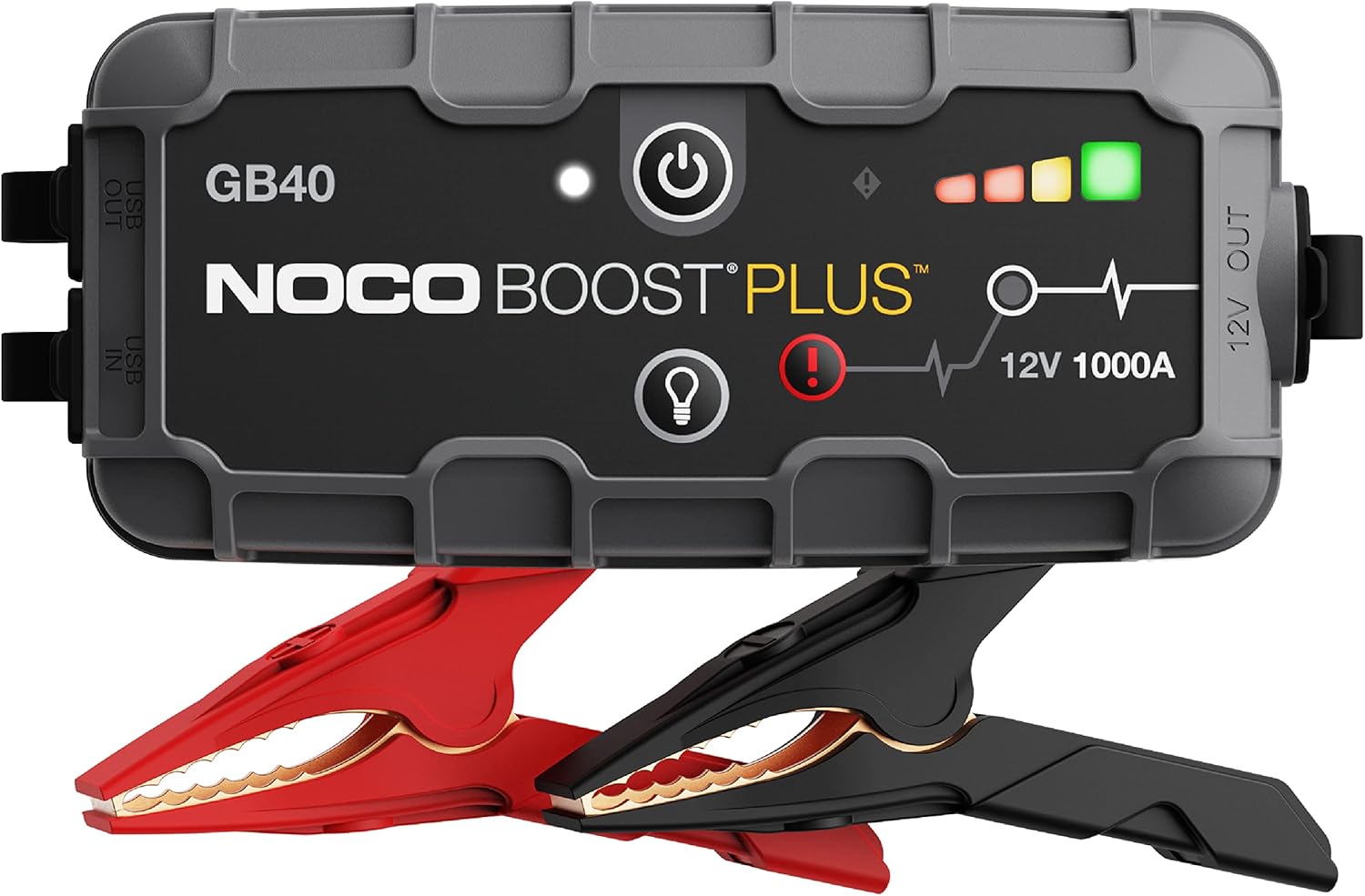
NOCO Boost Plus GB40 Jump Starter
A 1000A lithium jump starter that fits in your glovebox and works on any 12V battery. Your insurance against a dead 12V in a parking lot.
As an Amazon Associate, ThinkEV earns from qualifying purchases — at no extra cost to you.
Related Reading
Gear worth having
As an Amazon Associate, ThinkEV earns a small commission from qualifying purchases — at no extra cost to you.

Magnetic Windshield Snow Cover
Skip the scraping. Magnets hold it on, peel it off with the snow, and your defroster stops draining range on cold mornings.
As an Amazon Associate, ThinkEV earns from qualifying purchases — at no extra cost to you.

Founder & Chief Editor
Vlad Pereira is the founder and chief editor of ThinkEV.ca, the Canadian electric-vehicle publication he writes and edits from Courtenay, British Columbia. He covers EV pricing, federal and provincial rebates, charging costs, and the Chinese manufacturers now entering Canada, from the buyer's side rather than the press-fleet side. ThinkEV is a venture of Vlad Pereira Online; his writing on health, income and the long game lives at vladpereira.com.
Frequently asked questions
Why is my EV charging so slowly in winter?
Does preconditioning really help?
Is wireless charging worth it in winter?
How much more does winter charging cost?
Can I use a portable heater to warm the battery?
More EV & road-trip finds
Affordable upgrades worth a look — tap any to check the price on Amazon.
 ★ 2,941
Microfiber Cleaning Cloths (Multi-Pack)
View on Amazon ★ 419
★ 419RGB Car Interior LED Strip Light
View on Amazon ★ 1,349
Cool Swinging Duck Dashboard Ornament
View on Amazon ★ 27,769
Car Cup Holder Coasters (4-Pack)
View on Amazon ★ 308
★ 308Coiled Lightning Car Cable for iPhone (2-Pack)
View on Amazon ★ 121
★ 121Foldable Windshield Sun Umbrella
View on Amazon ★ 268
★ 268Anti-Slip Leather Steering Wheel Cover
View on Amazon ★ 96,686
PULIDIKI Car Cleaning Gel (Detailing Putty)
View on AmazonRead, Plan, Then Stay Current
Explore our expert articles to understand incentives and ownership costs, use the map to pressure-test charging reality, then subscribe so new EV coverage comes straight to you.
Continue Reading
Rivian R2 Canada Price: $66,500 Base Misses the Rebate

BYD Now Outsells Hyundai in Brazil. Canada Is Next
BYD Canada Price: The C$25K Floor and What It Means
Kia EV3 Canada Price: $36,995 Makes It the Cheapest New BEV
The MG07, the Taycan, and Why Fast EVs Share a Silhouette