Key takeaways
- Their 2025 study tracked 22,700 electric vehicles across 21 models over multiple years of real-world driving.
- The headline number is 2.3% average degradation per year.
- That figure is up from 1.8% in Geotab's 2023 study, and the increase made a few people nervous until they read the explanation.
- At that 2.3% annual rate, the average EV battery holds onto 81.6% of its original capacity after 8 years.
Every few weeks I stumble across someone on Reddit or in a Facebook comment section swearing that EV batteries are ticking time bombs. They act like driving electric means watching your range shrink in real time while your wallet weeps. It makes for dramatic posts. It also has almost nothing to do with reality. Geotab, the Canadian fleet analytics company headquartered in Oakville, Ontario, decided to stop guessing and start counting. Their 2025 study tracked 22,700 electric vehicles across 21 models over multiple years of real-world driving. Not a lab test. Not a manufacturer's press release. Actual cars on actual roads with actual Canadian drivers doing their thing.
The headline number is 2.3% average degradation per year. That figure is up from 1.8% in Geotab's 2023 study, and the increase made a few people nervous until they read the explanation. The bump comes from more drivers using DC fast charging more often, not from batteries getting worse. The underlying chemistry is fine. The humans just got impatient with Level 2 charging at rest stops.
At that 2.3% annual rate, the average EV battery holds onto 81.6% of its original capacity after 8 years. Most manufacturer warranties kick you out at 70%. So after nearly a decade, the typical EV is still more than 10 percentage points above the warranty floor. This is not the catastrophe you were promised. Meanwhile, the engine in a gas car with 160,000 km is probably burning oil like a barbecue and nobody writes panicked articles about that.
Recurrent Auto, which independently tracks battery health across 15,000 vehicles in North America, backs this up from a different angle. Only 1.5% of EV batteries have ever been replaced. Total. Across all years and models. For vehicles built in 2022 or later, the replacement rate drops to 0.3%. Three out of every thousand cars. You have a better chance of getting hit by a moose on the Trans-Canada than needing a new battery pack in a modern EV.
Tesla, for all the noise people make about them, published their own numbers in the 2023 Impact Report. Model 3 and Model Y retain 85% capacity at 322,000 km. Model S and Model X do better, sitting at 88% at the same distance. Those are long-range, heavily used cars. Not babied weekend drivers. These are vehicles that have seen highway commutes, road trips, winters, and summers, and they still have range to spare.
So why does the myth persist? Partly because early EVs like the 2011-2015 Nissan Leaf actually did degrade badly, thanks to air-cooled battery packs that baked in Arizona heat and suffered in every climate. Partly because humans have a hard time accepting that a new technology might just work. And partly because outrage gets clicks. A headline saying your EV battery is slowly dying gets shared a thousand times. A headline saying it's doing fine gets ignored.
The data from Geotab is about as boring as good news gets. Batteries degrade a little. Then they stabilize. Then they keep going for years. It is the most predictable part of an EV, which is ironic because it is the part people worry about most.
The Geotab Numbers
Geotab's degradation curve follows a pattern that anyone who's owned a phone battery will recognize, except EV batteries are engineered to a completely different standard. The steepest drop happens early. In the first 20,000 km, you lose somewhere between 3 and 5%. This is called calendar aging combined with initial SEI layer formation, and it happens whether you drive the car hard or let it sit in your garage. After that first dip, the curve flattens out dramatically.
After year one, with roughly 16,000 km on the odometer, a modern liquid-cooled EV sits at 95 to 97% of its original capacity. By year three and about 58,000 km, the range is 92 to 95%. Year five and 96,000 km brings you to 88 to 92%. The annual loss after that initial settling period runs about 1 to 2% per year, which is roughly 5 to 8 km of range annually on a 400 km pack. You would not notice this in daily driving. You might not notice it for several years.
By year eight at about 160,000 km, the data shows 80 to 88% capacity remaining. By year ten and 200,000 km, it is 75 to 85%. That range within the projections matters. Where your specific car falls depends on how you charge, where you live, and what battery chemistry you have. A Model Y owner in Vancouver who charges on Level 2 overnight is going to be closer to 88% at eight years. A Bolt driver in Sudbury who relies on DCFC every other day is going to trend closer to 80%. Both are still perfectly usable vehicles with hundreds of kilometres of range left.
The practical takeaway from Geotab's data is that battery degradation is not linear and not dramatic. The scariest part happens before you finish your first oil change interval equivalent. After that, it is a long, gentle slope that most people will never find inconvenient. The warranty threshold of 70% is there as a safety net, not a prediction.
Geotab's 2025 report added a nuance that previous studies missed. Vehicles with higher daily battery cycling, defined as using more than 35% of their pack each day, show projected state of health of 81.6% at eight years. Low-use vehicles under 15% daily cycling project to 88% at the same milestone. High daily throughput adds roughly 0.8% additional annual degradation. That matters for delivery drivers and high-mileage commuters. For the average Canadian who drives 40 km a day in a car with a 70 kWh pack, daily cycling is well under 15% and the battery is going to outlive their interest in the car.
NMC vs LFP in Canadian Winters
Two battery chemistries dominate the Canadian EV market right now, and they have fundamentally different personalities. NMC, which stands for nickel manganese cobalt, is the chemistry used by Hyundai, Kia, BMW, Mercedes, most non-Chinese manufacturers, and Tesla's long-range variants. LFP, lithium iron phosphate, is the go-to for BYD, Tesla's standard-range models, and an increasing number of value-priced EVs. The differences between them matter more in Canada than almost anywhere else on the planet, because our winters are a chemistry stress test that Arizona drivers never have to think about.
NMC packs deliver 20 to 30% higher energy density per kilogram. That translates to more range in a physically smaller and lighter package. A 75 kWh NMC pack weighs meaningfully less than a 75 kWh LFP pack, and that weight difference affects handling, efficiency, and the amount of space left for cargo. NMC also handles cold weather with less drama. At minus 20 degrees Celsius, an NMC pack loses less temporary range and accepts DC fast charging with less throttling. If you live in the Prairies, northern Ontario, or anywhere in Quebec where minus 30 is a Tuesday, NMC has a winter advantage that shows up every time you plug in at a public charger.
The trade-off is longevity and cost. NMC batteries cycle between 1,500 and 2,500 full charge-discharge cycles before hitting meaningful degradation. They are sensitive to sustained high state of charge. Leaving an NMC pack at 100% for days at a time accelerates wear. Manufacturers recommend charging to 80% for daily use, which gives you less usable range than the spec sheet suggests.
LFP plays a completely different game. Cycle life runs 3,000 to 5,000 cycles, roughly double what NMC offers. The cells are 15 to 25% cheaper per kWh to manufacture. LFP packs tolerate being charged to 100% regularly without meaningful degradation, which simplifies ownership. You plug in, you charge to full, you drive. No fiddling with charge limits. No thinking about it. LFP is also inherently more thermally stable, which means lower fire risk. BYD's Blade Battery passed a nail penetration test that would cause most NMC cells to go thermal, and they have not shut up about it since.
The cold weather weakness for LFP is real though. At minus 20 degrees, expect 20 to 30% temporary range loss versus about 10 to 15% for NMC. DC fast charging gets heavily throttled until the pack warms up, which can add 15 to 20 minutes to a fast charge session in deep winter. For a commuter who charges at home overnight and drives 40 km to work, this barely registers. For someone relying on public fast charging for a highway trip between Edmonton and Saskatoon in February, it is genuinely annoying.
The decision between the two comes down to priorities. Northern and Prairie drivers who need reliable fast charging in winter and want maximum range per kilogram are better served by NMC. Drivers who prioritize long-term durability, lower replacement costs, and the simplicity of charging to 100% every night will prefer LFP. BYD claims over 90% capacity retention at 200,000 km for the Blade Battery, though Canadian-specific cold climate fleet data to validate that claim is still thin.
Neither chemistry is bad. They are different tools for different priorities. And both are vastly better than the air-cooled Leaf packs that gave battery degradation its bad reputation in the first place.
The Cold Weather Paradox
CAA and BCAA ran a test in February 2025 that confirmed what every Canadian EV driver already suspected. They drove 13 EV models from Ottawa to Mont Tremblant in temperatures ranging from minus 7 to minus 15 degrees Celsius, and recorded range losses of 14 to 39% depending on the model. The Hyundai Ioniq 5 and Kia EV6 held up better than most. The cheaper models with smaller packs got hit harder. None of this is surprising. Cold weather reduces the rate at which lithium ions move through the electrolyte, and the car's heating system draws power from the same battery that moves the wheels.
What is surprising, and what almost nobody talks about, is that cold weather is actually good for your battery's long-term health. Not good for your range today. Good for the battery ten years from now.
Lithium-ion degradation is fundamentally a heat-driven process. The solid electrolyte interphase layer, the SEI, forms on the anode surface over time and gradually reduces the battery's ability to hold charge. That formation accelerates with temperature. A battery stored at 35 degrees Celsius degrades roughly twice as fast as one stored at 25 degrees. A battery that spends Canadian winters at minus 10 to minus 20 degrees is experiencing chemical reactions in slow motion. The parasitic side reactions that eat away at capacity simply do not run as fast when the pack is cold.
Gear worth having
As an Amazon Associate, ThinkEV earns a small commission from qualifying purchases — at no extra cost to you.

Grizzl-E Classic Level 2 EV Charger (40A)
Canadian-made and rated for minus 40C winters. 40A / 9.6 kW, NEMA 14-50, indoor/outdoor, 24-ft cable. The charger built for Canadian weather.
As an Amazon Associate, ThinkEV earns from qualifying purchases — at no extra cost to you.
This is why Geotab's fleet data consistently shows better long-term state of health for vehicles in northern climates compared to those in the American southwest. A Model 3 in Winnipeg will have worse range in January but a healthier battery in 2035 than an identical Model 3 in Phoenix. The temporary range loss from cold is just that, temporary. When temperatures rise in spring, the range comes back. The chemical slowdown from cold is permanent in the best possible way.
The real enemy of EV batteries has never been cold. It is sustained heat. Parking in direct sun at 40 degrees. Driving aggressively in summer without adequate cooling. Living in climates where the battery rarely drops below 30 degrees even at night. These are the conditions that accelerate degradation beyond the 2.3% annual average.
Liquid-cooled battery thermal management systems have made this conversation almost academic for new EVs. Tesla, Hyundai, Kia, Ford, GM, BMW, Volkswagen, and basically every manufacturer selling EVs in Canada today uses liquid cooling. These systems actively regulate battery temperature during charging and driving, keeping the cells in their optimal window regardless of ambient conditions. Geotab's data shows liquid-cooled packs degrade at roughly half the rate of air-cooled packs. The Tesla Model S with liquid cooling showed 2.3% annual degradation. Early Nissan Leaf models from 2015 with air cooling ran at 4.2% per year. That is not a small difference. Over eight years, liquid cooling saves you roughly 15 percentage points of capacity.
Every new EV sold in Canada today has liquid cooling. The air-cooled battery pack is dead. If you are buying a new or recent-model EV, the thermal management is already handling the cold on your behalf. Your battery is benefiting from Canadian winters whether you appreciate it or not.
So the paradox resolves pretty neatly. Canadian winters make your EV annoying to drive in January. They also make your battery last longer than it would in warmer climates. That seems like a reasonable trade, especially since you were going to complain about winter anyway.
DC Fast Charging: The Real Impact
Geotab's data draws a clear line between how you charge and how fast your battery ages. Vehicles that primarily use DC fast charging above 100 kW degrade at approximately 3.0% per year. Those relying mainly on AC Level 2 home charging degrade at about 1.5% per year. Double the speed, double the degradation rate. The physics behind this are straightforward. High-power charging pushes lithium ions across the cell faster, generating more heat and more mechanical stress on the electrode materials. Repeated high-power sessions compound the damage over time.
Before you panic and swear off fast charging forever, read the next sentence carefully. Occasional DC fast charging has no meaningful long-term impact. Geotab's 3.0% figure applies to vehicles where DCFC is the primary charging method, day after day, session after session. If you charge at home 90% of the time and hit a DCFC station twice a month for road trips, your degradation profile is going to look much closer to the 1.5% home-charging average. The battery does not care about the occasional fast charge. It cares about the pattern.
This is where charging behaviour matters more than charging hardware. A driver who plugs into a 240V Level 2 EVSE every night at home, keeps the state of charge between 20% and 80%, and only uses fast charging for highway trips is treating their battery the way the engineers designed it to be treated. That driver is going to see 88% capacity at eight years. A rideshare driver who fast-charges twice a day to stay on the road and regularly runs the pack from 10% up to 95% is going to be closer to 80% at the same milestone. Both are within normal operating parameters. Neither is doing anything wrong. But the outcomes are measurably different.
Modern EVs are also getting smarter about managing fast charge damage. Battery management systems in the Model Y, Ioniq 5, EV6, and most 2024-plus models actively throttle charge rates to protect the cells. You might notice that your car charges fastest between 10% and 50%, then slows down progressively as the state of charge rises. That tapering is intentional. The BMS is reducing current to limit heat generation and lithium plating risk in the upper portion of the charge curve. Some drivers find this annoying. Those drivers should thank their BMS for adding years to their pack's life.
The high daily cycling data from Geotab adds another layer. Vehicles cycling more than 35% of their battery daily project to 81.6% state of health at eight years. Low-use vehicles under 15% daily cycling project to 88%. That 0.8% annual difference from high usage is real but it is also just 0.8%. Over eight years that adds up to roughly 6 percentage points. Noticeable on paper. Unlikely to change your driving experience in any practical way.
The real advice here is unglamorous. Charge at home when you can. Use Level 2. Save fast charging for when you actually need it. If your daily routine requires frequent DCFC, that is fine too. Your battery will still last. It will just last a little less long. The difference between a 1.5% and a 3.0% annual degradation rate is the difference between 88% and 76% capacity at ten years. Both are still functional vehicles with real range. Neither is a catastrophe.
What Replacement Actually Costs in Canada
If your battery does eventually need replacing outside of warranty, which the data says is unlikely for most owners, the costs vary widely depending on what you drive. Knowing the numbers ahead of time strips away the fear factor and turns it into a straightforward financial planning question.
The Nissan Leaf with its original 24 kWh pack is the cheapest to replace, running $4,000 to $6,500 CAD for a refurbished unit. The 62 kWh version of the Leaf climbs to $12,000 to $15,000. Age and scale work in the Leaf's favour. There are a lot of them out there, the pack design is well understood, and the aftermarket supply is healthy. If you own a 24 kWh Leaf and your pack gives out at year ten, a $5,000 replacement is cheaper than a transmission rebuild on a lot of gasoline cars.
The Chevrolet Bolt with its 60 kWh pack lands in the $5,000 to $9,000 CAD range for used and refurbished packs. GM recalled every Bolt battery for the LG Chem defect, which flooded the market with replacement modules and brought prices down. An OEM new pack from GM costs more, but modular replacement is available. GM uses individual module replacement rather than full pack swaps, which means a single failed module in a Bolt or Equinox EV might cost $2,000 to $4,000 instead of the full pack price. That modularity is a genuine advantage for long-term ownership costs.
Tesla prices depend on where you source them. Greentec Automotive, a Canadian company specializing in EV battery refurbishment, offers Tesla remanufactured packs starting around $9,000 CAD. OEM pricing from Tesla runs $13,000 to $15,800. The aftermarket for Tesla packs is the most developed of any EV brand in Canada, which helps keep prices somewhat competitive.
The Hyundai Ioniq 5 sits in the most bewildering price range of any EV battery in Canada. Reported replacement costs run from $6,334 to $36,000 CAD. That spread is enormous and depends on whether the work is done at a dealer under partial warranty coverage, at an independent shop using refurbished modules, or as a full OEM pack swap at retail pricing. The Ioniq 5 pack uses 800V architecture with a more complex configuration, which limits the aftermarket options compared to older, simpler designs.
Volkswagen's ID.4 uses individual modules priced at roughly $2,000 each. A single failed module is a manageable expense. A cascade failure requiring multiple modules gets expensive fast. The modular approach is the right engineering call, but the real-world cost depends entirely on what fails and how much of it fails at once.
Goldman Sachs projects battery pack costs will reach $80 per kWh by 2026. At that price, the raw cell cost for a 75 kWh pack would be about $6,000 CAD. Add labour, the battery management system, cooling hardware, and the enclosure, and the installed cost is higher. But the trajectory is clear. A decade ago packs cost over $300 per kWh. Five years ago it was around $150. The trend line favours buyers who can wait. By the time a 2025-model EV actually needs a pack replacement, possibly around 2035, the cost of that replacement should be substantially lower than today's prices.
The other cost factor nobody talks about is the residual value of a spent pack. EV batteries that are no longer suitable for automotive use, meaning below 70-80% capacity, still have value in stationary energy storage. Companies like B2U Storage Solutions and several Canadian startups are building grid storage systems from retired EV packs. A battery that can no longer push a car down the highway at 120 km/h can still store solar energy for a home or business for another decade. The buyback value of retired packs is not yet standardized, but as the second-life market matures, it should offset some of the replacement cost for owners who time it right.
None of these costs are small. But they are known, predictable, and declining. Compared to the uncertainty of a blown gasoline engine or a failed automatic transmission, EV battery replacement is at least a problem with visible numbers and a clear downward cost trajectory. That is more than most mechanical repairs can promise.
Gear worth having
As an Amazon Associate, ThinkEV earns a small commission from qualifying purchases — at no extra cost to you.

PULIDIKI Car Cleaning Gel (Detailing Putty)
Press it into vents, buttons, and seams and it lifts out dust you did not know was there. Weirdly satisfying, genuinely useful.
As an Amazon Associate, ThinkEV earns from qualifying purchases — at no extra cost to you.
Related Reading
Gear worth having
As an Amazon Associate, ThinkEV earns a small commission from qualifying purchases — at no extra cost to you.

WixGear Magnetic Air Vent Phone Mount (2-Pack)
A magnet strong enough that your phone never flinches over potholes or rail crossings. Two in the box, one for each car.
As an Amazon Associate, ThinkEV earns from qualifying purchases — at no extra cost to you.

Founder & Chief Editor
Vlad Pereira is the founder and chief editor of ThinkEV.ca, the Canadian electric-vehicle publication he writes and edits from Courtenay, British Columbia. He covers EV pricing, federal and provincial rebates, charging costs, and the Chinese manufacturers now entering Canada, from the buyer's side rather than the press-fleet side. ThinkEV is a venture of Vlad Pereira Online; his writing on health, income and the long game lives at vladpereira.com.
Frequently asked questions
How fast do EV batteries degrade in Canada?
Does cold weather permanently damage EV batteries?
Is DC fast charging bad for the EV battery?
More EV & road-trip finds
Affordable upgrades worth a look — tap any to check the price on Amazon.
 ★ 55
★ 55LED Car Door Logo Projector Light
View on Amazon ★ 1,349
Cool Swinging Duck Dashboard Ornament
View on Amazon ★ 21,304
Car Headrest Hooks (4-Pack)
View on Amazon ★ 21,310
Magnetic Car Phone Mount
View on Amazon ★ 121
★ 121Foldable Windshield Sun Umbrella
View on Amazon ★ 268
★ 268Anti-Slip Leather Steering Wheel Cover
View on Amazon ★ 12,051
Windex Electronics Screen Wipes
View on Amazon ★ 164
★ 164Solar-Powered LED Ambient Light
View on AmazonRead, Plan, Then Stay Current
Explore our expert articles to understand incentives and ownership costs, use the map to pressure-test charging reality, then subscribe so new EV coverage comes straight to you.
Continue Reading
EV Adoption Is Not Slowing Down: What the Data Says
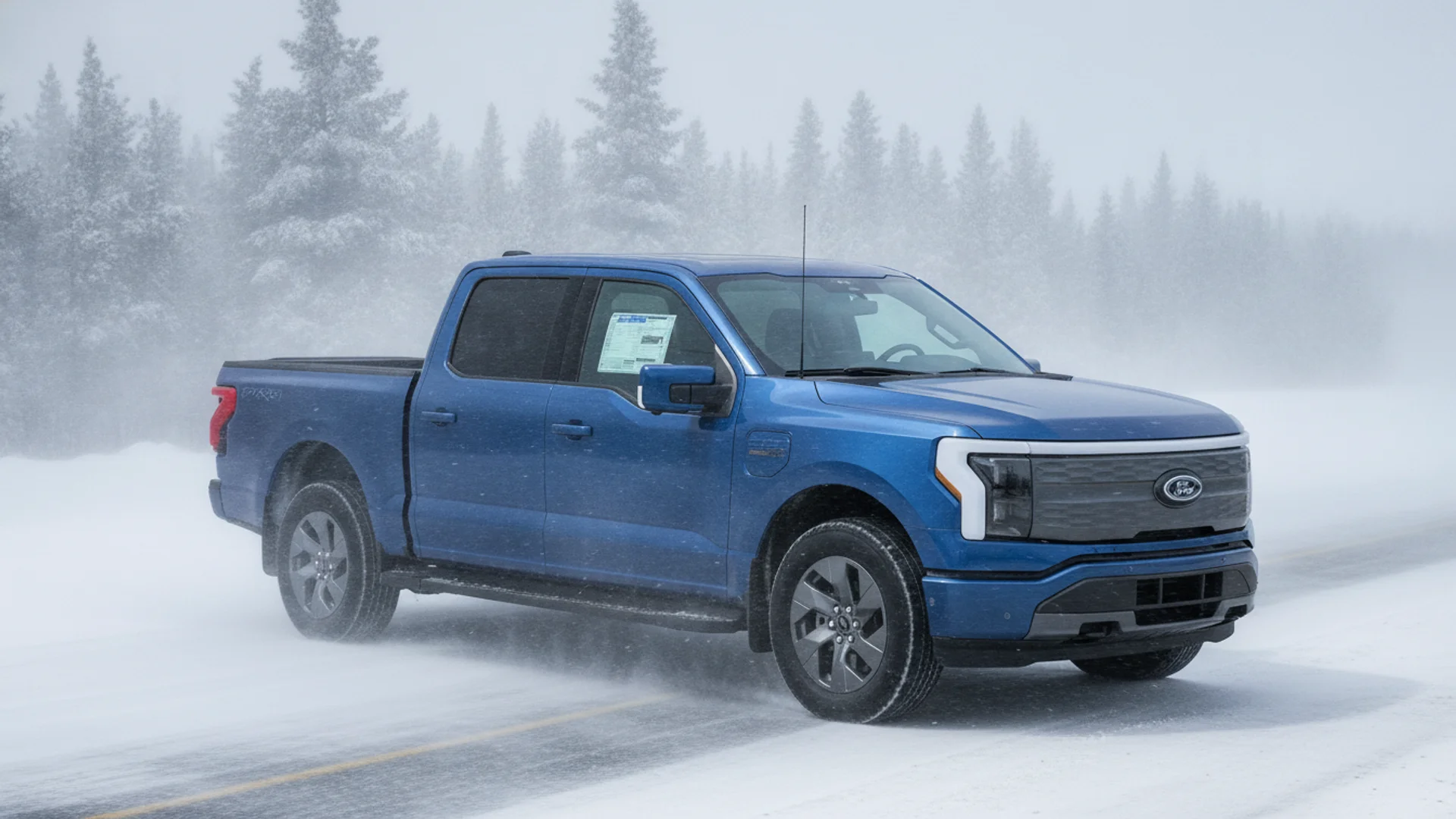
Which EV Actually Works in a Canadian Winter?
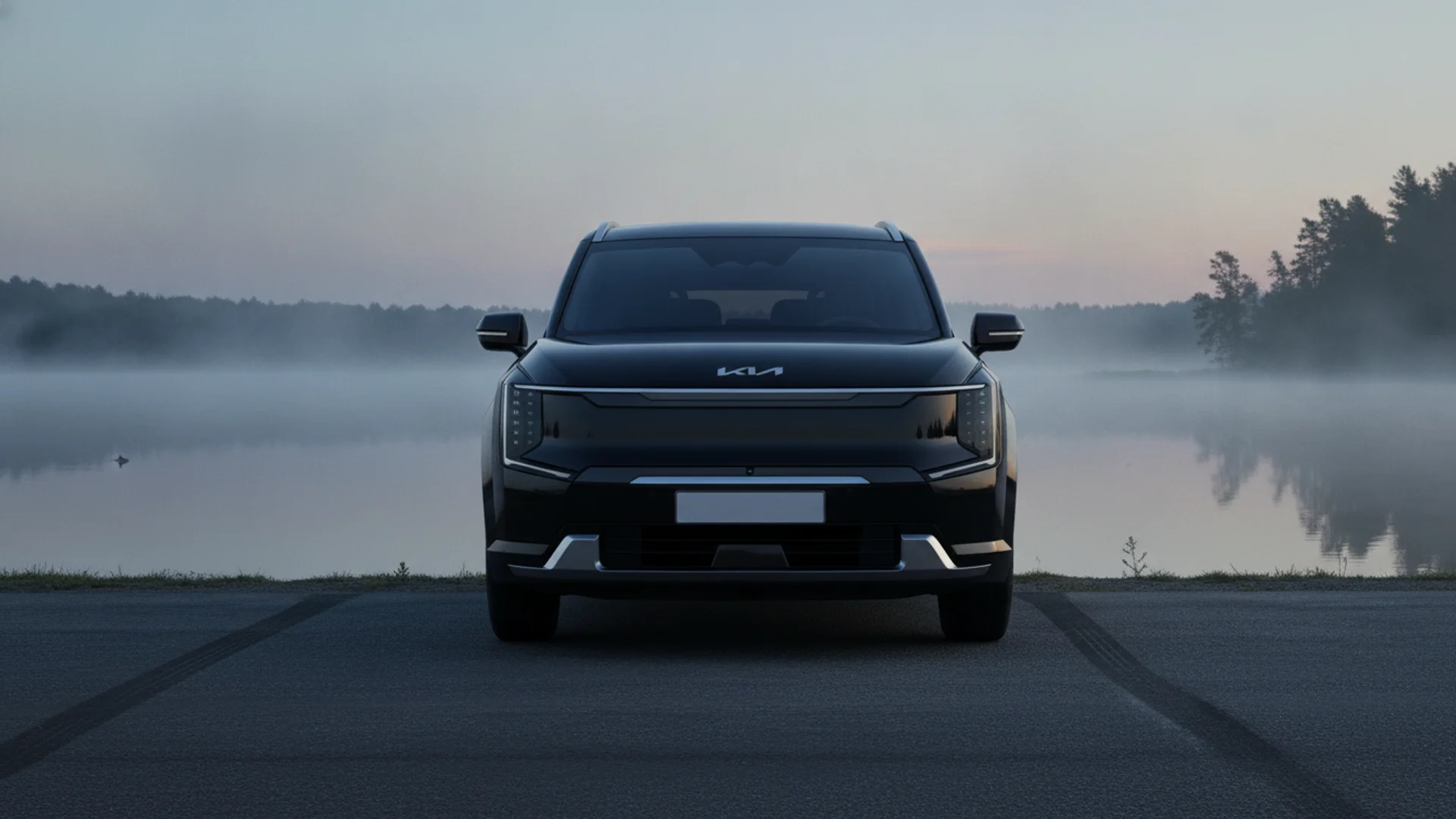
The Best Electric SUVs in Canada (2026): Ranked by Value
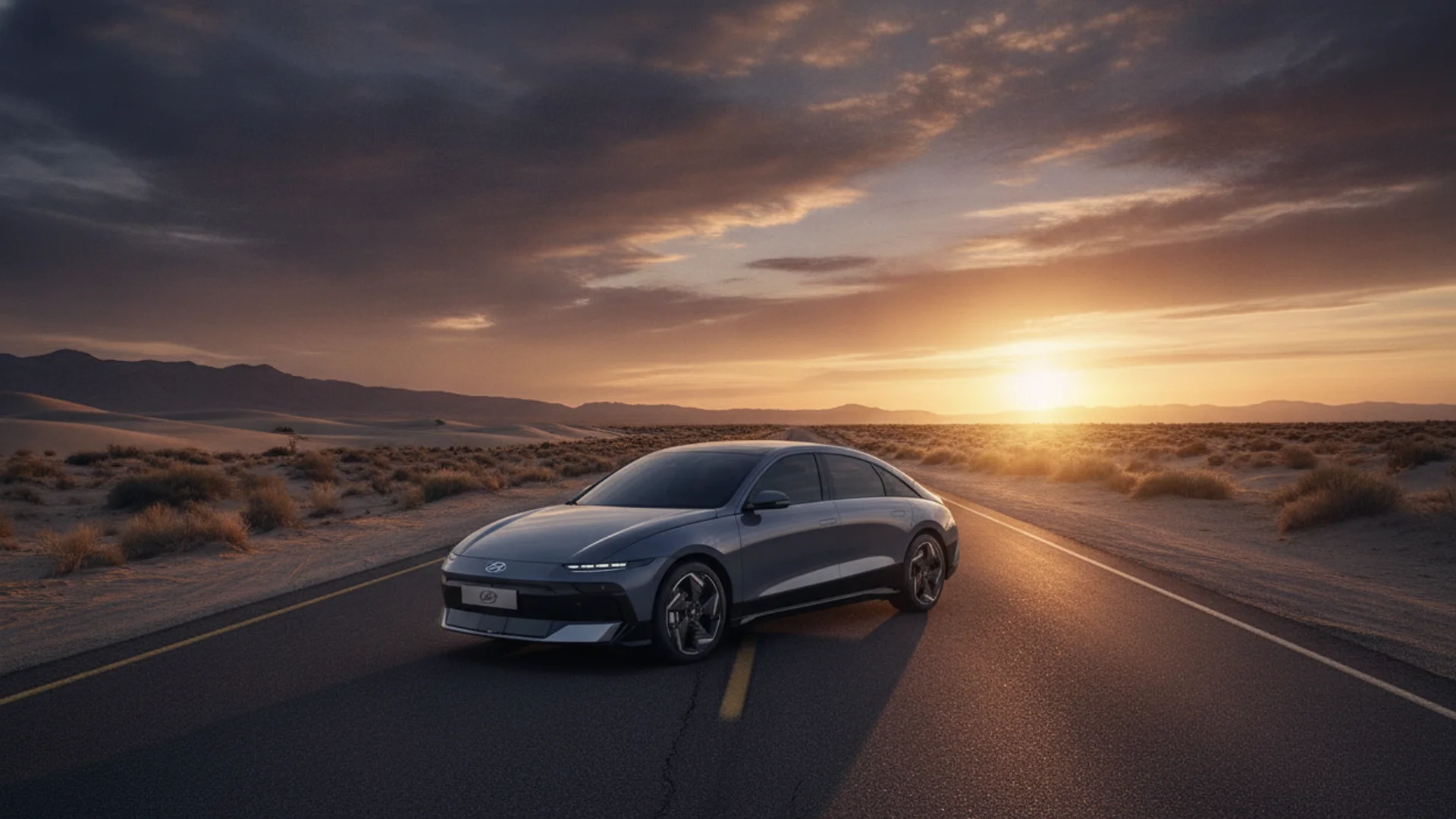
Longest-Range Electric Cars You Can Buy in Canada (2026)

Electric School Buses Are Changing Canadian Streets