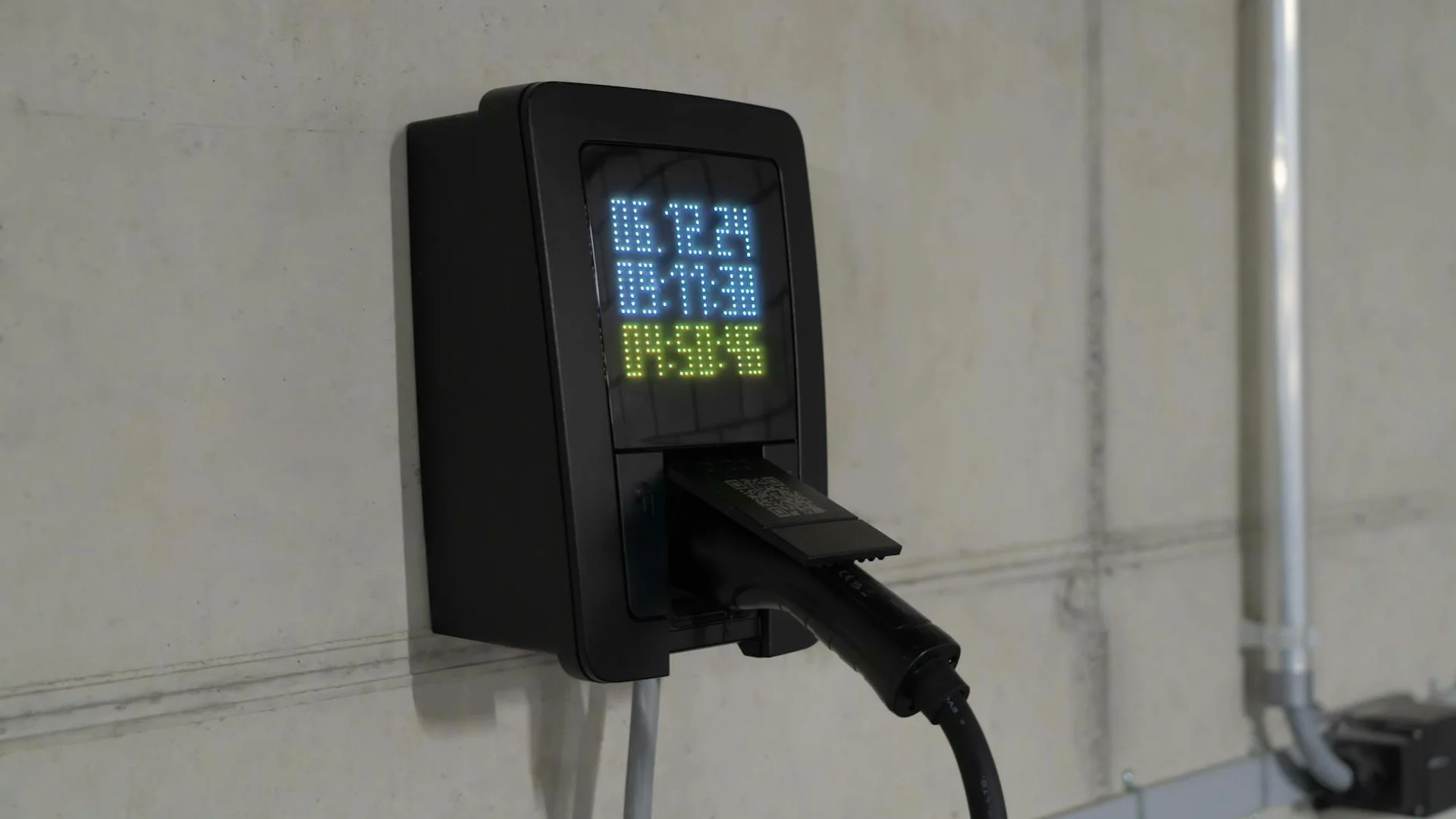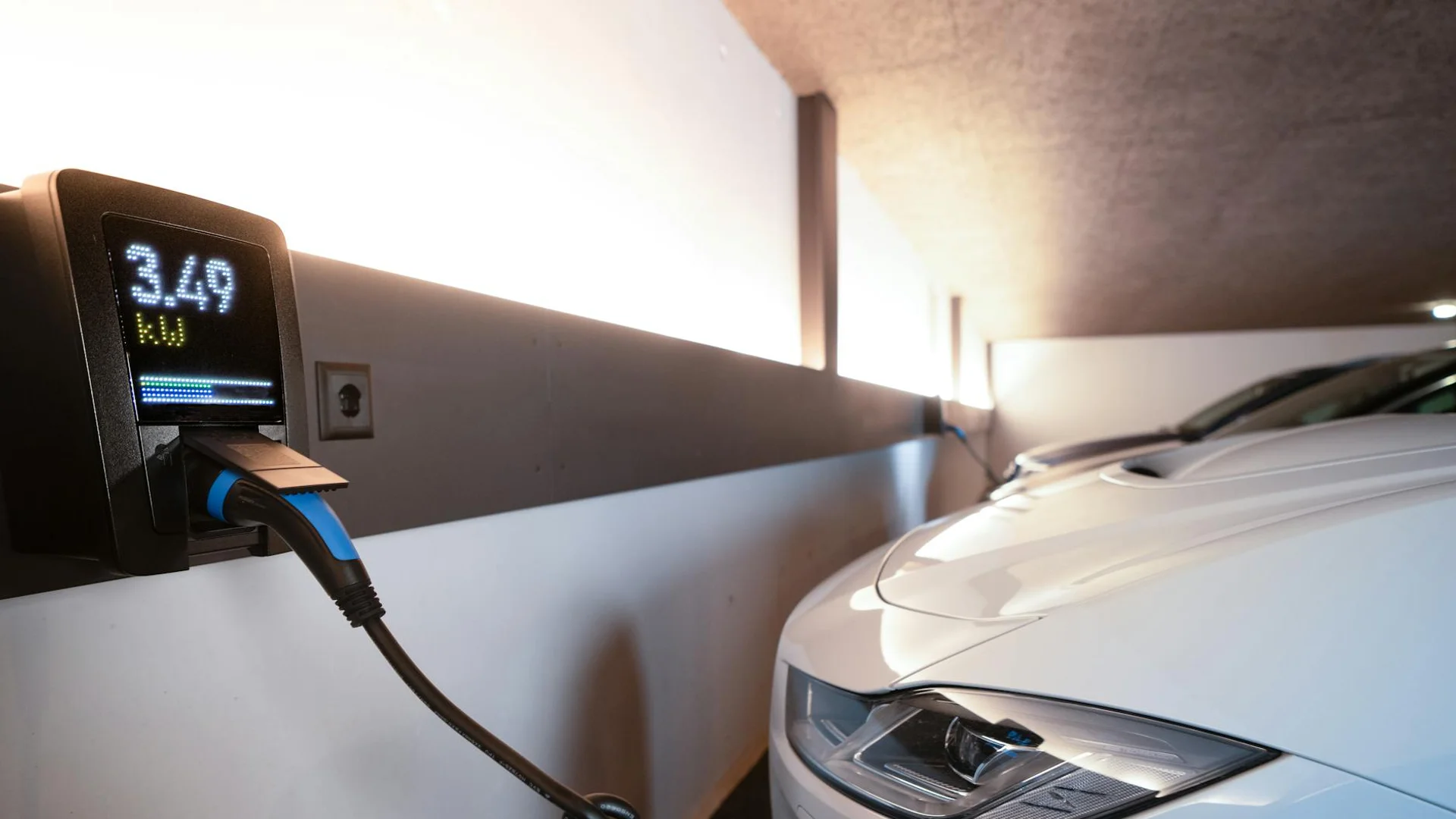
You plug your ID.4 into the garage outlet overnight with the cord that came in the box, and somewhere around 2 a.m. you start wondering whether you just did something stupid to a $50,000 battery. The internet didn't help. A search for "is trickle charging bad" turned up battery-vendor blogs warning about overheating, explosions, and "silent killer" damage to lithium cells. The short answer most experienced EV owners give is two lines: no, it came with the car, you're fine.
Here's the straight answer to a midnight panic: the cable in the box is not your enemy. Both things can be true at the same time. Trickle charging, in the original, technical sense, can genuinely hurt lithium-ion batteries, and may lead to overcharging, overheating, or even explosions. But what you're doing with your EV at home isn't trickle charging. It's Level 1 charging, and the distinction matters a lot. The included cable is a managed charging device, not a passive wire, and your car's battery management system runs the show. The fear is real, the terminology is muddled, and once you separate the two you can stop losing sleep over the 120V outlet in your garage.
This is the Canadian owner's version of the answer. Real commute math. Real winter caveats. Real costs if you decide to upgrade. And the honest part nobody else seems to say out loud: for most people in this country, Level 1 is enough. In fact, Level 1 is underrated, and the upgrade industry knows it, every "you need Level 2 immediately" sales pitch is selling you out of a free solution that's already sitting in your trunk.
Key takeaways
- Your EV's EVSE cable contains a small computer that monitors current and shuts down if anything goes wrong, it's not a dumb extension cord.
- Level 1 charging runs at roughly 0.018C on a 77 kWh ID.4 pack, a rate so low the cells barely register thermal stress.
- Lithium cells age faster sitting at 100% state of charge for hours than from the charging rate itself, scheduled charging fixes this.
- The 'trickle charging is dangerous' blog posts describe lead-acid battery failure modes that don't apply to EVs with built-in battery management systems.
- For most Canadian commutes, the included 120V cable adds enough overnight range without the $1,500–$3,000 cost of a Level 2 home installation.
What "Trickle Charging" Actually Means for an EV
The phrase comes from lead-acid battery culture, not lithium. Trickle charging refers to a charging method that continuously replenishes the battery with a very low current after it has been fully charged, with the current typically equivalent to the battery's self-discharge rate, aiming to offset natural energy loss and keep the pack at a fully charged state for an extended period. The standard analogy is a bucket with a slow leak: if you leave it alone, it will eventually empty, so a trickle charger is like a faucet dripping water into the bucket at the exact same rate it's leaking out. That's a fine description of what a $40 Canadian Tire battery maintainer does for a classic car that lives under a tarp from October to April. It is not what's happening when you plug your EV into a 120V outlet.
Level 1 charging in North America runs at 120V and typically draws 12 amps continuous on a standard 15A circuit. That works out to about 1.4 to 1.9 kW going into the car. For a VW ID.4, that translates to roughly 5 km of range per hour, the "3 miles per hour" number you'll see quoted in owner forums. It's slow, yes. And honestly? Slow is the feature, not the bug. It's not a maintenance trickle that runs forever after the pack is full. It's a controlled, regulated charge session that starts when you plug in and stops when the battery hits whatever limit you set in the app.
The cord that shipped with your ID.4 is technically called an EVSE, Electric Vehicle Supply Equipment, often marketed as a Mobile Connector. Inside that brick partway down the cable is a small computer that talks to the car, confirms grounding, monitors current, and shuts everything down if anything goes wrong. It is not a dumb extension cord. The car's onboard charger, meanwhile, decides exactly how much power to pull and when to stop pulling it. The wall outlet is just the source.
That's the part the scary blog posts gloss over. Articles warning that trickle charging hurts lithium-ion batteries, may lead to overcharging, overheating, or even explosions, and that you should use smart chargers made for lithium-ion batteries that stop charging when the battery is full are describing a scenario that doesn't apply to your EV. Your EV already has the smart cutoff. It's built into the car. The argument "it came with the car" isn't flippant, it's the obvious one. Volkswagen wouldn't ship hardware designed to destroy the most expensive component in the vehicle.
The interesting part is that the word "trickle" still gets used by EV manufacturers themselves in marketing copy, sometimes as a synonym for Level 1, sometimes to describe a low-and-slow option for fleet applications. So when a battery-vendor blog says trickle charging is dangerous and an EV manufacturer says low-current charging is fine for the lithium batteries in modern vehicles, they're talking past each other. The terminology hasn't caught up with the technology, and the SEO incentives reward the scary headline over the boring truth. That's the whole story.
Is Level 1 Charging Hard on Lithium Batteries?
Short answer: no, and arguably it's the gentlest option you have. The real story isn't that Level 1 is slow, it's that 90% of Canadian commutes don't need anything faster.
The dominant driver of lithium-ion degradation is heat. Fast charging at 150 kW or 350 kW pushes a lot of current through the cells in a short window and produces real thermal stress, which is why DC fast-charging is something most EV consumer guides tell you to reserve for road trips. Level 1, by contrast, pulls roughly 1.4 to 1.9 kW. That's about one one-hundredth of the rate a fast charger delivers. The cells barely notice, and the thermal management system has all night to dissipate whatever modest heat the charge generates.
The C-rate framing helps here. C-rate is the charging current expressed as a fraction of the battery's capacity. An ID.4 with a roughly 77 kWh usable pack charging at 1.4 kW is running at about 0.018C, well under the threshold where cycle-life impact becomes measurable. Here's the part that surprised me when I first ran the numbers: the cell chemistry doesn't just tolerate this rate, it prefers it. Slower is gentler, and at 0.018C "slower" stops being a meaningful word.
The overcharging fear is a leftover from older chemistries and dumber chargers. Trickle charging supplies minimal power to maintain a full battery, and modern devices manage this intelligently by allowing slight discharge before topping up, which doesn't overwork the battery. Your EV's battery management system does the same thing on a much more sophisticated scale. When the pack hits your target state of charge, 80%, 90%, 100%, whatever you set, the BMS tells the onboard charger to stop pulling current. There is no scenario where the car keeps shoving electrons into a full battery because the wall outlet hasn't figured out to stop. The story the alarmist blogs are telling is a lead-acid story; your EV is a lithium story with a computer in charge.
So where does the real concern live? Two places, neither of them about the charging rate itself.
The first is dwell time at high state of charge. Lithium cells age faster when they sit at 100% for long stretches, this is true regardless of how they got there. Packs kept at 90%+ state of charge for extended periods lose meaningful additional capacity over the long run compared to packs cycled in the 20–80% window. The loss is real, just slower and more gradual than the thermal stress of repeated DC fast charging. A pack that finishes charging at 11 p.m. and sits at 100% until you leave at 8 a.m. has spent nine hours under that mild stress. Not catastrophic, but not nothing. The fix is scheduled charging, which we'll get to.
Gear worth having
As an Amazon Associate, ThinkEV earns a small commission from qualifying purchases — at no extra cost to you.

TP-Link Kasa Smart Plug with Energy Monitoring
Track exactly how much electricity your Level 1 charger uses and schedule it for off-peak hours. Know your real cost per kWh.
As an Amazon Associate, ThinkEV earns from qualifying purchases — at no extra cost to you.
The second is the cold-weather case, where overnight Level 1 charging in a -25°C garage means the car is using a chunk of the incoming power just to keep the battery warm enough to accept the rest. The pack itself is fine; you just don't end up with as much range as the math suggests. I broke the winter charging math out separately because it's its own rabbit hole, the numbers are more dramatic than most people expect.
The honest version: Level 1 charging is the lowest-stress way to put electrons into your EV. The scariness of the word "trickle" is doing all the work in the headlines.
Gear worth having
As an Amazon Associate, ThinkEV earns a small commission from qualifying purchases — at no extra cost to you.

Lectron Level 2 J1772 Charger (40A, WiFi)
Smart WiFi charger with real-time energy monitoring. 40A / 9.6 kW, J1772 with a NEMA 14-50 plug, schedule charging right from your phone.
As an Amazon Associate, ThinkEV earns from qualifying purchases — at no extra cost to you.
Best Practices to Protect Battery Health While Level 1 Charging
Whether you're staying on Level 1 forever or just using it until you decide on Level 2, a handful of habits keep the pack healthy over the long run. If you do nothing else from this post, do these.
Set your daily charge limit to 80%. This is the single most impactful thing you can do for long-term battery health, and every modern EV, including the ID.4, lets you set it in the app or on the centre touchscreen. The cells age slowest in the 20–80% window and noticeably faster when they sit at 90%+ for extended periods. Reserve 100% for the morning of a road trip and finish charging close to your departure time. If you only remember one number from this article, make it 80.
Use scheduled charging so the car finishes near departure. This serves two goals: it minimizes dwell time at high state of charge, and it lets you take advantage of off-peak electricity rates. Ontario's time-of-use rates make this especially worthwhile, overnight rates can be roughly half the on-peak rate, and an 8-hour Level 1 session that starts at 11 p.m. and ends at 7 a.m. captures the cheapest window almost entirely. The car app handles this in about 30 seconds; the savings compound for the life of the vehicle.
Don't run the battery deep before plugging in. Letting the pack drop below 10% routinely is harder on the cells than slow charging ever will be. Plug in at 30% if you can, every night, and the BMS does its job. The "fully discharge before recharging" advice some people learned from old NiCd batteries does not apply to lithium and never has. Just plug it in, the battery is happier almost full than almost empty.
Plug in immediately after arriving home in winter. The pack is already warm from driving, which means the BMS uses less power on thermal management and more on actually adding range. Wait two hours and the pack has cold-soaked, now your charging session is partly spent reheating cells that didn't need to cool down in the first place. The story isn't "Level 1 is too slow in winter", it's "people are plugging in two hours late and blaming the charger."
Keep the EVSE plug clean and dry. A dirty contact or a corroded outlet is a far bigger risk than the charging rate. If your garage outlet is the same one you've been plugging shop vacs into for fifteen years, take a look at it. A 15A circuit running at 12A continuously for 8 to 10 hours every night is well within spec, but it doesn't tolerate bad connections gracefully. This is also where I'd link the full ranking of Canadian Level 2 chargers again, the same connection-quality logic applies to any Level 2 install you eventually do.
Avoid splitters and questionable extension cords. This is the practical safety rule. The EVSE expects a solid, grounded connection straight from the wall. We'll cover the extension-cord question specifically in the FAQ below.
What's striking about this list is how unspecial it is. The same habits that protect your battery on Level 1 protect it on Level 2 and on DC fast charging. Stay in the middle 60% of the state-of-charge band when you can, keep heat down, plug in often. Level 1 just happens to make most of those habits effortless because it's slow enough that you'll always be plugging in overnight anyway.
Gear worth having
As an Amazon Associate, ThinkEV earns a small commission from qualifying purchases — at no extra cost to you.

Grizzl-E Classic Level 2 EV Charger (40A)
Canadian-made and rated for minus 40C winters. 40A / 9.6 kW, NEMA 14-50, indoor/outdoor, 24-ft cable. The charger built for Canadian weather.
As an Amazon Associate, ThinkEV earns from qualifying purchases — at no extra cost to you.
Gear worth having
As an Amazon Associate, ThinkEV earns a small commission from qualifying purchases — at no extra cost to you.

ChargePoint Home Flex Level 2 Charger (50A)
Premium 50A / 12 kW charger with the best app ecosystem. Hardwired or NEMA 14-50, with real-time energy tracking and smart scheduling.
As an Amazon Associate, ThinkEV earns from qualifying purchases — at no extra cost to you.
FAQ: Level 1 Charging Questions Canadian Owners Actually Ask
Should You Upgrade to Level 2? A Quick Decision Guide
The honest decision matrix, stripped of marketing.
Stay on Level 1 if: your daily driving is under 60 km, you have a single EV, your garage outlet is on a dedicated 15A circuit, and you don't road-trip in winter often. You don't need to spend money. Plug in nightly, set the 80% limit, schedule the finish time, and you're done.
Upgrade to Level 2 if: you drive 80+ km a day, you have two EVs sharing a single outlet, you own a plug-in hybrid that wants frequent full recharges, or you regularly need a full pack ready in the morning after a heavy use day. The convenience curve flips fast above the Level 1 threshold.
Net cost in Canada after rebates is reasonable: the federal iZEV home charger program plus provincial top-ups (BC Hydro and Hydro-Québec's roulez vert being the most generous) can take a significant bite out of an $800–$1,500 install. If you live in a rebate-friendly province, an all-in net under $1,000 for a Grizzl-E Classic install is achievable rather than aspirational.
If I had to bet on where the Canadian market goes next: Level 1 stays the dominant entry-level option through 2027 because new EV buyers don't want to commission an electrician on day one, but Level 2 adoption accelerates fast once households add a second EV. The decision point isn't really technical, it's a household-composition signal. One EV, one commute, one outlet: Level 1 forever. Two EVs and a snowblower: time to call the electrician. If a household adding a second EV is in your two-year horizon, install Level 2 with the first car and skip the eventual upgrade pain.
Watch BC Hydro, Hydro-Québec, and Ontario's local distribution companies over the next twelve months, if rebates break the under-$200-net floor for a Level 2 install, the Level 1 holdout population shrinks to renters and condo dwellers almost overnight, where the install constraint is structural rather than financial. Until then, the answer to "is trickle charging bad" stays the same: no, it came with the car, and for most Canadians it's all the charger they need.
Gear worth having
As an Amazon Associate, ThinkEV earns a small commission from qualifying purchases — at no extra cost to you.

Magnetic EV Charger Plug Cover
A magnetic cap that keeps rain, road salt, and grit out of your home charger handle between sessions.
As an Amazon Associate, ThinkEV earns from qualifying purchases — at no extra cost to you.

Founder & Chief Editor
Vlad Pereira is the founder and chief editor of ThinkEV.ca, the Canadian electric-vehicle publication he writes and edits from Courtenay, British Columbia. He covers EV pricing, federal and provincial rebates, charging costs, and the Chinese manufacturers now entering Canada, from the buyer's side rather than the press-fleet side. ThinkEV is a venture of Vlad Pereira Online; his writing on health, income and the long game lives at vladpereira.com.
Frequently asked questions
Can I leave my EV plugged in all night without hurting the battery?
Does Canadian winter cold make Level 1 charging less effective?
Is the cord that came with my EV actually safe to use long-term?
When does it actually make sense to upgrade to Level 2?
Does DC fast charging damage my battery more than slow home charging?
More EV & road-trip finds
Affordable upgrades worth a look — tap any to check the price on Amazon.
 ★ 87
★ 87Car Window Sun Shades for Kids (4-Pack)
View on Amazon ★ 68
★ 68WeatherTech FloorLiner for Tesla Model 3
View on Amazon ★ 12,051
Windex Electronics Screen Wipes
View on Amazon ★ 164
★ 164Solar-Powered LED Ambient Light
View on Amazon ★ 900
★ 900Personalized Photo Car Air Freshener
View on Amazon ★ 979
★ 979Leather Headrest Purse Hook
View on Amazon ★ 1,944
VIOFO A229 Pro 4K Dash Cam
View on Amazon ★ 121
★ 121Foldable Windshield Sun Umbrella
View on AmazonRead, Plan, Then Stay Current
Explore our expert articles to understand incentives and ownership costs, use the map to pressure-test charging reality, then subscribe so new EV coverage comes straight to you.
Continue Reading
Level 1 vs Level 2 EV Charging: Which to Choose
How to Maximize Your EV Battery's Lifespan in Canada
EV Charger Installation in BC: Cost and Permits
Why Is My EV Charging Slow? The Three Real Layers
EVIQO Level 2 Home Charger: A Canadian Review