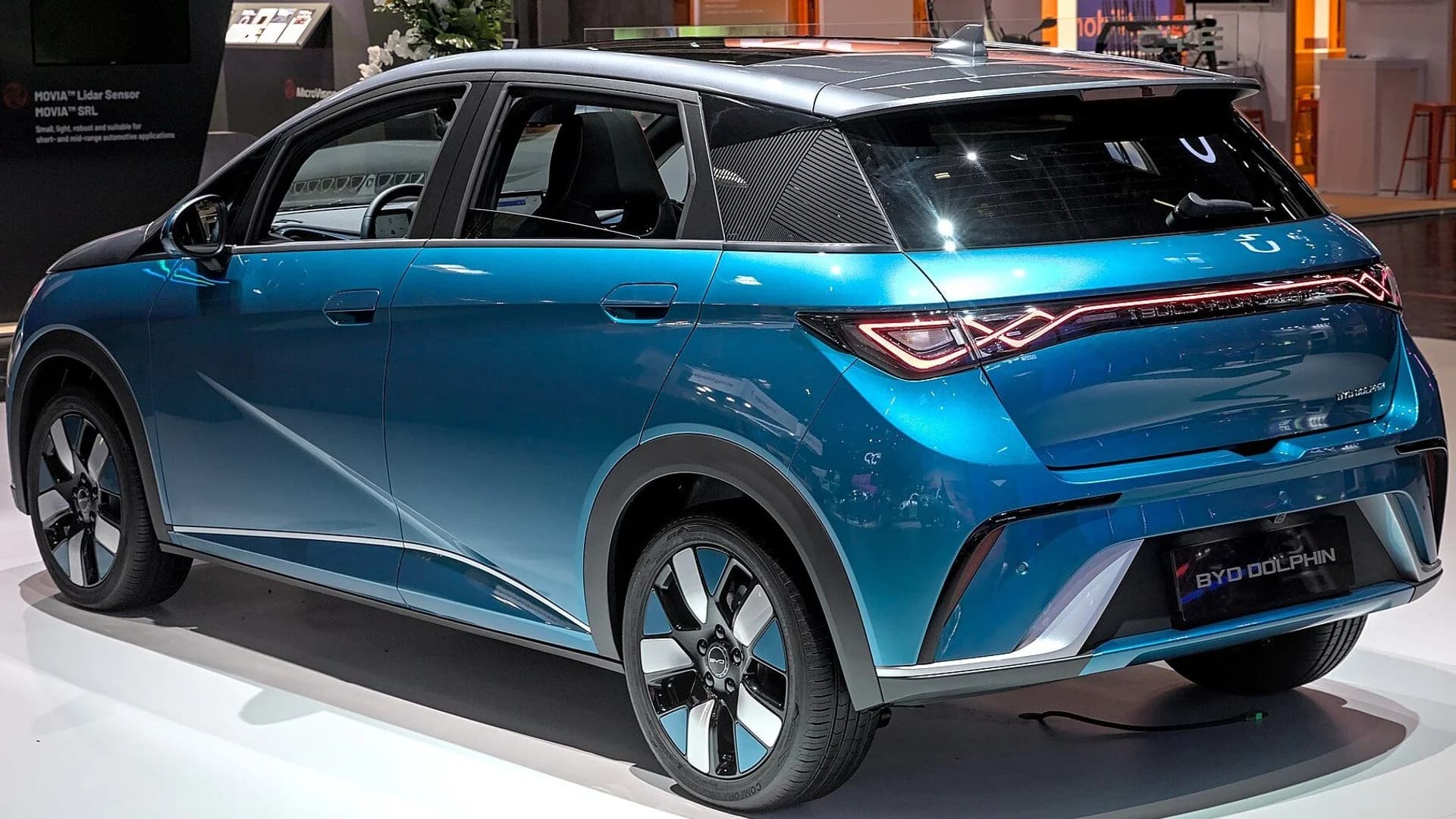
Canada's 49,000-unit Chinese-EV quota is a hybrid policy instrument, not a tariff floor, and that distinction determines which BYD models a Canadian buyer can realistically take delivery of in 2026. On January 16, 2026, Canada cut its Chinese-built EV tariff from 100% to 6.1% for the first 49,000 units of the year. None of those units qualify for the federal Electric Vehicle Affordability Program rebate.
Everything else, the dealership counts, the model speculation, the landed-price screenshots circulating on social platforms, flows from those two regulatory facts. The tariff quota controls how many BYDs arrive. EVAP exclusion controls how those BYDs price against EVAP-eligible rivals from GM, Hyundai, and Ford. Together, they define a narrow but real opening, one that rewards buyers who understand the math and penalises those who assume Canadian BYD pricing will mirror European or Australian sticker prices.
The framework is also unfinished. Import permit applications opened March 1, 2026, but the allocation method, first-come-first-served, pro-rated by importer, or auctioned, has not been published. Transport Canada has accepted BYD facility registrations. Provincial dealer licensing is a separate workflow, and the country's largest two automotive markets, Ontario and Quebec, restrict direct-sales models in ways that affect launch sequencing. The headlines have moved faster than the regulatory record, and at least one widely-circulated executive statement has been retracted as originating from an imposter X account. Treat what follows as policy analysis grounded in confirmed instruments, not a launch calendar.
Key takeaways
- Canada's 49,000-unit Chinese EV quota is brand-agnostic, shared by BYD, NIO, Zeekr, and Xpeng simultaneously.
- A BYD Dolphin imported as the 49,001st unit faces a 100% tariff, pushing its price above $35,000 CAD.
- No BYD model qualifies for Canada's EVAP rebate, shrinking the Dolphin's apparent $20,000 price advantage to roughly $15,000–$18,000.
- Transport Canada facility registration is a precondition for imports, not authorization to sell, compliance labels are the actual gate.
- Four models lead the 2026 Canadian shortlist: Seal, Atto 3, Dolphin, and Sealion 6 PHEV.
The Tariff-Quota Architecture: What the Numbers Actually Mean
The 100% surtax on Chinese-assembled EVs, in effect since October 2024, dropped to 6.1% on January 16, 2026, but only for vehicles inside an annual 49,000-unit quota. Above that threshold, the rate reverts to 100%. The structure is a hybrid: not a flat reduction, not a quota-free ceiling, but a two-tier instrument that incentivises early-year imports and punishes late-year stragglers.
This quota is brand-agnostic. It applies to all Chinese-assembled passenger EVs, regardless of manufacturer. BYD's planned Canadian entry, reported as a 20-dealership rollout with a Dolphin hatchback landed price estimated at $17,600 CAD, will draw from the same 49,000-unit pool as NIO, Zeekr, Xpeng, and any other Chinese-assembled brand entering simultaneously. If three brands each import roughly 16,000 units, the quota is consumed before a fourth entrant can move a single vehicle at the in-quota rate.
Import permit applications opened March 1, 2026. The federal government has not yet published the allocation methodology, whether permits are issued chronologically, pro-rated by applicant volume, or auctioned. That ambiguity is consequential. A first-come-served model rewards the manufacturer with established Canadian logistics; a pro-rated model favours diversified shipments; an auction model would shift the economic surplus from importer to treasury. Buyers monitoring the launch should assume the allocation rule itself is a price-formation variable.
The 6.1% in-quota rate is the lowest Chinese-EV tariff among G7 markets, a point with implications discussed in the multi-jurisdiction section below. But the rate's economic meaning depends entirely on whether a given vehicle clears the quota. A BYD Dolphin imported as unit 48,999 lands at roughly $21,000–$24,000 CAD. The same vehicle as unit 49,001 lands above $35,000. This is not a theoretical edge case, it is the entire question of whether BYD's value proposition holds for buyers in the second half of 2026.
For deeper context on how tariff and policy frameworks affect Chinese EV pricing across the broader Canadian market, see the total-cost framework for first-time EV buyers in Canada.
EVAP Exclusion: The Rebate Wall Chinese EVs Cannot Cross
The Electric Vehicle Affordability Program launched on February 16, 2026, replacing the prior iZEV scheme with a means-tested rebate worth up to $5,000 federally. EVAP eligibility requires North American final assembly. Chinese-assembled BYDs do not qualify. No BYD model imported under the 49,000-unit quota carries a federal rebate.
Internalising that exclusion is the single most important step a Canadian buyer can take before comparing BYD sticker prices against domestic-market rivals. A Chevrolet Equinox EV 1LT FWD starts at $44,995 CAD before incentives. With EVAP applied, the effective buyer cost drops to $39,995. A BYD Dolphin landed at $21,000–$24,000 CAD carries no rebate offset. The headline gap between the two vehicles is roughly $20,000 on sticker but closer to $15,000–$18,000 on out-the-door cost, still significant, but not the chasm that landed-price screenshots imply.
Provincial programmes operate independently of EVAP. Quebec's Roulez vert and British Columbia's CleanBC Go Electric scheme apply their own eligibility criteria, and neither has published explicit guidance on Chinese-assembled vehicles as of late May 2026. Buyers in those two provinces should confirm eligibility directly with provincial administrators rather than assume parity with EVAP. Provinces without standalone rebates, Alberta, Saskatchewan, Ontario after the 2018 cancellation, offer no offset at all, which widens the effective gap between BYD and EVAP-eligible rivals in those markets.
EVAP exclusion is a deliberate policy design, not an oversight. Ottawa is using rebate eligibility as the mechanism for protecting North American assembly investment while permitting limited Chinese imports through the tariff quota. The two instruments do different work. The tariff quota controls volume; EVAP eligibility controls effective price. A buyer focused only on the tariff drop misses half the picture. For the full per-province charging-cost math that affects total cost of ownership comparisons, see the provincial EV charging cost breakdown for Canada.
Gear worth having
As an Amazon Associate, ThinkEV earns a small commission from qualifying purchases — at no extra cost to you.

WeatherTech FloorLiner for Tesla Model 3
Deep-channel liners that trap every drop of slush and salt. The difference between a ruined interior and a showroom-fresh cabin after a Canadian winter.
As an Amazon Associate, ThinkEV earns from qualifying purchases — at no extra cost to you.
Which BYD Models Have Cleared Transport Canada Registration
BYD has registered production facilities with Transport Canada, a necessary precondition for importing vehicles for sale, not an authorization to sell any specific model. Facility registration confirms that BYD's Chinese plants meet Transport Canada's manufacturer-identification requirements. It does not constitute Compliance Label issuance for any individual vehicle, which is the actual sales gate.
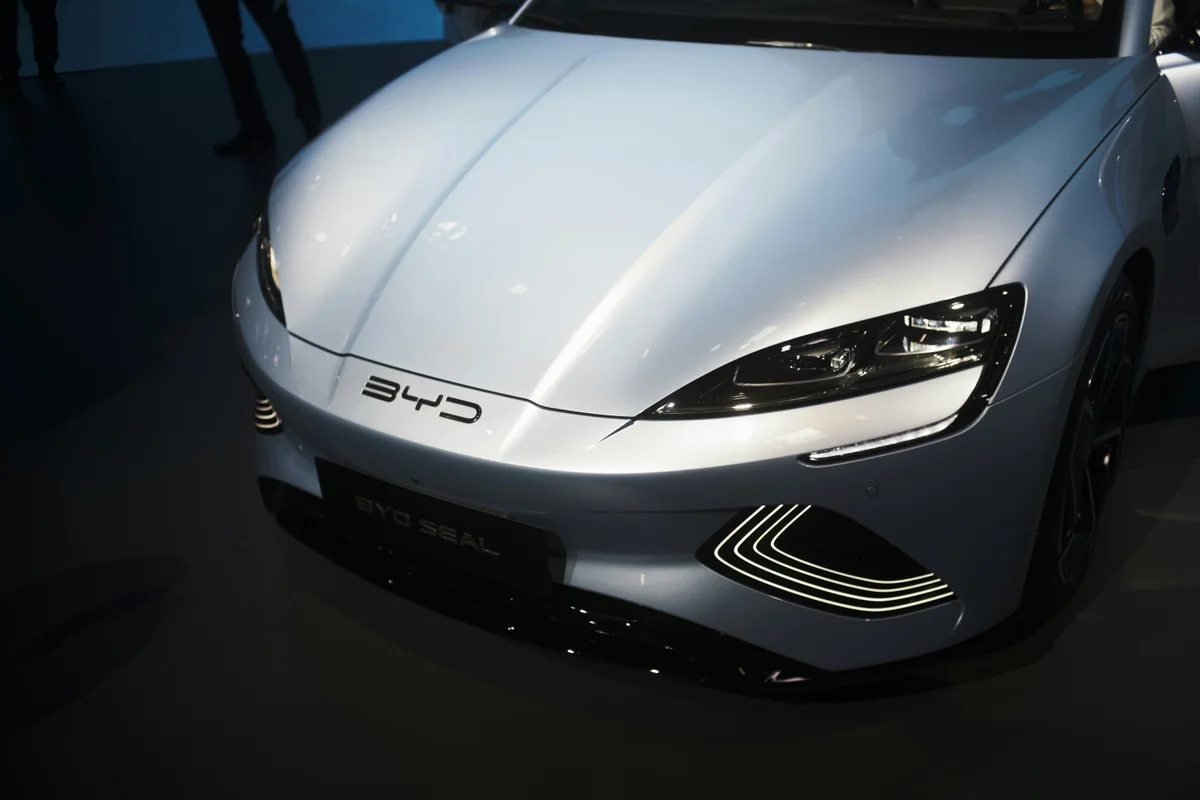
Based on global sales volume, segment fit for the Canadian market, and reporting from multiple Canadian trade outlets, four models are repeatedly identified as front-runners for the 2026 launch: the BYD Seal (mid-size sedan, Model 3 competitor), the Atto 3 (compact SUV), the Dolphin (subcompact hatchback), and the Sealion 6 PHEV (compact SUV with extended range). BYD is the world's largest EV manufacturer by volume, having toppled Tesla in 2024. Its global lineup runs to dozens of models; the four above reflect the intersection of high global volume and demonstrated Canadian segment demand.
BYD Seagull speculation is frequent in launch coverage, but its sub-$20,000 CAD landed-price target creates compliance complexity under Canada Consumer Product Safety Act labelling and Transport Canada Motor Vehicle Safety Regulations side-impact and rear-collision standards. The Seagull's global success is real; its Canadian timeline is unconfirmed. Buyers should treat any sub-$20K BYD pricing claim as unconfirmed until a specific VIN-eligible model receives its Compliance Label.
Earlier reporting attributed a 20-dealership rollout and specific city list to BYD Senior Vice-President Stella Li via the @stellalibyd X account. Multiple Canadian outlets have since published corrections identifying that account as an imposter. The vehicle launch phrasing originally attributed to BYD's executive team is not confirmed. The 20-dealership figure has appeared in other reporting independently and may still be accurate, but its provenance is weaker than initial coverage suggested. Facility registration is confirmed; model lineup is inferred from global data; executive timelines remain unverified.
Multi-Jurisdiction Comparison: How Canada's Framework Stacks Up
Canada's 6.1% in-quota tariff is structurally the most permissive Chinese-EV regime among G7 markets, lower than the EU's composite duty, lower than the UK's MFN rate, and a fraction of the US flat 100%. The comparison below uses confirmed tariff instruments from each jurisdiction's customs authority.
Gear worth having
As an Amazon Associate, ThinkEV earns a small commission from qualifying purchases — at no extra cost to you.

Lectron Level 2 J1772 Charger (40A, WiFi)
Smart WiFi charger with real-time energy monitoring. 40A / 9.6 kW, J1772 with a NEMA 14-50 plug, schedule charging right from your phone.
As an Amazon Associate, ThinkEV earns from qualifying purchases — at no extra cost to you.
| Jurisdiction | BYD Tariff Rate | Quota | Rebate Eligible |
|---|---|---|---|
| Canada | 6.1% in-quota; 100% above quota | 49,000 units annually | No (EVAP excludes non-NA assembly) |
| European Union | 17.0% CVD + 10% MFN ≈ 27% effective | None | Varies by member state |
| United States | 100% flat | None | No |
| United Kingdom | ~8% MFN | None | No dedicated scheme |
The EU figure reflects the November 2024 confirmation of provisional countervailing duties on BYD specifically, 17.0% CVD plus the standing 10% MFN tariff, totalling roughly 27% effective. The 45.3% figure circulates in headline coverage and reflects the upper bound applied to certain non-cooperating exporters; BYD's specific rate sits below it but remains structurally restrictive. BYD's global penetration is significant, the Qin entered service in November 2013, and over 50 all-electric models were available globally by early 2024, but EU access remains expensive relative to Canada's in-quota window.
United States policy is a flat 100% tariff on Chinese-built EVs with no quota mechanism, effectively closing the market. The UK's post-Brexit MFN tariff of approximately 8% applies without a Chinese-EV-specific surcharge, making it the closest analogue to Canada's in-quota rate, but the UK lacks both a quota cap and an equivalent rebate-exclusion mechanism, which means UK BYD pricing is the cleanest comparator for what Canadian sticker prices might look like above the 49,000-unit threshold.
Brazil sits outside this G7 frame but is informative. BYD is building local assembly in Bahia state explicitly to sidestep import tariffs, a playbook Canada's hybrid quota does not incentivise. Canada's framework rewards imports up to the cap and discourages imports above it; it does not push BYD toward Canadian assembly the way Brazil's pure-tariff regime does. That distinction matters for the 2027 question, whether BYD treats Canada as a perpetual import market or a future assembly footprint. Buyers comparing BYD's segment positioning against domestic-market rivals can work through the Dolphin vs Chevy Bolt 2027 head-to-head for Canadian context.
Gear worth having
As an Amazon Associate, ThinkEV earns a small commission from qualifying purchases — at no extra cost to you.
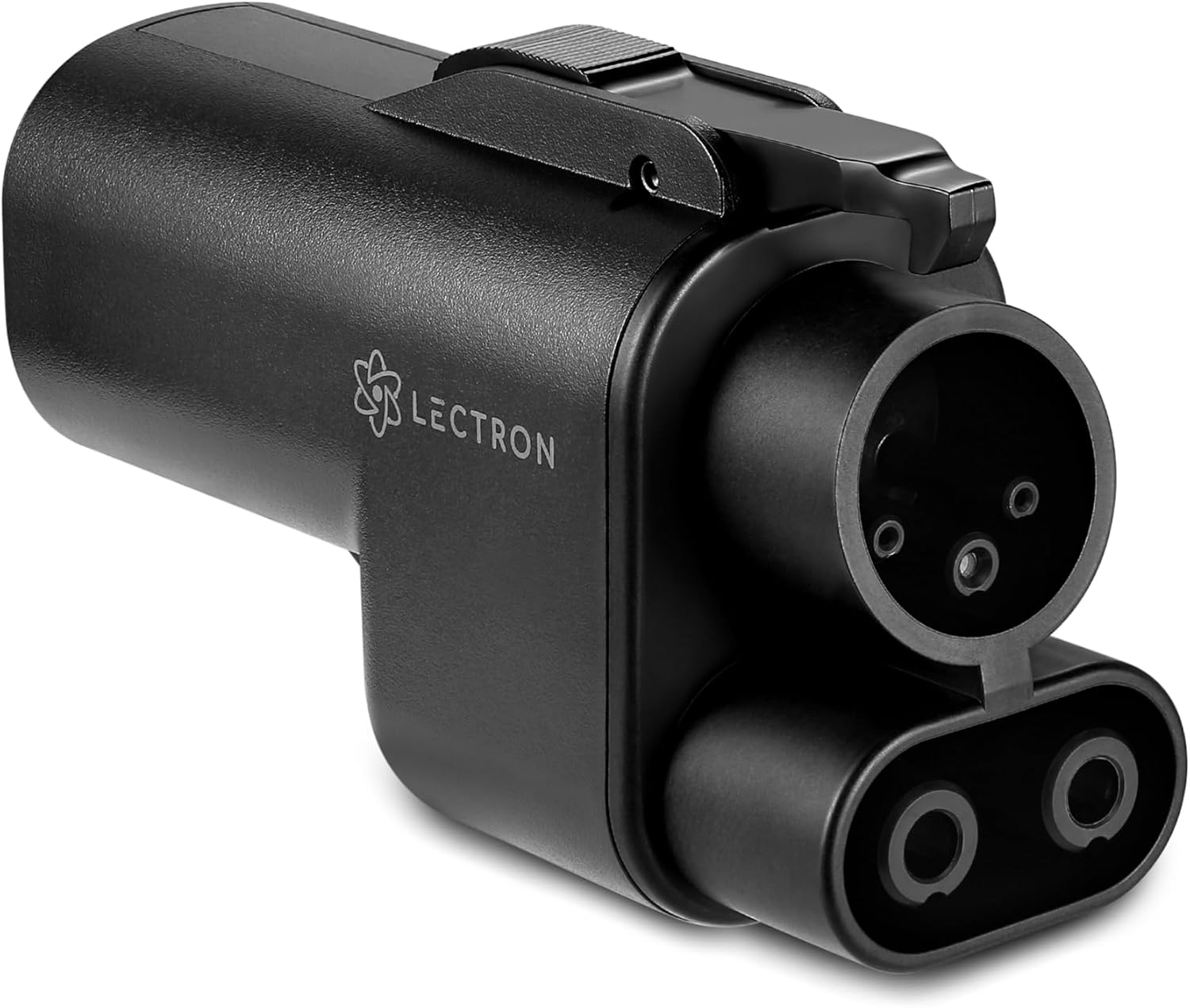
Lectron NACS to CCS Fast-Charge Adapter
Unlock every CCS fast charger for your Tesla, up to 500A DC. Never get stranded at a non-Tesla DC station again.
As an Amazon Associate, ThinkEV earns from qualifying purchases — at no extra cost to you.
Dealership and Distribution Regulatory Requirements
Automotive distribution in Canada is provincially regulated. Each province operates its own Motor Vehicle Dealer Act or equivalent, with licensing prerequisites that include warranty infrastructure, service capacity, consumer protection bonds, and physical premises requirements. A national 20-dealership launch is not a single regulatory decision, it is up to thirteen separate provincial and territorial workflows.
Ontario's Motor Vehicle Dealers Act requires dealer licensing through the Ontario Motor Vehicle Industry Council, with disclosure obligations and bonding that effectively preclude pure direct-sales models. Quebec's Loi sur la protection du consommateur applies similar constraints. British Columbia operates through the Vehicle Sales Authority with a more permissive regulatory posture but still requires licensed premises and service capacity. Alberta's Automotive Business Regulation is the most accommodating but represents a smaller share of national EV demand.
Practically, Tesla's direct-sales model is not a template BYD can copy in its two largest target provinces. A franchise structure, independent licensed dealers operating under BYD branding, or an agency model with provincial-resident agents holding the dealer licence are the workable structures. Both require physical premises, certified service capacity for high-voltage systems, and bonded operations before the first vehicle moves.
No confirmed provincial breakdown of BYD's 20-dealership plan has been published in regulatory filings. The figure originates in trade-press reporting; the provincial licensing record is empty. Until the Ontario Motor Vehicle Industry Council or the Vehicle Sales Authority of BC publishes registration of BYD-affiliated dealers, the launch geography is speculative.
Quota Burn Rate and the 2026 Timeline Risk
A 49,000-unit quota is a budget constraint, not a guaranteed allocation. If NIO, Zeekr, Xpeng, and BYD each move 10,000 units in the first half of 2026, the quota is exhausted by mid-year. Above-quota imports revert to 100% surtax, a price structure that nullifies the value proposition entirely.
Ottawa has not published quota utilisation data publicly. There is no equivalent of the US EV-credit phase-out tracker that buyers can consult to estimate remaining headroom. That opacity is a buyer-side risk: a consumer who orders a BYD in October 2026 cannot verify whether the vehicle will land under the 6.1% rate or the 100% rate. Manufacturer landed-price quotes prior to permit issuance carry an implicit allocation assumption that may not hold.
If BYD's stated H2 2026 launch ships 5,000–10,000 units, that represents 10–20% of the annual quota in year one, a manageable share, leaving headroom for 2027 expansion. If aggressive marketing produces 20,000-unit demand and the allocation rule favours BYD specifically, the share rises sharply and constrains other entrants. The competitive dynamic among Chinese brands for shared quota access is itself a price-formation variable that has not been priced into landed-cost speculation.
Quota renewal terms for 2027 are unspecified. Given US-Canada trade tension and the politicised nature of Chinese-EV access, policy continuity is not a base case. Buyers should treat the 2026 quota as a single-year window with renewal uncertainty.
Gear worth having
As an Amazon Associate, ThinkEV earns a small commission from qualifying purchases — at no extra cost to you.

Tesla Key Card Holder with AirTag Slot
Stop fishing the keycard out of your wallet, and slot an AirTag in case the car wanders off in a lot.
As an Amazon Associate, ThinkEV earns from qualifying purchases — at no extra cost to you.
A Real Opening With Structural Limits
A 6.1% in-quota tariff makes BYD price-competitive on sticker. EVAP exclusion erases roughly $5,000 of that advantage on out-the-door cost. Transport Canada facility registration confirms BYD's intent to enter Canada but does not establish on-sale dates for any specific model. Provincial dealer licensing is unresolved in the two largest markets. Quota utilisation is not publicly tracked. Each of these is a known structural limit, not a speculative risk.
Buyers tracking the launch should monitor three signals: published quota utilisation data if and when Ottawa releases it, provincial dealer licensing announcements through OMVIC and the BC Vehicle Sales Authority, and Compliance Label issuance for specific BYD VINs through Transport Canada's vehicle import database. Each of those is a confirmable regulatory event. Trade-press headlines, social-platform pricing screenshots, and X-account executive statements are not. The May 2026 imposter correction is a useful reminder that even mainstream Canadian outlets ran the inaccurate version for several days before retracting.
Canada's framework is more permissive than the EU or US and less predictable than the UK's flat MFN rate. The opening is real; the rules are still being written; the buyer's leverage is patience. Anyone considering whether a BYD makes sense over a domestic-market alternative should also work through depreciation curves by brand in the Canadian used-EV market before committing, depreciation curves compound the EVAP-exclusion gap on three-year ownership math.
The signal worth watching is the first published BYD VIN carrying a Transport Canada Compliance Label, everything before that is policy speculation, and everything after is a market.
Gear worth having
As an Amazon Associate, ThinkEV earns a small commission from qualifying purchases — at no extra cost to you.
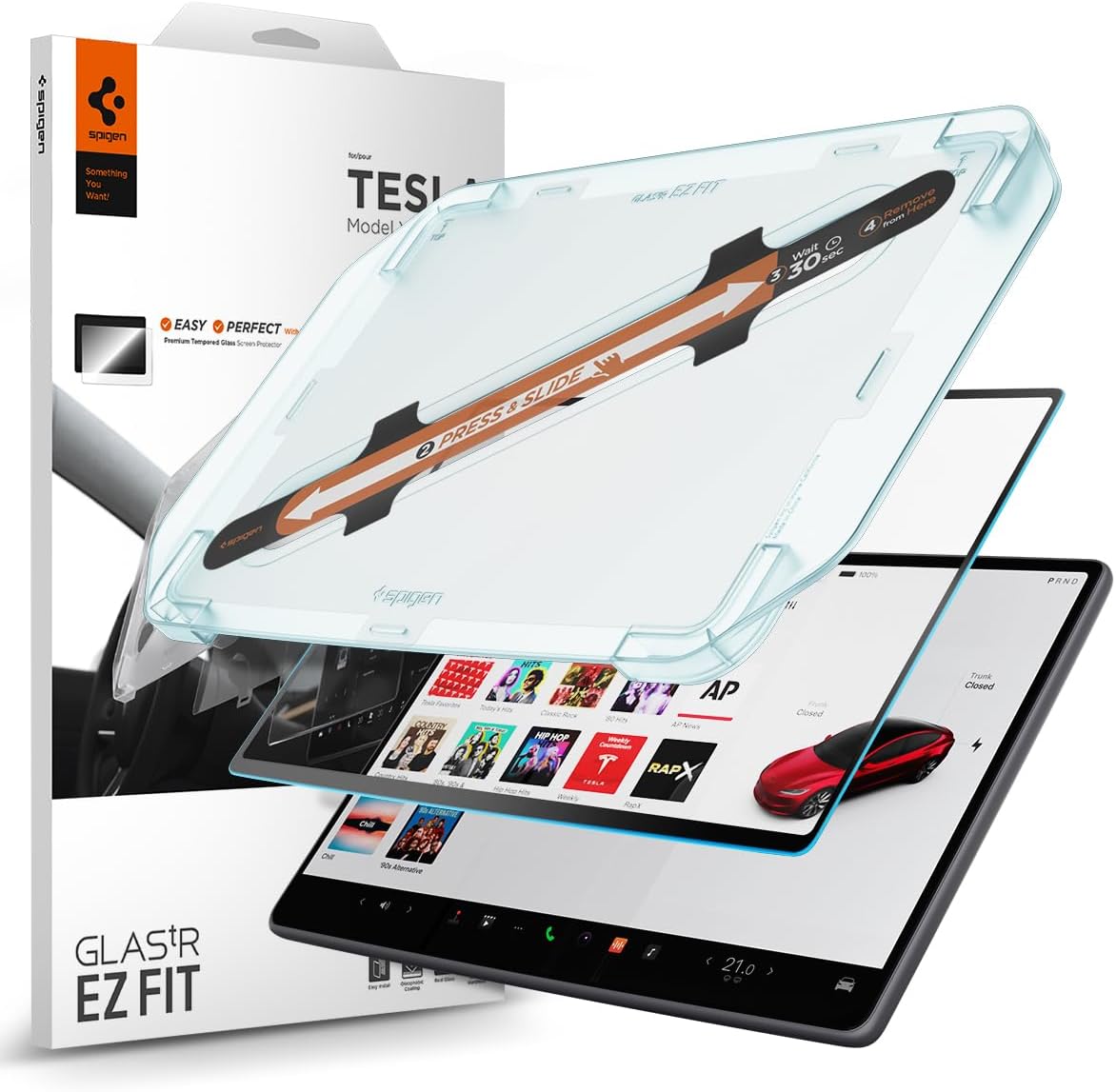
Spigen Tempered Glass for Tesla Model 3/Y
Tempered-glass protection for the touchscreen that kills fingerprints and scratches. Two minutes to install, lasts the life of the car.
As an Amazon Associate, ThinkEV earns from qualifying purchases — at no extra cost to you.

Founder & Chief Editor
Vlad Pereira is the founder and chief editor of ThinkEV.ca, the Canadian electric-vehicle publication he writes and edits from Courtenay, British Columbia. He covers EV pricing, federal and provincial rebates, charging costs, and the Chinese manufacturers now entering Canada, from the buyer's side rather than the press-fleet side. ThinkEV is a venture of Vlad Pereira Online; his writing on health, income and the long game lives at vladpereira.com.
Frequently asked questions
Does the 49,000-unit quota reset annually or is it a one-time ceiling?
Can Quebec or BC rebates offset the missing federal EVAP money?
What actually stops BYD from selling directly without dealerships?
Is Transport Canada facility registration the same as approval to sell?
If the quota fills mid-year, what happens to buyers still waiting?
More EV & road-trip finds
Affordable upgrades worth a look — tap any to check the price on Amazon.
 ★ 268
★ 268Anti-Slip Leather Steering Wheel Cover
View on Amazon ★ 8,681
Chemical Guys Complete Car Wash Kit
View on Amazon ★ 419
★ 419RGB Car Interior LED Strip Light
View on Amazon ★ 1,083
Crystal Push-Start Button Ring (2-Pack)
View on Amazon ★ 865
★ 865Collapsible Trunk Organizer
View on Amazon ★ 55,938
WixGear Magnetic Air Vent Phone Mount (2-Pack)
View on Amazon ★ 119
★ 119Foldable Waterproof Trunk Organizer
View on Amazon ★ 392
★ 392Large Cup Holder Adapter (32-40oz)
View on AmazonRead, Plan, Then Stay Current
Explore our expert articles to understand incentives and ownership costs, use the map to pressure-test charging reality, then subscribe so new EV coverage comes straight to you.
Continue Reading
How Chinese Automakers Became Global EV Leaders
Chinese Electric Cars in Canada: Every 2026 Model
BYD Sealion 06: What It Takes to Reach Canada
EV Charge Limits: NMC vs LFP and What Owners Miss
Polestar 2 Returns to Canada for 2026: The Quota Math