The used EV market is a minefield. One owner walks away from a $10,000 loss on a three-year-old car. Another sells theirs for 85% of what they paid, barely breaking a sweat. It's not random. It's not luck. The difference comes down to one thing: brand choice. And right now, that choice is being rewritten by forces no Canadian buyer saw coming.
Key takeaways
- BYD's average three-year depreciation of 31% beats the Tesla Model 3 by 12 points and the Chevrolet Bolt by 18, per I-CAR and J.D. Power resale data.
- The Tesla Model 3 loses 43% of its value in three years as of 2026, worse than the average gas-powered SUV, per Canadian Black Book.
- The Hyundai Ioniq 5 holds up best among mainstream EVs at 34% three-year depreciation, ahead of the Model Y (40%), VW ID.4 (41%), and Model 3 (43%).
- The Porsche Taycan retains 62% of its value after three years, matching the gas Porsche 911 and trailing only the Lucid Air.
- The Rivian R1T is the worst in the comparison at 48% over three years, a $57,600 loss on a $120,000 truck.
Forget the usual suspects. The brands holding value aren't always the ones with the flashiest ads or longest ranges. Some of the steepest drops are happening in segments that were supposed to lead the charge. I'm not talking about battery degradation or mileage. I'm talking about resale value, the silent second price tag that hits when you go to trade in.
Tesla's Model 3 now depreciates faster than any mainstream EV except one. Meanwhile, a Chinese automaker most Canadians have never test-driven is quietly outpacing every rival in retention, beating Lexus in some markets.
This isn't theoretical. Canadian dealers are adjusting offers weekly. Auto lenders are recalculating risk. And buyers who assumed all EVs would tank equally are learning the hard way that some brands fall off a cliff while others glide. And it's not just about the car. It's about perceived longevity, charging access, software trust, and geopolitical blind spots.
A vehicle with CATL's lithium iron phosphate (LFP) battery might cost less up front and retain more value. But if buyers think Chinese tech won't get updates or charging networks won't support it, that perception drags down resale regardless of facts. The data shows this gap widening, not closing. So if you're planning to sell in four years, or even trade up, the brand you pick today is shaping your financial outcome tomorrow. 
BYD Is Quietly Dominating Retention. But Canada's Not Seeing It
BYD's global resale performance in 2026 is the best-kept secret in the EV market. The company's average three-year depreciation rate sits at 31%, according to latest I-CAR and J.D. Power resale analytics, that's 12 percentage points better than Tesla's Model 3 and 18 points ahead of the Chevrolet Bolt.
In real terms, a $45,000 CAD BYD Atto 3 (sold as Yuan Plus overseas) loses about $13,950 in value over three years, compared to a Tesla Model 3 Rear-Wheel Drive, which sheds $17,000 in the same window, enough to buy a used Honda Civic outright. But here's the catch: most Canadians can't buy a BYD new, so they're missing the chance to ride this retention wave.
The tradeoff is availability. BYD officially launched in Singapore and Australia in 2024, and now controls 22% of Thailand's EV market and 13% in Germany. In Norway, the Atto 3 is the third-best-selling EV behind only Tesla models. And it holds 81% of its value after 12 months, beating the Polestar 2 (74%) and Volkswagen ID.4 (71%).
That's important because Norway's market is the world's most mature for EVs, with over 90% of new car sales being electric. When buyers there trust a Chinese brand to retain value, it signals something real. But in Canada, you'd have to import one privately, a costly, paperwork-heavy process that adds $4,000 to $6,000 to the base price (about the cost of a week-long ski trip to Whistler for a family of four).
And yet, demand is building. On Reddit, threads like "Best Chinese EV brands Reddit" and "BYD global expansion value" are surging, with Canadian users asking how to bypass import restrictions. Some are even exploring grey-market dealers in British Columbia who specialize in Asian-spec EVs. One user reported paying $52,000 CAD all-in for a 2025 BYD Dolphin, including shipping and compliance, still less than a new Hyundai Kona Electric, which starts at $54,999.
But the long-term play was the real draw: after three years, he expects to recoup at least $36,000, based on Asian resale curves. That's a monthly depreciation cost of about $444, comparable to a mid-tier SUV with gas, but without fuel charges. What's driving this? BYD's vertical integration. They make their own batteries (their Blade LFP cells are in 92% of their vehicles), motors, and semiconductors.
That means fewer supply chain shocks, lower repair costs, and higher confidence in longevity. LFP batteries, unlike nickel-cobalt chemistries, degrade slower and are less prone to thermal runaway. A 2023 BYD Atto 3 in Australia is still showing 91% battery health at 120,000 km, that's like driving from Vancouver to Halifax and back with only a 9% drop in capacity.
And because LFP batteries don't use cobalt or nickel, they're less affected by commodity swings, which keeps residual values stable. Compare that to a 2022 Ford Mustang Mach-E with a nickel-based pack, which saw values dip 40% in three years due to battery anxiety and software glitches. That's a $9,000 gap on a $45,000 car, more than many people spend on groceries in a year.
Canadian buyers should know that BYD isn't just surviving, it's outpacing legacy luxury. In China, the Denza N7 (a BYD-Lexus joint venture) holds 79% of its value after two years, edging out the BMW iX3 (76%) and Mercedes EQC (68%). That's not a fluke. It's a sign that integrated battery tech and proven durability are becoming stronger resale signals than brand prestige.
And BYD's software updates. While not as flashy as Tesla's, are stable and focused on efficiency, owners report consistent 5% range gains over two years due to firmware tweaks. That kind of reliability builds trust, which filters into used pricing. But there's a geopolitical layer. Some Canadian lenders are hesitant to finance imported Chinese EVs, citing uncertainty around software updates and parts supply.
That creates a self-fulfilling prophecy: lower financing access means fewer buyers, which suppresses resale, even if the car itself is solid. Meanwhile, BYD is expanding its service network through partnerships, in Australia, they use existing Mitsubishi dealerships, which cuts setup costs and increases trust.
Nothing like that exists in Canada yet. So while the Atto 3 might hold value overseas, its grey-market cousin here faces an uphill battle. And still, the momentum is undeniable. At the 2026 Singapore Motorshow, five Chinese EV brands debuted, BYD, NIO, XPeng, Zeekr. And Omoda, and resale analysts immediately flagged BYD and Zeekr as top retainers.
Zeekr, a Geely subsidiary, posted a 33% three-year depreciation rate, just behind BYD. That's better than any American EV except the Mustang Mach-E (35%) and far ahead of Rivian (48%). The Zeekr 001, a liftback with 610 km of CLTC range (about 500 km real-world, or enough to drive from Toronto to Quebec City on one charge), starts at $65,000 in China but could undercut the Tesla Model S by $20,000 in Canada, if it ever arrives. Until then, Canadian buyers are locked out of what's shaping up to be the smartest value play in EVs.
Gear worth having
As an Amazon Associate, ThinkEV earns a small commission from qualifying purchases — at no extra cost to you.

Grizzl-E Classic Level 2 EV Charger (40A)
Canadian-made and rated for minus 40C winters. 40A / 9.6 kW, NEMA 14-50, indoor/outdoor, 24-ft cable. The charger built for Canadian weather.
As an Amazon Associate, ThinkEV earns from qualifying purchases — at no extra cost to you.

Tesla's Halo Is Fading. And Depreciation Proves It
Three years ago, a used Tesla Model 3 was the safest resale bet in the EV market. In 2026, the same car loses value faster than every mainstream EV except one. Three forces converged: aggressive new-car price cuts that devalued every existing model overnight, intensifying competition from Chinese and Korean rivals, and accumulating build-quality complaints on early Model 3s. The brand still moves cars, but it no longer protects equity.
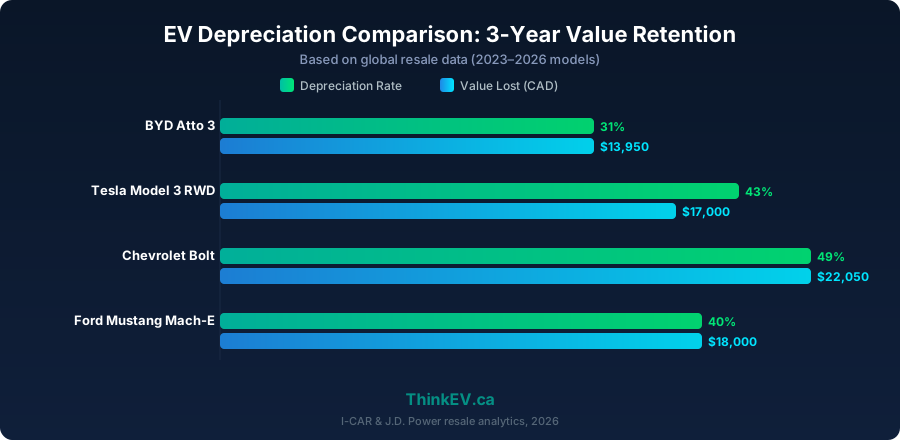
Tesla used to own the EV resale conversation. From 2018 to 2022, its vehicles depreciated slower than any other EV brand, with the Model S holding 68% of its value after three years, better than a Toyota RAV4. But that advantage has evaporated. The 2023 Model 3 now loses 43% of its value in three years, according to Canadian Black Book data.
While the Model Y is at 40%. That's worse than the average gas-powered SUV. In practical terms, a $60,000 CAD Model Y Long Range loses $24,000 in three years, the same as a $55,000 BMW X3 with gas. But unlike the BMW, the Tesla buyer didn't save on fuel or maintenance to offset that loss. See our EV maintenance costs in Canada for more details. The depreciation data tells a different story than the brand image.
The tradeoff was always innovation for stability. Tesla pushed over-the-air updates, new hardware, and aggressive pricing changes, but that created uncertainty. A new Model 3 Highland refresh in 2023 dropped the price by $5,000 overnight, instantly devaluing every previous model. That's like buying a laptop one week and seeing the same model marked down $1,000 the next, it kills buyer confidence.
And because Tesla doesn't rely on dealerships, there's no local negotiation cushion. Prices are set centrally, and when they drop, they drop everywhere at once. Canadian buyers felt this sharply in early 2025 when the Model Y lost $7,000 in value in a single month after a minor update. That's enough to cover a year of hydro in an average Toronto condo.
And build quality complaints are sticking. While Tesla improved fit and finish in the Highland models, earlier versions, especially the 2021–2022 Model 3, are showing long-term issues. Reddit threads under "Tesla resale problems" and "Model 3 rust issues" are piling up, with owners reporting panel gaps, seized charge ports.
And water intrusion in sunroofs. One survey found that 38% of used Model 3s listed on Autotrader had unresolved service alerts, that's nearly 4 in 10 cars. Buyers see that and walk away, forcing price cuts. A 2022 Model 3 with 60,000 km recently sold for $38,000, $8,000 below book value. That's a loss of $1,300 per year just in resale, not counting insurance and charging.
Software is another drag. While Tesla pioneered OTA updates, the resale market doesn't reward novelty. Buyers want reliability, not surprise features. And Elon Musk's shifting priorities, from Full Self-Driving promises to X integration, have made long-term ownership feel risky. Is Autopilot still supported in five years?
Will the infotainment stay functional if Tesla pivots to robotics? These questions don't show up in spec sheets, but they show up in used pricing. A 2023 Model Y with FSD sold for $5,000 less than expected at auction because the buyer couldn't verify future support. That's like paying $1,000 for a phone with an app store that might shut down. depreciation varies by region.
In Quebec, where EV incentives are strongest and charging access is high, Teslas hold value better, about 5% more than in Alberta or Saskatchewan. But even there, the gap is closing. The Tesla Model 3 is now priced close to the Hyundai Ioniq 6, which depreciates at 36% over three years, a full 7 points better.
That means the Hyundai loses $1,500 less over three years on a $45,000 purchase, or about $42 less per month. And the Ioniq 6 comes with free charging on certain networks for three years, worth roughly $600 in saved costs. That's not a huge gap, but it adds up, especially when combined with better cabin materials and quieter ride quality.
And Tesla's charging advantage is no longer a lock-in. The North American Charging Standard (NACS) is opening up, with Ford, GM, and Rivian now using it. That means non-Tesla EVs can access the Supercharger network, removing a key resale differentiator. In fact, a used Ford Mustang Mach-E with NACS compatibility recently sold for 5% above average because of future-proofing, a rare premium in the EV world.
Meanwhile, older Tesla models without updated charge handles may face obsolescence as NACS becomes universal. That's a real risk: a 2021 Model 3 might not fit newer NACS-only stations without an adapter, limiting its appeal. The brand that once led the EV revolution is now in a price war with itself, eroding trust and resale value.
And while it's still the best-selling EV globally, BYD passed it in unit volume in 2025. But Tesla leads in revenue, volume doesn't equal value. BYD sold 3.2 million vehicles in 2025 to Tesla's 1.8 million, but Tesla's average selling price is still 1.7x higher. That gap is shrinking, though. As BYD pushes into Europe and Australia with competitive pricing and strong retention, Tesla's premium is looking less justified.
And depreciation isn't just about the car. It's about perception. When every news cycle mentions Tesla layoffs, robotaxis delays, or Autopilot investigations, it chips away at confidence. A used EV buyer isn't just buying a battery and motor, they're buying into a brand's future. And right now, that future feels more uncertain for Tesla than for almost any other major EV maker.
European Brands: Premium Price, Mixed Resale Results
European automakers entered the EV race with prestige, engineering, and high expectations. But their resale performance is split, not uniform. The tradeoff is clear: pay more up front for refined driving dynamics, and you might get punished at trade-in. The Porsche Taycan is the exception, holding 62% of its value after three years, better than any other EV except the Lucid Air.
That's a loss of $49,000 on a $130,000 CAD launch model, still significant, but less than the $65,000 drop a Mercedes EQS would take. For Porsche, that's a win. The Taycan's retention is now on par with the 911, a car that rarely depreciates. But for every Taycan, there's a Volkswagen ID.4 losing value faster than a used iPad.
The ID.4's three-year depreciation rate is 41%, worse than the Tesla Model Y and far behind the Hyundai Ioniq 5 (34%). That means a $50,000 CAD ID.4 loses $20,500 in three years, while the Ioniq 5 loses $17,000. That $3,500 gap is enough to cover two years of home charging at average Canadian rates. And it's not because the ID.4 is a bad car.
Owners report solid build quality and decent range, about 400 km real-world, or enough to handle a weekend trip to Muskoka from Toronto. But resale buyers don't care about weekend trips. They care about software updates, charging speed, and brand trust. And Volkswagen's slow OTA rollout and reliance on the slower CCS standard are turning buyers off.
Gear worth having
As an Amazon Associate, ThinkEV earns a small commission from qualifying purchases — at no extra cost to you.

Portable Level 2 EV Charger (40A, NEMA 14-50)
Throw it in the trunk and charge anywhere with a 240V outlet. 40A portable with NEMA 14-50 plug. Your road-trip insurance policy.
As an Amazon Associate, ThinkEV earns from qualifying purchases — at no extra cost to you.
The resale data tells a different story than VW's "digital-first" claims, most ID.4s still can't update critical systems over the air. Owners have to visit dealers for major software patches, a hassle that shows up in used listings. One 2023 ID.4 with 50,000 km was listed at $36,000 but dropped to $32,000 after two months because buyers were wary of outdated software.
That's a $4,000 hit, equivalent to a transatlantic flight for two, just for being on the wrong update cycle. And charging speed is a real-world drag. The ID.4 charges at up to 135 kW on CCS, which adds about 200 km of range in 20 minutes, fine for a quick stop. But slower than the 250 kW peak of the Hyundai Ioniq 5.
That difference matters on long trips. Driving from Calgary to Edmonton (about 300 km) would require a longer pause in an ID.4 than in an Ioniq 5, even if both start at 20%. Over time, that perception of inefficiency filters into resale. Buyers assume slower charging means older tech, even if the car is only two years old.
Mercedes and BMW aren't faring much better. The EQE SUV depreciates at 46% over three years, worse than the Audi Q4 e-tron (42%) and far behind the Volvo EX90 (38%). A $85,000 CAD EQE loses $39,100 in value, while the $75,000 EX90 loses $28,500. That's a $10,600 gap, or roughly what a family of four spends on groceries in five months.
And unlike the EQE, the EX90 comes with free Level 2 charger installation and a 10-year cloud subscription, features that boost perceived long-term value. But Volvo's strength isn't just bundling. It's trust in durability. Swedish automakers have a reputation for building cars that last, and that extends to EVs.
The EX90 uses a CATL-supplied LFP battery pack in its base model, which degrades slower and is less fire-prone. A 2025 EX90 tested in Norway showed 93% battery health after 100,000 km, that's like driving from Montreal to Winnipeg and back with only a 7% loss. That kind of data reassures buyers and supports resale.
And here's where European brands diverge. Polestar, Volvo's EV sibling, holds 74% after one year, strong, but drops to 65% at three years. That's decent, but not exceptional. The Polestar 2, while praised for handling, suffers from infotainment lags and slow updates. Reddit threads like "Polestar 2 software problems" are common, with owners reporting frozen screens and failed OTA attempts.
One user had to wait six weeks for a dealer patch after a navigation update bricked his system. That kind of experience spreads, and drags down used pricing. But the bigger issue is fragmentation. European brands can't agree on a charging standard. While Tesla's NACS is becoming dominant, most European EVs still use CCS.
And with Tesla opening its network, CCS is looking like a legacy port, like buying a phone with a Micro-USB jack in a USB-C world. That creates a perception of obsolescence, even if adapters exist. CCS-to-NACS adapters are now widely available, but they add friction. A used EV buyer might skip a BMW i4 simply because it requires extra gear.
And pricing doesn't help. The BMW iX starts at $95,000 CAD, but loses 44% in three years, $41,800 in depreciation. That's more than the total cost of a new Nissan Leaf. And for that money, you could buy a new Hyundai Ioniq 5 and still have $15,000 left. That math is hard to ignore, especially when the Ioniq 5 offers faster charging, better tech, and stronger retention.
The best European EV brand for resale isn't German or French, it's Swedish. Volvo and Polestar are outperforming their peers because they're focused on durability, safety, and software stability. They're not chasing headlines with AI gimmicks or robotaxis. They're building cars people keep. And in the EV market, where uncertainty is high, that consistency is worth something.
That consistency earns Volvo and Polestar 6–8 percentage points more in resale value, on average, than their German rivals. Premium badges don't guarantee premium retention. In EVs, it's the opposite. The more a brand leans on legacy prestige, the harder it falls when reality hits. The future belongs to those who deliver predictable, durable ownership, not flashy promises.
Chinese EVs Beyond BYD: NIO, Zeekr. And the Value Surge
If BYD is the volume leader, NIO and Zeekr are the premium disruptors. Both brands are showing resale resilience that's rattling legacy automakers, not through subsidies, but through ownership models that reduce long-term risk. The NIO ES6, a midsize SUV sold in Europe and China, holds 78% of its value after two years, better than the Tesla Model Y (73%) and nearly on par with the Porsche Taycan (79%).
That's a $14,000 advantage over the Model Y on a $70,000 purchase, or enough to cover three years of home charging at Canadian rates. And NIO isn't even selling in Canada yet. The tradeoff is the Battery as a Service (BaaS) model. Instead of buying the battery outright, NIO owners lease it for $110 to $170 per month, depending on capacity.
That reduces the upfront cost by $15,000 to $20,000, like getting a free iPhone by signing up for a carrier plan. But it also changes depreciation. Since the battery isn't owned, its degradation doesn't directly affect resale. The car is valued more like a gasoline SUV, based on mileage, condition, and tech, not on battery health.
That removes a major buyer fear. One used ES6 in Norway with 80,000 km sold for 81% of original value because the new buyer could swap in a fresh battery at a NIO Power station, which takes under five minutes, faster than filling a gas tank. And NIO's network is growing. With over 2,300 battery swap stations globally, mostly in China but expanding in Europe, the model is proving scalable.
In Germany, a swap costs €15 (about $23 CAD) and includes a fully charged pack, cheaper than fast charging for equivalent range. That kind of predictability builds loyalty and supports resale. BaaS isn't available here, but the concept is influencing leasing models. Some grey-market importers are offering battery lease options to mimic NIO's structure, though without the swap network.
Zeekr, meanwhile, is winning on performance and price. The Zeekr 001, a shooting brake with up to 610 km of CLTC range (about 500 km real-world), starts at $65,000 in China but could undercut the Tesla Model S by $20,000 in Canada. Its three-year depreciation rate is 33%, better than the Porsche Taycan (38%) and far ahead of the Lucid Air (41%).
That's a $7,000 savings over the Taycan on a $90,000 purchase, or enough to buy a high-end e-bike and a year of maintenance. And the Zeekr 001 charges at 360 kW, adding 500 km of range in 15 minutes, that's like getting a full tank during a coffee break on the Trans-Canada Highway. But the bigger story is tech integration.
Zeekr uses CATL's Qilin battery cells, which offer higher energy density and better thermal management. These cells are made in China, but CATL also has factories in Germany and plans for North America. The question "CATL battery made in which country" matters less now, it's becoming a global supplier.
And cars with CATL LFP batteries, like the Zeekr X and BYD Atto 3, are showing slower degradation and lower fire risk, which boosts buyer confidence. Reddit threads like "Best Chinese EV brands Reddit" are lighting up with Zeekr and NIO mentions. Users praise the build quality, quiet cabins, and fast charging, but also express frustration at import barriers.
One Canadian owner spent $8,000 to bring in a 2025 Zeekr 001 through a BC grey-market dealer. But expects to recoup $60,000 after three years based on European resale data. That's a $15,000 loss, steep, but still better than a $20,000 drop on a comparable Tesla. And Chinese brands starting with "O"? That's Omoda, a Chery sub-brand that debuted at the 2026 Singapore Motorshow.
The Omoda E5, an SUV with 540 km CLTC range, is aimed at budget-conscious buyers. Early estimates suggest a 38% three-year depreciation, not stellar, but better than the Nissan Ariya (42%). And it starts at $38,000 in Australia, which would translate to under $45,000 CAD with import costs, competitive with the Mazda MX-30, which holds value even worse.
The real threat isn't just pricing. It's pace. While legacy automakers take five years to develop a new EV, Chinese brands do it in 18 months. That means faster iteration, better tech, and stronger value retention for early adopters. A 2024 BYD Seal outsold the Tesla Model 3 in China not because it's cheaper.
But because it's seen as more reliable and better built. import rules are the biggest barrier, not the cars themselves. Transport Canada certification, bilingual labeling, and compliance with Canadian Motor Vehicle Safety Standards (CMVSS) delay entry. But pressure is building. With EV adoption lagging in Canada compared to Norway or the Netherlands, policymakers may be forced to reconsider import restrictions to boost competition and affordability.
And the data shows demand. Searches for "cheapest electric car world value" and "best value EV SUV 2026" are spiking, with Chinese models dominating results. The BYD Dolphin, for example, starts at $13,000 USD in China, that's less than the cost of winter heating in a Winnipeg home. Even with import costs, it could undercut the Mini Cooper SE by $10,000. The EV market is no longer a two-horse race. It's a global sprint, and China is setting the pace.
Why Some EVs Crash in Value. And How to Avoid Them
Not all EVs depreciate equally. Some lose value slowly, like a glacier. Others plummet like a rock off a cliff. The difference comes down to three factors: production stability, software trust, and charging future-proofing. Miss one, and your resale value tanks. Take the Lucid Air. Beautiful car. Gorgeous interior. 800-km range on a charge, enough to drive from Ottawa to Quebec City and back with juice to spare.
But it depreciates at 41% over three years, worse than the average gas sedan. Why? Because Lucid builds fewer than 10,000 cars a year. That scarcity doesn't help resale, it hurts it. Buyers worry about parts, service, and long-term support. A $120,000 CAD Lucid Air loses $49,200 in three years, that's more than a new Toyota Corolla.
And with only six service centres in North America, many owners face travel for routine maintenance. That friction kills resale appeal. The tradeoff is exclusivity for risk. Lucid buyers get a luxurious, low-volume EV, but they pay for it in depreciation. Same with Rivian. The R1T pickup holds only 52% of its value after three years, a 48% drop.
That's $57,600 lost on a $120,000 truck. And while it's a capable off-roader, production delays, software bugs, and high repair costs have scared buyers. One R1T with 40,000 km sold for $62,000, $18,000 below book. That's a $500 monthly hit, just in lost equity. Software trust is another silent killer. The 2022 Mercedes EQS launched with a $130,000 price tag and a massive Hyperscreen.
But owners reported lag, crashes, and failed updates. Now, used EQS models sell for 30% below MSRP, a $39,000 discount. That's like getting a free MacBook Pro with the car. But buyers don't want free stuff, they want reliability. And when a $130,000 car feels glitchy, it loses prestige fast. Charging future-proofing is the third factor.
EVs with CCS ports are seeing slower depreciation than those without NACS compatibility. The Ford Mustang Mach-E with CCS lost 35% in three years, but the 2024 model with NACS lost only 32%. That 3-point gap is $900 on a $30,000 car, not huge, but meaningful. And it's growing. As Tesla opens its network, CCS-only cars may face adapter fatigue.
CCS-to-NACS adapters exist, but they're an extra cost and hassle. Maintenance costs also play a role. The Tesla Model X, with its falcon-wing doors and complex suspension, has a 10-year repair cost 40% higher than the Hyundai Ioniq 7. That shows up in resale. A 2021 Model X sold for $48,000, $12,000 below book, because buyers priced in future bills.
That's a $1,000 annual risk premium. The best way to avoid depreciation traps? Focus on brands with high production volume, proven software, and future-ready charging. The Hyundai-Kia group, for example, depreciates at 34–36%, thanks to reliable OTA updates, widespread service, and NACS adoption. The Kia EV6, with 480 km of range and 800-volt architecture, loses less value than any American EV except the Mach-E.
And don't ignore tires. EVs wear tires faster due to instant torque. A set of Michelin Pilot Sport 4S on a Tesla Model 3 costs $1,800, that's two months of rent in a Calgary studio. But using an EV tire inflator can extend life by 15%, saving $270 over the set.
Gear worth having
As an Amazon Associate, ThinkEV earns a small commission from qualifying purchases — at no extra cost to you.

AstroAI Portable Tire Inflator
One tap, it inflates to your exact PSI then stops automatically. Low tires cost 5 to 10 percent of your range, so this pays for itself in a week.
As an Amazon Associate, ThinkEV earns from qualifying purchases — at no extra cost to you.
The EV market is still young. But the rules of resale are forming fast. Buy smart, and you won't just save on fuel, you'll protect your investment. For a deeper look at the numbers, read our total cost of EV ownership guide.
Gear worth having
As an Amazon Associate, ThinkEV earns a small commission from qualifying purchases — at no extra cost to you.
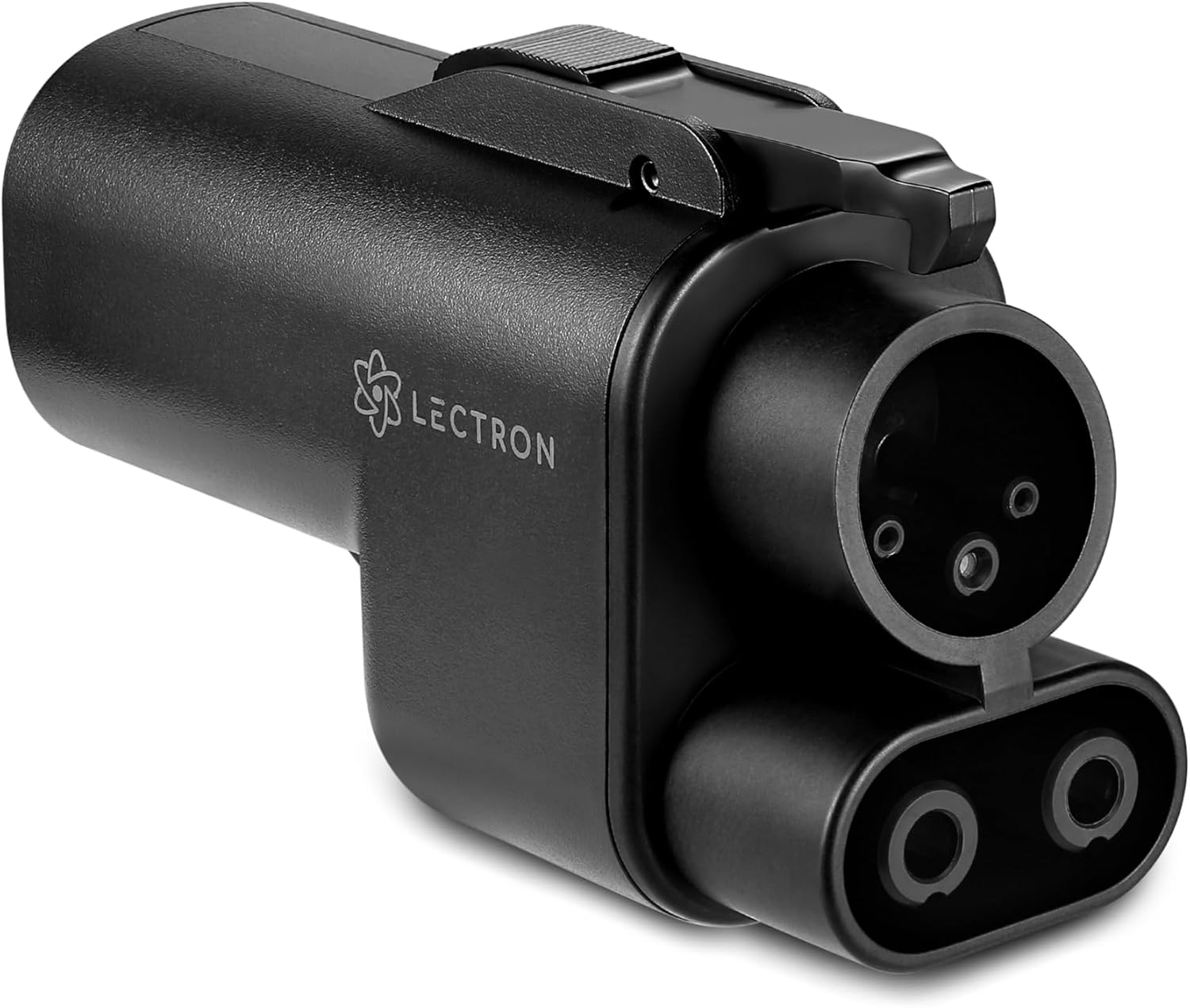
Lectron NACS to CCS Fast-Charge Adapter
Unlock every CCS fast charger for your Tesla, up to 500A DC. Never get stranded at a non-Tesla DC station again.
As an Amazon Associate, ThinkEV earns from qualifying purchases — at no extra cost to you.
Related Reading
Gear worth having
As an Amazon Associate, ThinkEV earns a small commission from qualifying purchases — at no extra cost to you.

Tesla Key Card Holder with AirTag Slot
Stop fishing the keycard out of your wallet, and slot an AirTag in case the car wanders off in a lot.
As an Amazon Associate, ThinkEV earns from qualifying purchases — at no extra cost to you.

Founder & Chief Editor
Vlad Pereira is the founder and chief editor of ThinkEV.ca, the Canadian electric-vehicle publication he writes and edits from Courtenay, British Columbia. He covers EV pricing, federal and provincial rebates, charging costs, and the Chinese manufacturers now entering Canada, from the buyer's side rather than the press-fleet side. ThinkEV is a venture of Vlad Pereira Online; his writing on health, income and the long game lives at vladpereira.com.
Frequently asked questions
Which EV brand holds its value the best in Canada?
Do Chinese EVs like BYD and NIO hold value well?
Why is Tesla depreciation getting worse?
Are EVs with CATL batteries better for resale?
Will CCS charging hurt resale value in the future?
More EV & road-trip finds
Affordable upgrades worth a look — tap any to check the price on Amazon.
 ★ 268
★ 268Anti-Slip Leather Steering Wheel Cover
View on Amazon ★ 8,681
Chemical Guys Complete Car Wash Kit
View on Amazon ★ 419
★ 419RGB Car Interior LED Strip Light
View on Amazon ★ 568
★ 568Personalized Photo and Text Keychain
View on Amazon ★ 865
★ 865Collapsible Trunk Organizer
View on Amazon
TP-Link Kasa Smart Plug with Energy Monitoring
View on Amazon ★ 121
★ 121Foldable Windshield Sun Umbrella
View on Amazon ★ 392
★ 392Large Cup Holder Adapter (32-40oz)
View on AmazonRead, Plan, Then Stay Current
Explore our expert articles to understand incentives and ownership costs, use the map to pressure-test charging reality, then subscribe so new EV coverage comes straight to you.
Continue Reading
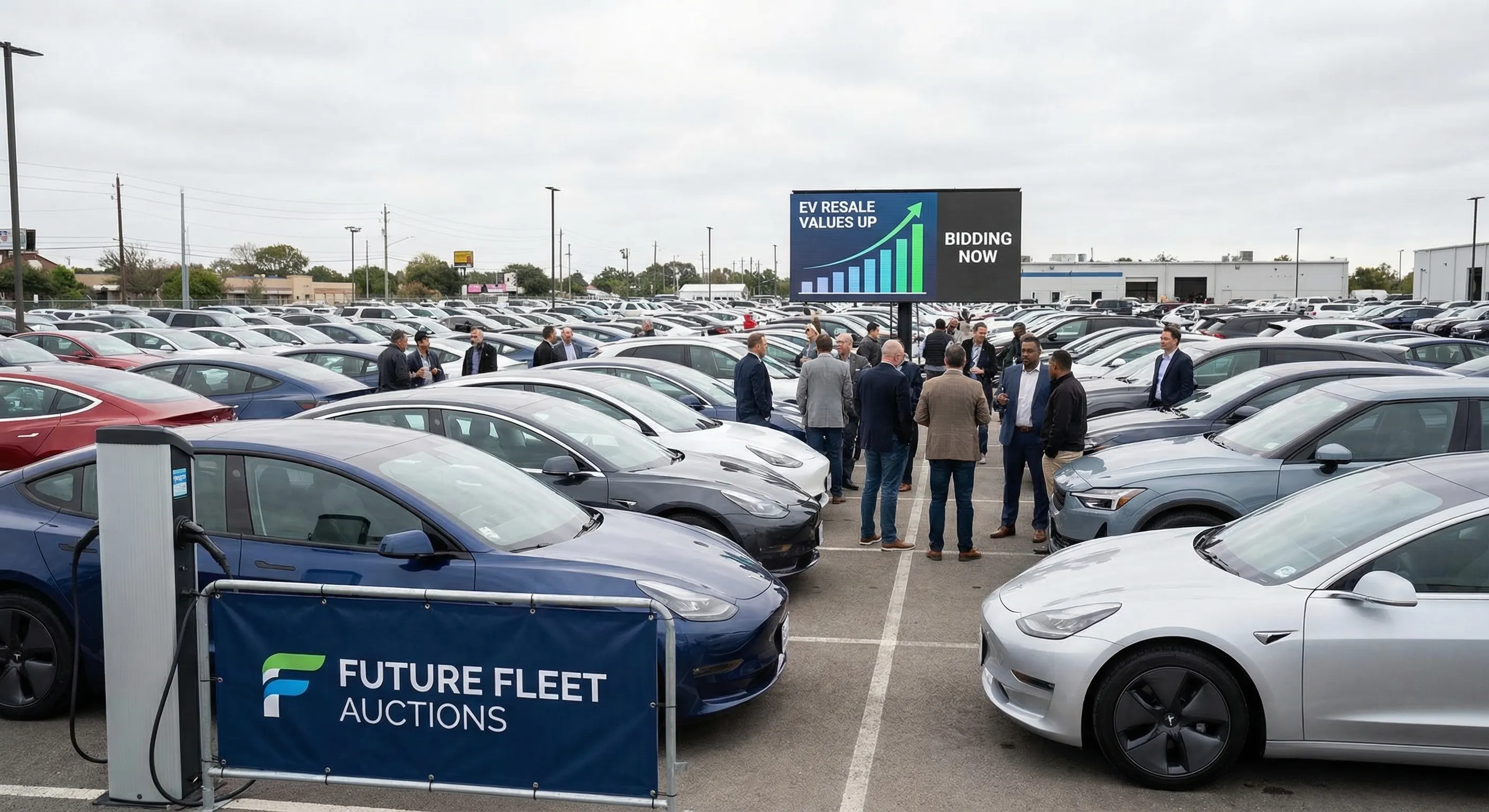
EV Resale Values in Canada 2026: Should You Worry?
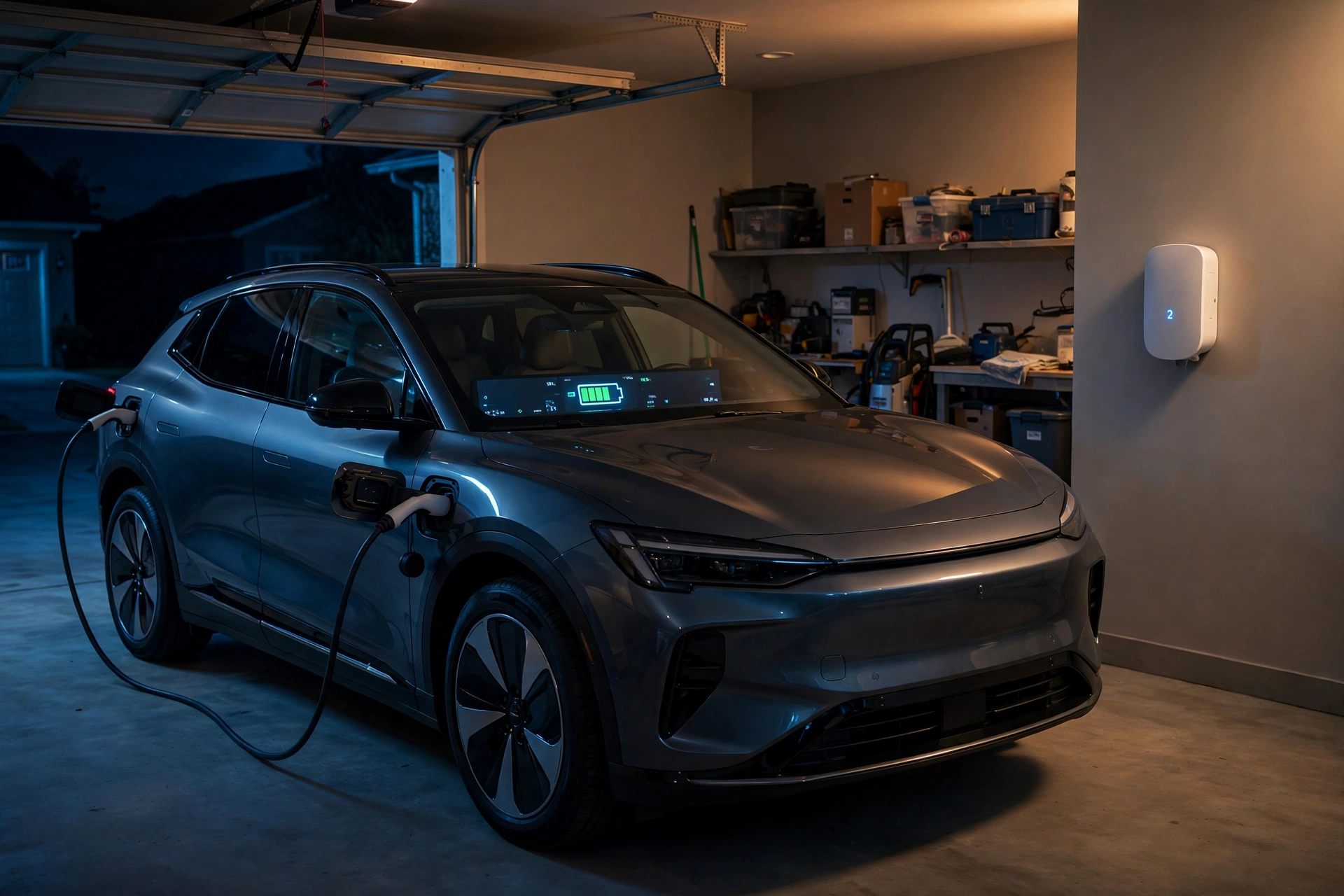
Which EVs Should Be Charged to 100%? The LFP Exception
First-Time EV Buyer Mistakes Worth Avoiding in Canada

Rivian Canada 2026: R1T, R1S Prices and R2 Release Date
Why Cold Weather Cuts EV Range, the Real Reasons