In March 2025, BYD outsold Tesla by roughly 2.5 million units over the trailing twelve months. The gap took about 15 years of policy to build, and it is not closing.
The comfortable Western explanation is cheap labour and a weak yuan. The data points somewhere else. China's EV industry is the output of a deliberate industrial stack, subsidies that seeded demand before the market existed, a credit system that forced foreign joint-venture partners to electrify or lose access, and a vertically integrated supply chain that compressed costs structurally rather than cyclically. Add an 18-to-24-month development cadence and a domestic price war that culled the weak brands before they ever exported, and the result is what we are looking at now: BYD selling over 100,000 plug-in EVs per month by early 2022, then roughly 4.3 million globally in 2024, and a manufacturing depth no other country has matched.
This is a guide to how it happened, in the order it happened, and where Canada sits in the resulting map.
Key takeaways
- BYD outsold Tesla by roughly 2.5 million units over the trailing twelve months ending March 2025.
- China's dual-credit NEV mandate funnelled cash from Volkswagen and GM directly into their future Chinese competitors.
- BYD's Blade Battery uses a cell-to-pack LFP architecture that recovers enough energy density to make NMC unnecessary in most segments.
- Chinese OEMs ship new models in 18–24 months; Volkswagen runs a 3–5 year global platform cycle.
- China controls roughly three-quarters of global lithium refining regardless of where the ore is mined.
Quick Answer: How China Built the World's EV Industry
China's EV lead rests on four reinforcing layers. The first is policy, state subsidies launched in 2009 created demand before private buyers wanted EVs, and a New Energy Vehicle mandate forced every automaker selling in China to electrify a share of its fleet. The second is vertical integration, BYD makes its own batteries, chips, motors, and body panels, which is why its cost structure is different in kind, not degree, from Western rivals. The third is speed, Chinese OEMs ship new models in 18 to 24 months versus the 3 to 5 years a German or American platform takes. The fourth is selection pressure, the domestic price war is brutal, and the brands that survive it are already globally competitive when they board the ship.
None of these is decisive on its own. The combination is.
The Policy Stack That Created the Market
The thing to understand about the Chinese EV industry is that the demand was manufactured before the product was. Chinese automakers established the building blocks for growing competitiveness in EV technology and software through a stack of policies stretching back to 2009, direct purchase subsidies, licence-plate priority in cities where internal-combustion plates cost more than the car, exemption from purchase tax, and preferential charging-infrastructure deployment.
The dual-credit NEV mandate is the under-discussed part of this stack. Foreign joint-venture partners, Volkswagen, GM, Toyota, Hyundai, had to either electrify a share of their China fleet or buy credits from domestic EV makers. They mostly bought credits, which funnelled cash directly from legacy OEMs into the balance sheets of their future competitors. It is, to be fair, an elegant mechanism.
The third leg is the lithium supply chain. China invested upstream, mining concessions in Australia, Chile, the Democratic Republic of Congo; refining capacity domestically; cathode and anode production at scale, before anyone else treated battery materials as a strategic input. The result is that roughly three quarters of global lithium refining now happens in China, regardless of where the ore comes out of the ground. That is not an accident.
The currency framing, that Chinese EVs are cheap because the yuan is undervalued, explains a slice of the gap and not the structural part. The PPP-of-the-yuan argument runs into the wall when you compare component costs at the factory gate: BYD's Blade battery is cheaper to produce in dollar terms because BYD designed the chemistry, the pack architecture, and the manufacturing line as one system, not because the yuan trades soft.
Subsidies have since phased out. The cost advantage has not. That is the test of whether industrial policy worked, and on this measure it did.
Gear worth having
As an Amazon Associate, ThinkEV earns a small commission from qualifying purchases — at no extra cost to you.

Lectron Level 2 J1772 Charger (40A, WiFi)
Smart WiFi charger with real-time energy monitoring. 40A / 9.6 kW, J1772 with a NEMA 14-50 plug, schedule charging right from your phone.
As an Amazon Associate, ThinkEV earns from qualifying purchases — at no extra cost to you.
Vertical Integration: Why BYD's Cost Structure Is Different
BYD is the case study, and the company that makes the argument legible. BYD is now a leading Chinese automaker, but the relevant fact is what it owns inside the bill of materials. Most OEMs assemble vehicles from a tier-one supplier ecosystem, Bosch, Continental, ZF, CATL, LG Energy Solution. BYD manufactures its own Blade batteries, its own IGBT and silicon-carbide chips, its own electric motors, its own body panels and even some of its own tyres. The company's battery division is the world's fourth largest producer of EV batteries with a market share of 14.4% as of January 2024, which means it is both a vehicle maker and a battery maker, and the cross-subsidy runs in whichever direction the quarter demands.
The Blade Battery, launched in 2020, is the most visible piece of this. It uses lithium-iron-phosphate chemistry, historically cheaper but less energy-dense than nickel-manganese-cobalt, in a cell-to-pack architecture that recovers most of the energy-density gap through packaging. The downstream effect on the industry is documented: after Blade went mainstream, GM, Ford, Hyundai, Kia, and Volkswagen all revisited which vehicle segments actually needed premium NMC chemistry versus a disciplined LFP structure. The answer turned out to be: fewer than they had assumed.
The semiconductor leg matters too. When the 2021–22 chip shortage shut down assembly lines from Wolfsburg to Detroit, BYD's in-house IGBT fab kept its lines running. Vertical integration is supposed to be a disadvantage at low volume, too much fixed cost, not enough flexibility, and it is. At 4.3 million units, it stops being a disadvantage and starts being a moat.
Gear worth having
As an Amazon Associate, ThinkEV earns a small commission from qualifying purchases — at no extra cost to you.

First Alert Auto Fire Extinguisher
A compact extinguisher sized for vehicles and bracket-mounted under the seat. Peace of mind for the price of lunch.
As an Amazon Associate, ThinkEV earns from qualifying purchases — at no extra cost to you.
A Level 2 charger adds roughly 40 kilometres of range per hour. Vertical integration adds roughly a 15 percent structural margin advantage at scale. This is not a speed. It is a philosophy.
Speed as a Competitive Weapon: 18-Month Model Cycles
The development-cycle gap is the part Western OEMs talk about least and feel most. BYD, Geely, and Wuling collectively received regulatory approval for 83 new passenger car models in a single recent year. Volkswagen, by comparison, runs a global platform development cycle of 3 to 5 years per architecture. The Chinese cadence is roughly 18 to 24 months from clean sheet to showroom.
This is not a cultural difference. It is structural. Chinese EV architectures are software-defined from the start, which means mid-cycle feature updates ship over-the-air rather than requiring a tooling refresh. The hardware platforms are designed for a shorter amortisation window, which means the capex is sized for two years of payback rather than seven. And the domestic market is a live test environment: a model that survives twelve months of the Chinese price war has been pressure-tested on cost, quality, software, and customer churn in ways a European model launching into a stable home market simply has not.
The structural gap between legacy OEMs and Chinese brands is widening on this dimension specifically. GM lost roughly six billion dollars on EVs in 2024 while BYD shipped 1.76 million units in the same period. The losses are not because GM cannot engineer an EV. They are because GM is engineering EVs on legacy timelines while its competitors are on EV-native ones. The cost curve does not close on its own.
Gear worth having
As an Amazon Associate, ThinkEV earns a small commission from qualifying purchases — at no extra cost to you.

Grizzl-E Classic Level 2 EV Charger (40A)
Canadian-made and rated for minus 40C winters. 40A / 9.6 kW, NEMA 14-50, indoor/outdoor, 24-ft cable. The charger built for Canadian weather.
As an Amazon Associate, ThinkEV earns from qualifying purchases — at no extra cost to you.
The Global Footprint, and Where Canada Fits
Chinese automakers now hold most of the top-10 EV manufacturer slots by global volume. BYD at roughly 4.3 million annual deliveries, Geely Group at roughly 1.28 million, SAIC and Chery and Great Wall and Changan filling out the table beneath them. The primary export targets are Europe, Southeast Asia, the Gulf, and Latin America, markets without significant domestic EV manufacturing and without high tariff walls.
Canada is the case where the wall is real but newly porous. The 100 percent surtax imposed in October 2024 priced Chinese EVs out of the market entirely. In January 2026 it dropped to 6.1 percent under a 49,000-unit annual quota, and the arithmetic of that quota is tighter than the headlines suggest, 49,000 units split across however many Chinese brands choose to enter is not a flood. It is a measured opening, deliberately sized to give Canadian dealers and consumers a taste without letting the domestic industry get carried out on a stretcher.
Chery is the export story that predates the EV era. It is the largest Chinese automaker by export volume and has been shipping vehicles to more than 80 countries for over 20 years. The Chinese auto industry's global ambitions were not invented for the EV transition, they were redirected into it.
Geely is the quieter case. It already operates in Canada through Volvo and Polestar, both of which are engineered in Sweden but manufactured partly in China. The brand wall keeping Chinese-badged vehicles out of Canadian showrooms is thinner than the tariff wall suggests, and it has been for years. The picture of what Canadian buyers will actually see in 2026 is less a sudden invasion and more a slow recognition that the supply chain was already here.
Gear worth having
As an Amazon Associate, ThinkEV earns a small commission from qualifying purchases — at no extra cost to you.
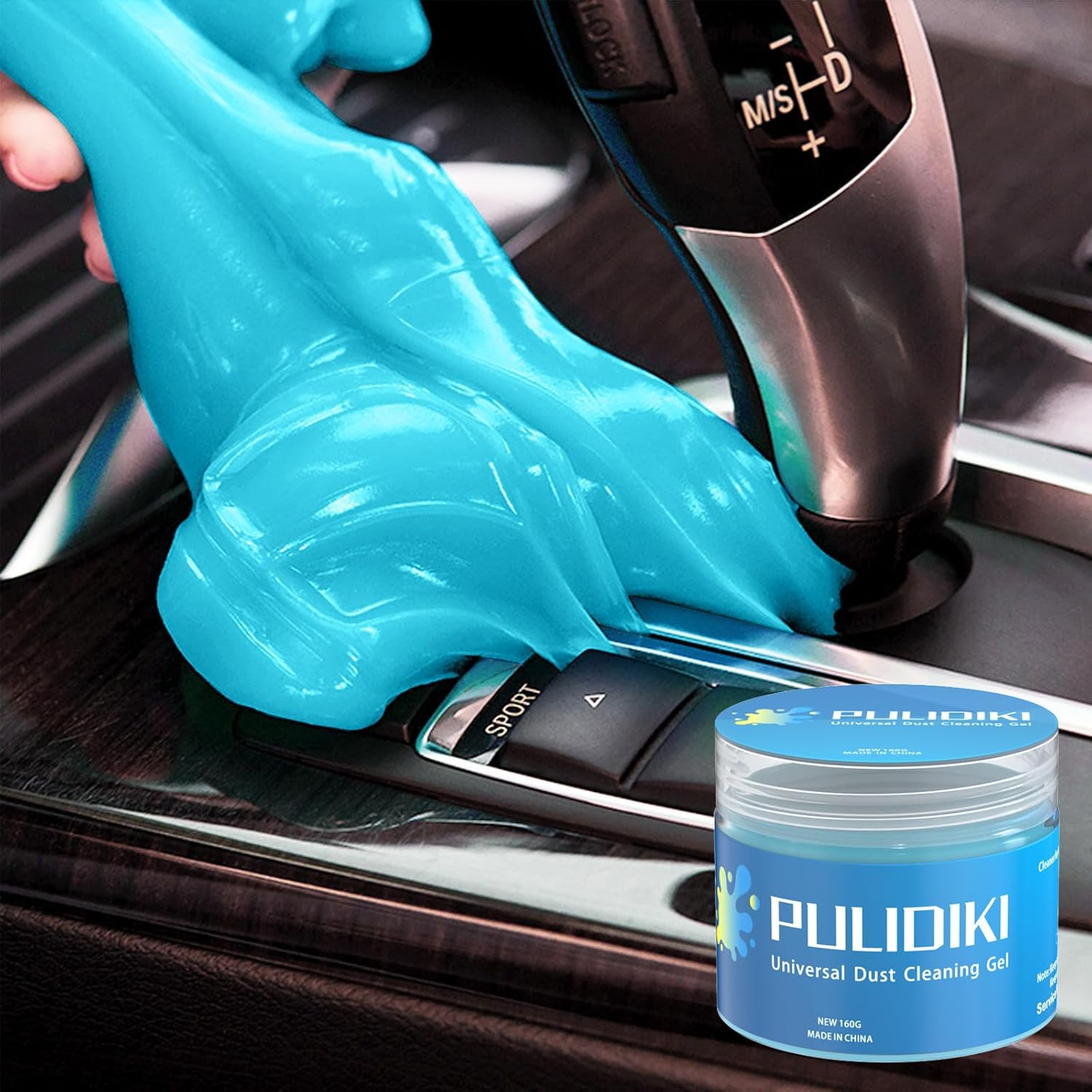
PULIDIKI Car Cleaning Gel (Detailing Putty)
Press it into vents, buttons, and seams and it lifts out dust you did not know was there. Weirdly satisfying, genuinely useful.
As an Amazon Associate, ThinkEV earns from qualifying purchases — at no extra cost to you.
What Western Automakers Are Actually Up Against
The contest is less about one breakthrough model than about whether the cost curve can be closed at all. Chinese brands entered profitability through scale and vertical integration, not by cutting corners on feature sets, Chinese EVs at the 30,000-Canadian-dollar price point ship with the kind of interior tech, ADAS, and software polish that costs Western buyers 50,000 dollars or more to access. The domestic price war is compressing margins to levels legacy OEMs cannot match without restructuring, and restructuring takes years legacy OEMs do not have.
The cost-curve question is the one that decides the next decade. If a Western OEM can match Chinese variable cost at comparable volume, the tariff walls become a transition tool rather than a permanent fixture. If it cannot, the walls become the only thing holding the domestic industry up, and walls erode. The 49,000-unit Canadian quota expires on its own schedule. The number to watch is whether Canadian buyers, given a real choice in 2026, behave the way European and Brazilian buyers did when their walls came down.
If the answer is yes, the rest of the decade gets interesting. If the answer is no, Canadian policy has bought the domestic industry exactly the amount of time it has spent so far failing to use it.
Gear worth having
As an Amazon Associate, ThinkEV earns a small commission from qualifying purchases — at no extra cost to you.

WixGear Magnetic Air Vent Phone Mount (2-Pack)
A magnet strong enough that your phone never flinches over potholes or rail crossings. Two in the box, one for each car.
As an Amazon Associate, ThinkEV earns from qualifying purchases — at no extra cost to you.

Founder & Chief Editor
Vlad Pereira is the founder and chief editor of ThinkEV.ca, the Canadian electric-vehicle publication he writes and edits from Courtenay, British Columbia. He covers EV pricing, federal and provincial rebates, charging costs, and the Chinese manufacturers now entering Canada, from the buyer's side rather than the press-fleet side. ThinkEV is a venture of Vlad Pereira Online; his writing on health, income and the long game lives at vladpereira.com.
Frequently asked questions
Can Canadian consumers actually buy Chinese EVs right now?
Does BYD's vertical integration actually translate to better quality?
Why didn't Western automakers copy China's battery-first strategy earlier?
Is the 18-month development cycle actually safe for consumers?
Which Chinese EV brands are most likely to enter Canada eventually?
More EV & road-trip finds
Affordable upgrades worth a look — tap any to check the price on Amazon.
 ★ 4,626
HoogaLife Hanging Car Diffuser (2-Pack)
View on Amazon ★ 12,396
K KNODEL Car Trash Can with Lid
View on Amazon ★ 1,944
VIOFO A229 Pro 4K Dash Cam
View on Amazon ★ 87
★ 87Car Window Sun Shades for Kids (4-Pack)
View on Amazon ★ 68
★ 68WeatherTech FloorLiner for Tesla Model 3
View on Amazon ★ 8,681
Chemical Guys Complete Car Wash Kit
View on Amazon ★ 537
★ 537USB Star Projector Roof Light
View on Amazon ★ 1,349
Cool Swinging Duck Dashboard Ornament
View on AmazonRead, Plan, Then Stay Current
Explore our expert articles to understand incentives and ownership costs, use the map to pressure-test charging reality, then subscribe so new EV coverage comes straight to you.
Continue Reading
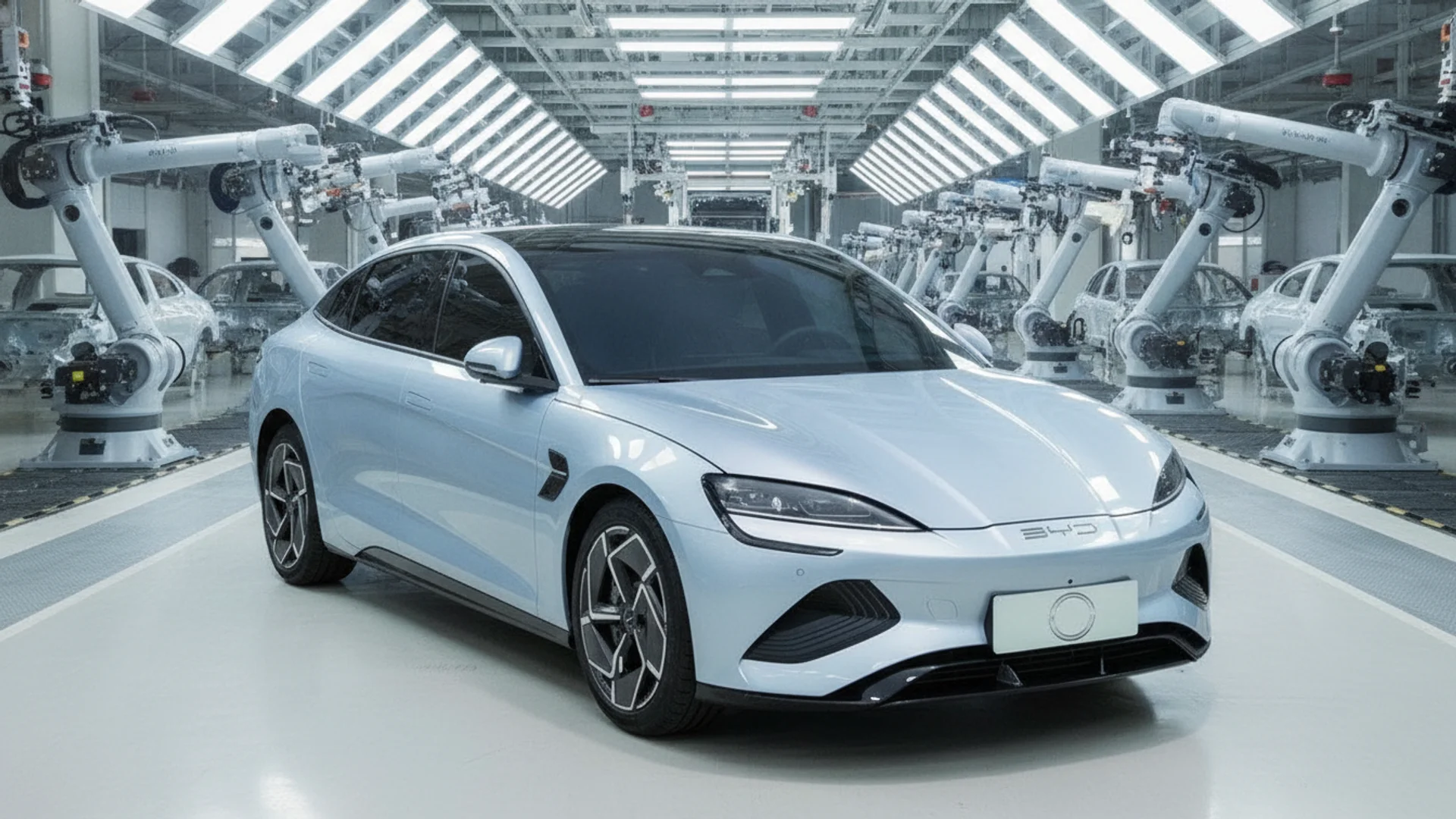
How BYD Builds EVs So Cheaply: The Vertical Integration Playbook
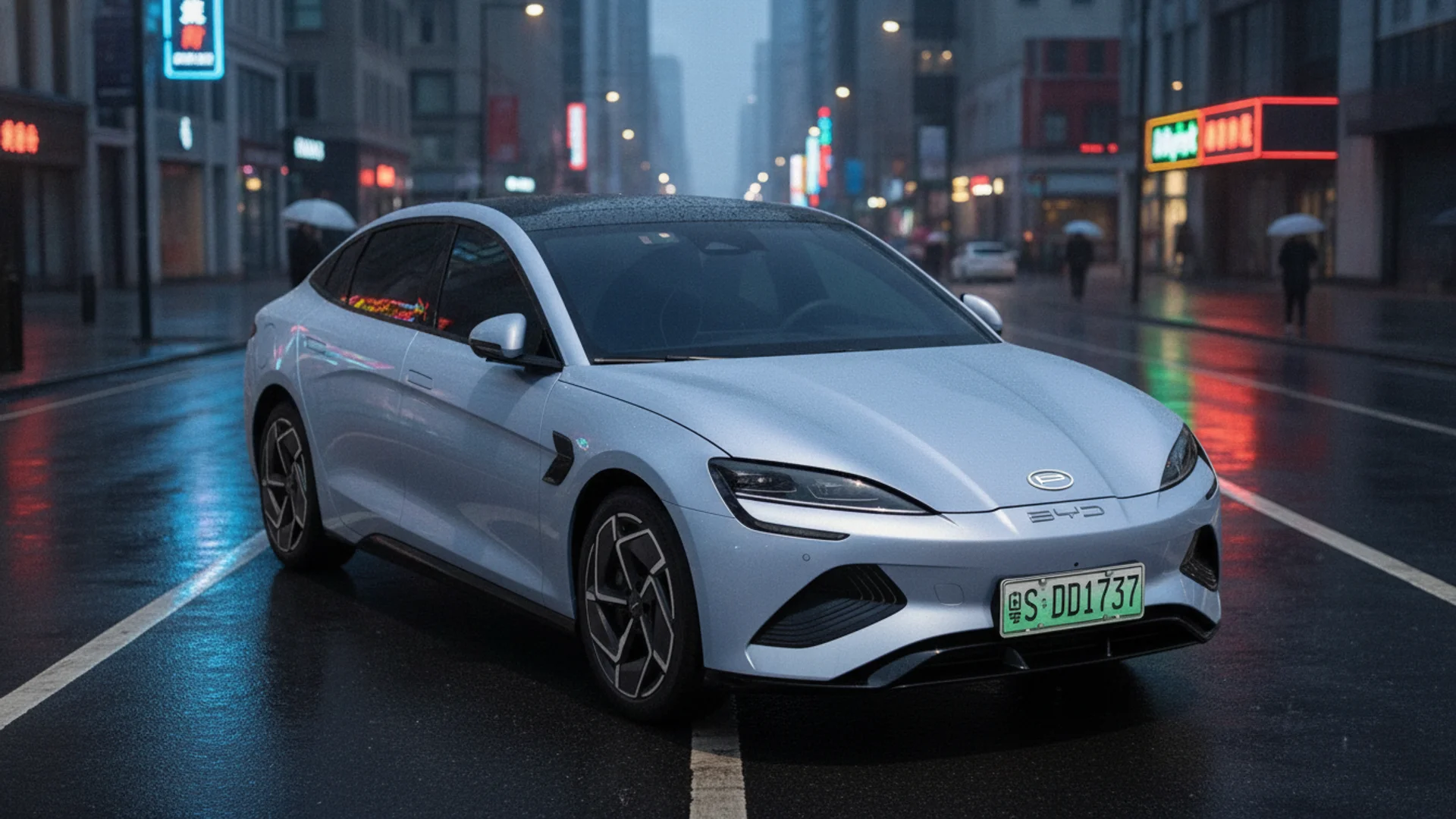
BYD Seal 06 DM-i: 128 km EV Range, $14K USD Starting Price
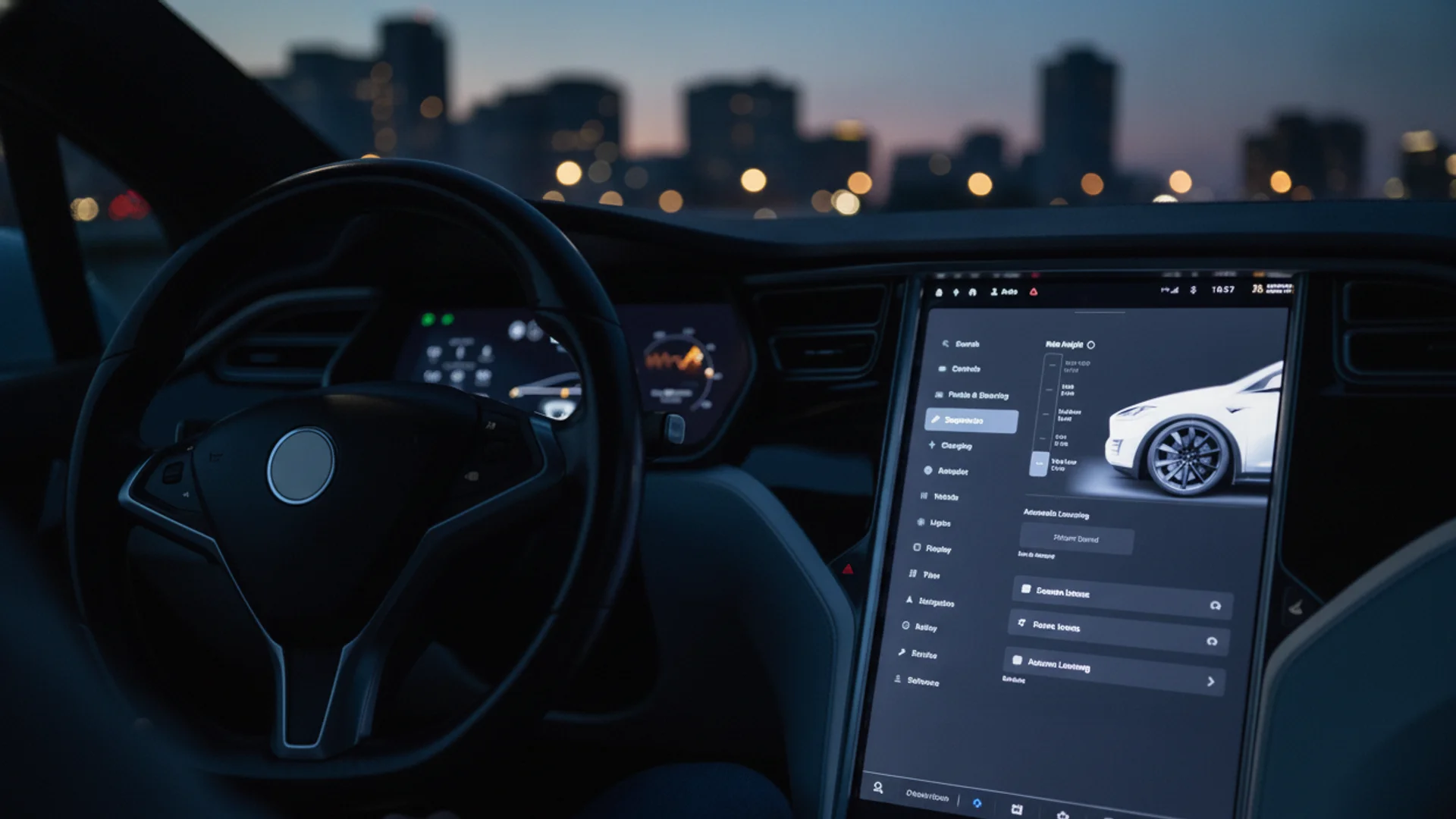
Why Chinese EV Interiors Feel a Generation Ahead
Why Chinese EVs Are Cheap: Production or the Yuan?
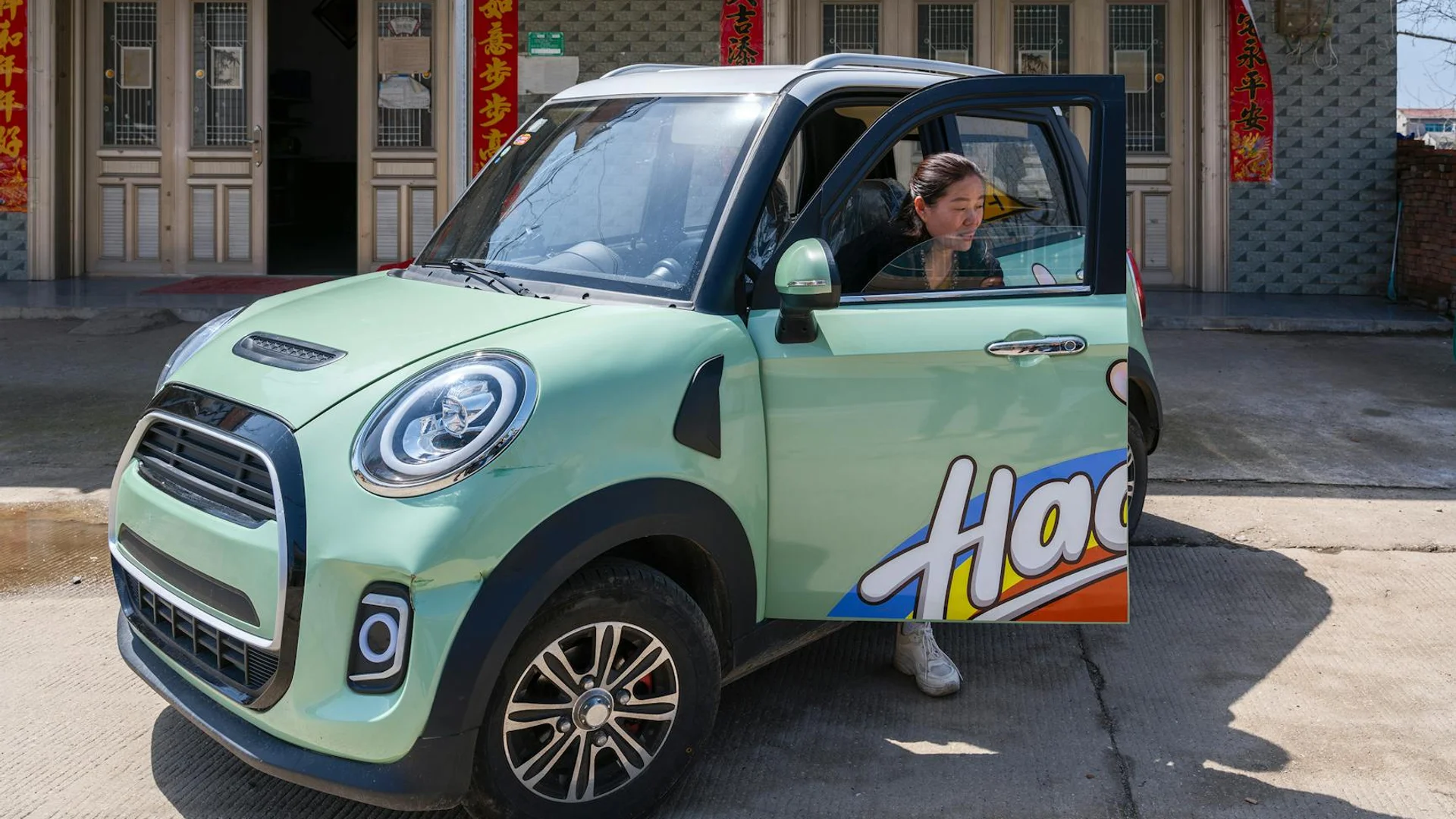
Chinese EVs Canada 2026: Complete Buyer's Guide & Market Map