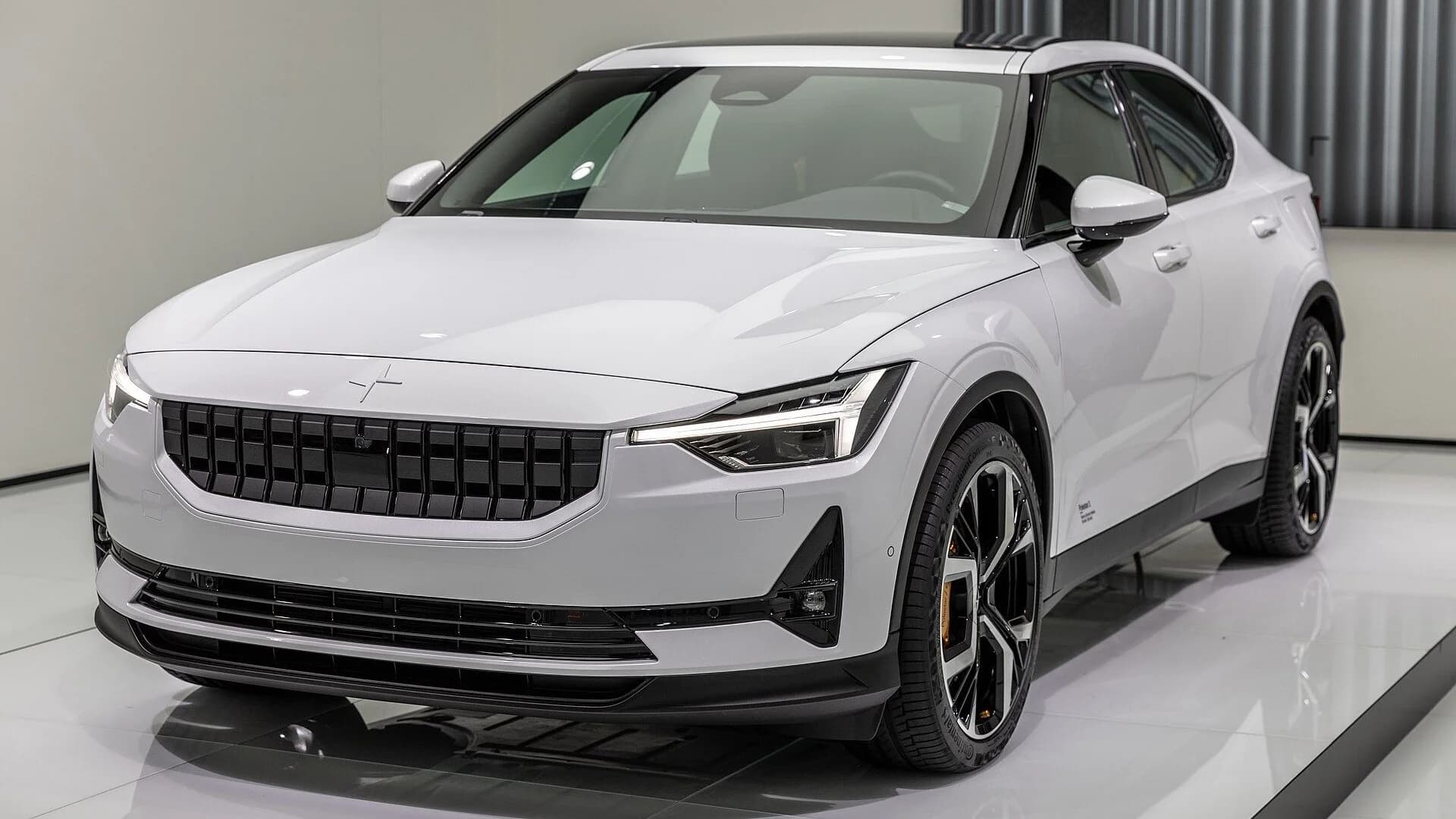
Canada's 49,000-vehicle Chinese-EV quota is what returned the Polestar 2 to Canadian showrooms, not a tariff repeal, and not a structural reconciliation with Beijing-origin imports. Polestar opened Canadian orders for the fastback on June 3, with customer deliveries of the 2027 Polestar 2 estimated to start in September. The car that the Sweden-based automaker paused last year due to tariffs is back inside a quota ceiling, on a tariff rate that survives only as long as that ceiling holds.
That distinction matters because it determines almost everything downstream: which buyer pool sees the car, how the price stacks against EVAP-eligible rivals, and whether the 2027 model year is a one-cycle reprieve or the start of a sustained Canadian re-entry. The Polestar 2's return is a useful test case for how Canada's hybrid tariff-quota instrument actually behaves in market, because Polestar is the first major brand to make the round trip out and back in under the same policy.
This piece works through the mechanics: the surtax structure, the quota architecture, the EVAP rebate wall, the multi-jurisdiction comparison, Polestar's narrowed Canadian lineup, and the forward policy risk that the 49,000-unit figure quietly imposes on every projection for 2027 and beyond.
Key takeaways
- Canada's 49,000-vehicle Chinese-EV quota, not a tariff repeal, is what brought Polestar 2 back for 2027.
- The 6.1% surtax applies only inside the quota ceiling; outside it, the full 100% rate reverts instantly.
- Polestar 2 is ineligible for Canada's $5,000 EVAP rebate because it's assembled in Chengdu, not North America.
- The 49,000-unit ceiling is shared across all Chinese-EV brands, meaning BYD Dolphin competes for the same quota slots.
- BC's CleanBC rebate is paused since March 2026, removing a key provincial offset that previously softened Polestar's price gap.
The tariff mechanics that killed and resurrected the Polestar 2
Canada's 100% surtax on Chinese-origin EVs took effect in October 2024, matching the rate the United States had imposed earlier that year. The surtax sat on top of the existing Most-Favoured-Nation tariff rate, producing an all-in landed cost penalty that made Chinese-assembled EVs commercially non-viable in Canada. The Polestar 2 sat out the 2026 model year, it's made in China, Polestar is the all-electric division of Volvo, and both are owned by China's Geely, and it faced punishing tariffs for that reason.
On January 16, 2026, Ottawa cut the surtax to 6.1%, but the cut applied only inside an annual quota ceiling of approximately 49,000 vehicles. Outside that ceiling, the 100% rate reverts. The 6.1% figure is the surtax alone, not the all-in tariff: the base MFN rate still applies, and importers continue to pay duties on the landed value before the surtax is calculated. Conflating the two understates the real cost basis by several percentage points and produces misleading price comparisons against domestic-assembly rivals.
Polestar confirmed the 2026 model-year gap in late 2025, after the 100% rate had been in effect for roughly fourteen months. The decision was structural rather than tactical, at 100%, even the brand's premium positioning could not absorb the landed-cost penalty without ceding the segment to non-Chinese rivals. The 6.1% rate, by contrast, is absorbable. It compresses margin but does not eliminate the commercial case, which is why Polestar opened Canadian orders for the fastback June 3, within five months of the rate cut taking effect.
The sequence also clarifies what the policy is and what it isn't. The January 2026 change is a surtax reduction inside a quota, not a tariff repeal. It does not normalise Chinese-EV trade with Canada; it manages it. Buyers in this segment are operating inside a volume-rationed corridor with an expiry mechanism baked in. For context on how the same quota changes the BYD calculation, see BYD's actual Canadian model availability under the 49,000-unit ceiling.
Quota architecture: what 49,000 vehicles actually means for availability
The 49,000-unit ceiling is shared across all Chinese-origin EV imports into Canada. It is not a Polestar-specific allocation, and there is no published federal mechanism for per-brand sub-allocations. The structure rewards the first importer to clear customs, once the running annual total approaches 49,000, every subsequent unit faces the reverted 100% surtax until the next quota year resets.
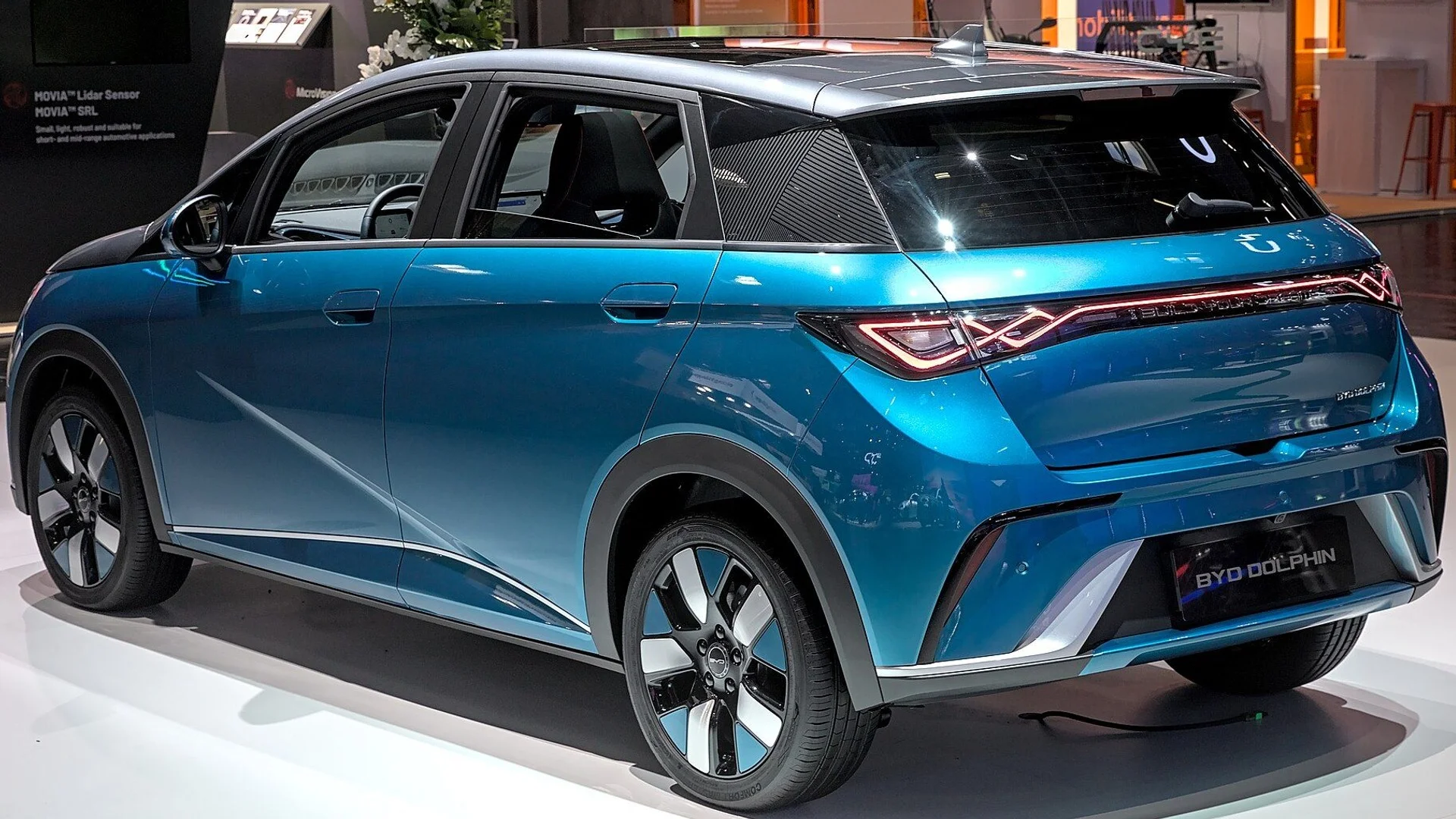
That architecture creates a competitive dynamic Polestar did not face in its pre-2024 Canadian lifecycle. The BYD Dolphin entered Canada in early 2026 at $27,999, drawing from the same quota pool. So does every other Chinese-assembled EV cleared for Canadian sale this year. Polestar's 2027 launch volume, projected against September 2026 first-delivery and a partial-year sales window, competes for quota space against price-led entries that move higher unit counts per dollar of quota consumed.
Three implications follow from a federal allocation framework that uses ceiling-and-revert rather than per-brand carve-outs:
- Quota exhaustion is a real-year risk, not a hypothetical. A high-volume Chinese entrant clearing 30,000 units in the first three quarters could exhaust the ceiling before Polestar's volume cycle peaks.
- First-importer advantage is structural. Brands that secured allocation and cleared customs earlier in the year face lower marginal tariff exposure than late entrants.
- The quota's renewal mechanism has not been publicly detailed. The 2027 calendar year sits behind a policy decision that has not been made on the public record.
For Polestar specifically, the AWD-only Canadian configuration (more on which below) at least raises the per-unit revenue against quota consumed, a single Polestar 2 at premium pricing contributes more dealer revenue per quota slot than a Dolphin does. That arithmetic favours the brand's continued access even in a constrained-quota year, but it does not insulate it from the ceiling itself.
Gear worth having
As an Amazon Associate, ThinkEV earns a small commission from qualifying purchases — at no extra cost to you.

WeatherTech FloorLiner for Tesla Model 3
Deep-channel liners that trap every drop of slush and salt. The difference between a ruined interior and a showroom-fresh cabin after a Canadian winter.
As an Amazon Associate, ThinkEV earns from qualifying purchases — at no extra cost to you.
EVAP eligibility: the rebate wall the Polestar 2 cannot yet clear
As of February 2026, twenty-two vehicle models qualified for Canada's $5,000 federal EVAP rebate. The Polestar 2 is not among them, and the policy reason is the same one that made the tariff mechanics matter in the first place: the car is assembled in Chengdu, and EVAP eligibility is tied to North American assembly under CUSMA rules-of-origin thresholds.
The BYD Dolphin is also excluded from EVAP despite the tariff reduction. The exclusion is not explicit on a brand basis, it is implicit through the assembly criteria. CUSMA-origin assembly is the operative test, and Chinese assembly fails it regardless of whether the brand's parent company is Swedish, Chinese, or otherwise.
The effective price penalty in Polestar's case widens the real-world comparison against EVAP-eligible rivals by exactly $5,000. With its return, the automaker now offers the Polestar 2 hatchback, Polestar 3 sport-utility, and Polestar 4 coupe-style crossover, and the Polestar 3 and 4 face their own EVAP-eligibility considerations depending on their assembly origin, though the Polestar 4 is currently produced in South Korea under a Renault joint venture rather than China, which materially changes its rebate calculus.
For the Polestar 2 specifically, the rebate-eligibility gap means a Canadian buyer comparing it against an EVAP-eligible electric sedan at a similar sticker price is, in real terms, paying a $5,000 premium for the Polestar before any other consideration. Provincial incentive stacking would have closed part of that gap historically, but BC's CleanBC rebate is paused as of March 2026 with no resumption date, removing one of the larger provincial offsets that previously layered on top of EVAP. Quebec's Roulez vert programme remains active but with its own assembly-related eligibility tests that the Polestar 2 likewise cannot clear.
The structural takeaway: tariff access and rebate access are governed by different policy instruments with different origin tests, and clearing the tariff hurdle does not clear the rebate hurdle. Polestar's June 3 commercial relaunch operates inside the tariff corridor but outside the rebate corridor.
Multi-jurisdiction comparison: how peer markets handle Chinese-EV tariffs
Canada's quota-and-rate hybrid sits between two structurally different approaches. The European Union, the United States, the United Kingdom, and Brazil each handle Chinese-origin EVs through distinct instruments, and reading Canada's policy against that backdrop clarifies what the 49,000-unit ceiling actually is.
| Jurisdiction | Instrument | Rate / Ceiling | Quota mechanism |
|---|---|---|---|
| Canada | Surtax inside quota | 6.1% surtax under 49,000-unit ceiling; 100% above | Shared annual pool, no per-brand allocation |
| European Union | Countervailing duties | 7.8%–35.3% layered atop 10% MFN rate | Per-manufacturer rate, no volume ceiling |
| United States | Blanket surtax | 100% through 2026 | No quota relief mechanism |
| United Kingdom | Standard MFN only | 6.7% MFN, no Chinese-EV surtax | No volume restriction |
| Brazil | Managed phase-in | 18% through 2026, scheduled escalation | No volume ceiling |
The EU's countervailing-duty model is the structural neighbour closest to Canada's approach, both rely on the principle of managed access rather than blanket exclusion. The differences matter, though. The EU rates are per-manufacturer (with different duties for BYD, Geely, SAIC, and the broader cooperating-producer pool), and they are uncapped on volume. A Geely brand exporting to the EU pays its assigned countervailing rate on every unit. A Geely brand exporting to Canada pays 6.1% until the shared ceiling is exhausted, then 100%.
The US position is the cleanest binary, 100% flat, no quota, no carve-out. The UK and Brazil approaches treat Chinese EVs as standard trade flow with rate adjustments rather than punitive instruments. The UK's 6.7% MFN rate, in particular, is roughly comparable to Canada's 6.1% inside-quota rate, but the UK applies it without any volume gate.
Canada's policy choice, measured surtax inside a hard ceiling, is closer to the EU's volume-management philosophy than to the US blanket exclusion, but it is more aggressive than either the UK or Brazil. The Polestar 2's Canadian re-entry is the operational test of whether this hybrid instrument allows sustained brand presence or merely tolerates a single-cycle pulse of imports.
The reframe is straightforward: Canada has not chosen the US model or the UK model. It has chosen a quota-disciplined version of the EU model with Canadian volume math attached. For context on how that quota changes Chinese-EV competitiveness more broadly, the structural framing of Chinese EV brands entering the Canadian market covers the demand-side question this supply-side policy is meant to manage.
Gear worth having
As an Amazon Associate, ThinkEV earns a small commission from qualifying purchases — at no extra cost to you.

ChargePoint Home Flex Level 2 Charger (50A)
Premium 50A / 12 kW charger with the best app ecosystem. Hardwired or NEMA 14-50, with real-time energy tracking and smart scheduling.
As an Amazon Associate, ThinkEV earns from qualifying purchases — at no extra cost to you.
Polestar's Canadian commercial calculus: AWD-only, trimmed lineup, September deliveries
The "2" sat out the 2026 model year, and the 2027 model returns to Canada in a configuration narrower than the brand's global lineup. The Canadian offering is AWD-only, with the single-motor RWD variant absent from the order book. Polestar estimates customer deliveries of the 2027 Polestar 2 will start in September, on orders that opened June 3.
The AWD-only positioning is a commercial calculus consistent with quota-rationed economics. Each quota slot consumed yields more revenue when the average transaction price is higher, and AWD is the higher-margin trim. Polestar trades volume potential for margin protection, a defensible choice when the volume ceiling is shared, not brand-allocated. A larger Canadian lineup with both RWD and AWD variants would have produced more units sold per quota slot but lower revenue per slot, and in a constrained-quota environment the per-slot revenue figure is what protects the dealer network and the brand's continued allocation rights in subsequent years.
The trimmed lineup also signals Polestar's read of the Canadian buyer pool that will pay the EVAP-exclusion premium. RWD Polestar 2 buyers in Canada historically sat at the price-sensitive end of the brand's customer base. Without the $5,000 federal rebate, that buyer pool faces a steeper effective premium against EVAP-eligible alternatives than the AWD buyer pool does, the absolute price differential is the same, but the proportion of total vehicle cost is larger for the lower-priced trim.
The Sweden-based automaker last year paused the import of the Polestar 2 hatchback due to tariffs, but presently offers here the Polestar 3 SUV and the Polestar 4 SUV, and the Polestar 2's return slots into a Canadian lineup where the 3 and 4 already carry the brand's volume. The 2 is no longer the brand's Canadian entry point in the way it was pre-2024; it is a complementary offering inside a multi-model presence. Polestar projects low double-digit volume growth globally in 2026, and the Canadian return is volume-recovery rather than volume-expansion.
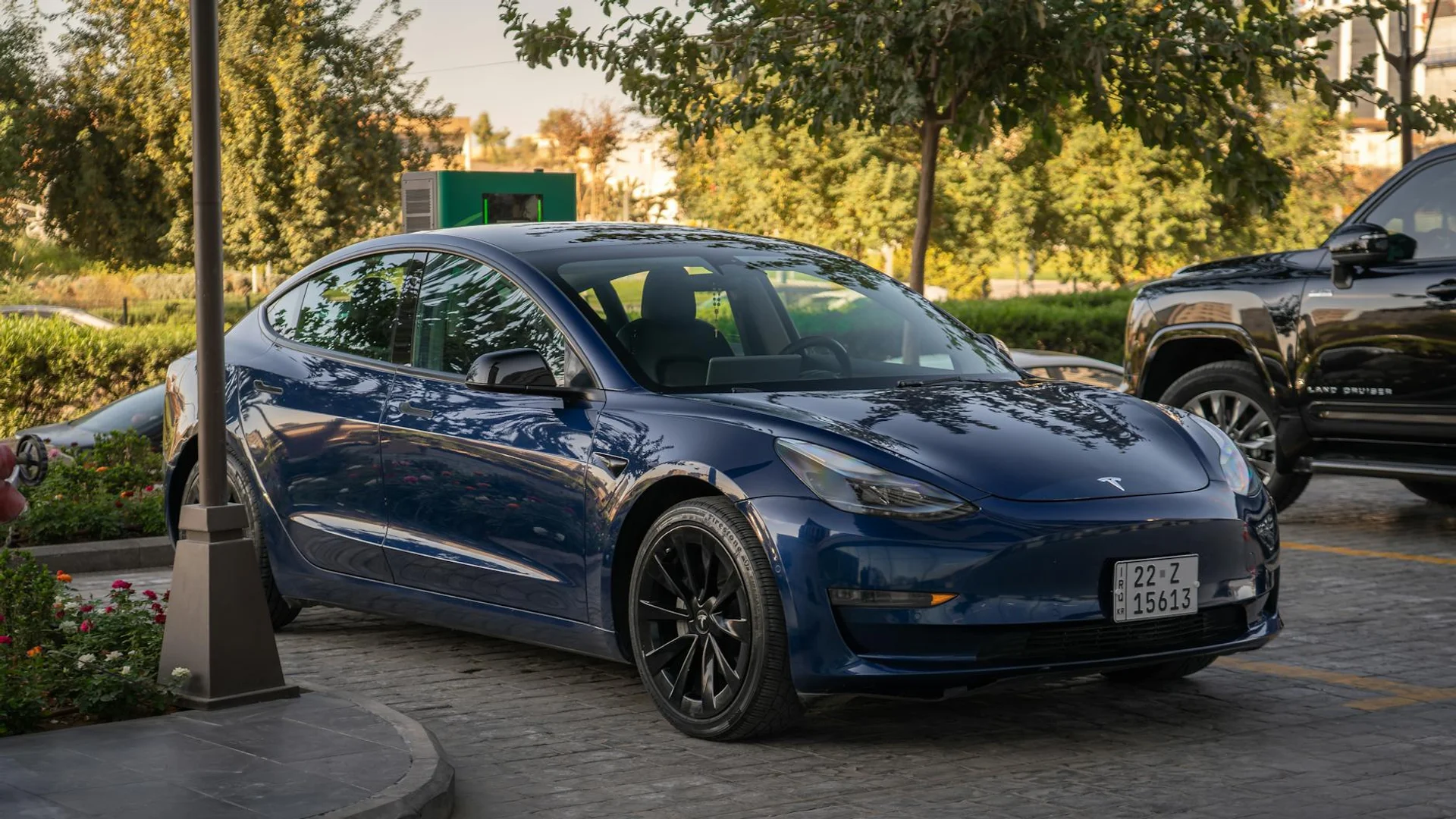
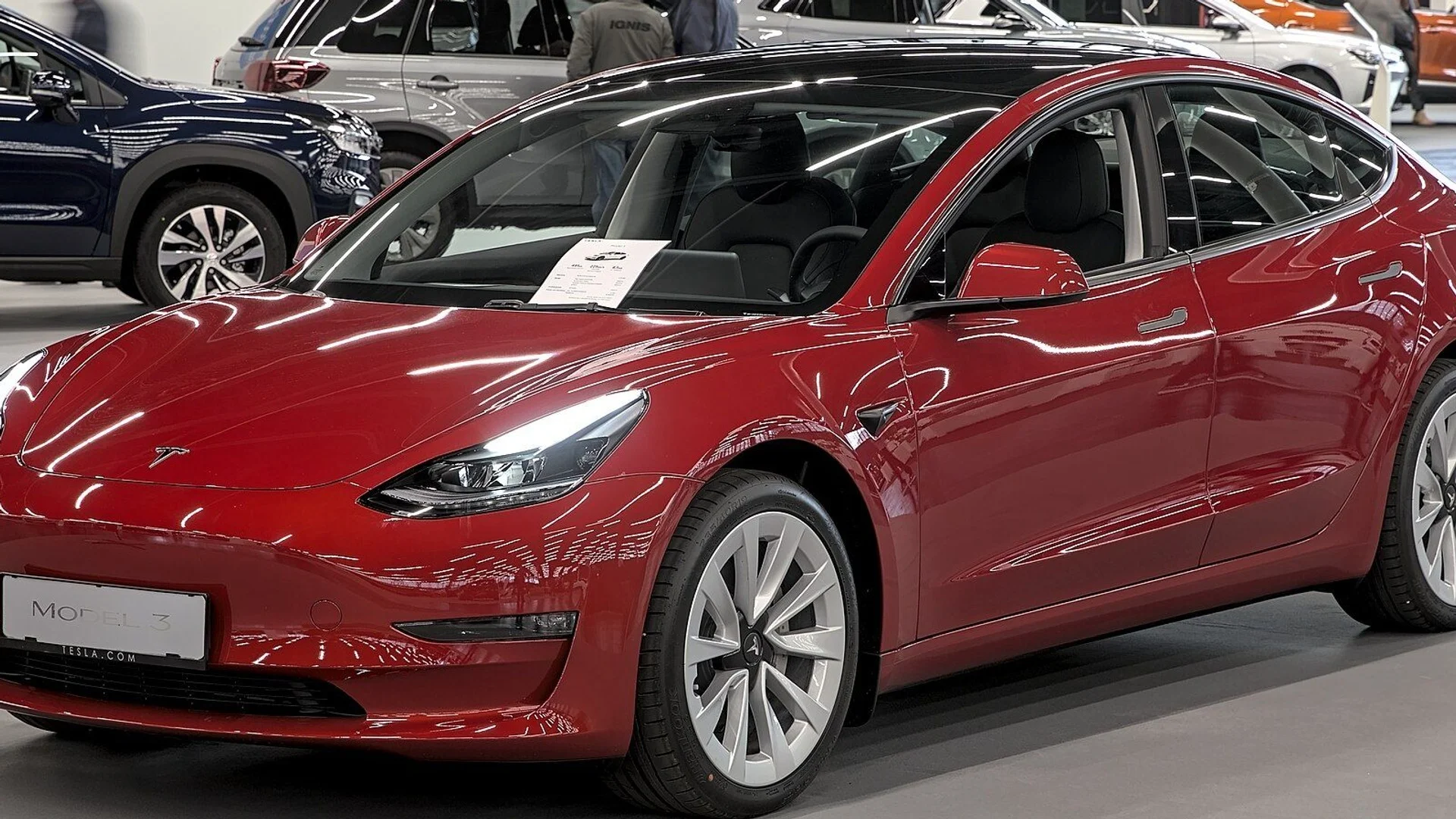
For shoppers cross-referencing the Polestar 2 against comparable electric sedans, the Tesla Model 3 segment comparison framework covers the broader sedan-segment dynamics that determine where the Polestar 2's AWD-only configuration sits competitively.
Gear worth having
As an Amazon Associate, ThinkEV earns a small commission from qualifying purchases — at no extra cost to you.

Grizzl-E Classic Level 2 EV Charger (40A)
Canadian-made and rated for minus 40C winters. 40A / 9.6 kW, NEMA 14-50, indoor/outdoor, 24-ft cable. The charger built for Canadian weather.
As an Amazon Associate, ThinkEV earns from qualifying purchases — at no extra cost to you.
Gear worth having
As an Amazon Associate, ThinkEV earns a small commission from qualifying purchases — at no extra cost to you.

PULIDIKI Car Cleaning Gel (Detailing Putty)
Press it into vents, buttons, and seams and it lifts out dust you did not know was there. Weirdly satisfying, genuinely useful.
As an Amazon Associate, ThinkEV earns from qualifying purchases — at no extra cost to you.
Forward policy risk: quota renewal, CUSMA review, and the 2027 tariff horizon
The 49,000-vehicle quota is not a permanent fixture of Canadian trade policy. Its renewal timeline, conditions, and ceiling figure for 2027 have not been publicly confirmed. Three forward-policy variables determine whether the Polestar 2's Canadian return is a sustained re-entry or a single-cycle pulse.
The first is the 2026 CUSMA review. Scheduled discussions could alter rules-of-origin thresholds that determine which assembly locations satisfy North American content requirements. A tightening of those thresholds, already a politically active topic in Washington, could indirectly constrain Chinese-origin EV access regardless of Canada's bilateral surtax decision. A loosening, less likely, could shift EVAP eligibility math in ways that affect adjacent brands more than Polestar specifically.
The second is the quota renewal mechanism. The 49,000-unit figure was set under a federal policy decision in late 2025. Whether the 2027 quota holds at the same level, expands, contracts, or is replaced by per-brand allocations is a decision that has not been signalled publicly. Polestar's broader four-model offensive plan through 2029 depends on stable quota access rather than on tariff elimination, the brand's projections assume continued managed-access conditions, not a return to pre-2024 trade flow.
The third is provincial-incentive stacking. With BC's CleanBC rebate paused indefinitely, and Quebec's Roulez vert programme operating under its own assembly tests, the effective post-incentive price of a Polestar 2 against EVAP-eligible rivals is wider in 2026 than it was pre-2024. Any provincial incentive change, restoration in BC, expansion in Quebec, new entrants in Ontario, would shift Polestar's competitive position without any federal tariff action.
Bottom line: the Polestar 2's Canadian return is a policy artefact, not a market recovery. The 6.1% surtax exists inside a 49,000-unit ceiling shared across every Chinese-origin EV importer. The car arrives without EVAP eligibility, in an AWD-only configuration that protects margin per quota slot, with first deliveries pencilled in for September. The question to watch is whether the 2027 quota is renewed at the same level, expanded, or replaced, because that decision, more than anything Polestar does commercially, determines whether the 2 is a Canadian fixture again or a one-cycle exception to the brand's North American withdrawal.
Gear worth having
As an Amazon Associate, ThinkEV earns a small commission from qualifying purchases — at no extra cost to you.

WixGear Magnetic Air Vent Phone Mount (2-Pack)
A magnet strong enough that your phone never flinches over potholes or rail crossings. Two in the box, one for each car.
As an Amazon Associate, ThinkEV earns from qualifying purchases — at no extra cost to you.

Founder & Chief Editor
Vlad Pereira is the founder and chief editor of ThinkEV.ca, the Canadian electric-vehicle publication he writes and edits from Courtenay, British Columbia. He covers EV pricing, federal and provincial rebates, charging costs, and the Chinese manufacturers now entering Canada, from the buyer's side rather than the press-fleet side. ThinkEV is a venture of Vlad Pereira Online; his writing on health, income and the long game lives at vladpereira.com.
Frequently asked questions
Does the 6.1% surtax include the base import tariff on the Polestar 2?
What happens to Polestar 2 pricing if the 49,000-unit quota fills up mid-year?
Why can't Polestar 2 buyers claim the $5,000 federal EVAP rebate?
Is the Polestar 3 or 4 also affected by the quota and EVAP restrictions?
When does Polestar expect to deliver the 2027 model in Canada?
More EV & road-trip finds
Affordable upgrades worth a look — tap any to check the price on Amazon.
 ★ 900
★ 900Personalized Photo Car Air Freshener
View on Amazon ★ 12,396
K KNODEL Car Trash Can with Lid
View on Amazon ★ 1,944
VIOFO A229 Pro 4K Dash Cam
View on Amazon ★ 87
★ 87Car Window Sun Shades for Kids (4-Pack)
View on Amazon ★ 268
★ 268Anti-Slip Leather Steering Wheel Cover
View on Amazon ★ 8,681
Chemical Guys Complete Car Wash Kit
View on Amazon ★ 164
★ 164Solar-Powered LED Ambient Light
View on Amazon ★ 568
★ 568Personalized Photo and Text Keychain
View on AmazonRead, Plan, Then Stay Current
Explore our expert articles to understand incentives and ownership costs, use the map to pressure-test charging reality, then subscribe so new EV coverage comes straight to you.
Continue Reading
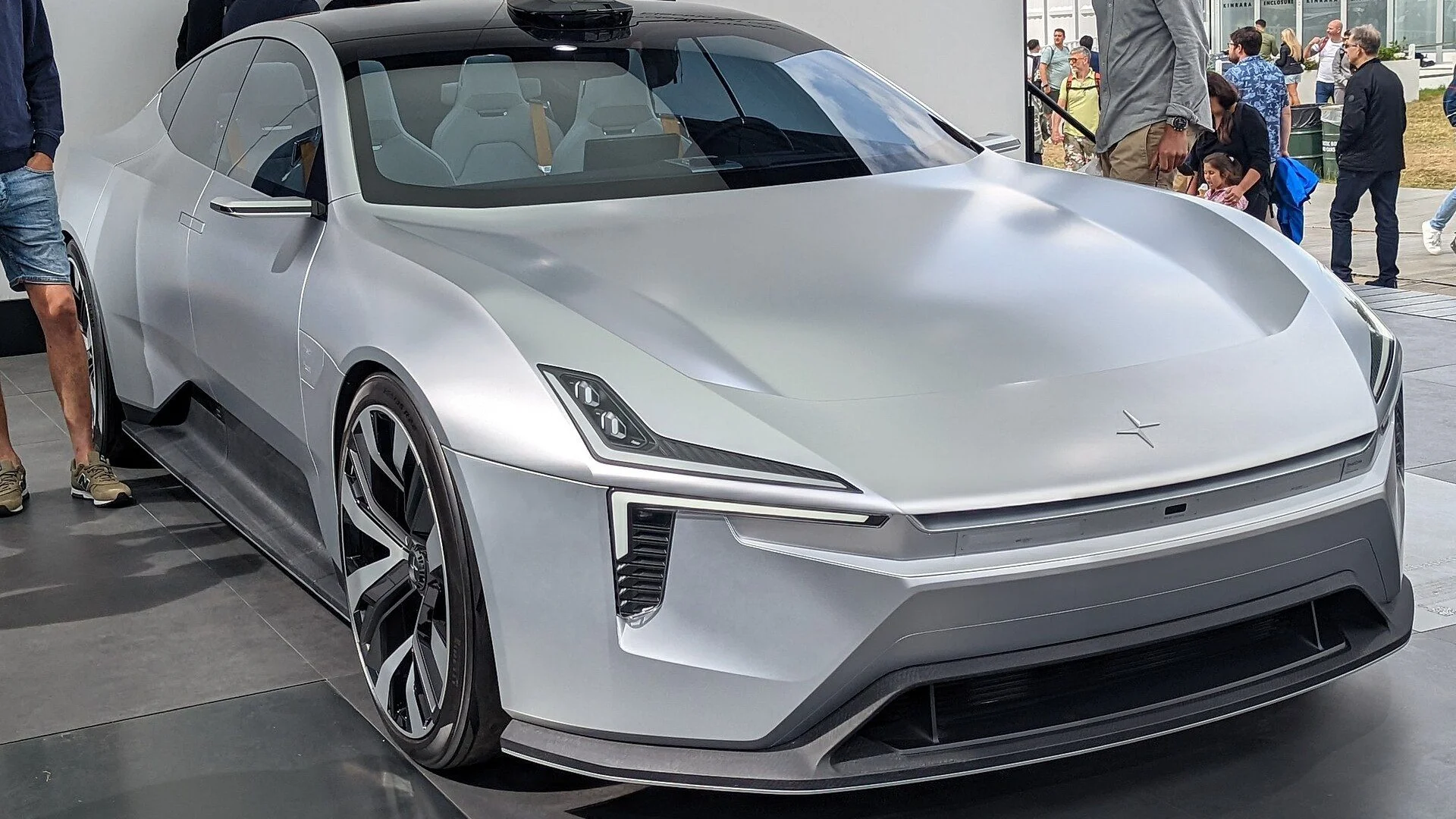
Polestar's Formula 2030 Concept Lands as US Ban Cuts Profit
BYD in Canada: Which Models You Can Actually Buy in 2026
Canada's Tariff on Tesla: What It Adds to the Price in 2026
BYD Sealion 06: What It Takes to Reach Canada
Shanghai-Made Tesla Model 3 in Canada: C$39,490